Cheez-Whiz and EVIL Go Together like Camping and Horror! “Black Holler” reviewed! (Wild Eye Releasing / Blu-ray)

“Black Holler” on Blu-ray Home Video from Wild Eye Releasing!  Available at MVDVisual and Amazon.com!

The Black Holler woods has a notorious reputation for being cursed by a lost ancient artifact that once broken into two would sic supernatural powers upon to anyone disturbing the grounds.  A class of half-witted community college Archepology students embark on a field trip to the very same Black Holler woods.  Among them is the rebellious yet grounded black belt Laquita Johnson forced to tagalong in order for a last ditch effort for an educational institution to accept a reformed her despite the refractory record.  As soon as the class steps foot into the woods, one-by-on they begin to disappear mysteriously as the area comes alive with the vengeful spirits of a long forgotten tribe that once inhabited the land.  Poor decisions, ultra-egos, and classic horror movie tropes amalgamate into a don’t go into the woods with white people scenario of the year 1989 proportions.

Let me set the scene for you:  Back in 2017, Jason Berg and his cast and crew set out to make and release a homage horror-comedy that wasn’t just bloody and supernatural but was also drenched in the broad quintessential tropes of 1980s horror film.  Berg directed and cowrote the U.S. film alongside Heidi Ervin and Rachel Ward Heggen on a modestly budgeted scale that relied mostly on slapstick wit rather than full blown genre makeup and effects but the comedic style also treads into the parody territory, reminiscent of the days of yore with “Airplane” or even the relatively more modern version, and related horror-themed, “Scary Movie” series, aiming to cast objectifying humor as well as generate other politically incorrect forms of laughter that many Hollywood studios and off-Hollywood indies are afraid to touch with a 50-foot pole today with the fear of being criticized, sued, or even worse, #cancelled.  “Black Holler” isn’t having none of that black listed nonsense in its Troma-transgressional fashion.  “Black Holler” is a crowdfunded, Kickstarter and Indiegogo campaign production with executive producers Jim and Phyllis Casebolt, Heidi Ervin, and Wesley Rutledge and is filmed in and around Nashville, Tennessee with sponsorship by the Nashville Film Festival and production credits under the banner of Grand Prize Studios.  
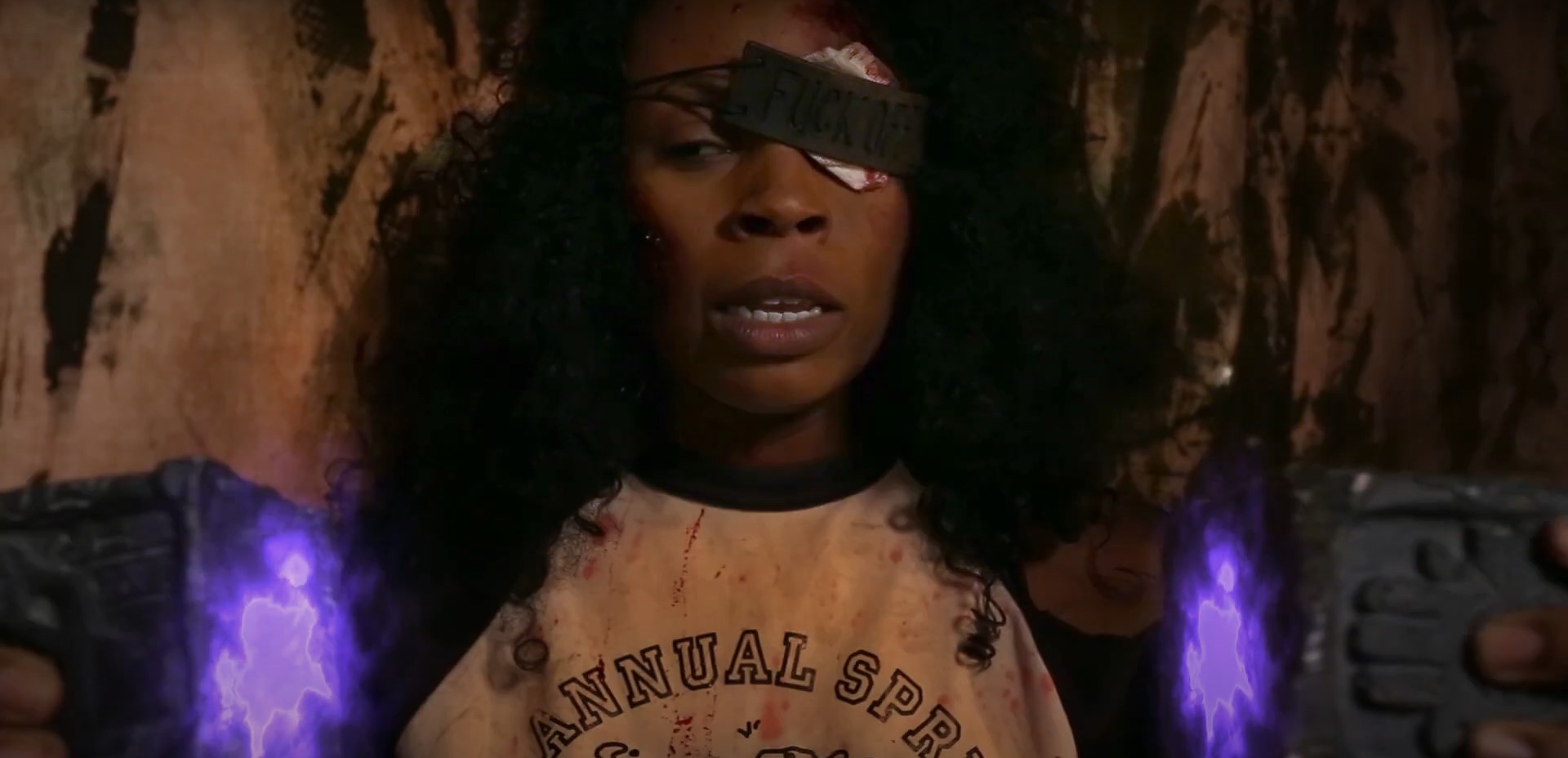
One thing to notice about the Tennessee-native Jason Berg’s obscure, campy, and modern-day slice and dice of satire is that “Black Holler” has a large, sprawling cast acting in different, diverse locations though ultimately winding up backdropped in the woods like most low-budget horror films do.  Numerous principal leads receive nearly equal screen time to follow individual storylines with predominately Tamiko Robinson Steele (if that isn’t a Blaxploitation name, I don’t know what is) being the empowered, karate-instructed, skateboarding, last minute addition, Laquita Johnson, to a predominately white class of vanilla misfits.  “The Dead Center” Steele rarely engages an interaction with fellow camping characters but eventually Laquita glues herself to the scrawny nerd Walter Love (TikTok influence Nicholas Hadden).  As Laquita and Walter work on Walter’s social awkwardness with a quick hip-throwing lesson, the other students, led by the overly pretentious assistant Professor Thompson in a wonderfully painful and zany performance by Jesse Perry (“Zombies vs Strippers”).  Perry’s know-it-all façade is complimented by his awkward hand gestures and ridiculous facial expressions to make Professor Thompson a full-bodied caricature.  Much of the cast are equally as lampooning the usually trope characters:  the stoners (Bruce Ervin and Betty Williams), the angsty goth (Sarah VanArsdal, “Chest”), the goody two-shoe (Heidi Ervin), the slutty hot girl (Rachel Ward Heggen), the over-sexing couple (C.J Stanley and Stacy Gazenski), and a self-serving and bullying handsome jock who is satirically played by numbers actors of all races and ages with the in-script context that shows and movies recast principal actors with other actors who look nothing like the original and that the general audiences won’t notice.  “Black Holler” rounds out the cast with Brad Edwards, Wesley Rutledge, Leah Helena Miller, Justin Terrants, Brian Russell, Miguel Otero, and Stayc Givhan as Laquita’s white, queer cousin and who outperforms with sass and confidence to the near point of stealing the entire movie. 
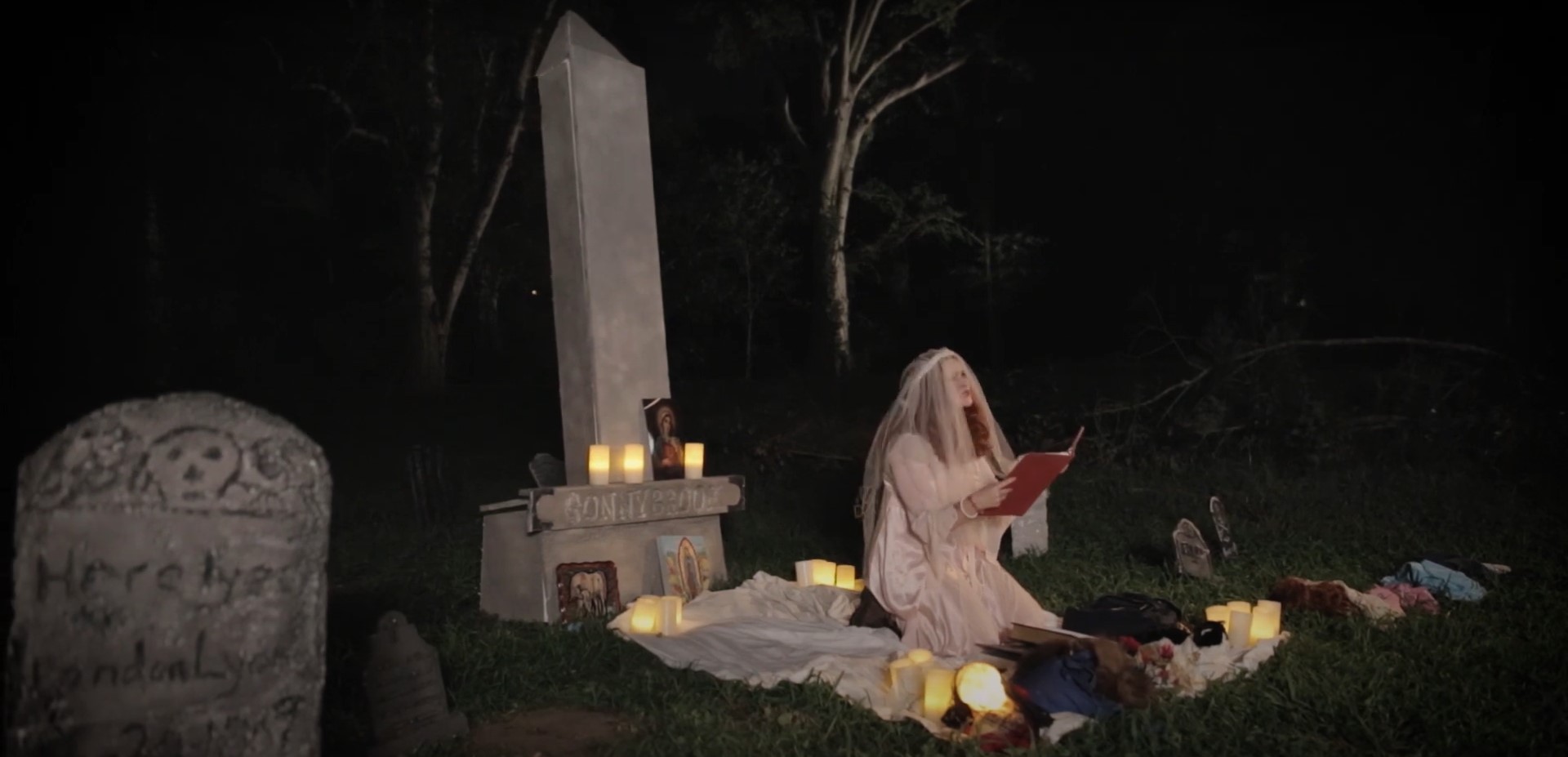
Director Jason Berg recreates the late 1980’s to early 1990’s milieu and very well I might add. “Black Holler” has the skater-grunge dress, early model cell phones that are the size of a football with an antenna, and crass, douchy attitudes that fit the period’s horror catalogue casting call. Not one to take itself seriously, at all, “Black Holler” just needs to be sat down with and watched for what Jason Berg intended his debut film to be – one big parody of paranormal patterns. Berg achieved the goal in depicting an outlandish ensemble of highly vain characters too entrenched in their own objectives of “Pet Semetary” resurrecting animal rituals, engaging in hot premarital sex, and smoking pot while swimming with sea-sludge covered dead. Aside from the little “Pet Semetary” nod that goes hand-in-hand with the sacred Indian ground, the film pulls in and ties together inspiration from other 80’s era classics like “Evil Dead” with the forest jetting out vines to snatch and grab as well as a compilation of every horror movie set on a camping ground with a nefariously spooky and anecdotally deadly past. Many of the gags and goofs land in a generic vane tapped too often to strike it rich but there are a few outliers, such as the seamless Brett bit that tackles trite truth with well devised humor or when Professor Thompson, in one of his many zany arbitrary acts, climbs a tree like a squirrel that does provide a good chuckle, but then there’s the whole systemic racism callout that flies over my head as, to my memory, wasn’t a big thing in the 80s or 90s. Perhaps, the concept plays into the whole token black trope that Laquita represents to the group, as in what the title alludes to in tribute and in theme.

“Black Holler” is receiving a re-release from Wild Eye Releasing but in a new special feature-laden Collector’s Edition!  Presented in a 1.78:1 aspect ratio on a AVC encoded, high definition, 1080p Blu-ray, “Black Holler” does have quality appeal despite various gradings and stylistic choices, such as color filtering to de-age into black and white. Compression appears stable with no noticeable ghosting, aliasing, blocking or banding.  Details and delineation are sharp enough for videophile nitpicking to be at a minimum.  Despite some use of a blue tint during a flashback, nighttime sequences convey just enough sparse lighting to not be overflooded and still maintain a sense of darkness in neutral contrast.  The English LPCM Stereo 2.0 audio tracks offers a crystal clear digitally recorded dialogue that’s free of obstruction and background noise.  If you watch the gag reel, the crew does a remarkable job holding action in place until the boom is free of all sorts of motors, planes, and other environmental sonances.  Depth works out mostly in the foreground amongst closeups and medium shots while range mostly revolves around quick whips of vines and the splatter of blood.  Special features include a director, cast, and crew commentary, deleted and extended scenes, a gag / blooper reel that consists mostly of the ambient noise holds, an alternate opening and ending scene, We Made Our Goal and Guns & Roses parody song tracks, a “Black Holler” Kickstarter promotional video as well as a faux promotional video with Professor Thompson as host and oozing with Archepology excitement, and Wild Eye Releasing trailers.  Collector’s Edition release is housed in a cardboard slipcover with what appears to be colored graphite art of some semblance of the colorful characters clumped together flaunting their idiosyncratic characteristics and personalities.  The clear Blu-ray case with snapper, which has become more and more common than a traditional blue hued snapper case, frames the original Wild Eye releasing cover art of Laquita holding up a machete in an ebony femme fatale pose.  Both slipcase and Blu-ray back covers have identical layout designs.  If you unlatch and open her up, the reversible cover art has a great group picture of the cast in character and there’s also a folded illustrated poster in the insert which you can see on the disc art without having to unfold the poster.  The unrated flick comes region free and has a runtime of 89 minutes.  “Black Holler” is a love it or hate it satirical salute to horror stereotypes forged from out of a screw loose admiration that can be, at times, too immature to find funny but the whole package functionally works as a comedy peppered with genre elements.

“Black Holler” on Blu-ray Home Video from Wild Eye Releasing!  Available at MVDVisual and Amazon.com!

The Picked-On Runt Can Be EVIL Too. “Little Corey Gorey” reviewed! (SRS Cinema / DVD)

“Little Corey Gorey” Uncut and on DVD home Video at Amazon.com!

After losing his father to a fatal accident, little Corey Gorey is forced to relocate to a new home with his overweight, alcoholic, and verbally abusive stepmother and similarly so, racist brother-in-law, Biff.  Constantly receiving the short end of the stick, Corey tries to retain a normal life by buying Ozzy Osbourne concert tickets and meeting girls at high school, but when his bigger, older Biff raids Corey’s broom closet of a room searching for a pinup one-sheet, he discovers the concert tickets and hooks up with Corey’s dream girl from school.  In a fit of rage, Corey accidently kills Biff as the two scuffle and with that Corey sows the seeds of salvation as the teen who was constantly tormented and afraid to talk back now is eager to take his life back.  Keeping his stepmother tied to the couch and gagged from making noise, Corey dismembers what’s left of his brother into the storage freezer and includes the sociopathic girl of his dreams into the fold but when a nosy mail carriers begin to snoop around and a drug dealer is seeking payment for the cocaine he fronted Biff, the bodies begin to pile up and Corey finds himself over his head.

Talk about your unhappily ever after Cinderella story, “Little Corey Gorey” goes from rags to wreaking havoc by way of severing limbs and meat grinding body parts all the while trying to sweep a rebellious older high school girl off her feet in an attempt to run away from all the carnage and abusive adults.  Bill Morroni, credited as William Morroni in the film, wrote and directed his debut feature in sunny California that is anything but sunshine and good vibes in this 1993 released, dark horror comedy obscure to many horror fans. A real highlight of early 90’s low-budget horror done right with smartly placed and highly effective practical effects, “Little Corey Gorey” is a begrimed gem waiting to shine, produced solely by Morroni under his self-funded principal production over the course of a few weekends. 

What makes “Little Corey Gorey” half as enjoyable as it turns out to be is because of the cast.  Once plagued by unfortunate circumstances, such as an example with the untimely death Divine (“Multiple Maniacs,” “Pink Flamingos”) who was to have a lead role, that one might consider the film be cursed celluloid even before principal photography, Morroni was able to overcome with a perfectly suited set of talent to tackle Corey Gorey’s gruesome exploits of dysfunctional family survival.  The titular role was awarded to Todd Fortune whose diminutive size really plays against the larger and towering figures that make his life a living hell.  Divine would have stepped into the shoes of wicked stepmother Betty and even though Divine would have done phenomenally in a constant-drunk state of a barraging verbal abuse and torment, Pat Gallagher filled the cankerous role with despicable-inducing results and gives a real witch of a woman performance to not only Corey but also her actual on-screen son Biff.  Greg Sachs might be stiff as a board as the older brother with racist overtones and a compounding dislike for Corey, but Biff turns out twisted enough to be an antagonizing accomplice in building Corey’s pent-up survival garnished with ghastliness.  One of the more scene stealers is Brenda Pope as the bitchiest high school narcissist Jackie who has somehow swooned Corey’s rationality and has him hanging on her tongue with every lie.  From special feature commentary by Morroni, Pope was a real life true-to-form unpleasant person behind-the-scenes as well as in front of the camera but that doesn’t stop her good looks and devilishly delectable moodiness and conceitedness from drying out.   As a group, you can feel every resounding personality types and cluster of chaos that spits out sympathy for Corey despite the curated torture from those who are supposed to care for him and also feel not one ounce of pity for Corey’s tormentors turned minced meat at the hands of the water treading teen.  “Little Corey Gorey” has a neighborhood ensemble featuring parts by Edenia Scudder, Sabino Villa Lobos, Kristin Caruso, Bernice Smiley, John B. Tomlinson, and William Linehan has an escaped prisoner and mass murderer being built up by the news media with his convenient store killings only to be the only part of “Little Corey Gorey” to fizzle out in a subplot to nowhere. 

With a spiffy name, a thematically onboard cast, and some really good editing and camera work, “Little Corey Gorey” surprisingly has a lot going for it despite being shot on 16mm variational stock and using scratch audio, aka studio dubbing, that makes the 1993 feel and appear more rough and ready than necessary, like a wrinkled, toothless middle-aged man after smoking and drinking heavily for half his life, but in the grand scheme of things, “Little Gorey Corey” has held up moderately well in quality and in story.  Through the spikey colored wigs, cut off sleeve shirts, mullets running rampant, and good seat concert tickets with a price tag of $18 might have run their course over father time, bullying remains a hot topic to this day.  Dysfunctional family dynamics, blind and fatal obsession, drugs use, and being in the friend zone with a haughty hottie also hasn’t changed much.  You can’t help not feeling pity for Corey and the excruciating awkwardness of him pulling out all the stops in order for Jackie to notice his heartfelt, romantic gestures and advances only to be immediately blown out of the sky like a Chinese weather-spy balloon gliding over Montana.  Everything that happens to the thick-skinned kid culminates to a head, to a finale of penetrating his usually impenetrable, encrusted scar tissue of a shell that just seems right or justifiable that when the world pisses on you, you cut off its penis with a corded circular saw.   

“Little Corey Gorey” receives a new scan (upscaled?) of the 16mm source material and drops onto a re-release from SRS Cinema!  Though still framed in a full screen 1.33:1 letterboxed aspect ratio, the transfer looks much clearer than the original VHS release with brighter grading and an enriched image that delineates edges and some details.  The variation in 16mm stock is obvious, more so in only a handful of scenes in comparison to others, with only a very select few offering a shoddy, nearly obstructed view of focal objects.    One thing about the SRS Cinema DVD back cover is it lists a new HD transfer from original camera negative, but DVD can’t be high definition. Since the DVD and the limited-edition Blu-ray share the same cover, I assume this speck of information wasn’t removed, redacted, from the Blu-ray back cover. The English Dolby Digital 2.0 scratch track, aka dub track, is what it is – an on-budget audio format that has doesn’t quite run in the same space to the image but is still an impressive parallel audio track that synchs nearly identical to the actors’ mouths. There’s an obvious electronic hum throughout that never quits so the interference often drowns out slightly any ambient noise, if any, were added for depth and weakens the dialogue strength, which was not entirely robust at the beginning. Hair metal becomes “Little Corey Gorey’s” soundtrack to slashing with featured tracks from Creature because if you can’t hire Ozzy Osbourne to score your film, you get the 2nd, 3rd, or 10th best thing that brings the metal. The bonus features include a directory’s commentary, a 77-minute William Morroni interview that unboxes all the aspects of the film from individual cast bios to equipment availability and issues to marketing woes and to the whole kit and kaboodle in regard to his little movie, and SRS Cinema film trailers, including this “Little Corey Gory”. The DVD sports a beautifully grisly illustrated cover art, similar to what SRS Cinema accomplishes with all their other titles, with an accompaniment mustard yellow, retro-grading design. The disc art is duplication of the front cover art and there is no inserts inside the traditional DVD snapper case. The region free DVD comes with an uncut version of the film that has a total runtime of 91 minutes. “Little Corey Gorey” is a big gory lorry that drives a mean-spirited, misanthropic marvel right out of the 90’s and into our television sets as this forgotten film can no longer stay forgotten.

“Little Corey Gorey” Uncut and on DVD home Video at Amazon.com!

The EVIL is Inside Me! “Nightmare Man” reviewed! (Ronin Flix / Blu-ray)

“Nightmare Man” Is Here To Haunt Your Dreams in High-Definition!  Blu-ray Available at Amazon.com

To channel mystical help with her and her husband’s fertility issues, Ellen purchases a mask from overseas that supposed to provide fruitful results.   Instead, Ellen is plagued by nightmares of a demon figure, forcing himself onto her with a maniacally grin.  Diagnosed a paranoid schizophrenic and on medication to dilute the vivid dreams, Ellen’s husband chauffeurs her to the mountain isolated Devonshire Institute to commit her for treatment, but when the car runs out of gas and her husband ambles for gas, Ellen finds herself alone in the car at night and with the nightmare man lurking outside,   Escaping barely with her lift now that the physical form of her tormentor is no longer just in her dreams, Ellen takes refuge with a pair of couples celebrating an engagement party.  Rambling erratically about an entity no longer inside her, a debate between the group of friends question Ellen’s sanity until the nightmare man shows up and slaughters anyone in his path, but the party’s just beginning when another killer has been freed from suppression.

Pivot stories are the best!  The investments into a foundation roots a focus, provides a clear understanding of the forthcoming, and can be, for better or worse, an expectation of narrative structure.  What happens when a monkey wrench is thrown into the story and completely bends the storyline at a 90-degree angle onto another totally unexpected path?  Some would be too jarred by the jerk toward another direction, coming out of the film with a severe case of whiplash that joggles and boggles the mind, while others, like myself, would find a refreshing phoenix out of the tired ashes of a stale genre and welcome it with open, grateful arms to keep my rear-end sewn to the couch and eyes glued to the television to see what happens next!  Writer-Director Rolfe Kanefsky (“There’s Nothing Out There,” “Art of the Dead”) alters the early 2000s post-“Scream,” masked-slasher with a twist and never second guesses the decision to bounce from out of one subgenre and into another without skipping a beat.  “Nightmare Man” is a production of Delusional Films and is non-SAG, shot in the area of Big Bear, California, produced film by the father-son team of Rolfe and Victor Kanefsky and Esther Goodstein, and Frederico Lapenda.

What’s very curious as well as fascinating about “Nightmare Man’s” character hierarchy is that there isn’t just one lead principal throughout the film.  In fact, lead principals change hands at least three times and also misleads audiences into thinking someone is going to charge of the situation only to be cut down in a blink of eye and a jolt to the normal hardwires of our cerebral higher functioning.   The titular star of Rolfe Kanefsky’s “Jacqueline Hyde,” Blythe Metz, returns to work with the filmmaker as a woman overwhelmed by dreams of a demonic dybbuk of sorts who chases her and tries to force himself onto her, into her, in a violating way.  Metz convinces much later as someone suffering from delusions and paranoia but her Ellen character, a woman who is supposed to be wealthy from some of the dialogue bits, is a bit more lucid and grounded early into the story with only her frustration to lean back on to warrant being committed, which seems like a harsh and unconvincing setup for the character that also induces early suspicion on her husband’s (Luciano Szafir, “Hopekillers”) eagerness to check his wife into a mental institution.  Before long, we’re introduced to two couples, played by Jack Sallfield (aka Jack Sway), Johanna Putnam (“Feast II and III”), James Ferris (“Jacqueline Hyde”), and every fan’s favorite scream queen, who’s currently playing a reoccurring character in season 3 of “Picard,” Tiffany Shepis (“Abominable,” “The Black Room”), partaking in an intimate celebration and partaking in what mostly early 2000s portrayed characters love to participate in – sex themed conversation, games, and forbidden secrets.   Soon, the two parties collide when Ellen is chased through the woods by her African horn-masked dream stalker (Aaron Sherry) and then the situation turns into mice in a glass cage with a snake circling hungry.  Shepis doesn’t stray terrible too far from her normal cache of credits or Tromaville antics as a provocative, promiscuous, and downright master of her domain with intent.  While Shepis doesn’t necessarily compete with any other onscreen personas, as the long-time horror vet can steal a show with ease, we’re also treated to strong performances from her costars, such as Metz splitting into thirds with her diagnosed paranoid-schizophrenia, and we’re introduced to Johanna Putnam in her debut role as an engaged woman has who a dangling lesbian secret from her past hanging over her head.  The dynamic works not in a dramatic means but rather as a comedy portico tossed into the narrative structure to spruce up character conversing toward something humorous and interesting as arrows plunge into chests and knives are puncturing through lower jaws.  “Nightmare Man” rounds out the cast with Richard Moll.  Yes, Bull from Night Court, as well as “Scary Movie 2” and “Sorority Party Massacre, makes brief cameo appearance as the local sheriff and you need look very closely because the scene is so dark, you can barely tell it’s him. 

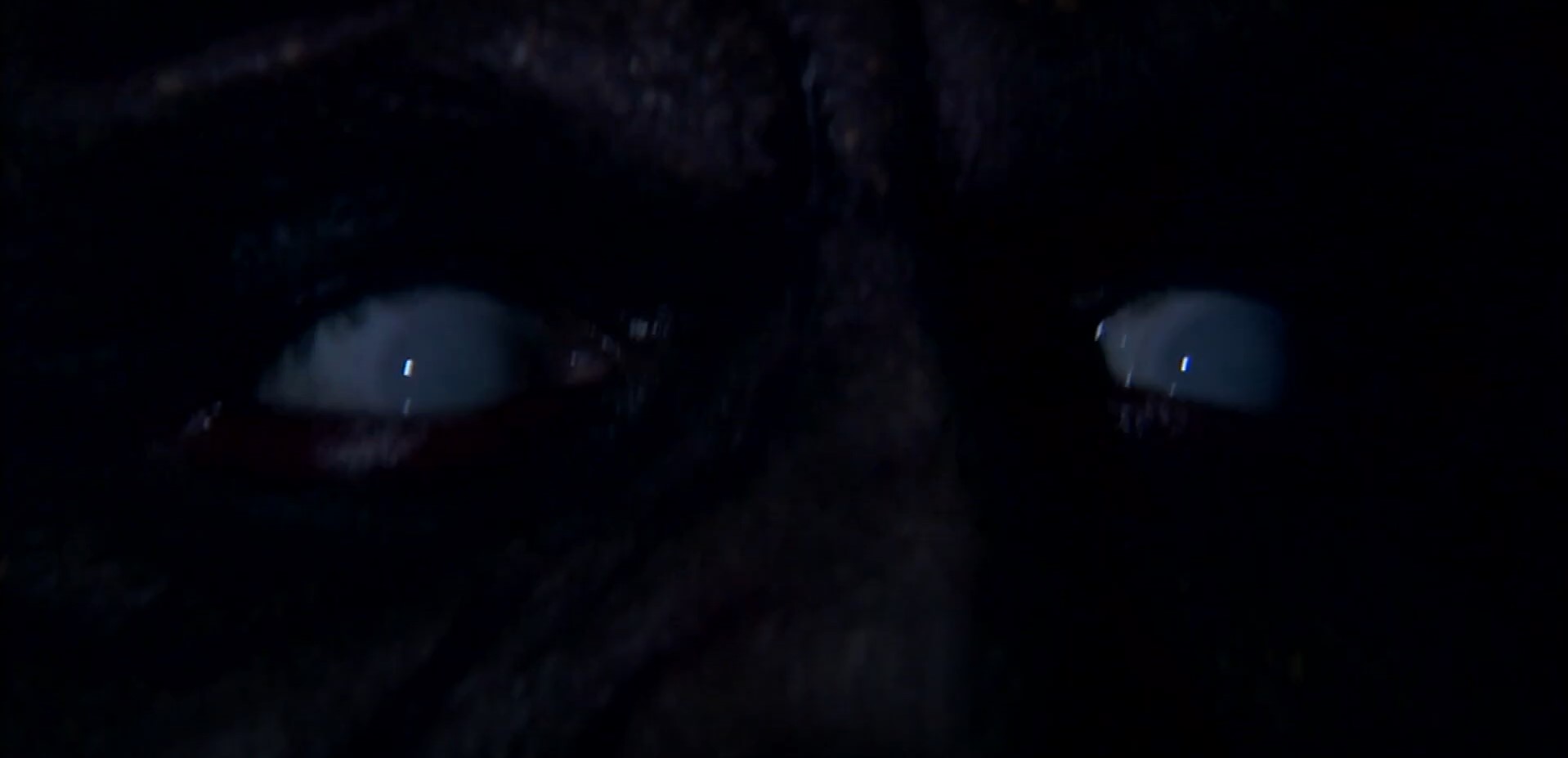
The one theme that keeps popping up in the recess of the mind is perhaps the one theme that eludes being talked enough about when overhauling “Nightmare Man” as a message bearer. Being an early 2000’s horror in the long established and well-dipped into the shadow of the “Scream,” “I Know What You Did Last Summer,” and “Urban Legend” franchises that defined the turn of century before it even happened might have had something to do with “Nightmare Man’s” lack of enticements for distributors to feel love for the man of nightmares and notice it for the novelty and the theme for what it is, an instilled paranoid fear that one’s sexual attacker leaves behind as a post-traumatic stress bomb that is everything all consuming. Kanefsky patterns the hallmarks of rape trauma stealthily into the script, disguised as a shadow, with a teethy mask, and vividly glowing and menacing eyes. Some other scenes are more obvious than others, such as Ellen’s dreams of the sinister smiling figure pinning her to the attic floor and spreading her legs right before she wakes or when she cries out, “I still feel him inside me,” while held up inside the cabin, with Kanefsky painting with a broader brush on “Nightmare Man’s” obscured presence and masked killer with an agenda that attaches itself directly in avoidance of calling a spade a spade. The kills and gore effect gags can stand up against any big budget, Hollywood production and are just unique enough to make the killer interesting in diversity and brutal enough to give “Nightmare Man” an edge sharper than the knife he wields.

If a Tiffany Shepis fan, or a fan of Tiffany Shepis in her underwear holding a crossbow and won’t be rattled by the bent elbow plot pivot, the Rolfe Kanefsky picture is an enjoyable, campy romp that gives homage to the horror films that have set the scene for “Nightmare man” to exist.   Ronin Flix plucks “Nightmare Man” out of standard definition dreamland and into the reality of high-def, 1080p Blu-ray.  Presented in an anamorphic widescreen 1.78:1 aspect ratio, the story is set almost entirely at night with more household lighting for interior shots and not too much exterior lighting to brighten objects or even cast hard-edged shadows.  While this creates more realistic atmospherics of isolating apprehension in the woods horror, Kanefsky and cinematographer Paul Deng (“Trancers 6,” “Song of the Vampire”) bathe many of the night shoots in deep blue tint and the Ronin Flix transfer appears to display in low contrast and is very dark, leaving focal objects nondelineated and obscured.  I haven’t checked out the Lionsgate After Dark DVD print of this film so I can’t compare.  There some dip in the compression decoding as the release hovers in the mid-30Mbps for good periods of time but does dip into the lower 20s and it shows with light phasing macroblocking.  When not bathed in blue, skin tones and grading often look natural and palpable.  The English language DTS-HD 5.1 Master Audio is balanced between all levels tracks, putting the dialogue in the forefront, keeping the range of ambient noises at an appropriate depth, and a soundtrack that maintains tensions rather than over intensifies to a fault.  I will say that the multi-channel lacked a significant stalwart production that didn’t provide the anticipated strength of audio.  Dialogue is clean and clear with no perceptible issues and the overall package track can be said the same.  English SDH are optional.  With the Ronin Flix release, new bonus supplementals extend more background and insight with retrospective discussions and distribution challenges associated with “Nightmare Man,” such has a new interview featurette with director Rolf Kanefsky, producer Esther Goodstein, and star Tiffany Shepis in There’s Something Out There:  The Making of Nightmare Man and a new audio track isolating the film score by Christopher Farrell (“Bus Party to Hell”).  Also included is Creating the Nightmare:  The Making of Nightmare Man – a raw footage behind-the-scenes look at some of special effects, makeup, and off-the-cuff tomfoolery during in between take down time, extended scenes, Tiffany’s Behind-the-Scenes of Tiffany Shepis weaponizing a handheld camera with her flare of sexualized humor and potty-mouth pizazz, an audio commentary track, on the audio setup, with director Rolf Kanefsky, producer Esther Goodstein, and star Tiffany Shepis, Flubbing a Nightmare Gag Reel, still photos, and a promo reel.  The physical features include a David Levine package design of an abract-esque composite of the Nightmare Man mask, Tiffany Shepis in a bra, and a knife all splashed in red lined inside a traditional Blu-ray snapper case with no insert.  The release is locked on Region A playback and the film has a runtime of 87 minutes and is rated R for horror violence, gore, some sexuality/nudity, and language – what Tiffany Shepis release wouldn’t include all of that?  “Nightmare Man” is a dream of a subgenre-bending film; sexy, gory, intense, and unpredictable, all the prefigures of a hell of a good time.

“Nightmare Man” Is Here To Haunt Your Dreams in High-Definition!  Blu-ray Available at Amazon.com

Sheen and Estevez Take Out the EVIL Trash! “Men at Work” reviewed! (MVD / Blu-ray)

“Men at Work” Now Available on a MVD Visual Blu-ray at Amazon.com

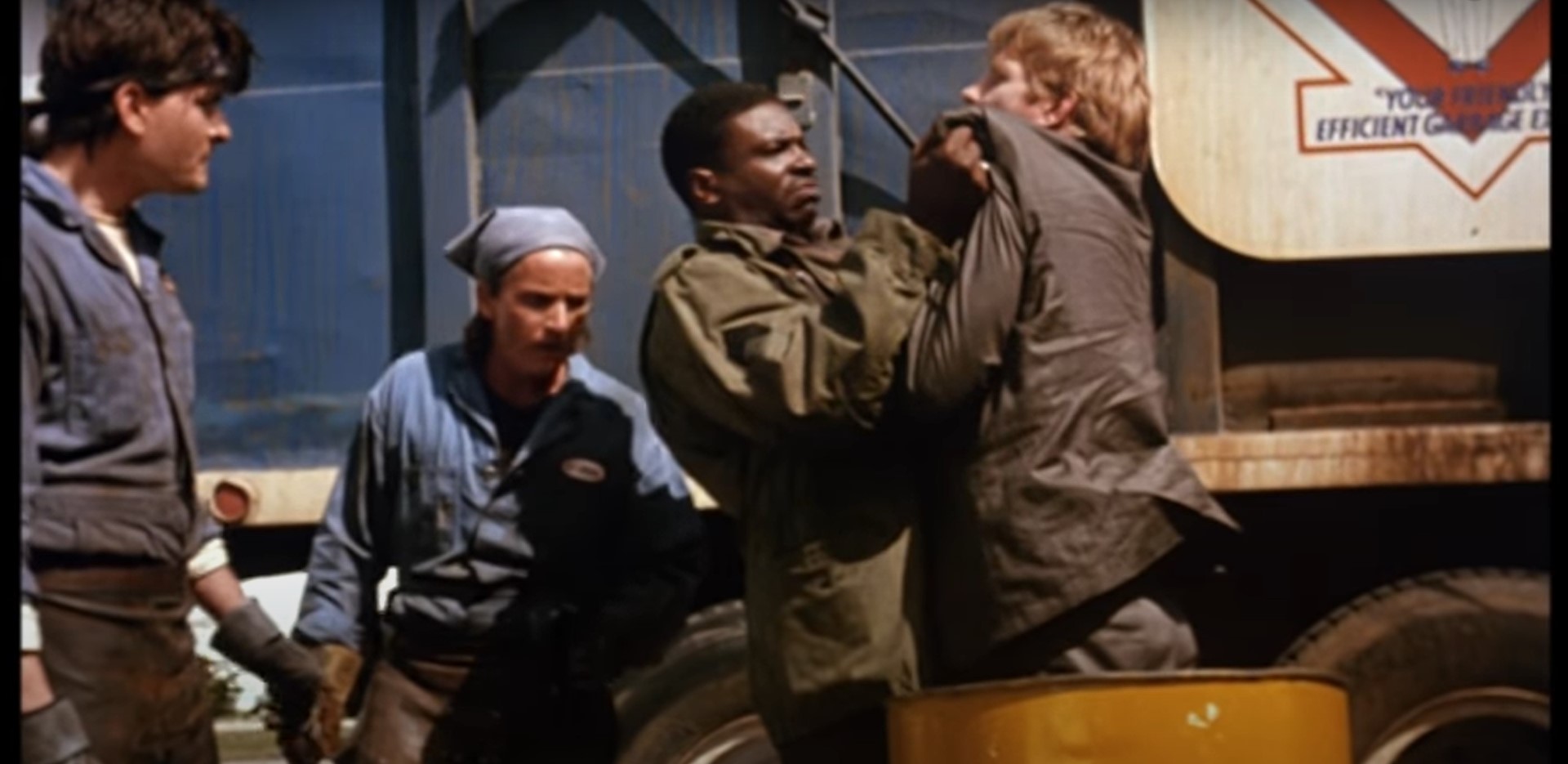
Garbagemen James and Carl are California dreamers, scoping out babes, riding the surf, and fantasizing about opening their own surf shop business one day.  Their day job goes against the grain of their live loose lifestyle, but when they discover a dead body in a trash can, the same dead body that was arguing with a beautiful woman in the building across the street and Carl shot in the butt with a pellet gun the night before, James and Carl no longer have the luxury of fun and games.  Their probational, ride along observer, a crazed combat veteran named Louis, doesn’t add to trash-slinging surfers’ comfort other than noting the strangulation marks around the neck, proving their innocence of a pellet gun murder.  The three men go into investigation mode and Carl infiltrates into the woman’s apartment for clues on what really happened but what they get themselves mixed into is manufacturer corruption on the highest level and now they’re in the crossfire and crosshairs of an off-shore, toxic waste dumping crime boss.

Seeing siblings on screen together has always been of great interest to myself because for an actor to grow up with another actor from adolescence, there’s some level of comfortability, trust, and likeminded, on the same wavelength, aptitude in the performance dynamic.  Brothers Charlie Sheen and Emilio Estévez certainly have a cozy dynamic as two laid-back garbagemen in the dark yet zany comedy, “Men at Work,” despite not sharing their Estévez surname.  Of course, this is a 1990 released film and things have changed between them and personally with themselves over the span of 30+ years, but the Emilio Estévez written-and-directed comedy is a snapshot of a relationship pairing that we didn’t see too often.  Sure, we received their performances in other genres, such as head-butting cowboys in the western-action “Young Guns” and as two sleazy pornographic film filmmakers divided by their own greed in the Jim and Artie Mitchell biographical picture, “Rated-X,” but we never again get a quirky, smorgasbord comedy that exhibits their distinct dry humor in one package.  Set on the beautiful shores of California, include Los Angeles, “Men at Work,” is a studio production from the Trans World Entertainment subsidiary label, Epic Productions, under Moshe Diamant (“Commando Squad,” “Ski Patrol”) and is produced by Cassian Elwes (“Mom and Dad,” “Knock Knock”) and Barbara Stordahl.

Safe to say that most audiences are familiar with the likes of Charlie Sheen and Emilo Estévez between their catalogue of rite of passage movies while growing up in the 1980s through the 1990s.  From “Major League” and “Maximum Overdrive” to “Hot Shots” and “Mighty Ducks,” the brothers captured comedy, action, horror, and feel-good films.  “Men at Work” is another one of those nostalgia recognized, yet slightly underrated, comedies that hasn’t necessarily aged well in regard to its comedy.  Sheen and Estévez are wonderfully poised with a pinch of mania performances surrounding a murder mystery, but the comedy has faded like washed out jeans as we’re numb to these types of comedic devices that have used and overused the last three decades.  Keith David, on the other hand, remains just as funny as the day of release as the Vietnam combat-shocked veteran, Louis, who has become James and Karl’s overseer after public complaints.  The “They Live” and “The Thing” actor costars alongside Charlie Sheen four years later after the release of Oliver Stone’s “Platoon,” which begs the question whether Estévez and Sheen are meddling with the cinematic universes just a tad, and David brings the intensity, high-energy, and overwhelming brutishness to “Men at Work’s” rather subdued, off-the-cuff antics of investigation work done by a pair of surfer dudes who have not witnessed the horrors of war.  The disturbing coolness of stride David’s character takes suits him as an angry vet with a penchant to go against authority.  The love interest in this narrative is played by the actress-turned-director Leslie Hope (“Doppelganger,” “Bruiser”) as a dead guy’s political campaign manager who just happened to be at the wrong place, wrong time accidently swapping the incriminating tape with her boss.  Did I mention the dead guy is a politician in bed with crime?  The “Weekend at Bernie’s” performance by Darrell Larson (“Android”) is one for the ages with Larson providing the slacked jaw, rigor mortis poses, and an overall deadpan dead guy.  “The Fly’s” John Getz is a suitable villain Maxwell Potterdam III, as if plucked straight from a comic book, to the quirky comedy despite being a bit hammy at times.  Potterdam’s bicker henchmen Mario (John Lavachielli) and Biff (Rufus funk musician Hawk Wolinski) are better suited to entertainment with distinct personalities that made their interactions dry and spot on funny. The cast fills out with Sy Richardson (“Repo Man”), Troy Evans (“Halloween 5: The Revenge of Michael Myers”), Geoffry Blake (“The Last Starfighter”), Cameron Dye (“Out of the Dark”), Dean Cameron (“Summer School”), and John Putch (“Jaws 3-D”) and Tommy Hinkley (“Silent Night, Deadly Night 4: Initiation”) as bike cops in a very compromising position.

“Men at Work” is one of those memorable films that teeters between the 80s and the 90s.  Mullets, denim-on-denim, large three-piece suits, and the breeziness of politically incorrect humor genetically makeup “Men at Work’s” guilty-pleasurable and amusing plot anticipatedly driven well by the two principal leads, Sheen and Estevez, who are thrusted into the wrong place at the wrong time scenario as unlikely, joshing heroes, but the stars’ arm-candied, supporting cast of character actors shape and hold together a better lasting picture as with Keith David’s unphased Vietnam veteran, bored with life as it seems during his contentious first impressions with James and Carl, to nudge the garbage-toting friends into action as if he’s spearheading a campaign back in the bush fighting the Vietcong or with the two bickering hit-men who do more damage than damage control with their opposing opinions and tough guy prides.  Estevez’s farce is directed modestly well without the visual cues or styles to assist but rather works in alignment with how Estevez shoots most of his directing gigs with perfectly framed scenes and precision panning that join the foreground, background, and characters together all in one harrowing moment, such as with the pallet gun prank that ends in the murder of the politician, and those kinds of scenes speak for themselves without having to be edited down.  The by-the-numbers pacing builds the story up until a culminating head from the two simple sanitation workers living out their mundane lives with mundane problems to the classic showdown of being outnumbered with Potterdam and his toxic waste dumping henchmen in hazard gear, and though by-the-numbers, the pacing is fairly comfortable and routine, practically natural, without ever feeling forced with the exception of Leslie Hope’s character uncharacteristically, or maybe we’re just not privy of her personal background, lends to her spur of the moment coquettish behavior with Charlie Sheen’s play-dumb, act-dumb surreptitious act in her apartment alone and then out for a late night drive to a beach with him, again alone.  Stranger danger doesn’t apply here in this moment when inviting an unknown into the personal space without the accompany of others to be a safety net and this interaction has a fabricated-feel in moving the story along.

MVD Visual releases “Men at Work” onto Blu-ray in accordance with the distributor’s retro-repository label, the Rewind Collection.  Coming in at 46 on the spine, “Men at Work” transfer is pulled straight from the MGM vault and presented with an AVC encoded, high definition, 1080p resolution in a widescreen 1.85:1 aspect ratio. The MGM transfer transposition into an hi-def BD format doesn’t reflect the full effect of a bigger, better resolution. Image details remains quite soft but the end image quality is definitely still a palatable experience with natural, stable color grading and a suitable sheen (not Charlie Sheen) of the California sun and the night lighting that is often snuffed out by stylistic grading or alternative lighting and tint sources for creative measures. The transfer master remains clear and free of damage and withering wear. The English language LPCM 2.0 stereo projects just that, a two-channel output with a lower bit, and while perhaps not a science-fiction blaster-thon picture, there’s plenty of range opportunity to warrant a hearty audio mix, but the, like the picture quality, the result is negligibly free from imperfections. Dialogue contains no hissing and is clean, clear, and free from any other issues. Optional English, French, and Spanish subtitles are available. Special features has only the theatrical trailer going for it while the physical release bears the bonus material with a reversible, illustrated cover art, a mini poster of the original poster art, and the clear Blu-ray snapper is sheathed in an O-card slipcase doctored up to be retro-stickered with video rental trappings. The PG-13 film has a runtime of 98 minutes and the release is region A locked. One of the first buddy comedies to come out of the early 90s, “Men at Work” has an audience relatable rapport with the film’s stars absorbed into struggling, yet free-spirited blue-collar roles that are unwittingly forced to take on the big, bad evil industry and though the film may have lost its comedy edge, “Men at Work” still manages to be a repeatable watched classic.

“Men at Work” Now Available on a MVD Visual Blu-ray at Amazon.com

Michelle Yeoh Versus the EVIL Japanese Imperial Army! “Magnificent Warriors” reviewed! (88 Films / Blu-ray)

“Magnificent Warriors” Now on an Amazing Blu-ray from 88 Films!   Click The Poster to Purchase!

Ming-Ming is an adventurous, mercenary pilot unafraid to herself mixed up in the worst of trouble and against the tremendous odds.  When her patriotic grandfather and military uncle present Ming-Ming a mission of resistance against the Japanese Imperial Army during World War II, the odds, again, will be stacked up against her as she must track down China’s top-secret agent to extract the City Lord of Kayi City, a fortified Chinese city on the outskirts under Japanese control with ambitions to build a strategic, poisonous gas plant.  When Ming-Ming’s is shot down by a Japanese fighter pilot and the mission proves to be more difficult than expected, a small band of unlikely heroes become resistance fighters that inspire Kayi City to rise up against an oppressive, super nation threat to take back their home.  The city of spears and arrows must defend its people from an overwhelming army of rifles, mortars, and tanks in a fight to the death.

Michelle Yeoh is so hot right now.  The Malaysian-born, long-time actress has been under the U.S. mainstream radar for decades up until recently.  Before now, she was well enough for her roles in Ang Lee’s four-time Academy Award winner “Crouching Tiger, Hidden Dragon” without Yeoh receiving a nomination.  Twenty-two years later, Yeoh receives her first Academy Award nomination for “Everything Everywhere All at Once,” but we all knew she deserved the coveted U.S. award well before now.  U.S. audience never got to experience Yeoh earlier in her career as an Asian action star that rivals the likes of male counterparts Jackie Chan and Chow Yun-Fat.  In “Magnificent Warriors,” Yeoh’s diligence to the demanding workload foretells a superstar in the making.  The David Chung directed Hong Kong picture is relentless and action-packed with stunning and intense choreographed martial arts and having a large-scale showmanship of numerous grand explosions and a vast production pocket that include countless background actors.  The script is penned by frequent Stephen Chow collaborator Kan-Cheung Tsang who has wrote many of Chow’s directorial films, such as “Kung Fu Hustle,” “Shaolin Soccer,” and “The Mermaid.”  “Munificent Warriors,” also known as “Dynamite Warriors” is produced by Linda Kuk (“Hard Boiled”) and David Chung’s “Royal Warriors” producer John Sham and executive producer Dickson Poon under the D&B Films banner.

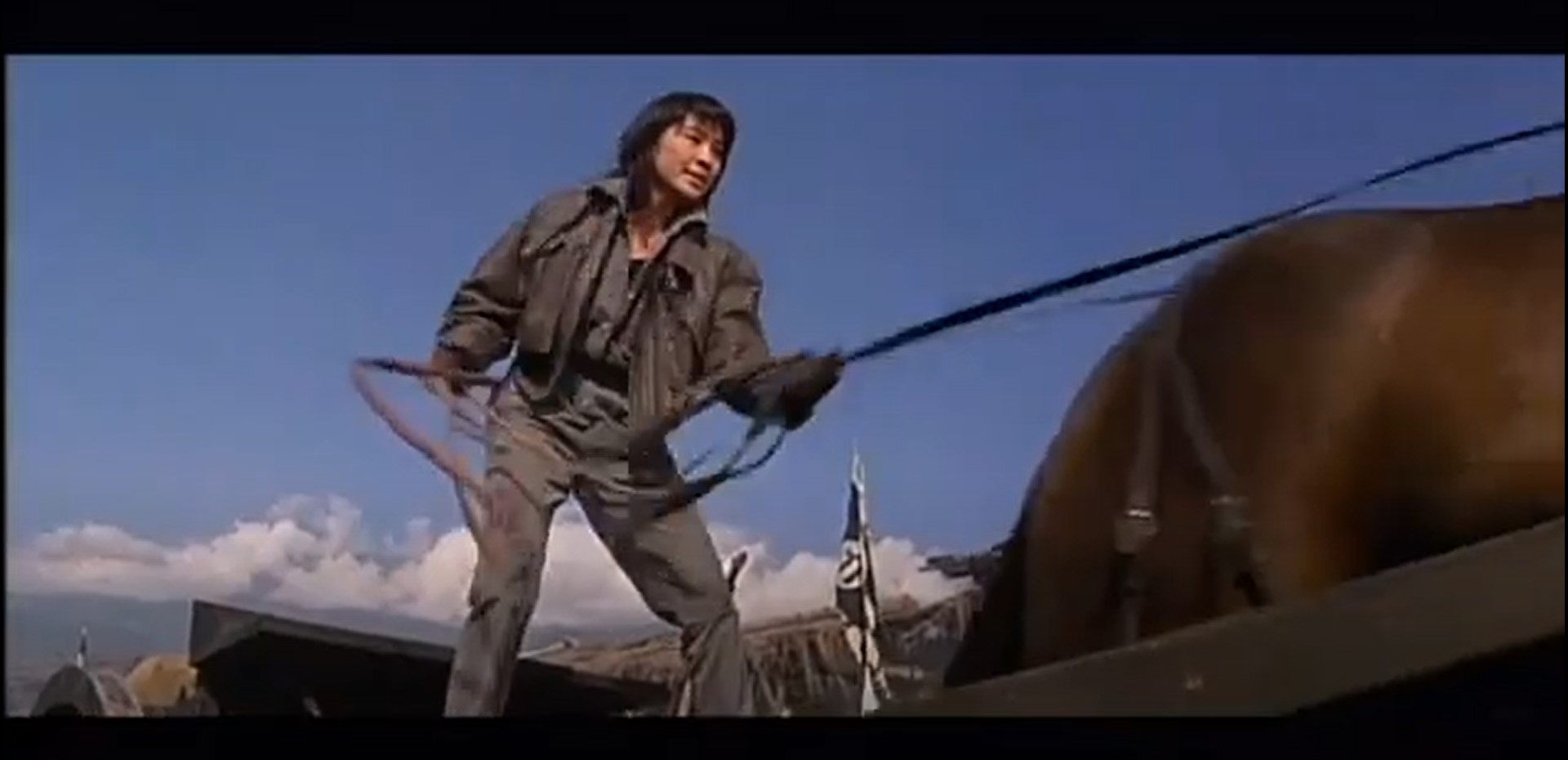
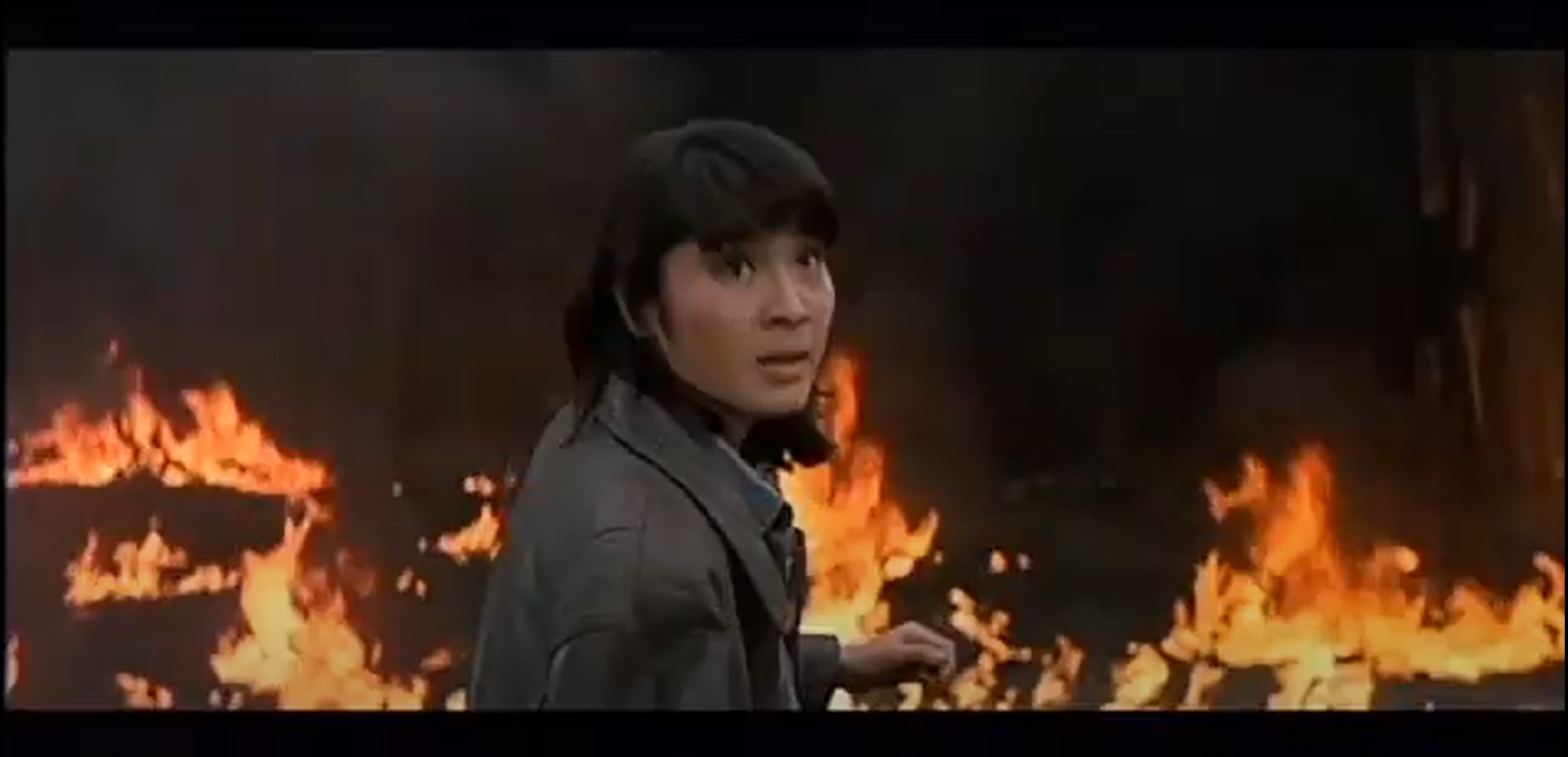
In a career that spans decades plotted by a number of strong female characters, Michelle Yeoh has embodied strength, intelligence, and beauty for this generation.  Under her early credited name of Michelle Kahn, the actress, who in the last five years has entered the Marvel Universe, the Star Trek Universe, and is slated to be in the upcoming James Cameron “Avatar” sequels,” is the driving force behind what makes “Magnificent Warriors” so engrossingly magnetic.  Trained to use a bullwhip and able to accomplish major stunts, unsafely I might add, on her own, Yeoh pulls off the demanding role with sheer confidence radiating from her performance.  So much confidence that the quality beams from her eyes to the point that her gaze nearly appears to be a sadistic grin of her own masochism.  Yeoh seizes Ming-Ming’s adventurous spirit, fully embraces it even, and stands out, but meshes well, amongst the mix of characters, including a hapless and bumbling drifter played by Richard Ng.  The “Mr. Vampire Part 3” star has a recognizable and distinguishable face as a well-known Hong Kong actor from China.  In “Magnificent Warriors,” Ng’s character is clearly the odd man out with zero ambitions and zero fighting skills, providing roughhouse comedic relief with lucky escapes with his life, but as far as character arcs go, the drifter, who cheats and scams gamblers for money and thinks about saving his own skin, succumbs to the resistance call of helping China and becomes one of the leaders of the core Kayi City defenders.  There are three others in this band of five with the City Lord (Lowell Lo, “Spider Woman”) who has a similar character arc as the drifter in being a bit of a scaredy-cat as a traitor against the Japanese Imperial Army but sees the light of his people needing his boiled down bravery and leadership, and his involvement with Shin-Shin (Cindy Lau), a daughter of a Japan loyalist who is obsessed romantically with the City Lord and can kick ass as well that surmises a feminism theme that women are just as strong as men and can have a better moral compass, especially compared to the bumbling man in power, the City Lord, and the drifter con artist.   The weakest fifth character, with an equally weak performance, in the group is Secret Agent No.1, as he’s described in the subtitles, played by Derek Yee (“Black Lizard”).  Though pivotal to the resistance operations to succeed, Secret Agent No. 1 fails to make his impact like the others, character divulging a vague history of his climbing to be China’s best secret agent and also teetering on the supposedly feelings for Ming-Ming that doesn’t ever come despite blatant suggestions to the contrary.    Matsui Tetsuya, Hwang Jan Lee (“The Drunken Master”), Meng Lo, Fung Hak-on, Jing Chen, and Ku Feng round out the “Magnificent Warrior’s” cast.

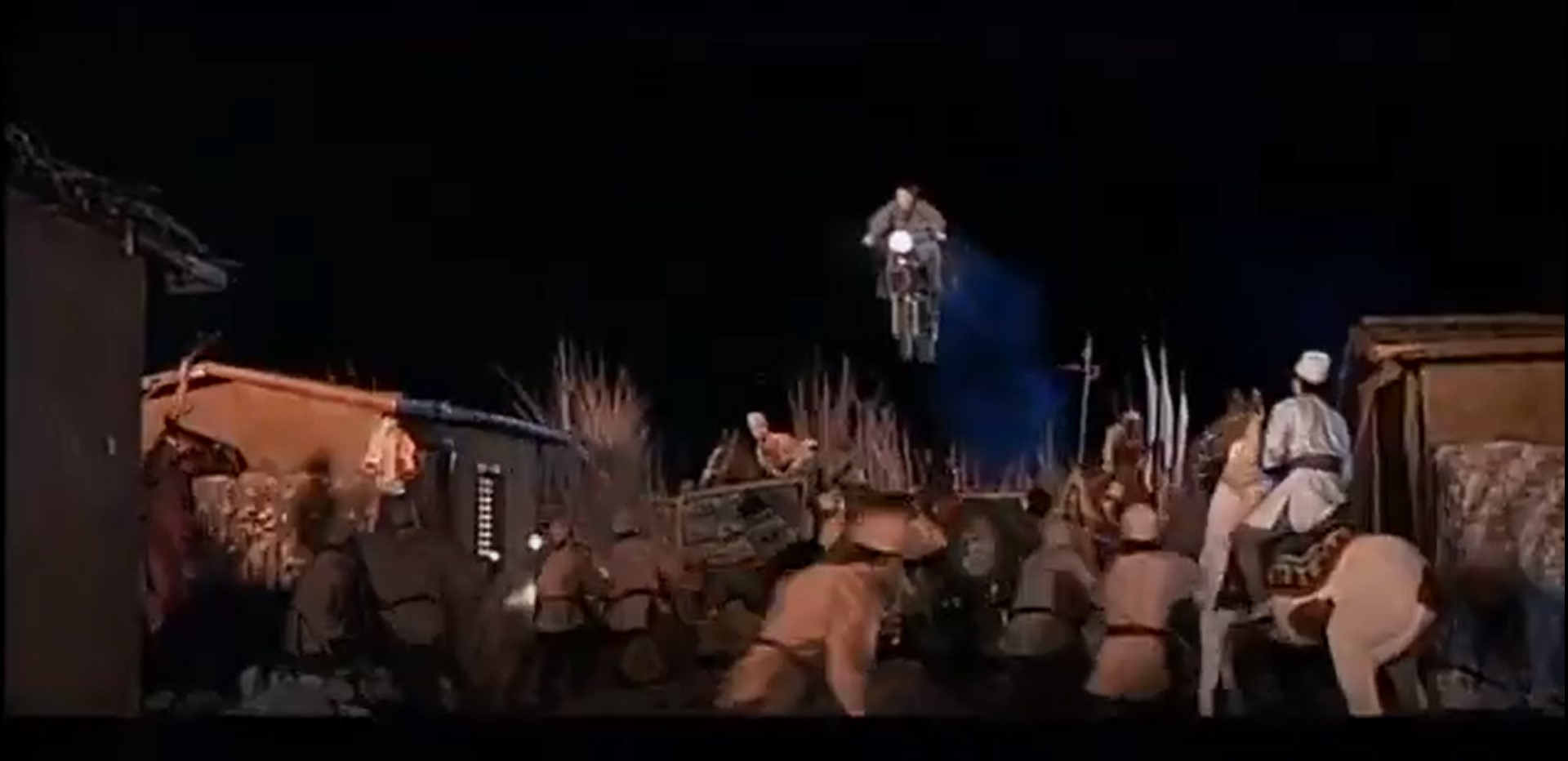
With extraordinary martial arts choreography, the impossible become possible in what can be experienced as an epic ballet of fists, kicks, and dueling weapons.  Every battling moment translates perfectly on screen without the flinch of error, though I’m sure many takes were took.  Back when outside Hollywood film studios relied on their determination and skill, with a pinch of luck, to get them through tough and rigorous stunts without the aid of wire, pads, or any union approved safety measures for that matter in what feels remarkably alien, like being on a whole other world where the rules of physics and safety do not apply.  “Magnificent Warriors” is truly a magnificent stunt-driven, wartime story revolving around revolutionism, a contemplation of the relationship between a home and its people, and a principled life of standing up for what’s right.  Director David Chung manages to massage out the numerous themes under the façade of a great thrust of nonstop action.  The set pieces, locations, and wardrobe are all fitting for the late 1930s-1940s era, especially with the Japanese uniforms that extend into their armored vehicles, such as in the brief, for show, scenes of its war plane and handful of Type 95 Ha-Go tanks. It’s refreshing to see an older film have a different angle on the overplayed World War II narrative; instead of the typical European or Asian Pacific campaigns involving American troops, “Magnificent Warriors” goes granular into The Second Sino-Japanese War during the Second Great War the world has ever experienced. Japanese implemented chemical warfare into their strategy of expanding their dominating military advances and establishing a footprint in China. “Magnificent Warriors” embellishes the poisonous gas narrative with the imperial army seeking to use Kayi City as a chemical producing plant, steering the film’s epic grapple over the city from out of underlying truth of the actual conflict. Every stage of story progresses into a larger scale of the previous skirmish which bottles up the grossing pressure between the imperial army, the resistance fighters, and the collateral damaged city folk caught in the middle. Sprinkled with comedy and charisma, and an ever so delicate dark tone, “Magnificent Warriors” is impeccable Hong Kong cinema and exposes the world to an underrated performance by Michelle Yeoh who kicked ass then in this film and still kicks ass today.

UK distributor 88 Films releases the “Magnificent Warriors” onto an AVE encoded, 1080p, high-definition Blu-ray, presented in a 2K restored transfer of the original theatrical cut on the company’s USA line. Exhibited in the original 2.39:1 aspect ratio, the anamorphic picture can appear globular at times, resulting in a packed image but more on so on pan shots than anything else. The overall picture quality suggests a pristine original print of the theatrical cut with a clean presentation from start-to-finish. Mostly warm with a flaxen degree of a desert background within a Mongolian Mountain valley, when the story does transition to a night shot or to interiors, the grain roughly sustains the change to keep a unified picture consistency that lives in a low contrast field without any deep shadow work or hard lined delineation. Compression issues are non-existent and there’s not obvious, unwanted touchups here to note. The release comes with two audio options: A Cantonese DTS-HD Mono and an English dub DTS-HD Mono. Preferrable choice is always the original intended language; however, this film’s audio options are both dubs but the Cantonese synchs better with grammatically suitable English subtitles albeit their breakneck speed to keep pace. Dialogue is clean, clear, and the action sound design is audibly potent with pinpoint precision on the homogenous strike. There are moments I thought the quick editing, especially during the plane chase, would hinder the ambient effects to keep up but I was pleasantly surprised, and the prop and gunfire intensity presents a nice exchange of open aired depth, range, and dynamisms. Software bonus features an archive interview with Michelle Yeoh (circa early 2000s), an archive interview with stunt coordinator Tung Wai, an English credits opener, the Hong Kong and International trailer, and still gallery. The hardware features are a tad better with a double-sided A3 poster, a 35-page color picture booklet with historical and filmic essay by Matthew Edwards, a limited cardboard slipcase featuring new art by Sean Longmore, and a reversible cover art in which shares its illustration with the booklet. The case isn’t the traditional slim Blu-ray snapper as it’s thicker to handle the booklet and poster. The release comes not rated, region A coded, and has a runtime of 92 minutes. Drawn into a big war shieled and overlooked by a bigger war, “Magnificent Warriors” not only time capsules a piece of Asian history but does it with fantastical fight and character that delivers one Hell of a timeless film with Michelle Yeoh at the helm.

“Magnificent Warriors” Now on an Amazing Blu-ray from 88 Films!   Click The Poster to Purchase!