PROGRAM DESCRIPTION
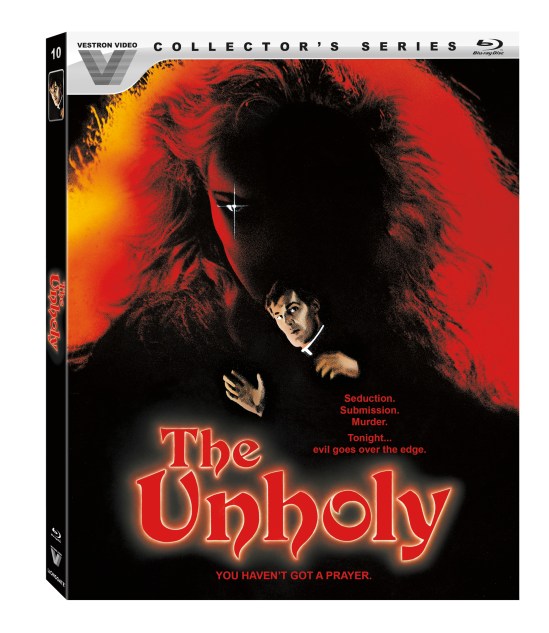
Say your prayers before the Vestron Video Collector’s Series releases the demonic horror classic The Unholy, arriving for the first time on limited-edition Blu-ray on June 27 from Lionsgate. Following the mysterious murders of his predecessors, a newly appointed pastor must battle a powerful demon to save his parish and the world. The Unholy is packed with all-new special features, including an audio commentary with director Camilo Vila, isolated score selections, interviews with the cast and crew, the original storyboard gallery and more! Plus, this special edition includes the film’s original ending with optional audio commentary from producer Mathew Hayden. Restored and remastered, The Unholy Vestron Video Collector’s Series Blu-ray will be available for the suggested retail price of $39.97.
In New Orleans, a city with a dark underside of black magic and satanic worship, 2 priests have been brutally murdered at St Agnes Church. Now The Unholy Reign only to be challenged by the purest of mortal souls. Father Michael is appointed to the ungodly parish. Is he really strong enough to fight off this terrible evil? Or will he be the third priest to die?
SPECIAL FEATURES
· Audio Commentary with Director Camilo Vila
· Isolated Score Selections and Audio Interview with Composer Roger Bellon
· Audio Interview with Production Designer & Co-Writer Fernando Fonseca, featuring Isolated Selections from his Unused Score
· Original Ending featuring Optional Audio Commentary with Producer Mathew Hayden
· Featurettes:
o “Sins of the Father with Ben Cross”
o “Demons In The Flesh: The Monsters of The Unholy”
o “Prayer Offerings with Production Designer & Co-Writer Fernando Fonseca”
· Theatrical Trailer
· TV Spots
· Radio Spots
· Original Storyboard Gallery
· Still Gallery
Cast includes Ben Cross (“Chariots of Fire,” “Star Trek”), Ned Beatty, “Deliverance,” “Superman”), William Russ (“American History X,” “The Right Stuff”), Jill Carroll (“Psycho II”), Hal Holbrook (“Lincoln,” “Wall Street,” Into the Wild”), Trevor Howard (“Gandhi,” “Superman”)
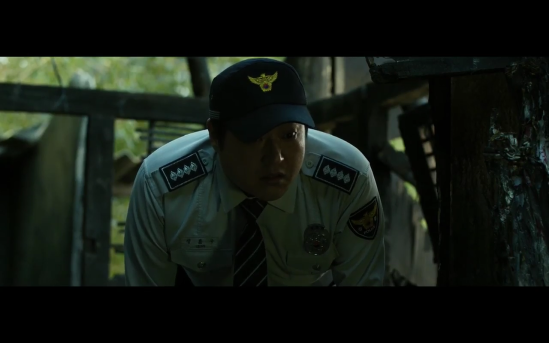
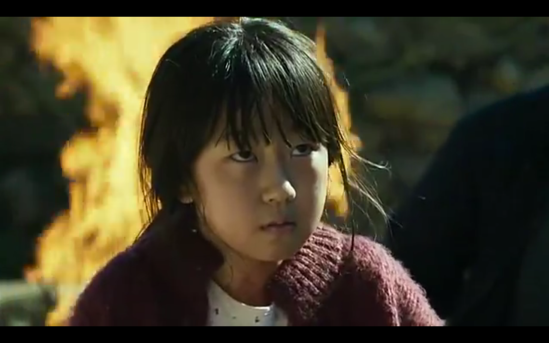
In a small South Korean village, tight-knit families practically know one another in the quaint middle-class community. When mysteriously deadly destructions from inside local families and strange stories of animal carcass devouring creatures in the woods surface, local police sergeant Jong-Goo begins an investigation to connect a pattern of violence and superstition and at the center of it all is a suspicious and reclusive Japanese traveller. Bound by the law and an overall lack of courage, Jong-Goo proceeds to investigate with extreme caution, but when his young daughter, Hyo-jin, becomes subjected to the same symptoms that overtook destroyed families from within, the desperate father sets aside rules and regulations and uses threats and force when visiting the Japanese Stranger, whose rumored to be an evil spirit that’s plaguing the small village with terror and death.
By far, “The Wailing” sets the precedent on folklore horror. Acclaimed writer-director Hong-jin Na lands a harrowingly ambitious, well-constructed film right into the lap of horror fans with “The Wailing,” known also as “Goksung” in the film’s country of South Korea. South Korean filmmakers have once reestablished proof that foreign films can be as masterful, as bold, and as elegant when compared to any other film from major studio productions. Hollywood has started to come around by remaking one of South Korea’s most notorious films, the vengeful thriller “Oldboy,” and seeks to remake recent international hits in “Train to Buscan” and “I Saw the Devil.” Lets also touch upon that top Hollywood actors are beginning to branch out to South Korean films. “Captain America” star Chris Evans had obtained a starring role in Joon-ho Bong’s “Snowpiercer” alongside co-stars Ed Harris and the late British actor Sir John Hurt. “The Wailing” will reach similar popularity being one of 2016’s most original horror movies and one of the more unique visions of terror to clutch the heart of my all time favorite’s list.
Do-won Kwak stars as Sergeant Jong-Goo, a officer who avoids trouble at all costs and has no motivation to be on time for anything. Kwak, basically, plays the fool character, comically going through the routine of investigating brutal murders complete with stabbings, burnings, and hangings despite his Captain’s constant chastising and seizes every opportunity to act dumb and look stupid, but once the story starts to focus “The Wailing” as nothing more than an offbeat black-comedy, Hong-ja Na devilishly about-faces with a severe turn of events that’s a mixed bag of genres. Kwak no longer plays the lead role of comic relief; instead, a more self-confident Sergeant Jong-Goo takes control of the investigation as the deeper he finds himself involved in the dark plague that’s ravaging his village. He hunts down the Japanese Stranger, the debut South Korean film for long time Japanese actor Jun Kunimura (“Kill Bill,” Takashi Miike’s “Audition”) with a zen like aurora that’s enormously haunting to behold and captivating when his presence is lurking amongst the scene. Though Kunimura’s demeanor contrasts with other actors, he’s very much in tune with the dynamic, but it’s the maniacally, foul-mouth ravings of Hyo-jin, played by Hwan-hee Kim, that stand out and are the most distraught during her possession state that could give “The Exorcist” a run for it’s money and is a visceral vice grip to the soul that has to be experienced. Woo-hee Chun and Jung-min Hwang round out the cast in their respective and memorable co-starring roles as a peculiar no named woman and a flashy shaman.
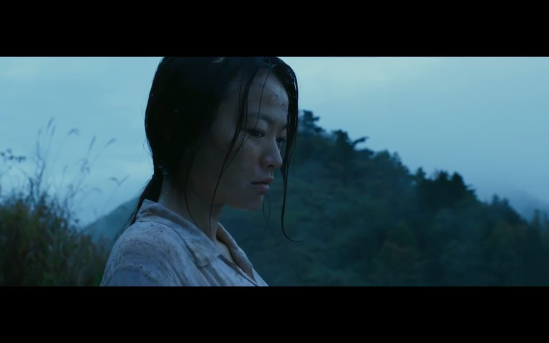
“The Wailing” incorporates various folklore stemming from cultures all over the world including the Koreas, China, Japan, and even from China’s bordering neighbor Nepal and meshes them with religious practices of Buddhism to even the far corners that the Catholic faith possesses. The luxuriant green South Korean mountain backdrop sets an isolated, ominous cloud over a beautiful and serene archaic village, an awe-inspiring juxtaposition created by cinematographer Kyung-pyo Hong that coincides with the complete dread piercing through the heart of the story; a perspective vastly opposite to Hong’s works in the previously mentioned “Snowpiercer” that’s set in the tight confines of a class dividing bullet train. “The Wailing” bundles together mythos with visionary concepts and landscapes in an epic mystery-thriller that’s unforgettable; it will cling to you, like a evil-dwelling spirit, well after the film is over.
20th Century Fox, in association with Ivanhoe Pictures and Side Mirror, produce Hong-jin Na’s top horror contender “The Wailing” with Well Go USA and Kaleidoscope Home Entertainment distributing on DVD and Blu-ray. Unfortunately, I was provided with a DVD-R screener and can’t specifically comment on specifications and image or audio quality. Accompanying the screener were two bonus features: a behind-the-scenes featurette and the beginning tale of “The Wailing” featurette. Both were fairly informative that gives insight on Hong-jin Na’s mindset and how the director’s ambitious story in a malignant tale of comedy, horror, and mysterious involving demons, shamans, and, quite possibly, the devil himself. “The Wailing” significantly captivates, sucking you into the darkness with an uncanny amount of pull with a story too terrifyingly original to avert and too thick with vigorous characters in a plot twist too harrowing to forget.
Every nine months, the vengeful spirit of an atrocity dealing plantation slave owner, known as the Honey Baron, seeps from a cursed slumber to reclaim his once profitable Brazilian manor home. Also, every nine months, caretakers of the manor home resurrect Bento, the once voodoo practicing slave to the malicious Honey Baron, to fortify the longstanding damnation. Until four friends gather to invoke the myth in jest, lightly treading over the forsaken manor home, and getting themselves unwittingly involved in the releasing of Hell on Earth. Caught in the middle between the Honey Baron and Bento, there’s nowhere to escape, nowhere to hide, and noway to distant themselves from an ancient wickedness.
Directors Dante Vescio and Rodrigo Gasparini’s “The Devil Lives Here” is sorely what the horror community needs and desires, an original vision of spine-tingling Brazilian folklore horror. It’s a damn good story that’s engrossingly rich with captivating characters, virtuous and villainous, simultaneously breeding a delectable devil in São Paulo actor Ivo Müller. From the opening scenes of Müller’s sadist applications upon a humble whimpering slave to the highly climactic and unforgettable shocking end, Vescio and Gasparini details every inch of reel with patience, organization, realism, and a sense of admiration for one of a kind antecedent horror films and concocts a molotov cocktail spiced with numerous Brazilian folklore.
Folklore envelopes “The Devil Lives Here.” Ivo Müller portrays a blend of two distinctive mythological beings, the Anhangüera and an Encantado. Anhangüera, basically, is a version of the devil while Encantado paints a more vivid image of the Honey Baron as a man, whose so ruthlessly evil, that he becomes ensnared in limbo by voodoo, in this case the voodoo of African slaves during the colonial era, and lives a vain life for his atrocities. On the other end of the spectrum, Bento, once a young slave boy, seeks to endure the curse, reestablishing it’s constraints around the Honey Baron’s Anhangüera ways. Bento resembles more closely to the story of Negrinho, a slave boy fatally punished for his loose bindings on responsibilities to his master. Negrinho died on an anthill, in which ants later feasted on his flesh, and returns to help others. In the 2015 film, ants and bees are clear motif before Bento’s horrible demise and Bento also returns from the grave like an original African or Caribbean dirty working zombie, the kind of mindless zombie before George A. Romero took the undead head to new flesh eating heights. “The Devil Lives Here” embellishes upon each lore to up the ante and deliver a shock to the system.
Alongside Ivo Müller is a young, but a formidable cast. Pedro Carvalho, Mariana Cortines, Diego Goullart, and Clara Verdier have performance that are simply enjoyable to absorb and are just wonderful being the unexpected catalyst. With a slight twist in one of the four’s well-kept motivations, the brilliancy of Rafael Baliú’s script, based off the story by co-writers Guilherme Aranha and M.M. Izidoro, comes to a head by not following the conventional tropes of hapless pranksters unwittingly hitting the bees nest. Instead, the characters are grossly flawed by one of their own; however, I did hope there was a little more exposition toward Mariana Cortines’ Alexandra clairvoyant ability between the world of the living and the spirit realm as I thought the relevancy was too important to leave open. Pedro Caetano and Felipe Frazão master their roles of being caretaker descendants to Bento. Caetano and Frazão tackle multiple personas with a well armed cache of emotional ranges that split their dutiful commonality and define their positions amongst the story. The cast couldn’t have worked well enough any better making “The Devil Lives Here” a film adorned with God-mode proportions.
Artsploitation Films has become a prominent label in providing provocative and outstanding domestic and global cinema and “The Devil Lives Here” only solidifies their true power amongst other home entertainment distributors. The film is presented in a widescreen 1.85:1 aspect ratio with slight blotchiness in darker tones, but the image is still very sharp with a filter blanket of a warm yellowish glaze. The stereo 2.0 audio with optional English and English SDH subtitles is fine coming through the dual channels. The subtitles are a bit quick, but so is the portuguese language. The DVD cover art is nightmarishly inviting, just like the film itself. “The Devil Lives Here” will completely suck you into the original narrative and curse you with screen glued eyeballs to deliver an inspired and indigenous film that shouldn’t be missed by any horror fan.
“The Devil Lives Here” is at Amazon! Click here to buy!
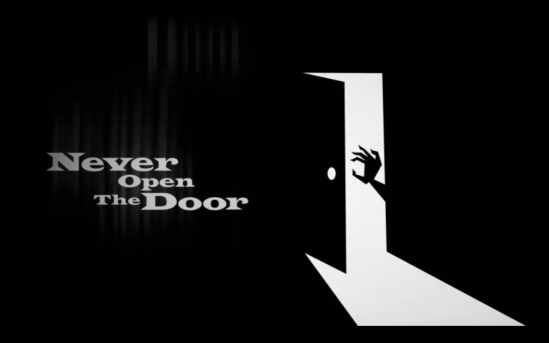
Six friends break bread for the holidays in a remote woodsy cabin. As their jovial and joyful conversation continues, a wicked evil lurks in the forest. A sudden and harsh knock at the door confuses the group on who would be calling at their isolated retreat and at the late hour. When Tess volunteers to answer the knocking, a stranger spews blood all over her and falls to the ground as she opens the door. With his dying breath, the aging stranger warns them to never open the door. stunned with complete shock and terror, the group doesn’t realize that the very moment the strange dies on their doorstep is the very moment of the beginning of the end as weird occurrences and odd behavior pits friend versus friend, girlfriend versus boyfriend, and spouse versus spouse when staying or fleeing the cabin becomes a life or death decision.
“Never Open the Door” strikes as an odd feature that marries projecting horror genres with resurrecting structures from the past into modern times. The Vito Trabucco directed 2014 released film, who also had producer Christopher Maltauro collaborate on to pen the script, stirs up vintage Alfred Hitchcock cinematography craftwork and mirrors the enigmatic nature of particular and peculiar “Twilight Zone” episodes. Trabucco and director of cinematographer Joe Provenzano voids the film of color to encompass the mood of bygone black and white thrillers and employs composer Carlos Vivas to enchant the story with a classically engaging score that embellishes upon harrowing pivotal moments in the story. Vivas and Trabucco have a prior working relationship under Trabucco’s previous nunsploitation slasher “Bloody Bloody Bible Camp.”
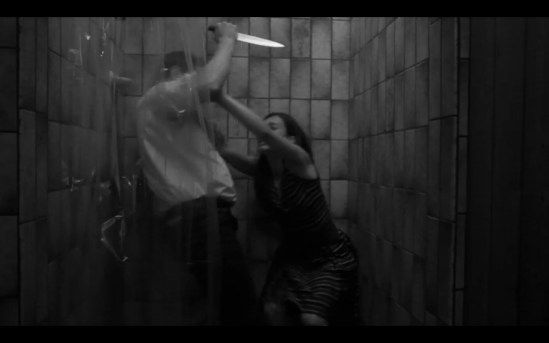
Vito Trabucco casted his staple entourage of actors. If you’ve ever seen “Bloody Bloody Bible Camp,” you’ll recognize many faces with the exclusion of George Troester, who plays the crude, unhitched Terrence. However, Troester does fit into the whole seven degrees of Kevin Bacon theory, being a co-star in “Crack Whore” along side Kristina Page and Steven Richards, Angel and The Stranger in their respective roles. Contemporary scream queen Jessica Sonneborn, the lead actress in “Never Open the Door’s” quasi-dual Tess performance, has a director’s credit under her name for her work on “The Haunting of Alice D” starring the iconic Kane Hodder. The 2014 film also rostered supporting actresses Kristina Page and Deborah Venegas, who portrays in Trabucco’s film as Maria, Luke’s wife. Luke is portrayed by Mike Wood with fellow “Bloody Bloody Bible Camp” co-star Matt Aidan as Angel’s fiance. Whew. Overall, the actors click as a group with a dinner room dynamic that’s natural with slightly pretentious moments that don’t really kill the mood. When the story ramps up, performances start to dwindle and overacting starts to unfold. Mike Wood absolutely murders the shower performance with ghastly exposition, but, again, this might be playing the retro card. Sonnerborn does well as the headliner. Her demon-like twin dominates, but just didn’t receive much screen presence in measly 66 minute runtime.
Continuing with the Tess demon, the black and white style fortunately masks most of the low budget special effects with the aid of some great uses of silhouettes and editing. Evil Tess’s pudgy demon sausage fingers dressed with cheap plastic looking fingernail attachments couldn’t fool a fool that they’re razor sharp, but with jagged teeth and glowing eyes encircled by a pitch black ring, she’s a nightmare inducing boogeywoman. Aside from a pair of demonic dispatches with one involving the razor blade finger caps, the effects were safely contained inside the realm of an independent feature. A few spurts of black blood and a handful of stabbings share a common bound of having being what remains of the effects which were executed well enough to serve the intended purpose. Mostly, “Never Open the Door” relied heavily on editing. Editing that involves characters’ hallucinating future or past events, attributing their frantic confusion and life threatening situation toward an endless loop of purgatory.
Yes, the characters are afflicted with a hell on repeat, switching identities on a continuous horizon that leaves fragments of prior rebroadcasts. From gathering information about the characters, none of them strike me as a damned souls. Tess is a veterinarian who performs the occasional neutering and spade and dates a man nearly twice her age. Terrence just doesn’t want to grow up, but no skeletons appeared from out of his closet. The couples, Angel and Isaac and Luke and Maria, grow suspicious of each others’ intentions that involve jealousy, paranoia, and hatred. Unlike a “Twilight Episode,” “Never Open the Door” leaves open doors of unsolved questions, such as answering the question of how the group came to acquire the house. Before the abrupt knock at the door, the person who located the isolated question seemed to befuddle the entire group. Another loose end lies with the person texting Luke messages about an illicit affair his wife’s having with one of their friends. Again, the loop doesn’t quite close on this interesting caveat.
Maltauro Entertainment presents in association with Baumant Entertainment the Vito Trabucco film “Never Open the Door” on Blu-ray. Unrated in a HD 1080p, the widescreen 1.78:1 is delectably sharp on a BD-25, but that really isn’t a surprise here with a black and white feature barely over a hour long. However, black-upon-black scenes define the Blu-ray with a low bitrate, displaying some blotchy, compression issues. Audio quality is quite fair. Carlos Vivas score channels through a Dolby Digital dual output that caters, again, to a vintage replication, but in creating an atmospheric feature, having surround sound would have boosted the result tenfold. The dialogue is a bit wish-washy, pending on the scene and character positioning, but forefront evident in the quality and that is what really matters. English subtitles are also available. “Never Open the Door” has grand potential in a small package, but trips over it’s own inconsistencies with erratic editing and walled details. Director Vito Trabucco’s vision in modernizing classic techniques and styles merely becomes just that, a vision, and was inches, or rather seconds, away from opening the door for potentially a far greater anxiety-riddled psychological thriller.
“Never Open the Door” on Blu-ray, DVD, and Video on Demand!
A terrorizing motorcycle gang named The Living Dead wreak mischief and murderous havoc amongst the local residents. When Tom, the gang’s leader, learns of his family’s dark agreement with the devil, he seeks to reap the benefits of the agreement’s eternal life bestowed upon his family, but before claiming a long-life of unstoppable hog-wild carnage, Tom must die first and truly believe he’ll return from the afterlife. Convincing the rest of the gang to kill themselves in order to return from the grave and live forever was easy, except his girlfriend Abby who wants to actually be alive. As the torment rips through Abby involving the man she loves, not all satanic bound agreements can last forever and Tom, Abby, and the rest of the gang are caught in a contract that’s all but binding.
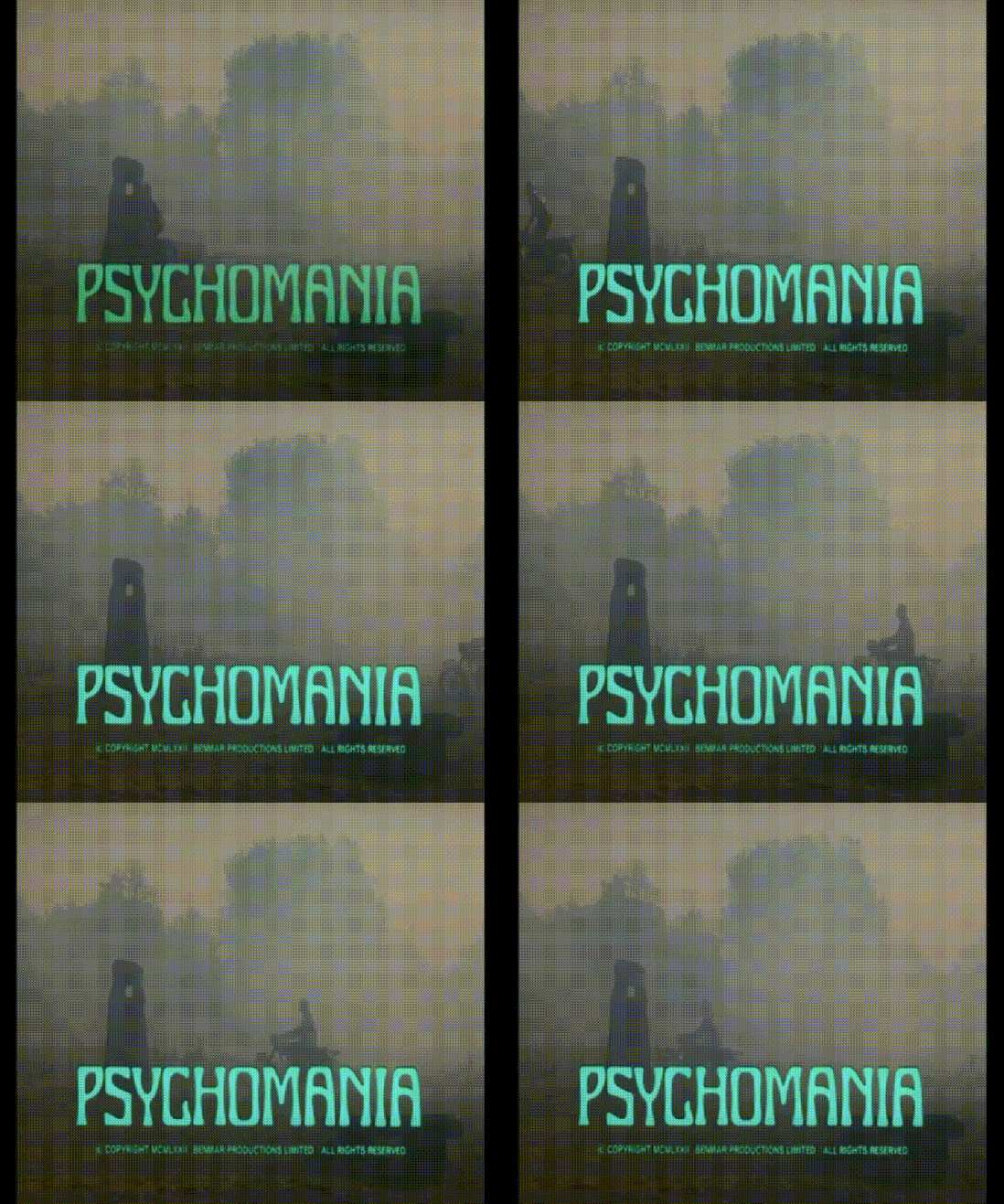
“Psyhomania,” also known as “The Death Wheelers,” is a stunt-heavy horror film from “Kiss the Vampire” and “The Face of Fu Manchu” director Don Sharp and written by “Horror Express’” Julian Zimet and Arnaud d’Usseau. “Psychomania” is a fun, b-horror feature from the swinging London era of the 1970s and rosters a young cast of some seriously talented actors in Nicky Henson as Tom, Mary Larkin as Abby, and Ann Michelle as Jane Pettibone while also being graced with two veterans, George Sanders, who voiced Shere Khan in “The Jungle Book,” and Beryl Reid from “Dr. Phibes Rises Again,” and were most likely the most expensive actors on set, being well worth the cash to balance out a relative unknown cast at the time.
Yes, this film is British. Yes, this film is horror. But, no, “Pyschomania” is not a Hammer Horror film. The Don Sharp film lightly tip-toes through being a horror film with only the supernatural element placing the feature in the thriller category, but the PG-rated horror has other admirable qualities that certainly differentiates itself from the blood-heavy, frighten laden Hammer films. For instance, a story about an undead motorcycle gang should obviously entail motorcycle stunts and “Psychomania” delivers with surprisingly various top-notch stunts with, and without, motorcycles, involving dedicated stunt men and women challenged to be engaged in nearly all stunts, and whereas the blood does not run thick and heavy like with many fright flicks, the bikes certainly do and revs a different, yet welcomed, change of pace.
If the intent here was to make a serious film, the mark was missed by a good margin. Outdated and obsolete, “Psychomania” is the epitome of aging with dated hairstyles, dated clothing, and dated dialogue. If the intent was to be campy, Sharp and his team of willing participants hit the center of the bulls eye. The premise of a motorcycle gang committing themselves to a suicide pact only to come back and continue their barrage amongst humane society while choking out nearly everybody they feel tramples upon their aimless and ferocious cause seems like an outright folly. Who knew that in forty years time that “Psychomania” would be a British cult favorite, sparking a well-deserved upgrade Blu-ray and DVD combo release from the British Film Institute, also known by as the BFI.
BFI Flipside presents “Psychomania” on a Blu-ray and DVD combo presented in the original aspect ratio 1.66:1 and scanned and restored in 2k from preservation negatives. The 1080p Hi-Def Blu-ray runs on a BD50 gigabyte at 24 frames per second with a PCM mono audio mix. The PAL DVD runs about the same, near 25fps, and sports a Dolby Digital 1.0 mono audio mix. I was presented the DVD version for review and I must say the original print looks immaculate. The lens flares in the corner from previous releases have been extinguished. The colors and skin tones have never been more vibrant through the three layers of the black and white master copies containing yellow, blue, and cyan. The mono mix clearly states a purpose and goes through the ears without muddling and much defect. The BFI have also spared no expense on the bonus features that include various interviews with Nicky Henson and other cast, an interview with Harvey Andrews on the “Riding Free” single, a Hell for Leather documentary about the company who supplied the leather for the cast, a short remastering “Psychomania” segment, and other various extras that dive into British culture. I was a bit disappointed with the Sound of “Psychomania” segment as the track portion in the interview with film composer John Cameron seems to be overlaid by something totally off-the-wall and we’re unable to get the full 9 minute audio from the interview. The bonus material rounds out with original theatrical trailer and a nice, vividly colored illustrated booklet with new writing by Vic Pratt, William Folwer, and Andrew Roberts. BFI’s “Psyhomania” release is one of the best re-releases to hit the region 2 market and will re-hit the youth once again on it’s climbing cult success that branches off far from the bloodlust of 1970’s British horror.










 It's Bloggin Evil!