

A Massachusetts foursome of girls, Wren, Chloe, Hallie, and Katie, invoke the summoning of an internet lore named Slender Man after watching an instructional online video on how to evoke his presence to reality. After the video completes and the girls dismissively chalk this activity up as hoax-filled rubbish, an embattled and disconnected Katie vanishes a few weeks later during a school sanctioned field trip to a historical graveyard, thrusting the remaining three friends into investigating her abrupt disappearance all the while they each experience an ominous figure haunting them in and out of consciousness. As the continue to look for Katie, Slender Man keeps popping up into the findings. Wren’s convinced, after suffering from terrifying visions, that Slender Man wants the four who’ve contacted him and when her friends dismiss Wren’s frantic ravings, she employs Hallie’s sister, Lizzie, to assist in stopping Slender Man. All of reality is being skewed while Slender Man hunts them down one-by-one and if they’re not taken, those left in Slender Man’s wake will forever be deranged with madness.

Straight from it’s internet meme playbook origins comes the constructed next chapter in “Slender Man’s” mythology from the “I’ll Always Know What You Did Last Summer” director Sylvain White and written by David Birke (“Elle”) that feels very familiar to “The Ring” premise. Based of the mythos created by Victor Surge, aka Eric Knudsen, “Slender Man” fruition onto the Hollywood scene finds a home under Sony’s Screen Gems division, the same division that delivered the Paul W.S. Anderson “Resident Evil” franchise. While not a mega-glossy action horror piece for Sony and Screen Gems, White’s take on one of the internet’s most popular and mysterious spawns revels in it’s own crowd funded supernatural element and White is the grand puppeteer behind the scenes piecing the material together that builds upon, and extends, “Slender Man” canon into film and video visuals. “Slender Man” provides the character flesh, extenuating doubt where special effects can make monolith his presence of inception and flourish from imagination to terrifying reality. If looking outside the box, “Slender Man” could also be translated into symbolism for the online predatory habits men take towards young, sometimes teenage and impressionable girls. There in lies references to this notion with such in Katie, who is a runaway teenage girl with a fixation toward an obscured man from the internet, aka Slender Man, and also Hallie’s vivid nightmares of being pregnant with the very Lovecraftian-esque spawn of Slender Man as tentacles shoot out from her large, protruding stomach. Yes, she’s a high school girl…

“Slender Man” centers around a four female, high school age characters: Chloe, Katie, Wren, and Hallie. The latter being the leader, Hallie, played by Julie Goldani Telles, is an unwavering non-believer of Slender Man, contributing her visions and feelings as some sort of coming of age Freudian bizarro show. The now 23-year old Telles convinces to pull off a well adjusted teenage girl spiraling into Slender Man’s otherworldly oblivion and absolutely turns the corner when younger sister Lizzie, Taylor Richardson, becomes an unwitting participate. Hallie almost comes toe-to-toe with her confident and frantic friend Wren, a character bestowed to Joey King of “Quarantine” and “White House Down.” King’s townboy-ish approach has served well to keep her character apart in order to not clash with other warring personalities. Yet, there’s not a whole lot interesting aspects associated with the other two characters, Chloe and Katie. If audiences were expected to be concerned for Katie, then Annalise Basso needed her character to have more screen time. The “Ouija: Origin of Evil” actress barely had a handful scenes to try to convey a poignant life with an alcoholic father before she’s whisked away to never been seen again. Chloe had a slight more substance as means to exhibit the result of not being taken by Slender Man; “Chilling Adventures of Sabrina’s” Jaz Sinclair didn’t really add any pizzaz to her poorly written flat character.

Though Slender Man’s origins surpasses being a byproduct of an internet meme and becomes woven into a lore of all it’s own through a global, technological network, the very fabric “Slender Man’s” tech horror theme had laid a negligent foundation. Viewers without a hint of Slender Man knowledge will find the connection between the shadowy figure that stalks and kidnaps children and the domain from which it was born, witnessing the technology used in the film being wielded as a tool of evil rather than a conduit of to connect two worlds. What works for Sylvain White is his knack for shaping Slender Man into physicality in an applauding effort that combines chilling atmospherics, well timed visual and audio cues, above decent special effects, and the crunchy, contorted body of Javier Botet as the Slender Man. We’ve covered Botet before in “Insidious: The Last Key” as the antagonistic KeyFace creature. KeyFace and Slender Man, two similar but still vastly different villains, wouldn’t be as influential or be brought to such a horrifying fruition if Botet was not behind the mask and it’s because of Botet’s blessing, but also a curse, Marfan Syndrome physique that he’s able to accomplish a wide range of distorted and malformed characters.

Sony Pictures presents “Slender Man” onto HD 1080p Blu-ray under the Screen Gems label. The Blu-ray is presented in widescreen of the film’s original aspect ratio, 2.39:1. “Slender Man” doesn’t sell itself as high performance, resulting in more details in the range of textures rather than relying on a clean, finished look. Colors are remain behind a cloak of darker shades to pull of gloomy atmospherics, but do brighten when the scene calls for it. The digital film looks great, if not fairly standard, for movies of today. The English DTS-HD Master Audio 5.1 track is quite high performance, like revving an engine on an imported roadster. Slender Man comes with his own cache of audio tinglers to send chills up your spin and invoke cold sweats. Every branch breaking ambiance and desperate and exasperated breath being took by the teen girls aligns cleanly and nicely with the visual representations. Dialogue is lossless and prevalent as well as being integrated seamlessly during more active sequences in a well balanced fit all with range and depth. Thin extras do put a damper on the release with a bland featurette entitled “Summoning ‘Slender Man:’ Meet the Cast.” The featurette doesn’t do much more than give the actors’ and White’s opinion of their characters and Slender Man. The shame of it is that the internet is a vast place of information and knowledge and, yet, the featurette doesn’t knick the surface of who and what is Slender Man. Plus, if remembering correctly, there are scenes omitted from this release; more intense and bloodshed scenes that would have granted a more adult friendly rating. This release doesn’t offer up two versions of the film. Despite embodying a rehashed, bi-annual story of supernatural and psychological tech horror of the PG-13 variety, “Slender Man” endures through with a sliver of appreciation for the easily missed facets that work as a positive in Sylvain White’s 2018 film, such as bleak atmospheric qualities and Javier Botet’s performance, but the diluted final product, released on Blu-ray, benches what could have an at home video entertainment home run for Sony Pictures.
Category Archives: Evil Reviews
Evil That Shall Not Be Named! “The Unnamable” review!
Miskatonic University students Howard Damon and Randolph Carter investigate the disappearance of a missing friend last seen making good a dare to stay the night in a century-old, dilapidated house, right in the middle of a cemetery and with the caveat of a ghastly, creature legend. In the same instance, two colligate hunks try to fraternize with two freshman women within the dark and gloomy walls that seem to reposition themselves into an unescapable maze. Lurking through the inky corridors, an ancient and horrifying beast, thirsty for blood and hungry for flesh, continues to roam freely in the house, unleashed from it’s confined room a century ago, and hunting the students down one-by-one. Their only hope to get out alive is Howard’s haphazard bravery and Carter’s unrivaled intelligence that aim to rescue survivors and decipher the house’s resident Necronomicon to defeat an evil monster’s night of carnage.

Campy, brazen, and inspired, Jean-Paul Ouellette’s 1988 “The Unnamable” is every bit of an 80’s teen comedy rolled up into a bona fide ball of barbed madness shrouded with heaps of highly anticipated mystery. Unravels like a truly classic H.P Lovecraft story, Ouellette, who also penned the script, shows great patient to give the monster a grand finale revealing that leaves the characters left standing face-to-face with the fear that’s been stalking them. While “The Unnamable” strays away from more of Lovecraft’s prolific Cthulhu literary works, the story is drive by the theme of the unknown that partially, if not all, gives Ouellette motivation to not put the monster on full display. The fact that “The Unnamable” is also gory retells the tales of how horror used to be pure gold back in the Golden Age of the genre despite budget restraints and executive naivety in the audience ratings game.

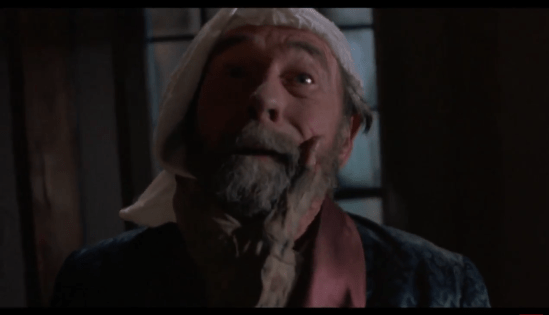
“The Unnamable” finds their unlikely star for the unassertive character in Howard Damon. Soulcalibur series voice actor, Charles Klausmeyer, lands the role as his sophomore film about 8 years after Vanna White’s “Gypsy Angels.” Klausmeyer’s surefooted unsureness and comical desperation of Howard Damon makes him a likable character, likable enough to be opposite whatever has been locked away from over a century. Damn finds an arrogant cohort in Randolph Carter, a conceited fellow freshman whose a bit of a know-it-all, well versed by Mark Kinsey Stephenson. Stephenson, or rather his character, reminds me of a babyface John Glover (“Gremlins 2” and “Scrooged”). A pair of love switcheroo love interests in Alexandra Durrell, in her sole credited performance, and Laura Albert, who went from nude supporting roles to being one of the top stunt women in Hollywood, fair well as the standoffish and damsel-in-distress opposite the vibrant and lively Damon and Carter. Rounding out the remainder of the cast is Blane Wheatley, Eben Ham, Colin Cox, and Katrin Alexandre who did an impeccable gesticulation performance of the creature.

Ouellette story isn’t all that complex; a group of young students are trapped inside the black heart of a folklore notorious cemetery house. However, the breakneck narrative certainly needed something more extensive to the creature’s confinement and unholy backdrop, warranted to fulfill just what the hell these kids were getting into. The house has been doused with shielding dark magic, a fact barely mentioned until the final moments of the monster’s exposition, unveiled through the pages of the Necronomicon which becomes weaponized by quick study Carter. Spells and passages envelope the monster within the house’s old bones, like a prison cell constructed of two-by-fours, wood panelling, and asphalt shingles. While the story could have opened up more in that regard, the lack of dark mysticism doesn’t uproot an entertaining creature feature strongly braced with gory, character demising allegories, and peppered with misogynistic innuendos and campy skirmishes with the damned.
Unearthed Films and MVDVisual proudly present “The Unnamed” as part of their sub-label entitled Unearthed Classics and lands onto 1080p Blu-ray home video. Horror fans will thoroughly enjoy the newly restored 4k transfer presented in widescreen, 1.85:1 aspect ratio and the image quality is remarkably detailed with absent compression artifacts and edging enhancements. Skin tones look natural during outside shots while a blue tint, overlaying a dark backdrop, inside the rickety house isn’t overexposed and makes for quite the grim atmosphere. The English 5.1 Surround Sound DTS-HD, 2.0 PCM, audio track was resonating with a range of ambient sounds; however, an unfortunate mishap of ambient duplication followings about half a second from the initial sound. The dialogue track and soundtrack are no affected by this issue and the dialogue is clear in the forefront, not terrible interfered by the technical boo-boo. The extras are packed with audio commentary with Charles Klausmeyer, Mark Stephenson, Laura Albert, Eben Ham, Camille Calvet, and R. Christopher Biggs. There’s also a video interviews with actors Charles Klausmeyer, Mark Stephenson, Laura Albert, Mark Parra, R. Christopher Biggs, Camille Calvet, and Eben Ham, a vintage audio track, photo gallery, and trailers. The Blu-ray comes in a limited edition slip cover with the beautifully illustrated gothic-esque poster from Tongdee Panumas courtesy of the M. Wright Collection. “The Unnamable” was endangered; a potentially lost classic that quickly went to being out of print as soon as it was released onto DVD in Europe and never actually saw the digital upgrade light of day Stateside from it’s VHS predecessor. Luckily for us fans, Unearthed Films, living up to label moniker, unearths “The Unnamable” from the depths of obsolete format hell, revamping for a new generation of horror fans and re-transfixing fans who once thought Jean-Paul Ouellette’s film would never, ever see a glorious rebirth.
In a Wasteland Full of Evil, There’s “Molly” review!

Molly is a loner scavenger in a post-apocalyptic badlands. She’s hunted down by a separate faction of scavengers to be a champion in their sadistic one-on-one bouts as Supplikants, ruthless and mindless killing machines produced by a synthetic drug. With food being scarce and peoples’ humanity on the edge of total extinction, Molly’s on the run on barren land until she happens upon Bailey, a young girl held up in a makeshift tent and waiting for her departed parents to return with food. When the scavengers track down Molly, Bailey becomes a bargaining chip, used as bait to lure sought after Molly to the scavenger offshore compound where the odds are in their favor, but Molly knows how to fight when she forgoes using her pulsating supernatural power. She will stop at nothing to save and protect Bailey, one of the last good and innocent humans left amongst desolation and savagery.

One part mad science, one part cyberpunk, “Molly” is all post-apocaplytic kickass from Netherlands’ director Colinda Bongers and co-directed with screenwriter Thijs Meuwese. “Molly” is this generations “Mad Max,” a vibrant gauntlet of darkness with a speck of illuminating hope, with the very first scene being a brief glimpse of the past, a fun-in-the-sun holiday at the beach, but in a split second, the cut-to abruptly cuts out the chirping of seagulls, the jovial laughter of children, and the familiar hum of all beach goers. The story literally cuts to the chase with Molly running for her very survival from three armed scavengers, setting up the story from the get go that Molly’s guard would always be tested. “Molly,” without a doubt, resembles a George Miller first film concoction of noticeable low-budget quality with high caliber, high-octane action.

Julia Batelaan tackles the namesake role. The then 20-year-old Batelaan musters up enough physicality to compete with a highly demanding character despite her slender, unlikely heroine frame. Batelaan is no Gal Gadot, but she gives the performance all she can and, then, gives some more in a role that requires a lot of gear to be worn, numerous fight sequences, extended physical scenes, and brief nudity whilst in battle. Batelaan clearly overshadows a cohort of onscreen antagonists, including even her best possible match as a rival by Annelies Appelhof who displays a different kind of tough; one that’s more henchman centric and mechanically advanced. Appelhof’s taller, broader, and equally as tender as Batelaan that dictates her character, Kimmy, the ideal barrier to best if Molly wants to succeed. Yeah, of course, there’s also a clear cut boss in actor Joose Bolt. In the role of Deacon, a maniacal scavenger leader hellbent on winning the world’s bullet currency through the mortal combat of Supplikants by proxy, Boost supplements a harlequin character to fold. “Molly” also includes Emma de Paauw, Tamara Brinkman, and Andre Dongelmans in the cast.

While Molly’s a beautifully visual film with moments to be excited about, Bongers and Meuwese’s post-apocaplytic tale has a hard time being a great film to revisit over and over again. For one, the fight choreography is a slow and robotically rehearsed and doesn’t strike as completely natural. In fairness, this flaw should be given a pass as the last shot is just over a half-hour long of an uncut take of Molly doing her best Tony Jaa impersonation with extended fight takes from room-to-room, up to the top boss level, as if you’re nostalgically playing Streets of Rage 2 (ya know?! On the Sega Genesis!). Yet, there’s still something off about “Molly” and one could say that that the focus of storyline uneasiness surrounds Molly herself: Who is Molly? Why does she have super powers? Where did she come from? Why does she really care for this child? All good questions that don’t really come to fruition in the film, but have promise to be answered by the open-to-a-sequel ending.

Artsploitation Films presents “Molly” on a high definition 1080p Blu-ray home video in a widescreen, 1.78:1 aspect ratio format. Bongers and Meuwese deliver such rich coloring while not over-saturating the 2017 film to the point of obnoxiousness; Molly herself is a hue enriched character, with all her gear, trekking through a desolate oceanside landscape that’s mainly white sand and brown foliage, especially with the marauders who also sport ragged, dark colors, and leaving such an impacting visual aesthetic to digest while concreting a heroine. The English DTS-HD 5.1 surround sound is full of range from a slew of kick-punches from the numerous fight sequences to the juicy stitching of her own profusely bleeding wound. Even though this is a Dutch film, the casts’ English is quite good and well prevalent. Bonus features include a 30-minute featurette entitled “Making of Molly,” directors’ commentary with Colinda Bongers and Thijs Meuwese, and Artsploitation Films trailers. Bordering self-explosion with a barely hinged story, “Molly” eeks out an entertaining, post-apocalyptic, retribution narrative on the opposite side of the spectrum and the palette punctuating visuals and an extremely long take finale make this film a science fiction worth scavenging for!
Evil’s Ultimate Climax. “Gorgasm” review!

A low on the totem poll detective receives the chance to get out from behind a paperwork overloaded desk to investigate the gruesome death of a seemingly BDS&M gone array. The case lures the investigator through the muck of the sleazy and sexy underground to where an independent zine lists GORGASM as the ultimate climax. With every lead, GORGASM connects them all and there’s one person, one suspect, on his radar and her name is Tara, the face of GORGASM. Tara’s a psychopathic call girl, aiming to dish out a finitely pleasurable zenith to those who want more than just sex, and the unlikely hero detective embraces the case personally to put a stop to Tara’s gruesome delusional calling before he’s sucked into an inescapable world blended with lustful carnalities and death.

“Gorgasm.” By title alone, “Gorgasm” has already peaked interest and paved for a path of optimism and delight despite the inkling in the back of the mind about the film’s low-budget shlock. In any case, the title comes from the imagination of creator, writer, director of “Dead Silence,” a one Mr. Hugh Gallagher, and is his 1990 sophomore feature that showcase plenty of violence in an ostentatious psychosexual thriller. Gallagher, perhaps, isn’t the first to delve into porn’s mucky and sleazy underworld that’s universally stigma in many cultures, but, and again perhaps, is the first to explore the many facets that porn has to offer and highlights the habituating circumstances porn has to morph into to keep up with customer demand, whether it involves whips, clips, and chains or to be more specific in the realm of fetishes.

Gallagher didn’t manage to make any old, run-of-the-mill low-budget venture, but managed to do so with a professional lead in Rik Billock. The name might sound familiar to horror fanatics. Billock has been a stock regular in George Romero films: “Dawn of the Dead,” “Knightriders,” “Monkey Shines,” and in “The Dark Half.” He also had a small, yet door knocking down roll in Tom Savini’s “Night of the Living Dead.” Billock’s a bright star with an organic singularity amongst a mechanical lineup, popping out like a child’s pop-out book that solidifies his presence. Even his co-lead, introducing an actress only known as Gabriela, a former wrestling-affiliated performer in her first feature film. Gabriela is stunning, beautiful, and well-endowed, perfectly casted to be the personal-placing killer call girl with dark features and though her method is a bit monotoned and monologuing, Gabriela’s looks really do standalone. “Gorgasm” also co-stars Paula Hendricks who puts a real damper into the ebb and flow of being a strict and condescending sergeant to Billock’s character, but the silver lining is that this Hendrick’s sole credited role. Rounding out the cast includes Paula Gallagher, Kevin Patterson, Denis Hellrung, and co-producer Flint Mitchell in a show-stopping slimeball performance as a sleazy magazine owner.

With an extreme and inviting title like “Gorgasm,” there comes a usual, if not blatantly given, perception that blood will flow and guts will be strung and plastered on forefront of the featured scenes, but to an extent, the gore and the blood splatter were surprisingly granular results and doesn’t ultimately champion an autassassinophilia effect. However, don’t be scornfully turned away from Gallagher’s film if “Gorgasm” isn’t locked and loaded with blood drenching entrails and other body fluids and fleshy tissue. Gallagher executes tasty scenes of violence and mortality on a budget with examples being a garage door decapitation and a kill shot to the vagina. There’s also a weed whacker chewing through a pervs face. “Gorgasm,” perhaps, does find space in the gore and shock subgenre pie, even if only a sliver of a piece.

MVDVisual and SRS Cinema release the Draculina Productions film, “Gorgasm,” onto DVD home video and present the film on the original SOV, full-frame format that’s pleasantly held up over the last 28 years. Aliasing is quite common on shot-on-vide, even on Super VHS that director Hugh Gallagher shoots the film, and the coloring has a slight washed look, but considering the VHS monstrosities out in the world today on DVD, “Gorgasm” has no ill-will toward this release. The uncompressed PCM 1.0 mono track has limited depth and range with a consistent static hiss throughout, but generally adequate with clear dialogue upfront. The “bloody” bonus features include a commentary with Hugh Gallagher, behind-the-scenes footage, and trailers. Also, the grisly-gorgeous illustrated cover art by Mike Mez Phillips is exquisitely killer and on point. While director Hugh Gallagher mediocrely went through the nuts and bolts of vehement slasher violence without really thickening already deep pool of gore, the director did manage to fulfill a promising title with meshing sexual deviancy and blood in an entertainingly provocative feature. Rik Billock and Gabriela, whose half naked through more than half the 82 minute runtime, embraces their twisted characters that you’ll love to death!
The Evil Inside and Out Won’t Stop You From Protecting Your Own! “Cargo” review!

A pandemic sweeps across the Australian land, transforming the infected into hunger-driven cannibals. Andy and his wife, Kay, boat down river in hopes to find a safe zone for their baby daughter Rosie in attempt to avoid major populations and even the occasional infected, but when Kay falls victim to a bite aboard an apparent abandoned sailboat while salvaging for supplies, the couple have no choice but to seek help on the mainland. Desperation leads to carelessness when Andy veers off the road and crashes. He awakens to his wife having turned rabid, sustaining a bite on his arm when saving his daughter from the backseat. With maybe two days until the virus overcomes him, Andy must find a way across a mostly vacant landscape to find someone to take care of his young daughter. With time running out, Andy’s plight takes him through a barren-inhabited land where he encounters various walks with some being too unsavory and too unsuitable for his daughter’s welfare.

Ben Howling and Yolanda Ramke are the first time directors behind the 2017, zombie-classified horror-drama “Cargo.” The screenplay was also penned by Ramke stemming from a remake of the directing duo’s short film of the same title. The short, that went on to be a finalist at the world’s largest short film festival, Tropfest, and went viral back into 2013, being showcased on the internets most popular genre sites. From there, the success of Howling and Ramke’s 7-minute short, encouraged by a strong fan base, was able to land equity to fund a full-length feature set in Howling and Ramke’s home country of Australia. The 2017 film added a star cast, a grittier and gut-busting bigger budget, and even landed back the main actor from the short film in a smaller, but significant role. “Cargo’s” bigger, more organic, and exalts the very essence of being human in an isolated, catastrophic, capitalism dystopia overrun with the chrysalis monsters.

English actor and star of the “Hobbit” series, Martin Freeman, lands the lead role of Andy. Freeman’s usual knack consists of being mild-mannered with a variety of facial expressions and his performance in being a desperate father in “Cargo” is no different; yet Freeman expresses another quality that consistently stays in the shadows of his other worth and that is strength. Andy might be conservative and portrayed as meek, but when push comes to shove, Andy steps to the plate and Freeman shows us his upper hand of his character’s abilities. Freeman works alongside first time child actress, Simone Landers, as Thoomi, an indigenous native offspring who relies on Andy to return her to her family while Andy relies on her to bring safety to his infant daughter. For a first time performance, Landers couldn’t have been more of a perfect fit aside the experienced “Sherlock Holmes” actor. Also co-starring in “Cargo” is Anthony Hayes, Susie Porter, Caren Pistorius, Kris McQuade, and, “Crocodile Dundee’s” David Gulpili who, to quote Ben Howling who said it best, is essentially Australian actor royalty.

“Cargo” isn’t your typical genre zombie film. In fact, I wouldn’t even brandish it the label of a zombie film. Ramke’s post-epidemic story reverberates a more familiar “28 Days Later” echo that spurs more life altering contagion than the dead resurrecting to feast on the living. The infect do not run, but stumble, like a zombie and also crave living delicacies; yet, their tainted blood seeps an inhuman generated neon-orange-like sap through facial orifices that feels more like the European zombie of an organic or voodoo nature. These human-turned-monsters also bury their heads below the dirt up to their shoulders in a state of transformation or a rebirth in a sense. The essence of “Cargo’s” villainy is expanded further from Howling and Ramke’s initial short film that just introduced a milky-eyed dead head and these types of infected give “Cargo” a better, more substantial presence in an overcrowded living dead genre, but the infected are not the main villains as people, essentially one capitalistic vulture, is the real threat against the protagonists.

Umbrella Entertainment presents “Cargo,” a Netflix film, onto Blu-ray home video in a sleek full HD 1080p and presented in a widescreen, 2.35:1 aspect ratio. The region B, MPEG-4 AVC encoded disc has great detail over the dry Australian countryside stocked with brown and brown vegetation, natural coloring across the board, especially in the infected’s neon-orange ooze, and an overall favorable viewing experience. The English 5.1 DTS-HD Master Audio doesn’t necessarily have a bombastic track, as it isn’t that kind of film, and the range is fairly around a mild-mannered tonality with a hiccup of gunfire and shouting in the ambient tracks. Dialogue is perfectly crystal clear in the forefront. Bonus material includes two featurettes, one entitled “Cargo: Shaping A Fragile Future” and the other “Cargo: Maternal Combat,” interviews with cast and crew, Q&A from May 2018 in Melbourne, the original Tropfest 2013 short, and the theatrical trailer. “Cargo” breathes fresh air into a threadbare genre with a sheer look into humanity’s willpower and callous.

