EVIL Needs a Living, Breathing Vessel to be Destroyed! “The Mortuary Assistant” reviewed! (Acorn Media International / Blu-ray)

Recovering drug addict Rebecca Owens finishes her training as a mortuary assistant with praise from her tutor, the owner of the River Fields Mortuary.  On her first solo assignment, a late-night double embalming, Rebecca finds it unusual she must embalm as well as incinerate the corpses.  The bizarre aspects of the night don’t stop there as the corpses seemingly move in what seems to be very real and frightening hallucinations after she wakes up in her apartment bed.  Her employer, Raymond, owner of the River Fields Mortuary, ensures her what she’s experienced and the visions are very real as a demon possesses the mortuary, easily inhabiting the lifeless bodies but trying to permanently attach itself to one of the livings.  Having been targeted himself, Raymond’s been able to avoid possession by way of ritual but can’t fully banish the demon without Rebecca’s assistant with a reagent formula he must obtain from living people caught in the middle.  As Rebecca returns to the mortuary to try to unlatch herself from the demon’s grasp, she must attempt to capture the demon in a corpse by using her own ritualized-infused blood and then incinerate the corpse to ashes, but the demon won’t go down without a fight. 
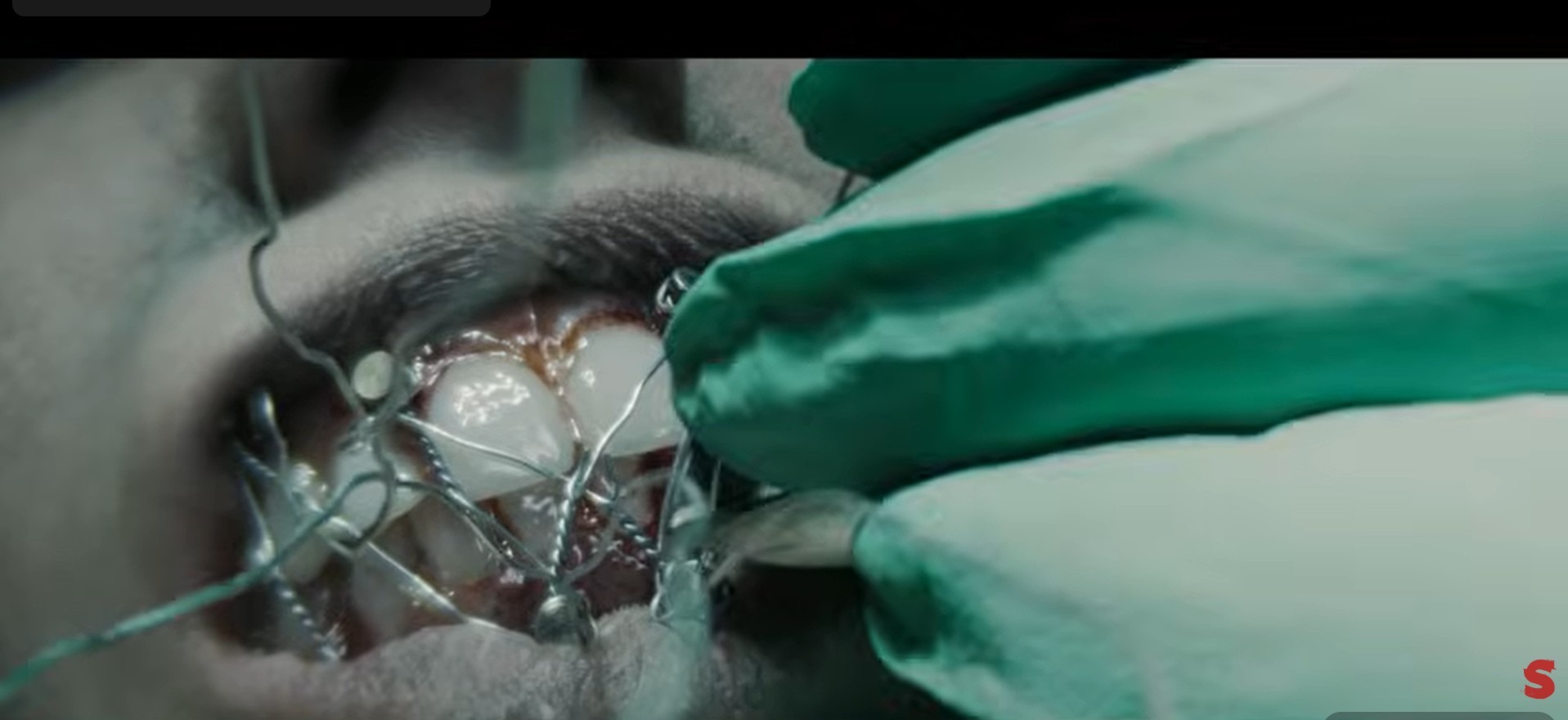
Based on the 2022 popular horror role-playing game of the same title that was developed by Brian Clarke of DarkStone Digital and published by DreadXP, the video game department of the horror network and news outlet Dread Central, “The Mortuary Assistant” 2026 film adaptation brings virtual mortician madness to the big screen with all its demonic appurtenances with Clark penning the script alongside co-writer Tracee Beeb and “Slapface” director, Jeremiah Kipp, calling the shots.  The Dread presented movie is released under Dread’s parent company, Epic Pictures Group, since they already own the rights to the video game and attempt to bring the creepy mortuary atmospherics and terrifying twitching corpses from the first-person perspective game to a third person perspective film narrative.  Creative Capital and regular Dread co-production collaborator, Traverse Media, serve as production studios with Patrick Ewald, Jake Heineke, and Cole Payne in the producer role.
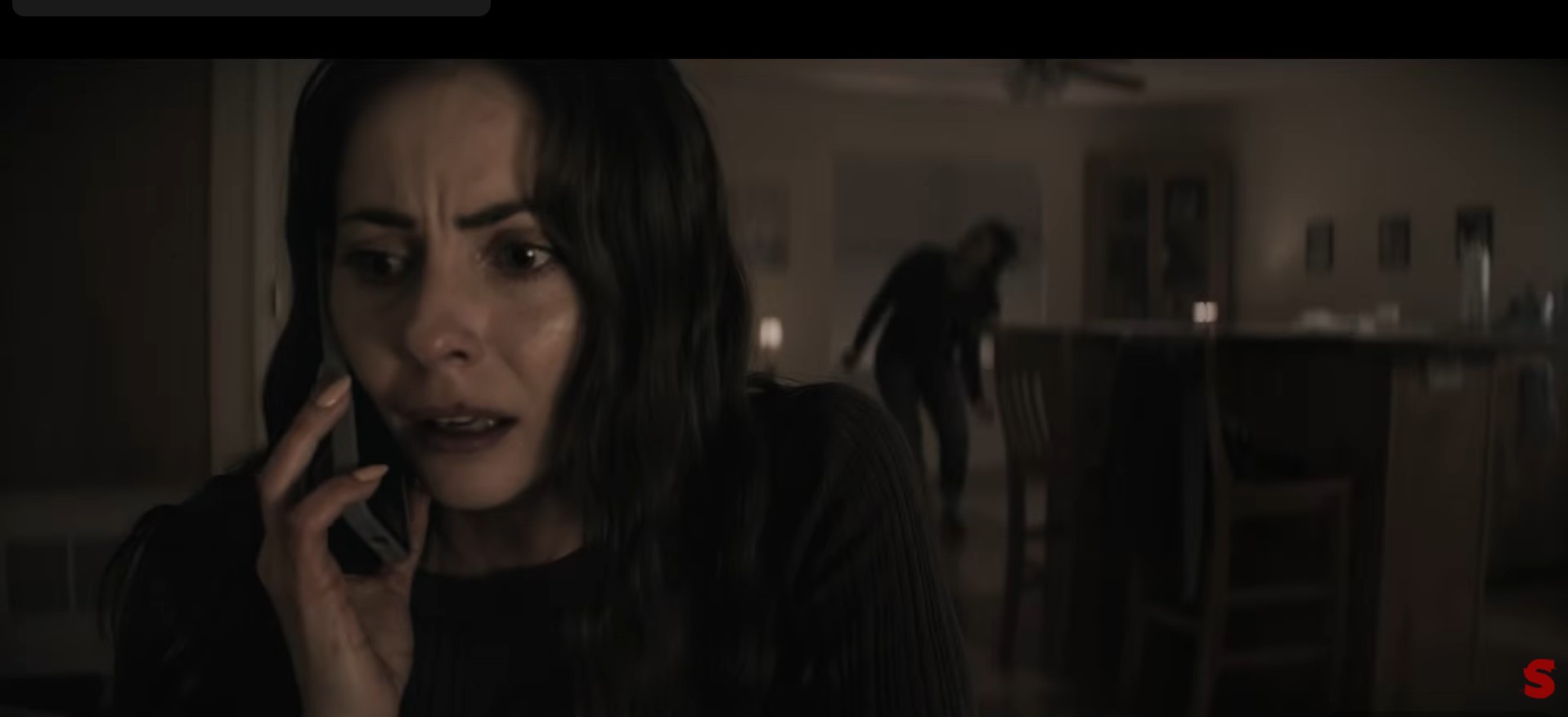
The video game characters, Rebecca and Raymond, and you can also through in the demon too, transition to the film with Willa Holland (“Straw Dogs,” “Legion”) as the green Rebecca Owens alone on her first shift, getting her hands dirty with the insides of corpses and dodging demonic aggressions with half-baked rituals and spells by her mortician employer/demon fighter Raymond, played by Paul Sparks (“Headspace”).  Sparks carries himself plainly through what should be a more interesting, puzzling peculiar as a deadpan mortician business owner with a rich background in demonology and a two-bit exorcist.  Instead, rooting for spark in Sparks’ performance can extinguishable hope for Willa Holland who has to carry much of the fanaticism and strength, as well as fear, as a woman battling demons metaphorically and literally, or perhaps literally battling her demons in an off-the-wagon experience that it becomes metaphorical in her own warped mind.  Either way, the game and it’s characters translate to screen one way or another, supported by pawn characters the demon exploits to gain advantage over Rebecca, such as her grandmother (Shelly Gibson) and her drug addict anonymous sponsor (Keena Ferguson Fraiser), to take powerful, matriarchal and influential people in her life, ones who guide a vulnerable woman, and distort them into traps and hellish visions to break down the young mortician’s self-assurance and ability to tell what’s real or not.   “The Mortuary Assistant” rounds out the cast with John Adams, Emily Bennett, Elisa Marti, Mark Steger, Sydney Haner, Brian Clarke, Gabrielle Mathews, Adam Woolley, and Michael W. Crowley.
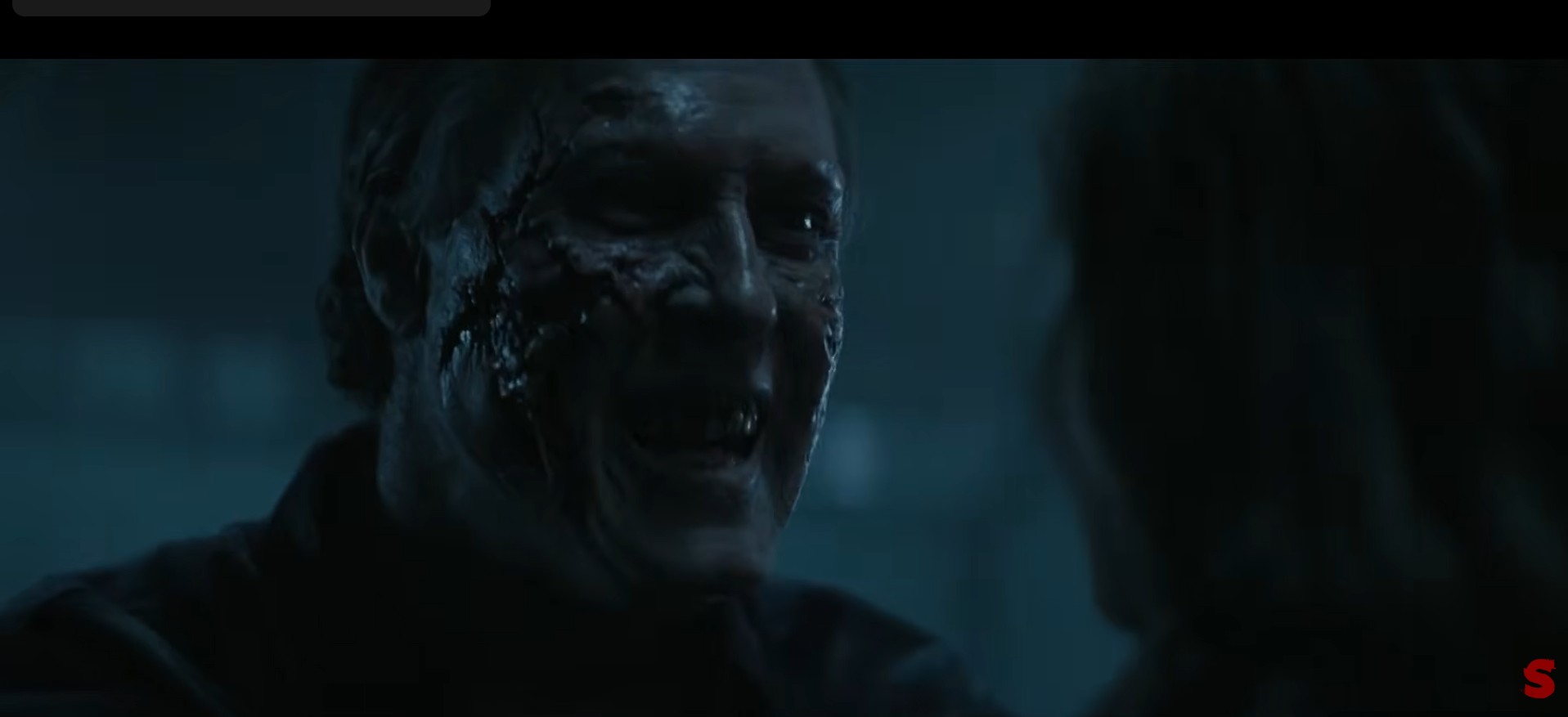
Having never played the video game, which is widely available on multiple consoles and platforms, such as PlayStation 4 and 5, XBOX One and Series X/S, Windows PC, and Nintendo Switch, the movie has all the hallmarks of what makes people’s fears tick: that innate fear of mortality of your corpse lying motionless on a cold, sterile table, environmental atmospherics of a stormy, dark night, demonic mischief that puppeteers and malevolently toys, paganistic folklore and ritual, the lack of hope, religion, and God, dark shadows and slithers of steely lighting, and an overall sense of cynical dread.  Yet, somehow, “The Mortuary Assistant,” the movie, feels terribly clunky after a satisfying disturbing creepy setup that includes the ghastliness of mortician embalming process.  The story’s second half, and more definitively in its third act, loses traction and falls to pieces in it’s trying to explain too much with too little information of the game’s evolving plotline.  The game works well because of it’s lingering through the narrative, letting fear settle in before unleashing bit-by-bit it’s unearthing of secrets.  The film adaptation rushes through climatic guts to make possible the many several hours’ worth of game endings to be comprehendible in under an hour and half.   Aside from the cliff fall finale, the atmospherics are palpable and the blood and gore, mostly perforating of corpses with a cannula and some of their exposed viscera, has sticky-icky and fleshy texture. 
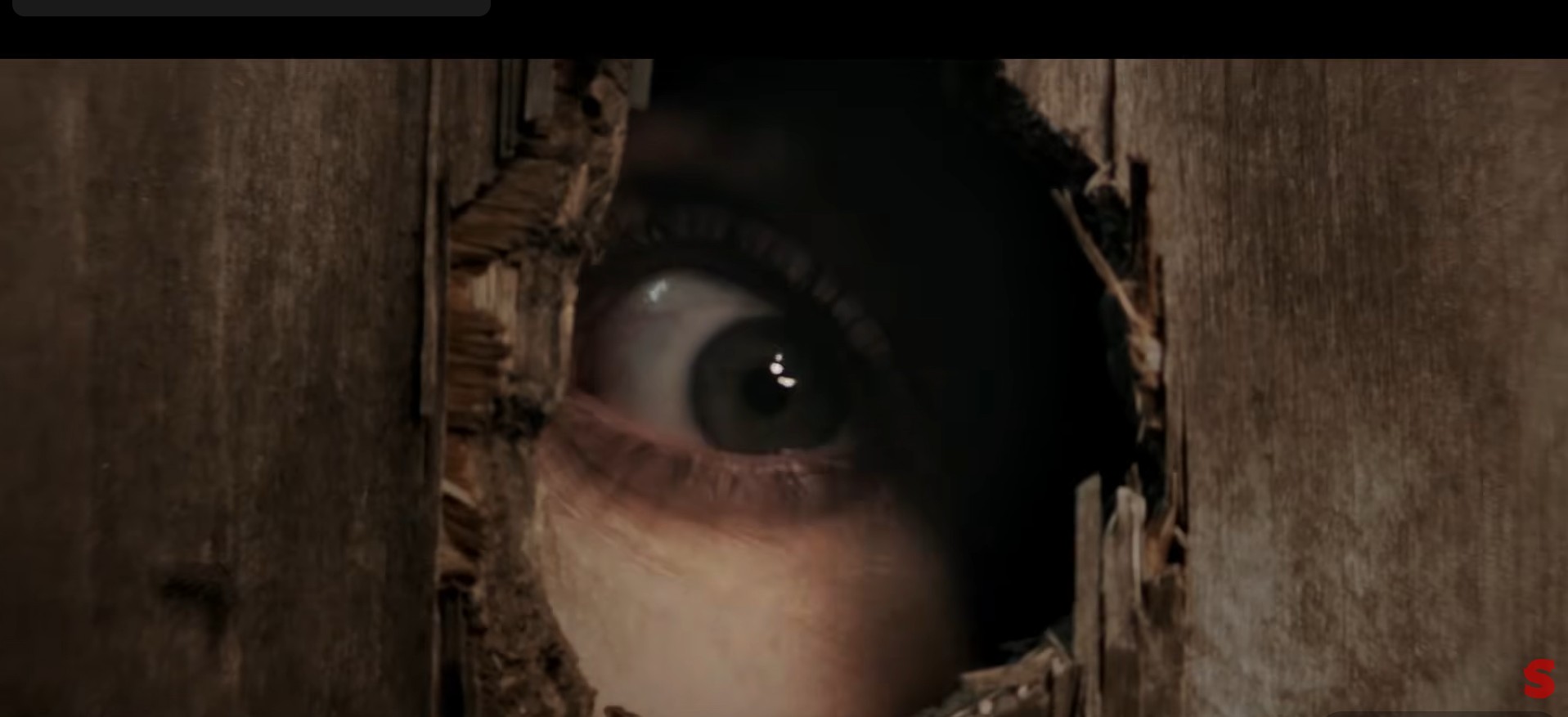
The Shudder Original presentation comes to UK Blu-ray from Acorn Media International.  The AVC encoded, 1080p hi-def resolution, BD25 is on the smaller side of disc capacity for decoding and with an array of textures – from clammy skin of a corpse to the burnt amber of blood – “The Mortuary Assistant” Blu-ray teeters the meticulous detai line as if it wants to show you all the glossy and gooey innards but can’t quite flesh them out.  No issues with decoding albeit some negative spaces do seem lightly washed and not fully inky to create the possibility of the unknown within the blackness.  The Blu-ray has a 2.35:1 aspect ratio presentation to take the smaller confines of a quaint mortuary and have them seem more imposing and closeups a made to be like the surface of alien planets when covering cold corpses, really blowing up the image in greater, better detail.  The English DTS-HD 5.1 Master Audio provides crystal clear composition of layers with unobstructed and robust dialogue that can reproduce the resonating monotone of Paul Sparks, an eclectic layering of sounds between the storming elements of non-diegetic weather to the transfixing squishiness and cannula friction of the embalming process that can get under your skin, pun intended.  The soundtrack by Jeffrey Alan Jones, who did ADR mixing on “Obsession” as well as compose scores for many indie horrors over the last two decades, is a bit lackluster and doesn’t become its own distinctive character within its pedestrian horror tones.  English SDH and French subtitles are available for selection.  Special features only include a behind-the-scenes featurette on the static menu that goes briefly into the game and the making of the film.  The physical Blu-ray Amaray comes standard with monochrome sleeve art that’s blue and black and barely definable.  There are no other tangible elements in the exterior and interior of the release.  The UK certified 18 release has strong injury detail and has a runtime of 91 minutes in its region B playback only.

Last Rites: “The Mortuary Assistant” is one of those videogame adaptations that probably should have stayed as a videogame. Plenty of atmospheric tropes to make it haunting and spooky, but too many core story elements and not enough cohesive tape to make “The Mortuary Assistant” work.
Rage EVIL Leads to A Legion of Drone Dwarfs! “The Brood” reviewed! (Second Sight / 4K UHD)

“The Brood” Available Now from Second Sight!

After a series of mentally abusive behavior, Frank Carveth’s wife Nola resides under the unorthodox psychology of Dr. Hal Raglan whose controversial impersonation techniques to break down his patients’ dissociative psychological hangups and destructive blocks.  After months of therapy and witnessing Dr. Raglan’s methods in action, Frank is ready to pull the plug on the doctor’s sideshow sessions he deems are doing more harm than good when his daughter shows signs of physical abuse after a visit with her mother.  The prolonged verbal bout to get his wife out of Raglan’s care leads to Frank confiding in Nola’s mother who is found brutally murdered soon after.  When Nola’s estranged father comes into town to oversee the burial arrangements, he’s also brutally murdered.  Frank begins to connect pieces, theorizing that Dr. Raglan’s procedures and the murders may be linked and as he investigates further, the truth is more terrifying than he could ever imagine. 

Surging with emotional turmoil through a bitter divorce with ex-wife Margaret Hindson, Canadian body-horror director David Cronenberg pulled the rancorous inspiration from that turbulent time to write the originial screenplay for “The Brood,” a 1979 released thriller between an estranged couple, the effect of their ascending troubles upon their only child during the separation, and the sort of radical and systematic behaviors and practices used to reform a relationship bond that actually divides the emotional expanse even further.  Sprinkle a little of the unknown and grotesque abilities of unnatural corporeal world in there and you have yourself one hell of a dysfunctional and undomesticated horror only the unconventional David Cronenberg could conjure.  “The Brood” is produced by Claude Héroux, who would go on to produce Cronenberg’s next series of films, “Scanners” and “Videodrome,” and the Ontario filmed production is a studio venture from the CFDC (Canadian Film Development Corporation), Elgin International Films, and Mutual Productions.

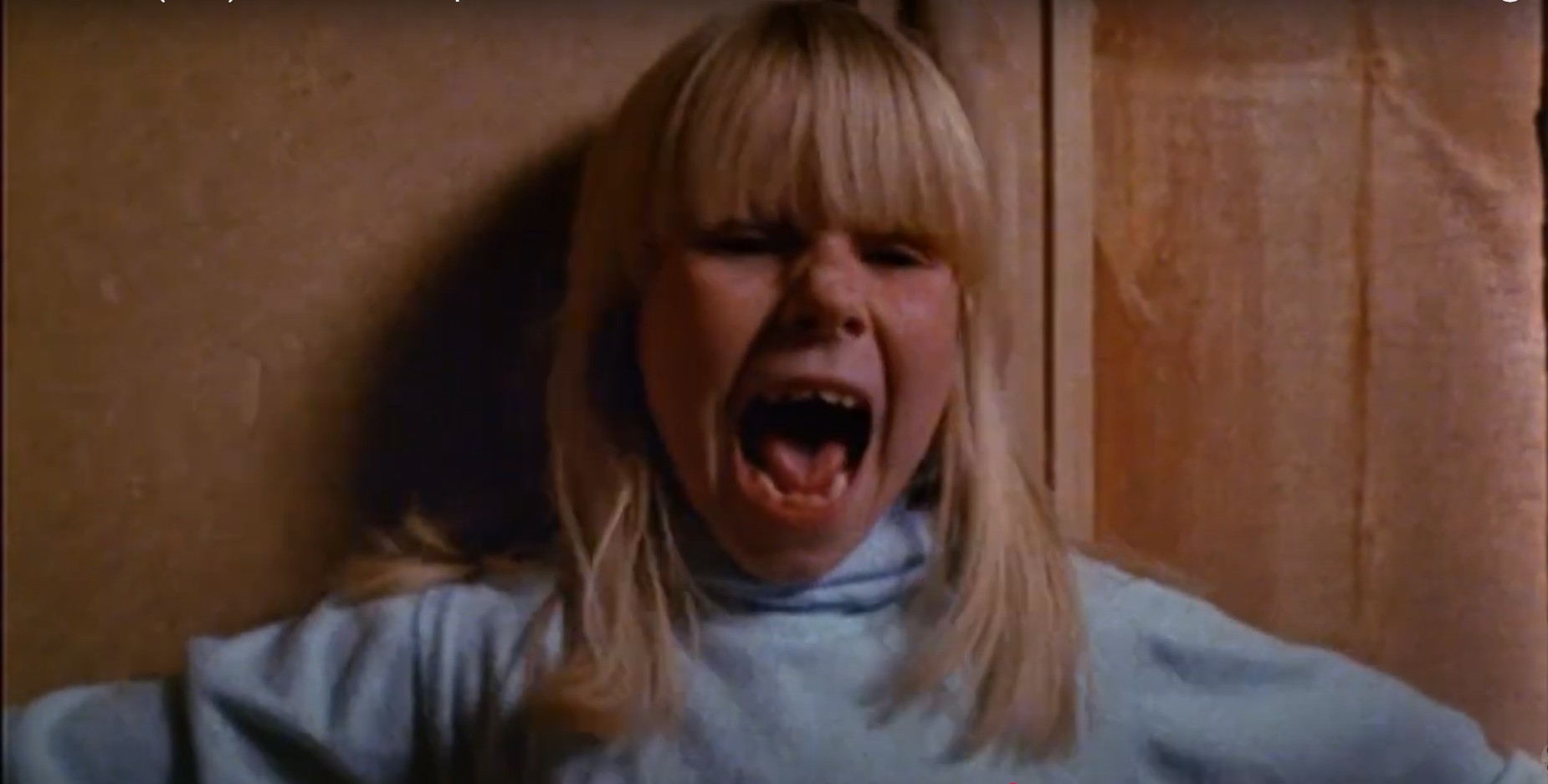
Art Hindle is in the role of Frank Carveth, a father initially skeptical and frustrated with his wife’s supervised treatment and care.  The “Black Christmas” and “Invasion of the Body Snatchers” actor Hindle plays the role of a hinged investigative husband-parent involved into something far more unbelievable than initially imagined.  Next to his on screen dazed and mentally tarnished wife by Samantha Eggar, of “The Exterminator” and “Demonoid,” Hindle enacts normal responses that carry over into extreme situations when those around him – his mother-in-law (Nuala Fitzgerald, “Obsession”), his father-in-law (Henry Beckman, “Side Roads”), and his daughter’s teacher (Susan Hogan, “Phobia”) who might have had a little something-something with while on the rocks with the misses – dies a violent death at the hands of kid-sized mutants that resemble, partially, his own daughter Candace (Cindy Hinds, “The Dead Zone”).  As Nola Carveth, Eggars is only present in a few scenes alongside Dr. Raglan, played by the formidable British actor Oliver Reed (“Paranoiac,” “Gladiator”), as a staring into space, emotionally compromised woman struggling to cope with her past that makes her angry and upset and, in turn, makes her inexplicably conjure do-bidders in the birthing means of advanced evolution or in a parallelism to eusocial insects, like bees or ants.  Reed is the monkey in the middle of all of this between fending off Frank Carveth who challenges the results of his unorthodox psychological methods while also using those methods to unearth the root cause of Nola Carveth’s strange and unusual behavior and, eventual, psychic abilities.  Reeds delivers his typical stoic indifference which makes him ideal for a confident character of the scientific community eager for results rather than feeding his motivations with emotional fodder by empathizing with Carveth’s concerns.  Gary McKeehan (“Rabid”) and Robert A. Silverman (“Naked Lunch”) costar.

In his 50-year plus career, David Cronenberg has evolved in style, substance, and story that dip into more of alternate universes and deliver new ways to blend the future into an organic composite with commercial and social sub context.  While technology and personal and professional growth have developed the director into what he has accomplished and known for today, especially on the verge of his latest release with the living and dead connection theme in “The Shrouds,”  the core of what David Cronenberg does best and still does today has an etiology leading back to his earlier work and “The Brood” is definitely an archetype of his niche.  Cronenberg works the narrative up to his reveal of body horror, and “The Brood” is dangerously on the edge of being atypical, subjecting audiences to more of a buildup in the story and the delimitation of character  disclosure without a steady course of the maladjusted, mutated or modified human body as the villain or the escape, only for that theme to be quasi hinted and then unveiled at the end in a shocking reveal.  “The Brood” plays more of the slasher tones, using the children, dwarfs, or however you want to describe the little, mutant minions to be unknown villain tropes, even when one is laid up on a morgue slab for examination of its biology, or lack thereof.  Cronenberg’s directed ambiguity tees up one of the best endings of his career and, perhaps, even horror cinema as “The Brood” is queen sized stomach-churner, literally.

David Cronenberg’s “The Brood” arrives in 4K on a Ultra HD Blu-ray from UK boutique label Second Sight Films.  The BD100 is HEVC encoded with a 4K resolution or a pixel count of 2160 with Dolby Vision HDR10 and presented in a widescreen 1.85:1 aspect ratio.  On the back cover, the 4K restoration is approved by David Cronenberg.  There’s definitively a more positive treatment of the restored transfer that brightens with a slightly tweaked color grading compared to other DVD or Blu-ray releases, improving delineation as well as rectifying intended details to burst through what’s been long frustrating by a darkened wall of low-resolution definition.  Retaining and sustaining cinema coarse grain, the picture looks and feels incredibly natural without the presence of compromising touchups and smoothing overs that do more harm than good in the plastic-like approach to restoration.  The UHD reinforces the coloring with vibrant richness and range, boosting the once little Canadian film that could into an expensive-appearing optical overhaul that puts to shame previously shelved videos.  Audio fidelity is too retained with a LPCM 1.0 mono that although funnels through a single output is more than an adequate mix all in thanks to the competent sound engineering of Peter Burgess and team to amalgamate recorded sound and post-production ADR into a brawny singular unit that meshes nicely.  Dialogue foots the bill as a clean and clear presentation, the ambient sound design renders distinctly over without ambiguity, and longtime David Cronenberg collaborator and friend Howard Shore conducts an orchestra score that breaks through and keeps the course with an unforgettable amount of tension build.  English subtitles are available.  Special features are aplenty with a new audio commentary by film critics and historians Martyn Conterio and Kat Ellinger, a second commentary with film academic William Beard, interviews with actors Art Hindle and Cindy Hinds moderated by Fangoria’s editor Chris Alexander Meet the Carveths, an interview with executive producer Pierre David Producing the Brood, interview with cinematographer Mark Irwin The Look of Rage, interview with composer Howard Shore Scoring the Brood, an interview with actor Robert A Silverman Character for Cronenberg, a new video essay by film journalist Leigh Singer Anger Management: Cronenberg’s Brood and Shapes of Cinematic Rage, and an archived David Cronenberg interview The Early Years.  The standard Second Sight release comes in the traditional 4K UHD black Amaray case with new unnamed, unsigned illustrated cover art.  The UK certified 18 film is presented region free in this release and has a runtime of 92 minutes. 

Last Rites:  Cronenberg’s play on the word Brood is next level genius with litter rage as a result of mental health and a broken home.  The director’s filmic roots have proved time-and-time again his mastery of moviemaking as his body horror and thought-inducing stories, intermixed with social commentary, are complex visual and narrative devices braised an organic edge. 

“The Brood” Available Now from Second Sight!

When EVIL Gets Inside Your Head…


An immigrant cabby named Luz stumbles dazed into a German police station, repeating a profane distortion of a religious prayer to a couple of baffled detectives. Meanwhile, in a nearby bar, a forwardly chatty woman is diving seductively into a spiel about her Catholic schoolgirl friend who just recently jumped out of her moving taxicab to a psychoanalysis specialist on the edge of his seat. Drunk enough to take advantage of, the Doctor falls for the woman’s alluring trap, beguiling him to do her bidding as an unwilling host. As the now possessed doctor arrives to evaluate Nora for the police, he instigates a hypnosis recreation of the details events leading up to Luz’s ravings and disillusions. What happens next goes beyond human comprehension and rational as the doctor desires more from the stupefied Luz than what meets the eye.

Undoubtedly a strong skiff of demonic peculiarity weathering forth against an unforgiving maelstrom of spiffy-glamourous and yacht-sized counterparts is Tilman Singer’s memorizing tale of demigod deception in “Luz.” As the German born filmmaker’s first written-and-directed full length feature film, a film school project shot entirely on 16mm color negative, Singer dazzles with a throwback grindhouse glow set ablaze with a neon flare that adds to the perilous seduction and violation of the mind and primal infatuation. “Luz’s” was filmed in Cologne, Germany, where Singer studied film at the Academy of Media Arts Cologne, during the production year of 2018 and saw success at various Germany festivals, including it’s debut at the Berlin Film Festival and the Fantasia Film Festival. The Academy of Media Arts Cologne also serves as the production company, as it was, after all, a school project, and listed as Kunsthochschule für Medien Köln (KHM).

“Luz” wouldn’t be what as staggering as it is if it wasn’t for the invested cast who brings Singer’s vision to the spectrum. Luana Velis’s seamless grasp of the editing has remarkable wealth when playing a disoriented cab driver coming in off the street and Velis as Luz, in the ebb and flow of reality when Dr. Rosinni (Jan Bluthardt) entrances her with a blend of hypnosis and psychoanalysis techniques, sustains character through various transitions present inside a large police board room, reality, and the subconscious recollection of places and events inside her mind that Singer constructions for visualization, not reality. Singer melds together places, people, and events, throwing audiences for loops and casting misleading signals and just where the hell our characters are gathered. Bluthardt is equally captivating post transformation, coming off like a calculated maniac, resolved in his wild role. Perhaps, my favorite of the cast list goes to Julia Riedler as Nora Vanderkurt, Luz’s icy former bedfellow from Catholic School who slithers into Dr. Rosinni’s ear like a bewitching asp while seeming like a normal bar patron, but Riedler’s spin on Vanderkurt breaks the construct beyond that of the sleazy barfly and into something more conniving, wicked, and alcohol infused while still steamy with sexual emissions. All three performances are keystones to “Luz” success while fellow cast mates Johannes Benecke, Lilli Lorenz, and Nadja Stubiger, offer some spot on support.

“Luz” summits fear with intrinsic performance art of hazy, but colorful, atmospherics and off-kilter shapes and lines, making the most routine settings feel unsettling. It’s a strong cinematography showcase by Paul Faltz who was able to frame and fright a scene from a sterile and fatigued, wood paneled office environment; essentially put, Faltz turned coal into a diamond while Singer brought a keg of European horror to the party. Unconventional, of course, with a profound arthouse quality about it, “Luz” is very much inspired by the European masters of horror, but pulls quite a bit from the vibrancy of American filmmaking too, pulling inspiration more noticeably from John Carpenter’s overwhelming sense of apocalyptic doom from such a scale down narrative and the terror looms like a chandelier hanging by a single thread just waiting from the startling crash of glass and metal. There are themes related Catholicism, homoeroticism, guilt, and obsession through the venomous innate nature of demon, as if unknowingly leaving an open invitation for evil by way of spiritual clairvoyance and Catholic defiance. Full of abstract visuals and melodious dialogue, “Luz” still burns the scary story lantern with a flickering of imminent existential combustion.

While the theatrical release has been officially canceled, “Luz” will still live on through the digital world, being released by Sharp Teeth Films, who released the POV slasher horror “You Are Not Alone,” on June 1st in the United Kingdom. With this being now a digital release, critiquing the audio and video quality will be limited to the artistic direction. Video-wise, Singer sought the use of a 16mm film stock with the speckle and grain texture of that beloved, yet enveloping imperfection and shooting in an anamorphic widescreen aspect ratio of 2.35:1, using an Arri Alexa and RED cameras that supported an anamorphic lenses. The result is phenomenal to digest with some serious depth when considering how small the sets are, turning mere pockets of space into the likes of grand ball rooms. The German, Spanish, and very little English dialogue tracks are clear and prominently abutted against a well adjusted ambience mix; in all, the audio package has good depth and range. There were no bonus features included with the digital screener. “Luz” is weird, mystifying, and can wriggle into your favor with a chilling essence taking a leisurely stroll along your back, propping up the hairs one strand at a time. Highly recommended.

An Evil Stare Conjures a Peeping Tom! “Butterfly Kisses” review!


Struggling filmmaker Gavin York discovers a stowed away box full of film cassettes in his in-law’s basement. As York delves into the tapes, he becomes obsessed with the tapes’ contents involving two film students documenting the evoking of localized folklore phantom, known as Peeping Tom, as their thesis. Capturing Peeping Tom on their camera acting as a human lens, the two students can’t escape the malevolent presence that gets closer and closer to their reality with every shutting off the camera. York, himself, is also being documented by a group of filmmakers, attempting to capture the far-fetched story of Gavin’s unravelling of the historic legend as well as to turn a profit in revealing that Peeping Tom does, in fact, exist. The two tales of filmmakers ride a distressing parallel that spirals them into ghastly obsession and forces them to never, ever blink again!

“Butterfly Kisses” is the 2018 supernatural faux-documentary from writer-director Erik Kristopher Myers. The “Roulette” filmmaker finds inspiration in Ellicott City, Maryland’s, very own, staring contest champion in Peeping Tom; a 16th century labeled example of a Flickergeist, a shadowy image just on the edge of the peripheral vision, and Peeping Tom also goes by the monikers Blink Man or The Tunnel Man. “Butterfly Kisses” title comes as when Peeping Tom gets closer with every blink of an eyelid, his victim will need to painfully keep their peepers open for as long as they can, but when Peeping Tom is so close, close proximity to the face, flutter’s his eyelashes against her eyes forcing one to blink and succumb to his deadly motives. With Myers’ film, a little bit of this reviewer wanted to see Peeping Tom actually deliver the act of butterfly kisses upon a victim before mangling the poor soul into oblivion.

While both documentaries involve shedding light onto the exposure of a Flickergeist, the narrative harshly shines more of the starlight onto the characters making these films. Gavin York is essentially dissected while he being self-absorbed in himself and his dollar signs he thinks his project is worth to the word. Seth Adam Kallick does Gavin well though perhaps slightly overselling the performance; however, there never was a deeper rabbit hole for York to escape from, leaving not a lot of range for Kallick and his character to arc. York studies and analyzes the original thesis film spearheaded by Sophia Crane, played by Rachel Armiger, and her cameraman Feldman, played by Reed DeLisle. The dynamics are fine between Armiger and DeLisle whom poke the bees nest of folklore legends, but moments to reflect their humanity, why should we care about these two characters as people from abandoned or forgotten footage, didn’t quite translate. Rounding out the cast Erik Kristopher Myers, Matt Lake (Author of the “Weird” state book series), and Eileen del Valle.

The documentary inside a documentary is like looking into a mirror that’s facing another mirror, ping-ponging back and forth between parallel stories that are only set a part bestowed year their recorded while peppering Peeping Tom true to form, as a flicker of a shadowy figure. Myers does his due diligence in editing these two films together, meshing appropriately the intertwining, sometimes combating, docs to find common ground in a linear story. Sometimes the realism just didn’t hit the mark and creating that casual dialect or the valueless moments didn’t blossom, staying focus more on the task at hand. Also, this narrative has been told and rehashed before in some way, shape, or form, whether hunting the legend of Bigfoot or summoning the Slender Man, finding separation between Myer’s film and those other project proves difficult. What’s enjoyable about “Butterfly Kisses” are the welcoming jump scares and while only a couple of jump scares make the cut, the two are well-timed, well-scored, and well-placed to send a shockwave through out the nervous system. Even I jumped on these scenes.

Four-Fingered Films presents Erik Kristopher Myers’ “Butterfly Kisses,” a supernatural documentary that explores a national, Great Depression-born, folklore bred in Maryland and depicts a contagious obsession of stubbornness and worth. Unfortunately, an online screener was provided for this critique so the audio and video aspects will not be reviewed. There were also no bonus material with this screener. “Butterfly Kisses” is a quasi-found footage spook show surrounding another of America’s frightful urban myths, granting Peeping Tom more staying power just inside the corner of our peripheral vision, but the film doesn’t quite highlight and tour the reason or the rhyme to Flickergeist’s true power. Myers chose to detail the downward spiral of those consumed by the sight of his very questionable existence in more than one profitable fashion and that can be more frightening than the realism of a ghoul.

Evil Thoughts! Cannibal review!

I’d like to thank Basement of Ghoulish Decadence for inspiring me to watch and review this film.

Based on:

Armin Meiwes (English pron.: /ˈɑrmɪn ˈmaɪvəs/ ar-min my-vəs; born 1 December 1961) is a German man who achieved international notoriety for killing and eating a voluntary victim whom he had found via the Internet. After Meiwes and the victim jointly attempted to eat the victim’s severed penis, Meiwes killed his victim and proceeded to eat a large amount of his flesh.[2] Because of his acts, Meiwes is also known as the Rotenburg Cannibal or Der Metzgermeister (The Master Butcher).

Inspired by real life German cannibal Armin Meiwes - seen above.

Inspired by real life German cannibal Armin Meiwes – seen above.