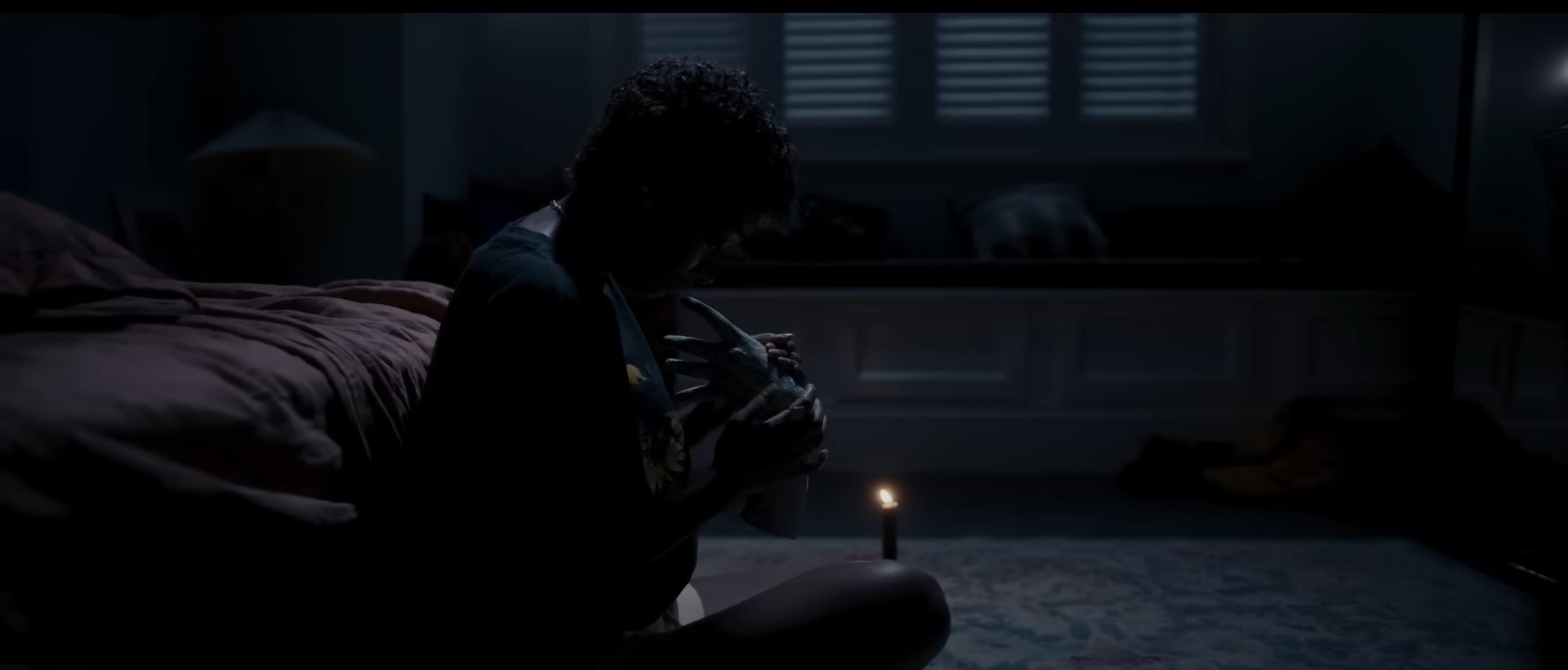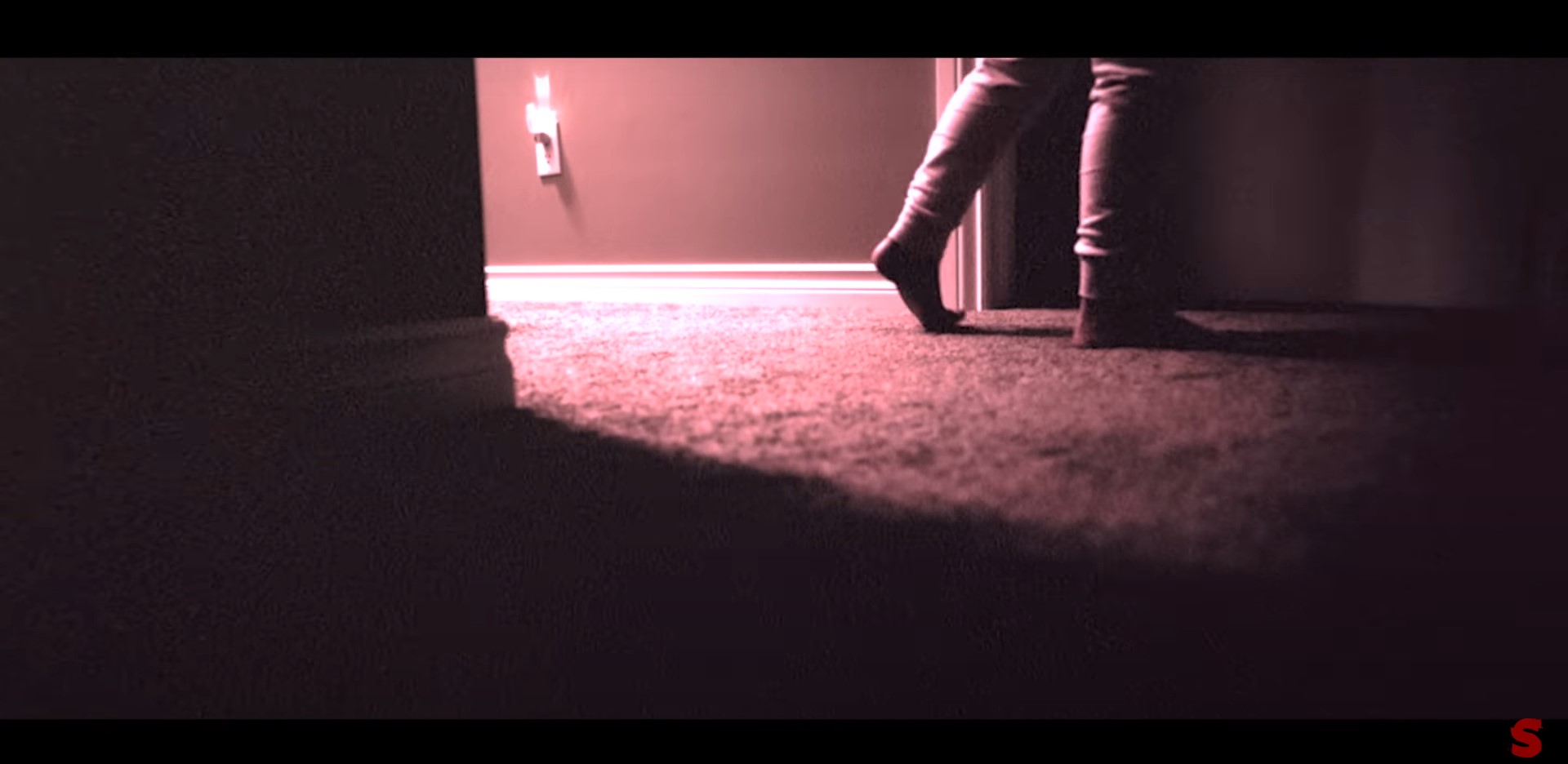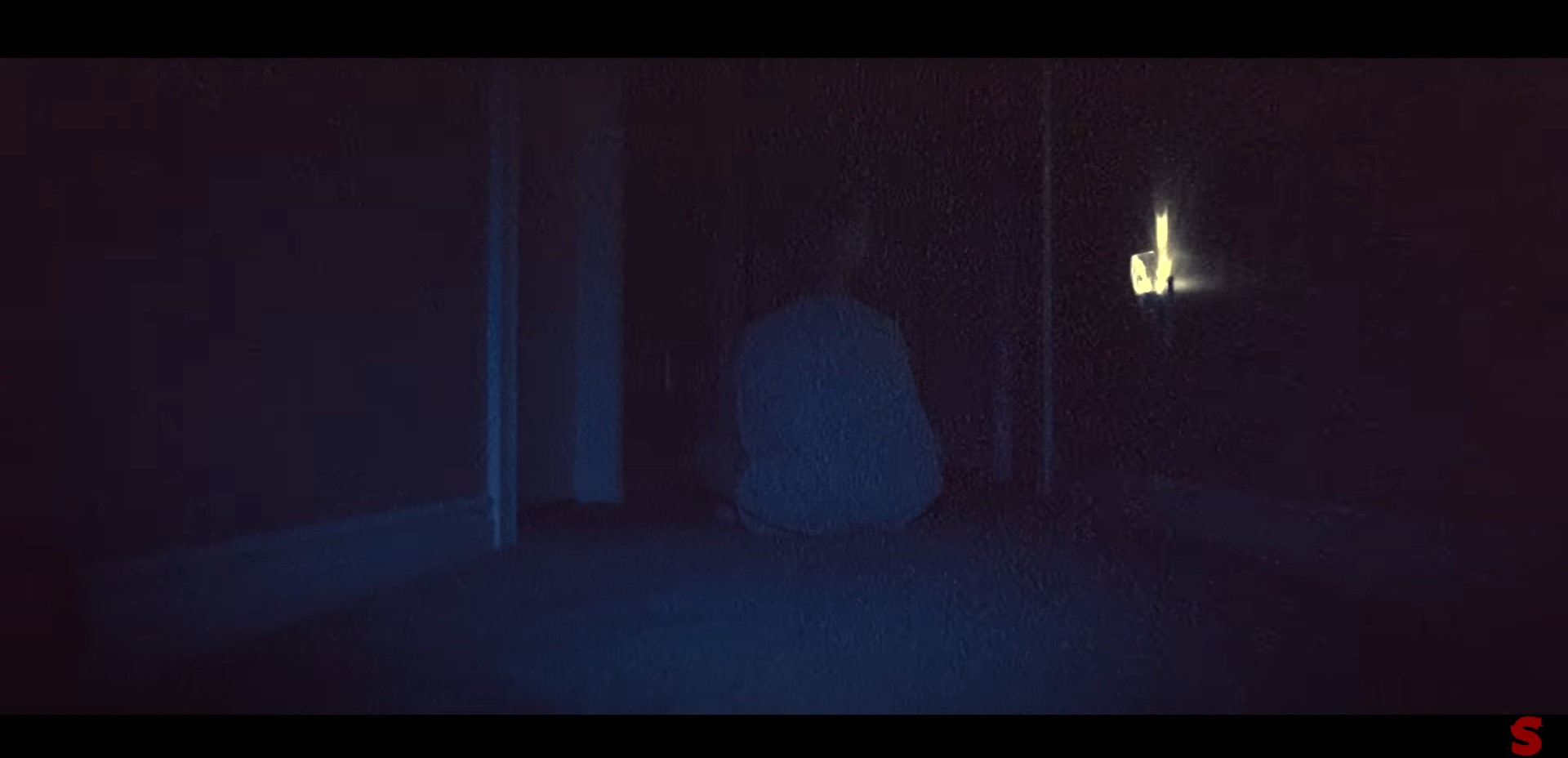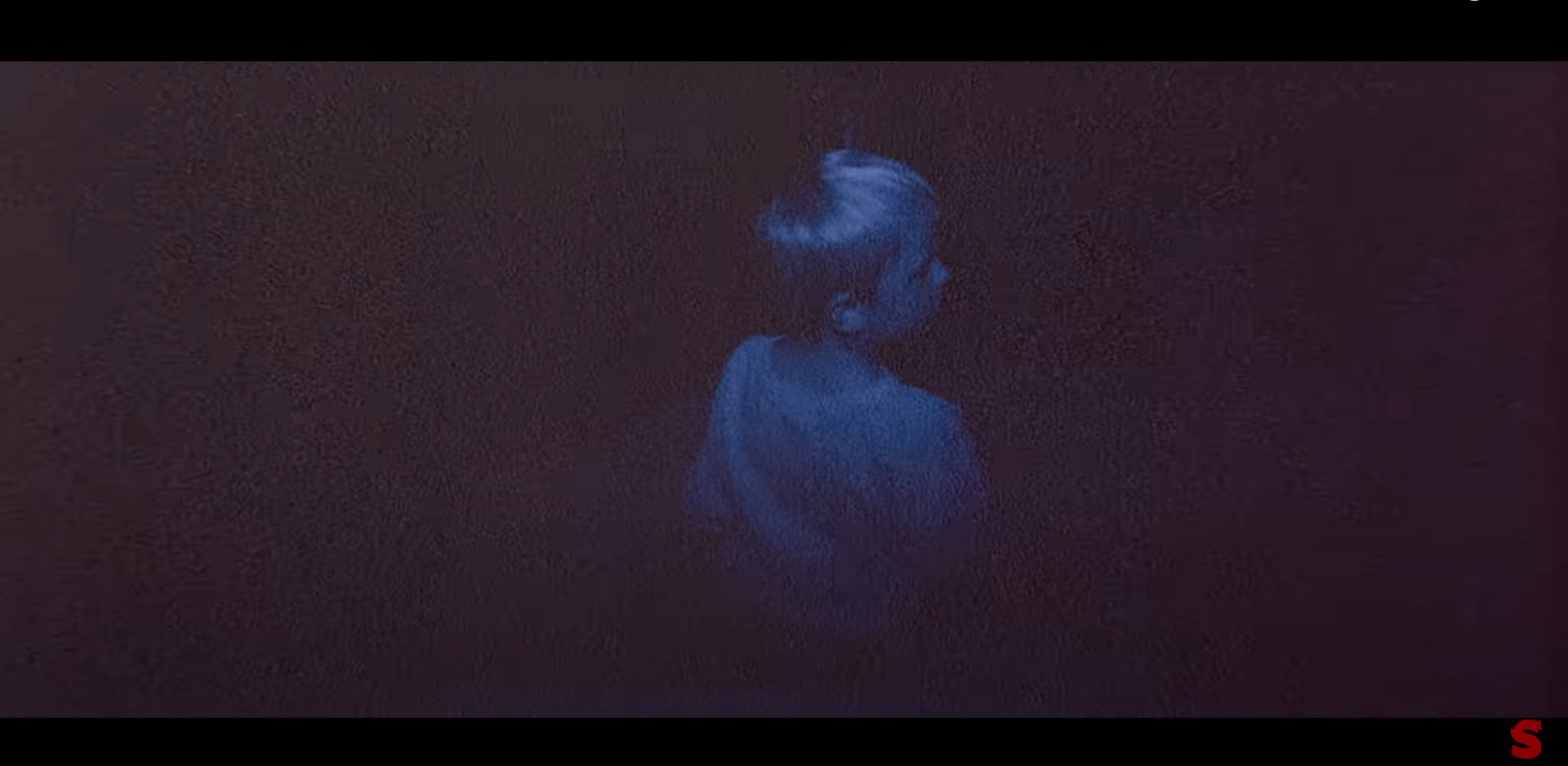
The Stillness, the Quiet, and the Darkness evokes EVIL to Home In. “Skinamarink” reviewed! (Acorn Media International / Blu-ray)

The Kids Aren’t All Right in “Skinamarink” on Blu-ray!

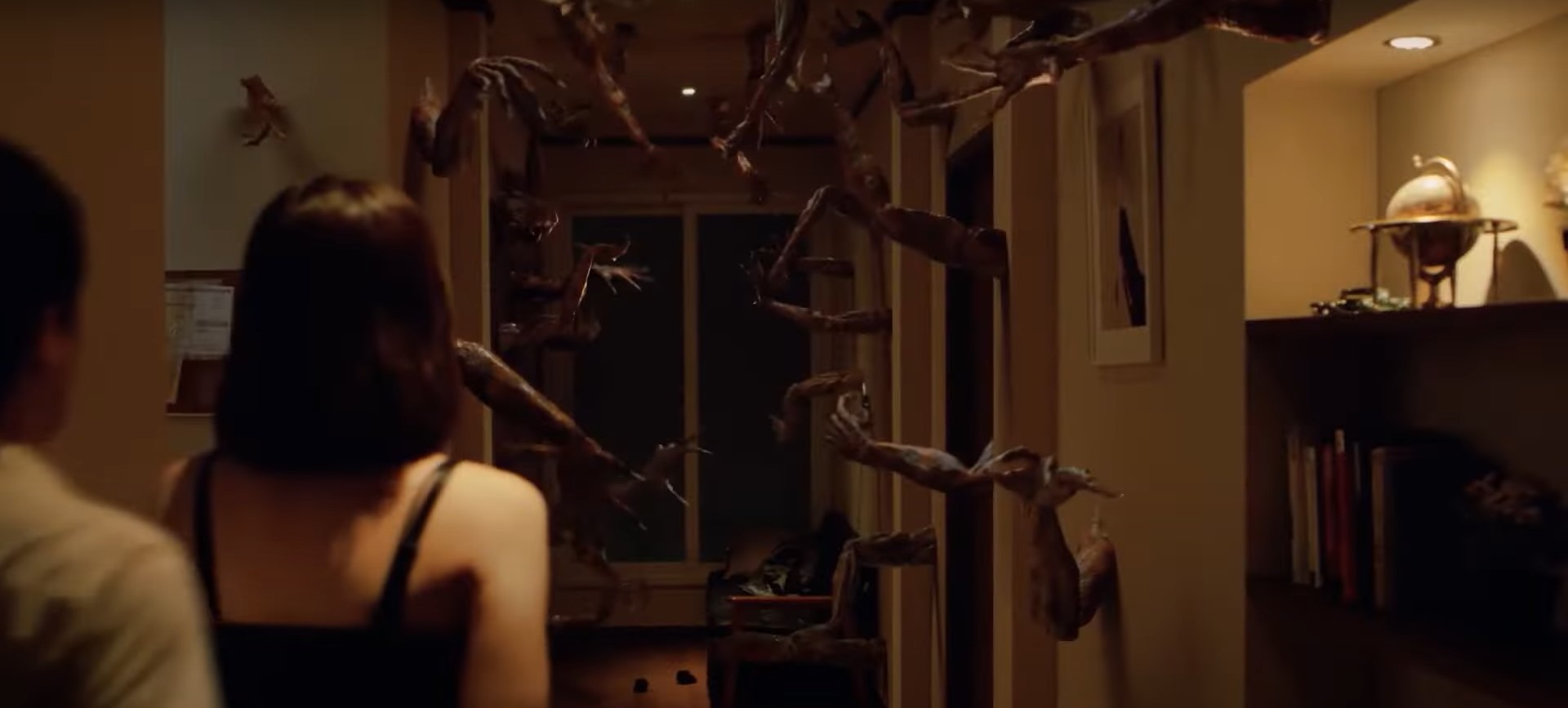
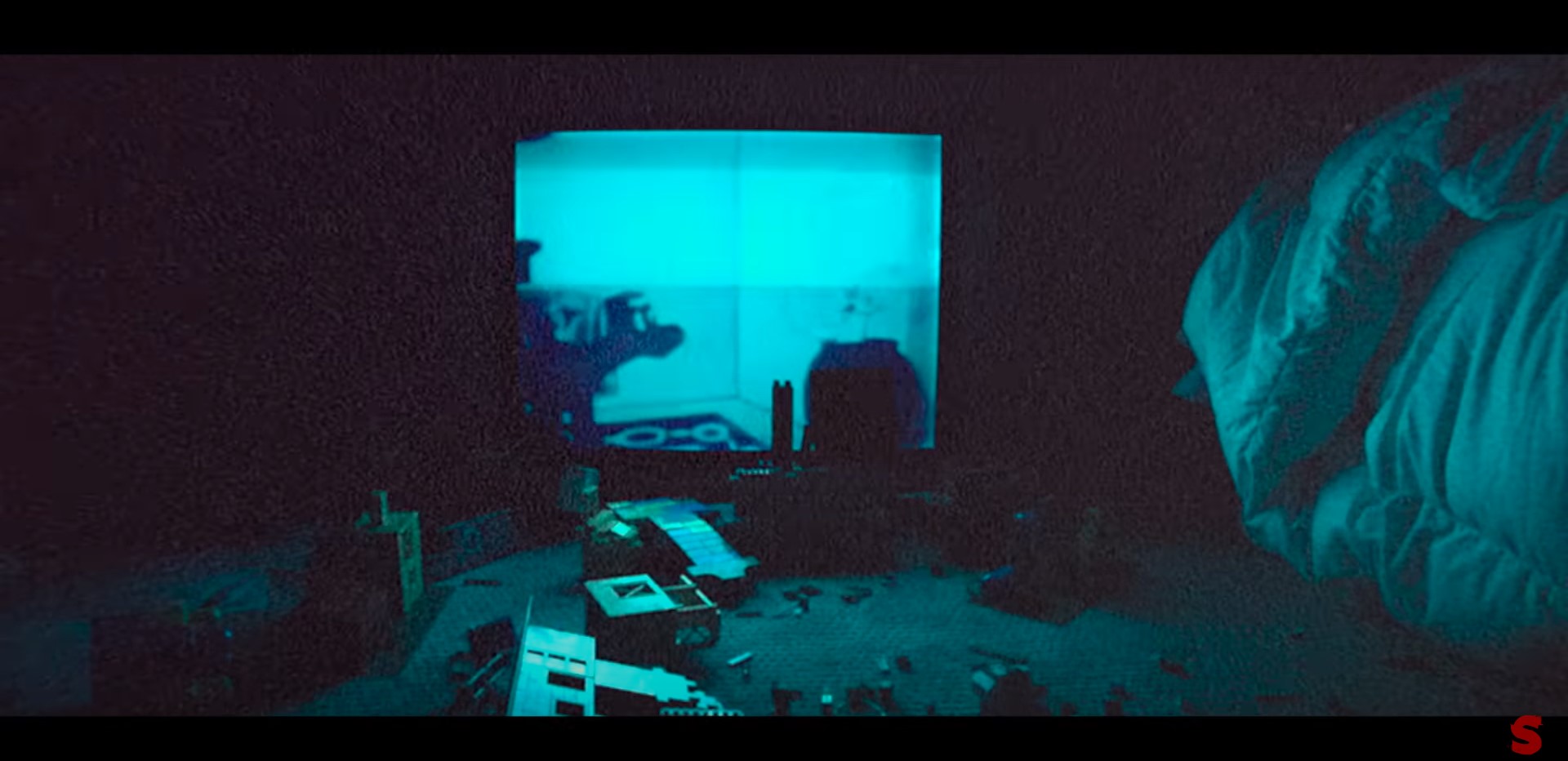
A night of silence is disturbed when a young boy, Kevin, falls down the stairs of his two story home.  Rushed to the hospital to return to the same silence-soaked house, the restless boy and his sister Kaylee search for their dad who has suddenly vanished from his bedroom.  Doors, windows, and even the bathroom toilet has strangely disappeared right from sight.  Feeling scarred under the cover of isolated darkness, the siblings head downstairs to sleep on the couch softly lit b0 the fluorescent glow of the television set.  As they watch old cartoons, crayon, and build with large Legos, while catching a few ZZZs in between, strange noises resonate through the home, floor based objects are found stuck onto the walls and ceilings, and a twisted, omnipresent voice slips the siblings commands that exposes them the darkness from within the house.

Schismatically different from any other spine-taut chills ever experienced before, Kyle Edward Ball’s written-and-directed 2022 Shudder exclusive “Skinamarink” is no joyful and innocent children’s song in the filmmaker’s debut feature film.  Based and expanded upon Ball’s 2020 short film entitled “Heck,” viewers will be enveloped and swallowed by the very core of childhood fears that plays like a fever dream, or a distant nightmare, where faces are a blur, spatial direction is nothing more than theoretical concept, and the voices around us are distorted, muffled, and cold.  “Skinamarink” offers little warmth under constant blanket of darkness and leaves no room for hope when parents are removed from the picture.  What’s Ball leaves behind is primordial and innate terror that rarely can be seen straightforward and lucid.  The Canadian picture, which was filmed in Ball’s childhood home in Alberta, is a micro-budget production of ERO Picture Company, distributed by Bayview Entertainment, Shudder, and IFC Midnight, crowdfunded by Seed & Spark contributors and produced by “Texas Road” producer, Dylan Pearce.

Shot over the course of a week’s time, “Skinamarink” works more like CCTV footage recording the static surroundings within the scope of the lens.  The cast is small, rarely visible, and when visible, they are often obscured or never directly focused upon to mint atmospheric dread.  Two parents.  Two children.  A nuclear family becomes the objective of an omnipresent, ominous presence, but there are concerning questions about the integrity of the family that Ball incites with clues of broken household.  Father and mother briefly make an appearance, or with one of them just their voice, throughout the course of the night, restricted their attendance exclusively around the children’s perspective that makes viewers shrink and become engulfed in childish fears – sometimes they are adult fears as well – of the dark and of being separated from parents.  Lucas Paul and Dali Rose Tetreault as kids Kevin and Kaylee kill their seldomly seen performances with the patter of little feet running through the house and up-and-down stairs, their soft, angelic voices whispering to each other and calling out for their father, and when briefly in frame, or at least the back of their heads, they manage to complete the succinct shot just in the way Ball intends to secrete fear from our every pore amongst the quiet and stillness.  “Skinamarink” is not a character-driven film in the least as Ball cherishes a chilling atmospheric horror so father (Ross Paul, Lucas’s real life dad) and mother (Jamie Hill, “Grotesque”) receive what essentially is cameo roles to establish a feeling of lost when they’re gone and are perhaps the easiest roles the two actors have ever taken and turn out to be the most eerily effective on screen and over the audio track.

“Skinamarink” experiments more with surroundings, audio and visual senses, and common inborn anxieties rather than progressed by traditional methods of character dynamics and that is where the film will be conflict-ridden and divisive amongst the niche group of diehard horror fans.  General audiences will find “Skinamarink” to be a bore without much popcorn pageantry to keep short-attention spans entertained and a disembodied villain.  Slow burn horror usually has an elevated element to it and Kyle Edward Ball certainly incorporates an open for interpretation access door for the deep-dive genre conspiratorialists to work overtime on reasoning and explaining “Skinamarink” to the masses still trying to process what they just experienced themselves after watching the film.  Theories will run amok with the most prominent being Kevin’s fall that reduced him to a coma state and what we experience is all in Kevin’s conscious-cracked cerebrum trying attempting interpret, at best guess, the dissolution of mom and dad’s relationship.  Again, this is just a theory as Ball aims for ambiguity to fester fathomable, one-solution explanations.   Perhaps in a type of narrative the world is not ready for, but in my opinion, “Skinamarink” fills in what is void from modern day horror, a uniquely fresh and chance-taking pervasive eidolon scare package to revitalize genre numbness with slow burn phobias.

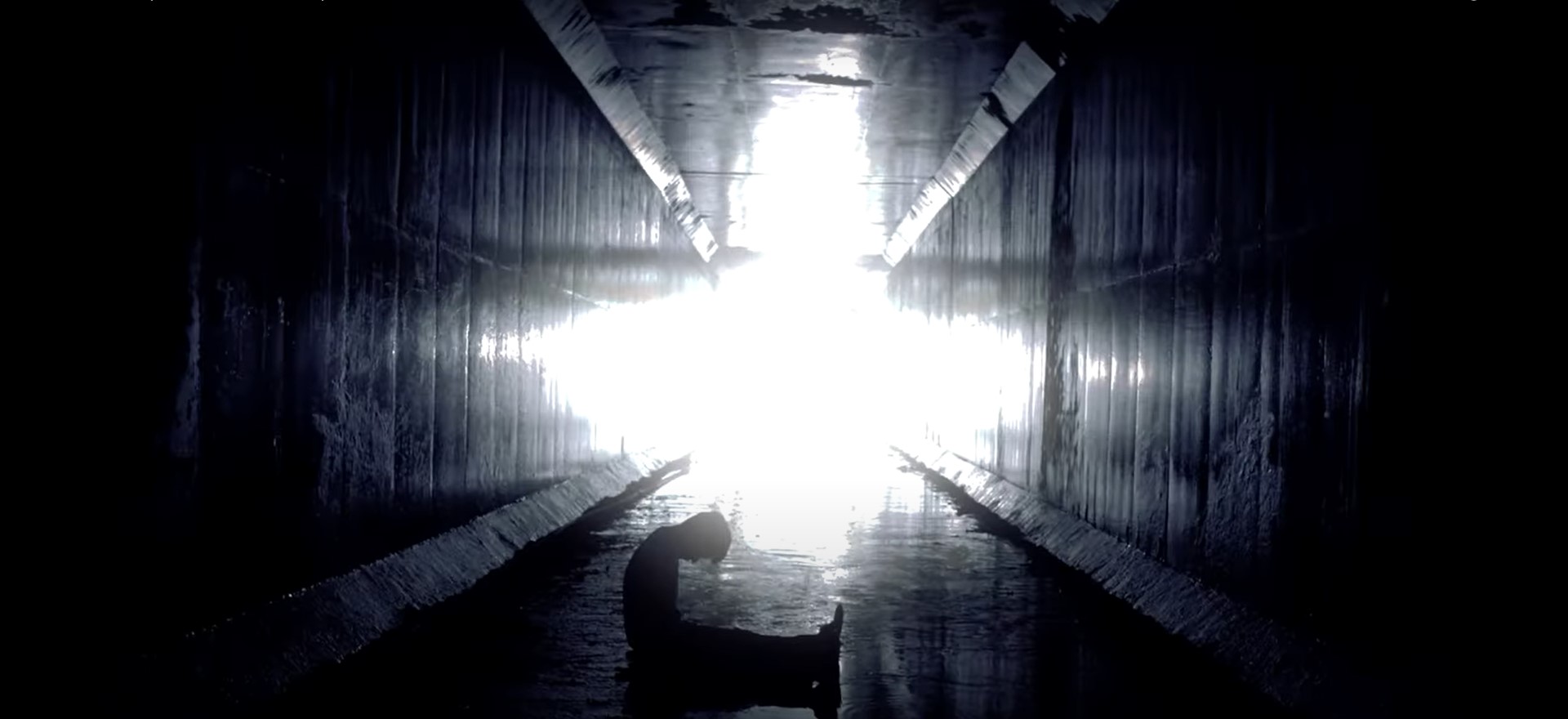
An original parapsychological paralyzer, “Skinamarink” arrives on a Blu-ray home video courtesy of Acorn Media International, the acquired UK distribution company of RLJ Entertainment.  Presented in a widescreen aspect ratio of 2.39:1, the AVC encoded BD25 sustains a purposefully intended lo-fi A/V feature, set to the date tune of 1995, much like when SOV quality films were abundantly popular because of their cost value and accessibility.  If you’re expecting depth of detail, you won’t get it from “Skinamarink’s” dense static approach that all but eliminates object definition.  Delineation is scarce to an effective scare tactic to which Ball tones the film; yet, the static is not, for lack of a better word, static as the current changes within the blips, increasing and decreasing visibility for desired poltergeist potency, if poltergeist is what we want to call it.  Set entirely in nighttime, sleepy home, the basking glow of tube television is the only semblance of color that emits a faint blue luminous while antiquated cartoons provide flat caricature coloring.  Certain scenes are shot in obvious night vision with the spherical focus that becomes unnatural in the frame, but there’s really nothing natural about Ball’s auteur style.  The lo-fi style choice continues into the English DTS-HD 5.1 surround mix that doesn’t exercise every channel.  Instead, we’re back to canned content with intentional hissing, popping, and distorted tracks.  Aside from a couple of innate audio recordings of a squeaking closet door, all the other ambient audio and dialogue is done after the fact in post-production to be rendered appropriately misshaped and muddled.  There’s also no score, retaining realism of a hushed house sound design to pay heed to soft footsteps and other delicate and mortifying milieu noises.  Depending on your audio setup, subtitles may be your friend here as the whispers are so low, they’re nearly inaudible.  There are a handful of scenes that have burned in English subtitles for that very reason, but full menu English captioning is available too for the minute amount of dialogue.  Special features only include an audio commentary track with the director and director of photography Jamie McRae.  Acorn Media’s release mirrors the U.S.’s RLJ Entertainment’s Blu-ray with the exception of a slightly thicker Blu-ray snapper. The front cover denotes essentially what to expect in the future, a low-resolution and a blue-toned, dark, inverted screenshot image of the young boy; this scene also translates to the disc art.  Encoded with a region B playback, “Skinamarink” comes UK certified 15 for strong horror and sustained threat in its 100-minute runtime.  Take my advice:  there’s nothing quite like “Skinamarink” outside the experimental gallimaufry but it’s sleepy time nature should not be viewed at the late-night weary hours or else it’ll lull you into a nightmare of your own.

The Kids Aren’t All Right in “Skinamarink” on Blu-ray!

Heart and Body Reunited Forges Immortal EVIL! “Witchtrap” reviewed! (MVD Visual / Blu-ray)

Get Caught in the “Witchtrap” on Blu-ray!

A motley crew of parapsychologists and private security are hired to investigate the haunted house of powerful warlock and accused serial killer Avery Lauter.  Before the graveyard side home can be turned into a themed Bed & Breakfast by Lauter’s inheriting next of kin, the team is brought in to eradicate the infamous house of any kind of malevolent spirits after the mysterious and gruesome death of a magician who agreed to stay at the house as a test run of the level of malignance.  When the investigators make contact with a confident and evil Lauter, the warlock tricks them by using the team’s physical medium to murder a far-too-inquisitive investigator one-by-one in order to finish a satanic ritual he started before his death that will make him immortal.  It’s up to non-believer, and wise-cracking, private detective Tony Vincente to make sense of the murders and put an end of Lauter’s reign of terror from beyond the grave before it’s too late.

A necromantically-charged slaughterhouse of a film, “Witchtrap” is the 1989 phantasmal thriller of the omnipresent, omni-powerful dead versus a group of clueless living always one-step behind in attempting to make sense of everything.  Also known as “The Haunted” or “The Presence,” the Kevin S. Tenney written-and-directed film succeeds the director’s cult classic “Night of the Demons” and Tenney’s debut film “Witchboard,” which is not a sequel to “Witchtrap” despite a similar title and the hiring of some of the same actors.  Shot in Fairfield, California on a 400K budget, the independence production showcases topnotch gore and pyro effects from makeup artist Judy Yonemoto (“Dance or Die,” “The Newlydeads”) and special effects supervisor Tassilo Baur (“House,” “DeepStar Six”) and is produced by Tenney alongside Daniel Duncan under Mentone Pictures; Duncan also produced Tenney’s “Brain Dead” later in the filmmaker’s career.  Cinema Plus, represented by executive producer Ryan Carroll, serves as the presenting company.

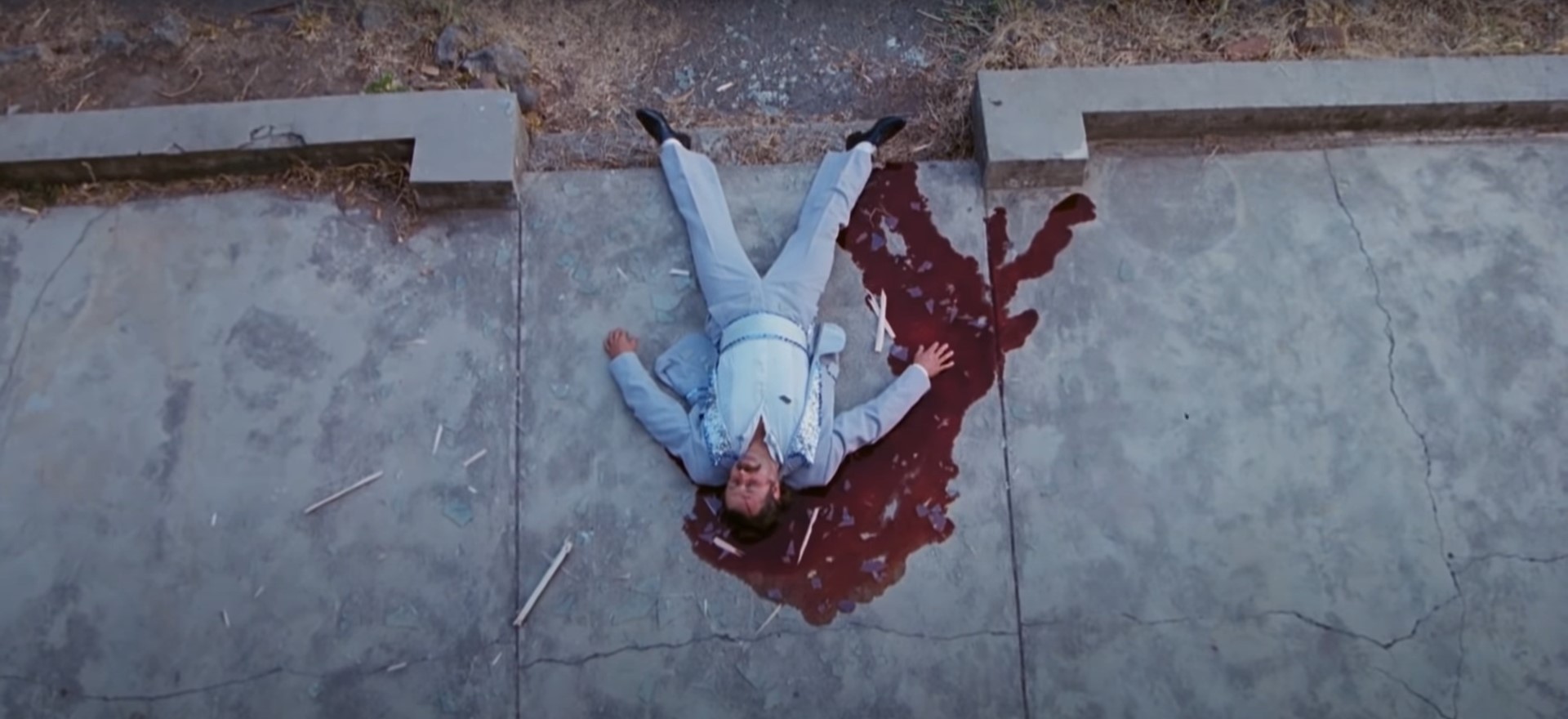
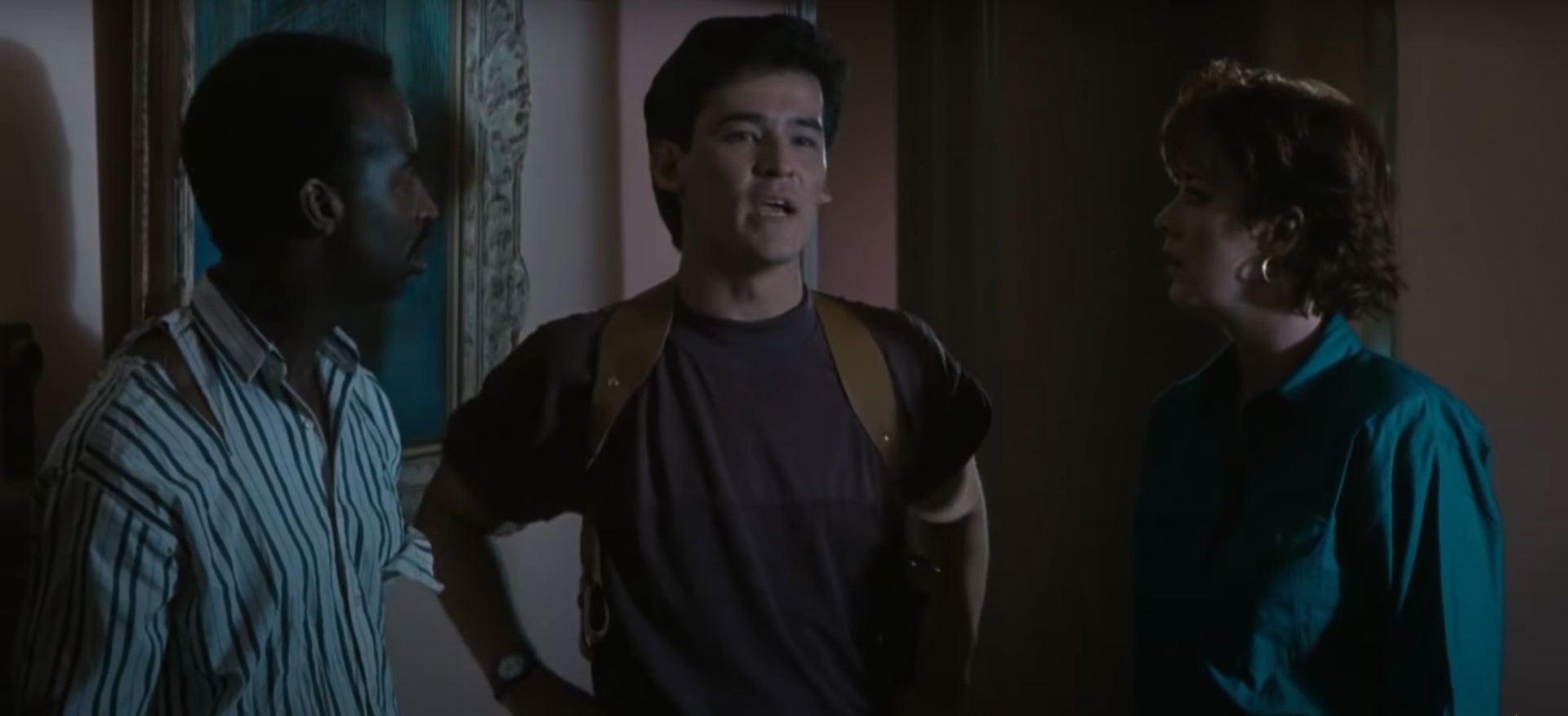
Tenney has been noted saying “Witchtrap” was a gift for the actors who have stuck with him over the years, playing pivotal parts in his student films that pole-vaulted his career into being a cult horror director.  “Witchtrap’s” leading man, James W. Quinn, has worked with Tenny since grade school and was cast in a principal role in “Witchboard” as well as in a minor role in “Night of the Demons.”  Quinn’s Tony Vincente is by far the best dialogue deliverer of the principal ensemble with a smartass ex-cop script that highlights Quinn to be the good guy but while being a complete jerk.  The rest of the cast is painfully flat, with little-to-no inflections, and a severe lack of dynamism or gesticulation that, despite how interesting their character backgrounds are, are just too dull with monotone script-reading.  “Night Visitor’s” Kathleen Bailey is likely the second best to liven up her character of Whitney O’Shea, the religious and reluctant physical medium with shark thrashing spams every time Avery Lauter channels her for to violently wipe out a parapsychologist team member, spearheaded by an eager ghost trapper Dr. Agnes Goldberg (Judy Tatum, “Witchboard”) and her mental medium husband Felix (Rob Zapple), and the accompanying private security forces that also include Vincente’s partner Levi Jackson (Clyde Talley II) and boss man Murphy (Jack W. Thompson).  Dangerous ambitions and irrational greed stir the pot between each of these groupings that side with personal stake over the safety of their existence that make for better character building underneath the rickety performance framing.  And, of course, we can’t neglect mentioning Linnea Quigley bringing up the rear with her rear as the bleached blonde, cropped seater topped A/V technician that can capture ghosts with her ectoplasm detecting gear.  Quigley, and also Judy Tatum, provide a bit of T&A, especially Quigley with an eye-popping full frontal in the prime of her career.  The remaining cast includes Hal Havins (“Sorority Babes in the Slimeball Bowl-O-Rama”) as the creepy groundskeeper and J.P. Luebsen (“Witchboard”) as the cap-wearing and wild-eyed bearded warlock Avery Lauter. 

Oddly enough, what makes “Witchrap” entertainingly great, is Tenney’s attractive and amusing dialogue.  Between the quips, banters, diatribes, and the depth conversations, Tenney formulates a dialogue that can match or even surpass the outstanding special effects that course through the narrative.  Without Vincente’s brutal mockery of the entire paranormal research and investigation scheme as well as an unmercifully, nonstop degrading position toward his contentious boss, left with only the tedious prosaic to hear, “Witchtrap” would be one of those great-gore, dull-dialogue features that force your hand to fast-forward to the good parts in order to not pass out asleep from the in between drag.  Instead, “Witchtrap” is 80’s cult-horror treasure, comfortably embedded somewhere between the cinematic Earth’s lithosphere and asthenosphere layers just waiting for someone to unearth and dust off its sheening crimson colored cabochon.  Definitely not elevated horror that makes one think about the auteur intended message, the feature remains true to Tenney’s previous like-mad credits with an outlandish and mortally fair game theurgy that’s surface-level eye candy and audibly dulcet, despite the audio recording snafu that sent the entire dialogue track to the post-production recording studio.  Though producers and marketing attempted to cash-in on “Witchboard’s” moderate success with a similar, familiar title, “The Haunted” and “The Presence” are no more than generic designation fodder that lacked tremendous flavor; “Witchtrap’s” a kitschy and blunt title that works and literally estimates what audiences should and will expect although Avery Lauter is a Warlock and not necessarily a witch per se. 

A part of the Eric Wilkinson’s throwback video club and Rewind Collection series from MVD Visual, “Witchtrap” arrives a fully restored, high-definition Blu-ray, presented on an AVE encoded, 1080p, BD50 and in a widescreen 1.85:1 aspect ratio.  This transfer essentially mirrors the Vinegar Syndrome release a few years back that had reinstated many of the MPAA cuts the general public hasn’t laid eyes for nearly 30 years until 2016.  Picture quality retains a fresh, renewed look without compromising the natural characteristics, such as grain, of the 35 mm celluloid.  There are sporadic scenes that slip due to generational loss but, for the most part, a solid 2K scan restoration of the interpositive. The English LPCM 2.0 mono track is post-production concomitant due to an inexperienced sound mixer that resulted overbearing hum throughout the dialogue. ADR was introduced in post subsequently diminishing depth and creating an artificial sounding mix with a silver lining being a near perfect match for actor emotionality, inflections, and synchronization. Optional English subtitles are available. Bonus material includes a commentary track with director Kevin Tenney, producer Dan Duncan, Cinematographer Tom Jewett, and actor Hal Havins. Also included are interviews with Kevin Tenney, Linnea Quigley, Tom Jewett, and Tassilo Baur who more-or-less say a lot of the same retrospective accounts regarding “Witchtrap’s” sound issues, pranks on Kevin Tenny, cheap film hints outside of L.A., and how constrained the budget was. This release also comes with the edited VHS version at 92-minutes, same as the Blu-ray, a photo gallery, and the original trailer. Physical features include a sweet throwback cardboard O-Slipcover of the original poster compressed inside a 1-inch, matte red border that’s back and front. The O-slip covers a clear Blu-ray case that holds a reversible Rewind Collection cover art that’s roughly the same as slipcover poster art with cropped out credits for a vivid red filled, white-lined title. On the other side of the cover is alternative European cover art of a puffy white cloud merged with a demonic face hovering over a white picket fenced house, reminiscent of the MGM “Return of the Living Dead” or the original Columbia “Fright Night” DVD covers. Inside the case is a folded mini-poster of the factory-wrapped front cover. MVD’s release is rated R and comes region free. “Witchtrap” epitomizes restless ghost syndrome with a head coup de grace motif and is a seance that conjures potent witty dialogue to hoist Kevin Tenney’s third feature up to another plane of existence.

Get Caught in the “Witchtrap” on Blu-ray!

The Death of a Daughter Leads Down to a Psychological Path of EVIL! “The Haunting of Julia” reviewed! (Imprint / Blu-ray)

Limited Edition of “The Haunting of Julia” Available at Amazon.com!

This morning was like any other as the Julia rustles up breakfast for her all-business husband Magnus and their lively vivacious daughter Kate, but when Kate violent chokes on a piece of apple and Julie performs a bloody, untried tracheotomy in a state of panic in order to save her daughter’s life, their lives are forever changed as Katie dies in Julia’s arms. For weeks, Julia’s melancholic depression commits her to hospital care. When she’s ready for release per the Doctor’s recommendation, Julia avoids returning to Magnus as their relationship was never a mutually loving one but rather a normal route connected by the presence of their daughter Kate. In order to restart her life, Julia separates from a controlling Magnus and purchases a magnificent London house only to then be plagued by ghostly occurrences she suspects is the work of her late daughter. What Julia comes to find out is the troubling history of her newfound home.

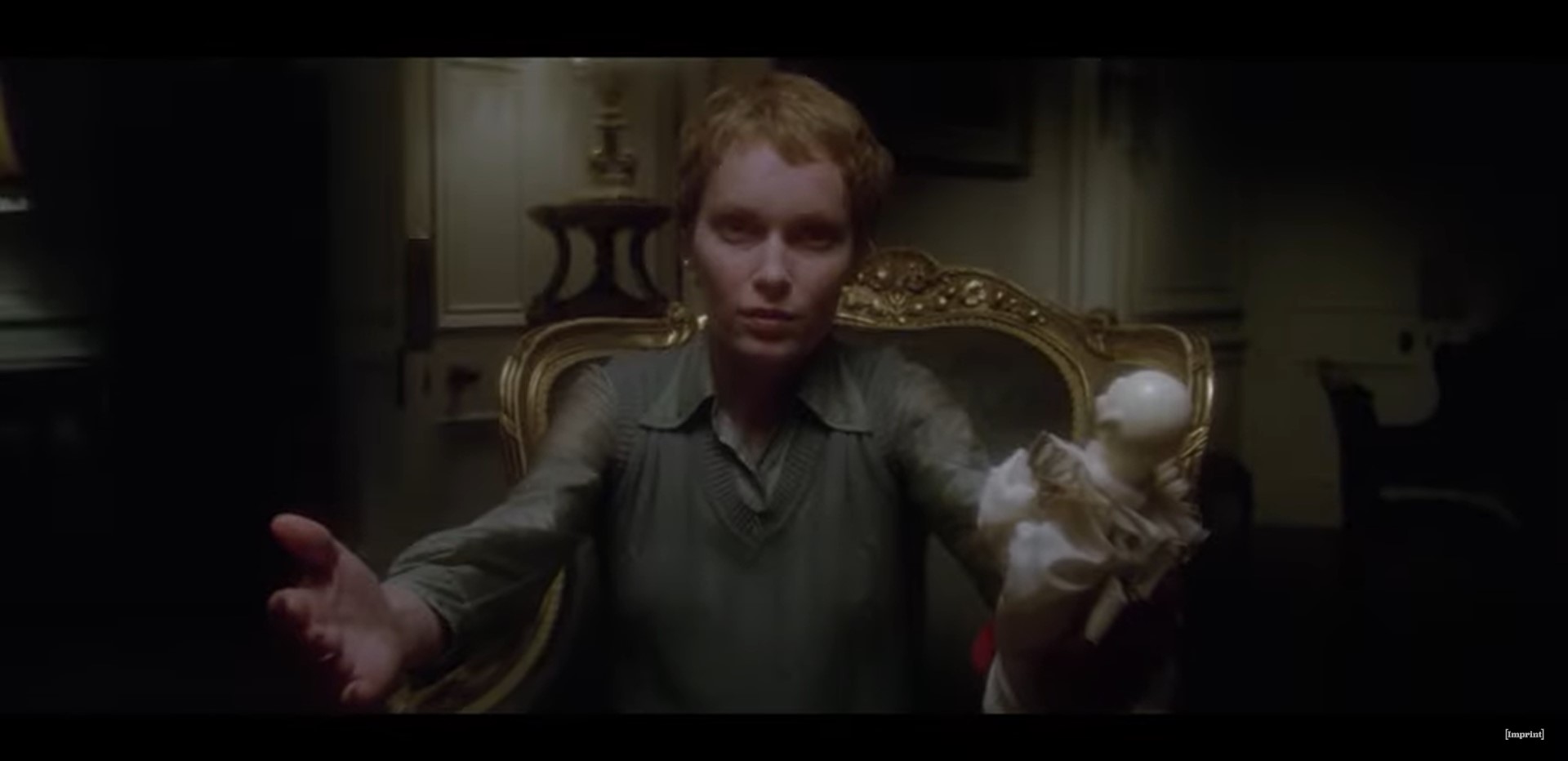
Mia Farrow solidified herself as a genre actress by starring in the archetype for films revolving around the prince of darkness, Satan, in 1968 with “Rosemary’s Baby.”  Unlikely seeing herself as a prominent woman of a notable rite horror, Farrow quickly understood her value in the genre as a complex female lead in the unsettling and gothic protuberance atmosphere style.  Nearly a decade later, Farrow stars in the Richard Loncraine directed “The Haunting of Julia,” similar only to the menacing supernatural child component but digs deeper in manipulative complacency, psychological guilt, and of that distorted reality created by the stout motherhood connection.  The “Slade of Flame” director set his sights off of Rock’N’Roll inspired dramas around the ugliness of the music industry and onto the filmic adaptation of the Peter Straub novel “Julia,” penned by the Dave Humphries and “Xtro” trilogy director Harry Bromley Davenport.  The joint United Kingdom and Canadian production, titled originally as “Full Circle” in the UK, is produced by Peter Fetterman (“The Exorcism of Hugh”), under Fetterman Productions, and Alfred Pariser (“Shivers”) of the Canadian Film Development Corporation. 

Mia Farrow’s distinct reactions and acting style very much engulfs the majority of horror experienced in “The Haunting of Julia,” as well as exhibited in “Rosemary’s Baby.”  The glassy eyed, long stares, the frightened, coiled emotions that swirl seemingly out of control, and the switch-gear ability to be strong and compliant in tense-riddled situations that just only involve herself in the scene.  While “Rosemary’s Baby’ and “The Haunting of Julia” may exact the same gothic aperture for child-themed horror and both are adapted literary works, “The Haunting of Julia” unfolds not in the anticipating of child birth but rather postmortem with the aftermath affliction of a child’s sudden and terrible demise that occurred in the frantic mother’s misguided embrace to take a knife right to her child’s jugular in hopes of dislodging an air denying obstruction.  This opening scene shocks us right into a grim framework that simultaneously divides trust and empathy for Julia as circumstances unveil what we might suspect all along, that Julia’s mental health suffered immensely.  What pushes Julia into undue stress is her controlling, dispassionate husband Magnus. Played by “Black Christmas’s” Keir Dullea.  Dullea pulls off the unsympathetic impassive father who just lost a child and can’t see the underlying psychological unrest his wife suffers.  In short, Magnus attempts to gatekeep Julia’s damaged psyche by trying to strong arm her back into normalcy, even going as far as manipulating Julia and his own sister Lily (Jill Bennett, “The Skull”) into slipping his foot into the door with a wife who fled from his grasp as soon as released from the hospital for essentially shutting down after their daughter’s death.  That toxic pressure is coupled with the seemingly unnatural incidences in her new home that clash her old life, chained to an unconsciously broken family, with her new life that seeks to decompress from a pair of diverse traumas.  “The Haunting of Julia” rounds out the cast with Tom Conti (“Blind Revenge”), Mary Morris (“Prison Without Bars”), Anna Wing (“Xtro”), Pauline Jameson (“Night Watch”), Peter Sallis (“Frankenstein:  The True Story”), Susan Porrett (“Plunkett & Macleane), Edward Hardwicke (“Venom”), and Sophie Ward (“Book of Blood”).

More or less forgotten by U.S. audiences due to no fault of the film’s own acclamatory measure or the audiences willing participation, the international produced “The Haunting of Julia” wasn’t publicized in the U.S. despite the two American leads – Mia Farrow and Keir Dullea.  Richard Loncraine’s film has incredible merit to the idea of a mother’s loss within the construct of gothic horror, which, in another aspect of unfathomable irony, resembled more closely to the American gothic style of the supernatural sequestered dark house.  Yet, this house is in London, wedged in like row homes, but as mentioned numerous times in the film, the house has distinction and grandeur that overlooks the buried ghostly history of the previous owners.  Julia absorbs the stories, filters through them, and comes to believe her own daughter is either trying to reach out to her or is hellbent on revenge for the amateur hour tracheotomy.  Loncraine does the phenomenal job of shocking our core with the early choking death scene of Julia’s daughter but once that dust settles, the pacing becomes more rhythmic to the point of building, slowly, Julia’s encounters with unknown forces that, at first, are just seemingly bizarre happenstances of left on bedroom plug-in radiators and playground visions of a girl that resembles her daughter cutting up another kid’s pet turtle.  These events play into their evident conspicuousness to push audiences deep into Julia’s mysterious milieu, officially sealing something isn’t right with the clairvoyant Ms. Flood’s scarred-screaming vision of a bloody child.  Julie become engrossed into learning the truth, eager to determine if that child is her late daughter and is fed tidbits of the house’s history that not only continues her own investigation but other research into other house tragedies that fork-split her presumptions.  As all this noise tornadoes around Julia, the stories, the occurrences, the deaths, viewers will never deduce to a reason closer to home, to Julia herself, until possibly too late at the end with a grisly open-ended finale that what Julia has been experience may have been done at her own forlorn hand. 

Atmospherically sound, undoubtedly creepy, and spearheaded by strong performances, “The Haunting of Julia” is the unspoken heroine of late 1970s supernatural horror – until now.  Imprint and Via Vision of Australia release a limited edition, high definition 1080p, 2-disc Blu-ray set with an AVC encoded BD50 of a new 4K scan transfer of the original 35mm negative. Presented in an anamorphic widescreen 2.35:1, the 4K scan is super sharp with virtually no compression issues on the formatted storage. Blacks, and negative spaces in general, are rich and void, despite Peter Hannan’s low-contrast and hazy surreal veneer that definitely plays into a psychotronic dreaminess. The resolution goes unaltered, and the natural grain maintains the original theatrical presentation for a revered 4k transfer. The English LPCM 2.0 mono track mix audibly delineates a viable one input split to make the dialogue and all other tracks comprehendible. Despite some slight here and there hissing, dialogue is amped up nicely for better resolved results that still remains mingled with the ambience in an all for one, one for all audio format. “Space Trucker’s” Colin Towns’s insidious and distinctly composed soundtrack reaches into the recesses of soul and strikes at the very nerve of fear with an unsettling score, perfectly suited for a mother drowning in the pitfalls of a supernatural sanctum. Optional English Hard-of-Hearing subtitles are available. The first disc special features include two audio commentaries – one with director Richard Loncraine and Simon Fitzjohn and the second, brand new, commentary with authors Jonathan Rigby and Kevin Lyons, new interviews with composer Colin Towns Breaking the Circle, cinematographer Peter Hannan Framing the Circle, and Hugh Harlow Joining the Circle, a new video essay by film historian Kat Ellinger Motherhood & Madness: Mia Farrow and the Female Gothic, the original trailer, and an option to play the film with either “The Haunting of Julia” or “Full Circle” opening title. The second disc is a compact disc of Colin Town’s 11-track score featuring 20 minutes of previously unheard music out of 60:52 of music. The limited-edition set comes with a neat lenticular cover on front of the hard box of what we assume is Julia’s ghost glaring at you from all angles as her eyes follow you. Inside is a clear Blu-ray snapper that’s a little thicker than your traditional snapper and comes with a built-in secondary disc holder. The cover art is simply Mia Farrow cowering outside the bathroom door but the reversible cover displays an original “Full Circle” poster as the front image. The disc arts are illustrative and compositions with the feature presentation disc the same as hard box lenticular without it being lenticular and CD pressed with Mia Farrow’s face in the background and a child’s cymbal banging toy in the foreground. Also in the hard box is a 44-page booklet feature an historical background essay by critic/writer Sean Hogan that has black and white and color photos and various poster art. The film, which comes in as Imprint catalogue # 218, runs at 97 minutes, is unrated, and, is assumed, for region A playback as it’s an Australian release – there is no indication on the package. “The Haunting of Julia” is Mia Farrow’s shining, yet lost effort post Roman Polanksi and is a remarkable look at subtle disconnection from extreme guilt when in every corner, every sign, is thought to be about your lost child.

Limited Edition of “The Haunting of Julia” Available at Amazon.com!


EVIL is Released When the Rent is Due! “The Dead Girl in Apartment 03” reviewed! (Wild Eye Releasing / Blu-ray)

Get Spooked by “The Dead Girl in Apartment 03” on Blu-ray!  Purchase at Amazon.com!

Massachusetts native Laurel has been living in New York City for a few months with a roommate she barely knows or sees because of their opposite work schedules.  When Laura discovers her roommate’s dead body in their shared apartment, the living space no longer feels comfortable, and the uneasiness keeps her awake long after the police and coroners remove the body that has left them baffled with a cause of death.  The mystery of her roommate’s demise, the agony splayed on the corpse’s face, and knowing her lifeless body has been undiscovered for at least a couple of days just next door to her room leaves Laura shuddered to the point of reaching out to her ex-boyfriend to hear a friendly, comforting voice, but bizarre and supernatural occurrences slip Laura in a state of panic and fright with a presence that has suddenly haunted her urban home and with the unearthing of her roommate’s black magic paraphernalia and a demonic symbol under her bed, Laura just uncovered a hidden nightmare that would have been a life saver if listed in the roommate wanted newspaper ad.

Atmospherically creepy and part of the reason I don’t like having roommates, “The Dead Girl in Apartment 03” is the little known, highly effective supernatural haunt horror from writer-director Kurtis Spieler.  Spieler has crossed our paths previously with the 2013 released lowkey thriller under the guise of a werewolf with “Sheep Skin” distributed by Unearthed Films and the review came out on top with a positive write up that noted the film as “a fresh suspenseful spin on lycanthrope mythos.”  Since then, the American filmmaker has re-directed and completed the 1984, John Liu unfinished cult and martial arts actioner, “New York Ninja,” for a Vinegar Syndrome exclusive release and has also preceded his dead girl paranormal enigma model with “The Devil’s Well” that has a similar plot but with a found footage medium.  Spieler’s latest venture provides the opportunity to work again with a couple of actors from “Sheep Skin” under the banner of Invasive Image with the director co-producing alongside longtime collaborator and Invasive Image co-founder, Nicholas Papazoglou, and one of the film’s principal leads and “The Sadist” screenwriter, Frank Wihbey. 

“The Dead Girl in Apartment 03” is one of those indie films that snags and headlines a genre icon to thrust the title into the spiraling coil of a massively oversaturated low-budget horror pool in the hopes that the film sticks to the now desensitized fans who have been burned too many times too often by radioactive junk.  The tactic is not always necessarily nefarious or a fool’s paradise to lure in fans into a schlock storm of insipid independent media as “The Dead Girl in Apartment 03” proves that though the original “Friday the 13th” actress and scream queen, Adrienne King, might be the top billed, the actress is definitely not the star and the film still manages to provoke a keen spine-tingler with a lesser known and younger cast dipping their toes into the what King has already lapped twice, if not three times, over for decades.  King’s name becomes the proverbial foot in the door for new, upcoming talent for audiences to be exposed to, such as with Laura Dooling playing as, well, the spookily chipped away, panic-induced Laura.  Dooling immerses us into her character’s complete physical cutoff from friends and family as a woman stewing in an uncomfortable sixth sense that surrounds the disturbing faculties of her roommate’s death.  Dooling nails the superb chiller despite the one-sided act with no other cast to react off of for the majority of the runtime, paralleling her character’s isolation with her own to root out goosebumps unaccompanied.  King and Frank Wihbey head up the detective detail as the around-the-block Detective Richards and the fresh understudy Detective Miller.  The older woman, younger man character dynamic rides a similar trajectory to their professional colleague one and I’m not talking about cougars, if that is where your mind take you.  Though she certainly can be a cougar if she wanted to, King is more of a mentor on camera than she is off camera, playing the seasoned detective who warns the ambitious Miller not to get involved with active case women.  Wihbey’s a suitable fit as the double-edged sword eager rookie to King’s cooler, calmer approach to bestow path-treaded wisdom for a reason.  One of the highlighted performances stems from “Sheep Skin” actor Michael Shantaz, a tall and intimidating presence that sizes up Dooling’s terror tenfold from the very first scenes of the deceased’s dazed boyfriend Derrick crossing the threshold into Laura’s apartment.  Subdued and stony-faced, Shantaz adds to the tangible terror in contrast to the paranormal one at hand, yet both are ostensibly woven from the same thread.  Fellow “Sheep Skin” actor Bryan Manley Davis along with Jasmine Peck and Jennie Osterman (“Dickshark”) fill out the cast.

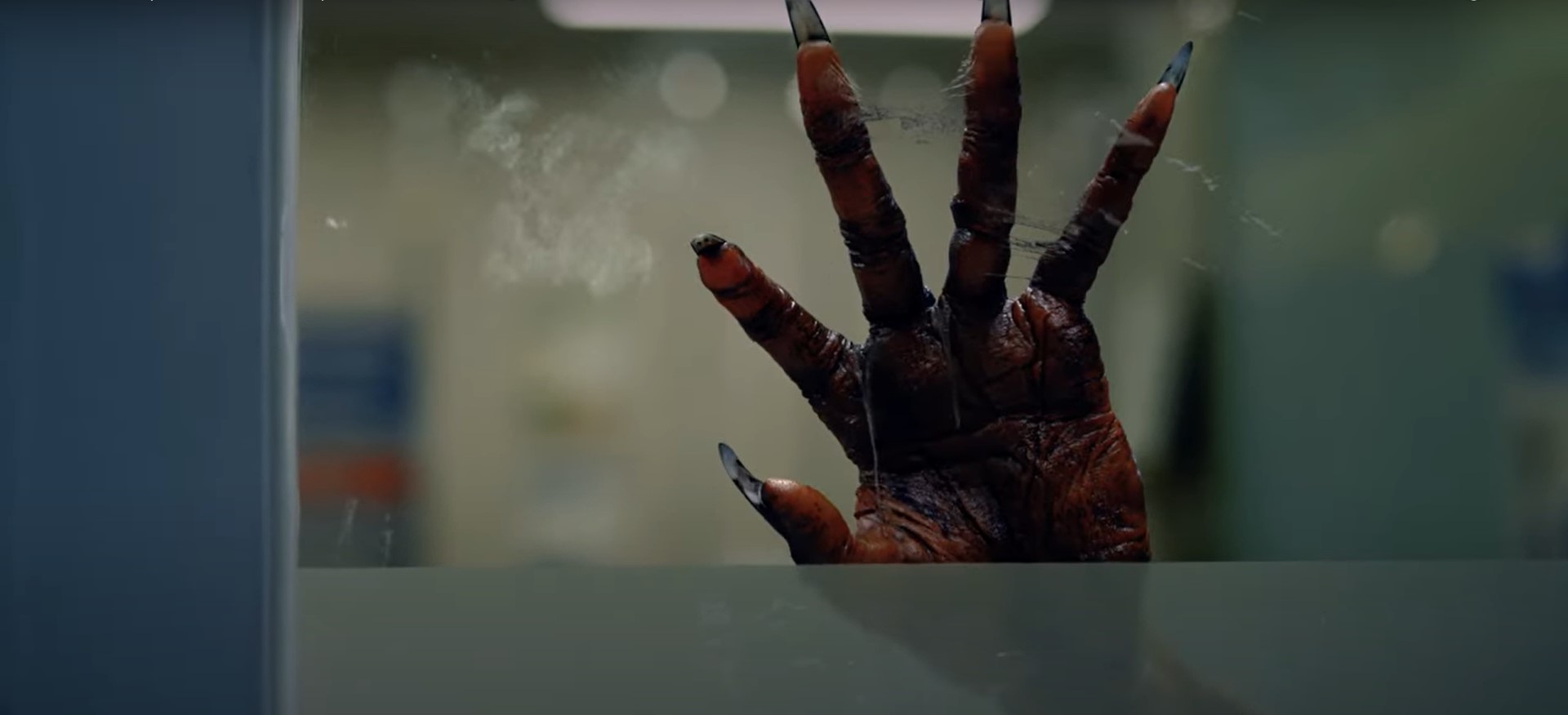
I’m always intrigue, or maybe just easily entertained, by titles that goad into viewership for the simple fact of fulfilling title-spurred questions with answers.  The title “The Dead Girl in Apartment 03” elicits many unexplained uncertainties that become an itch you can’t scratch until the end credits fade to black.  I want to know who is the Dead Girl?  Why is she dead?  What’s terribly important about the specified Apartment 03?  Do the Dead Girl and Apartment 03 correlate more significantly somehow in the story?  All these internal queries, prompted by a non-generic, puzzling title, are just cascading through the mind in a deluge of I-gotta-knows and for the most part, the team behind the quaint thriller does rub the itch to a smoothed over satisfaction while also working the edits, the angles, the sound design, and the lighting toward a decent scary movie.  What’s fascinating about the story is the exploration of the immediate after when Laura is left shivering in shock, solitude, and a sense of grim thought knowing she’s been living with a corpse for the last 48 hours.   She hits all the stages of a post-traumatic situation by reaching out to family and friends, diving into comforts like making tea or taking a shower, and even finding ways to keep busy and remove the macabre image from her mind by cleaning up the crime scene herself.  That portion of etching into Laura’s psyche distracts her in an ironic, detrimental way because as she attempting to self-soothe by any means possible, she oblivious to the grotesque presence coming and going and in-and-out of the negative space with its body jerking as it glares at Laura with blood running down it’s shirt.  Laura is also not cognizant of the things that go bump in the night as they barely make a blip on her radar or trigger her into a deeper stage of fright until it’s too late.  The climatic ending stretches the story further into love hexes and demonic contracts that perk up the ears in interest as the story gets into the nitty-gritty of details of what’s happening and why but doesn’t quite reach the finish line of resolve with a deflated conclusion that supposed to leave you shocked when it really just leaves you. 

Not your typical bottom-of-the-barrel budgeted or gore-drenched debauchery Wild Eye Release, “The Dead Girl in Apartment 03” looks and feels like a big-budget ghost film with all the muscle-seizing suspense.  The bold independent home video distributor delivers the Kurtis Spieler picture onto a Blu-ray collector’s edition, which, again, is atypical for the label.  The AVC encoded, high-definition, 1080p Blu-ray is presented in a 2.35:1 widescreen aspect ratio.  Spieler has defined himself as a master of the negative space and, fortunately, there’s no lossy image from a deficient compression, leaving a crisp view of the lurking, crooked dead entity soon to fill the void or not as the director tends to position the camera for an uncertain possibility.  Details are relatively good within a muted color scheme and many of scenes are dark lit, bordering on a neutral to high contrast with a palpable delineation, with only the dead girl’s room projecting a stony mustard illumination and spotted moments of candle and hand torch lighting.  Other scenes, more so involving Detective Richards and Miller, dip into the cop-noir with gel and back lighting that looks vivid and mysterious on screen.  The surprisingly backwards tech of the English language LPCM stereo relies heavily on dialogue than ambient jolts of jumps scare sounds though there are a few, effective examples about and is balanced well with the dialogue that is a little on the mumbling side but comprehensible and free of obstruction, interference, sound design, or otherwise. The dual channel stereo works and is adequate for the size of the picture that doesn’t require a multi-channel audio format as there are no explosions, whirring bullets, or a large cast to create depth range.  Soundtrack composed by Connecticut based, VHS-inspired synthwave artist, Brian Burdzy – aka Satanic Panic ’81, delivers a low and lively and often deadened (pun intended) but rhythmic sound reminiscence of John Carpenter scores that gives Spieler’s film a very “Halloween” vibe. Aforesaid, Wild Eye Releasing doesn’t accompany a ton of special feature material with their releases unless on their Visual Vengeance sister label but the seemingly new special edition line, in conjunction with a regular standard release, bears more supplementals for the storage.  An audio commentary with filmmaker Kurtis Spieler , a behind-the-scenes featurette featuring cast and crew retrospective interviews of their time on the film, Spieler’s 2011 short western thriller “No Remorse for Bloodshed” (though mistitled on the back cover as “No Remorse Bloodshed,” Take 3S Video – a montage of actress Laura Dooling humorously pretending to be clipped by the marker clapper on third takes, an image gallery, and Wild Eye Releasing trailers of “Smoke and Mirrors,” “Wicked Ones,” and “The Bloody Man.”  The physical aspects of the release include a clear Blu-ray latch snapper with a macabre illustration of the titular dead girl holding a knife on the front cover, as you’ll see in the image below for the trailer.  The cover art is reversible with a still image of Laura Dooling in one of the more thrilling scenes on the reverse side.  Inside the snapper insert is a folded mini poster of the SE’s O-case slipcover with another illustration of two more characters in a 70s inspired retro design.  The region free, unrated film clocks in with a 72-minute runtime – an easy, breezy thriller with punch.  “The Dead Girl in Apartment 03” is a perfect selection for a Halloween night movie. An eerie apparitional residuum that’s character-driven, tense, and thoroughly carried by the small cast.

Get Spooked by “The Dead Girl in Apartment 03” on Blu-ray!  Purchase at Amazon.com!

All You Will See is EVIL if Blinded by Grief. “They Live in the Grey” reviewed! (Acorn Media / DVD)

Not the Blue, Not the Red, but the Grey!  “They Live in the Grey” on DVD!

CPS investigator, Claire Yang, struggles to cope with the untimely loss of her young son.  The tragedy forces her to push away her husband and have suicidal thoughts.  What’s also driving Claire further from the edge of sanity is her ability to see glimpses unhinged, and sometimes physically harmful, spirits.  When a child-protective case comes across her desk to look into the possible abuse of a young girl, Claire learns quickly that it might not be girl’s parents abusing her.  Tormented by an angry supernatural entity, Claire walks careful and hesitant thin line of keeping the girl with her family and attempt to prove that the parents are not responsible for the bruises and cuts, but when upper management pressures her to close the case at the school’s behest and a variety of ghastly come and go across her path, the churning burn of hurt and guilt grows inside her as she confronts her personal demons while trying to do the right thing for the abused girl in the middle of it all. 

“The Sixth Sense” meets “The Conjuring” in The Vang Brothers’ 2022 supernatural thriller, “They Live in the Dark.”  As the sophomore written-and-directed project for the Fresno, California raised Abel and Burlee Vang, following up on their 2016 release of the moderately successful supernatural and social media mashup debut, “Bedeviled,” continuing to venture off their solo work and into a collaborating unit, “They Live in the Dark” tackles various topical concepts and troubles with overwhelming grief and how it manifests negatively on an individual and family level.  Previously once titled as “The Uncanny,” the story is set in nowheresville, U.S.A., the brothers really set the tone that this story, or more realistically its themes and messages, are broad and non-exclusive and we also see that in the cast for the film, a segment that we’ll dive into further in the next paragraph.  The Shudder exclusive film, “They Live in the Grey,” is a production from Standoff Pictures in association with Whiskey Stream Productions with the Vang Brothers producing alongside former filmmaker-turned-film academic-turned-filmmaker Stephen Stanley.

Coming from Hmong ancestry, The Vang Brothers found personal importance to cast mostly Asian-Americans for the film.  Taiwan born Michelle Krusiec (“The Invitation,” “The Bone Box”) plays the lead and is the very first character we meet in an awkward and frightful position as a woman attempting suicide by hanging herself near the home staircase.  Immediately, we don’t know what we’re exactly in for, but we know when we’re introduced to the threadbare Clair, she has a major depressive factor that beleaguers her existence to the point of removing it from the equation all together.  The Vang Brothers thoughtfully shroud details into exactly what’s devouring Claire from the inside out and keep close to the chest in securing that ace of revelation in the back pocket until the time is just right in the story to unveil the dealt bad hand.  As the details trickle and we learn more about Claire’s disintegrating family life, we also learn of her ability to see lost spirits and how she handles those more than often visceral visions is dose up on medication that ultimately factors into her current state of mind.  Though I wouldn’t say the performance pops offscreen, but Krusiec does cruise through the role with meticulous character conditioning and the actress can tremble and look scared with the best in the business, anchoring Claire as the rooted principal and establishing a tone that works with the casted cohort.  Ken Kirby, who plays Clair’s estranged beat cop officer husband Peter, goes outside the usual comedy element for the Vancouver-born actor-comedian, walking the emotional pathway of a husband on the ousts by no fault of his own.  The heartbreaking tension that’s both expressed outward and internalized between the teetering from loss parents, husband and wife, fills the scenes with raw and relatable emotion and barrier-laden endeavor to fix what is thought hopeless. As Claire becomes closer to the case of Sophie Lang (Madelyn Grace, “Don’t Breathe 2”), nothing is as it seems from a family already on shaky ground with not only the school system’s case of suspected abuse, but also inwardly as past troubles fester toward a frenzy. Ellen Wroe (“Final Destination 5”), J.R. Garcia, Willie S. Hosea, and Mercedes Manning fill out the cast.

The Vang Brothers accomplish phenomenal representation in a female leading role with the talented Michelle Krusiec. Reaching back into my mind to access the cache of catalogued films I’ve watched over the decades, I find myself in extreme difficulty in recalling an American made story where an Asian woman female lead is not a martial arts expert. The Vang Brothers with “They Live in the Grey” expand the palette with a supernatural scenario that could curse not just the single white female rearing and protecting their child from a plethora of supernatural predators, but also afflict a person of color who has already suffered tremendously and who has to still have to find and work on themselves in the muck of overcoming a millstone. Instead of a double whammy, “They Live in the Grey” is a triple whammy of pitfalls that rival similar grief-stricken genre films like “The Babadook” and “The Orphanage.” “The Vang Brothers elicit a stillness in their shooting of an extremely melancholic yarn by not being too fancy with their camera footwork that doesn’t track or follow, no hand-held or drone, and is allowed to have a more natural tone with an unfiltered gravitate toward the austere and the tormented. Though nothing too striking to make a spectacle from Jimmy Jung Lu’s cinematography but each shot is carefully setup and the slow zoom in and out is effective enough in breath-holding moments. Early into the story, the first can be choppy and disorganized with the back and forth of present and past and though heavily focus or strict on the narrative’s virgin veneer, there’s distinguishable indication to the audience that we’re looking into the present viewfinder or the past’s. As a whole, the scenes blend together in a seamless patchwork that hinders more than helps.

“They Live in the Grey” extends that lack of light and vitality for the living and the dead. Now, you yourself can experience the saturnine of atmosphere of the film that lives on DVD from Acorn Media International. The region 2, PAL encoded, 124-minute DVD comes from our overseas friends in the United Kingdom with an 18 certification for strong injury detail – aka – stabbing and blood. Presented in a 2.39:1 widescreen aspect ratio, the 2-hour runtime coupled with a compressed presentation appears to have shepherd in some compression issues, such as banding and fuzzy details. The picture is not the sharpest it should be with old wooden house’s textures could have added texture to the nerve-wracking tension builds. The English Dolby Digital 5.1 track represents a solid audio inlay with clear dialogue and a diverse depth and range. The musical soundtrack is subtle but works hand-in-hand with the story. Optional English subtitles are available. Bonus features include only a behind-the-scenes photo gallery. When it comes down to brass tacks, a strong story is a good story and “They Live in the Grey” may miss a few technical marks, but the horrid truth of grief is personal, potent, and packed full of demons.

Not the Blue, Not the Red, but the Grey!  “They Live in the Grey” on DVD!