Satan’s Evil Indestructible, Hairy Servant! “Beast of the Yellow Night” review!


At the tail end of the second great war, Philippines based U.S. army deserter and Japanese sympathizer, Joseph Langdon, runs for his life as the Philippines police and guard track him down through the jungle for committed heinous acts that not only include treason, but also rape and murder. Exhausted and dying from his wounds, Langdon will do anything to stop the process of pain and death, including making a deal with Satan himself. In exchange for saving his life, Langdon commits himself to eternal servitude at the malevolent pleasures of Satan by inhabiting various souls and bodies through the decades and extracting the latent evil from his interactions with people, but Langdon finds himself again exhausted and exacts free thought and a rebellious stance against his master after inhabiting an American business man and given back his own face. The Dark Lord, as amusing as he wicked, bestows upon Langdon the ability to transform into a flesh hungry man-beast whenever his desires boil to the surface and he becomes the most wanted man in the Philippines, but how can they stop a monstrous fiend they can’t kill? The answer lies solely with the damned Langdon himself.

Rarely does a horror film birthed from the Philippines reach my critical virtual desk and, fortunately, “Beast of the Yellow Night” lands smack-dab in my lap as an absolute jewel from the early 1970’s from writer-director Eddie Romero. The 1969 “The Mad Doctor of Blood Island” director, who’s heritage is Pilipino, had visions of grandeur for his large scale features that stem from an infinitesimal budget, but with enthusiastic energy from former musician and beach party, teen heart throb John Ashley, the duo cofounded their theatrical finance company, Four Associates Ltd, to produce their very own horror feature films straight out of the Philippines which “Beast of the Yellow Night” was one of first to be released, if not the very first to be produced. Additional funding was provided by a little known distribution company, New World Pictures, jointly founded by the genre-setting Corman brothers, Roger and Gene, and thus forth “The Night of the Yellow Beast” was built upon a rich and solid cult foundation that began a Philipino-film circuit conversely well-known in the U.S. and put Eddie Romero on the proverbial map of relatively unknown and granular cult directors while providing a branching out of yet another successful credential façade for John Ashley that doesn’t involve country music or being just another pretty face in the beach party moviegoer crowd.

If you haven’t guessed by now or if you’re just as dense like myself, John Ashley also stars in his co-produced creature feature and Ashley, who goes without saying that he stands in his own rite, is also the Paul Naschy equivalent of the Philippine Islands with his all hands on deck attitude toward filmmaking and being the man behind the gnarly man-beast makeup that more than likely takes hours to apply. His performance as even tempered Joseph Langdon is a stark contrast from the wild and vicious beast with a flesh appetite and knack for mauling that herd this film into the werewolf category according many descriptive plots, summaries, and reviews, but “The Night of the Yellow Beast” actually resembles more of a Dr. Jekyll and Mr. Hyde familiarity as Langdon doesn’t transform when the full moon is high, but rather at the whims of his tormentor, in this case it’s Satan rather than an ill-fated elixir, and then he morphs more rapidly and explosively during exhilarating and endorphin stimulated moments like intimacy to further exacerbate his dreadful curse on Earth. Langdon and beast Langdon are befriended by a blind, long-tooth ex-con, Sabasas Nan, played by “The Big Bird Cage’s” Andreas Centenera and Centenera captures the gentle nature and extended wisdom of a man at the tail end of life and looking to right the wrong for his past mistakes. Sabasas Nan is similar to the blind man in the tale of Frankenstein that doesn’t judge, become frightened, or even shun the ugly shell of a monster, but though visionless, both blind men are able to clearly see into the soul of what used to be once a man. “Beast of the Yellow Night” also stars leading lady Mary Wilcox (“Love Me Deadly”), Leopoldo Salcedo, Eddie Garcia (“The Woman Hunt”), Ken Metcalfe (“TNT Jackson”), and labeled as the Filipino Peter Lorre, Vic Diaz (“Black Mama White Mama”) as the pot-belly Satan and Langdon’s mischievous master.

Eddie Romero’s deep and intellectual script sticks out amongst the fray of time lapse and post-skirmish makeup effects that teeters “Beast of the Yellow Night” on a B- to C- movie. Not that the special and makeup effects were completely awful or subpar by any means, but the directing filmmaker pushes the boundaries to scribe the pull strings of a man’s soul, really digging into the anguished flesh of redemption and mankind’s mortal coil, which puts a lightly coated dampening on Langdon’s transformations from man-to-beast that hasn’t yet reached the Paul Naschy level of editing and progressiveness toward his horror films. In fact, the “Yellow Beast’s” effects are merely one step below that aforementioned level. However, the beast is no wolf of any sorts, but nor it isn’t a man in a cheap leathery or latex rubber mask that materializes a rather mangled, mangy beheld fiend with razor sharp canine teeth shown through a ferociously hungry and breathy-snarling maw set below equally ravenous eyes that yearns for the blood of man. For 1971, the effects are exceptionally marvelous, but Romero’s script just blows the practicalities out of the water being ahead of its time and sorely overshadow the effects work.

MVDVisual and VCI Entertainment proudly gift to us “Beast of the Yellow Night” onto 2-disc all region DVD/Blu-ray home video. Produced from a 2K scan of the original 35mm negative, VCI Entertainment’s widescreen, 1.85:1 aspect ratio presentation in full Metrocolor is mondo cult cinema exhibited on a high level and despite some blotchy patches, the corrected coloring and cleaner picture are by far the best we’ll ever see while still sustaining a healthy amount of beneficial cinematic grain. The prologue has coloring issues with about 20% of the right side of the film strip in sepia harboring in sepia town, but becomes corrected after the title and credit sequence. The English and Tagalog, the national language of the Philippines, mono audio track has lossy bite that’s expected and yet, still maintains ample dialogue track and a solid and balanced in range ambient track. Optional English subtitles with SDH are also included. Bonus features include a 2018 commentary track by writer and filmmaker Howard S. Berger and the head of Mondo Digital, Nathaniel Thomspon, old and insightful video interviews about John Ashley and the Filipino films of the 19870’s with Eddie Romero, Sam Sherman, Patrick Wayne, Peter Tombs, Eddie Garcia, Gloria Hendry, Sig Haig, and Jan Martin, a Remembering John Ashley featurette that includes interviews with wife Jan Ashley, filmmaker Fred Olen Rey, Steve Stevens, and Andrew Stevens, original theatrical trailer and TV spots. Plus, a thorough inner liner essay from Howard S. Berger that goes examines “Beast of the Yellow Night” and the films of that era that are a metaphor for much, much more. “Beast of the Yellow Night” is a simple message cause and effect. If vileness becomes you, then villainy will forever run fluidly through your icy veins in this Eddie Romero and John Ashley monstrous picture that pulls at the tattered strings of a downtrodden soul.

Amazon has it on sale, now! Go Go Go!

A War Criminal’s Evil Influence. “Apt Pupil” review!


Next time you suspect your neighbor is a wanted criminal, they just might very well be as in the case of Todd Bowden, an excelling high student who discovers a WWII Nazi war criminal has been secretly living in his quaint hometown. Through his own investigation of photograph comparisons and retrieval of finger prints, Bowden confronts the old man, Kurt Dussander, about his notorious past. Living under a pseudonym and wanted by the Israeli government, Dussander attempts to dismiss the boy’s claims until his bluff to call the police is called, resulting in Bowden’s curiosity to become a blackmail gambit that puts Dussander under the student’s quizzical thumb. In return for not informing the authorities, Bowden requires Dussuander to reveal his story, the story of his stint at the extermination camps without sparing any details no matter how gruesome. Bowden even goes as far as purchasing a replica SS officer uniform that he forcibly commands Dussander to put on and march. Through his reminiscing of the past, an evil reawakens in Dussander and their banal friendship of psychological warfare goes into the dangerous trenches of survival and eradication that spreads like a cancer inside and outside their private lives.

Before the monumental eruption of continuous claims of sexual misconduct by various accusers, Bryan Singer furnished significant prominence as a director and overall filmmaker before he inadvertently kick started a very long, very successful, and very lucrative series of superhero films and their related and unrelated sequels and spinoffs, starting with Marvel’s “X-Men” in 2000…19 years ago, Holy sh*t! Well, in 1998, coming off his success of “The Usual Suspects” with fellow accused celebrity and now blacklisted actor Kevin Spacey and currently untarnished Irish actor Gabriel Byrne, Singer and Phoenix Pictures presented and released the suspense-thriller, “Apt Pupil,” a Bad Hat Harry production. Inspired by the Stephen King novella, “Apt Pupil” is the polarizing observation of two evil souls where one might be significantly eclipsing the other. Brandon Boyced (2005’s “Venom”) drafted a script based of King’s novella that was comprised of a different, and less pessimistic, ending to the novella while still uncompromising King’s baseline evil theme.

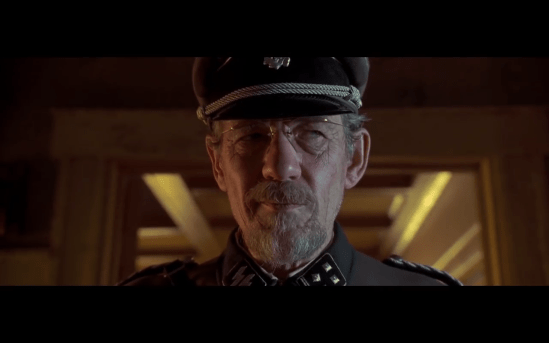
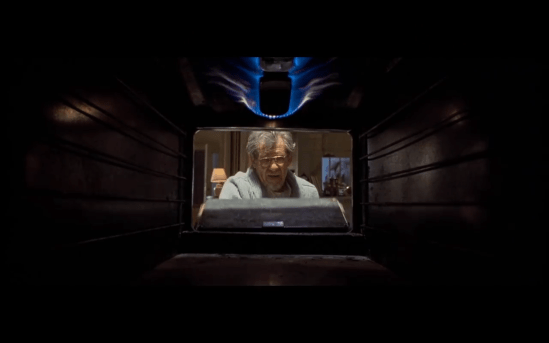
High school students, especially males, often have an aggressive temperament. Whether it’s sports, girls, or just trying to fit in, guys almost always take their tunneled focus to the extreme. For Todd Bowden, a brilliant young student, a fascination with the grim extermination of Jewish people and the Nazi culture tickled his fancy. Brad Renfro, only 14-years-old at the time of filming, stars as Bowden and really digs into the character’s adolescent psyche of relentless obsession, having his character converging all power from a big time war criminal and, even more simplistically, an older adult male, to himself, but when things go sour and Bowden starts to lose grip of his pawn, panic sets in and Kurt Dussander’s wicked and warped mind structures a counterattack that seemingly befriends the boy, but really demonizes Bowden’s already appalling obsession. Sir Ian McKellen, in a performance of pure brilliance, masterfully crafts a representative of evil in Kurt Dussander. The scene with McKellen stepping into a SS officer uniform and then marching with prerogative purpose that’s topped with a Nazi salute is perhaps one of the best chilling and unsettling performances of our lifetime. The dynamic in the scene between Renfro and McKellen, carefully shot and executed in direction by Singer, respects the bleak humanity enthralled by Stephen’s King body of literary work. There are some other amazing performances here by the supporting cast including David Schwimmer (“Friends”), Bruce Davison (“Willard”), Ann Dowd (“Hereditary”), Joshua Jackson (“Urban Legend”), Elias Koteas (“The Prophecy”), James Karen (“The Return of the Living Dead”) and Heather McComb (“Stay Tuned”).

As aforementioned, “Apt Pupil” has an evil duality narrative that contain descriptive horrors of the past, paints the means of callous obsession, and symbiotic necrosis of any good left in Todd Bowden or Kurt Dussander when together, but on the surface level, Kurt Dussander’s murderous duty to the cultural cleanse severely overshadows Bowden’s seemingly curious obsession, his blackmail of a notorious war criminal, his deception amongst those close to him, and, the inevitable, stony perception to murder. More than likely innocence could be blamed for the fact that Bowden is a child and Dussander’s a man living the last moments of his life, but Bowden becomes the catalyst for Dussander, reigniting the evil thoughts and actions of SS officer’s former life. Dussander attempts many degenerate actions from his past and never successfully succeeds in completing them whereas Todd ultimately finishes it either for Dussander, willing or not, or for his own self-preservation. By the end of “Apt Pupil,” the question you might ask yourself is how do you feel about either character? Despite the scale of their evils, which character ultimately, in the scope of Singer’s film from beginning to end, is the true representation of evil? To me, the finale feels like Dussander inadvertently passes the torch to Bowden and with his obsessive nature toward Nazism and extermination, the boy will grow up to continue being that representative of evil?

Umbrella Entertainment presents Bryan Singer’s adaptation of Stephen King’s novella, “Apt Pupil” onto Blu-ray home video. The region B, full HD, 1080p Blu-ray is presented in anamorphic widescreen, 2.35:1 aspect ratio, and the quality is crisp excellence with a sharp hi-def scan of textures and the details in Mckellen’s facial curvatures that just open up to expose the wily diabolical smirk from the vet actor. Coloring and skin tones are okay despite the release being slightly yellowish and inkier in comparison to other releases. The English 2.0 DTS-HD Master Audio does the job and is balanced all around with dialogue clear and present and the John Ottoman (“X-Men” franchise) is menacing without being overwhelming, but the ambience’s depth and range are stiffened from a lack of surround sound that could have been achieved with this release. The special effects are slim with a behind-the-scenes featurette that’s more surface level depth with cast brief cast and crew interviews and also includes theatrical trailer and TV spots. Viewers too caught up in the superhero hype might not recognize that Bryan Singer helmed “Apt Pupil” or might not even care in lieu of sexual accusations, but hardcore Stephen King fans and horror aficionados can certainly appreciate a blanket thriller with haunting performances that will be remembered more than the marring scandal behind-the-camera.

Might be a REGION 2 release, but still available on AMAZON.COM here in the states! Click the cover above to purchase 🙂

Being a Gracious Host Goes Well with an Accompaniment of Corkscrew Evil! “The House” review!


Set inside the conflict of World War II, a strayed former SS lieutenant and a German paratrooper must band together and escort a Norwegian captive through the snow covered forest of the frigid Norwegian mountains. Venturing through the cold and soulless landscape, the lieutenant is baffled by his bearings as his map doesn’t correlate with his surroundings, the sun is positioned at the opposite direction, and their compass points in the wrong direction. Faced with the possibility of gangrene and hypothermia, the lost combatants are forced to take up camp in a seemingly abandoned house that fly’s a hoisted Norwegian flag and has a pot of stew left simmering on a stove burner. Their already puzzling arrival into the residence is also met with unexplainable occurrences that place the extremely cold and weary soldiers even more so on an overwrought edge as they continuously search the house of presence telling life signs. Shadows and sounds trick their senses, soon realizing that the cozy confines are an inhospitable prison and with the deadly cold nipping at the doorstep, the soldiers are left with no choice but to face a sinister absence of time inside a hostile house that toys with their psyche and questions their own mortal existence.

Quickly becoming Norway’s prominent horror filmmaker, Reinert Kiil found success with his controversial and provocative “Whore” films and had a well-received review at Its Bloggin’ Evil for his cheerfully grisly, holiday slasher classic, “Christmas Blood.” Artsploitation Films continues to wholeheartedly support the Norway born director with his next venture, the supernaturally-charged possession of a home-sweet-home feature entitled simply “The House’ or “Huset” as titled in the original tongue. Kiil typically trends with shock horror, but with “The House,” there is an expansion upon his range as a filmmaker while remaining in a field he’s finds most endearing, pulling inspiration from his childhood memory vault of B-movie horror schlock and nostalgia grandeur, and dapples with replacing his guts and gory showmanship with slowly developing and instilling fear, especially with fear of the unknown and fear of change. Audiences are going to be attached to the hip and entrenched with the German soldiers, clueless to their predicament and anxious for them with the house’s uncanny and perplexing animosity, and Kiil doesn’t show much right away, slowly simmering the taut chills lined meticulously in the story.

Paratrooper Andres Fleiss is introduced in the preface attempting to save his mortally wounded friend and brother in arms, Max. Fleiss’s passion greatly motivates him as he jump out of a plane first rather than assess whether he has a parachute on first, willing to assign blame and kill Rune, Norwegian captive, right away without any provocation as instant relief and gratification. You see, Rune didn’t kill Max and, in fact, no exposition is provided about how the three men arrived at preface’s point in time, standing on a snowy side of a mountain just on the outskirts of a forest edge. Frederik von Luttichau (“A Room to Die For”) incites the paratrooper’s sense of duty and sense of irrationality. Luttichau’s able to quickly switch gears from confident combatant to a frightened bumbling idiot whose trapped inside a complete mind scramble of a situation. Fleiss is juxtaposed against the cooler head of a commissioned officer, Lieutenant Jurgen Kreiner. The former architect from Munich uses his SS training to tranquil the anxiety; so much so that Kreiner has a strange habit of protecting Rune from expiring much to the displeasure of Fleiss. Mats Reinhardt, in his sophomore film, is a juggernaut of emotional suppression. The rigid actor perfectly suits Kreiner’s stoic rationality toward not only the malevolent shelter, but also to Fleiss’s thin patience. Both characters’ melancholy is confounding as you start to feel for these Nazi soldiers stuck in a state of limbo and Kiil writes their roles down a personal level that expresses guilt, sadness, and shame that lets you know that they’re human too, humans who have done terrible things that have become their undoing. The Norway solider, Rune, is an important piece to the puzzlement. With his background unexplained and role in the house’s occurrences, Rune becomes an integrated symbol of subtle vengeance; even Rune, in the origin sense of the word, is defined as a secret mystery. Rune, or Runes, can also imply a set of symbols in archaic German languages much like the ones used on the closet door in the house or at the title screen. The mysterious Norwegian is subjected to being always hurt, whether a bout with gangrene or being shot, Rune ceases to cease. “Christman Blood’s” Sondre Krogtoft Larsen perforates the two opposes forces as a well-executed deceitful key to the mystery and though Rune doesn’t fully explain the entirety of the house’s backstory, Larsen simply quantifies the a potential reason with his the character’s simplicity role in it all. Other character flow in and out of the story as either a flashback or a vision and they include performances from Evy Kasseth Rosten (“Dead Snow”), Sigmund Saeverud (“Christmas Blood”), Ingvild Flikkerud, and Espen Edvartsen (“Dead Snow 2”).

There are other “House” reviews that compare Kiil’s film to the likes of “The Exorcist” or an exorcist type film and while the German soldier’s narrative is spliced with a flashback sub-story of a priest performance the rites of exorcism on a young girl inside the “House,” labeling the film as such warrants a rebranding. These flashback scenes, that are not consecutive, sluggishly rolls out a bit piece in the house’s backstory that almost predates the 20th century (the trailer suggests 1901), but doesn’t, in my opinion, obviously explain all that’s happening to the soldiers forty years later. Fleiss said it best during a frantic moment when the paratrooper comes to a full realization that the reason their stuck in an unescapable phenomena is because he and Lt. Kreiner are dead. Sometimes the more blatant reason is perhaps the more conclusive as Kiil offers a breadcrumb trail to point out these two Nazi soldiers are in oblivion of atonement. From the very beginning, the three men couldn’t explain how they came together, every facet of direction is obscured, time ceases to exist, their most inner desires and offenses bubble to the surface, and even Fleiss mentions the soup, the one simmer on the burner upon their arrive, is bland to the taste for the dead have no need for senses. In short, the momentary exorcist scenes are fathomable, perhaps in-depth more with the dated slideshow series of events in the Scandes, but, in context, cheapens the film slightly and could go easily as “The House” is inherently soul crushing and effectively atmospheric.

Artsploitation Films and Reel Suspects presents Rinert Kiil’s “House,” a product of Sanctum Films, onto DVD home video. The release is presented in an anamorphic widescreen, 2.35:1 aspect ratio, shot digitally that idyllically compositions Norway’s Norefjell snowy mountain range of the Scandes. The opening title sequence has some image instability with faint pixel fluttery in the compression, but doesn’t seem to go beyond the barely visible stage. “House” isn’t a flashy conceived concept that renders a lot of texture or detail warranted scenes, but darker scenes are overly rich with black that interpreting the visuals more difficult and as a note on one of Kiil’s visional techniques on being outside in or at night, like when Fleiss is hoisting the Nazi flag, the obvious tinted lens isn’t a reasonable substitute for dusk, dawn, and night. Skin tones are a pleasantly raw in appearance and, hey, the lighting in the snow is great for obvious reasons. The Dolby Digital 5.1 surround sound is hands down the past technical feature with an engrossing atmosphere track that has depth and range to send the audible senses hiding in fear underneath the comfy blanket. The intertwining German, Norwegian, and English language tracks holds strong and upfront with clear and precise synchronization of paralleling subtitles, offered solely in English, and Kim Berg and and Levi Gawrock Troite’s powerful score portrays a film bigger than it’s budget. Bonus features include a behind-the-scenes segment, an interview with Reinert Kiil who discusses his trek through Norway film and delves a little in each of his projects, a commentary track with Kiil, a short film by the director entitled “The Voice of One’s Conscience” (aka “Samvittighetens Rost”), and Artsploitation trailers. Reinert Kiil’s “The House” is non-exuberant horror diverging toward exploring the filmmaker’s unlimited possibilities and with “The House’s” diabolical descent into invigorating terror, Norway cinema has an abundance of sheer promise for the future of horror.

A Kingdom Engulfed by Evil! “Rampant” review!


The kingdom of Joseon is in a state of great turmoil as the absolute monarchy is being influentially divided. The King has treacherous whispers being fed to him by head of the nobles, Minister Kim, and the eldest royal son, the Crown Prince, witnesses his father’s dominion being redirected against the common people despite his best efforts to persuade his father. When the Crown Prince’s insurrection plan for kingdom stabilizing is foiled, the Crown Prince commits public suicide as act of sacrifice to spare his cohorts and their family from capital punishment, but before his death, the Crown Prince sends word to his younger brother, Lee Chung, to return home from the Qing Dynasty and escort his sister and unborn child out of a country soon to be in the throes of chaos. In the midst of the struggle, a foreign ship cargoes new age weapons and the Captain has secret dealings with Minister Kim, but is raided by the Crown Prince’s rebellion The ship also holds another human eradicating payload, a plagued foreigner in the brig is transforming into a blood hungry monster with grayed out eyes and razor sharp teeth With one of the raiding members being bitten, the carnivorous outbreak spreads throughout the kingdom days before the pleasure seeking and arrogant Lee Chung returns home. Chung not only finds his people suffering from bloodthirsty monsters, but also from a turbulent hierarchy sought for destruction by a devilish and traitorous orchestrator who will do anything, like leave a plague go unchecked, to see the lineage die out.

From the same studio that delivered the critically successful, zombie apocalyptic nail biter, “Train to Buscan” comes Kim Sung-hoon’s martial arts horror-fantasy, “Rampant,” that’s a perfect accompaniment double feature film involving a familiar fast-spreading zombie-like outbreak with gripping, non-stop action based on the webcomic Kingdom of the Gods. “Rampant” is the filmmaker’s junior film from 2018, a film blended with truly epic magnitude and an ancient Korean civilization that’s penned by “Scary Hair” writer-director Shin-yeon Won and Hwang Jo Yoon to weave battling aortic stories that inherently funnel toward the dismantling of an established empire. While not serving as a straight genre film with savage moments of on the edge of your seat horror, the theme hones in on the separation of classes, peasants and blue-blooded or high ranking officials, and the reuniting them by compassion and strength. Inklings of fear, greed, and ignorance are stitched in the very hanbok and gat-laden fabrics of the story and serving as a precursor to the Netflix produced television series, Kingdom, scripted by Kim Eun-hee and directed by Seong-hun Kim, involving virtually an identical premise of a troubled monarchy being plagued by a horde of diabolical creatures.

Prince Lee Chung is a stimulating character to say the least; the prince’s introduction isn’t favorable to royal morals as a pleasure seeking, womanizer who gets his kicks by doing what he wants, when he wants. Yet, Chung arches so prominently that the transformation goes seamless, and covertly, to persuades audiences to rally behind Chung in the least-to-most extreme circumstances. Hyun Bin’s confidence in the prince ceases to amaze. From his impeccable arrogance to selfless protection, Bin sustains high level performance no matter the situation while bearing a giant blade, holstered on his lower back. Chung has the skill of a warrior, but the tact of a barfly at first and comes to be a complete better version of himself at the dire end that also completes Bin’s full range of the role. Chung is pitted against Minister Kim, the head of all the court’s ministers, and Kim plots to dethrone the Joseon kingdom in chaos by any means. Jang Dong-Gun is Korean’s version of Mads Mikkelsen. Jang envelops a deepening mystery that’s hard to deescalate and emits a presence on screen just by the way he positions himself in an ominous, if not anime swordsman, manner. Minister Kim is a staggering and formidable nemesis, more overall suited to be the main villain amongst an ever-growing sea of plague-spewing creatures. The remaining lot of characters feel auxiliary around the protagonist Chung and antagonist Kim and these roles are supported by Kim Eui-sung (“Train to Buscan”), Jo Woo-jin, Jo Dal-hwan, Jung Yoo-An, Lee Sun-Bin, and Seo Ji-hye.

You might have noticed that the term creatures were used to describe the menace that plagues Joseon. Characters often reference the plague transformed attackers as demons and, to be honest, these grayed eyed, pointy teeth demons could pass as extras in Lamberto Bava’s “Demons” or Kevin Tenney’s “Night of the Demons,” but the U.S. marketing of the Well Go USA Entertainment release promises zombies and zombie action, even going as far as splaying on the front and back cover that the same studio produced “Train to Buscan.” To be fair, a plague did start the mayhem, transmission of the disease was by bite, and the course ran the kingdom very, well, rampant like a traditional, George A. Romero style, outbreak. Either way, to kill a demon and/or zombie, an assortment of kill method was acceptable such as: beheadings, severing the heart, and, to thoroughly ensure death, kill with fire. Demons. Zombies. Audiences won’t be too hard up on how to label the hungry hordes as “Rampant” slices, dices, and crucifies the the living hell out of the living dead.

Well Go USA Entertainment presents the VAST Entertainment and Leeyang Film, “Rampant,” onto a dual format, DVD and Blu-ray combo, release. The 129 minute runtime Blu-ray is exhibited in a widescreen, 16:9 aspect ratio. There’s money behind this release as visual effects are one of the superior cases over the lot of 2018 releases with pinpoint detail from the mass of infected, the textures and coloring of fire, and the Joseon Kingdom structures and detail attire. The attention is really in the details with not only historical authenticity, but also realism. Human coloring looks rather natural and the no issues with compression either. The Korean DTS-HD Master Audio track suits the action heavy film with LFE combustions and explosions, unlimited range and depth amongst a vast Kingdom battleground, and dialogue that right up front. The DVD has a Dolby Digital audio track. Well constructed and syned English subtitles are available on both formats. Inyoung Park’s ho-hum score is the Achilles’ heal of brittleness that downplays the feverish action and reducing the entire sequence as mediocre that doesn’t aspire greatness to come or to be beheld. The same can be said about the bonus material too with a making of featurette that’s more of “Rampant’s” Stateside promo reel, Behind the Scenes featurette that also feels like a marketing campaign ad focusing on character introductions, and Well GO USA Entertainment trailers. In short, no substance in the bonus features. With sound swordplay choreography, a swarm of multiplying reanimated corpses, and an engrossing narrative with a lore foundation, “Rampant” is the next Korean mega hit in the fantasy-horror catalogue.

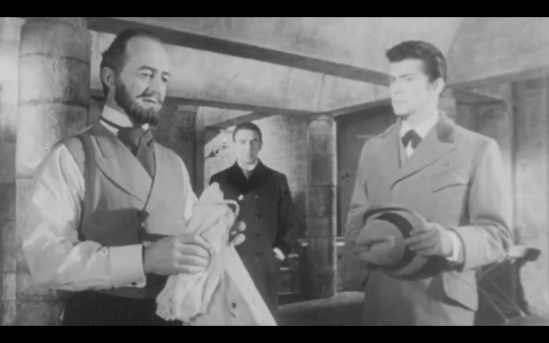
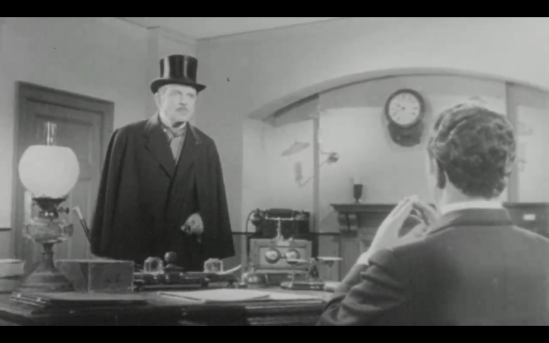
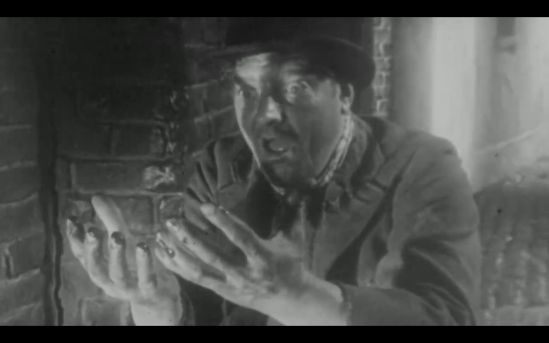
Evil Rips through the Whitechapel District. “Jack the Ripper” review!


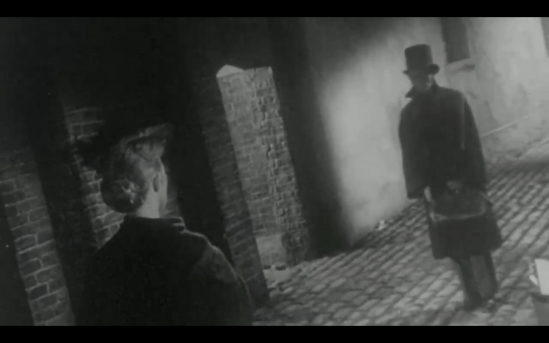
On the streets of London’s Whitechapel district, women are afraid to walk the streets alone at night and angry mobs have begun to turn their backs on the police’s ineptness on catching a killer. Jack the Ripper is what the people of London label the maniacal murderer who, with surgical precisions, guts his victims and leaves their lifeless bodies on the dark, dank cobblestone streets. Scotland Yard Inspector O’Neill is joined by his friend and American counterpart, a New York police officer named Sam Lowry, to hunt down and stop Jack the Ripper’s killing spree. Deeper into the investigation, the officers are informed that the suspect they track would have medical background with a skilled blade hand, but even with that information, Jack the Ripper alludes authorities. Lowry’s romantic involvement with a young woman named Anne Ford, whose under the ward of the notable Dr. Tranter, might be very connective tissue between the constabularies and the secretive medical society needed to crack the case of the notorious Jack the Ripper before he strikes again!

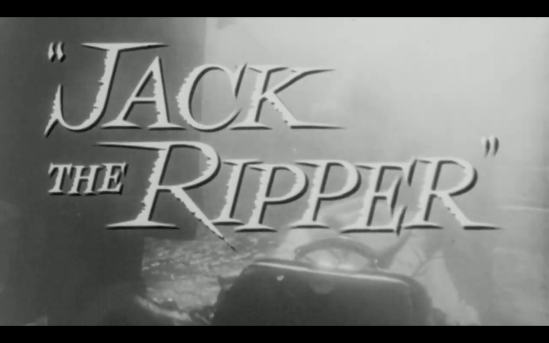
Jack the Ripper is a real and iconic villain that not only terrorized the streets of London, but had later graced the screen many times over from Bob Clack’s 1979 thriller “Murder by Decree” to the 2001 Allen and Albert Hughes gothic and graphic “From Hell,” starring Johnny Depp. Before the production of those films, before Jack the Ripper really had any kind of footprint in cinema, Robert S. Baker and Monty Berman directed the 1959 mystery-thriller “Jack the Ripper” from a screenplay by Jimmy Sangster and Peter Hammond based off the theory that Jack the Ripper had a medical practice history. Baker and Berman’s film hit the controversial market from right out of the gate with grisly and ghastly murders, for the circa 1950s, and bared topless actress frivolously to insinuate the lady drunkards, the showgirl dancers, and the lone walking women as ladies of the night. Prostitutes would have been burden the selling of an already certifiable X film from the BBFC and the MPAA. However, the filmmakers constructed alternate cuts, shorting the grisliness to just grim and sheathing bare breasts with articles of clothing in shot for shot censorship. Only on the continental, aka French, version does a truly uncut and complete film live to excite, but instead a complete feature, the unmolested scenes are only available on the bonus features of the Severin Films’ release. That’s not to say that the U.S. and British versions are a complete waste of time. The classic time is utterly timeless and gripping that offers up immense amounts of whodunit suspense, implied sensationalisms, and an adequate take on how incompetent law officials can be exhibited when politics and women are afoot. Plus, the U.S. version, bought and presented by legendary producer Joseph E. Levine, comes with a brassy score by Jimmy McHugh and Pete Rugolo. The British version, also known as more of the approved director’s cut of the film, is scored by Stanley Black.

Tall, handsome, and walking into another country like he owns the land, detective Sam Lowry is introduced at about 10 minutes in, standing at a bar and reluctant to be rough and tough with a mob ready to lynch him for potentially being the Ripper because of his inquiries. Lowry’s charming persona with the women, like the bar maiden and Anne Ford, are only offset by his complete incompetence to be a police detective. Lowry does absolute zilch investigation and, instead, goes out on a date with Dr. Tranter’s niece and makes snarky comments at a merciless, ready to judge horde of scared Whitechapel residents. American hunk Lee Patterson stands out amongst the gothic rich atmosphere to the point where’s he, like his character, is an outcast and Patterson’s talents could only take him so far into a gloomy, morbid narrative that was unwilling to accept his chiseled chin and starry eyes. Eddie Byrne fit the mold better than Petterson as the Scotland Yard Inspector at rope’s end with not only Scotland Yard, but also the rest of London. As Inspector O’Niell, Byrne, who went on to star in “Island of Terror” and “Devil’s Darkness,” humbly accepts his restraint as the Irish born actor takes a wallop from all sides and still remains calm, collective, and ever present on the task at hand with a character being beat from all ends of the spectrum. Anne Ford opposites Lowry as the potential love interest who has come of age, as she notes a few times, to takeover temporary responsibilities at the hospital where her uncle performs dire surgeries. Being oppressed by her own family and seeing London being ripped a part by its own people, Anne latches onto Lowry, an outsider, to find a connection or a release from sullen cloud that hangs over Whitechapel. Unfortunately, Betty McDowall is sorely overshadowed by many of “Jack the Ripper’s” formidable characters and that Anne is not wholeheartedly written though her character is important to the story. Even the showgirls sizzle in more ways than one than does McDowall whose kept in check by Lowry, doused with someone’s problems, and only given an allusion of her worth in a moment of fright. Ewen Solon (“The Curse of the Werewolf”), John Le Mesurier (“The Jabberwocky”), Barbara Burke (“Blood of the Vampire”), Denis Shaw (“Curse of the Werewolf”), Bill Shine (“Burke & Hare”), and Anne Sharp (“Murder on the Campus”) round out the cast.

“Jack the Ripper” is a classic, literally and physically. The scaled down sets of the Whitechapel area bring to life the tenebrous soil of 19-century London. The elegantly painted backdrops of tall mast ships enshrouded by synthetic fog paint an archaic picture of how movie magic has progressed over the decades. Attention to detail in the set construction and the flavor of time period customers brought a sense of authenticity that nostalgically harps on the once was that now only exists as recorded cinema history. “Jack the Ripper” casts a forgotten beauty in the barbarism. By today’s standards, “Jack the Ripper” would be written off as banal and uninspired by critics and audiences, but if you can imagine yourself in 1959-1960, Robert Baker and Monty Berman just blew your mind with onscreen taboos and in America, Joseph Levine’s technicolor blood scene, with a duration of only a few seconds, would be the viral talk of the town.

Severin Films presents “Jack the Ripper” onto a region free, 1080p Blu-ray for the very first time anywhere! Complete with two cuts of the film, the British and American version, Severin presents both in their released aspect ratios of a lossy standard 1:33:1 in the British version and 1.66:1 in the American version, both in B&W with a pop of technicolor in one scene in the American version. Severin’s transfer is perhaps the best we’ll see from an original print that’s laced with scratches, but a bit more light, or some brighter contrast, sheds some light in the inky corners while managing a rich appearance that’s not monochrome or sepia. The English 2.0 audio track maintains an equal quality with some static in dialogue and ambient tracks. Jimmy McHugh and Pete Rugolo’s brass-heavy score thunderously pack the scene that surely takes the lead amongst the tracks. Bonus features include snippets of the continental versions with the extended violence and nudity and the audio commentary with Robert S. Baker, screenwriter Jimmy Sangster, assistant director Peter Manloy is extracting and interesting helmed by horror historian Marcus Hearn. Also included is an interview with the author of “Jack the Ripper” The Murders of the Movies” Denis Meikle, “The Real Jack the Ripper” featurette, theatrical trailer, and poster and stills gallery. Exposed and disclosed, the various faces of Robert S. Baker and Monty Berman’s “Jack the Ripper” now have a hi-def upgrade and though a full continental version eludes this release, Severin provides the cliff notes in order to not overcook the same story a third time.