A Cop, a Paranormal Investigator, and a Priest Walk Into an EVIL Extermination Plan! “Belzebuth” reviewed!


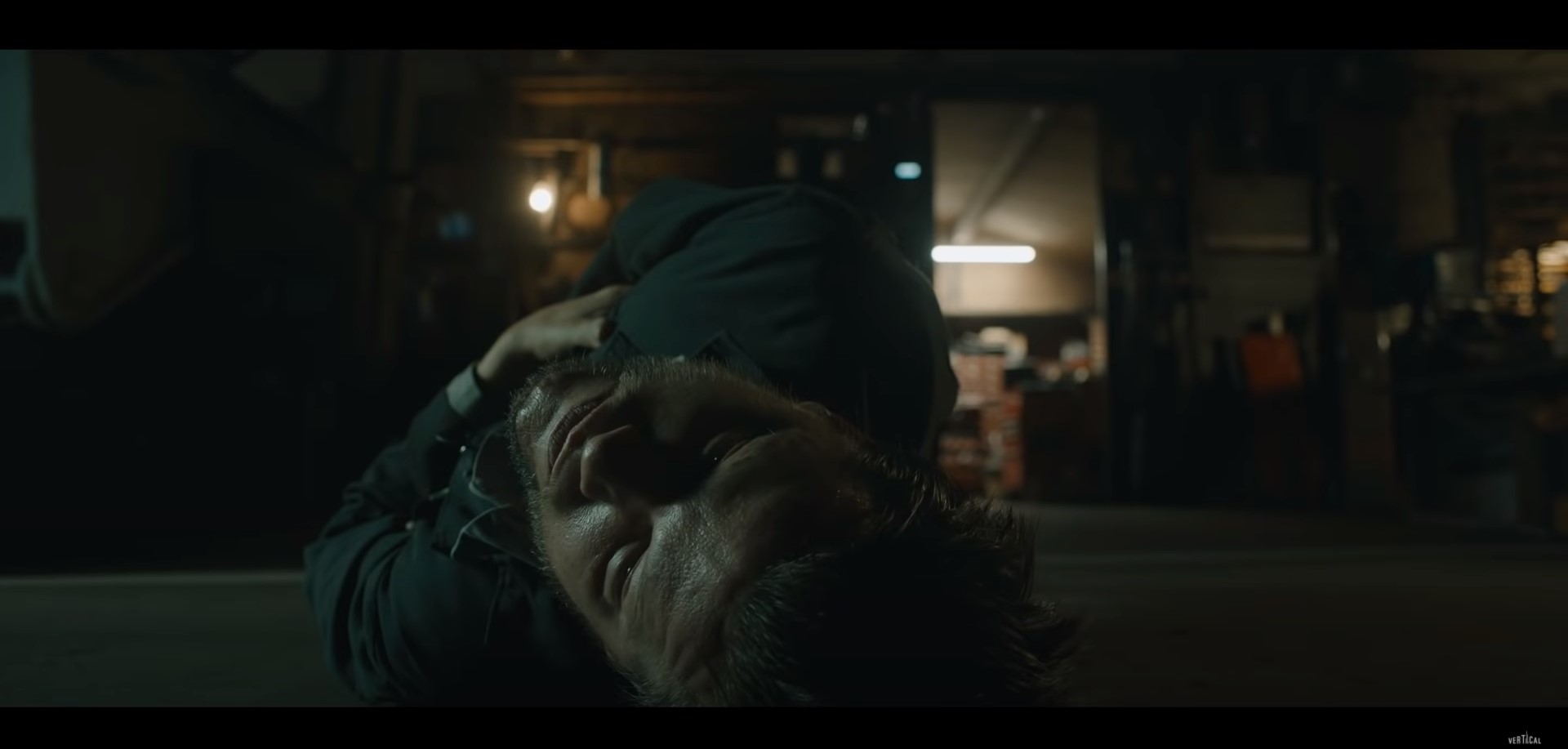
The joy of a new baby is cut short for Detective Ritter who bares the tragedy of his little boy viciously killed in a massacre of nursey infants by a psychotic nurse before taking her own life.  Five years later, and losing not only his child but also his wife to severe depression, a disheveled Ritter is called in to investigate a mass murder involving a 12 year old boy slaughtering young children in a preschool classroom.  To him, the two events don’t spark similarities, but to a paranormal investigating Catholic priest, Ritter’s tragedy and the events in the classroom are linked by the unorthodox priest’s examination.  All the evidence points to an excommunicated Catholic priest practicing demonology that sends the two men down a path of unholy darkness in a series of murderous catastrophes influenced by the rebirth of the Messiah.

When the first scenes from “Belzebuth” open with a maternity ward nurse stabbing with vigorous force every single infant child in their crib with a scalpel, you know nothing wholesome is sacred and everyone is fair game in what is to be a grim story of infinite barbarity and darkness.  “Belzebuth” falls in the line of fire of Mexico City born writer-director Emilio Portes with an augmented, dark humored social commentary loaded with evil entities and grimace-laden gore.  The “Meet the Head of Juan Pérez” filmmaker cowrites “Belzebuth’s” irrational rational for the unfortunate real world trend of mass murders and touches upon, sensationally, the evolution of Catholicism extremities to battle evil in the world with first time feature length film screenwriter Luis Carlos Fuentes.   The Mexico/American film is produced by Rodrigo Herranz, Michelle Couttolenc, and Jaime Basksht, with Ana Hernandez as executive producer and Pastorela Peliculas in cooperation with patriotic promotion from the Instituto Mexicano de Cinematografia, aka IMCINE, serving as the production companies.

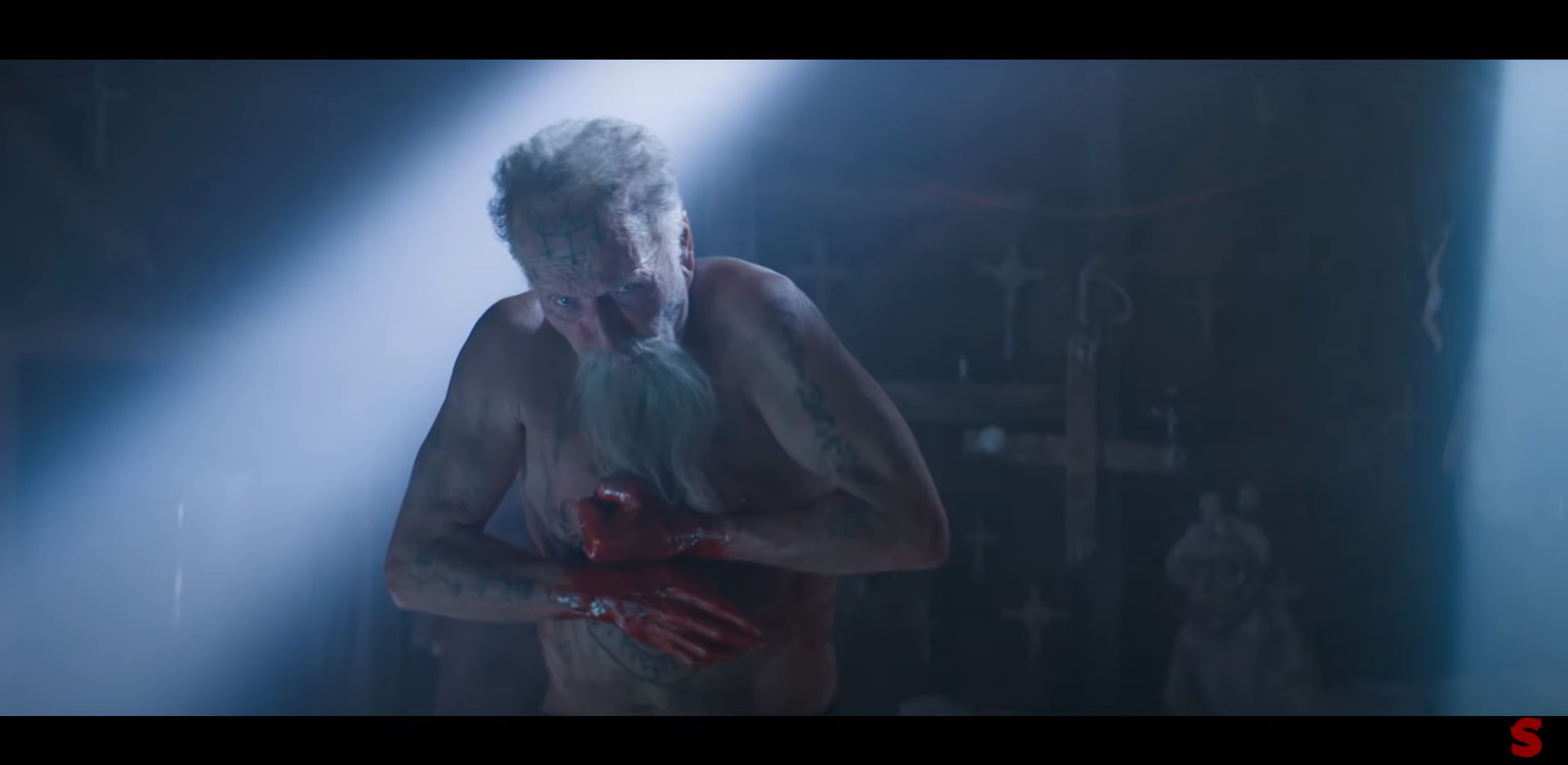
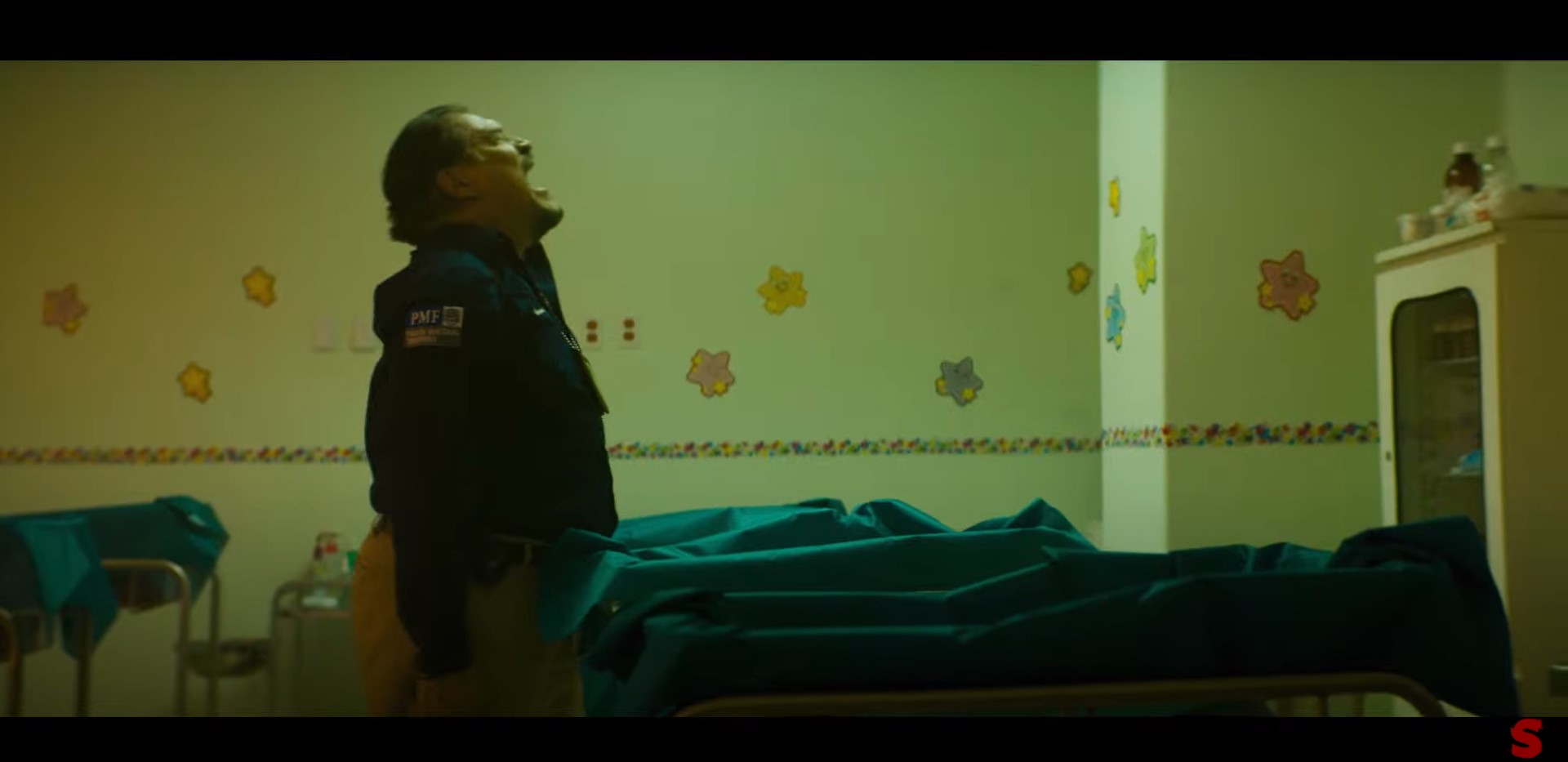
If you Google Mexican actors, the power of artificial intelligence and ignorant manual input couldn’t separate Mexico form any other Latin American country as the powerhouse search engine provided me results like Danny Trejo, John Leguizamo, Jennifer Lopez, Javier Bardem, and Penélope Cruz.  Now, while I respect each and every one of these performers who provide a variety of lush character and emotional erudition to each of their roles, not one of them is born in Mexico.  Some that listed do not even share the same heritage.  But do you know what the most astonishing, most outrageous, and most shameful aspect of my search was this?  The Tepic, Nayarit, Mexico born Joaquín Cosio was not among the top 50 results.  From captivating television with Guillermo del Toro small screen adaptation of vampiric apocalypse of “The Strain” and the intense drug-fueled drama of “Narcos: Mexico” to his Hollywood presence in the star-studded, James Gunn directed “Suicide Squad” to his humbler beginnings that includes Bond, James Bond, in “Quantum of Solace,” Cosio’s a strong and versatile candidate for intense thrillers and “Belzebuth” is right in the actor’s wheelhouse as a downhearted Detective Rigger with a short fuse.  As a supernatural skeptic, Ritter’s forced into confronting his past demons with the demons of the present by tracking down rogue priest Vasilio Canetti (Tobin Bell, “Saw” franchise) with the help of Father Ivan Franco (Tate Ellington, “Sinister 2”) of the Paranormal Forensic Department, which sounds kind of silly because Franco’s squad is an extension of the Church.  Bell brings his delightful deadpan bedside manner as the excommunicated priest in guerilla warfare with a determined, demonic evil trying to massacre as many children as possible to find the reincarnated Messiah in what would be the Third Coming as the Second had come and failed during the Crusades.  Bell is the yin to Cosio’s yang until circumstances rear-end last ditch efforts and all Hell breaks loose in a drug smugglers’ tunnel.  Aida López, José Sefami, Yunuen Pardo, and Liam Villa round out the cast.

If possession-fueled carnage and the antiheroic archetype weaponizing demonology for good tickles all the right places, “Belzebuth” can be the feather tickler of dreams.  Fans of Clive Barker’s “Lord of Illusions,” Peter Hyams’ “End of Days,” and the graphic novel “Constantine” can indulge into Portes’ explicit nihilism and lack of public conviction in religion in the director’s allegoric telling of something really big and really satanical happening right under people’s noses while a small motely crew of conversant peons try to stop a wall of Deviltry.  Portes also consistently touches upon Mexico’s unsystematic corruption, even among Ritter and other protect and serve officers, and the once firm-handed political system of the Institute Revolutionary Party (PRI) as potential cause for all the suffering enacted demon-rooted abscessations.  The mentioning of drug cartels pop up frequently, too, symbolizing the seemingly random acts of violence are just never just random acts, but an perpetrated hit on a human target much like the cartels’ unsavory methods to either take out competition, eliminate obstacles, or to silence whistleblowers.  Portes does a phenomenal job using his film as an allegory in making a political statement but lacks balance in favoring gore over profile with some characters who rather feel written in just for the sake of a broader English audience.  Father Ivan Franco is such character with interesting combinational vocations as a paranormal investigator and a holy man of the cloth.  Yet Franco, who wields a gun and has supercool video and audio recording specs, spearheads a larger suborganization shielded away from the public eye and, unfortunately, the viewer eye that never feels like a cog in the entire “Belzebuth” machine.  Franco and his team of spook-sleuths, who, by the way, vanish completely from his side early into the investigation, supposedly follow and investigate peculiar tragedies connected to misaligned presences leaving spiritual residue on the real world plane, but how his team comes about connecting the dots exclusively to just the first two tragedies, five years separated, is a bit of stretch and a letdown in fabricated continuity and weight behind Franco’s existence to be involved.  Pockets of plot holes pop up here and there on other facets but generally speaking, “Belzebuth” works black magically as a spiritually and culturally vivisecting detective thriller.

The Shudder original 2017 release, “Belzebuth,” scares up onto an UK Blu-ray release from Acorn Media International. The region 2, PAL encoded, single layer BD25 presents the film in a widescreen, 2.35:1 aspect ratio, with a runtime of 109 minutes.  Ramon Orozco’s cinematography flashes with a gorgeous red and blue color palate that fits the iniquitous tone and adds an ethereal, hazy backlighting to only enhance the tone to more sinister levels.  Acorn’s Blu-ray sharpens Orozco’s already byzantine schemes that enriches the details in the skin as well as a the sacred relic artifact-cladded locations that become claustrophobic and entombing.  Even Juan Martínez Espín visual special effects casts a solid effort of barely a smooth surface computer generated phoniness, especially in one crucifying scene of psychological torment.  You’ll know it when you see it.  “Belzebuth’s” powerful Dolby Surround 7.1 audio track is an assault on the eardrums of the best kind with a husky, industrial melodic soundtrack and hefty sound design with accompanying diverse range and proper depth that could be described as literally placing every creak, stab, and cackling laugh sound right into the darkest corners of your ears.    An unfortunate surprise about the Acorn release is that there are no special features aside from the animated menu that is essentially chaotic “Belzebuth’s” trailer plastered with menu options.  Possession films tend to stale at a dime of dozen, but Emilio Portes’s freshly terrifying “Belzebuth” entertains and scares to the very last morsel.

Honey’s Sweet, But There’s EVIL in the “Royal Jelly” reviewed! (Uncork’d Entertainment / Digital Screener)


Bee careful what you wish for in this apiary tale that tells a story of high school misfit, Aster, an easy target for unsympathetic pubescent bullies, including the continuing at-home abuse from her half-sister, Drew, and pitiless stepmother.  With neither school or home being a safe retreat, Aster finds comfort in an unorthodox and brash substitute female teacher who has taken a shine to Aster and provides her shelter when she’s distraught after discovering her collection of apiary beehives was maliciously destroyed in an act of malice.  After living with her teacher and her son for some time, they exhibit strange behaviors, develop skin rashes, and Aster begins to notice that she doesn’t quite feel like herself either as her safe haven is unveiled as a façade for her grooming to become the next hive queen.   

“Royal Jelly” isn’t exactly the killer bee movie you’d be expecting.  Writer-director Sean Riley invites a new take of the Apiformes horror subgenre outside the beehive of being per se a creature feature with his new film, “Royal Jelly.”  And, yes, even though tiny in size, bees are still tiny creatures with mighty (painful) stingers.  Those not familiar with the term royal jelly, other than it being an unique title for Riley’s sophomore feature, royal jelly is the honey bee secretion from glands located in the hypopharynx and is the chief nourishment for colony’s larvae.  See!  Who says horror movies can’t be education?  Somehow, someway the Baton Rouge, Louisiana-born director found malefic inspiration secreting from his metaphorical hypopharynx domiciled glands and packages with it a paralleling an all too familiar fairy tale crowdfunded by Indiegogo backers, second feature funded this way behind his breakout directorial of the comedy “Fighting Belle,” and Riley’s Integral Motion Pictures.

Now, who is this leading lady willing to be misled into a turned-out humanoid life sized queen bee?  The University of Southern Mississippi Fine Arts graduate Elizabeth McCoy, of course.  The Greater New Orleans actress slips into an quasi-goth cladded outcast Aster sporting fishnet stockings and a black graphic t-shirt promoting the band Queen, a bit of fitting foreshadowing if I’ve ever come across one.  Before being bequeathed the hive throne, McCoy has to render Aster a meek existence made small by the death of her beekeeper mother backstory and surrounded by loneliness stemmed by an abusive sister and stepmother and a coward of a father.  The only joy made clear in Aster’s life is her bees.  When her apiaries are decimated, that is when high school sub Tresa (Sherry Lattanzi) flies in and shelters Aster under her wing that makes for an odd couple combination that’s one part predatory teacher fraternizing with a vulnerable student and one part comical motherhood to see McCoy tower over a short Lattanzi who is in this insect sovereign role. Doesn’t Darwin always say the strongest always survive? I guess there’s nothing in Darwinism about the tallest. Lattanzi expresses Tresa about as audaciously enigmatic as they come with little-to-no story arc to move in accord with as Tresa just shows up, out of the blue, and after a scene where Aster’s teacher has had his throat slit and I’m still trying to fathom the plot hole of how the hell Tresa entered the frame so quickly, as a substitute teacher, without ever laying eyes on Aster until stepping into her classroom. Sparse is the name of the game as Tresa, as well as Aster, are poorly written without much density and neither actress can pull off miracles adding layers to already rotten onion. The rest of the cast includes Raylan Ladner, Lucas T. Matchett, Fiona McQuinn, Jonas Chartock, and Jake McCoy.

Pulling inspiration from Roger Corman’s “The Wasp Woman,” Riley’s “Royal Jelly” ditches the experimental cosmetics for timeless folk lore while still vaunting a Corman class cinema gooey with bee secretion center. Instead of an enchanting tale of rags to riches, this loose Cinderella adaptation comes with all the classic hallmarks like an evil stepmother, a wicked stepsister, and a fairy godmother manifesting Aster’s dreams on the spot, but instead of a magical wand and a pointy hat, this fairy godmother comes in the form of a personified bee queen wearing a façade of a presumptuous substitute teacher. Riley’s openly emblematic killer bee story could go one or two ways. 1 – Aster is actually being groomed by a bee queen to take over her hive as a homolog event to Aster’s earlier class presentation on the eusocial bee social organization or 2 – Aster has snapped due to bullying and she’s daydreaming, hallucination, or dead and the bee-havorial chaos she’s experiencing is either in her head or is sardonic Hell. I like the second theory better over the first as I don’t find Aster’s sprouting of inorganic and rigid Halloween costume bee wings and a makeshift stinger, that appears more phallic than necessary, to be enticing me with a freakish reality. I still can’t get over the possibility of a predator allegory as a big truck cruising Tresa targets Aster to mate with her “sons” “Henry” or “David” to produce a heir of sorts. Either way you slice into Sean Riley’s “Royal Jelly,” little feels right story-wise with the delimited, bareboned farmhouse and apiary analogy and with the flighty characters leaving all their aces on the table which Riley scarcely goes back to address, such as with Aster’s family who just disappear from the story altogether though scenes of her snide stepsister showing slithers of guilt and sympathy go unfounded.

The bee invasion has landed with Uncork’d Entertainment’s release of Sean Riley’s “Royal Jelly” this September on all digital platforms From the unhinged “Homewrecker” to the love you to death “Cupid,” Uncork’d Entertainment distributes a wide berth of independent horror, stretching to all home entertainment platforms, and acquires the bee-horror “Royal Jelly” that fits into the company’s catalogue. Since released digital, the audio and visual aspects won’t be given the once over. Jonathan Hammond (“Attack of the Southern Friend Zombie”) serves as cinematographer who’s overexposed day scenes are starkly contrasted by the night scenes’ hard lighting slathered with an unforgiven blue tint. The inconsistent visual styles and slips, such as unfocused, blurry scenes at the dinner table near the beginning of the story, clash in the 94 minute runtime. Joe Hodges lays down a common brooding industrial score that’s not half-bad as the melodies change with the extent of the solid sound design. Stay tuned post credits scene for a millennial targeted public service announcement to protect and support the bee way of life by scanning a QR code to receive information on how to exactly do that. Pleasantly informative and certainly unusual, “Royal Jelly” evinces more the echelons of bee society and lot less the terror of horror and that takes a lot of the sting of Riley’s film, making this bee killer movie a total buzz kill.

Own or Rent “Royal Jelly” on Amazon Prime Video

After Death is When Things Get Really EVIL! “One Dark Night” reviewed! (MVD Visual / Blu-ray)

Good girl Julie wants to join a The Sisters, a small high school club ran by three girls, one of who is the ex of Julie’s boyfriend.  Out to prove to herself and to The Sisters she’s willing to go the distance being fun and reckless, Julie subjects herself to The Sisters’ initiations, even the more cruel ones set by her boyfriend’s spiteful ex.  When the last initiation involves staying locked in overnight at a mausoleum, The Sisters will go beyond the limits in trying to scare her out of pledging, but the death of a bio-energy telekinetic practitioner with a cryptic occult past is freshly stowed away in one of the mausoleum’s coffin crypts and in death, he is more powerful and dangerous than when alive.  Trapped, Julie and The Sisters are terrorized by his power as he seeks to transfer his malevolent energy into one their bodily vessels. 

A PG rating back in the pre-1990 was also an abstract concept.  “Clash of the Titans.” “It’s Alive.”  “Jaws. “ “Prophecy” (the one with the spirit bear, not the Christopher Walken film).  These are a handful of titles that were MPAA rated PG approved, but contained nudity, bloody kills, and not to forget to mention some terrifying visuals that’d make anyone piss their pants.  “One Dark Knight” also fits into that category as the 1982 teen horror from “Friday the 13th Part VI:  Jason Lives!” director Tom McLoughlin set his sights toward a R-rating with the mindset that his detailed scenes of decay and rotting corpses and a face blistering the flesh to the skull would surely be slapped with the 17 years or older rating.  Low and behold, the ratings board thought otherwise, surprising McLoughlin and his co-writer Michael Hawes (“Family Reunion”) with a parental guidance rating that my 7 and 4 year old could sit in on without me fearing theater security or, even worse, the mind control hypnosis and repetitive nurturing elements of today’s movies and shows that don’t make a lick of common sense or brandish any artistic heart. McLoughlin’s ‘One Dark Night” has plenty of heart and plenty of floating dead bodies in this Comworld International Pictures production with “Out of the Dark” director Michael Schroeder producing and Thomas P. Johnson as executive producer.

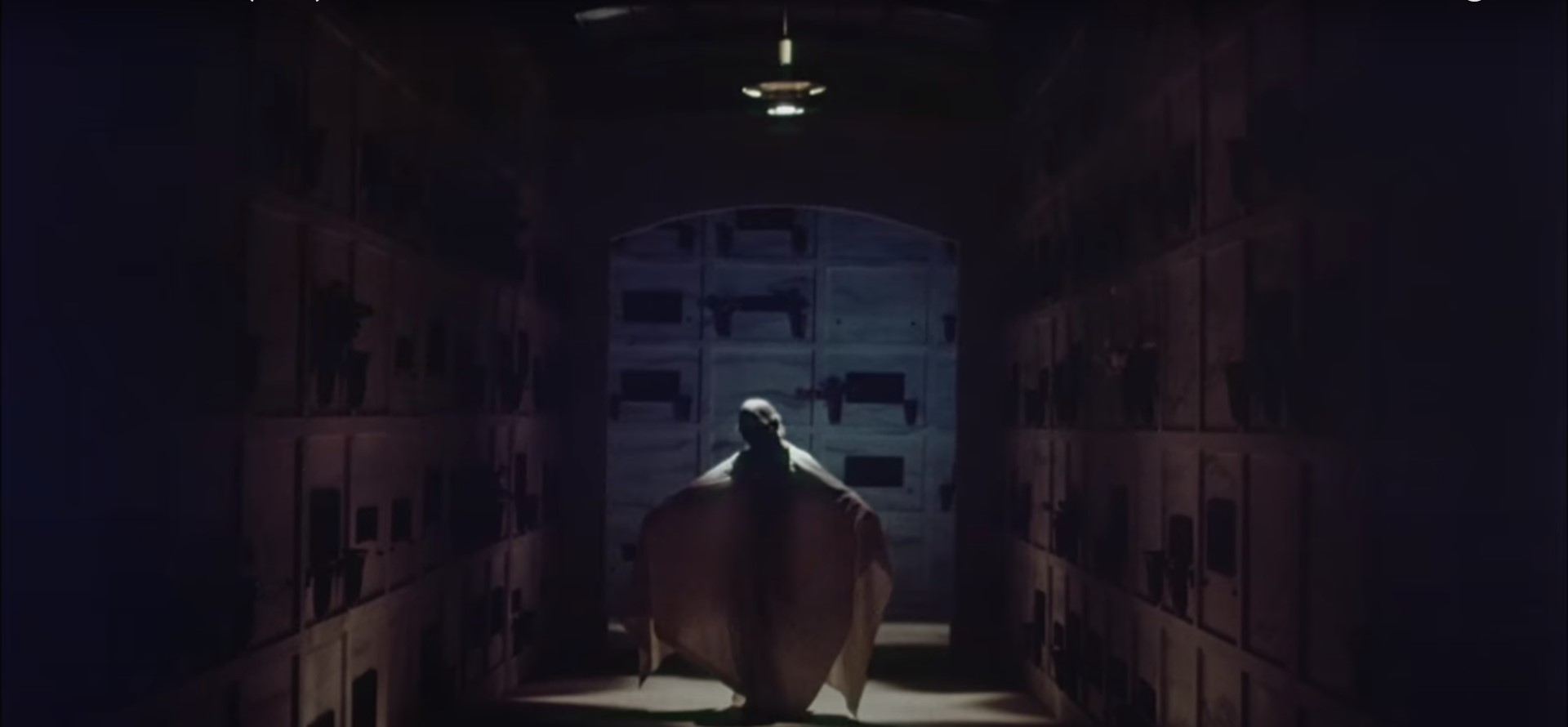
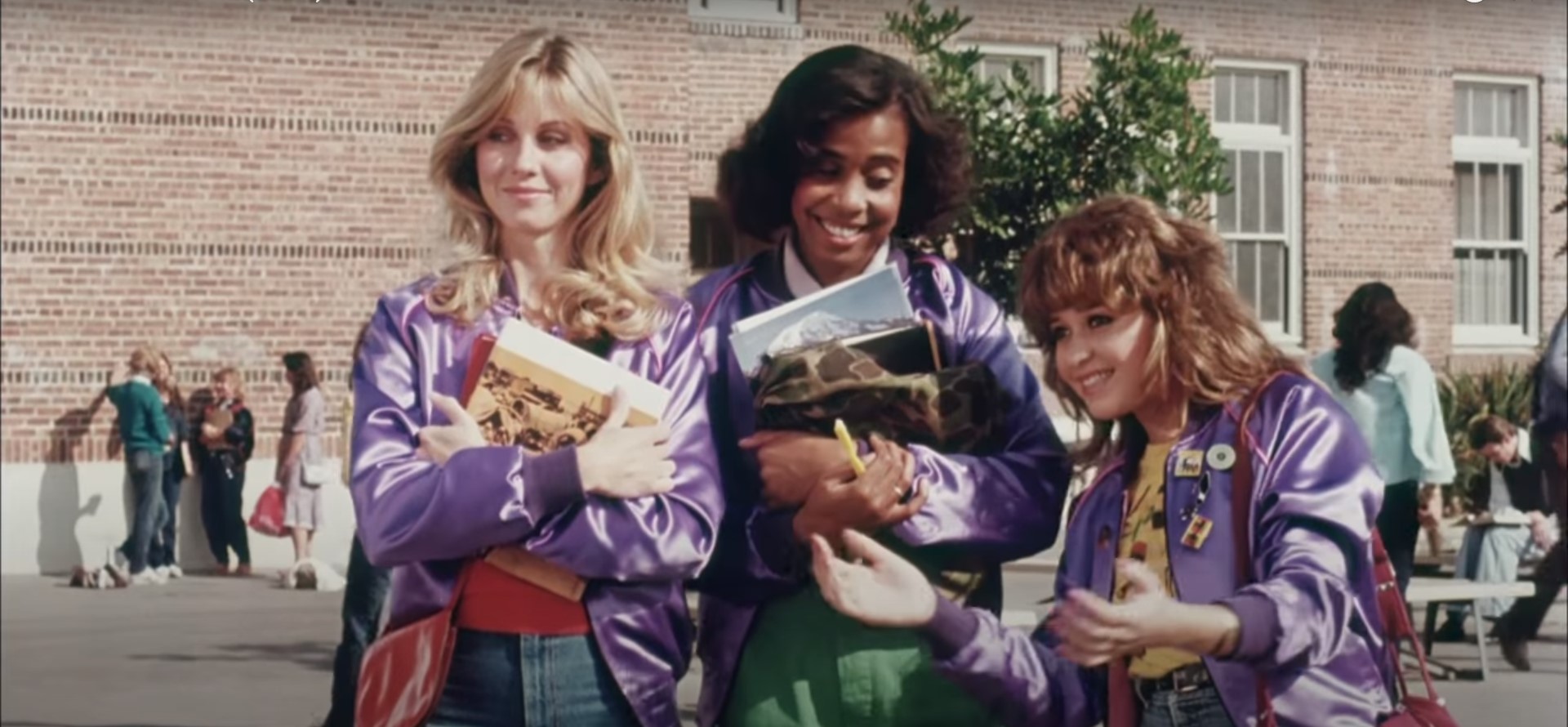
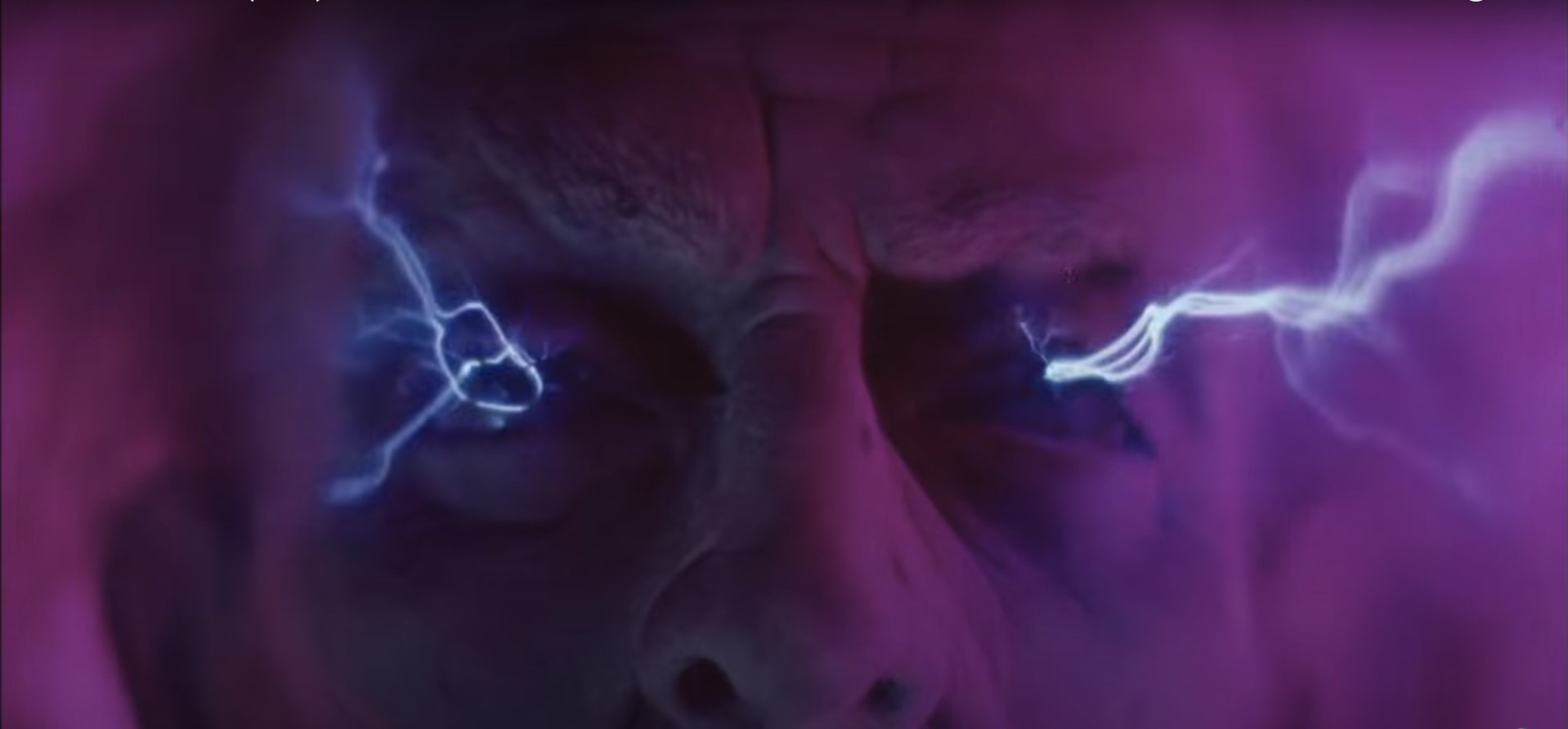
Before hitting the sequel and remake circuit with “Psycho II” and “Body Snatchers,” Meg Tilly broke onto the scene as “One Dark Night’s” leading lady as the amiable Julie whose looking to shake her good girl image. The little sister of “Seed of Chucky” and “Bound” star Jennifer Tilly takes the role by the reins by undulating her fear and determination to do what The Sisters initiate her into completing. The Sisters is comprised of renowned voice actress and “Pee-wee’s Big Adventure” costar Elizabeth Daily, Leslie Speights, and lead by Robin Evans as Carol, the spiteful and venomous ex-girlfriend of Julie’s now jock boyfriend (and Christopher Reeves lookalike in my opinion) in David Mason Daniels. You know what they say about love triangles they? They always lead to psychopathic, telekinetic psychics reeking havoc in a mortuary. Luckily for Tilly, Speight, Daily, Evans, and Daniels, psychopathic, telekinetic psychics are not real and neither is the person who plays the Karl Rhamarevich aka Raymar character! You see, the opening is the post-death scene of Raymar whose lying dead under a coroner’s white sheet along with six beautiful women stuffed into a corner closet in his oddly tatterdemalion apartment. The next time we see Raymar is in his casket, wide open, wide eyed with blue lightning summoning to animate the dead from the mortuary crypts; yet, Raymar is played by a dummy in the film created by Tom and Ellis Burman (“Star Trek” franchise in various capacity and “Scrooged”) and Bob Williams (“The Terminator”) who mold Raymar after the contours of Christopher Walken – second time Walken has popped up in this review! The more interesting casted parts, whose characters don’t do diddly squat in the film, is Adam West (“Batman”) as Raymar’s daughter (Melissa Newman) level-headed husband and The Predator himself, the late Kevin Peter Hall, in a minor appearance before becoming the man behind that one ugly son of a bitch mandible mask. You also actually get to see how tall Hall was in his prime.

“One Dark Night” flirts with being this strange horror that blends teen suspense and shenanigans with gothic horror with pseudo-science deviltry sushi wrapped into a Euro-horror roll. I kind of love it. I’m one of those horror fans who avoid trailers like the plague and try not to read synopses on the back cover, going into every viewing with complete ignorance, total unbias, and good attitude. I didn’t even know Meg Tilly was in “One Dark Night” for Christ sake! As the 90 minute runtime ticks down, I’m curious to where McLoughlin starts to take this film that doesn’t seem to quite get into the horror portion of Raymar’s show-stopping comeback. McLoughlin and Hawes hype up the love triangle with Carol’s bitter acrimony and Julie’s adolescent need to not be a one-note complexion all the while Steve desperately needs Carol to cease and desist any and all torturous hazing attempts, but there’s still this itty-bitty connection still tethered between the two that also causes Steve to two-time his new, more benevolent, girlfriend. In the end, I can confidently say that Steve is a good dude, a guy who double downs on a girl like Julie who can’t seem to get it through her thick skull that she doesn’t need to prove anything to three dimwits with sheeny club bomber jackets. I can tell you who isn’t a stand up guy – Raymar. Kudos to McLoughlin and his crew for creating one evil son of a bitch villain without there ever being a palpable proverbial man behind the mask to bounce off a projection of fear and contention. The evil Raymar practice was so intensely evil it was beyond our dimensional comprehension and broke the mold of death with the abilities to animating the dead among other things. “One Dark Night’s” slow start leads to a not to be forgotten survival terror against an army of the harnessed dead.

Raymar isn’t the only thing brought back from the dead, but also “One Dark Night” as MVD Visual, under the MVD Rewind Collection, strike a deal with Code Red to utilize their OOP transfer and bonus materials for a new re-release Blu-ray hitting retail shelves this Tuesday, August 24th! The 1080p high definition transfer is presented in a 1.78:1 aspect ratio speckled nicely with natural, pleasant looking reel grain. Like the Code Red special edition release, plenty of details shine through the delicate rendering that can be image wispy at times. Loads of superficial damage – frame scratches, edge flare ups, rough editing cuts, smudges – can’t go unnoticed, but these blemishes don’t hinder much as the scenes are more transitional during the setup to the big mortuary finale. What differs from Code Red’s DTS-HD 2.0 mix is thee English language LPCM 2.0 mono mix that still lightly treads with subdued effect, much like the Code Red release. Dialogue can sound muffled with popping landing just under the surface and bubbling up during dialogue scenes. Still, the audio track stands it’s ground by clearly rendering every dialogue, effect, and soundtrack without question. English subtitles are also available. You want bonus features? You got’em! Interviews with director Tom McLoughlin, actress Elizabeth Daily, actress Nancy Mott, cinematographer Hal Trussell, production designer Craig Stearns, producer Michael Schroeder, and special effects crew member Paul Clemens are all individualized for maximum recollection tidbits and factoids. There’s also audio commentaries by McLoughlin and Schroeder as well as McLoughlin and co-writer Michael Hawes. Plus, we also graced with McLoughlin’s director’s cut, a standard definition, unfinished, work print version in a 1.33:1 aspect ratio that shows the director’s true take on the narrative before producers ultimately decided to go another route…behind his back nonetheless. Behind-the-scenes footage, Paul Clemens photo gallery, and original theatrical trailer round out the disc bonus content while the physical release comes with a retro-take card board slipcover, reversible cover art, and a collectible mini poster inside the case liner. If you’re a fan of Euro-horror, “One Dark Night” embodies the very soul of the Lucio Fulci and Michele Saovi supernatural archetype sewn seamlessly into an inescapable and hopeless dance with the gnarly energies of the stoic dead.

Pre-order “One Dark Night” on Blu-ray at Amazon.com!

Little Book of EVILs. “The Last Thing Mary Saw” reviewed! (Arachnid Films / Digital Screener)


Southold, New York, 1843.  A young, once-proper, daughter, Mary, of a puritanical family sits before an investigator as suspect of the brutal massacre of her family.  Her eyes having been gouged and plucked from her skull, Mary can’t see the musket rifles pointed straight at her as she’s assumed to be practicing dark dealings being the sole survivor.  She must recount the exact details of story that begins with the family’s severe punishments imposed upon her and the house maid whose practically publicized intimate relationship was seen as wicked, sinful, and embarrassing.  Unable to be discouraged by disapproval and cruel corrections, Mary and the maid continue to sneak their forbidden affair but did she and her lover commit the heinous crime or was there more behind the veil involving an infinite evil, bound by a mysterious book, pulling at the marionette strings that has cursed Mary and her bigoted family?

Tackling themes of homosexuality in the 1800s in the time of itchy-trigger-finger heresy pointing and dogmatic ideologies comes the debut horror film of writer-direct Edoardo Vitaletti entitled “The Last Thing Mary Saw.”  The Northeastern Americana thriller is a fermenting tale of a remote extended family, of some wealth and stature, trying to remedy the eldest daughter’s uninhibited rendezvous with an equal in age young house maid by subjecting them both to torturous corrections aka kneeling on uncooked rice while reciting a specific passage regarding sin from scripture.  Vitaletti’s first feature length film is from executive producers Joseph Michael Lagana (“Actress Apocalypse”), Mike Nichols (Eli Roth’s “Fin”), Keryn Redstone, and Scoop Wasserstein and from New York based production companies Arachnid Films and Intrinsic Value Films. 

“The Last Thing Mary Saw” has an intriguing cast as well as a cast, at least I think, everyone should love.  When this Washington, D.C. born actress is not pretending to be a creepy psychotic child, “Orphan’s” Isabelle Fuhrman finds other ways to slip into tightknit family structures.  The now 24-year old Fuhrman plays house maid Eleanor who continues to fight for Mary’s affection despite Mary’s closed minded and religiously persecuting large, all-in-one-house family.  Mary, the titular character played by “Insidious:  The Last Key’s” Stefanie Scott, has stars in her eyes as she’s hot for the maid, but I couldn’t find that deeper connection between Fuhrman and Scott whose characters even further themselves from each other by being more intent on beating the system rather than being romantically and consummately intimate.  It’s almost as if Vitaletti starts beyond the point of building up the relationship, having prefabricated Eleanor and Mary’s love, and is only thirsty for the consequences that follow.  The lovers become embroiled into the family’s personal problem with their daughter’s relationship and at the helm of it all is the matriarch at the hands of Judith Roberts.  The “Dead Silence” and “Orange is the New Black” actress embodies coldly an unyielding crone that eager wants to keep the so-called troublesome maid with the family, even if that means passing her skillset to uncle Eustace (Tommy Black) and his wife and adolescent child (Dawn McGee and  “Starry Eyes’” Shane Coffey).  The crux of the problem starts with the father (Michael Laurence) who brings a book filled of peculiar, teratology-related storiettes that might not be odd today, but were damn near witchcraft in the mid-19th century, and that’s when things begin to spiral bleakly with manipulation and suffering in various ways.  “The Last Thing Mary Saw” rounds out the cast with Carolyn McCormick, P.J. Sosko, Daniel Pearce, Stephen Lee Anderson, and “Scream 4’s” Rory Culkin as credited “The Intruder.” 

What intrigues most about Vitaletti’s script is no character is inherently labeled as a conventional genre trope.  The chapter-storied narrative plays out in three parts with the title paralleling the contents of the mysterious red book as well as the action in each plotted chapter.  What seems orthodox for the film’s set period in punishing those in same-sex relations alluded “The Last Thing Mary saw” to be a tale of sordid, Godless misconceptions and yearning attraction between two young women, but then the catalyst  happens, a supernatural being is revealed, and then the tide turns from the sinister misguided to the sinister malevolent.  Another Vitaletti explores another theme: hate.  Mary hates her own family to the point of setting out revenge upon them; she would do anything to not separated from Eleanor, but yet Eleanor remains in the house, not dismissed, or reassigned to another house.  Hate festers into everything, boils closely at the edge, not just for Mary and Eleanor but for the family who hates secular unions, hate embitters in the grounds security guard after his leg was purposefully crippled for running away, and hate also tears are Rory Culkin’s The Intruder whose monstrous birth has left him with no family or respect amongst his peers so he must take away from others.  Without production designer Charlie Chaspooley and costume designer Sofija Mesicek, there wouldn’t be this resurrection of early 1800s resemblance that’s essential for the story’s period and the acting also smooths out the dialogue of a yonder-forgotten dialect of a lingering British-English set in area of Long Island.  Though I like where the story progresses and how climactically ends, following along with Vitaletti’s script falls nearly deaf on a coherent understanding.  Plot points do come out of nowhere at times that don’t segue neatly enough for comfort and we’re left with a mountain of enigma that somehow ties Mary, the book, and an unconventional Matriarch together into a dysfunctional family affair; yet, the sullen atmosphere makes for good unbenevolent folkloric horror coupled with Vitaletti’s incredible patience the scenes with immense anticipation and dread.

Premiering worldwide at the virtual rendition of the Fantasia Film Festival, “The Last Thing Mary Saw” will be a part of the festival’s first wave of films for attendees. No digital, on demand, or physical release dates have been set for this occult horror drama from first time feature director Edoardo Vitaletti, so you will have something to look forward to in the coming days of new releases! Director of photography, David Kruta, has come along way since the unfinished mess with the discarded survival-slasher “Old 37” by maintaining Vitaletti’s natural rustic scheme of the early 1800s and then toil with the phantasmal occult in one or two scenes with an airy, dreamy, and, if not, an ethereally beauty in it’s parlous context. Situational context is also key when a scene with a long stretch of no dialogue becomes the means to an end and Kruta has to capture culmination of storytelling through the facial emotions and body gestures coordinating in light charade as well as a more hefty depressed language. “The Last Thing Mary Saw” is unpretentious horror done right with a melancholic reflection of a bygone past mixed with obscure occult elements wresting life from already blinded grips consumed by hate and arrogance is pure bread and butter for a director just getting warmed up.

Curse EVIL Curses! “Baphomet” reviewed! (Blu-ray / Cleopatra Entertainment)


Jacob Richardson, a Napa Valley landowner, and his wife are jubilantly excited about becoming grandparents with the eager arrival of their daughter’s child.  Still months before the actual delivery date, their daughter vacations with him while her husband works a few more days in Malibu before joining her but gruesomely dies in an apparent shark attack.  His sudden death isn’t just a stroke of horrible luck, but a devil worshipping cult’s curse bestowed upon the unsuspecting family after the rightfully stubborn Richardson refuses to sell his vast property to a shady businessman the day before.  One-by-one members of his family fall victim to a series of accidental and unexpected tragedies that leave his daughter, having dreamt the cult responsible for the black cloud that has been afflicting her family, desperate to try anything, even if that means making contact with a benevolent white witch to resurrect her shark bait dead husband.  The cult still wants their land and for the Richardson family, only Jacob, his daughter, her resurrected husband, and the white witch stand against an army of Satanists besieging upon the family home to awake a slumbering dark force. 

You know you’re watching a Cleopatra Entertainment distributed release when the plot revolves around a Satanic or demonic annihilator, as such with “The 27 Club,” “The Black Room,” “Devil’s Domain,” “Devil’s Revenge,” and maybe even a tiny bit from Glenn Danzig’s strange comic book adapted anthological tapestry, “Verotika.”  Matthan Harris’s 2021 released “Baphomet” walks along the same lines with the titled gnostic and pagan deity made infamous by the worshipped practices of The Knights of Templar acolytes.  “Baphomet” is “The Inflicted” director’s sophomore feature in which he’s written to remain in the horror ranks as an aggressive occult summoning of an evil presence to walk the Earth.  Shot in various California and Texas locations, the moneybag company behind “The Velicpastor” and “Don’t Fuck In the Woods,” Cyfuno Films L.L.C., collaborates supportively Matthan Harris’s formed Incisive Pictures production company to deliver a trackless, unmapped, and unholy “Baphomet” to the home video market with Harris producing alongside executive producers Grant Gilmore, John Lepper, and Cyfuno Films’ Adam and Chase Whitton.

We’re initially introduced to Giovanni Lombardo Radice sermonizing as the paganized pastor and cult leader Henrik Brandr before they slice open a naked woman wrists and drink her blood from a single chalice.  Right from the get-go, “Baphomet” hits us with the 80’s circa Italian star power of the “Cannibal Ferox” and “StageFright” actor.  The blood trickles down from there once we’re introduced to the Richardson family, headed by the patriarchal Jacob Richardson in “Mother’s Boys” Colin Ward.  Ward’s a convincing father figure, rugged and surly in showing off his rough and tough cowboy swagger, yet also sensitively compassionate in a broad range of acting experience.   However, that’s about as far as Jacob Richardson impresses as the character levels out, sulking over the loss of his son-in-law Mark Neville (Matthan Harris), wife Elena (Ivy Opdyke) and daughter’s unborn baby after his force to be reckoned with verbal encounter with one of the cult leaders offering him a lump sum of moolah for his land; instead, Richardson’s daughter, Rebecca Neville (Rebecca Weaver) takes a family first lead by engine searching and watching video tutorials on the nature of black and white witches.  After easily tracking down and skyping with witch expert played by Dani Filth, lead vocalist of metal band Cradle of Filth, a obsessed Rebecca becomes hellbent on resurrecting her Great White shark masticated husband, Mark, with the help of good witch Marybeth (Charlotte Bjornbk, “Cannibal Corpse Killers”) and this is where things go awry for the narrative.  Only a self-absorbed director would kill himself off extravagantly in character, saw fit to be resurrected for the sole purpose of love, and then become the ultimate hero of the story that leaves his wife and father-in-law in glory’s dust trail. “Baphomet” supporting roles from Gerardo Davila (“Ticked Off Trannies With Knives”), Stephen Brodie (“Puppet Master: The Littlest Reich”), and Nick Perry as the cult-sought demon.

Filled with blood sacrifices, family curses, killer sharks, and a pitiless grey demon, certain viewpoints embody that very black magic archetype of the historical devil dealings engrained into “Baphomet, but what specifically the Harris brings to the obscure budget horror smorgasbord is a platter of tasteless derivativity and bland storytelling, flavored with peppered gore granules and a pinch of pop culture icons. “The film opens engagingly enough with spilling the blood of a fully naked woman so everyone can play pass the cup of virgin blood in order to appease their dark lord and then we’re firmly segued into the happiness of the Richardson family until Jacob Richardson declines a money offer for his land. Spilling blood into the ocean and leaving dead, crucified birds on the porch enacts a deadly curse that sends sharks and snakes into a murderous rage. Up to this point, Harris has control of the story with some decent editing work and effective bitesize prosthetics to actually descend hell’s wrath upon an ingenious family. I could even look past the wild and impetuous decision to resurrect the dead boyfriend after his fatal encounter with a Great White, but when the third act’s last stand against cult comes knocking at the door, the script chokes on a grotesque amount of happenstance and exposition. For example, when the sheriff and deputies arrive at the Richardson house on Jacob Richardson’s whim that the cult might be outside their doorstep, one of his deputies randomly pulls out of a bag of large scale dynamite his cousin uses on at a jobsite, thinking the ACME-sized TNT would come in handy. Mark also decides to blow his undead cover, exposing himself to the officers in a screw-it moment of “yeah, I don’t care.” Soon after, a “Harry Potter and the Deathly Hallows Part II” battle ensues between the deluging cult and the defending Richardsons/Officers and many main characters parish during the skirmish fruitlessly and effortlessly to the point where they might as well have been non-essential to the story supporting parts. Also – the lack of considerable screen time of Baphomet and the demon child lays waste to a perfectly good title, in my humble opinion.

Perhaps one of the few Cleopatra Entertainment, a subsidiary banner of Cleopatra Records, to not be accompanied with a soundtrack compact disc with the Blu-ray, distributed by MVD Visual. The single disc BD-25 release is perhaps one of the few trimmer releases from Cleopatra Entertainment and is presented in HD 1080p in a widescreen 2.37:1 aspect ratio. Generally speaking, the music mogul company has continuously be consistent on their video and audio Blu-ray releases. The details are rather defined looking and sharp with blacks, and there are many black scenes, noticeably inky without that dim lit tinge of gray. Some of the underwater sequences and the video chat calls with Dani Filth are murky and at a lower rate than due to Filth filming his scenes literally from the UK on a video call for most of film. Two English language audio options are available – a Dolby Digital 5.1 surround sound mix and a Stereo 2.0. Flipping back and forth between the two option, the devil is in the file track details but both mixes sound frightfully the same down to the climatic explosions. Bravo on the depth and range that captures rightfully the echoes of high vaulted ceilings and the positioning of characters. Dialogue is clearly present and mostly natural with aside from Gerardo Davila, the Sheriff in the film, in what discerns to be a soundstage track layover of his dialogue. When he speaks, Gerardo doesn’t seem to be sharing the same dialogue space with his costars in an unnatural vocal delivery of his role. While there is no soundtrack disc to rock to, the hefty bonus material is a shocker with deleted and extended scenes, outtakes, a music video ‘Shellshock” from Tank featuring Dani Filth, behind the scenes pictures, Dani Filth backstage interview, Jason Millet’s storyboards, and a teaser trailer. Tickled me unimpressed by Matthan Harris’ “Baphomet” that hinges on uninspired cult creed. For me, special effects wins top prize and a giant handful of bonus material is the only thing that arises out of “Baphomet” from the wells of damnation.

“Baphomet” is on Blu-ray at Amazon.com