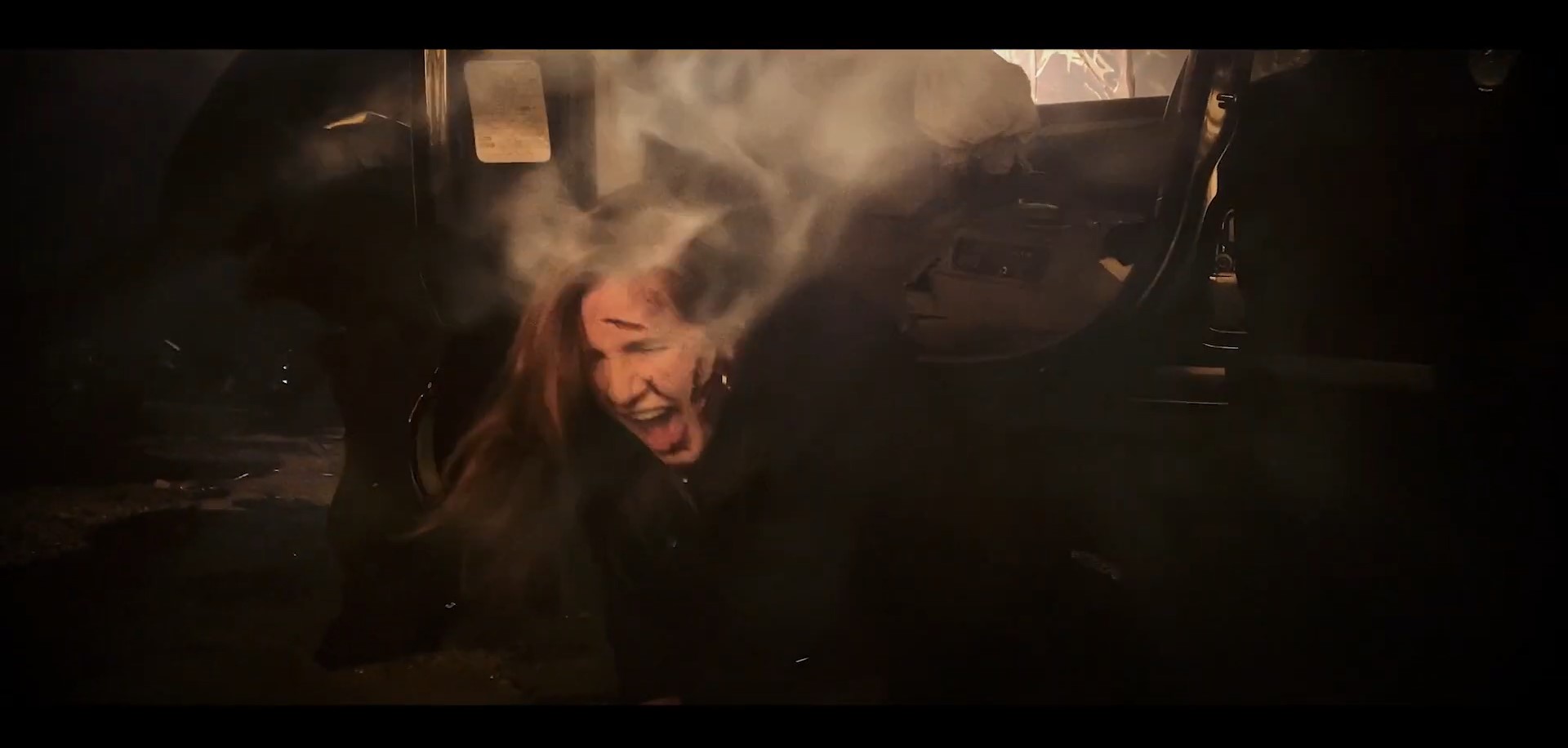
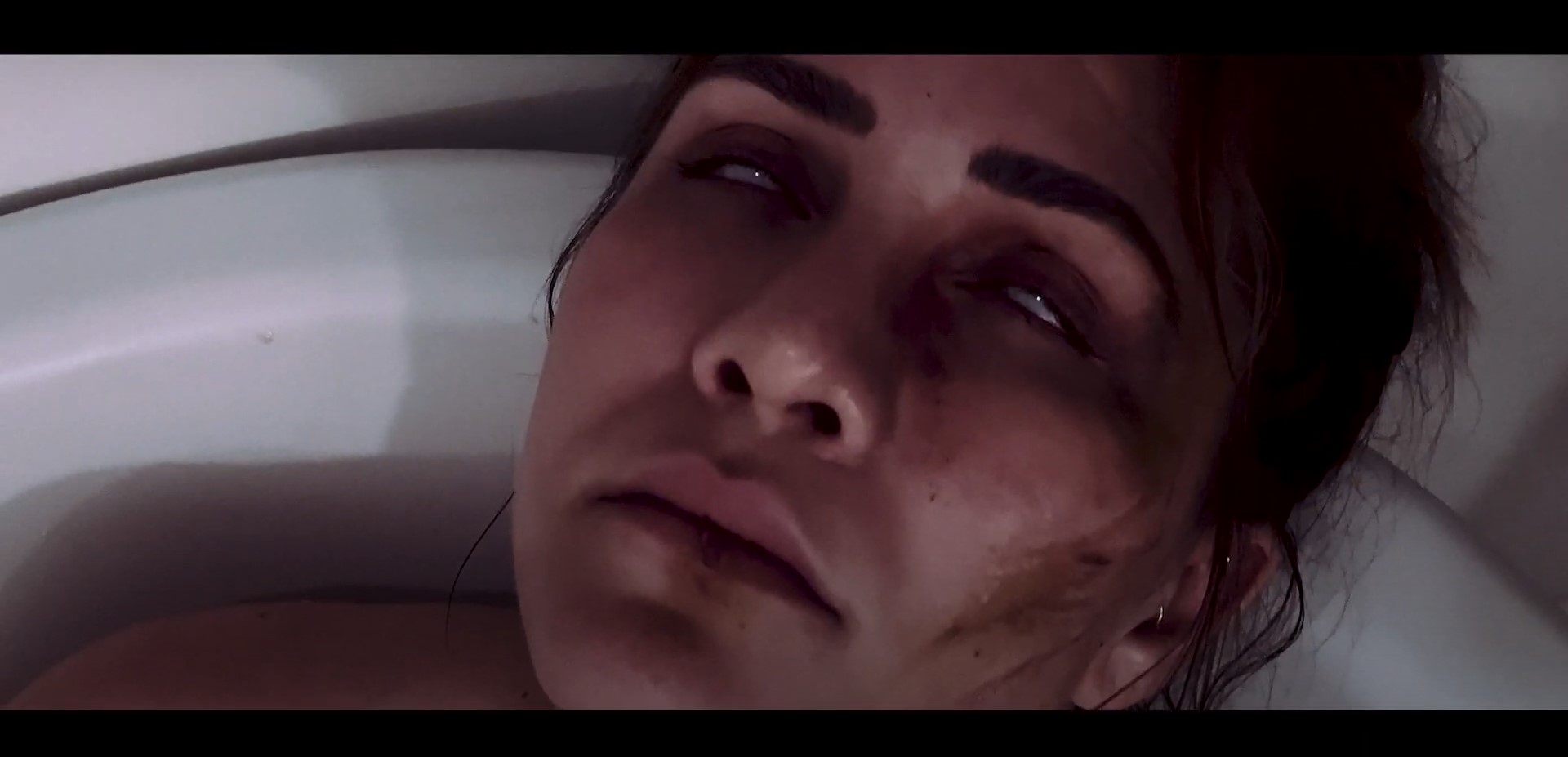
Another Cabin of EVIL in the Woods. “Exposure” reviewed! (Scream Team Releasing / Blu-ray)


Get exposed ot “Exposure” on Blu-ray at Amazon.com!

A rough patch in an abusive relationship opens up an opportunity for Myra and Owen to reconnect on a retreat at Owen’s family mountain cabin.  With wilderness for miles around, not a soul can disturb their serene getaway in retrieval what is lost in their relationship.  What they find is a biotic evil that has cursed Owen’s family once before and has returned to build a divide between the struggling lovers as a single, break-the-skin nip can transform anyone into a beastly monster.  Myra and Owen’s love for one another is put to the test when the monster blood insidiously begins to take over, leaving nearly nothing recognizable left behind the eyes. 

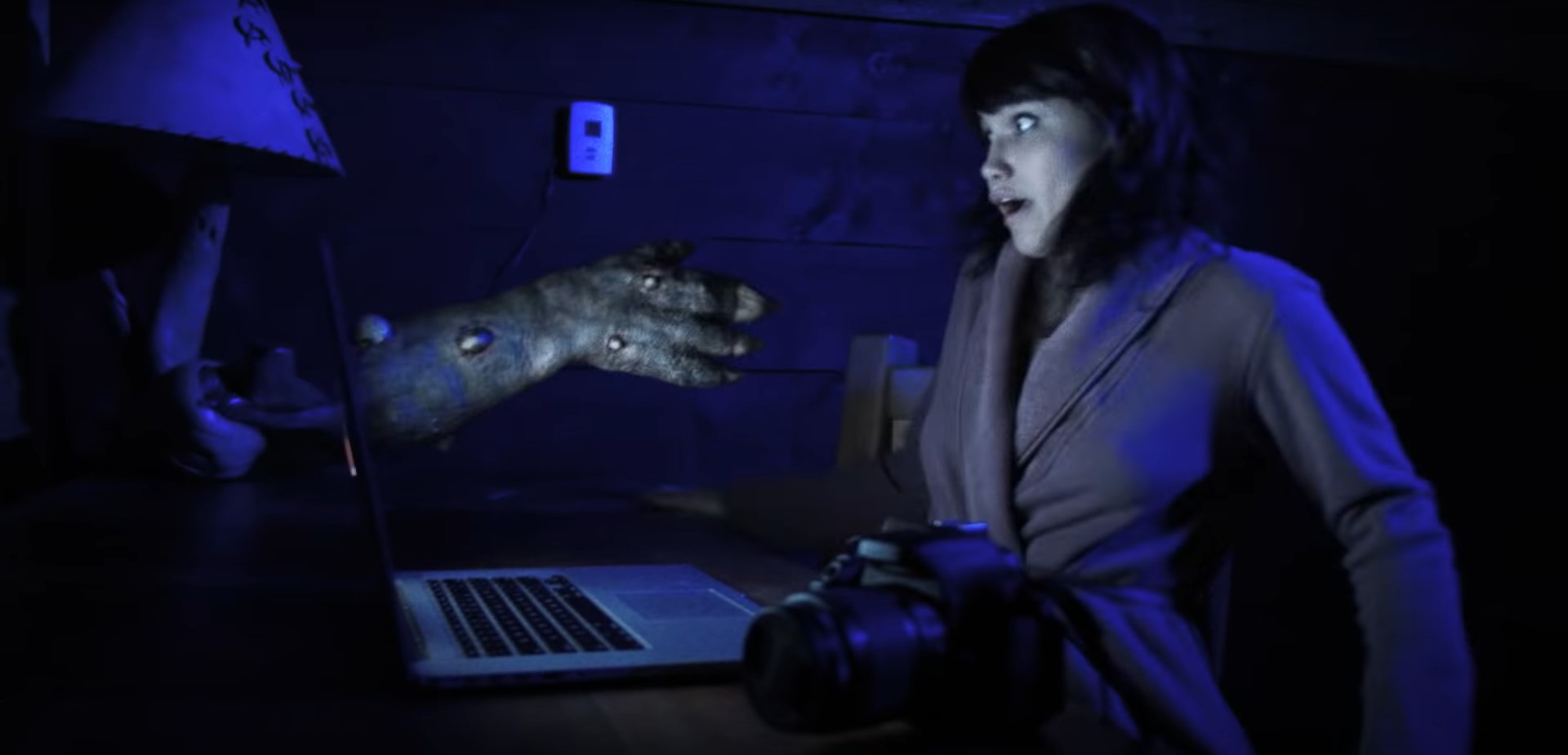
A complete monster movie bred out of the indie spirit with a callback to prosthetic practical effects that evokes a mental and emotion psychological theme around the durability of a relationship after being compromised by internal abuse and, possible, heredity mental health.  That’s the deep dive, suppositional story surrounding Austin Snell’s 2018 sophomoric feature film “Exposure” with a script penned by Snell and first-time screenwriter Jake Jackson.  “Exposure” is filmed in the wooded mountains of scenic Leadville, Colorado just outside the city limits of the quaint, stuck-in-time downtown where annual skijoring is a popular attraction right in the heart of town on mainstream.   Snell and Jackson produce the film alongside Clayton Ashley, who has worked as a gaffer on Snell’s debut feature “Erasure,” under their Kansas based LLC production company, Sunrunner Films.  

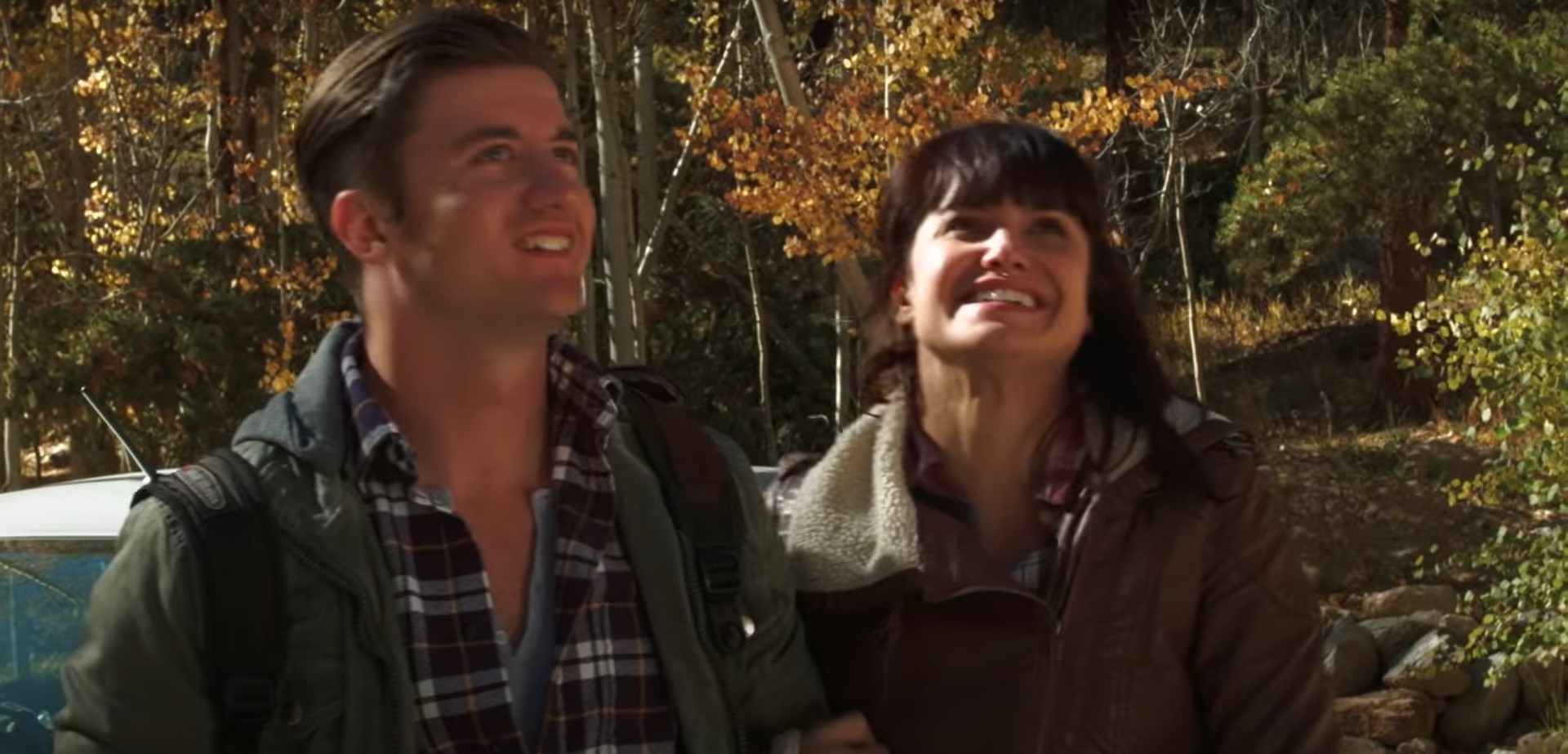
You can bet your lift ticket that the cast of “Exposure” is not strapping on skies and gripping to a rope for their dear life as a horse pulls the skier through the streets of downtown to go over manmade slopes and obstacles.  I wouldn’t think Snell would want to risk his four-person cast to such revelry actions that could result in injury.  Instead, a quiet, cabin-in-the-woods shoot leaves the actors to focus on the story at hand where a ingrained woodland evil infects and destroys an already bridle relationship between young couple Myra (Carmen Anello, “Zombie Beauty Pageant” and “I Am Lisa”) and James (Owen Lawless, “Hell Town”).  Anello and Lawless make a cute couple with some baggage hanging over their heads that is mostly implied rather than fully divulged and they sell well what their characters are struggling with, which is mainly trust.  Afraid of Owen’s temper, Myra is reluctant about moving forward in their relationship whereas Owen’s trust lies with Myra separating herself from an affair with a doting fling with a penchant for sending her sweet nothing texts she tries desperately to ignore.  I honestly don’t feel the immense love and hate tension in the room between Anello and Lawless who are more like best friends with an occassional spat than lovers going through a severe rough patch.  The more show of passion between them clings to the insincerity but that’s the high note for the connection between them.  Lynn Lowery (“I Drink Your Blood,” “The Crazies”) has a small role in flashbacks as Owen’s grandmother and Bruce Smith as the grandfather.

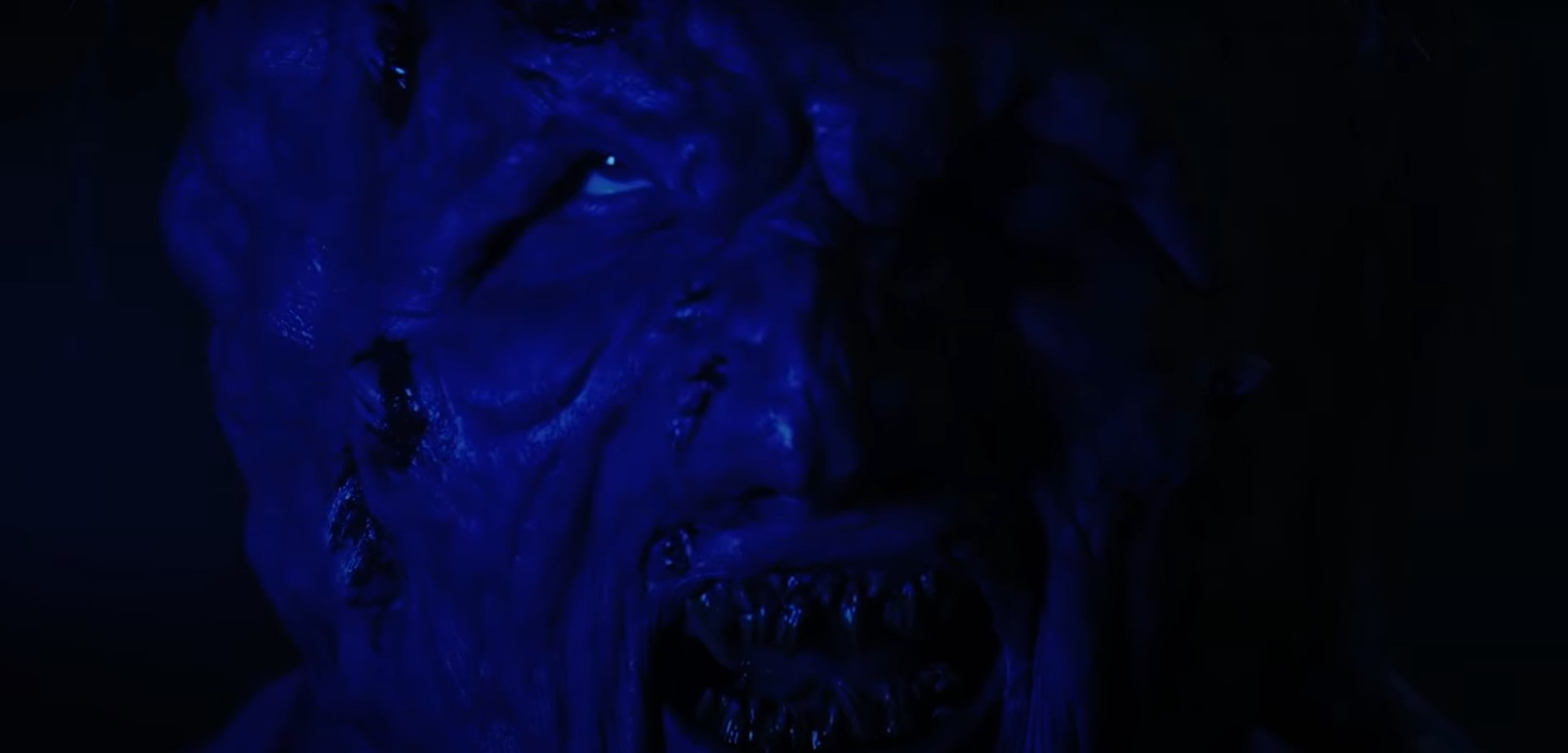
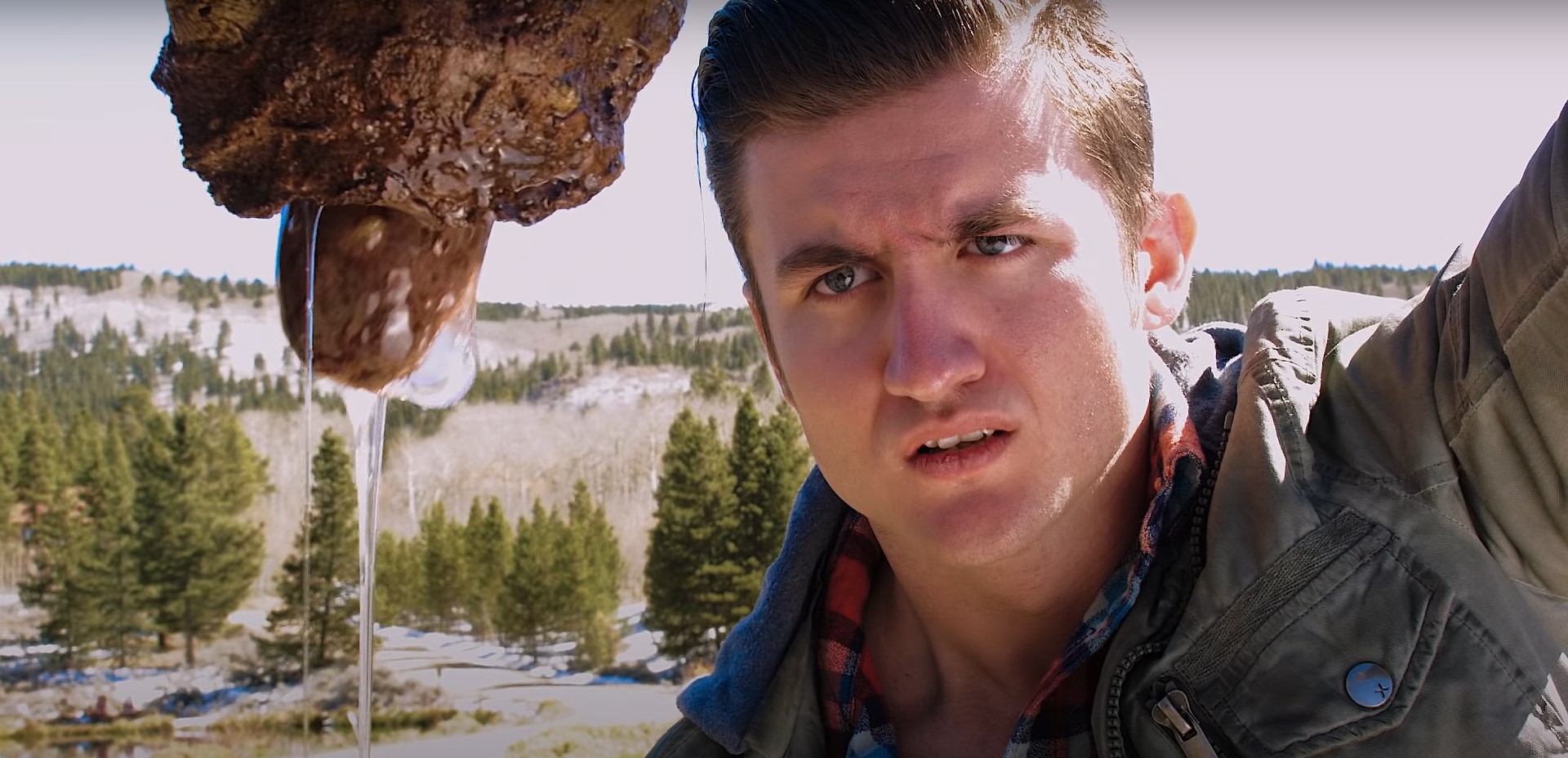
If you have already viewed Austin Snell’s “Exposure” then you likely know that the title is entangled in a double meaning. Perhaps even a triple meaning. Mountainous woods surrounded by frigid air with little-to-no help in sight leads to the vulnerability against the natural elements. In this case, the evil is the element, an unnatural one, that has laid claim to the area and sought the generational organic matter of Owen and Myra for its vile purposes – to spread its wickedness through the veins and mutate its victim into a hideous, baleful beast with a mind to match. The third meaning is more metaphorical as the term exposure can also be defined as the revelation of a typically bad thing that wasn’t clear before. In the film, Owen and Myra are going through a tough period in their romance with one of the inimical causes is Owen’s explosive and hurtful anger. Slithers of his masked morose behavior bubble to the surface in a motif view of just why they need to sort out the turbulent present in order for their possible future to resemble their merry past. The flashback story about Owen’s grandparents shed some light that what Owen may be going through is inborn, hereditary, and unchangeable; Owen’s reason and love mutates toward a gradual descent into monstrous behavior and that’s what the evil symbolically represents. Snell just happens to spin genuine relationship woes into an emblematic story with campy practical creature feature prosthetics and makeup. What most will dislike about “Exposure” is Snell’s true indie, natural approach to the special features that relies heavy on the cheesy, rubbery prosthetics and tangible tube and rod special effects without a lick of visual imagery for a smoothed over appearance. I applaud Snell for his raw, if not antiquated, choice that nods the throwbacks in the absence of contemporary conveniences.

For the first time on home video, “Exposure” makes a Blu-ray debut courtesy of Scream Team Releasing and distributed by MVD Visual. The not rated, NTSC region free, AVC encoded Blu-ray is presented in a widescreen 16X9 (1.78:1) aspect ratio. The 1080p, high-definition resolution looks pretty good and detailed, despite the heavy blue tint and gels, with negligible compression issues, especially with the heavy use of fog machine and a number of night scenes that don’t display noticeable banding or fuzzy/blotchy pixelation. The English language PCM 2.0 stereo audio provides a lossy amplitude that’s definitively detrimental to “Exposure’s” teetering success with audiences and the tracks don’t punch like that should for an atmospheric creature feature. The dialogue also sounds a bit boxy and artificial at times but, nonetheless, the dialogue track is still clear and discernible. Special features include cast and crew audio commentaries, a quick glimpse featurette into the behind-the-scenes of the special features, production stills, theatrical trailer, and retro VHS trailer. The physical Blu-snap case comes with reversible cover art, which, if you ask me, the secondary cover is the best with the illustrated, shadowy monster looming over a brightly lit heroine carrying a flashlight and a small axe. “Exposure’s” tribute veneer to the 80’s creature feature is spectacular without a doubt but lacks the energy to fully come to terms with its theme that’s become caught in the throes of a throwback rather than in the throes of relationship reconciling.

Get exposed ot “Exposure” on Blu-ray at Amazon.com!

At 42,000 Feet, EVIL Can Hear You Scream! “Row 19” reviewed! (Well Go USA / Blu-ray)


Don’t Miss Your Connection For “Row 19” on Bluray!  

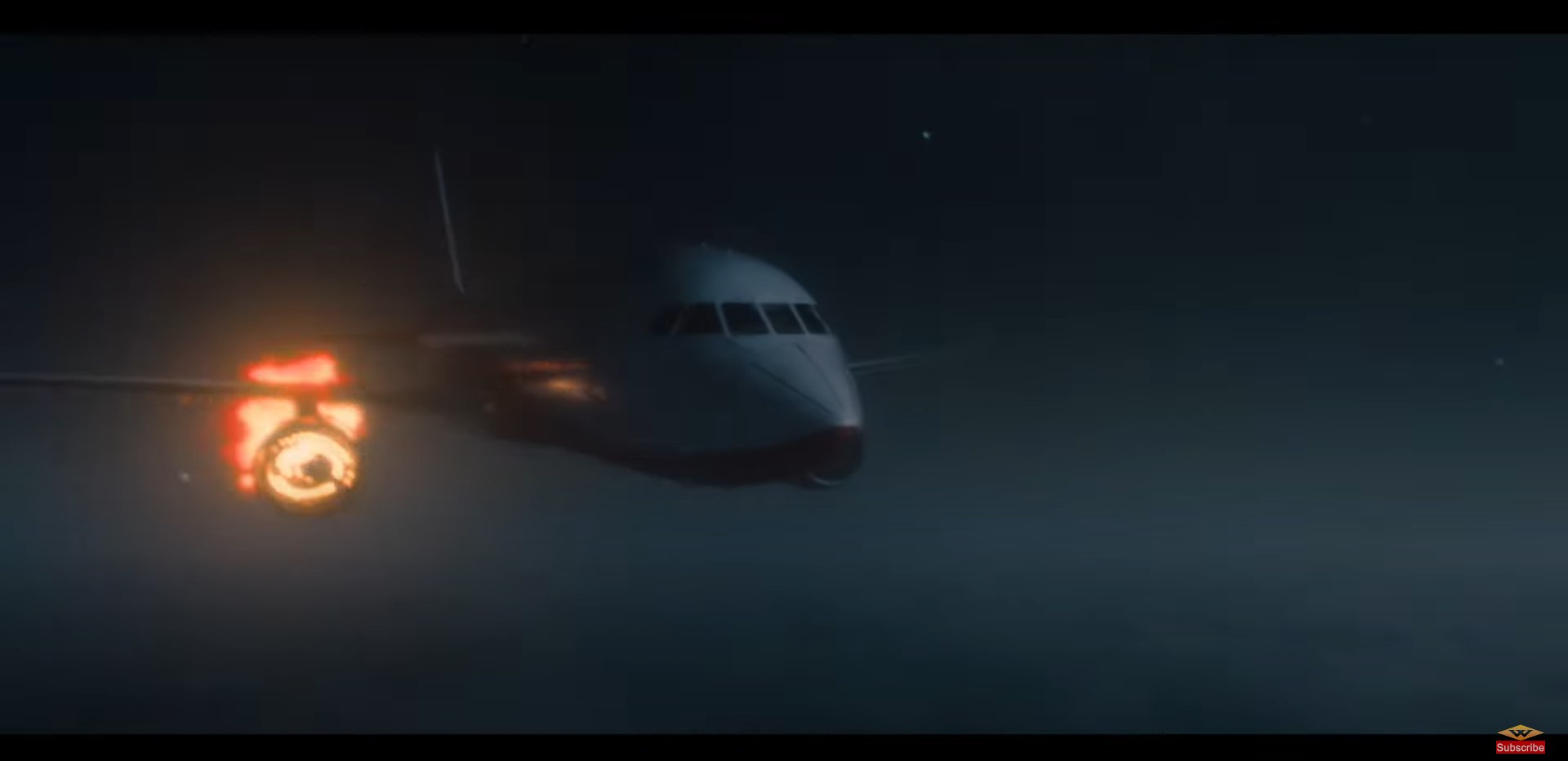
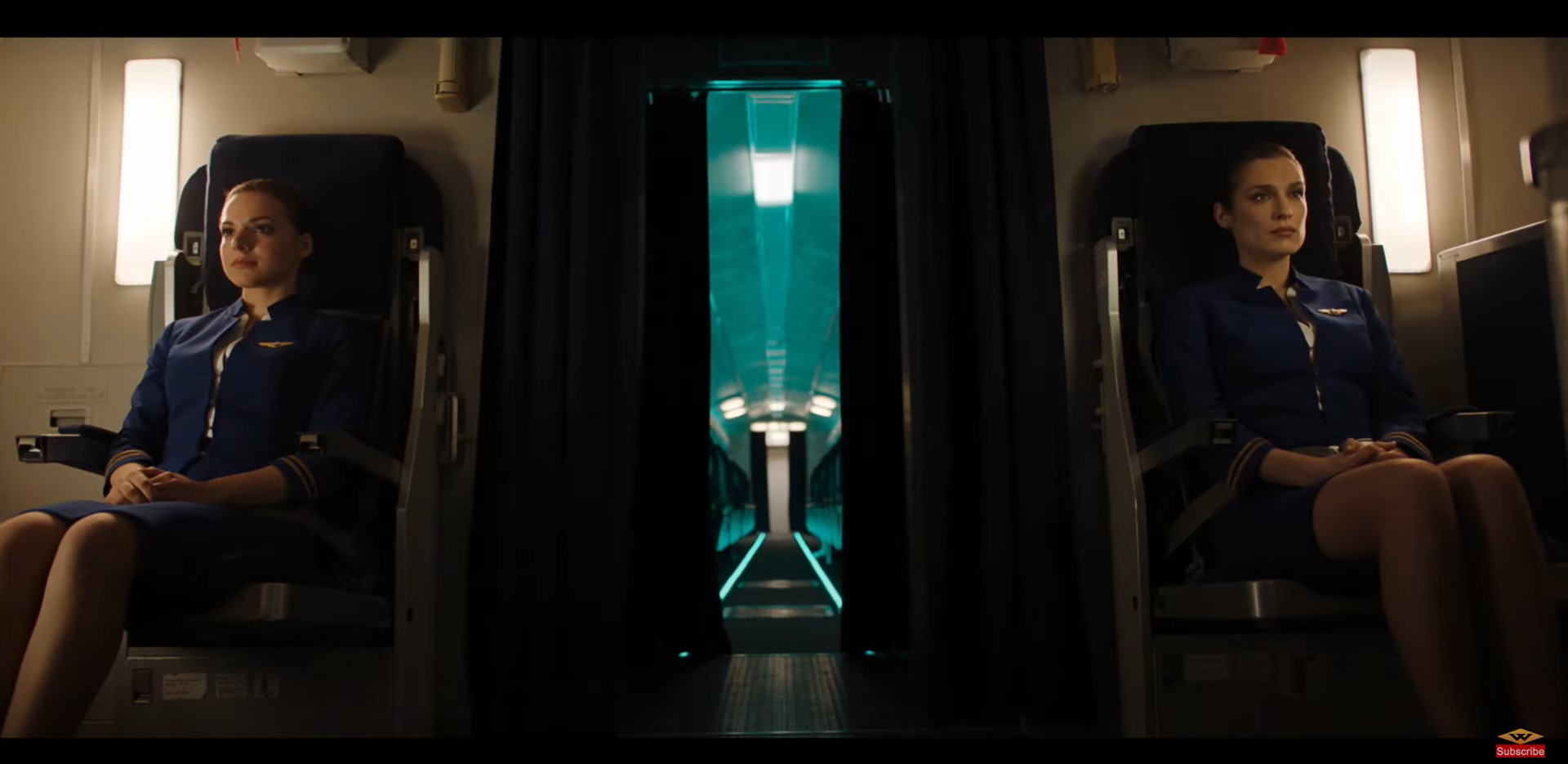
Young Katerina survives a deadly commercial plane crash that killed her mother.  As the only survivor to miraculously to alive, she becomes the center of the public and media attention over the next 20 years.  Now as a grown woman with a young daughter of her own, around the same age of her deadly tragedy, Katerina is about to embark on a plane for the first time to visit her mother and though past feelings leave her tense and scared, her daughter and her being a psychologists help soothe her fears…to an extent.  The late-night flight during a snowstorm leaves half the cabin empty with only a few passengers and the flight dwindles the numbers even more when passengers begin to die off in mysterious random misfortunes.  Lines blur between reality and the past for Katerina who’s about the relive the worst day of her life. 

I consciously realize that all things Russian is likely on everyone’s blacklist at the moment with the unfounded war Ukraine, but anything not created by the authoritarian Russian governing body could be, more-or-less, independently controlled by the people of Russia who are, again more-or-less, against the bloody and unnecessary Putin-fueled conflict outside their country.  So, when I sit and analyze Russian native Alexander Babaev’s latest film, a mile-high horror known as “Row 19,” I’m objectively looking at the artist and his craft rather than the possibility of a stalwart countryman just doing his propaganda duty for the motherland.  In fact, there’s none of that latter statement present in Babaev’s paranormal 2021 thriller that touches upon regret and facing fears, penned in the debut feature film screenplay by James Rabb. “Row 19,” or “Ryad 19” and, in South America, “Passenger 666” is the high-flying, dark mystery of the air film from multiple production studios in KIT Film Studio (“Mermaid: Lake of the Dead”), Central Partnership, Monumental Film, and Red Media.

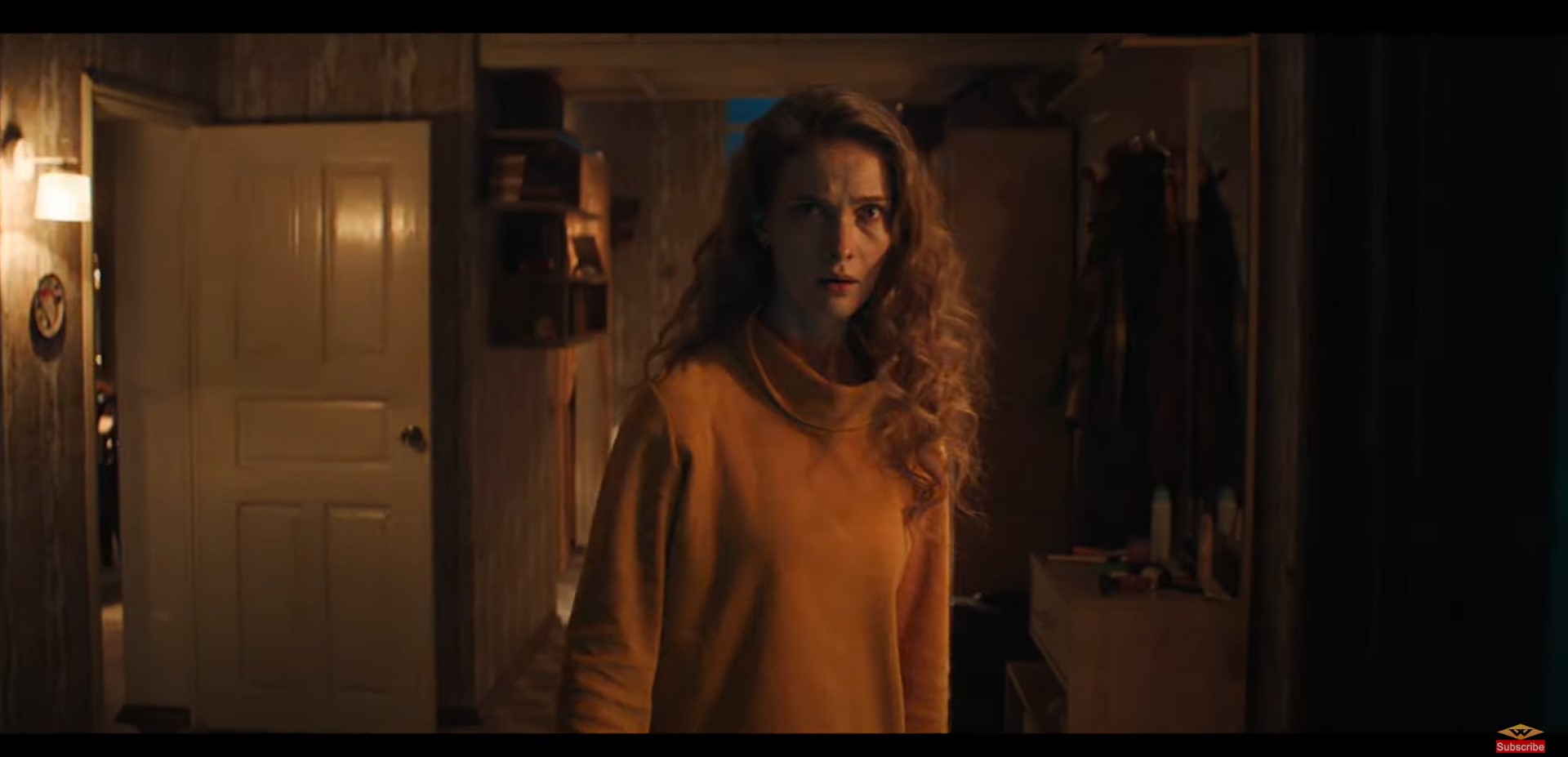
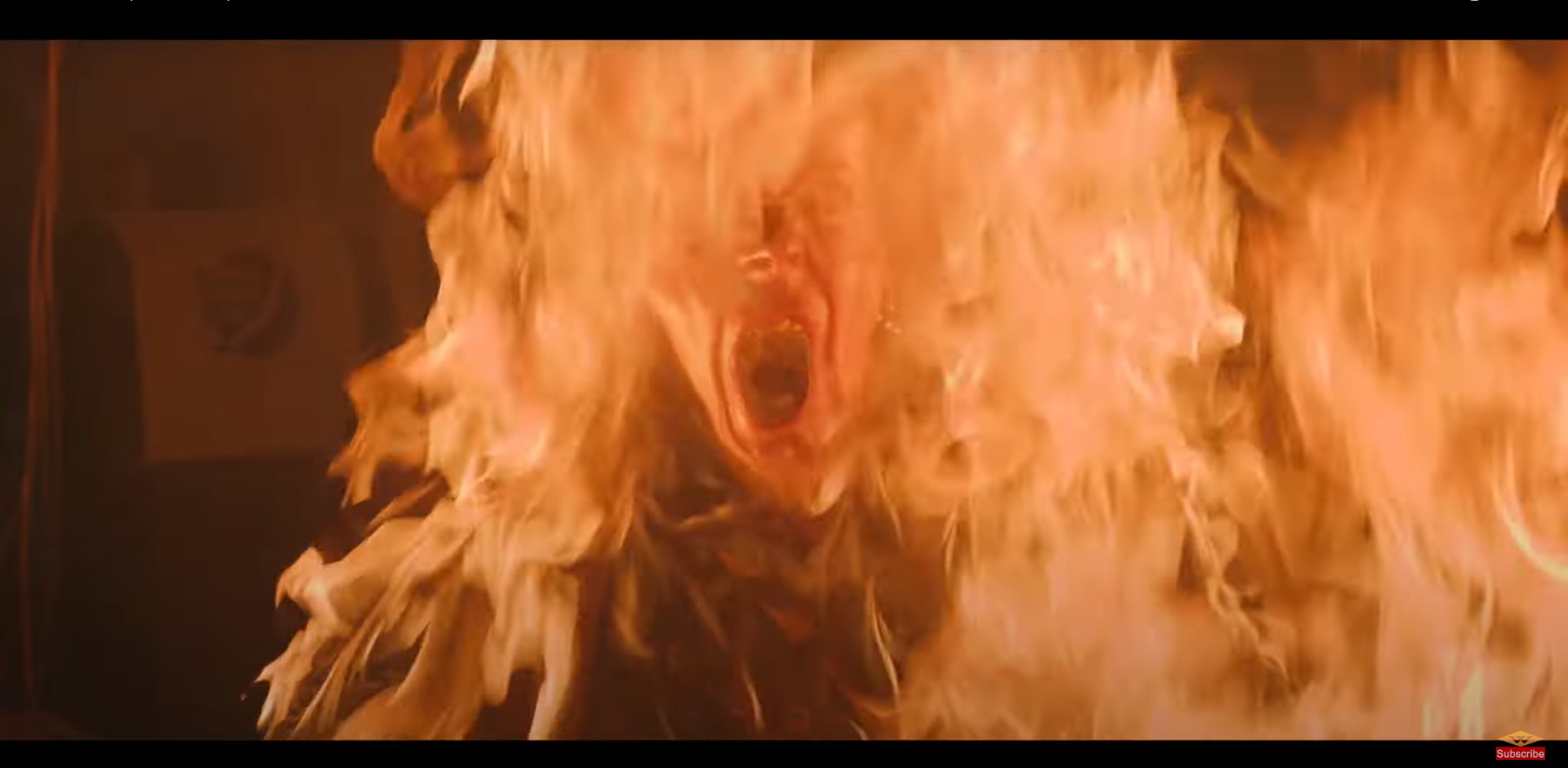
“Row 19” sets the stage with a handsome cast of ensemble characters boarding a sole frostbitten and nearly vacant plane bound for a destination that audiences know all too well will be a landing zone that is anywhere else, but the destination printed on their purchased tickets. A variety of character flavors is always a classic touch when elucidating an unexplained threaten situation. At the yoke is Svetlana Ivanova (“The Blackout”) playing the adult version of the Katerina who bested death being the only survivor of a deadly plane crash 20 years ago. Scarred not only on her leg but also in her head, Katerina vouchsafes herself into getting back on than massive flying steel horse with an internalized pep talk by way of her psychologist vocation who she also helps people with their own internalized issues. However, Katerina is not a very good psychologist when the cabin goes into a tailspin of unexplained death and disappearances. The impression from the film is that the script, at one point or another, had Katerina as a medical physician as she’s often called upon and looked toward by the other passengers to know what to do when a passenger faints or another passenger is burnt to a crisp. She also doesn’t help the matter when she claims to be a doctor (and neglect to mention she’s a mind doctor. I believe that warrants a case for malpractice.). In the adjacent row is the hunky former combat news reporter Alexey (Wolfgang Cerny, “The Red Ghost”) who makes small talk with Katerina and her daughter Diana (Marta Timofeeva) and yet, the suspected sexual tension between them became never present and never materialized. Instead, Katerina and Alexey go back and forth on their mental blocks that causes drug use and shaky hand syndrome, a welcoming change to a rather routine love interest path that’s been overtrodden in other films in similar plots. However, there’s never a full understanding of Katerina’s role in this topsy-turvy spin through realities that only suggests that Katerina has a mighty will that can’t be contained even for her own good. Anatoliy Kot, Denis Yasik, Irina Egorova, Viktoriya Korlyakova, Ivan Verkhovykh, Anna Glaube, and Yola Sanko as the Witch (yes, there is a regular Baba Yaga-esque in the character list!) round out of the cast.

The sky is the limit with airplane horror as the concept of inescapable terror above the clouds can be the most frightening experience for not only acrophobia or claustrophobic individuals, but for average joe passenger looking to earn extra flyer miles on their fear membership cards.  We’ve seen zombies on a plane (traditional and Nazism), we’ve seen gremlins on a plane, and, hell, we’ve seen snakes on a plane.  Now, Babaev introduces the spell-casting witch confined to the rows of the tightly packed, small, and uncomfortable airplane seats and served the Salisbury steak with a side of rancid bag peanuts.  I can see why a witch would be pissed off as well.  However, there’s more than what meets the eye in Babaev’s witch that isn’t just on an obvious killing spree because her inflight cocktail was a little watered down or because of something a little more worthy of a massacre.  “Row 19” aims for misdirection in trying to get the audiences thinking one way by using sleight of hand but really a behind-the-scenes motive is kept in the dark for most of the runtime.  Babaev keeps the momentum fairly charged by setting up individual character personalities with just enough of a touch of odd behavior to make the atmosphere feel foreboding and keep interest in the next key scenes of story progression and at the climatic reveal is where the director’s momentum takes a nosedive, losing the altitude and the cabin pressure of smooth flight with a bow-wrapped-gift exposition that takes all the air of the suspension. 

Fasten your seat belts. Secure all lose items. Lift your tray table and lock it in the upright position. “Row 19” is about to take off and take flight on a Blu-ray home video release from Well Go USA Entertainment. The not rated, region A Blu-ray is presented in a widescreen 16:9 aspect ratio with a decompression of around 20-26 Mbps, rendering picture quality of this AVC encoded release better than expected from Well Go USA. Image is sharp, well-delineated, and abundant with the right amount of color, appropriately denoting flashbacks with a filtered color reduction with only the slightest of change by director of photography Nikolay Smirnov. The Russian language 5.1 DTS-HD master audio track is crisp and clear. A solid track, well-established, full-bodied fidelity track that hits all the right channels with the right balance. There is an option English dub as well as available English subtitles on the Russian track. The subtitles synch well, though fast, and are transcribe with no errors detected. The 79-minute feature comes with a static menu, scene selection, and zero bonus features, which is typically the case with these U.S. distributed Russian releases. “Row 19” is visualized phobic fear, a self-flagellation of trying to change the past with what ifs, and director Alexander Babaev instills a shadowy creepiness inside the cockpit of consternation, but stalls at the height of the film’s storytelling success with a wrap-it-up quick and loose ending.

Don’t Miss Your Connection For “Row 19” on Bluray!  

Become Lost with the EVIL in Your Head. “Faye” reviewed! (Reel 2 Reel Films / Digital Screener)


Author Faye L. Ryan has found success as a career writer penning personal growth and self-assurance books, but the renowned author has hit a mental wall in growing out of the process of mourning for her deceased husband, killed in a car accident in which Faye was at the wheel.  Scarred physically and mentally with painful reminders of that fateful night, Faye struggles to focus on her next new book, threatened to be dropped by her publisher if she doesn’t meet their deadline, and interacts with her husband as if he was still with her in person.  In a last ditch effort to get Faye back to writing before cutting her loose, the publisher offers up a lakeside vacation house to help focus on her work, but as Faye settles into her new, quiet writing space, she finds herself unable to escape a haunting presence tormenting her. 

Working solo is tough.  Having no one to bounce off dialogue or react to their disposition can be daunting and unnatural for most actors and actresses.  Yet, the titular character in “Faye” must do very that to ensure Kd Amond’s 83-minute feature directorial about loss, grief, and the supernatural representation that braids into a broken reality will exist without suffering stagnation.  “Faye” is a 2021 female-driven horror-drama written by Amond and the film’s lone wolf star Sarah Zanotti as the two filmmakers reteam from the previous year’s dysfunctional family thriller, “Rattled.”  Shot between Nashville, Tennessee and the cabin resort of Lacombe, Louisiana, “Faye” is cut from an all-female producing team of by Amond, Zanotti, Sara DelHaya, and Nicole Marie Lim under Amond and Zanotti’s independent film production company AZ if Productions.

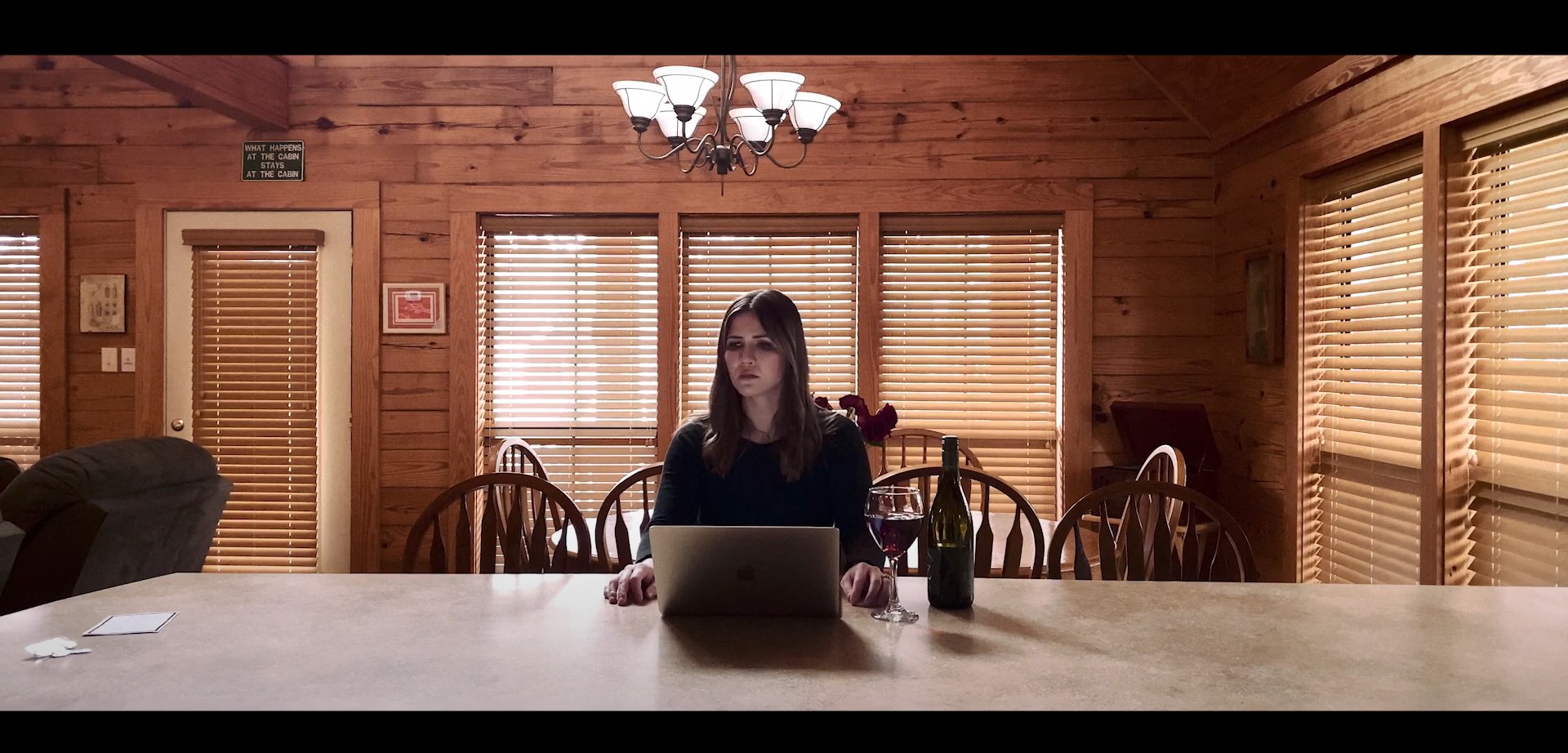
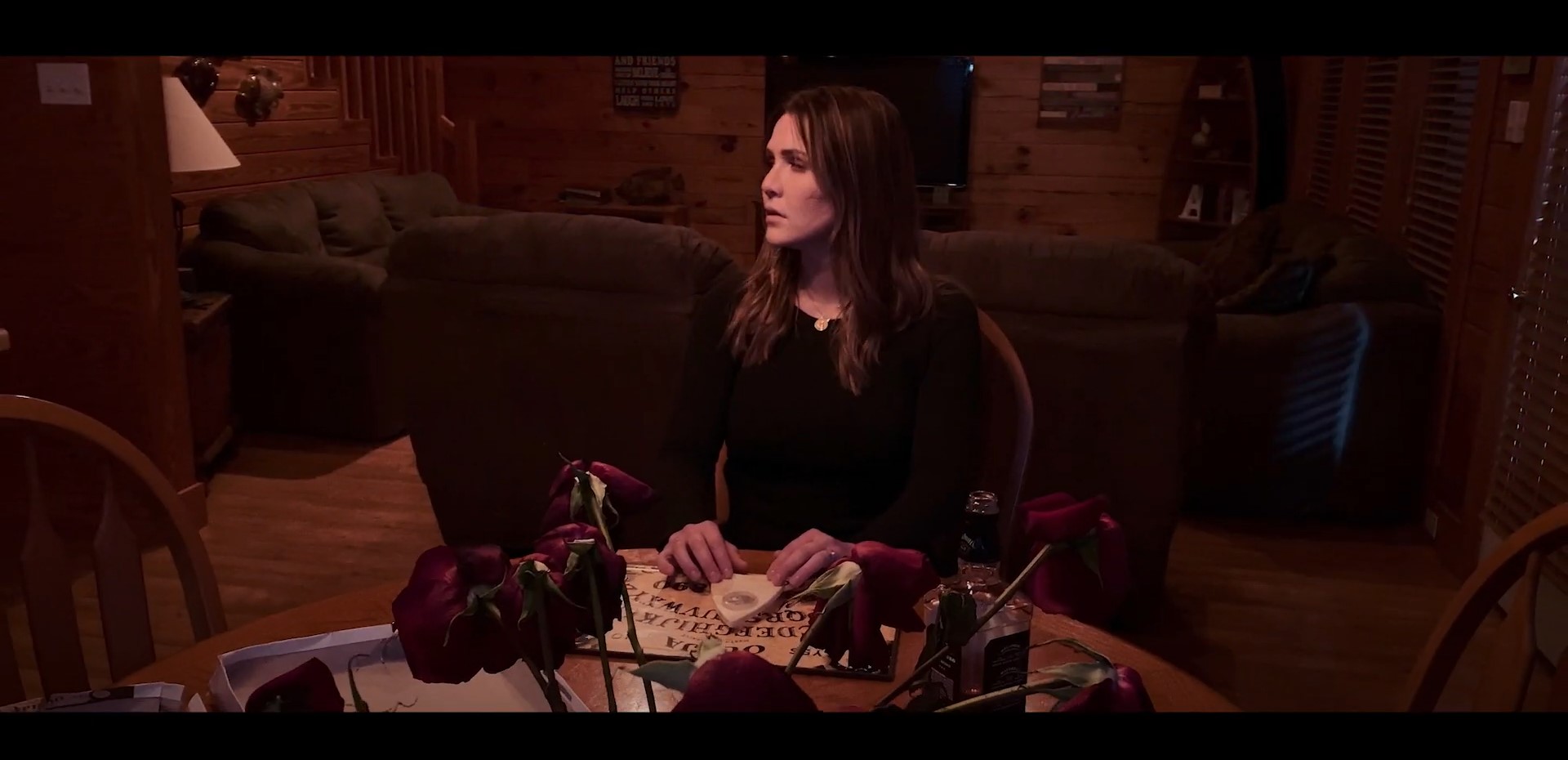
So, how did Sarah Zanotti perform going at the role alone with not another single body in sight?  Aside from the performance scale, initial first thoughts about an emotionally processing Faye rings clear that she is definitely alone with her thoughts without ever confronting her past head-on.  Faye, more or less, brushes the incident to the side, drowning herself in wine and loathing, until vague, intermittent memories pull her back down to reality every so often.  The role gratifies a sense of a struggling individual’s unintended and deeply personal isolation stemmed by unable to grasp with the hard to deal with issues to where’s she’s invented an imaginary friend in the form of her late husband in this pretend world of being normal, routine, and safe.  Looking from the outside in, Faye invokes pity on the saddest level as she converses with thin air as well as drinking large quantities of wine alone. There’s even the suggestion in either flashback scenes or maybe representational moments of despair that she, at one point in time, committed to, or thought of, suicide. As for the “Archaon: The Halloween Summoning” actress Zanotti? The actress, singer-songwriter, and proud cat mother (as stated on her personal website) breathlessly engrosses herself in Faye’s darkest moments with a ramble of insecurities that skate around the main issue until that issue manifests as a specter of duality, haunting “Faye” with her own scarred image that won’t allow her to leave until she combats the guilt eating her away. However, Zanotti’s a bit one tone through the entire storyline, never zig-zagging in a full range on emotive spectrum when face-to-face with the emulated specter. There are guest voices in the film whenever Faye takes or makes a phone call, including vocals from Corri English as Emory the publisher, Dean Shortland as Bobby, Brian Vance as Jacob, Kd Amond as Faye’s mom, and Zanotti as Elle.

To carry an entire feature film on your shoulders is empathetically tough for the one and only principle lead Sarah Zanotti and also the director Kd Amond as well and I wouldn’t declare “Faye” to be an overstimulating visual film albeit snazzy editing and makeup effects when sucked into supernatural self-reproach and suffering. “Faye” leans heavy into self-centered conversation in an acerbic chaptered and non-linear context that can be difficult to follow it’s pathway structure at times when the titular character is not framed in the cabin but rather sitting, speaking on a well-lit platform that fits her personal growth expatiate, like a Tony Robbins-type, connecting back to Faye’s mindset or actions in the cabin. Though much of the conversion is directed toward herself or the mental image and two-way communication of dead husband, a good chunk of the dialogue is the unwavering tough love business-speak between agent and client. Faye publisher rakes in money based off book sales and if Faye isn’t writing up drafts than a publisher does not care about your personal tragedy. That dynamic during the calls feels utterly cold with no pity or sympathy for Faye in the voice of the agent who cares solely about client image for publicity and is determined to nag a draft out of a woman who has lost her best friend in life – grief and guilt be damned. As a spook show, “Faye” whips up a few moments of fearful highlights but does little to the film’s self-proclaimed horror label when more of the acidity of internalizing the death and destruction of her life becomes more manic without the monster that’s introduced too late or comes too little often to be integrated into the story properly and stands out as negative concentrated symbolism.

Oozing with heartbreak and melancholy, the fracturing viability in “Faye” calls forth the detrimental impact and for reinstation back in the society, one needs to fall before getting back up. Reel 2 Reel Films brings the American-made, woman-driven, atmospheric and apparitional “Faye” to the United Kingdom on digital home video come May 9th. Since a digital screener was previewed, there will be no critique of the audio or video qualities. Kd Amond was really a one woman show behind the camera by taking on not only the directing duties but also many others, including cinematography and visual/practical effects and for “Faye,” the film was mostly captured with natural lighting outside the cabin, practical lighting for cabin interiors, and key lighting of Faye on stage. There’s use of a filters during the more supernatural plights and to tell night scenes that don’t look natural, leaning toward a more style-choice purple. For any extras, there were no bonus scenes during or after the credits. “Faye” has strong bones for a good grief and guilt ghost film in the indie realm and while it doesn’t have the star-laden power of other similar themes of its kind in “The Babadook” or “Hereditary,” “Faye” still invokes the power of hurt and the summoning of self-condemnation.

Entombed With an EVIL Loneliness. “Alone With You” reviewed! (Dark Star Pictures / DVD)

“Alone With You” on DVD at Amazon.com

Charlene anxiously awaits the return of girlfriend Simone who has been away on a photoshoot.  Today is their anniversary and Charlene wants everything to be perfect by creating a lovely evening together for just the two of them in their New York City apartment.  As the night progresses and still no sign of Simone, despite her flight landing hours ago, Charlene begins to worry but her phone suddenly malfunctions and her apartment front door jams, locking her inside with no way out.  To make matters worse, the outside is blacked out from something covering her widow to where no light can penetrate and she can’t see anything exterior.  Throughout the night, voices and shadows slowly surround her, dark silhouettes stand motionless in her storage basement and outside her jammed door, and the video calls with her mom and friends turn to an unnerving end as it seems Simone nor anybody else is coming to recuse her.  Intermittent flashbacks of her at the beach and a neighboring voice are her only company that menacingly mess with Charlene’s mind as she quickly realize that something is terribly wrong. 

If you’re looking for a compact, close-quartered, psychological barrel of scutter apprehension and fear, I wholeheartedly believe filmmakers Emily Bennett and Justin Brooks have what you need to inject that tar black cathartic dread right into your emotionally hungry veins with their latest film “Alone With You.”  Born and bred out of strict COVID times, “Alone With You” is the 2020 filmed mind-torturing, hell in a cell shot inside Emily Bennett’s NYC apartment during most of the shoot, using telecommunication technology to invite other actors into the spatial bubble and interact with the main lead without physically being on set.  We’ve seen a ton of other COVID-created content over the past two years, but “Alone With You” definitely shines as not only isolating madness but also a fear of disconnect in reality, mental struggles over brittle relationships, and an illusionary life stemmed out of disenchanting circumstances.  “Alone With You” is written and directed by Emily Bennett and Justin Brooks as their first feature film and is produced by “Underworld:  Awakening” actor Theo James and Andrew D. Corkin of the 2019 created production label, Untapped.

With a small indie feature film during pandemic pandemonium, the odds the cast and crew are downsized, probably meagerly paid, and limited by the pandemic-stricken environment and lack of funds.  “Alone With You” is just that film because at the principle lead is none other than Emily Bennett, one of half of the directing duo.  Bennett, who has a solid acting career with even a role alongside “The Devil’s Rejects’” Bill Moseley in the “House of the Witchdoctor,” gets cozy in her own two story apartment that suddenly becomes an ensnarement of unveiling and disturbing truth.  Bennett hits every level of descension without an immediate belief that something isn’t right with her surroundings.  Charlene takes multiple gradual hits of paranormal punches and Bennett executes her fear with great poise without any lopsidedness to give away too much too early that can sometimes kill momentum before the spookiness starts to really get good.  Through flashbacks and video calls, other actors interject moments of levity, different sides of tension, and, frankly, break up the Bennett monotony and from those brief moments, we get a sense of who Charlene is and a slither piece of her backstory.  The amazingly talented “Bliss” and “VFW” actress, Dora Madison, plays Charlene’s inebriated-uncouth friend Thea over a cell phone video call, zooming in is Charlene’s rightwing mother played by the ever versatile and extremely lovely Barbara Crampton, and, lastly, Emma Myles, in an unrecognizable role in contrast of a greasy haired addict and former Amish turned inmate performance in “Orange is the New Black,” is the always beyond arm’s length away love interest Simone.

What I like most of about “Alone With You” is the atmospherics of being in your safe, cozy place that has instantly turned in a prison of peripheral moving shadows, an invasion of privacy, and, most frighteningly of all with most millennials, none of the modern technology is working properly.  The story design feels extremely pushed toward a wash, rinse, and repeat cycle with no other areas in the apartment to explore other than the handful of main rooms and so we’re constantly in the bedroom, then living room, then front door, then basement, and then repeat for most of the 1 hour and 22 minute runtime but do you know what happens with that?  Bennett and Brooks strategize and outline the snowball of bad feelings inside the ominous compact, starting small and working up to a cacophony of madness to where Charlene is literally moving back and forth between truth and deception induced by being scared to shivers of her own apartment’s clad and taken for granted discomforts, such as the front door sometimes being stuck or the crying lady neighbor who you can hear clearly through the air register.  “Alone With You” fiddles with the theme of disconnection.  Here you have Charlene, a small town girl who moves into the big city, has discovered her sexuality, and has found a vocation that suits her to which all this change go against her mother’s approval, and she feels strongly attached, like an extension of herself, to girlfriend Simone and as the story progresses, we get the sense that not everything is lovey-dovey between the two and Charlene’s dependent world is slowly being severed.  Simple, yet effective, “Alone With You” is an undoing nightmare of personal happiness, a sentiment we all share and relate to during height of the pandemic.   

Now, we all suffer in Charlene’s insufferable loneliness and disconnection with the “Alone With You” DVD home video courtesy of Dark Star Pictures. The region 1, dual layer DVD is presented in a 2.39:1 aspect ratio of standard 480p resolution definition, but the DVD image renders nicely on screen with digital sharpness unaffected by any compression issues, especially with much of the space saving special effects coming in practical and mostly done in the editing room. The video calls vary in quality which is pleasantly dispersed to the appropriate electronic devise, i.e. television, phone, etc. Details are clearly there but only slightly softer around the edged delineation. Two audio tracks are available with an English language Dolby Digital 5.1 and a stereo 2.0, but the 5.1 track is an allocating alicorn for a low-budget DVD. Shawn Guffy and Nicole Pettigrew’s sound design is meticulously on point and on cue with every synchronous audio nudge to point Charlene in the right direction for another round of dread. The varying levels of the Phil Mossman’s soundtrack adds a blended flavor of melancholy and fear. Dialogue output renders clearly and cleanly with no issues. English SDH subtitles are available. DVD comes stocked with special features including a blooper reel, a bit of a waste of space on the deleted scene reel that doesn’t add much to either the character or story, a lengthy and in-depth filmmaker and cast interviews, a behind-the-scenes featurette of Emily Bennett and Justin Brooks remarking on the struggles of feature filming around their apartment during COVID spikes, and a director commentary with the duo. “Alone With You” has a heavy artsy side to it that can leave viewers wandering for answers but if pieced together, if paying close enough attention, the correlation between the story in the camera and the life behind the camera are really not terrifyingly different. One just happens to be more of a representation hyperbolized with terror of a crashing down reality than the other.

“Alone With You” on DVD at Amazon.com

Book an EVIL Getaway Rental from the “Superhost” reviewed! (Acorn Media International / Blu-ray)

Never Again Feel Welcome After Watcing “Superhost” on Blu-ray Available at Amazon

Airbnb reviewer vloggers Claire and Teddy are bleeding viewership fast.  To save their monetized video channel, their financial independence, and possibly live happily ever after as man and wife, the duo was finally able to rent a highly demanded location set in isolated in the forest when it became available.  The house is more than they could ever hope for with beautiful floor-to-ceiling windows, spacious accommodations, and breathtaking idyllic mountain views.  The one little hiccup about the residential stay is the quirky superhost, Rebecca, who has been more than overly friendly.  An unsuspecting guest from the past turns the tables on Claire and Teddy as Rebecca slowly unravels her true intentions in a nerve-wracking game of life and death with all the amenities.

From the director of the supernatural baby-snatching “Still/Born” and the imaginary friend from Hell in “Z” comes Brandon Christensen’s next written-and-directed demented thriller “Superhost” that takes the automated vacation rental methodology and breaks them in half.  Shot just outside Las Vegas in the rural area of Mount Charleston, Christensen provides the illusion of a far trek away from busy street society with a cabin in the woods what if’er of an overzealous hosting homeowner making weird and uncomfortable conversation with their tenants on a daily or nightly basis.  Tacked onto that idea is the new age monetizing of vlogs and racking up subscribers that overtake or make us blind to what’s really important.  The Superchill and First Look Releasing production is executive produced by the Ty and Darren Siversten and produced by Christensen, Kurtis David Harder (“Spiral,” “V/H/S/94”), and stars Sara Canning and Osric Chau.

Aforementioned, Sara Canning (“Z,” “The Banana Splits Movie”) and Osric Chau (“Supernatural”) star in the film as vlogging couple Claire and Teddy.  Whether be the actors’ performances or the blind obsession toward their monetized YouTube platform to secure financial freedom, the on-screen chemistry between the couple didn’t jive.  What doesn’t help is there’s no real romance being displayed during their time together nor was there any expositional or any form of mentioning what their life looked like before becoming internet influencers.  Being influencers makes up a sizeable portion of what the audiences (us as viewers and not their video channel followers) know about the couple sans the miscellaneous background of Teddy’s parents providing rent aid whenever needed and Teddy’s top-secret engagement plan in which he also vlogs to his viewers behind Claire’s back.  We experience a little more where Teddy comes from, but Claire is a complete mystery much in the same way as superhost Rebecca.  However, as the crazed host, the enigma surrounding the jovially expressed Rebecca, eager to help with clog toilets and whip up pancakes, adds to her strange and frightening demeanor.  I would never want Gracie Gillam (“Fright Night” ’11, “Z Nation”) to uninvitedly walk into my vacation rental in her full Rebecca form.  I would forego my deposit lickety-split and hightail away from a much-needed getaway to literally save my skin from Rebecca’s crackpot revelry. Popping into the frame a couple of times is genre veteran and overall fan favorite is Barbara Crampton (“From Beyond,” “Re-Animator”) as Vera, a disgruntled property owner who tracks down Claire and Teddy for a vindictive, rock-throwing rant but becomes unsuspectedly ensnared in the Rebecca’s mare’s nest.

Brandon Christensen is no stranger to small productions with a small cast, but “Superhost” is a micro-production with a micro-cast and, somehow at no surprise, busts out a truly terrifying lunacy that can make you double think before clicking that confirmation button on the vacation rental reservation. “Superhost” is unsettling and invasive as if privacy is nonexistent and the ever-watchful eye is always looming. In fact, it is! With security cameras installed in basically every room, there’s 24-hour CCTV footage of every moment of Claire and Teddy, but isn’t the moment captured and being filmed constantly is what their livelihood and vocation is all about? Christensen has that paradoxical undertone packed exceedingly well beneath the veneer of voyeurism, inescapability, and troubled relationship issues that the theme becomes a backburner hit on the tail end in that what the thing that provides Claire and Teddy a reason to be free as individuals is the also the very thing that they can’t flee from and become merely a battered object of one’s mad person’s whims much like their more critical reviews can be ruinous to others. While “Superhost” can feel a bit slow for the first two acts, the story showcases a development and escalation of Grace Gillam’s Rebecca as a woman with more than one loose screw. Of course, Rebecca’s not seen for who she really is by the compulsion to film not just the rental, but also her, as gold-plated viewership material. “Superhost” admonishes a tread carefully thriller to beware and adhere the signs of mania danger and all those Rebeccas out there.

Trust me – cancel that reservation, plan on a staycation, and watch the Shudder-exclusive “Superhost” now on Blu-ray home video from Acorn Media International. The region 2, PAL encoded, Blu-ray is presented in an anamorphic widescreen aspect ratio of 2.35:1. Nothing terrible to note here as much of the digitally captured, RED Gemini images are about as crisp as they come with a natural presentation all around from cinematographer Clayton Moore (“It Stains the Sands Red”) with the exception of the unfiltered handheld camera and CCTV footage, which is also very authentic. The English language Dolby Digital 5.1 surround sound rustles together clearly and discernibly ever creak of the floorboards and every gushy stabbing sound for full impact purposes. Dialogue track is clean with pronunciation clarity and the bottom-and-bass dropping score by instrumental band Blitz//Berlin (“Psycho Gorman,” “The Void”) continue to impress with their original soundtracks. The special feature includes a director’s commentary, a behind-the-scenes that talks about Mount Charleston location, the annoying tiny beetle swarms, and how amazingly small the production crew was, a solid blooper reel, “Superhost” VFX featurette with green screening and matting car scenes and the ultra-graphic knife through the mouth effect, a behind-the-scenes still gallery, and episodes 1 and 2 of Brandon Christensen’s television shorts, “Scaredycats.” Remember, guys, hit that like bottom and subscribe to follow Brandon Christensen’s descension of guests becoming unaccommodated by a psychotic “Superhost!”

Never Again Feel Welcome After Watcing “Superhost” on Blu-ray Available at Amazon