All a Broken Family Needs to Mend is a Demented EVIL Backpacker! “Mind Games” reviewed! (MVD: Rewind Collection / Blu-ray)

***Note: the following screen caps are not from the MVD Blu-ray release.

On the surface, the Lunds are picturesque of everything that represents the perfect family. Under the surface, Rita and Dana Lund can barely skim the surface with their marriage dangerously ebb and flowing toward sharp, jagged rocks. In an effort to save their relationship, they take their preteen son on a RV camping trip along the coast line of California to try and rekindle their affection for one another. In one of their trip’s initial stops, a hitchhiker named Eric befriends Dana and the boy; they’re fondness for the charismatic and young Eric is so great that he’s invited to ride along with the family on their vacation. Rita’s suspicions of Eric are blinded by her immense loathing for Dana, suppressing Eric’s true maniacal, psychopathic behavior as he infiltrates the Lunds to conduct his only psychological behavior experiments by shifting the boy’s jovial persona, exploiting Rita’s sexual regression, and further alienate Dana from his family.

As if a fable that warns the dangers of picking up hitchhikers no matter how friendly and beautiful they appear to be, “Mind Games” dug into the psyche and had continued the trend of violently unstable roadside travelers that yearn to harm the hospitable, the compassionate, and just the plain old lonely. In Bob Yari’s first of two directorial efforts, the 1989 “Mind Games,” also once titled as “Easy Prey” is a thriller from the mind of screenwriter Kenneth Dorward and co-produced by screen actress turned financier Mary Apick, teaming up with Bob Yari after their work together on the sovereign nation standoff drama, “Checkpoint,” under the MTA/Persik Production Company banner. As the idyllic project for a low-budget thriller with a limited cast and barely any special effects required, “Mind Games” wound up being the first entry for the MTA/Persik affair that sought to stir conjugal strifes with outsider influence and how sometimes the grass is not always greener on the other side.

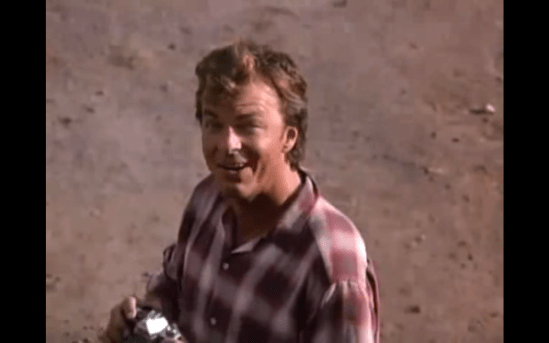
For an independent film with such a small, sharpened cast, well known actors from the 80’s step into the humblings of lesser grandeur, starting with Maxwell Caulfield. The young, promising star from the sequel to John Travolta’s “Grease” had his career nearly derailed with the critically panned big budget “Grease 2”, but luckily for horror genre fans, the English born actor channeled his talents toward such films as “Waxwork II” and “Sundown: The Vampire in Retreat.” Yet, “Mind Games” was essentially his second break into the film business that opened doors for the former titles and being the unhinged hitchhiker Eric couriered a necessary change from his stage performance to his ability to be warped-minded person looking through the eyes of a totally different and charmed individual. The role absolutely challenges the actor who, from analyzing his performance across the screen, finds breaking in the role more difficult than presumed. Edward Albert is a name you might not remember, but his face will strike some chords as “The Galaxy of Terror” actor steps into the self-deprecating husband role of Dana. Dana is just one of those individuals worth slapping across the face to wake them up and Albert amplifies his unintentional waning from his wife and child with such dismissal and disassociation, I, myself, found Dana’s lack of courage to be unsettling, but his rouse-less attribute fades slowly into man searching, if not clinging, for what’s left of his life. Caught between Eric’s snarky sensationalism and Dana’s lofty air is Dana’s angst wife, Rita, played by “Shadowzone’s” Shawn Weatherly. The blonde hair, blue eyed former Baywatch beach lifeguard sure knows how to be a wild card, an unknown friend or foe in this mental game of chess, as Rita staggers between hating to being extremely amicable with her husband, Dana. This is where Dana and Rita’s son, Kevin, fits in as the deciding factor pending the successfulness of Eric’s testing. Matt Norero didn’t have nearly the extensive career as his co-stars, but deliveries some great, if not zealous, scenes and cold-hearted glares that break up the sometimes monotonous tone of “Mind Games” would routinely find itself stuck.

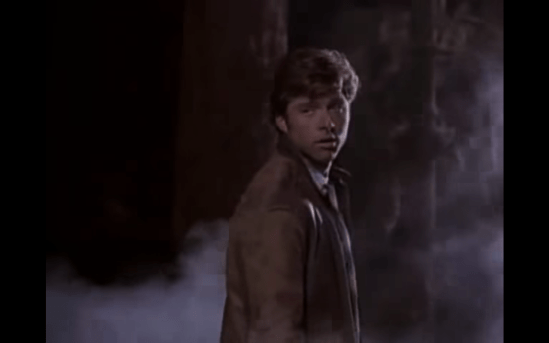
To frankly put it, “Mind Games” bares the prosaic essence of a run of the mill thriller with a thin strip of riveting tension to cling onto. The film impresses comparably with a cheap suspense novels you’ll find multiple copies of collecting dust bunnies on Dollar Tree shelves where the paperwork backs lavished in a cheap bait title and cover art only provides a quarter of the entertainment value of its marketed worth. However, for a low budget production, Yari manages to pull off impressive aerial shots, eerie dim lit atmospherics of a fog machine heavy night scenes, and tack on flashes of so bad, it’s good meme worthy moments – i.e. the garbage day kill scene in “Silent Night, Deadly Night: Part 2” to reference what I mean. The score is conducted by “Night of the Comet” composer David Richard Campbell with an uncharacteristic upbeat and happy-go-lucky number weaving in and out of the film’s storyline, and coarsely out of place during the RV stop-a-long montage that proceeds after setting up Dana and Rita’s turbulent marriage and Eric’s understated malevolencies, but rather speaks to the overall spirit of the film that’s a rated-R labeled PG-13 thriller, hard on the language, but soft on the violence with more of an implied application of offscreen kills and virtually no blood from an anemic plotline.

Still, “Mind Games” can be considered a cauldron of cynicism and now that the release receives the royal treatment with a full HD, 1080p special collector’s edition Blu-ray from MVD’s Rewind Collection label spine #21. The retrograde cardboard slipcover harnesses a powering transfer that supplies vitality into the well-preserved 35mm source material and presents a 1.78:1 aspect ratio. Perhaps the best this transfer looks to date, a plush matte that’s pleasing and without the drab bleakness that typically coincides. Natural grain remains upon a softer side delineation that’s not heftily indistinct and, in fact, adds to the glow of the product’s decade. The English LPCM 2.0 stereo audio mix has inviting qualities, but taper more on the lossy side of the spectrum. The soundtrack is powerful, especially on “The Writing on the Wall” single by Raven Kane. Dialogue is clear and untarnished, the range is adequate, and the depth is sound. No audio or video hiccups or blights to note nor any dubious enhancements detected. Option English subtitles are available. Special features are aplenty including a new MVD exclusive, retrospective look at the Making of Mind Games that clocks in at 108 minutes of interviews with director Bob Yari, producer Mary Apick, and stars Maxwell Caulfield, Shawn Weatherly, and Matt Norero. Also included a featurette on the producing career of Bob Yari who helmed award winning films such as “Crash,” and concludes with the original theatrical trailer, a reversible sleeve with alternate art, and a collectible mini-poster in the insert slot. “Mind Games'” message to the world is never knowing how good you have something until nearly being ripped from your hands. Director Bob Yari finagles the point across with an unexceptional joyride, but a solid first film from an indie startup hungry enough to take a chance on a practical psychological thriller.

“Mind Games” looks gorgeous on Blu-ray! Check it out from MVD!

War Brings All Sorts of EVIL. “Under the Shadow” reviewed! (Second Sight / Blu-ray)


Set in conflict of the Iran-Iraq war, the young and educated Shideh living in war-frightened Tehran becomes forced to succumb to patriarchal dogma after participating in a revolution against Iran’s standing principals. Her husband’s conscription sends his medical experience to the battle front while she settles into her role as a stay at-home mother to their young daughter and despite pleas from her husband, the stubborn Shideh will not vacate her apartment building home even when the threat of an Iraqi attack is imminent. When a dud ballistic missile crashes into the apartment about them, nearly breaking through their ceiling, the fear of a sinister presence circulates amongst the tenants that drives them one-by-one from the building with the prospect of an Iraqi attack to further motivate as a logical decider. An unsuperstitious Shideh remains until her daughter’s imagery whims and unwavering fever begin to form a more terrorizing atmosphere that even has her questioning the shadowy company of evil.

Not many horror films scare nowadays. “Under the Shadow” is not one of those films. The debut feature film of writer-director Babak Anvari posses a rare commodity of grueling fear set inside an already tense backdrop of the 1980’s Iran-Iraqi war. Anvari, the Tehran born Iranian nationality who was engulfed religiously in the culture, borrowed and rendered his from his family’s stories of supernatural pre-Islamic demons whisking through the wind toward those swimming in sorrow and fear; those demons were also labeled djinns. As a child born in the 80’s, Anvari had to rely and family to obtain a sense of the anxious air suffocating those taut by potential missle strikes as well as political and social punitive measures going against the grain. The UK based independent production company, Wigwam Films, financed the BAFTA winner for an Outstanding Debut by a British Writer, Director or Producer as well as receiving other nomination nods in other categories, serving as one of young production company’s shining stars early in the tenure.

Wrought by the explosive squabbles of two sovereign nations and incepted with archaic folklore, Shideh’s bound and torn between reality and the prospect of superstition, a role dutifully played by another Iranian born, Narges Rashidi, whose family moved to Berlin and she studied acting, scoring a minor role in the motion picture adaptation of the science fiction television series, “Aeon Flux,” and in the 2009 comedy-horror “Must Love Death.” Rashidi courts Sheideh approvingly with sincere strife over how women serving beneath men in 1980’s Iran as well as struggling to overcome that internal conflict as the mirror image of herself, meaning her daughter, when a phantom prowler is afoot. Portraying Shideah’s daughter, Dorsa, and the frequent link between the Djinn’s world and her own is Avin Manshadi in her debut performance. Manshadi’s round cheeks and doughy eyes set upon a physique stilling lingering some ounces of baby fat has little range, but most creepy kids and in creepy kid horror films rarely do. Rashidi and Manshadi fend well for themselves as the sole two characters cornered by war and Shideh’s personal vendetta against her country, her husband, and even her daughter to prove she isn’t useless as the motif lets on. “Under the Shadow” rounds out with Bobby Naderi (“Bright”), Aram Ghasemy, Soussan Farroknia, Behi Djanati Atai, and Ray Haratian (“A Girl Walks Home Alone At Night”).

“Under the Shadow” finds itself in a subgenre nearly all it’s own as the variety of djinn-horror anemically pops up every so often as an unpopular and uncoiled viper, unlike the antagonist powerhouses of zombies and ghosts that’ve reigned supreme over the last two decades, and though Anvari’s film shares little with Robert Kurtzman’s demonic djinn of 1997’s “Wishmaster,” “Under the Shadow” has more in common with the late Tobe Hooper’s last film, entitled simply Djinn, before his death. Both are built on the substructure of an Arabic/Muslin mythology, set on an apartment building locale, and exhibit the malevolency side of the djinn, but Babak Anvari accomplishes a great feat on his very first attempt – a stiffly frightening air of a phenomenally harrowing horror story. Anvari patiently stacks blocks of tension, one on top of another, without a hint of quivering throughout the acts and what’s more astonishing is that all the acts deliver different notes prosed to detail that secures a simmering, shivering plot. To praise Anvari more, the young filmmaker leaves nothing to chance by closing with an open ending for the mind to assemble information and interpret the events; a classic directorial tool used by some of the greats.

Shuttering in the dark has never been so delectable with “Under the Shadow” inside a packed, limited edition Blu-ray from Second Sight Films. The LE runs with only 2000 copies sheathed inside a rigid slipcover with covert art by science fiction artist, Christopher Shy. Global horror aficionados will rejoice to learn that the UK BD disc is region free and presented in a widescreen, 2.39:1 aspect ratio, that’ll be available February 10th. Unfortunately, Second Sight Films provided a DVD-R Blu-ray screener so I’m unable to speak upon the video and audio aside from what’s already been stated. I will say the subtitles were accurate and timely paced. There were special features on the disc, including segmented interviews with director Babak Anvari, lead actress Narges Rashidi, producers Lucan Toh and Oliver Roskill, cinematographer Kit Fraser along with an audio commentary Babak Anvari and Jamie Graham and Anvari’s short film “Two and Two.” Press release also mentioned the release includes a soft cover book with new essays from Jon Towlson and Daniel Bird plus behind-the-scenes photos and concept illustrations and a poster featuring new artwork. “Under the Shadow” must be watched in the dark, alone, and with the volume up, maximizing the crawling chill down the spine and raising all the micro hairs on every square inch of skin.

Nihilism Brings Out the Evil in All of Us! “The Vicious Sweet” reviewed!


Popular B-movie scream queen, Tyler Phoenix, just walked out belligerently from the latest screening for her new schlocky horror film. Fed up with worrisome managers, pressuring producers, and hot-headed directors, the leading lady glazes over her career as the past creeps back into her life, sourly affecting the platonic, one-sided relationship with her boyfriend. Tyler’s downward spiral toward the depths of depression and frustration attractively consider suicide by pills, but when Tyler awakes, she finds herself handcuffed to a bed with a mysterious masked man looming over her. What the man wants is unclear to Tyler, but one thing is absolute, he’s an adoring fan of hers who seemingly knows more about Tyler than she knows about herself. Hours seem like days, days seem like weeks, and weeks seem like months as Tyler is continuously drugged and asked personal questions about her past and about the disparage campaign to capsize her life. Tyler begins to hallucinate and can’t tell what’s real or not as she confronts internal demons while being completely forthcoming to her dangerously devoted captor.

“The Vicious Sweet” captures visceral surreal existentialism from Sub Rosa Studio’s own Ron Bonk in the shoes of writer and director. The 1997 thriller is a cinematic blend of psychological horror, self-deprivation, and coming to terms with one’s own identity. All shot on analog video and on a micro budget, Bonk’s able to depict dreamlike scenes hauntingly and pragmatically without the assistance of costly visual effects that often cheap in appearance on video transfers. Shot in Syracuse, New York, “The Vicious Sweet” could be set anywhere, USA and with locations that set the main characters in close knit quarters for nearly most of the 90 minute runtime, the “House Shark” is able to fashion an under the radar overwrought mystery. Though the SRS Cinema retro DVD cover is lustfully tasteful with an illustrative Tyler Phoenix handcuffed to the bed and in her underwear, “The Vicious Sweet” isn’t about abduction for sexual exploitation. Yes, one scene does represent the DVD cover; however, Bonk’s story tickles the frayed and blurry realm of the mortal coil that can push the limits of not only the story, but also Bonk’s ability to explore that plane of existence that inhibits zombies, large rat-faced looking creatures, and the intangibility of time.

Tyler Phoenix whirls as an angsty actress with a chip on her shoulder and a metaphorical duffle bag full of internalized secrets. Sasha Graham straps herself right into the role, exhorting all the right kinds of anger and cynicism into her seemingly successful character’s career. Graham has seen her fair share of mid to late 1990’s lowballed b-movie films, such as having a substantial role in “Polymorph” directed by “The Dead Next Door” director J.R. Bookwalter and in “Bloodletting” helmed by the “Witchhouse” screenwriter Matthew Jason Walsh, but “The Vicious Sweet” marks the debut of leading lady, a true scream queen role, and Graham wears it well. She’s complimented by the debut performance of the late Bob Licata as the mysterious tormentor who goes by the name of Grimaldi, one of the performers from Phoenix’s early, short-stinted porn career. Grimaldi, who repeatedly notes, is a part of Phoenix and, for a lack of a better term, symbolizes the actresses betwixt past and present on a conscious level of trying to make sense of all that’s entangled in that screwed up and complex mind of hers. Licata, in regards to his character, is cold and consistent, playing the act of a passionately solemn and unpredictable serrated fan hellbent on trying to expose Tyler Phoenix’s true self. “The Vicious Sweet” also stars Jason Wicks, Theresa Constantine (“Bloodletting”), Jeffrey Forsyth (“Gut-Pile”), Al Marshall, Steve Wood, and Jeff Jones.

The story progression through Tyler’s figuratively personal hell hardly goes stagnant despite, for most of the her status, being manacled to a bed for relentless interrogation. Tyler’s put through a variant ringer of drug induced hallucinations and cerebral caprices and much of the credit, alongside Sasha Graham, should go to writer-director Ron Bonk who is able to translate from script to screen his vision. Contrary to the restraints of a SOV production, the creativity of Bonk’s camera work in masking, in more ways than one, Grimaldi’s stoic façade and centralizing Tyler’s and her experiences is evocative , the antiquated practical effects are still appositely poignant, and the diverse content holds “The Vicious Sweet” to a larger scale than the finances suggests. I’m not trying to elevate Ron Bonk’s film up to being the Holy Grail of low budget horror held in the vibrancy of limelight, but in my opinion, to dismiss the appreciation for producing something out of nothing would be a tremendous disservice to all auteurs. “The Vicious Sweet” leaves us with an open for interpretation perspective that somehow manages a jaw-dropping mound of shock and perplexity, nothing short of the likes of Christopher Nolan’s “Inception” ending.

The SRS Cinema DVD home video release of Ron Bonk’s “The Vicious Sweet” is presented region free, 1.33:1 aspect ratio from a S-VHS Betacam SP, that mostly result with black bars on each side of your 16:9 HD television. The limited edition Blu-ray is marketed as remastered, but the DVD image quality is awfully poor from the analog master transfer and doesn’t seem to have a smidgen of touch up where marco-blocking artifacts and aliasing run rampant. What also doesn’t help matters is the faded coloring and the blacks nearly void of any shape of definition as if you’re in a bright room and the light is shutoff and nothing but a blurry black void is present between the light and the time you’re eyes can adjust. The English language lossy 1.0 uncompressed mono track is frail and shaky, but still manage to push through without an obfuscate obstacles. Dialogue cozily lies low on the audio totem pole and the range and depth lack during more fantastical moments of zombies and monster swarming about. Bonus features include a director commentary, a director and Sasha Graham commentary, and SRS Cinema trailers. The best DVD feature, along with the film itself, is the illustrated, VHS letterbox DVD cover of the aforesaid Tyler Phoenix beautifully bound to the bed with candles lit by her table side and dressed scantily with a nice Please Be Kind, Rewind cherry on top. Despite the technical woes, “The Vicious Sweet” remedies the longstanding misinformed notion that independent b-horror movies are a hack and burden to the cinema fuselage with vast imagination and sturdy ambition.

The Vicious Sweet DVD is a must buy!

When Evil Calls, Don’t Pick Up! “Close Calls” reviewed!


Spoiled brat Morgan MacKenzie indulges in the good life under the roof of her wealthy father; perhaps, the party girl indulges a little too much when her father catches her and her boyfriend in a sexual act by the backyard pool. Her continuos snarking, cantankerous attitude, and sexual delights force her father to ground her before going out on a date night. With a box full of miscellaneous hard drugs and a house all to herself, her sole responsibility is to supply her deteriorating grandmother imperative medication, but when obscene phone calls place Morgan on edge, paranoia rocks Morgan’s lucid tate of mind through occurrences with her horny, drug pushing boyfriend, a vile and deranged grandma, and a stranger at the doorstep on a rainy night that instigates nebulous effects, rendering her trapped, scared, and questioning everything about life as she knows it.

A visually colorful feast of mind-warping fear is Richard Stringham’s psychological horror-thriller, “Close Calls.” The 2017 feature that bares a undeniable resemblance to the 1970’s Italian giallo films with stark, dreamlike color lighting keenly favors an admiring homage of a bygone genre. Writer-director Richard Stringham, contributing product of “10/31” and it’s sequel, shepherds the film through S and Drive Cinema on a production that’s near entirely shot on one set location and in a handful of built sets to purposefully thrust an empathetic viewer trapped alongside, hip-to-hip, the snooty,scared, and smack-tripping Morgan and the script, which has been a work in progress for some time prior to release, finally saw completion when, supposedly, Stringham was tripping on drugs himself – that backstory alone should ensue a viewership.

“Close Calls” introduces horror fans to Jordan Phipps as Morgan MacKenzie, the tortured receptor of the obscene calls and whose nerves are buckling under a bombardment of uppers, downers, and many, many hallucinogens. To really stomp hard on the fact that “Close Calls” is indeed a horror film and to add upon the slight separation of the normal circumstances, the unearthly busty Phipps performs in her underwear and bare feet through the entire film and its comically written against the character to undress Morgan in not a literal sense, but works toward a natural teen prerogative that Phipps courageously pulls off dutifully. Because of the very fact that “Close Calls” is the actress’s debut feature told in her character’s entire point of view, I expect Phipps to be on the casting radar as an array of talent and as one who can go unscathed in the daunting course of leading lady. Morgan has exchanges with a couple of interesting characters to note from “10/31’s” Greg Fallon as Barry Cone, a colleague of Morgan’s father with sexual deviancies and callous intentions, and “The Phone in the Attic’s” Janis Duley portraying Morgan’s mentally unstable grandmother with takes dumps in the closet. Fallon and Duley hone in on their respective roles with uninhibited momentum that viciously contributes to Morgan’s spiraling home alone situation and creepily loom a visceral presence under a disturbing guise. Carmen Patterson (“The Boo”), Kristof Waltermire, and Landen Matt round out the cast.

On a parallel plane with the losing one’s mind from a heavy dose of drugs, trauma, and spoiled entitlement, the psycho-sexual narrative of “Close Calls” shouldn’t be ignored and is fringed with totalitarian perversion. The extremely saturated provocative and mainly lewd discourse calls an uneasiness to the moral senses that undercuts the congenial desires for Morgan. Like aforesaid, Morgan struts in her underwear thoroughly through the story and Stringham elaborately showcases her assets with some fine tuned camera work and angles, but Morgan’s drug use topples her sexual stability, leaving her vulnerable against predators that also include her douchy boyfriend, but it’s co-star Greg Fallon that takes the sexual deviance to misogynistic heights as a blunt force object with a high-level stalker obsession toward Morgan. Fallon exacts a persona that’s explained to have watched Morgan from afar in the shadows and schemed plots to infiltrate her by any means necessary, even if that means killing her when he’s done. As Barry Cone, Fallon manufactures to perfection a middle aged man’s grimy malaise toward young teen women and Cone is so vile that he can even starkly contrast Morgan in a better light despite her explicable flaws.

S and Drive Cinema production of Richard Stringham’s “Close Calls” dials up onto DVD home video from Scream Team Releasing presenting the film in a widescreen, 16:9 aspect ratio, full of colorfully vibrant lighting familiar to the old Italian thriller while sustaining a complimentary cinematography with a flat vintage definition image. The stimulating combinational pops of color and lighting were the collaborative efforts of the director of photography Graig Wynn and the late colorist, Omar Godinez (“I Spit On Your Grave” remake), who died of heart failure before the film was finished. The English language PCM DTS-HD Master Audio mix has little to fear with a robust, slasheresque-score by “The Barn’s” Rocky Gray, but the dialogue track can be soft at times where the score overpowers and nearly drowns out the actors. There are also gag-like foley effects, such as when Morgan rubs cocaine onto her gums and the squeegee sound effect sounds more like something out of a Leslie Nielsen parody. With the exception of a static menu, only a single DVD bonus feature included with an audio commentary by writer, director, and produce, Richard Stringham. Loaded with psycho-sexual themes and psychedelic-contorting deconstructs, “Close Calls” is not only a 128 minutes of rabid affections for Jordan Phipps, but also a trip down the uninviting rabbit hole of collusion, murder, and an endless supply of suspense.

Purchase “Close Calls” on DVD! Click the DVD cover!

A Child’s Toy Masks a Hidden EVIL! “Kaleidoscope” reviewed!


Just released from prison after 15 years and living alone in a high capacity apartment building, Carl is anxious to finally go onto a date after a long time of solitude. Mild-mannered and quiet, he manages to strike up a date with an uncultivated young woman named Abby who takes a strange, if not alluring, interest in Carl’s humble lifestyle, but when his estranged mother, Aileen, arrives back into his life, Carl’s seemingly perfect date comes crashing down into millions of pieces and old feelings of hate and urges for substance return to a warping fold. The lust and youthfulness he feels for Abby is replaced with fear and anger as reality bends on the verge of breaking as the past and present collide to an unfathomable finale.

The first thought that pops up about director Rupert Jones’ 2016 film, “Kaleidoscope,” is to instantly relate this film to the Dutch sex wave film, Wim Verstappen’s “Blue Movie,” because of a major structural similarity that’s important to both films, is essentially an inanimate character, and is a looming presence despite the “Blue Movie” being an erotic film and “Kaleidoscope” a suspenseful psychological thriller. Both movies feature a monolithic motel-esque apartment building complex in which both house the feature character, a former inmate, and the complex becomes part of the story where as Michael in “Blue Movie” runs his pornographic business and Carl interacts with the building as an obstacle to hurdle or a contributing factor to his problem. “Kaleidoscope” marks Rupert Jones’ sophomore feature directorial and his debut as the credited writer that lightly placed notes of hinting at a Roman Polanski picture.

Toby Jones is sorely an underrated actor. The versatile supporting English actor has been underused since non-fictional performance of Truman Capote in “Infamous” that was crudely undermined by the late Seymour Hoffman’s titular role in “Capote” of nearly the same year more than a decade ago. However, Jones maintains a presence both in Hollywood and the indie circuit with the latter honing in on a film about a man with severe mother issues and Jones nails a browbeaten and tortured soul performance perfectly. The mother issues come courtesy of “Hot Fuzz’s” Anne Reid as a intrusive and sickly, yet superior matriarch to Carl’s whimpering passiveness. Reid’s somehow manages to pull off being manipulative and sweet in one single persona and bespoke the relationship between mother and son with the mixing water and oil. In the middle of Carl and his mother’s love-hate dynamic is a third person of an unequivocally different persona, making a trifecta of clashing personalties. Abby, played by Sinead Matthews (“A Serial Killer’s Guide to Life”), brings a little jovial pleasantry to a dark cerebral tale. Rounding out the cast is Karl Johnson, Joseph Kloska, and Cecilia Noble.

So how does a child’s toy factor into Carl’s descent into madness? The cylinder device creates optical illusions, usually in a colorful spectrum and mirroring pattern that refract when spun in a circular motion and looking at a light source to illuminate the effect. The experience is fantastical and Carl, browbeaten by not only the criminal system, but also by his family, uses it as a means of escape, an allegorical path of avoiding darkness in his life and a way to advert the melancholy that is his existence. Even his date with Abby is a gloomily skewed as she has ulterior motives to further push Carl to a metaphorical breaking point. Yet, he’s at peace with his assumed childhood toy in the handful of scenes he’s using it which recalls the image of his father; a joyful moment that’s ironically the sore point of most of his tribulations. The Kaleidoscope could also symbolize seamless duality as Carl has difficult establishing what’s real and grasping the hardline of time. Rupert Jones subverts linear and conventional storytelling magnificently to not only put Carl in a twisted world, but also throwing the viewer into chaos along with him.

Sparky Pictures and IFC Midnight presents Rupert Jones’ psychological asphyxiation thriller and Stigma Films production of “Kaleidoscope” onto UK region 2, PAL DVD home video. The DVD image is presented in a widescreen, 1.78:1 aspect ratio, on a DVD9 and the digital quality, like always, is a unfathomable well of picturesque with crisply defined shades of black combined with some variant lighting techniques to tell Carl’s current mood. “Kaleidoscope” touches more on the natural skin and coloring, but does use some dry yellow tinting and some visual effects to embark on the once penitentiary patron’s mental break journey. The English language Dolby Digital 5.1 surround sound audio mix has multi-channel sensitivity utilizing all channels to jar the senses even more and to, seemingly, weaponize Mike Prestwood Smith’s chaotic score to take the state even further. Dialogue has supremacy and clarity. Bonus features includes a standard array of extras in the cast and crew commentary, trailer, photo gallery, and storyboards. “Kaleidoscope,” like in the toy’s changing patterns, shatters hope only to rejoin it back together to then shatters it again in Rupert Jones’ heated and confrontational tale of mirthless character and taxing parental abuse affecting one soul’s chances of normalcy and redemption into society even in the face of societal kickbacks.