Millennial Martian Mayhem Is EVIL’s Wheelhouse in “Save Yourselves” reviewed! (Bleecker Street Media / Digital Screener)

Brooklyn couple, Su and Jack, find their noses constantly buried in their devices as the relationship between them begins to stagnate with unfulfilled measures.  In an effort to reconnect with each other meaningfully and detach themselves from the wedging worldwide web, they accept a close friend’s offer to use his upstate cabin as a rekindling retreat getaway from the mundane routine, away from the bustling city, and away from their highly addictive technological devices, shutting themselves off from the numbing side of the world to focus on each other.  As they become acquainted with their isolated surroundings and truly work on themselves, an attack from an alien race of pouffe balls has invaded Earth.  When they finally figure what’s happening, the serenity cabin therapy has been abruptly severed by besieging extraterrestrial furballs from space and they must rely on their little know-how to survive.

To all the modern millennial couples living comfortably in urban stasis and experiencing the world vicariously through the internet, “Save Yourselves!” is a calling and an unlikely savior you didn’t even know you needed from the writing-directing team of Alex Huston Fischer and Eleanor Wilson.  The duo’s introductory feature length film is a satirical sci-fi side-splitter of the celestial kind that, frankly, exposes the rudimentary sustaining people like Su and Jack who we all know exist and wouldn’t know how to start a fire with the quick strike of a match let alone save themselves from an apocalyptical alien invasion, but much like Su and Jack’s understanding of their surroundings and also to their defense, what does anybody know about surviving creatures from another planet?  “Save Yourselves!” is produced by Peter Traugott and Adi Ezroni of the New York based Keshet Studios as the company’s sophomore feature, Eamon Downey and Philip Erdoes of Last Rodeo Studios (“Scare Me”), and Joshua Blum of Washington Square Films.

Internet obsessed couple Su and Jack can barely not fiddle with their phones, laptops, and even Alexia for more than a minute, scouring the limitless online resource for information and entertainment that even infiltrates into their livelihood of administrative assistant scheduling and online popup box retail services.  “Mr. Robot’s” Sunita Mani sits into the internet top 10 list fixated mindset of Su with a complimenting structure revolving around her character’s meticulous life layout constructed by internet page browser tabs.  Equally as reliant on the power of the internet is her beau Jack, played by “Stranger Things’” John Reynolds in a hipster blend of Crispin Glover with the voice comparisons to Hanna-Barbera’s The Funky Phantom.  Mani and Reynolds accorded a charmingly naïve pair of social media engulfed millennials on a path of monotonous self-implosion and take their characters’ arcs over the growth threshold as their thrust to survive without knowing nothing of the tangible (Jack’s own word) world.  “Save Yourselves” is essentially the Sunita Mani and John Reynolds’ show, but the cast rounds out with bit part performances from Ben Sinclair, John Early, and Johanna Day.

Su and Jack are extremely likeable characters with some real and some fantastical unlikeable problems of social media addiction and space beings snatching their planet right under their touchscreen pressed noses. “Save Yourselves” knits a palpable double meaning that not only conveys the impractical saving of themselves from the impending attack of furry aliens, isolated in a thick, unfamiliar wooded ecosystem, but also save themselves from their own social network debilitated selves who rely too much on the glitzy pyrite of the Gram (Instagram) and Facebook to rule their lives.  Directors Fischer and Wilson gamble with a good chunk of the story’s unresolved aspects the plot points build up so well that might leave audiences scratching their heads while a lip-curling complexity freezes their mouths agape in wondering next steps for hapless couple Su and Jack. For the defense of the unexplained, the Earth invasion is an, as we know it, impenetrable fact of pure science fiction, glimmered in 1960’s fashion with resemblance to the Shatner era Star Trek “Trouble with Tribbles” alien pouffe balls (the filmmakers must have been “Star Trek” fans) of various shapes and colors beleaguering an assault with Spider-Man-like bio-lash to get around, an unquenchable thirst for Ethanol, and sonic fluctuance. When you type it out loud it sounds ridiculous, but “Save Yourselves!” harps back on the classic Sci-Fi features with a contemporary wit toward the inept abilities of today’s modern young adults and their reliance on social media.

Going off the grid nonplusses city dwellers with formidable diurnal life routines in the indie science fiction comedy “Save Yourselves!” that has invaded theaters and at-home platforms this week, distributed Bleecker Street Media. The 93 minute, rated R social commentary satire is shot mainly in an unfiltered, natural light with a handheld and steady cam, grounding the filming within the wilderness of New York’s upper state with a sound staged to recreate the tuning fork of kooky otherworldly sound bites and soundtracks. Since this is a theatrical new release, there will be no review on the A/V aspects. There were no bonus material included or any bonus scenes during or after the credits. “Save Yourselves!” is an eye opening gag of real time, real world dependents forced to outlast the odds and grow individually, and collectively, as independent people valued more than thought.

Pre-orde “Save Yourselves!” on DVD ahead of it’s October 9th release.

An Elite, EVIL Assassin Loses Herself as the “Possessor” reviewed! (Neon / Digital Screener)

Tasya Vos is the top professional assassin employed by a hire-for-murder agency who uses surgically implanted brain transceivers to insert agents’ consciousness into a person’s body who can get close to their intended kill target. The no contact procedure has been successful with some severe drawbacks, such as the potential for slipping out of your own identity in being, in one way, a part of many distinct personalities. When Vos’s next assignment is to insert herself into the mind of the soon-to-be son-in-law of a powerful tech CEO, her individuality begins to crumble, losing her grip as the primary inhabitant of the body. The commingled souls share thoughts and memories and when Vos takes a backseat in a body that’s no longer under her control, her life becomes vulnerable to a confused and unhinged man seeking vindictive measures to evict the assassin from his mind.

Like an existential extension of his father’s career, writer-director Brandon Cronenberg’s foothold within sci-fi horror is anchored by functional practicality, substantial social commentary, and a knack for exhibiting cynical undertones in his sophomore film, “Possessor,” a gripping tech-thriller avowing the soft-pedaled ambiguous identity and corporate invasiveness. “Possessor” is the blood soaked corrosion of individualism that strips morality and replaces it with unapologetic nihilism in a film that feels very much David Cronenberg’s “eXistenZ” merged with Paul Veerhoven’s “Total Recall” with that plug-and-play dystopian coat of paint that’s being brushed over the quickly disappearing free will. Studios involved in the making of “Possessor” include Rhombus Media (“Hobo with a Shotgun”) and Rook Films (“The Greasy Strangler”) in association with a WarnerMedia division company, Particular Crowd.

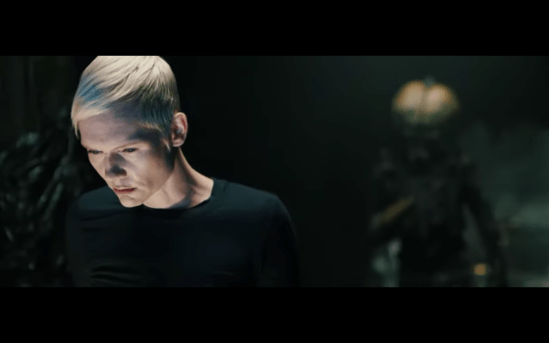
“Possessor’s” leading lady, Andrea Riseborough, is no stranger to idiosyncratic roles in equally atypical films having starred in “The Duffer Brothers'” “The Hidden” and played the titular character in the avant-garde horror, “Mandy,” across from Nicholas Cage; yet, from her experience with big-budget studio films, such as “Oblivion” starring Tom Cruise, the English actress felt the uneasy atmospherics to be pressurizing and uncomfortable Riseborough has thus exceled with films such as Cronenberg’s “Possessor” that’s pivots into an alcove just off the main halls of horror and science fiction. Riseborough looks nothing like herself from “Oblivion” by sporting a stark white hair on top of a thin frame, which could be said to be the very counter-opposite of what a typical, bug-budget assassin should look like, but Riseborough delivers stoic and uncharitable traits of a character on the brink of losing herself. Christopher Abbot delivers something a little more chaotic when his conscious retreats back into the depths of his psyche only to then seep back into his mind where he stumbles to catch up on current events. The “It Comes At Night” Abbott disembodies himself not once, but twice, becoming an avatar for Tasya Vos to play, picking up where Abbot’s Colin left off, and then Abbot has to regain control, splicing Colin back into the cockpit where Tasya commands the yoke. The dueling dispositions cease being unique as one attempts to control the other in a mental and corporeal game of chess, confounding audiences of who is in control during certain scenes, especially when Colin goes into a blackout murdering spree of people Colin himself knows and trusts. As a puppeteer moving a marionette, pulling as an influential strings behind company lines, is Girder, a poker-faced agent head seeking the absolute best in the company’s interest, who finds her thimblerigger in Jennifer Jason Leigh. Leigh, whose experience with David Cronenberg’s “eXistenZ” brought a high level of cognizance to “Possessor” having been an cerebral deep virtual reality trouper previously, folds in the nerve of any level of management that would guilt someone else into doing the work necessary to get the job done. Girder opposes Tasya’s external humanity in a silent, but deadly manner by appealing to the killer instinct in Taysa, letting red flags of the out of body experience fly by the waist side that ultimately wears away at her star pupils moral conscious and turn her into a stone cold killer. “Possessor” cast fills out with Tuppence Middleton (“Tormented”), Kaniehtiio Horn (“Mohawk”), Rossif Sutherland (“Dead Before Dawn 3D”), Raoul Bhaneja, Gage-Graham Arbuthnot, and “Silent Hill’s” Sean Bean in a worthwhile role just to see if his role will succumb to a typical doomed Sean Bean character as the undesirable tech CEO.

Its safe and sufficient to say that Cronenberg’s “Possessor” is not a feel good story; the amount of tooth-chipping, eye-gouging, and throat stabbing gore takes care of any hope and ebullient energy that one could misperceive. Yet, while the disgorged grisliness stands on it’s own, Cronenberg possesses a factor of tropes that multiply the film’s bleak, icy landscape inhabited by unpleasant characters that ultimately seek and destroy the little good exhibited. The obvious theme is the disconnect from one’s own identity. Tasya Vos mental capacity nears the breaking point being an inhabitant of numerous bodies and with each callous, bloodletting assignment, Vos’ indifference for the things she should hold dear strengthens immensely drowns in the persona of another person and the psyche breaking acts of violence. Her latest assassination attempt even blurs the lines of her sexuality as her feminine body parts merge with Colin’s masculinity in one of the craziest sex scenes to date. Colin’s individuality is too threatened but from Vos’ intrusion, equating the quiet, strange behavior to a sudden vagary toward a person’s dejection, being estranged from their own life, on the outside of “Possessor’s” alternate reality of science fiction’s hijacking of one’s brain. On the subject of intrusion, a not-so obvious theme, but certainly has a strong motif, is the severe invasion of privacy. Vos’ spying on Colin and his lover for personality intel, Vos’ inspection of the entire Colin body while inside inhabiting him, and the data mining of Sean Bean’s character’s tech company, which pries itself through the optics of people’s computer cameras to garner information, such as the fabric of window curtains in this case, divulge an uncomfortable message that privacy is a luxury we are unable to ever grasp. There’s even a scene where Vos, in Colin, becomes a voyeuristic participant of a couple’s explicit sexual intercourse during data mining work hours. Despite the breadth of technology that are brimming near our fingertips today, “Possessor” has a very analog approach with dials and switches of seemingly antiquated electronic circuits, thus rendering the story grounded in nuts and bolts rather than being lost in the overly saturated and stimulated advanced tech. Beguiling with a somber serenade, “Possessor’s” a highly-intelligent work of diverse, topical qualms seeded by years of body horror and existentialism and is released into a world that’s perhaps not ready to come to terms with much of the themes it will present.

Come October 2nd* to select drive-ins and theaters, “Possessor” will be distributed uncut by Neon, implanted in the midst of horror’s biggest month of the year. Since not a physical release as of yet, the A/V attributes will not be critiques, but the film is presented in 1.78:1 aspect ratio and is under the cinematography direction of Karim Hussain, who has previously worked with Brandon Cronenberg on his debut film, “Antiviral.” Hussain adds rich two-tone coloring for a symmetry of sterilization that is, essentially, white and black with every shade of both in between tinted slightly with a dull hue on the spectrum and with the blood being that much more graphically illuminated against the backdrop. There are moments of composites that could render a person disabled with epilepsy, so be warned. The audio is a smorgasbord of a jarring ambience and soundtrack, adding to “Possessor’s” fluxing turmoil, but the dialogue discerns a little less sharply across; there was difficulty in understanding characters’ monologues or discourse who came across mumbling through scenes of fuzzy earshot. There were no bonus materials to mention nor were there bonus scenes during or after the credits. Perhaps the best movie you won’t see this year, “Possessor’s” an impressive follow up feature that reaches out beyond the outlining border of a vast and prolific filmic shadow looming over the filmmaker, but Brandon Cronenberg contrives new vitiated wonderments and is capable of casting his own umbra that would eclipse to throw light onto his soon to be seen cathartic body of work.


* Release date correction (9/29/20)

Flesh Combustible EVIL Ore in “Primal Scream” reviewed! (Dark Force and Code Red / Blu-ray)


In the future of 1993, a privatized and powerful mining corporation is extracting a newfangled element cleaner and more abundant than any other energy source known to mankind, but the element, known as Hellfire, is also the most dangerous as it causing the human body to spontaneously ignite the internal organs in a heap of electro-combustion, searing the body from the inside out. A private detective is hired under the pretense of an affair scandal but becomes intertwined in a power struggle to harness complete control of Hellfire that leads from explosive skirmishes on a mining station on Saturn to the many charred bodies scorched by the unforgiving Hellfire on Earth and the investigator is caught in the middle behind a veil of cloak and dagger criminal conduct, searching for answers and the truth.

A gumshoe narrative with a caustic boost of flesh destroying flair, “Primal Scream” is the 1987 independent science fiction action epic from first time filmmaker William J. Murray and an equally tenderfoot crew buckling down for their inaugural ignition into full-length feature film space. More recently familiar with Murray’s work on the Jersey shore thriller, “Exit 0,” as the director of photography, the writer-director got his big start helming “Primal Scream,” also known originally as “Hellfire,” a planetary, melodramatic perusal also set in New Jersey, shot primarily on location in Atlantic City. The title change from “Hellfire” was the brainchild of the distributor who bought the rights to the film, claiming “Primal Scream” as a more marketable title, but with a name like “Hellfire,” the spaceship models, web of lies, and evil corporations detective story would have garnered an audience. “Primal Scream” is a production financed by a movie theater concession stand franchisee, Howard Foulkrod, looking to be a part of movie-making team.

Before working with Murray in “Exit 0” as a heedful bed and breakfast front desk attendant with a pervading cocksure attitude, New York born Kenneth McGregor first and foremost collaborated with the filmmaker on “Primal Scream” as a washed up police officer turned private dick Corby McHale that became McGregor’s debut lead role in the low-budget sci-fi feat. McGregor could carry the weight on such a profound role that required physicality from a browbeaten scoundrel that could attract young new love as well as re-attract his former affairs. However, I wasn’t especially sold on McHale’s love interest, Samantha Keller, who came off strong toting up a lip-giving and gritty female officer who has history with McHale. Sharon Mason dons the role with her lanky, on the gaunt side, appearance that could have elevated the role in a incongruous, yet positive, light, but Mason withers down to a lovestruck puppy besotted with McHale back in her life, losing that salt of the Earth edge that keeps her sharp in repelling the scum around her as a beat cop. Jon Maurice was a real presence on screen as a weary and angry captain on the force and maintains a mutual respect for his former office and friend, McHale, though doesn’t look it. In his only credited acting role, Maurice has the towering posture of “Dawn of the Dead’s” Ken Foree or “Candyman’s” Tony Todd with a resonating voice, a gospel actor, and compliments McHale’s unkept and insouciant façade. Rounding out the cast is Julie Miller, Stephen Caldwell, Edward N. Fallon, Joseph White, and timeless showman Mickey Shaughnessy in his last performance before death.

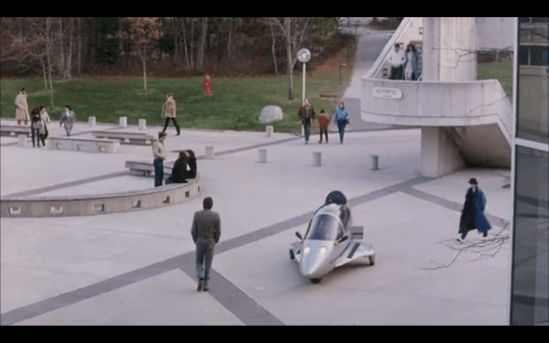
I find difficulty in thinking of one single aspect in where “Primal Scream” doesn’t deserve admiration. Do I think “Primal Scream” is a flawless attempt of a gargantuan dystopia of escapism? Not at the least, but for a pressurized, first time director, William Murray, his equally untried crew, and a cast of novice actors, the space ship model and pyrotechnics-laden gumshoe narrative palpitates wildly with tremendous heart for the amount of other intrinsic details that went into the feature, like the video phones and the ultramodern everyday vehicles, that didn’t produce a sensory overload of futuristic adornment and kept a practical milieu of face-to-face gambling bookies (location was set in Atlantic City after all) and ballistic projectile weapons despite a significant advancement in space travel. Hell, there’s even a sleek unrivaled-looking DeLorean in the first moments of the movie as a cherry on top. Granted, “Primal Scream” is set in 1993, nearly a decade outlook from production, and maybe undershot a realistic timeframe for interplanetary mining base construction. Another thing unclear is the story’s plasticity, murkily prefaced with a drop-in climax that is then refocused on the beginnings of Corby McHale’s seemingly diminutive hired involvement that leads to corruptive strife and dislodging of greed for the better of mankind. While trying to maintain a belief in the systemic universe the characters live in, the scenes are told through McHale as noted in the climatic introduction, but there are a few scenes outside that perspective box and don’t make filmic sense to the storytelling core. Ambitiously executed, “Primal Scream” dotes on films, such as “Blade Runner” or “Brazil,” of an Earth dystopian future and challenges us to totally recall our affection for the practical movie making magic.

In what I consider an odd release for Dark Force Entertainment and Code Red, I have to remind myself that William Murray’s “Primal Scream” is an oddity film with rich background and ludicrous-speed potential all around and makes a grand, high-definition Blu-ray debut distributed by MVDVisual. The region free release is presented in anamorphic widescreen, 1.78:1 aspect ratio, from a rather preserved source. The picture maintains a stable course throughout with some flare ups of scratches, blemishes, cigarette burns, and omitted frame jumps that were nearly inherent with 35mm productions. Yet, the coloring is excellent and balance with no diluting edge enhancements or cropping. A forced English language DTS-HD Master Audio 2.0 stereo mix is a palpable mix that is clear and unfractured by distortions. There remains a constant, low-toned crackle and hum throughout the approx. 85 minute runtime, almost as if it’s electronic interference, but the mix maintains a par score that offers beveled depth and a resounding range of bombastic explosions and the snap, crackle, pop of skin being corroded and cooked by Hellfire. Special features include an audio a new commentary by director William Murray and crew as well as the same group in a Making of “Primal Scream” featurette “Made A Movie, Lived to Tell,” showcasing current interviews recollecting 30 years ago their experience in making, and surviving, their first movie. Also included is the “Hellfire” 1981 promo reel. “Primal Scream” is more down to Earth than it is pew-pewing in the inky expanse, paralleling the dangers of new and unexplored elements and mining procedures, such as fracking, with a sleuth story rigmarole to save man from not only destroying their corporeal selves, but also destroying their souls from corruption.

Own Primal Scream on Blu-ray today!

EVIL Goes Metal! “Project Metalbeast” reviewed! (Invincible Entertainment and MVDVisual / DVD)


A top secret CIA operation, known as Operation Lycanthropus, leads two agents to a Hungarian castle where they must retrieve a sample of werewolf blood in order to create the prototypical ultimate super soldier. With his partner’s throat ripped out during the initial werewolf attack, agent Butler manages to retrieve a sample after plugging the werewolf with metal bullets, but upon returning to the secret operation headquarters in the States, his supervisor, Agent Miller, and a team of scientists pursue a more subdued approach in synthesizing an advantageous killing machine. The unhinged and impatient Butler injects himself with the remaining blood sample, transforming him into a blood thirsty werewolf. After attacking and killing a scientist, Agent Miller neutralizes the beast and places him in cryogenic suspension, hidden away in the secured basement, for future sinister endeavors. Twenty years later, a new secret operation headquarters building is erected after the first burns down, clearing the way for a new team of scientist developing game changing medical technology for burn and cancer victims by creating artificial skin out of metal, but when the project is suddenly taken charge by Agent Miller, the bewildered and upset scientists are impelled to work on human cadaver trials, placing Agent Butler’s inanimate body on the operating table for a metal skin transplant. When he suddenly awakes, the base of unsuspecting scientists and military personnel come under attack by a formidable and blood hungry beast now armored plated with a metal exterior and virtually no way in stopping it’s vicious wrath.

Talk about an archetypical blend of classic and tech horror, “Project Metalbeast” exemplifies the age-old theme of scientific research being usurped for control and power and the end result is fatally catastrophic. Also known as “Proect Metalbeast: DNA Overload” and just plain ole “Metalbeast,” the film was written and directed by Alessandro De Gaetano (“Bloodbath in Psycho Town”) who spun a 1995 unorthodox werewolf feature that presaged playing God in more ways than one and added a fresh and new elemental armament to an iconic, and already super, beast on the prowl. Tom Irvin, Brad Hardin, David Barrett and Wesley Wofford, who makeup (no pun intended) the special effects team of Magical Media Industries, have credits that include the “Carnosaur” killer dinosaurs and a couple of the “Halloween” franchise sequels and have applied their combined tapestry of creative talents to bring a practical, larger-than-life metalbeast to the screen that’s not only monolithic in size, but also fearsomely primal with a glint of “Terminator” characteristics in its glowing red eyes. “Project Metalbeast” was one of the last semi-cult releases of Prism Entertainment Corporation, a company that chugged out some great B-horror films mainly in the 70s and 80s with titles such as “Eaten Alive” and “Body Melt,” and one of only a few films from the associated production company, Blue Ridge Entertainment.

Before taking Jason Voorhees to space to metalize the already the indestructible carnage incarnate, Kane Hodder did a test run stepping inside the augmented paws of a gnarled werewolf. Instead of space, Hodder grounds his performance by barely able to walk on two hind legs in the fabricated prosthetic suit, but the veteran stuntman and character actor is the dynamo practical effects horror version compared to today’s CGI-guru, Andy Sirkis, thriving tangibly polar opposite on the character effect sake, but Hodder captures the metalbeast’s utmost power gait and stance despite the extremely limited range of motion. Another symbol success in his own right is Barry Bostwick as Agent Miller. Bostwick is best known for his hero role in “The Rocky Horror Picture Show,” but to me, he’ll always be the aloof mayor in Spin City opposite Michael J. Fox so it was challenging to accept Bostwick as a conniving cutthroat intelligence agent. Yet, the longtime actor has perfected the knack of being haughty in not only his performance, but in all his mannerisms, making Agent Miller a completely loathsome character undeterred by the sensitives of others. Opposite Agent Miller is the more rational and sensitive head scientist, Dr. Anna de Carlo, played by Kim Delaney who appeared in “Darkman II: The Return of Durant” that was released the same year. Delaney didn’t excel as the strong heroine one might expect her character to be thrust into a situation that calls for her to protect not only her life, but all the lives outside the base if the creature escapes and the scientist is more-or-less part of a splinter group derived from a team effort against the metalbeast. Costars include Musetta Vander (“Mortal Kombat: Annihilation”), Dean Scofield, Tim Duquette, Lance Slaughter, William G. Clark, and John Marzilli as the unhinged Agent Butler.

“Metalbeast” sounds like a metal title, but Gaetano works the orchestrated talents of Conrad Pope into the soundtrack and “Project Metalbeast,” at the time, was Pope’s scored feature as a composer, the classically trained musician has been the orchestrator on a variety of films, such as the films of “Jurassic Park,” “Star Wars,” and “Harry Potter.” Yet, Pope’s score is akin to Harry Manfredini, a character of the story, that maneuvers coincidingly with the metalbeast while simultaneously triumphantly denotes specific scenes of dread, victory, and intense suspense with the latter being reminiscent of Mandfredini’s “Friday the 13th” brashly intrinsic cello and violin composition when Jason Voorhees would startle victims on the screen and chase them down a moonlit forest path. While Pope’s score is invigorating, the story leans more toward less so with a tediously uninspired quality regarding the film’s semblance of a comprehensive secret operations base that has corridors stunk of a standard hospital setting and story structure that fortunes little against the beast’s point of view in which Gaetano merely removes a few frames and adds a distortion effect to the picture that peers out of the eyes of a drunkard’s discombobulated staggering as well as leaving some plot holes with the bit characters, such as the other military police who simply just vanish though the character pool has been whittled down near the climax. Plus, Bostwick’s Agent Miller doesn’t age in the 20-year gap in the story, leaving any tidbits of truth versus a metallic werewolf as dust in the wind. Even with the faults, “Project Metalbeast” without a doubt is a product of it’s decade with a touch of lycanthropy campiness illuminating a sardonically augmented military killing machine.

Resurrected from the video graveyard and for the first time on a home video release in the States, or at least officially, Alessandro De Gaetano’s “Project Metalbeast” lands onto DVD from independent entertainment distributor, Invincible Entertainment, and partnered with MVDVisual. Presented in a full frame, 1.33:1, the transfer looks like either a VHS rip or a scan from an unofficial DVD release with heavily lossy details amongst a washed hue overlay. There’s some transfer imperfection, such as slight scratches, but is less intrusive than the soft image. The English language mono audio is bombastic, but there’s no strength behind the explosions, beast growls, and such to emphasis the impactful scenes. Dialogue remains in the forefront behind the ambience and, even, Conrad Pope’s powerful, but non-subversive score. Depth and range are acceptable as the camera and sound relation viably work hand-in-hand. The Invincible Entertainment release is nearly bare bones without an significant transfer upgrade, no bonus features, and barely a static menu. “Project Metalbeast” lives and breathes as a poster boy of a 1990’s revamped creature feature genre that transforms a classic monster into a man’s weaponized wet dream, but the film stutters as a reserved case of conservative metal monster mayhem.

Own “Project Metalbeast” on DVD!

Available for free with a Prime Video subscription!

When The Earth Goes Silent, EVIL Begins to Conquer. “The Blackout: Invasion Earth” reviewed! (Shout Factory! / Digital Screener)


In a distant future, the entire Earth goes dark without warning. Communications are completely severed with no sign of life exists except for those scared and confused inside what is to be called The Circle of Life that has encompassed Moscow and other parts of neighboring countries. Reconnaissance teams venture out into the quarantine zones, discovering dead bodies as well as noticing people have gone missing. A month later, an outpost goes under siege by an army of bloodthirsty bears. These bizarre events go unexplained, leaving military jarred, and to find answers, seven teams are dispatched to various areas surrounding the outpost to locate signs of life. While the teams are scouting, an powerful alien reaches out to the outpost, warning them that Earth is in the middle of a four wave attack by his race looking for a new home. Before their 200,000 year trip ends with destination Earth, the last wave, 160 million mind-enslaved missing humans, will attack the Circle of Life at the command of the alien informant’s counterpart and it’s up to the ravaged scout team to band together to extinguish the extermination of mankind.

Nothing is more frightening than wiping out 95% of the world’s human population in the blink of an eye without so much of a sign of explanation. Welcome to “The Blackout: Invasion Earth,” which depicts just that very unfathomable scary episode of terra-loneliness and free-for-all, fear induced panic amongst the civilian population, tapping into the same vain of “The Day the Earth Stood Still” or “Arrival.” The big budget, Russian sci-fi action-horror, originally titled “Avanpost” or just “The Blackout,” is penned by television scriber Ilya Kulikov and directed by Egor Baranov. Released this past November in Russia, “The Blackout: Invasion Earth” touchdowns inside the North American market from genre distributor Shout! Studios come June 2nd, becoming a planet-sized contender for the biggest science fiction film of the year with relentless suspense, alien-on-alien hand-to-hand combat, and an encroaching bear blitz that can’t go unseen! The Moscow based TV-3 and Premier Studios serves as the production companies with studio heads, Valeriy Fedorovich and Evgeniy Nikishov, producing an estimated $4.3 million dollar film.

Unless you’re a no-life film buff whose up to speed with all the latest Russian thespians, many of us in the States will not recognize these Slavic actors; actors such as Aleksey Chadov, Pyotr Fyodorov, Artyom Tkachenko, or Svetlana Ivanova with no standing in the usual cache of domestic and international circle of ascertain identity that any joe can just look at a cast list and go, “aha!,” and put your index finger right on their name in recognition. However, if you look closer, you’ll unearth titles you might have heard of, such as “The Darkest Hour” (Pyotr Fyodorov) and Night Watch (Aleksey Chadov). Fyodorov and Chadov play Yura and Oleg, military comrades by circumstance who are pitted against an inexplicable and unknown occurrence. Though fighting the same war, the two friends contrast different backgrounds. Yura comes from a long lineage of military blood, but becomes somber in his soldier role as he suffers an immense loss at the moment of blackout and when he discovers love for a field medic, Olya (Svetlana Ivanova), his will to fight survives by a thread. Juxtaposed against Yura is the cab driver turned enlisted man Oleg whose only living relative, his dementia-malady mother, had survived the blackout and the event has given this man in a rut purpose and a fire lit inside him. Artyom Tkachenko plays the stoic alien savior with a nearly human form, all except the three slit vertical mouth, makes him deceptively trustworthy and Tkachenko eats into that cautionary persona of whether this being is actually assisting in saving the human race or angling his prey to work against an adversarial counterpart, Ra (lya Volkov) to gain dominance totality. Performances all around exact a fair amount of rigidness to them, but I blame the forced English dub that can seemingly thwart natural deliveries. The physical and range of action is choreographed with assiduity from the actors, making me believe root cause of the rigidness is certainly the dubbing. “The Blackout: Invasion Earth” closes out the cast list with Konstantin Lavronenko, Andrey Mezhulis, Artyom Markaryan, and Lukerya Ilyashenko.

“The Blackout: Invasion Earth” is a special effects juggernaut; some of the best, awe-inspiring visual effects I’ve ever witness has come from Russia, with love, that’s a projectile explosion of a thriller and, in true Russian fashion, a slew military grade heavy duty vehicles are heavily showcased through as if they’re on parade as modified tanks, BTR-70’s, and triple rotor attack helicopters for answers and rescue recovery. Being that the film is set in the future Moscow, Baranov didn’t oversell the evolution of technology and, in fact, made a stark contrast that hindered humanity still in the throes of a primitivism culture when up against otherworldly powers. Yet, there were still boots on the ground soldiers tossed into the meat-grinder that is the quarantine zone. Sure, there were some sentinel machine guns that shredded the enemy at the first sign of sensor, but despite all the flying gizmos, armed to the teeth choppers, and nifty gear, mankind had not strayed far into development. The stagnancy of man’s evolution became the highlighted theme as their deconstructed to being simply a virus that loves, hates, mates, etc. and without all that man has technically progressed throughout the years, man, itself, stays the same. The 160 million people caught in the blackout, turned into mindless slaves, and even before the war against an unknown force, rebellious and fearful groups pit brother against brother. The message suffers slightly from the cut-and-dry rigidness as aforementioned, but more so with the main characters with try to digest the alien’s, perhaps, too complicated plan of usurpation that has been 200,000 years in the works. While the story might be clunky and kind of claggy in the middle, the intensity clings to you from the moment of the alarming sound, troop mobilizing opening credits to to those BRT-70 trucks mowing down a horde of slaved individuals and never ceases with jaw-dropping, effects-driven cinematography to let you re-catch your breath for 128 minutes.

Witness mankind’s last stand against it’s first form in “The Black: Invasion Earth” being distributed on June 2nd by Shout! Studios onto DVD, Blu-ray, On-Demand, and digital streaming from these streaming services: AppleTV, Amazon, VUDU, GooglePlay, PlayStation®, XBOX, hoopla, Fandango Now, DirecTV, Comcast Xfinity, Spectrum, Cox, Charter, and AT&T U-verse. Since a digital screener was reviewed, the video and audio technical aspects will not be reviewed, but for the record, while the English dubbing is less desired and still hinders the story slightly, the dubbing isn’t all that terrible with crafty timing to stay in sync and maintaining some natural exposition deliveries. There were no bonus materials accompanying the release and there were no extra scenes during or after the credits. No bonus features were listed on the press release either. “The Blackout: Invasion Earth” bedevils with a population consuming reset laced with existential philosophies and the ups and downs of human nature set up behind the curtain of an impressive visual menagerie of brilliantly detailed special effects on the most grandest of scales.

Available on Blu-ray!

And Prime Video!!!