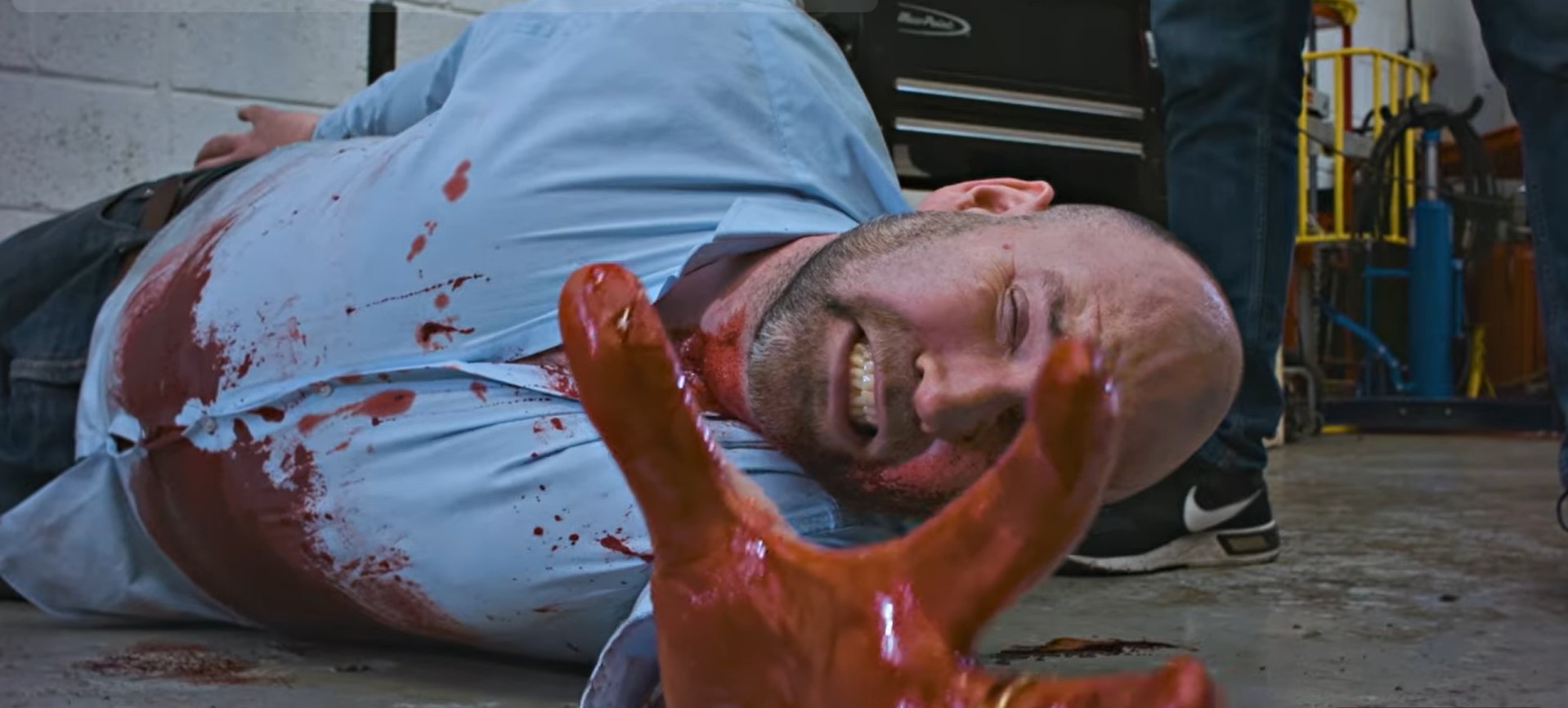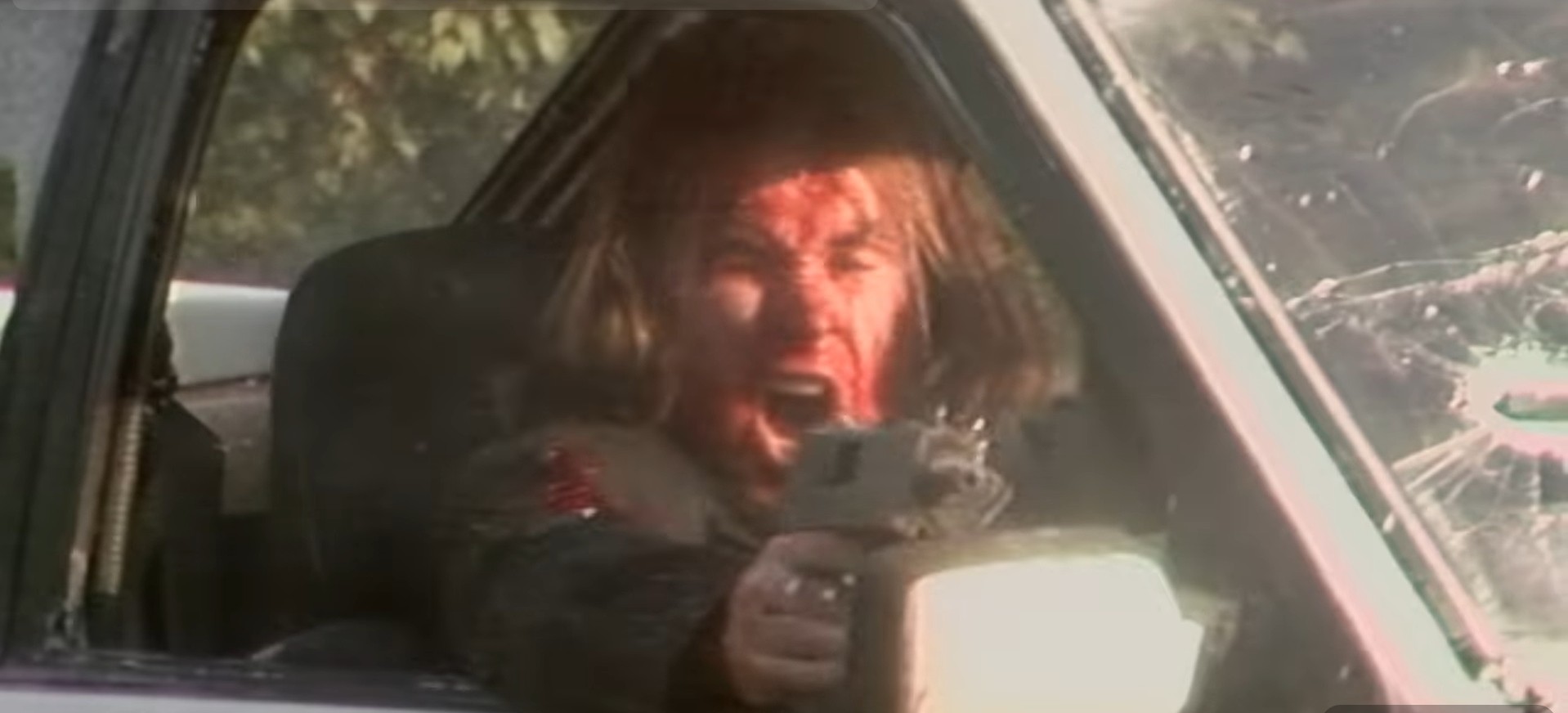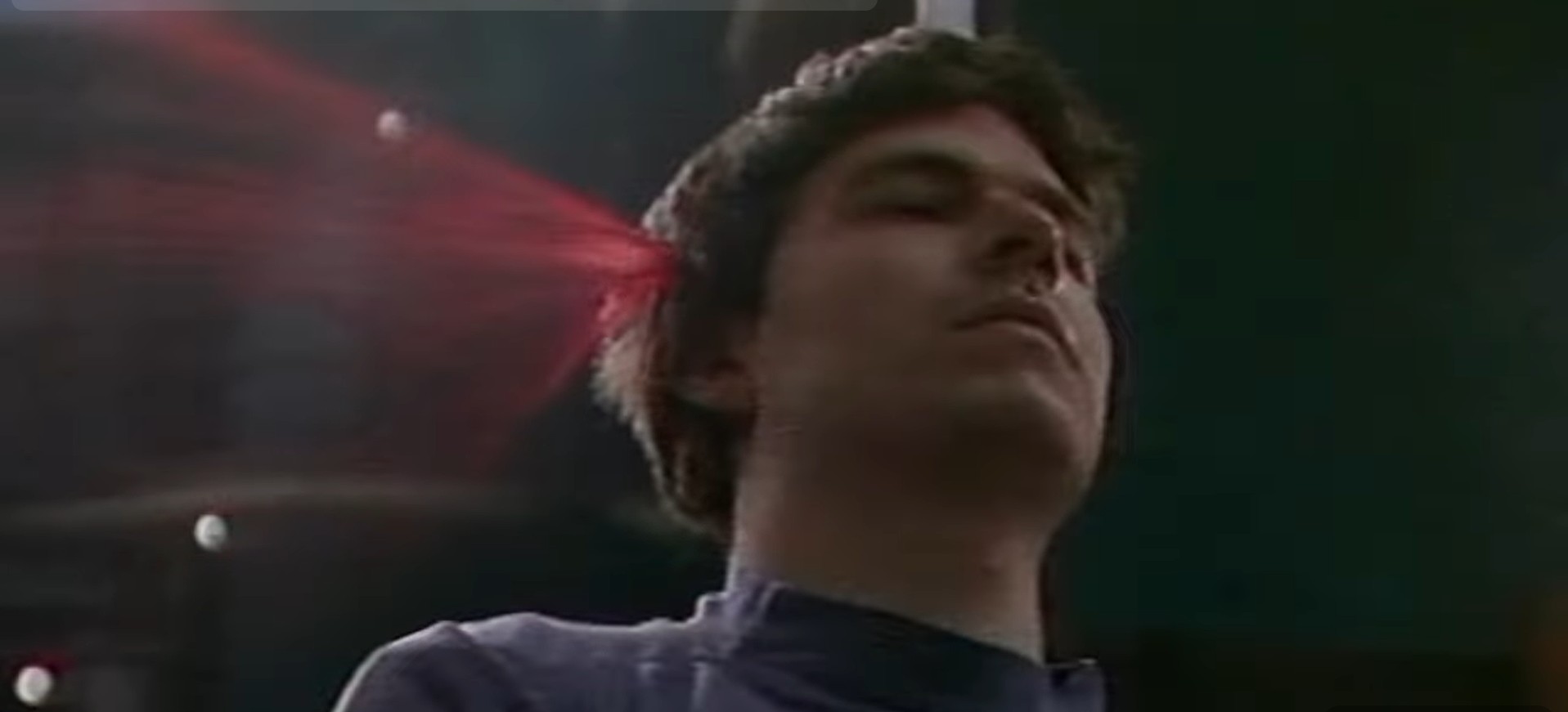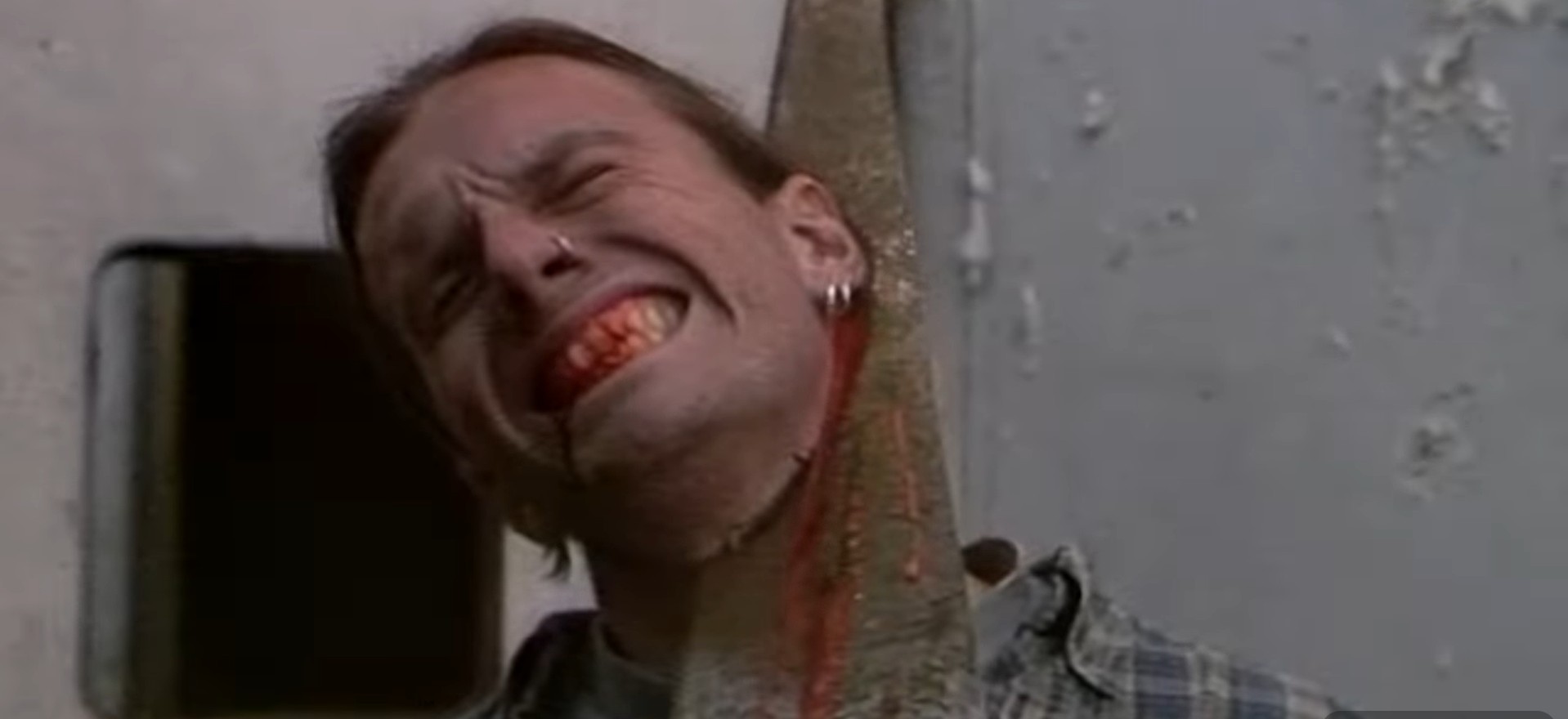
C-Cups, D-Cups, and EVIL-Cups All Must Pay! “Big Boobs Buster” reviewed! (Whole Grain Pictures / Blu-ray)

Own “Big Boobs Buster” on Blu-ray Home Video!

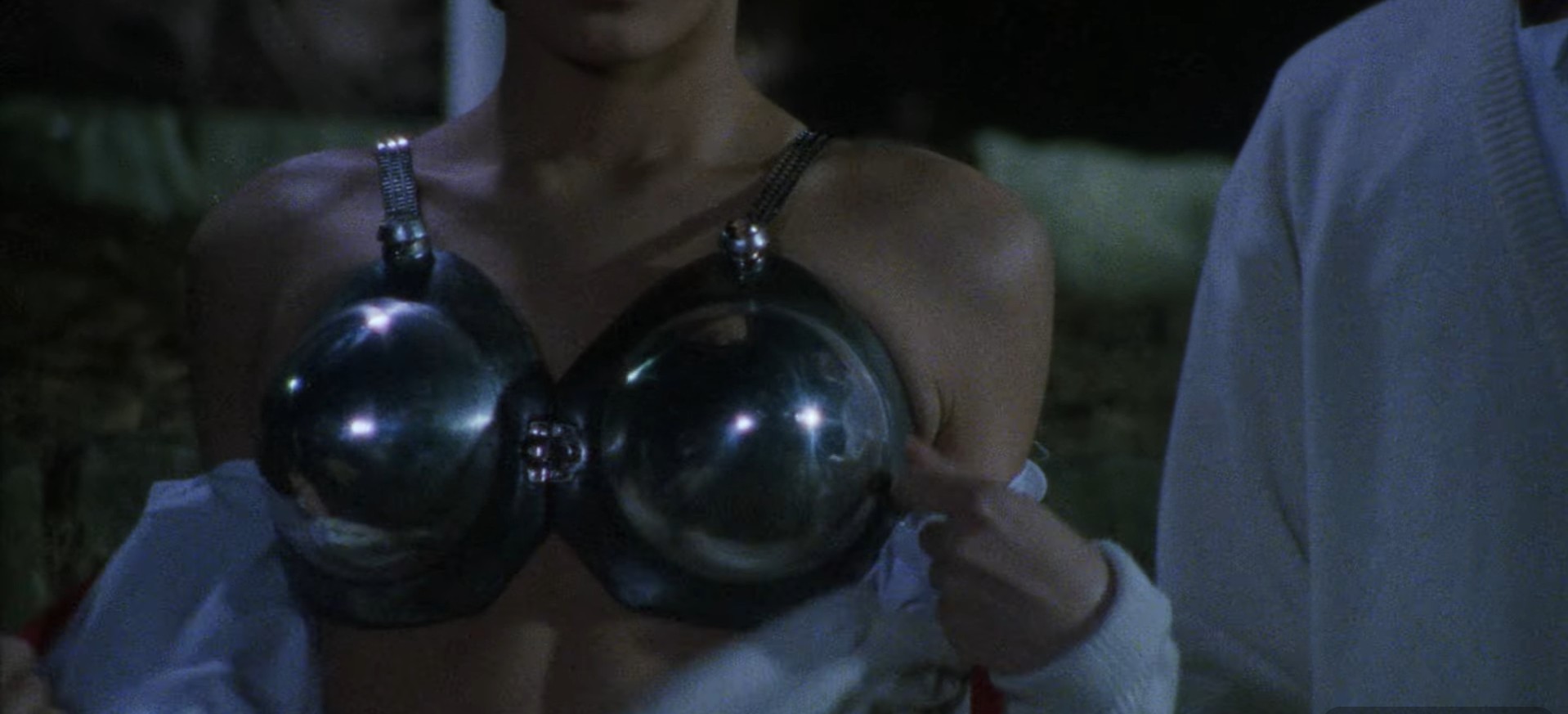
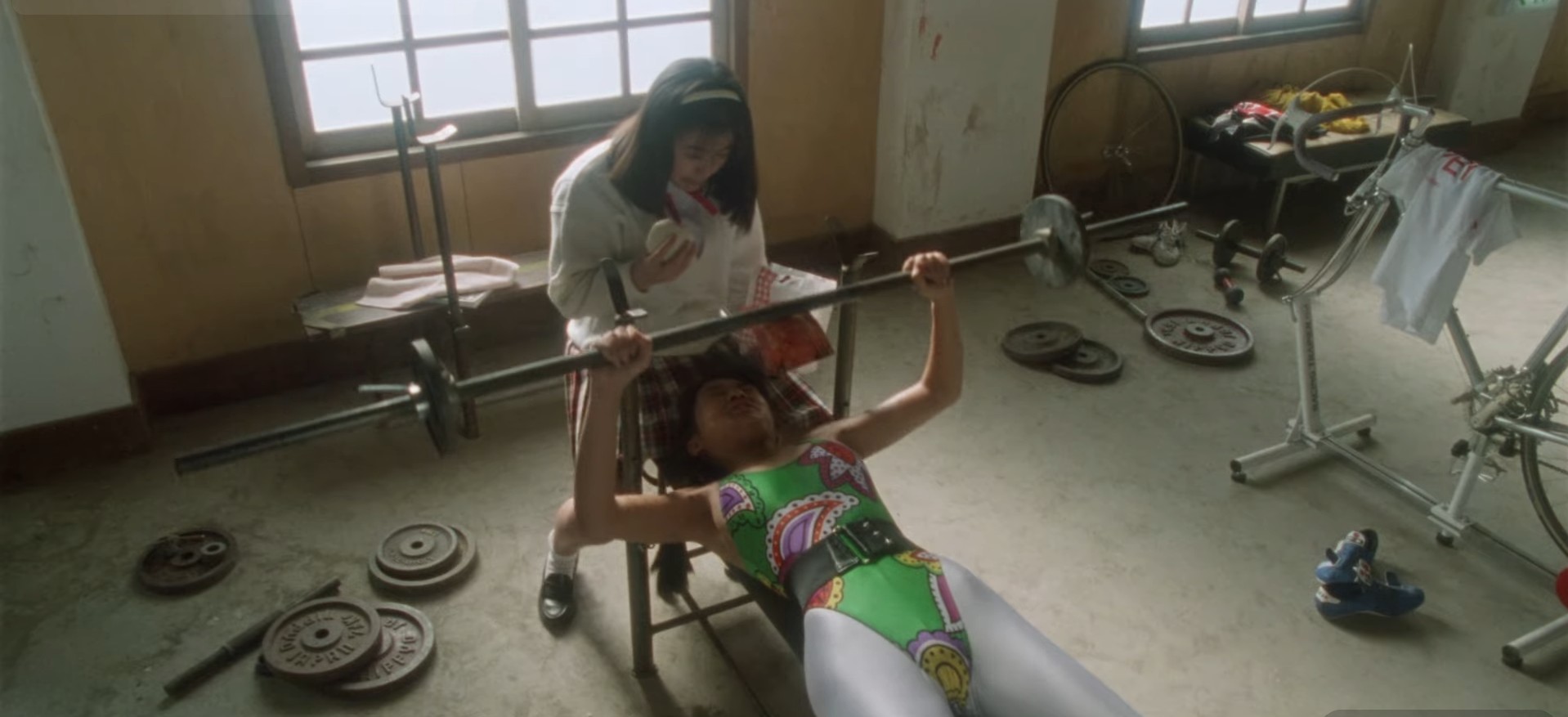
Masako is well-liked amongst her high school peers, has an above average grades, and is a cyclist athlete with a killer body.  The one thing Masako doesn’t have but desperate wants is the popular boy Bando to be her boyfriend.  When Masako asks Bando to be his girlfriend, Bando rejects her requests on the account of her washboard chest.  Assigning blame to all her well-endowed classmates beyond a B-cup, Masako transforms into the chesty vigilante, Big Boobs Buster, by subduing targets from a pervert’s stolen list of girls with large breasts and making spray casts of their chests to blackmail them with exposure if they ever date Bando or any other boys on campus.  When she’s finally caught and discovered by a track and field competitor with big boobs, one who also might like girls more than boys, Masako is ironically herself blackmailed into being a substitute in a sprint competition her competitive blackmailer can’t compete in due to injury. During vigorous train, Masako begins to develop friendship feelings and questions the reasons for her body image crusade.

For all you flat chested women out there, don’t fear!  “Big Boobs Buster” is here!  Hailing from Japan, the adult-oriented comedic has a superhero Marvel has yet to call to the frontline!  Director Hisashi Watanabe embraces his debut directorial with burlesque eroticism that touches upon the breast of society’s biggest problems – body shaming and body positivity.  Watanabe pens the script based off a Manga by Kôichirô Yasunaga of the same title with the film adaptation and its sequel, “Big Boobs Buster 2,” released the same year, 1990 directly onto home video, or what’s called in Japan, V-Cinema.  Released by the Tohokushinsha Film Corporation, the company behind the anime-turned-live-action film “Shark Skin Man and Peach Hip Girl” and produced a feature film out of the Android Kikaider series with  Mechanical Violator Hakaider, as well as being a part of video game series, such as Sonic and Final Fantasy, the producing team consists of “Appleseed’s” Tarô Maki and “Wild Zero’s” Katsuaki Takemoto.

The live-action OAV, aka Live Action Original Animated Video, has a game cast of lesser-known actor and Japanese AV idols that really perk up the story.  Harumi Kai leads the charge as the titular character, and the “Oona Rambo” actresses pulls off the sugar-and-spice Masako by being an all-around good schoolgirl scorned by a superficial boy named Bando (Masakazu Arai, “Shigatsu kaidan”) who moonlights is in a tight outfit and disguise being a shakedown artist against girls a C-cup or larger.  In the process of snaring them and spray casting a mold of their chest, she inadvertently turns them on denoting a bit of homoeroticism between the women that continues when she meets field and track star Kyoko Mitoizumi who calls her bluff and becomes uncomfortably touchy-feely with Masako.  Played by Uran Hirosaki, Kyoto is a form of positivity and no fear that puts Masako in a corner of uncertainty but the two eventually become friends with quid pro quo arrangements both will benefit from.  The rest of the case, which in this case are the big-chested highschoolers Masako seeks to humiliate because of her own insecurities, are comprised of Japanese AV idols with Mariko Itsuki (“Groper Train:  Push It Deep!”), Marina Matsumoto (“Stepmother Slave”), and Natsuko Kayama (“Big Boobs Sisters:  The Yellow Panties of Happiness”) as well as a few AV actors in the sought after and large breast-loving role with Masakazu Arai and Tôru Minegishi (“Godzilla vs. Biollante”) and Aya Katsuragi (“Evil Dead Trap”) as Masako’s parents who have this unexplained odd relationship in the peripheral that doesn’t contribute much, or anything at all, to the core elements. 

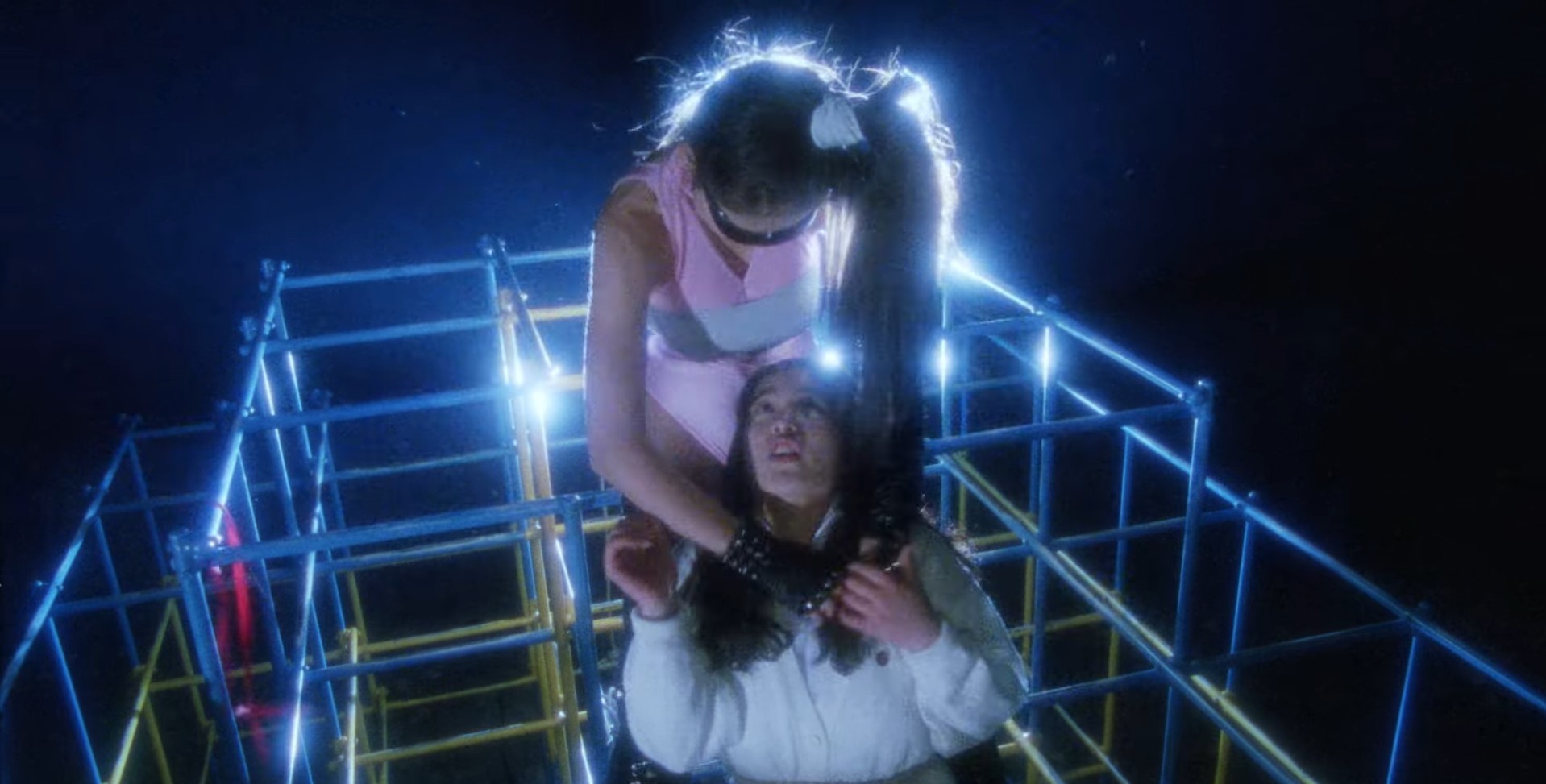
With a title like “Big Boobs Buster,” audiences can expect an outrageous comedy that lives up to live-action anime standards with an off-the-cuff superheroine on a crusade against one of the most arbitrary and non-threatening to society foci that only affects a flat-chested girl’s ego – big boobs.  Having never read Kôichirô Yasunaga’s manga and with only director Hisashi Watanabe’s film to provide my Johnny-Five Alive input data center, “Big Boobs Buster” is intoxicated with Masako’s character arc of self-deprivation toward body positivity through a minefield of scorn-driven retribution against the wrong and innocently lot of larger than C-cups.  Through this zany premise, that’s about as innocently wanton as cold be, director Watanabe and cinematographer Jun Abe spruce and polish this knob with mood abstracting backlighting and vivify scenes with power poses and interesting framing to closely resemble manga panel moments and the editing by Shigeru Okuhara (“Orgasm:  Mariko”) is multifaceted to tell a quick action narrative with ease of scene cuts and transitions that make “Big Boobs Buster” a breeze to digest it’s melon-sized mania.  The story doesn’t glide through with a single flightpath of the superheroine picking off well-endowed girls one-at-a-time only to be discovered to enact a plot point problem with the antagonist; instead, the story takes a 180 degree turn toward a whole new level of thematic dilemma in trying to win a sprint race for an enemy-turned-friend.  Summarized with a montage of tough exercises that culminate toward Masako being a beast at sprinting strength, the “Big Boobs Buster”  campaign goes into hibernation until the race is done, a subplot that insidiously takes over as the main plot, cleaving the already less than a full-length feature film in half. 

Catalogued at number four on the Whole Grain Pictures label, “Big Boobs Buster” is one large cup size of comedic body positivity done in the style of live action anime.  The new 4K remaster is pulled stems from the original camera 5mm negative and AVC encoded on a single-layered BD25, decoding at approx. 30Mbps.  Presented in high-definition, 1080ps, and in an European aspect ratio of 1.77:1 widescreen, “Big Boobs Hunter” is like being motorboated from your television screen with the rich look of a converted celluloid transfer that elevates Jun Abe’s luminous fogged night scenes, a glowing arura around the titular titillating heroine, and a contrasting shots of day time that offer warmer, slightly yellowis-tan tinted tones.  Skin textures and tones are reflected within the same softer glow but the rigid-contouring, around what can be delineated when shooting close up on a pair of breasts, do define a nice bulging image.  There are scenes, mostly a result of the cinematographer, that look flat between the foreground and background, suggesting possibly an aspherical lens that provides less curvature and less compressed, stretched image.  The release comes with two lossless DTS-HD 2.0 tracks with the original Japan mix and an English dub.  Clarity and a solid amount of punchiness come through nicely enough on the Japanese track that’s review covered but there’s not a ton of depth here with mostly frontloaded dialogue and action and nothing to note in the background or any environmental ambience.  Special features include a blooper reel that doubles as a behind-the-scenes featurette done in a traditional pop culture Japanese style with a gameshow announcer overlay track and translucent title cards in Japanese.  Also included are the original Japanese DVD trailers.  What catches the eye is the very pinku film and retro stylized cover with an in-your-face panty-covered butt overtop thigh high boots set in the foreground framing a scared schoolgirl between the legs.  Who wouldn’t want to watch this based solely off the cover!?  The reverse side of the sleeve contains an enlarged image still of another character and the backside acts humorously like “nutritional facts guide” superimposed onto the back cover.  The release comes in a standard Blu-ray Amaray.  With a runtime of 45 minutes, “Big Boobs Buster” is a breezy microfeature for a region free encoded Blu-ray that is not rated. 

Last Rites: Busting out with body positivity and sexual orientation themes, “Big Boobs Buster” brings out the big guns on a new Blu-ray release, animating manga to life on the big screen to experience Japan’s wildest cinema at its finest.

Own “Big Boobs Buster” on Blu-ray Home Video!

EVIL’s Counterfeit Products are the Bomb! “Knock Off” reviewed! (MVD Rewind Collection / 4K UHD and Blu-ray)

When confronted with product forgeries by Hong Kong police and company representative, Ray, a longtime Hong Kong counterfeiter trying to go legit by partnering up with Tommy to be a distributing fashion designer of V-Six Jeans, becomes embroiled in a Russian smuggling operation of hiding powerful micro explosives in counterfeit goods being sent around the globe.  With their ability to be activated by satellite waves, the devices can be hidden in all types of products.  The CIA, using Ray to track down another notorious counterfeiter, becomes involved and exploit Rays connection to Hong Kong’s criminal underbelly but double-crossing twist and turns has Ray struggling to trust an ally in his mission to not only find out who is counterfeiting his denim goods but also save the world from infiltrating Russia explosives.  He’ll have to rely on his fighting skills as well as hesitantly trust those who’ve deceived him to unearth the person responsible to clear his name and stop the deadly outbound shipments. 

To start this review with a personal anecdote, I recently sold Air Jordans to an eBay customer and come to my surprise and dismay, eBay’s authentication process determines the shoes a forgery.  I’ve sold many Air Jordan and Nike shoes in the past, successfully through the authentication process, and pride myself on knowing what to for when determining fake product.  This one had me fooled.  An exact lookalike of the Air Jordans that passed my authenticity examination with the company tag that has all the production information including the product identity number, had the correct Air Jordan logo, and the material passed the visual and feel test with substantial promise to confidently market.  Now, what eBay found is completely without reason as I don’t know what they saw or found but what I found in the 1998 campy-action-thriller “Knock Off” surely reminded me that there is always more than what meets the eye.  “Once Upon a Time in China” and “Twin Dragons” action film director Hark Tsui works with western actors to achieve a nonstop, impractical, and fun to watch film that doesn’t letup or provide any downtime.  The script is penned by Philadelphia born screenwriter Steven E. de Souza, the same de Souza behind “Commando,” “Die Hard,” and “Street Fighter,” orders another supersized helping of action on a Hong Kong reality-defying scale and is produced into an extremely 90’s-laden existence by Raymond Fung, Kamel Krifa (“Universal Soldier”), Moshe Diamant (“I, Madman”), and Nonsun Shi (“Double Team”).  “Knock Off” is a production of Film Workshop and MDP Worldwide. 

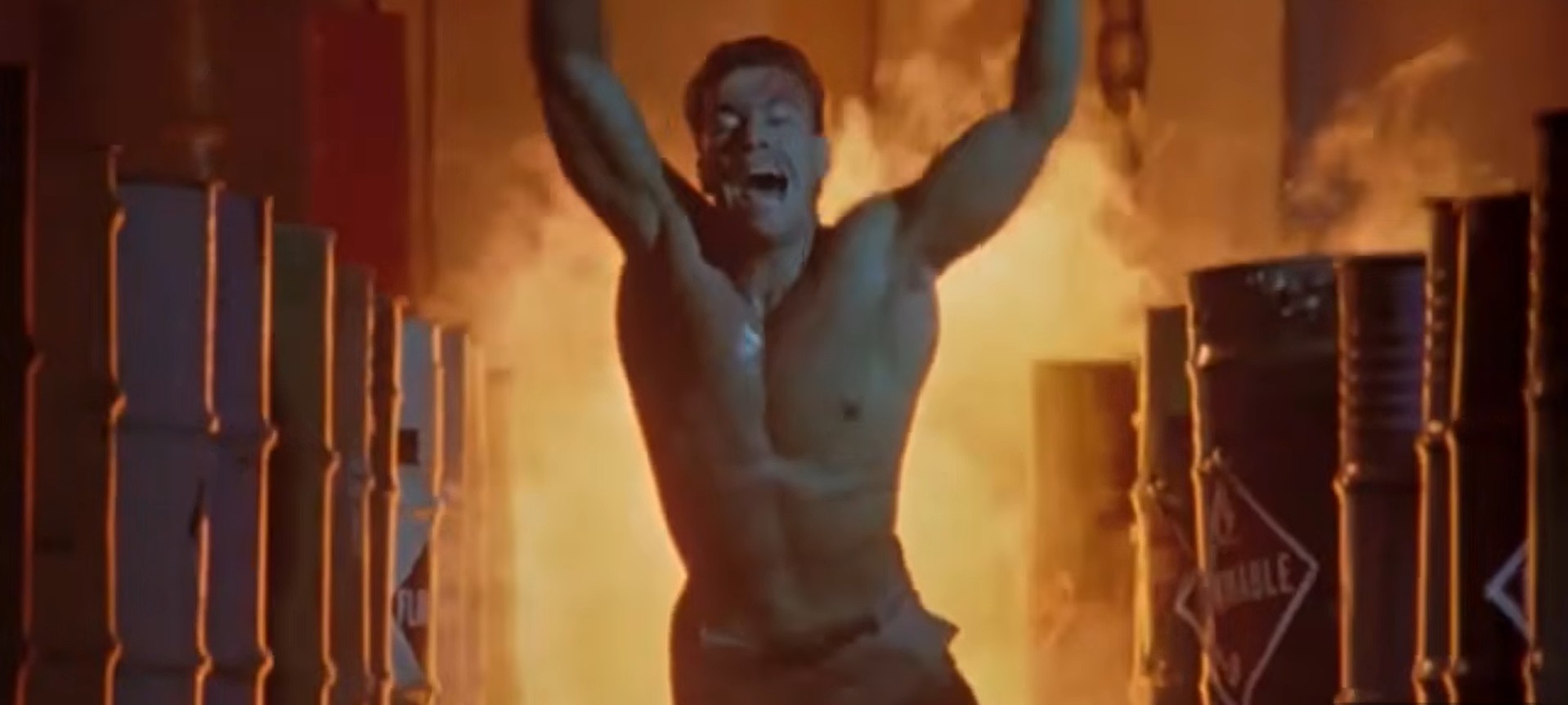
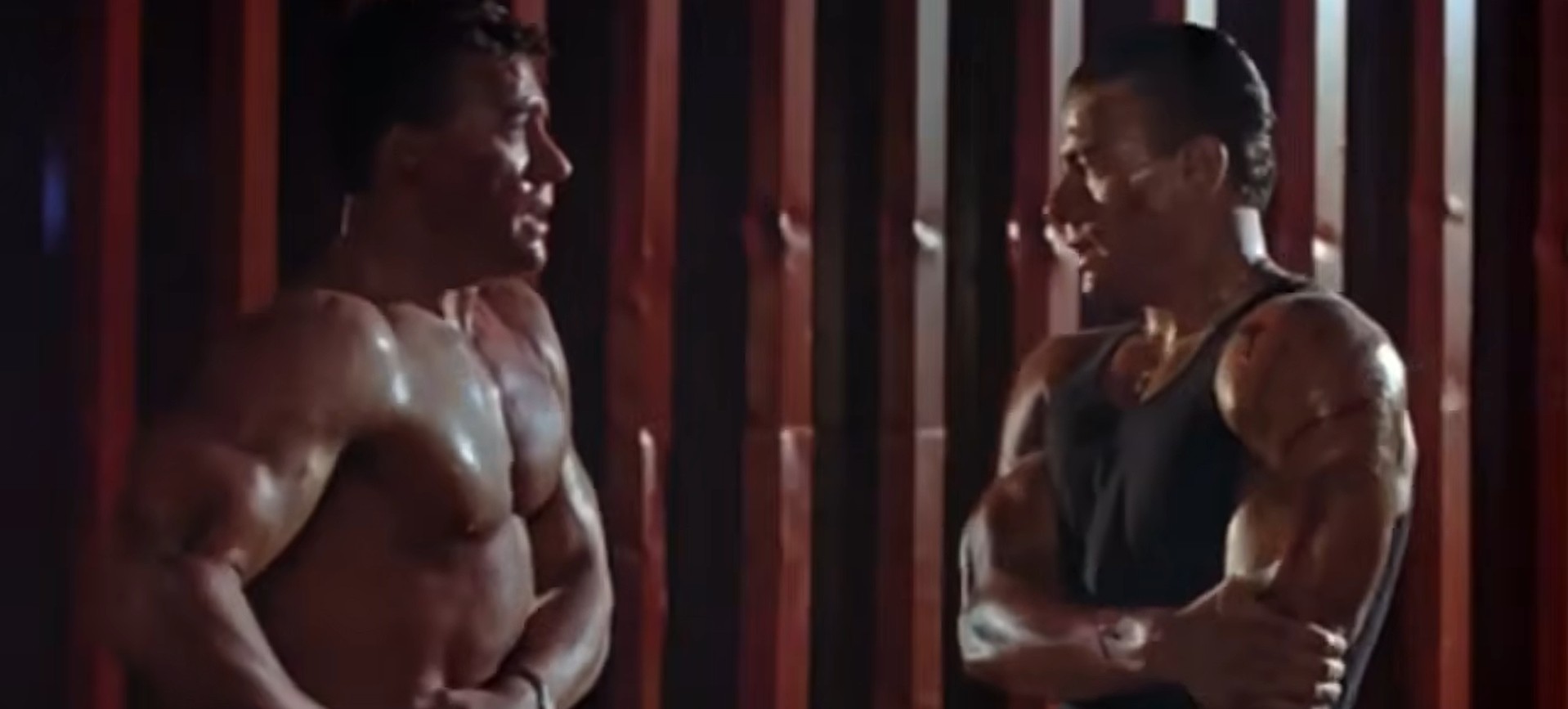
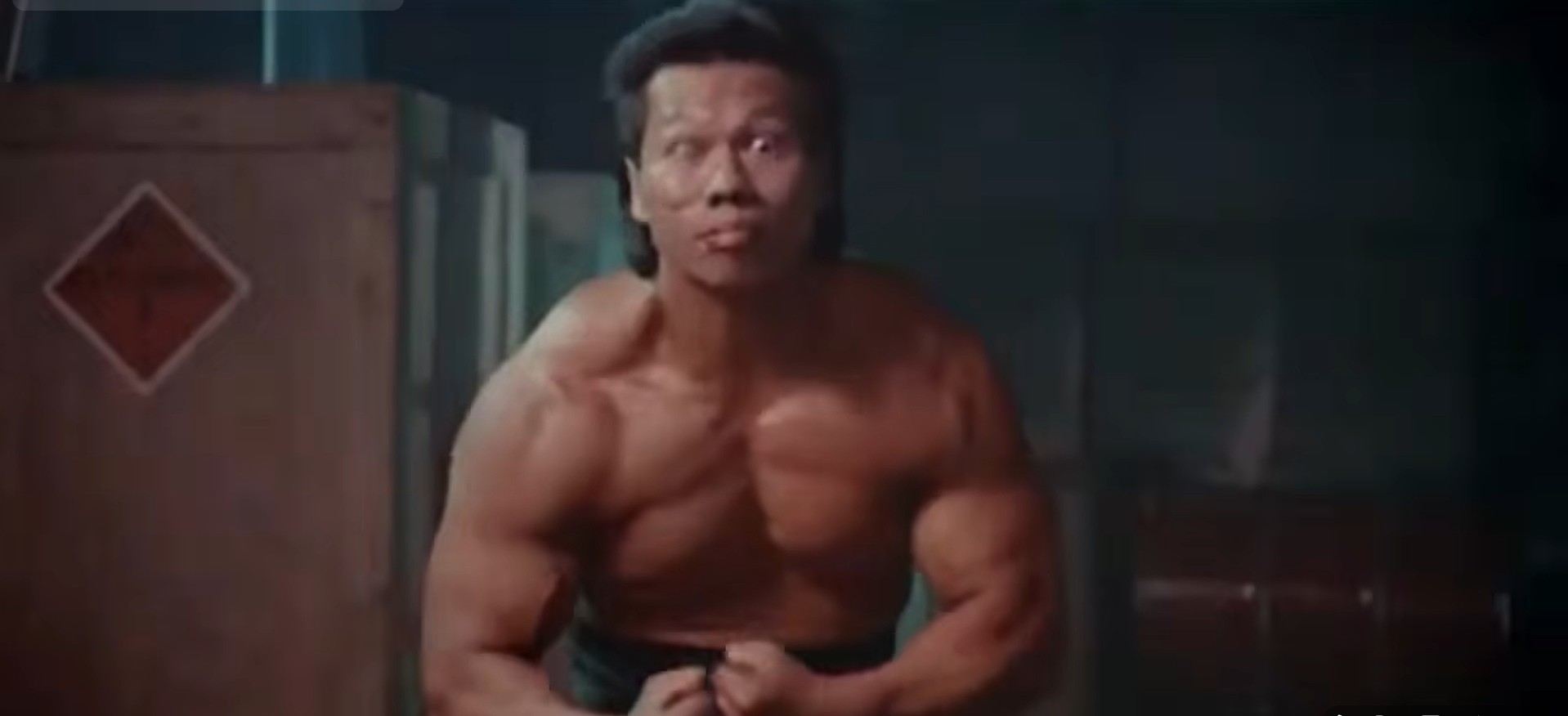
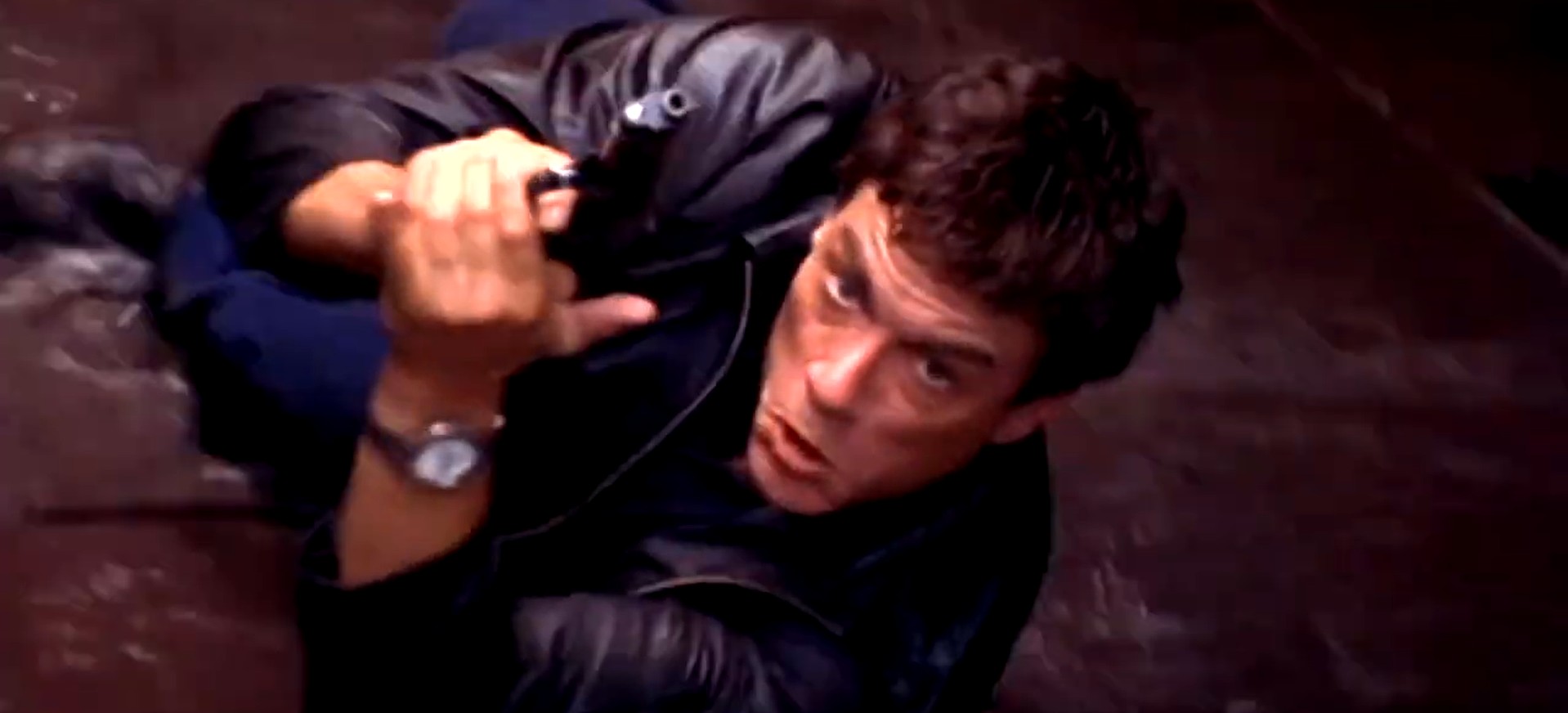
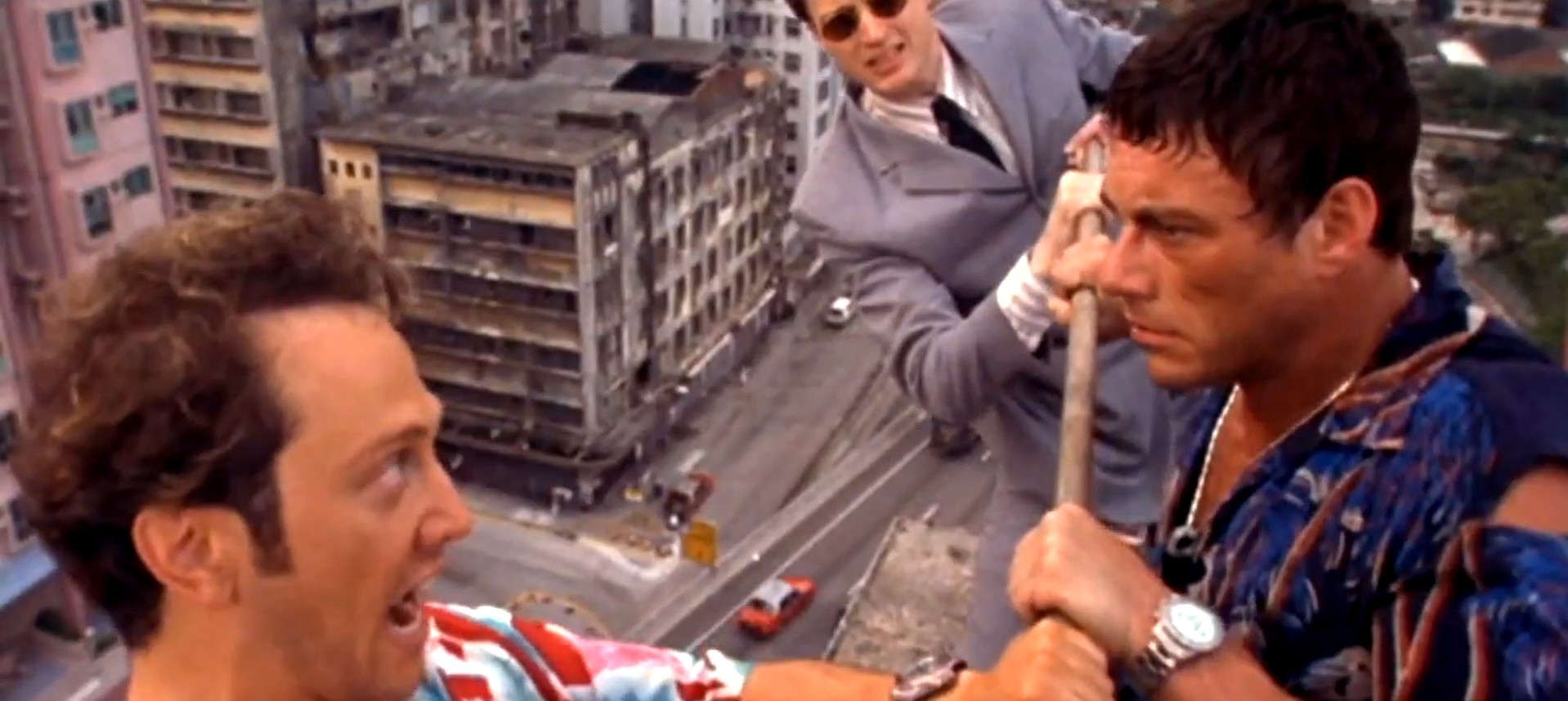
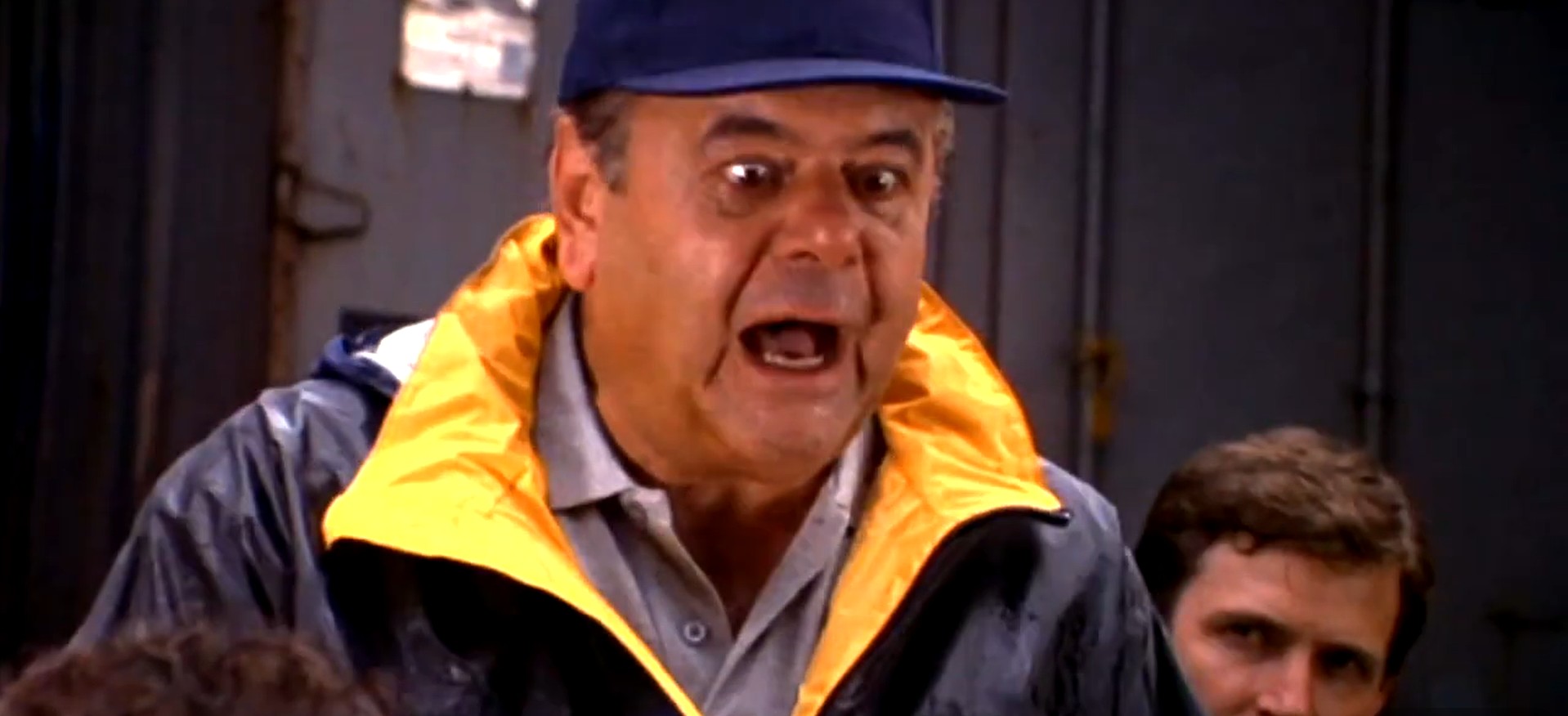
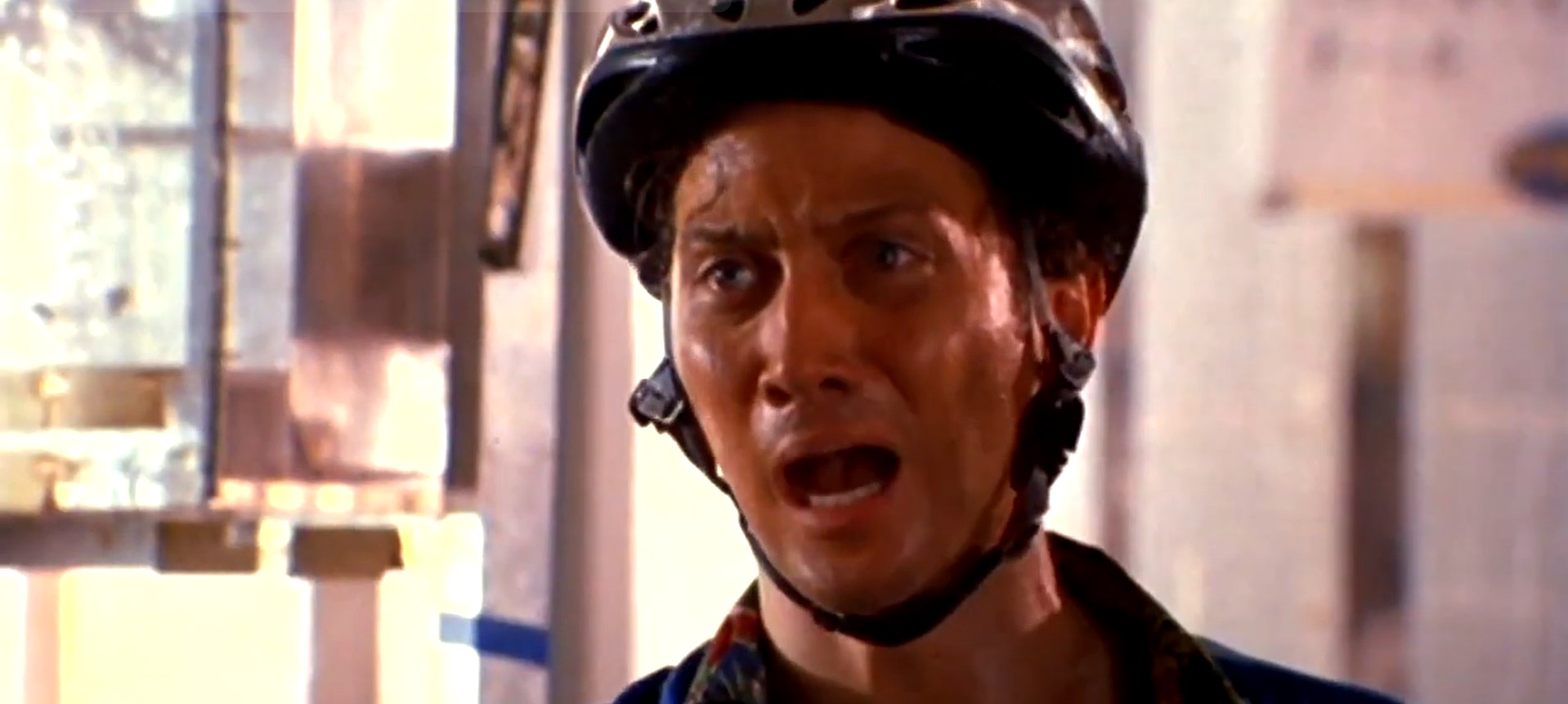
At the tail end height of his career, the Muscles from Brussels, Jean-Claude Van Damme (“Bloodsport,” “Universal Soldier”), finds himself in a self-deprecating lead role that’s campy toward showcasing his own physique but in a slapstick way.  His character Ray is a likeable, affable, cool type with a tragic past, only touched upon ever so briefly and delicately in conversation, who has resorted to selling counterfeit items to make a living.  Yet, Ray’s trying to pull himself into a straightened arrow by jumping at the opportunity to partner with Tommy (Rob Schneider, “Deuce Bigalow:  Male Jiggalo”) for legit business.  Van Damme and Schneider become a buddy action duo with Van Damme knocking around bad guys with jump kicks and parkour while Schneider provides the comic relief with very few, and pale in comparison, combative fighting moments in what is also the same kind of role from Sylvester Stallone’s “Judge Dredd.”  To Van Damme’s credit, the usually unintentionally funny action star arises some comedic chops in a devil-may-care persona that eventually hammers down to a determined save lives ambition, but not before Van Damme egregiously has to thematically remove his shirt for nearly every action scene or strip down to his boxer-briefs so all can good a good view of his athletic, muscular physique.  The whole course is an objectifying tragicomic, especially when he starts to rip through Tommy’s Hawaiian shirts simply by turning his body or being whipped in the rear by Tommy during a rickshaw race with Schneider commenting about his big, beautiful ass.  Yes, men do get objectified as well.  Van Damme and Schneider are eventually joined early on by Lela Rochon (“The Meteor Man”) as a V-Six Jeans Representative from North America with a covert agenda and the iconic Paul Sorvino (“Dick Tracey”) as a CIA operations supervisor taking on counterfeiting, both Rochon and Sorvino subdue their performances initially for twisted knots in the storylines later on that makes his evolving ensemble that much more entertaining.  Moses Chan, Wyman Wong, and Glen Chin, Carmen Lee costar.

“Knock Off” isn’t your typical Jean-Claude Van Damme beat’em up action-thriller though it follows the same principles as one.  Hark Tsui puts forth a kinetic ball of continuous energy, ever evolving and dynamic to keep scenes from getting stale.  From the opening illegal rickshaw race through the streets of Hong Kong city to the massive Budha temple explosion to the cargo ship container toppling scenes, there’s plenty to behold in Tsui stunt and special effects juggernaut.  A less serious Van Damme with Rob Schneider joined at the hip is the peculiar buddy action-comedy we never knew we wanted, brush stroked with late 1990’s superimposed fireballs and the legendary pushed to the limit Hong Kong stunt effects that look quite expensive and detailed beyond belief.  Some of Van Damme’s swift movements are aided by a stunt wire that’s briefly visible in hi-def and a few of Tsui’s stylistic edits, ones that zoom in, try to seamless transition, and give an interior view of a sniper’s scope or a barrel of a gun is heavy handed in it’s editing.  While Tsui gets his filmic credit as the one-and-only director, it’s stunt supervisor Sammo Kam-Bo Hung (“Ip Man”) who should receive recognition for helming the camera for the stunt scenes.  You can see the different styles being pushed together between Tsui’s unconventional down shot angles and Hung’s more straightforward impact in an action shot, creating an eclectic design that adds to the intrigue, especially in Tsui’s downtime moments of conversation that’s not only witty and fast but at an off centered framing that’s more vertically skewed while keeping the concentration on the actors in a wider anamorphic lens in an environment that seemingly wraps around them. 

They say imitation is a form of flattery but this legit MVD Rewind Collection release of “Knock Off” fawns clear adulation with a 2-Disc, 4K UHD and Standard Blu-ray release.  Coming in as the 6th title on the company’s 4K LaserVision Collection, cojoined with the Rewind Collection label, the HEVC encoded, BD66 4K UHD, presented in 2160p in a widescreen 2.35:1 aspect ratio, is noted having a hi-def restoration with a 16-bit scan of the original camera negative that provides more a dynamic color range and saturated depth.  There’s definitely an improvement and a difference in contrast to the standard Blu-ray with a vivid offering of a multihued Hong Kong cityscape from the HDR10 that’s not offered in 8-bit or even 10-bit color depth.  Interiors are subjected concreated warehouses of the colorless and dark variety but no banding to note and no block distortions.  Textures are surprising not there at the level we’d expect but likely due to Tsui’s heavy use of superimposition effects with green fireballs and other types of overlayed explosions, and the action scenes often retract a good amount of detail too.  The 1080p Blu-ray is an AVC encoded BD50 with the same aspect ratio as the 4K.  It too offers a solid presentation but not to the extent of the 4K and still suffers from the same wishy-washy texturing, but the overall presentation is solid and worth the value.  The English language tracks available on both formats are a DTS-HD 5.1 Surround Sound Mix and an uncompressed LPCM 2.0 Stereo.  For any action film with lots of range, depth, and conversation, you certainly want to go with the surround sound option that harnesses every direction and that’s the clear choice with “Knock Off” as it opens the lines of directional communication with the back and side channels, leaving all the dialogue and heavy LFE lifting with explosions primary in the front and clear immersive resonation.  Dialogue has no issues with the original audio track albeit being ADR but used with the original cast’s voices.  English subtitles are available for selection.  The 4K special features include only an archival commentary from action film experts Mike Leeder and Arne Venema.  The Blu-ray contains te same in tandem audio commentary plus a new interview with producer Moshe Diamant, an archived interview with screenwriter Steve E. de Souza, the original making-of featurette, and the original theatrical trailer.  MVD’s Rewind and LaserVision Collection set comes with a thin, cardboard O-ring slipcover that has faux crinkled front image, the original cover art of the highly original Van Damme with a gun (my hint at sarcasm) like a laserdisc paper sleeve would have.  Inside is the black Amaray with the same primary image for the sleeve art sans crinkling but if you reverse the sleep, you’ll see the classic Rewind Classic design with the same Van Damme image.  The Amaray has snaplocks on each side of the case on the inside – 4K UHD on the right and Standard Blu-ray on the left – with an insert containing a mini-folded poster of the LaserVision Collection artwork.  “Knock Off” is rated R, has a runtime of 94 minutes, and is A region locked.

Last Rites: “Knock Off” is no cheap…knockoff. The Hong Kong production is action-packed, outrageous, and campy fun with Van Damme in taking a step back from being the stoic hero and charismatic hero to be the anti-hero caught in the middle who just knows how to roundhouse his way out of an nefarious Russian plot involving nano-explosives.

You Better Damme Believe It! “Knock Off” on 4K UHD and Blu-ray from MVD Rewind Collection!

Joe Lewis Takes on the EVILs of the World Church! “Force: Five” reviewed! (MVD Rewind Collection / Blu-ray)

“Force: Five” On a New Blu-ray Collector’s Set!

U.S. Government contractor Jim Martin is an expert martial artist, hired as a contracting agent in the field to handle special missions against country threats when they arise.  When Martin is subcontracted by a wealthy man who has ties to U.S. politicians, he’s assigned to rescue the plutocrat’s daughter from the clutches of the World Church, a fronted religious cult promising to its followers a palace of celestial tranquility from an oppressive world but their intentions are to trick the trust funded young adults into signing over their inheritance to support smuggling drugs and guns.  Martin builds a team of hand-to-hand fighting specialist to take down the World Church’s martial arts master Revered Rhee and his large right-hand man, Carl.  Infiltrating with a visiting U.S. Senator, masquerading as his aids, the team also tries to convince the U.S. Senator of the organization’s corruption while searching for their assigned rescue target. 

Joe Lewis, known as the Father of Modern Kickboxing and perhaps one of the leading martial artists out of the U.S. of his time, had his time on the action-packed silverscreen like most popular fighters of his ilk, such as Chuck Norris and Bruce Lee but certainly not as profound in appearance credits.  One of his first films is a martial arts and rescue actioner titled “Force:  Five” that was released just off the heels of the swanky 1970’s where the disco and soul-infused soundtrack and the chopsocky Kung-fu films reigned as one of the supreme sounds and subgenres on the globe’s East and West terrains.  Serial martial arts film director Robert Clouse, famously known for his co-direction on Bruce Lee’s “Game of Death” and notoriously known for his it’s so bad, it’s good “Gymkata,” writes-and-directs the film based on an alternate screenplay from debuting writers Emil Farkas (“Vendetta”) and George Goldsmith (“Children of the Corn”).   “Enter the Dragon” and “Black Belt Jones” producer Fred Weintraub hoped to capitalize on the melding of the aging martial arts and with the rising rescue/POW films that were on the rise and base the idea off of real events, such as People’s Temple and their cult leader Jim Jones that spanned two decades prior to the film’s written foundation and subsequent finished release.  The Italian language disc is pressed with the same sleeve art with the second disc pressed with alternate, dark-toned artwork, also original to the initial film release. 

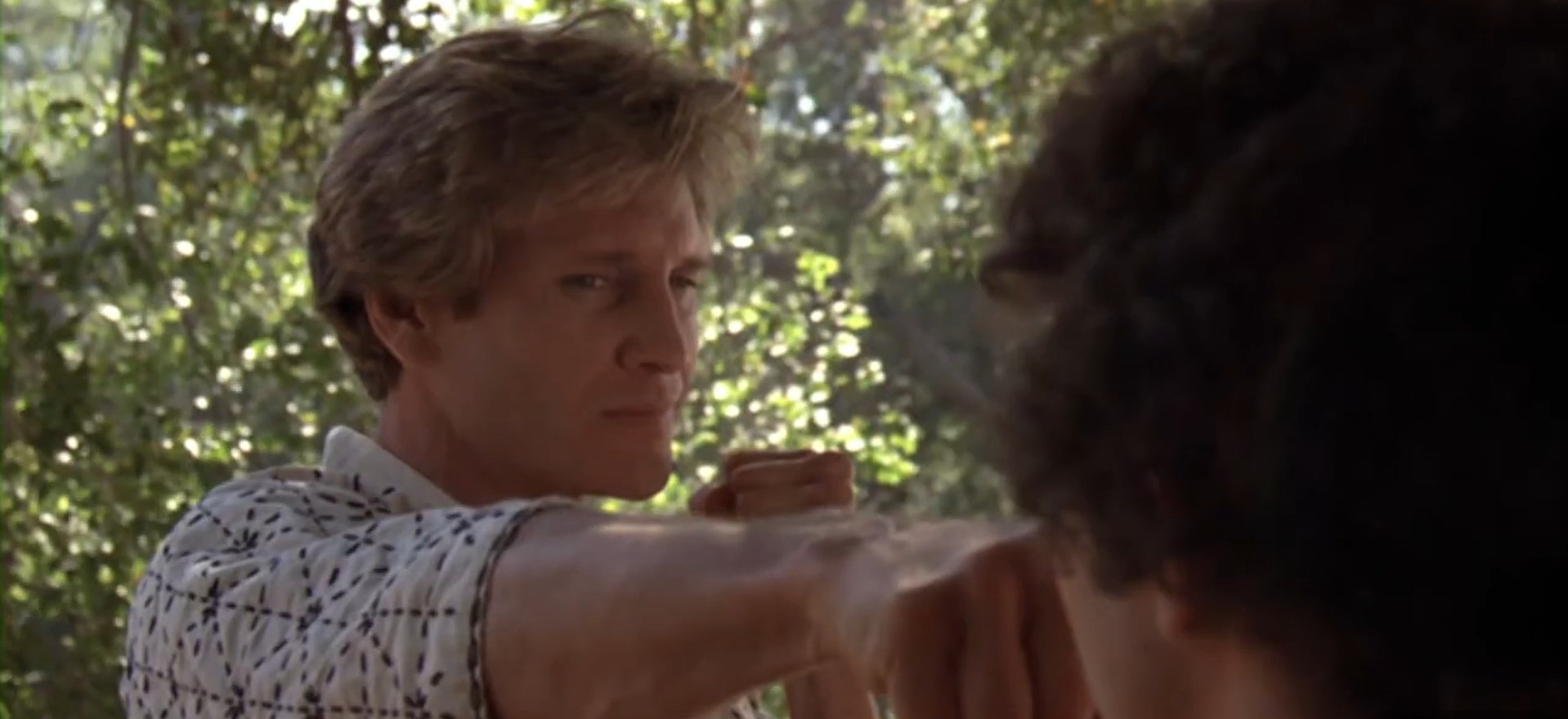
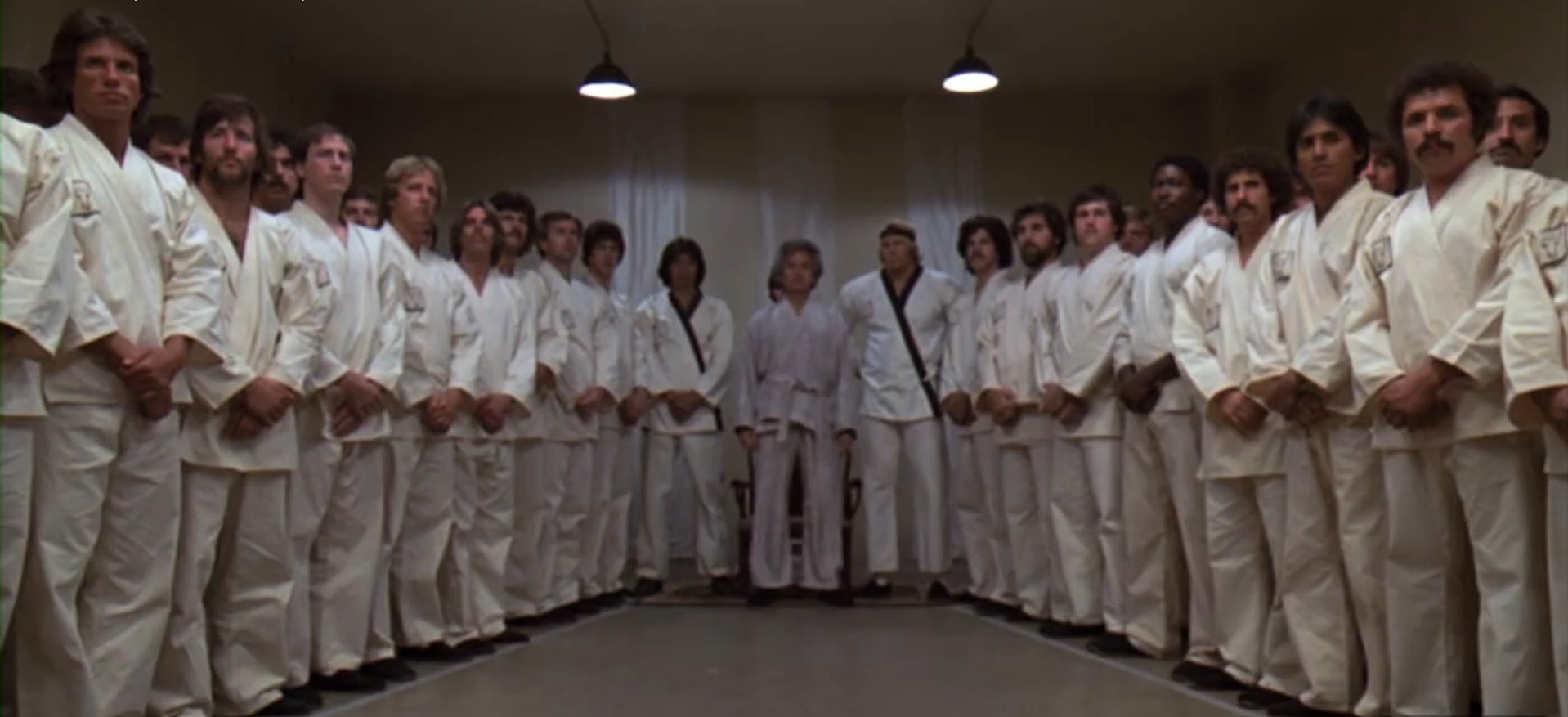
Having already touched upon the star of the film, one of the best martial arts competitors in the world, having once beat Chuck Norris in an official event, Joe Lewis is surrounded by an entourage of real fighters who dabbled in acting.  Sonny Barnes plays the large muscle Lockjaw, the only black character in the story, and Barnes is trained and became a Sensei in Kenpo Karate, and he wasn’t the only minority listed in the eclectic group with Latino and Native American representation in Spanish-American Benny “The Jet” Urquidez, a skilled black belt Kickboxer with proficiency in a variety of fighting styles.  Lastly, Richard Norton, another major name in martial art features, hails from Australia and implanted his styles of Karate, Brazilian Jiu-Jitsu, and Kickboxing in his work on both sides of the moral fiber with his characters, having played good and bad guys in “The Octagon” opposite Chuck Norris and in “China O’Brien” with Hong Kong superstar Cynthia Rothrock.  Rounding out the “Force:  Five” team is the only female member in Pam Huntington (“They Call Me Bruce”) with no fighting background and another nonfighter in Ron Hayden as the unhinged chopper pilot.  Though Huntington and Hayden’s fight scenes are limited to just a few in contrast to the trained martial artists, even the nontrained eye can tell the actors haven’t spent years learning the craft.  Now, what really nags at the pedantic in those in the audience is the film is titled “Force: Five” but the team listed above consists of six members so there’s ambiguity in if that was an elementary math error on the story’s part or the “Force:  Five” is just the team minus Joe Lewis, that’s not entirely clear, but what is clear is the antagonists with Korean grand master Bong Soo Han (“Kill the Golden Goose”), master of Hapkido, as the duplicitous Reverend Rhee and the very large and blank faced Bob Schott (“Gymkata,” Russ Meyer’s “Up”) taking trust babies fortune to back their drug and gun smuggling operation through an alternative church façade and scheme.  Reverend Rhee is a character that embodies the very essence of a stereotypical chop-socky or evil organization boss with bad lip sync and a flair for the ostentatious death, “Force:  Five’s” being a killer bull goring those in its labyrinth path, a deadly trap that’s a man-eating shark tank-type, James Bond-like thing to have in his possession. 

By today’s standard, “Force:  Five” is extremely formulaic but for 1981 and with the rise of the action rescuer, mostly inspired by the rescuing of POWs in either during or post-Vietnam War, the film’s a treasure trove of classic conventions of the subgenre that’s inundated with different kick and punch techniques and styles that strayed away from the Bruce Lee or Jackie Chan type of kung-fu that’s more an ostentatious showcase of ability rather than practicing in the practical realm but still pays homage to the craft masters.  Yet, these films resembled an espionage structure with an incognito infiltration, extraction, and scheming villainy pool rounded out exactly how we think movies play out in our head, with a swanky soundtrack that integrated the heart of Carl Douglas’s everybody was Kung-Fu Fighting into a clandestine operation conducted by U.S. operation contract agreement with confident, slightly cocky, Jim Martin.  However, “Force:  Five,” unlike other ensemble entrenched soldiers on a mission, came out too clean for comfort with an unscathed extraction and not one team member lost.  There isn’t even any nearly escape death by the edge of a fingernail.  Joe Lewis takes a couple of kicks to the face by Reverend Rhee and a handful of peripheral characters on the side good did take mortal damage at the hands of the bull and the wishbone split of one main contractor at the hands of Carl’s impatience, but none of the actual operators took one for the team and that usually puts a sour taste in the mouth by begging the question, was the mission really that impossible?  It appeared all too easy from the comforts of the couch to see an unarmed team of martial artists stroll into heavily armed compound (recall – they’re selling drugs and guns) and make it out alive without as much of a minuscule ballistic scratch. 

Coming in at number 70 on the catalogue of the Rewind Collections, MVD’s throwback sublabel, “Force:  Five” kicks itself back onto Blu-ray having been out of a print for nearly a decade on Hi-Def.  A slight better presentation with it’s return to the original widescreen aspect ratio of 1.851, the 2K scan evolves the detail levels to an only slightly higher degree when enlarging the pixels without sacrificing quality, producing a cleaner image perhaps from an advanced scanner.  There’s a balanced color diffusion with warmer palette that focuses mostly on greens and browns and there’s no sacrifice of grain but there’s still some dust/dirt speckling and the occasional vertical scratch but nothing too egregious to note viewing disruption.  The original 35mm print has been nicely preserved and now stored on an AVC encoded BD25.  The audio is generally the same as the previous Blu-ray release with an uncompressed English LPCM 2.0 mono that brings the double impact of all audio layers through the dual channel network, relishing in its small triumphs with small, enclosed explosions.  Dialogue has adequate carry over but there are hissing discharge and underlining crackle, but the overall general discourse is coherent in its post-production recording that leaves Master Bong Soo Han unfortunately reminding us of the higher pitched villainous voice of Betty from “Kung Pow:  Enter the Fist.”  Soundtrack doesn’t instill motivation or embark on danger with its standard stock coursing.  Foley hits and kicks are where “Force:  Five” makes its bread and butter with plenty of vehemently overlaid whomps and whacks.  Special features include a number of archival interviews, or more so toward fighting instructions, from a pair of actors, beginning with Joe Lewis in a sit down that really feels tense when he discusses his martial arts training and contests that lead into the movies and ending with Benny “The Jet” Urquidez offering fighting lesson tidbits in a pair of archived video instructions, such as wrapping your knuckles properly to avoid injury.  The original theatrical trailer rounds out the encoded extras.  The Rewind Collection’s physical treatment is unrivaled with a retro O-ring slipcover that doubles as a faux top secret objective folder on the backside and a VHS rental semblance on the front with previously viewed for sale stickers and mock wear of sun bleach and box creases.  The clear Amaray case inside houses a reversible slipcover with a cleaner, saturated image of the slipcover that has the same layout design on the reverse but with a variant character composition design encircled by a black border.  Inserted inside a mini-folded poster of the primary Blu-ray art.  The disc is also pressed with VHS nodule imagery that further it’s retro appeal into videotape.  The region A release has a runtime of 95 minutes and is rated R. 

Last Rites: “Force: Five” is about as skilled as any Chuck Norris or Jean Claude Van Damme film, and just as hokey as well, with an ensemble of experts of the kick and punch craft that go into a cocky show of bulldozing armed and dangerous smugglers with nothing more than their feet, fists, and wits.

“Force: Five” On a New Blu-ray Collector’s Set!

Etiquette over EVIL Shot in Super 8! “Kung Fu Rascals” reviewed! (Visual Vengeance / Blu-ray)

Kung Fu Rascals Kicking Butt on Blu-ray!

Chen Chow Mein expertly steals an ancient tablet from the evil overlord Bamboo Man from Ka Pow whose plan is to seek complete and total dominion with the tablet stone.  Chen regroups with this acolyte pupils, Reepo and Lao Ze, to visit an old wise man for translation of the tablet’s mysteries and follow it’s mapped out quest that’ll lead them to glory over the land’s malevolent beings, but the Bamboo Man from Ka Pow will not let their journey be so easy by dispatching head minion Raspmutant the Mad Monk to hire the corrupt Sherriff of Ching Wa County and his two apprentices, Dar Ling and Ba Foon, as well as summoning the monolithic Neo Titan to stop them at all costs.  Always training their Kung-Fu etiquette, the trio embark on a journey through a land filled with evil ninja henchmen and must fight together to finish the journey.

Sculptor and creature effects guru Seve Wang might be best known for his work on some of the genre’s most memorable and favorite characters, such as designing the final extraterrestrial jungle hunter of John McTiernan’s “Predator,” created the Mohawk Spider Gremlin in Joe Dante’s “Gremlins 2:  The New Batch,” and sculpted the failed Ripley clones in “Alien Resurrection” amongst other notable cult and blockbuster films.  What you might not know is that Steve Wang had also directed, incorporating too his special effects and sculpting talents behind the camera in a debut feature, a homage to the Kung-Fu and Kaiju genres, titled “Kung Fun Rascals.”  Wang also cowrote the 1992 film with another special effects artist and actor Johnnie S. Espiritu (aka Johnnie Saiko) of “Hell Comes to Frogtown” and “Aliens vs. Predator:  Requiem.”  Wang self-produced the film after a series of short films to gain financial backing for a feature-length production.

On any self-produced, independent film, the cast usually wears multiple hats.  “Kung Fu Rascals” was no different as writer-director-producer-caterer-sculptor-and etc., Steve Wang also starred as Chen Chow Mien, an expert Kung-Fu fighter who steals a pivotal stone tablet from the Bamboo Man of Ka Pow, one of the many roles played by Ted Smith.  Wang and Smith are friends, and that age-old motif of a friend casted film holds very true for “Kung Fu Rascals,” comprised of mostly the director’s friends, who are also special effects and makeup artists, to accomplish his dream of branching out into a different field in filmmaking.  Johnnie Saiko is also one of those friends and is one of the two actors in this Kung-Fu romp playing Reepo, the trio’s good-natured goofball stylized like a character out of a “Mad Max” movie garbed in black and with a standing mohawk.  The third that rounds out the team is Lao Ze from one of the few actors initially not a part of Wang’s friend pool in Troy Fromin (“Shrunken Heads”).  Quaintly and quietly inspired by the antics and approaches of “The Three Stooges,” the “Kung Fu Rascals” march to a different dynamic drum as quasi-foolish, good-hearted good guys acted with slapstick, sure-fisted parody against a hapless army of animal-flavored mutants and their master with a flair for villainy.  Along with that master villain role, Smith continues his trend of being the guy in the suit throughout the film by being a giant Kaiju Meta Spartan and hilariously plays out of the suit with Dar Ling, a queer flamboyant henchman alongside fellow henchmen and Chicken-style Kung-Fu fighter Ba Foon (Aaron Simms) as they add a sense of diversity and daffy under the leadership Les Claypool’s Sherriff of Ching Wa County.  Yes, the same Les Claypool from the band Primus.  The cast rounds out with Cleve Hall (“The Halfway House”) as an old wise, creepy, and slightly uncouth clairvoyant, Matt Rose as the wild-eyed torturer, Michelle McCrary as The Spider Witch, Ed Yang as the other Kaiju Neo Titan, Tom Martinek as the hoppy Frog guard, and Wyatt Weed (“Predator 2”) doing the devil in the details with every step as the fully anthropomorphic Pig fitted Raspmutant the Mad Monk.

“Kung Fu Rascals” is the tastier, punchier, made with more heart version of “Kung Pow,” and I don’t mean the Chinese spicy stir-fry chicken dish with hints of peanut and accompanied with vegetables and peppers.  For an independent, first-time feature on a budget, Steve Wang and friends sculps and fashions meticulous creatures from head-to-toe.  Not one latex ear, not one molded snout, and not one full-body outfit appears shoddy or cheap overtop encased actors who know what to do underneath all that masking makeup and rubber.  On top of that, the fight choreography, editing, and dimensional effects are high level pointing in all the right directions with interesting camera visuals and angles to turn a little production like “Kung Fu Rascals” into a fully-fledged feature that audiences of 1992 weren’t ready yet until Power Rangers explosively came onto the scene a year later.  Of course, there was “The Guyver” a year earlier, also from Steve Wang, but “The Guyver” was geared for a limited audience that blended science-fiction with gory elements.  “Kung Fu Rascals” settles at the other end of the spectrum with a more family-friendly façade with an homage to Asian cinema and medieval monsters.  “Kung Fu Rascals” might not have been made today being quite politically incorrect with its play-on-names, stereotypes, and white-washing Asians but in the end, it’s Kung-Fu etiquette is entertaining chop-socky. 

Visual Vengeance once again delivers.  A high-end presentation and package of Steve Wang’s “Kung Fu Rascals” finds Blu-ray gold with a high-definition release despite the film being shot in Super 8 film.  The AVC encoded, 1080p resolution, BD50 is presented in a 1:33:1 aspect ratio.  Super 8 is not peak definition or color saturation as the image is captured straight onto the celluloid, color and contrast in all, in a direct positive process that left hardly any room for cleaner reprocessing.  Scenes often look darker at a higher contrast on a lower, blockier resolution, decoding at a broad range of 8 to 25Mbps, and the editing, though keeping continuous fighting scenes seamless, fluctuates with surface finish inconsistency in shots that make some scenes appear dark in the daylight; this could also be result in the filming time-of-day.  Yet, the cinematography is excellent in capturing interesting visual angles and the lighting setup is stunning despite the unpolished Super 8.  Visual Vengeance continues to supply the technical disclaimer with the caveat of using the best possible source materials for their releases, including this director-supervised version of the standard definition master tape and original film elements, which had a few, very minor, linear scratches and dust/dirt speckles.  The English language Dolby Digital Stereo mix is quite sharp and clean that emulates the boxiness of Asian dubbing/ADR.  Thrown punches and kicks hit their audio marks with timed whack and thud Foley and the dialogue, through the cheesy and cheeky antics, suffers from no fidelity loss or reel damage.  I’m surprised how clean the track is with little-to-no static, crackling, or hissing. English subtitles are available though no listed on the back.  If looking for special features, Visual Vengeance has the definitive special features for the Steve Wang’s obscurity with a brand new feature length documentary The Making of Kung Fu Rascals containing interviews with cast and crew, two new feature-parallel commentary tracks with the first being the “Kung Fu Rascals” themselves, Steve Wang, Troy Fromin, and Johnnie Saiko, as well with composter-actor Les Claypool and actor Ted Smith and the second with film superfans Justin Decloux and Dylan Cheung, an exclusive reunion of the Rascals with a sit down conversation between Wang, Fromin, and Saiko, a Steve Wang and Les Claypool reunion, Film Threat editor Chris Gore interview on distributing the VHS, a behind-the-scenes video diary, the 30-minute “Kung Fun Rascals” Super 8 short film, the 9-minute “Code 9” Steve Wang short film, Film Threat video #6 behind-the-scenes article, film and behind-the-scene stills, and Visual Vengeance cut version of the “Kung Fu Rascals” trailer.  Visual Vengeance also has your physical needs covered, and no I don’t mean sexually, with a cardboard O-Slipcover illustrated with a new art design by Thomas “The Dude Designs” Hodge overtop the clear Blu-ray Amaray case.  The reversible sleeve contains two compositional, Asian cinema-homage illustrations that an eye-appealing.  Inside contains a 13-page, Marc Gras illustrated, official comic book adaptation, a 2-sided single sheet insert with a fourth artwork design and Blu-ray acknowledgements, a folded mini-poster of the primary Blu-ray art, and a Visual Vengeance rental stick sheet containing 12-rental theme descriptor stickers.  The unrated release comes region free and has a runtime of 102 minutes.

Last Rites: Phenomenal creature suits and makeup, a lost sense of irreverent, spot-on comedy, and butt-kicking Kung Fu, Steve Wang’s little-known picture is the poster child for satirical, independent comedy-action and a good time overall.

Kung Fu Rascals Kicking Butt on Blu-ray!

No Train Coach is Safe from a Family of EVIL Bandits. “Kill” reviewed! (Lionsgate / 4K UHD and Standard Blu-ray)

Get Your “Kill” on! 4K UHD and Standard Blu-ray Available at Amazon!

Captain Amrit of India’s National Security Guard boards a commuter train to stop the arranged marriage of his true love, Tulika.  As the two lovers reunite and promise each other to one another, a large family of thieves hijack the coach cars to loot the passengers.  Amrit and fellow captain and friend Verish fight to protect Tulika, her family, and the innocent passengers for the sake of their very lives.  When Tulika is taken by the hands of Fani, the ruthless thug son of the thieves’ leader, Amrit’s kill switch engages an unstoppable force of ferocity to get his blood-soaked hands around Fani’s neck.  He’ll first have to brutally bulldoze his way through 40 melee-weapon armed looters, all related to Fani, to get to his target while, at the same time, protect more innocent passengers from the hands of killer, uncompressing thieves and it’s a long train ride to destination New Delhi.

An India film that doesn’t have the typical unrealistic Bollywood action and violence and is labeled India’s most violent and gory film ever, “Kill” comes from writer-director Nikhil Nagesh Bhat (“Long Live Brij Mohan”).  Every ounce of close-quartered, free-for-all action is set entirely inside carefully detailed and constructed railcars that replicate almost down to the paint the very commuter diesel trains coursing the India rail lines. “Kill” accurately describes what Bhat accomplishes with a nonstop drive to protect the ones you love at no matter the cost and when moral planks are broken right underneath your feet.  The Lionsgate and Roadside Attractions presentation is a production of Sikhya Entertainment and Dharma Productions and is produced by Guneet Monga Kapoor (“Darkness Visible”), Apoorva Mehta (“Bhoot:  Part One – The Haunted Ship”), Achin Jain, Hiroo Johar (“Bhoot:  Part One – The Haunted Ship”), and Karan Johar (“Bhoot:  Part One – The Haunted Ship”).

“Kill” introduces actor Lakshya as the one-man army and killing machine Amrit, driven by love’s unflinching rage that’s about as unstoppable as the freight train he’s on.  The train has become a bout ring of carnage when a literal 40-person family of thieves, or dacoits, suddenly disperses to take control of multiple train cars, killing some passengers in the process.  At the head of the snake is a battle in itself between father Beni Bhushan (Ashish Vidyarthi, “AK 47”)) and son Fani (Raghav Juyal) but though they don’t see eye-to-eye on handle a sudden downturn with Amrit being a wrench in their looting scheme, there’s a glue that keeps them aligned.  Much of the loyalty is present throughout without ever a sense of treachery on either side but Vidyarthi and Juyal delineate juxtaposition well, especially with Fani’s loose cannon antics that make him formidable even if he’s not fully in charge. Lakshya and the rest of the cast move with intent when considering their action choreography but Lakshya offers one step further being a romantic and a tragic hero when it comes to his darling Tulika (Tanya Maniktala, “Tooth Pari:  When Love Bites”) as she’s used a pawn when the bandits discover her wealthy and powerful father on the train, Baldeo Singh Thakur (“Harsh Chhaya), to exploit him for more ransom riches.  There are also great dynamic interactions with standout sublevel principals in Amrit’s brother in arms and best friend, Viresh (Abhishek Chauhan) and Fani’s towering large and strong cousin Siddhi (Parth Tiwari) that support the main adversarial opposites.  The Bollywood actors in “Kill” round out with Pratap Verma, Devang Bagga, Adrija Sinha, Meenal Kapoor, and a train load supporting cast to play bandits and passengers.

Bollywood films are known for their grandiose appeal with beautifully crafted costumes, large scale sets, and physics defying action that’s makes the “Matrix” look like child’s play.  “Kill” hits different.  “Kill” offers some of the same characteristics of a “Bollywood” production, such as a lone-wolf hero slathered in a focused and swathed cool aura, but the film heavily contrasts with aspects that are uncommon in India’s moviemaking industry.  “Kill” is uber-violent that’s graphic, gory, and on a more realistic scale than other Bollywood action films which typically go against the laws of physics for pure ego-eccentric entertainment.  “Kill’s” heroic heart goes icy cold, reforming the moral principles of a man who out of duty and respect upheld life as precious to a man hurting with antiheroic qualities that sees every bad guy as just another disposable body in the way of his goal – revenge.  Amrit doesn’t turn into a Frank Castle killing machine until a little after 45 minutes when, at the same moment, the title drops in a surprise move of editing.  You really find yourself unaware that “Kill” did not name itself until almost halfway into the story and it becomes an indicator, a switch if you will, that Amrit, as too with the story’s tone, is different from before.  The kills pre-title and post-title change from barely a whisper with a few shrouded stabbings to a varietal, punchy onslaught of massacre proportions.

Pulling into the physical media station, carrier a story all the way from India, is “Kill” from Lionsgate.  The 2-Disc 4K UltraHD and Standard Blu-ray set comes with an HEVC encoded, 2160p resolution, BD100, per other source outlets on the UHD capacity; however, I only see two layers with code identifiers, which might suggest BD66.  Given that the UHD houses the movie plus special features, I’m inclined to agree with the BD100.  The Standard Blu-ray is AVC encoded, 1080p resolution, on a BD50.  HDR on the UHD provides a deeper saturation with easy transition between hues with the Blu-ray accomplishing much of the same with lesser color reproduction but that doesn’t stop the release from being vibrant and bold as mood density changes from a colorfully rich, jovial scheme of celebration and love to a colder tone with muted yellows, harsh grays, and milky blue as destruction and death continue down the rabbit hole.  The trains confined space doesn’t deter depth in either the parallel or perpendicular view of camera direction.  There’s also a great reproduction of textural details from clothes to skin to finer points, like hair or silks.  The Hindi Dolby Atmos 5.1 is a blaze of glory with full-bodied, immersive sound that puts you right in the middle of Coach A1 for the hand-to-hand melee with the rear and front channels while the back channels isolate the train’s depth of railway locomotion and exterior audibles created by the train’s passing, such as air ambient rearrangement when occupying the same space.  Dialogue is not compromised with a clean and forefront present track that progresses with each state of action.  The English subtitles are burned into the coding.  If native language audio tracks are not your thing, there is an English dub Dolby Digital 2.0 track available.  Spanish subtitles are optionally included on both tracks with English subtitle optionally available only on the English dub.  An approx. 46-minute making-of featurette How to Kill:  Making of a Bloody Train Ride goes into depth with set construction, interviews with cast and crew, action choreography, and the overall cinematography from the blood to standout in the picture to the natural colors of India being tweaked for the camera.  There are also individual behind-the-scenes and interviews that are basically Cliff Note versions of the arterial bonus feature with Making of the Train, Introduction Lakshya, Behind the Blood, and Behind the Action.  The theatrical trailer is also included.  The dual format release centers Amrit (Lakshya) about to take on knives, axes, and pipe-wielding attackers with the title yellow and largely in bold behind him.  The green UHD Amaray comes housed inside a rounded cardboard O-slipcover with a glossier version of the same cover art.  A disc of each format is snapped into each side interior with a blue hued 4K UHD for the hero and a red hued Standard Blu-ray for the villain.  A digital code is included in the insert of the 4K and Blu-ray release but is feature only.  Rated R for strong bloody violence throughout, grizzly images, and language, “Kill” is presented with a hard-encoded region A playback and clocks in at 105 minutes. 

Last Rites: Kill, Kill, Kill! India has stepped up the violence not yet seen in the land of Bollywood and “Kill” introduces a whole lot of new to the country’s movie industry that will revolutionize India’s filmmaking game.

Get Your “Kill” on! 4K UHD and Standard Blu-ray Available at Amazon!