

Former war veteran and hot rod enthusiast Larry and his wife, Carmel, take a weekend off from the children to vacation in Paradise, a retreat on the outskirt, rural area of Australia that includes pleasurable amenities such as fishing, swimming, and being an ideal location for a dirty weekend between two lovers, but an Earthquake triggers a major nuclear leak at Waldo, an international nuclear waste storage facility who aims to coverup to radioactive contamination. Heinrich Schmidt, an engineer who was deeply exposed to the waste flees from Waldo’s goons to reveal to anti-nuclear agencies the corporation’s dastardly concealments and warn locals of the tainted public water supply. With not much time to live and suffering from a serious head injury, Schmidt, with partial amnesia, is sheltered by an unsuspecting Larry and Carmel as they help him piece together his life while Waldo sends recovery and murderous thugs to quiet those who wish to leak information. Paradise is anything but as trouble brews between the vacationing Larry and Carmel, the witless locals, and Waldo in disclosing radioactive waste streaming through the water passage ways.

“The Chain Reaction” is the freshman film of writer-director Ian Barry released in 1980. Produced by “Mad Max’s” George Miller, “The Chain Reaction” was considered an unrelated companion piece that also starred a number of the same actors, but the action-thriller aligned more with the populistic nuclear disaster genre of the late 1970s and early 1980s. Whereas George Romero focused on accidental biological effects in his 1973 science fiction horror, “The Crazies,” Barry honed in on nuclear waste disaster and the reaction of those responsible, to what length of measures would be necessary and taken to keep exposure from happening. Caught in the middle are locals and unfortunate vacations, who actually take more a stand against tyrannical, above the law organizations. “The Chain Reaction” is packed with exciting car chases and glazed with testosterone enriched standoffs on a nuclear level.

Steve Bisley steps into the lead role of hot shot Larry Stilson working his solid strong physique with a general moral, but still bad boy composure when unravelling and thwarting the Waldo conspiracy. Bisley costars alongside the late Arna-Maria Winchester. Winchester screams screen time sauciness, but as a mother of two, Winchester’s Carmel Stilson comes off as promiscuously uncharacteristic as a mother but, to be fair, Larry doesn’t necessarily yell conventional father either. However, I’m impressed by the turncoat engineer Heinrich Schmidt played by Ross Thompson, an Australia actor who can really accent well the German language and puts into his role a languishing, broken man trying to do the right thing. Together, the Stilson’s and Heinrich are tracked down by Waldo henchman Gray, portrayed by English actor Ralph Cotterill (“Howling III”). Cotterill’s menacing, stodgy dagger eyes make him a suitable villain, but falters in the screen time department, seeing not much action as needed to take care of monumental business against possible exposure. Huge Keays-Byrne (“Mad Max: Fury Road”), Richard Moir (“The Odd Angry Shot”), Laurie Moran, Lorna Lesley (“The Survivor”), and a cameo of Mel Gibson round out of the cast.

The overall problematic crux with “The Chain Reaction” stems from that director Ian Barry is no George Miller when presenting his own version of pacing a film. The narrative is casually abrupt and edited shoddily with very rough and hard to follow sequential events that are supposed to be a fiery ball of nuclear mishandling and underhandedness fury. Though highly doubtful Umbrella Entertainment took the censorship scissors to this Ozploitation flick, there are moments of bizarre, if not expurgated, cuts that debase the illustrative graphic violence. One particular moment in the climatic third act, a shotgun was only aimed to intimidate would be attackers, but never discharged. However, a character is seemingly gunned down with a blood splattered mid-section being the only clue of his demise, but like aforementioned, the shotgun was never fired. Barry’s riveting action story plays out mostly like this, reducing the action to a meager narrative withstanding only a few good car chase sequences, some character intimacy, and laced with some shrouded mystery.

Umbrella Entertainment presents under their Ozploitation Classics’ sublabel, Ian Barry’s “The Chain Reaction” onto a full High definition, 1080, region free Blu-ray with a widescreen 1.85:1 aspect ratio. Honestly, a slightly cleaner and re-refined release was expected. Natural grain is expected, but the lossy definition and blurriness could have been tweaked for optimal results on the print. No edging enhancements nor print damage detected surrounding the fair natural coloring, skin tones, and, sometimes, vivid photography from Russell Boyd (“Picnic at Hanging Rock”), which is surprisingly rather bland overall. The DTS-HD Master Audio dual channel track is excellent with upfront and clear dialogue, ample ambient range, and a clean harrowing and resonating classic disaster scenario score composed by Andrew Thomas Wilson in his sole composure credit. Bonus features are aplenty with extended Not Quite Hollywood interviews with stars Steve Bisley and Arna-Maria Wichester, director Ian Barry, and producer Ross Matthews, a couple of featurettes entitled Thrills & Nuclear Spills and The Spark Obituary, deleted and extended scenes, an early cut with alternate title of “The Man at the Edge of the Freeway,” and media spots from theatrical release, TV, VHS trailer, and image gallery. “The Chain Reaction” is far from noxious, but the nuclear disaster piece could have been more radiant, a quality very difficult to achieve deep in the midst of so many great titles similar in the genre category; yet, the Ian Barry action thriller is an entertaining adversity excursion nonetheless.
Category Archives: sci-fi
In a Wasteland Full of Evil, There’s “Molly” review!

Molly is a loner scavenger in a post-apocalyptic badlands. She’s hunted down by a separate faction of scavengers to be a champion in their sadistic one-on-one bouts as Supplikants, ruthless and mindless killing machines produced by a synthetic drug. With food being scarce and peoples’ humanity on the edge of total extinction, Molly’s on the run on barren land until she happens upon Bailey, a young girl held up in a makeshift tent and waiting for her departed parents to return with food. When the scavengers track down Molly, Bailey becomes a bargaining chip, used as bait to lure sought after Molly to the scavenger offshore compound where the odds are in their favor, but Molly knows how to fight when she forgoes using her pulsating supernatural power. She will stop at nothing to save and protect Bailey, one of the last good and innocent humans left amongst desolation and savagery.

One part mad science, one part cyberpunk, “Molly” is all post-apocaplytic kickass from Netherlands’ director Colinda Bongers and co-directed with screenwriter Thijs Meuwese. “Molly” is this generations “Mad Max,” a vibrant gauntlet of darkness with a speck of illuminating hope, with the very first scene being a brief glimpse of the past, a fun-in-the-sun holiday at the beach, but in a split second, the cut-to abruptly cuts out the chirping of seagulls, the jovial laughter of children, and the familiar hum of all beach goers. The story literally cuts to the chase with Molly running for her very survival from three armed scavengers, setting up the story from the get go that Molly’s guard would always be tested. “Molly,” without a doubt, resembles a George Miller first film concoction of noticeable low-budget quality with high caliber, high-octane action.

Julia Batelaan tackles the namesake role. The then 20-year-old Batelaan musters up enough physicality to compete with a highly demanding character despite her slender, unlikely heroine frame. Batelaan is no Gal Gadot, but she gives the performance all she can and, then, gives some more in a role that requires a lot of gear to be worn, numerous fight sequences, extended physical scenes, and brief nudity whilst in battle. Batelaan clearly overshadows a cohort of onscreen antagonists, including even her best possible match as a rival by Annelies Appelhof who displays a different kind of tough; one that’s more henchman centric and mechanically advanced. Appelhof’s taller, broader, and equally as tender as Batelaan that dictates her character, Kimmy, the ideal barrier to best if Molly wants to succeed. Yeah, of course, there’s also a clear cut boss in actor Joose Bolt. In the role of Deacon, a maniacal scavenger leader hellbent on winning the world’s bullet currency through the mortal combat of Supplikants by proxy, Boost supplements a harlequin character to fold. “Molly” also includes Emma de Paauw, Tamara Brinkman, and Andre Dongelmans in the cast.

While Molly’s a beautifully visual film with moments to be excited about, Bongers and Meuwese’s post-apocaplytic tale has a hard time being a great film to revisit over and over again. For one, the fight choreography is a slow and robotically rehearsed and doesn’t strike as completely natural. In fairness, this flaw should be given a pass as the last shot is just over a half-hour long of an uncut take of Molly doing her best Tony Jaa impersonation with extended fight takes from room-to-room, up to the top boss level, as if you’re nostalgically playing Streets of Rage 2 (ya know?! On the Sega Genesis!). Yet, there’s still something off about “Molly” and one could say that that the focus of storyline uneasiness surrounds Molly herself: Who is Molly? Why does she have super powers? Where did she come from? Why does she really care for this child? All good questions that don’t really come to fruition in the film, but have promise to be answered by the open-to-a-sequel ending.

Artsploitation Films presents “Molly” on a high definition 1080p Blu-ray home video in a widescreen, 1.78:1 aspect ratio format. Bongers and Meuwese deliver such rich coloring while not over-saturating the 2017 film to the point of obnoxiousness; Molly herself is a hue enriched character, with all her gear, trekking through a desolate oceanside landscape that’s mainly white sand and brown foliage, especially with the marauders who also sport ragged, dark colors, and leaving such an impacting visual aesthetic to digest while concreting a heroine. The English DTS-HD 5.1 surround sound is full of range from a slew of kick-punches from the numerous fight sequences to the juicy stitching of her own profusely bleeding wound. Even though this is a Dutch film, the casts’ English is quite good and well prevalent. Bonus features include a 30-minute featurette entitled “Making of Molly,” directors’ commentary with Colinda Bongers and Thijs Meuwese, and Artsploitation Films trailers. Bordering self-explosion with a barely hinged story, “Molly” eeks out an entertaining, post-apocalyptic, retribution narrative on the opposite side of the spectrum and the palette punctuating visuals and an extremely long take finale make this film a science fiction worth scavenging for!
Evil Met With Resistance! “Occupation” review!
A small Australian town experiences a small, yet devastating portion of a world invasion by a hostile alien race during a night of carnival festivities and a rugby football game. A small group of locals band together to form a resistance against the alien occupation that seeks to turn mankind’s world into their own, using captured humans as slave labor for their own agricultural harvesters. After each liberation of prisoners, the resistance fighters train others as rebels to strike back, and strike back hard, against their oppressors while they continuously search for their missing loved ones, but for some, at the cost of their own humanity and compassion when only killing becomes the most instantaneous gratification toward taking back their home planet. A select few of rebels try to find common ground in peace with a homeless alien race that desperately seeks an inhabitable world, but red and green blood must be shed on both sides before amity ever becomes a realistic ideal between two humanoid races.
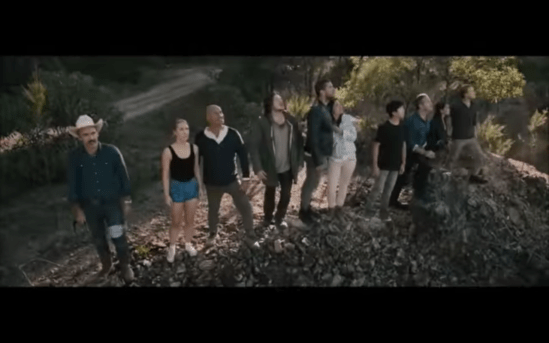
“Occupation” is the 2018 alien invasion action-thriller and the sophomore feature film from Australian director Luke Sparke. Sparke, who also wrote the script, shares additional dialogue credits with Felix Williamson of “Nekrotronic.” What could be considered as “Red Dawn” meets “Independence Day,” “Occupation” has wealthy production value breadth that kisses the line of being something constructed from the flashy and gleam-laden Michael Bay with grand scale visual effects that blend fairly seamlessly with ground level practical makeup. Explosions, weapons fire, and spray patterns of alien blood put a significant dent into the storyline that follows the nearly-a-year course of the ragtag team of human resistance fighters, firmly solidifying “Occupation’s” action status and large pocket budget on a this foreign science fiction film.

Not one actor headlines “Occupation,” but, rather, follows the subjective motives from each of the motley crew of survivors. If had to choose, the pill addicted and rugged rugby footballer Matt Simmons, played by “Beast No More’s” Dan Ewing, is shown some favoritism as he becomes the naturally unspoken for leader of the resistance team that includes his girlfriend, Amelia, played by Stephany Jacobsen. “The Devil’s Tomb” actress doesn’t quite mesh well with Ewing; her forced performance is uncomfortably ungraceful during action and melodramatic scenes of her perspectives on the alien culture and Matt’s audacious bravery. Temuera Morrison is a familiar face amongst the mix; the “Speed 2” and regular “Star Wars” mythology actor across many platforms is the passionately driven father, Peter, who desperately searches for his son and wife from whom he was separated during the invasion and Morrison does what the accomplished actor has always done best, being the aggressor and the muscle behind his character, especially when Peter mercilessly caves in alien craniums with scrap piping. When Peter is bashing skulls, he’s being an overprotective daughter to Izzy Stevens, a young actress from Sydney, who provides the teenage angst and, in a rather bizarre move, goes down a road of fixation with the local, older looking bum, played by Zac Garred. The chemistry only sparks here and there until their tunnel of love sequence; by then, they’re full throttle, ripping off clothes like cotton is contagious. Rhiannon Fish, Charles Terrier, Felix Williamson, Jacqueline McKenzie (“Deep Blue Sea”), Trystan Go, and Sci-fi genre vet Bruce Spence (“The Road Warrior”) make up the remaining cast.

Much of “Occupation’s” hefty flaws come from simply being forced. From the acting to the storyline, the pace doesn’t convey authenticity and where the characters should be within the stages of a post-invasion Earth. Oppressive occupation desolate inhabitants and landscape, but the majority of the human race remain not weathered by the conflict and Sparke doesn’t necessarily express that well with still very much clean shaven, well-kept, and strength-retaining displaced survivors with fat bellies and no sign of disease or starvation. In 8 months, the resistance is able to completely organize against an advanced alien race despite being taken by complete surprise. Dynamics are a bit off as well as many motivations abruptly change; for example, Amelia’s brother, Marcus, has a crush fixation with Izzy Stevens’ character during invading period, but the interaction between them go un-nurtured and wither to where a sudden connection between her and the bum form at a rapid pace without so much of a flicker of jealousy Marcus, losing any hope for an internal, tangent subplot. Same can be said between Matt and Amelia; they’re hot and cold relationship teeters on psychotic behavior and bi-polar tendencies that result in questioning where exactly their position lies in this conflict that’s nudges them to wedge apart but pulls them together again like nonchalant magnets without really tackling head-on their own issues.
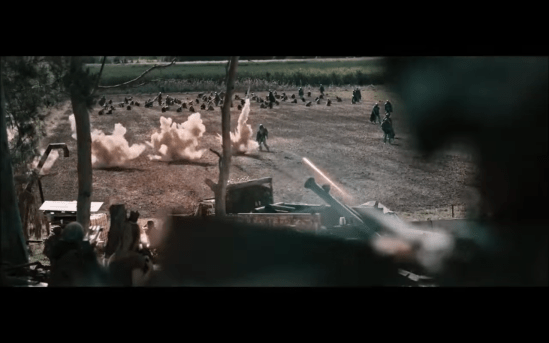
Lionsgate and Saban Films release “Occupation” on Blu-ray home video. The transfer is in 1080p hi-definition with a 2.39.1 widescreen presentation. Nothing really to note here about the image quality other than the cleanliness of the digital video that sheds many landscape and personal details in the day and the night sequences. The English 5.1 DTS-HD Master Audio track has copious qualities for an explosive-laden borderline A/B movie from Australia. Dialogue is prominent and the LFE is quiet sparse though explosion heavy; ships whizzing through the air maintain on a level playing field audio track shared with human’s scampering frantically for their very lives. Spanish subtitles and English SDH are also available. For a two-hour runtime flick, surprisingly, there are no bonus features with this release. Luke Sparke’s “Occupation” is masterfully formulaic as we’ve all experienced this movie before whether be “Red Dawn” or “Independence Day.” Nothing under the satisfactory visual effects is awesome enough to rattle or challenge the mind with the venture of a militia of Australian resistance fighters pitted against ghastly, rubber looking extraterrestrials and that’s the ultimate and fateful bullet in Sparke’s sci-fi action film.
Planning a Jailbreak off an Evil Corporation’s Island Prison! “Escape from Absolom” review!

In the year 2022, Special Forces solider, Captain Robbins, is court martialed for putting a bullet in the head of his commanding officer. After escaping two maximum security prisons and a record of rebellious activity, a corrupt and power hungry warden of the Lactivus prison ships Robbins off to an off shore island called Absolom, where prisoners can roam free with no chance of escape due to 24/7 surveillance by Satellite and rocket launcher armed helicopter gunships surrounding the island perimeter. Island prisoners separate into two factions: the Outsiders and the Insiders. Each with the respective camps, the lawless Outsiders overwhelm the Insider’s numbers by 6 to 1, leaving the small manned community in constant fear of attack and pillage by the Outsider’s merciless leader, Walter Marek. When the insiders learn than Robbins has faced Marek and lived, they take the former solider into their community, but Robbins sole desire is to escape off the condemning rock and with the help of a few good men from the Insiders’ camp, the chances of escape and survival are greater together as long as Marek and his band of starving cutthroats don’t seize the endangered community first.

“Escape from Absolom,” also known as simply “No Escape” in the U.S., is a Martin Campbell directed action film from 1994 that’s futuristic and violent, fun and thrilling, and kitschy without being too cheesy. Campbell, who went on to direct not one, but two, James Bond films, begins a base of epic action that’s toweringly ambitious and pulled off nicely with the stunts and the editing. Based off the Richard Herley novel “The Penal Coloney,” the script is penned by Michael Gaylin who puts pen to paper to scribe a playful, passively aggressive dialogue, but fun and energetic on a the same coy lines of other high visibility action films. Gaylin was able to conform to a story that has no dynamic with the opposite sex in one of the few films that exhibits a rare all male cast.

“Goodfella’s” star Ray Liotta finally got his time to shine as the butch and badass action hero that is Captain Robbins, a highly skilled special forces solider and killing machine whose pragmatic intentions, at first, are hard to read. The cockiness overtop a well-cloaked deadly skill set works to the advantage of the blue-eyed actor for New Jersey. Opposite Liotta is Stuart Wilson (“Hot Fuzz”) as Walter Marek, a 7-year island lifer with dreadlocks and nose bridge piercings to match his psychotic leadership. Wilson does psychotic just fine, but the look resembles John Travolta’s atrocious attire from Battlefield Earth. Lance Henriksen, One of the most recognizable legendary genre actors, has a more serene approach in being a mentor and the leadership figurehead of the Insiders camp when compared to conventionally eccentric, sometimes maniacal performances, but Henriksen has a mellow side to him that conveys are very affectionate kumbaya approach, but any personality compared to Stuart Wilson’s internal rampage would be a stark contrast. “Ghostbusters'” Ernie Hudson has his role as security office in the Insiders camp and the sole black man of the film, for obvious reasons, stands out, but Hudson just adapts to anything you put him in though the Michigan born tended to sway toward the thrilling fantasy/sci-fi genre in the height of his career. Rounding out the cast is Kevin Dillon (“The Blob” remake), Kevin J. O’Conner (“Lord of Illusions”), Don Henderson (“The Ghoul”), Ian McNeice (“Dune”), and Michael Lerner (“Maniac Cop 2”).

All things considered, “Escape from Absolom” is a torrent men-in-prison extravaganza that’s one part Sylvester Stallone “Judge Dredd,” one part Chuck Norris “Missing in Action,” and, as a whole, an endangered brand of droll entertainment. Speaking of Stallone, Ray Liotta did it first as a character who is an expert at escaping the inescapable maximum security penitentiaries and instead of Arnold Schwarzenegger and Dave Bautista as contentious, yet supportive allies, the friendly, yet solidly statured Ernie Hudson and Lance Henriksen share Liotta’s Captain Robbin’s unquenchable lust for freedom, even if it to provide unsheathe exposition of the unethical corporate penal system practices. Far from being a perfect film and extremely blantant on a no underlying message, Martin Campbell undoubtedly has a fine tuned niche of capturing the casual eye with large scale action sequences and an affable character allure.

Umbrella Entertainment releases “Escape from Absolom” on a region-all Blu-ray, presented in 1080p, widescreen 16:9 aspect ratio. The coloring is phenomenally remastered and stable compared to previous transfers. There are times when depth becomes two-dimensional or flat, skewing the picture noticeably, but the overall picture quality is spectacular in the vast amount of Australian landscapes and even in the night scenes that show hardly any enhancing, such as sharpening or contrast. The English DTS-HD Master Audio 2.0 track is laid out nicely with audible poise and precision balance. Dialogue is prominent while explosions have just the right amount of oomph under an exact LFE recipe. The release sports other language Dolby Digital audio tracks such as a German 2.0, Spanish 2.0, Italian 2.0, and a French 2.0. Optional English SDH subtitles are available. Bonus material includes a two part making of featurette from around the production of the film with interviews with cast and crew, four TV spots, trailer, and a reversible cover. Runtime is 118 minutes. Martin Campbell’s “Escape from Absolom” is dystopian dynamite, explosive and aggressive with a flare for enjoyable banter amongst defined and diversified characters inhabiting an utopian island of mostly societal scum.
A Plethura of Evil! “It Lives” review!
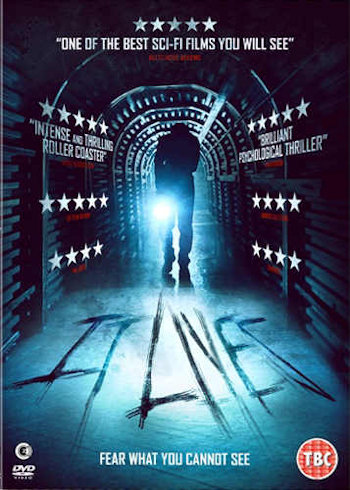
In the year 2024, the world’s superpowers are on the edge of nuclear warfare as Earth’s resources are dwindling at a rapid pace. A halt in knife edge conflict and the construction of temporary peace, known as the RAND Treaty, allowed nations to build underground, sustainable bunkers for a restarter population. Plethura 04, one of these bunkers, is being monitored, maintained, and prepped by Roy, an labeled “undertaker” scientist, whose setting the stage for a group of survivors known as Priority One, but when the sudden fallout alarm blares, Plethura is locked down early, trapping Roy alone in a cavernous and cold bunker alone with the exception of an A.I. program that Roy named Arthur. As time passes, Roy sanity comes into question; so much so, that Roy believes that Plethura might just be a drill simulation. Also, is there really something in the bunker with him? Is Arthur trying to confuse him? Questions, isolation, and terror seep into Roy’s mind, perhaps, or perhaps not, manifesting a lurking presence.

“Its Alive,” also known as “Twenty Twenty-Four” is the intense psychological thriller from the United Kingdom. Written and directed by first timer Richard Mundy, “It Lives” is helmed in the same vein as “Buried” with a solo performer in an isolation crisis. Produced by Ripsaw Pictures and Entity Film Company, the feature has some production power behind it that makes the indie film seem to have a fluffier value than its actual worth and garnishes a cherished and chilling atmospheric cinematography by Nick Barker. A real sense of a cold cleanroom can be just as frightening as a filthy slaughterhouse and the Mundy-Barker team hone in on that very concept, performing a bariatric surgery on the heaviness and the plentiful of the up top, outside world and reducing it to a few corridors, a couple of living chambers, and beast-like belly of a generator room. The filmmakers fabricate isolation and the perception of isolation well with a tremendous set up of the scenario: the preparation and the sudden, unexpected calamity of a nuclear fallout.

Actor Andrew Kinsler has the toughest job in the world, acting without feeding off the energy and the lines of other fellow actors. Kinsler goes at the role alone as Roy, a scientist prepping Plethura 04 for the arrival of Priority One survivors and knowing that he will die when he trades spaces with the group as he has to go topside. That’s notion, of having to sacrifice yourself for strangers, is a deep concept. Its easier to sacrifice oneself for the sake of those you love and care for, but complete strangers is pure mental mayhem, especially when all the work of getting the bunker ready was done by Roy. Kinsler keeps up the part of coping with his mortality, accepting it, and then being crushed by it when the world ends at the blink of an eye. Questioning everything as he immerses deeper into isolation, Kinsler relies more on the artificial intelligence to be a companion, despite seemingly being annoyed by the very lack its thirst for human complexities.

Many popcorn viewers don’t care for an open book ending films where the personal interpretation opens up a vast range of theories. “It Lives” is one of those films. Most certainly a disturbing psychological thriller, the story perpetually has Roy second guessing every anomaly that spooks him, even to the extend of thinking a computer program has infiltrated his subconscious with trickery and confusion tactics. Then, the ending smacks you right in the face and then smacks you again with a three finale questions: Was it a dream? Was it madness? Or was it all real? Christopher Nolan similarly put the fate of “Inception’s” Cobb into the hands of audiences when he spins a toy top to see if he was still in inception or if he was in reality. If continuously in motion, that would signify Cobb’s in a fantasy world, but Cobb’s spin is cut short with a cut to black, begging the answer of whether his happy ending was true or a inceptive pipe dream. Roy’s scenario is a lot darker and, if not, deeper that’s challenged by an internal struggle of self-preservation. Has Roy become a fixture of the cleanroom aspect? Has he become a cold figment of accepting his fate and has suppressed his emotion about it to the boiling point that his subconscious is fighting for his own survival? “It Lives” is an exceptionally juicy psychological film worth exploring.

Second Sight presents “It Lives” onto DVD home video this July 30th! Since the screener was a DVD-R, a full assessment of the audio and video aspects will not be covered. There were also no bonus material on the disc. What I can say is that Harry Kirby’s score is the utmost jarring; reminds me of Mark Korven’s unsettling and unique unmelodious score in “The Witch.” As part sci-fi and part horror, the surface level narrative is sheer terror and fear. Below surface, the wicked and frightful stir an embattling vortex of arguments in the grossest of grotesque forms, aka a complete mind destabilization. “It Lives” has indie roots that spread wide and fierce, shredding through temporal lobes like soft butter and delivering one hell of a terrifying psychological horror.
 It's Bloggin Evil!