

In the small rural community of Devil’s Gate, Oregon, a boy and his mother disappear without a trace. FBI Special Agent Daria Francis spearheads the investigating to atone for a regretful previous child disappearance case. She’s accompanied by a local deputy, Colt Salter, to assist her. During her brief investigation upon arriving at Devil’s Gate, Agent Francis comes to the determination that Jackson Pritchard, the father and husband of the missing boy and mother, is directly involved in their sudden disappearance. The investigation turns from a seemingly straight forward, open and shut case to a colossal mystery that’s beyond their comprehension when arriving at the religious dogmatist’s boarded up and disturbing cladded farm house where unearthly forces lay claim to the Pritchard family home for sinister reasons. With one of the beings caged in his basement, the desperate Pritchard seeks an exchange with the creatures he labels as the fallen angels in attempt to regain his wife and son, but as the night falls, trapping Agent Francis and Deputy Salter with Prichard inside the residence, they become surrounded by the fire in the sky creatures aimed to reap not only the world, but their souls.

Like an enigmatic report straight from the non-redacted portions of a nail-biting X-Files case, “Devil’s Gate” is a we are not alone sci-fi horror film from 2017 under the apocalyptic eye of director Clay Staub and co-written by video game plot scriber, Peter Aperlo. The considerably financed project is the first feature film for both filmmakers in their respective roles with Staub having served as an assistant director on other paranormal plotted projects like Zack Snyder’s heavily praised remake of George Romero’s flesh-eating zombie classic, “Dawn of the Dead,” and Matthijs van Heijningen’s underrated “The Thing,” a prequel to John Carpenter’s film of the same title. One quality that we can all can be pleased about is that Staub carries over from his previous experience as a genre filmmaker participate is the use of gore in the “Devil’s Gate” because, honestly just by looking at the cover and reading the plot, the bloodletting expectation was low on the totem pole. Staub doesn’t unload a gratuitous splatterfest of alien and human entrails, but subtly sanctions the right amount of extrasensory chest bursting and finger snapping goo that plays an ill-fated role of circular or motivational circumstances for the characters.

Putting the pieces of the Pritchard mystery together is Agent Francis who is a to the point and tough national law enforcement officer with a bleeding heart complex after her very first assigned case went tragically sour that looms an unexplainable root cause cloud over her straight blonde hair. Desperate to cure her past, Agent Francis rushes into Devil’s Gate, bypassing the notable chicken fried steak meal offered by Deputy Salter upon her tarmac arrival and defying the local Sheriff’s heed to not interview husband Jackson Pritchard, that sorely causes her to land in the virtually the same predicament of just trying to get the right thing done no matter the unclear ancillary evidence. “12 Monkey’s” television star Amanda Schull spearheads the character with the characteristics aforementioned with drab appeal, lacking the emotion and the intensity her character is supposed to be exhibit when trying to solve a case of personal redemption as well as the fear from an higher ominous power that can shoot lightning down from the sky and flash velociraptor toe-claw sized fangs. Colt Salter might be a small time, Podunk deputy, but the born and raised Devil’s Gate officer can match wit with his FBI counterpart. Salter strikes me as a character who doesn’t stray far from home, mentioning various times, in various ways, his parallel path to high school friend Jackson Pritchard. Shawn Ashmore, from Joe Lynch’s “Frozen,” opposites his costar Schull like Mulder and Scully type as well as an all-around good guy who happens to stray from his protocol path once Agent Francis puts her federal fingers into his already investigated investigation. Like his performance in “Frozen,” “X-Men” franchise, and even in FOX’s television thriller “The Following,” Ashmore is a pretty solid actor, showing a range of emotion that transcends him from easygoing deputy to mortality fearing when mankind’s on the verge of extinction comes into the equation. An equally solid performance by Milo Ventimiglia, who recently starred in “Creed II,” really sells the crazy portray by Jackson Pritchard, a God-fearing man with a long lineage of misunderstood family heritage that leads him to the uncanny bombshell that has been bestowed upon his family farm. Ventimiglia, in his roughest, toughest country twang, creates such an anxiety-riddled and frantic character that unravelling his fate is not too clear which is refreshing to be able to retain mystery to a role as we can kind of figure out how Agent Francis and Deputy Salter when fair in the end game. Rounding out the cast is Bridget Regan (“John Wick”), Javier Botet (“Slender Man”), and “Star Trek: The Next Genergation’s” Jonathan Frakes, still sporting that iconic beard even if it has grayed, as the town Sheriff.

In spite of some really cool visuals, especially of the man underneath the mask, Javier Botet, inside a ghoulishly white extraterrestrial suit that only his elongated and thin body (and perhaps also Doug Jones’) could snuggly fit into, “Devil’s Gate” tells a narrative that hails from a lot of re-spun material. Whether intentional or not, viewers more than likely won’t be able to help themselves as they’ll eagerly point to the television screen and say, ““Independence Day” did that first,” or exclaim, “didn’t Donald Sutherland star in the same kind of thing???” I know I did. However, Staub and Aperlo don’t completely ape the concepts that surely haven’t inspiring them, making the effort more endearing, and visually crafted a well-blended plot into an enjoyable and captivating story; a story that has been mostly devoid of underlining messages and symbolism other than the themes of religious zealots are extremely bad for the world and living with past regrets can be hazardous for your health if not properly accessed. “Devil’s Gate” focuses more directly on just entertaining another version of visitors from another world and how those no-so-little-green-men play an assimilating role into humanity.

Umbrella Entertainment releases “Devil’s Gate” onto a region 4 DVD presented in widescreen 2.35:1 aspect ratio. The vast Midwestern landscape with the foreboding rolling clouds stretches from top to bottom with an exact sharpness and crisp from the digital picture. The textures in the broad, yet barren-esque fields look especially detailed, more so with the wind and brownish-yellow color. Speaking of color, the hue is a filter of shadowed purple and on a sepia side that works the dread atmosphere. The English 5.1 Dolby audio track has ample range and depth. Lightning strikes boom equally from the five channels, alien shrieks trembles through, and the dialogue is not obstructed. Surprisingly, there are no bonus features with this release as the Stateside counterpart even has a trailer in the extras. There isn’t a static menu either as the film goes right into play feature mode. c
Category Archives: sci-fi
Half-Woman, Half-Machine, All Evil! “SheBorg” review!

Brought before an intergalactic sentencing, a chaos-driven cyborg faces extreme persecution for committing heinous acts across of destruction and death amongst the galaxy, but desperately escapes on a small shuttle pod aimed directly for the planet Earth. The cyborg craves massive amounts of energy to contact others of it’s species for world domination and also needs to feed off of animal flesh to sustain. The local anarchist Dylan and her friend Eddie team up with a alien enthusiast and a provincial cop to thwart human annihilation as the cyborg assimilates the townsfolk into it’s own flesh hungry minions, doing the bidding of constructing a solar system reaching power source to create a space antenna. The world’s hope relies on a pair of anarchy subversives to stop a monstrous sheborg who believes chaos will provide for planetary obliteration.

Its Bloggin’ Evil has been around the bush a few times with director Daniel Armstrong, a name known very well here by previously reviewing two of the filmmakers films under his Strongman Pictures label, the 2015 wrestling-sploitation “Fight Like A Girl” and the slasher on blades “MurderDrome” from 2013, and there has been much appreciation for the ballistic, ass-kickin’ carnage and indie horror mayhem Armstrong is so strongly passionate about in his films. The 2016 “SheBorg” is no different as the film revels in many of the same feral totalities. The Australian writer-director favors the 80s-90s science fiction and horror cultural elements for not only his earlier works but also for “SheBorg,” cherry-picked specifically for the mechanical madness. From “Star Trek,” to “Ghostbusters,” and to “Back to the Future,” “SheBorg” affectionately homages these films through the dialogue in an explicitly melee narrative that oozes with crazy, feasts on the flesh, and gorges on heartily on dismembering and assimilating all in a path to geek fandom.

Dylan lives to subvert the establishment, even if that means derailing her politically obsessed, sorry for excuse father, Mayor Jack Whiteman, and the self-indulged agitator is played by Whitney Duff alongside “MurderDrome’s” Daisy Masterman as Dylan’s best Kung Fu knowing mate Eddie. Duff and Masterman are a solid budding duo who can expel eccentricity and calmness as a single, combative unit against an seemingly unstoppable mechanism of man killing, the Sheborg. The mechanical alien is mechanically performed by another “MurderDrome” casted and “Fight Like A Girl” actress Emma-Louise Wilson. Wilon’s robotic coldness sounds actually very Russian in performance, as if the Eastern Europeans were gearing up for war with killer, flesh eating cyborgs, but Wilson’s contrast to the uncouth Duff and Masterman tagteam is comedic bliss that symbolisms freedom over tyrannical subjection. Sean McIntyre, Mark Entwistle, Louise Monnington, Jasy Holt, and Tommy Hellfire fill in the rest of the “SheBorg” cast.

Labeled as a Neo-Pulp sci-fi, horror film, “SheBorg” encapsulates the essence of a schlocky B-horror, charmed with two-bit practical and visual effects. Yellow alien blood sprays and cascades like neon Kool-Aid, the assimilated have oversized and gaudy optical lens over one eye, and there’s also some eye popping, heart ripping, and dog eating gore to appease every facet of a modern sci-fi horror. Once titled “SheBorg Prison Massacre” and then retitled to “Sheborg Puppy Farm Massacre,” Armstrong drops the ancillaries and simply presents his Daisy Duke-cladded killing machine film as “Sheborg” that continues a trend, whether intentional and ill-conceived from selective viewings on my part, of having a heroine in the lead role, such as “Fight Like a Girl” and “MurderDrome” with the latter involving an all-woman roller derby gang. Armstrong’s seemingly trademarking his films with rebellious women, whom are at odds with the world around them, and are coming out on top hauling away being more of a kick-ass warrior than before the a nemesis made the scene.

“SheBorg” is now available on Blu-ray courtesy of WildEye Releasing and MVDVisual. The 1080p resolution in a widescreen 1.85:1 presentation release has an underwhelming image quality. Details flutter sporadically in the woodsy locale in and around the puppy farm and night scenes have coagulated blotches of the unsharp nature. A few sequences turn out brilliantly poetic like when SheBorg frightfully exits through a mist-cloaked, open aired windshield of one of her three junkers turned into a makeshift solar system communicator. The 5.1 Stereo works for the budget, but while the punk rock score by KidCrusher befitted the anarchist lead, syncing with the rest of the film was far from being symbiotic. Dialogue was clear enough and ambience was fine, even if it was slightly over-exaggerated. Bonus features include a medium-length Behind the Scenes documentary that has engrained interviews with director Daniel Armstrong and selective cast; the BTS-feature is more tell all of Armstrong’s visionary mechanics and where he pulls inspiration from. There are also music videos and trailers. Resistance is futile as “SheBorg” is a must-see cybernetics battle royal in the realm of Ozploitation.
Time Travel to Stop Evil via Astral Projection! “Mandao of the Dead” review!

Astral projection defined per Wikipedia: an interpretation of an out-of-body experience that assumes the existence of an “astral body” separate from the physical body and capable of traveling outside it. The otherworldly experience befalls suddenly upon Jamison Mandao, a young man living off the royalties of his late father’s flailing popular cereal brand, and his recently discovered, and also bewitching, new astral plane exploring powers land him in a macabre laced predicament with his adult squatting nephew, Jackson, and his nephew’s blood hungry, murderous ex-girlfriend, Maeve. With a little help provided by Jamison’s astral enthusiast relative, cousin Andy, and Maeve’s recent victim whose ghost is stuck in limbo, Jamison must use his astral projection to travel back in time, rearranging the series of events in order to not only appease the desperate pleads of a ghost, but to also save his daft, but good natured nephew becoming her next hapless fatality before the stroke of midnight segueing into the Day of the Dead when their chance to live again will rest in peace for eternity.
Here we go again with a time traveling genre film, the horror-comedy “Mandao of the Dead” from writer, director, and star Scott Dunn. Dunn’s sophomore feature film of 2018 dares the chances in being overly and, frankly, unnecessarily lambasted by internet trolls aiming to pick apart the film, hunting vigorously for time travel plot holes, but, and I reiterate this point again, that Dunn’s film is mainly a comedy where the laws of physics and ideas of probability have no bearing on Dunn’s grim fantasy loop. Despite the rather clichéd title suffix implying a facet from the zombie genre, “Mandao of the Dead” refers toward the post-Halloween, more traditionally Hispanic recognized Day of the Dead on November 2nd and while Dunn uses the day typically held for respect of past lives, the “Schlep” director conjures up a lively twist upon deathly circumstances that forms a cut-off date when that slither of twilight time for the dead ceases to be no more.

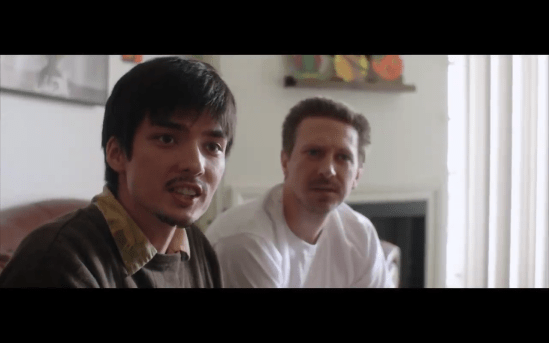
Alongside Scott Dunn as Jamison Mandao, Sean McBride buddies up as the freeloading nice nephew, Jackson. Dunn and McBride have previously worked together in Dunn’s first feature entitled Schlep and their rapport in “Mandao of the Dead” indubitably confirms a harmonious witty banter and a light-hearted dark comedy in fine, mechanical form. McBride’s spot on heartfelt halfwit Jackson nicely compliments Mandao’s knack for impatient contemplating. Throw a dude name Darth into Jamison and Jackson’s inert existence and things get dire and interesting. “2-Headed Shark Attack’s” David Gallegos isn’t portrayed as your friendly neighborhood ghost nor is he a malevolent one; instead, Darth begs for help and the cosmic universe delivers to him an astral projector and Gallego’s couldn’t be more sharply colorful with his spontaneous humor. Together, the three 30-something year-olds are pitted against the dark horse that is Maeve. Playing an incognito blood drinker, Marisa Hood has an innocence about her that renders a false sense of security and, in Jackson’s case, a pair of weak knees. Alexandre Chen, Sean Liang, and Gina Gomez round out the cast as characters finding their ways into the Day of the Dead debacle.

While we’ve seen where timelines become mangled by the interference of a time traveler and where the theme is fondled with in “Mandao of the Dead,” Dunn doesn’t over knead the narrative with it though certainly a centerpiece of the film as a whole. Mandao’s adventure with astral projection and his middling with the planes are only the beginning that have stirred a frenzy of unhappy campers in the spiritual world. The whole event of Mandao going back in time, twice, to save people is the proverbial tip of the iceberg and a welcoming taste of what’s to come from Dunn and his team. Shot in 10 days with a tight budget, Dunn, who also self-produced and edited the final product, has crystal clear storytelling abilities even with some of the rough, less glamourous edges encompassed within the world indie filmmaking. The characters are well written, from Cousin Andy, to Jackson, and to Darth, as their three various personalities colliding under a thin, blurry gothically influenced omen line.

“Mandao of the Dead” arrives onto Amazon Instant via Prime Video and presented in a widescreen, 2.35:a aspect ratio, and clocking in at a runtime of 74 minutes. No physical media specifications were provided now or for future release. With a budget around $13,000, the English stereo audio track and Panasonic GH5 image quality are finely calibrated and a flat out success for streaming platforms. No bonus features are included with this release. Vampirism, science-fiction, spirits, and astral planes, “Mandao of the Dead” is Scott Dunn’s golden genre-bending film of ghoulish and space and time continuum disproportions! So much so, a sequel has been announced, “Mandao of the Damned,” sparking a positive anticipated interest, by at least this reviewer, for the next chapter of a hapless, macabre adventures that Jay Mandao and Jackson will step into in the next astral plane!
Contamination Coverup by an Evil Corporation! “The Chain Reaction” review!

Former war veteran and hot rod enthusiast Larry and his wife, Carmel, take a weekend off from the children to vacation in Paradise, a retreat on the outskirt, rural area of Australia that includes pleasurable amenities such as fishing, swimming, and being an ideal location for a dirty weekend between two lovers, but an Earthquake triggers a major nuclear leak at Waldo, an international nuclear waste storage facility who aims to coverup to radioactive contamination. Heinrich Schmidt, an engineer who was deeply exposed to the waste flees from Waldo’s goons to reveal to anti-nuclear agencies the corporation’s dastardly concealments and warn locals of the tainted public water supply. With not much time to live and suffering from a serious head injury, Schmidt, with partial amnesia, is sheltered by an unsuspecting Larry and Carmel as they help him piece together his life while Waldo sends recovery and murderous thugs to quiet those who wish to leak information. Paradise is anything but as trouble brews between the vacationing Larry and Carmel, the witless locals, and Waldo in disclosing radioactive waste streaming through the water passage ways.
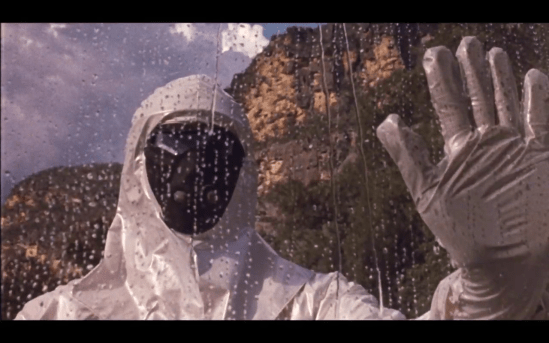
“The Chain Reaction” is the freshman film of writer-director Ian Barry released in 1980. Produced by “Mad Max’s” George Miller, “The Chain Reaction” was considered an unrelated companion piece that also starred a number of the same actors, but the action-thriller aligned more with the populistic nuclear disaster genre of the late 1970s and early 1980s. Whereas George Romero focused on accidental biological effects in his 1973 science fiction horror, “The Crazies,” Barry honed in on nuclear waste disaster and the reaction of those responsible, to what length of measures would be necessary and taken to keep exposure from happening. Caught in the middle are locals and unfortunate vacations, who actually take more a stand against tyrannical, above the law organizations. “The Chain Reaction” is packed with exciting car chases and glazed with testosterone enriched standoffs on a nuclear level.
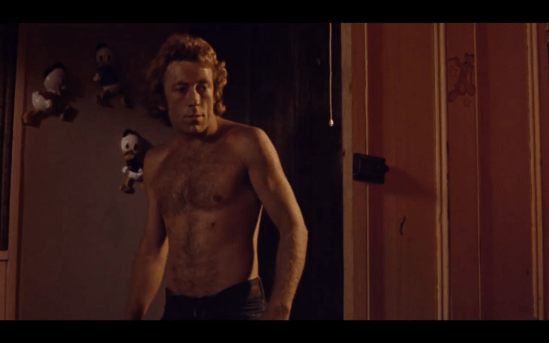
Steve Bisley steps into the lead role of hot shot Larry Stilson working his solid strong physique with a general moral, but still bad boy composure when unravelling and thwarting the Waldo conspiracy. Bisley costars alongside the late Arna-Maria Winchester. Winchester screams screen time sauciness, but as a mother of two, Winchester’s Carmel Stilson comes off as promiscuously uncharacteristic as a mother but, to be fair, Larry doesn’t necessarily yell conventional father either. However, I’m impressed by the turncoat engineer Heinrich Schmidt played by Ross Thompson, an Australia actor who can really accent well the German language and puts into his role a languishing, broken man trying to do the right thing. Together, the Stilson’s and Heinrich are tracked down by Waldo henchman Gray, portrayed by English actor Ralph Cotterill (“Howling III”). Cotterill’s menacing, stodgy dagger eyes make him a suitable villain, but falters in the screen time department, seeing not much action as needed to take care of monumental business against possible exposure. Huge Keays-Byrne (“Mad Max: Fury Road”), Richard Moir (“The Odd Angry Shot”), Laurie Moran, Lorna Lesley (“The Survivor”), and a cameo of Mel Gibson round out of the cast.

The overall problematic crux with “The Chain Reaction” stems from that director Ian Barry is no George Miller when presenting his own version of pacing a film. The narrative is casually abrupt and edited shoddily with very rough and hard to follow sequential events that are supposed to be a fiery ball of nuclear mishandling and underhandedness fury. Though highly doubtful Umbrella Entertainment took the censorship scissors to this Ozploitation flick, there are moments of bizarre, if not expurgated, cuts that debase the illustrative graphic violence. One particular moment in the climatic third act, a shotgun was only aimed to intimidate would be attackers, but never discharged. However, a character is seemingly gunned down with a blood splattered mid-section being the only clue of his demise, but like aforementioned, the shotgun was never fired. Barry’s riveting action story plays out mostly like this, reducing the action to a meager narrative withstanding only a few good car chase sequences, some character intimacy, and laced with some shrouded mystery.

Umbrella Entertainment presents under their Ozploitation Classics’ sublabel, Ian Barry’s “The Chain Reaction” onto a full High definition, 1080, region free Blu-ray with a widescreen 1.85:1 aspect ratio. Honestly, a slightly cleaner and re-refined release was expected. Natural grain is expected, but the lossy definition and blurriness could have been tweaked for optimal results on the print. No edging enhancements nor print damage detected surrounding the fair natural coloring, skin tones, and, sometimes, vivid photography from Russell Boyd (“Picnic at Hanging Rock”), which is surprisingly rather bland overall. The DTS-HD Master Audio dual channel track is excellent with upfront and clear dialogue, ample ambient range, and a clean harrowing and resonating classic disaster scenario score composed by Andrew Thomas Wilson in his sole composure credit. Bonus features are aplenty with extended Not Quite Hollywood interviews with stars Steve Bisley and Arna-Maria Wichester, director Ian Barry, and producer Ross Matthews, a couple of featurettes entitled Thrills & Nuclear Spills and The Spark Obituary, deleted and extended scenes, an early cut with alternate title of “The Man at the Edge of the Freeway,” and media spots from theatrical release, TV, VHS trailer, and image gallery. “The Chain Reaction” is far from noxious, but the nuclear disaster piece could have been more radiant, a quality very difficult to achieve deep in the midst of so many great titles similar in the genre category; yet, the Ian Barry action thriller is an entertaining adversity excursion nonetheless.
In a Wasteland Full of Evil, There’s “Molly” review!

Molly is a loner scavenger in a post-apocalyptic badlands. She’s hunted down by a separate faction of scavengers to be a champion in their sadistic one-on-one bouts as Supplikants, ruthless and mindless killing machines produced by a synthetic drug. With food being scarce and peoples’ humanity on the edge of total extinction, Molly’s on the run on barren land until she happens upon Bailey, a young girl held up in a makeshift tent and waiting for her departed parents to return with food. When the scavengers track down Molly, Bailey becomes a bargaining chip, used as bait to lure sought after Molly to the scavenger offshore compound where the odds are in their favor, but Molly knows how to fight when she forgoes using her pulsating supernatural power. She will stop at nothing to save and protect Bailey, one of the last good and innocent humans left amongst desolation and savagery.

One part mad science, one part cyberpunk, “Molly” is all post-apocaplytic kickass from Netherlands’ director Colinda Bongers and co-directed with screenwriter Thijs Meuwese. “Molly” is this generations “Mad Max,” a vibrant gauntlet of darkness with a speck of illuminating hope, with the very first scene being a brief glimpse of the past, a fun-in-the-sun holiday at the beach, but in a split second, the cut-to abruptly cuts out the chirping of seagulls, the jovial laughter of children, and the familiar hum of all beach goers. The story literally cuts to the chase with Molly running for her very survival from three armed scavengers, setting up the story from the get go that Molly’s guard would always be tested. “Molly,” without a doubt, resembles a George Miller first film concoction of noticeable low-budget quality with high caliber, high-octane action.

Julia Batelaan tackles the namesake role. The then 20-year-old Batelaan musters up enough physicality to compete with a highly demanding character despite her slender, unlikely heroine frame. Batelaan is no Gal Gadot, but she gives the performance all she can and, then, gives some more in a role that requires a lot of gear to be worn, numerous fight sequences, extended physical scenes, and brief nudity whilst in battle. Batelaan clearly overshadows a cohort of onscreen antagonists, including even her best possible match as a rival by Annelies Appelhof who displays a different kind of tough; one that’s more henchman centric and mechanically advanced. Appelhof’s taller, broader, and equally as tender as Batelaan that dictates her character, Kimmy, the ideal barrier to best if Molly wants to succeed. Yeah, of course, there’s also a clear cut boss in actor Joose Bolt. In the role of Deacon, a maniacal scavenger leader hellbent on winning the world’s bullet currency through the mortal combat of Supplikants by proxy, Boost supplements a harlequin character to fold. “Molly” also includes Emma de Paauw, Tamara Brinkman, and Andre Dongelmans in the cast.

While Molly’s a beautifully visual film with moments to be excited about, Bongers and Meuwese’s post-apocaplytic tale has a hard time being a great film to revisit over and over again. For one, the fight choreography is a slow and robotically rehearsed and doesn’t strike as completely natural. In fairness, this flaw should be given a pass as the last shot is just over a half-hour long of an uncut take of Molly doing her best Tony Jaa impersonation with extended fight takes from room-to-room, up to the top boss level, as if you’re nostalgically playing Streets of Rage 2 (ya know?! On the Sega Genesis!). Yet, there’s still something off about “Molly” and one could say that that the focus of storyline uneasiness surrounds Molly herself: Who is Molly? Why does she have super powers? Where did she come from? Why does she really care for this child? All good questions that don’t really come to fruition in the film, but have promise to be answered by the open-to-a-sequel ending.

Artsploitation Films presents “Molly” on a high definition 1080p Blu-ray home video in a widescreen, 1.78:1 aspect ratio format. Bongers and Meuwese deliver such rich coloring while not over-saturating the 2017 film to the point of obnoxiousness; Molly herself is a hue enriched character, with all her gear, trekking through a desolate oceanside landscape that’s mainly white sand and brown foliage, especially with the marauders who also sport ragged, dark colors, and leaving such an impacting visual aesthetic to digest while concreting a heroine. The English DTS-HD 5.1 surround sound is full of range from a slew of kick-punches from the numerous fight sequences to the juicy stitching of her own profusely bleeding wound. Even though this is a Dutch film, the casts’ English is quite good and well prevalent. Bonus features include a 30-minute featurette entitled “Making of Molly,” directors’ commentary with Colinda Bongers and Thijs Meuwese, and Artsploitation Films trailers. Bordering self-explosion with a barely hinged story, “Molly” eeks out an entertaining, post-apocalyptic, retribution narrative on the opposite side of the spectrum and the palette punctuating visuals and an extremely long take finale make this film a science fiction worth scavenging for!

