
Grieving parents, Jessie and Mark, aim to heal the deep wounds of the tragic and accidental death of their young son by fostering an orphan boy named Cody. After the mysterious death of Cody’s mother and having been through two concerning foster parents prior to Jessie and Mark, Cody strives to be the most sweet and loving child to his new and pleasant foster parents, but Cody has a dark secret that keeps him up at night. When Cody falls into a dream state, his subconscious imagination manifests his awe-inspiring dreams and even his worst nightmares that become deadly with the presence of the malicious Cranker Man, a dream shadow who can pluck anyone into disappearance that happens to be near the slumbering boy.

“Before I Wake” director Mike Flanagan labors over all that is supernatural, churning out more than his fair share of specter-centered storied films including “Absentia,” “Occulus,” and the more favorable sequel to “Ouija,” entitled simply enough “Ouija: Origin of Evil,” that was produced alongside “Before I Wake” in 2016. Flanagan’s knack for suspenseful tall-tale horror doesn’t pigeonhole the Salem, Massachusetts born director into producing the same terrorizing story over-and-over and while “Before I Wake” has undoubtedly a few heart-pounding horror elements, fantasy more than so strong arms the genre into a branding submission. If I may be so bold by comparing “Before I Wake” to Guillermo del Toro’s “Pan Labyrinth” might be committing, perhaps, blogger career suicide, but the draw to resemblances can’t go ignored with what “Before I Wake’s” Cody creates from his overly stimulated dreams is much more familiar to what “Pan Labyrinth’s” Olivia character imagines when she escapes the horrors of a war bred sadistic maniac, if even only in a diluted version of events.
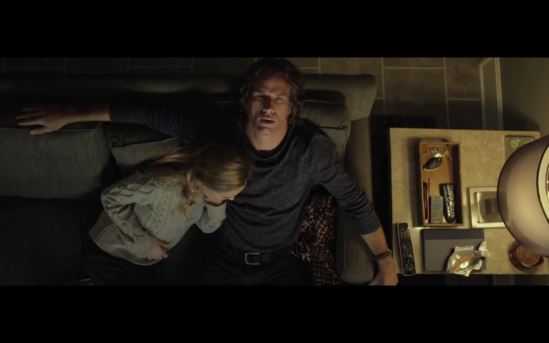
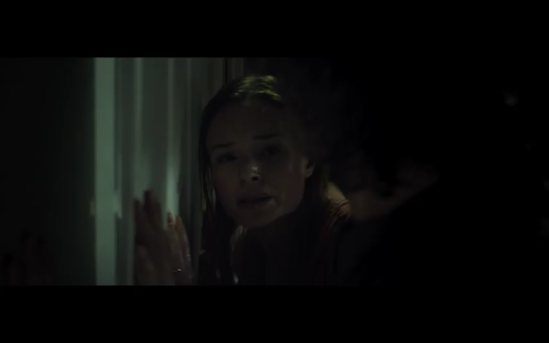
“Superman Returns” actress Kate Bosworth headlines with co-star Thomas Jane (“The Mist,” “Deep Blue Sea”) as the unwitting foster parents who are forcing themselves back into the parenting game. I specifically was not coming to terms with Bosworth’s performance as Jessie; her facial expressions and body language, along with her tone and line deliveries, were too lifeless with rigidity and repetitiveness. So much so that I compared Bosworth to Suzanne Cryer’s impassive Laurie Beam character from HBO’s “Silicon Valley.” Unless the inexplicable amount of grieving has voided her of all emotion, like the Borg drone from “Star Trek: The Next Generation,” the role of Jessie is written with a variety of mood driven circumstances that start with her insomnia, to her willingness to not leave their home, to being carelessly exploitive with Cody. Being a fan of Thomas Jane since 2004’s “The Punisher,” I might be a bit biased, but Jane had more range with the ability to switch back-and-forth between mixed attitudes and sentiments, making the dynamic between Jane and Bosworth clunky and awkward. To round off the trio of main actors, you might recognize the pint sized actor playing Cody as Jacob Tremblay from the 2015 Oscar Winning Brie Larson film “Room” portraying an innocently pitiful dreamer with an unquenchable thirst to be loved.
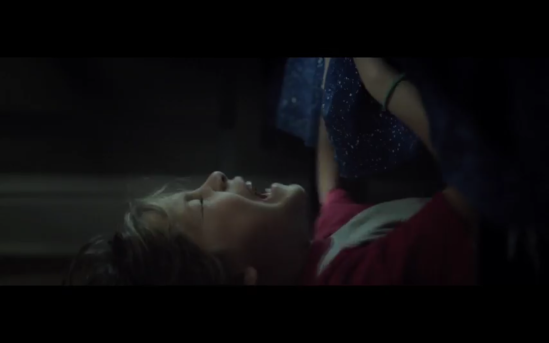
The Flanagan and Jeff Howard co-authored storybook script, intentionally or not, borrows heavily from psychoanalyst Sigmund Frued’s dream interpretation theory that wishful fulfillments are more common in children. Previous day activity, or day residue, has influential properties on a child’s dream, much like with Cody in this story, and Cody’s dreams are written to be an exaggerated fruition, fulfilling his desires and illuminating his emotions to the brightest or the darkest extent. Like many other films that involve the misunderstanding of children, adults Jessie and Mark blindly understand all the possibilities of Cody’s uncontrollable gift, exploiting Cody’s powers for their own greed. I did find that I love Jane’s Mark character as he tries to show Jessie the errors of her reasoning as he’s a bit of a kid himself, living vicariously through Cody with the video games and with the pizzas as if husbands, or men in general, are actually children at heart. Cody’s gift becomes a power struggle with Mark caught in the middle and the consequences of this struggle result in being the catalyst to unify Jessie and Cody as a strong bond between Mother and Son. Men totally receive the shaft in this picture where both dominant adult male figures are reduced to a forgotten or humbling state, left behind because mother knows best when it was really mother who dismantles the situation.
“Before I Wake” is a boogeyman fable of sleepless nights that independent Canadian distributor Mongrel Media presents on Blu-ray for the first time anywhere in North America on a home entertainment platform come January 10th. The film has been in a distribution limbo since U.S. theatrical distributor Relatively Media filed for bankruptcy, but, luckily for fans of the supernatural genre, Mongrel Media obtained home video rights. I was provided an online screener link, forcing my hand to not comment on the specs of the Blu-ray audio or image quality nor touch upon the bonus material, but what I can state is that the spin on the dream killer won’t stop here with “Before I wake.” Dreams, like conceptions of outer space, are vast with unlimited, unconstrained content that surrealist director Mike Flanagan has only partially tapped into by exploring the dangerously innocent perceptions fabricated from a child’s abstract mind.
Category Archives: Trailers
This is How to Revolt Against an Evil Empire! “Private Vices, Public Virtues” review!
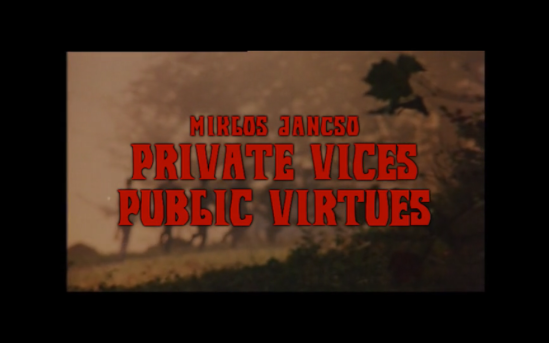
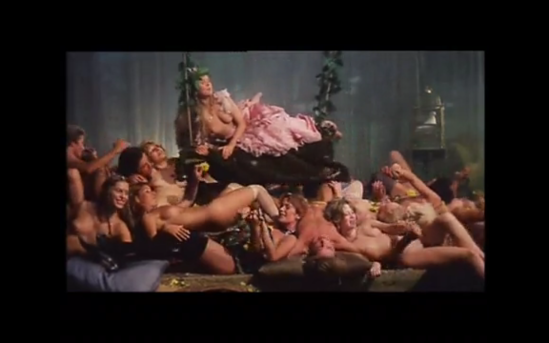
On the countryside of a 19th century central European empire, Crown Prince Rudolf resides at his manor estate with his nanny, faithful servants, and armed guards. However, the Prince abstains from being stately and goes against his father’s, the Emperor’s, wishes. Instead, the pan-sexual Prince frolics through life with his two lovers, his half brother and half sister. Their apathetic about the Emperor’s inclinations and enjoying the carnal pleasures, juvenile games, and the ecstasy of free-spirit inducing drugs with their communal aristocratic friends and feral manor servants. The Prince plans to humiliate his stern father by hosting the biggest festivity with dancing and champagne, laced with uppers that has his guest losing their clothes and parading amongst the grounds in a merry-go-round of uninhibited jovial madness that sends his the Prince’s father into an uproar that calls for the execution of his son and his lovers.
The 1976 “Public Vices, Public Virtues” is a circus of eroticism with a belly full of symbolism and ambiguity. Hungarian director Miklós Jancsó has developed a masterpiece from a script co-written with Giovanna Gagliardo that’s loosely based off the infamous 19th century murder-suicide known as the “Mayerling Incident,” which involved Prince Rudolf, the Crown Prince of Austria and the son of Emperor Franz Joseph I of Austria. Jancsó, called “the greatest Hungarian film director of all time” by his peers, maintains elements of the tragically historical event and morphs it into a melodramatic comedy penned with singsongy dialogue and communicated through various performances of the arts.
Fellow Hungarian Lajos Balázsovits encompasses the lead role of Prince Rudolf who ravages the screen with a lighthearted and uncut male nudity performance that sets an artistic and ethereal tone of beauty, of love, and of revolt. Alongside Lajos Balázsovits comes cult actors such as Tinto Brass regular Franco Branciaroli (“The Key,” “The Voyeur” which he was spectacular), Teresa Ann Savoy (“Salon Kitty,” “Caligula”), Laura Betti (“A Bay of Blood”), and “Night Sun’s” Pamela Villoresi to be at Jancsó disposal to be free to unclothe in a joyous protest against a ruthless and steely ruler. The mutton chops of Emperor Franz Joseph make a resembling appearance as part of the lucrative backdrop for the boisterous sexual revolution that stormed the cinema markets and Balázsovits fully submerges into a pan-sexual role, gladly submitting himself to women, men, and even his goggly-eyed Nanny, Laura Betti, who gets to touch the royal scepter in more ways than one.
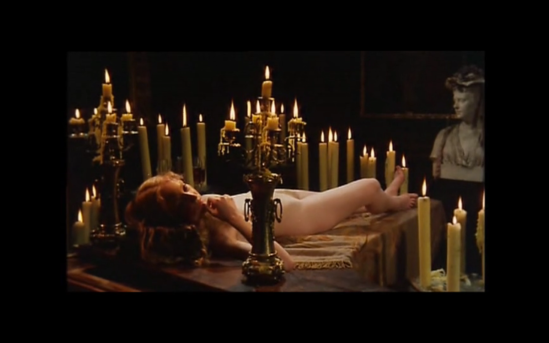
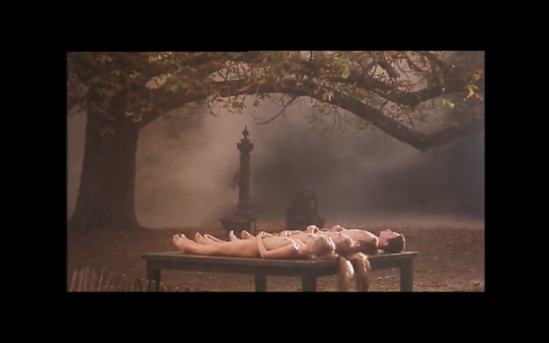
The co-produced Italian and Yugoslavian “Public Vices, Public Virtues” has an astonishing production value for soft core erotica. The elaborate, detailed wardrobe and authentic appeal to recreate the 19th century era is stunningly breathtaking and highly infatuating to be in the midst of an amorous atmosphere. With the costumes and manor home, the cash flow trends toward the amount of extras casted to prance and dance in an everlasting parade of jubilance. “Inglorious Bastards” and “The New York Ripper” composer Francesco De Masi displays his brass, as in brass instruments, continuously conducting a marching tune to the aristocratic orgy that doesn’t attest to a viewer allurement, but does put into place a bit of pizzaz into the melodrama. De Masi’s soundtrack compliments the nursery rhymes and classical scores that round out this Filmes Cinematografica and Jadran Film production.
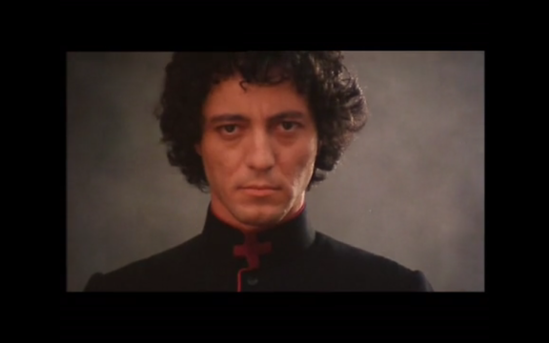
Proclaimed the wild side of world cinema, Mondo Macabro releases “Private Vices, Public Virtues” on a glorious restored and uncut Blu-ray region ABC release. The original negative restored and transferred to a single layer BD25 displays a vibrant 1080p and progressive widescreen presentation. I’m amazed at the retaining of the natural coloring, the amount of spacial depth, and prolific details that doesn’t display a hint of compression artefacts and maintains very low digital noise interference, especially in the black levels. The LPCM audio contains an English dub track and an Italian track with optional English subtitles on both. The digitized analog audio clearly expresses itself without hisses, pops, or other types of disruption. Mondo Macabro stuffs this Blu-ray with exclusive bonus material including three interviews with writer Giavanna Gagliardo, actress Pamela Villosesi, and film historian Michael Brooke. The original theatrical trailer and Mondo Macabro previews bring up the bonus feature rear. “Private Vices, Public Virtue,” to the naked eye, is 104 minutes of a frisky spectacle of the utmost buffoonery, but in the trenches, the Miklós Jancsó film is a Hungarian filmmaker’s undercurrent of inspiration and revolution against oppression and Mondo Macabro just highly defined the era!

Grab “Private Vices, Public Virtues” on Blu-ray!

Evil Gets to Cookin’! “Gran Bollito” review!
Journeying from the South to reside with her son Michele, Lea is a boisterously strong matriarch whose suffered through twelve miscarriages in fifteen years and has become insanely protective of her sole breathing progeny. Michele lives in a stately condominium that accommodates an eclectic bunch of women of various tastes, housing his mother Lea to mix as a lottery fortune teller of sorts. Lea’s talents go beyond just predicting winning lucky numbers as she’s also a fantastic cook in the kitchen, a superb soap maker, and an efficient killer that supplements the prior traits. Madness consumes a mother who seeks to absolutely protect her only child and a contractual deal with Death itself orders the end of minuscule lives, such as the other tenants of Lea’s apartment building, to fulfill her obligations to Death.
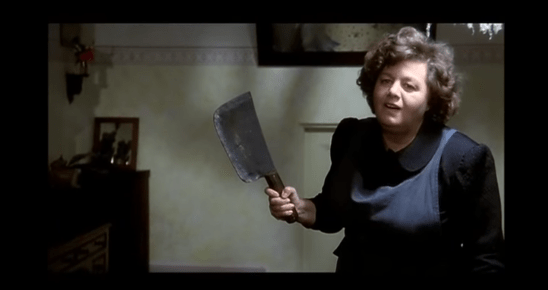
I promise you, you’ve never seen a Shelley Winters performance like this! “Gran Bollito,” otherwise known in the U.S. as “Black Journal,” is a 1977 Italian macabre from director Mauro Bolognini and has for the first time ever been slow cooked to Blu-ray high definition. “Gran Bollito” has been resurrected from the archives of production company Italfrance Films’ with Shelley Winters (“The Poseidon Adventure”, “Lolita”) exploiting her mother’s animal instincts to provide Death with as many souls as she can chop up and boil into a lathery substance. “Gran Bollito” loosely translate as very boiled, a form of murder that would top the charts and these heinous acts were, in fact, inspired by the true, inexplicable story of an Italian serial killer named Leonarda Ciancillui, a soap maker whom sacrificed three women in hopes to protect her war drafted son. Alongside mother mayhem are a trio of cross-dressing actors portraying the three victims; actors such as singer-actor-director Renato Pozzetto, Italian sex-comedy actor Alberto Lionello, and the legendary Max von Sydow (“The Exorcist,” “Game of Thrones”) go full blown drag, donning the period piece’s late 1930s conservative wardrobes while conducting themselves loosely with their intimate and delicate privacies.
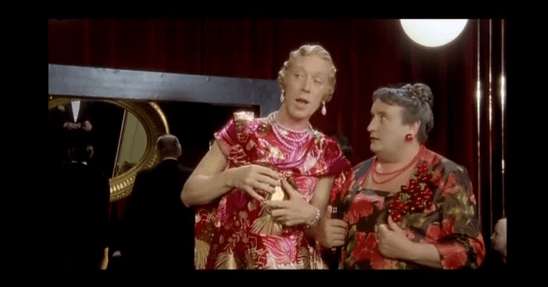
As I mentioned, “Gran Bollito” tackles numerous undertones with multiple notations of the horrors of war and the inexplicable amount of death from it as well as from disease, to miscarriages, and to the actual beheadings to sustain a red soap bar factory and food processing plant Lea runs in her custom made kitchen. The Bolognini film also notes many facets of mental illness and health with merely Winters’ topping the psychological pyramid. Conditions consisting of states from a stroke, absentminded dementia, and severe delusions to name a select few are displayed throughout to which almost puts the perception of Lea, or maybe Lea’s perception, one of relative normalcy. Lea’s derangement stems from her fifteen years of pain and suffering through multiple miscarriages. Bolognini very conspicuously has Pozzetto, Lionello, and Sydow portray Lea’s victimized women. They represent Lea’s resentment for their wasteful contributions toward their natural given right to bear children as if the women were merely men without a womb and that strikes a sensitive nerve with Lea who would do anything to give her children life again.
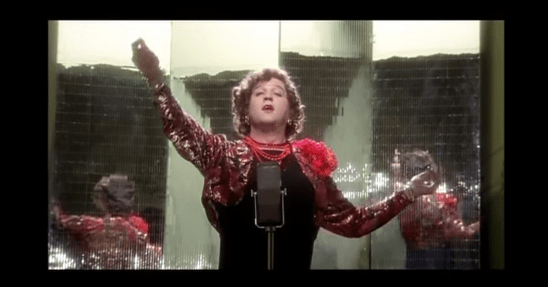
Generally, Bolognini’s constructs a well paced film, seamlessly passing the days, weeks, or months from Lea’s condominium integration to the slow seep that eventually breaks into maddening despair and desperateness. The cinematography by Armando Nannuzzi is soft and lofty that appeases to angelic similarities akin to that of Tinto Brass films, but when the tide turns, her kitchen brights white and Lea is dressed in midnight black as if she’s the Grim Reaper herself. Nannuzzi’s an artist at his trade by enabling Shelley Winters to shed the wholesome of her prior performances and at the same time present a false sense of calm and good fortune. Composer Enzo Jannacci’s score underwhelms when accompanying said Nannuzzi’s style; the score’s flat and breathy tone just doesn’t leave an impression, lacking substance and girth that doesn’t quite fit the Bolognini’s mold. Though acting and performing not in her native country, the St. Louis born Shelley Winters extracts a true life serial killer from off the Italian crime section.
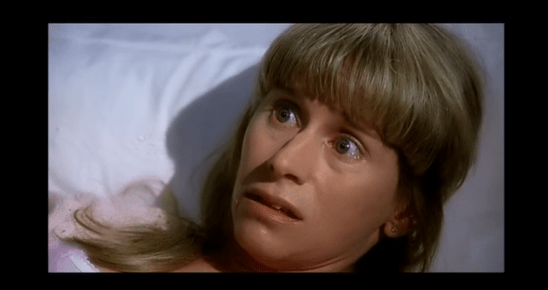
Twilight Time’s “Gran Bollito” is now on a Blu-ray High Definition 1080p transfer presented in a widescreen 1.85:1 aspect ratio. The limited edition release look impeccably detailed, sporting natural coloring and depth. Twilight Time, by far, has the best image quality compared to any release. The Italian 1.0 DTS-HD Master Audio is pretty good with balanced range and clarity in all aspects of audible tracks with only a minor pops in the tracks during transitional scenes. Bonus features include an audio commentary with film historians Derek Botelho and David Del Valte with also the original theatrical trailer. Twilight Time polishes “Gran Bollito” with the respect this obscure Shelley Winters film deserves; a horror-comedy that pushes the limits bordering insanity and disparity in a twisted display of narrative too intriguing to fathom.

“Gran Bollito” on Limited Edition Blu-ray!

Holiday Charity Starts Now! Distribution label Cult Epics Campaigns for a Continuous Cult Cinema Journey!
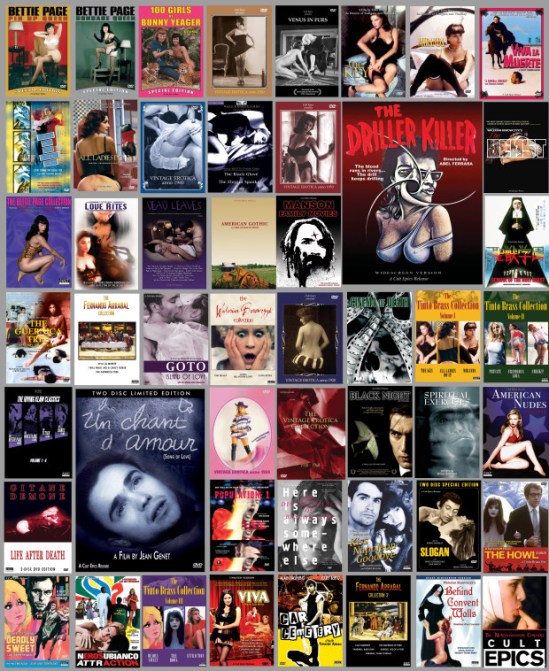
Cult Epic founder Nico B. wants to spread the joy of cult cinema to not only the television sets at home, but to the world! The Dutch filmmaker and passionate cult cinema lover has employed me, and other social media coordinators and bloggers, as a servant of his word, delivering the following message to all fans of erotica, horror, and arthouse films!
“We are in our last week, and this is the week that counts. Some of you have contributed to our campaign, thank you so much! and we would ask all who are fans of our label or releases and want to secure its future in the new year, please pick a Perk to your liking and support us in our endeavor bringing you new releases in the years to come. One of the titles we have secured the rights as well for is the most interesting giallo DEATH LAID AN EGG, so there is much work to do, and for such we need funding, which current distributors no longer provide.
Also please give the campaign one more push on your social media:
CULT EPICS INDIEGOGO CAMPAIGN Cult Epics presents controversial art films with a cult following on DVD and Blu-ray. At its 25th Anniversary year Cult Epics needs your support to continue bringing you new releases. Find out more here: https://igg.me/at/cultepics
Best regards, Nico B
www.cultepics.com“
Please show your support! Every little bit matters and you may get a little something in return if you donate $20 or more! I got my eye on that Nekromantik T-shirt! Only 1 MORE WEEK TO GO!
Evil Git Er Done in “Bubba the Redneck Werewolf” review!
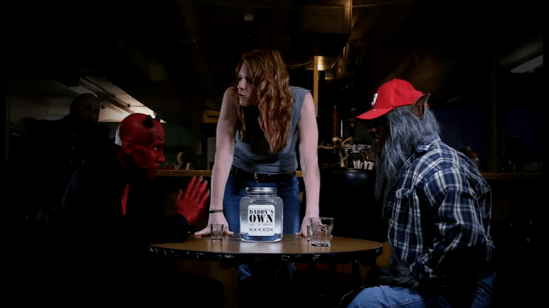
In the sleepy town of Broken Taint, dimwitted dog catcher Bubba Blanche is the town joke amongst the rest of the moronic residents even in the eyes of former girlfriend Bobbie Jo, wrapping her needs around the naked muscle-shirt arms of a triple wide trailer owning redneck. Bubba swears that he’ll do absolutely anything to win Bobbie Jo back and his pathetic cries stretch deep to the depths of hell, reaching the ears of the The Devil himself who suddenly appears in Broken Taint. The Devil strikes a dubious agreement with Bubba to make him stronger in order to win over Bobbie Jo, but when Bubba wakes up the next morning, the dog catcher has been transformed into a big, bad, and hairy werewolf. His curse becomes a gift straight from hell as he knocks the front teeth out of triple wide, wins the heart of Bobbie Jo back, and earns the respect of the local townsfolk. That is, until Bubba’s curse starts a chain reaction of unfortunate diabolical agreements between the conniving Devil and the town simpletons. As The Devil turns Broken Taint into his own tarnation playground, Bubba must use his newfound canine powers and some of his old hidden strengths to overpower and to outwit the clever Lord of the underworld.

Comic book movies. We either love them or hate them. We judge their fantastic value on the precision of who was casted as the hero or heroine and on the accurateness toward staying true to character origins. This may be common knowledge or it might not, but “Bubba The Redneck Werewolf,” a cigar-smoking, shot-gun carrying, jean-overall wearing werewolf, has been a successful comic franchise since 1995. Created by former CRACKED magazine writer Mitch Hyman, the true success of the provincial lycanthrope stems from the classic tale of a downtrodden individual being granted a huge amount of strength to overcome fear, to unleash ambitions, and to reestablish a brick wall of confidence all the while drinking a six-pack and drive a big truck. I’m sure Mitch Hyman would also note that the hilarity of a rootin tootin redneck werewolf with a patchwork heart of good intentions appeals to the masses as well.

When Two Rubbing Nickels, LLC partners with central Florida based and spoof-specializing video production company And You Films, that’s when Bubba truly comes to life from off the vivid comic book pages to ever critical independent big screen in 2014 where director Brendan Jackson Rogers’ colorful illustration of the hairiest super hero of all time and his barroom dingbats challenge a mischievous and dastardly Devil. What’s even more interesting about this under-the-radar adapted horror-comedy being released by MVDVisual onto DVD is the writer who penned the script. None other than writer, director, producer, and president of Unearthed Films, Mr. Stephen Biro. Yes, the man who delivers spectacular acquired gory avant garde and underground horror films to see a slither of public light puts forth his mighty pen to paper and etches out a perfect blend of comedy and horror that creates a sea monkey world where “Bubba The Redneck Werewolf” radiates with rib-tickling slapstick humor aimed to be darkly unapologetic and fused with embellished illustrations of spew and blood splattering mayhem.

The ensemble cast doesn’t have one single recognizable name credited and that makes this outrageous comedy that much alluring for nothing is taken overly serious. The very title of the film should be a clear expectation without explanation. Without that thespian pressure mounting on the casts’ shoulders, Rogers was able to build an alleviated atmosphere and let the actors be kids performing on the biggest stage of their careers. Even lead actor Fred Lass, who dons the Werewolf suit, had his very detailed and comprehensive werewolf facial mold conformed to show the expressions and the contours of his face. Bubba creator Mitch Hyman even has a starring roles as the Devil, his thin physique and defined face definably pops under a lush shade of hell branding red under a crown of dual horns; his satanic performance cultivates the very worst of humanity, using their greed against them, and reveling in their agony soaked suffering. Mitch Hyman wins the best ungodly trope since Al Pacino rendition of the Devil in 1997’s “The Devil’s Advocate.” Another unique element to harp upon are the strong female characters. Though the comic routinely objectifies female characters on the front covers with being petite and scantily cladded women of the countryside positioned around the massive werewolf with a baseball cap, only Malone Thomas’ role of Bobbie Jo resembles such a booty-jort, low-cut shirt clothed character, but, at the same time, Bobbie Jo remains a fierce constant show of strength for Bubba. She knows what she wants, how she wants it, and when to take it without shame and selfishness. Sara Humbert and Gail Fleming do the same for their respective roles of the blunt bartender Jamie Sue and the clairvoyant gypsy.

MVDVisual shotguns a beer and will deliver “Bubba The Redneck Werewolf” onto a region free DVD come 2017! The comic book image quality does well with the slight rotoscope composite with interlaced moments of raw and naturally colored scenes. The darker scenes in the widescreen 1.78:1 presentation comes off unsharp and blotchy, leaving details solely toward more well lit portions. The Dolby Digital audio track clearly puts forth dialogue amongst a balance ambient track. No issues are detected and sufficiently goes beyond being just good quality. A vast batch of bonus material outshines other indie releases, beginning with a 16 minute documentary “From Page to Screen. The Making of Bubba The Redneck Werewolf. Other extras include deleted scenes, blooper reel, Werewolf and Devil Make process videos, “The Ballad of Bubba” behind-the-scenes music video by The Blast-Offs, and the official trailer. Amongst the top contenders of modern horror-comedies and werewolf films, Brendan Jackson Rogers, Mitch Hyman, Stephen Biro, and Fred Lass have, literally, created a winning combination with their monstrous furry feature.

Buy “Bubba” on DVD @ AMAZON.COM!


