EVIL Just Casually Swims Along in “The Lake” reviewed! (Dread – Epic Pictures / Blu-ray)

Take a Dip in “The Lake” on Blu-ray Home Video!

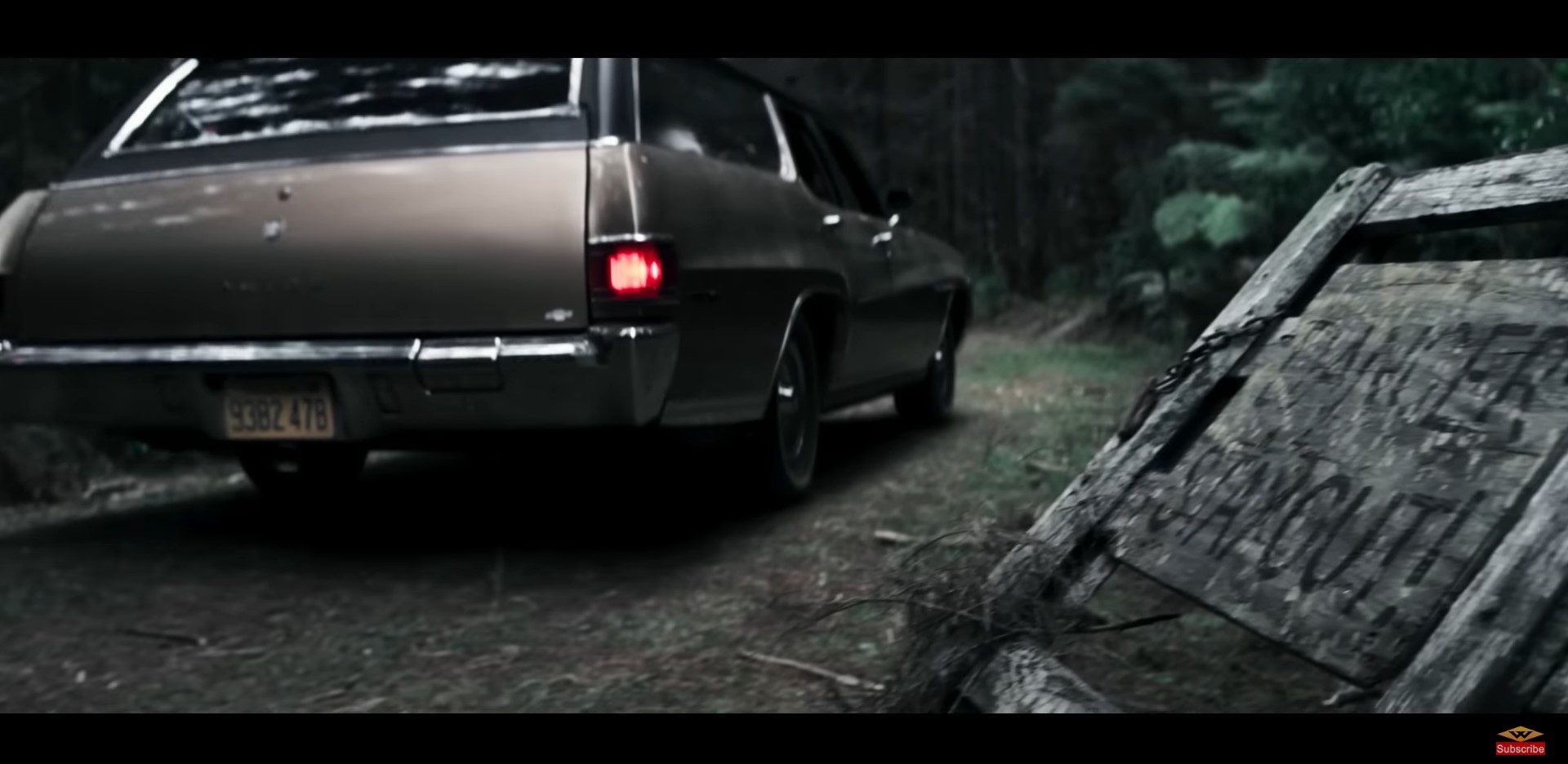
The small Thailand village of Bueng Kan becomes under siege by a monstrous being from out of the depths of near by lake.  Vicious and stealthy, the unknown creature terrorizes the wetland villagers town by town, killing all those in its rampaging path up an inlet river.  The local police commander and his two topnotch detectives are baffled and have no idea what they’re up against or how to exactly handle the situation but with the help of one of the bitten victims, psychically linked to the creature by its bite, the police and vigilant locals manage to capture the creature before it can wreak more havoc.  Concurrently, Police discover a large egg by the originating lake of first creature sightings and as they inspect it, the much larger mother beast emerges.  The mother searches out her children by using vocal sonar to track down her troubled little one, sending her galloping toward the panicky and crowded town in an unstoppable hunt that could lead to chaos and catastrophe. 

When the first news broke about “The Lake,” there was considerable positive buzz surrounding the big-budgeted, Thailand produced picture for it’s substantial, animatronic creature feature effects.  Yet, I purposefully held back doing any further research into learning more about the film that was released in the latter half of 2022 for reasons that may bias my professional opinion and to not spoil a virginal viewing experience of too much trailer audiovisual that can sometime reveal all the good bits and pieces of a movie.  Retrospectively, I’m starting to think that not absorbing much about the Lee Thongkham’s written-and-directed picture, whether by intentional research or by happenstance, was in due part to its unfavourability amongst global audiences despite the tangibly terrifying and impressive effects.  “The Lake” is produced by Nimit Sattayakul and Nathaporn Siriphakacharath with Dread Central’s production label, Epic Pictures, serving as coproduction company in conglomerate association with Hollywood Thailand, Airspeed Pictures, Five Stars Network, Right Beyond, Creative Motion, and the director’s own Thongkham Films.

“The Lake” is an ensemble cast of well-known Thai and Chinese based actors and actresses brought together to play a variety of characters caught up by a sudden and surprising monster attack.  The cast works well enough to supplement “The Lake’s” overall reactionary state of frantic and heavy browed emotions.  In fact, the performances are terribly melodramatic and only reactionary.  For a Kaiju film, there’s not a lot of chase sequences, monster versus man battling, or even mass destruction; instead, the direction is geared toward the emotional aftermath of experiences, such as watching the monster in terrifying awe, twisted faces of concern over the turmoil, or breaking down in a moment of loss, which graphic death scenes seem very sparse with only a few instances of the humanoid sized beast taking chest bites out of a few village denizens and the only principal character death.  The despairing cast is mostly comprised of Thai actors with a handful of Chinese actors sprinkled in, beginning with Thai leading man Thiraphat Sajakul (“The Maid”) as head inspector James (last names are nonexistent in the cast of characters).  Inspector James not only has to figure out how to outmaneuver the magnitude of the creature pool but also outthink the angsty games of his antagonistic teenage daughter Pam (Supansa Wedkama) who has squared off against him after the death of their mother.  That teeming with bitterness and frustration dynamic barely holds water as the problematic situation is over before it can even began to fester with audiences.  The emotional weight is definitely felt but the emotional worth retains little impact when lake monsters begin to emerge like Russian Matryoshka dolls, or nesting dolls, beginning with the smallest of the set first and working it’s to the larger mother.  “Motel Acacia” and “The Maestro:  A Symphony of Terror” actor Vithaya Pansringarm has a comparatively commanding presence as the Police Commander, but, to be honest, Pansringarm is consistently typecast as law authority throughout his career and has a firm foot on the role’s neck, but one of his subordinator officer is his daughter Fon (Palita Chueasawathee), a fact that we don’t really know until much, much later into the narrative, making the bond essentially not worth knowing, especially since nothing really happens with Fon other than the occasional exposition of events that can be easily interpreted with our own eyes.  Another pairing is wetland farmer Lin (Sushar Manaying) and her drunkard brother Keng (Thanachat Tunyachat, “Yuan ling 2”) who experience the initial attacks of the smaller creature and form a link to it once Keng survives a bite from its tentacle-dangling and squared-shaped jaws.  Like the other two couples, not much of arc is established, even for completion, as the pieces to their character composition feels fragmented and frail to the point of futility.  I was expecting Keng to play up his the drunk indolent and someone who takes for granted his hardworking sister and her daughter that the attack becomes this bonding moment of relationship redemption or salvation, but what unfolds on screen, between the two, harps Keng’s connection with the creature and nothing more.  Wanmai Chatborirak, Su Jack, Zang Jinsheng, and Amorntep Wisetsung round out the supporting cast.

Impressive as “The Lake” may be with the creature effects, using a near seamless blend of phenomenal computer generated imagery and the same animatronic technology as in “Jurassic Park” that brought life back from 65 million years of extinction with the T-Rex, a greater amount of depression mounds over the head of director Lee Thongkham like a black rain cloud.  “The Lake’s” creature derivativity, based off the “Jurassic Park,” “Godzilla,” and maybe even borrowing a trifle sum from “Cloverfield” in what is supposed to be a genetic combination of a crocodile, snake, and catfish(?), never weakens the narrative as audiences will always be curious to experience the larger-than-life animatronic head that miniaturizes the cast effectively.  Gen-pop will continue to gobble up a good-lookin’ monster on any day.  Where “The Lake” fatigues is with a poorly progressing script, flat characters, and misaligned directional continuity.  That latter is big – bigger than the monster itself – when one character with the camera perspective facing the framed character and the framed character begins looking slowly up to his right to eye-point the monster out and the next spliced in scene is facing the then camera perspective character from the right side and he also turns his head right to look at the monster.  They both turn their heads to the right, so which side is the monster on?  The same could be said about the omnipresent, big momma monster whose head is seemingly everything, everywhere all at once – by the sound of it, the creature should have starred in that famous multi-verse movie that won all those Academy Awards.  ‘The Lake” is drenched – excuse the pun – in overused scenes where a foreground man squares off against the blurred background monster as well as scenes of the ginormous, scaly head creeping in from either stage left or stage right to interact with the cast.  The moments lose their usually high and sizeable satisfaction rate with Thongkham’s repetitive saturation to create the first Thai, larger-than-life, monster movie because of his inability to showcase other scenes of Kaiju creature carnage.

“The Lake” arrives onto hi-def Blu-ray home video courtesy of Dread’s exclusive distribution label Epic Pictures.  The AVC encoded, 1080p, single layer Blu-ray is presented in the 1.77:1 widescreen aspect ratio, looking stunning and marvelous with the absent of natural lighting.  Most scenes are dark or overcast with rain, graded with a subtle increase of the cyan hue to reign with a ominous lurking in the dark fist.  The middle depth focus with streaking blur, like being concussed, runs as a shell-shocked induced motif throughout.  Thongkham plays with the blur feature a lot, switching back and forth between foreground and background as well as the centric focused blur with streaking.  Surprising, there are no issues with compression, despite the dark shoots against high and vibrant key lighting and the blur features which is well-sustained on the format disc.  The release comes with four dialogue tracks:  A Thai Dolby Digital 5.1, an English Dub Dolby Digital 5.1, a Thai Dolby Digital 2.0, and an English Dub Dolby Digital 2.0.  For about half the film, many of the scenes are done in the rain which don’t translate with vigor over the Thai 5.1, especially during the downpours.  Instead, “The Lake” is more focused on its epically scored soundtrack by composer Bruno Brugnano who has composed a string of horror of the last decade and half, including “The Coffin,” “She Devil”, and Thongkham’s “The Maid.”  Dialogue renders clean and clear with a fine simultaneous English subtitle, but the translation feels coarsely oversimplified to the point of covering just the basic generalities of plans, actions, and explanations, such as the environmental and global warming changes hinted earlier between the two Chinese scientists, that make the intellect of “The Lake” severely less than substantial.  The translated captions render the characters seemingly inexperienced on the simplest of tasks when I suspect that’s not entirely the case.  Spanish subtitles are also an available option.  Bonus features include a promotional behind-the-scenes advert, the official trailer, the Dread trailer, and a handful of raw deleted scenes that provide a better and extended insight into the ending rather than the wrap-it-up ending we’re left with in the final product. The physical attributes sport the monster in full roar bursting the surface of the lake on the front cover of the traditional Blu-ray snapper while the disc art plants a sandy monstrous footprint with the push lock right in the palm. There is no insert included. The region free release comes not rated and has a runtime of 93 minutes. Sold just on special effects alone, director Lee Thongkham rises the leviathan for Thailand’s movie industry, but “The Lake” is drained of box-office depth in every other element.

Take a Dip in “The Lake” on Blu-ray Home Video!

We Are All Just Playing Characters in an EVIL Movie! “Virtual Reality” reviewed! (Artsploitation Films – Kino Lorber / Blu-ray)

Believe Everything You See.  “Virtual Reality” on Blu-ray at Amazon.com

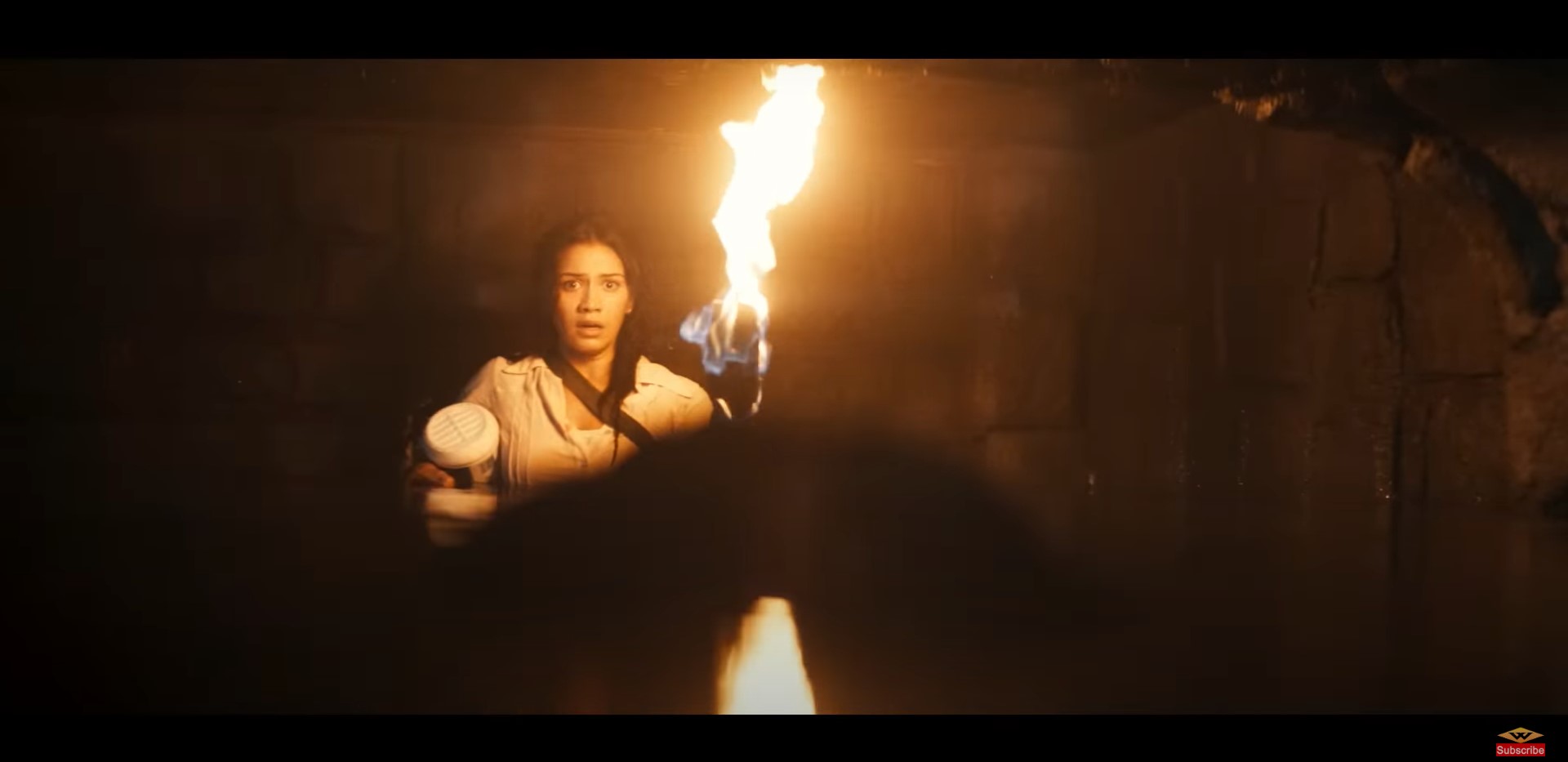
A horror movie about a supernatural Celtic killer has just wrapped production and goes into post.  The cast and crew what to succeed at all costs, not only in the movie but also in their stagnant careers.  However, the director, Matias, craves fame and legacy to the point of committing his soul to whatever it takes to cement his film in acclaimed success.  Matias and the arcane producer form a pact with a diabolical computer program and artificial intelligence that’ll bind their movie to esteemed infamy as well as bind their cast and crew to their characters.  When Matias invites select cast and crew to a private screening at his home, they realize the movie has scenes of their characters that weren’t shot during principal photography and that whatever happens to their characters in the movie, being chased by the Celtic killer, will happen to them in real life.  The only way to survive the movie is to last the full 90-minute runtime.

Hailing from Argentina, the South American country that brought us “Terrified” and the “Plaga Zombie” films, comes another tale of terror with the metaverse horror “Realidad Virtual,” aka “Virtual Reality.”  The 2006 “Director’s Cut” and 2009 “Breaking Nikki” shot caller Findling continues his traipse through psychotronic land with a story that couldn’t be more relevant today than if artificial intelligence synthesized the narrative itself out of binary ones and zeros.  The script comes from Findling and cowriter Lourdes Prado Méndez, an Argentinian romance novelist.  Having virtually no romance in “Virtual Reality” whatsoever, the 2021 film stretches Méndez’s range into crafting characters with a foot in two planes of existence while under immense fear and pressure to survive a supernatural slashening.  “Virtual Reality” is produced by Gabriel Lahaye under Lahaye Media, who has supported and collaborated on a number of Findling’s previous films, such as “Breaking Nikki” and “Impossible Crimes,” and is also a production of Wit Producciones, Cine Argentino, APIMA, FilmSharks, and INCAA of Argentina.

The story circles around a selectively small and independent film cast and crew finishing up a concluding scene of another to-be-forgotten horror movie by director, Matias (Guillermo Berthold), who has had multiple failed films before now.  Yet, the production team remains positive, hopefully the film with jumpstart careers as desperately expressed through the first act, especially with the film’s final girl star Guadalupe (Vanesa González, “Hypersomnia”), or Guad as she’s called by her friends, and her director’s assistant brother Pablo (Santiago Magariños).  Berthold plays the sneaky-sadistic director about as a well as most with a fervent penchant to do anything for his creative filmic art even if that means colluding with a shady, mysterious producer in César Bordón (“She Wolf”) whose performance’s obscured or lack of purpose is due in part to the character’s flimsy connection to the diabolical computer program.  Bordón can’t help but just be an inhuman human, violent by necessity instead of being violent with a purpose.  The producer seeks success for every single one of his films with a subsequent plotted course for the next idea – whether be a sequel or a brand new story – yet his connection to the network of evil of unexplained runes, sporadic pixilation, and artificial intelligent adaptations that can re-edit recordings into a new and inexplicable account of the story has been sorely severed in regard to understanding his background and his motivation of mortal sacrifice for movie fame.  Other connects that were left on the cutting room for, so to say, were between the siblings Guada and Pablo and their dying mother in what I suspect was an attempt to shove the sister and brother some sympathy, clearing the way for the two to be the unambiguously heroic duo, but the scene with their mother on her deathbed offered little-to-no compassion, producing a gelatinous lasting effect in what was a more visual one-off of two children spending the time they have left with their mother versus an incentive or arc scene that would hopefully rally up character expectations to look after each other.  “Virtual Reality” rounds out the cast with Frederico Bal (“Impossible Crimes”), Francisco González Gil (“El último zombi”), Sofia Del Tuffo (“Luciferina”), and Christian Sancho in a Johnny Depp inspired dressed part of a self-centered actor with a suspected pill addiction. 

As far as plot designs go, “Virtual Reality” has an interesting concept that involves filming two different harrowing situations and joining them into one parallel plight with the actors reacting more to the events happening on the television screen, which in itself becomes living, breathing character of sinisterism, rather than what’s happening outside the box in the present.  Both realities are virtually live and in play for their very being and whatever happens in one, affects the other.  “Virtual Reality’s” state of duality, not only in character, but also in linear lines of an alternate universe with lifeline connections, is smart, fresh, and terrorizing to know that your life depends on an A.I. created character coursing through a maze for their very lives.  This mirror-meta-effect continues to evolve as the story plays out that leave survivors questioning reality and questioning their individuality of some higher force that has used them like some free-thinking avatar for filmdom fame.  This is where “Virtual Reality” starts to become complicatedly crisscrossing as instances of a distorted reality spiral down a rabbit hole of what we thought was true.  Findling is nonapologetic for his layered universes that spins and wraps a narrative around another in what is a show of forced fantasy subsisting in that gray area of reality.  The Celtic slasher storyline is just a sublevel to the story’s higher level view that defines greed and worth amongst people longings for more and also models itself to reflect that thin line some people cross between reality and fantasy, as foreshadowed early on into the film during the shooting of the final girl scene when method actor Julian gets into the headspace of his Celtic killer character and really starts to strangle Guada in a climactic moment.  By the finale, you’re comprehensible pencil might have wandered off the connective dot trail in trying to see the bigger picture of Hindley’s meta-movie but “Virtual Reality” is innovative tech horror that just requires a smidgen of tweaking to be impeccable.

2020.  That was the last time I reviewed an Artsploitation Films title.  The long 3-year hiatus was due in part of King Lorber purchasing the boutique Philadelphia label that specialized in bringing independent global horror to the U.S.  Artsploitation Films and Kino Lorber continue that pursuit with Hernán Findling’s “Virtual Reality” from Argentinian now on a Stateside Blu-ray disc courtesy of the joint label.  The AVC encoded, 1080p High-Definition, BD25 is presented in a widescreen 1.85:1 aspect ratio.  Cinematically, the format storage is able to capture the true quality of the image with hardly any compression artefacts.  There’s not a ton of visual augmenting but what’s presented is a draining of color to a near black-and-white image with pigmented primary color lighting to give the scenes a dash of color that’s in contrast to the moderate-to-heavy in-movie, trope-heavy lack of lighting to create deeper shadows for that gloomy horror movie effect of interior trapped victims running for their lives in the dark.  Two Spanish language audio options are available on the release, a DTS-HD 5.1 Master Audio surround sound and a DTS-HD Master Audio 2.0. The 5.1 track has good balance between the ambient, soundtrack, and dialogue tracks albeit a little heavy on the score to clutter, at times, a clear exchange, especially when everyone’s yelling at the television set.  Other than that, no technical issues throughout the multi-channel output. English subtitles run at startup but can be turned off.  The unrated, region A encoded release has a runtime of 84 minutes but doesn’t come with a menu for special features; however, there is the film’s trailer and, if you stay tuned after the credits, there’s a bonus scene where you, the viewer, becomes the star of your own movie.  Artsploitation Films is back, baby!  Courtesy of Kino Lorber, “Virtual Reality” is barely tapped meta-horror, that has become all the craze nowadays, and Hernán Findling unboxes that fine line between real and unreal to only merge them together to be one and the same in a twisted interpretation of when art imitates life. 

Believe Everything You See.  “Virtual Reality” on Blu-ray at Amazon.com

Bruce Lee Fought EVIL for Justice. Mark Swetland Follows Lee’s Footsteps in “Blood and Steel” reviewed! (SRS Cinema / DVD)

Hiyah! “Blood and Steel” – the Lost Kung-Fu Film now on DVD!  

The brutal murder of his sister and her husband sends Mark Swetland into a vengeful fury.  Behind the heinous act, a drug smuggling organization, using a steel fabricating warehouse and a dojo school as a front, had sent a merciless assassin to take out Mark’s sister after a previous incident with the organization’s personnel that could bring down the whole drug shipment operation.  As Mark investigates for answers and track down those responsible, he’s greeted with hostility and uses his extensive martial arts experience, and a little help from a few of his closest allies, to bring the syndicate down once and for all, but the cruelty conscious conspirators don’t plan to go down without a fight as they kidnap Mark’s girlfriend and hire a mercenary fighter to bring the fight to them on their own terms. 

If you’re a martial arts film connoisseur or just an aficionado of the action-packed genre, here’s an obscure title from 1990 you desperately need to get your hands on, today if at all possible!  “Blood and Steel” is the Bruce Lee dedicated crime and martial arts actioner from producer, writer, and director, Mark Swetland.  Yes, Mark Swetland plays himself, Mark Swetland, as the unstoppable, vengeful vigilante hero in his own production that pits him going solo against a scumbag kingpin and his narcotic import-export empire.  Only recently discovered after being lost for decades, “Blood and Steel” breathes fresh 2023 air with a new DVD release and institutes a brand new, never-before-heard maxim, created by yours truly, of though white men can’t jump, they can certainly Kung-Fu.  Perms, handlebar mustaches, and tight fitting and unappealing fashion grace the screen as nunchakus and hook kicks pave the way for this seriously gratifying choreographed Kung-Fu spectacular to be resurrected from the cache of forgotten films of the cinematic cemetery, shot in and around upstate New York complete with the N.Y. accented, short-a phonological vernacular.

Mark Swetland, proprietor of a safe and vault cracking company in Cheektowage, New York, was once a martial arts instructor.  At the current age of 62, Mark has looked to cracking open safes instead of cracking open heads with his mixed martial art skills but Swetland also once dappled in film, developing his own low-budget Kung-Fu caper, inspired by his martial arts idol, the late and legendary Bruce Lee.   Ponying up much of the funds for what would be “Blood and Steel,” Mark poured every ounce of his soul and craft into the film that displays his range as a fighter as well as getting his chops busted in delivering lines and acting out emotions.  The former was more of his forte with asserting a magnetic presence as both an onscreen fighter and a competent choreographer to have the fight sequences appear realistic and quick against a slew of antagonistic opponents.  As a thespian, Mark often borrows too heavily from Bruce Lee with overzealous fist poses to even echoing Lee’s idiosyncratic short and elongated kiai sounds.    Swetland’s one-on-one scene with fellow martial artist David Bobnik, as the hired hitman Steiner, is well thought out coordination with lighting punch-kick combinations that would rival the best genre films of its time.  Neither Swetland or Bobnik are overly muscularly cut bodybuilders or the zero percent body fat of Bruce Lee’s rail frame as both men are in an ideal, physically fit shape to add to scenes test of time and doesn’t yell amateur hour of wannabe martial artist attempting half-hearted roundhouse kicks for their low budget movie.  “Blood and Steel” round out with a cast that includes Joanne Gargliardo as Mark’s girlfriend, David Male as drug kingpin Mr. Patterson, Elaine Arnone as the slain sister, Diane Zdarksky as the sister’s best friend, Rick Swetland as the sister’s slain husband, and cinematographer Al McCracken has the role of Mark’s best friend and sidekick to the end, Roy. 

Influenced by quintessential Bruce Lee films, “Blood and Steel” is entirely an homage to the exceptional action icon.  Mark Swetland’s film derives elements from “Enter the Dragon” with a plotline of the protagonists’ sister being killed by a drug trafficking enterprise as well as straight down to Mark Swetland’s yellow tracksuit, the same Bruce Lee wears in “Game of Death” with black lines down the arms and legs.  Despite the derivative aspects, Swetland still manages to output an entertaining reel in what has resulted as a passion project that has been stowed away and forgotten only to be unearthed as a transmogrified time capsule of awesomeness.  Swetland, who wore many productional hats, also edited, scored, and did sound design with a fair amount of adequate know-how.  Transitionally between scenes, “Blood and Steel” works to segue into the next scene with various connective images or fade away dissolve without appearing abrupt or muddled.  The additional Foley work, such as the whipping sound of the nunchakus, are done on a synthesizer with an unquestionable audio yield.   “Blood and Steel” has a little bit of everything that is very indicative of a Bruce Lee actioner.  Dirt bike chases that soar from off of a cliff into an exploding heap at the bottom of a ravine, forward and reverse car chases involving a 80’s Corvette Stinger, practical effects from throats being cut to spike cleats becoming lodged into the back of skulls, ridiculous over-the-head, over-the-knee backbreaking fatalities, helicopter entrances over the colossal Niagara Falls, shotgun squib explosions, and much, much more blood-churning excitement can engage the viewer into “Blood and Steel’s” edge of your seat conflict. 

Emerging victorious as a SRS Cinema home video release is the obscure revenge-action thriller “Blood and Steel” on DVD.  Presented in the boxy 1.33:1 aspect ratio, the standard definition 720p resolution, plus the type of camera being used seen in the bonus feature’s outtakes and the impurity characteristics of the image quality, all point to a super 8 shot feature.  Lined left with barely visible sprocket holes and occasionally lined right, a visible magnetic audio strip, often blue in hue, “Blood and Steel” is without a shadow of a doubt a glorified home movie in the right hands of Mark Swetland.  The washed look is a tell sign of no overlay grading, the tri-color emulsion layer remains as the original, natural grading, creating less shadowy contrast but remaining consistent and more-or-less delineated.  The English, single-channel mono track is about as flat as a pancake, if a pancake could make noise.  With hardly any depth, a steady crackling throughout, and depending on the camera mic placement in the shot, some scenes’ dialogue can barely be heard under what sounds like a soft breath or mumble while others are clearly audible and render no issue with understandability. SRS Cinema’s special features include a Fight Analysis with Mark Swetland and David Bobnik going over scene-by-scene, sometimes in slow-motion repeat, their fight sequences and explaining in commentary fashion how the crew set that all it up. Also included are outtakes, the original trailer, the new trailer, and other SRS trailers! The physical DVD sports the original “Blood and Steel” poster plastered inside a standard DVD case of an 80’s retro-rental mockup with color-coded round stickers of the genre action and of the Please be Kind & Rewind phrase. The disc art is a blowup of Mark Swetland from the original poster art. The film runs at a brisk 87 minutes, is region free, and is not rated. “Blood and Steel” has the independent spirit of the dragon, a fierce and fire-breathing martial arts film with fervent laudation for the late Bruce Lee, and is a white knight knockaround and Kung-Fu Flick that is vengeance glorious.

Hiyah! “Blood and Steel” – the Lost Kung-Fu Film now on DVD!  

Down the Path of Darkness is EVIL. “The Long Dark Trail” reviewed! (Cleopatra Entertainment / Blu-ray)

“The Long Dark Trail” on Blu-ray at Amazon.com

Set in the idyllic boondocks of Northwestern Pennsylvania, two young brothers plan to escape the abusive grasp of an alcoholic father in search for a better life.  Without a plan and nowhere to go, they go around the small town to collect money from the odd jobs the brothers worked in preparation for their abscond.  While doing so, they come upon information about their mother, who abandoned them at a younger age, that sparks an desire to track her down in hopes that once she’ll lay eyes on them, she’ll want to rekindle the relationship with her two sons, but the trek deeper into the northern woods would be long and arduous through abandoned aqueducts, pine forests, and numinous burial stones belonging to an inimical cult of women controlled by a sadistic leader.  It is the cult where their mother left them to reside and it is there where they are headed on their haunting journey in hopes for a better life.

Tackling impoverished, ill-treated youth haunted by their past and uncertain about their future, directors Kevin Ignatius and Nick Psinakis write-and-direct “The Long Dark Trail” as a tale of resiliency for two close brothers relying on each other to climb out from a pit of despair.  Ignatius and Psinakis have collaborated previously together as writer-director and cowriter-actor in the misfortunate happenings comedy “My Best Friend’s Famous.”  The 2022 drama-thriller marks the first feature film for the filmmakers who explore coming-of-age through trial by fire, or by the supernatural psychological manipulation of enchanted rocks and by the coarse portents of a blood sacrificing cult.  Shot in Ignatius’s birthplace home of Warren County, PA, the two New York filmmakers shoot the low-budget venture under their independent production company, Four Eighteen Films, in association with El Jean Productions and with associate producers Michael Kraetzer (“The Slaughterhouse Killer”) and Nicholas Onetti (“Francesca”) of Black Mandala presenting the film.

“The Long Dark Trail’s” story follows two brothers played by real-life brothers, Brady and Carter O’Donnell, debuting in their first feature film.  You can tell the brothers don’t have a ton of acting experience as their dialogue is very mechanical and their movements are bit stiff and hesitant, but since the narrative revolves around their characters, antisocially bred by the abusive father’s impropriety, being socially awkward on screen, even between each other despite their off-screen brotherhood, doesn’t necessarily feel far-fetched.   “The Long Dark Trail” isn’t a heavy on the dialogue narrative, leaving much of the plot to unfold with the brothers’ wondering the forest grounds, natural and unnatural visual imagery, and the hypnotic folksy score.  From start to finish, Brady and Carter carry the entire storyline from start-to-finish with intermittent spliced in scenes of hooded cult acolytes doing obscure and violent things in what looks to be the upstairs of a vacant barn or with the earlier scenes of the boys visiting and conversing with a purpose with Mr. Barrow as he rambles on about his veteran war stories while the boys take full advantage of his porch sitting to steal food form his cupboards; a role undertook by Kevin Ignatius’s father, Paul “Doc” Ignatius.  The O’Donnell siblings shepherd much of the trail journey’s harrowing phantasms to the best of their ability but are also not limited to being just reactionary to the spooky woods.  Practical makeup effects and some visual compositions are chartered for divisive inducing dynamics in order to drive a wedge between the brothers’ already contentiousness of wanting to traverse a dark corner of God’s country to see a mother that has already forsaken them once.  Trina Campbell plays the indoctrinated mother now embedded into an outskirt cult led by Paul Psinakis’s version of a cult leader in Zeke.  Psinakis has the maniacal wild eyes and brooding aura demarcating him as a clear cut bad guy with a bunch of vary-in-age women in tow but the cult is not very clearly defined as a whole or with a purpose and when the boys stumble into their isolated camp, near that aforesaid barn full of now chopped up body parts and hunting game skulls, the exposition to follow is not presented and the real sense of danger is only palpable from Zeke and Zeke alone. 

While cast and story struggle to make ends meet with relative clarity, what Ignatius and Psinaki do really well in fashioning for effect is depicting the rural folk horror elements of vast natural landscapes that can turn looming and inescapable.  As a resident of Southeastern Pennsylvania, convenience and concrete genetically makeup my quasi suburban-urban scenery, but I can appreciate the opposite side of the state with greenery up to your neck and beyond, the solitude of a different way of life, and how one could also appreciate how menacingly engulfing that can all feel as well.  We’re also not completely stuck to the forest setting as the directors’ use riverbeds and lakeshores, sprawling grasslands, and the quaint town structures to enlarge the presence of a smaller shoot.  Kevin Ignatius isn’t just the co-director of “The Long Dark Trail,” he’s also the film’s composer, another aspect of highlight, amongst other hat wearing titles.  The catchy and mesmeric folk/bluegrass score is a real tribute to Ignatius’s musical background, having formed a band, Das Tapes, with brother Mark, by adding a layering combination of vocal sounds and banjo strumming.  The latter banjo reminisces a little bit of “Deliverance” but with an elongated cadence integrated into the brothers’ long road tour, becoming a mainstay importance to the overall lingering feel of backwater chills.  Where “The Long Dark Trail” fumbles is at the heart of project – the story.  Never really tying the elements all together, the narrative often feels abstract and unhinged in a series of randomized events between the cursed rocks, vivid hallucinations, the boys’ trauma, the women stuck in a cult of a madman, and the message on blood ties.  Was the father’s verbal and physical abuse the root cause of psychological and family brokenness?  Are the brothers’ bond and endurance being tested on the trial trail toward their last form of hope, their abandoning mother?  “The Long Dark Trail” is in a long, dark well of questions without any return of answers in a conclusion that can’t be roughly swallowed along the course of an exceptionally scored and formidable atmospheric thriller. 

“The Long Dark Trail” path leads to at home Blu-ray release from Cleopatra Entertainment, the film banner of Cleopatra Records, and MVD Visual.  The AVC encoded BD25 provides high-def resolution in 1080p of a widescreen presentation.  The Cleopatra Blu-ray does not list the aspect ratio and IMDB.com lists the film at 2.39:1 which is accurate in accordance to the release.  A combination blend of natural and lowkey lighting doesn’t appear to present too many issues with the format storage.  A few signs of pixilation in deeper negative spaces cease to only a handful of decoded moments stark contrast.  For a digital recorded film that’s churning out an average of 25Mpbs, par for the course for Hi-Def, the details don’t display to the fullest sharp potential but are certainly on the edge of so.  You can get better visuals from the brightly lit of primarily color contrasting scenes for a film that’s remains in natural grading.  Also not listed on the Blu-ray back cover is the audio specifications, but according to my player, the release comes with an English Dolby Digital 5.1 surround sound and an English LPCM stereo. The five-point multi-channel audio mix studs the soundtrack with piquant notes, harmonies, and twanging banjo chords. Dialogue is pleasantly defined through the robust soundtrack and the ambience has a nice range of rustle and depth. I’m quite surprised by this Cleopatra Entertainment release that doesn’t come with a second disc, a CD, of the soundtrack, likely due to the score not produced by the parent record label. English subtitles are optionally available. The bonus features include blooper outtakes and behind the scenes footage, an image slideshow, and the original trailer. The back cover also notes an interview with the director, but what’s on the disc is a featurette surrounding artist R.L. Black’s graphic novel artwork for the film and for the forthcoming comic based off the film. There is no interview with the director. The rest of the bonus material rounds out with Cleopatra Entertainment trailers of “The Ghosts of Monday,” “Frost,” “A Taste of Blood,” “Escape from Area 51,” Baphomet,” and “Scavenger.” The film is housed in a traditional Blu-ray snapper with a rough and ready composite of a skull looking to swallow the bicycling boys on the dark path with a dark lit moon overhead; a missed opportunity in my opinion as there’s a better poster out there for the film, a more graphic poster, of one brother’s bloody head split down the middle and opening for the other’s brothers face to show. The Blu-ray is region free, unrated, and has well-paced runtime of 78-minutes. Likely not to please by or understand by most, “The Long Dark Trail’s” coming-of-age narrative wrangles with what’s most important for a folk horror film of its kind – either to be an apparatus for breathtaking countryside imagery or of trauma that is tense-laden and tearing families to pieces – and unfortunately, the feature couldn’t be both.

“The Long Dark Trail” on Blu-ray at Amazon.com

The Death of a Daughter Leads Down to a Psychological Path of EVIL! “The Haunting of Julia” reviewed! (Imprint / Blu-ray)

Limited Edition of “The Haunting of Julia” Available at Amazon.com!

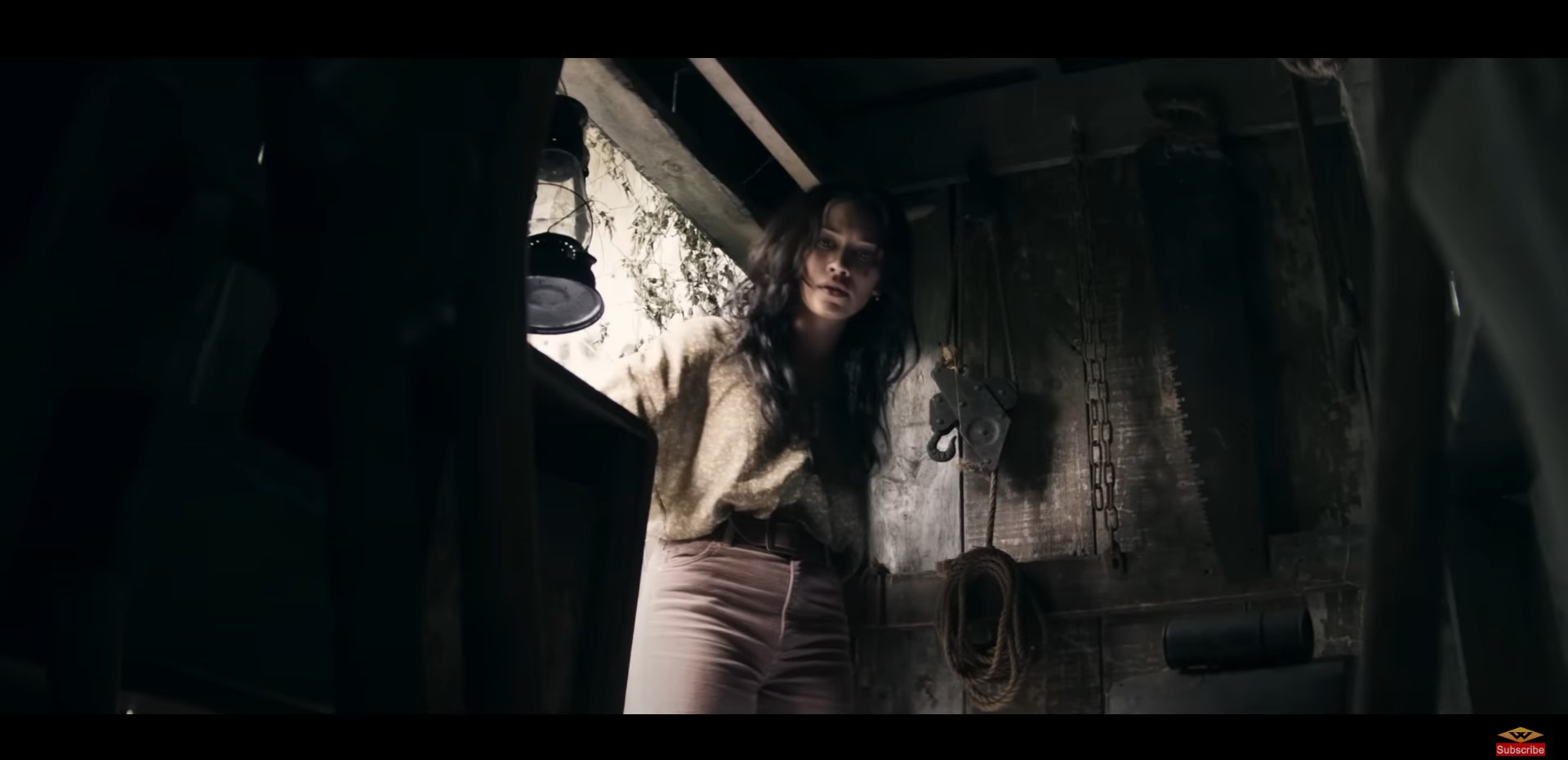
This morning was like any other as the Julia rustles up breakfast for her all-business husband Magnus and their lively vivacious daughter Kate, but when Kate violent chokes on a piece of apple and Julie performs a bloody, untried tracheotomy in a state of panic in order to save her daughter’s life, their lives are forever changed as Katie dies in Julia’s arms. For weeks, Julia’s melancholic depression commits her to hospital care. When she’s ready for release per the Doctor’s recommendation, Julia avoids returning to Magnus as their relationship was never a mutually loving one but rather a normal route connected by the presence of their daughter Kate. In order to restart her life, Julia separates from a controlling Magnus and purchases a magnificent London house only to then be plagued by ghostly occurrences she suspects is the work of her late daughter. What Julia comes to find out is the troubling history of her newfound home.

Mia Farrow solidified herself as a genre actress by starring in the archetype for films revolving around the prince of darkness, Satan, in 1968 with “Rosemary’s Baby.”  Unlikely seeing herself as a prominent woman of a notable rite horror, Farrow quickly understood her value in the genre as a complex female lead in the unsettling and gothic protuberance atmosphere style.  Nearly a decade later, Farrow stars in the Richard Loncraine directed “The Haunting of Julia,” similar only to the menacing supernatural child component but digs deeper in manipulative complacency, psychological guilt, and of that distorted reality created by the stout motherhood connection.  The “Slade of Flame” director set his sights off of Rock’N’Roll inspired dramas around the ugliness of the music industry and onto the filmic adaptation of the Peter Straub novel “Julia,” penned by the Dave Humphries and “Xtro” trilogy director Harry Bromley Davenport.  The joint United Kingdom and Canadian production, titled originally as “Full Circle” in the UK, is produced by Peter Fetterman (“The Exorcism of Hugh”), under Fetterman Productions, and Alfred Pariser (“Shivers”) of the Canadian Film Development Corporation. 

Mia Farrow’s distinct reactions and acting style very much engulfs the majority of horror experienced in “The Haunting of Julia,” as well as exhibited in “Rosemary’s Baby.”  The glassy eyed, long stares, the frightened, coiled emotions that swirl seemingly out of control, and the switch-gear ability to be strong and compliant in tense-riddled situations that just only involve herself in the scene.  While “Rosemary’s Baby’ and “The Haunting of Julia” may exact the same gothic aperture for child-themed horror and both are adapted literary works, “The Haunting of Julia” unfolds not in the anticipating of child birth but rather postmortem with the aftermath affliction of a child’s sudden and terrible demise that occurred in the frantic mother’s misguided embrace to take a knife right to her child’s jugular in hopes of dislodging an air denying obstruction.  This opening scene shocks us right into a grim framework that simultaneously divides trust and empathy for Julia as circumstances unveil what we might suspect all along, that Julia’s mental health suffered immensely.  What pushes Julia into undue stress is her controlling, dispassionate husband Magnus. Played by “Black Christmas’s” Keir Dullea.  Dullea pulls off the unsympathetic impassive father who just lost a child and can’t see the underlying psychological unrest his wife suffers.  In short, Magnus attempts to gatekeep Julia’s damaged psyche by trying to strong arm her back into normalcy, even going as far as manipulating Julia and his own sister Lily (Jill Bennett, “The Skull”) into slipping his foot into the door with a wife who fled from his grasp as soon as released from the hospital for essentially shutting down after their daughter’s death.  That toxic pressure is coupled with the seemingly unnatural incidences in her new home that clash her old life, chained to an unconsciously broken family, with her new life that seeks to decompress from a pair of diverse traumas.  “The Haunting of Julia” rounds out the cast with Tom Conti (“Blind Revenge”), Mary Morris (“Prison Without Bars”), Anna Wing (“Xtro”), Pauline Jameson (“Night Watch”), Peter Sallis (“Frankenstein:  The True Story”), Susan Porrett (“Plunkett & Macleane), Edward Hardwicke (“Venom”), and Sophie Ward (“Book of Blood”).

More or less forgotten by U.S. audiences due to no fault of the film’s own acclamatory measure or the audiences willing participation, the international produced “The Haunting of Julia” wasn’t publicized in the U.S. despite the two American leads – Mia Farrow and Keir Dullea.  Richard Loncraine’s film has incredible merit to the idea of a mother’s loss within the construct of gothic horror, which, in another aspect of unfathomable irony, resembled more closely to the American gothic style of the supernatural sequestered dark house.  Yet, this house is in London, wedged in like row homes, but as mentioned numerous times in the film, the house has distinction and grandeur that overlooks the buried ghostly history of the previous owners.  Julia absorbs the stories, filters through them, and comes to believe her own daughter is either trying to reach out to her or is hellbent on revenge for the amateur hour tracheotomy.  Loncraine does the phenomenal job of shocking our core with the early choking death scene of Julia’s daughter but once that dust settles, the pacing becomes more rhythmic to the point of building, slowly, Julia’s encounters with unknown forces that, at first, are just seemingly bizarre happenstances of left on bedroom plug-in radiators and playground visions of a girl that resembles her daughter cutting up another kid’s pet turtle.  These events play into their evident conspicuousness to push audiences deep into Julia’s mysterious milieu, officially sealing something isn’t right with the clairvoyant Ms. Flood’s scarred-screaming vision of a bloody child.  Julie become engrossed into learning the truth, eager to determine if that child is her late daughter and is fed tidbits of the house’s history that not only continues her own investigation but other research into other house tragedies that fork-split her presumptions.  As all this noise tornadoes around Julia, the stories, the occurrences, the deaths, viewers will never deduce to a reason closer to home, to Julia herself, until possibly too late at the end with a grisly open-ended finale that what Julia has been experience may have been done at her own forlorn hand. 

Atmospherically sound, undoubtedly creepy, and spearheaded by strong performances, “The Haunting of Julia” is the unspoken heroine of late 1970s supernatural horror – until now.  Imprint and Via Vision of Australia release a limited edition, high definition 1080p, 2-disc Blu-ray set with an AVC encoded BD50 of a new 4K scan transfer of the original 35mm negative. Presented in an anamorphic widescreen 2.35:1, the 4K scan is super sharp with virtually no compression issues on the formatted storage. Blacks, and negative spaces in general, are rich and void, despite Peter Hannan’s low-contrast and hazy surreal veneer that definitely plays into a psychotronic dreaminess. The resolution goes unaltered, and the natural grain maintains the original theatrical presentation for a revered 4k transfer. The English LPCM 2.0 mono track mix audibly delineates a viable one input split to make the dialogue and all other tracks comprehendible. Despite some slight here and there hissing, dialogue is amped up nicely for better resolved results that still remains mingled with the ambience in an all for one, one for all audio format. “Space Trucker’s” Colin Towns’s insidious and distinctly composed soundtrack reaches into the recesses of soul and strikes at the very nerve of fear with an unsettling score, perfectly suited for a mother drowning in the pitfalls of a supernatural sanctum. Optional English Hard-of-Hearing subtitles are available. The first disc special features include two audio commentaries – one with director Richard Loncraine and Simon Fitzjohn and the second, brand new, commentary with authors Jonathan Rigby and Kevin Lyons, new interviews with composer Colin Towns Breaking the Circle, cinematographer Peter Hannan Framing the Circle, and Hugh Harlow Joining the Circle, a new video essay by film historian Kat Ellinger Motherhood & Madness: Mia Farrow and the Female Gothic, the original trailer, and an option to play the film with either “The Haunting of Julia” or “Full Circle” opening title. The second disc is a compact disc of Colin Town’s 11-track score featuring 20 minutes of previously unheard music out of 60:52 of music. The limited-edition set comes with a neat lenticular cover on front of the hard box of what we assume is Julia’s ghost glaring at you from all angles as her eyes follow you. Inside is a clear Blu-ray snapper that’s a little thicker than your traditional snapper and comes with a built-in secondary disc holder. The cover art is simply Mia Farrow cowering outside the bathroom door but the reversible cover displays an original “Full Circle” poster as the front image. The disc arts are illustrative and compositions with the feature presentation disc the same as hard box lenticular without it being lenticular and CD pressed with Mia Farrow’s face in the background and a child’s cymbal banging toy in the foreground. Also in the hard box is a 44-page booklet feature an historical background essay by critic/writer Sean Hogan that has black and white and color photos and various poster art. The film, which comes in as Imprint catalogue # 218, runs at 97 minutes, is unrated, and, is assumed, for region A playback as it’s an Australian release – there is no indication on the package. “The Haunting of Julia” is Mia Farrow’s shining, yet lost effort post Roman Polanksi and is a remarkable look at subtle disconnection from extreme guilt when in every corner, every sign, is thought to be about your lost child.

Limited Edition of “The Haunting of Julia” Available at Amazon.com!