EVIL’s Counterfeit Products are the Bomb! “Knock Off” reviewed! (MVD Rewind Collection / 4K UHD and Blu-ray)

When confronted with product forgeries by Hong Kong police and company representative, Ray, a longtime Hong Kong counterfeiter trying to go legit by partnering up with Tommy to be a distributing fashion designer of V-Six Jeans, becomes embroiled in a Russian smuggling operation of hiding powerful micro explosives in counterfeit goods being sent around the globe.  With their ability to be activated by satellite waves, the devices can be hidden in all types of products.  The CIA, using Ray to track down another notorious counterfeiter, becomes involved and exploit Rays connection to Hong Kong’s criminal underbelly but double-crossing twist and turns has Ray struggling to trust an ally in his mission to not only find out who is counterfeiting his denim goods but also save the world from infiltrating Russia explosives.  He’ll have to rely on his fighting skills as well as hesitantly trust those who’ve deceived him to unearth the person responsible to clear his name and stop the deadly outbound shipments. 

To start this review with a personal anecdote, I recently sold Air Jordans to an eBay customer and come to my surprise and dismay, eBay’s authentication process determines the shoes a forgery.  I’ve sold many Air Jordan and Nike shoes in the past, successfully through the authentication process, and pride myself on knowing what to for when determining fake product.  This one had me fooled.  An exact lookalike of the Air Jordans that passed my authenticity examination with the company tag that has all the production information including the product identity number, had the correct Air Jordan logo, and the material passed the visual and feel test with substantial promise to confidently market.  Now, what eBay found is completely without reason as I don’t know what they saw or found but what I found in the 1998 campy-action-thriller “Knock Off” surely reminded me that there is always more than what meets the eye.  “Once Upon a Time in China” and “Twin Dragons” action film director Hark Tsui works with western actors to achieve a nonstop, impractical, and fun to watch film that doesn’t letup or provide any downtime.  The script is penned by Philadelphia born screenwriter Steven E. de Souza, the same de Souza behind “Commando,” “Die Hard,” and “Street Fighter,” orders another supersized helping of action on a Hong Kong reality-defying scale and is produced into an extremely 90’s-laden existence by Raymond Fung, Kamel Krifa (“Universal Soldier”), Moshe Diamant (“I, Madman”), and Nonsun Shi (“Double Team”).  “Knock Off” is a production of Film Workshop and MDP Worldwide. 

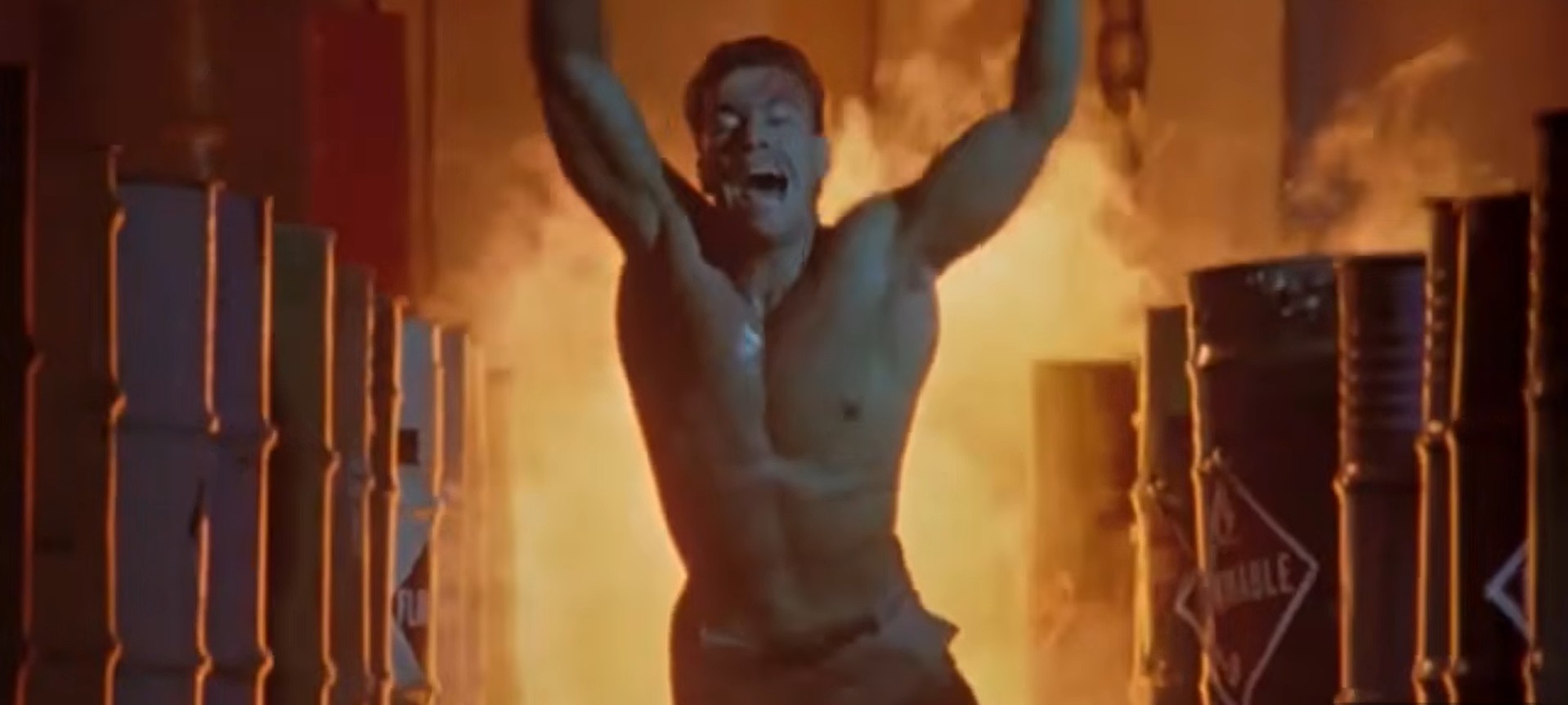
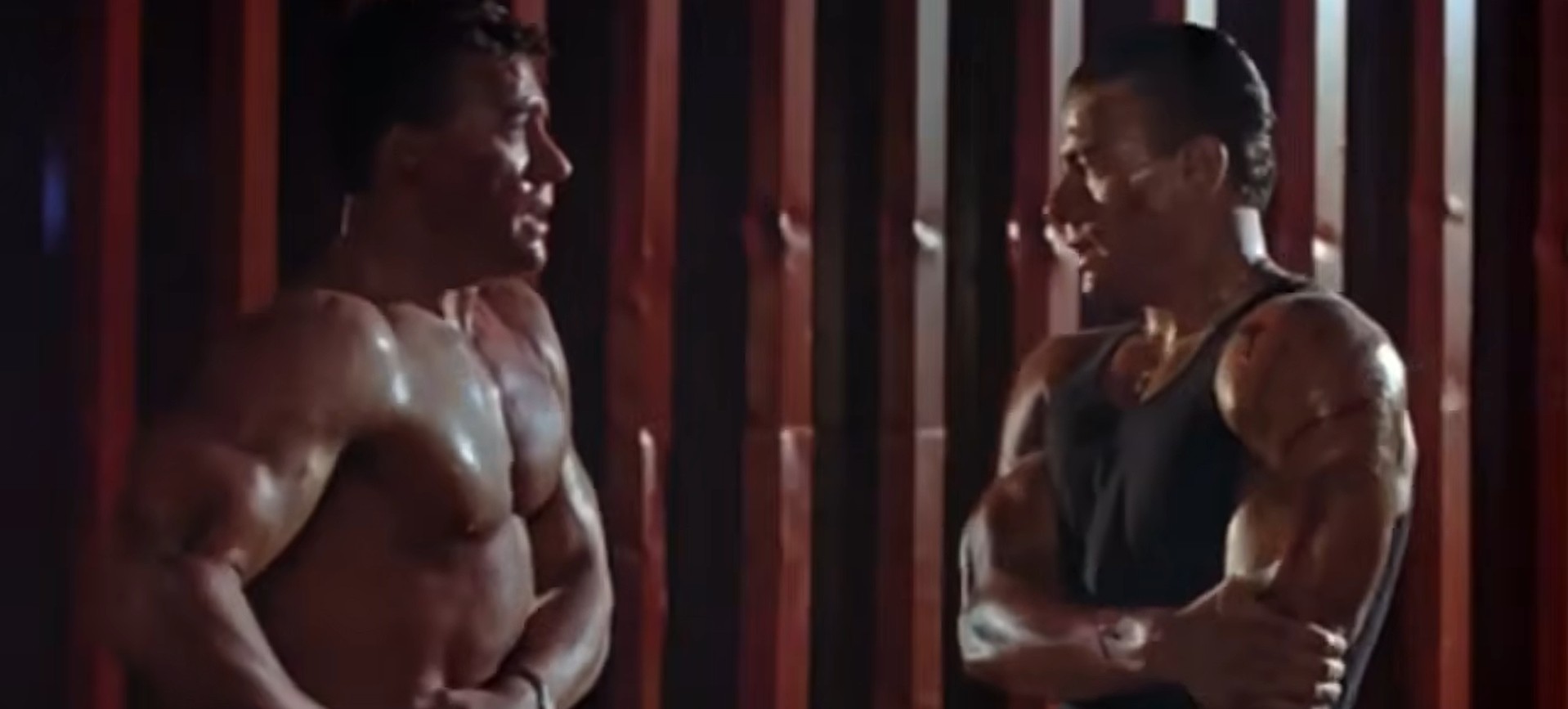
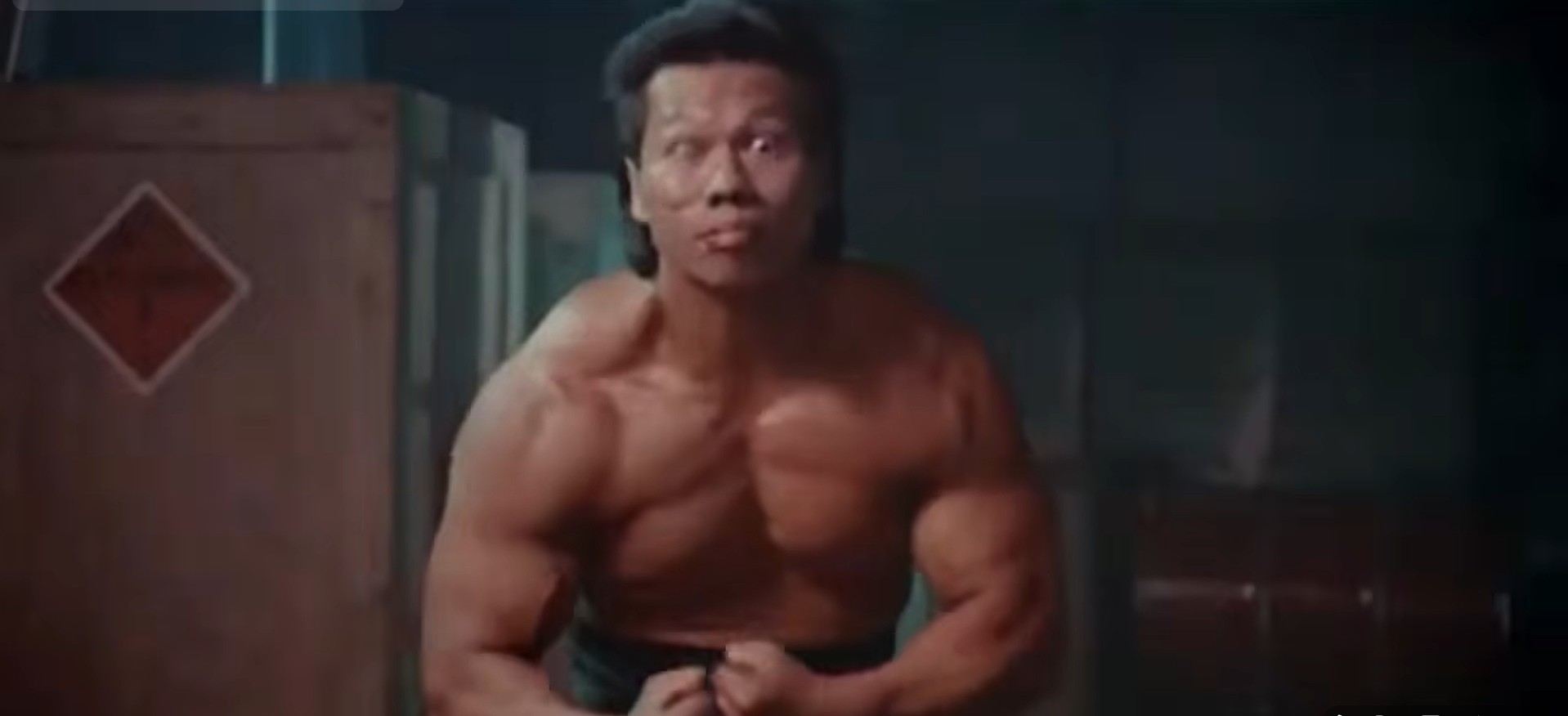
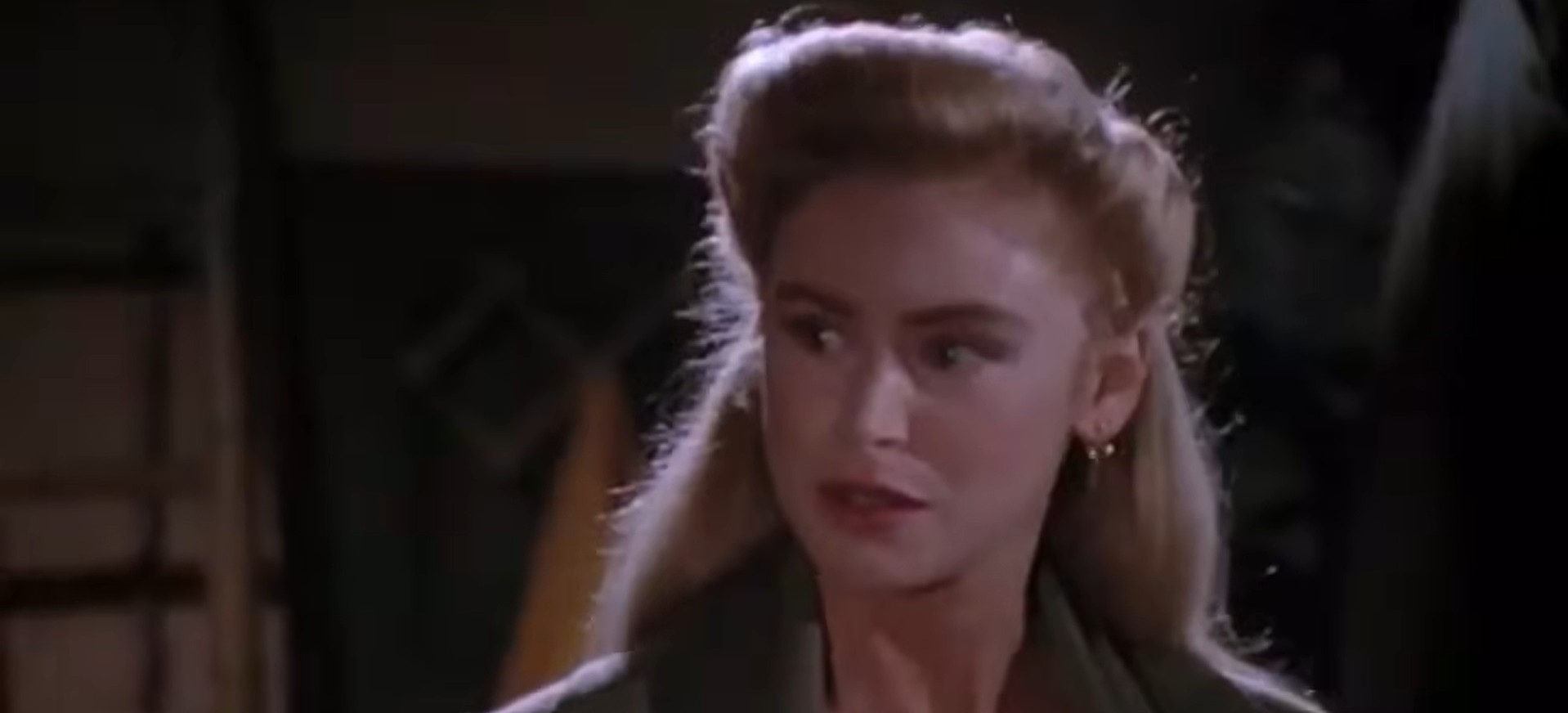
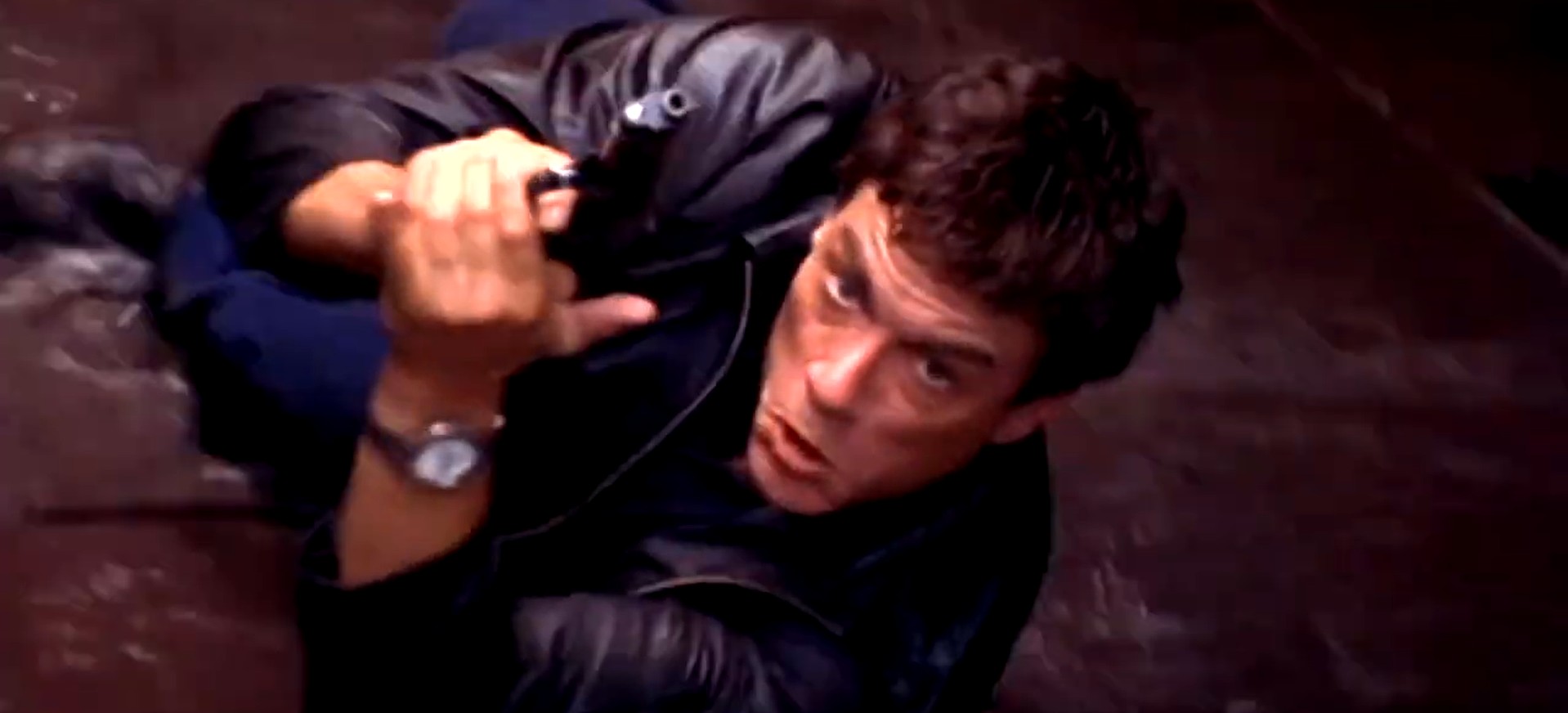
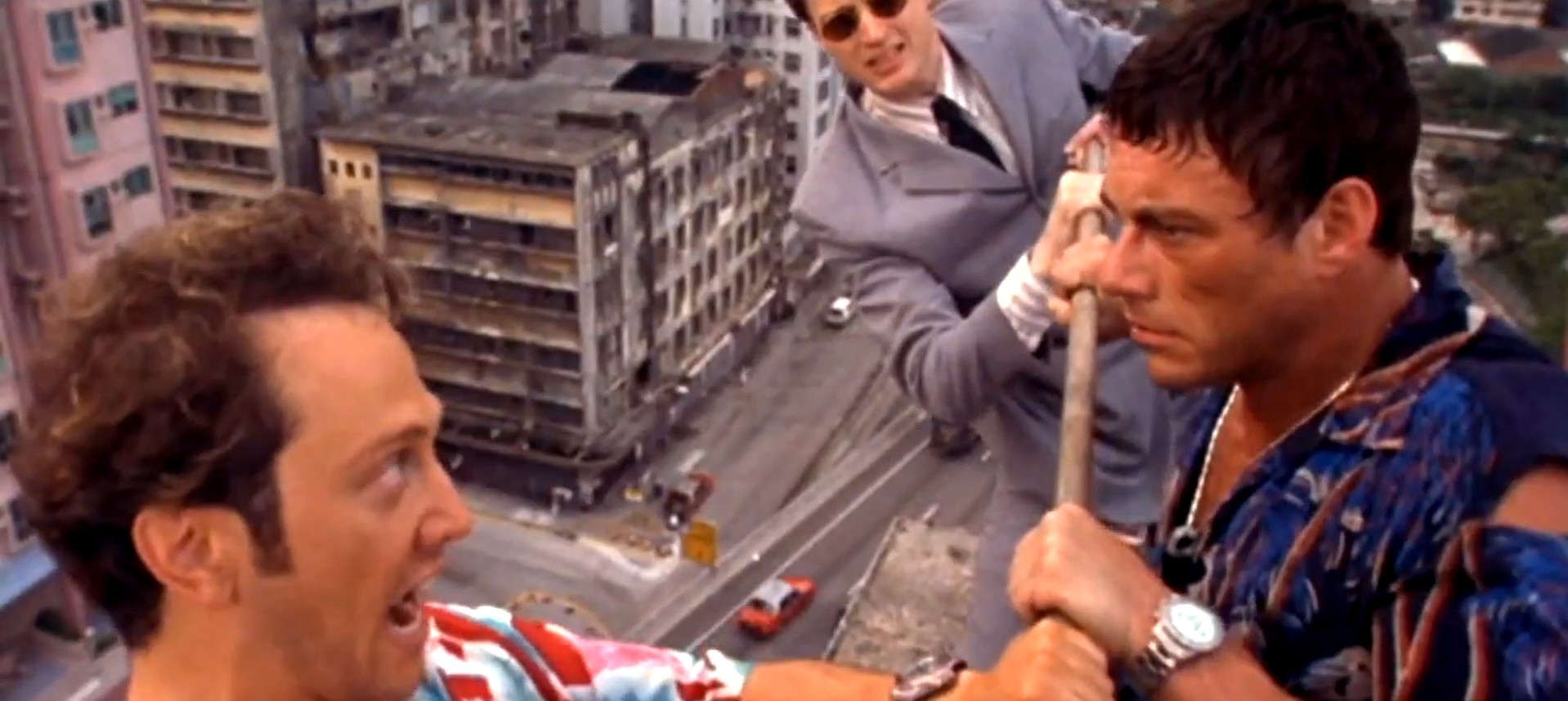
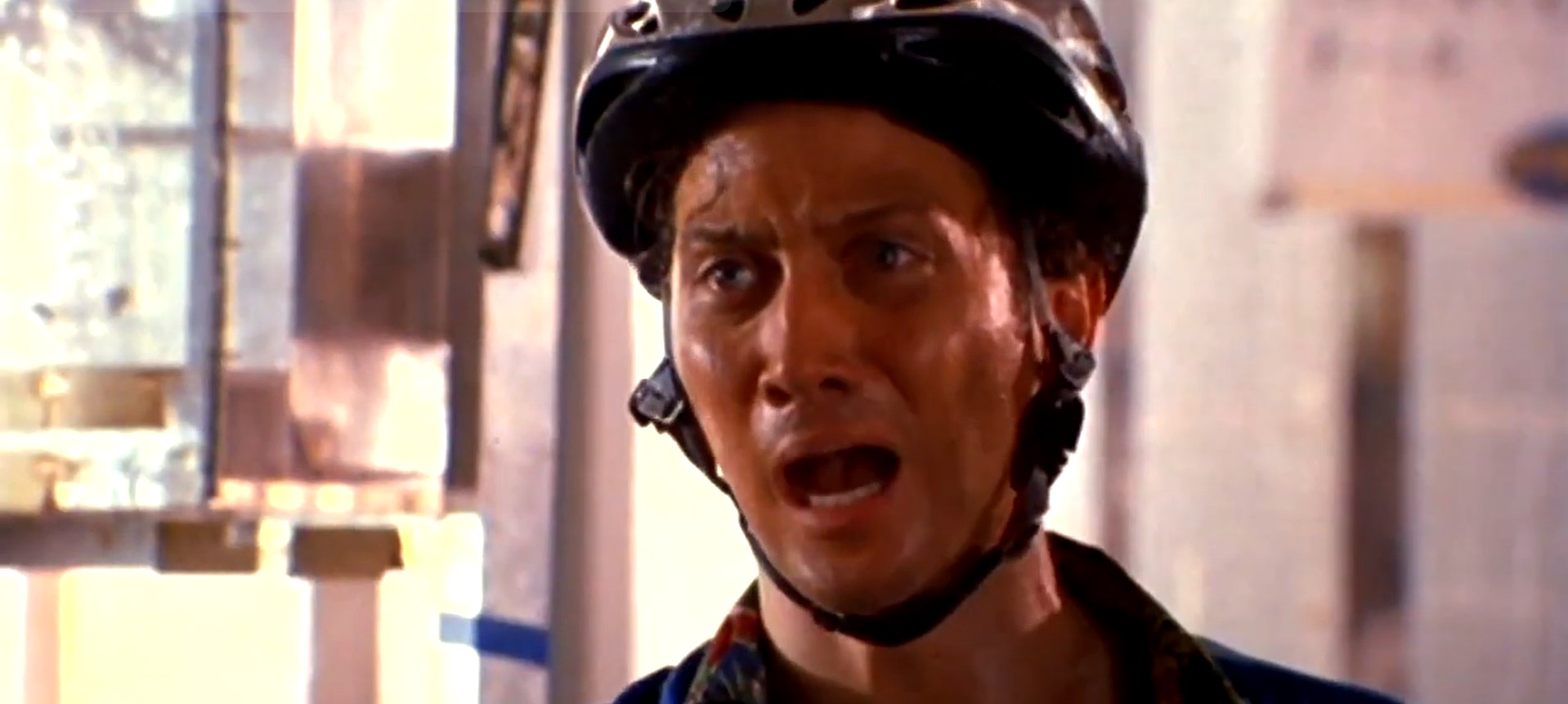
At the tail end height of his career, the Muscles from Brussels, Jean-Claude Van Damme (“Bloodsport,” “Universal Soldier”), finds himself in a self-deprecating lead role that’s campy toward showcasing his own physique but in a slapstick way.  His character Ray is a likeable, affable, cool type with a tragic past, only touched upon ever so briefly and delicately in conversation, who has resorted to selling counterfeit items to make a living.  Yet, Ray’s trying to pull himself into a straightened arrow by jumping at the opportunity to partner with Tommy (Rob Schneider, “Deuce Bigalow:  Male Jiggalo”) for legit business.  Van Damme and Schneider become a buddy action duo with Van Damme knocking around bad guys with jump kicks and parkour while Schneider provides the comic relief with very few, and pale in comparison, combative fighting moments in what is also the same kind of role from Sylvester Stallone’s “Judge Dredd.”  To Van Damme’s credit, the usually unintentionally funny action star arises some comedic chops in a devil-may-care persona that eventually hammers down to a determined save lives ambition, but not before Van Damme egregiously has to thematically remove his shirt for nearly every action scene or strip down to his boxer-briefs so all can good a good view of his athletic, muscular physique.  The whole course is an objectifying tragicomic, especially when he starts to rip through Tommy’s Hawaiian shirts simply by turning his body or being whipped in the rear by Tommy during a rickshaw race with Schneider commenting about his big, beautiful ass.  Yes, men do get objectified as well.  Van Damme and Schneider are eventually joined early on by Lela Rochon (“The Meteor Man”) as a V-Six Jeans Representative from North America with a covert agenda and the iconic Paul Sorvino (“Dick Tracey”) as a CIA operations supervisor taking on counterfeiting, both Rochon and Sorvino subdue their performances initially for twisted knots in the storylines later on that makes his evolving ensemble that much more entertaining.  Moses Chan, Wyman Wong, and Glen Chin, Carmen Lee costar.

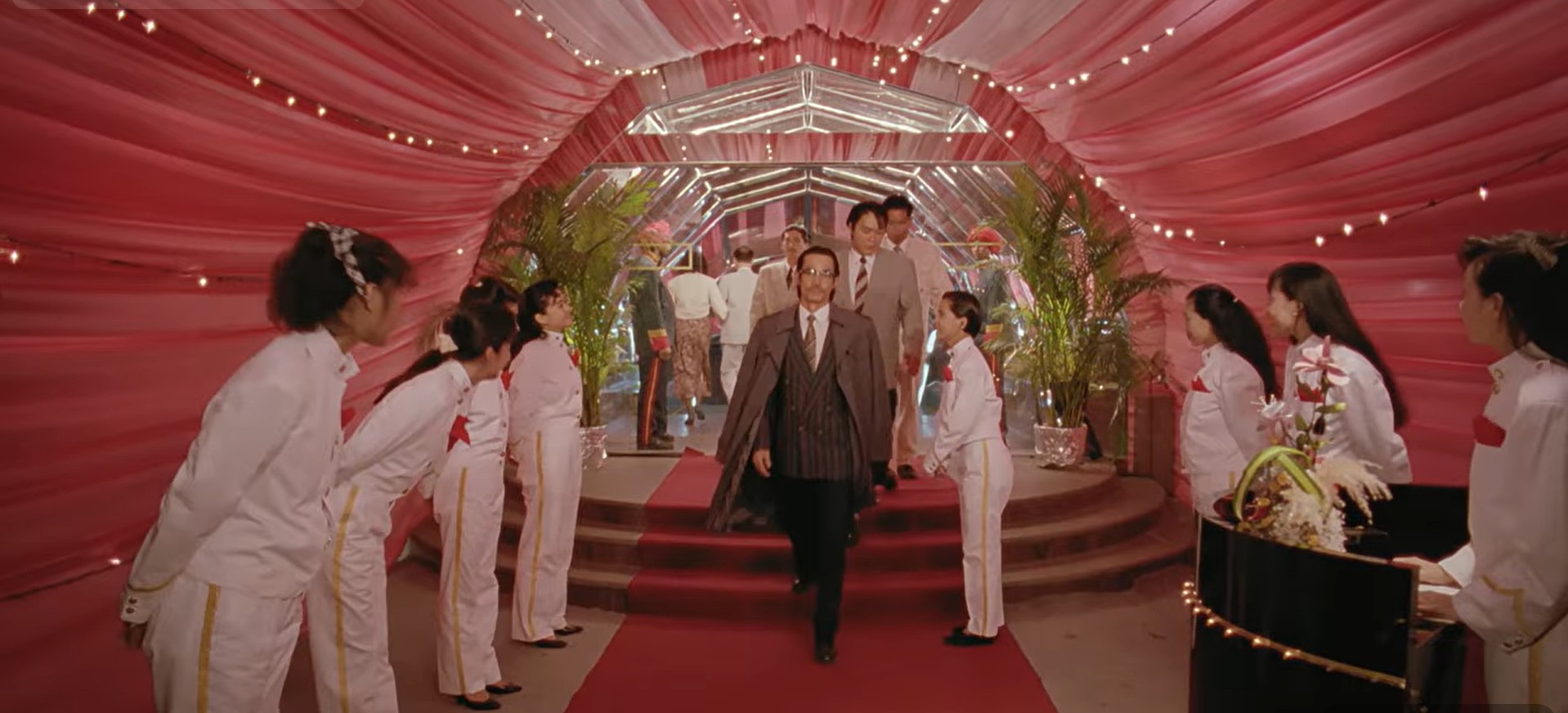
“Knock Off” isn’t your typical Jean-Claude Van Damme beat’em up action-thriller though it follows the same principles as one.  Hark Tsui puts forth a kinetic ball of continuous energy, ever evolving and dynamic to keep scenes from getting stale.  From the opening illegal rickshaw race through the streets of Hong Kong city to the massive Budha temple explosion to the cargo ship container toppling scenes, there’s plenty to behold in Tsui stunt and special effects juggernaut.  A less serious Van Damme with Rob Schneider joined at the hip is the peculiar buddy action-comedy we never knew we wanted, brush stroked with late 1990’s superimposed fireballs and the legendary pushed to the limit Hong Kong stunt effects that look quite expensive and detailed beyond belief.  Some of Van Damme’s swift movements are aided by a stunt wire that’s briefly visible in hi-def and a few of Tsui’s stylistic edits, ones that zoom in, try to seamless transition, and give an interior view of a sniper’s scope or a barrel of a gun is heavy handed in it’s editing.  While Tsui gets his filmic credit as the one-and-only director, it’s stunt supervisor Sammo Kam-Bo Hung (“Ip Man”) who should receive recognition for helming the camera for the stunt scenes.  You can see the different styles being pushed together between Tsui’s unconventional down shot angles and Hung’s more straightforward impact in an action shot, creating an eclectic design that adds to the intrigue, especially in Tsui’s downtime moments of conversation that’s not only witty and fast but at an off centered framing that’s more vertically skewed while keeping the concentration on the actors in a wider anamorphic lens in an environment that seemingly wraps around them. 

They say imitation is a form of flattery but this legit MVD Rewind Collection release of “Knock Off” fawns clear adulation with a 2-Disc, 4K UHD and Standard Blu-ray release.  Coming in as the 6th title on the company’s 4K LaserVision Collection, cojoined with the Rewind Collection label, the HEVC encoded, BD66 4K UHD, presented in 2160p in a widescreen 2.35:1 aspect ratio, is noted having a hi-def restoration with a 16-bit scan of the original camera negative that provides more a dynamic color range and saturated depth.  There’s definitely an improvement and a difference in contrast to the standard Blu-ray with a vivid offering of a multihued Hong Kong cityscape from the HDR10 that’s not offered in 8-bit or even 10-bit color depth.  Interiors are subjected concreated warehouses of the colorless and dark variety but no banding to note and no block distortions.  Textures are surprising not there at the level we’d expect but likely due to Tsui’s heavy use of superimposition effects with green fireballs and other types of overlayed explosions, and the action scenes often retract a good amount of detail too.  The 1080p Blu-ray is an AVC encoded BD50 with the same aspect ratio as the 4K.  It too offers a solid presentation but not to the extent of the 4K and still suffers from the same wishy-washy texturing, but the overall presentation is solid and worth the value.  The English language tracks available on both formats are a DTS-HD 5.1 Surround Sound Mix and an uncompressed LPCM 2.0 Stereo.  For any action film with lots of range, depth, and conversation, you certainly want to go with the surround sound option that harnesses every direction and that’s the clear choice with “Knock Off” as it opens the lines of directional communication with the back and side channels, leaving all the dialogue and heavy LFE lifting with explosions primary in the front and clear immersive resonation.  Dialogue has no issues with the original audio track albeit being ADR but used with the original cast’s voices.  English subtitles are available for selection.  The 4K special features include only an archival commentary from action film experts Mike Leeder and Arne Venema.  The Blu-ray contains te same in tandem audio commentary plus a new interview with producer Moshe Diamant, an archived interview with screenwriter Steve E. de Souza, the original making-of featurette, and the original theatrical trailer.  MVD’s Rewind and LaserVision Collection set comes with a thin, cardboard O-ring slipcover that has faux crinkled front image, the original cover art of the highly original Van Damme with a gun (my hint at sarcasm) like a laserdisc paper sleeve would have.  Inside is the black Amaray with the same primary image for the sleeve art sans crinkling but if you reverse the sleep, you’ll see the classic Rewind Classic design with the same Van Damme image.  The Amaray has snaplocks on each side of the case on the inside – 4K UHD on the right and Standard Blu-ray on the left – with an insert containing a mini-folded poster of the LaserVision Collection artwork.  “Knock Off” is rated R, has a runtime of 94 minutes, and is A region locked.

Last Rites: “Knock Off” is no cheap…knockoff. The Hong Kong production is action-packed, outrageous, and campy fun with Van Damme in taking a step back from being the stoic hero and charismatic hero to be the anti-hero caught in the middle who just knows how to roundhouse his way out of an nefarious Russian plot involving nano-explosives.

You Better Damme Believe It! “Knock Off” on 4K UHD and Blu-ray from MVD Rewind Collection!

Joe Lewis Takes on the EVILs of the World Church! “Force: Five” reviewed! (MVD Rewind Collection / Blu-ray)

“Force: Five” On a New Blu-ray Collector’s Set!

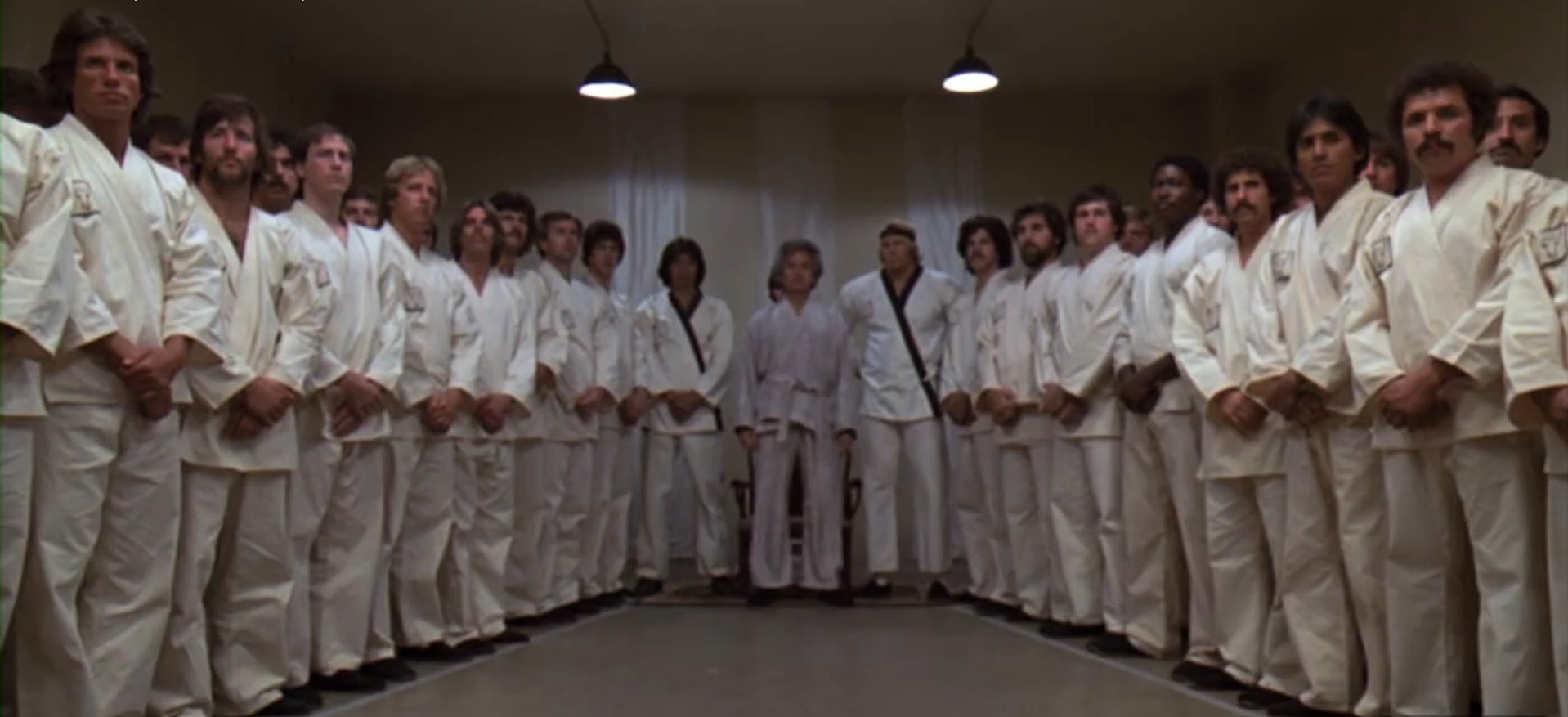
U.S. Government contractor Jim Martin is an expert martial artist, hired as a contracting agent in the field to handle special missions against country threats when they arise.  When Martin is subcontracted by a wealthy man who has ties to U.S. politicians, he’s assigned to rescue the plutocrat’s daughter from the clutches of the World Church, a fronted religious cult promising to its followers a palace of celestial tranquility from an oppressive world but their intentions are to trick the trust funded young adults into signing over their inheritance to support smuggling drugs and guns.  Martin builds a team of hand-to-hand fighting specialist to take down the World Church’s martial arts master Revered Rhee and his large right-hand man, Carl.  Infiltrating with a visiting U.S. Senator, masquerading as his aids, the team also tries to convince the U.S. Senator of the organization’s corruption while searching for their assigned rescue target. 

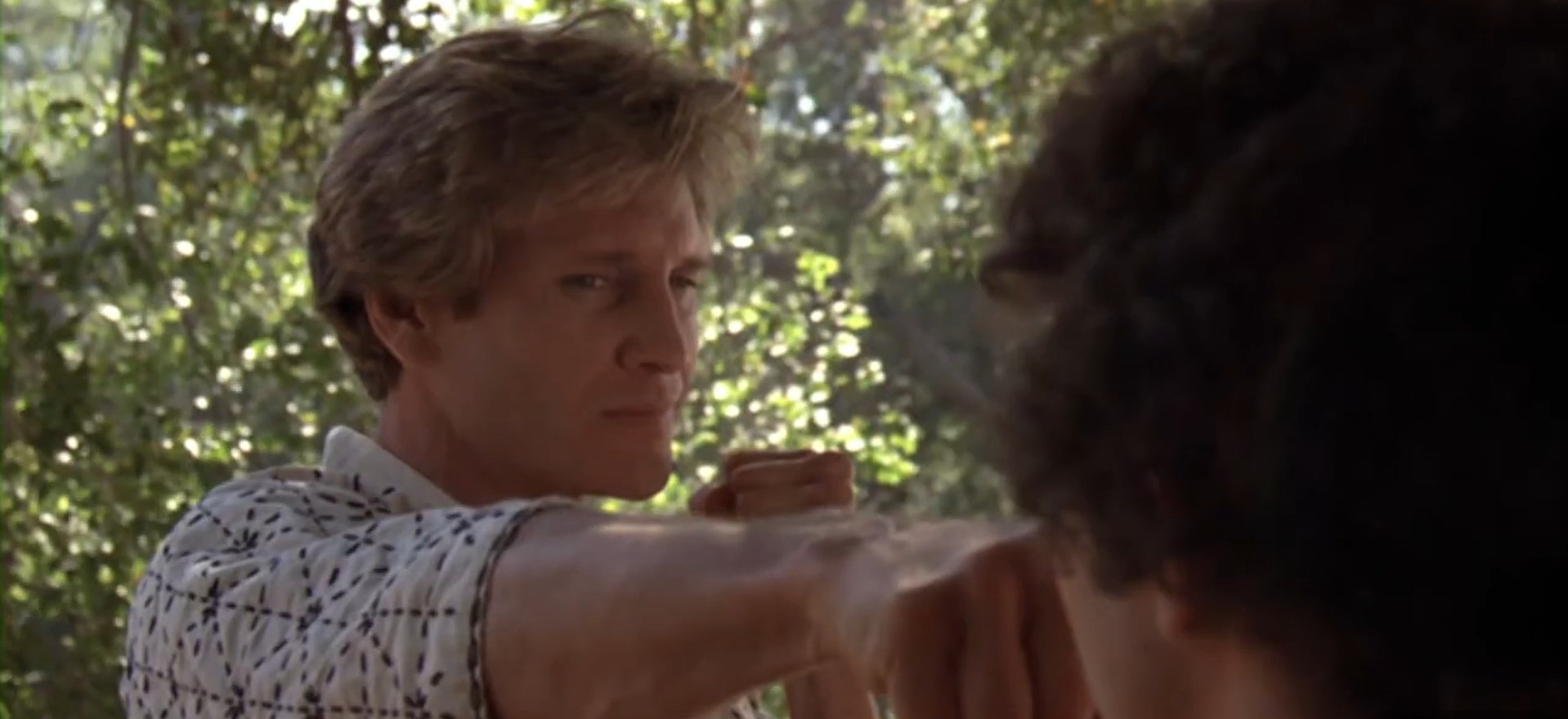
Joe Lewis, known as the Father of Modern Kickboxing and perhaps one of the leading martial artists out of the U.S. of his time, had his time on the action-packed silverscreen like most popular fighters of his ilk, such as Chuck Norris and Bruce Lee but certainly not as profound in appearance credits.  One of his first films is a martial arts and rescue actioner titled “Force:  Five” that was released just off the heels of the swanky 1970’s where the disco and soul-infused soundtrack and the chopsocky Kung-fu films reigned as one of the supreme sounds and subgenres on the globe’s East and West terrains.  Serial martial arts film director Robert Clouse, famously known for his co-direction on Bruce Lee’s “Game of Death” and notoriously known for his it’s so bad, it’s good “Gymkata,” writes-and-directs the film based on an alternate screenplay from debuting writers Emil Farkas (“Vendetta”) and George Goldsmith (“Children of the Corn”).   “Enter the Dragon” and “Black Belt Jones” producer Fred Weintraub hoped to capitalize on the melding of the aging martial arts and with the rising rescue/POW films that were on the rise and base the idea off of real events, such as People’s Temple and their cult leader Jim Jones that spanned two decades prior to the film’s written foundation and subsequent finished release.  The Italian language disc is pressed with the same sleeve art with the second disc pressed with alternate, dark-toned artwork, also original to the initial film release. 

Having already touched upon the star of the film, one of the best martial arts competitors in the world, having once beat Chuck Norris in an official event, Joe Lewis is surrounded by an entourage of real fighters who dabbled in acting.  Sonny Barnes plays the large muscle Lockjaw, the only black character in the story, and Barnes is trained and became a Sensei in Kenpo Karate, and he wasn’t the only minority listed in the eclectic group with Latino and Native American representation in Spanish-American Benny “The Jet” Urquidez, a skilled black belt Kickboxer with proficiency in a variety of fighting styles.  Lastly, Richard Norton, another major name in martial art features, hails from Australia and implanted his styles of Karate, Brazilian Jiu-Jitsu, and Kickboxing in his work on both sides of the moral fiber with his characters, having played good and bad guys in “The Octagon” opposite Chuck Norris and in “China O’Brien” with Hong Kong superstar Cynthia Rothrock.  Rounding out the “Force:  Five” team is the only female member in Pam Huntington (“They Call Me Bruce”) with no fighting background and another nonfighter in Ron Hayden as the unhinged chopper pilot.  Though Huntington and Hayden’s fight scenes are limited to just a few in contrast to the trained martial artists, even the nontrained eye can tell the actors haven’t spent years learning the craft.  Now, what really nags at the pedantic in those in the audience is the film is titled “Force: Five” but the team listed above consists of six members so there’s ambiguity in if that was an elementary math error on the story’s part or the “Force:  Five” is just the team minus Joe Lewis, that’s not entirely clear, but what is clear is the antagonists with Korean grand master Bong Soo Han (“Kill the Golden Goose”), master of Hapkido, as the duplicitous Reverend Rhee and the very large and blank faced Bob Schott (“Gymkata,” Russ Meyer’s “Up”) taking trust babies fortune to back their drug and gun smuggling operation through an alternative church façade and scheme.  Reverend Rhee is a character that embodies the very essence of a stereotypical chop-socky or evil organization boss with bad lip sync and a flair for the ostentatious death, “Force:  Five’s” being a killer bull goring those in its labyrinth path, a deadly trap that’s a man-eating shark tank-type, James Bond-like thing to have in his possession. 

By today’s standard, “Force:  Five” is extremely formulaic but for 1981 and with the rise of the action rescuer, mostly inspired by the rescuing of POWs in either during or post-Vietnam War, the film’s a treasure trove of classic conventions of the subgenre that’s inundated with different kick and punch techniques and styles that strayed away from the Bruce Lee or Jackie Chan type of kung-fu that’s more an ostentatious showcase of ability rather than practicing in the practical realm but still pays homage to the craft masters.  Yet, these films resembled an espionage structure with an incognito infiltration, extraction, and scheming villainy pool rounded out exactly how we think movies play out in our head, with a swanky soundtrack that integrated the heart of Carl Douglas’s everybody was Kung-Fu Fighting into a clandestine operation conducted by U.S. operation contract agreement with confident, slightly cocky, Jim Martin.  However, “Force:  Five,” unlike other ensemble entrenched soldiers on a mission, came out too clean for comfort with an unscathed extraction and not one team member lost.  There isn’t even any nearly escape death by the edge of a fingernail.  Joe Lewis takes a couple of kicks to the face by Reverend Rhee and a handful of peripheral characters on the side good did take mortal damage at the hands of the bull and the wishbone split of one main contractor at the hands of Carl’s impatience, but none of the actual operators took one for the team and that usually puts a sour taste in the mouth by begging the question, was the mission really that impossible?  It appeared all too easy from the comforts of the couch to see an unarmed team of martial artists stroll into heavily armed compound (recall – they’re selling drugs and guns) and make it out alive without as much of a minuscule ballistic scratch. 

Coming in at number 70 on the catalogue of the Rewind Collections, MVD’s throwback sublabel, “Force:  Five” kicks itself back onto Blu-ray having been out of a print for nearly a decade on Hi-Def.  A slight better presentation with it’s return to the original widescreen aspect ratio of 1.851, the 2K scan evolves the detail levels to an only slightly higher degree when enlarging the pixels without sacrificing quality, producing a cleaner image perhaps from an advanced scanner.  There’s a balanced color diffusion with warmer palette that focuses mostly on greens and browns and there’s no sacrifice of grain but there’s still some dust/dirt speckling and the occasional vertical scratch but nothing too egregious to note viewing disruption.  The original 35mm print has been nicely preserved and now stored on an AVC encoded BD25.  The audio is generally the same as the previous Blu-ray release with an uncompressed English LPCM 2.0 mono that brings the double impact of all audio layers through the dual channel network, relishing in its small triumphs with small, enclosed explosions.  Dialogue has adequate carry over but there are hissing discharge and underlining crackle, but the overall general discourse is coherent in its post-production recording that leaves Master Bong Soo Han unfortunately reminding us of the higher pitched villainous voice of Betty from “Kung Pow:  Enter the Fist.”  Soundtrack doesn’t instill motivation or embark on danger with its standard stock coursing.  Foley hits and kicks are where “Force:  Five” makes its bread and butter with plenty of vehemently overlaid whomps and whacks.  Special features include a number of archival interviews, or more so toward fighting instructions, from a pair of actors, beginning with Joe Lewis in a sit down that really feels tense when he discusses his martial arts training and contests that lead into the movies and ending with Benny “The Jet” Urquidez offering fighting lesson tidbits in a pair of archived video instructions, such as wrapping your knuckles properly to avoid injury.  The original theatrical trailer rounds out the encoded extras.  The Rewind Collection’s physical treatment is unrivaled with a retro O-ring slipcover that doubles as a faux top secret objective folder on the backside and a VHS rental semblance on the front with previously viewed for sale stickers and mock wear of sun bleach and box creases.  The clear Amaray case inside houses a reversible slipcover with a cleaner, saturated image of the slipcover that has the same layout design on the reverse but with a variant character composition design encircled by a black border.  Inserted inside a mini-folded poster of the primary Blu-ray art.  The disc is also pressed with VHS nodule imagery that further it’s retro appeal into videotape.  The region A release has a runtime of 95 minutes and is rated R. 

Last Rites: “Force: Five” is about as skilled as any Chuck Norris or Jean Claude Van Damme film, and just as hokey as well, with an ensemble of experts of the kick and punch craft that go into a cocky show of bulldozing armed and dangerous smugglers with nothing more than their feet, fists, and wits.

“Force: Five” On a New Blu-ray Collector’s Set!

Two Cops. Two Girls. One EVIL Crime Boss! “Rosa” reviewed! (88 Films / Limited Edition Blu-ray)

Grab the Limited Edition Blu-ray of “Rosa” from 88 Films!

Little Monster and Lui Gung didn’t get along to begin with when Little Monster’s accident put Kung’s sister in the hospital for minor injuries but when the two rookie cops get on the bad side of their direct supervisor, Inspector Tin, they have no choice but to work together under his pleasure to see them suffer.  The two cops are assigned to the case of Li Wei-Feng, a smalltime crook who tries to black male mob boss Wong with incriminating photographs of a deal gone deadly.  They stay on top of and befriend Wei-Feng’s ex-girlfriend Rosa in hopes he’ll show up but the cops find themselves going on more double dates between Kung wooing the model Rosa and Little Monster courting Kung’s sister than actually doing any detective leg work.  Before they know it, they’re assisting Rosa out of her gambling debts with medium level bosses and on hot coals with Boss Wong’s formidable henchmen who will stop at nothing and will kill anyone in their way from obtaining the smoking gun film roll. 

“Rosa” is the 1986, Tung Cho “Joe” Cheung directed buddy cop comedy-action film from Hong Kong,  Cheung has delivered a string of action comedies prior, such as with the a torn Kung Fu novice must jealous mend the rift between his two masters before a war ensues in “The Incredible Kung-Fu Master” in 1978 and the story of a veteran police officer who must work both sides of the law to manage his wife’s gambling addiction is paired with a rookie cop to take down transgresses in “Shadow Ninja,” release in 1980.  “Rosa” is another notch of comedic effort in Cheung’s belt but on a bigger scale with well-known actors, a large cast, incredible stunts, and fast martial arts choreography in a script penned by the “Chungking Express” director Wong Kar-Wai and “Hard Boiled” and “Mr. Vampire” writer Barry Wong.  Wong and Anthony Chow (“The Cat”) produce the film under the Golden Harvest Company and Bo Ho Film Company flags.

“Rosa” uses an ensemble cast more for comedic purposes rather than to instill dramatic action, beginning chief principal Biao Yuen, who we’ve recently reviewed in another new phenomenal physical 88 Films Blu-ray release in “Saga of the Phoenix” and has had roles in “Game of Death,” “Encounter of a Spooky Kind,” and “Picture of a Nymph,” as the endearingly named Little Monster, a go-lucky rookie cop with skilled martial arts moves.  Charming and confidence, Yuen plays the most sensible of protagonists without absorbing a lot of humiliation unlike his costar Lowell Lo who finds himself in a more subordinate role of Lui Gung underneath Little Monster’s suavity by having more overreactions, slapstick, and chasing with his tongue out a lost cause – that being Rosa.  “Inferno Thunderbolt’s” Hsiao-Fen Lu plays that titular role, a gambler addict and model with loan shark debt with ties to a small-time crook that incidentally involve her in a deadlier high-stakes blackmail with a power crime boss, but her importance is depreciated by Yuen and Lo’s buddying comedy and not the driving focus of the plot.  In all, the progression is a group effort rather than encamping around a centralized person.  With that being said, Kara Ying Hung Wai (“The Ghost Story”) often feels like an afterthought, a proverbial fourth wheel, as Gung’s sister Lui Lui whos’ gifted lines and a presence here and there but is mainly only Little Monster’s love interest in corporeal presence only.  Rounding out the good guys is the hapless Inspector Tin (Paul Chun, “To Hell With the Devil”), an arrogant supervisor who doesn’t want to get his hands dirty with police work and recruits Little Monster and Kung as punching bags for wrong him in their individualized opening, mishap run-ins with the inspector, another comedy outlet absorbing Rosa’s unintended entrenched Mob connection.  The Mob and other baddies fill out the cast with Billy Sau Yat Ching, James Tien, Charlie Cho, Fat Chung, Chen Chuan, and Dick Wei. 

As far as “Rosa’s” action is concerned, it is topnotch quality between the wide-variety of stunts, the pinpoint choreography, and the excellently executed martial art fights that disproportionately leaves the narrative as a quintessential chop-socky police story.  I say disproportionately because the action is overly consumed by the comedy that, in itself, has struggles.  The humor physicality lands with precision with big hits taken in accidental error or are made within the context of choreographed fight scenes mostly stemmed by Lowell Lo and Paul Chun as they bumble their way through situations, but the dialogued jokes and other vocal gags are terribly corny that unfortunately dilute the overall mirth-murky pool that it becomes too often cringeworthy to swim in.  The light-hearted and sexualized humor is blended with an endless wooing and an outdo rivalry between the forced partnership that evolves into a fond friendship between Little Monster and Lui Gung, who is often referred to as Big Brother.  Lowell Lo embodies a larger slapstick piece of the pie with his distinguishable friendly face and doughy-eyed demeanor, contrasted against the athletic slender of Biao Yuen who outshines him on the conventional society determined good looks scale with an unassuming martial arts skillset to match.  All the serious and grim nature comes out of the Hong Kong’s criminal element with deadly assassins that use piano wire and large caliber handgun to lacerate jugulars and explode cars full of betrayed crooks.  The third act finale finally puts the pieces together and creates a harmonious brawl that blends action and comedy evenly, even integrating Lui Lui into the fold with an out of the blue ability to hold her own and fight just as fast and furious as Little Monster.  

Another Golden Harvest distributed production garners attention once again on 88 Films, in association with Fortune Star Films, with a definitive Blu-ray set from the UK boutique label making their presence known here in the North American market.  The AVC encoded, 1080p high-definition transfer, onto a BD50 has remarkable presentational quality with a pristine print transferred onto a 2K scan from its original 35mm negative.  The immersive quality shows no sign of destabilizing the matrix, leaving audiences with the immense scope of a cleaner, natural image full of depth and range of saturated and diffused color.  Skin tones appear organic and nitty-gritty with the stubble, sweat, beauty marks, and the subtle contrasts of tones.   88 Films’ flexes their restoration efforts that extends the color palate to suitable measure and each scene, through its superb editing by chop-socky veteran Peter Cheung, segues into the next without missing a color resolution beat.  The film is also presented in original 1.85:1 widescreen aspect ratio.  There are two ADR mono tracks, Cantonese and English.  Cantonese is preferred with the better mouth-to-sound synchronization, but both deliver a really good decoded mono mix despite the singular direction of all the audio but with post-production sound, that can be manipulated to exact timing with the exact sound to create a better disbursed audio design.  There some crackling and hissing in the dialogue but very low-level interference that doesn’t hinder the prominence and really affect the clarity.  The newly translated UK English subtitles are available from Ken Zhang and synch fine with a steady pace and come without typos.  Encoded special features have a new audio commentary by Hong Kong Cinema experts Frank Djeng and F.J. DeSanto, a second new commentary from another Hong Kong Cinema expert David west, an interview with director Tung Cho “Joe” Cheung and assistant director Benz Kong, alternate English opening and closing credit titles, an image gallery, and the original trailer.  The limited-edition set comes with a rigid slipbox sheathed by an O-Ring slipcover with new artwork by Sean Longmore that plays into Rosa’s bosomy running ga. Inside the slipbox is a 40-page color booklet with stills and a pair of essays from Fraser Elliott and Paul Bramhell, a collectible postcard, and the clear Amaray case with the same primary Langmore art on the sleeve that can be reversed for the original Hong Kong poster art.  The booklet and slipbox have more original art as well that speaks the action and slapstick.  The not rated, region A and B encoded release has a runtime of 97 minutes.

Last Rites: Fun, exciting, and moderately droll, “Rosa” might hit-and-miss on the comedy, but what definitely hits is the martial arts action defined in a harmony of perfect scrappy chorography.

Grab the Limited Edition Blu-ray of “Rosa” from 88 Films!

The Demon Concubine Is After the EVIL Power of Demon Summoning Upon Earth! “Saga of the Phoenix” reviewed! (88 Films / Limited Edition Blu-ray)

Own “Saga of the Phoenix” on Blu-ray from 88 Films!

For 660 years, Ashura, the Holy Virgin of Hell, has used her powers to resurrect demons from the underworld.  With the help of virtuous fighters Lucky Fruit and Peacock from the spirit realm, has renounced her temperamental intentions to use her powers for evil ever again and live beside the mortals under the warmth of sunshine.  When she accidently summons demons on Earth, Ashura is brought before Master Jiku and the Divine Nun to access the damage and reign judgement.  They sentence her to live in cell of the relaxed Buddha for all of eternity, but she persuades them one chance to live amongst the humans for seven days, just enough time to live under and enjoy the only thing she wants, the sun.  The Demon Concubine has a different plan for Ashura.  Seeking her demon resurrection powers, the Demon Concubine aims kill her but with the help of Lucky Fruit, Peacock, and her new human friends, Ashura will battle against the Demon Concubine and her demonic forces. 

“Saga of the Phoenix” is the Golden Harvest produced, 1989 released sequel following quickly behind the 1988 released “Peacock King.”  Based off the Japanese manga “Peacock King” written by Makoto Ogino from 1985 to 1989, the action-fantasy film was codirected by returning “Peacock King” director Ngai Choi Lam (“Riki-Oh: The Story of Ricky,” “The Cat”), aka Lam Nai-Choi, and newcomer to the series Sze-Yu Lau (“Forced Nightmare,” “My Neighbors are Phantoms!”) with “Game of Death” actor Biao Yuen stepping away from writing the follow-up and be more involved on the acting by returning to one of the main roles from “Peacock King.”  The script is from a confluence of Japanese and Hong Kong screenwriters, initially scripted by Japanese manga adaptation to television screen writer Hirohisa Soda and then adapted by Tsui-Wah Wong, You-Ming Leung (“Once Upon a Time in China”), and Sau-Ling Chan, none of whom were involved in “Peacock King.”  Hong Kong’s cult and genre film product Lam Chua (“Erotic Ghost Story, “A Chinese Torture Chamber Story”) serves as producer on the Golden Harvest and Paragon Films Hong Kong-Japanese coproduction. 

Gloria Yip returns as the Holy Virgin of Hell, Ashura.  Having never seen “Peacock King,” I’m not sure what type of temperament Ashura donned in a role where the character seems like one of the main antagonists according to the synopsis, but for “Saga of the Phoenix,” Ashura is joyful, childlike mischievous, and humble and is the center focus between the forces of good versus evil.  Als returning is Biao Yuen, but not in his screenwriter role.  Yuen, known for starring alongside female martial artist and star Cynthia Rothrock in “Righting Wrongs,” reprising Peacock, a fierce spirit realm guardian who befriends Ashura along with fellow guardian Lucky Fruit, played by Hiroshi Abe (“Godzilla 2000”) who replaced Hiroshi Mikami from the first film.  Much of Yuen is taken out of the story while being in frozen captivity by the Demon Concubine, leaving Abe and Yip to better struggle one-on-one connecting in the human world, facing human problem, and accessing the threat from the Demon World.  Yip’s candid antics exact the innocence of a young child like making snarky faces when corrected or obsessing over trivial things like sunshine, and especially when Ashura befriends a small, gremlin-like troll or creature named Tricky Ghost and holding it like a favorite stuffed toy, and this leaves Abe to be the role model, or the parental guardian if you will, stoic in stance and a reasonable thinker for his character.  It all comes off as silly until Ngai Suet and the Demon Concubine enters the frame.  The “The Ghost Ballroom” actress Suet takes on the evilly empowered role armed with seven demon subjects to do her bidding, such as trying to kidnap Ashura, and Suet runs with the role caked in a pale makeup, high pointy eyebrows that open up her eyes, and shoulder-padded dark dress.  Embroiled in the spirit world clash are two mortal siblings in Chin (Loletta Lee, “Mr. Vampire Saga IV”), who saves unintentionally saves Tricky Ghost, and her mad scientist brother Tan (Shek-Yin Lau, “Resort Massacre”) who finds himself in bitter rivalry with Tricky Ghost’s mischief ways spurring some comic relief into the fantastical brew and they represent the workable relationship between man and godlike individuals.  “Zatoichi” series actor Shintarô Katsu is in the role of Master Jiku, “Carmen 1945’s” Yûko Natori is the Divine Nun, and Noriko Arai (“Death Note”), Megumi Sakita (“Bodyguard Kiba”), and Yukari Tachibana (“The Scissors Massacre”) as the three nun warriors to round out the Hong Kong-Japanese cast.

If you’re familiar with director Lam Nai-Choi, then it comes no surprise to you the kind of practical effects juggernaut “Saga of the Phoenix” can become and, in the end, doesn’t disappointment.  Choi often overscales the effort of tangibility, bringing unbelievable imagination and larger than life objects to manifestation without much, if any, assistance from computer generated imagery, and in the late 1980s, that technology wasn’t exactly perfected to what modern cinema sees today with skilled visual artistry and the introduction of artificial intelligence that’s on the verge of possibly shoving itself into the actor pool once the kinks are worked out.  In “Saga of the Phoenix,” the palpable physical presence involved is mostly at the finale third act where good versus evil face off between Ashura, Peacock, and Lucky Fruit and the ravenously aggressive Demon Concubine, the latter transforming like a Power Ranger Megazord into a gray-skeletal winged creature large enough to tower over the heroes and wide enough to swallow them nearly by three times.   Of course, this is not to say there hasn’t been other practical effects along the way which include demons inhabiting dragon statues, high wire acts of characters soaring during fight sequences, and the little mischievous imp, Tricky Monkey, from being a manipulated puppetry that weirdly reminisces Jim Henson’s “Labyrinth.”  The painted optical tricks to render color bolts of energy weaponry are a nice classic touch toward a pop of color as well as creating the inherent superhuman element of the principal players.  For someone going into “Sage of the Phoenix” headfirst without having seen or any knowledge of “Peacock King,” room for the film to standalone is rather thin but not egregiously reliant on the first film.  There’s a bit of recapping at the begging with narrative voiceover and get some clue-ins about the past from the dialogue but there’s still quite a bit unexplained, such as Ashura’s behavior fabled to be a powerful demonic necromancer who has somewhere along the way had a change of heart and we’re not privy to why.  That sense of uncertainly never really goes away through the comedy, action, and laser-firing, high-flying martial arts sinew, that something is innately missing from the story that’s saturated with wuxia themes. 

If looking to increase your bicep’s muscle mass, 88 Film’s limited-edition Blu-ray is weighty with content and it’s only one disc!  The AVC encoded, 1080p high-definition resolution, BD50 is encoded with a cherished updated 2K restored transfer from the original 35mm negative that looks unquestionably majestic on screen.  Vibrant and diffused evenly colors, high decode rate, and flawless textures, there’s nothing to dislike about this release, visually technical.  Deep in the color range and Chi-Kan Kwan’s sundry cinematography that offers vast length shots and a warm neon haze of blue and magenta through tint or gels, with a matted golden peacock rising against the monstrosities of the demon world, “Saga of the Phoenix” resurrects an aesthetic only Lam Nai-Choi could manifest from pure imagination.  The original negative is virtually pristine with no signs of damage or wear to note, nor any compression issues to note.  The uncompressed PCM Cantonese 2.0 mono offers a forward heavy diegetic sound that separate each layer favorably diversified. Clean and clear ADR make for easy discernability, capturing every bit of dialogue despite the post-production mis-synchronous acceptance. Laser action, creature roars, and other detailed measured sounds really give “Sage of the Phoenix” body, depth, and range that makes it an overall A/V highlight amongst its wuxia genre counterparts that tend to omit the smaller particulars of a scene. English subtitles pace just fine and are errorfree in a UK text. Most of the heavy lifting is done by the physical presence of the 88 Films Blu-ray that’s housed in a rigid slipbox and sheathed in a cardboard O-Slip, both containing new arranged illustrated artwork by R.P. “Kung Fu Bob” O’Brien that’s takes the true elements from the film and places them on the cover in a sure-fire canvas of what to expect. The clear Amaray cases also has O’Brien artwork as the primary cover art with the reverse side featuring the original Hong Kong poster art. Along with the O-slipcover, other limited-edition contents include a two-sided collectible art card and a 40-page illustrated book with color pictures and essays from Andrew Heskins (From Panel to Screen) and David West (The Japanese Connection), along with featured Japanese cover art Kujakuoh-Legend of Ashure. If the physical properties were not enough, the encoded content, available on the LE and Standard Edition, will bring this set home as it details with an audio commentary by Hong Kong Cinema Experts Frank Djeng and F.J. DeSanto, alternate footage from the Japanese cut of the film, executive producer Albert Lee discusses the international distribution plan from Golden Harvest Sage of Golden Harvest – The International Connection, an image gallery, and the original trailer. The 88 Films release is unrated, has region A and B playback, and has a runtime of 94 minutes.

Last Rites: Wuxia movies like “Saga of the Phoenix” are no surprise to where John Carpenter found influence for “Big Trouble in Little China” and it’s the director Lam Nai-Choi who didn’t shy away from the difficulties and inauthentic problems of physical effects but the film has its own innate issues with story that downgrade from a saga to just being an epic picture with winged creatures, bright energy blasts, and a lovely Gloria Yip succumbing to age, and status, regression with her Holy Virgin From Hell role.

Own “Saga of the Phoenix” on Blu-ray from 88 Films!

Ai Nu the Most Beautiful Woman to Capture the hearts of both Men and Women’s but EVIL Has Other Plans for Her. “Intimate Confessions of a Chinese Courtesan” and “Lust for Love of a Chinese Courtesan” reviewed! (Imprint Asia / Blu-ray)

Order the #34 and #35 of a “Chinese Courtesan” from Imprint Asia’s Boxset!

Taken against her will while living off the streets, Ai Nu’s kidnappers take her and other snatched girls to the Four Seasons Brothel where the once homeless young girl is greeted by the elegant Chun-yi, the brothel head mistress whose cold and ruthless, but Chun-yi, despite letting Ai Nu be whip beaten and raped by her prestigious paying clients, falls for Ai Nu’s beauty.  The two women form a close, sexual relationship while Chun-yi continues to sell Ai Nu’s body to the wealthiest bidder.  All the while, Ai Nu plans her revenge, slow and steady to get back to those who exploited her.  That’s the harrowing and melodramatic exploitation premise, streaked with reality-defying Kung-Fu, from a Shaw Brothers production and its reenvisioned remake that diverges itself from the original story with additional elements that influence what type of revenge Ai Nu is plotting and provides alternate emotional context to the principal characters. 

“The Intimate Confessions of a Chinese Courtesan” and “Lust for Love of a Chinese Courtesan” are the 1972 original and the 1984 remake violent martial arts and brothel underbelly love, rape-revenge narratives brought together by Via Vision’s Imprint Asia sublabel.  These films pushed the moral fiber envelope with prostitution decadence, scandalous lesbian themes, and sexual violence displayed on Hong Kong’s cinematic screen.  “Haunted Tales’” Yuen Chor, credited as Chu Yuan, helmed the Kang-Chin Chiu (“Finger of Doom”) script of “The Intimate Confessions of a Chinese Courtesan” with Chor returning over a decade later to sit back in the director’s seal for the remake, “Lust for Love of a Chinese Courtesan” in which he wrote the script that keeps most of the core similarities that mildly varies yet significantly differs the emotive motivations that affect the finale and character outcomes.  Both films are a production of Shaw Brothers with Runme Shaw producing “Intimate Confessions” and Mona Fong, wife of Runme’s brother Run Run Shaw, produced the “Lust for Love” sequel of the “Chinese Courtesan.” 

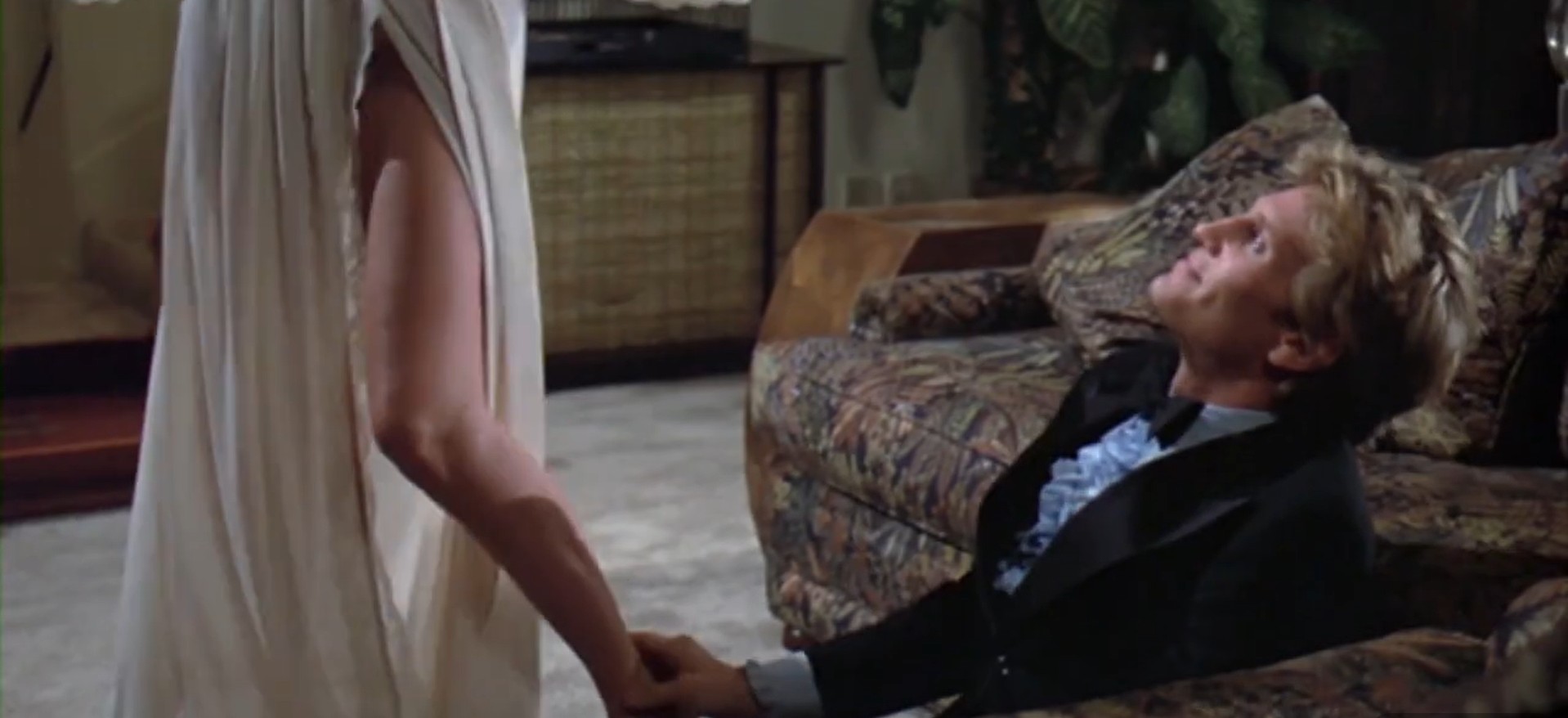
Power, under an affluential and admired ruling thumb backed by the wielding of Kung-fu arrogance, is what Chun-yi of “Intimate Confessions” embodied and, eventually, is what blinded her to her undoing.  In her debut role, Betty Pei Ti creates an unforgettable impression that cements Chun-yi as a fierce and fixated force being a corruptor of young women and a criminal kingpin with her deadly mitts in just about every provincial authority and lawmaking body.  The “Police Woman” and “Succubare” actress seizes one-half control of the story with her beauty, acting command, and dynamic and complicated relationship with on screen actress Lily Ho as Ai Nu, a homeless young woman with equally fierce fight in her but not backed by any kind of authority or station.  Ho, a veteran actress with stardom success as the titular character from Chih-Hung Kuei and Akinori Matsuo’s female fatale picture “The Lady Professional” the year prior, brings a vulnerable ferocity to Ai Nu.  Like a scared cat back into a corner, Lily Ho claws the character through a no-win-scenario of survival in a tough role that involves multiple men thrusting themselves onto her but like a switch, Ho’s able to turn off Ai Nu from being an erratic rebel to save her life to actually saving her life by calmly weaponizing love.  Kuan-Chen Hu portrays the Ai Nu character a little bit different in the 1982 version.  Not as feisty and more brittle, Hu’s uno card reversal on the brothel mistress turns into a ménage à trois of greed in it’s underlaying of revenge.  Chun-yi, too, has varying traits to the “Intimate Confessions” counterpart as On-On Yu (“Black Magic with Buddha”) gives the brothel mistress, who goes by Lady Chun, a softer harshness when it comes to delicate and delegating dastardly business and personal affairs.  Lady Chun also doesn’t have a martial arts bone in her body unlike Betty Pei Ti’s fighters-of-death Chun-yi who is a more of a typical well-rounded, boss-level antagonist, but what Lady Chun does come with more is contextual backstory, a woman who rose from power but sees much of herself in Ai Nu and makes promises of reciprocal care with fellow orphan and childhood friend, and skillful hired sword assassin, Hsiao Yeh (Kuo-Chu Chang, “Killer Rose”).  On-On Yu’s version can be cruel but be cruel while exacting a tender heart to her fixation on Ai Nu, adding a deeper and different complexion to what we’ve seen Chor produce before more than decade before.  The cast of each film round out with kidnapping scoundrels, crooked officials, and one lone decent constable within a supporting cast that includes Yueh Hua, Lin Tung, Wen-Chung Ku, Fan Mei-Sheng, Chung-Shan Wan, Shen Chan, Alex Man, Miao Ching, and Kuo Hua Chang.

Watching the two films back-to-back can throw one for a loop as the remake is not a carbon copy of the original, but there is a lingering familiarity that can’t be shook as it hooks itself to “Intimate Confessions’” key plot and forcibly exclaims its remake existence.  Like many things that have a sense of duality, there are also stark and contrasting differences between them.  If personally favoring sadist measures, rougher sexual confiscating, and a confident villainous vixen, the original “Intimate Confessions” will be more to your like.  If personally favoring a slow-and-steady wins the race melodrama, brewed and stewed in romance and storytelling, with more wuxia fighting and swordplay, the “Lust for Love” checks the boxes.  Compositionally, Chor’s vivid backlighting through a hazer fog with different spectrum colors is evident in both films but “Intimate Confessions” has profound designed objects and background combinations that work with the choreography that tells the mood of the story:  the windy and hazy night of Ai Nu and the good natured constables first meet that tells of a foreboding fate, the the bright and joyous revelry of exciting patrons of on the verge of copulating with exploited, kidnapped young women, or the darker streaked toned of betrayal and death in the finale showdown between principal players.  “Lust for Love” also has a tone about it that’s more in tune with the melodrama with expensive looking sets accompanied by a delicate palette of gold, white, and softer reds and yellows.  Plenty of third act loving making from the love triangle showcase told through a sequence of surrealism and teeing up fantasy desires heightened by the glisten outdoor tub water sloshing side-to-side in their passion, on the dewy moss the half-naked roll in, and in the gold rimmed adorned bedrooms where lesbianic lovers flirt.  Chor first ventures the rough rape-revenge thriller only to chuck the indelicacies of the original film and replace with swirling succulence of sex and self-indulgence, a contrasting brilliance formed and reshaped only a dozen years apart.

Imprint Asia knows all about courtesans, or at least about the Yuen Chor courtesans, in “Intimate Confessions of a Chinese Courtesan” and “Lust for Love of a Chinese Courtesan” with a new 2-disc Blu-ray boxset from Australia.  The 1080p high-definition transfers are pulled from the original 35mm negatives and are AVC encoded onto a BD50s and presented in their original aspect rations of 2.40:1 (“Intimate Confessions”) and 2.35:1 (“Lust for Love”), compressed by spherical anamorphic, widescreen lens with the noticeable curvature in the image.  Both presentations offer an ideal image experience with neither damage showing signs of damage or age, palpable textiles of the silk-spun and cotton blend garbs that sheen as expected and absorb a gratifying amount of reflected light within its respective fabric.  Grain appears light yet organic with skin tones and textures with an organic display, unlike in the Shaw-Shock Volume 2 set where skin coloring appeared orange in quite a few scenes.  The spherical lends offers depth despite its slightly warped edging as if looking in a corner convex mirror.  The audio formats include a Mandarin LPCM 2.0 Mono mix with burned-in English subtitles.  There’s also a Cantonese language option of the same spec but the English subtitles are optional.  Subtitles synchronization is on point with the ADR track that’s retains a clear and discernable dialogue albeit the gurgling quality of recording interference present through. The over exaggerated transcript on top of its equal over exaggerated performances, especially with the googly-eyed and giddy older village officials looking to score handsomely with the courtesans, is present in every inch of a less-than-seductive prostitution rendezvous.  Soundtracks boast a melodramatic and action pack score with an extremely westernized design only fiddling slightly with traditional Chinese melodies and with Fu-Liang Chou adding some harsh guitar during the spicier segments of Ai Nu’s lesbian grooming.  Chin-Young Shing and Chen-Hou Su provide a more classic and harmonically sound for “Lust for Love” to exact more passion and heart and less depravity.  Special features or “Intimate Confessions” include a new audio commentary by author Stefan Hammond and Asian film expert Arne Venema, a new informational and highlight discussion from film historian Paul Fonoroff, an archived featurette directed by Frederic Ambroisine Intimate Confessions of 3 Shaw Girls takes the female perspective and review from journalistic critics and actresses including one actress for the films, an archived interview featurette with critic and scholar Dr. Sze Man Hung, critic Kwan King-Chung, and filmmaker Clarence Fok, and rounds out with the original theatrical trailer and DVD trailer.  “Lust for Love,” in comparison, is more barebones in bonus content with an audio commentary by film historian Samm Deighan and the DVD trailer.  The physical presentation is similar to Shaw-Shock Volume 2 but just a slightly be slimmer with a jagged tooth topped, rigid slip box with a line split down the middle of the front cover depicting illustrations of characters for each film in either a contrasting blue or pink background.  The backside has a compilation of melded together pictures from both films.  Inside, two clear case Amaray, complete with their own original one sheet as cover arts with a reverse side having pulled a scene from their respective film, sit snug inside the slip box.  The boxset has a total run of 3 hours and 6 minutes, is not rated, and is region free.

Last Rites: Yuen Chor’s dichotomy of the two films is an odd and rare accomplishment of the filmmaker’s re-envisioning of his own work but “Intimate Confessions of a Chinese Courtesan” and “Lust for Love of a Chinese Courtesan” have idiosyncratic merit despite the same underlining premise and now it’s showcased in a brilliant boxset from Imprint Asia for you to decide Ai Nu’s revenge and motivations in the fray of brothel captivity.

Order the #34 and #35 of a “Chinese Courtesan” from Imprint Asia’s Boxset!