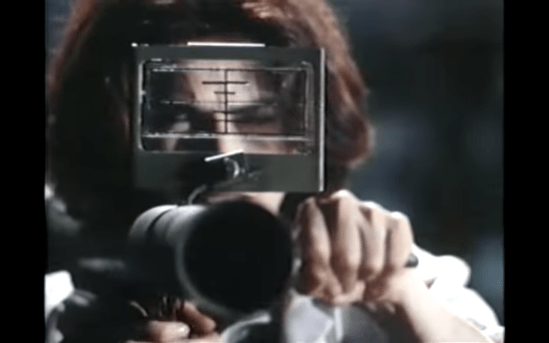
An Experiment Backfiring with EVIL Payback. “Moonchild” reviewed! (Visual Vengeance / Blu-ray)

“Moonchild” now on Blu-ray from Visual Vengeance!

An Inhuman government body of a dystopian future experiments with genetic splicing to create the ultimate weapon, known as Project Moonchild, against the human rebellion. That weapon, Jacob Stryker, is unaware of his newly encoded abilities when he escapes one of their holding labs to rescue his captive son from the very same apathetic regime. Stryker teams up with a group of human rebels and uncover by mistake Stryker’s hidden super solider talent of turning into an unstoppable beast – a werewolf. Hellbent on taking down his son’s brainwashing captives by any means necessary and to do it before an intestinal bomb explodes within 72 hours, Stryker convinces the rebels to assist him and now they have an ace in the pocket as they traverse in search for Stryker’s boy, encountering android and mutant bounty hunters, cannibalistic human survivors, and a surfeit of governmental soldiers hot on his tail, but when the werewolf comes out, Project Moonchild is out to seek and destroy those son-stealing son-a-of-bitches by ripping them to shreds.

Director Todd Sheets has long been considered one of the kings of SOV. The “Zombie Rampage” and “Clownado” Kansas City filmmaker writes and directs “Moonchild,” the 1994 direct-to-video, post-societal, lycanthropy actioner is Sheets’ attempt in splintering himself away from the gore. The American Prince of Gore and the Master of Splatter accomplishes the lessened bloodletting and liquid innards coming outwards werewolf feature with a dystopian rescuer that pits what remains of a separatist human society on a verge of collapse to go on a quest to cure a dividing mutation affliction and to go up against the malign immortals of killers and assassins constructed with nuts and bolts and sawblades on a super independent budget. The ambitious project comes with car chases, a large cast, and a hairy beast that fights for family! Executive producer Greg Petrak returns to Todd Sheets’ side after “Bloodthirsty Cannibal Demons” and is a production of Sheets’ very own Extreme Entertainment, a now 34-year standing product company based out of Kansas City, Missouri. Feel old yet?

Playing the lab rat, the werewolf, and the integral hero, Jacob Stryker, to the story is Auggi Alvarez (“Zombie Bloodbath”) as a widowed father who will stop at nothing to save his son Caleb (Stefan Hilt) in the hands of iron-hearted inhuman leader, Lothos (Harry Rose). Alvarez, like much of the rest of the cast, fall into a monotonal expositional black hole that can make “Moonchild” a slog between the excitement. While fleeing captivity, Stryker runs into Rocky (Julie King, “Zombie Bloodbath 2”), Talon (Dave Miller, “Violent New Breed”), and Athena (Kathleen McSweeney, “Violent New Breed), a band of underground resistant fighters who are desperate enough to overthrow the authoritarian ruling class that’s comprised of henchmen with duct tape masks and are skippered by a mustache wearing an unadorned samurai kabuto helmet – catching a tad resemblance to Mel Brooks’ Lord Helmet of “Space Balls.” If you have noticed already, the cast is an entourage of Todd Sheets regulars, a small niche of actors and actress with close ties to the Master of Splatter and have reoccurring roles in most the director’s early 90s indie gems. That trend continues with Carol Barta (“Prehistoric Bimbos in Armeggedon City”) as the bounty hunter, Medusa. Looking more like your next-door neighbor grandmother, Medusa is viper-tongued assassin with an unforgettable cackle and a throaty super ability that’ll inject nightmares for nights to come. Barta’s performance is one of those cliched it’s so bad, its good acts that you have to see to believe. Cathy Metz, Kyrie King, Rebecca Rose, Jody Rovick, and Mike Hellman round out the cast.
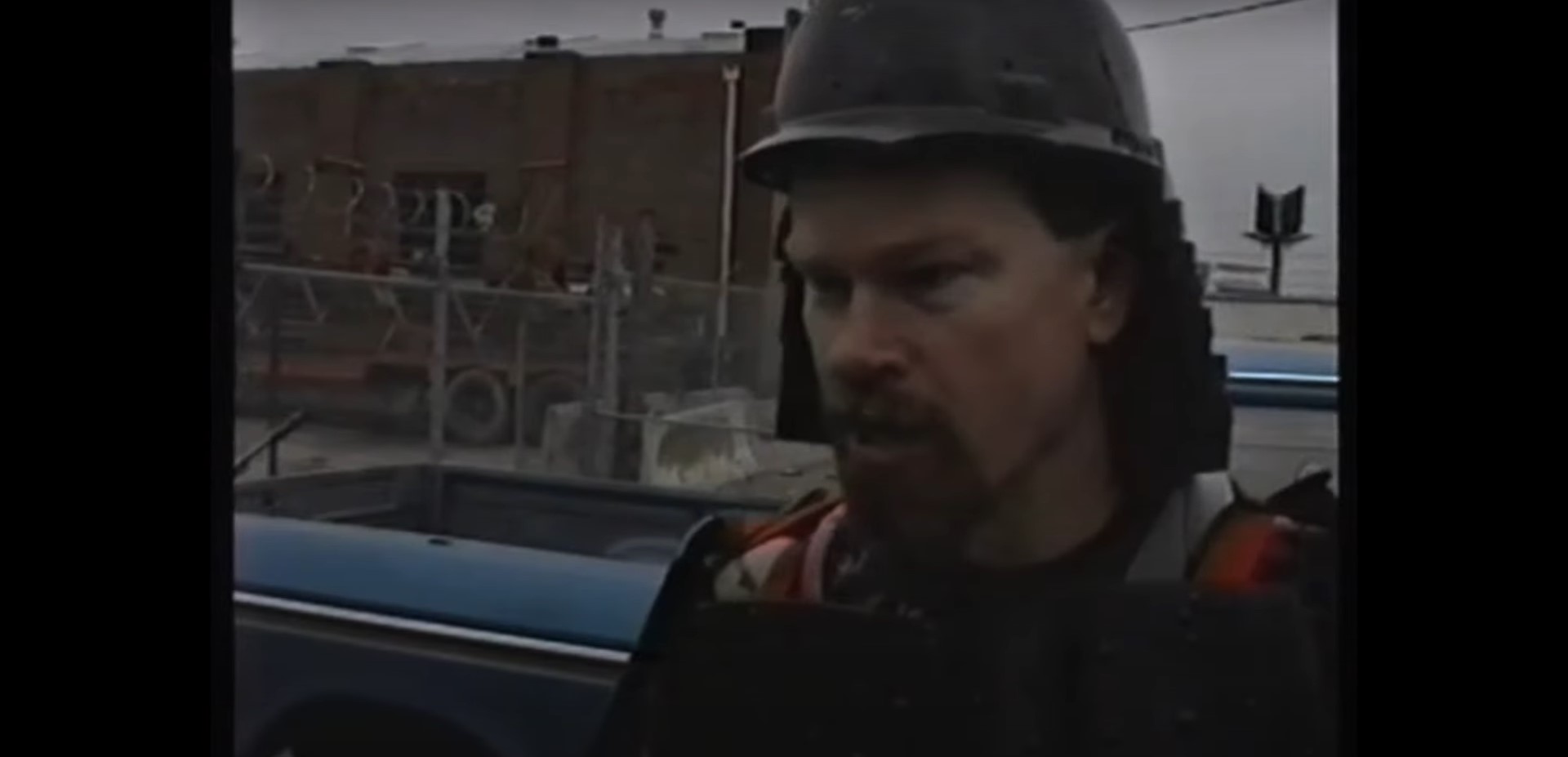
Character names drenched with Greek mythology inspiration and a contemporary take on the werewolf canon, “Moonchild” is an interesting and unorthodox story to say at least. Todd Sheets had obviously perfected the limited capabilities of S-VHS shooting or was confident enough to build in a lengthy car chase into a project that didn’t rely on disgusting audiences with blood and guts, but rather actionable thrills and singular characters of the post-apocalypse with only a smidgen of horror. You see, the werewolf doesn’t make too many appearances on screen, only surfacing from beneath Jacob Stryker’s human skin twice in total. The wolfish transformation is shoddy but for the budget, there is an appreciation for the amazing looking effect as well as the other practical effects throughout the feature. “Moonchild’s” pacing can be concernedly plodding to make sure the exposition covers aspect of Stryker’s intentions, slowing down the film to the point sluggishness. It doesn’t help that the scripted word-for-word, automaton performances are not tonally textured with droning dialogue that can’t captivate and contributes to the fatigue at times. Though “Moonchild” is an evolving project for Sheets with conviction in his ability to produce, there are still some editing continuity blunders that downgrade the overall result. Upward closeup shots of Julie King as she looks down when supposedly holding a rifle on Auggi Alvarez show her hand mock holding a rifle as it comes into the frame and then the next cut is the actress actually holding a rifle. Another scene involving King has her smash in the head of a traitor on a concrete floor and the next shot is of her running down the hallway away from where the body should be but wasn’t. The corpse had vanished. Howlers, pun intended, like these conspicuous examples are what depreciate an already discounted movie, curbing any kind of recognition for Todd Sheets going outside his blood and guts comfort zone.

As one of Visual Vengeance’s SOV cult-horror titles, we come to expect temperamental image and sound quality from the Wild Eye Releasing banner due to the consumer grade S-VHS equipment and the novicey of the filmmakers as, and mostly related to the former, Visual Vengeance warns of prior to the start of every feature so thus far, but the 50GB, MPEG-4 encoded, 2-disc Blu-ray set, that presents the feature in 1080p of the 1.33:1 aspect ratio, is the best technical-looking SOV to date for the company. Hardly any tracking issues, artefact issues, and any tape distortion of any kind and while still lacking premium quality as we all expect today, nothing is taken away from “Moonchild’s” original SD master transfer that is a director supervised. The single soundtrack audio option is an English analogue 1.0 mono mix and the dialogue as well as the score come over nicely despite a less punchy channel output. There’s a steady, feature length electrical interference from start-to-finish that is no surprise and is not terribly audio intrusive. Depth suffers mostly with the type of equipment that doesn’t filter and level out ambient noise, but the range of sound is pleasant with the added clip tracks. English subtitles are option. The bonus features include two new audio commentaries – director Todd Sheets and star Auggi Alverz and Todd Shoots and Visual Vengeance. Other bonus features include the alternate VHS cut, Wolf Moon Rising documentary, archival behind-the-scenes cast and crew interviews featurette, the original VHS trailer, deleted ending, the Todd Sheets’ directed music video Burn the Church by the now defunct Kansas City-based, goth metal band Descension, short film “Sanguinary Desires,” trailer for Todd Sheets “Bonehill Road,” and other Visual Vengeance trailers.” The phyical release comes with a 2nd disc, a bonus audio CD of the movie soundtrack, reversible cover art featuring original VHS cover on the inside, new art on the clear cased Blu-ray snapper, and original art on the cardboard slipcover by The Dude Designs aka Thomas Hodge. Inside the snapper lining are four-page liner notes by Matt Desiderio, folded mini poster of the snapper front cover, and the standard VHS throwback sticker sheet. “Moonchild” on a Visual Vengeance Blu-ray comes unrated, region free, and with a runtime of 87-minutes. Todd Sheets is a maniacal moviemaking machine with “Moonchild” being released a decade after the gorehound began and there’s plenty of admirable spirit and effects in the Kansas City werewolf in dystopia tale, but one can’t shrug off the oversights and the exasperating exposition that goes way off trail the turbulent path of indie filmmaking.

“Moonchild” now on Blu-ray from Visual Vengeance!

EVIL Goes Metal! “Project Metalbeast” reviewed! (Invincible Entertainment and MVDVisual / DVD)


A top secret CIA operation, known as Operation Lycanthropus, leads two agents to a Hungarian castle where they must retrieve a sample of werewolf blood in order to create the prototypical ultimate super soldier. With his partner’s throat ripped out during the initial werewolf attack, agent Butler manages to retrieve a sample after plugging the werewolf with metal bullets, but upon returning to the secret operation headquarters in the States, his supervisor, Agent Miller, and a team of scientists pursue a more subdued approach in synthesizing an advantageous killing machine. The unhinged and impatient Butler injects himself with the remaining blood sample, transforming him into a blood thirsty werewolf. After attacking and killing a scientist, Agent Miller neutralizes the beast and places him in cryogenic suspension, hidden away in the secured basement, for future sinister endeavors. Twenty years later, a new secret operation headquarters building is erected after the first burns down, clearing the way for a new team of scientist developing game changing medical technology for burn and cancer victims by creating artificial skin out of metal, but when the project is suddenly taken charge by Agent Miller, the bewildered and upset scientists are impelled to work on human cadaver trials, placing Agent Butler’s inanimate body on the operating table for a metal skin transplant. When he suddenly awakes, the base of unsuspecting scientists and military personnel come under attack by a formidable and blood hungry beast now armored plated with a metal exterior and virtually no way in stopping it’s vicious wrath.

Talk about an archetypical blend of classic and tech horror, “Project Metalbeast” exemplifies the age-old theme of scientific research being usurped for control and power and the end result is fatally catastrophic. Also known as “Proect Metalbeast: DNA Overload” and just plain ole “Metalbeast,” the film was written and directed by Alessandro De Gaetano (“Bloodbath in Psycho Town”) who spun a 1995 unorthodox werewolf feature that presaged playing God in more ways than one and added a fresh and new elemental armament to an iconic, and already super, beast on the prowl. Tom Irvin, Brad Hardin, David Barrett and Wesley Wofford, who makeup (no pun intended) the special effects team of Magical Media Industries, have credits that include the “Carnosaur” killer dinosaurs and a couple of the “Halloween” franchise sequels and have applied their combined tapestry of creative talents to bring a practical, larger-than-life metalbeast to the screen that’s not only monolithic in size, but also fearsomely primal with a glint of “Terminator” characteristics in its glowing red eyes. “Project Metalbeast” was one of the last semi-cult releases of Prism Entertainment Corporation, a company that chugged out some great B-horror films mainly in the 70s and 80s with titles such as “Eaten Alive” and “Body Melt,” and one of only a few films from the associated production company, Blue Ridge Entertainment.

Before taking Jason Voorhees to space to metalize the already the indestructible carnage incarnate, Kane Hodder did a test run stepping inside the augmented paws of a gnarled werewolf. Instead of space, Hodder grounds his performance by barely able to walk on two hind legs in the fabricated prosthetic suit, but the veteran stuntman and character actor is the dynamo practical effects horror version compared to today’s CGI-guru, Andy Sirkis, thriving tangibly polar opposite on the character effect sake, but Hodder captures the metalbeast’s utmost power gait and stance despite the extremely limited range of motion. Another symbol success in his own right is Barry Bostwick as Agent Miller. Bostwick is best known for his hero role in “The Rocky Horror Picture Show,” but to me, he’ll always be the aloof mayor in Spin City opposite Michael J. Fox so it was challenging to accept Bostwick as a conniving cutthroat intelligence agent. Yet, the longtime actor has perfected the knack of being haughty in not only his performance, but in all his mannerisms, making Agent Miller a completely loathsome character undeterred by the sensitives of others. Opposite Agent Miller is the more rational and sensitive head scientist, Dr. Anna de Carlo, played by Kim Delaney who appeared in “Darkman II: The Return of Durant” that was released the same year. Delaney didn’t excel as the strong heroine one might expect her character to be thrust into a situation that calls for her to protect not only her life, but all the lives outside the base if the creature escapes and the scientist is more-or-less part of a splinter group derived from a team effort against the metalbeast. Costars include Musetta Vander (“Mortal Kombat: Annihilation”), Dean Scofield, Tim Duquette, Lance Slaughter, William G. Clark, and John Marzilli as the unhinged Agent Butler.

“Metalbeast” sounds like a metal title, but Gaetano works the orchestrated talents of Conrad Pope into the soundtrack and “Project Metalbeast,” at the time, was Pope’s scored feature as a composer, the classically trained musician has been the orchestrator on a variety of films, such as the films of “Jurassic Park,” “Star Wars,” and “Harry Potter.” Yet, Pope’s score is akin to Harry Manfredini, a character of the story, that maneuvers coincidingly with the metalbeast while simultaneously triumphantly denotes specific scenes of dread, victory, and intense suspense with the latter being reminiscent of Mandfredini’s “Friday the 13th” brashly intrinsic cello and violin composition when Jason Voorhees would startle victims on the screen and chase them down a moonlit forest path. While Pope’s score is invigorating, the story leans more toward less so with a tediously uninspired quality regarding the film’s semblance of a comprehensive secret operations base that has corridors stunk of a standard hospital setting and story structure that fortunes little against the beast’s point of view in which Gaetano merely removes a few frames and adds a distortion effect to the picture that peers out of the eyes of a drunkard’s discombobulated staggering as well as leaving some plot holes with the bit characters, such as the other military police who simply just vanish though the character pool has been whittled down near the climax. Plus, Bostwick’s Agent Miller doesn’t age in the 20-year gap in the story, leaving any tidbits of truth versus a metallic werewolf as dust in the wind. Even with the faults, “Project Metalbeast” without a doubt is a product of it’s decade with a touch of lycanthropy campiness illuminating a sardonically augmented military killing machine.

Resurrected from the video graveyard and for the first time on a home video release in the States, or at least officially, Alessandro De Gaetano’s “Project Metalbeast” lands onto DVD from independent entertainment distributor, Invincible Entertainment, and partnered with MVDVisual. Presented in a full frame, 1.33:1, the transfer looks like either a VHS rip or a scan from an unofficial DVD release with heavily lossy details amongst a washed hue overlay. There’s some transfer imperfection, such as slight scratches, but is less intrusive than the soft image. The English language mono audio is bombastic, but there’s no strength behind the explosions, beast growls, and such to emphasis the impactful scenes. Dialogue remains in the forefront behind the ambience and, even, Conrad Pope’s powerful, but non-subversive score. Depth and range are acceptable as the camera and sound relation viably work hand-in-hand. The Invincible Entertainment release is nearly bare bones without an significant transfer upgrade, no bonus features, and barely a static menu. “Project Metalbeast” lives and breathes as a poster boy of a 1990’s revamped creature feature genre that transforms a classic monster into a man’s weaponized wet dream, but the film stutters as a reserved case of conservative metal monster mayhem.

Own “Project Metalbeast” on DVD!

Available for free with a Prime Video subscription!

Neglect. Rape. Christmas Birth. A Perfect Storm for EVIL to be Born! “The Curse of the Werewolf” reviewed! (Scream Factory / Collector’s Edition Blu-ray)


Set amongst the simple, yet sometimes divisively barbaric, culture of Eighteenth Century Spain, a beggar stumbles into the castle of a cruel king whose throwing a lavish wedding reception with his lords. The King’s young bride takes pity on the beggar as his force to be the occasion’s jester to obtain scraps of food and wine, but when the King retires with his new wife, he orders the beggar to be imprisoned. Forgotten to the point of insanity with his only visitor a lovely mute jailkeeper’s maid, the haggard and disheveled beggar goes mad with ravenous intentions and when the maid is punished for disobeying the now elderly, but still cruel, King, she is locked away with the beggar who rapes her. When the maid is released next morning, she kills the King and escapes into the woods to live like an animal until she’s barely found alive by a nobleman named Don Alfredo. Nursed back to health by Don Alfredo’s servant, Teresa, and discovering that the maid is pregnant, Don Alfredo and Teresa tend to the maid until the eventual birth on Christmas Day, an unholy time to give birth to a child according to superstition. The maid dies shortly after giving birth and the child, named Leon, is then raised by Don Alfredo and Teresa as their own, but carries with him a terrible curse stemmed from the maltreatment of his parents and being born on Christmas Day that transforms him into a bloodthirsty werewolf when the moon is full. When a priest advised that only love will restrain the beast from emerging, young Leon must be continuously shown affection, but when a young man, Leon leaves home to live his life, but the beast within him returns to ravage the village’s population.

Let’s travel back in time to the groovy year of 1961 when the renowned Hammer Horror direct, Terence Fisher (“Horror of Dracula”), was accelerating to the height of his career into what would be the United Kingdom’s very own colossally cult production studio, Hammer Horror, that economically constructed violent storied horror concepts splayed with a brilliant crimson blood inside an orgasmic gothic melodrama circulating around most of the classic monsters like Dracula, The Mummy, and Frankenstein, but, in this review of a new collector’s edition of Scream Factory’s Blu-ray release, Fisher wrestled with the hound from Hell, the werewolf, in “The Curse of the Werewolf” that was penned by Anthony Hinds, under the pseudonym of John Elder, as his sophomore credit behind “The Brides of Dracula.” English studio locations were transformed, not under the light of a full moon, to fabricate a mock village of Eighteenth Century Spain with the immaculate details to the sets and costumes, surely recycled from previous Hammer films, to offset the inherent English accents on a broken Spanglish vernacular. Fisher and Hinds upend common werewolf narratives, spinning a wildly tangent rendition of Guy Endore’s already highly taboo tricked out horror novel, “The Werewolf of Paris,” and drape it heavily with Gothicism.

Playing the shapeshifter werewolf is Oliver Reed who at the time was relatively unknown, playing a few bit parts such Plaid Shirt (“Wild for Kicks”) or my personal favorite, Man With Bucket on Head (“No Love for Johnnie.”) Yet, Reed exuded animalistic qualities, such as his dark features and somber eyes, that made him ideal for the role by appearances alone. The thespian in him didn’t quite fit what I believe Fisher was trying to flush out for his beast as Reed held back with a stoic reserve rather than a man desperate for salvation or death, but no one could deny that Reed wore the werewolf makeup like no other, a fine tuned testament of makeup artist Roy Ashton’s creativity that intensified an already beastly framed actor. “The Kiss of the Vampire’s” Clifford Evans took the role of being the wealthy socialite and surrogate father, Don Alfredo, who took the responsibility of raising a cursed child as his own with much suppression love as he could muster to stave the beast from returning. The legendary actor who starred in countless crime-dramas step outside his niche and into horror, even if at the time horror was considered a schlocky exercise of distaste content for a cheap thrill. As Don Alfredo, Evans wages his worth solely on the prospect of being a gentled hearted father-figure doing the right thing even if it’s detrimental to himself and the veteran actor triumphs taking an aloof man with little responsibility to his village, let alone his home, and turning him into taking the matter of his adopted son’s affliction into his own hands when he fails to cobble another solution together. “The Curse of the Werewolf” holds many other fine support performances from “Circus of Horror’s” Yvonne Romain as the mute jailkeeper’s maid, Catherine Feller, Richard Wordsworth, Warren Mitchell, Anne Blake, and John Gabriel.

“The Curse of the Werewolf” is driven not by the snarling teeth action or the transformative body horror one expects of Lycanthropy features. Instead, Hammer’s film rides a story high without being arbitrary with nonsensical waning on the centerpiece of the story, the curse, coursing the path that led to Leon’s fate that was no fault of his own. Leon’s throat-ripping moonlight rendezvous was bred from cruelty and circumstance of severe class division that reaps the life from those in the same blue collar social class as Leon, leaving the higher, wealthy class virtually unscathed by the curse’s wrath in a cruel ironic twist of events. With the story leading the charge, special effects and makeup take a backseat without only some immature fangs and shadowy lurking to sate the need for creature presence. When Roy Ashton’s vision of the half-man half-beast does make a full presentation of Oliver Reed in the full hairy beast getup, complete with a furrowed brow, elongated lower canines, and large wolf ears that were connected with bristly, greyish brown hair down the side of his lower jaw, the werewolf is worth the wait for some of the best practical werewolf makeup from the mid-20th century and surely was the inspiration for future werewolf films, such as “Wolf” with Jack Nicholson. The novelty of “The Curse of the Werewolf” still remains ripe despite being nearly half a century young, giving the beast a meaningful, if not also pitiful, existence to empathize being damned on two fronts: a wretched, cursed soul and being the target of a village mob.

Can love soothe a killer heart? Find out in Scream Factory’s collector edition Blu-ray of “The Curse of the Werewolf” with a new 4K scan from the original 35mm negative and presented in a 1080p high-definition widescreen format of a 1.85:1 aspect ratio. Rendering with clean textures and superb details, the image has remarkable vibrancy and hue balance in it’s tinctured technicolor. The transfer is virtually blemish-free, suggesting that the original negative aged well, with agreeable natural grain to complement the film stock. Scream Factory has produced the best looking version of this classic Hammer release. The English language DTS-HD single channel Master Audio renders, again, scot-free of aged distortion with the high-definition eminent boost to providing even clearer dialogue and untarnished ambient clattering during more turbulent scenes of laughter or beastly disarray. English subtitles are optional. A collector’s edition wouldn’t be complete with a slew of bonus materials and, boy, does “The Curse of the Werewolf” have brand spanking new material for the special features that include a new Roy Ashton tribute piece by his friend and “Little Shoppe of Horrors'” writer Richard Klemensen and new audio commentary with film historians Steve Haberman and Constantine Nasr. Plus, interviews with actors Catherine Feller, Yvonne Romain, Mike Hill, art director Don Mingaye, art department member Margaret Robinson, and filmmaker Jimmy Sangster in “The Making of The Curse of the Werewolf” featurette, a look at Lycanthropy that discusses whether man’s inner wolf can be a transformative source of mental will, a still gallery, and the theatrical trailer. The package is illustrated with Oliver Reed’s snarling werewolf persona by Mark Maddox, who designed Scream Factory’s “The Thing” release, and comes in a nifty cardboard slip cover. All in all, Scream Factory brought new life into the re-originating and re-orientating “The Curse of the Werewolf” that is, perhaps inarguably, the best Hammer upgrade to date.

Own “The Curse of the Werewolf” today!