Night Terrors Are Not EVIL Enough. “While We Sleep” reviewed! (VMI Releasing/ DVD)

“While We Sleep” available on DVD home video at Amazon.com!

Neurologist Nina Evanko is perplexed by the unusual CAT scans of 13-year-old Cora whose been suffering from sudden onset sleepwalking after her birthday party.  Believing the CAT scan is going through calibration issue with imaging process, Nina orders another set of scans, but when the scans produce the same result and a death of another patient right in front of Cora sends her home early before Nina’s arrival to study the results, Nina convinces Cora’s parents to an at-home sleep observation to root Cora’s sleepwalking cause.  What Nina finds is far more sinister than night terrors or any other kind of parasomnia as a demon has inhabited Cora’s body with nefarious intentions.  Cora’s only hope to save her soul is her bewildered parents, a rattled neurologist, and a rogue priest but a family secret may consume everything. 

If you’re still looking to support Ukraine during the now 6 plus months Russia invasion of their sovereign neighbor, why not support the Ukrainian-U.S. collaborative cinema?  Why not start more precisely with Andrzej Sekula’s 2021 child-possession thriller “While We Sleep” set in the Ukrainian capital and flagship city of Kiev.  Sekula, known more for his work with Quentin Tarantino as a cinematographer on “Reservoir Dogs” and “Pulp Fiction” as well as “American Psycho” and “Hackers,” has quietly and seldomly helmed a handful of films over the two decades with “Cube 2:  Hyperspace” being one of them.  “While We Sleep” returns Sekula to the director’s chair for the first time since 2006 with a script by Rich Bonat and the film’s supporting costar Brian Gross, the first feature script penned by the “Jack Frost 2:  Revenge of the Mutant Killer Snowman” and remake of “2001 Maniacs” actor.  “While We Sleep” is coproduced by American Brian Gross and Kiev-Los Angeles based CinemAday productions, which include company bigwigs Rich Ronat, Yuriy Karnovsky, and Yuriy Prylypko. 

While much of the story begins with Cora and her parents (real life family of husband Brian Gross, wife Jacy King, and daughter Lyra Irene Gross) cursed by Cora’s acute and disconcerting sleepwalking disorder and moody behavior, the daily battle to understand their predicament is not left in the out of their league but most lovable hands of the parents as the film leads you to believe.  Roughly half hour into the film, the narrative switches from the convincing family perspective, despite building background on their low-band relationship troubles and move it nearly 100% to Nina’s problem-solving perspective with a hint of her own troubled past.  Kiev born and “Stranger” actress Darya Tregubova plays the neurologist too curious to shrug off the mysterious case of Cora’s abnormal scans.  Tregubova is fetching without saying but she doesn’t provide the necessary emotional weight of person who’s going through grief and loss issues from the past.  Tregubova also doesn’t convey the necessary weight toward her strong connection to Cora and Cora’s case with only a few expositional moments that hint at such.  These aspects leave Nina outside the bubble of plot events that make the character stick out as unnecessary even more with the character’s negligent professionalism surrounding the wellbeing of Cora and with the parent interactions.  Once the story butts in randomly the blacklisted priest, Father Andrey (Oliver Trevena, “The Reckoning”), with an intimate familiarity with the demon that possess Cora, we know that the story is lost as it tries to quickly and covertly wrap its grip around how to come to a head with this storyline.  You can’t have a possession film without a priest, right?  Father Andrey feels very much like a leftover thought, but Trevena tries his darnedest to sell a washed-up man of the cloth with desperation pouring from word out his mouth despite looking like an English hooligan in a pop collared leather jacket. 

“While We Sleep” has not-so-brittle bones of demonism and possession albeit lacking its own or established cultural mythos, yet there’s a disjointed nature about the story structure and plot points that just don’t make sense that crumble that coherency faster than Cora descending into the depths of demonic disorder. The opening scene is the most perplexing of all with an elaborate birthday cake that neither mom nor dad had made or bought for Cora’s 13th year. Without a care in the world, mom and dad don’t explore further who could have possibly made such a beautiful cake and little do they know, the cake, or rather the cake’s candles, are a conduit for demonic transmission into the soul. This part is never explained through the rest of the picture and, in fact, Gross or Bonat don’t touch back upon a possibility of explaining the odious presence. Much of everything is taken a face value, such as the fact Cora cuts her long hair to a pixie style without an eyelash being bat or in what’s more crtical to the plot is with Cora’s real and darkly unholy father backstory. Those facts are a shot to the brain and we’re still not understanding where Cora’s biological father fits into Cora’s space, into her mother’s space, or even into Father Andrey’s space, but you would think as important as this twist was suddenly deluged in a quick spit of point-blank honesty, the edges would be smoothed over and the picture would become clear as the holy water that was cross was spritzed with; yet, that the aggregation of aggravation of little-to-no details continues to carry out as if everything is perfectly peachy and comprehendible within the story context.

From the at-home release distributor that delivered John Travolta as “The Fanatic,” VMI Releasing, a subsidiary of VMI WorldWide, releases “While We Sleep” on DVD home video. The clear snapper cased DVD, a MPEG-2 formatted DVD5, is presented in a widescreen 2.39:1 aspect ratio with an average speed bitrate of 4-5 Mbps. You can see noticeable banding issues in the darker bedroom scenes sporadically throughout. Aside from that, the picture result is fair with more than enough detail for viewing. The English-Ukranian soundtrack is not listed on the back cover, but my SEIKI player reads two audio options: a Dolby Digital 5.1 and a Dolby Digital dual channel 2.0. Discerning the difference between two is not worth the effort as there’s only subtleties in the output. The 5.1 surround sound has obvious better capacity for multi-channeling. Optional English subtitles are available but neither one of the audio tracks available nor the subtitles offer English captioning for the Ukranian dialogue and often times, there are back and forth exchanges that are intended to carry worth behind the exchange. The subtitles just state foreign language speaking which doesn’t help at all so there’s a bit of lost in translation in the dialogue unless you happen to speak or understand East Slavic languages. The 92-minute film comes unrated but doesn’t come with any bonus material as a feature only release. “While We Sleep” only nips at attempting to be a better than average “Exorcist” akin contemporary but remains on the haphazard course of shaky character building and bumpy, unpaved developments that make only for a rocky portrait of possession.

“While We Sleep” available on DVD home video at Amazon.com!


A 10-Year-Old Girl Pieces Together an EVIL Tragedy. “Martyrs Lane” reviewed! (DVD / Acorn Media International)

Purchase ACORN Release of “Martyrs Lane” on DVD

10-year-old Leah is a curious, quiet child, living in a vicarage household.  Her nightly nightmares surrounding her mother’s necklace locket and her mother’s stern conduct along with her constant obsession with her necklace locket leads Leah into an interest in the ornament’s contents.  Inside is a lock of hair and Leah takes it and loses a day later, sending her mother into a tailspin of anxiety.  That same night, a little girl knocks on Leah’s window and provides Leah momentary comfort and friendship until every visit after that, the little girl grows sicker and more ominously enigmatic in her play, providing clues and the whereabouts of thought-lost items that will open up the truth about the mystery girl’s identity as well as her family’s dark secret.

“Martyrs Lane” is a thoughtful and empathetic drama with supernatural delicacies surrounding complexities in loss and grief of bottled-up family secrets.  The British film is the third feature film, second in horror, for actress-writer-director Ruth Platt (“The Lesson”) who has commented that “Martyrs Lane” is a plucking of aggregated events from her own childhood woven into the very fabric of the story. Platt’s 2021 release is a fined tune extension upon her 2019 short of the same title that recasts the core principal roles from original actresses Indica Watson, Phoebe Lloyd, and the live action adaptation of “Beauty and The Beast’s” Hattie Morahan and turned the short into a 96 minute closed book feature about a scrutinized and consuming locket and a slowly decaying little girl playing two truths, one lie with the main character during bedtime hours who then has to unravel the mystery behind it all. Ipso Facto Productions’ Christine Alderson, who also produced “Valhalla Rising,” “Alpha Alert,” and even Platt’s original short film, produces “Martyrs Lane” alongside Katie Hodgkin and partly funded by the British Film Institute (BFI) in association with Sharp Films, Lypsync, and LevelK.

Recasting the short’s linchpin framework actresses took an audition to bring to light exactly the kind of talent Platt needed to express the different levels of somber ambivalence toward a family obviously struggling to deal with something more than just the day-to-day tasks. Kiere Thompson took over for Indica Watson as Leah in her feature performance debut and Thompson smashes a complex role and gains high marks on the voyeur scorecard as the youngest child who watches as her mother ebbs and flows in various states of anxiety while serving a milder, yet vastly different, dish of dynamics with the levity being around her vicar father and to be always primed to deal with her tormenting much older sister Bex (Hannah Rae). The best chemistry is between Thompson and age-appropriate counterpart Sienna Sayer, taking over Phoebe Lloyd’s role from the short as the strange visiting little girl. You can see two youngsters’ genuine play and natural innocence come through their smiling faces, wide eyes, and contagious giggles and when the winch of fear washes over them, called for by the story’s puzzling rising of events, mirthless moments are quickly produced, snapping us back into Platt’s eerie cold quandary. Hattie Morahan is replaced by Denise Gough as the mother Sarah and though her performance is fine, there just wasn’t enough of the mother’s side of the story to evoke a sense of empathy or sympathy and ultimately just falls into right into apathy even though Sarah is a pivotal piece to the theme. Catherine Terris, Charlie Rix, Donna Banya, Anastasia Hille, and Steven Cree as the vicar and Leah’s father rounds out the cast.

A blend between “Let the Right One In” and “The Babadook” but with less blood and less malevolent atmospherics, “Martyrs Lane” offers an imposing exhumation of a secret told in a way that doesn’t carry the sensation of something being hidden from Leah or even the audience in general.  Instead, Platt invests into the thematic subtleties with the bigger picture on the supernatural element of a strange, orphaned girl who knocks on the outside of Leah’s second story window, wearing dress up angel wings and is slowly deteriorating health wise with each passing night.  Yet, despite her appearance and reluctance at times, Leah’s peculiarly drawn to opening her window, letting her in, and even play childish games with her and tell jokes but soon those games become clues, near riddle-like, for Leah to push the envelope that link her mother, the locket, and this strange girl together.  Platt tacks on a silent and tenebrous after-hours backdrop during Leah’s sleepless nights and the stillness is greatly encroaching upon into the terror senses that you find yourself holding your breath and jumping at the breakneck editing aimed to momentarily scare you until a sigh of relief for when it’s over.  “Martyrs Lane” is externally melancholic and mood driven from outside Leah’s perspective as she, herself, internalizes and absorbs the emotions of others, studies them, and puts the pieces together to unravel the truth.

Ruth Platt’s “Martyrs Lane” is a wistful, and often eerie, entry into the creepy child subgenre. UK distributor, Acorn Media International, releases the Shudder exclusive-streaming film onto a PAL encoded region 2 DVD.  Presented in a widescreen 1.85:1 aspect ratio, there’s virtually no issues with the compression as even the night sequences retain the thick and obscuring black levels with almost unnoticeable banding, and it’s a clean dark too with balanced contrast to really home in on and define the shadows.  Details and textures are good for Platt’s dreamy-presented cinematic approach of slight overexposure and blur are more a stylistic attribute than an issue with the imagery.  I liked the tactile details in the loose strands of hair around Leah and the mystery girl that plays on their differences, and sometimes similarities, really well.  The English Dolby Digital 5.1 surround sound retains no significant issues.  Dialogue track perceives slightly muted or distant in some scenes and clarity, though free from audio blemishes, can be straining.  English subtitles are available.   Bonus features include a behind-the-scenes with snippets of interviews from Ruth Platt and the cast, an interview with Ruth Platt (which contains the same segments pulled for the behind-the-scenes), and a behind-the-scenes photo gallery.  The Acorn DVD is certified 15 for strong supernatural threat and injury detail.  In the end, “Martyrs Lane” is a dead-end road to melancholy, a family-affecting affair that peripherally chronicles not only one person’s struggle to maintain a slither of normalcy but also profoundly hits innocent youth who know nothing of the skeletons kept in the closet.

Purchase ACORN Release of “Martyrs Lane” on DVD

To EVIL, Death is Only the Beginning. “Girl With a Straight Razor” reviewed! (Darkside Releasing / Blu-ray)

“Girl With A Straight Razor” available on Blu-ray and DVD at Amazon.com!

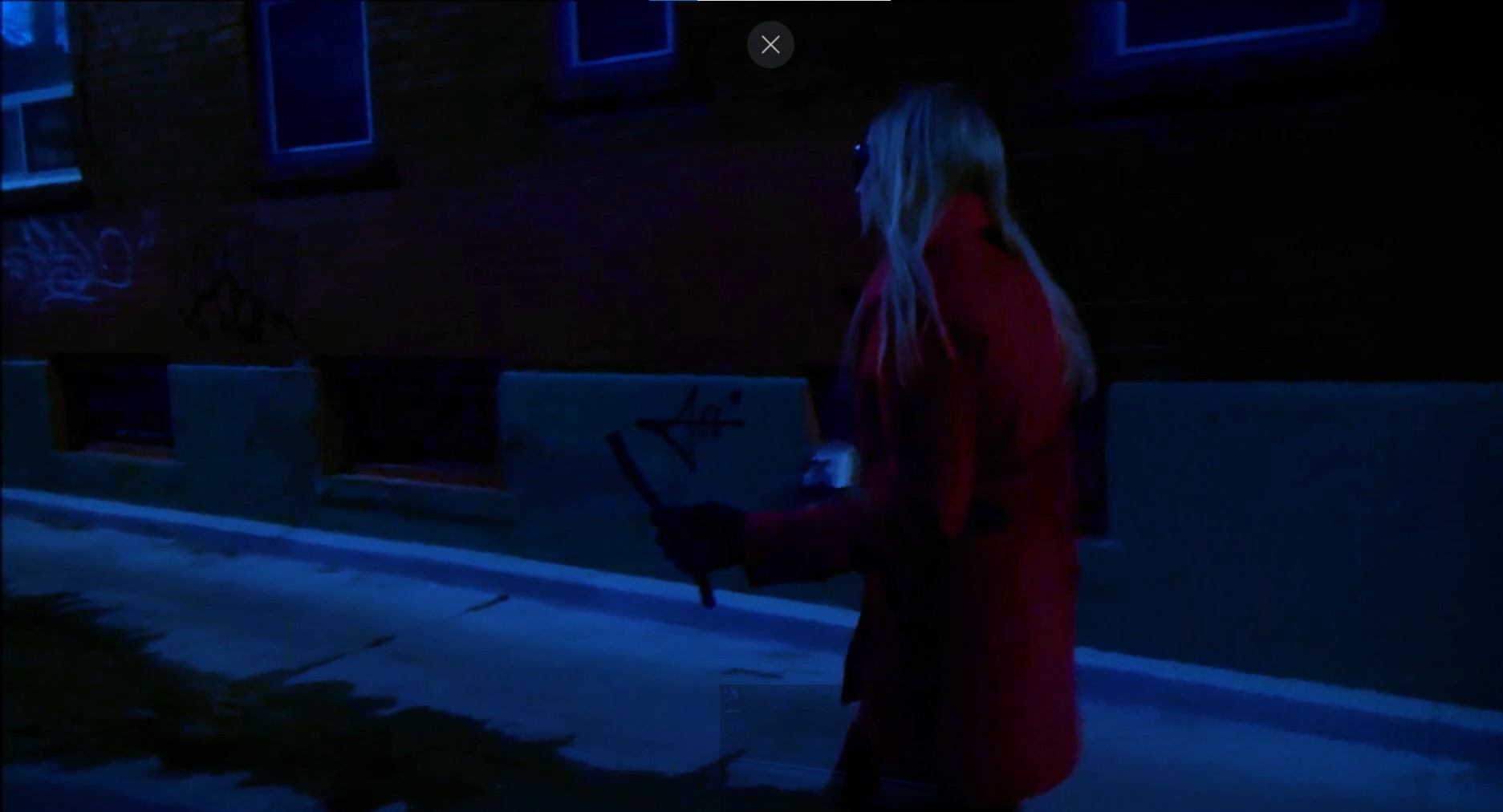
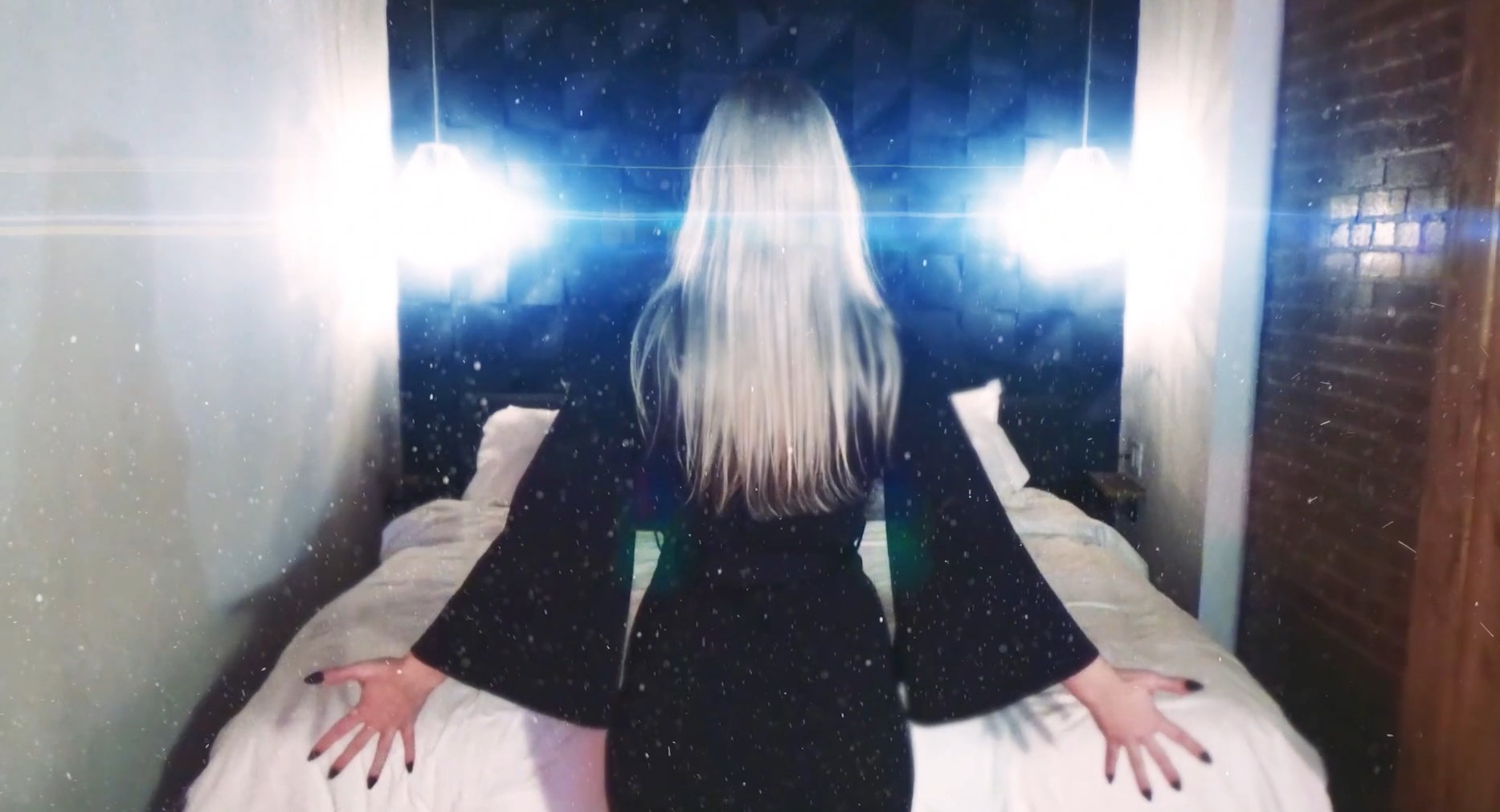
A placid woman waits in her modern chic apartment until dark. She ritualistically dresses elegantly and exits her apartment building wearing sunglasses, a bright red coat, and an unsheathed straight razor. As she wanders the streets, she locates a target, another woman, and stalks her with a bloody thirst in her eyes. When approaches from behind to only turn around her victim and come face-to-face with an exposed neck, she slashes away at the jugular, slicing crudely a blood-splattering spree that manifests a smile across her face. She returns to her apartment where she’s visited in between her straight razor murders by a lady dressed and veiled in black, priming the elegantly dressed woman for the next kill. The blade continues to slash through napes nightly, memories of the woman’s past seep into her psyche to a terrifying outcome of how she became a killer.

“Girl With a Straight Razor.” Simple, yet effective. The eye-catching, razor-sharp title certainly has a couple of key words combined together audiences often drool over just by the very straight-forward approach and appealing word sequences that make the appearance of an idiosyncratic title that much more desirable. Canadian horror-filmmaker Chris Alexander seizes advantage writing-and-directing a script that’s a numbing-gaze reminiscent in homage to giallo by assembling the trademark motifs of stark red coloring, gloved hands shot in a first-person view, and the use of a melee blade familiar to the Italian-made mystery-thriller genre for a fever dream highlighted as a pain-pleasure principled purgatory. The “Female Werewolf” and “Necropolis: Legion” director also composes the film and controls the overall look of the colorfully prone to epilepsy cinematography that jars sense the visual cortexes. “Girl With a Razor Blade” is the first feature production of the Vancouver based Molemen Entertainment and is produced by Vince D’Amato, the founder and managing partner of Darkside Releasing who released the film on home video this year.

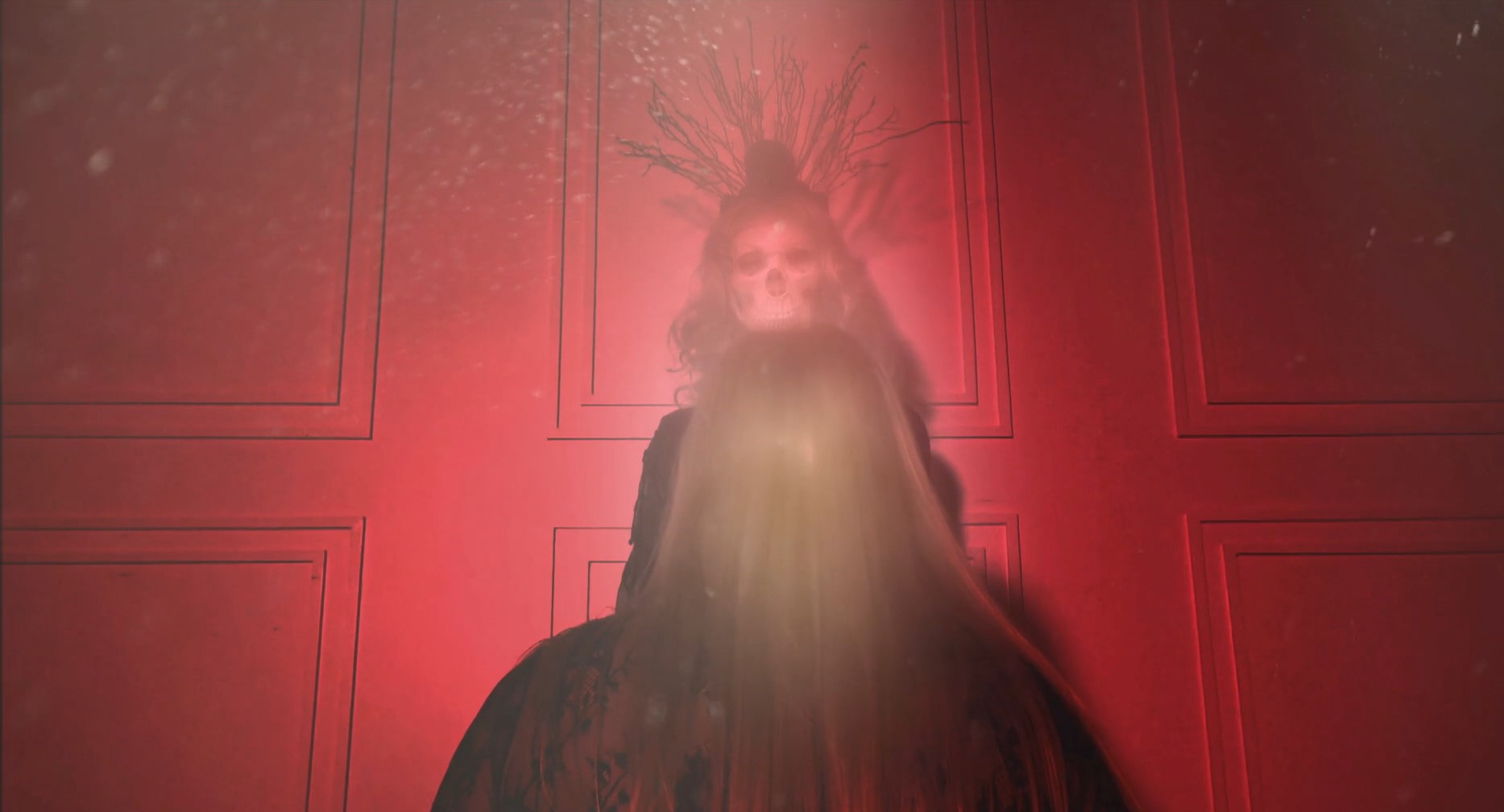
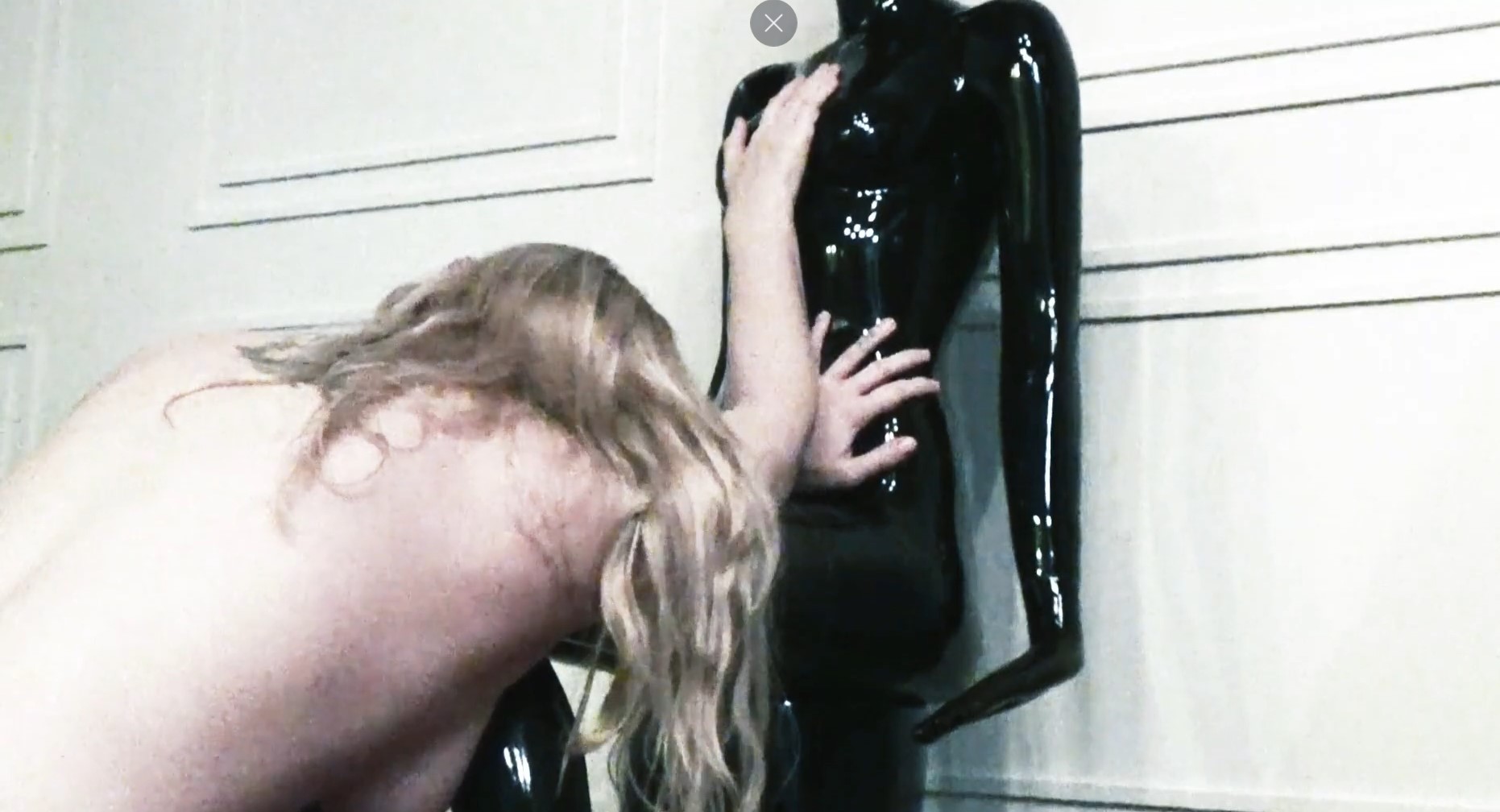
If you want to make a low-budget film and keep a lot of change in your pocket, hire only a handful of decent, well-rounded actors and actresses to maintain the spirit of independent filmmaking that balances the budget as well as balances the filmmaker’s creativity with semi-creditable performances. If you want to make a low-budget film and keep dollar bills in your pocket, hire two actresses where one only has two to three scenes max with no dialogue and the other have them play four different versions of themselves with very little dialogue. The minimal dialogue forces Alexander into a creative environment where express the principal’s emotional deluge, or lack thereof, can be displayed in a range of camera angles, his musical composition, and the variegated kill scenes contrasted against contrasting black and white visuals. In these scenes are a pair of Chris Alexander regulars. Having had roles in some capacity 2019 re-imagining of Bruce Hickey’s “Necropolis” from 1986, Thea Munster finds herself again in front of the director as a ghostly, haunting figure costumed in an old-fashioned lacy black dress as if going to a funeral, to which she’s properly playing a character called Lady Death so there’s no ambiguity about the status and intentions from the grim reaper concept, and Ali Chappell who isn’t foreign to leading lady role with Alexander and has the nearly the entire story on her shoulders with scenes of her as the lady in red cutting the throats of window shoppers on a nightly basis that becomes reverse engineered into the deconstruction of her as a killer with humanizing sympathy. Despite not much dialogue, both Munster and Chappell hit their marks and cater to Alexander’s idea of posturing expression that mostly involves Chappell laying topless in an egg-shaped chair, an animal skinned carpet, or on a black mannequin chair.

“Girl With a Razor Blade” is cutting-edge existentialism and novel re-imagining around the idea of death’s plans for us all. Alexander dives into the depths of mortal consequences that limbo the soul into a loop of insensible pain and suffering.  As we learn more about this woman and her marital troubles, presumably separated by legal force and a resentfully angry husband, from her child, Chappell’s character has no other place to go than down into darkness, mentally and physically.  Its during that time Lady Death approaches to become a harbinger of death, puppeteering her subject’s will to conduct more self-harm as the villain and the victim in a mind warping illusion that’ll fool the viewers’ perception of the woman’s insatiable lust for red jugular juice.  Alexander’s cinematography style is simply ethereal and elegant with a touch of precise choreography in the characters positions and movements to reflect a vivid dichotomy between the present stillness of surrealism and the past’s stressful reality. “Girl With a Razor Blade” is grim bordering the line of certain religious doctrines in condemning oneself to an unsavory existence, if you can even call it an existence, of facing yourself, your fate, over and over again until no longer the feeling the need to spill blood is gnawing at the marionette strings and waking up to the truth, facing it, can be free. There are moments the blade is a sexual object, almost like an obsession with what it represents, which would be death, that can be addicted, can’t be ignored, and won’t let you forget it.

Stylish, cryptic, and thought provoking, Chris Alexander’s seventh film “Girl With a Straight Razor” cuts onto a high-definition, AVC encoded, Blu-ray home video courtesy of Darkside Releasing. Two versions of the film are available – a Darkside Releasing expanded cut with a runtime of 67 minutes and a director’s original cut of the film with a runtime of 57 minutes. Both produced during the pandemic films are presented in a widescreen 1.78:1 aspect ratio. Picture quality wasn’t the best for Darkside Releasing with a shaky, often banding, image mostly throughout due to compression issues. You can see the blurry splotches in the darker portions of the scenes. Delineation is also difficult during rainbow strobe effect when the woman slices at away during a kill moment in a fit of haziness that leaves barely an outline of the contours. In fact, Alexander’s style is all over the map with filters, lens flares, and gel lighting that can be a little too much and gaudy to digest. The English language 5.1 surround sound has a lossy framework that’s more of a soft crunch than a sharp crisp. There isn’t much dialogue to be hand in the film, but the clarity is there, it’s just not robustly defined. Aside from two versions available of the film, bonus features also include an audio commentary on the director’s cut, three short music videos by co-star Thea Munster and her band “Night Chills” as she spotlights her niche playing of the theremin instrument, and Darkside Releasing 2021 Giallo and Surreal trailer reels. A character-driven and introspective “Girl With a Razor Blade” laments as an acquiescent nightmare breaded lightly in giallo features and fried heavily in the abstract qualities of surrealism. Don’t expect Chris Alexander’s film to be straight forward giallo with a straight blade razor and you’ll come out with only a close shave nick into your expectations.

“Girl With A Straight Razor” available on Blu-ray and DVD at Amazon.com!

Become Lost with the EVIL in Your Head. “Faye” reviewed! (Reel 2 Reel Films / Digital Screener)


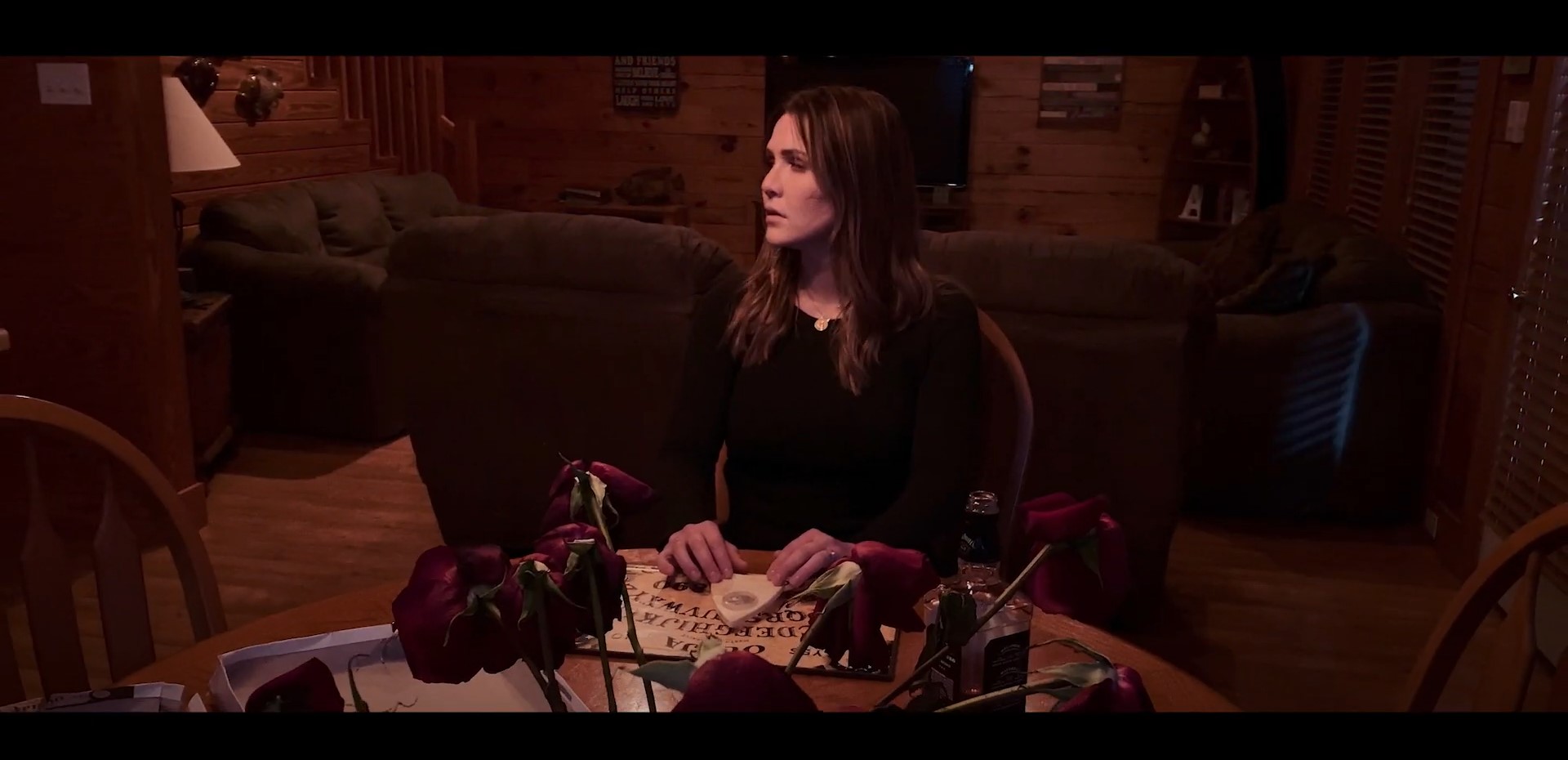
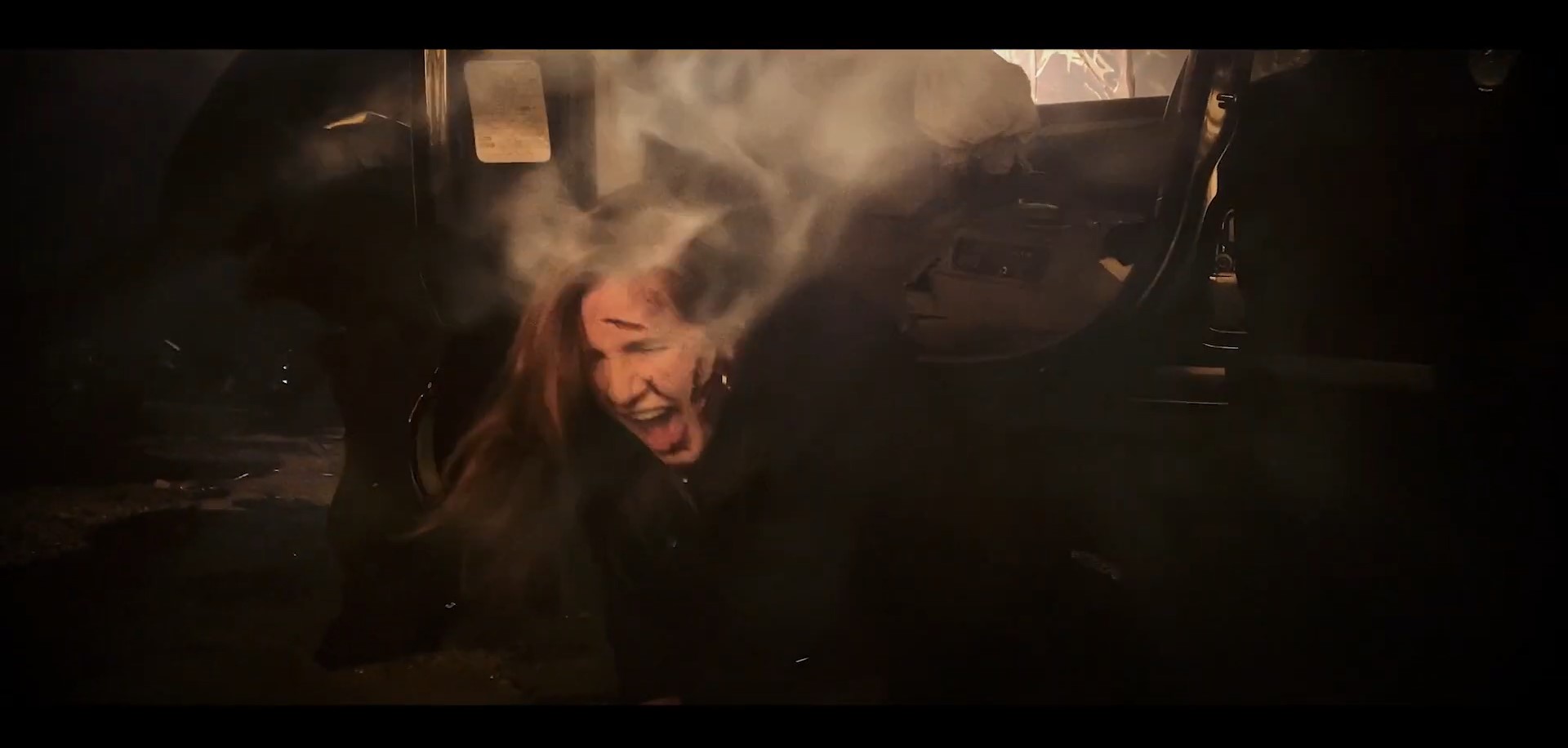
Author Faye L. Ryan has found success as a career writer penning personal growth and self-assurance books, but the renowned author has hit a mental wall in growing out of the process of mourning for her deceased husband, killed in a car accident in which Faye was at the wheel.  Scarred physically and mentally with painful reminders of that fateful night, Faye struggles to focus on her next new book, threatened to be dropped by her publisher if she doesn’t meet their deadline, and interacts with her husband as if he was still with her in person.  In a last ditch effort to get Faye back to writing before cutting her loose, the publisher offers up a lakeside vacation house to help focus on her work, but as Faye settles into her new, quiet writing space, she finds herself unable to escape a haunting presence tormenting her. 

Working solo is tough.  Having no one to bounce off dialogue or react to their disposition can be daunting and unnatural for most actors and actresses.  Yet, the titular character in “Faye” must do very that to ensure Kd Amond’s 83-minute feature directorial about loss, grief, and the supernatural representation that braids into a broken reality will exist without suffering stagnation.  “Faye” is a 2021 female-driven horror-drama written by Amond and the film’s lone wolf star Sarah Zanotti as the two filmmakers reteam from the previous year’s dysfunctional family thriller, “Rattled.”  Shot between Nashville, Tennessee and the cabin resort of Lacombe, Louisiana, “Faye” is cut from an all-female producing team of by Amond, Zanotti, Sara DelHaya, and Nicole Marie Lim under Amond and Zanotti’s independent film production company AZ if Productions.

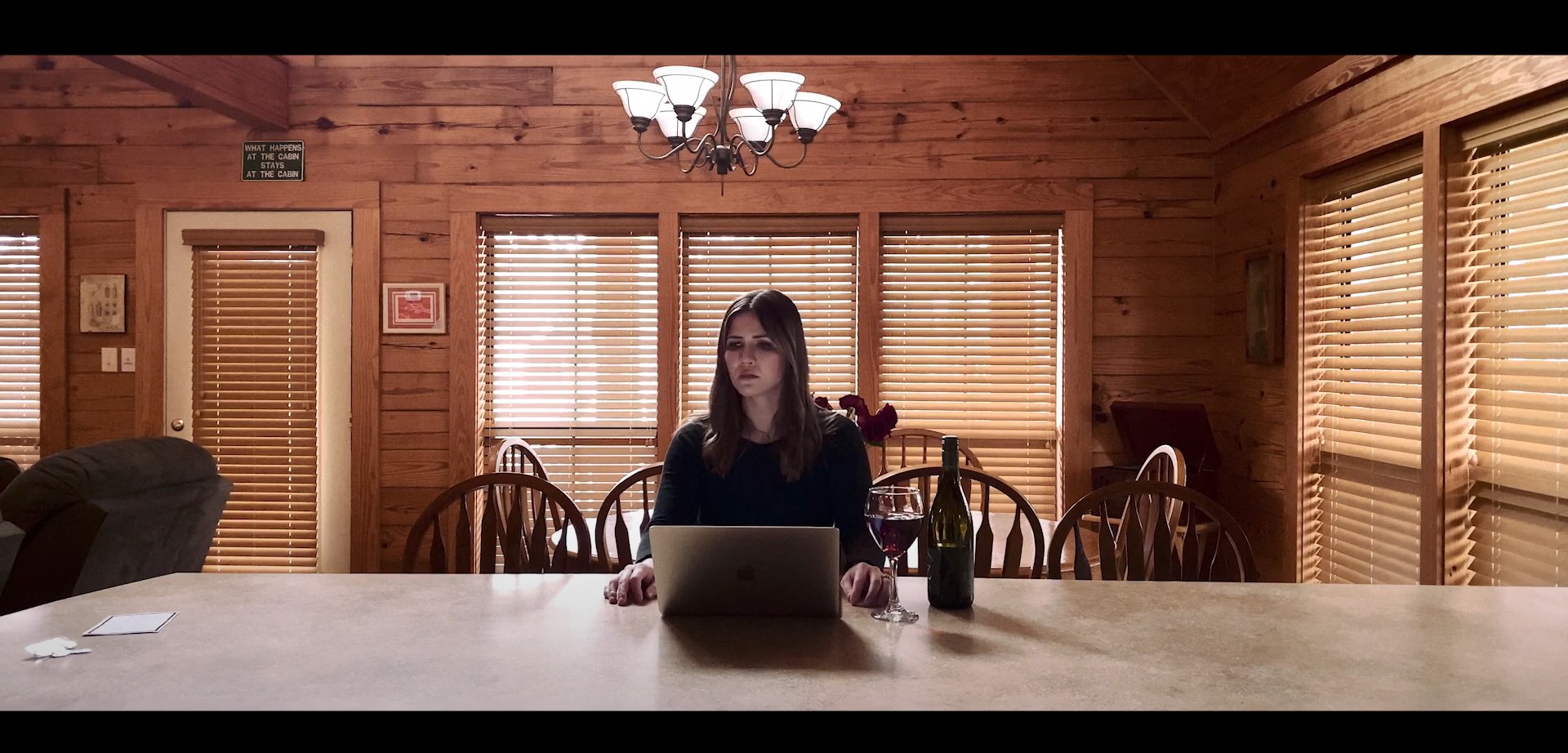
So, how did Sarah Zanotti perform going at the role alone with not another single body in sight?  Aside from the performance scale, initial first thoughts about an emotionally processing Faye rings clear that she is definitely alone with her thoughts without ever confronting her past head-on.  Faye, more or less, brushes the incident to the side, drowning herself in wine and loathing, until vague, intermittent memories pull her back down to reality every so often.  The role gratifies a sense of a struggling individual’s unintended and deeply personal isolation stemmed by unable to grasp with the hard to deal with issues to where’s she’s invented an imaginary friend in the form of her late husband in this pretend world of being normal, routine, and safe.  Looking from the outside in, Faye invokes pity on the saddest level as she converses with thin air as well as drinking large quantities of wine alone. There’s even the suggestion in either flashback scenes or maybe representational moments of despair that she, at one point in time, committed to, or thought of, suicide. As for the “Archaon: The Halloween Summoning” actress Zanotti? The actress, singer-songwriter, and proud cat mother (as stated on her personal website) breathlessly engrosses herself in Faye’s darkest moments with a ramble of insecurities that skate around the main issue until that issue manifests as a specter of duality, haunting “Faye” with her own scarred image that won’t allow her to leave until she combats the guilt eating her away. However, Zanotti’s a bit one tone through the entire storyline, never zig-zagging in a full range on emotive spectrum when face-to-face with the emulated specter. There are guest voices in the film whenever Faye takes or makes a phone call, including vocals from Corri English as Emory the publisher, Dean Shortland as Bobby, Brian Vance as Jacob, Kd Amond as Faye’s mom, and Zanotti as Elle.

To carry an entire feature film on your shoulders is empathetically tough for the one and only principle lead Sarah Zanotti and also the director Kd Amond as well and I wouldn’t declare “Faye” to be an overstimulating visual film albeit snazzy editing and makeup effects when sucked into supernatural self-reproach and suffering. “Faye” leans heavy into self-centered conversation in an acerbic chaptered and non-linear context that can be difficult to follow it’s pathway structure at times when the titular character is not framed in the cabin but rather sitting, speaking on a well-lit platform that fits her personal growth expatiate, like a Tony Robbins-type, connecting back to Faye’s mindset or actions in the cabin. Though much of the conversion is directed toward herself or the mental image and two-way communication of dead husband, a good chunk of the dialogue is the unwavering tough love business-speak between agent and client. Faye publisher rakes in money based off book sales and if Faye isn’t writing up drafts than a publisher does not care about your personal tragedy. That dynamic during the calls feels utterly cold with no pity or sympathy for Faye in the voice of the agent who cares solely about client image for publicity and is determined to nag a draft out of a woman who has lost her best friend in life – grief and guilt be damned. As a spook show, “Faye” whips up a few moments of fearful highlights but does little to the film’s self-proclaimed horror label when more of the acidity of internalizing the death and destruction of her life becomes more manic without the monster that’s introduced too late or comes too little often to be integrated into the story properly and stands out as negative concentrated symbolism.

Oozing with heartbreak and melancholy, the fracturing viability in “Faye” calls forth the detrimental impact and for reinstation back in the society, one needs to fall before getting back up. Reel 2 Reel Films brings the American-made, woman-driven, atmospheric and apparitional “Faye” to the United Kingdom on digital home video come May 9th. Since a digital screener was previewed, there will be no critique of the audio or video qualities. Kd Amond was really a one woman show behind the camera by taking on not only the directing duties but also many others, including cinematography and visual/practical effects and for “Faye,” the film was mostly captured with natural lighting outside the cabin, practical lighting for cabin interiors, and key lighting of Faye on stage. There’s use of a filters during the more supernatural plights and to tell night scenes that don’t look natural, leaning toward a more style-choice purple. For any extras, there were no bonus scenes during or after the credits. “Faye” has strong bones for a good grief and guilt ghost film in the indie realm and while it doesn’t have the star-laden power of other similar themes of its kind in “The Babadook” or “Hereditary,” “Faye” still invokes the power of hurt and the summoning of self-condemnation.

Entombed With an EVIL Loneliness. “Alone With You” reviewed! (Dark Star Pictures / DVD)

“Alone With You” on DVD at Amazon.com

Charlene anxiously awaits the return of girlfriend Simone who has been away on a photoshoot.  Today is their anniversary and Charlene wants everything to be perfect by creating a lovely evening together for just the two of them in their New York City apartment.  As the night progresses and still no sign of Simone, despite her flight landing hours ago, Charlene begins to worry but her phone suddenly malfunctions and her apartment front door jams, locking her inside with no way out.  To make matters worse, the outside is blacked out from something covering her widow to where no light can penetrate and she can’t see anything exterior.  Throughout the night, voices and shadows slowly surround her, dark silhouettes stand motionless in her storage basement and outside her jammed door, and the video calls with her mom and friends turn to an unnerving end as it seems Simone nor anybody else is coming to recuse her.  Intermittent flashbacks of her at the beach and a neighboring voice are her only company that menacingly mess with Charlene’s mind as she quickly realize that something is terribly wrong. 

If you’re looking for a compact, close-quartered, psychological barrel of scutter apprehension and fear, I wholeheartedly believe filmmakers Emily Bennett and Justin Brooks have what you need to inject that tar black cathartic dread right into your emotionally hungry veins with their latest film “Alone With You.”  Born and bred out of strict COVID times, “Alone With You” is the 2020 filmed mind-torturing, hell in a cell shot inside Emily Bennett’s NYC apartment during most of the shoot, using telecommunication technology to invite other actors into the spatial bubble and interact with the main lead without physically being on set.  We’ve seen a ton of other COVID-created content over the past two years, but “Alone With You” definitely shines as not only isolating madness but also a fear of disconnect in reality, mental struggles over brittle relationships, and an illusionary life stemmed out of disenchanting circumstances.  “Alone With You” is written and directed by Emily Bennett and Justin Brooks as their first feature film and is produced by “Underworld:  Awakening” actor Theo James and Andrew D. Corkin of the 2019 created production label, Untapped.

With a small indie feature film during pandemic pandemonium, the odds the cast and crew are downsized, probably meagerly paid, and limited by the pandemic-stricken environment and lack of funds.  “Alone With You” is just that film because at the principle lead is none other than Emily Bennett, one of half of the directing duo.  Bennett, who has a solid acting career with even a role alongside “The Devil’s Rejects’” Bill Moseley in the “House of the Witchdoctor,” gets cozy in her own two story apartment that suddenly becomes an ensnarement of unveiling and disturbing truth.  Bennett hits every level of descension without an immediate belief that something isn’t right with her surroundings.  Charlene takes multiple gradual hits of paranormal punches and Bennett executes her fear with great poise without any lopsidedness to give away too much too early that can sometimes kill momentum before the spookiness starts to really get good.  Through flashbacks and video calls, other actors interject moments of levity, different sides of tension, and, frankly, break up the Bennett monotony and from those brief moments, we get a sense of who Charlene is and a slither piece of her backstory.  The amazingly talented “Bliss” and “VFW” actress, Dora Madison, plays Charlene’s inebriated-uncouth friend Thea over a cell phone video call, zooming in is Charlene’s rightwing mother played by the ever versatile and extremely lovely Barbara Crampton, and, lastly, Emma Myles, in an unrecognizable role in contrast of a greasy haired addict and former Amish turned inmate performance in “Orange is the New Black,” is the always beyond arm’s length away love interest Simone.

What I like most of about “Alone With You” is the atmospherics of being in your safe, cozy place that has instantly turned in a prison of peripheral moving shadows, an invasion of privacy, and, most frighteningly of all with most millennials, none of the modern technology is working properly.  The story design feels extremely pushed toward a wash, rinse, and repeat cycle with no other areas in the apartment to explore other than the handful of main rooms and so we’re constantly in the bedroom, then living room, then front door, then basement, and then repeat for most of the 1 hour and 22 minute runtime but do you know what happens with that?  Bennett and Brooks strategize and outline the snowball of bad feelings inside the ominous compact, starting small and working up to a cacophony of madness to where Charlene is literally moving back and forth between truth and deception induced by being scared to shivers of her own apartment’s clad and taken for granted discomforts, such as the front door sometimes being stuck or the crying lady neighbor who you can hear clearly through the air register.  “Alone With You” fiddles with the theme of disconnection.  Here you have Charlene, a small town girl who moves into the big city, has discovered her sexuality, and has found a vocation that suits her to which all this change go against her mother’s approval, and she feels strongly attached, like an extension of herself, to girlfriend Simone and as the story progresses, we get the sense that not everything is lovey-dovey between the two and Charlene’s dependent world is slowly being severed.  Simple, yet effective, “Alone With You” is an undoing nightmare of personal happiness, a sentiment we all share and relate to during height of the pandemic.   

Now, we all suffer in Charlene’s insufferable loneliness and disconnection with the “Alone With You” DVD home video courtesy of Dark Star Pictures. The region 1, dual layer DVD is presented in a 2.39:1 aspect ratio of standard 480p resolution definition, but the DVD image renders nicely on screen with digital sharpness unaffected by any compression issues, especially with much of the space saving special effects coming in practical and mostly done in the editing room. The video calls vary in quality which is pleasantly dispersed to the appropriate electronic devise, i.e. television, phone, etc. Details are clearly there but only slightly softer around the edged delineation. Two audio tracks are available with an English language Dolby Digital 5.1 and a stereo 2.0, but the 5.1 track is an allocating alicorn for a low-budget DVD. Shawn Guffy and Nicole Pettigrew’s sound design is meticulously on point and on cue with every synchronous audio nudge to point Charlene in the right direction for another round of dread. The varying levels of the Phil Mossman’s soundtrack adds a blended flavor of melancholy and fear. Dialogue output renders clearly and cleanly with no issues. English SDH subtitles are available. DVD comes stocked with special features including a blooper reel, a bit of a waste of space on the deleted scene reel that doesn’t add much to either the character or story, a lengthy and in-depth filmmaker and cast interviews, a behind-the-scenes featurette of Emily Bennett and Justin Brooks remarking on the struggles of feature filming around their apartment during COVID spikes, and a director commentary with the duo. “Alone With You” has a heavy artsy side to it that can leave viewers wandering for answers but if pieced together, if paying close enough attention, the correlation between the story in the camera and the life behind the camera are really not terrifyingly different. One just happens to be more of a representation hyperbolized with terror of a crashing down reality than the other.

“Alone With You” on DVD at Amazon.com