Never Trust an EVIL Trucker with a Drug and Prostitute Addiction! “The Bunny Game” reviewed! (Jinga Films, Danse Macabre, MVDVisual / DVD)

“The Bunny Game” is Not for a Weak Stomach! Now on DVD!

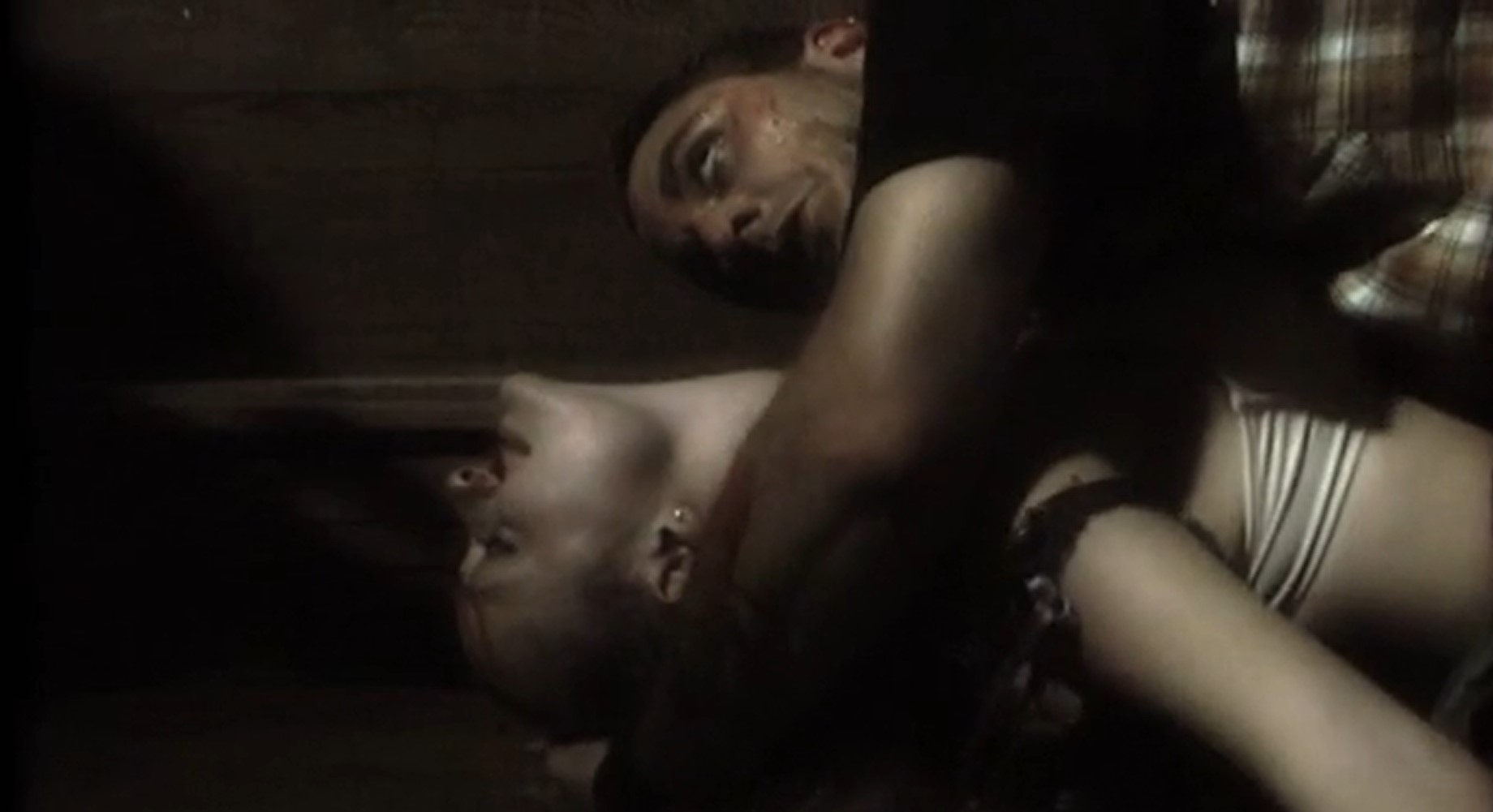
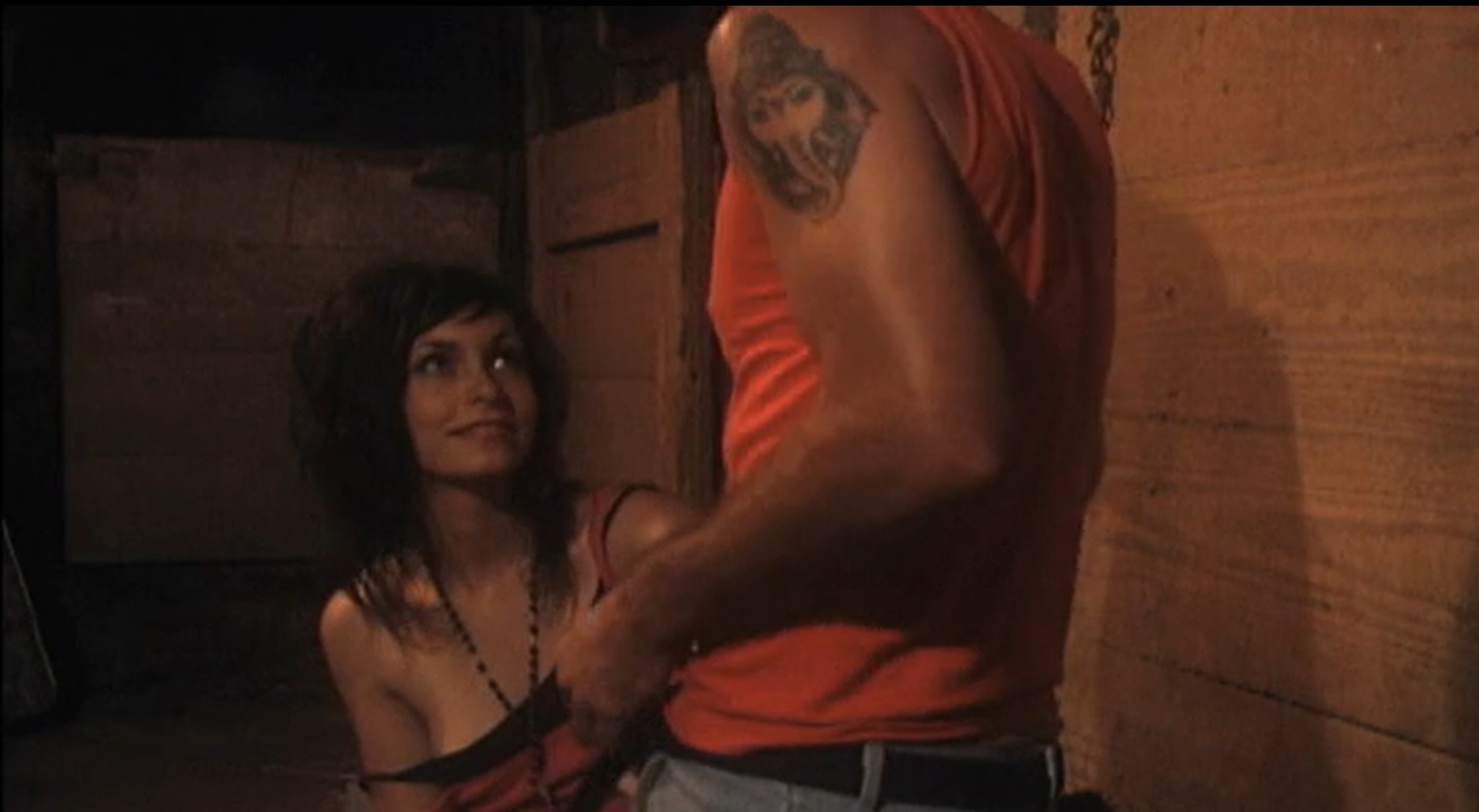
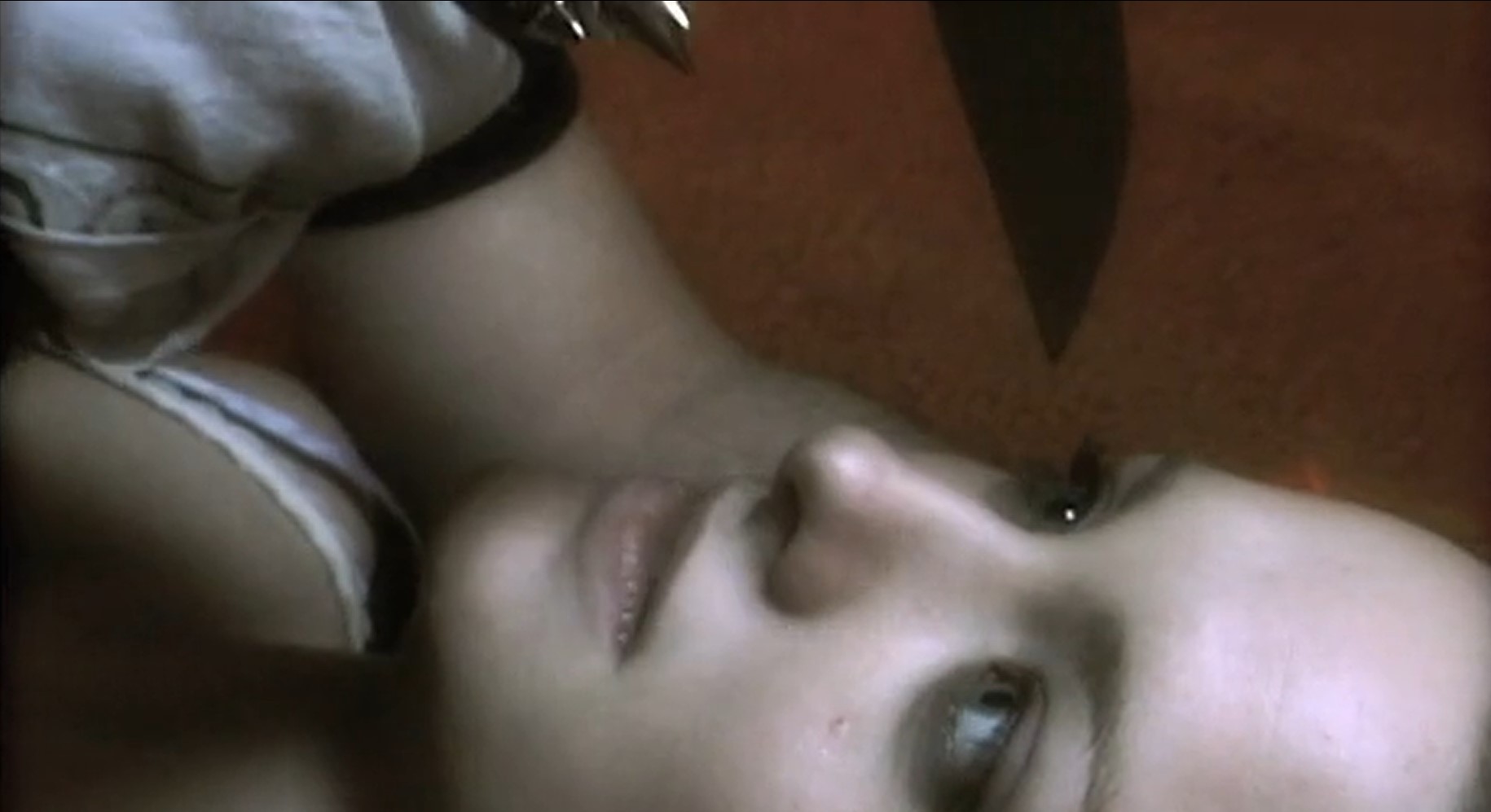
Bunny, a prostitute on the streets of Los Angeles, subjects herself to the lowest of clientele lists looking to exploit her services with their own abusive fetishisms.  Just to get by to her next meal.   Bunny is constantly in coked out state when tricking becomes nearly unbearable.  Manhandled, abused, and unconsciously raped, there seems to be no end, and she must persevere to survive the streets, beautifying and feeding herself physical and mental nourishment to keep up strength.   When she encounter’s a trucker named Hog, Bunny’s just looking to endure another insufferable John, but Hog has other plans for Bunny, kidnapping her, driving somewhere isolated, and chaining her up deep within his trailer, and tormenting and torturing her to a different kind of no end Bunny has never experienced.  Hog’s derangement is fueled by his extreme drug use in what is not his first rodeo with working in whores for his own personal enjoyment and the girls’ own personal Hell. 

Banned in the UK, “The Bunny Game” is an extreme torture porn horror based off the real events that happened to principal star Rodleen Getsic with being abducted.  There’s not much publicly known on her own horrible experience, but the “The Bunny Game” is a baseline shockumentary written in collaboration between Getsic and filmmaker Adam Rehmeier with in the director’s chair of his debut feature film.  Rehmeier, director and cinematographer of numerous music videos and shorts, conjures up a story and a completed film with singer-actress Getsic without ever materializing an official script.  Instead, improvising and extemporizing fluff up Rehmeier’s storyboarding bullet points of where people and places should be in the narrative construct, hence why much of the story goes without dialogue, replaced with frenetic visuals and montages of recalcitrant convention.  Rehmeier co-produced the film under his company Death Mountain Productions alongside Rodleen Getsic.

For having been abducted herself and for the film to be an overemphasis of it, Getsic steps into the main role’s fishnet stockings to be the used and abused sex worker, known only in the credits as Bunny, and the role is no walk in the park or for the faint of heart.  Bunny is a self-inflicted punishing performance and mostly what you see on screen being inflicted upon Bunny is genuinely be done to Getsic which includes branding of the caduceus symbol on her back, as well as the same symbol seared into the flesh of Getsic’s friend, Drettie Page, who was game to receive much of the same for-the-story, for-the-film punishment as another victim of Hog in, supposedly, flashback sequences.  Hog is played by Jeff F. Renfro, a regular in the industry for his transportation services owning a big rig and tractor-trailer, but as the formidable serial killer Hog, Renfro brings and matches the intensity of “The Bunny Game’s” near free for all improvisation and experimentation provocation.  Getsic’s willingness to go the extra mile, from being branded, lighting scored by knife play, having her head shaved, is equally matched by Renfro’s being the recipient of being spit in the face, handling the fondling and the other physical exploitation of Getsic and Page, and being a total wild eyed, masked and shirtless, top of his lungs maniac with a mindset that’s cruel and oppressive with another human being’s life in his hands.  Dynamically, it’s a cat playing with a mouse, a deplorable show of chauvinism, and a callously cruel picture of control with the players in full control and full acceptance of their characters.  Gregg Gilmore, Loki, Curtis Reynolds, and Norwood Fisher cast a supporting line to trawl the Rehmeier, and what Rodleen Getstic refers to, monsterpiece

Rehmeier and Getsic have both been recorded stating every action on screen, aside from the excess drug and alcohol use, is 100% real.  Now, “The Bunny Game” immediately slaps viewers in the face with Bunny on her kneeds giving extended, adult industry-enthusiastic, fellatio to some unknown man only shown from his clothed backside at mid-section down to the top of the knee.  While not as sloppy as one might think despite Getsic’s vigorous efforts, the opening oral provides that provocative, eye-opening, banned-in-the-UK scene that now has snuck insidiously in the recesses of our minds and, in conjunction with the previous Rehmeier and Getsic authentic claims that never really specifying sex as one of them, audiences will wonder if what they’re subjected to is in fact a real act of oral sex.  To digress briefly, what’s the deal with movies with Bunny in the title (“The Bunny Game,” “Brown Bunny”) and oral sex?  From there, if you’re not disgusted by the voyeurism and chauvinism of sex work and misogyny, you’re digging Rehmeier’s film and hooked with curiosity tied to Bunny’s unfortunate fate, but what ensues embodies the essence of a crazed industrial music video of minor, discordance chords that produce harsh sounds and tones to envelope the choppy and cutting editing that shatters linear time, as well as the struggling soul, especially in montages of maniacal torture and onset introspective  between the punishment giver and taker in the Hog and Bunny intersection that will instill a catalytic crossroad for one of them.   There’s plenty of empathy to be had for Bunny, or maybe even sympathy if one has gone through similar abduction, torture, or has had a previous life on the streets, but the coarse nature of Hog’s slow and measured wrath can certainly be felt in the 1 hour and 16-minute runtime as revisiting Bunny for another dash of screaming, laughing, and misuse of her body and being at the hands of Hog is often on a wash, rinse, and repeat cycle of cynicism, an unavoidable problematic staleness often associated with films that do not have a shooting script, or any script for that matter.  Ideas tend to run dry and the then cornered concept is to bedazzle with nonstop bedlam but the fresh frenzy of exploitation is often fleeting and expires a lot quicker than the film’s runtime does.

A tale of street tragedy and what should be an always constant reminder that deranged killers are here, there, and everywhere, “The Bunny Game” scores high in extreme exploitation within its experimental execution.  Jinga Films, Danse Macabre, and MVDVisual bring the corrosively cuddly film back onto DVD after the original Autonomy Pictures release has been out of print for a while.  The single layer DVD5’s codec is of MPEG-2 compression and presented in 720p resolution in a widescreen 1.85:1 aspect ratio.  The achromatic black and white image stacks additional bleakness to the already soulless content with a low field of contrast creating borderless shadows but the use of handheld key lighting, aka flashlight, does create a miniscule delineation at times when under a blank of black.  Blacks succeed in being solid for the most part with only a couple instances of minor banding which is pretty good DVD compression, likely a result of the zero color to encode and decode.  The English LPCM Stereo is not a girthy mix of dialogue, soundtrack, and ambience.  Now, all three elements exist, but since “The Bunny Game” has zero script, there’s not much in the way of conversating and what’s there is prominent enough amongst the layers of industrial jarring dissonance that, at times, beats in sync with the visceral montages.  Inside the mic recording scope, ambience comes and goes based off the intensity of the scene and score but there are quieter moments to reflect on the improper handling of Bunny with Hog and the other indiscriminately disgusting Johns her life as a prostitute absorbs.  Special features include an archival Caretaking the Monster behind-the-scenes interviews with cast and crew, including actors Rodleen Getsic, Jeff Renfro, Greg Gilmore, and director Adam Rehmeier, discussin the original concept that was more aligned with Getsic’s personal abduction accounts but then evolved into something more horrifying that lead to the casting of Renfro, their isolated locations, and the realism inflicted upon Getsic as well as the teaser and theatrical trailer.  The DVD packaging is much the same as previous editions with a video aesthetic resembling black and white contrast but unlike previous releases, the cover art shows off its graphically artistic masked bunny in shackle design that speaks to the content.  The Jinga, Danse Macabre Danse, and MVD release lists this as a rated R release whereas the previous version was unrated; however, both releases have a 76-minute runtime.  A quick review suggests this “R” cut is actually the same as previous versions.  The DVD also has region free playback.

Last Rites: This game is not for the faint of heart. “The Bunny Game” tests willpower to stay through to the end, through the torture, rape, and the real violence in a one-sided acrid affair. If you can survive the brutality, this game is for you.
“The Bunny Game” is Not for a Weak Stomach! Now on DVD!

Be Careful Of Your Friends. They May Be EVIL! “Stabbed in the Face” reviewed! (Wild Eye Releasing / DVD)

“Stabbed in the Face” is now on DVD!

A high school Halloween party becomes the catalytic event for a motley of friends that plan a party in a remote haunted house where the urban legend of the three legged lady had brutally slain her husband and his mistress before her own insanity was gunned down by local authorities.  Simultaneously, a prison escaped murderer roams free around the same area, living a few friends on edge but reassured by the others that nothing will happen.  As the party begins, sex, drugs, and alcohol fuel the night away until one of the girls winds up missing and all that is left is a blood-stained bathroom where she was last seen heading.  Fingers begin pointing at each other as panic and anxiety sets in but as the thought of a deranged escape convict overtakes as best suspect, the others quickly split up to find more of their roll-in-the-hay and pothead friends only to discover the hard way that splitting up is a bad idea when hidden agendas come to light.

A character trope loaded slasher forms the foundational framework and sets up filmmaker Jason Matherne’s 2004 feature with a killer-thriller twist.  With an unambiguous forthcoming of brutality right smack-dab in the middle of the title of “Stabbed in the Face,” Matherne, the low-budget director of the franchised “Goreface Killer,” an if-you-can-believe-it less profane name to the film’s true title of “the Cockfaced Killer,” helms his sophomore gruesome gorescape off a script by fellow “Goreface Killer” writer and collaborator Jared Scallions.  The independent gore-and-shocker set in the late 1980s lands a setting in Louisiana and Mississippi, specifically around the off-beaten trails and areas of New Orleans, under Matherne’s New Orleans-based horror and exploitation yielding Terror Optics Films, under the copyright of CFK (Cockface Killer) Enteratinment, which innately chairs Matherne with the executive producer hat as well as with Jaren Scallions co-executive producing and having a principal role in the story.

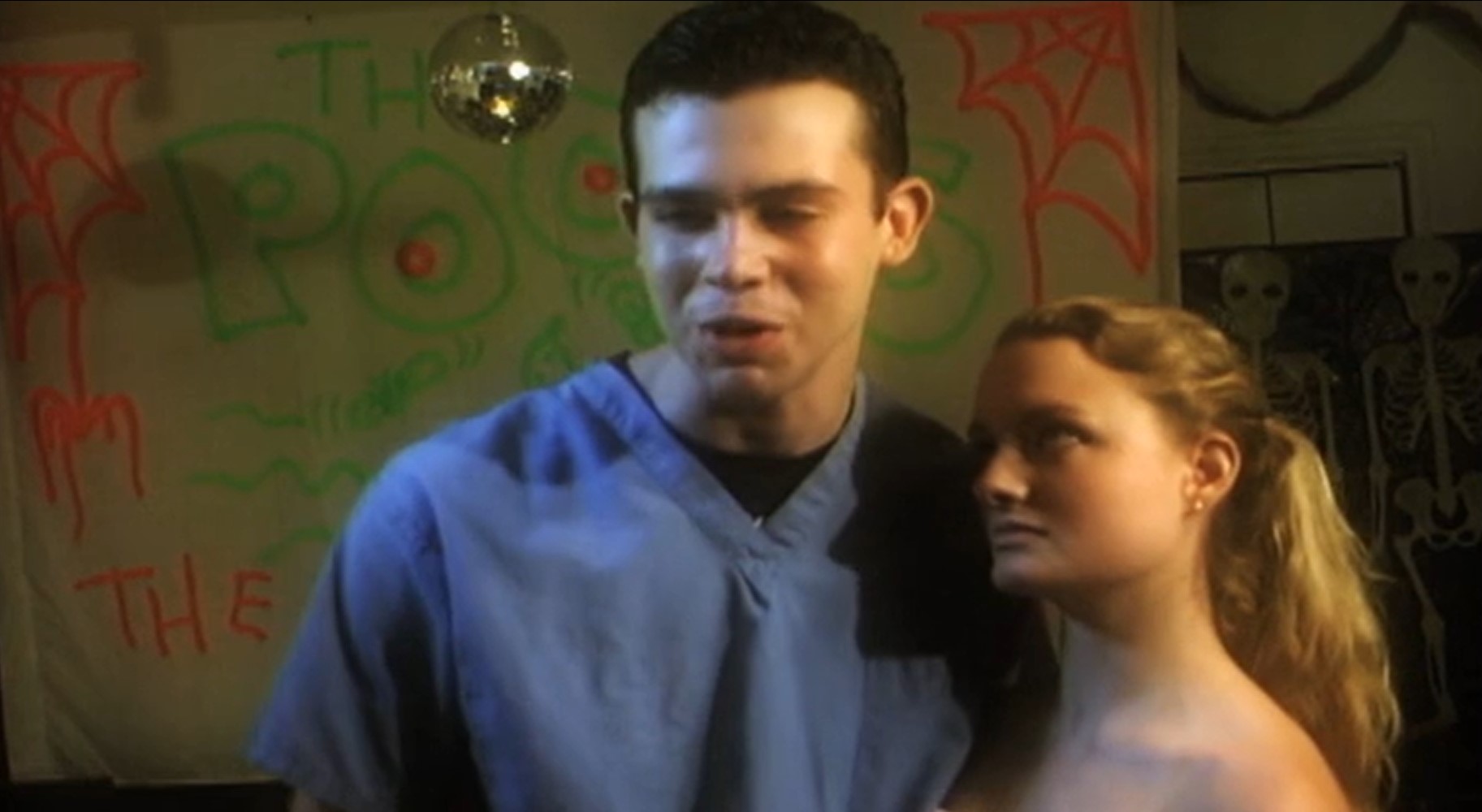
Character clichés clutter the chain of events with your typical pot smokers (Jared Scallions and André Le Blanc), bad boy (Eric Fox), jock (Bill Heintz), nerd (Steve Waltz), slut (Kristen McCrory), bitch (Dana Kieferle) and goody two-shoe virgin (Amanda Kiley).  The gang is all here for the slaughter, initiating formulaic conventionalisms that would make any horror aficionado cringe with an internal “here we go again” snide rippling through their gore-bore heads at the lack of originality and creativeness from another indie production.  Yet, if you stick with the story and pay attention (instead of doom scrolling your phone), Scallion’s script evolves out of being a simplistic carbon-copy primate and into a singular, secerning Homo Sapien with idiosyncrasies because though most characters remain on the routine attribute course, more than one don’t in an an uncommon but rarely explored concept that puts audience theories and callouts to bed before the unsuspecting reveal.  If needing a comparison, think about the “Scream” franchise as those films are really good at playing out the whodunit in complicated pairings with a big surprise at the very end.  In “Stabbed in the Face,” the unmasking is not as potent but the possible advents serpentine the story, some more obvious than others, and each carry a different motivation crashing head-on with each other after a few Matherne measured red herrings to throw off the plot predictable scent as well as building up tropes to the max of their mechanics, such examples would be the overly unchaste Starr who bed hops men without shame or overstating Bruce’s money and smarts with talks of getting into Harvard and his girlfriend is only with him for his family’s wealth.  Scallion slathers principals thick with stenciled overflow and when that bottom drops and all hell breaks loose, the ostensible outcome dissolves like wet paper.  Katheryn Aronson, Samantha M. Capps, Matt Mitkevicious, Bonnie W. Picone, Jerry Paradis, Helen Whiskey, Betsy Fleming, and J.C. Pennington complete the cast.

“Stabbed in the Face” is about as savage as it sounds.  Perhaps not as graphic or intense as the Wild Eye DVD illustrated cover art (we secretly wished it was), kills that amount to the titular act has a mortality rate of only two and those pair of perforations don’t live up to the wonderfully ghastly illustrated cover but, overall, fulfills the promise.  It’s quite evident that Matherne has no qualms about using splatter and sex, two of the biggest keys to a successful slasher, in his punk-scored abjection of lewd-laced murder.  Yet, it would be very remiss of me if I didn’t point out that “Stabbed in the Face’s” blade strikes air at times with the story.  Disconnection between the first couple of scenes and the haunted house party planning and then on completely omits the transpiring moment of the jock’s sister’s murder as scenes progress, passing through the event without as much of a whisper.  She’s just there in a scene and then she’s not and that isn’t explained until after the planning of the haunted house trip when the virgin naively asks while settling into his car about the girl who apparently was hacked to pieces on school grounds two months prior.  The heavy weight of that loss isn’t there for the jock, not even a fleeting moment of sadness or shock, as everything continues as if nothing happened.  The other characters are not struck by the loss either and this sweeps the character’s death under the rug and insignificant to the plot, but does a film entitled “Stabbed in the Face” really care about emotional scarring?  Or is the intention to leave open wounds to fester with more knife strikes, decapitations, and eviscerations?  If I was a magic eight ball, all signs would be point to yes toward the latter as special effects team Jason Bradford, Robert Masters, and Richie Roachclip pull their weight (professionally, not emotionally) creating better than anticipated morbid scenes of murder albeit the one or two obvious CGI blood splatter.

An 80’s teen slasher incarnate, “Stabbed in the Face” glorifies gratuitous sex, drugs, and gore, appropriately curated and displayed by our friends at Wild Eye Releasing on their Raw & Extreme sublabel.  The 78th released title on the sublabel is presented in a blown-up aspect ratio of 1.85:1 widescreen, eliminating the horizontal bars, on a MPEG2 encoded DVD5.  Resolution retains the image tautness with only a handful of scenes cropped and zoomed in even more that reduces pixels to a more granular façade.  Matherne owns the softer presentation with instances of posterization, especially when creating a period piece using stark colored gels and less light for positioning thicker shadow that hazily defines objects, as if lurking in the dark.  The English language Dolby Digital 2.0 stereo track has great dialogue strength that does sound boxy.  I suspect a ADR dub but highly unlikely with the really good synch and might just be more carefully attained specified audio with key boom placement.  Eric Fox’s electron and punk soundtrack parallel “Stabbed in the Face’s” indie-grunge horror with synthesizing tells of inspiration from the 80’s era.  Punk and hillbilly rock bands on the soundtrack include multiple tracks from The Poots, The Projections and The Pallbearers – the three Ps.  The static menu features full-length tracks from the soundtrack overlaying its static menu with the only bonus feature being a “Stabbed in the Face” Featurette, a behind-the-scenes look in raw and polished form at the film’s genesis and production with discussions from cast and crew.  Along with the feature’s own trailer, also included but separate from the bonus features are other Raw & Extreme trailers of “Crimewave,” “Goregasm,” “Whore,” “Video Killer,” “Blood Slaughter Massacre,” “Hotel Inferno,” and “Acid Bath.”  This portion of the menu options does not include a music track.  To turn consumers onto the film, more so the gore fans than popcorn film goers, the ultraviolent cover keeps in accordance with the Raw & Extreme profile.  The cover art is also semi-reversible with magnified bloody image on the inside of the frosted Amaray DVD case.  The disc is printed with the same cover art image, just downsized.  The unrated DVD has a runtime of 81 minutes and is region free.  Just hearing the title can induce the sensation of a sharp edge going through soft flesh and with that phantom impression of pain, “Stabbed in the Face” is horny, bloody, and punk!

“Stabbed in the Face” is now on DVD!

Best Friends Trying Their Best to Best EVIL! “The Boy Behind the Door” reviewed! (Acorn Media International / Blu-ray)

Best friends Bobby and Kevin are kidnapped by a stranger and taken to a remote house in the middle of nowhere. After Kevin is removed from the stranger’s trunk and is dragged into the house kicking, screaming, and pleading to be let go, Bobby breaks free of his restraints, but hearing his best friend Kevin’s screams leaves Bobby with no choice but to help him. Working his way through the house and upstairs unnoticed, obstacles stand between him and rescuing Kevin, including the boys’ kidnapper, a paying customer, and Kevin being shackled to the wall, locked inside behind an attic door, but that doesn’t avert Bobby’s intentions from thinking outside the box to save his best friend from a fate far worse than death. However, only a matter time before the kidnapper or the paying customer knows there’s someone else lying low the house and unearthing troubling secrets.

Child sex abuse is, without a double, a disturbing and touching subject to exhibit in cinema.  How to maneuver around the theme with child actors can be a delicate balance of commitment and understanding when considering the cast involved, especially if most would argue that a child’s brain is too immature or not developed appropriately to comprehend the impact of sexual abuse and to expose them indirectly could also be traumatic to their being.  The opposite of that argument has been proved over the decades with child actors having major roles in general with horror films.  Monsters of all shapes and sizes, guts and blood, and violent themes surround them and films such as “The People Under the Stairs” and “IT” have some of the most frightening and disturbing practical effect imagery that would cause sleepless night terrors for months and, yet kids star in them and are key to their success because, as we all know, children are not immune to real world dangers and threats.  So, why should be exempt from the creative imaginary ones? David Charbonier and Justin Powell finesses that line with a massaged contented breakout feature in “The Boy Behind the Door” written-and-directed by the lifelong friends and produced by Ryan Scaringe of Kinogo Pictures. Howard Barish of Kandoo Films, and Rick Rosenthal, Bert Kern, Ryan Lewis of Whitewater Films

***Beware… this section may contain spoilers*** Lonnie Chavis (“This Is Us”) and Ezra Dewey (“The Djinn”) play Bobby and Kevin who find themselves in the worst-case scenario of two unaccompanied pre-teens violently whisked away to an isolated farmhouse near one or two oil well pumps. I commend Chavis and Dewey’s hard fought, emotionally deep performances in battling against the creepiest of odds and feigning injury without being too over-the-top or inauthentic. Either if by being well coached or, more than likely, just good child actors, the level of anxiety maintains a solid 10 throughout with them. Their only scenes together where I thought the fusing of their friendship didn’t quite work was before the abduction where their dialogue and interactions as two young boys drifting across fields and profoundly thinking about their future deemed itself well too mature and far beyond being advanced for boys their age that the moment was a complete misfire for the story. Inevitably, the two friends run into a couple of creeps and exploitative racketeers in Micah Hauptman (“Phobias”) as the paying customer abandoning paid up time to chase down Bobby and Kristen Bauer van Straten (“True Blood”) in a twisted plot point of a white, late 40s to early 50s-year-old woman, who in the film could be someone’s mother, as the ruthless kidnapper of young boys for old man pleasure. Hauptman is more-or-less there in slimy spirit but doesn’t ooze enough egregious behavior to note as that trait falls immensely well upon the shoulders of van Straten with a mean streak that never lets up despite the rather paralleling of a hard R “Home Alone” antics between adults and children.

“The Boy Behind the Door” is a butt-clenching thriller because of the sheer fact children straddle the danger line on either side of spectrum. You have Kevin locked securely away in the summitted play and video room, shackled and waiting in screams, tears, and fears for his sure fate, and then there’s Bobby escaping his restraints and staying in the shadows, out of sight, trying to save his friend before he becomes either chained and exploited like Kevin or executed because of his strong will. Charbonier and Powell offer little-to-no fluff in pretending “The Boy Behind the Door” is anything but a fight for survival, a fight for friendship, and a fight against the utmost evil. The film isn’t full of strong one-liners or momentous moments that keep the story grounded and pure in its vilest state with tiptoeing around the one-woman operated child sex abuse ring without going into the full gross details. Charbonier and Powell’s story has many strengths, but it also has a few weaknesses waned upon the characters’ decision making. For instance, when Bobby has to break into the house, he throws a rock through the mud room door window without knowing where the kidnapper is and if they are in earshot of the window breaking. Later in the film, Bobby is trapped in the upstairs bathroom and when a squad car pulls up, instead of breaking the window he can clearly reach, he tries to yell through it and fiddle with opening the latch. Why does he simply not break the window and then yell for help? That particular scene drove me nuts and there a few other minor instances of the same caliber throughout in a story that well made enough to be compelling, to be horrific, and to be gripping in and around every house interior scene.

Tense, harrowing, and an ugly truth, “The Boy Behind the Door” is defensible horror at its best and a righteous strength of friendship. Acorn Media International distributes “The Boy Behind the Door” onto a region 2 Blu-ray in the UK! The PAL encoded release is presented in a widescreen 2.38:1 aspect ratio and, speaking digitally, the picture renders flawlessly the inkling of low-lit hope inside a world of dark fatalism and cynicism under the cinematography eye of Julián Estrada. The English language DTS-HD Master Audio 5.1 is crystal clear that occupies each channel with the right number of decibels to exact the range of sneaking through a creaky wooden floored house. Dialogue is clean and clear, especially at whisper breath. The Shudder original film comes with a pair of special features including a blooper reel of mostly Lonnie Chavis sneezing and goofing off which is nice to see kids being kids on set and a music video to the film which is more like a trailer with Anton Sanko’s dark synth-gripping score being an apogee of suspense. There’s never sympathy for these types of vile exploitation villains on and off screen and in “The Boy Behind the Door,” that fight back mantra resonates loud and clear in an unambiguous do-or-die between guileless innocence and pure evil.

For One Exhausted Truck Driver, EVIL is on the Move! “Goodbye Honey” reviewed! (Freestyle Digital Media / Digital Screener)

Dawn has been driving for over 30 hours straight schlepping a customer’s belongings from point A to point B. Unable to keep her eyes from closing, she pulls over and parks in an empty lot of a state park. Before Dawn could close her eyes, a mysterious and frightened woman approaches her asking for help, informing Dawn that she has been held captive for months. Treating with suspicious eyes, not fully trusting this young woman’s thinly laid out accusation, the exhausted truck driver is eager to protect her truck from would-be thieves and vandals, but decides to assist though her phone is broken and her truck keys are lost, leaving the two women stranded in the middle of nowhere with a radical abduction story and the captor is not too far behind. What seemed to be a quiet night of deserved rest and relaxation for a truck driver who just drove straight-through without much as taking a break is about to unfold an eye-opening, harrowing ordeal that puts the two women in for the long haul.

Would you trust a harried and jonesing-looking straight knocking on your day cab door of your straight moving truck in the very early AM hours of the night? This iffy scenario plunges audience into that exact pressure point of Max Strand’s feature film directorial debut of “Goodbye Honey.” The 2020 abduction-thriller is also written by Strand and co-written alongside Todd Rawiszer, collaborating for a second time since 2011 for their cannibalistic-comedy, the family kills together, eats people together, “The Labbinacs.” Generally most abduction thrillers takes the viewpoint of the captive, but for “Goodbye Honey,” Strand and Rawiszer take the perspective of an outsider with unlucky happenstance and makes persevere over their own hang-ups in the dealt lousy hand called life. “Goodbye Honey” is produced by Joshua Michaels from the Examined Dots Pictures, a subsidiary of the video media company, Examined Dots Media, and is the first feature length film production from the company.


The point of view from the trucker sparks a clean slate inception of events as Dawn is oblivious to the entire occurrence that has scared and scarred this young woman whose animal instincts have kicked in and is working against her advantage with Dawn as desperate spurs her to act instead of thinking logically about what to do.  Pamela Jayne Morgan (“The Manor”) headlines “Goodbye Honey” in her first breakout role of 2020 stepping into not only an impromptu lifesaving moment but also into the steel toed shoes of a trucker’s life behind the wheel that features sleeping in her cab, eating lunch in her cab, and being driven into the ground by a demanding, world’s most dangerous, profession.  The only uncouth trucker habit Morgan does not do in her cab is urinate into a bottle.  Oh wait, she does bottle potty!  However, the circumstances surrounding that moment is not because of her profession and only adds to the many layers, including her tragic background and lost ambitions, that makes Dawn a complex character working the mental gears to do what she can to survive and save a life in terror’s grip.  And just like Dawn, we’re weary to believe the fantastic accusations coming out of Juliette Alice Gobin’s lip-quivering mouth who sizes up to the very still with fright the shaken and traumatized abductee in Phoebe as she narrowly escapes her captor, played by Paul C. Kelly (“Devils Prey”).  Gobin debuts her talents in horror with flawless strokes that paints Phoebe more of a misunderstood threat than a distressed victim of kidnapping.  Morgan and Gobin’s hot and cold dynamic perfectly rouses doubts as nothing, at first, is entirely clear.  “Goodbye Honey” has an indie size cast, but the performances are robust with layered intensity from the principle roles to the momentary characters played by Peyton Michelle Edwards, Rafe Soule, Jake Laurence, and Keara Benton.

There’s always been this uniquely bizarre fascination of which story angle an abduction thriller should play from and in “Goodbye Honey’s”, the story doesn’t follow a linear narrative of the abductee but backtracks with anecdotal flashbacks as Phoebe divulges the events leading to her snatching and how’s she’s been isolated in a small room for months to her only hope and savior, an emotionally downtrodden and physically fatigued Dawn.  While not entirely new, as we’ve seen a structure similar in John Oak Dalton’s “The Girl in the Crawl Space” that relives the victim’s held captive experience through mental flashbacks and therapy sessions, “Goodbye Honey,” bills far superior dread unlike the 2018 film, which suffers from monotonous exposition and topical offshoots.  Strand plops us in the unravelling thicket of action with gripping what-ifs potentially lurking in the midnight shadows surrounding Dawn’s painted white beacon of hope on wheels.  Character curveballs also hit empathetically hard with twist and turns coming out of the ears of all the narrative pawns and not just confined to the black and white abduction that brings them together. As much as Phoebe needs Dawn’s help to escape the clutches of her captor, Dawn also needed Phoebe’s accidental life purpose healing that fills the void in Dawn’s life left by the passing of her husband and reaffirms her passion for helping people no matter her personal circumstances.  Oddly enough, I found Kelly’s captor lacked substance to the story other than the characteristic ploy of revenge that agitates the action as his endgame for Phoebe isn’t exactly clear other than spouting, “she needs to pay.”  The serendipitous connection between Dawn, Phoebe, and the abductor has designer destiny stitched into the natural fabric of life in an almost comical happenstance of events, but makes for good entertainment nonetheless knowing that there is a circle of connectivity, a sense of purpose, and a reason to fight back in “Goodbye Honey’s” pressure cooking recipe.   

On May 11th, “Goodbye Honey” was released on digital HD and on cable VOD in North America from Freestyle Digital HD after a successful stint of festival wins including Best Thriller Feature, Best Actress (Pamela Jane Morgan), and Best Supporting Actor (Rafe Soule) at the Garden State Film Festival, Best Lead Performance (Juliette Alice Gobin) at the Nightmares Film Festival, and Best Actress (Morgan) at NOLA Horror Film Festival. Todd Rawiszer didn’t just co-write the film he also shot the film, his first feature film credit at a cinematographer. Inside 96 minutes and with a narrative taking place over a single night, Rawiszer casts a variety of hard lit shadows with glimmers of intermittent portable lights and neon reds kept tight with medium to closeup shots and rarely venturing out beyond that range with clarity as much of the wide shots or long shots are obscured, in a haze, or blurry to the eye as Rawiszer never wants you to know what’s exactly out that far. A pair neat editing montages by Jay Yachetta, with the meal plate and door slamming alongside Phoebe going mad with stir crazy is some of the best work I’ve seen a long time that can trigger an epileptic episode and still be insanely cool in the cruelty. Top those montages with an aggressive sound design and you’re head will surely pop off with unsettling jubilation. No bonus scenes during or after the credits are included. Regardless of budget or the stigma of low budget pictures, nothing but good vibes and good things to say generally about Max Strand’s “Goodbye Honey,” a startling trembler of persistence to outlive a night of terror that stars two stellar leading ladies at the heart of the film’s success.

Rent or Own GoodBye Honey on Amazon Prime!

Defy EVIL to Live! “Alone” reviewed! (Magnet Releasing / Digital Screener)

Six months after the suicide of her husband, Jessica struggles to cope living in the city that holds too many fond memories of her once happy life with her husband.  Jessica packs her things and quickly drives out to the wilderness, separating herself from the city as well as her unsupportive parents.   On the road, she encounters an incessant man following her every track before violently kidnapping her and hiding her away in a bare room of an isolated cabin deep within the woods.  Her escape opposes her not only against a calculating captor hot in pursuit, but also against nature’s unforgiving elements, showing little mercy to Jessica’s dire and desperate getaway. 

From eluding the flesh hungry, running zombies of Syfy’s “Z-Nation” and Netflix’s “Black Summer,” director John Hyams has us fleeing once again for our very lives against a more realistic monster in his upcoming abduction thriller, “Alone.” Screenwriter Mattias Olsson takes a backseat from directing “Alone,” which is a remake of his written and co-directed 2011 Swedish film, “Gone,” paralleling the premise about a woman fleeing a family tragedy only to be followed and kidnapped by a man driving a SUV.  Shot in Oregon’s silvan outskirts, “Alone” is a survival thriller with emerging themes of taking back one’s life in more ways than one and no more running from an unbearable past built into a conceivable terror situation that has unfortunately been a common episode all over the globe.  “Alone” will be the second feature film produced under Mill House Motion Pictures, under the supervision of founders Jordan Foley and Jonathan Rosenthal, the latter having a small role in the film, and is also a film from a second Jordan Foley company, Paperclip Limited, who has Lisa Simpson voice actress herself, Yeardley Smith, as one of the active partners, and, lastly, in association with XYZ Films.

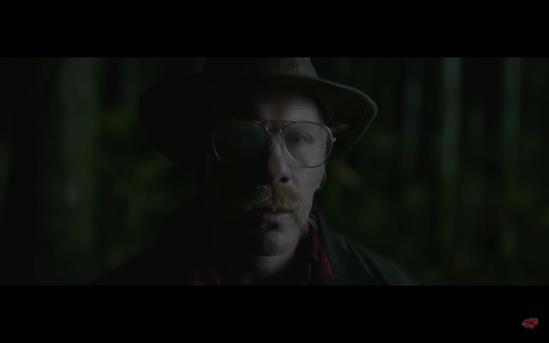
The up and coming young actress, Jules Willcox (“Dreamkatcher”) stars in the lead of Jessica who hasn’t have a friend in the world, alienating herself from her former life and her parents with a sudden escape to the Oregon wilderness.  The physically demanding role withstands the brunt of constant attack, whether from Marc Menchaca’s unnamed assailant character or the natural elements of the forest that include from the massive rapid rivers and torrential rains to the smallest of roots that spear her bare feet while on the run.  Willcox also brings to the role an indistinct mindset, jumbled with the lingering and complicated suicide of Jessica’s husband, paranoia, and an instinctual reaction to survive, especially through Willcox’s eyes that arch from fear to fortitude.  To really envelope Willcox in that unwarranted fear of harm and pushing her character into the unknown of the adversarial complex that is mother nature is Marc Menchaca as a conniving creep looking to do as much pleasurable damage on his bogus business trip as possible.  Menchaca also looks the part, resembling an out of place 70’s-80’s serial killer with round thin-framed glasses and a moderately bushy handlebar mustache overtop a sturdy frame.  Now while these attributes are not indicative to just serial killers, they sure as hell work well on screen to really sell the intensity that Menchaca delivers as a faux Ned Flanders type nice guy, a sheep in a wolf’s clothing so to speak, who acts a lure against his prey before venomously striking.  The small cast rounds out with Anthony Heald of the Anthony Hopkins “Hannibal” films in a small, yet uncharacteristic, good guy role as a hunter caught in the middle of Jessica’s situation.

While suicide might be the catalyst that compels Jessica to drive into the middle of nowhere, Matthias and Hymans only utilize the power theme as an instrument against Jessica’s psyche.  Jessica runs and hides from polite and comfortable society, but the recently widowed soon discovers that she can’t outrun her past as she hits a perverse wall constructed in the form of a man of sordid pleasures and sociopathic tendencies.  Her kidnapper becomes, in a way, her therapist who, at one point, pins her to the ground and scrolls through the personal photos on her tablet, forcing her to talk about her husband up to the point of his death, and consistently throughout the film that his actions were cowardly, removing the blame from her and onto him while emphasizing her tremendous guilt for not seeing the signs earlier.  “Alone” blossoms a wildly curative dynamic that encourages Jessica to then defend herself and her husband’s memory by standing up against not only the man’s relentless chase, but also her guilt.  The thick Oregon setting becomes a security blanket, sheathing her endless dismay, but the forest is actually does more harm than good for Jessica.  Only when does Jessica steps into a wide clearing of lumberjacked tree stumps does hiding from all the pain and torment become no longer an option as she makes her last stand against her attacker, unloading her fear, anger, and guilt upon the man by exposing him as an oppressive killer. While immersed in watching, “Alone” will deprive oxygen from your body that’s desperately gasping to fill your lungs with air in every harrowing chapter, but “Alone” is a breadth with a throng of digging out of despair overtones and a conduit for self-repair that’s unraveled symbolically through the afflictions of bona fide sadism.

“Alone” rises above the call of arms against predatory men in this thrilling remake from John Hyams, releasing into Theaters and VOD on September 18th from Magnet Releasing. The rated R, 98 minute feature will not have the A/V specs critique due to the digital screener, but Federico Verardi (“Z-Nation”) grasps the elegant threat of the woods by using drone shots to shoot the very tippy-top of the swaying trees that conceal the ground, as if obscuring the atrocity being committed below, and applying low-contrast to make insidious hard shadows against green lush that turn beauty dark and deceitful. *Director John Hyams has noted the rapid’s scene where Jessica temps fate to escape her pursuer was practical and performed by stuntwoman Michelle Damis and though looked a little off around the Jessica’s unsubmerged profile as she’s whisked away down the river, the effect is 100% legit. “The Pyramid” and “Becky’s” Nima Fakhrara scores a low-impact tremble for most of the feature with Jessica’s running through the woods is accompanied an equally low-impact drumming, letting the ebb and flow of resonating forest ambience engulf much of the soundtrack to solidify it as a correlative character; even the end credits is purely nature’s ambient noise. Since “Alone” is a brand new feature, there were no bonus material or bonus scenes during or after the credits. “Alone” knicks the core of vulturine power, but turns the tables toward more feminist revelation to fight and take back one’s life.

*Correction: Previously stated the rapids scene was CGI.