

“Mutant Blast” is a BLAST! Now available at Amazon.com
A top-secret military unit conducts human experiments to create the perfect super-soldier. Their illegal and amoral work has proven more difficult than desired with only one subject, TS-347, being deemed functional and fit for dutiful purpose. Maria, operating incognito with an adversarial paramilitary group, infiltrates the cell section where TS-347 is being held to either purloin the property or destroy it in order to not have the DNA be replicated. There’s only one problem – the failed superhuman experimental trials that transformed people into flesh-eating zombies have escaped confinement to begin the apocalypse. Barely escaping with their lives, Maria and TS-347 run into Pedro, a simple, low ambitious man with no clue to what is happening after awaking from a party-induced hangover. Together, they trek to the ocean for safety, but multiple nuclear bombs send their journey into a tailspin of mutant hostiles along their path.
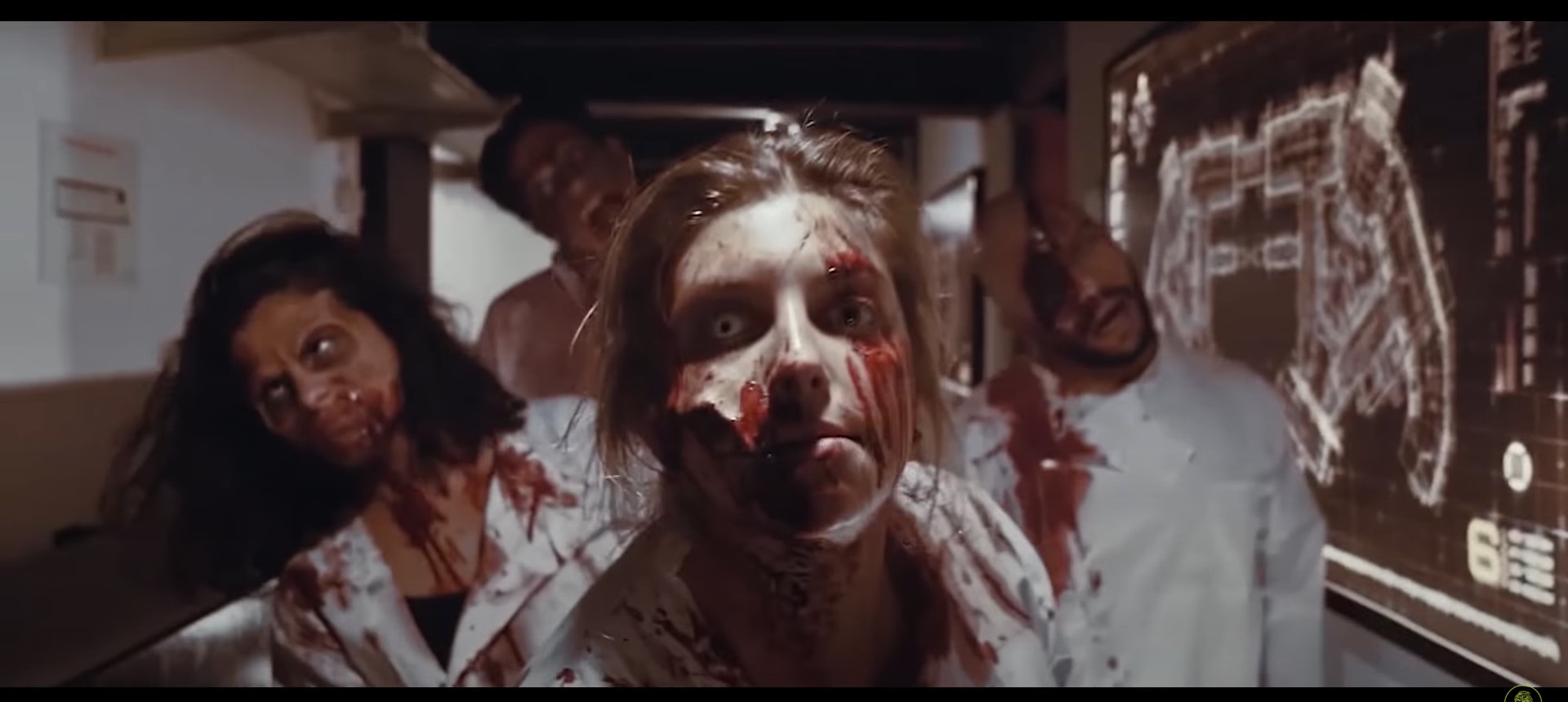
A nuclear orgasm within every minute, the Portugal-made post-apocalyptic comedy-adventure-horror “Mutant Blast” is crazy fun and certifiably crazy. Produced in 2014 but not released until 2018, the Fernando Alle written-and-directed debut radioactive-to-rendezvous through a zombie infested and freakshow continent leaves no stone unturned with an unbridled and practical effects-laden story that’s reminiscent of early 90’s splatter-comedies. Being one of the select more recent films to be actually produced instead of distributed by Troma Films (“The Toxic Avenger,” “The Class of Nuk’Em High”), “Mutant Blast” doesn’t have to work too hard to be granted passage into Tromaville’s sophisticated affinity catalogue. Troma’s masterminds Michael Herz and Lloyd Kaufman, who has a zombified bit part in the film, coproduce “Mutant Blast” alongside Alle and Matt Manjouridas, executive producer of Shudder’s “The Last Drive-In with Joe Bob Briggs, also financially supports Alle’s film that should one day, hopefully, be on the docket for Joe Bob Briggs to introduce its rat-fu, seafood-fu, and titty-shot-fu to the rest of the horror fanbase.

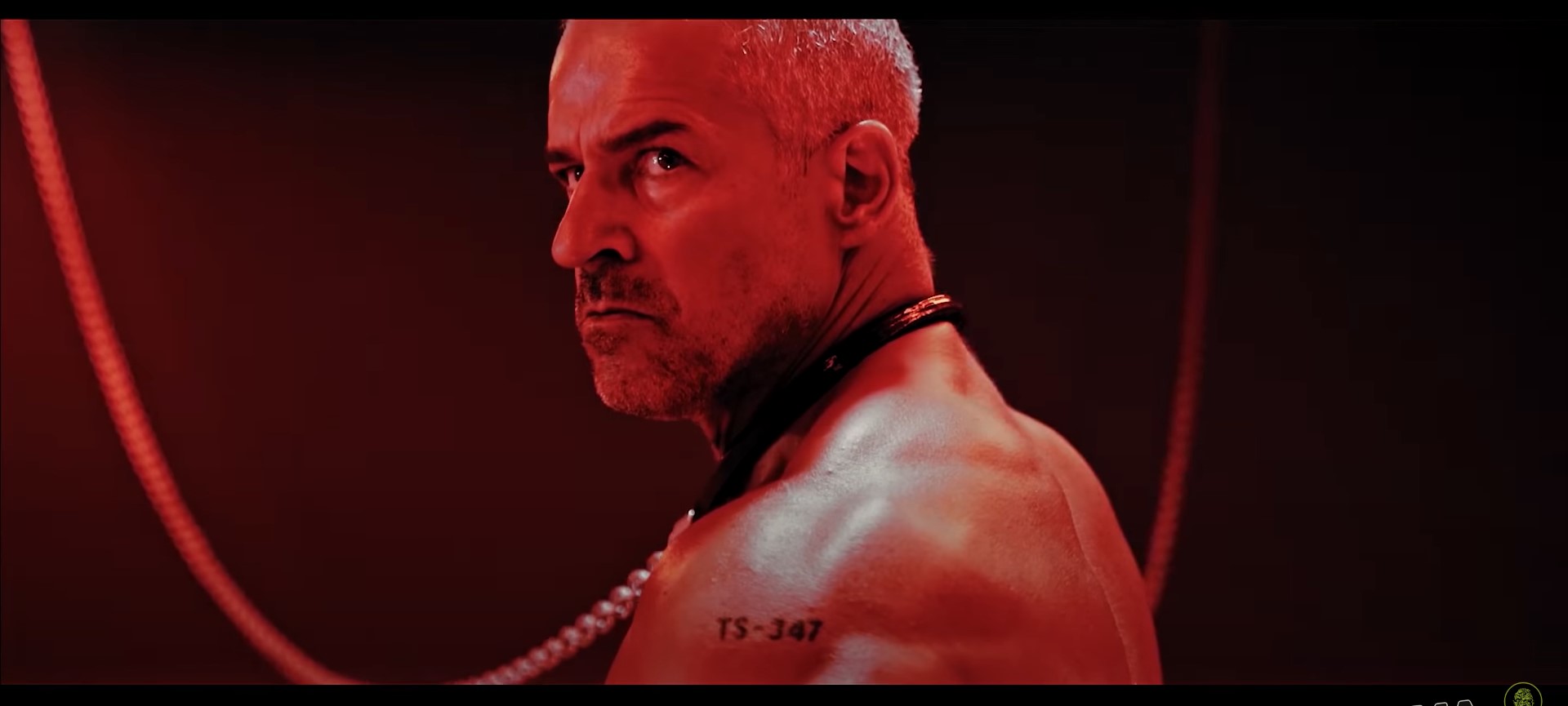
Living her best imitation of Ellen Ripley with a shaved dome from “Alien 3” is Maria Leite as the infiltrating noble cause soldier aiming to stop the experimental creation of human super soldiers by any means necessary. Leite makes looking like a badass action hero pretty convincing and her comedic timing is wonderfully contrasted with Pedro, “Blarghaaahrgarg’s” Pedro Barão Dias in his introductory role into feature films, as a lighthearted and bewildered man strikingly outside his element and out classed what’s about to face him. If you haven’t noticed, the characters names don’t stray far from the actor’s and that makes the chemistry a little easier, especially on “Mutant Blast’s” ambitious post-apocalypse and kooky freakshow façade. Dias has the charming qualities of a gleefully lost puppy in a world that has everything trying to kill his character Pedro where previously the carefree partying fool was left alone, if not also insignificantly thought of, to his own devices. If hitting the notes on the “Alien” franchise notes a part of the Fernando Alle’s must-have adulation check list then “The Terminator” is another box the filmmaker sought to check off as well with the TS-347 cyborg-ish super solider played by the then nearly 50-year-old professional bodybuilder Joaquim Guerreiro doing double duty as also the evil counterpart TS-504, splitting his obvious presence except with a prosthetic mask, makeup, and way more clothing overtop his shirtless glistening pectorals and deltas. Their odyssey to the ocean has them cross paths with other survivors, sprouting various fission bomb mutated genes as if seeds were sowed in their skin. Mário Oliveira, Hugo Cássimo, Andreia Brito, Joao Gualdino, Pedro Caseiro, Mauro Herminio, Francisco Alfonso Lopes, Basco Ferreira, Paulo Alexandre Firmino, and João Vilas fill the colorful shoes playing one, or sometimes multiple, mutants.
If you like gooey and explosive foot-to-head smashes, then “Mutant Blast” is for you. If you like single punch decapitations, then “Mutant Blast” is for you. If you like baby rat hands, third ear growths, melted faces, horn protrusions, zombie head backpacks, giant rats squirting highly acidic teat milk, Dolphinman versus a French speaking Lobster man, then “Mutant Blast” is definitively in your very best interest. Past all that juvenile jazz that, if done right like Alle did it, transforms a lobotomizing spectacle into a complete cherry of cinema, underneath the liberating layers of free, self-made movies, lies a subtle message weaved into the very fabric of “Mutant Blast’s” nuclear core story. Alle’s undoubted wants audiences to take away from his film not only riotous laughter and an appreciation for tangible gore effects but also to take away a sense of how we, people of Earth, seek to self-destruct. Life is precious yet experiments turn into crazed maniacs, we nuke ourselves in an ironic act of fighting fire with fire in cleaning up our messes, and with the lobster who turned into man names Jean-Pierre, wears a suit, speaks French, and hates “motherfucking” dolphins delivers a monologue served up on a platter of overfishing, environmental indifference and destruction, and a general apathy overview for life in general conceptualizes as the vertex of the Alle’s entire theme before the one-on-one with the James Gunn created Dolphinman who makes a very special appearance.

Troma’s newly upgraded, upscaled, and likely high on uppers release of “Mutant Blast” is not available on a director’s cut Blu-ray that wouldn’t be complete or official with a Lloyd Kaufman introduction from the COVID bunker. Released in high definition 1080p, the region free, 2-disc, AVC encoded Blu-ray is presented in a widescreen 2.35:1 aspect ratio with an 83-minute runtime. I’m genuinely impressed by the compression of this Troma release as the image quality looks quite good with little-to-no compression afflictions in the digital video, displaying an above par codec in the ballpark of 24-26 megabytes. Granted, “Mutant Blast” isn’t perfect with signal aliasing infractions, but the overall image stands out amongst the catalogue as one of the best from Tromaville. Offering two dual audio options – a Dolby Digital 5.1 surround sound and a LPCM 2.0 stereo track – you’ll get to enjoy every squish, squash, and squirt on the effects track to compliment to head bashing assaults. The Portuguese and French language dialogue tracks render no issues with clarity and the English subtitles keep things smooth and easy with ample timing and errorfree. There are a slew of dubbed languages including English, Russian, Spanish, Italian, Polish, and, if you want to be precise, Brazilian Portuguese. Troma also offers up some fantoxically futuristic extras with a making of featurette Lobsterman Caws, the giant rat pre-production test, a doc about “Mutant Blast” heading to Korea over a three-day coverage span, Portugual audiences’ reactions to “Mutant Blast,” the film’s special effects, blooper reel, bottlecap challenge, the original theatrical trailer, international trailer, 30 second trailer, and see how Lloyd Kaufman transformed into a flesh-eating Portuguese zombie. In the gloriously objectionable essence of all that makes Troma Troma, “Mutant Blast” is textbook Troma, a modern new face for the company, and is radiantly glowing from the same toxic waste that gave birth to the beloved Toxie.


 It's Bloggin Evil!