

Sarah is throwing a birthday party at her stepdad’s large house on Indian reservation land. What should have been a quiet, boozy night with a handful of close girlfriends turns into a bigger and tense shindig of drugs and alcohol when her ex-boyfriend’s band and her step brother and sister unexpectedly show up at her doorstep. With them comes a game, called Lynched, her ex purchased at the nearby gas station, but after playing, then drinking, the night away, the quickly find out the game is far from being over. The mysterious card game comes to life, pitting friend as foe, and Sarah’s friends disappear one-by-one in the order of their in game deaths. Leveled heads tip in the balance of fear and loss as the game plays havoc on their psyche, creating nightmare visions and that feeling of being watched and hunted, and the rules are anything goes when the game goes halfheartedly unfinished.
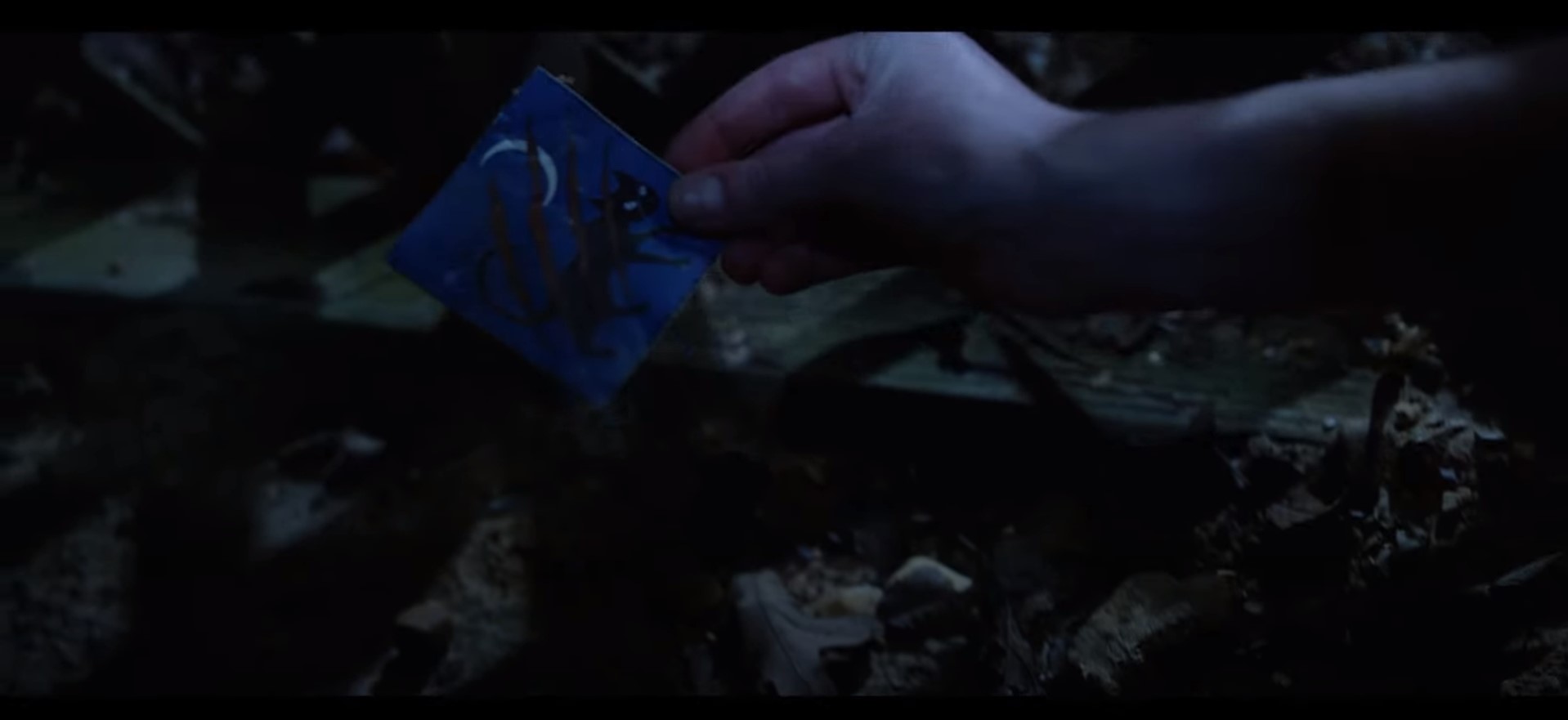
Werewolves. Witches. Vindictive townsfolk. Murder. Lynched, the game, sounds like an intense and medieval whodunit that insidiously presents mistrust into who you think are your closest friends and allies. An interesting setup for the Chloë Bellande penned and Terry Spears directed 2021 released horror-mystery thriller, “As the Village Sleeps.” The feature is Bellande’s first produced script based off her short, “While the Village Sleeps,” she wrote and directed in 2012 and with a few tweaks to the characters and location, the “American Terror Story” and “Hell’s Belle” director Spears, whose career as a musician only recently sought expansion into filmmaking, depicts that some games should never be played. The independent film is a production of Spears’ 19 Artists Development and is co-produced by Kris Young as well as award-winning producer Gray Frederickson of “Apocalypse Now” and “UHF.”
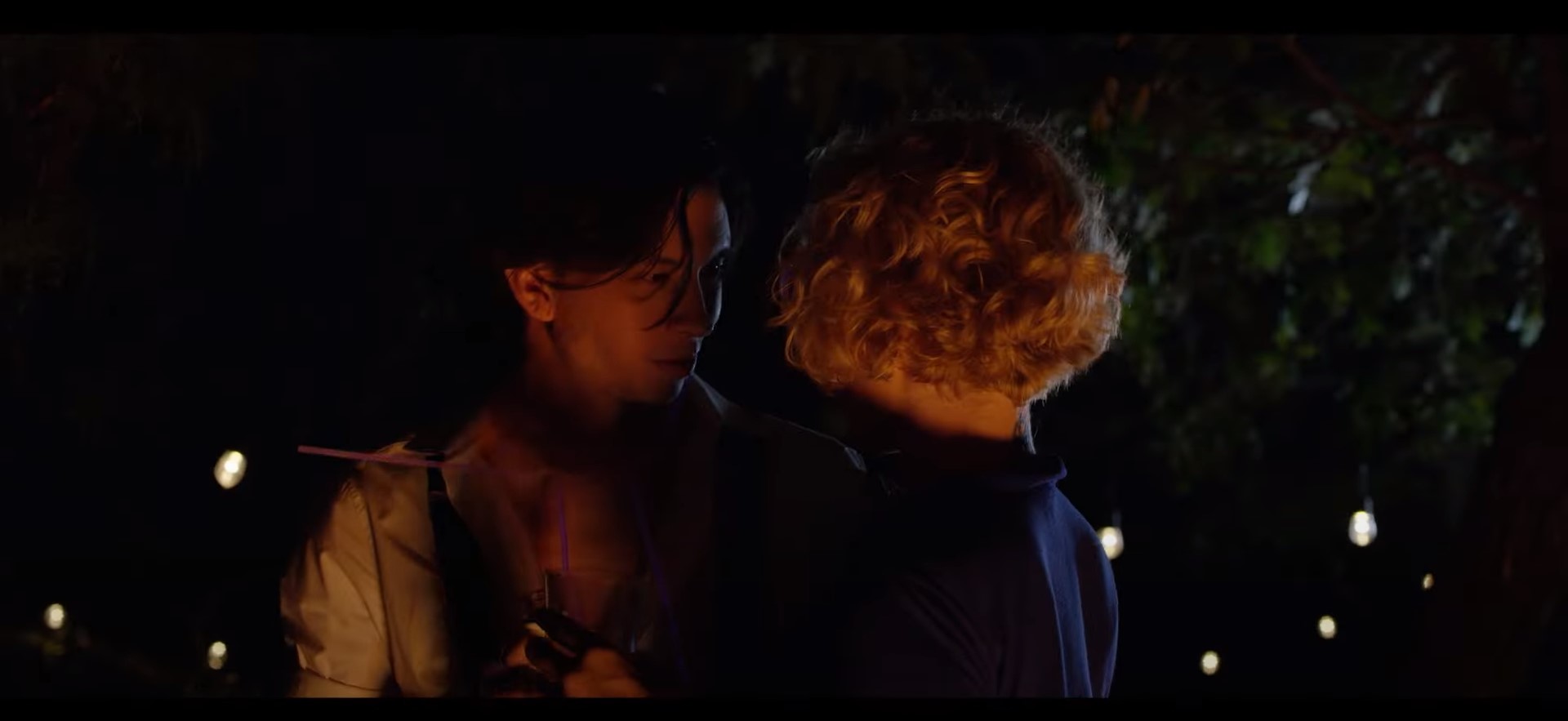
Starring in her first feature film, Eleonora Saravalle has to be puzzler piecing together the deadly mystery intruding upon her character’s remote birthday bash. The rather tall Saravalle is paired up with a rekindling love interest in the rather short Oliver Rotunno in their respective roles of Sarah and Alex who hold onto a sparkle with a rough patch in a rocky relationship history that stays in the past never to be fleshed out from their backstory involving Sarah dumping Alex for unsaid reasons. That dimly lit sparkle doesn’t really shine through much between Saravalle and Rotunno with a dynamic resembling more big sister and little brother than crisscrossed lovers. More so than the sibling rivalry from Sarah’s stepsister Tala (Shiah Luna, “Age of the Living Dead”), and stepbrother Jacey (Daniel Olguin) with an uptight and contentious static background noise that, again, fails to come to ahead about why Tala is stubbornly irritated with Sarah; instead, the attempt at building something more between them during shared terror experience quickly fizzles out of complacency without so much as a hurdle to make their bond more impactful. None of the characters are terribly impressive or worthy enough for sympathy, not even the flawed ones had any emotional weight when meeting their maker, falling into uncomplex tropes stapled to the genre such as with the naïve party girl Connie (Chloe Caemmerer), the immature rocker Matt (Rane Thomason), and the I-hate-city-slickers town cop (Mark Adam Goff). The more interesting characters, like the old, long in the tooth, gas station attendant who sold the game and walks to work every early morning, doesn’t receive the time of day though very important to the plot. “As the Village Sleeps” rounds out the cast with Michael Gum, Tyler Malinauskas, Kenzie Leigh Spears, Victoria Strange, Winnie Du, and Otis Watkins as the elusive Midnight.
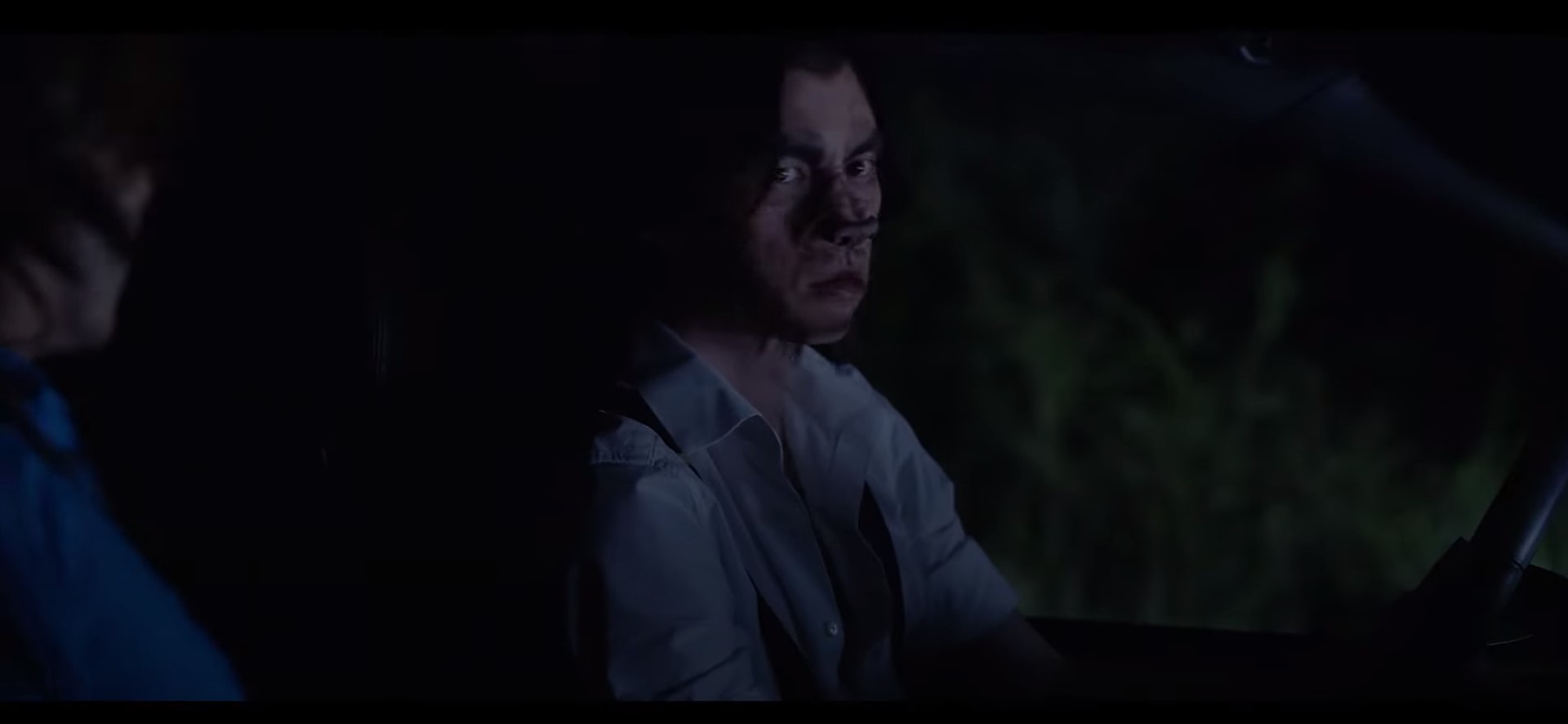
“As the Village Sleeps” has too many strikes against it to ignore. Between significant plot holes, underdeveloped characters, snuffed out offshoot side stories, and an arterial scenario struggling to stay cohesive by a bunch of no-named actors, who more or less do okay in their lackluster residing roles, the already low-budget production deserves every grain of a derisible reaction with its horrifying-veneered derivative hand at “Jumanji.” Instead of a stampede of elephants, a ferocious crocodile, and a hairy Robin Williams being roused from out of the board game world by the roll of the dice, the card game Lynched barely rears itself back into the fold after the players supposedly don’t finish the game in order to drink themselves into a stupor. Only just a handful of cards reappear on the spot where those disappeared, turning the game into a supernaturally present character without ever manifesting tangibility and that becomes a running motif for Spears’ film, that lack of finishing something to elicit a gratifying arc of completion. We see fragmentary elements everywhere with the aforementioned character dynamics between Sarah and Alex and Sarah and Tala, the unresolved routes of unearthing the game’s racist atrocities against Native American origins by investigating the obvious gas station merchant Midnight who sold our protagonists the game, and the characters who don’t disappear at the game’s hands, but just vanish without so much of a word about their fate. From what I’ve briefly watched, Bellande’s 2012 short would be a tad improvement over the 2021 release and might be more worthwhile with a mindful production value that’s more attuned to being budget friendly and a sound design that’s not a stock file folly with depthless growling wolves and overexaggerated footsteps. The overall experience just might be more pleasant.

Become lost and hunted down in the gameplay of “As the Village Sleeps” now available on Amazon, currently free with Prime Video, under the distribution of Indie Rights Movies with more streaming platforms to be announced. Titus Fox serves as the film’s cinematographer whose most intriguing scenes are under the latticed deck. Between the combination of steady and handheld camera work, Fox implements a voyeuristic and stalking POV of the shadowy werewolves coupled with the stark contrast between black negative space and sphere of torch light. The scenes are brief but well-executed to drawn some visual aesthetic and sense of threat with the remaining cinematography reliant on common swivel panning and edited stationary positions. There are no extras or bonus scenes accompanying this streaming release. Whether be the filmmaking inexperience of Terry Spears, Bellande’s perforated story, or the limitations on the production and sound design, “As the Village Sleeps” should be slept through to not rouse exhaustion from consistent frustration.


 It's Bloggin Evil!