An EVIL Re-Imaging of a Donald Farmer Classic! “Savage Vengeance” reviewed! (SRS Cinema / DVD)

“Savage Vengeance” now available on DVD home video!

Best friends and law students Tara and Meghan take a much needed depressurizing road trip and run into a Ronnie and Thom, a pair of locals with car trouble looking for assistance at the nearby gas station.  Hesitate to offer a ride, Tara agrees to their proposal of a life for sleep accommodations at Ronnie and Thom’s lake house in the Ozarks.  A serene lake and a drink in hand relaxes Tara’s foremost suspicions about the sketchy couple who seemingly chill and all about a good time catering to Tara’s stressed out needs.  The next thing Tara remembers is waking up to Ronnie and Thom standing over her, tied up, and her and Meghan threatened to become dinner for a pair of bloodthirsty cannibals who’ve just about wrapped up their previous viscera meal, but Tara isn’t as innocent as she appears as she shares the same killer instinct as her captors.  A struggle ensues, the tables begin to turn, and what was once prey has now become the predator!
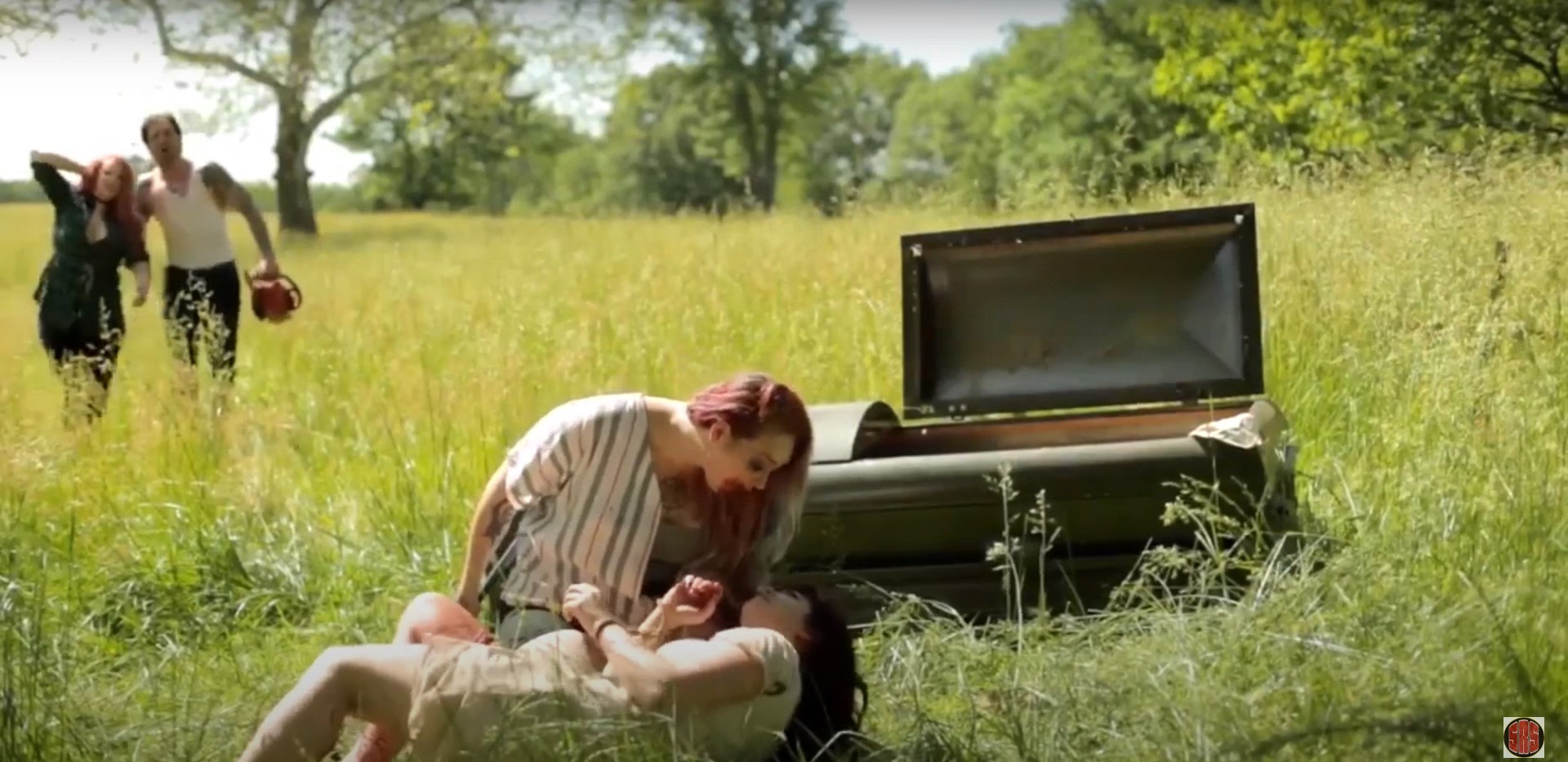
A re-imagining of Donald Farmer’s 1993 original of the same title starring “I Spit On Your Grave’s” Camille Keaton, director Jake Zelch takes a pun-intended stab at “Savage Vengeance” with a twist in the schlocky sordid and dark tale by replacing Farmer’s original motivation for revenge for cannibalistic carnage.  “The Haunting of Mia Moss” and “The Dark Web Tapes” director helms Farmer’s story as a base while attempting a revamp and build upon with new characters and new plot devices along with contributing screenwriting by “Another Evil Night’s” Jason Harlow and “Lycanimator’s” Sébastien Godin.  Shot in Tennessee, “Savage Vengeance” is a production of Zelch’s Missouri based company, Unreality, and is produced by the filmmaker and headlining star Tamara Glynn (“Halloween 5:  The Revenge of Michael Myers”) with Donald Farmer and Curtis Carnahan as executive producers, marking the third feature film collaboration between Carnahan and Zelch.  Stratosphere Films handled the theatrical distribution.

Zelch’s “Savage Vengeance” has an identity problem.  Having reformulated the original premise, which doesn’t offend me as I think reinventing the wheel can sometimes be fresh and creative under the same directive title, the script has trouble nailing down a proper principal by shooting, by my count, three different segments disconnected from each other and with three different protagonists leading the charge in each.  Tamara Glynn receives top bill despite only garnering about 10 minutes of screen time in the beginning due to much of the opening footage being lost due to backup hard drive failure, according to Zelch on the director’s commentary.  The “Terrifier 2” and “Halloween 5” actress is essentially captured, chained, and trying to find a way out after waking up in a scarce-looking attic but because of her aforesaid credits, the DVD front cover banner head makes for a great advert sell point.  Instead, modern scream queen Roni Jonah (“Kill, Granny, Kill!,” “The Bloody Man”) becomes the runtime face of “Savage Vengeance” as Jake Zelch intends for the girth of the story.  Jonah, as Tara, paired with Jasper Evans as best friend Meghan heading toward an in schtook situation not only the cannibals on the road ahead but internally with rape, pregnancy, and a dysfunctional love triangle that has more to do with illicit lust than love with Tara’s boyfriend David (Dave Ivan), a theme much closer to the original essence of Donald Farmer’s rape-revenge exploitation.  However, what’s assumed is taken for granted and not utilized to all its pathways the concept could have complexed the characters rather than freezing them in a face value understanding.  That understanding comes a tool against cannibals Ronnie (Kat Underwood) and Thom (Cody Alexander, “Eat the Rich”) who are your typical crazed anthropophagus antagonists, as well as sadistic sodomist as we see with Adam Freeman’s (“Debbie Does Demons”) character, of film.  When these characters meet and try to be merge an acquaintance or friendship, in Tara’s shoes, I might just be a little more judgmental of two heavily tattooed wanderers, the male sporting a knife sheathed in holster around his backside as he walks around his wifebeater tank-top, handing out to me mysterious drinks on their isolated, rural property.  The whole setup doesn’t do the story justice to Tara’s decision making but then again, she’s not as pulled together as Zelch’s useable footage relays.  The third segment pops up after initial closing credits with Jessa Flux (“Debbie Does Demons”) to possibly offer up an imminent sequel “Savage Vengeance 2:  Better Off Dead, starring Flux.

Almost seems unfair to cover and review Zelch’s “Savage Vengeance” because of so much of the footage being forcibly cut and the shot narrative going through essentially restructured surgery to make pieces segue and make sense on screen.  Honestly, the recut doesn’t work, leaving too much unanswered and too much to decipher to put a solidified stamp on the series of events.  Thus pushing forward the abridged cut may warrant an impartial review until a more definitive, complete cut sees the light of day.  The material “Savage Vengeance” shows currently splices together the MPEG files that survived the great blue screen of death and transfer fail, such as with the Tamara Glynn opening that’s only connected by the brief present of Ronnie eating cat guts and Thom surprising and looming over Glynn before her deafening scream.  The additional footage explained by Zelch added context to the cannibals and provided a memorable kill to setup the tone of Zelch’s homage to late 70’s rural horror.  Fortunately for Zelch, horror fanatic brains are wired differently, able to fill in most of the gaps of a formulaic building blocks; however, the success of this can also be attributed to Zelch’s scramble editing to make a semi-intelligible story with what’s left contextless of the low budget nitty-gritty.  Another highlight is the blood with pretty-penny special effects from the multi-hat wearing Kat Underwood and her colleague Erin Felts who drum the gore the best they can with prop dummies for splitting in two, a whistle dogged dildo-penis gag, and saucy blood and guts to give the film the edge it needs to tribute Farmer’s ferociously.
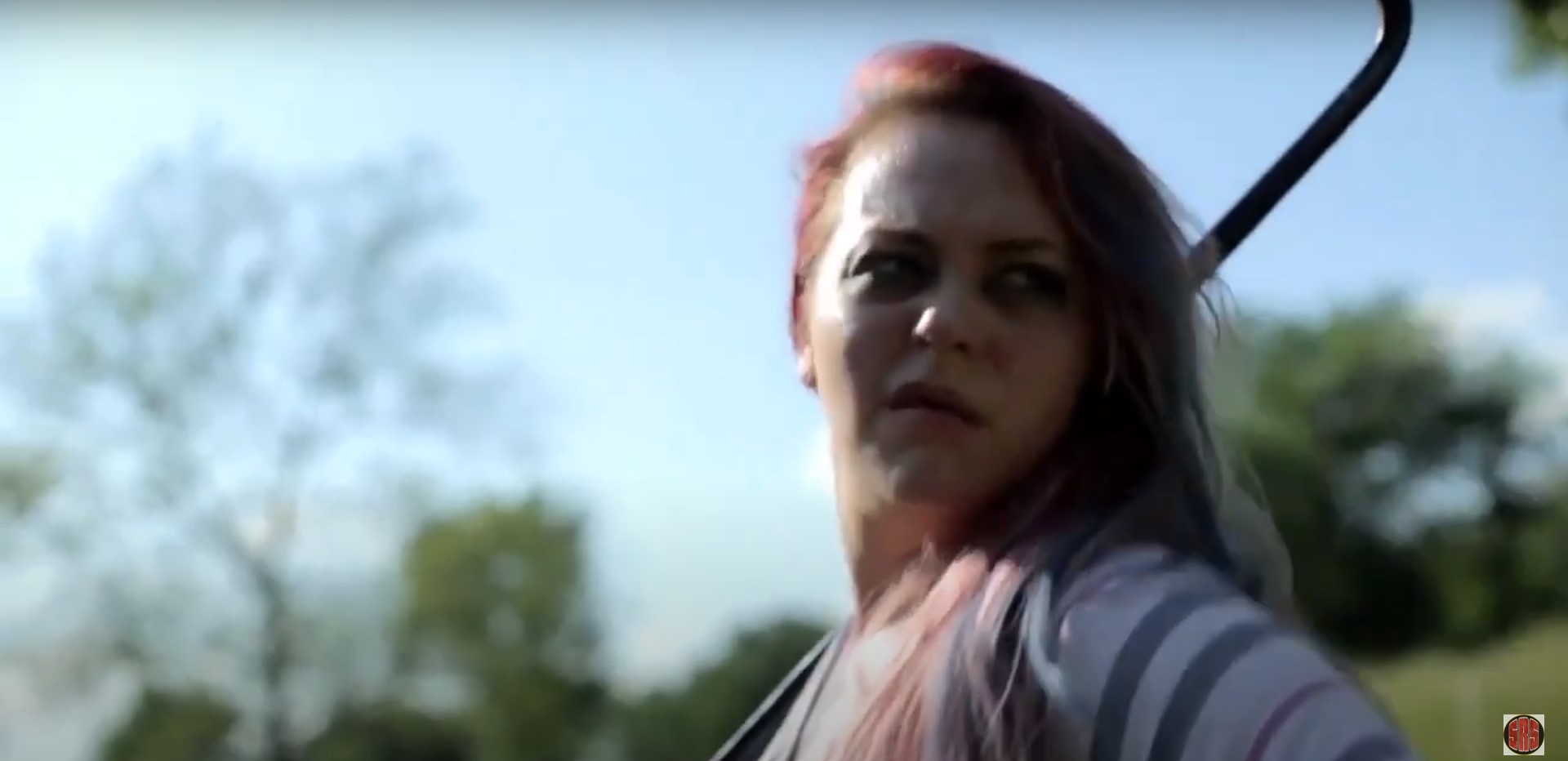
I’ve said it once and I’ll say it again, I do applaud SRS Cinema’s time, effort, and creativity in the physical media artwork as the gorgeously dripping blood, sex, and horror pulp is quintessential eye candy for fans in what is typically a microbudget and mediocrity poor effort in the graphic cover art department of terribly arranged and hack job compositions. None of that rubbish here with many of the SRS Cinema titles, including “Savage Vengeance” on DVD.  The 1.85:1 widescreen and 720p standard definition presented DVD5 might have a deliciously illustrated cover but the film itself is marred by the artificial VHS overlay of tracking lines and macroblocking, especially when Zelch aims for a 70’s exploitation veneer that was mostly 16 or 35mm.  Instead of a grainy-laced, dirt-spotted, cigarette-burned, and scratched up celluloid frames, or a resemblance of something akin to it, “Savage Vengeance’s” aesthetics only bask in the softer details of lower resolution clarity and in the ethereal of a delicate lighting that eliminates shadowy contours that offer depth.  Frame rate also seems to be slow down some sporadically throughout as well as the erratic focus as if you’re coming out of sleep and trying to regulate your eyes from dark to light.  The English Dolby Digital 2.0 audio mix stems from the onboard, built-in camera mic that captures the surroundings which has pros and cons, such as diluting the dialogue to a subdued audible.  Not a ton of balance from the surrounding environment when augmented sounds, like the zaps of the electric fence or the overpower roar of chainsaw decibels that don’t change in closeups or wide shots, make their way into the fold.  No subtitles are available.  Bonus features include a Jake Zelch commentary with scene-by-scene backstory and explanation as well as the full explanation of his lost footage, actor Adam Freeman commentary that revolves around his acting craft, male nudity on screen, and his opinions of rape and sexual assault in general, a gallery slideshow, and the feature’s trailer.  Aforementioned, the illustrated cover of Tamara Glynn looking slyly and sexy holding a blood chainsaw is primo quality on front of the standard DVD case.  Inside lies no insert and with the same image on the disc art. Until a completely restored version of director Jake Zelch’s vision, the filmmaker’s “Savage Vengeance” can barely stand as perspicuous testimony of an uncalled for 30-year-reimagining.

“Savage Vengeance” now available on DVD home video!

Meir Zarchi Returns With Another Round of EVIL Exploitation! “I Spit On Your Grave Deja Vu” reviewed! (Ronin Flix / Blu-ray)

Forty long years have passed since the sexual assaulting atrocities of Johnny Stillman and his gang were committed on the young and beautiful Jennifer Hills.  Empowered by her horrific tale of survival with the release of a new tell all book of how she outwitted and took homicidal revenge on her rapists by luring them in with her sexual persuasions, Hills finds herself back in familiar terrorizing territory being kidnapped by Johnny’s devoutly vindictive widow and three living relatives of the gang that once ganged raped and brutally beat her, but she’s not alone.  Captive with her as collateral damage is her famous supermodel daughter, Christy.  Both are caught up in an eye-for-an-eye revenge plot where being lethal is the only means of survival and with a long history of resentment, rooted deep inside Johnny’s kin, fighting back will take every ounce of resilience and strength against a community of hellbent sociopaths. 

Circa 2005-2006 is around the time I first bared witness to Meir Zarchi’s 1978 controversial exploitation shocker, “I Spit on Your Grave.”  Popping in the DVD popped open my eyes to the world of graphic vengeance and the submission to primal, carnal whims inside the human-on-human violence context.  Before Zarchi’s film, which is also known as “Day of the Woman,” and even Wes Craven’s “The Last House on the Left,” this neophyte’s description and knowledge of horror was limited to the stymies of broadcast television that only aired edited and censored slashers like the “Friday the 13th” and “Halloween” series or supernatural presences of “A Nightmare on Elm Street” and “Poltergeist.”  Never has the likes of “I Spit on Your Grave” been a red pill option into the vast horror matrix for this then college kid who glazed over with the façade of sleeping through studies and worrying over trivial matters involving the opposite sex.  In a way, Zarchi was a kind of Morpheus to me when I started purchasing physical media that opened my eyes and my mind to the rape and revenge facet in horror hidden behind the commercial veil.  In 2010, a Zarchi produced reboot saw more light in the commerciality and spawned two sequels in its wake, but not until 2019 did Zarchi get back to writing and sit back in his director’s chair to helm an official, yet less commercial, sequel entitled “I Spit On Your Grave Déjà Vu” or “Day of the Woman Déjà vu” that was produced by his limited company banner, Déjà Vu LLC with son Terry Zarchi and Jan O’Connell producing.

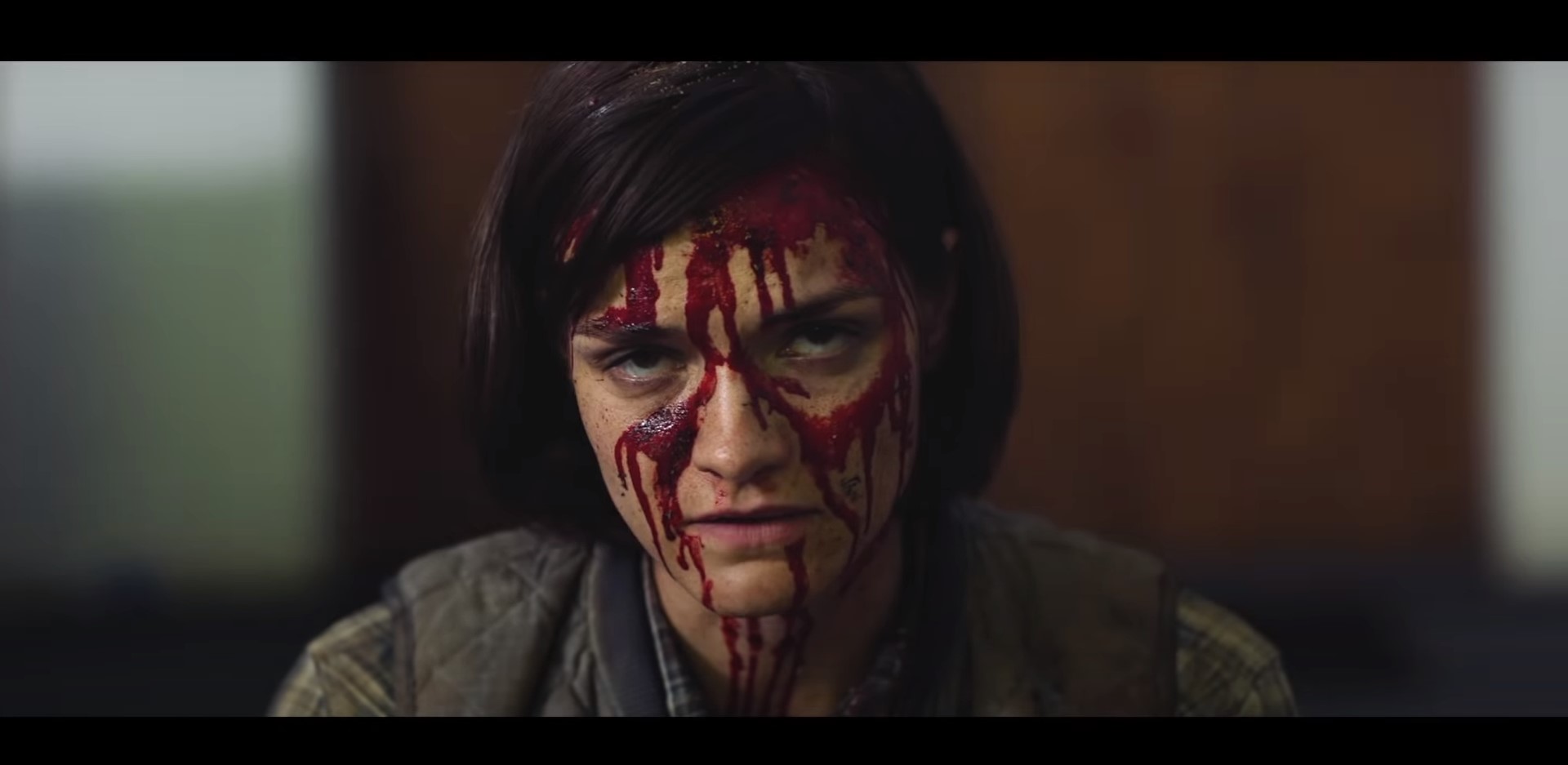
The long-awaited sequel reteamed Zarchi with original lead actress, and also ex-wife, Camille Keaton, distant relative of the famed comedy and stunt actor, Buster Keaton.  Camille Keaton, who looks phenomenal in her 70s during production, steps back into the infamous Jennifer Mills role that made her a household name amongst grindhouse-horror community.  Though completely nude for most of the 1978 film, that part of her performance takes a step back for a new actress to pave a new path in the saga.  Obscure indie scream queen Jamie Bernadette (“Axeman,” “The Bunnyman Massacre”) is ceremoniously passed the torched as the new riches to ragdoll as the Jennifer Mill’s unhappy supermodel daughter, Christy, who becomes haplessly snagged into her mother’s unforgotten past.  Bernadette offers a variable beauty and a diverse poise that doesn’t make Christy a carbon copy of Jennifer Hills, but the actresses deliver the same apathetic venom of a woman scorn.  More of a carbon copy is the four backwoods bumpkins fuming over Jennifer Mills’ vindictive dissecting of their dead relatives.  The gang is spearheaded by Beck, played by Maria Olsen who, like Bernadette, has made a name for herself in low-budget horror having roles in films such as “To Jennifer,” “Starry Eyes,” and “Gore Orphanage.”  Olsen projects Becky as the gas station attendant from Hell, someone you don’t want to interact too long with as you’re pumping gas in the middle of nowhere, but Becky is not a woman of a few words who constantly has to remind us, to the blistering point of annoying, that she must avenge her late husband’s sinful murderess.  The rest of the gang didn’t impress much after that.  Jonathan Peacy has a chance to shine from out of the extra and bit part shadows as the crazed and hyperactive Kevin, brother of Stanley from the original film, and while Peacy channels his best Al Leong look, Kevin is ultimate a big detrimental goof with small dog syndrome than actual menace.    The last two aren’t any better with a lackluster act by Jeremy Ferdman as Andy’s cousin and “Tales of Frankenstein’s” Jim Tavaré’s rather befuddling downplay of Matthew’s mentally disordered father, Herman, who teeters back and forth between morals with a jumbled underlay of piety.  There are not many sane performances in a rather loose and unbridled Zarchi follow up with a cast that rounds out with Alexandra Kenworthy, Roy Allen III, and Holgie Forrester.

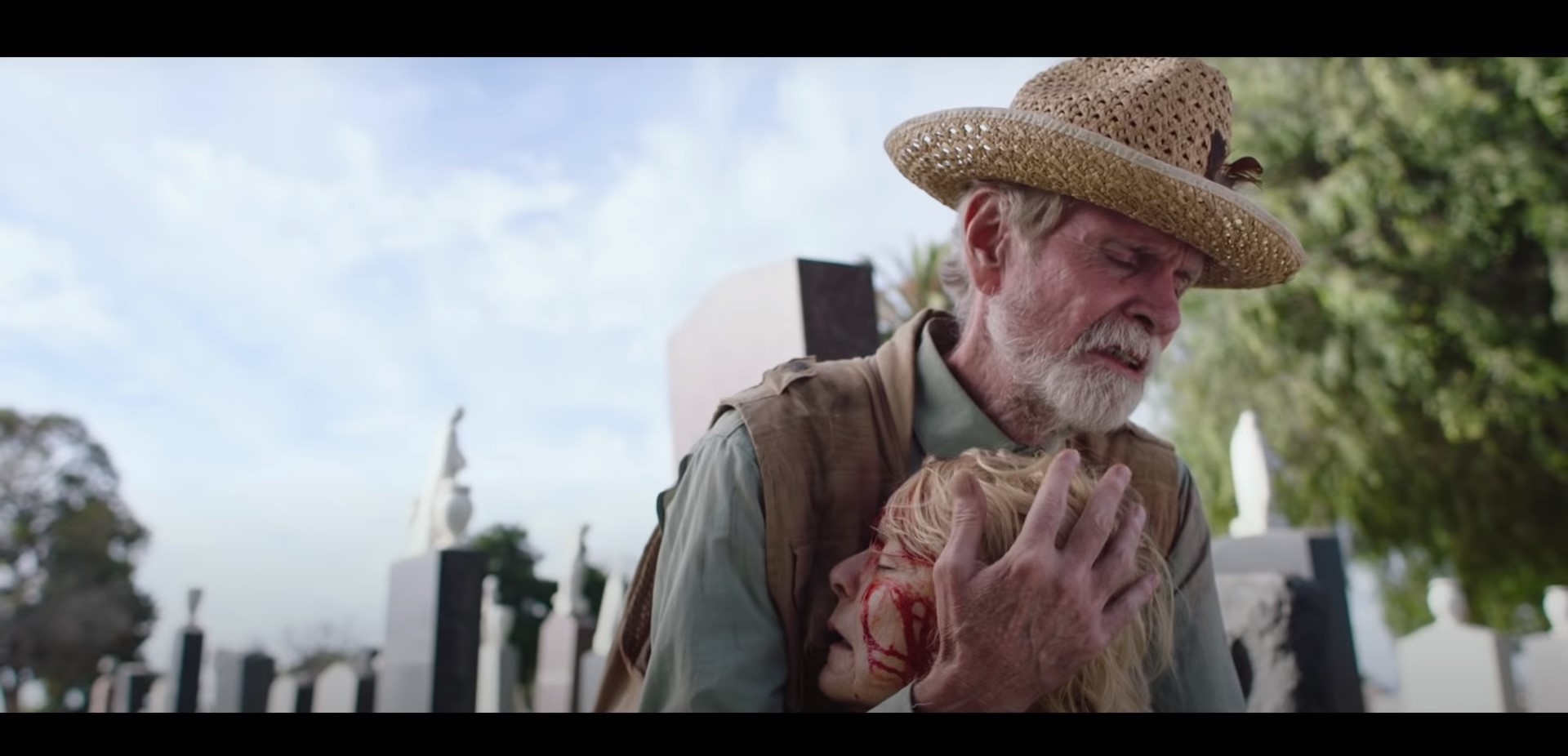
Performances aside, “I Spit on Your Grave Déjà vu” is also a cacophony of yelling as the script, from paper to pronunciation, reaches top of the lung levels with every bit of dialogue from every player in this tussle of who’s right and who’s wrong when it comes down to justifications of killing.  Zarchi’s sequel lacks the tact his first film achieves so delicately with Mills post-assault softer approach to lay waste her assailants.  “Déjà vu” satisfies its own revenge kicks with little subtly in trying to be outrageous, outlandish, and off its rocker as the confrontation between Christy and the gang becomes a rancorous grudge match.  What concerns me most about “Déjà vu” is the year in which this sequel takes place.  Between the 1978 original and the 2019 follow up, 40 years have passed, but the characters don’t fit any of Father Time’s natural aging characteristics on the surface.  Becky looks okay as an early to mid-60s woman despite Maria Olsen’s actual age being early 50s at the time of filming and release.  Herman is another one that sneaks into fathomable constructs as a character living a farmer’s life in the latter half of middle age, but I question whether Kevin and Scotty were even born yet.  The two youngsters barely seem to be out of their 30s and the same can be said for Christy where much more of her life is revealed as the story progresses.   If following the script logic, I would assume the story takes place in the 90s, but certain technologic advances, like modern day touchscreen phones, suggests no earlier than late 2000s.  As a whole, time and space don’t appear to exist on any reasonable plane for the film with characters able to bump into each at random intervals despite being a densely wooded and rural location and, for all you cinematographers out there, if your location is supposed to be rural, don’t shoot in at a cemetery with a massive grave footprint with a stream of cars speeding down a busy suburban street.  You instantly lose the illusion.  Zarchi’s intentions were clear to only echo the original while allowing for individuality with a brasher onslaught of right versus wrong, eye for an eye, and misguided righteousness for injustice, but the execution crumbles with excruciating results, never reaching the same poetic justice the first film accomplishes so graphically grafted. 

As far as rape and revenge exploitation is considered, “I Spit on Your Grave Déjà vu” gets about as down and dirty and ugly as they come.  Cult movie curator, Ronin Flix, delivers the Meir Zarchi sequel onto Blu-ray home video, presented in 1080p, full high definition, with a widescreen 2.39:1 aspect ratio.  A+ for natural lighting, skin tones, and overall appeal, Pedja Radenkovic’s cinematography is about as uninspiring as they come artistically, but, as a personal preference, the shots are more organic, raw, and less distracting from the content that’s much more abrasive and interesting.  A more natural framework also more time for Russell FX’s practical effects to be showcased without enhanced imagery.  As long as the details are there (they are), no damage is concerning (there wasn’t), and the framing made sense (for the most part), “Déjà vu” can be considered a win for Radenkovic.  The English language DTS-HD 5.1 Master Audio soundtrack for “Déjà vu” is a blessing and a curse.  Dialogue clarity is excellent and there’s a wide range to exploit, forgive the punned term, each channel with great balance, but remember what I said about all the character yelling?  Also, with the higher bitrate DTS, the quality is too good for some of the applied ambient effects like the exhaust sputtering of an old Ford pickup that sounds way too fake and way too close despite its positioning in the scene. The region A, not rated Blu-ray is stored on a BD50 due in part to the film’s massive 148 runtime and the inclusion of special features that include a new audio commentary with film critic and “The Last Drive-In” host Joe Bob Briggs, select cast interviews, the making of the film, behind the scenes footage from producer Terry Zarchi, and the theatrical trailer. Is “I Spit on Your Grave Deja Vu” the long-awaited sequel to Meir Zarchi’s first film? I’d say they’re two totally different exploitation entities cut from the same cloth with ties only in names and some flashbacks alone, but both films would make for a great double bill that starts with a harrowing, nothing-to-lose, woebegone toned, revenge thriller complimented with a lukewarm and unfocused follow up to help come down off the original’s gripping ultra-violence high.

Ronin Flix’s “I Spit on Your Grave Deja Vu” Blu-ray available at Amazon.com!

Pass or Fail Weekend is Evil’s Playground. “Camp Twilight” reviewed! (DarkCoast / Digital Screener)

On the verge of failing and having to repeat a grade, six students are given the opportunity to spend one technology free weekend at Camp Twilight with their homeroom teacher, Ms. Bloom, and principal, Mr. Warner, as chaperones.    Planned with a series of outdoorsy, bonding activities, the weekend will serve to boost their grades to the cutoff line for graduating and, for some, maintaining their spot on the high school sports teams.  A local urban myth has haunted the camp’s reputation based off a grisly scene of murders a few years back, but the revamped park now serves as a community safe zone overseen by three dedicated, and also quirky, park rangers:  Art, Bob, and Chief Tom.  On a weekend where none of the students wanted to attend, forced by the threat of academic failure, an ominous figure revives the camp’s notorious past as one-by-one campers, teachers, and park rangers fall victim to a hooded killer’s impulse for blood.

Summer camps and masked serial killers are as synonymous as the vast ocean is with the dreadful thought of man-eating sharks.  “Friday the 13th, “Camp Blood,” and “Sleepaway Camp” have made a fortune and a franchise off the backs of the hapless summer campers, hacking and slashing away at the pre-martial sex crazed, the love struck wimps, and the overconfident jocks to build a flawless, ultimate killing machine series.  Will director Brandon Amelotte’s debut slasher, a horror-comedy entitled “Camp Twilight,” claim stake in the genre being the next persevering serial killer franchise?  For starters, the USA-made, indie feature releasing later this month has a leg up with “Sleepaway Camp” scream queen Felissa Rose headlining a cast that also includes a few other genre favorites as well as co-written the script with Amelotte.  Shot on the grounds of the palm tree lined Markham Park, “Camp Twilight” trades in mountain bike trails, disc golf, and it’s outdoor weapons range for machetes, lots of machetes, and is a product of Rick Finkelstein and Brandon Amelotte’s Florida based Entertainment Factory productions and, also Amelotte’s, Pelican Films.

As mentioned, genre icon Felissa Rose ditches the awkward teenage camper from the finale traumatizing “Sleepaway Camp” for a hyped-up, goody two shoes high school teacher in Ms. Bloom.  The top billed Rose brings the energetic know-how of her fully present, larger than life, broad range persona who audiences will never know exactly where her character stands until it’s lethally too late!  Rose is joined by more fresh faced, incredibly automaton co-stars in the roles of the six students and principal, played by the executive producer Barry Jay Minoff.  Minoff and Rose are supposed to be a couple concealing an affair, hiding their lustful courtship very poorly around the students, but both roles are completely under written, unexplored, and unfulfilling in the grand scheme of their pivotal plot point.  Little can be said differently about the students with a range of interrelationship intricacies that tried to be fleshed out as psychological terror triggers in lieu of their already conventional teenage sensitivity struggles.  There are other cult genre vets alongside Rose but in minor, more cameo-esque roles.  Linnea Quigley (“Return of the Living Dead”), Camille Keaton (“I Spit On Your Grave”), and Vernon Wells (“Innerspace”) add more or less star power to the fold, supplementing virtually nothing to the narrative but campy slasher fodder for fans to gobble up.  More impressively is Dave Sheridan bringing forth a version of “Scary Movie’s” loveable dimwitted cop, Doofus, with Ranger Bob, adding a great deal of the substantiated comedy toward “Camp Twilight’s” campy ebb and flow.  Cougar MacDowall, Thomas Haley, Hayleigh Hopkins, Harris Sebastian, Dondre Tuck, Brooklyn Haley, and Steven Chase, with “Truth or Dare’s” Jessica Cameron and Sport’s Illustrated model-turned-film producer, Tracy Lear, filling out the troupe lineup.

I wish I could say that “Camp Twilight” is a campsite of entertainment, a paradisal slasher of genius design, offering up a new breed of deranged psychopathy to the likes we’ve never seen.  Unfortunately, I couldn’t make heads or tails out of Brandon Amelotte’s derivative and tired trope-laden slasher rippled with loose and forgotten subplots and characters while at the same time being a heap of longwinded exposition that still way after viewing can’t fully explain the turbulent core of the story.  I hate to knock anything Felissa Rose touches, but I would be doing an injustice and a disservice if I tried to play up a slack script that starts off picturizing a campy horror-comedy but plays out the third act with critical revelations without a hint of funny bone material. The kills follow the trend of a lighthearted horror comedy, albeit the pelting of F-bombs, with “Camp Twilight’s” holdall of off screen deaths, barely scratching the surface with on screen kills rendered only by closeups, and not particularly bloody, intense, or nearly as menacing by a black hooded killer in jeans creeping up on prey in a well-lit campground with lots of room to run. The same company, Entertainment Factory, behind the horror icon drenched disappointment, “Death House,” should have been a clue into “Camp Twilight” critical success, but much like the “Death House,” both films are a totality of mess.

Not a fan of the outdoors? Hate bugs, snakes, and all things that go bump in the night? Does your fear of an unclear, inaccessible toilet seize you up? DarkCoast has you covered with their digital release of “Camp Twilight,” arriving onto digital platforms come November 1st, 2020 – Day of the Dead. The release platforms will include InDemand, DirecTV, FlixFling, Vudu & Fandango. The A/V qualities will not be reviewed due to the digital screener provided for this new film release, but I will say much of the soundtrack sounds stock file-ish (and there is no composer listed which would be a dead giveaway) and the Adam Beck cinematography is too well-lit, benumbing any kind of intense emotions that would correlate with the action. There were no bonus features included with the release nor were there any bonus scenes during or after the credits. “Camp Twilight” plays into it’s own title as a dim denticulated slasher that’s far too breathy and far less spirited and so the question stands, will “Camp Twilight” be the next slasher hit to spawn a lengthy, decade spanning franchise? The answer is no.

Evil Isn’t Home. “Death House” review!


Top law enforcement agents, Boon and Novak, achieve special access through steep sacrifice during job assignments and are permitted to tour their upcoming placement in the highly exclusive Death House, the ultimate maximum and multi-level penitentiary home to the nastiest criminals known to society and the deadly threat to mankind in a metaphysical way. Death Houses uses virtual reality to keep inmates stimulated to the point of calm submission as well as drugging the homeless and the unwanted to supply killers with victims upon victims in an their personalized virtual surroundings, but when an outsider uses an EMP to knock out all power within the facility, the cages are open and the ruthless animals are free to overrun, beating to death the guards and staff. Boon and Novak must fight their way to the bottom level that hold the Five Evils, criminals with grotesque supernatural abilities and a wickedly grisly past, where the two agents believe the Evils are their best hope for survial against a Five Evils acolyte named Sieg and his faithful jailhouse followers.

Considered as “The Expandables” of horror, “Death House” had gained almost instant fandom solely from the long-list of horror icons in the cast. Director B. Harrison Smith (“Camp Dread”) re-writes most of Gunnar Hansen’s original “Death House” story produced by Cleopatra Entertainment and Entertainment Factory. Cleopatra Entertainment is more notably a music label that has delved into films the last few years and, in my opinion, haven’t faired positively in the horror genre, but “The Texas Chainsaw Massacre” star fought tooth and nail to try and get his script off the ground, even in the face of death. “Death House” saw release after Hansen’s death, but from interviews with the filmmakers, Smith had almost totally revamped the original treatment, leaving The Evil’s at Hansen’s request if his script was to be entirely cleaned. Shot right in this reviewer’s backyard of Philadelphia, Pennsylvania at the historic Eastern State Penitentiary, the defunct prison is an ideal location as the “Death House” due in part to John Haviland’s separate cell design and gritty appeal that was once of the home of Al Capone, but more of the focus is on the interior than exterior with green scenes and Los Angeles shots constructing the story-lined scenes.

Like aforementioned, “Death House” has been called the “The Expendables” of horror. An immense, if not soaked, cast of horror fan favorites are peppered about around the main characters of Agent Boon and Novak. “Sushi Girl” and “Zombeavers” star Courtney Palm embodies the Agent Boon character with G-man toughness, but finds difficulty leaving that b-horror mentality with shakiness in working climatic scenes. Palm’s also roped into doing an extremely gratuitous shower scene with Cody Longo (“Piranha 3D”) as Agent Novak. Novak’s a hotshot and Longo has the looks and the talent to out perform his character, but Smith’s script doesn’t do justice to either Boon or Novak’s character that blatantly underwhelms their performances with cameo star power and a shoddy narrative. Dee Wallace (“Cujo”), Barbara Crampton {“Re-Animator”), and Kane Hodder (“Jason Goes to Hell”) have prominent roles that are pertinent to the story and are enjoyable to see them in more of a supporting capacity. Andrenne Barbeau {“The Fog”), Sid Haig (“The Devil’s Rejects”), Vernon Wells (“The Road Warrior”), Bill Moseley {“The Devil’s Rejects”), Lloyd Kaufman (Mr. Troma), Michael Berryman (“The Hills Have Eyes”), Tony Todd (“Candyman”), Sean Whalen (“The People Under the Stairs”), Debbie Rochon (“Killer Rack”), Bill Oberst Jr. (“Deadly Revisions”), Felissa Rosa (“Sleepaway Camp”), Danny Trejo (“Machete”), Tiffany Shepis (“Abominable”), Brinke Stevens (“The Slumber Party Massacre”), Camille Keaton (“I Spit On Your Grave”), Gunnar Hansen (“The Texas Chainsaw Massacre), and R.A. Mihailoff (“Leatherface: Texas Chainsaw Massacre”). Whew. Rounding out the remaining cast is Lindsay Harley (“Nightmare Nurse”), Vincent M. Ward (“The Walking Dead”), and Bernhard Forcher.

While the genre star-studded ensemble cast is a wet dream for horror fans, “Death House” fails in numerous filmmaking categories with the first being the most important, the script. Smith’s re-work of Hansen’s original story requires another drastic once-over, or two, as the final result attempts to push, stuff, and cram 100 lbs of multi-subgenre elements into a 10 lb, inflexible bag, cramping the ambitious project with dis-connective storyline tissue braced together with shoddy visual effects, like the two agents free-falling down a bottomless elevator shaft and able to precisely shoot their targets on each level. The overall result of “Death House” just endures an unfinished varnish and seems slapped together with pre-schooler glue and claggy spit. Singular moments surface as diamond specks amongst cubic zirconias, like the Mortal Kombat fatality-esque practical effects, but are too far and in between to muster up an enjoyable film. The Five Evils definitely and desperately needed more presence in the story instead of just flexing the talking heads muscle; well, the only two Evils to say anything at all were Bill Moseley and Vernon Wells. The Five Evils didn’t quite have that oomph to be a force to be dealt with as Gold-described beings who philosophical interpretations on the concept of good and evil.

Cleopatra Entertainment and MVDVisual present B. Harrison Smith’s long-anticipated “Death House” onto DVD home video. The unrated, all-region DVD is presented in a widescreen format that displays some frayed flaws like contrast; there’s way too much inky black in the dark scenes and little-to-no definition in more visible sequences. The compression suffers from blotchy artefacts at times too and lacks hues, which works with the gritty tone inside the Eastern State Penitentiary’s decomposing walls of rubble and decay. Visual effects are glossy with virtually no textures to give detail or, essentially, life amongst the continuous death. Bonus features include multiple interviews with director B. Harrison Smith, Courtney Palm, and more. Also included is a behind-the-scenes feather, a gallery slideshow, and theatrical trailer. Despite being true to the title and highly anticipated since it’s inception into the public market, “Death House” ultimately disappointments as an unfurnished mess enlisted with big names in the horror domain that’ll unfairly sell the film on it’s own, but all-star cameos won’t establish “Death House” as a solidified cult favorite, being unfortunately one of the biggest release flops of 2018.