Stranded and Terrorized, Longtime Friends Must Confront Their Own EVIL Past! “The Boat” reviewed! (Breaking Glass Pictures / DVD)

Kee Your Enemies Close but Your Friends Even Closer! “The Boat” Now Available on DVD

Three well-off couples party on a luxury, personal yacht for a holiday getaway and to celebrate Enrico’s birthday.  Sizzling romance, boozy-filled dancing, and smoking weed relaxes the group on the calming waves as the party goes through into the night but when morning comes, they find themselves coming out of a stupor and in the middle of the ocean with the yacht having been sabotage and adrift with no food, water, or means of communication.  A mysterious voice comes over a hidden walkie-talkie poised to punish those onboard in a plight of revenge for a past transgression involving them all and expose the groups’ dark secret kept from each other.  Tensions rise and their tormentor slowly unveils the truth through a series of chastising games that turn the tide on the group’s closeknit friendship for the worse but not everything is what it seems that’ll shed a light of truth on certain ill-conceived perceptions of the past.

Waking from a party-filled night that can’t be remembered and quickly realizing there’s something inherently wrong about the situation, no land in sight with the yacht drifting further out into the ocean, is a sweat-inducing nightmare scenario that has immense palpable fear with a person’s severe disconnect from land and, to make matters worse, all the life-sustaining supplies and modern day conveniences have strangely vanished.  That’s the primal premise setup for the mystery-thriller “The Boat,” a 2025 released Italian-made film from director Alessio Liguori (“In the Trap,” “Shortcut”) and a trio of writers in Gianluca Ansanelli, Nicola Salerno, and Ciro Zecca.  Filmed just off the port of Piano di Sorrento and in the Amalfi Coast, including the illusion of open water scenes, “The Boat” is a Lotus Production, a subsidiary of Leone Film Group, and Rai Cinema feature under producer Marco Belardi and executive producer Enrico Venti.

Reviewing Marco Belardi and Enrico Venti’s producing film repertoire suggests that the duo have hardly tasted tension and experienced thrilling tenterhooks with a more comedic, period piece, and melodramatic works that revolve around the tough, sometimes scathing, human dynamics.  The cast resembles similarly in their credentials, using the melodramatic, soap opera feigns of being hurt, lost, confused, and damaged inside a tight group of longtime friends getting together for a holiday only to find that maybe they’re not so good friends after all, definitely not good people, harboring hazardous secrets.  Diane Fleri (“Ghost Track”) and Filippo Nigro (“Deep in the Wood”) play the epitome of a wealthy yacht owning couple, the reoccurring nightmare plagued Elena and her breadwinning husband Flavio, Alessandro Tiberi (“The House of Chicken”) and Marina Rocco are the fast-lane lovers Federico, the filmmaker, and Claudia, a social media influencer, and Marco Bocci (“Caliber 9”) and Katsiaryna Shulha (“Hypersleep”) play unemployed birthday boy Enrico with his much younger, new girlfriend Martina make up the struggling confounded stranded on a boat.  The once carefree, ready to party friends fall quickly from a standard of grace by a mysterious man radioing from a nearby boat, instructing and commanding them under his thumb with his own set of terms and in a position of authority by holding all the cards as they slept off the hidden sedative, and soon after, they’re perfectly perceived lives are craved in two from a superficial shell of money laundering, betrayal, and murder.   Eduardo Valdarnini (“Bad Habits Die Hard”) helms the calculated antagonist with a plan but his character isn’t kept faceless as first introduced and has his intentions unmasked way too early, running the impact of what naturally would have been a twist moment where it all clicks and makes sense his reason for retribution.  Valdarnini’s depth is in focus, a clear means with a strong case for a longstanding grudge, but the targeted friends rapidly decline into spineless and spiritless absorbents of their fate and are willing to roll over for reside or kill over an emotionally distraught act despite the situation they’re in, both not fitting the narrative bill 

“The Boat’s” strength resides mostly in the first act setup of each couple’s time together before boarding the yacht with tidbit hints of their idiosyncratic lives and their private opinions of each other.  This establishes personas and mindsets that become, or at least should have become, important later to test their surface laid out bond.  The second act transitions from partying the night away into a quickly devolving situation the next morning, discovering their boat adrift and no supplies left on board in apparently robbery.  By now, the tension is high and not set internally amongst the friends as their bewilderment extends to the audience who are too looking for answers.  Only when the mysterious voice over the radio comes a calling do the third act fail to secure a clean sweep of next level thriller.  There’s little-to-no fight in the mostly pampered elite apart from Enrico who only fits in because of his allotted friendships with the other passengers and he brings in the only outsider, his young girlfriend Martina, to which his friends casually mock the age difference behind his back further clueing us in on their true colors, but even Enrico’s fight is reserved for more diplomatic head-way with a man with a vendetta, especially with a gun pointed at him, but his explanation of involvement in past events is too easily taken to heart by the opposition rather than be questioned for its validity.  This leaves an opening of hope and sacrifice that ill-fits the story’s framework and causes an unlikeable situation based either on truth or the mattes of the heart, both of which are never challenged to the extent they should be in a crusade to bring down the affluent guilty.

Sailing up to DVD is “The Boat” from the Philadelphia-based label Breaking Glass Pictures.  The single-layered MPEG-2 video codec on a DVD5 provides a less than crystally defined picture quality in it’s 720p standard resolution, available for converted upscale.  Presented in a widescreen 2.35:1 aspect ratio that truly engulfs the anamorphic image with isolating oceanic oppression, “Orgy of the Dead’s” Mirco Sgarzi’s ability to retain depth without it being washed away in the vast waters creates anticipating moments of visual stimuli with the example being Flavio sitting solo in a life raft with the mysterious man cruising toward him in the background, an iconic culmination of objects in one frame that can be seen in “Jaws 2” when the shark moves in for the kill on a stationary Sheriff Brody holding a powerline while sitting in a raft.  As mentioned, details are shaky at best with objects often appear fuzzy around contouring lines and darker areas are chalky, but the image is more than suitable enough for DVD image delineating.  “The Boat” comes with a mostly Italian, some English PCM 5.1 Surround Sound audio mix that’s cinematically balanced between a forefront and clear dialogue track and a background of diegetic and non-diegetic of ocean grabs, such as waves splashing, distant gull calls, and the roar of a high-powered boat engine.  “Here After’s” Fabrizio Mancinelli’s score doesn’t have an inspiring bone in its ocean body with a route low-key pulse score; it fails to instill that alone enthralling alchemy of being lost at sea with a maniac great-white-circling and looking for blood.  English subtitles are available for selection and while they pace well, there are a couple of infractions on the translation that won’t ruin the visual picture or transcription.   Special features include only a photo gallery and a trailer with the DVD houses inside a standard Amaray case with an aerial pictorial that provides a strong lured interest.  The region 1 DVD comes not rated and has a runtime of 94 minutes.

Last Rites: “The Boat” sails a nautical knot of secrets to reveal not all old friends are faithful and true with a past that eventually catches up to them. The waters will be tested on this newly released Breaking Glass Pictures DVD.

Kee Your Enemies Close but Your Friends Even Closer! “The Boat” Now Available on DVD

One Man’s Love and Another Man’s Revenge Take on the Mothers of All EVIL! “Forgotten Pistolero” reviewed! (Carambola Media / Blu-ray)

“Forgotten Pistolero” Now Available on Blu-ray!

Rafael is a hunted man as he travels from Mexico to Texas searching for his childhood friend Sebastian, a son of a Mexican general who years earlier was slain by an unfaithful wife and her lover shortly after returning from war with the French.  When Rafeal happens upon a man living in solitude on the land, he identifies him as his long-lost friend who has forgotten about his traumatic past and decides not to revictimize his friend of the past, but when Rafael is captured by bounty hunters, Sebastian saves his life that spurs Rafeal into unveiling to his friend his real childhood tragedy.  Sebastian and Rafael set upon a mission of revenge and to save Sebastian’s sister Isabella, who Rafael has fallen in love with and who has had an arranged marriage to a humble shopkeeper to rein in her opposition to her mother’s betrayal.  As the two men battle unscrupulous gun-toting henchmen and deal with their own personal issues in their own way, the gunfighters unravel the truth about their Sebastian and Isabella’s parents while shooting their way toward those directly responsible for unending their tranquil lives. 

“The Forgotten Pistolero,” aka “Gunman of Ave Maria,” aka “Il pistolero dell’Ave Maria” is the 1969 Italian spaghetti western based on the converging of Greek tragedies from Aeschylus, Euripides and Homer.  Notable Italian western director Ferdinando Baldi, director of “Texas, Adios” and “Django, Prepare a Coffin,” pulls forth the betrayal and revenge tale out of the fourth century and into the 19th century set in the semi-arid landscape between Mexico and Texas with spears traded out for six-shooters.  The script is penned by multiple writers with Vencenzo Cerami (“The Silent Stranger”), Pier Giovanni Anchisi (“Hate is My God”), Mario di Nardo (“Aphrodite, Goddess of Love”), Federico de Urrutia (“Hour of Death”), and even director Baldi to grasp the immense drama of tragedy and place it inside the context of a western gunslinger.  “The Forgotten Pistolero” came at the height of the spaghetti western subgenre produced out of Italy with “Django” producer Manolo Bolognini as feature showrunner with Izaro Films and B.R.C. Produzione as production companies filming primary in Spain doubling as the Central and North American west.  

Like many Italian films of the era, especially in the spaghetti western and horror subgenres, the cast is comprised of multinationals with New York-born Leonard Mann at the lead actor credit.  Mann, who began his career in Italy and continued acting in a number of Italian films (“The Unholy Four,” “Death Steps in the Dark”), plays the titular pistolero Sebastian inexplicably haunted by his past while living in solitude until childhood friend Rafeal, played by Italian-born Peter Martell (“God Made Them… I Kill Them”), discovers his friend and reveals he truth that’s subconsciously plagued Sebatian for far too long.  There’s a show of unspoken connection between the two characters that time faded and is rekindled by mutual respect in both – Rafael’s intentions to not hurt Sebastian with the truth by running away after finding him and Sebastian’s tracking him down and saving him from bounty bandidos.  No words needed to describe their bond and through Mann and Martell’s acting do we see that connection solidify to be indestructible.  Completing the childhood friendship is Isabella, played by Spanish actress Pilar Velázquez (“Naked Girl Murdered in the Park”), who is forced to marry a humble yet good man shopkeeper Ignacio (Luciano Rossi, “Salon Kitty”) to be out of illicit lover Tomas’s way as he tries to woo back Anna, both of whom staged a coup and killed Sebastian and Isabella’s father, General Juan Carrasco (José Suárez, “Texas, Adios”).  Isabella adds crucial love interest to Rafael’s state of mind as the hunted gunman finds solace at the bottom of the tequila bottle with his life on the run and his love married to another man.  Rafael’s only hope is Sebastian, thought dead or believed to have vanished by his treacherous mother Anna (Luciana Paluzzi, “99 Women”) and her scoundrel lover Tomas (Alberto de Mendoza, “Horror Express”) who have drifted apart and have their own complex dynamic to which in itself is failing falling out to have permanently taken a father away from his children and have it result all for naught.  Sebastian slowly reconnections with Rafael and himself as his subdued vengeance is ironically rooted by a fierce craving to see those responsible pay. 

Ferdinando Baldi’s surface-layer retribution theme has a subaqueous depth of leagues-upon-leagues of combative and raw emotion, seeded by a singular event of betrayal, separation, and loss all in the life-altering blink of an eye.  Though crucial to thought processes and motivations of the character on either side of the moral coin, the story bypasses the long years between the assassination when Sebastian, Isabella, and Rafael are children and much later when the obligation of adulthood comes knocking.  What’s not depicted from those omitted years are the trials of Rafael’s passion for Isabella and his arduous ordeal to evade capture by Thomas’s goons nor the privy of Sebastian’s life since the death of his father other than it’s made known Rafael’s mother took Sebastian under her wing and died recently.  What’s also missing, and has becomes quite a negative plot hole in the story, is how Rafael and Sebastian learned to gun fight and do it extremely well that becomes key to their reckoning success.  Isabella too suffers living in close proximity to her mother and her illicit lover with a seething hate, especially for her mother, and her relationship with a timid but kind shopkeeper who aims to please her happiness without demanding much from her already shattered childhood.  Triggering trauma, down the bottle depression, suffering in silence, and a searing hatred coupled with perfected embattled showdowns and gunslinging escapades lead up to an unraveled, truth-be-told twist ending of scorching inferno on where it all started.  Baldi knew how to frame a shot that paired people with steady tension or to find their true North when it came to exposition and his gunfights, and though not inundated with rabid rapid-fire riddling with bullet holes, “Forgotten Pistolero” does stand firm in the turbulent ocean of western films, especially with flawed, hero-errant protagonists.

Catalogued title 001 for the IFD Films offshoot label, Carambola Media, distributed through Diabolik DVD, “Forgotten Pistolero” quick draws a new 2-disc, high-definition Blu-ray, encoded with AVC on a BD25 for the English ADR and a BD50 for the Italian ADR language version because it’s accompanied with extras.  The different languages are encoded on individual discs.  The extra pixels offer an extremely high level of detail that reproduces a competent saturation of a warmer graded film, complete with saddle brown and burnt sienna tones, brightly lit in exterior definition and really absorbed with the interiors from it’s 2K saturation of the 35mm print presented in a 1.78:1 aspect ratio.  No obvious print damage to the 1969 film, emulsified and preserved properly for later restoration efforts of today.  Often skin tones appear orangish, as seen in many DVD updates, but the color correcting process works wonders with “Forgotten Pistolero’s” verisimilar viewing.  As noted, each language track has its own disc that offer two audio options on each disc.  The English and Italian language discs come with a DTS-HD Master Audio 2.0 Mono mix and an uncompressed LPCM 2.0 Mono, both rendering ideal fidelity through the power of early Italian cinema ADR with only insubstantial studio inference and no hissing or crackling pops to note.  Either track will work with a seemingly natural flow, even the English track since some actors are mouth articulating English works, as any kind of desynch between the action of talking and the post-production audio has egregious control.  Gunfire has that distinctly rich ricochets effect, and the punches pack a nice wallop when struck, both typical in spaghetti western greats.  The interview with Leonard Mann and the original trailer is exclusively on the Italian language disc whereas the English track focuses just on the feature.  The standard Blu-ray comes in a standard Amaray with an extra lock-in flap for the second disc.  The sleeve art is of the film’s original poster art with a shirtless Leonard Mann, who’s never shirtless in the film, looking cowboy rugged with his gun holstered on his hip.  The hard A region encoded disc is not rated and has a runtime of 83-minutes.

Last Rites: Don’t mistake “Forgotten Pistolero” as an ordinary spaghetti western and don’t ever compare to it to The Man With No Name trilogy as a totally separate type of Italian western but the Carambola Media release is something special, pulled from the depths of Greek mythology, and spun to be a tale of tragedy, twist, and a torrent of gunfights and emotions.

“Forgotten Pistolero” Now Available on Blu-ray!

Never Steal EVIL’s Dead Body and Think to Get Away Scot-Free! “Frightmare” reviewed! (Troma / Tromatic Collector’s Edition)

It’s not a Nightmare. It’s a “Frightmare” on Blu-ray!

Aging horror icon Conrad Radzoff is on the verge of being forgotten by all except for a few handfuls of diehard fans who gather around a horror society that appreciate classics that are quickly fading from public view.  Arrogant and conceited, Radzoff doesn’t take criticism all too well.  In fact, he kills over it.  After murdering a commercial director and his longtime collaborating director, both of whom loathed his tyrannical, prima donna attitude, Radzoff dies of heart failure shortly after.  The youthful members of the horror society steal his body from Radzoff’s elaborate decorated and booby-trapped mausoleum on a whim and spends the night dining, dancing, and photographing with his lifeless corpse until Radzoff’s wife uses a medium to locate her late husband’s body and inadvertently resurrects him from dead with supernatural psychic powers to pick off his naïve graverobbers one-by-bone in what will be his last great horror performance. 

“Frightmare,” aka “The Horror Star,” is the supernatural slasher that tears into the fabric of being forgotten with a lasting impression, one with deadly consequences for a mischievous teens disrespecting the past in order to live with impunity in the present.  The 1983 picture is written-and-directed by Norman Thaddeus Vane, co-director of “The Black Room” and the Elvira-inspired 1988 film “Midnight.”  Shot mostly in the Los Angeles area, “Frightmare’s” principal photography and wrap was completed during 1981 but the film itself was not released until two years later and is not a remake of and has no connection to the Pete Walker film of the same title years earlier in 1974, which focuses on a seemingly mentally disturbed rehabilitated woman released years after committing deadly crimes.  This more necromancing and resurrecting slasher “Frightmare” is produced by Callie and Patrick Wright and with “Shadow of the Hawk’s” Henry Gellis serving as executive producer under the Screenwriters Production Company. 

“Frightmare” would undoubtedly become director Norman Thaddeus Vane’s first attempt at replicating a horror icon shell that would later inspire him to direct “Midnight” that pulls influences off horror hostesses, such as Elvira or Vampira.  The centralized character, one who’s prim-and-proper snobbish attitude and flair for the theatrical in film and in life, is loosely, in Conrad Radzoff is loosely based off the Vincent Prices and the Christopher Lees of the genre, classically trained method actors astute to the craft.  Radzoff is, however, embellished with a hellish soul, unlike Price or Lee who sustained a rather indifferent or benevolent character.  There’s a lot to take in and enjoy from Ferdy Mayne’s performance as Radzoff.  Mayne’s first role of it’s kind for the actor with its meta intent to be an actor playing a horror actor reawakened as psychic sociopath from the depths of Hell groomed and garbed as a Vincent Price/Christopher Lee-like gothic vampire, in which Mayne was quite trained for having starred in vampiric films such as “The Vampire Lovers” and “The Fearless Vampire Hunters” in the 1970s, and he crushes the performance with profound effect with Vane’s Euro-style slasher that keeps tabs on the killer as he lurks through the property of the horror society, consisting of going from contravening teens to the unfortunate victims played by Luca Bercovici (“Parasite”), Jennifer Starrett (Run, Angel, Run!”), Alan Stock (“Poison Ivy”), Scott Thomason (“Ghoulies”), then Michael Biehn’s now ex-wife Carlene Olson, Donna McDaniel (“Angel”), and one Jeffrey Combs that would be one of his first films pre-“Re-Animator.”   Narratively, this laid out is the core cast of characters but there are peripheral support characters that are introduced and have key moments but are quickly diminished or erased from completing their story arc.  Radzoff’s wife Ette (Barbara Pilavin, “Maniac Cop 3:  Badge of Silence”) barely has five minutes of screentime but provides the undead Radzoff the key, go-ahead directive to kill his body snatchers but after that intense moment where they psychically connect, her scenes are no more other than one moment with a lightly knotted loose end.  Same can about the intensity of Mrs. Rohmer (Nita Talbot, “Puppet Master II”) that it pops clean off after connecting with Radzoff.  Leon Askin (Doctor Death:  Seeker of Souls”), Chuck Mitchell (“Porky’s”), and Peter Kastner (“Steambath”) fill in the cast.

If only one element stood out as “Frightmare’s” most redeeming characteristic, Joel King’s cinematography takes the top spot on the podium with a diffused fog machine backlighting that’s out of this world, angles and movements that complex the simplest and most stationary scenes, and an ingenuity that manifests the magic of a macabre movie also assisted by both of the aforementioned lighting techniques and the camera placements.  “Frightmare’s” also heavily infused with Gothic nuances that pay tribute to the subgenre as well as add to the sinister and oppressive tone of a rapidly enclosing atmosphere of darkness, shadow, and vaulted architecture from Radzoff’s Victorian-era, aristocratic black and white attire to the wood dark-toned and concreated exterior, two-story mansion that becomes the prison to the horror society they can’t escape from, in life with their hobby and in death with Radzoff hunting them through secret passages, dumbwaiters, and its delicately antiquatedly trimmed rooms and hallways.  Blood is accentuated with slow motion and splatter along walls and out of gash wounds with practical effects constructed by “Critters’” Chuck E. Stewart who can build a ghastly looking burned up and smoking body dead on the ground.  “Frightmare” isn’t a narrative that’ll strike fear around every corner but is rather a campy, supernatural slasher with hammed performances and a solid method for one-by-one offing.  The story’s a bit thin with motivations that keep Radzoff’s egocentric boasting about his last performance in death, his deathtrap mausoleum as if the actor knew there would be intruders, and the whole stealing of the corpse that just seemed to be a fruitless, ill-advised whim where there would be no escape from authorities or even the smell of an actively rotting corpse being stowed away in a non-climate controlled attic. 

Troma re-releases the Vinger Syndrome transfer onto their own Blu-ray through a partnership contract where Vinegar Syndrome receives first dibs on the upgraded, high definition 1080p, 2K transfer from the original amera negative with the title holding partner, Troma, releasing their own Blu-ray upon after the agreed term and the VS edition now out of print circulation.  The identical AVC encoded onto a BD50 “Frightmare” is presented on a Tromatic Special Edition set that retains the same quality as the Vinegar Syndrome 2021 release even, carrying over some Vinegar Syndrome special features.  Graded toward a dark tone, Joel King’s diffused backlighting and primary color tint elevates “Frightmare’s” kitschy, campy posture toward saturated spooky atmospherics.  Details are more than generally reproduced with deep absorbing in the smaller aspects of eliciting skin surfaces and object textures, such as the mansion wood-grain aesthetic and cobweb strung attic.  There are darker scenes that have unavoidable crush outside the colorful haze key lighting, but most retain pitchy space in the 1.78:1 aspect ratioed framing.  The English audio mix is a DTS-HD Master Audio Mono mix that also the same as Vinegar Syndrome’s release that has adequate audio propagation and diffusion without the lift of distinct layer and multi-channeling.  All through single channel can collide at times, especially between Jerry Mosely’s (“Bloodtide”) inclusively gothic score and the dialogue, but despite the rough audio patches, the single-conduit tracks are constructively discernible for a better part of the runtime.  English subtitles are available.  Special features are blend between Vinegar Syndrome produced historical commentary with David Del Valle and David DeCoteau, a now historical commentary by The Hysteria Continues podcast hosts, an archived interview with director Normal Thaddeus Vane, and a video interview featurette with director of photography Joel King and Troma exclusive supplementaries that are not entirely related to the feature, those include an old Debbie Rechon and Lloyd Kaufman generic intro from the original DVD version (Rechon and Kaufman a years younger), Lloyd Kaufman gives his personal lesson opinion to aspire indie filmmakers from the set of “Meat for Satan’s Ice Box,” the music video for “INNARDS!,” an artwork gallery, the original theatrical trailer, and the ever included Troma Radiation March.  “Frightmare” receives new Troma sleeve art that covers the macabre more than the usual campy slapstick with a horror flair, slipped inside a Blu-ray Amaray with no extra accoutrements inside or on the reverse side the sleeve.  The 86-minute Troma release is region free and is like the R-rated version, much like the Vinegar Syndrome was, but is unlisted on the backside or on the disc.

Last Rites: A supernatural slasher gothic in tone and crude around the edges, “Frightmare” is one of Troma’s more earnest acquirements into the horror genre that looks now leagues better in high-definition with Joel King’s hazy effervescent lighting, Norman Thaddeous Vane’s looping self-referential narrative, and reliable physical gore.

It’s not a Nightmare. It’s a “Frightmare” on Blu-ray!

EVIL Versus EVIL to the Death! “Mad Foxes” reviewed! (Cauldron Films / Limited Edition 4K UHD and Blu-ray)

“Mad Foxes” LE 4K UHD and Blu-ray Still Available to Get Before X-Max!

Playboy Hal drives fast cars and enjoys a good time.  While driving his girlfriend out for a night on the town, a road rage run-in with a Nazi biker gang leaves one of biker’s dead and Hal continues on his way to the nightclub for bubbly and music.  The bikers track him down, beating Hal to a pulp and raping his date as the night ends.  Not to roll over and be passive take to insult, Hal recruit’s a friend’s dojo class for an all-out brawl during the outside funeral ceremony for the biker’s fallen comrade, taking violence to the extreme by castrating the gang leader.  In retaliation, the entire dojo class is gunned down in a vengeful massacre days later.  Hal and the biker gang continue their back-and-forth as they embark on a short-term blood feud aimed to annihilate each other’s lives, spilling violence beyond friends and into family ties without mercy. 

A tale of perpetual revenge and exploitation from Spain, “Mad Foxes” takes one-upping to a whole new grotesque level.  After production manager Paul Grau worked on the tantalizing pictures “Secrets of the French Maid,” “Caged Women,” and “The Amorous Sisters” and before helming the comedic sexploitation “Six Swedish Girls in the Alps,” the Nordic born filmmaker debuted with tit-for-tat terror in the streets film cowritten between Grau and softcore, erotic film producers Hans R. Walthard (“Six Swedes in Paradise”) and Jaime Jesús Balcázar (“The Couple’s Sexual World”), leaving no surprise to the shocking and provocative nature of this Euro-nasty that castrates Nazi bikers, shotguns old ladies in wheelchairs, and blows up entire apartment buildings all in the name of spite.  Erwin C. Dietrich and Hans R. Walthard serve as producer and executive producer under the production collaboration of Jaime Jesús Balcázar’s  Balcázar Producciones Cinematográficas and Reflection Film.

A biker gang revenge story sounds right up there with “Death Wish” starring Charles Bronson, but instead of Bronson’s character going up against the impossible odds by way of an organized and self-controlled planning, executing, and removing the threat for good, “Mad Foxes” strikes impulsively while the iron is hot with such ferocity it’ll make your head spin right off the neck.  José Gras (“Hell of the Living Dead,” “Conquest”) envelopes himself to the solo side as Hal in contra the larger Neo-Nazi biker gang.  Hal’s a bit of a philanderer though it’s not entirely explicit but his raped date Babsy (Andrea Albani aka Laly Espinet, “The Hot Girl Juliet”) is a quickly and inexplicably out of the picture before he picks up free-spirited nomad Silvia (Laura Premic) and, by then, Hal seemingly doesn’t have any other care in the world though the aforesaid date Babsy, or perhaps it was his young girlfriend, was raped, and his good friend’s entire dojo, plus said friend (Paul Grau), are massacred in an open fire execution of bullets after they wipe the floor with the Neo-Nazis in a karate skirmish that ends in the gang leader being gratuitously castrated.  Having already cross paths with the gang at least four times, Hal hops in his fast car and drives to the countryside to get away from it all, picking up Silvia on the way, but he inadvertently leads the ruthless camo and leather-cladded gang, led by character played by Peter Saunders and Eric Falk (“Blue Rita,” “Ilsa:  The Wicked Warden”), to his wealthy, elderly, and impaired parents and their house servants.  From there you can imagine the bloodshed that quickly spirals into payback but all throughout the retaliatory strikes, one begins to question who the actually is the good guy in all of this because Hal actually initially ran one of the biker’s off the ran and to his death, driving away with speed and a serene sense of no remorse or concern.  Does Hal bring an ill-fated war upon himself?  One could argue a case for it.  “Mad Foxes” rounds out with Helmi Sigg, Brian Billings, Garry Membrini, Ana Roca, Hank Sutter, Iren Semmling, Hans R. Walthard, Esther Studer and Guillermo Balcazar.

“Mad Foxes” is a gratuitous showcase of trashy Euro cinema, the grindhouse champagne of Spanish sleaze, and has little worth toward elevated commentary or technical grandeur.  Yet, within our miniscule cinema-thirsty molecules and riding along our less trodden synapse highways, a spark of interest can’t keep our eyes off the lurid lunacy that’s unfolding before us.  Paul Grau has invested, produced, and released an entertaining indelicate that won’t bore, won’t tire, and won’t be a total waste of time in its eye-for-an-eye format.  Does one man’s need for revenge need to make self-preservation sense?  No.  Does a bike gang have the wherewithal to track down one man from city-to-rural without breaking a sweat?  No.  One aspect of the story that holds relatable consistency through the years, decades, or even millennia is that violence remains a universal truth, and “Mad Foxes” has plenty of teeth to tout when an act of pettiness turns into the next World War for one man and a biker gang.  The story is no “Death Wish” or “Death Sentence” but it does remove rationality from the shackles of a rancorous reality and plops viewers into the throes of an odd quarrel that won’t seemingly end until the very last standing have turned vertical, and all signs of life has ceased.  Hal’s no rogue ex-cop or former elite marine, just a regular playboy with friends in karate places and has a stubborn will to take on the gang singlehandedly on their own sordid turf.  Grau’s unabashed violence never stumbles or wanes to be implied with the Switzerland director helming a Spanish produce movie that churns out Italian-like shock with the closeup carnage and the cynical nature of a fatalistic bout. 

Cauldron Films proudly presents “Mad Foxes” Ultra High-Definition debut to the world featuring a new 4K restoration with Dolby Vision HDR color grading on an HVEC encoded BD66 with 2164p.  This limited-edition 2-disc set also includes a standard Blu-ray presentation that’s AVC encoded on a BD50 with a 1080p resolution.  The Dolby Vision HDR 10 offers extensive and immense saturation that’s balanced, stable, and more vibrant in it’s support of a wider pixel range.  Without compromising the story’s gritty nature with an unflexed amount of detail, textures retain their respective fabric types from the sheen of Hal’s silveresque bomber jacket to the taut leather of the neo-Nazi bikers.  The skin tones appear organic with a surface appeal that denotes and defines body hair, wrinkles, and other skin imperfections, more notably in close ups.  Focal depth does not completely wash out objects or landscapes with careful delineating a sandy beach and wavy ocean with distinction while the cityscape has the light and tone range in clarity of the object.  Only the UHD was covered for the image review, but the Blu-ray pulls from the same 4K restoration that I suspect has most of the same results but with a lesser pixel count in the quality that may be not as perceptible.  Both formats include an English DTS-HD 5.1 Master Audio, a DTS-HD 2.0 mono, and a Spanish DTS-HD 2.0 mono mix.  All include optional English subtitles in, what I consider horrendous, ADR mixing.  Dialogue has clarity and is clean throughout, but the voice acting is just beyond reproach with drab inflection to express the right emotion during the scene, its all fairly monotonic and automaton deliveries through the asynchronous matching of voice and mouth.  With no innate recording during filming, the milieu sounds are limited to the immediate action of post-production kick and punch skirmishes, a volley of gunshots, car and motorcycle engines, and murderous snikts of blade strikes.  This, in turn, limits and relegates the surround sound channels to mostly the front with only a flutter of immersive quality, mostly with the revving car engines and the occasional gunfire.  Special features on the UHD only include the commentary by film critics Nanni Cobretti and Merlyn Roberts.  The commentary is also on the standard Blu-ray along with additional content in The Untold Story of Robert O’Neal:  a near feature-length interview with leading man José Gras discussing his career in Europe, Erwin and the Foxes offers interviews with producer Erwin C. Dietrich and actors Eric Falk and Helmi Sigg discussing their roles and the production, an additional interview Mad Eric has a second interview with actor Eric Falk, and Troy Howarth provides a video essay with stills and video snippets in Nazi Fox Bikers Must Die.  The special features round out with an image gallery and a feature trailer.  The curated packaging comes in a rigid slipbox with new compositional artwork by Justin Coffee.  Inside, is a clear Amaray Blu-ray case that display same primary artwork and is accompanied with an adjacent folded mini poster, also of Coffee’s art.  The UHD is region free and the Blu-ray is region A for playback as both films carry an unrated designation and have na 80-minute runtime in their widescreen, 1.85:1 aspect ratio, presentation. 

Last Rites: Revenge films are often formulaic but “Mad Foxes” is no ordinary payback thriller that continues to the hit back well into last man standing. The new Cauldron Films’ limited-edition boxset pushes the media technology to max superiority sure to squash any rival, unlike Paul Grau’s ceaseless chaos.

“Mad Foxes” LE 4K UHD and Blu-ray Still Available to Get Before X-Max!

Sometimes It Takes EVIL To Bring Out the EVIL In Us All. “Jacob” reviewed! (Crazed House and MVDVisual / Unrated, Director’s Cut Blu-ray)

“Jacob’s” EVIL is Coming to Blu-ray! Order Here!

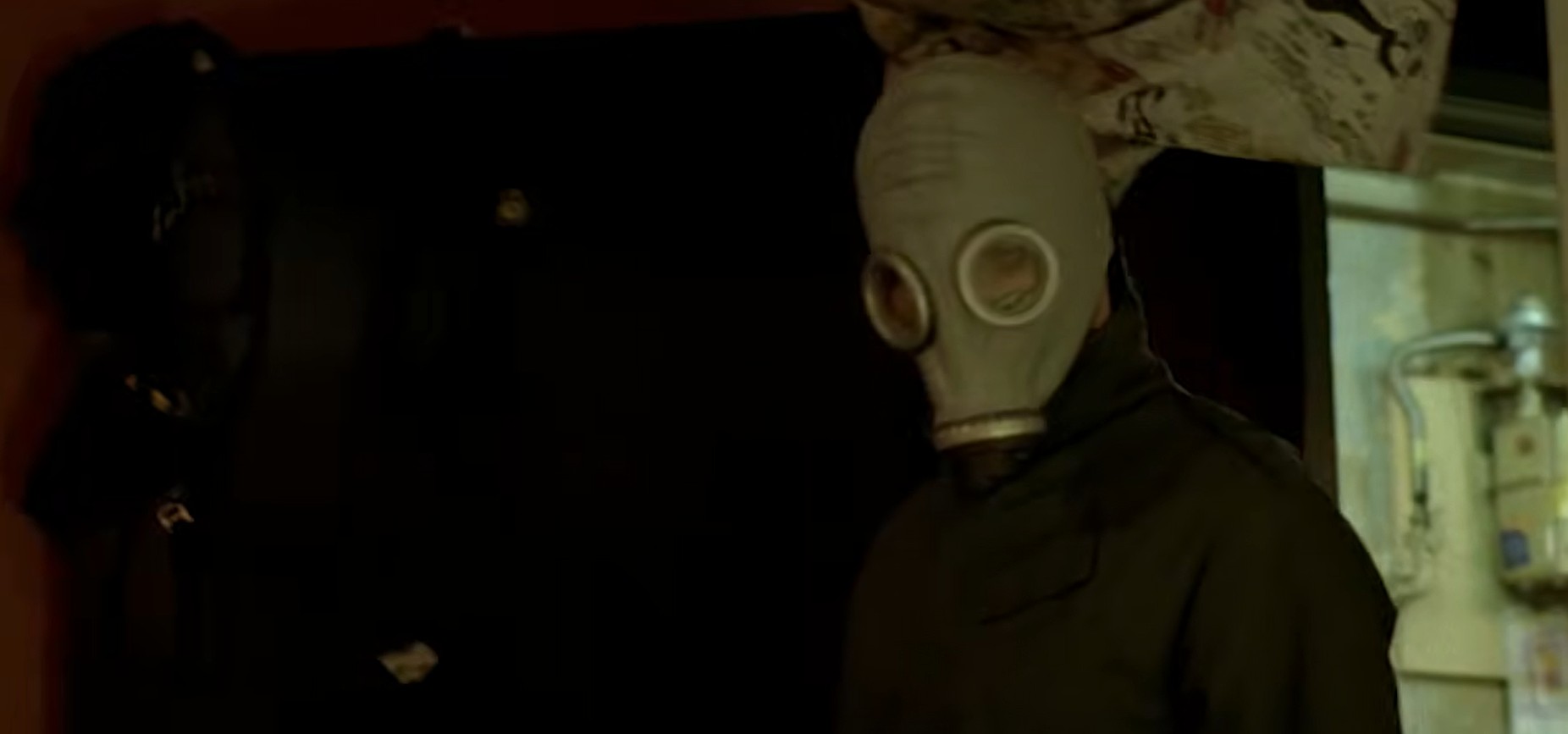
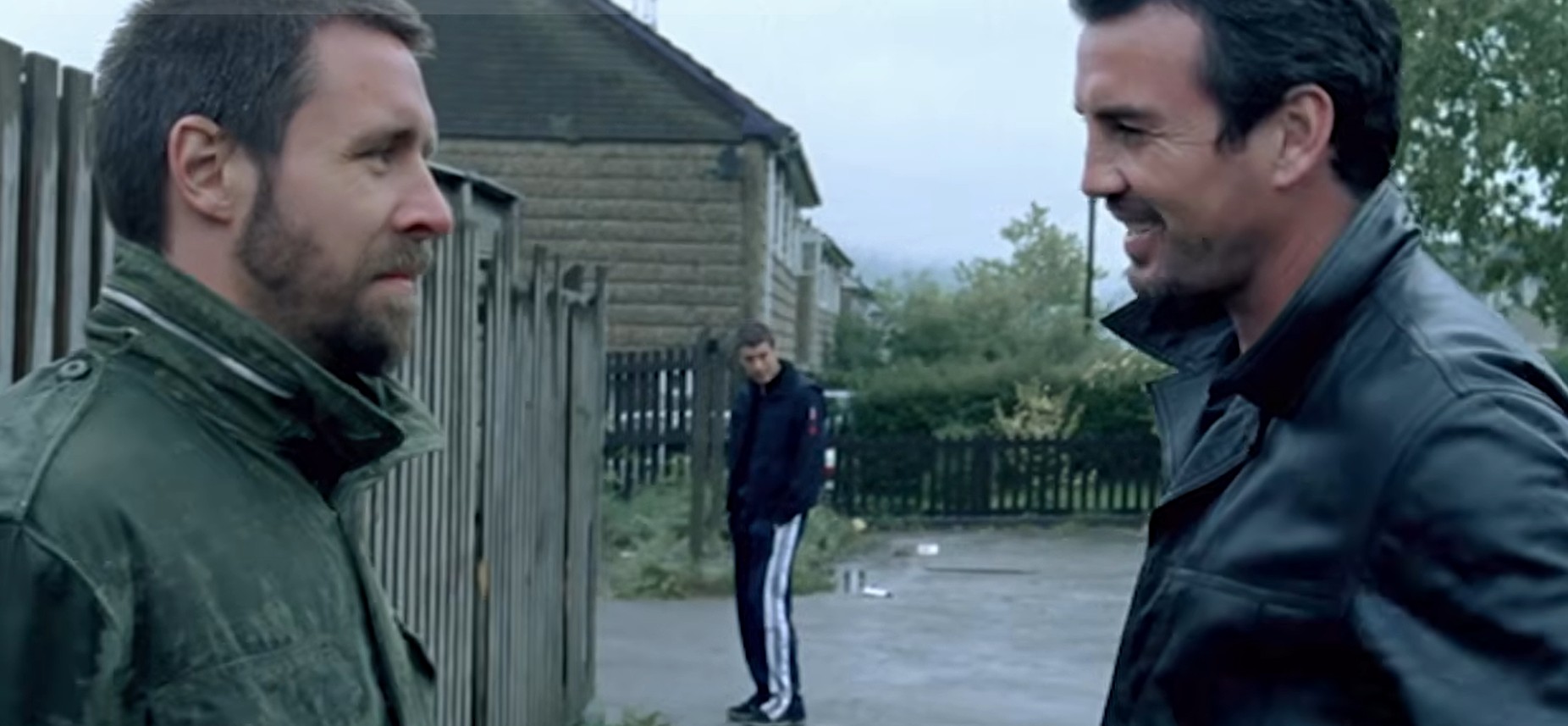
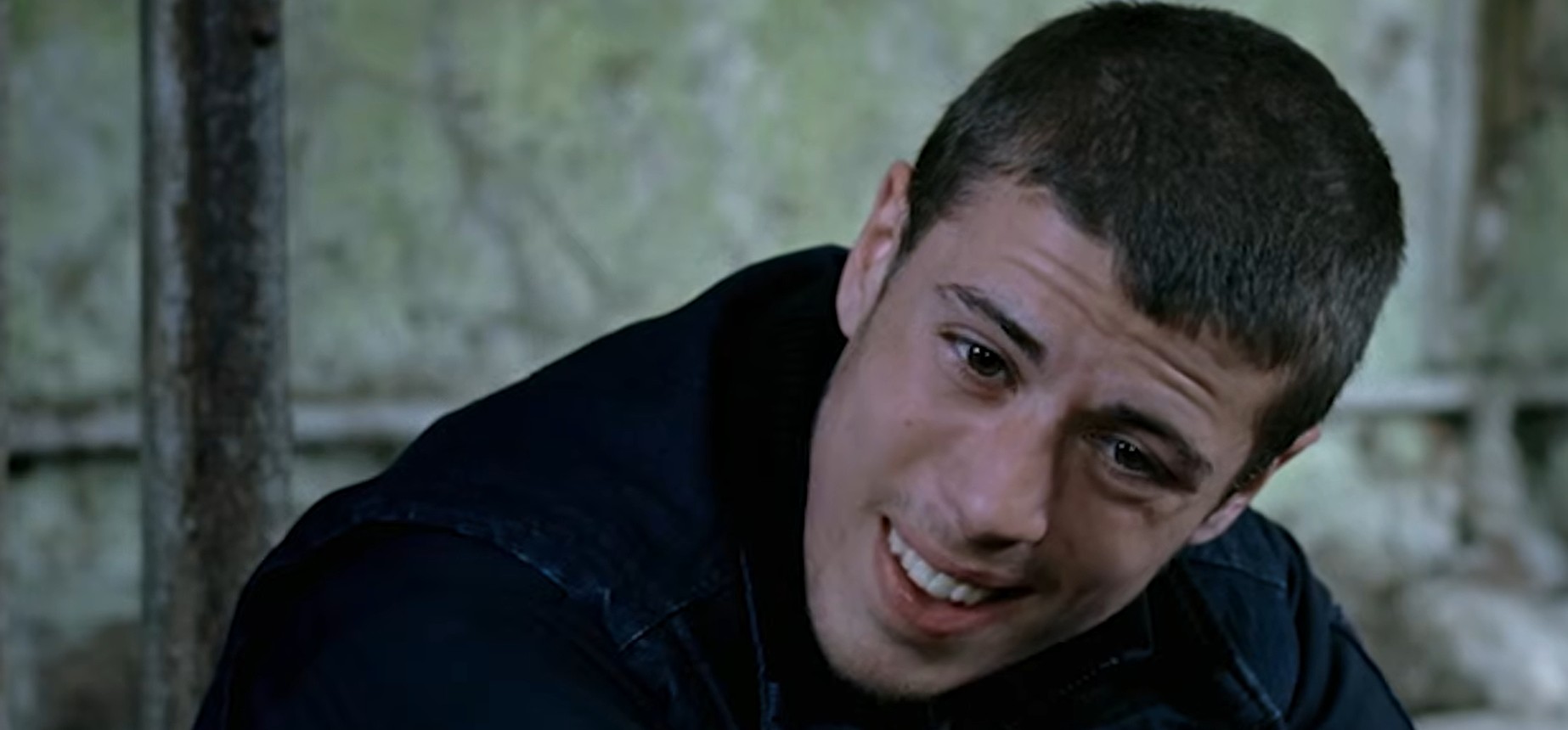
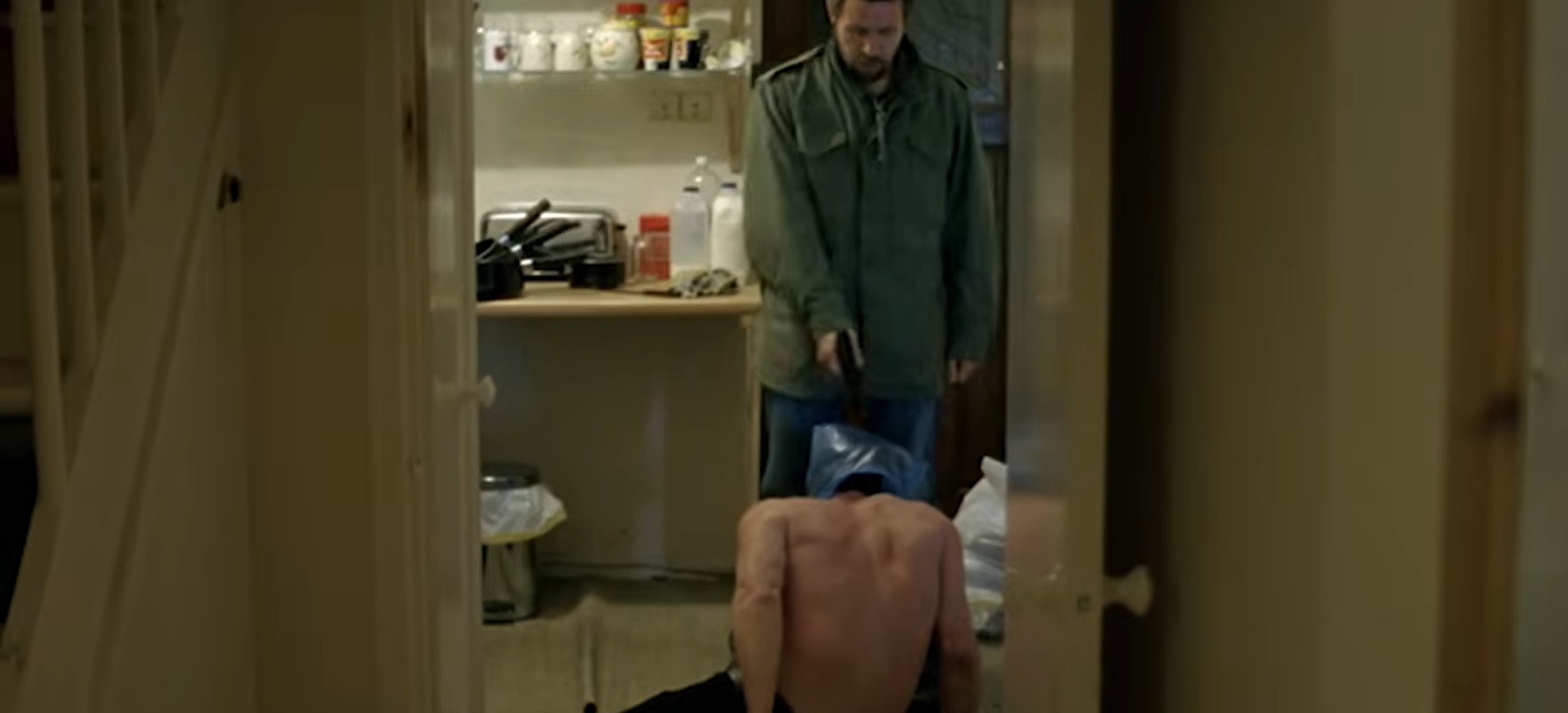
In the Texas smalltown of Melvin Falls, a dark history engulfs the Kell family.  Edith Kell and her two children have lived in ostracized notoriety for years amongst their neighbors as Edith’s husband, obsessed with restoring a suddently inherited house immersed in haunted opine, walked into the town crowded bar and started violently killing patrons before being shot dead by the local sheriff.  Years later, Edith’s son Jacob is now a quiet, large, and lumbering young man with a death stare that’s akin to looking into the abyss, but Jacob’s underlining rage and psychopathic tendencies are comforted by his younger sister, Sissy, when tensions rise between his mother and her boyfriend, the abusive town drunk Otis.  When Otis inadvertently kills Sissy, Jacob’s bloody rampage is unleashed and the townspeople, led by a capital punitive sheriff, form a posse to bring down the vengeful Jacob, if they even can, in another Kell family massacre.

IMDB.com

Larry Wade Carrell writes-and-directs the dysfunction family and rural community horror “Jacob,” released over a decade ago in 2012.  The film is Carrell’s debut solo directorial that earned the filmmaker best Indie Fantasy-Horror, Best Young Actress, and Best Music Score at the WorldFest Houston before embarking into more recent horror of the last decade with “She Rises,” “Girl Next,” and “The Quantum Devil” that run the subgenre gamut with supernatural terror, trafficking abductions, and evil on a whole other plane of existence.  Carrell’s humble backwoods basket case thriller has broad stroke inklings of a supernatural catalyst.  Filmed in and around Richmond, Texas, “Jacob” is the last feature from Odyssee Pictures and the first for Javaline 98 Productions, produced on a low budget by Carrell, Odyssee Picture’s Stacy Davidson and Jeremy Sumrall (“Domain of the Damned,” “Sweatshop”), William B. Davis, Catherine and Frederick Rushford, James Martinelli, and Chuck Norfolk (“Conjoined”).

IMDB.com

Like most indie features, multiple hats are being worn in front of and behind the camera.  Not only does director Larry Wade Carrell write the script, he also dons the twin brother roles of drunkard abuser Otis and the gentile deputy Billy.  Edited so the two characters are never fully faced in a scene together, Carrell manages to pull off contrast personalities by portraying, essentially, the epitome of bad versus good with the no-good delinquent and intoxicated aggressor Otis up against the mild-mannered solicitous nature of Billy, a deputy.  While Carrell may be the core of the story playing two characters, he’s written a narrative that has to battle out against the titular character Jacob, played by Dylan Horne, and the venerated genre name of Michael Biehn (“Terminator”), in what can be considered as the worst impersonation of a whoopie-exclaiming Podunk, literally with the character yelling whoopie when learning of inheriting a house.  Aside from Biehn’s cringy performance, the acting is generally positive and compelling.  Carrell goes beyond the bar in melodramatics but manages to keep grounded by much of dynamic interactions supplied by scrupulous actors with Krystn Caldwell (“Psychic Experiment”) as Edith Kell, the staying in victim of abuse, Leo D. Wheeler (“Domain of the Damned”) as the manbun sheriff with a firm but gentle approach, and Grace Powell (“Hell of a Night”) as Jacob’s soothing little sister Sissy.  Horne, in the Jacob role, is voiceless throughout but imparts Jacob’s ogre-esque killer from inside out but is still overshadowed by Carrell’s double-edge role that takes away from his menancing run through the simpleminded townsfolk.   Dustin Lane (“The Darq’), Travis Hester, Sandy Ray (“Hairmetal Shotgun Zombie Massacre: The Movie”), Shane Stewart, Karen Schlag (“Domain of the Dead”), Nick W. Nicholson (“Pickaxe”), and Deke Garner (“The Void”) rounds out the “Jacob” cast.

IMDB.com

“Jacob” is one of those horror-thrillers that wears the trope suit of a large, quiet, countryside hulk with little intelligence but makes up for with strength and goes on a killing spree when a cataclysmic moment, usually spurred by external elements like peer bullying or the death of significant person, in this case the death of his sister, Sissy, breaks Jacob’s dammed violent tendencies and what ensues is a deluge of body mangling carnage in a big ole heap of misunderstanding as the Melvin Falls residents believe, with prior judgement and without a doubt, Jacob finally snapped and murdered his sweet baby sister, though far from the truth.  However, the reason for Jacob’s turn to madness is a little more complex than just dead sister vindictiveness.  In this case, less is more would have suited Carrell’s film more aptly as Carrell adds in a supernatural element with Jacob’s father inheriting a supposed haunted house.  As the father attends to the house rehab, a montage of him finding a book and able to read and be beguiled by the demon scripture inside causes him to slowly become obsessed and insane while fixing their newfound home which then leads to the bar massacre Jacob witnesses.  Jacob also comes in contact with his father’s spilled blood that night and that presumably passes whatever supernatural forces the father was affected by to his son, an evident metaphorical theme of hereditary genes gone wild through blood lineage that’s also demonstrated within Sissy who mentions hearing the house’s callings to her but she was not tainted by the touch of her father’s blood with her being inside mother’s womb. There’s a lot to digest and decipher but not properly arranged or the demonic mainspring is sorely underplayed to really nail the occult supernaturality on its head.

The Unrated, Director’s Cut of Larry Wade Carrell’s “Jacob” lands onto Blu-ray from Carrell’s current release company Crazed House and distributor MVDVisual.  The AVC encoded, 1080p, BD50 and presented in a widescreen 1.78:1 aspect ratio.  Picture quality is a bit all over the place and its likely not from the compression codec but rather stylistic choices for flashbacks for a narrative that goes into a flashback while already inside a flashback, creating multiple tonal layers to distinguish the vying eras.    Carrell really gets his hands into a sepia and desaturated grading that sucks the color out in a fit leaning toward overexposure taking with it much of the finer detail points.  Combined with digital stock, the gritty tone Carrell goes for often loses the battle to an ultra-sheen effect.  The English LPCM 5.1 surround sound plays to the rigors of the dialogue.  The loquacious script, delivered on point by the actors, goes unobstructed with a prominent dialogue layer underscored by its Iain Kelso score that evokes a slightly better grittier tone Carrell attempts to achieve with the film’s appearance.  Range is limited to just what’s in frame and within the nucleus bubble and that often goes together with eliminating much of the depth when all the centered focus objects are making all the noise in the room and scene, diegetic speaking.  English subtitles are available.  The director’s cut has special features that include two commentaries with one including writer-director Larry Wade Carrell and the other including Stacy Davidson, a behind-the-scenes documentary The Journey of Jacob that has retrospective cast and crew interviews as well as raw footage and film footage of the film’s from alpha to omega, an interview at the “Jacob” Canadian premiere hosted by Yell Magazine, actors screen test, extended and deleted scenes with Carrell commentary, a storyboard comparison with Carrell commentary, and the theatrical trailer.  There is no stinger scene post credit.  The cover art screams low-budget and photoshop but is an adequate shoe that fits the rural horror and lumbering maniac concept.  “Jacob” comes in a standard Blu-ray Amaray for its region free, 92-minute feature presentation.

Last Rites: “Jacob’s” a good first effort in the big chair for filmmaker Larry Wade Carrell with solid acting, interesting characters, and palpable bloodshed. Where the weaknesses lie is with the story’s inability to connect the demonic, haunted house, ghost story, or whatever supernatural force may be to the essence of backwater calamity and dysfunctional family lineage.

“Jacob’s” EVIL is Coming to Blu-ray! Order Here!