Hide Your Children! EVIL Comes For Them! “Achoura” reviewed! (Dark Star Pictures / Digital Screener)


“Achoura” now available on Prime Video!

Broken by witnessing the kidnapping of their friend Samir, Ali, Nadia, and Stephen’s lives are plagued by the past and turmoiled in the present as adults.  When Samir is miraculously discovered alive, a realization of truth begins to flood back into their memories as the kidnapper’s intentions were to stop a malicious, child-devouring entity by stowing the demon away in Samir’s body as an encapsulating prison.   The demon, known as the Bougatate, uses the joyous celebration of the Muslim holiday Ashura to snack on beguiled youth and is now free to feed upon ripe, happy children once again, especially Ali and Nadia’s young son.  The four friends must band together and seek to destroy Bougatate on his own turf, a decrepit rural French house engulfed in nightmarish lore. 

Nothing says originality and mind-broadening concepts more than when international filmmakers weave the fabric of their folklore, the sequin of traditions, and the raw materials of cultural customs into their fabrication of creativity.  Director and co-writer Talala Selhami takes us on that very journey through Morocco with a tale based off the concepts of a shifty Djinn-like urban legend terrorizing children of the Ashura celebration with a shadowy, jaw-opening and jowl-extending monster devouring children like a snake in this 2018 released supernatural, child-be-vigilant thriller, “Achoura.”  Selhami’s sophomore film comes 8 years after releasing the cutthroat hiring practices of Corporation authority over the applying individual in “Mirages.”  The French-born director helms a script penned by Jawad Loahlou and David Villemin showcasing the horrors of loss, sometimes forgotten, amongst the Arab-Berber population.  The half-crescent coast of Casablanca becomes the main shooting location for the Moroccan-French co-production under Moon & Deal Films, Overlook Films, Orange Studio, and Black Lab VFX produced by Selhami and Lamia Chraibi with executive producers in Caroline Piras (“Among the Living”) and Rachida Saadi.

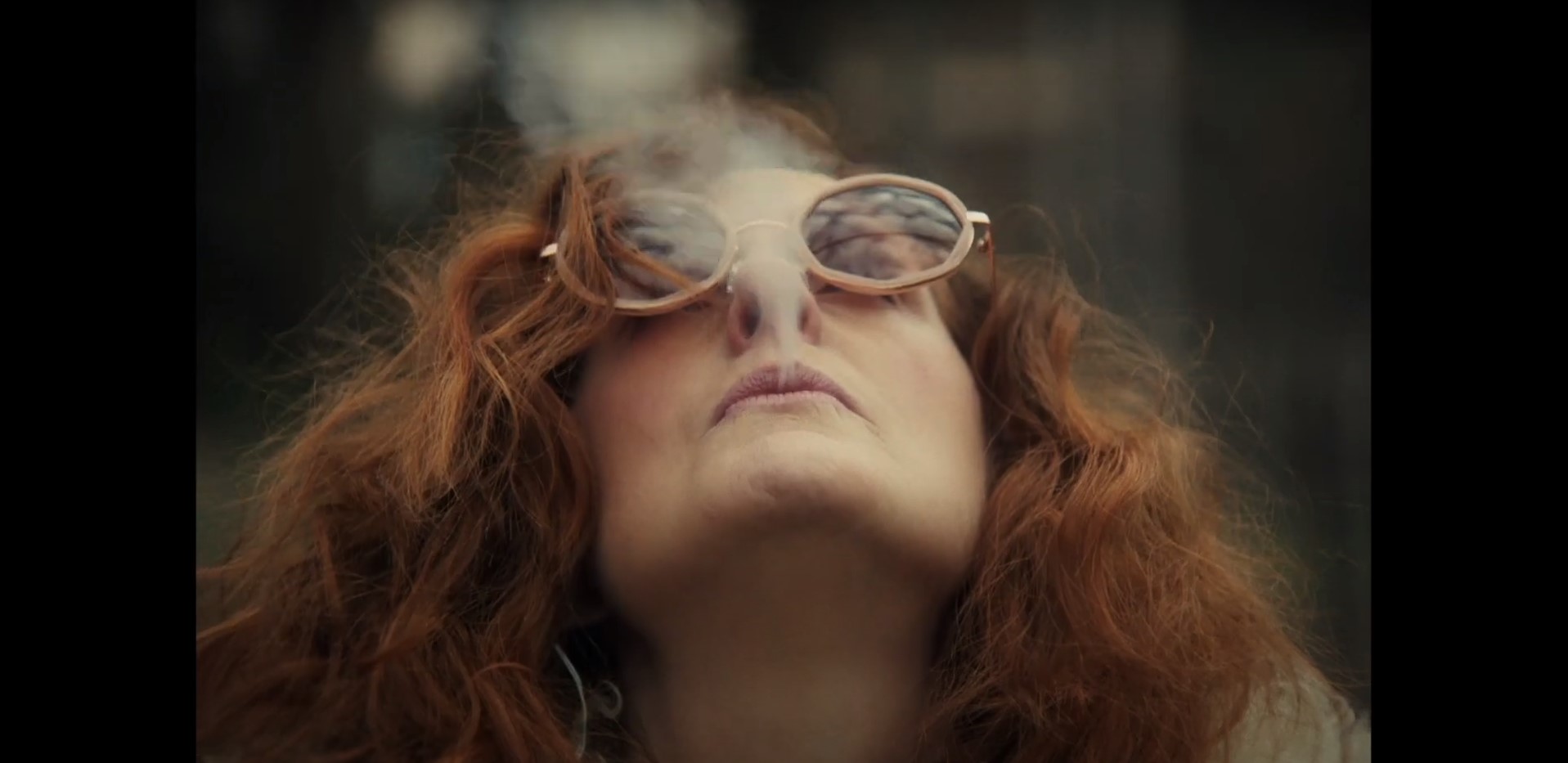
“Achoura” has been described as the Moroccan “IT” where four childhood friends reunite to face a preadolescent predator known as Bougatate.  That analogical sentiment is extremely on-point to the detriment of “Achoura’s” North American release; I, myself, before reading any other external comments, had thought “Achoura’s” story walked the same line as the 2017 remake and strongly resembled Pennywise in intentions and, in some ways, specific ways he – or rather it – tricks and consumes children.  The four friends are also similar to certain characters in the Loser Club, but the Sofiia Manousha is the least affected by her past, reimagining what happened to her friend, Samir (Omar Lotfi), as nothing more than being an abducted whim of a pervert’s fantasy.  Samir is the younger brother to Nadia’s estranged husband Ali (Younes Bouab), a brooding, sleepless detective ceaselessly on his brother’s case as he dives deep into old investigative interview footage and cigarette packs he continuously bites the filter off of each cancel stick.  The pain Ali bottles up is complete poison wonderfully conveyed as well as the interpretation of trauma from the last friend of four in painter, Stephen or Stéphane as the character is credited.  Played by the Spanish born Iván González, whose worked on a pair of intense thrillers – “The Divide” and “The Crucifixion” with director Xavier Gens, Stephen singles himself the only person that remembers what actually happens as González glosses the artist with starry eyes and a verbally shaken recollection of monstrous images.  The one performance thought to be the weakest link was Omar Lotfi’s Samir, an imprisoned man-child imprisoning a demon with him, and Lotfi’s infantility as a grown man freed from confinement and a demon crossed too intractable goofiness, leading the Samir away from being a sympathetic character into more of a cartoon of one.  The cast is relatively comprised of the four friends with minor parts here and there in roles from Mohamed Wahib Abkari, Jade Beloued, Abdellah El Yousfi, Celine Hugo, Gabriel Fracola, Mohamed Choubi, Noé Lahlou, and Moussa Maaskri as The Guardian incarcerating Bougetate inside Samir, who we assume is the same boy from the film’s prologue setup but never actually verified.

While “Achoura” draws many comparisons to “IT,” Selhami sepulchers itself into an overwrought, yet hugely overworked subgenre of shrouded gangly presences lurking from the darkest corners of the room to bring antagonism toward children.  “The Babadook” comes to mind with the manifestation of grief descending upon a single mother and her child.  Same theme can be extracted from “Achoura’s” grief and trauma over the loss of their friend and how they represent the condition in different ways:  Nadia chooses to reimagine the event to a safer, saner memory, Stephen expresses his horror through painting, and Ali’s guilt drives him to unhealthy habits in looking for his brother.  The Bougatate is akin to a pedophile robbing children of their innocence, a motif that extends from the very beginning of the story with a preteen boy expressing his affection for a girl his own age before Bougatate seizes upon them.  Their innocent and charming clandestine affair is kept from her betrothed husband, who’s creepily decades older, in a mind-boggling and unpleasant idea of children arranged marriages that sets the misguided tone for a sordid underlayer that sparks Bougatate’s resurgence into the world.   Though I like the tone of the film albeit a vague carbon copy of others like it, what I find to be tone deaf is the often clunky special effects surrounding the entity’s polished look.  One attribute belonging to Bougatate is the legion of flies that constitute his form in what has diminutively become just a bunch of nano byte specks moving in menacing unison and swallowing (or being swallowed) anything in their path. The non-linear format that double culminates the unravelling in present and in flashback past retains a sustainable 90-mystery.

One of the last horror films to be released in 2021, “Achoura” came to digital platforms and DVD home video this past December from Dark Star Pictures, the same company who released the phenomenal Veracruz folklore and Bruha horror, “The Old Ways,” and the Mickey Reece’s perfectly subtle nod to vampires and depression in “Climate of the Hunter.” Since a digital screener was provided, commenting on the DVD audio and video quality is a no-go, but the Mathieu De Montgrand offers harsh hard lit scenes vast in depth, a breadth of landscape between the countryside of France and Casablanca shoreline, and excellent action and tracking shots to instill the appearance of a big-time movie. Montgrand is definitely not just a point and shoot cinematographer as he can build suspense purely on his angles along with Julien Foure’s editing of the flashback montage that tells a bigger side of the four friends’ history yet to be revealed. “Achoura’s” bleak analogy of children’s innocence being consumed by the complexities of adulthood problems understands the unstoppable crossbreeding crisis of blending youthful naivety with seasoned reality to the point of no return that one day all unspoiled exuberance will simply be eaten into oblivion.
“Achoura” now available on Prime Video!

Dinner Parties and the Special Guest is EVIL. “Climate of the Hunter” reviewed! (Dark Star Pictures / Blu-ray)

MIckey Reece’s “Climate of the Hunter” Now Available on Amazon.com

Sisters Alma and Elizabeth meetup at their childhood cabin for a quick getaway.  Their individual neurosis induces the incessant minor league friction between them but never causing any real strain until an old friend, returning from abroad, arrives at his neighboring cabin alone.  With his wife suddenly committed to a mental institute, the well cultured and practically single Wesley finds himself in the company of the desirous Alma and Elizabeth every night for dinner as they vie for his attention and affection.  When Alma crosses paths with Wesley’s strange and curious vibes, they compound upon her baseline suspicion of Wesley possibly being a vampire.  Elizabeth finds herself the victor of Wesley’s adoring warmth, leaving Alma to ramp up her scrutiny into their longtime acquaintance before her sister falls victim to his deadly charm.

Arthouse meets grindhouse in this Mickey Reece written and directed mystery thriller “Climate of the Hunter.”  Co-written alongside frequent collaborating screenwriter John Selvidge, the 2019 take on subtle vampiric ambiguity is punctured, tapped, and drained from the same blood rich veins as Robert Bierman’s “Vampire’s Kiss,” starring Nicholas Cage, and George Romero’s “Martin,” but instead of a protagonist believing in the transference into a bloodsucking creature of the night, “Climate of the Hunter” steps back furthering by approaching with a more elusive and Lynchian-like 3rd party perspective as the story focuses prominently the sisters’ thoughts and actions while Wesley does what Wesley does without self-doubt or obvious distinction.  Shot during the winter months of the diffusely populated woodland area of Welling, Oklahoma, “Climate of the Hunter” is the sole released presentation of Mikey Bill Films and the more seasoned VisionChaos Productions (“The Field Guide to Evil”) under executive producers Uwe R. Feuersenger and Sasha Drews in collaboration with production companies of Adam Hendricks and Greg Gilreath’s Divide/Conquer and Jacob Snovel’s Perm Machine Productions.

Diving into his best performance as an enigmatic rake with unpronounced intentions is “Minari” actor Ben Hall, who recently costarred as a crises of faith priest in Mickey Reece’s latest release, the comedy-horror drama, “Agnes.”   As the sophisticated wordsmith neighbor, Wesley commands every ounce of oxygen all in thanks to Hall’s elegant pacing of Wesley’s uttered mannerisms and inflections.  Hall is joined by fellow “Agnes” costar Mary Buss as the pining Elizabeth.  Elizabeth practically resents Alma’s seemingly historical persistent hold over Wesley’s affections and Buss bitterness, whether because of Wesley or because of Alma’s uncharacteristic behavior as of late, oozes into the stagnant folds of their relationship.  If you haven’t figured it out by now, “Climate of the Hunter” has an Oklahoma-centric and Mickey Reece’s staple go-to cast, which brings us to the other sister Alma played by Ginger Gilmartin who fits into that aforementioned niche category.  Alma is running from something that goes essentially unsaid that leads her to hide out in the family cabin and Gilmartin, as best as she can, shepherd’s that motivation without the better part of context.  Alma’s also dresses like a crazy cat lady, except she owns a dog, and so reading Alma’s state can be taxing to nail down in an arthouse film where nailing down anything in arthouse cinema is inherently taxing in itself.  The small cast rounds out intermittently with smaller roles that build upon Wesley’s vague nature beginning with a local friend to the sisters named BJ Beavers (producer Jacob Ryan Snovel).  Witnessing Wesley’s strange behavior but oblivious from his own strangeness, BJ becomes a confidant and a collaborator with Alma in revealing Wesley as a vampire.  Sheridan McMichael grows resentful toward his father as Wesley’s spiteful son Percy, Danielle Evon Ploeger seeks incompliancy from her mother Alma as her daughter Rose, and, in the more curious role, is Laurie Cummings (“It Lives Inside,” “Army of Frankensteins”) as Wesley mentally incapacitated wife who somehow manages to lose her wheelchair as it drops from the sky.  You’ll know what I’m talking about when you see it!

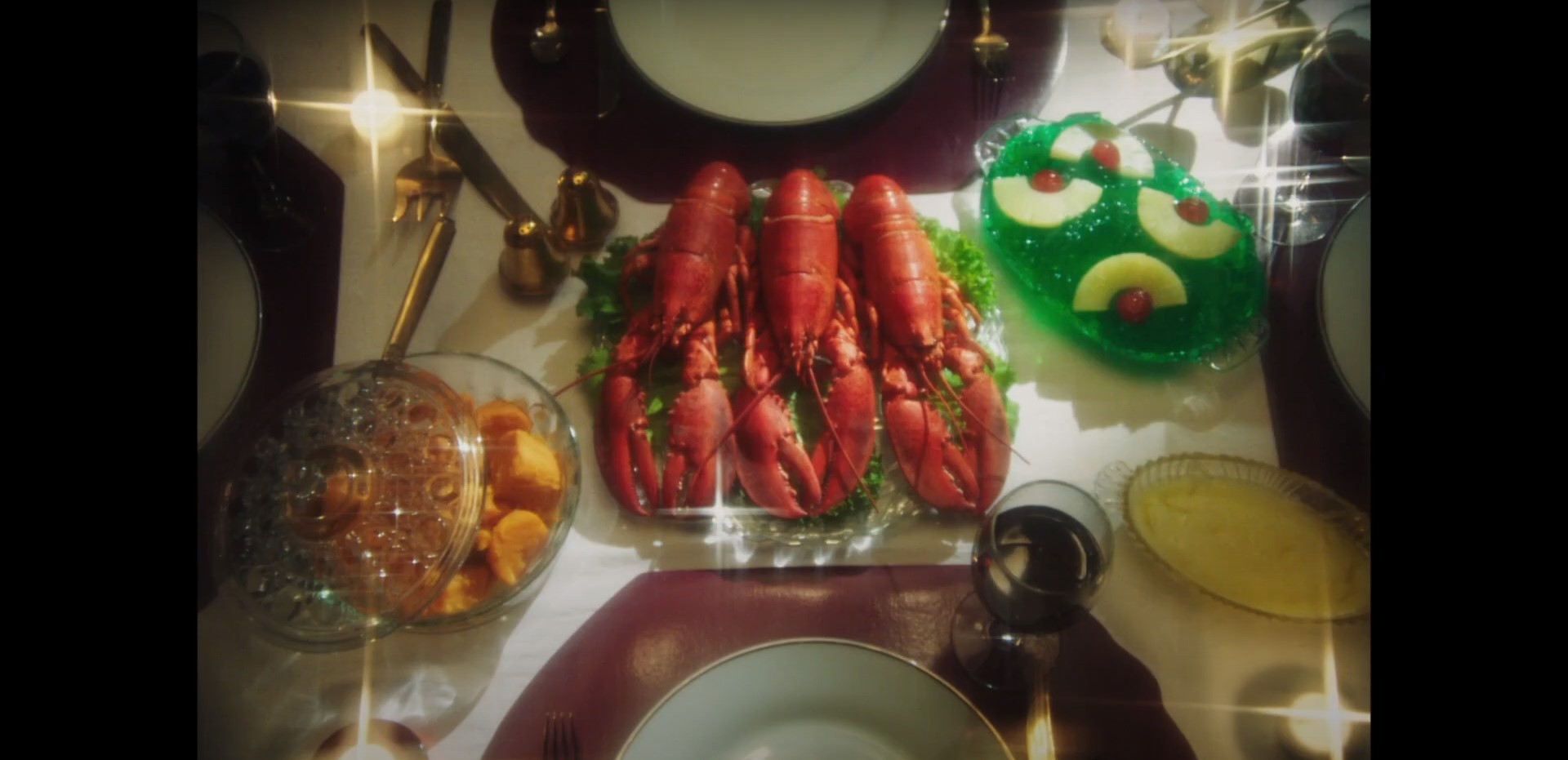
Having watched “Agnes” before diving into “Climate of the Hunter,” I mentally prepared myself for a breathy, long-winded, talking head film.   That readied mindset 100% gave me more clarity into Mickey Reece’s shadow narrative.  “Climate of the Hunter” is an uncharacteristic slow burn for the idiosyncratic grindhouse veneer.  With a 4:3 aspect ratio and a color reduction into a warm hue palette that glows, Reece insists on a design that usually offers loads of cheap thrills in action, sleaze, and gore, but the director’s story is toned down, subtle, and very much ear candy as opposed to a rush of visual adrenaline.  Instead, lucrative character building fizzes with tension as elements of the past and present unravel who’s who and what’s what before the climatic finale that suggests nothing was what it seemed to be.  Though prepped for profound exposition, the dialogue can still be boggling with a composition of Wesley’s personal anecdotes and philosophical quips and quotes.  As stated, Ben Hall is amazingly poised in this film, the unflinching star, rolling easily with Wesley’s gift of gab, persuasive magnetism, and maintaining an oblivious eye to an undercurrent of potential classical madness in Alma.  Between her recreational use of drugs and an ugly divorce, Alma has retreated into herself as well as her isolating cabin and when the spotlight isn’t on her, is her perception of Wesley really fantastical or is there actually something broken within her.  Reece explores a related theme of loneliness around the table with each principle character and how differently being lonely is digested and secreted through the pores of desperation.  Once aspect of Reece’s film that will puzzle viewers, and did puzzle me, is the narrated introduction of the food whenever there is a tabled conversation.  Since there already Portuguese titled chapters segmenting the story, a bit of a harp back to Wesley’s travels abroad, announcing what the character are dinning on seemed virtually unnecessary other than the idea that food brings people together in which it then fits the narrative of loneliness. 

“Climate of the Hunter” is quintessential Mickey Reece melodrama tinged with droplets of horror and subtle dark comedy.  Dark Star Pictures releases the film onto region free, dual layer Blu-ray home video in full 1080p High Definition.  Reece and director of photography Samuel Calvin aim for a vintage but not superannuated look for “Climate of the Hunter,” in which follows suit with the story set circa 1970s, with a 4:3 image on a pillarbox 16X9 display, relying also heavily on a softer lens to produce a dreamlike and luminescent effect but not overdoing it.    The release comes with two audio options – an English language 5.1 DTS-HD Master Audio and, if one wants to fully immerse themselves in the era, a stereo 2.0.  Dialogue is crisp and clean as it is refined as expected. Levels are balanced, range and depth are acceptable, but with this sort of wordy production, switching between the 5.1 and the 2.0 only discern subtle differences. Optional English SDH subtitles are available. The not rated, 82-minute-long film has special features that include another full-length Mickey Reece entitled “Strike, Dear Mistress, and Cure His Heart” as well as a short film “Belle Ile,” deleted scenes, production designer Kaitlyn Shelby’s preparations of the food presented in the film Recipes from the Kitchen of Alma Summers, and production stills and behind-the-scenes gallery. “Climate of the Hunter” deserves at least a once over and, in my opinion, a second viewing to become fully submersed in Mickey Reece’s dialogue rich and nebulous style.

MIckey Reece’s “Climate of the Hunter” Now Available on Amazon.com