An EVIL Drug That Can Cure Your Crabs and Boil Your Insides! “Private Blue” (SRS Cinema / DVD)

“Private Blue” is on the case! DVD Now Available.

A new drug is on the streets of Edmonton, Alberta.  Call Shrink, the drug can produce a massive high and contains a high level of antivirals that can cure any sexually transmitted disease, but there’s a side effect.  If taken in a single excess amount, the drug can boil your insides, leaving nothing left.  The Edmonton police are stuck on the case with no leads and to make progress on the fast-moving drug epidemic that has now claimed the life of a daughter of a prominent sports booky, the department hires Tony Blue, an ex-cop now private investigator who can use unconventional means outside the scope of police authority to get the needed information, such as where Shrink is being peddled and produced.  Working down the vine, Blue runs through the hierarchy from street pushers to the manufacturing kingpin, a brusque and brutish strip club owner named Wanda who will stop at nothing and will not let anyone get in her way to fill the streets with her deadly, venereal disease-curing drug.
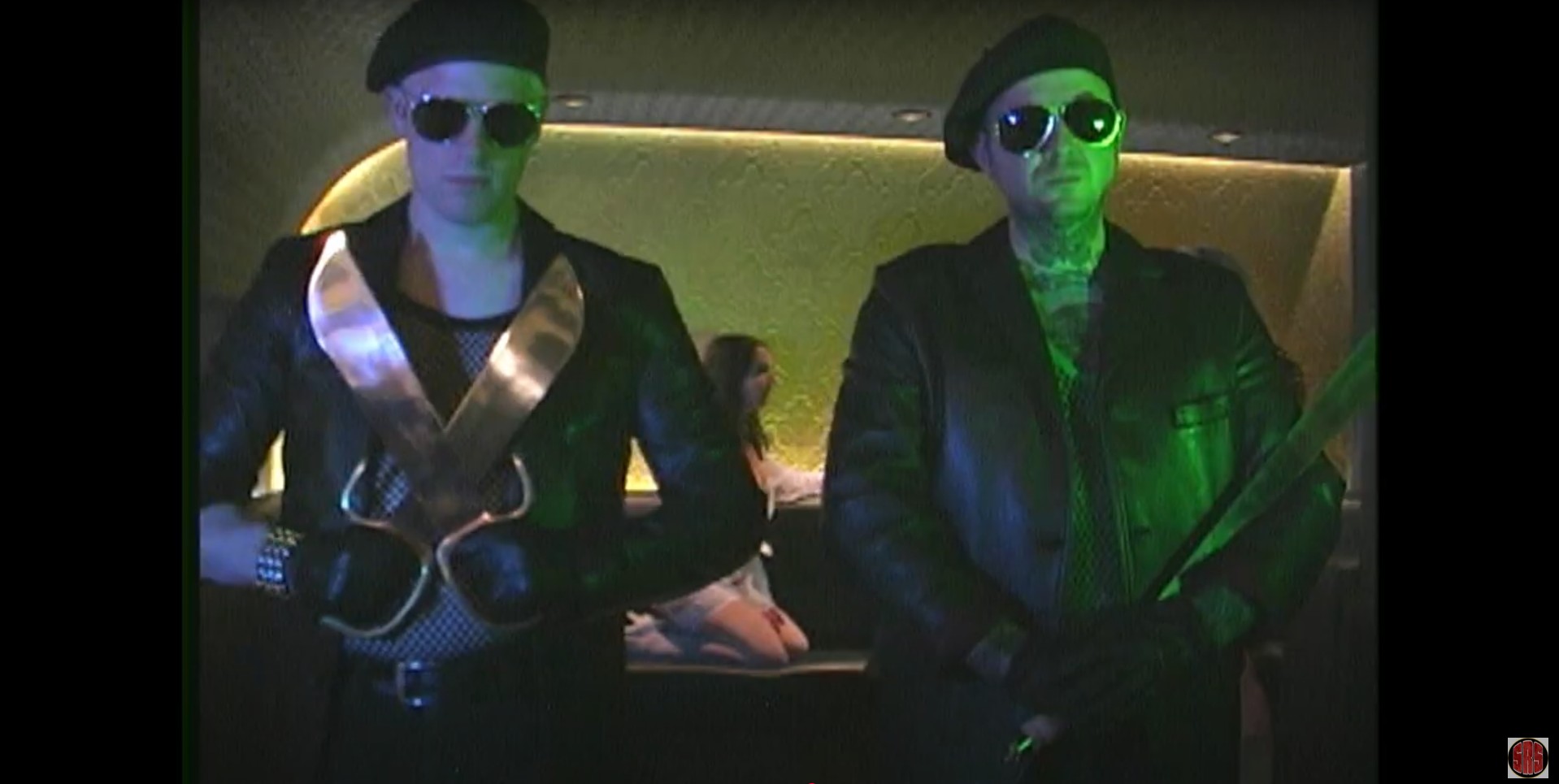
A comedic spin on the 1980’s lone wolf cop-thriller, “Private Blue” immerses itself into every trope manageable inside its indie budget with business in the front, party in the back mullets, bad guy chases and beatdowns, and a smoke-filled and color gel-brightened assortment of atmospheres that propagates the cop film neo noir aspects.  The accountable party behind this crass cop caper are a pair of brothers, Devin and Robert Burkosky, based in Edmonton, Alberta, Canada.  The brothers produce, write, direct, and one-half star in what is their sophomore feature film behind the 2018 comedy-horror “Load Shark Massacre” that’s about a murderous loan shark who bites off more than he can chew.  Continuing the trend of drugs, violence, and psychotronic absurdities, “Private Blue” is an extension of their creative effort into crime action with a horror edge but with this time, they add a science-fiction element straight out of the boondocks of left field.   The feature is produced under the Burkosky company, Beechmont Entertainment. 
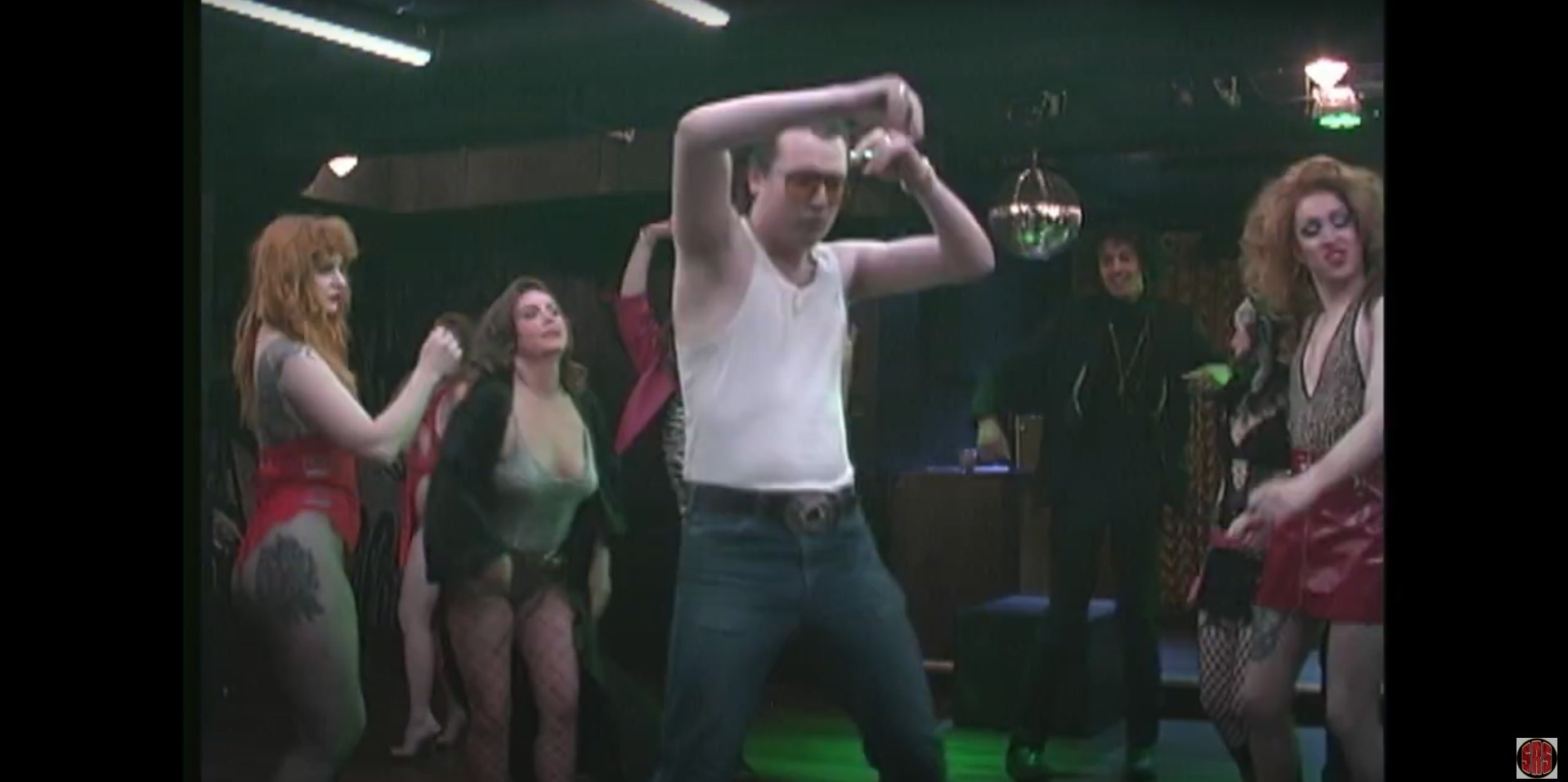
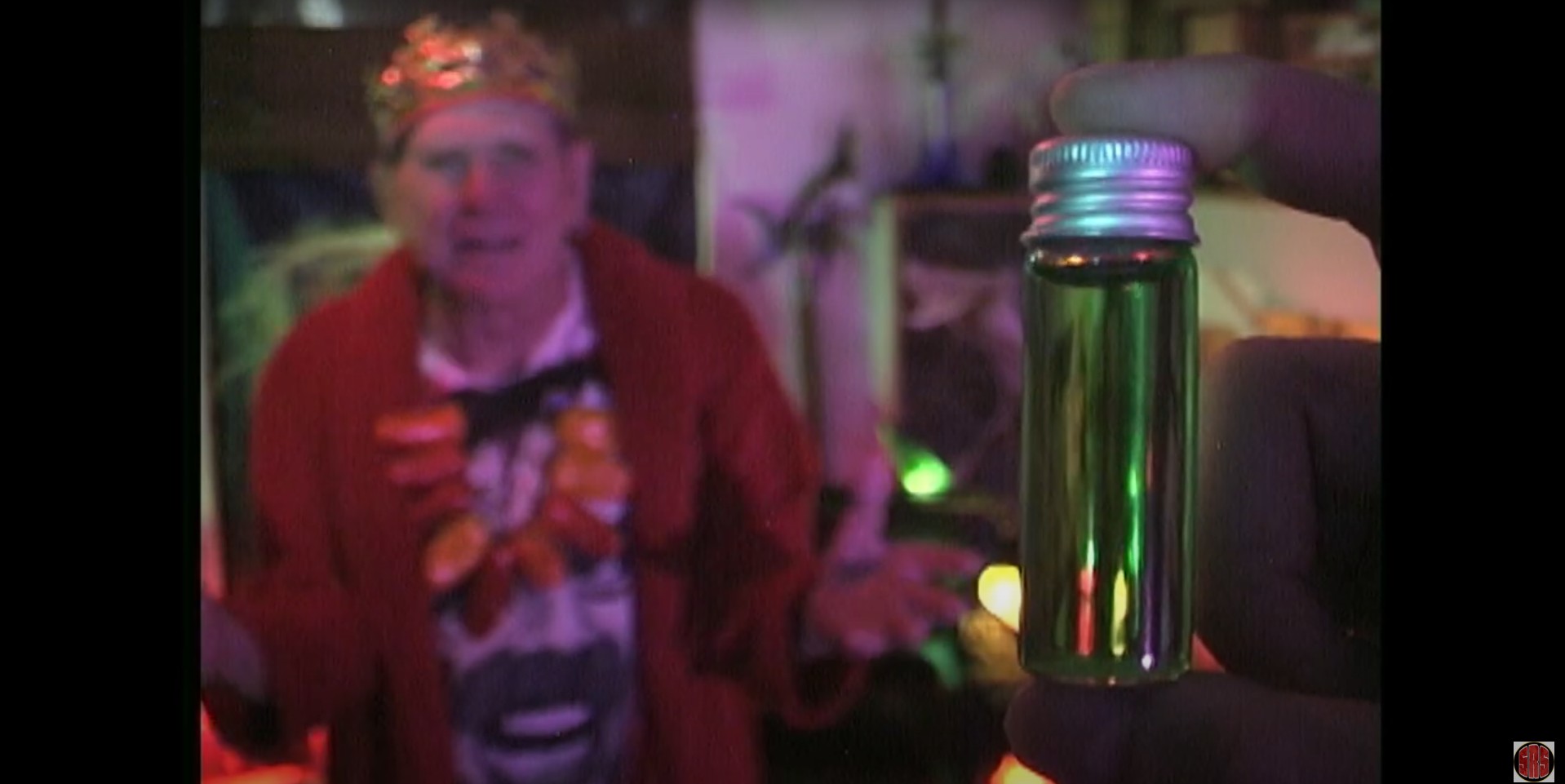
Robert Burkosky jumps into the titular role of “Private Blue” as a wisecracking and arrogant Tony Blue, an expelled detective because of his purloining of the evidence locker for his own needs, but Blue is a great chase-down detective, if not the best with his quick wit and adept situational skillset that makes him valuable.  Burkosky hams up Blue’s cocky attitude and Miami Vice-lite dress with linen blazer overtop a white tank top, sporting aviator glasses, and flaunting a greasy-looking mullet to accentuate the arrogance and confidence.  Opposite Burkosky is Moira MacKinnon as the larger-than-life adult industry head honcho and criminal mastermind Wanda who’s behind the manufacturing and distribution of the Shrink drug.  Having had a role in the Burkosky’s debut feature “Loan Shark Massacre” and was recently in their last film, the 2025 “Heat Score” that’s currently in post-production, MacKinnon’s a Burkosky go-to regular and her performance in “Private Blue” is perhaps my personal favorite with the Rita from “Power Rangers” voice and cackle and a maniacally expressed face as she bulldozes people into what she wants, no matter friend or foe.  “Private Blue’s” colorful cast doesn’t end there as there’s plenty of outrageous personalizes that are typical of a Burkosky brothers production, such as Tommy Grimes in drag playing the role of a female assigned stripper named Candy, Wolfgang Johnson as a low-level, guitar-playing, drug pusher, and Rod Wolfe as an older, mid-level dealer who wears various peppers around his neck like a necklace.  Dean Lonsdale, Ian Rowley, Dave Qurik, Kaley Leblanc, Jesse Hicks, Arielle McCuaig, Christian Stahl, and Brandi Strauss fill out the cast.

For what the Burkosky’s try to achieve in churning out “Private Blue” as a throwback of hard-boiled sleuth work, there’s success is select areas.  One of those successful portions is the phenomenally pastiche 80’s soundtrack by Robert Burkosky and the general aesthetic of the said decade with smoke-filled room illuminated by the gel lighting.  Wardrobing occasionally lands in the same era but there’s really no set point in time the story takes place but rather a mishmash of decades.  Devin and Robert, the latter quickly establishing himself as nearly a one-man show for the entire production, are competent editors that make “Private Blue” an easily digestible narrative.  What’s not easily digestible are the jokes that, for the most part, land flat.  The colorful characters do indeed entertain in their ineloquence and idiosyncrasies, but the script lacks that gut punch humor.  Instead, the script is riddled with fart gags, which personally I’m not a terrible fan of its audiological stink, and the jokes continue periodically throughout in every, or every other, scene of just randomized farting when a character sits, squats, or actually flatulates purposefully as a way of gag-inducing defense.  While most jokes don’t jive in jest, there are a handful that do, such as Tommy Grimes convincing our sexuality as dolled up sex worker Candy or Robert Burkosky’s lengthy slow-motion dance scene with a bunch of strippers at Wanda’s club.  Hilarity, as well as spurts of graphic violence, continue through whenever the story perversely changes course and mostly for the better. 
“Private Blue” is on the case.  Or, rather, is inside the case of an DVD Amaray with the release from ultra-indie underground label SRS Cinema.  The MPEG-2 encoded, standard definition 420p, DVD-R with the purple underbelly has a less-than-desired picture quality that’s par for the course with SRS Cinema.  Yet, all the sub-def eyesores are not terribly off-putting thanks to some decent camera equipment and know-how by the Burkoskys.  The palatable image has a flat grading only targeting contrast during it gel-lit scenes and the film is presented in 1.33:1 full screen that’s shot-on-videotape with uniform moments of interlacing.  Imaging produced is a result of a macro lens, encompassing even less within the standard framing and providing a flatter field that loses a bit of the depth.  The LPCM stereo mix that offers an ample dialogue track and range of audio layers that create a fair separation.  Robert Burkosky’s soundtrack epitomizes the balance between the layers when amplifying to make it the star of the scene.  Gun shots, thrown punches, and, even to an extent, the fart gags find the relative right level within a campy mix.  English captioning is available on this DVD.  Special features include a paralleling director’s commentary track, a blooper and outtake reel, the film’s trailer, and other SRS Cinema trailers.  SRS Cinema’s physical copy is standard fair but does showcase a blue-hued illustrative artwork that’s appealing and accurate with the same, but cropped, design pressed on the disc.  The 96-minute film comes not rated and is region free.

Last Rites: A debased tribute to the hard-boiled 80’s cop actioner, The Burkosky Brothers “Private Blue” has potential to be a great accolade of the subgenre as well as be funny but falls short with an overuse of pass gas gags and its inability to surpass that tenor.

“Private Blue” is on the case! DVD Now Available.

EVIL Exploits Your Fears in “Phobic” reviewed! (Samuel Goldwyn Films / Digital Screener)

The most vulnerable are being chained to chairs and tortured by the terrifying weight of their own extreme phobias until their bodies can no longer take the stress, fatally collapsing where they sit due to heart failure.  Homicide detective Riley Sanders notices frightening similarities to her own abduction months earlier where the kidnapper tortures the stunned detective with an intense light on repeater.   Refusing to believe her abduction and the case she’s investigating are linked, her partner, Paul Carr, continues to insist that her traumatic experience might be key to solving the homicides and finding the killer.  As the detectives dig deeper into a radical psychiatrist’s phobia program whose patients are showing up the killer’s victim list, they find themselves at the center of a disturbing experiment that aims unleash an inner, and only ever theorized, phenomenal ability.

Bryce Clark’s psychological cop thriller, “Phobic,” tales an irregular and irrational serial killer objective derivative of David Fincher’s “Seven” twisted quietly with elements from the superhero universe. Darkly toned exploitation of forcing the worst of the worst fears upon the those already cripple down by their distinct aversion, the 2017 shot “Phobic” marks the return of a Clark written and directed full length feature since the filmmaker’s 2012 debut in both categories with a romantic-comedy starring Mischa Barton.  Both polar opposite films were shot on location in Salt Lake City, Utah, Clark’s residential city, surrounded by picturesque ice capped mountains overlooking the illuminated, pedestrian-saturated metropolitan area home to the story’s wicked psychotronic experiment that literally frightens people to death.  “Phobic’ is a production of Storylab and Pale Moon Entertainment.

Two detectives continue to peel back the arcane layers of the unusual case before them with detective Riley Sanders at the heart of the matter being linked to the recent string of methodical abductions tailored specifically with the victim.  “Looking Glass” actress Jacque Gray dichotomizes Riley not only as a persistent investigator eager to bring this case to an end but also as a struggling closeted neurotic with her own fears that bleed through the celluloid.  Clark makes sure to underscore Riley’s nightly routine before going to bed with her constantly turning on and off lights in her path to represent a lingering but indeterminate phobia response.  Riley is supposed to be this tough, but law abiding cop, who survived a harrowing ordeal, but Gray hardly expresses Riley’s scarred rigid soul, representing more so in the lines of coloring her disposition by the numbers that refuse to waiver outside normalcy.  Devin Liljenquist is even more so vanilla as Riley’s partner, Paul.  As his introductory feature film, Liljenquist’s doesn’t carry the range of a cop who cares, topping out with a straight-faced sleepwalk that challenges the stakes and can be considerably creepy, like subtly sexual grooming predator, when Paul is trying to convince Riley to open her fears with him.  The character audiences deserved, or better suited as Riley’s partner to provide contrast, would have been the third scarcely screened detective on the case that occasionally popped in as the first investigator on scene of a crime in Alex Nibley’s Detective Hank Ferry.  The slightly elder detective, complete with Nibley’s stark white, Anderson Cooper hairstyle, had a quick, dark wit and cavalier presence about him that breached the Riley and Paul uncharismatic stiffness with a relieving change of pace dynamics between colleagues.  You couldn’t wait to see Detective Ferry to make a reappearance, but sadly, his character is sorely underutilized for only a couple of moments.  “Phobic’s” in-and-out supporting cast includes James Jamison, Tiffani DiGregorio, Fred Spencer, and Ernie Lively as Riley Sanders secret-keeping father.

“Phobic” follows a basic detective thriller in tracking down a homicidal maniac with a niche kill tactic that bread crumbs one of the investigating officers into being subverted by a conflict of interest stemmed from her past. However, out of Salt Lake City’s blue skies, Clark suddenly pivots in his script, diverting from a dark, gritty Finchian narrative to an acutely forged new shape of revival and hope, a shape that bares no cape, no mask, or no bald, psychic power yielding man bound to a wheelchair playing headmaster of a school that serves as a façade for an elite team of powerful, do good mutants. If my hint wasn’t overly blunt, let me be utterly clear, “Phobic” has no distinct x-factor but goes from fears to fight with the psychotronic theory where energy and strength derive from stress and fear over the witnessing the impending doom of a loved one. Urban legend surrounding the notion of hysterical strength siphons away the psychosomatic element from the grooves of the cop thriller and Clark copiously throws in crucial red herrings to keep viewers muddling and not Professor X cerebral filling in the gaps unraveling an unlikely and unrealistic prospect of superhuman truth, but “Phobic’s” off-the-cuff pivot is a quick to squander all that’s been built in what’s essentially Bryce Clark’s house of cards to discombobulate an audience with polarizing story principles, rebranding an assayed horror-thriller into rabid conceit.


Easily one of the most idiosyncratic and unanticipated films of 2020, “Phobic” induced fear into audiences panic-stricken hearts this past December 15th onto multiple digital platforms courtesy of Samuel Goldwyn Films, the distributor that brought you “Daniel Isn’t Real” and “Pet.” Brandon Christensen’s tenebrous cinematography is shot on a 6k red epic dragon with ultra definition displaying full range of details in every scene and despite the somber tones created by a slew of gaffer up lighting, we get some really rich natural coloring, even in the baby blue eyes of Ernie Lively, when Christensen isn’t blue or red tinting the lens to underscore the killer’s aftermath crime scene. While the cinematography is good, the editing can be pestilent expression of style to represent Riley’s sporadic and continuous reliving of a reoccurring memory. The stock score is just that set on autoplay for nearly the length of the 81 minute runtime with engineered eruptions in the pitch to denote the jump scares. There were no bonus features included with the digital screener nor were there any bonus scenes during or after the credits. The bland acting hurts “Phobic’s” exploration of the psychological symbiotic energies between that of the mind and body, but the film boils down to have a fascinating perspective on the detective thriller by reshaping the surface with bold expectations of an uncharacteristic, dormant fear free all.

Own or Rent “Phobic” by Clicking the Poster!

Father and Son Bring EVIL Down Upon a Tormented Detective in “Darkness Falls” reviewed! (Vertical Entertainment / Digital Screener)


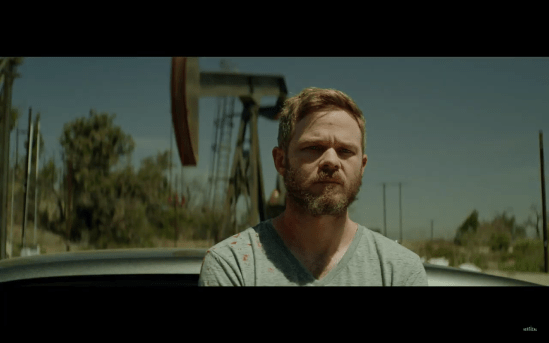
Los Angeles detective Jeff Anderson has his perfect world turned upside down upon discovering his beloved wife dead of suicide in their apartment bathtub. Losing his bid for Captain and having his life be in utter shambles, Anderson becomes obsessed with lurking around incoming suicide calls on the CB radio, trying to make sense of his wife’s sudden reasoning to end it all. When a similar case produces a survivor from a familiar fate as his wife’s, Anderson learns two men are behind similar forged suicides stretched out over the past ten years against prominent women figures in and around the L.A. area. The detective spins a wild theory that has him following every lead to track down and stop the father and son serial killers without any backup from his local precinct, forcing his hand to choose whether to be a cop and uphold the law or seek lethal retribution for the woman he loved.

From French director Julien Seri comes “Darkness Falls,” a crime thriller released in 2020 that is entirely shot in English, a first for the French filmmaker who helms a script from the executive producer on “Starry Eyes” and “The Man Who Killed Hitler and Then the Bigfoot,” the Belgium native, Giles Daoust. Also produced by the Belgium, the film, that was formerly titled “Anderson Falls,” gorges on the detective exemplar of the prodigal crime fighter stripped down to next to nothing before regaining footing against the two experienced serial killers out to reduce the highly professional woman population with one bottle full of sleeping bills and one razorblade at a time. “Darkness Falls” is an exaggerated piece of nurture versus nature on systemic toxic masculinity seething under the guise of one man’s oppressed childhood from the abusive women in his life and then enlightening his son to his ways while the open minded, Renaissance man climbs back up the mountain toward redemption, not only for himself or his wife, but for all women being forced in a dual parental role. “Darkness Falls” is released under the production companies Koji Productions, Lone Suspect, and Giles Daoust’s Title Media.

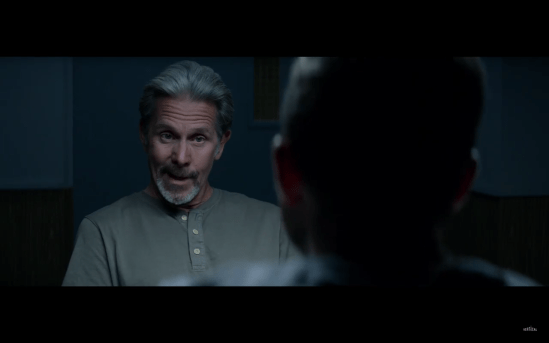
Despite the international production and filmmakers, the solid cast is compromised of familiar faces from respectable actors, starting with not-the-Elsa-“Frozen’s” Shawn Ashmore. Ashmore, who I considered to a steady part of any project – he’s phenomenal in Fox’s “The Following” with co-star Kevin Bacon, – finds himself in the shoes of a L.A. detective who has fallen by no cause of his own, but as consumed as detective Jeff Anderson is with proving his wife’s murder, Ashmore doesn’t sell Anderson’s convictions and doesn’t properly apply Anderson’s super sleuth talents to wade through the sea of angst and torment. Anderson’s also written poorly as a man who consistently lingers around suicide call-ins and has constantly has numerous visions and memories of his wife that serve little to her importance to him, serving more toward just being story fillers instead of providing a little more value to Anderson’s character. What attracted me more to “Darkness Falls” was Gary Cole as one-half of the father-and-son serial killer team. Cole takes a break from the Mike Judge and Seth McFarland humor to stretch his legs amongst the thriller genre, playing an unnamed dark toned character derived from hate, abuse, and the thrill of seeing women die. Cole’s performance is a step above Ashmore’s lead role, but still flat, flat to the point of almost monotonic pointlessness that doesn’t exalt his need to kill high profile women. “Darkness Falls” rounds out the cast with Danielle Alonso (“The Hills Have Eyes 2”) as a Anderson’s former partner turned police captain, Richard Harmon (“Grave Encounters 2”) as Gary Cole’s accomplice son, and the legendary Lin Shaye (“Insidious”) as Anderson’s mother.

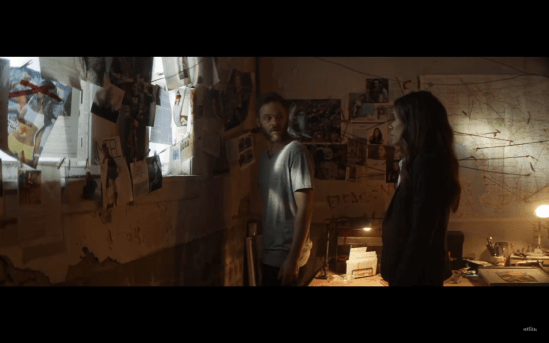
While “Darkness Falls” conveys a strong, if unintentional, message that grossly sheds light on the overstepping male view toward the idea of a successful woman, director Julien Seri missteps multiple times through the dramatics of a cop on the edge of the law and on the brink of despair while also not completely rigging out Gary Cole and Richard Harmon with more conniving wit, especially when their kindred reign of terror is well versed throughout the years. What fleshes out from Ashmore’s rolling on the floor and spitting shade performance at pictures of women on his crime wall trying to get into the head of the killers and Cole’s character who relinquishes freedom in sacrifice, even after a daring great escape from a botched crime scene that involved killing two cops in the process, is this weirdly uncharismatic collapse of a story from within the parameters of a well-established cast and premise. “Darkness Falls” barely pulls out a believable crime thriller that can only be described as vanilla, a term that stakes the heart terribly knowing that Shawn Ashmore and Gary Cole deserve so much better just from their lustrous careers and polar acting styles that don’t counterbalance the dynamics at all in this film. The original title, “Anderson Falls,” is fresher salt than the stale, rehashed title change of “Darkness Falls” to, perhaps, gain traction in a fruitless action of selling more tickets, adding even more vanilla flavor.

Releasing on VOD and Digital this month is “Darkness Falls,” an unrated release, courtesy of Vertical Entertainment. Streaming services such as iTunes, Amazon, Apple TV, Google Play, FandangoNow will carry Shawn Ashmore’s 84 minute sordid themed detective thriller as well as all major cable and satellite companies. Since this is a digital screener, the audio and video aspects will not be reviewed, but if running on digital and VOD, the presentation should be excellent provided that your internet’s not sluggish and a good connection is established. I will say that the score by Sacha Chaban is against the grain with a brawny anti-brooding soundtrack more suitable for intense action than stylish poignancy than ends in uninspired ca’canny. That’s also not to say it wasn’t a good score. There were no bonus material included with the digital screener and no bonus scenes during or after the credits. Sitting through “Darkness Falls” was tough to sit through as the anticipation for the morbidity level to increase with due pressure onto detective’s Anderson’s browbeaten shoulders for a hellish ride solving his wife’s untimely death was never sated, sputtering along as a halfcocked story with performances to match.

“Darkness Falls” available for rent on Prime Video!