
Journeying from the South to reside with her son Michele, Lea is a boisterously strong matriarch whose suffered through twelve miscarriages in fifteen years and has become insanely protective of her sole breathing progeny. Michele lives in a stately condominium that accommodates an eclectic bunch of women of various tastes, housing his mother Lea to mix as a lottery fortune teller of sorts. Lea’s talents go beyond just predicting winning lucky numbers as she’s also a fantastic cook in the kitchen, a superb soap maker, and an efficient killer that supplements the prior traits. Madness consumes a mother who seeks to absolutely protect her only child and a contractual deal with Death itself orders the end of minuscule lives, such as the other tenants of Lea’s apartment building, to fulfill her obligations to Death.
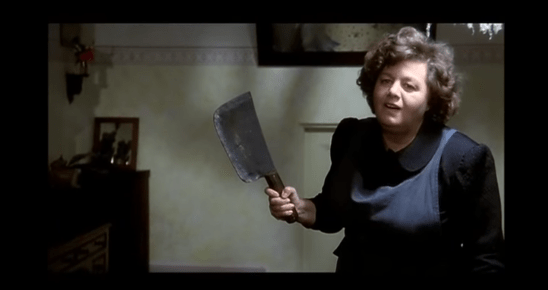
I promise you, you’ve never seen a Shelley Winters performance like this! “Gran Bollito,” otherwise known in the U.S. as “Black Journal,” is a 1977 Italian macabre from director Mauro Bolognini and has for the first time ever been slow cooked to Blu-ray high definition. “Gran Bollito” has been resurrected from the archives of production company Italfrance Films’ with Shelley Winters (“The Poseidon Adventure”, “Lolita”) exploiting her mother’s animal instincts to provide Death with as many souls as she can chop up and boil into a lathery substance. “Gran Bollito” loosely translate as very boiled, a form of murder that would top the charts and these heinous acts were, in fact, inspired by the true, inexplicable story of an Italian serial killer named Leonarda Ciancillui, a soap maker whom sacrificed three women in hopes to protect her war drafted son. Alongside mother mayhem are a trio of cross-dressing actors portraying the three victims; actors such as singer-actor-director Renato Pozzetto, Italian sex-comedy actor Alberto Lionello, and the legendary Max von Sydow (“The Exorcist,” “Game of Thrones”) go full blown drag, donning the period piece’s late 1930s conservative wardrobes while conducting themselves loosely with their intimate and delicate privacies.
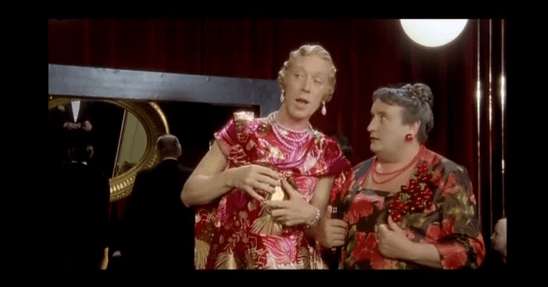
As I mentioned, “Gran Bollito” tackles numerous undertones with multiple notations of the horrors of war and the inexplicable amount of death from it as well as from disease, to miscarriages, and to the actual beheadings to sustain a red soap bar factory and food processing plant Lea runs in her custom made kitchen. The Bolognini film also notes many facets of mental illness and health with merely Winters’ topping the psychological pyramid. Conditions consisting of states from a stroke, absentminded dementia, and severe delusions to name a select few are displayed throughout to which almost puts the perception of Lea, or maybe Lea’s perception, one of relative normalcy. Lea’s derangement stems from her fifteen years of pain and suffering through multiple miscarriages. Bolognini very conspicuously has Pozzetto, Lionello, and Sydow portray Lea’s victimized women. They represent Lea’s resentment for their wasteful contributions toward their natural given right to bear children as if the women were merely men without a womb and that strikes a sensitive nerve with Lea who would do anything to give her children life again.
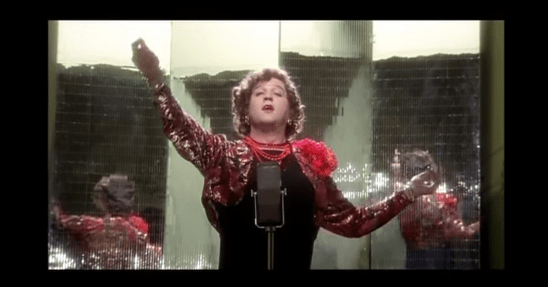
Generally, Bolognini’s constructs a well paced film, seamlessly passing the days, weeks, or months from Lea’s condominium integration to the slow seep that eventually breaks into maddening despair and desperateness. The cinematography by Armando Nannuzzi is soft and lofty that appeases to angelic similarities akin to that of Tinto Brass films, but when the tide turns, her kitchen brights white and Lea is dressed in midnight black as if she’s the Grim Reaper herself. Nannuzzi’s an artist at his trade by enabling Shelley Winters to shed the wholesome of her prior performances and at the same time present a false sense of calm and good fortune. Composer Enzo Jannacci’s score underwhelms when accompanying said Nannuzzi’s style; the score’s flat and breathy tone just doesn’t leave an impression, lacking substance and girth that doesn’t quite fit the Bolognini’s mold. Though acting and performing not in her native country, the St. Louis born Shelley Winters extracts a true life serial killer from off the Italian crime section.
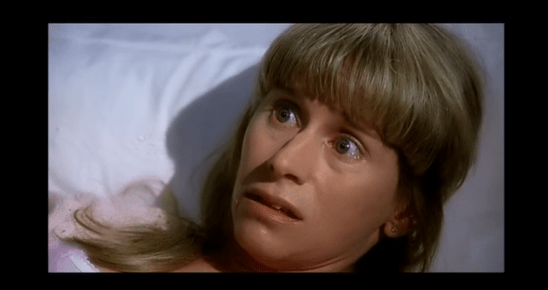
Twilight Time’s “Gran Bollito” is now on a Blu-ray High Definition 1080p transfer presented in a widescreen 1.85:1 aspect ratio. The limited edition release look impeccably detailed, sporting natural coloring and depth. Twilight Time, by far, has the best image quality compared to any release. The Italian 1.0 DTS-HD Master Audio is pretty good with balanced range and clarity in all aspects of audible tracks with only a minor pops in the tracks during transitional scenes. Bonus features include an audio commentary with film historians Derek Botelho and David Del Valte with also the original theatrical trailer. Twilight Time polishes “Gran Bollito” with the respect this obscure Shelley Winters film deserves; a horror-comedy that pushes the limits bordering insanity and disparity in a twisted display of narrative too intriguing to fathom.

“Gran Bollito” on Limited Edition Blu-ray!


 It's Bloggin Evil!