Prancing Forest EVIL Will Seduce You to Death! “Devil Times Two” reviewed! (SRS Cinema / DVD)

“Devil Times Two” on DVD from SRS Cinema

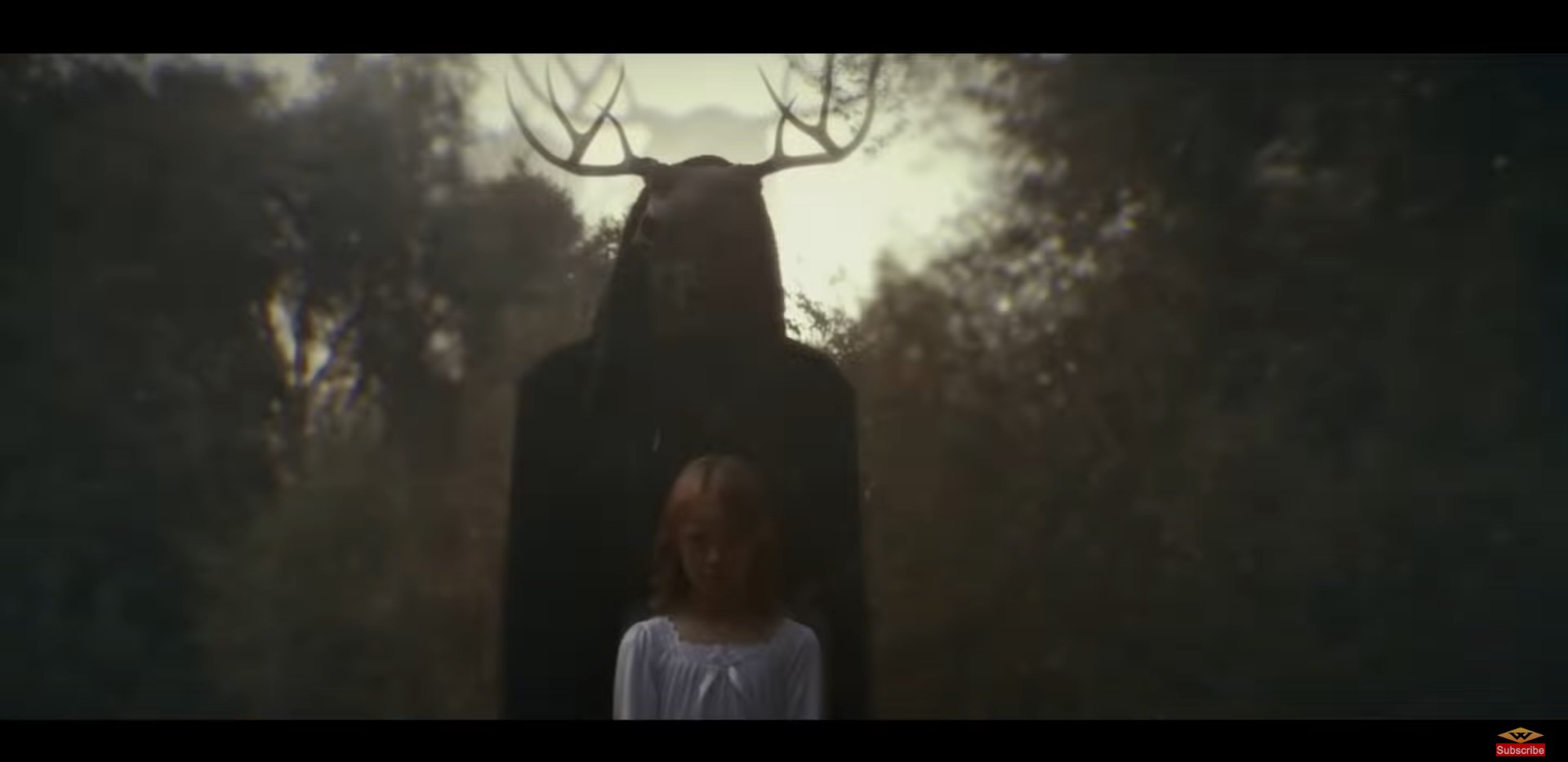
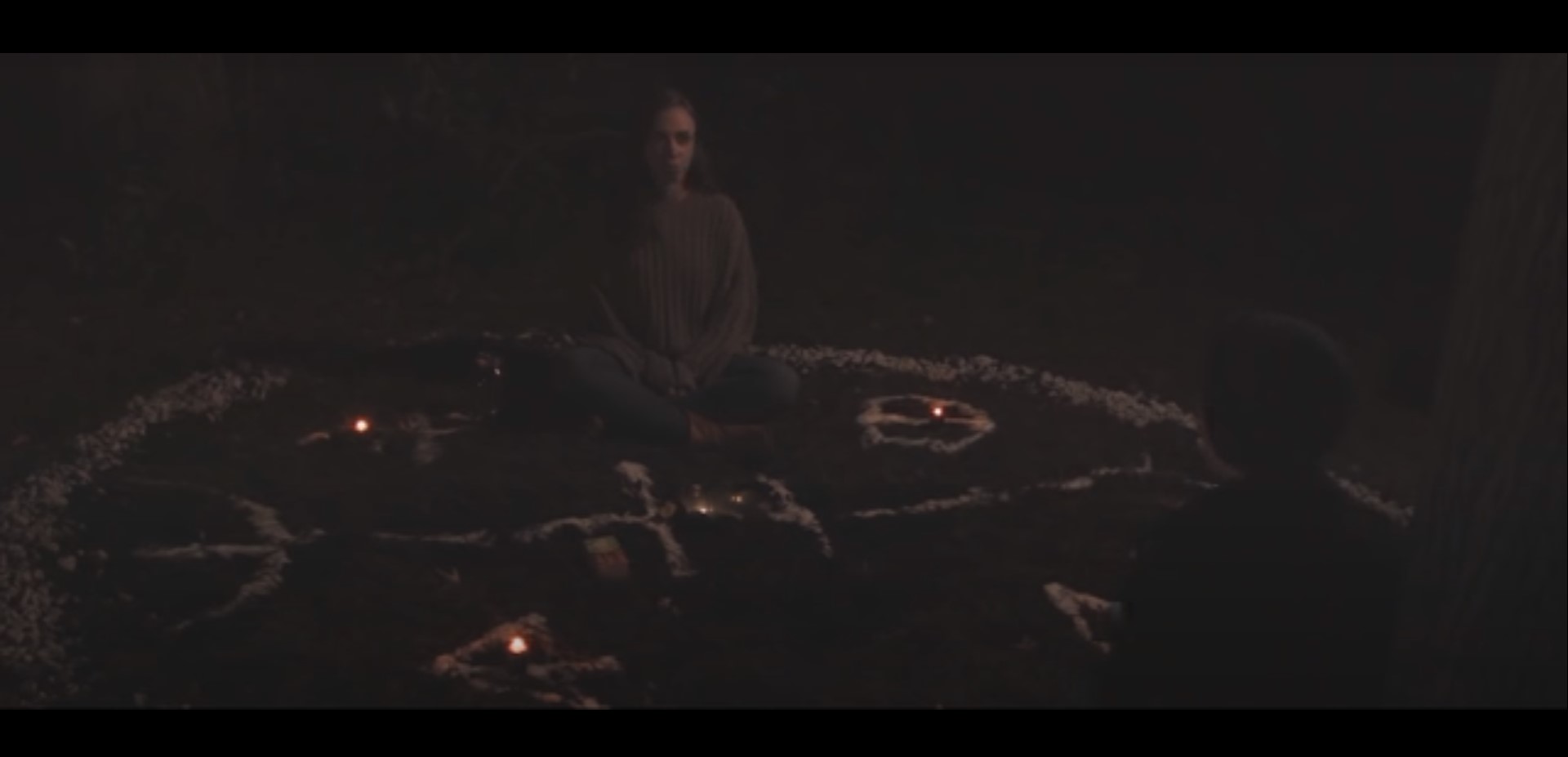
A forest encircled convent hidden away from the Milan population undertakes an occult responsibility to keep bloodthirsty and callous demons from entering the human world.  On the verge of retiring, Father Ernesto Taro, a once formidable force for good who exorcised a powerful demon decades ago that cost the lives of many in his fellow cohort except for Mother Dolores, takes on a younger understudy to be his replacement, the ambitious Father Chuck Bennet.  Father Taro and Bennet were summoned by Mother Dolores when grisly body of a young hiker is discovered.  A pair of former Nazi sadists turned Netherworld demons come to Father Bennet in a vision and are suspected to be the carnage culprits.  Souls are at stake and the world is on the brink of falling into darkness as the Returnees are only the right hand of a more profound evil itching for complete and utter omnipotence. 
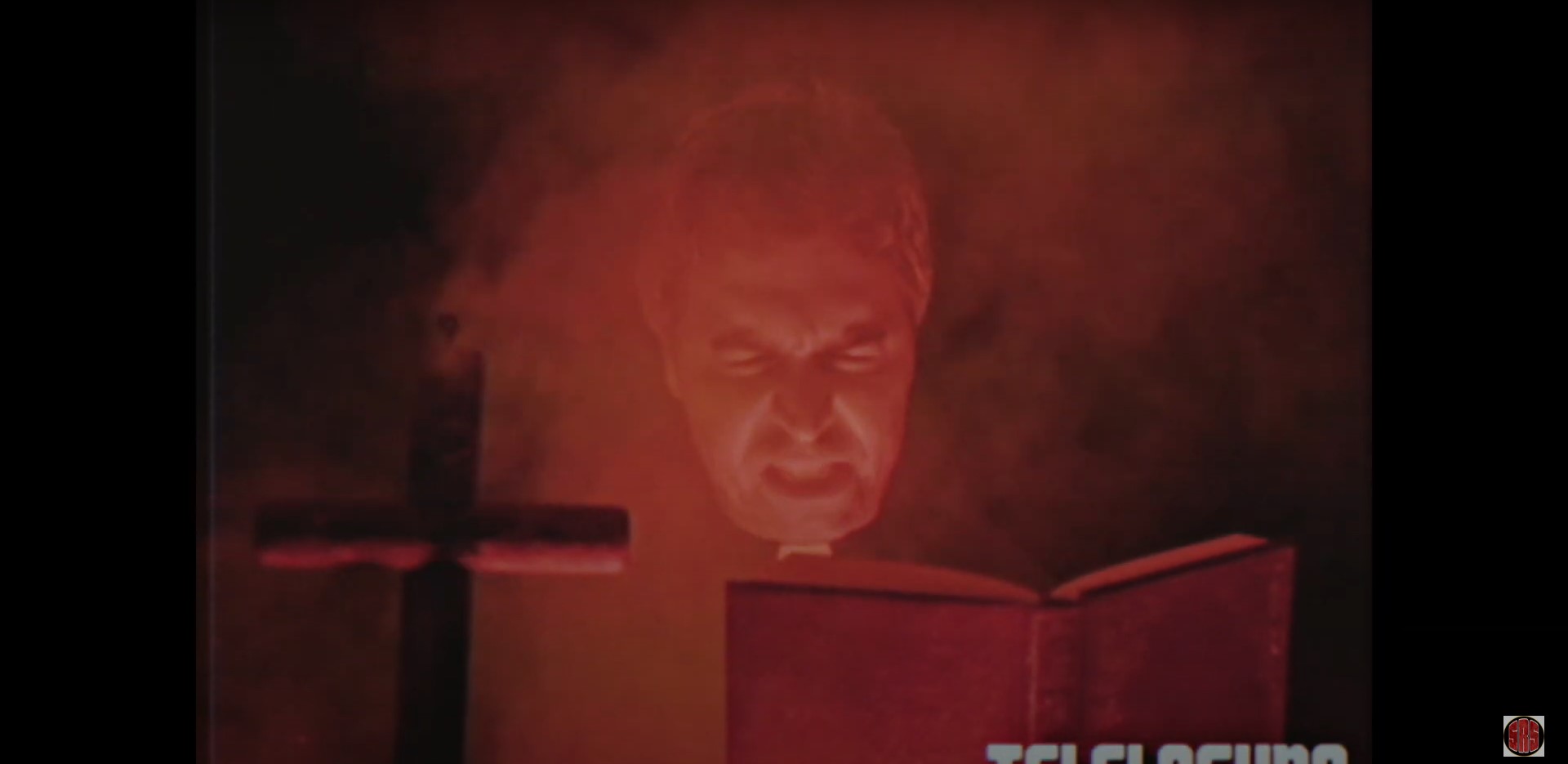
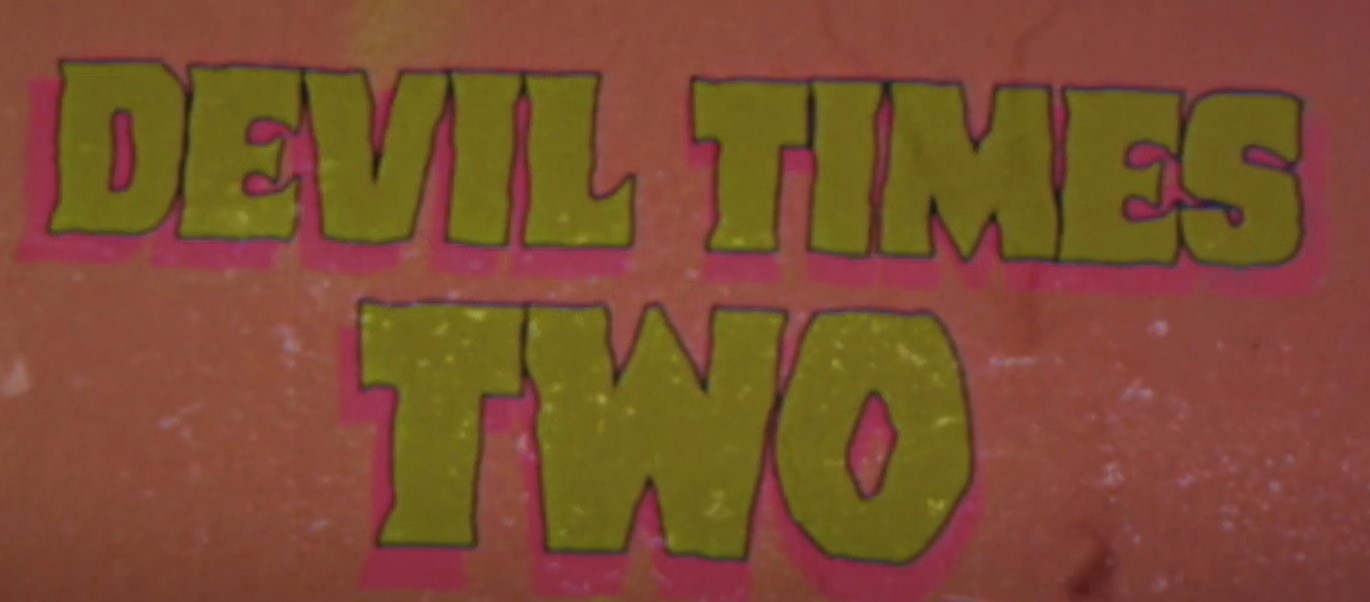
“Devil Times Two” is an Italian-made, demonology-contextualized horror from Italy writer-director Paolo del Fiol.  Having purveyed grindhouse horror in anthological means with previous films “Connections” and “Sangue Misto,,” del Fiol branches out into his solo feature-length narrative set in the 1970s as a faux lost film recovered onto VHS from the only known syndicate televised program on Telelaguna to account the terrible tale full of profane hostilities, sexual stimulating supremacy, and, of course, gore in the interlacing recognition between the popular devil, demon, or hell on Earth inspired movies and the obscenities connected to eurotrash and sleaze movement of the 70s topped a hint of Japanese adulation, a motif heavily sprinkled into the film carried over from the director’s previous work as well.  Underscored by the tagline Quado le Tenebre escono al Bosco, or When Darkness comes out of the Woods, “Devil Time Two” once again pits religious good versus irreligious evil in this Himechan Movie Production self-produced by Paolo del Fiol.
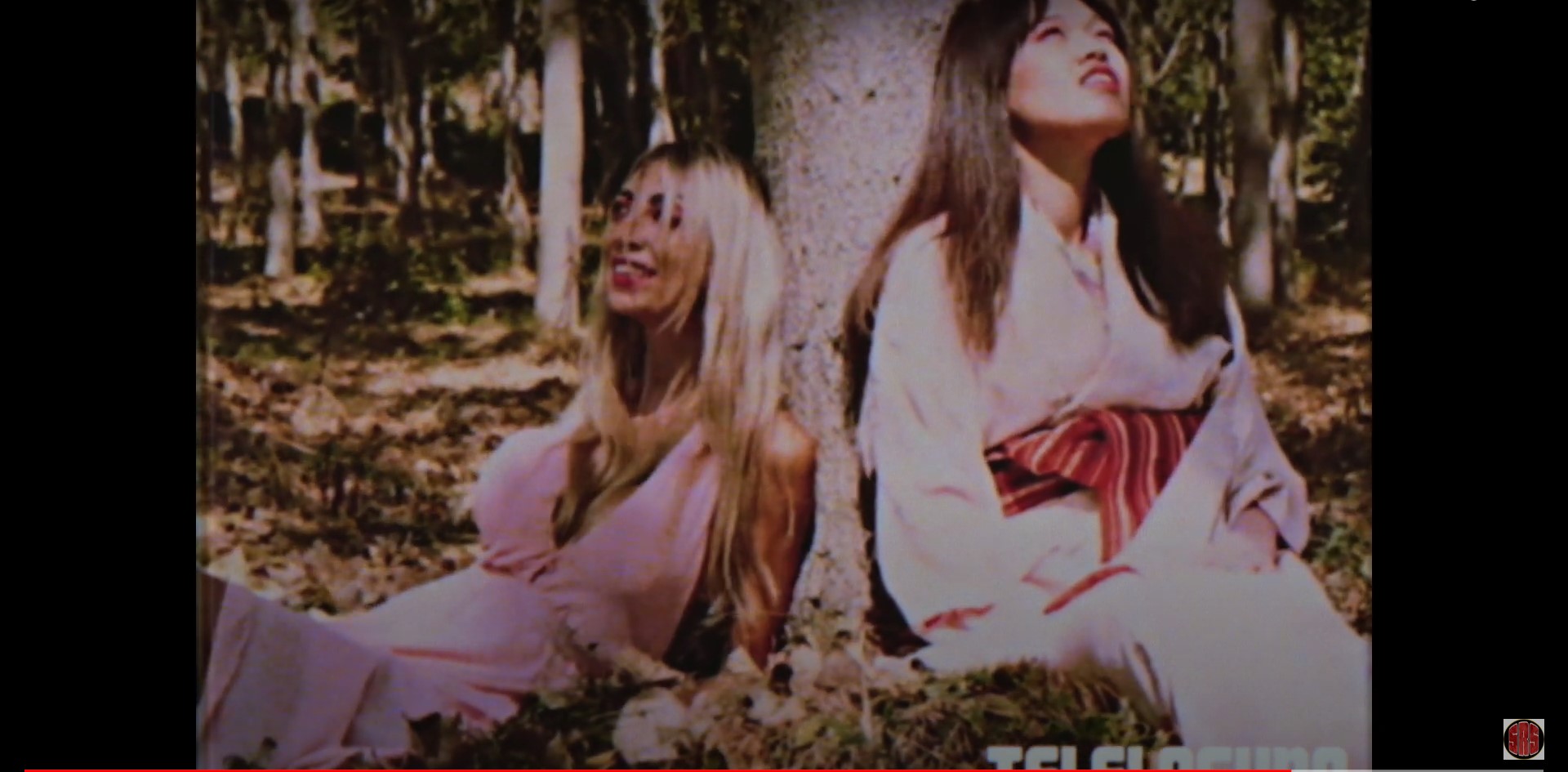
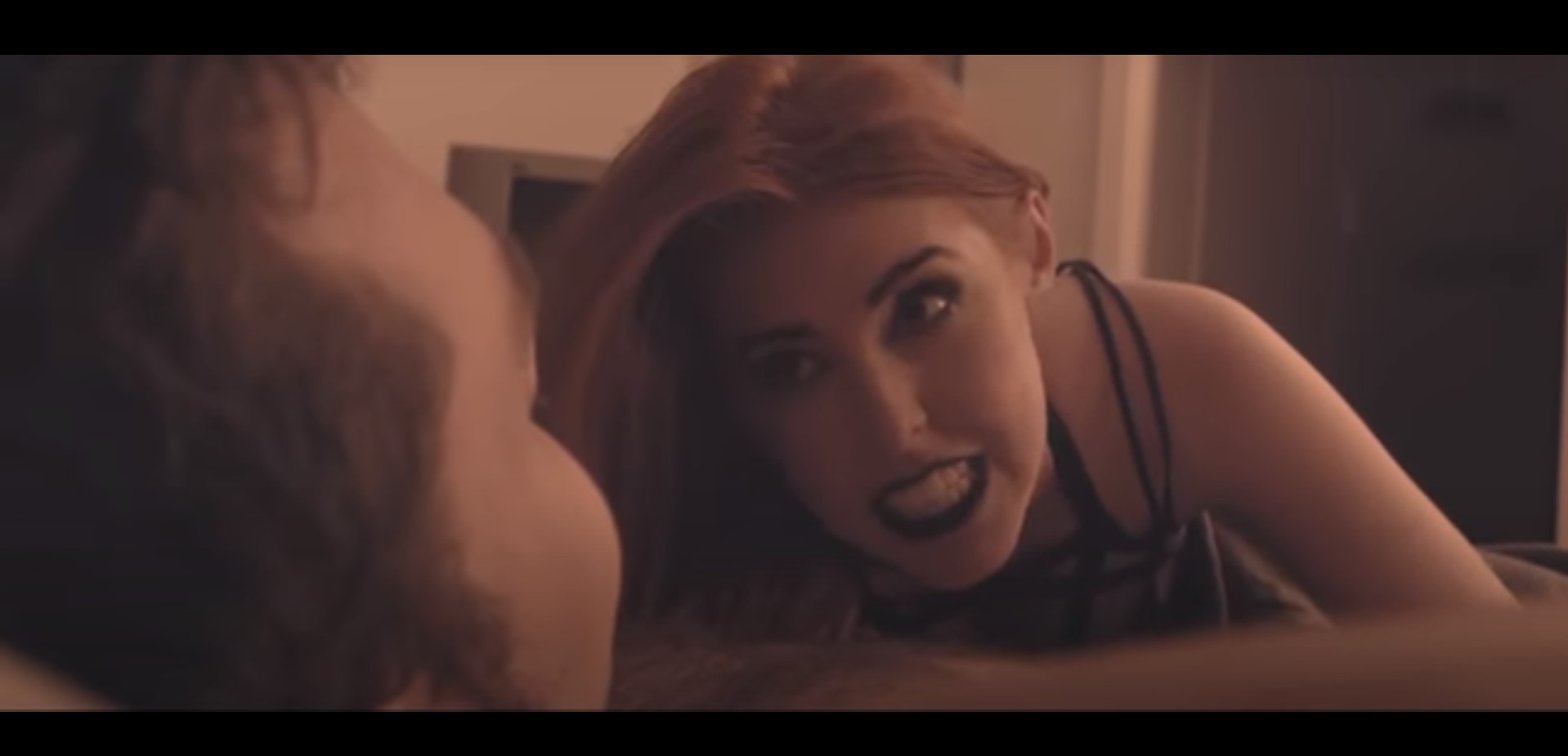
Characterized as the titular pair, Returnees Jasmine and Umeko are the ethereally evil duet of diabolical detriment who seemingly float in and out of the material world as alluring succubi, seducing prey into their web of demonic lust and languish.  Some turn up grotesquely inside out while some others disappear, saved for later for special ritualistic planning.  Erika Saccà, an Italian fitness instructor in her debut role, plays the blonde Returnee Jasmine in a sleeveless, lowcut gown and with nearly ever kill, exposes and massages her augmented bosom with underboob scarring in a change to showoff her toned physique, and Reiko Nagoshi (“Re-Flesh”) wears a kimono without any unveiling of skin but does a bit of thrust-damage on her quarry that initially and inexplicable appears to be a strange phenomena when everyone in the scene is a woman but becomes apparent there’s something unholy and very “War of the World’s” alien under that traditional Japanese garb.  Saccà and Nagoshi wear many hats in this product but also don’t have the dialogue to hoist their demonesses higher.  The dialogue is left with the trio of convent gatekeepers in Father Taro (Enrico Luly), Father Bennet (Paolo Salvadeo, “Occultus”), and Mother Dolores (Amira Lucrezia Lamour, “Re-Flesh”) in what becomes a deeper understanding of their backstories around Father Taro’s deadly bittersweet exorcism decades ago, his on the sly and subtle affection for Mother Dolores, and Father Bennet’s questionable rise to supersede Father Taro, laying a foundation of doubt within the current gatekeeper.  While I like the contrasting dynamics of the two factions within the cast, I found the discourse overly bulk and tedium between the trio of piety that strung on scenes way too long with way too much talk that it ultimately suppresses the pacing when every little detail has been uncovered and explained. All the casted bits in between are slaughter fodder with Denise Brambillasca, Alessandro Carnevale Pellino (“The Wicked Gift”), and Martina Vuotti in non-defying death roles.

Paolo del Fiol’s unaccompanied and independent deluge of demonian debut has doses of phantasmagorical imagery sublet by its more shocking and odd immolation of incognizant individuals unlucky enough to cross paths with the Returnees. Likely to have never seen, Fiol’s film very similarly compares to James Sizemore’s “The Demon Rook” by creating unique mythos not reliant on a religious bedrock and use independency as an advantage for showcasing practical makeup and effects and while “The Demon Rook” would overwhelm with prosthetic made-up characters, “Demon Times Two” focuses attention more on the guts of the matter, the gore, but though not pernicious enough to the story, the eyeball sucking, throat lacerating, or intestine exposing bloodshed is prosaic panoply that won’t outshine in the sea of subgenre synonyms. Aforementioned dialogue scenes can be a slog to get through with many exchanges overstaying its course between the pious gatekeepers, especially between Father Taro and Dorlores, and that hurts the pacing to pick up the gore more frequently for more potency. Instead, exchanges are more elucidations that go around-and-around to where we’re lost on the mounting reveal of the Returnees’ mission and master which turns out to be visually more stimulating and visceral in the last ten minutes than in the first 100 minutes of runtime. The backlot lore is Fiol’s greatest achievement simulating a 70’s style grainy movie caveated as only broadcasted once on December 8th, 1983 (a few days before this reviewer’s birthday) and never seen again until it’s VHS recording is recovered.
Under a pretense of being a buried lost film, under the tribute of a grainy and scratched psychotronic celluloid, and under the falsity of genuine huge knockers, “Devil Times Two” is twice baked into a classic contemporary dish served by SRS Cinema on DVD. Arriving on the SRS Cinema: Extreme and Unrated Nightmare Fuel label, “Devil Times Two” is nothing short of being a modern-day emulator of once was with suitable grain overlay, a hazy, if not washed, overcast grading, and trope-laden atmospherics with dense fog, unnerving dissonances within earshot, and blood brilliantly cut with pseudo Telelagua commercial programming of brief adverts until returning to regular scheduled programed checked in and out by a gondola and it’s gondolier in dusk silhouette. Presented in a pillar box 1.33:1 aspect ratio, the fuzzy and non-delineated details are not a punch to the salient gut as the intent here is to be obscure, opaque, and ominous in nature and in technique bathed in 480p. The Italian PCM is the exact recreation of a time period post-dubbing with the actors re-dialoguing their performances as it was common practice in most motion picture industries, especially Europe, at the time. ADR is clear but not necessarily clean to recreate that shushing and crackling of an older recording. The subtitles are also forced or burned into the film with the sole Italian audio option. Bonus content includes what is called Backstage, a raw filming look into the production shoots and behind-the-scenes footage with no real direction or cosmetics, a photo gallery, a trailer with English subtitles, and other SRS Cinema released trailers. The SRS Cinema DVD front cover resembles mock-70’s, thick-red font with a bare woman’s back dressed in a painted Satanic symbol within the border of a VHS-esque rental casing with rental stickers. Inside the amaray case is a pressed disc with an extreme close up and crop of the same front cover with no insert in the adjacent slot. Pacing burdens this release, especially in its near 2-hour runtime with a clock-in at 114 minutes which is approx. 24-minutes too long in my opinion and the film comes not rated and has region free playback. No matter how much arcane the content is, or how grotesque the horror show, or how much perversity and skin can be unclothed, “Devil Times Two” has difficulty retaining a flow of fascination in a rather windbag approach to a rather devilishly good salvo construction.

“Devil Times Two” on DVD from SRS Cinema

Southern Hospitality is all EVIL Cloaks and Daggers! “The Long Night” reviewed! (Well Go USA / Blu-ray)

“The Long Night” now available on Blu-ray home video!

After spending years in foster care as a child, the now adult Grace tries to track down any information or background about her biological parents with the help of affluent boyfriend Jack.  The New York City couple travel into the rural, deep south on a seemingly solid lead about her folks.  As Grace and Jack drive up to their contact’s isolated and grand manor estate, their contact with the information doesn’t greet them upon their arrival and as they search the house, they find it as empty and still as the wide open land around them.  When darkness falls, cloaked members of a demon worshipping cult surround the estate, using their telekinetic and telepathy powers to infiltrate and corral Grace toward being a host for the prophesized return of 400 year slumbering and powerful demon the night of the equinox.  The couple battle the subservient minions inside and outside the manor as the night progresses into terrifying visions of Grace’s predestined lineage and the hope of surviving the night is quickly dwindling.

A longstanding demonic cult with supernatural psychotronic abilities besieging two city slickers armed with broken cell phones and a fireplace poker feels like the mismatch from Hell.  Somehow, “The Curse of El Charro” director, Rich Ragsdale, was able to stick the landing with loads of dourly, yet intensely powerful, cinematography crafted from a Mark Young (“Tooth and Nail”) and Robert Sheppe script based off the Native American mythology of the Horned Serpent, Utkena.  Keeping with the mythos’ descriptors involving snakes and horns or antlers, Ragsdale utilizes his usual bread and butter music video talents to fashion psychedelic imagery out of an extremely committed cult mercilessly stopping at nothing in resurrecting their preeminent master who will cleanse the world of corrupted humanity to start the world afresh…or so they believe.  Shot on site at a deep-rooted and isolated plantation house and property in Charleston, South Carolina, “The Long Night,” also known as “The Coven, is a production of Sprockefeller Pictures (“Fatman”) and Warm Winter in association with Adirondack Media Group, El Ride Productions, and Hillin Entertainment.

Super stoked that “The Lurker” and Rob Zombie’s “Halloween” remake star Scout Taylor-Compton is playing an age-appropriate role and not another high schooler, the actress plays the soul and parent searching Grace who has a strong desire to track down her parents, which never comes to the forefront why Grace was placed in foster care to begin with. Compton is completely competent assuming a role that requires her physicality as well as her emotional range in fear through resistance against a group of mostly unknown cast of characters that mostly keep their hoods and masks on for the entire engirdling of the manor house. Compton can also exude being a badass at times, but the script shamefully holds the character back that never allows Grace to become a true opposition to their exalting will toward their demon god. Nolan Gerard Funk (“Truth or Dare”) might ooze that trope persona of a dude-bro bred out of spoiled opulence as Grace’s boyfriend Jack. Despite his unappealing swaggering veneer, Jack reaches for depth more than any other character in the film and Funk pins it pretty well. Jack loves Grace but can’t face his Hamptons residing parents’ derision of a woman, of any woman in fact, who will never be good enough for their son and that creates some nice early on tension that fizzles out to being actually nothing of real importance to the couple. Yet, Jack continues to be the one with more common sense, receiving pre-plot point hump bad vibes since arriving at the manor and also making some of the better decisions when the bottom drops out and snake-charming demonists come calling for his main squeeze to squeeze out the resurrection of an unholy being. Funk adds bits of comedic charm throughout like someone who watched too many horror movies and tries to reenact scenes that could be beneficial to their survival in theory but hopelessly fails in a humorous way. A real waste of a raw cinematic talent is in Jeff Fahey (“Body Parts”) who plays the brother of the missing manor owner. Fahey feels very much used for solely his veteran star power, a recognizable face, just to be nearly instantaneously forgotten at the same time and by the climatic ending, you might not even remember Fahey being a part of the story. “The Long Night” rounds out with Deborah Kara Unger (“Silent Hill”) and Kevin Ragsdale (“Little Dead Rotting Hood”).

“The Long Night” is a delicate incubus uncoiling its snake-biting venom of inexorable fate. Rich Ragsdale hyper stylizes flashbacks and often mundane moments to conspicuously denote unimaginable and resistant-futile power over a pair of out of their league NYC outlanders. Speaking of which from within the script, there is a sting of contrast between North and South, as if the Civil War was still relevant, ever since the first moment Jack and Grace hit the screen with their travel plans. Jack passively continues to harp upon his dislike of South and even looks to Grace to make sense of a demon cult outside on the front and back lawn, hoping that her Southern roots can explain the provincial nonsense raising torches and speaking in tongues that’s blocking any and all exits. Even Grace, a character originating from the South, believes that the makeshift totems surrounding the property are resurrected to ward off evil. As a Southern, I never heard of such a thing. The concept for a Lazarus possession out of the depths of dimensional binding sounds like a winner in my book, but Ragsdale can’t quite smooth out the edge to effectively and properly give the cult and Grace a banging finale of supercharged hellfire that sees our heroine fight to the bitter end. Instead, the entire third act and ending feels like a sidestep because not a single better thought came to the writers’ imaginations. Cool visuals, good special effects, but a banal trail off ultimately hurts “The Long Night’s” longevity.

Well Go USA Entertainment delivers the Shudder exclusive, “The Long Night,” onto Blu-ray home video with a region A, AVC encoded, high definition 1080p release. Presented in 16X9 widescreen, some scenes look compressed or rounded suggesting an anamorphic picture, but the overall digital codec outcome is really strong elevated by the creepy folkloric and the pernicious dream atmospherics of “Escape Room’s” Pierluigi Malavasi who can masterfully casts the light as well as he shields it in a menacing silhouette. Some of the nightmares or hallucinations see more of compression flaws in the mist, smoke, or gel lighting with faint posterization. The English language 5.1 DTS-HD master audio balances a vigorous surround sound output, catching and releasing all the appropriate channels with a range of environmental ambient noise and the scuffle between violent contact, denoting a strong amplitude with depth between foreground and background. Dialogue comes out nice and clear with a vitality that’s reverberates in the ear channels whenever a momentous moment sparks an outburst of rage and dominion. Special features include a behind-the-scenes featurettes that look at the raw footage of the birthing flashback scene, the overall aesthetic tone of the film, and the resonating tribal score. Also included is a Rich Ragsdale commentary track, the theatrical trailer, and Ragsdale’s 2019 short film “The Loop,” a meta-horror surrounding a scary VHS tape and two young brothers. While “The Long Night” has flaws with unfinished plot details that will leave a lingering unsatisfied aftertaste, entrenched within the narrative is a contemporary premise revolving around dark fate and that gut feeling toward belonging to something bigger that unfortunately turns out to be murderous summonsing of a demon scratching at the door wanting to be let out in the world. An unforgettable long night of terror.

“The Long Night” now available on Blu-ray home video!

Don’t Mind the Glowing, Ominous Hole in the Wall. That’s Just a Gateway to Evil. “Beyond Darkness” reviewed! (Severin / Blu-ray)

A witch acolyte of Ameth, an underworld demon, is executed on multiple counts of child murder.  The priest who oversaw the witch’s last rites came in with a doubtful heart and upon researching Ameth through an unholy book, disavowed his own religion only to fall into a near drunken stupor of atheism.  Months later, a new priest and his family move into a home arranged by the archdiocese, but soon after settling into the old house, a series of disturbances point to a closed in wall behind a door that’s uncovered to be a gateway to another plane of existence; an existence where the child killing witch is granted access to seek the souls of the priest’s young children.  Fighting with his own struggles of faith, the ex-Jesuit assists the priest and his family in an attempt to cast out evil once and for all. 

Perhaps common knowledge amongst diehard horror fans, but not so much among the casual curiosities of an oblique coursed moviegoer is the fact that “Beyond Darkness” and Sam Raimi’s “The Evil Dead” share a cinematic series connection.  Well, not one in any official capacity one at least.  Drained from the same bloody vain that unofficially corrals Lucio Fulci’s “Zombi 2” as a sequel to George Romero’s “Day of the Dead,” retitled in Italy as “Zombi,” the American-made, Italian-orchestrated “Beyond Darkness” too fell upon the slew of Italian title changes sword with a rechristening into the “La Casa” series.  With the success of “The Evil Dead” in the U.S., Raimi’s video nasty was renamed to “La Case” and “Beyond Darkness” became the fifth “sequel” in the series as “La Casa 5.”  Since Italy has no copywrite laws, a light breeze can easily change any filmic title.  Even the director, Clyde Anderson, dons a false pretense as the Americanized alter ego of Italian director Claudio Fragasso.  The “Scalps” and “Troll 2” Fragasso pens “Beyond Darkness” with longtime script confederate Rossella Drudi, under the Sarah Asproon pseudonym.  “Beyond Darkness” is shot in the deep American South of Louisiana under the Joe D’Amato (aka Aristide Massaccesi) founded Filmirage (“Anthropophagus: The Grim Reaper,” “Deep Blood”), produced by D’Amato, as the Filmirage Production Group.

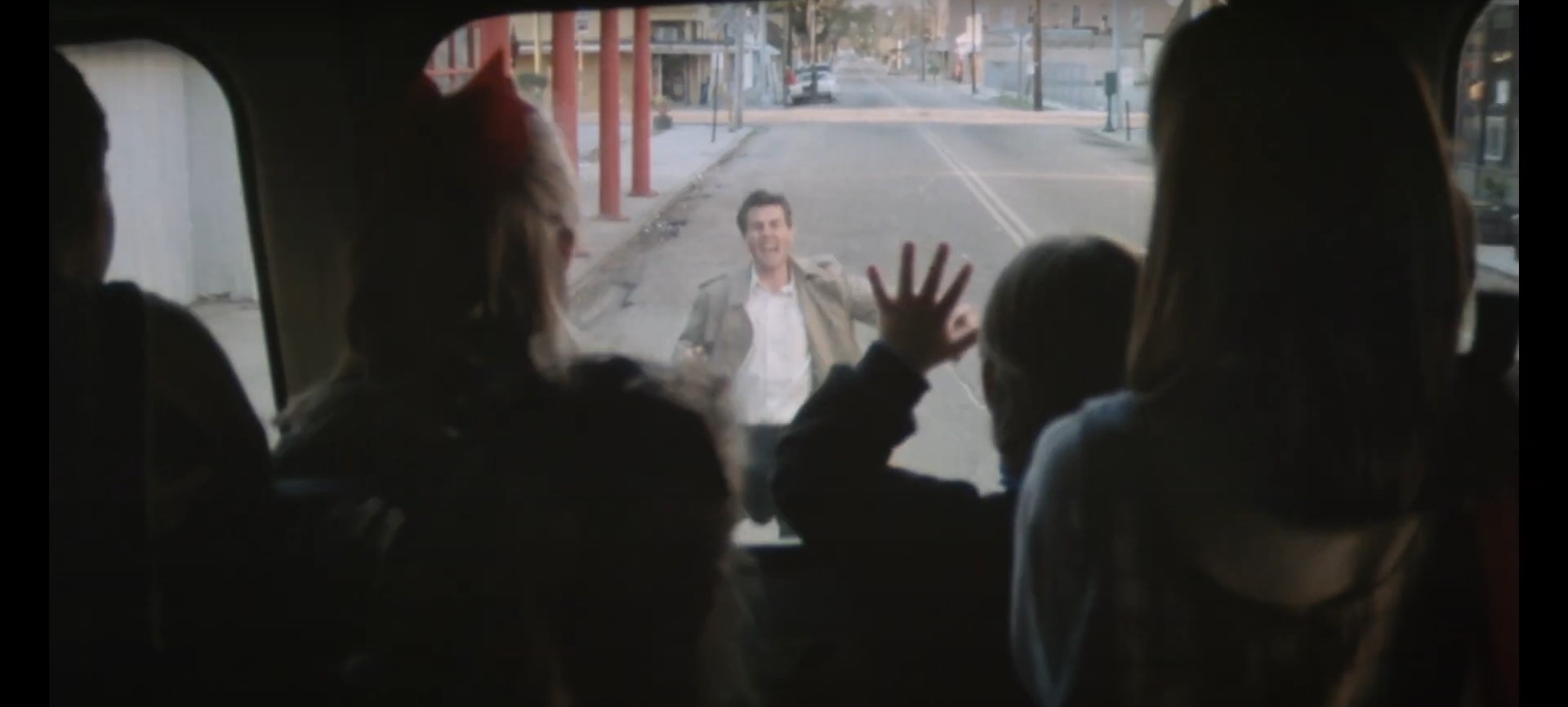
While behind the camera is mostly an Italian production team, in front of the camera is a cast of American and English actors with an opening Louisiana penitentiary pre-execution theology debate between Bette the witch, played by Mary Coulson, and Father George, a priest having a crisis of faith, played by one of D’Amato’s regulars in English actor David Brandon (“StageFright,” “The Emperor Caligula:  The Untold Story”).  Coulson’s role may be punitively small as the “Beyond Darkness’” lead witch and predominant face of the core evil, but the actress puts all into the Bette character comprised of a maniacal laugh and a lots of very European skin-tag makeup effects whereas the classically trained David Brandon has an array of lively emotions and facial expressions sized to fit Father George’s clerical shirt and white tab collar when he’s not sloshed with doubt.  Both characters interweave into the life of a new-to-the-area priest, his wife, and two kids who move into an old house, built on unholy ground, to start his new chapter in priesthood.  Days later, as the kids become instantly okay with a giant black swam rocking horse in the middle of their bedroom, the family is terrorized by flying kitchenware, flooded with a bayou mist, and frightened by figures in black, tattered shrouds seeking to steal their children’s souls.  Christopher Reeve’s lookalike Gene LeBrock (“Night of the Beast”) fails at double father duty in his poorly lit excuse of a worried father with his children being lured to the realm of the spirit side and as a grounded in faith Father combating the forces of evil without a solid sense of what to do.  Both parents are equally written off as incompetents who continue to stay in the house despite on the continuous threat of Baba Yaga wannabes knocking at every door in the house.  As the mother, Barbara Bingham felt as if she had a little more skin the game.  Perhaps having just come off the legacy success of a “Friday the 13th” sequel (“Jason Takes Manhatten”) she felt the responsibility of maintaining a more diligent approach toward being a mother coursing through occult’s dire straits.   Michael Paul Stephenson (“Trolls 2) and Theresa Walker excel much better in their roles as the two kids, Martin and Carole, who’ve become the centerpiece of Bette’s maliceful desires. 

“Beyond Darkness” will come across as very familiar amongst both horror fans and fans of movies in general with a story pulling inspiration from films like William Friedkin’s “The Exorcist” and Tobe Hooper’s “Poltergeist.”  Fragasso picks and chooses a blanket of trope elements to rework with great malleably in order to not be a total copy.  However, for those who know anything about low-budget Italian horror, Fragasso’s rousing similarities to major and independent hits should come as no surprise.  Notoriously renowned schlock horror directors Joe D’Amato and Bruno Mattei, amongst a sea of others, use to fabricate out of fame at every opportunity by gobbling up successful films, chewing them up, and spitting out their Italian produced counterparts without a second thought just to cash in on just a fraction of the original narrative’s success.  The way I see it, the method was (and still is) an honorable form of flattery. Yet, flattery doesn’t cure sloppiness and “Beyond Darkness” is about as sloppy as sloppy joes. Plot hole after plot hole stack up on Fragasso’s inability to amalgamate elements in an entirely coherent way. There are underwhelming revelations to anticipating character build ups that fizzle; such as a thick-tension mystery behind the local archdiocese and their involvement to place a good Christian family in a house built on evil land or what precisely convinced Father George of Ameth’s power to sink him into an alcoholic pit of despair? I already mentioned Martin and Carole’s inept parents on not fleeing the house at first sign of poltergeist activity or any activity since then so don’t get me started. The story needs some fine tuning but not after is amiss. The acting is not entirely a humdrum of monotony, Carlo M. Cordio’s eclectic synthesizer riff and haunting keynotes score is on another level akin to a composition pulled right out of a survival horror video game, and Larry J. Fraser, another one of Joe D’Amato’s pseudonyms, has an honesty about his scenes unlike we’ve ever seen before in a D’Amato production as the cinematographer captures the fog luminously and effervescently surrounding and chasing the family from out to in.

“Beyond Darkness” is no “The Evil Dead” but is a solid demon and ghost dog and pony show from 1990. Now, the Claudio Fragasso (or is it, Clyde Anderson?) classic is heading straight to your level room television set with a new 2-disc Blu-ray. The hardcoded Region A is presented in widescreen 1.66:1 aspect ratio in a full high definition and 1080p resolution. With only a possible color touch up here or there, I would venture to say the transfer used is the most pristine copy with hardly any damage or any age deterioration. The grain looks amply checked and no cropping or edge enhancing at work in an attempt to correct any issues, if any ever existed. Severin offers two audio options: an English language DTS-HD master audio 2.0 and an Italian dub of the same spec. With dual channels, there retains an always room for growth inkling and with the film’s broad range in sounds, a difficult to swallow lossy audio pill plays the aftertaste tune of, man, this could have been way better. Yet, the track is solid enough, if not more so, with virtually zilch damage. Dialogue comes across clean and clear, but there tails some minor hissing. Like with many Severin releases, new interviews are the star of the special feature show with one-side, talking head interviews with writer-director Claudio Fragrasso Beyond Possession, co-writer Rossella Drudi The Devil in Mrs. Drudi, and actor David Brandon Sign of the Cross. Though the theatrical trailer rounds out the first disc special features, Severin also includes Carlo M. Cordio’s superb soundtrack as disc number two along with a two-page booklet with an introduction to the ingredients of a horror score and to Cordio himself as well as a listing of all 17 tracks. “Beyond Darkness” is Claudio Fragrasso’s unbridled mutt, a motley of motion picture royalties rolled up into an adulating and piggybacking horror beyond comparison.

“Beyond Darkness” 2-disc Special Edition Blu-ray Available on Amazon

Believe the Bruja When She Says There’s an EVIL Demon Inside You! “The Old Ways” reviewed! (Blu-ray / Dark Star Pictures)

Drug-addicted and depressed American journalist, Cristina, travels to her ancestral home of Veracruz, Mexico to investigate local folklore and shamanism.  Upon visiting the local feared and shunned caves of La Boca, the next thing Cristina knows she awake locked up in and chained inside a makeshift cell and is told a demon is inside her by an elder Bruja and her assistant who still practice the old ways of exorcism.  Skeptical and scared, Cristina endures the primitive, and sometimes painful, religious rituals to extract the demon out from her soul, hoping they would eventually let her go if she feigns the demons release from her body, but when plagued by strange visions and unexplainable occurrences, Cristina comes to realize the real danger is actually from within.    

Shot on location in Catemaco, Veracruz, Mexico, “The Old Ways” clashes good versus evil in one small corner of the world while also enhancing the already enriched central American state known for its cultural brujo, or sorcery, celebrations and activity.  “The Old Ways,” which aims to symbolize spiritual demons to confront personal ones, is the first feature length venture from director Christopher Alender over 20-years since his first feature that was also, too, a horror, an off brand federal holiday themed slasher from 1999 entitled “Memorial Day.”  The 2020 demonic possession thriller reteams the “Memorial Day” writer and director as Marcos Gabriel pens the script that has become a miniscule reflection of himself being a Puerto Rician expat losing his own sense of heritage and culture of his ancestral land.  Full pin drop scares and profound depth of personal complexities, “The Old Ways” is a production of Soapbox Films (“The Wind,” “Southbound”) from Alender and Gabriel as executive producers along with Christa Boarini (“Spree”), David Grove Churchill Viste (“The Voyeurs”), and T. Justin Ross producing.

The lean characters keeps the story intimate and personal, rarely straying away from the rough-and-ready holding cell single location.  Only in Cristina’s backflashes of her Stateside office or the caves of La Boca do we dip into non-linear fractions of the what, when, why, where and how she became a befuddled prisoner to her Bruja host. No white washing here as the main cast is comprised of Latin-American actors and at the lead is “Fear the Walking Dead’s” Brigitte Kali Canales as the journalist with a death wish. You see, when Cristina embarks on her journey down to the La Boca caves of Veracruz, the troubled druggie searches for relief against an emptiness she can’t shake. Most of this narrative is backlogged backstory eventually worked on and worked out through flashbacks and through the excavation by her national residing cousin Miranda (Andrea Cortés). Canales really leans into her Americanized impediment delivering impatience, ignorance, patronization, and scoffing at Miranda and the Bruja teams’ beliefs and cultural responsibilities. The Bruja team, what I like to call it, is comprised of Julia Vera (“All Souls Day”) and Sal Lopez (“Return of the Living Dead III” ) as the last practitioner of primordial exorcism techniques, aka the old ways, and her assisting son, Javi, and the mother-son dynamic teeters of the customs and exercises of combating evil, a task that has been long withstanding against a beaten down and weary Javi. AJ Bowen (“The House of the Devil”), Julian Lerma, Michelle Jubilee Gonzalez, and Weston Meredith as the demon Postehki.

Now, Postehki is not a real demon from any culture’s cache of fiends. In fact, the whole mythos of “The Old Ways” is entirely fabricated for the sole sake of the story and I find that to be thrilling. Anything is possible with new folklore if done soberly without ostentatiousness and if mixed with some realism of the surrounding area, such as the Bruja element, that grounds the story with that much more of a terrifying blueprint. Plus, the allegories give the story tremendous depth with the demon inside Cristina that mirrors her addiction with drugs that initially obscure the audience from knowing if the evil within is real or is the drug effects the underlining culprit. Cristina’s addiction also plays into her immense sadness after her mother, the last connection to her heritage identity, dies and that melancholy she suffers forms a device that motivates her to return home looking to die herself. Cristina situation resembles being a satellite vessel cut off from the mothership and is lost and alone, leaving it up to Miranda to be that beacon of reconnection with not only her heritage but also her family. The third theme is the carryover of traditions from an older generation to a younger one that becomes very prominent between the Bruja, Luz, and Cristina to come to way of understanding the importance of keeping with the tried and true no matter how beyond crazy it may seem. The first two acts set up perfectly the puzzling nature of Cristina’s imprisonment and unraveling while touching upon subtopics and crowd pulling moments of breath holding terror, but the third act begins to spoil the salivating juiciness of what’s next behind each layer after a couple of false endings, a cheesy transition of character, and an eye-rolling one-liners essentially kill the visceral vibe.

Old habits, old feelings, and old origins pry open the emotional armor to a pervading and harbor-seeking evil in “The Old Ways” now on Blu-ray home video from Dark Star Pictures.  The not rated, dual-layer, region A BD25 is a presented in 1080p High-Definition with an aspect ratio of 2.39:1 anamorphic widescreen.  Cinematographer Adam Lee shoots a terrene-cladded and flat color incubus with strategically placed shots that trigger strong reactions that go toe-to-toe with a thumping tribal score and piercing ambient track from the 5.1 DTS-HD Master Audio track in the English and Spanish language.  Robust and formidable, the score packs a punch with a pulsating drum and pan flute score by “The Wolf of Snow Hollow” composer, Ben Lovett. Dialogue is clean and clear and the errorless subtitles align nicely with the vocals. English SDH subtitles are also optional. Special features include over 2 hours of bonus content with a feature length behind-the-scenes documentary The Old Ways: A Look Beyond that provides cast and crew opinions, history, and everything else in between about “The Old Ways” origins and reactions, a commentary track with director Christopher Alender and writer Nicholas Gabriel, deleted and extended scenes, and storyboards. “The Old Ways” is old world horror for the modern age, poised rightfully so to be a part of the possession genre canon even if coming off the tracks just a tad.

When You’re Jilted and You Contemptuously Summon an EVIL Succubus! “Lillith” reviewed (Terror Films / Digital Screener)


Jenna’s been dating Brad for 5 years and when she catches him red-handed with another woman, learning that he’s been with multiple women over the span of their relationship, blood boiling revenge seems like the only course of action.  Jenna’s wiccan friend, Emma, has a radical strategy to summon a succubus to sleep with Brad and give him heartbreaking Satanic STDs.  Warned about the dangers of black magic that could backfire 3 times the affliction upon them, Jenna and Emma go through the summoning ritual, calling forth the sex-crazed succubus named Lillith.  Quickly making short work of Brad, tearing him open like a gift on Christmas day, the friend soon realize they’ve unleashed an unstoppable, man-eating killing machine and they have no idea how to stop her. 

In Jewish theology, the she-demon Lilith has been weaves into popular culture and literature time after time again with tweaks, alterations, and revamps to capitalize on the first wife of Adam’s infamous name in various outlets.  Amongst being one of the first female demons, the figure, in name only, has been broaden across numerous religious texts and  pop culture mediums from vampires, to a wild beast, and to a source of lustful dreams.  For Lee Esposito, Lillith sticks to the demoness basics, luring gullible and randy men to sex and death as a ritual beckoned succubus, in the 2019 horror-comedy, merely titled “Lillith.”   The indie picture cautions revenge as a hasty, reckless option that tows disastrous, deadly consequences.  Based off Esposito’s 2016 7-minute concept short of the same name, the 93 minute feature length film levels up the concept’s sound department crew member, Luke Stannard, to cowriter and was the genesis of Esposito’s New Jersey-based production company, Ritterhaus Productions, with executive producers Joey Esposito and Mike Arpala footing the bill. 

To pull off a slimmer version of “Jennifer’s Body,” “Lillith’s” cast had to be indispensably funny and well-versed with their characters.  For the most part, the cast stick the landing, running away with their character ticks that fully engulf the colorful performances and making them certifiably memorable.  Savannah Whitten most notably showcases her amusement playing the titular character decked out as an alternative-cladded woman with promiscuous purpose.   Whitten also doesn’t look too shabby in full body lime green attire that requires the actress to don a protruding head prosthetic, bulky mouthpiece, and vibrant yellow contacts as the Lillith shifts, in edited scene transitions, back and forth from alt-girl to full blown succubus.  The snazzy redhead, NYC based actress is opposite Nell Kessler and Robin Carolyn Parent in their respective roles, who spell besties as demon summoning chaos, Jenna and Emma.  Kessler and Parent equally have fun in being the vindictively scorned, jilted lover and her eccentric best friend who just wants to see if she can conjure up evil for the hell of it.  The female-led cast deliver timely, funny bits of dialogue individual wrapped like their very own personal skits, but then the attitudes change and the range stretches more meaningful when circumstances become dire and that’s when the cast of ladies really do shine as actors.  “Lillith” wouldn’t be as half as successful if it wasn’t aslo for the supporting cast, even in the small roles, to add a smooth ebb and flow of macabre comedy with Langston Fishburne (yes, that iconic surname is related to Laurence Fishburne), Taylor Turner, Lily Telford, and Michael Finnigan.

“Lillith” very much appeals to the feminist esteemed without beating you over the head with the crusading theme.  Cornerstones like a succubus snacking on sexually-charged males, Emma’s astute quips and enthusiasms about the historical and religious rises and victories over men while also in an unabashed lesbian relationship, and the vagina being held as a live or die power source of extraordinary consequences all reflect feminized filmmaking, but then Esposito, who is a man and identifies as a male, makes a sharp criticism that isn’t exclusive to feminism but can be said about most subjects if slipped into an oversaturated abundance.  What if the actions of feminism goes too far?   What if drilling an ideology beyond the point of no return causes more corrosive damage than actual good?  That’s what Esposito’s “Lillith” explores inside the “uh-oh, we made a mistake and must fix it” latter acts with great attention to how a woman’s genitals becomes key to saving all of mankind.   The irony is unbelievably hilarious, smart, and provocative, whether intentional or not.  What kills most of “Lillith’s” boutique vibe is the fluidity of the A/V technical quality that often approaches homemade movie levels of inconsistent sound design.  I’m frequently adjusting up and down the volume and trying to discern dialogue out of stronger ambience and noise the boom captures in an unfortunate leaky blockade of decent script dialogue. 

July saw the release of Lee Esposito’s “Lillith” rip through the hormonal student body pool with a laid back and snarky she-demon from Hell on Demand and Digital courtesy of indie genre distributor, Terror Films.  “Lillith” is shot over the course of 33 consecutive days from New Jersey to New York with director of photography Vincent Caffarello behind the camera and though making any sort of judgement on the A/V aspects for a streaming link might as well be akin to chucking my words right into the trash, I do firmly believe a considerable amount of budget went into casting solid actors and eye-catching makeup work as sound design guerilla notches into Lillith’s smoother interior like a throwing small river rocks at a pristine car. Maybe the shooting equipment lacked high definition properties or maybe post-production could have cleaned up Caffarello’s basic standard efforted shots but, either way, the DP’s stationary and steady cam of mediums and closeups, with occasional slight POV or over the shoulder, gather enough information about what’s happening in the scene in a still interesting perspective. With any digital screener, special feature content is at a zilch and there are also no bonus scenes during or after the credits; however, let “Lillith” speak for itself without the glamour of extra goodies. There’s hell to pay but paying hell with lives is what the sultry death-dealer “Lillith” does best between the sheets…just watch out for her teeth, gentlemen.

“Lillith” is right now included with Prime Video!