Rash Decisions Permeate EVIL’s Presence. “When Evil Lurks” reviewed! (Second Sight Films / 4K UHD Blu-ray)

“When Evil Lurks” 4K UHD Blu-ray for Purchase!

Two brothers in a small, remote community discover a neighboring man infested and rotting with a demon inside the body.  Fearing evil will spread once the birthed demon is free from the bloated and pus-oozing human host, they move the body miles out of town with the help of an impatient and bellicose farmer, but when they lose the body, a dark violent force spreads across their rural outlook, beginning with the horrendous death of the farmer and his pregnant wife.  Escaping to the city, the two brothers hightail out of town, picking up family along the way, only to unintentionally spread evil from contamination by the rotting body.  Local folklore has a set of established rules, seven rules in fact, when face-to-face with a demon and they enlist a reclusive woman, a proper cleaner of the rotten, to help them against the clinging evil determined to never let their family go unscathed. 

The 2023 released, heavy demonic and folkloric horror from Argentina, entitled “When Evil Lurks,” tells the whole story of a family’s past regrets, the road-splitting life choices they make, and the consequences that follow using graphic, unabashed violence and a campiness that’s corrosive to the soul.  Demián Rugna writes-and-directs “When Evil Lurks,” aka “Cuando acecha la maldad,” after his breakout hit “Terrified” from 2017.  The Buenos Aires filmmaker continues to push a singular amalgamate of wide-range tradition and horror to the extent the world has never seen, and he continues to shoot on location from his own country, mostly in or around his home municipality.  Fernando Díaz of Machaco Films alongside Roxana Ramos under her founded production company Aramos Cine with the support of the national cinema institute, the Instituto Nacional de Cine y Artes Audiovisuales or the INCAA, and the streaming horror service and productions, Shudder.

“When Evil Lurks” primarily follows Pedro and Jimi, two brothers living on the outs of their own lives stagnantly inside their rural family home.  Ezequiel Rodríguez (“Legions”) sports a grizzly beard as the lead, older brother Pedro who frantically and desperately needs to get his family away from the spreading evil while returning to collaborate with Rugna “Terrified” actor Demián Salomón tracks as a more youthful footloose, Jimi, not tied down by a family or even a girlfriend but rather is dialogued as free lover amongst women.  Every character they encounter exposes them to the evils that lie ahead, or generally around the vicinity, as the this rotten, as they label the formless rotten presence that is solely an inhabitant of people and animals alike, can jump to another host if the rules are not followed, with the most common rule being broken is using gun powder to kill the possessed rotten.  Up for to be demonic fodder is Pedro’s estranged family who have alienated him because of his ambiguities’ surrounding possible unforgivable crimes and family abandonment.  The latter speaks more specifically to his severely autistic son Jair (“Emilio Vodanovich, “Fever Dream”) Pedro once hated himself for spawning, per his ex-wife and restraining order enacting Sabrina (Virginia Garófalo, “La Vagancia”), but his Pedro’s pre-narrative occurred change of heart sends him frantically into the fire to save his children Jair and younger brother Santino (Marcelo Michinaux, “Fever Dream”).  Also demonically targeted is Jimi’s once city affair now turned socially isolated former cowwoman-turned-rotten cleaner Mirta (“Silvina Sabater, “The Wrath of God”).  Mirta pivotally provides audiences insight by solidifying what other characters only know by hearsay or try to understand intuitively about the rottens, or the possessed, and how it spreads and what rules to follow.  Without Mirta, a lot of the supernatural circumstances involving children, the insidiousness, and the mindset of evil.  Other cast members interlocked with the gruesome violence and gut-wrenched storytelling is Luis Ziembrowski (“The Rotten Link”), Paul Rubinstesztein (“Portraits of the Apocalypse”), Isabel Quinteros (“High Heels”), Lucrecia Nirón Talazac, Ricardo Velázquez, Desirée Salgueiro (“Luciferina”), Federico Liss (“Portraits of the Apocalypse”), and Berta Muñiz (“Plaga Zombie”) as the voice of the bloated rotten Uriel.

“When Evil Lurks” accompanies with it a strong theme of children replacing their parents or adults in a metaphorical, supernatural demon enriched context.  Children are drawn to the demon as the demon is drawn to children, a verbatim more-or-less statement said by Mirta about the rotten, or demon, that shows children as it’s bewitched devoted servants and protectors, like little underage Renfields, who try and trick adults off the rotten’s hidden location or carry out for more sinister acts.  One of those acts is literally devouring adults which becomes a regular theme throughout seen with Jair and Eduardo, and even in anecdote told by Mirta about a previous witness to a rotten’s case of regurgitation.  In a way, the demon is a child itself being birthed into the world under a swelling and oozing Uriel’s sinew and viscera and indulges in childish acts of fibbing, mischievous tricks, and playful portents that happen right under our noses and can be shocking to the system as we want to believe what our children, our flesh and blood, have to say but there’s always that inkling of untruthfulness in our minds. Rugna couples the manipulation with bold, visceral violence, even some on children, and a grotesque folklore inflamed by poor and naïve choices by those who don’t understand or are unwilling to fully comprehend the extent of consequences that follow because of their hastiness to act, solve, and be rid of a threat.  “When Evil Lurks” clearly points out our innate flawed existence and makes abundantly clear our mortality with our progeny to dominate the world. 

Second Sight Films emerges “When Evil Lurks” onto a 4K UHD Blu-ray.  The BD66 is HVEC encoded with an ultra high-definition, 2160p resolution and presented in the original widescreen aspect ratio 2.39:1.  Second Sight Films produce the high dynamic range with Dolby Vision, approved by director Demián Rugna.  The result is immense image immersion that inarguably has the wherewithal for a fluently stable color timing, a range of depth, and phenomenal detail.  Every aspect of what is on screen is crisp to the bone and Rugna’s violence, under Mariano Suárez’s eclectic cinematographer eye that builds toward suspense, benefits from the grisly faced display.   Audio fidelity through a Spanish DTS-HD 5.1 Master Audio holds and delivers exact reproduction.  Plenty of back and side channel clinks and clunks to establish a presence created coincidingly with the image.  Dialogue is unobstructed, confidently paced, and above the layers whenever appropriate with Pablo Fuu’s score sneaking int folkloric tones and a despairing timbre and tempo there in the mix but subconsciously eats away the soul of the viewer.  Optional English subtitles are available and accurate but in moments of great hasty dialogue, the rhythm of display can be quick.  Special features include a new audio commentary by cinematic academic Gabriel Eljaick-Rodriguez, four new interviews with director Demián Rugna It Was Always There, actor Ezequiel Rodríguez Tragedy is Inevitable, actor Demián Salomón We Made a Movie, and actress Virginia Garófalo Stripped to the Bone, and a video essay by UK film podcaster Mike Muncer Terror and the Unknown in When Evil Lurks.  There are no during or after credit scenes.  The 4K UHD Blu-ray release comes in a black UHD Amaray with a new monochromatic art rendition of young Vicky holding the leach of the French Mastiff, same as the pre-release promo still for the film.  There are no internal supplements with the region free release that has a runtime of 100 minutes and is UK certified 15 for Strong Horror, Bloody Violence, Gore, and Language.

Last Rites: There’s no stopping death. Our children will replace us no matter how hard we try. A seemingly evil accursed death will come for us all and the choices that are made will be the design to our destruction. Director Demián Rugna sees the path and knows “When Evil Lurks” it has us completely encircled with no escape, no hope, and no compassion. How soon we choose to parish depends on how rash and unwise our decisions are in the grand scheme of life.

“When Evil Lurks” 4K UHD Blu-ray for Purchase!

Never Weekend on Sadomasochists’ EVIL Private Island Alone! “Eugenie” (Blue Underground / 4K UHD and Blu-ray)

“Eugenie” is Waiting to Tell You Her Story of Perversion!  See It Now on 4K UHD at Amazon.com

A wealthy, sexually sadistic Madame St. Ange, a specialist in the Marquis de Sade’s teachings, entices to coerce the father of a young and beautiful innocent girl, Eugenie, St. Ange befriends to permit the naïve teenager to visit Madame’s private island for the weekend.  Excited and overjoyed with the idea of feeling like an adult indulging in mature activities, Eugenie is unaware that Madame and her equally as cruel stepbrother and lover Mirvel, who has been beguiled by Eugenie’s beauty, have ulterior motives and lured the unsuspecting youth into a ritualistic trap of sexual corruption and sadomasochism.  The step-siblings drug and rape Eugenie for their unspeakable gratifications only for her to awake in what only be explained as horrible nightmares of phantasmagorical encounters but when the nightmares unveil a disturbing reality when the dogmatic Dolmance and the rest of his Marquis de Sade acolytes arrive to initiate Eugenie into more than just pain and pleasure educations but to be a pawn in a murder scheme that tears the very fabric of virtue. 

Spanish director Jesús Franco, or widely known as Jess Franco, helmed an excessive number of provocative-pushing films over his nearly 60-year-career as a filmmaker before his death in 2013.  Many of the once labeled video nasties director were crafted on a tight budget with an even more so tight timeline as Franco churned out regularly mostly trashy horror and sexploitation that would more than often wind up in the projection booth of local red light district theaters for a dime and a wank.  Yet, “Eugenie” strokes a different kind sensation, one that lies in the ethereal concept of sexploitation and the ruin of youth made to order by the Marquis de Sade himself and artfully stitched by Jess Franco’s profundo knowledge of cinematic sculpturing.  “Eugenie,” or “Eugenie…. The Story of her Journey into Perversion” in the extended title, is based off the French 1795 novel, La Philosophie dans le boudoir (Philosophy in the Bedroom) written by de Sade and the script adaptation is penned by “99 Women” and “Christina” screenwriter and profound producer of film, Harry Alan Towers.  Towers also produces “Eugenie” under the pseudonym of Peter Welbeck for Video-Tel International Productions and was theatrically distributed by Distinction Films.

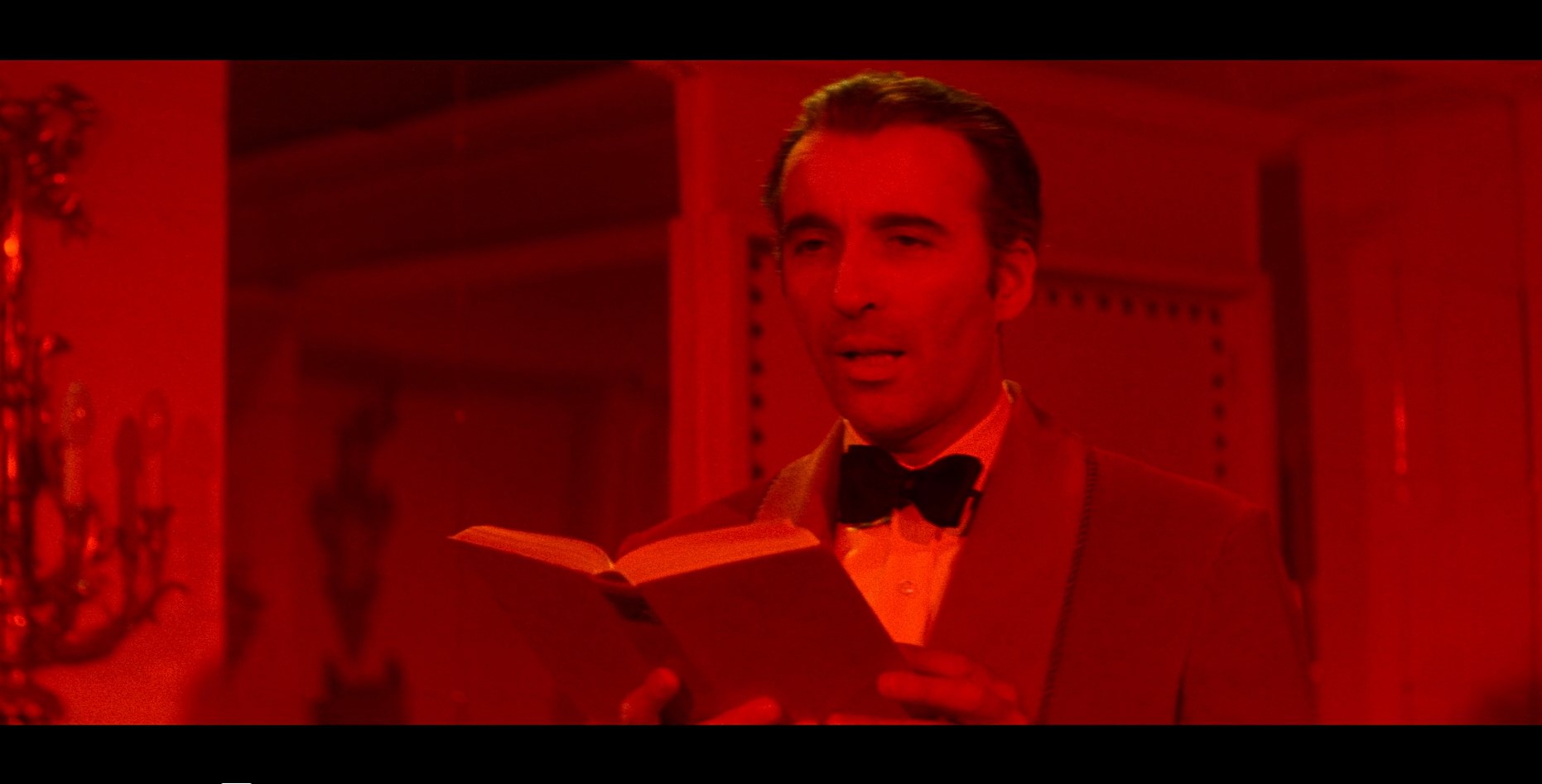
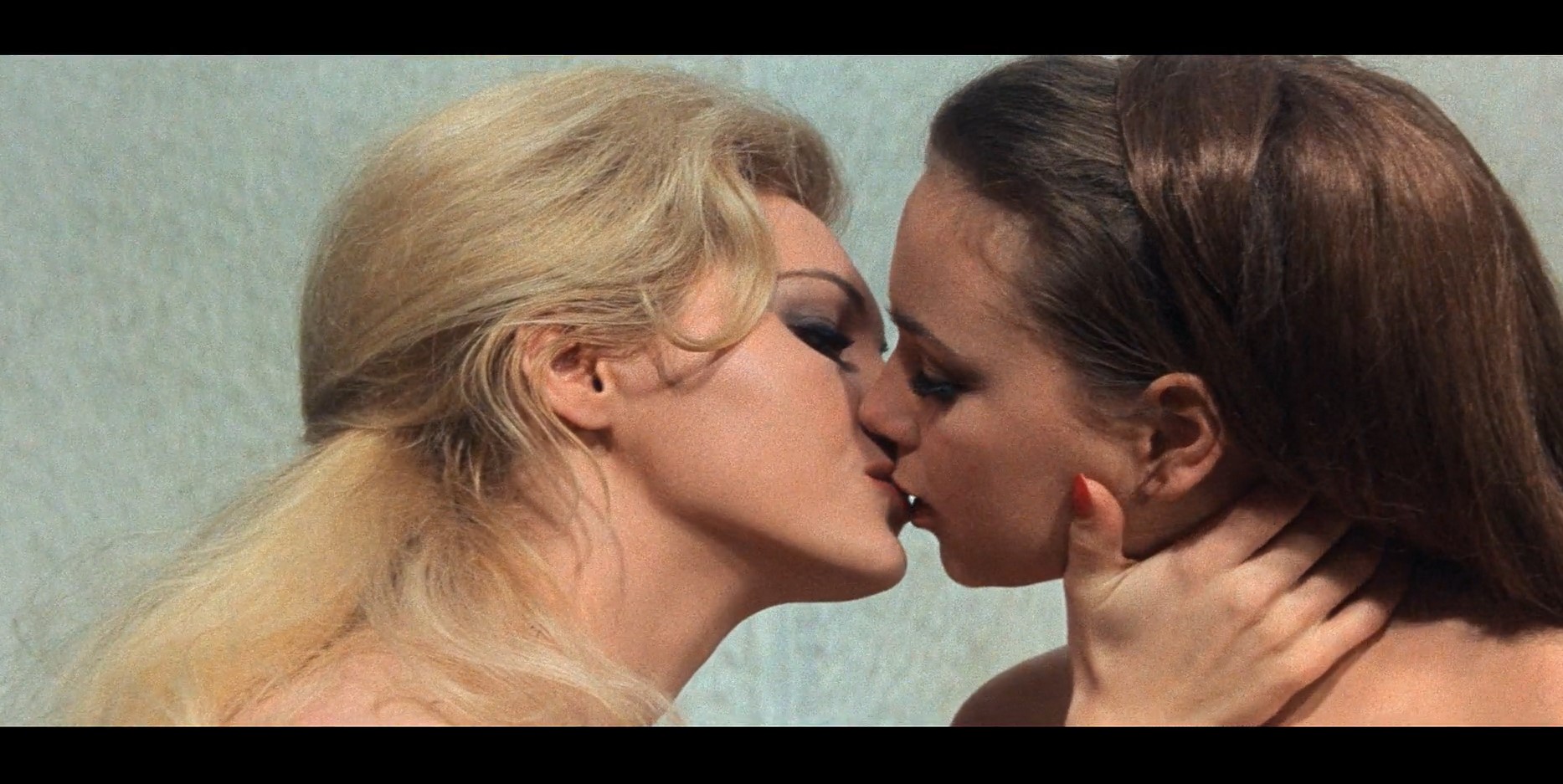
At the frayed edge of an already soul crusher subject matter, “Eugenie” repels against the grain of easily digestible roles,  Marquis de Sade’s characters are sadomasochist with abhorrent qualities of deception, malintent, and insatiability for a cathartic release from sexual pleasure and punishing pain.  On the other side of the coin, Franco and Towers film calls for the characters to push beyond the limits of their comfortability around the idea of drugging and raping, or being the victim of such, as well as violence and murder as part of a cult normalizing and rationalizing unrestrained freedom and ideology.  Swedish born actress Marie Liljedahl had a brief stint in erotica, as a power-seductress as the titular Inga, and only dabbled with sexploitation, “Eugenie” being that dabbled powder only once snorted to warrant a sudden disinterest in the theme altogether.  Liljedahl plays the titular character and she looks every bit the age later-aged teen with a round, youthful face, vibrant demeanor, and curvaceous like a ripe peach.  Like that knot forming in your gut spurred from anxiety, watching Eugenie exploited while in a stupor is the equivalent imaginations of what the deplorable effects and actions of a roofied drink that produces vague and foggy recollections and disbeliefs in what is reduced down to a vivid dream gone wild.  The two inveiglers at the heart of Eugenie’s virtuous destruction quickly become despicably loathed by not only their debauchery plans to corrupt good embodied but also by their snooty affluency and their acrid arrogance with the help.  “The Blood of Fu Manchu” and “99 Women” blonde beauty, Maria Rohm, and the stern faced “Succubus” and “The Vampires Night Orgy” actor Jack Taylor exemplify the essence of evil as the de Sade principled lovers and step-siblings Madame Saint-Ange and Mirvel.  The opened-ended lust Mirvel has for Eugenie morphs into a determined, nagging desire to have her at all costs, kept close to the chest by Taylor but knowing it’s simmering quickly to a head, and you can see in the Madame’s eyes that she’s either really internally pissed about Mirvel’s narrowed focus on a new toy or she’s basking in her ideology’s unchained gratification.  Rohm’s nonaligned decision maintains Madame’s sensual composure and undisclosed intentions until the shocking end.  The presence of Sir Christopher Lee in a Jess Franco film isn’t all that surprising.  The legendary, late British actor – “The Blood of Fu Manchu,” “The Bloody Judge,” and “Count Dracula” – where a handful of euro trashy and exploitative horror that were released around the same time as “Eugenie,” but “Eugenie” garishly bathed in the idea of sexual misappropriations and Lee being a last minute addition due to another actor’s ill-fate, agreed to fulfill the role without knowing how involved the nudity would ultimately land perverted cuts of the film into spank cinema houses.  Lee’s red smoking jacket, elegantly stoic composure and dialogue delivery, and his incredible ability to perform an intimidating figure without as much as lifting a finger compounds the value of Franco’s filmic adaptation to the point where I firmly believe with the original slated actor George Sanders (“Village of the Damned, 1951) in the ringleader and adherent role of Dolmance would likely have not have been half as good.  Anney Kablan, Paul Muller (“Vampyros Lesbos”), Uta Dahlberg, and Maria Luisa Ponte (“El Liguero Mágico”) costar.

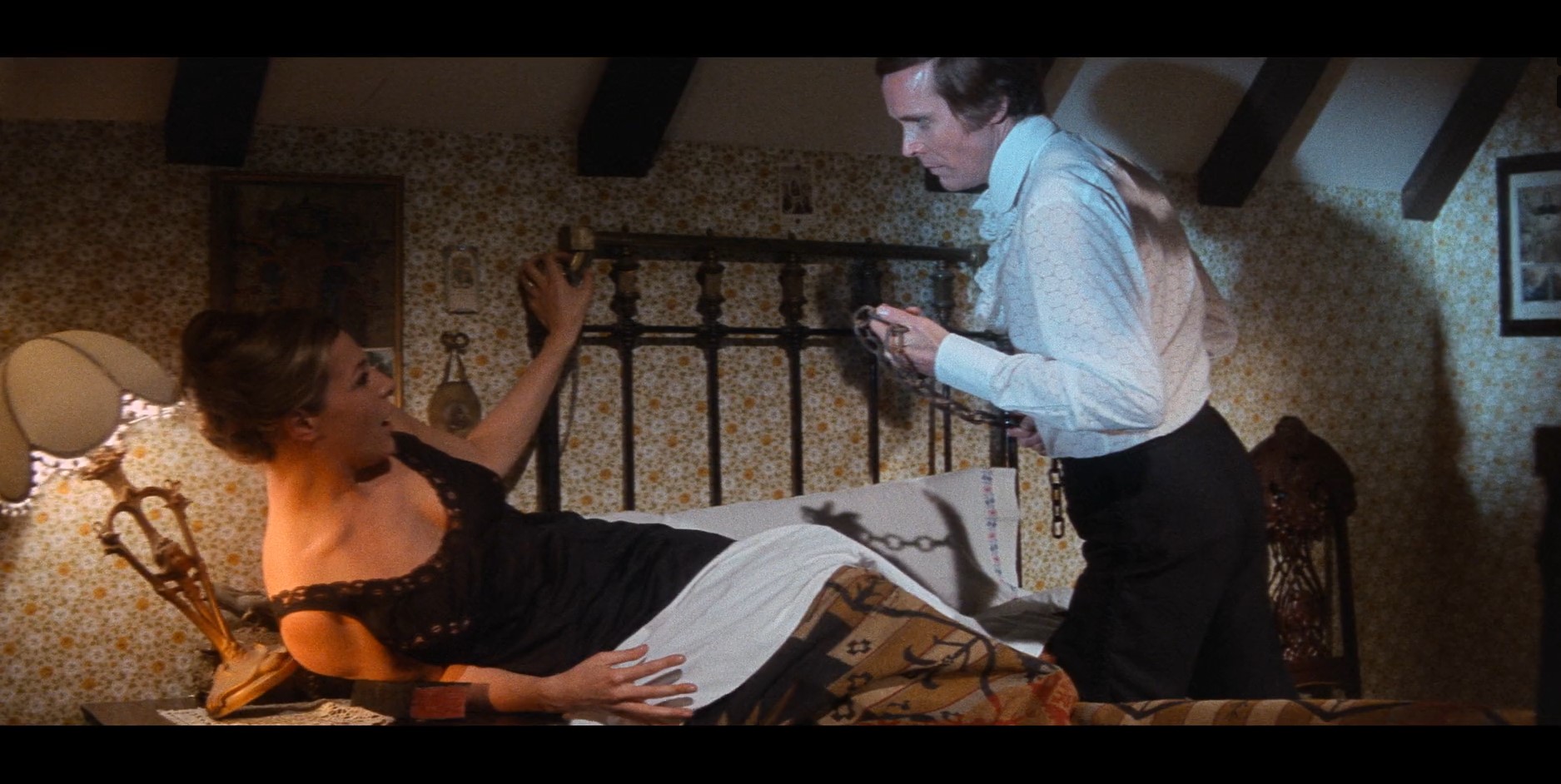
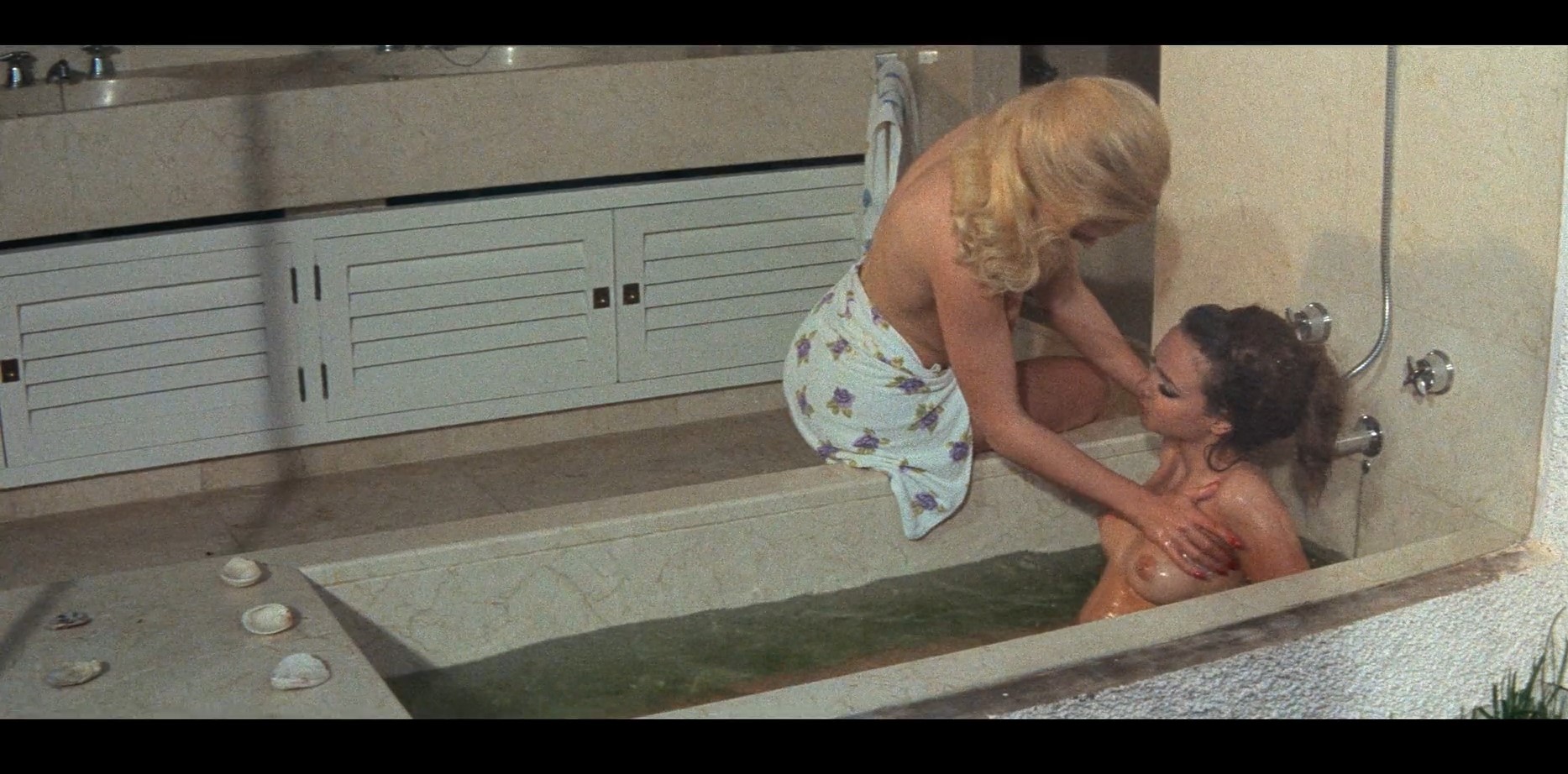
Through an ocean of film filth, “Eugenie” may be the very film that proves Jess Franco is a cinematic genius in his own rite by capturing de Sade in the flesh, so to speak, with a plain-sighted fetish that diabolically hatches a scheme within a scheme.  In addition, “Eugenie,” dare I say it, almost feels like a Hammer film, especially with Lee in the picture.  The interior sets are modernly gothic with sleek and sterile furniture but garnished with large candle holders and the Marquis de Sade era sartorial worn by Dolmance’s muted followers. There’s a cadence to Franco’s story, one that leaves breadcrumb plot aspects to go against divulging a straightforward story right from the start, and the history between acquainted characters is contentious and fraught with unpleasant emotions in the act nice, play nice master sadists and the subservient help hierarchy that hints at a fraction of degrading minorities. Saint-Ange and Mirvel boatman Augustine, a black man who has his life reborn from the ashes of poverty only to be toiled as their attendant and frivolous plaything when the mood is right. There’s also deaf and mute woman brought on to be the new maid in a moment’s conversation between the siblings just to drop a dab of her presence amongst them. Augustine and the maid represent the lower class of people, a man of color and a woman of disability, to easily take advantage of just like Saint-Ange and Mirvel do with Eugenie’s innocence. France shies away being overly showy in slipping in this unjust dynamic that unfolds bit by bit as mentioned earlier of Franco’s revelation design. “Eugenie” not only dangles the attractive set locations and nudity carrot to draw attention but also invests in its talent as Frnaco the cherishes the cast of individual portrayers with longer shot moments to speak volumes of their unique objective or to pedestal them in their own keynote scene of power and, subsequently, obliteration that makes every occurrence worth noting and not just something to write off. “Eugenie” has no tears or apologies to spare but only inhuman indecencies separated by a blurred, unfettered line of sex and sadism satisfactions. This is Jess Franco at his finest.

The 1970 “Eugenie” print takes on more pixels, 2180p to be exact, with 4K UHD transfer and a re-release 1080p high-definition Blu-ray in a 2-disc set from Blue Underground. The 4K restoration from the original camera negative with Dolby Vision Hi-Def resolution on a 66GB, double layer UHD and is also on an AVC encoded Blu-ray that are both presented in an anamorphic widescreen 2.40:1 aspect ratio. Both transfers execute their respective program, offering an average frame rate of mid-high 30s Mbps, but there’s a focus issue with the transfer brought upon likely at the origin of filming and we know this because the frame rate never drops, staying consistent throughout the issue. Periods of unfocused detail come and go between edits and often in the same shot as if attempting to render delineation between the foreground and the background in order to get the shot on the fly (there are many instances Franco had limited time to shoot). Color grading, including skins tones, are natural appearing until the red tint, a symbol of when the subject matter becomes dark, eliminates and reduces vast color palette to one single hue. Both formats offer an English and French dub language 1.0 mono mix that buff enough to be ample; in fact, the mix is rather good considering the single channel with substantially clarity with no hissing, popping, or other blights on the dialogue track, Foley, or any track for that matter. Subtitles are offered in English, French, and Spanish. If you’re looking for special features, they mostly encoded onto the second disc, the Blu-ray, with Perversion Stories, a retrospective interview with the late Jess Franco, writer Harry Alan Towers, and stars Christopher Lee and Matrie Liljedahl discussing the behind-the-scenes measures and understandings of the sexploitation classic, Stephen Thrower on Eugenie, an interview with the author of “Murderous Passions: The Delirious Cinema of Jesus Franco,” a new interview with costar Jack Taylor Jack Taylor in the Francoverse, a newly expanded poster and still gallery, and theatrical trailer. The 4K disc also has a new commentary with film historians Nathaniel Thompson and Troy Howarth, plus a theatrical trailer. A two-disc UHD case holds a disc on each side of the interior and the case itself sports the class naked Eugenie pose with her brown locks draped over her shoulders, covering her chest. Speaking of covering, the snapper case is sheathed in a O-slipcover with oval cutout of the front to display Eugenie with a Victorian-aged mirror border. The darkened slipcover is also prominently titled under Marquis de Sade’s novel English moniker, “Philosophy in the Boudoir” that has a regal and classic aesthetic. The unrated, 87-minute film has an all-region playback. Jess Franco distills revolutionary extravagance and couples it with the notion that youth will inevitably be corrupted by family, friends, and a group of cruel Marquis de Sade cultists in what can be construed as one of the director’s most prestigious sexploitation and melodramatic films of his oeuvre.

“Eugenie” is Waiting to Tell You Her Story of Perversion!  See It Now on 4K UHD at Amazon.com