One’s Cool, One’s Crazy, Both Are Chasing EVIL. “Cutter’s Way” reviewed! (4K UHD and Blu-ray Combo / Radiance Films)

“Cutter’s Way” 4K UHD and Blu-ray Now Availble!

Cruising through life and women without much purpose, Richard Bone finds himself the prime suspect of a young woman’s murder.  Realizing he may have witnessed and seen the killer deposing of the body in a back alley where his car broke down on a raining night, he confides in his longtime best friend Alex Cutter, a crazed and paranoid disabled Vietnam veteran with a drinking problem.  Alex sinks his teeth into the case to exonerate his friend’s good name when Richard possibly recognizes the killer, a powerful oil tycoon revered by society and an employer to many and won’t let up on proving to Richard his suspected guilt by pieces the clues together.  Richard’s amuses Alex’s obsession, stemmed possibly from his trauma delusions, alcoholism, or his passive aggressiveness toward Richard’s infatuation with his wife Mo, but when Alex’s evidence becomes more and more convincing, Richard can no longer ignore his lunatic friend’s fixation as just a waste of time and conjecture. 

Based off the novel “Cutter and Bone” by novelist Newton Thornburg, the 1981 comedic-whodunit-drama “Cutter’s Way” is an unorthodox buddy gumshoe mystery with themes of the pitiful and nearly forgotten veterans of Vietnam War, the magnate power of whitewash and concealment, and to have purpose in life before life is taken away from you.  The late Ivan Passer, director of crime dramas “Law and Disorder” and “Crime and Passion,” focuses paper-to-screen transgressional energy to the pen-to-paper script by Jeffrey Alan Fiskin in the screenwriter’s sophomore feature film following the 70’s biker-exploitation and revenge caper “Angel Unchained.”   “Revenge’s” Fiskin tones down the ruffian violence, trading it for another type of irrational behavior in the form of the half-bodied war veteran drowning what’s left of himself at the bottom of a bottle while his best friend, a full-bodied, red-blooded, ladies man, ironically enough wants the one unavailable woman the vet married  and could keep in his possession despite her own form alcoholism and depression.  Once titled “Cutter and Bone,” changed to “Cutter’s Way” to appear less like a medical horror production, the film is produced by Paul R. Gurian (“The Seventh Sign”) under his namesake production company, Gurian Entertainment, shot in Santa Barbara, California.

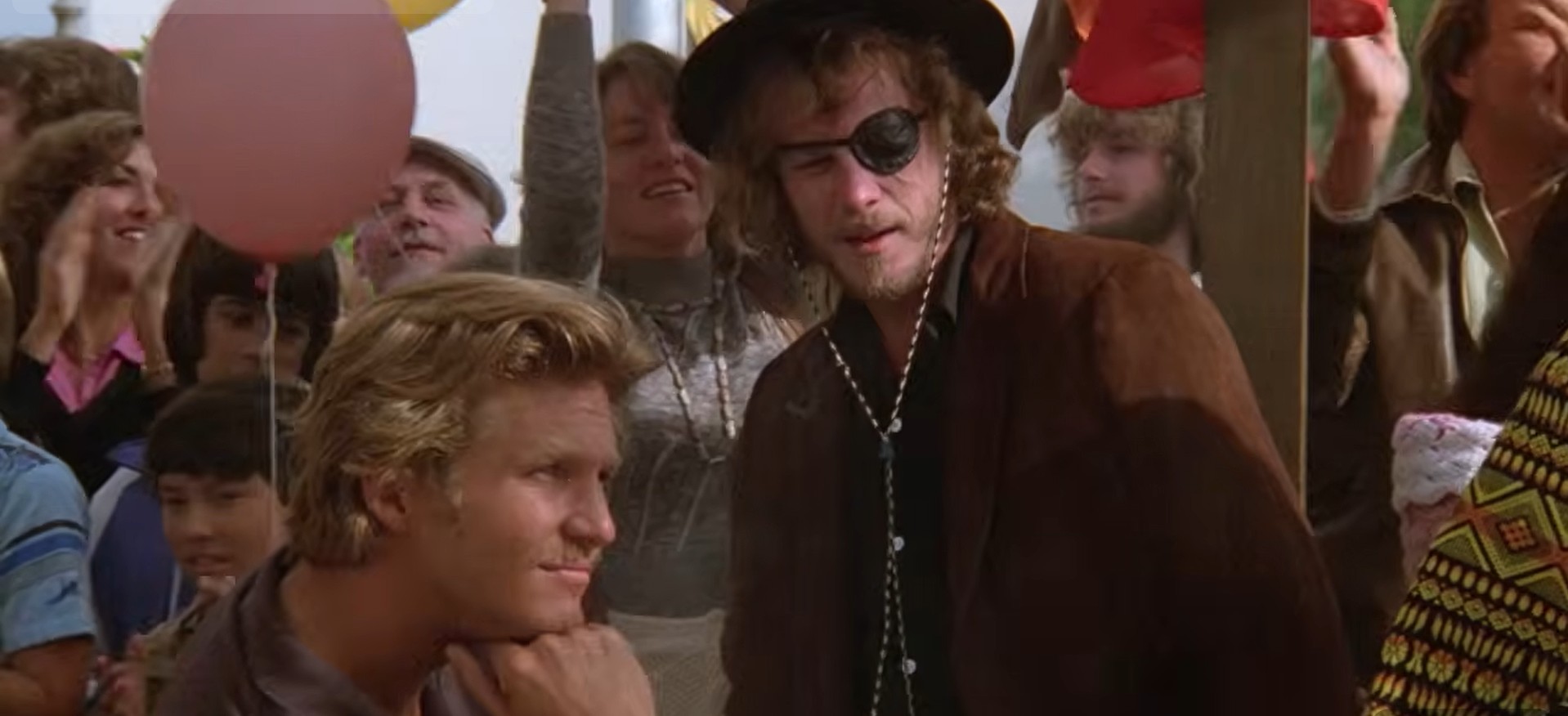
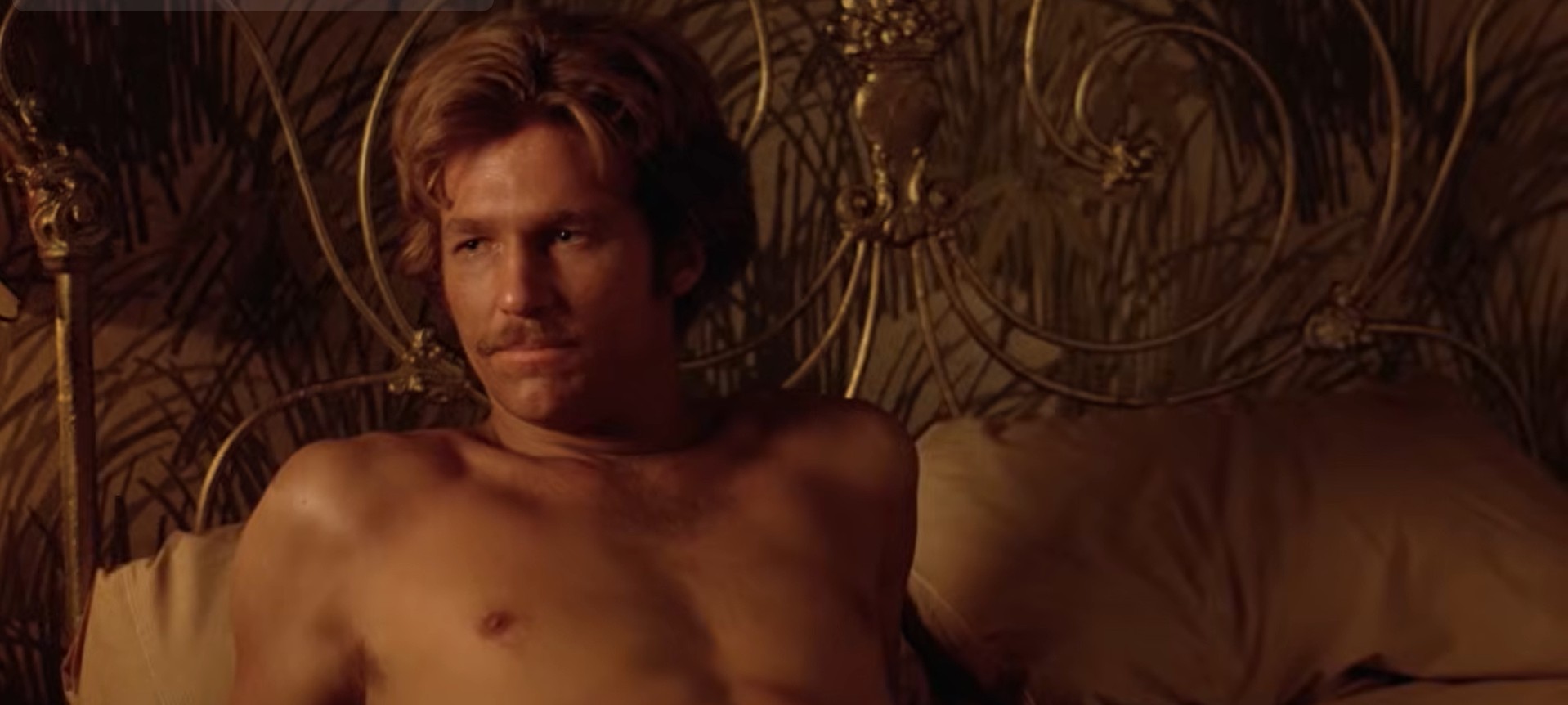
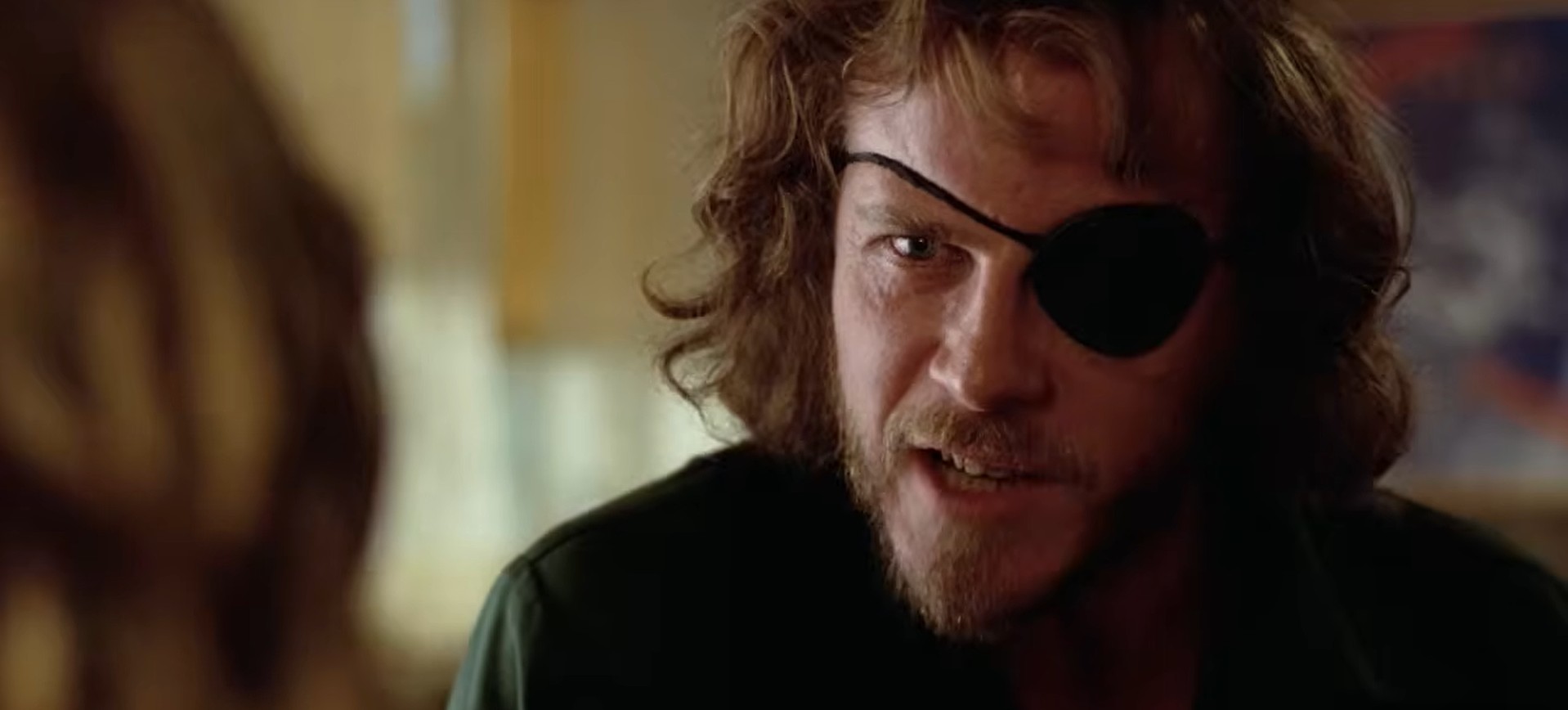
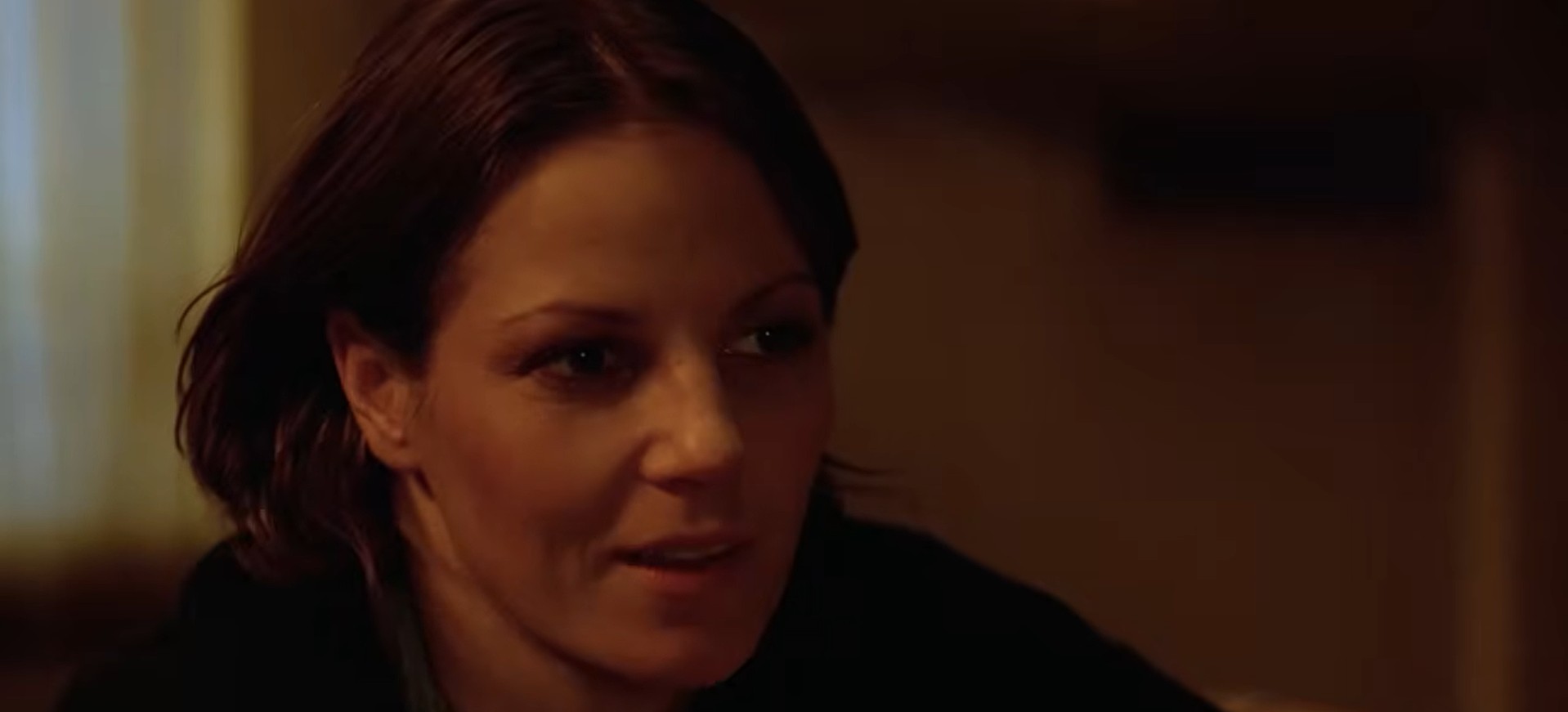
“Big Lebowski’s” Jeff Bridges has the story’s focal point being Richard Bone, the happenstance victim becoming a murder suspect while trying to coast through life by walking away from hard problems and not taking the steps to advance.  The Bridges of 1981 is certainly a different breed than of grizzlier Bridges of more than four decades later, and even nearly two decades later around “Big Lebowski’s release, with a slender cut and tall physique, baby-smooth shaved skin, and a head full of dirty blonde hair that certainly makes him the ladies’ man as shown in the opening scene of him dressing himself after a bedroom romp with a slightly older woman.  Bridges embodies both Bone’s lackadaisical commit to himself, his friends, to woman he loves, and even to the conspiracy surrounding the real suspect concocted and presented by his friend, Alex Cutter, but when the tone starts to shift more toward the evidence of a coverup and all the dots begin to connect to Cutter’s alcoholic rantings and ravings that could be construed as convincing conjecture, you see the Bone begin to care more than he’s ever allowed himself to.  Bridges’ Bone is actually not the most interesting, complex character as that accolade goes to John Heard as Alex Cutter.  The “Home Alone” actor deserved to be praised for his performance as the untamable and wildly convincing Veteran horribly disfigured by his service in Vietnam that fuels his drinking problem, causing a seemingly impenetrable yet sociable wall between him and his wife, and always seems to put tolerable Bone in the middle of his trouble, such as his use of the derogatory N-word in a joke at a bar where we first meet his uncouth, drunken, yet surprisingly together state.  Heard’s intensity has range and emotional standing in the character’s cocky hop-a-log swagger that gives the big ability middle finger to his disability that doesn’t stop his motivational obsessions.  Caught in the middle is Mo, played by Lisa Eichorn who would later costar with Jeff Bridges over 20-years later in the mystery-thriller “The Vanishing” alongside Kiefer Sutherland and Sandra Bullock.  Also an alcoholic in a less look-at-me kind of way, Mo has the heart of both Bone and Cutter as Bone walked away from their romance years earlier and she marries pre-war Alex, but Bone and Mo’s spark lingers, teases, and eventually comes to fruition as the damn breaks with Cutter’s behavior that leaves Mo isolated and lonely in a pit of depression.  One character that has girth in the first two acts is the murder victim’s sister Valerie from the girl who yelled SHARK! In “Jaws 2” in Ann Dusenberry and while Dusenberry has a sizable part as part of Cutter’s investigating team, almost like an instigator to his whims, Valerie ultimately disappears in near the tale end of act two and completely from act three, making this one of the biggest mysteries alongside the possible murder suspect itself.  “Cutter’s Way” rounds out the cast with Stephen Elliott (“Death Wish”), Arthur Rosenberg (“Cujo”), Nina van Pallandt (“The Sword and the Sorcerer”), and Patricia Donahue (“Paper Tiger”). 

“Cutter’s Way’s” powerhouse duo of Jeff Bridges and John Heard couldn’t be more perfect with two contrasting walks of life that somehow fit and work, drawn together like strong magnets despite their odd shaped and conflicting personas.  At some points during Cutter’s insane theories and aggressive, uncivilized touting, you would think a calm demeanor and conservatively rational Bone would distant himself from Cutter, or even try to stop his stare-induced antics but Cutter’s shenanigans fuel something in Bone that makes this relationship hobble along without any sign of slowing down and that likely is largely in part to Mo being the connective tissue.  There’s perhaps some guilt residing in Bone who escaped the draft whereas Cutter did not, resulting in losing eye, limp, and leg for a country he obviously has contempt for by going against societal norms.  Cutter convincingly lays the framework of suspicion against the big time oil tycoon with intrinsic connections to not only society by to Bone and Cutter’s friends that makes their meaningless existence in comparison to the oil man’s own feels diminutive and impossible to rise up and action against with the evidence toward a police department that already has Bone in their sights because his car was nearby.  However, the investigation follow-up, as well as the acute disappearance of the victim’s sister Valerie, stamp the story with difficulties of resolve and being a well-rounded narrative. These poofs of key parts differ from the death of main character that goes without explanation, or rather has too many explanations that mold in speculation, that adds to story’s deep misgivings of who was there that dark and stormy night of the murder and culminating to a dramatic finish that impresses a linger skepticism and perhaps even a little bit of cynicism between all left involved. 

“Cutter’s Way” has sorely fell under the radar amongst aficionados of cult classics and UK distributor Radiance Films is looking to expand the Ivan Passer directed adaptation to a broader audience of not only to fans of Jeff Bridges and John Heard but to the fans of thought provoking and open-ended features that get the rusted mind gears turning once again for storytelling and not glaze over with immense computer generated special effects.  Radiance Film’s new restored limited edition 4K UHD and Standard Blu-ray set is pretty deluxe with a 4K restoration presented in HDR/DolbyVision.  The 4K is HVEC encoded with 2160p on a BD100 and the Blu-ray is AVC encoded at 1080p on a BD50.  The ample space allows the restoration to fly without constraint with a vibrant and nicely diffused picture through the dynamic coloring with a slight contrast on its essential organic grading that dips into a bluish tone and low light noir here and there when the moment calls for it.  Impressive detail measurement along the texturing as John Heard looks every bit as grizzly as his character entails with a course, unkept beard, long straggly hair, and ill-fitting military-esque attire whereas Bridges has primary color pristine and neat lines about him.  The Panavision spherical lens used creates a natural concise look, often flat but not unnatural, as it doesn’t try to squeeze the framing.  There were no damage spots to note on a well looked after 35mm print.  The English DTS-HD Master Audio mono track is too flat with frontal space only for the enriched dialogue of the script between mostly Bone and Cutter.  The suitability of track doesn’t change despite a lesser vigorous mix that has competent job performance and is adequate to the type of contemporary noir.  Jack Nitzsche’s soundtrack too makes the film more alluring with a blend of Latino influences and an oxymoronic harmonic dissonance of a musical saw and harmonica that plays into the noir undertones.  English subtitles are optionally available.  On the 4K special features coverage there is an introduction by Jeff Bridges and three audio commentaries with novelist Matthew Specktor, assistant director Larry Franco and Production Manager Barrie Osborne, and an archived conversation between film writer Julie Kirgo and late producer Nick Redman.  There’s an isolated soundtrack from Jack Nitzsche formatted in a DTS-HD Master Audio 2.0 compared to the feature’s mono track.  The Blu-ray houses a little more bonus content with all of the above on the UHD and continues with an analyst featurette Piety, Patriotism, and Violence:  The Legacy of Cutter and Bone by film writers Megan Abbott, Jordan Harper, and George Pelecanos, an Ivan Passer interview from 2015, a Lisa Eichorn interview from the Fun City release, an interview with producer Paul Gurian from the Australian Imprint release, an audio only interview with former United Artist exec Ira Deutchman, Cut to the Bone:  Inside the Score is a featurette that interviews music editor Curt Sobel, Bertrand Tavernier is a Sidonis Calysta’s interview of admiration from the French film director, a still gallery, the trailer, and an alternative title sequence with the original “Cutter and Bone” title sequence.  Radiance Film’s physical presence is substance with this limited-edition release held all together in a rigid slipbox with new commissioned artwork by Time Tomorrow on both sides and comes with an obi strip with credit and technical information.  Inside is a clear Scanova Blu-ray case with reversible artwork with the primary art a split still image, one image for either side from the feature, with the reverse containing new artwork as well.  The overlapping stored discs are pressed with a blood red tint.  A 78-page mini book is inserted alongside the Scanova with cast and crew acknowledgements, transfer notes and release credits, and essays from Nick Pinkerton, Christina Newland, and Travis Roberts with an Ivan Passer Q&A by Jerry Roberts.  The book also contains color images as well as composition artwork on the bookends.  The region A locked release doesn’t have a rating listed, assuming not rated, and has a 109 minute runtime. 

Last Rites: Jeff Bridges and John Heard are the dysfunctional detective duo you never thought you needed. “Cutter’s Way” is a cathartic comedy and crime thriller refreshed and renewed for ultra-high definition from the fan’s favorite boutique labels, Radiance Films.

“Cutter’s Way” 4K UHD and Blu-ray Now Availble!

EVIL’s Counterfeit Products are the Bomb! “Knock Off” reviewed! (MVD Rewind Collection / 4K UHD and Blu-ray)

When confronted with product forgeries by Hong Kong police and company representative, Ray, a longtime Hong Kong counterfeiter trying to go legit by partnering up with Tommy to be a distributing fashion designer of V-Six Jeans, becomes embroiled in a Russian smuggling operation of hiding powerful micro explosives in counterfeit goods being sent around the globe.  With their ability to be activated by satellite waves, the devices can be hidden in all types of products.  The CIA, using Ray to track down another notorious counterfeiter, becomes involved and exploit Rays connection to Hong Kong’s criminal underbelly but double-crossing twist and turns has Ray struggling to trust an ally in his mission to not only find out who is counterfeiting his denim goods but also save the world from infiltrating Russia explosives.  He’ll have to rely on his fighting skills as well as hesitantly trust those who’ve deceived him to unearth the person responsible to clear his name and stop the deadly outbound shipments. 

To start this review with a personal anecdote, I recently sold Air Jordans to an eBay customer and come to my surprise and dismay, eBay’s authentication process determines the shoes a forgery.  I’ve sold many Air Jordan and Nike shoes in the past, successfully through the authentication process, and pride myself on knowing what to for when determining fake product.  This one had me fooled.  An exact lookalike of the Air Jordans that passed my authenticity examination with the company tag that has all the production information including the product identity number, had the correct Air Jordan logo, and the material passed the visual and feel test with substantial promise to confidently market.  Now, what eBay found is completely without reason as I don’t know what they saw or found but what I found in the 1998 campy-action-thriller “Knock Off” surely reminded me that there is always more than what meets the eye.  “Once Upon a Time in China” and “Twin Dragons” action film director Hark Tsui works with western actors to achieve a nonstop, impractical, and fun to watch film that doesn’t letup or provide any downtime.  The script is penned by Philadelphia born screenwriter Steven E. de Souza, the same de Souza behind “Commando,” “Die Hard,” and “Street Fighter,” orders another supersized helping of action on a Hong Kong reality-defying scale and is produced into an extremely 90’s-laden existence by Raymond Fung, Kamel Krifa (“Universal Soldier”), Moshe Diamant (“I, Madman”), and Nonsun Shi (“Double Team”).  “Knock Off” is a production of Film Workshop and MDP Worldwide. 

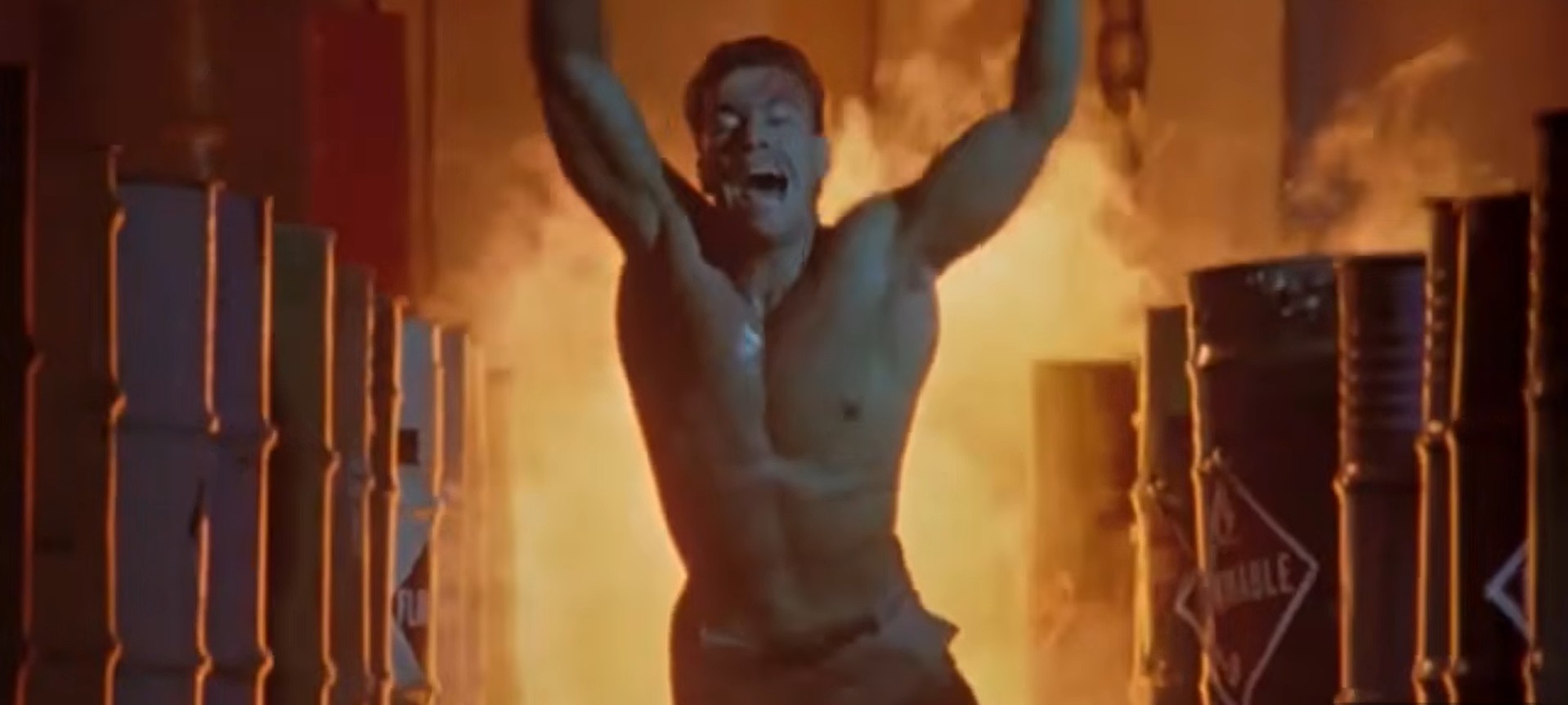
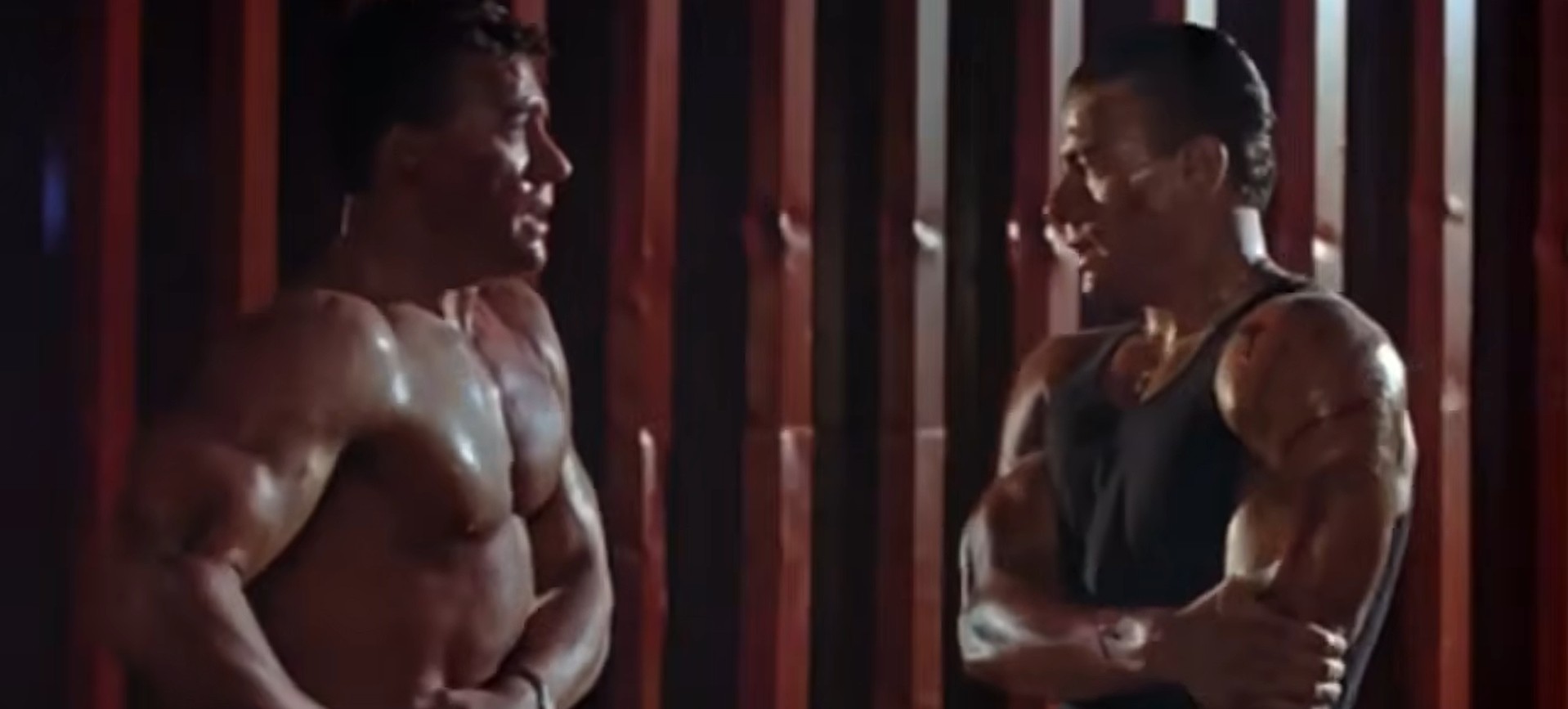
At the tail end height of his career, the Muscles from Brussels, Jean-Claude Van Damme (“Bloodsport,” “Universal Soldier”), finds himself in a self-deprecating lead role that’s campy toward showcasing his own physique but in a slapstick way.  His character Ray is a likeable, affable, cool type with a tragic past, only touched upon ever so briefly and delicately in conversation, who has resorted to selling counterfeit items to make a living.  Yet, Ray’s trying to pull himself into a straightened arrow by jumping at the opportunity to partner with Tommy (Rob Schneider, “Deuce Bigalow:  Male Jiggalo”) for legit business.  Van Damme and Schneider become a buddy action duo with Van Damme knocking around bad guys with jump kicks and parkour while Schneider provides the comic relief with very few, and pale in comparison, combative fighting moments in what is also the same kind of role from Sylvester Stallone’s “Judge Dredd.”  To Van Damme’s credit, the usually unintentionally funny action star arises some comedic chops in a devil-may-care persona that eventually hammers down to a determined save lives ambition, but not before Van Damme egregiously has to thematically remove his shirt for nearly every action scene or strip down to his boxer-briefs so all can good a good view of his athletic, muscular physique.  The whole course is an objectifying tragicomic, especially when he starts to rip through Tommy’s Hawaiian shirts simply by turning his body or being whipped in the rear by Tommy during a rickshaw race with Schneider commenting about his big, beautiful ass.  Yes, men do get objectified as well.  Van Damme and Schneider are eventually joined early on by Lela Rochon (“The Meteor Man”) as a V-Six Jeans Representative from North America with a covert agenda and the iconic Paul Sorvino (“Dick Tracey”) as a CIA operations supervisor taking on counterfeiting, both Rochon and Sorvino subdue their performances initially for twisted knots in the storylines later on that makes his evolving ensemble that much more entertaining.  Moses Chan, Wyman Wong, and Glen Chin, Carmen Lee costar.

“Knock Off” isn’t your typical Jean-Claude Van Damme beat’em up action-thriller though it follows the same principles as one.  Hark Tsui puts forth a kinetic ball of continuous energy, ever evolving and dynamic to keep scenes from getting stale.  From the opening illegal rickshaw race through the streets of Hong Kong city to the massive Budha temple explosion to the cargo ship container toppling scenes, there’s plenty to behold in Tsui stunt and special effects juggernaut.  A less serious Van Damme with Rob Schneider joined at the hip is the peculiar buddy action-comedy we never knew we wanted, brush stroked with late 1990’s superimposed fireballs and the legendary pushed to the limit Hong Kong stunt effects that look quite expensive and detailed beyond belief.  Some of Van Damme’s swift movements are aided by a stunt wire that’s briefly visible in hi-def and a few of Tsui’s stylistic edits, ones that zoom in, try to seamless transition, and give an interior view of a sniper’s scope or a barrel of a gun is heavy handed in it’s editing.  While Tsui gets his filmic credit as the one-and-only director, it’s stunt supervisor Sammo Kam-Bo Hung (“Ip Man”) who should receive recognition for helming the camera for the stunt scenes.  You can see the different styles being pushed together between Tsui’s unconventional down shot angles and Hung’s more straightforward impact in an action shot, creating an eclectic design that adds to the intrigue, especially in Tsui’s downtime moments of conversation that’s not only witty and fast but at an off centered framing that’s more vertically skewed while keeping the concentration on the actors in a wider anamorphic lens in an environment that seemingly wraps around them. 

They say imitation is a form of flattery but this legit MVD Rewind Collection release of “Knock Off” fawns clear adulation with a 2-Disc, 4K UHD and Standard Blu-ray release.  Coming in as the 6th title on the company’s 4K LaserVision Collection, cojoined with the Rewind Collection label, the HEVC encoded, BD66 4K UHD, presented in 2160p in a widescreen 2.35:1 aspect ratio, is noted having a hi-def restoration with a 16-bit scan of the original camera negative that provides more a dynamic color range and saturated depth.  There’s definitely an improvement and a difference in contrast to the standard Blu-ray with a vivid offering of a multihued Hong Kong cityscape from the HDR10 that’s not offered in 8-bit or even 10-bit color depth.  Interiors are subjected concreated warehouses of the colorless and dark variety but no banding to note and no block distortions.  Textures are surprising not there at the level we’d expect but likely due to Tsui’s heavy use of superimposition effects with green fireballs and other types of overlayed explosions, and the action scenes often retract a good amount of detail too.  The 1080p Blu-ray is an AVC encoded BD50 with the same aspect ratio as the 4K.  It too offers a solid presentation but not to the extent of the 4K and still suffers from the same wishy-washy texturing, but the overall presentation is solid and worth the value.  The English language tracks available on both formats are a DTS-HD 5.1 Surround Sound Mix and an uncompressed LPCM 2.0 Stereo.  For any action film with lots of range, depth, and conversation, you certainly want to go with the surround sound option that harnesses every direction and that’s the clear choice with “Knock Off” as it opens the lines of directional communication with the back and side channels, leaving all the dialogue and heavy LFE lifting with explosions primary in the front and clear immersive resonation.  Dialogue has no issues with the original audio track albeit being ADR but used with the original cast’s voices.  English subtitles are available for selection.  The 4K special features include only an archival commentary from action film experts Mike Leeder and Arne Venema.  The Blu-ray contains te same in tandem audio commentary plus a new interview with producer Moshe Diamant, an archived interview with screenwriter Steve E. de Souza, the original making-of featurette, and the original theatrical trailer.  MVD’s Rewind and LaserVision Collection set comes with a thin, cardboard O-ring slipcover that has faux crinkled front image, the original cover art of the highly original Van Damme with a gun (my hint at sarcasm) like a laserdisc paper sleeve would have.  Inside is the black Amaray with the same primary image for the sleeve art sans crinkling but if you reverse the sleep, you’ll see the classic Rewind Classic design with the same Van Damme image.  The Amaray has snaplocks on each side of the case on the inside – 4K UHD on the right and Standard Blu-ray on the left – with an insert containing a mini-folded poster of the LaserVision Collection artwork.  “Knock Off” is rated R, has a runtime of 94 minutes, and is A region locked.

Last Rites: “Knock Off” is no cheap…knockoff. The Hong Kong production is action-packed, outrageous, and campy fun with Van Damme in taking a step back from being the stoic hero and charismatic hero to be the anti-hero caught in the middle who just knows how to roundhouse his way out of an nefarious Russian plot involving nano-explosives.

You Better Damme Believe It! “Knock Off” on 4K UHD and Blu-ray from MVD Rewind Collection!

EVIL Does Not Sit and Rollover. “Good Boy” reviewed! (Visions Home Video / 4K UHD Blu-ray)

“Good Boy” Now Available on 4K UHD Blu-ray from Visions Home Video

Indy is a good boy, a loyal nova Scotia Tolling Retriever pet and friend to his owner Todd who’s had him since being a puppy.  When Indy senses trouble, a troubling shadowy figure lurking and following his owner, he tries to do all that he can to protect the one he loves the most.  Struggling with a chronic illness, Todd retreats to his grandfather’s isolated cabin deep within the woods for a little rest and relaxation after a medical scare that put him in the hospital.  Indy senses the supernatural force has followed them away from the city and into the rural family home.  As the presence moves about the house, moving closer and closer toward his friend, Todd’s chronic illness becomes increasingly worse, and Indy’s nightmares bend reality as the shadow begins to take a horrifying shape.  Todd’s disease has him nearly incapacitated and unaware of the dangers that surround him, leaving Indy as the last line of defense against the looming dark force that wants to take him.

Pet owners rejoice!  A horror movie with a story from the perspective of its star, a dog.  The 2025 supernatural thriller “Good Boy” has Indy, the then 8-year-old dog’s real name, headlining the film, directed by Indy’s owner Ben Leonberg, horror short filmmaker with such recent credits as “The Fisherman’s Wife” and “Dead Head” from within the last decade.  Leonberg also wrote the script alongside Alex Cannon and took over three years to make due to the complexity of working with untrained animal actors, a task that’s easier said than done, to accomplish Indy’s character narrative from his point of view, and, of course, the rigorous A-to-Zs of creating a feature length film. Leonberg coproduces “Good Boy” with Kari Fischer and Brian Goodheart.  “Good Boy” is a self-referential studio made film with the company name called “What’s Wrong With Your Dog?”

If casting an animal with a hesitation stillness and pensive piercing eyes, Indy is the four-legged fur baby on the short list.  This specific Nova Scotia Tolling Retriever, a breed known for his hunting qualities and retrieval of gunned down carcass and not acting, is an untrained thespian by all means but has a multitude of expressions that work toward the menacing supernatural sense of dread and uneasiness.  When Indy stares into a dark corner, it’s shadows expanding slow across the walls and floors, the stare does convey concern.  When Indy cries and whimpers in apprehension of being left alone or his owner unaccompanied outside the house, those high-pitched cries and frantic movements from window-to-window bring narrative tension to unsafe separation from man and his loyal best friend-protector.  It’s clear that director Ben Leonberg treats his star pup with star focus, providing a dog-level perspective view that incepts and evokes a reaction just like any human character.  This applies even to the interactions with Todd (Shane Jensen) and his swaying, emotional reactions working through his own ebb-and-flow pain of a mysterious illness that plagues him.  Our first scene with Todd has him sitting motionless on the couch, in the dark, and drooling blood from his mouth in an indistinguishable view of his face, a motif amongst all human characters in frame to keep the focus on Indy’s facial Rolodex of emotions.  We never do know what’s wrong with Todd, whether be cancer, organ failure, or perhaps even the supernatural’s malevolent exposure, but it’s made clear he’s on death’s door in more ways than one.  The only human face shown is through the VCR playback of Todd’s grandfather and it’s the unique bone structure of horror friend Larry Fessenden (“Habit,” “Jakob’s Wife”) who often seems to be in, in some way, shape, or form, in a number of Shudder distributed films recently.  Arielle Friedman and Stuart Rudin bring up the small cast rear. 

“Good Boy” is simply not a novel concept.  There have been a few animal centered and perception movies throughout the decades, to name a few we start with “Babe,” the loveable little pig who finds friendship with a barn spider, then there was the tearjerking one with an orphaned bear cub who hitches to an adult male to avoid game hunters in “The Bear,” and, lastly, “Homeward Bound” was an adventurous return home with human voiceovers for two dogs and one cat team.  The element “Good Boy” does differ from those aforesaid examples.  Aside from giving Indy a voice, the non-personified canine is dropped into an intensely atmospheric horror framework that removes the safety net of having opposable thumbs and the misunderstanding between man and animal that makes the tense situation that much more riveting when Indy can’t express to his human the danger that lurks.  There’s a heavy theme of animal sensing danger or something amiss with someone carrying an unseen disease, that disease in “Good Boy” manifests as the shadowy figure that acts like the harbinger of death, or to the dark tune of a grim reaper, lying-in-waiting and eventually reaching for Indy’s human pal, Todd.  In this concept is the tragic downhill of Todd and the heartbreaking care Indy tries to protect and care for his unsuspecting master but in between all of that concern and drive for Indy is a steady fear something isn’t right, looking past Todd’s ailment toward a showier threat that, to an extent, plays like a device of ignorance for Indy, one that truly distracts him for the real danger plaguing Todd that bets the question, do dogs cope with trouble by creating a diversion? 

Visions Home Video, a premium home media label from UK’s Vertigo Releasing, retrieves “Good Boy” for a UK-Ireland 4K UHD Blu-ray release that’s supported on a HEVC encoded, 2160p ultra high-definition, BD100.  Through surreal nightmares, inky darkness, and graded with primarily dark gray and bluish tones, “Good Boy” faces images challenges with an indie production attempting to instill atmospheric fear and subtle bumps in the night.  That challenge is ultimately met its match with DolbyVision that’s able to decode those type, often blocky, negative spaces and darker color scheme in its high dynamic range.  Texturing works to fiber explicate Indy’s golden coat but much of the other details are kept in the dark as Indy’s, with his coloring, is represents almost like a bright spot amongst the color palette, even Todd is obscured in darkness, rain, or mist, but the details that do show do emerge.  Two English audio tracks are encoded with a 5.1 DTS-HD Master Audio and a LPCM 2.0 Stereo.  In regard to the surround mix, back and side channels diffuse the atmosphere non-diegetic sounds to create an immersive environment of a creaky old house pitter-pattered by rain and gusts of wind.  Coupled with the front work dialogue and the forceful jump scare moments creates a cinematic bubble that puts viewers right into the dark and stormy eeriness while sitting in their living room, if the viewer has the appropriate audio setup.  Dialogue is clean, clear, and prominent albeit ambiance tries to nudge it out of the way at times to but unsuccessfully.  Minor instances of depth of Indy, or even the presence, scurrying about the house have leveled balance in what is mostly a still air progression of Indy’s voiceless communication efforts. English is the only available subtitles. Special features include a making-of featurette Making an Indy Film and the theatrical trailer. There are more attractive physical features within Visions Home Video’s black and silver two-toned cardboard O-ring slipcover that leans into the shadow motifs. The same image art is also on the Scanova one-sided sleeve but inside, in the insert, is a double-sided folded mini poster with the same art plus an additional design. There are also four post cards with stills from the feature. The UK 15 certified release has strong horror and bloody images in its brisk 72-minute and region free runtime.

Last Rites: In horror, animals are mostly the perceptive ones, able to see and sense danger that can’t be seen with the human naked eye, and Ben Leonberg captures that phenomena through a fear-induced illness metaphor, one that lies and waits until terminal lucidity knows there’s no escaping the inevitable. Not even man’s best friend can stop it.

“Good Boy” Now Available on 4K UHD Blu-ray from Visions Home Video

Cinderalla’s Beauty Evokes an EVIL of Jealously, Obsession, and Beauty Standards. “The Ugly Stepsister” reviewed! (Second Sight Films / Blu-ray)

“The Ugly Stepsister” on 4K UHD Blu-ray from Second Sight!

Elvira’s mother weds a wealthy estate owner to re-establish life and permanence in high society.  Alongside living with her sister Alma and her new, beautiful stepsister Agnes, Elvira keeps on smile on her braced teeth though she’s passively mistreated by those around her.  When Agnes’s father suddenly passes away and it’s unearthed the estate has no money to its name, the opportunity to attend the monarchy ball for the prince to select a wife from a pool of available the virginal maidens is Elvira’s persistent dream to marry a prince and get her family back in wealth and power.  Elvira attends finishing school to learn proper lady etiquette but her braces, round nose, and pudgy exterior pushes her aside of teacher’s attention in favor of the beautiful, blond Agnes.  Primeval cosmetic surgeries, tape worms, and no sympathy from her mother send Elvira down a path of obsession despite the harm to herself as she eyes the prize of landing the prince of her dreams over her stepsister. 

Based off the classic folk and fairy tale Cinderella, debut feature film director Emilie Blichfeldt takes a different perspective on the story that retains its roots in happily ever after but redirects the core narrative to the eldest stepsister in immense obsession, pain, and suffering to obtain the seeming unobtainable, to marry a prince.  “The Ugly Stepsister” the 2025 dark comedy and body horror from Norway that emphasizes the lengths one will take to become noticeably perfect in every aesthetic way.  Blichfeldt regularly visit the concept of a deranged perception of beautiful in her short films from the 2013 documentary “Do You Like My Hair?” that aims to spin a reinvention on beauty standards by finding it from within and the more body fantastical “Sara’s Intimate Confessions” that follows a big and tall disproportional woman exploring what it means to be feminine with her overly talkative vulva.  “The Ugly Stepsister” also tackles beautiful in a more painfully, cathartic way in order to achieve, much the same way a cheerleader sustains a lower body weight to make the squad or the self-harm models put themselves through to stay thin and beautiful.  The film, entitled in it’s native Norwegian as Den stygge stesøsteren, is a coproduction between Lava Films, Film i Väst, Scanbox Entertainment, Zentropa International Sweden, and Mer Film with Lizette Jonjic, Ada Soloman, Mariusz Wlodarski, and Maria Ekerhovd in the role of international producers. 

Though a beauty already in her own right, Lea Myren donned prosthetics and makeup for the titular Elvira to make the appearance of later teen, early 20s woman just on the verge of losing the baby fat.  Other personal traits added to Elvira’s character are braces, dark corkscrew curls, and muted toned outfits to further and contrast as a perceived ugliness within the context of the era, but in reality, Elvira’s beautiful young woman already with soft, large eyes, a curvy physique, and a natural gift of goodness within her that’s twisted by exterior conventions on what is defined as beauty. Shedding some of those elements, like the braces and weight, transform Elvira into a more desirable young lady now visible to all, from her draconian etiquette teacher who initially wouldn’t give her the time of day to the Prince who first looked upon Elvira with disgust in her natural state before become an exquisite creature stemmed from surgery and other unnatural body manipulations.  Myren wonderfully careens the character right into the dirt as Elvira cuts off her nose to spite her face, damn near literally, on the quixotic quest to change her outer shell that ultimately changes her from the inside.  Constants in Elvira’s life, or way, are Agnes, who’s only referenced as Cinderella once in a look that isn’t too cinder-y, played by Thea Sofie Loch Næss (“Arctic Void”) who doesn’t struggles with her character’s looks but contends with her new family’s acute empowerment, mostly rooted in family favoritism and jealousy, as well as Alma, Elvira’s younger sister with a by far majority much more comfortable in her own skin despite having dressed similarly with frizzier, unkempt hair by way of Fo Fagerli’s approach. Loch Næss doesn’t portray the as pure and innocence of the Disney classic, with her passionate romance with the stable boy in the hay barn, but the character is fairly close in all other regards with the more significant change to the characters being the stepsisters, especially Elvira’s reserved notions turned bitter when being compared to Agnes.  Alma is altogether out of the equation with no bitterness in her heart nor with any malice whatsoever to anybody but tends to her sister’s rise and downfall with little pushback.  Ane Dahl Torp (“The Wave”) is in the role of the mother Rebekka who will do anything to advance her daughter in society, mostly for selfish reasons as we’ll gather later on through a course of characters, such as the Prince Julian (Isac Calmroth), stable boy Isak (Malte Gårdinger), brutal plastic surgeon Dr. Esthétique (Adam Lundgren), and finishing school head mistresses/lesbian lovers (Katarzyna Herman & Cecilia Forss) who have contrasting approaches, both negative, toward Elvira’s waistline. 

“The Ugly Stepsister’s” body horror is more than just a serious manipulation in losing weight and cutting more than corners toward image perfection.  The real horror is in the shame, the shaming of the body that’s overlooked, called out, and humiliated and to make matters worse for Elvira, her body type is by all of today’s standards curvy in the right places and beautiful albeit a body double was used for her pre-trim down nude scene.  Prosthetics are in place around the face and arms to make Lea Myren appear a little weightier, but the difference is extremely negligible and that’s the real power of horror when it’s terribly subtle, an already beautiful young girl succumb to peer and societal pressures that induces crazy self-harm for opinionated ideals and appearances.  Blichfeldt’s ideas of body-shaming extreme measures done by Elvira are not a far stretch from what self-conscious people do today about their weight.  Instead of swallowing a tape worm egg, one can stick a figure down their throat to achieve the same effect.  Instead of breaking a nose to re-mold with a hammer and chisel, surgery and medicines are abused ot be the new, easy, fast weight lost solution.  Blichfeldt comparative shots linger on Agnes with Elvira seething with envy and with the director’s bold choice of provocative nudity, exposing genitalia and depiction of X-rated acts, engages an alluring perversity that sheds light on a superficial world of beauty and sex, shielding the core, deeper problem of societal shame. 

Second Sight Films brings the Shudder and Vertigo Releasing North American marketed  “The Ugly Stepsister” to 4K UHD Blu-ray.  The ultra high-definition release is HVEC encoded onto a BD66 and presented in HDR10 with Dolby Vision, at 2160p, and in it’s the original aspect ratio, a European 1.66:1 widescreen.  Match the dark toned nature, the grading also exacts a somber coating with mahogany and ebony wooden structures and dimly lit castles of a Victorian era to bask in an austere state were, more so with personal happiness, is hard to come by.  Details are hard to stomach, in a good way, with proximate detail in the special effects closeups, such as in the mutilation scene where a nearly severed toes are hanging on for dear life by what little skin in left tethered to the foot, that go into macrolevel detail and is accentuated by the additional pixels.  Skin tones appear natural and unique to each individual in a purposeful contrast of fair and tanned skin along with different layers of texturing between organic qualities and the fabric outfits they wear, such as Agnes more single block outfit with a smoother design compared to Elvira’s multiple layers and pattern garb.  The Norwegian DTS-HD Master Audio 5.1 has an eclectic powerhouse soundtrack of synth and string orchestra from John Erik Kaada and Vilde Tuv.  The story doesn’t have a great deal of direction use for the 5.1 mix with mostly a conversating piece with mostly diegetic ambience, leaving the 5.1 less immersive than required, but there is vitality and strength behind the dialogue and action, clear and unobscured in its clean presence.  The multitude of squishiness, again the severed toes and also the removal of the tape worm through an orifice, is highly emphasized more max effect.  Areas of depth mostly lingers around the front but there are opportune moments in medium shots for audio expression.  English subtitles are clean, accurate, and well-paced.  Special features on the standard 4K release include a new audio commentary with director Emilie Blichfeldt and filmmaker Patrik Syversen, a new audio commentary with critic Meagan Navarro, a new interview with Blichfieldt This is my Ball, a new interview with star Lea Myren Generational Trauma, a new interview with Cinderella actress Thea Sofie Loc Naess Take Up Space, a new interview with special effects artist Thomas Foldberg Character and Gore, a special effects featurette The Beauty of Ugly:  The Effects of the Ugly Stepsister, a visual essay from Kat Hughes A Cinderella Story, deleted scenes, and both the Blichfiedt short films mentioned earlier in this review:  “How Do You Like My Hair?” and “Sara’s Intimate Confessions.”  The review here is for the standard 4K UHD Blu-ray set but there is a limited edition set that includes the 1080p Blu-ray as well.  The black Amaray case features a character still of Elvira on the front cover in all her dark maiden and sweet-faced glory.  There are no physical extras inside.  UK certified 18 for strong sex, nudity, and gore, “The Ugly Stepsister” from Second Sight Films is region free and has a runtime of 109 minutes. 

Last Rites: “The Ugly Stepsister” is a yarn not yet explored in other Cinderella tales, especially when it involves body horror and a sexually explicitness that that will forever make watching the Disney classic now uncomfortable when a recalled thought from Blichfeldt’s film pops into the visual cortex. Yet, it’s a remarkably twisted story from a different perspective that isn’t magically fantastical but grim and tragic.

“The Ugly Stepsister” on 4K UHD Blu-ray from Second Sight!

To Be a Star, the EVIL Past Must Be Erased! “MaXXXine” reviewed! (Second Sight Films / 4K UHD Blu-ray)

Grab Your Limited Edition Set of “MaXXXine!”

After the harrowing events in Texas, Maxine moves to Hollywood where she finds tremendous success as a famous 80’s adult film star but that’s not enough for the pious-raised Maxine who has an ambitious eye to make it big as a legitimate movie actress.  The crossover won’t be easy as her past creeps up on her after being awarded a role in an upcoming horror sequel, and not just any role but the leading role that’ll solidify her name as an actress.   When those close around her wind up brutally murdered and a seedy private detective hounds her for more than he’s paid for, Maxine juggles her ambitions with a tough director with trying to stay alive in a cutthroat town that’ll spit her out of the golden opportunity as soon as it swallowed her up into it.  Having already survived a deranged bloodbath in Texas, nothing will stop Maxine from being a silver screen star. 

Ti West’s “X” trilogy concludes with a sequel directly tied to the aftermath of “X” but years later, bringing back the hard-fought and harden survivor of a Texas porn shoot gone waywardly wild and a few people end up dead.  That sequel is known as “MaXXXine,” focusing entirely on the titular character’s drive to get out of triple-X films and into the elusively lustrousness of Hollywood acting set in the lively grime of a neon-torched 1980s Tinseltown.  The “House of the Devil” and “The Sacrament” director writes-and-directs the 2024 released, giallo-inspired suspenser, keeping in suit with the first two films, that takes a backlot tour of the sordid side of newfangled fortune and possible fame.  The roundup film behind “Pearl” and “X” in the trilogy is produced by series star Mia Goth as well as Jacob Jaffke, Harrison Kreiss, Kevin Turne, and Ti West with musician Kid Cudi serving as one of the film’s executive producers, all of whom were involved in “X.”  A24 presents the Motel Mojave and Access Entertainment coproduction.

Mia Goth, who broke onto the scene in Lars von Trier’s hypersexualized art film “Nymphomaniac” and as a fellow dancer at a prestigious ballet school with a dark, witchy secret in the 2018 remake of “Suspiria,” has quickly become a household name amongst genre and cult film fans, especially in the last four years thanks to Ti West’s “X” trilogy.  Unabashed in pushing the envelope with her performances, as the titular character Maxine, Goth immerses herself in the starlet’s ambitious arrogance and libertine lifestyle with resolution.   There’s so much determination in Maxine that it takes mysterious VHS tapes and dead bodies to recollect a deadly past and for first time audiences unaware of the trials and tribulations the character went through in Texas; that historic side of her life from “X” contains threadbare context in “MaXXXine,” nearly splintering the third film into an isolated entity without reliant on “X” to be a crutch into Maxine’s next traumatic chapter full of decade appertaining characters, unsavory underbelly types, and it can’t be the 80’s hair metal and video nasty period without the fervent of satanic panic.  Kevin Bacon (“Tremors,” “Hollow Man” ) plays a prominent opposite in an unscrupulous Cajun private detective John Labat, hired to do track down the untrackable Maxine Minx and even catch himself in her cobweb of strife when she breaks his nose for snooping too close for comfort.  Labat brings the physical manifestation of an omnipresent threat that not only targets Maxine but terrorizes the entirety of Hollywood with a serial killer known Night Stalker who kills, maims, and even dismember victims at random.  While Labat isn’t the Night Stalker himself, he certainly could be the hired hand behind the serial killer or an entirely different danger riding the fear wave in tandem.  The cast rounds out with kill fodder, entrenched accomplices, and stubborn vocation types that include Elizabeth Debicki (“The Cloverfield Paradox”) as the dedicated live by the film director, Giancarlo Esposito (“Harley Davidson and The Marlboro Man”) as Maxine’s do-anything talent agent, Moses Sumney as Maxxine’s video store clerk friend, Simon Prast as Maxine’s zealot father, singer Halsey as Maxine’s unfortunate adult industry friends, and Sophie Thatcher (“Companion”) as Puritan II’s SFX mold caster. 

“MaXXXine” is no churn-and-burn, fly-by-night, 80’s inspired horror.  Ti West puts in the aesthetic work to build the decade with a production value that extends above colorfully tacky outfits, teased hair, and bold and geometrical VHS visual graphics and into entire sets of building facades and concreted avenues, boxy-shaped cars upon cars, and the quintessential performances accompanied by gum smacking and antiquated gestures in this well thought out and well adored decade design surrounding Maxine.  The story plays out like an Italian giallo, Americanized for the licentious space nestled in the protest of prejudicial morality that sets the state for the satanic panic movement of the time where the belief that rock music and horror movies had insidiously, devilish intentions toward America’s youth.  West firm leans into that setup with historical footage of musicians as defendant or advocates for their and their peers’ music in courtrooms, broadcasts sponsoring the harmful effects of these entertainment outlets, and others that build a background stage in conjunction with the factual attacks of the greater Los Angeles serial killer, the Night Stalker.  An obscure killer with masked gloves, a cloak-and-dagger danger of dalliance between the shadowy figure and our heroine Maxine, violent and sexy, and plenty of dread building surrealism and creative artistry are all subgenre hallmarks used by West to flavor “MaXXXIne” differently by adding his own gritty 80’s seasoning.  There’s enough back alley and dim-lit ambience to set the treacherous atmospheric tone that quickly immerses the titular starlet into nearly being a victim of her own unintended instigation but the story eventually loses steam near the climatic apex, faltering just at the precipice of a perfect suitor to accompany “Pearl” and “X” in a new age, throwback trilogy for the horror genre.  The stumble comes when West tries to do something too ambitious with Maxine’s mental approach with an outer body experience that helps her see her true North, a vision that isn’t preluding by much or at least provided an inkling of starry eyed connection through the entire harrowing ordeal that’s put her life on the line for a career she’s willing to die for, and that scene, that moment, just seems too far out of place. 

Lout and proud, gory and storied, “MaXXXine” is a fitting finale for female badass survivalism.  Now available in the UK on 4K UltraHD from Second Sight Films, “MaXXXine” receives the HVEC encoded, 2160p ultra high-resolution treatment, presented in a widescreen 2.39:1 aspect ratio on an encoded BD50.  With 24 frames per second and equipped with DolbyVision, Second Sight’s release can keep up with “MaXXXine” whipping narrative and fast-paced editing, especially in the variety of media clipped montage opening.  The encoding appears to sustain compression excellently, leaving no issue hanging for audiences and cinephiles to catch notice.  Details are fine and distinct of a showy, gaudy 80’s texture, fabric, and skullduggery with a slight color desaturation toward a grindhouse aesthetic layer of grittiness for its exploitational exerts.  The English language audio tracks included are a Dolby Atmos 7.1.4 and a DTS-HD Master Audio 5.1.  Both have a quantitative immersion to provide the best all-around surround sound, filling in the side and back channels with ambience direction that drop you right into the bustle L.A. city scene as well as the quiet touch of more intimate atmospheres between a single character to a handful in a single space.  Dialogue is brutally present, meaning all is clear as it clears away for “MaXXXine’s” genuine curtness and confident demeanor, as well Kevin Bacon’s emulated Cajun accent.  The decade-specific, medley soundtrack, which includes tracks from Animotion,  ZZ Top, Frankie Goes to Hollywood, Judas Priest, and New Order, embarks on a journey of synth and what is now considered classic rock interspersed between Tyler Bates more cinematic, if not innocuous, notes.  English subtitles are available for selection.  Second Sight includes an abundance of new special features, including a new commentary by Bill Ackerman and Amanda Reyes, a new interview with writer-director Ti West Back to the Blank Page, a new interview with producer Jacob Jafftke Money on the Screen, an interview with director of photography Eliot Rockett B-Movie Aesthetic, an audio interview with production designer Jason Kisvarday Curating Space, Kat Hughes’s MaXXXine video essay The Whole World’s Gonna Know My NameBelly of the Beast and XXX Marks the Spot are behind the scenes look at the making of the film, Hollywood is a Killer dives deeper into the special effects, and rounding out with a nearly half-hour Q&A with writer-director Ti West.  Second Sight releases a limited-edition box with rigid slipbox and the standard release, the latter of which is reviewed here, and that includes the standard 4K UHD black Amaray with an illustrated front cover art of the titular character that’s a slight variant to the film’s real character-driven theatrical poster.  There are no other physical contents.  The UK certified 18 film for strong bloody violence, gore, sex, and sexualized violence has a runtime of 104 minutes and is region free for all players.

Last Rites: “MaXXXine” is powerful feminism, a powerful maverick, and a powerful throwback to a great time to be alive, to listen to music, and to be a star of the 1980’s. “MaXXXine” overcomes a troubled past that’s more personal and heavily influential in its noir world, but determination is a powerful drug, matching perfectly for an equally powerful decade of sex and stardom.

Grab Your Limited Edition Set of “MaXXXine!”