Night Terrors Are Not EVIL Enough. “While We Sleep” reviewed! (VMI Releasing/ DVD)

“While We Sleep” available on DVD home video at Amazon.com!

Neurologist Nina Evanko is perplexed by the unusual CAT scans of 13-year-old Cora whose been suffering from sudden onset sleepwalking after her birthday party.  Believing the CAT scan is going through calibration issue with imaging process, Nina orders another set of scans, but when the scans produce the same result and a death of another patient right in front of Cora sends her home early before Nina’s arrival to study the results, Nina convinces Cora’s parents to an at-home sleep observation to root Cora’s sleepwalking cause.  What Nina finds is far more sinister than night terrors or any other kind of parasomnia as a demon has inhabited Cora’s body with nefarious intentions.  Cora’s only hope to save her soul is her bewildered parents, a rattled neurologist, and a rogue priest but a family secret may consume everything. 

If you’re still looking to support Ukraine during the now 6 plus months Russia invasion of their sovereign neighbor, why not support the Ukrainian-U.S. collaborative cinema?  Why not start more precisely with Andrzej Sekula’s 2021 child-possession thriller “While We Sleep” set in the Ukrainian capital and flagship city of Kiev.  Sekula, known more for his work with Quentin Tarantino as a cinematographer on “Reservoir Dogs” and “Pulp Fiction” as well as “American Psycho” and “Hackers,” has quietly and seldomly helmed a handful of films over the two decades with “Cube 2:  Hyperspace” being one of them.  “While We Sleep” returns Sekula to the director’s chair for the first time since 2006 with a script by Rich Bonat and the film’s supporting costar Brian Gross, the first feature script penned by the “Jack Frost 2:  Revenge of the Mutant Killer Snowman” and remake of “2001 Maniacs” actor.  “While We Sleep” is coproduced by American Brian Gross and Kiev-Los Angeles based CinemAday productions, which include company bigwigs Rich Ronat, Yuriy Karnovsky, and Yuriy Prylypko. 

While much of the story begins with Cora and her parents (real life family of husband Brian Gross, wife Jacy King, and daughter Lyra Irene Gross) cursed by Cora’s acute and disconcerting sleepwalking disorder and moody behavior, the daily battle to understand their predicament is not left in the out of their league but most lovable hands of the parents as the film leads you to believe.  Roughly half hour into the film, the narrative switches from the convincing family perspective, despite building background on their low-band relationship troubles and move it nearly 100% to Nina’s problem-solving perspective with a hint of her own troubled past.  Kiev born and “Stranger” actress Darya Tregubova plays the neurologist too curious to shrug off the mysterious case of Cora’s abnormal scans.  Tregubova is fetching without saying but she doesn’t provide the necessary emotional weight of person who’s going through grief and loss issues from the past.  Tregubova also doesn’t convey the necessary weight toward her strong connection to Cora and Cora’s case with only a few expositional moments that hint at such.  These aspects leave Nina outside the bubble of plot events that make the character stick out as unnecessary even more with the character’s negligent professionalism surrounding the wellbeing of Cora and with the parent interactions.  Once the story butts in randomly the blacklisted priest, Father Andrey (Oliver Trevena, “The Reckoning”), with an intimate familiarity with the demon that possess Cora, we know that the story is lost as it tries to quickly and covertly wrap its grip around how to come to a head with this storyline.  You can’t have a possession film without a priest, right?  Father Andrey feels very much like a leftover thought, but Trevena tries his darnedest to sell a washed-up man of the cloth with desperation pouring from word out his mouth despite looking like an English hooligan in a pop collared leather jacket. 

“While We Sleep” has not-so-brittle bones of demonism and possession albeit lacking its own or established cultural mythos, yet there’s a disjointed nature about the story structure and plot points that just don’t make sense that crumble that coherency faster than Cora descending into the depths of demonic disorder. The opening scene is the most perplexing of all with an elaborate birthday cake that neither mom nor dad had made or bought for Cora’s 13th year. Without a care in the world, mom and dad don’t explore further who could have possibly made such a beautiful cake and little do they know, the cake, or rather the cake’s candles, are a conduit for demonic transmission into the soul. This part is never explained through the rest of the picture and, in fact, Gross or Bonat don’t touch back upon a possibility of explaining the odious presence. Much of everything is taken a face value, such as the fact Cora cuts her long hair to a pixie style without an eyelash being bat or in what’s more crtical to the plot is with Cora’s real and darkly unholy father backstory. Those facts are a shot to the brain and we’re still not understanding where Cora’s biological father fits into Cora’s space, into her mother’s space, or even into Father Andrey’s space, but you would think as important as this twist was suddenly deluged in a quick spit of point-blank honesty, the edges would be smoothed over and the picture would become clear as the holy water that was cross was spritzed with; yet, that the aggregation of aggravation of little-to-no details continues to carry out as if everything is perfectly peachy and comprehendible within the story context.

From the at-home release distributor that delivered John Travolta as “The Fanatic,” VMI Releasing, a subsidiary of VMI WorldWide, releases “While We Sleep” on DVD home video. The clear snapper cased DVD, a MPEG-2 formatted DVD5, is presented in a widescreen 2.39:1 aspect ratio with an average speed bitrate of 4-5 Mbps. You can see noticeable banding issues in the darker bedroom scenes sporadically throughout. Aside from that, the picture result is fair with more than enough detail for viewing. The English-Ukranian soundtrack is not listed on the back cover, but my SEIKI player reads two audio options: a Dolby Digital 5.1 and a Dolby Digital dual channel 2.0. Discerning the difference between two is not worth the effort as there’s only subtleties in the output. The 5.1 surround sound has obvious better capacity for multi-channeling. Optional English subtitles are available but neither one of the audio tracks available nor the subtitles offer English captioning for the Ukranian dialogue and often times, there are back and forth exchanges that are intended to carry worth behind the exchange. The subtitles just state foreign language speaking which doesn’t help at all so there’s a bit of lost in translation in the dialogue unless you happen to speak or understand East Slavic languages. The 92-minute film comes unrated but doesn’t come with any bonus material as a feature only release. “While We Sleep” only nips at attempting to be a better than average “Exorcist” akin contemporary but remains on the haphazard course of shaky character building and bumpy, unpaved developments that make only for a rocky portrait of possession.

“While We Sleep” available on DVD home video at Amazon.com!


A Sleepover With More Pillow Fight Than EVIL. “Slumber Party Slasherthon” reviewed! (Wild Eye Releasing / DVD)

“Slumber Party Slasherthon” on DVD at Amazon.com

We all know the familiar stages of a slumber party. The pillow fights, the junk food, and the all-nighter horror movie marathon that elicits amongst the room a simmering suspense that boils to bubble-popping action when even just the lightest rap at the front door can make one jump out of their seat in fear that the monster on the screen is also the monster clawing its way inside. These are all classic campout characteristics of a well-organized slumber party for a group of young high school planning a night of fun. Immerse in a string of video thrillers and with their male friends having joined the party, all fells safe during their night of revelry. That is until a manic with a high-powered, industrial drill shows up uninvited and unhinged. A night of fun quickly spirals into a night of unescapable terror just like in the horror movie marathon as they become the lumped together prey of their very own horror movie.

Slumber parties with uninhibited and skimpy-dressed teenage girls and the bedlam brought to the party by the unstoppable and unglued serial killer are a winning combination that go hand-in-hand just as well as vanilla ice cream and chocolate syrup on a classic sundae dessert. For the unofficial king of direct-to-video sequel and the despot of campy, indie horror filmmaker, Dustin Ferguson shares that perspective with his very own unique spin on the slumber party horror subgenre with “Slumber Party Slasherthon” that showcases snippets from Ferguson’s earlier movies, as well as Abel Ferrera’s video nasty “Driller Killer,” spliced into the wraparound story in what could be considered an eclectic compilation of clip anthologies with one common theme – homicidal killers. The 2012 “Slumber Party Slasherthon” is one of a handful of Ferguson’s early feature submissions before he went on a marathon of his own in the DTV market with films including some of his more recognizable titles in “Die Sister, Die!,” “Camp Blood 4 & 5,” “RoboWoman,” “5G Zombies,” and “Ebola Rex.” Under his own production and distribution label of RHR (Retro Home Remix) Home Video, Ferguson self produces the film in Lincoln, Nebraska as a one-man operation who knows showing up to a slumber party with a blood thirsty drill is better than showing up to a slumber party empty handed.

If you’re in the mood for familiar faces or recognizable names in what could be an interesting slasher trope-laden production, well you won’t have that memory jogged I know that actress moment with a cast of unknowns beyond this credit and have securely hitched their body of work to the Dustin Ferguson business model. With a next-to-nothing on the dialogue outside the marathon showreel, the performances of Nina Colgan, Tara Hinkley, Kim Moser, and Jettie Sorensen-Sticka are left to defend their acting credentials with the dual variation of a pillow fight sequence and in which one of the arrangements, intercut with the opening title credits, is shot in negative image. The brief topless nudity of one of the actresses and the frolicking of soft pillow swings are all the girth given to the principal cast, providing no arcs, no substance, and no real chance to do anything but be bit part actors in what seems like a commercial or faux trailer for Ferguson’s other films. In fact, I did read that “Slumber Party Slasherthon” was originally intended to be a fake trailer for a sequel to the “Slumber Party Massacre” line, yet somehow the project became unbuttoned from that franchise and fashioned in a way that’s more Frankenstein’s Monster than feature file, turning “Slumber Party Slasherthon” into a demo reel for Furgeson and RHR Home Video’s DTV catalogue. I couldn’t tell you who Colgan, Hinkley, Moser, or Sorensen-Sticka played in the foursome, but Breana Michell’s is distinct from the others as the girl who arrives late only to get drilled later – offscreen, of course.

A muddied-up potpourri of RHR Home Video produced and distributed enumeration of slasher films, “Slumber Party Slasherthon” isn’t as gorily galvanizing as it sounds. From beginning to end, there’s not a single ounce of a story conveyed to lure in a potentially captivating audience wanting to bestowed upon highly sexualized girls in lingerie being ripped to shreds by a lunatic over a single night sleepover. Instead, Furgeson regurgitates clips of his schlocky direct-to-video titles from years’ past, such as “Terror at Black Tree Forest” and its sequel “Escape to Black Tree Forest,” which look just as cliched and trashy as the intended feature with an over enthusiastic use of primary color filters. Other features not directed by Furgeson but are a part of the RHR Home Video assemblage of titles is “7 Down” directed by Tyler L. Schmid and, perhaps the most buoyantly intelligible and substantial film of the whole grouping, “The Diller Killer” directed by Abel Ferrera, that ironically enough clearly partitions itself from the rest of the films as a completely deranged concept not borrowed from the canon like the rest.

A part of the Raw & Extreme label, “Slumber Party Slasherthon” comes to the masses unrated on a Wild Eye Releasing DVD. The region free releasing is presented in a stretched full screen 1.33:1 aspect ratio with a variety of video problem areas. Aside from the poor, commercial grade filmmaking equipment, likely a shot on a handheld digital camcorder with a max resolution output of 720p, compression artefacts run rampant with a blotchy, and often jittery with swelled pixels, image. Despite a flat hue palette for the main story, an assortment of color filters is placed on the 3rd party films showcased as horror movie marathon fodder, whether or not the “Escape to Black Tree Forest” or “Terror at Black Tree Forest” camp powwows and kill highlights are authentically presented or not in its rehashed integration into “Slumber Party Slasherthon,” I could not definitively know. The English Stereo 2.0 mono has little to offer in shepherding any kind of storytelling design nor is there an attempt at a clean sense of clarity around a dialogue track that’s poorly edited, plagued with electronic interference, and has about the sharpness of a butter knife. Levels vary wildly in the ambient and the soundtracks also. The single redeeming quality of “Slumber Party Slasherthon” is John Altyn’s “High Roller” single that leaned on to way too hard – being used in the opening credits, first act, and in the post-credits, and post-credits music video – to excel save a little change and give Ferguson’s film flashier audio tinsel with 80’s rock-n-rock. Bonus features are about the same as expected with A/V quality with a scene selection and Wild Eye trailers, plus RHR Home Video previews of “Scared Sillies 2,” “The Wanted,” “The Devil Times Five” and an awkward two-girl sway-your-hips-in-place dance party featuring Altyn’s – you guessed it – “High Roller” single (not the official music video by the way). “Slumber Party Slasherthon” is a sleeping bag full of disappointments and is the anti-scary story told that’ll lull teenage girls right to dreamland during the slumber party pajama party.

“Slumber Party Slasherthon” on DVD at Amazon.com

EVIL Says, Victor Crowley Who? “Freak” reviewed! (Wild Eye Releasing / DVD)

Get Freaky with “Freak” on DVD at Amazon.com

Arthur Crenshaw – the name of a terrifying urban legend.  The story has it that the religious small town-born Arthur was malformed unlike anything anyone has ever seen and that the God-fearing townsfolk didn’t take kindly to his existed as Arthur was looked down upon as an abominable creation of Satan.  His parents, giving into constant community pressure, casted him out into the nearby woods to die alone.  Years later, campers would record that their food and supplies would go missing.  Some campers even went into the woods and never came out.  Present day, a group of campers reserve a campsite, seeking the thrill of the woods’ notorious backstory and for a little R&R on a quick weekend getaway, but the stories of the misshapen, monstrous Arthur Crenshaw are not just tarradiddles to give people the willies and for the youthful campers, a night under the stars has become a night of survival.

Looking for something different, unusual, and still carnage drunk in a disfigured, backwoods killer of a campy slasher?  Look no further!  Lucky Cerruti’s very own misunderstood reject Arthur Crenshaw is the type of “Freak” we’ve all been craving.  The 2020 American indie feature is the sophomore production from writer-director Cerruti who oversaw all the pre-, principle, and post- in the height of pandemic time.  The “Kindness of Strangers” filmmaker films “Freak” in New York’s picturesque Adirondack mountains surrounding the community of Ochiota and Cerruti’s able to capture a slither of the landscape beauty with the majority of shots constrained to closeups due to puppetry.  Yes!  Arthur Crenshaw is but a mere puppet with more than frightening features that makes him appear more alien than human.  “Freak’s” indie crew consists of James Bell on special effects with producers Matthew Sorensen, Kegan Rice, Jessica Fisher, Leslie Dame, and Robin Cerruti serving under multiple hats with cinematography, puppetry control, and creature design under directors Dead Vision Productions.

Consisting of mostly Adirondack local artists and actors, “Freak’s” casts yips with little bite to make Arthur Crenshaw’s wretched, hillbilly kill-monger. Unimpressive and uninspiring character buildups coupled with so-so first-time acting doesn’t exactly put one on edge for these unlucky campers’ survival. I realize that Cerruti attempts to parallel Crenshaw with the awkward tag-a-long little sister Jenna, played by independent painting artist Sasha Van Cott, by focusing on both of them being an outcast and misunderstood. Cott’s meek performance aligns with that element but the character, like the others, is terribly bland. Her brother Ryan, performed by independent musician Dorran Boucher, is portrayed as seemingly have little to do with Jenna in a big brother role that can be described as neither sympathetic or apathetic to his sibling and treats her more like just one of the friends, but encouraged by their parents to bring Jenna to socialize her into having…I don’t know what. Jenna does manage to have a spark with or soft spot for Ryan’s best friend Henry as she constantly sides with his oddball interest in the legend of Arthur Crenshaw. Her fascination keeps Henry interesting in a subconscious kind of way but the two are a mismatch from the start as he appears to be the cool kid or the jock trope of the group. “Freak” sacrifices up a platter of kill-fodder with throwaway roles by more feature film first timers in Annachristi Cordes, Hunter Wilson, Leslie Dame, Hope Stamper, and Lucky Currati in an intense introductory opener and Kent Streed as Arthur’s old man who gave a damn and one of the only principals to receive a proper personal history that provides depth and understanding.

“Freak” might have low marks in acting, but the self-labeled C-movie has straight up, grade-A kills. We’re not talking about a simple knife to the gut or a slice across the throat here. Arthur Crenshaw doesn’t quite know when to stop as that single slice turns into two slices, three slices, four slices, and on and on until the who head hangs barely on the sinew attaching the head to the rest of the body. You know when you’re dicing up chicken breast and that white tendon streaking through the raw white meat is so damn hard to cut through, it’s like that. There’s blood everywhere and then some. “Freak” is surprisingly and pleasantly gore-laden and that goes hand-in-hand with the antagonist’s physical existence as a rod puppet worked from behind under the guise of a green screen by creature designer and executive producer Matthew Sorenson. Sorenson’s visualization is quite the abstract concept in reality with reverse knee flamingo legs, essentially no torso, and a head with one big blue eyeball and snaggle teeth. Arthur reminds me a little of the aliens from the 1996 David Twohy alien conspiracy film “The Arrival.” Hell, he could have very well been a stand in. The puppet and the puppetry are quite crude but are profoundly effective, welcomely campy, and an ingenious way to make a horror film during pandemic pandemonium.

Wild Eye Releasing, along with distributor MVD Visual, get in bed with the “Freak” on region free DVD home video. The big question is is “Freak” considered a feature film since the runtime is only 52 minutes? Some would argue the not rated Lucky Cerruti production doesn’t make the cut. I would say so what? But I did find the short runtime does hurt the storyline that’s unable to beef up portions that severely lack substance, such as the campers. The DVD is presented in a widescreen format that doesn’t list the ratio on the cover but if I was a betting man, 1.78:1 aspect ratio. The digitally recorded video’s data decompresses are varying levels between from a high 4 to a low 7 Mbps as banding and digital noise inference sneak into on the low-lit scenes negligibly. The DVD lists the audio as stereo, but the release actually has an English Dolby Digital 5.1. In fact, for some reason, there are two of the same Dolby Digital 5.1 tracks without any metric differences available. Despite some crackling during the more intense audio moments, the audio tracks are pretty well balanced and keep most of the blights at bay. The bonus features include a nifty behind the scenes featurette that dives deep into creating “Freak” in a wholistic view, a directory’s commentary, and Wild Eye trailers. We want more of the “Freak,” more of Arthur Crenshaw, as the Lucky Cerruti and Matthew Sorenson have a goldmine of a cult slasher right at their fingertips as the potential next big backwoods franchise that’ll breathe new life into horror and provide the genre what it sorely needs and deserves. Now…where’s Part II: The Return of Arthur Crenshaw?!?

Get Freaky with “Freak” on DVD at Amazon.com

A 10-Year-Old Girl Pieces Together an EVIL Tragedy. “Martyrs Lane” reviewed! (DVD / Acorn Media International)

Purchase ACORN Release of “Martyrs Lane” on DVD

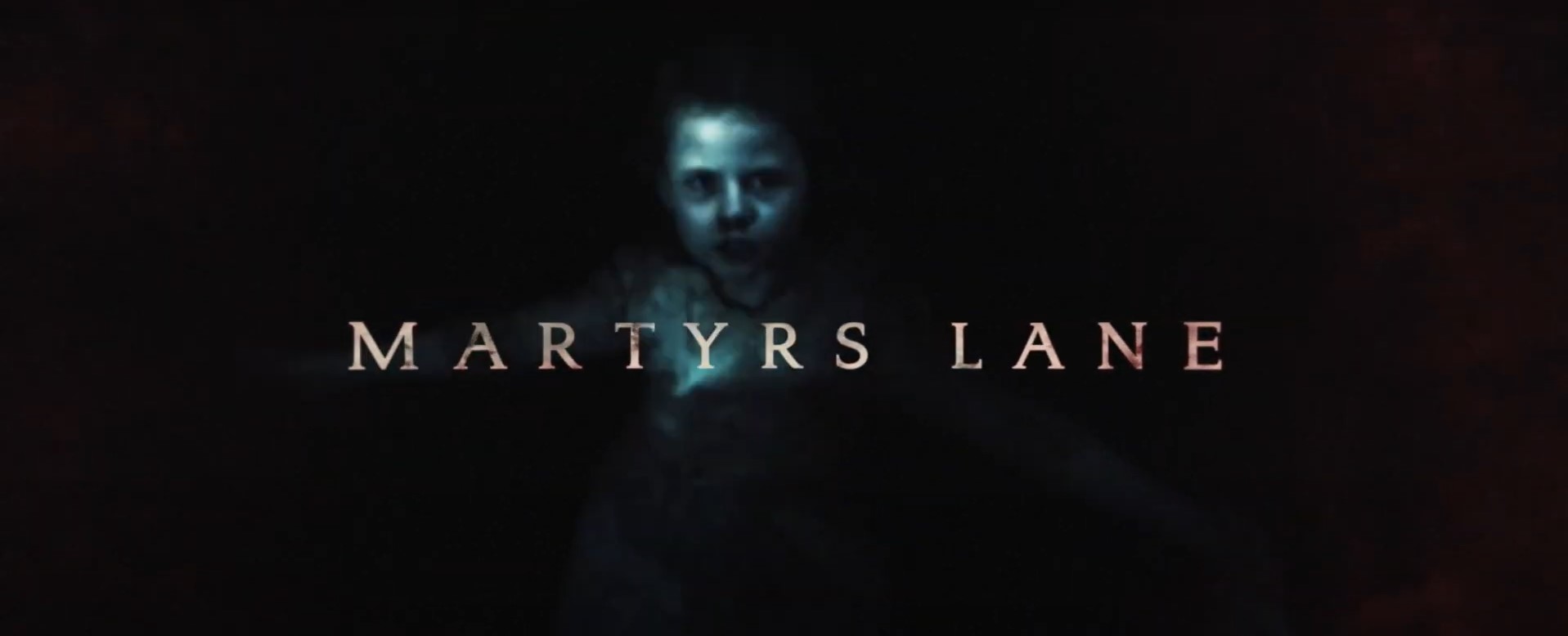
10-year-old Leah is a curious, quiet child, living in a vicarage household.  Her nightly nightmares surrounding her mother’s necklace locket and her mother’s stern conduct along with her constant obsession with her necklace locket leads Leah into an interest in the ornament’s contents.  Inside is a lock of hair and Leah takes it and loses a day later, sending her mother into a tailspin of anxiety.  That same night, a little girl knocks on Leah’s window and provides Leah momentary comfort and friendship until every visit after that, the little girl grows sicker and more ominously enigmatic in her play, providing clues and the whereabouts of thought-lost items that will open up the truth about the mystery girl’s identity as well as her family’s dark secret.

“Martyrs Lane” is a thoughtful and empathetic drama with supernatural delicacies surrounding complexities in loss and grief of bottled-up family secrets.  The British film is the third feature film, second in horror, for actress-writer-director Ruth Platt (“The Lesson”) who has commented that “Martyrs Lane” is a plucking of aggregated events from her own childhood woven into the very fabric of the story. Platt’s 2021 release is a fined tune extension upon her 2019 short of the same title that recasts the core principal roles from original actresses Indica Watson, Phoebe Lloyd, and the live action adaptation of “Beauty and The Beast’s” Hattie Morahan and turned the short into a 96 minute closed book feature about a scrutinized and consuming locket and a slowly decaying little girl playing two truths, one lie with the main character during bedtime hours who then has to unravel the mystery behind it all. Ipso Facto Productions’ Christine Alderson, who also produced “Valhalla Rising,” “Alpha Alert,” and even Platt’s original short film, produces “Martyrs Lane” alongside Katie Hodgkin and partly funded by the British Film Institute (BFI) in association with Sharp Films, Lypsync, and LevelK.

Recasting the short’s linchpin framework actresses took an audition to bring to light exactly the kind of talent Platt needed to express the different levels of somber ambivalence toward a family obviously struggling to deal with something more than just the day-to-day tasks. Kiere Thompson took over for Indica Watson as Leah in her feature performance debut and Thompson smashes a complex role and gains high marks on the voyeur scorecard as the youngest child who watches as her mother ebbs and flows in various states of anxiety while serving a milder, yet vastly different, dish of dynamics with the levity being around her vicar father and to be always primed to deal with her tormenting much older sister Bex (Hannah Rae). The best chemistry is between Thompson and age-appropriate counterpart Sienna Sayer, taking over Phoebe Lloyd’s role from the short as the strange visiting little girl. You can see two youngsters’ genuine play and natural innocence come through their smiling faces, wide eyes, and contagious giggles and when the winch of fear washes over them, called for by the story’s puzzling rising of events, mirthless moments are quickly produced, snapping us back into Platt’s eerie cold quandary. Hattie Morahan is replaced by Denise Gough as the mother Sarah and though her performance is fine, there just wasn’t enough of the mother’s side of the story to evoke a sense of empathy or sympathy and ultimately just falls into right into apathy even though Sarah is a pivotal piece to the theme. Catherine Terris, Charlie Rix, Donna Banya, Anastasia Hille, and Steven Cree as the vicar and Leah’s father rounds out the cast.

A blend between “Let the Right One In” and “The Babadook” but with less blood and less malevolent atmospherics, “Martyrs Lane” offers an imposing exhumation of a secret told in a way that doesn’t carry the sensation of something being hidden from Leah or even the audience in general.  Instead, Platt invests into the thematic subtleties with the bigger picture on the supernatural element of a strange, orphaned girl who knocks on the outside of Leah’s second story window, wearing dress up angel wings and is slowly deteriorating health wise with each passing night.  Yet, despite her appearance and reluctance at times, Leah’s peculiarly drawn to opening her window, letting her in, and even play childish games with her and tell jokes but soon those games become clues, near riddle-like, for Leah to push the envelope that link her mother, the locket, and this strange girl together.  Platt tacks on a silent and tenebrous after-hours backdrop during Leah’s sleepless nights and the stillness is greatly encroaching upon into the terror senses that you find yourself holding your breath and jumping at the breakneck editing aimed to momentarily scare you until a sigh of relief for when it’s over.  “Martyrs Lane” is externally melancholic and mood driven from outside Leah’s perspective as she, herself, internalizes and absorbs the emotions of others, studies them, and puts the pieces together to unravel the truth.

Ruth Platt’s “Martyrs Lane” is a wistful, and often eerie, entry into the creepy child subgenre. UK distributor, Acorn Media International, releases the Shudder exclusive-streaming film onto a PAL encoded region 2 DVD.  Presented in a widescreen 1.85:1 aspect ratio, there’s virtually no issues with the compression as even the night sequences retain the thick and obscuring black levels with almost unnoticeable banding, and it’s a clean dark too with balanced contrast to really home in on and define the shadows.  Details and textures are good for Platt’s dreamy-presented cinematic approach of slight overexposure and blur are more a stylistic attribute than an issue with the imagery.  I liked the tactile details in the loose strands of hair around Leah and the mystery girl that plays on their differences, and sometimes similarities, really well.  The English Dolby Digital 5.1 surround sound retains no significant issues.  Dialogue track perceives slightly muted or distant in some scenes and clarity, though free from audio blemishes, can be straining.  English subtitles are available.   Bonus features include a behind-the-scenes with snippets of interviews from Ruth Platt and the cast, an interview with Ruth Platt (which contains the same segments pulled for the behind-the-scenes), and a behind-the-scenes photo gallery.  The Acorn DVD is certified 15 for strong supernatural threat and injury detail.  In the end, “Martyrs Lane” is a dead-end road to melancholy, a family-affecting affair that peripherally chronicles not only one person’s struggle to maintain a slither of normalcy but also profoundly hits innocent youth who know nothing of the skeletons kept in the closet.

Purchase ACORN Release of “Martyrs Lane” on DVD

EVIL Won’t Let You Just Kill Yourself Even If You Wanted To! “Violator” reviewed! (WildEye Releasing / DVD)

“Violator” on DVD from Wild Eye Releasing and MVD Visual!

Desperate to track down her sister Naomi who becomes involved in an online social media forum about mass suicide, a woman’s investigation leads her on a train ride to a small village on the outskirts of the city.  There she meets Red Sheep, an internet handle for the mass suicide form greeter for those individuals seeking to give up their life willingly.  Returning her to the abandoned house where congregated patrons of their own demise wait for forum members from all over to gather before stepping into the afterlife, but the beneath the surface of simply drinking the Kool-Aid together is a wretched plan of death and self-inflicted suicide is not in the ill-fated stars for the group now sequestered in an isolated town. 

When the film is titled “Violator” and the very first images on the screen are flashing title cards, warning of violence and depravity from what you’re about to see, then a graphic intensity bar has been firmly set with the expectation that disturbing content is afoot.  The Japanese 2018 released horror-comedy comes from the cyborg-splattering mind of “Meatball Machine” writer-director Jun’ichi Yamamoto and is a continued part of the tokusatsu horror genre peppered with familiar Japanese motifs of mass suicide, samurai sword, oral fixations, and all with a pinch of Kabuki!  Yamamoto is no stranger to the Kabuki culture as he works in a callback scene and line from his 2008 actioner “Kabuking Z:  The Movie” into “Violator’s” evil eviscerating and executing entrapment.      

I wouldn’t call “Violator” aces in acting, but I’m not speaking to the general known fact that Japanese portrayals are often over-the-top exaggerated, and I’m referencing more toward the lack of selling the bizarre by any means possible.  The cast more than often feels like a rehearsal and robotic to the point where picking out cues can be almost a game.  Most of the cast are once overs or have a select history in the indie-tokusatsu market.  The biggest name in the film also has the shortest screen time with Nikkatsu Roman Pink film actor Shinji Kubo as the leader of the pact who lures lost souls to the abandoned house of doom.  Kubo doesn’t make or break “Violator,” but his character is pivotal in turn of events that alters the course of a few particular principals. Mai Arai plays the worried sick and searching woman tracking down her sister Naomi (Sora Kurumi) before she makes a grave suicidal mistake. Along the way, Arai’s character bumps into a mixed company of varying personalities revolving around their own death – one early 20-something young’un treats her suicide like the next cool thing, another ostentatiously can’t commit, and while another couldn’t be bothered by anything else surrounding her and plays it cool. The small village inhabitants are just as diversified and as quirky as the emotionally haphazard suicidals but with special, supernatural abilities to absolutely mess with their minds until satisfying their morbid, high-on-death munchies. Shinichi Fukazawa (“Bloody Muscle Body Builder In Hell”), Shun Kitagawa (“Prisoners of Ghostland”), Kanae Suzuki, Anna Tachibana (“Corpse Prison”), Ichiban Ujigami, and Rei Yatsuka round out “Violator’s” cast.

With a provocative title and a stern, flashing warning for taboo content, “Violator” starts off slow and continues so until about 3/4s into the film. Yamamoto glides not the sliced underbelly with murderous rage and profane callous through sexually and wicked means. No, Yamamoto builds each individual character, giving the what’s usually throw-away victims the time of day with a prolonged preface before their death that sets in who they are, what mindset they’re in, and, instead of just being collateral damage, what catalytic action becomes their ultimate undoing. By providing singular personalities, Yamamoto instills a breadth of subconscious care amongst the audiences that unintentionally react with the pangs of sympathy for the less naive during their demise to a straight up I’m glad they’re dead death because of their horrible unprincipled being and them dead makes the world a better place. Eventually, Yamamoto turns the keys to rev up the havoc as the death pact suicide squad disband into distinct, slasher-esque junctures to make good on the promise of building the character to give them a proper cutthroat curtain call and it’s about this time “Violator’s” pre-film turpitude caution actually applies with strange ritualistic kabuki decapitation, a virginal last-gasp cunnilingus before a protruding vaginal spear pierces through the skull, and a toy doll becomes a literal eye-opener for a suicide documentarian. Idiosyncratic in their own right, the kills are a violent spectacle that make “Violator” memorable enough to not forget it, but there’s far worse inflammatory material out there in the world of cinema that “Violator’s” handful of okay kills doesn’t exactly set off our internal omigod alarms.

“Violator” is the kind of off market brand and violence-laden film that fits like a glove with indie distributor, Wild Eye Releasing, in association with Tomcat Films (“The Amazing Bulk,” “Mansion of Blood”) and is perhaps one of the best releases out from the shlock usually produced from the latter company. With a muted colored and basic arranged DVD cover mockup that evokes every suspicion of an unauthorized release, I couldn’t love this cover any more than I already do with the promising depiction of a hysterical bloodbath and the singular moments represented in the collage of carnage and madness don’t stray away from the truth. The not rated DVD is presented in a widescreen 1.78:1 aspect ratio with a runtime of 72 minutes. DVD image quality is not terrible with a rate of decompression hovering around 6-7 Mbps, but still a little fuzzy in particular scenes with more than one character present and a in low-lit show production, that can hinder the viewing. The Japanese language PCM stereo track has no real flaw to speak of with a good synchronous English subtitle track and no detectable compression issues other than the lack of surround sound audio strength. The metal soundtrack also didn’t align, or rather clashed, with the mise-en-scene, added for just the sake of adding to make the story edgier. Bonus features include only a scene selection and trailers on a variable menu. Coy and different, “Violator” thinks outside the box with a simple supernatural revenge narrative that penetrates slowly at first but then really rams in the sudden disarray without a precautionary moment to lube up first.

“Violator” on DVD from Wild Eye Releasing and MVD Visual!