Milos, an aging porn star, struggles to provide for his wife and son. Though still working here and there with mediocre gigs, Milos longs for the glory days as the stud every starlet desires for a scene with, but for Milos, his family comes first and foremost. When an admiring former colleague offers him a meet and greet with a provocative director presenting a contract that would set his family stable for life, Milos assures himself doing the right thing along with the permission from his wife. He meets with Vukmir who captivates with progress pornography art, a new age of adult material, that will be novel and exciting that’s enshrouded with obscurities about who exactly the seasoned star is performing with and what exactly he is supposed to do in this project. What unravels before him is Vukmir’s mad vision that not only breaks every law and moral fiber know to mankind’s sexual nature, it completely obliterates the rules toward sexual deviances in an underground criminal industry that banks on the wealthy’s sordid tastes.

A long time has this reviewer been patiently waiting for the opportunity to screen Srdan Spasojevic’s written and directed multi-country banned film, “A Serbian Film.” Also known as “Srpski Film” in Serbia, the 2010 exploitation that features substantially graphic material with themes of necrophilia, pedophilia, and snuff rarely finds a suitable medium for an uncut presentation as Spasojevic’s feature consistently, and perhaps rightfully so, goes under the governing censorship board’s scalpel to selectively trim the excessive violence, the crude depiction of children, and all the other shocking material that’s rammed unwillingly into your backside. Fortunately, or unfortunately depending on how one perceives artful censorship, the most accessible copy of “A Serbian Film” has limited cuts that total approximately one minute worth of footage left on the cutting room floor to just eek one out from the ratings’ club. Though listed on the DVD back cover as unrated, this cut will be the one reviewed below from U.S. distributors Invincible Pictures and MVDVisual.

How does an actor run with a performance that incorporates vile and degrading perversive qualities and circumstances upon a character? I don’t know and I don’t know how, but somehow Srdjan Todorovic killed the performance as Milos. Todorovic’s veteran filmography credits establish him as a natural switch between characterizations and choking up on the reigns of each facet to achieve maximum reaction. Milos is a physically challenging role with many difficult scenes and Todorovic found inspiration out of thin air; I’m sure the Yugoslavian born actor needed a months’ worth of showers to remove the disgust from off his flesh when the film wrapped. Another complex character is Marko, Milos’ dangerously envious cop brother who chomps at the bit for Milos’ sexual longevity, stellar porn career, and his gorgeous wife. Slobodan Bestic could have passed for a Serbian Hugh Jackman from “Swordfish,” complete with little dangly earring. Bestic’s performance is unnerving, haunting, and downright salacious that waves in and out of a potentially dangerous man with a hankering for carnal informalities. Speaking of which, Vikmur epitomizes the very definition of being a lunatic. The lavish filmmaker has grandeur style with repugnant tastes in content. Sergej Trifunovic puts on the shiny shoes and fancy suits to become the venomous underground kingpin with a torrent of tasteless videos and the “Next” actor really plays the bad guy well, really does a showmanship disenfranchising Milos and those that love him their ability to enjoy free will. The remaining cast include Jelena Gavrilovic, Katarina Zutic, Luka Mijatovic, Miodrag Krcmarik, and Andela Nenadovic.

A unforeseen aspect of “A Serbian Film” that rings surprising is the engrained story of an extremely fallible hero. Srdan Spasojevic proved shocking, exploitation horror doesn’t have to be completely allegorically benign and the filmmaker has even mentioned that his film is a composite piece of abusive power from authoritative figures forcing people against their will, as if spellbound, to do atrocious acts and while these acts might not be atrocious as rape, sexual assault on children, or using an erect penis to kill someone, Spasojevic creates moments where his statements are affirmed. The transition between act 2 and act 3 backs Vukmir against a wall, trying to salvage his star’s contract by debating material that’s good for all. Spasojevic hones in on Vukmir’s raving soapbox speech to Milos about how he and his company govern the country and how they are the backbone of his of the sovereign Sebrian nation, the true delusion of power and the wool over the sheep’s eyes as the action point.

Invincible Pictures, the same folks who distributed Kevin Smith’s “Yoga Hosers,” and MVDVisual present “A Serbian Film” as a re-release onto DVD home video. Presented in a widescreen, 16:9 aspect ratio, the image warrants no mention of issues as a clean picture in a dry-yellowish tint while still maintaining some natural lighting and depth in the gruesome details pop every sensory nodes. Banding problems are faint at best and the edits are what they are sense the film is slightly trimmed anyway. The Serbian language 2.0 stereo mix pounds with a pulsating electronic-rock score and shows the ranging with the screaming, whimpering, crying, and the sloshing of blood and semen fluids. The English subtitles are error-free and have hardline text that make reading them more easily. Though usually bonus features are preferred, in this case, just having “A Serbian Film” alone on this DVD release didn’t feel necessary to have the share the film with the bonus features, creating an intimate moment between viewer and feature. “A Serbian Film” sears a glowing hot lasting impression right into the mind and soul, twisted and perverse in an unfathomable immoral compass too messed up beyond the most descriptive of descriptions. “A Serbian Film” is best viewed alone, without food, and with your sensitivity left outside.
Tag Archives: dvd
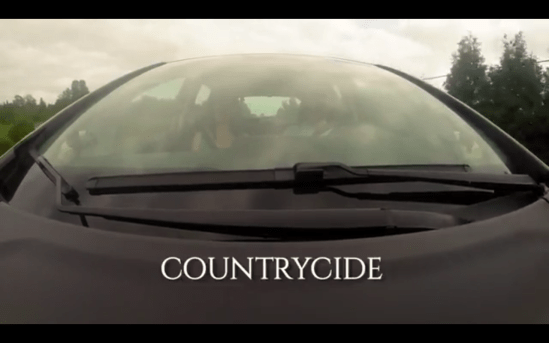
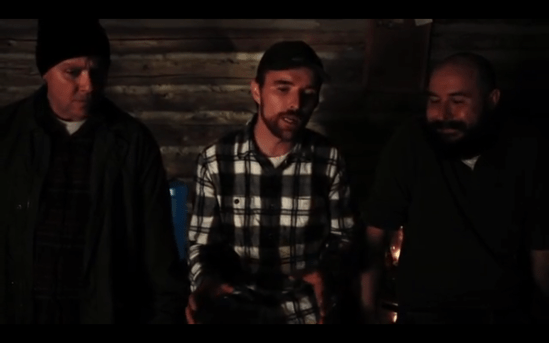
Going to the Country, Gonna Find Me Some EVIL! “Countrycide” review!

Big sister is getting married and Abby, forking over big money for a bridesmaid dress, can’t scrape together enough dough to afford a flight across country and to scratch off another option, Abby never learned how to drive a car dwindling Abby out of travel possibilities. In steps Mike, Abby’s tall and handsome close friend who does happen to know how to drive and, coincidently, has a car. Mike offers her a trip across the country as her plus one at the wedding. About 1/3 into the drive, exhaustion catches up with them, especially in Mike being behind the wheel 100% of the time, and without much money to spend on a motel room, the traveling duo think it best to set up camp in a stretch of wilderness. After speaking with a local government ranger, they set off to set up camp deep within the woods and as night approaches and the couple finally declare themselves hot for each other, Mike decides to return to the car for some supplies. Abby wakes up next morning realizing Mike has yet to return and in almost the same instance, she forgets where they parked the car. Wandering aimlessly through the thicket, a bear trap sinks its steely teeth into the fleshy siding of her ankle, leaving Abby hobbling alone through the woods with a hungry wolf on her trail to make matters worse. Miraculously, She’s saved by three men on a hunter’s retreat, but as they return with her to their isolated cabin, their suspicious behavior with an unwillingness to take the severely injured Abby straight to the hospital forces her to exit next morning while they stilled slumber and into an adjacent cabin where she discovers horror on a whole new level.

If the word homicide, or maybe even genocide, made sweet, sweet, angry love to the unwilling and scared word countryside, the abdominal “Countrycide” would be birthed into existence on this Earth and our congressional leadership would have legally prohibited it’s understandable abortion. Shepherding as a game foster parent is Canadian born, writer-director Brett Kelly and “Countrycide” will mark filmmaker’s third genre film through the criticism daycare of horror, following the cuddly-campy, Sci-Fi endearing “Ghastlies” and the diaper-shitting disaster that is the “Rise of the Black Cat.” A Gremlins-esques versus a super hero mess have come and gone to deliver “Countrycide” to our chop block that’s totally a horror-survival subgenre with a smidgen of exploitation and a complete lark even if unintentional.

Looking from an outward perspective, Abby is quite useless. Doesn’t know how to drive, doesn’t know where the car is, doesn’t know how to re-trace her steps out of the woods, and, yet, stammers into being a nucleus-downspout of magnetic chaos. Abby finds nothing but pure bad luck and Robin Hodge, inducted into her inaugural credited performance, bounces her saccharine chops off of various personas to become a disenchanted transfiguration character. Along for the ride is Joel Elliott as Abby’s quasi-boyfriend Mike whose emotional connection to Abby becomes decimated in a blink of an eye concluding no conclusive reason to care about his charming mug. He drives a car, cavalierly verbalizes his feelings for Abby, and then is erased from the pages as if a giant erasers literally came down and rubbed him out. Elliott has had roles in other Kelly films and so have these fellow co-stars that round out of the film: Peter Whittaker (“Raiders of the Lost Shark”), Andrew Galligan (“Ghastlies”), Trevor Payer (“My Fair Zombie”), and Lee Cyr (“Jesse James: Lawman”).

Kelly has a knack for campy-saturation and “Countrycide” splits the proverbial seams so much so that the film implodes into self-destruction, laughing manically at itself all the way to the end – funny, I didn’t initially categorize Kelly’s film was a horror-comedy, but therein lies the rub. Even textbook details, such as Abby sweaty and dirty in a fit of shock when a bear trap snaps onto her ankle, need to be illuminated. Another point to discuss is the overall pacing of the dialogue that drowns in over exposition of each event through the casts’ lips that often has a dubbed sensation. It’s like watching a giallo film from the 1970’s but where the synchronization designates more as a clumsy redneck slasher rather than an attractive murder mystery with a colorfully psychopathic adversary. Granted, swift gratuitous gore make the ushered in cut, a rock repeatedly bashed over a head or an giant log spear impalement, and that will please those gore hounds who sing the blood and violence anthem. As for the rough storytelling, characters, such as supposed hunters who hunt with single six-shooter revolver between the three of them, and the across the board acting by either unknowns or Brett Kelly staples, bad doesn’t quite describe “Countrycide’s” banal and bland vitality and must be watched, with a handle of Wild Turkey and a pack of smokes, to fully comprehend where the filmmaker was heading with his survival horror.

Wild Eye Releasing and MVDVisual go bumpkin hunting with “Countrycide” onto DVD home video. Presented in a widescreen format, “Countrycide’s” image condition is good, par for the course when considering other Wild Eye Releasing. Slight aliasing in more ariel shots, but the coloring is fine that’s perhaps on the denser contrast. The stereo sound mix, again, has that dub-like design that makes the actors sound like they’re in a studio recording their dialogue and thus isolates the vocals. Ambient track has foley written all over it with discernible focus on the twigs cracking and the birds chirping. Lets also no forget to mention to stock audio tracks of a wolf howl. There are no bonus features with this release. “Countrycide” woefully deserves a low end score, reeking up on an exploitation-survival horror by slapping together a poorly written script that cliche and trope-riddled, but being the Devil’s advocate enthusiast, “Countrycide” hit the next level in his carer even though that level might be still on the lower end of a split level, below grade.
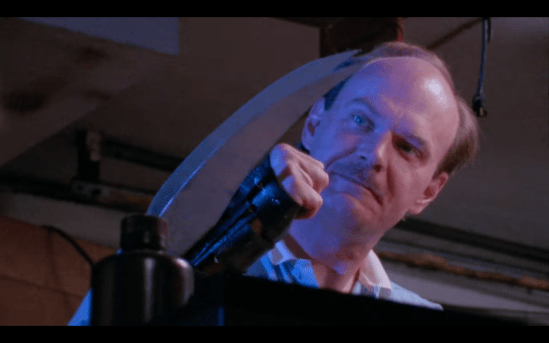
Comic Book Vigilante Takes on Evil! “Robot Ninja” review!

The television adapted bastardization of his beloved illustrated Robot Ninja leaves comic book artist Lenny Miller with a bad taste in his mouth. His disgust with the direction angers him to part ways with the project, leaving the televised rights in the hands of a careless and uninspired studio crews and execs, but that won’t stop Miller’s creative juggernaut of the captivatedly violent, robot vigilante. Inspiration takes heart-rending form when Miller happens upon a roadside abduction and rape of a young couple where his attempt at a rescue ends tragic with the couple being brutally murdered and him severely injured, but with the help of his good inventor friend, Dr. Goodnight, the frustrated comic-book artist becomes the Robot Ninja, just as depicted in his comics, with a vengeful plan to hunt down the assailants and put a bloody end to their wrongdoing reign of terror. A good first night out ends with one thug dead and an ego boost for Miller, but Robot Ninja’s actions don’t deterrent crime and, in fact, crime hits back hard when not only Robot Ninja becomes the target, but also his friend Dr. Goodnight and innocent bystanders.

“Robot Ninja” is part one of an unintentional two part review segment about directors disowning their own cinematic handy work for X, Y, or Z reasons and while “Robot Ninja” was initially discarded by “Dead Next Door” writer-director J.R. Bookwalter due to poor post production that was essentially out of the filmmaker’s hands and a work print negative thought to have been lost for eternity, Tempe Entertainment foresaw the awesome potential for the late 80’s automaton avenger in an dual format ultimate edition after a unearthed work print surfaced and back into the Bookwalter’s hand to mend and correct his sophomore feature film! Forget Iron Man. Ignore Captain America. Incredible Hulk who? “Robot Ninja” is one of the only true comic book heroes from illustrations to to take a stand against crime passionately and not because if you have great power, there’s great responsibility.

Robot Ninja is the epitome of the combo character that could sway into either hero from the 1980’s, like in Paul Verhoeven’s “Robocop” and Amir Shervan’s “Samurai Cop,” or could even swerve straight up into the villain category though I have no examples floating around near the inner layers of my cerebral cortex, but the Robot Ninja bordered the very blurry gray lines of anti-hero status whether intentionally or not from the perspective you examine. The Robot Ninja character potentially could have set fire to the combo character direct-to-video cult underworld, but fell rather hard and flat on its face in the deadfall of the netherworld instead. None of film’s flaws or woes never sat its hampering weight upon the goldilocks graced shoulders of Michael Todd, who portrayed the clawed hand titular character. Todd’s enthusiasm for the role is beyond necessary, a real A for effort, into powering on Lenny Miller’s illustrated crime combatant. Lenny, aka Robot Ninja, vows to destroy, or rather disembowel, the local gang led by the ruthless Gody Sanchez, a she-devil aimed to please only one person – herself. Maria Markovic, another actor that’s in J.R. Bookwalter’s “Dead Next Door” circle, find herself in the antagonistic role in one of her sole two credits. Markovic’s acting chops are about as stiff as a board, but being surrounded by the right kind of thugs in James Edwards (“Bloodletting”), Bill Morrison (“Ozone”), Jon Killough (“Skinned Alive”), Rodney Shields, and Michael ‘D.O.C.’ Porter, Gody Sanchez is able to achieve par-level black heartedness. “Robot Ninja” round-kicks an uppercut class of actors such as Floyd Ewing Jr., Michael Kemper, the original Dick Grayson Burt Ward (“Batman” television series), the one and only Linnea Quigley (“Return of the Living Dead”), one of Sam Raimi’s entourage buddies Scott Spiegel, and Bogdan Pecic and the good Dr. Goodnight.

Without doubt, “Robot Ninja” was destined for the direct-to-video market and the quality of work obviously shows, but with flaws aside, the obscure 79 minute feature still manages to be a part of Bookwalter’s “Dead Next Door” universe full of gore, violence, and a distain for human nature despite briefly disavowing “Robot Ninja’s” mucked up existence for years. Subtempeco EFX, comprised of David Lange, Bill Morrison, and Joe Contracer, don’t exactly go cheap when Robot Ninja’s dual blades pierce and pop eye balls inside the skull of some punk or when Lenny’s patching up his injuries without as much flinching in pain, the open, surely is infected wound just pulsates with exploded flesh and blood. Bookwalter’s direction is hazy at times around the beginning with the dynamic between Lenny and his publisher that feels stagnant and irrelevant; however, the comic book scenes interwoven into the meatiest part of the story, the Robot Ninja action, is remarkably cool for a late 80’s budget gas.

Tempe Entertainment have outdone themselves with the region free ultimate edition DVD and Blu-ray combos set of “Robot Ninja” with a “painstakingly” restored 2k film scan from the original 16mm A/B roll cut negative and presented in a 4:3 aspect ratio. The picture is night and day compared to previous VHS and DVD releases that underwhelm director J.R. Bookwalter’s vision. The vast color palette of various lighting and color schemes during the dream sequences have been gracefully corrected and the contrast has been restored to lighten up the much of the darker, almost unwatchable scenes. Good looking and unobtrusive natural grain from the 16mm stock and the re-edit makes a difference that finally seems cuts together without causing some confusion. The English language 5.1 DTS-HD Master Audio surround sound is entirely new construction from Bookwalter and the lossless tracks have ample range and depth, balanced nicely throughout, and have little-to-no distortion or other imperfections. English and Spanish subtitles are also included. A slew of bonus material on both formats include audio commentaries from J.R. Bookwalter, Matthew Dilts-Williams of Phantom Pain Films, producer David DeCoteau, James L. Edwards, Scott Plummer, David Lange, David Barton, Doug Tilly and Moe Porne of The No-Budget Nightmare. J.R. Bookwalter also has a 21 minute segment about the whole start-to-finish journey with restoring “Robot Ninja,” a Linnea Quigley retrospect on her small role experience in the film, an interview with Scott Spiegel, a location tour with Benjamin Bookwalter, “The Robot Ninja” fan film from 2013 with introduction by director Johnny Dickie, artwork and promotional material, behind the scenes gallery, production stills, “Robot Ninja” unmasked featurette, rough cut outtakes, TV show promo, newscast outtakes, the original VHS release trailer, and Tempe trailers, plus much more. Lets not also forget to mention the stunning cover art by Alex Sarabia, Carol Chable, and David Lange and a new title sequence also by David Lange. Tempe Entertainment’s ultimate edition of “Robot Ninja” is a thing of beauty that should be seen by all who love campy, Sci-Fi horror flicks with grisly skirmishes and intense tragedy in every corner. The restoration work “Robot Ninja” is founded on absolute love, a rare concept seen for direct-to-video features so you know this film must be something special – a true redemption story.
An Evil Backyard Barbecue in “Garden Party Massacre” review!

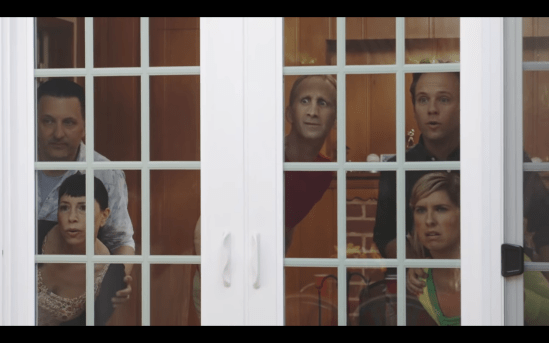
Caleb and Addison are having a party with a small gathering of friends, and a few enemies, to enjoy a hotdog cookout in their charming garden backyard. Caleb only has one strict stipulation that all cell phones be prohibited in order for everyone attending to live in the moment. Things seem to be proceeding relative well: the beef and vegan wienies are grilled to perfection, the wine flows freely to and fro, and a love triangle arises for a possible romantic outcome for a pair of singletons. What small party doesn’t expect is a pickaxe wielding manic strolling through their backyard and crashing the festivities. With one person dead and the rest trapped inside the house, a wide range of survival hypotheses begin to kick in, squashing the idyllic soiree into panic frenzy molded by a very tall, very deranged house circling murderer.

Gregory Blair’s “Garden Party Massacre” is the 2017 horror-comedy that takes progressive comedy back a decade when material was simpler, straight forward, and where satire reigns supreme from casual conversation. Blair, who not only directed, but also penned the script, is one of those recognizable names and faces entrenched into the independent film grid with credits like 2013’s “Ooga Booga” and, directing one of Its Bloggin’ Evil’s personal favorites, “Deadly Revisions,” starring Bill Oberst Jr so this will be our second PIX/SEE Productions film coverage. “Garden Party Massacre” has been on this reviewers radar for about three years now and Blair’s sophomore feature film takes a lighter approach to horror that’s more beneficially cliché, designed to be safe in the story, and still able to provide generous humor. Just as quirky as it’s titled, “Garden Party Massacre” won’t be an aggressive avalanche of bodies and blood to consume so the highly squeamish audiences can sit and tolerate the sludge-fast bloodletting to nearly the credits with a steady amount of Gregory Blair etched absurdity to push those horror-intolerants forward.

Caleb and Addison extend beyond a couple’s normal range of quarreling. Their verbally combative relationship breaks hyperbole levels on the most mundane and trivial things couples argue over. Andy Gates (“The Blessed Ones”) and Nichole Bagby hash it out as two estranged lovers at each other’s throat that becomes a candy coated resonation of the very real reality of relationship woes. They’re each joined by a pair of friends that have previously established a relationship with them as part of their character’s background. David Leeper plays Wesley, a gay friend of the couple who also is on the Caleb’s softball team, who is perhaps the most rational character in the pack and brings another teammate to the party, Lincoln, as a possible match to his testosterone desires. Gregory Blair goes full on fool with Lincoln’s thick skull persona and the writer-director is spot on as also co-star in his role. The other established friend is Reena, a role presided by fellow “Dead Revisions” star Lisa Hart who has rash moments of exaggeration, but the timing is good for her character who serves as the odd woman out of the group. Then, “RoboWoman” herself, Dawna Lee Heising, enters the picture as Melanie, the obnoxious friend with a hankering for Lincoln’s man meat, and Heisings brings her delectable indie-horror presence to the folding table and lawn chairs! Other garden partygoers includes Matt Weinglass and Marv Blauvelt (“Snake with a Human Tail”).

“Garden Party Massacre” lampoons traditional genre tropes, highlighting the flaws and exaggerating their characteristics, and director Gregory Blair purposefully intended on constructing this fun and bubbly example of how silly the situational elements can be and, sometimes are, despite the pickaxe psycho lurking around outside and the whole neighborhood turning upside down when the sudden zombie apocalypse comes spilling into their backyard like spilt lemonade. Blair pokes fun in a homaging kind of way and that’s quite endearing. However, the character dynamic became stale faster than day old bread as scene-after-scene was nearly all about bashing the other person. Someone comes up with a plan and judgement rears an ugly head. Someone heeds a warning and, again, ridicule rolls right off the tongue. After one receives their fill of colorful raillery, Lincoln’s blockish guilelessness becomes the drug of choice and a root for character.

SGL Entertainment and MVDVisual layout the picnic for “Garden Party Massacre” onto an all region DVD presented widescreen 16:9 aspect ratio. Imagine presentation has all the digital pros and without any night shots, the digital noise has virtually no ground to flicker. Coloring and skin tones looks natural, aside from the obvious blue-ish green makeup of the zombies, and didn’t catch really any distortions to note. The English language stereo 2.0 surround sound favors the dialogue fairly well, upfront and with authority, but the ambience tracks, such as the birds chirping especially, are intrusive at times. There’s faint feedback at times during screaming moments. The runtime clocks in at 70 minutes and includes extras such as a music video to the film’s trashy-punk theme song, which is sung by “Constantine’s” Peter Stormare oddly enough, and trailers. “Garden Party Massacre” is the recipient of 9 film festival awards, including Best Comedy and Best Film, and rightfully so considering being a purposeful caricature mockup of horror well executed by Gregory Blair and crew.
Satan’s Evil Indestructible, Hairy Servant! “Beast of the Yellow Night” review!

At the tail end of the second great war, Philippines based U.S. army deserter and Japanese sympathizer, Joseph Langdon, runs for his life as the Philippines police and guard track him down through the jungle for committed heinous acts that not only include treason, but also rape and murder. Exhausted and dying from his wounds, Langdon will do anything to stop the process of pain and death, including making a deal with Satan himself. In exchange for saving his life, Langdon commits himself to eternal servitude at the malevolent pleasures of Satan by inhabiting various souls and bodies through the decades and extracting the latent evil from his interactions with people, but Langdon finds himself again exhausted and exacts free thought and a rebellious stance against his master after inhabiting an American business man and given back his own face. The Dark Lord, as amusing as he wicked, bestows upon Langdon the ability to transform into a flesh hungry man-beast whenever his desires boil to the surface and he becomes the most wanted man in the Philippines, but how can they stop a monstrous fiend they can’t kill? The answer lies solely with the damned Langdon himself.

Rarely does a horror film birthed from the Philippines reach my critical virtual desk and, fortunately, “Beast of the Yellow Night” lands smack-dab in my lap as an absolute jewel from the early 1970’s from writer-director Eddie Romero. The 1969 “The Mad Doctor of Blood Island” director, who’s heritage is Pilipino, had visions of grandeur for his large scale features that stem from an infinitesimal budget, but with enthusiastic energy from former musician and beach party, teen heart throb John Ashley, the duo cofounded their theatrical finance company, Four Associates Ltd, to produce their very own horror feature films straight out of the Philippines which “Beast of the Yellow Night” was one of first to be released, if not the very first to be produced. Additional funding was provided by a little known distribution company, New World Pictures, jointly founded by the genre-setting Corman brothers, Roger and Gene, and thus forth “The Night of the Yellow Beast” was built upon a rich and solid cult foundation that began a Philipino-film circuit conversely well-known in the U.S. and put Eddie Romero on the proverbial map of relatively unknown and granular cult directors while providing a branching out of yet another successful credential façade for John Ashley that doesn’t involve country music or being just another pretty face in the beach party moviegoer crowd.

If you haven’t guessed by now or if you’re just as dense like myself, John Ashley also stars in his co-produced creature feature and Ashley, who goes without saying that he stands in his own rite, is also the Paul Naschy equivalent of the Philippine Islands with his all hands on deck attitude toward filmmaking and being the man behind the gnarly man-beast makeup that more than likely takes hours to apply. His performance as even tempered Joseph Langdon is a stark contrast from the wild and vicious beast with a flesh appetite and knack for mauling that herd this film into the werewolf category according many descriptive plots, summaries, and reviews, but “The Night of the Yellow Beast” actually resembles more of a Dr. Jekyll and Mr. Hyde familiarity as Langdon doesn’t transform when the full moon is high, but rather at the whims of his tormentor, in this case it’s Satan rather than an ill-fated elixir, and then he morphs more rapidly and explosively during exhilarating and endorphin stimulated moments like intimacy to further exacerbate his dreadful curse on Earth. Langdon and beast Langdon are befriended by a blind, long-tooth ex-con, Sabasas Nan, played by “The Big Bird Cage’s” Andreas Centenera and Centenera captures the gentle nature and extended wisdom of a man at the tail end of life and looking to right the wrong for his past mistakes. Sabasas Nan is similar to the blind man in the tale of Frankenstein that doesn’t judge, become frightened, or even shun the ugly shell of a monster, but though visionless, both blind men are able to clearly see into the soul of what used to be once a man. “Beast of the Yellow Night” also stars leading lady Mary Wilcox (“Love Me Deadly”), Leopoldo Salcedo, Eddie Garcia (“The Woman Hunt”), Ken Metcalfe (“TNT Jackson”), and labeled as the Filipino Peter Lorre, Vic Diaz (“Black Mama White Mama”) as the pot-belly Satan and Langdon’s mischievous master.

Eddie Romero’s deep and intellectual script sticks out amongst the fray of time lapse and post-skirmish makeup effects that teeters “Beast of the Yellow Night” on a B- to C- movie. Not that the special and makeup effects were completely awful or subpar by any means, but the directing filmmaker pushes the boundaries to scribe the pull strings of a man’s soul, really digging into the anguished flesh of redemption and mankind’s mortal coil, which puts a lightly coated dampening on Langdon’s transformations from man-to-beast that hasn’t yet reached the Paul Naschy level of editing and progressiveness toward his horror films. In fact, the “Yellow Beast’s” effects are merely one step below that aforementioned level. However, the beast is no wolf of any sorts, but nor it isn’t a man in a cheap leathery or latex rubber mask that materializes a rather mangled, mangy beheld fiend with razor sharp canine teeth shown through a ferociously hungry and breathy-snarling maw set below equally ravenous eyes that yearns for the blood of man. For 1971, the effects are exceptionally marvelous, but Romero’s script just blows the practicalities out of the water being ahead of its time and sorely overshadow the effects work.

MVDVisual and VCI Entertainment proudly gift to us “Beast of the Yellow Night” onto 2-disc all region DVD/Blu-ray home video. Produced from a 2K scan of the original 35mm negative, VCI Entertainment’s widescreen, 1.85:1 aspect ratio presentation in full Metrocolor is mondo cult cinema exhibited on a high level and despite some blotchy patches, the corrected coloring and cleaner picture are by far the best we’ll ever see while still sustaining a healthy amount of beneficial cinematic grain. The prologue has coloring issues with about 20% of the right side of the film strip in sepia harboring in sepia town, but becomes corrected after the title and credit sequence. The English and Tagalog, the national language of the Philippines, mono audio track has lossy bite that’s expected and yet, still maintains ample dialogue track and a solid and balanced in range ambient track. Optional English subtitles with SDH are also included. Bonus features include a 2018 commentary track by writer and filmmaker Howard S. Berger and the head of Mondo Digital, Nathaniel Thomspon, old and insightful video interviews about John Ashley and the Filipino films of the 19870’s with Eddie Romero, Sam Sherman, Patrick Wayne, Peter Tombs, Eddie Garcia, Gloria Hendry, Sig Haig, and Jan Martin, a Remembering John Ashley featurette that includes interviews with wife Jan Ashley, filmmaker Fred Olen Rey, Steve Stevens, and Andrew Stevens, original theatrical trailer and TV spots. Plus, a thorough inner liner essay from Howard S. Berger that goes examines “Beast of the Yellow Night” and the films of that era that are a metaphor for much, much more. “Beast of the Yellow Night” is a simple message cause and effect. If vileness becomes you, then villainy will forever run fluidly through your icy veins in this Eddie Romero and John Ashley monstrous picture that pulls at the tattered strings of a downtrodden soul.