

Return Home to Discover Dad’s An EVIL SOB! “The Abandoned” reviewed! (Unearthed Films / Limited-Edition Blu-ray)

Don’t Be Left Behind. Get Your LE Blu-ray Copy of “The Abandoned” from Unearthed Films

Marie Jones never knew her parents.  Born in Russian, raised in the London, and now lives in the U.S., the low-budget movie producer receives news from a Russian estate notary providing her details on her murdered mother back in 1966 and her existence entitles her to the isolated family farm.  Unable to resist the urge to find out about her mysterious past, Marie travels to her parents’ dilapidated farm settled on an island encircled by a river.  There she meets Nicolai claiming to be her twin brother and that he also, after a similar call from the notary, felt pulled to their family home on the verge of their upcoming birthday, but they’re not totally alone.  Trapped on land that won’t allow them to leave, Marie and Nicolai run into their undead doppelgangers that impel them to dig into their family history and uncover the gruesome truth to what happened to their mother.  All the while, the house around them rewinds back in time before age and weather have taken a toll and the souls living in what was once a home return to bring the family back together again.

A past drawing near story stretching from 1966 and 2008, “The Abandoned” is a haunted house, supernatural, and circular tale that bears down a forlorn ancestry nightmare onto ensnared curious lineage wanderers, bringing them back into a vicious cycle of a family history that should have been left alone.  “Aftermath” and “Genesis” short film director Nacho Cerdá tries his hand at less necrophilia and gore for more daring, open-to-interpretation horror with the Karim Hussain (“Subconscious Cruelty”) original script with some rewrites and sprucing done by “Dust Devil” and “Hardware’s” Richard Stanley.  Filmed in Bulgaria to double as the scenic landscapes and to use the country’s looming, enveloping trees as another margining aspect of being trapped, “The Abandoned,” initially title as “The Bleeding Compass” on Hussain’s original script, is produced by Julio and Carlols Fernández, Kwesi Dickson, Stephen Margolis, and Alexander Metodiev under Castelao Producciones, Filmax International, and Filmstudio Bojana with Future Films’ Carola Ash and Albert Martinez Martin serving as associate producers.
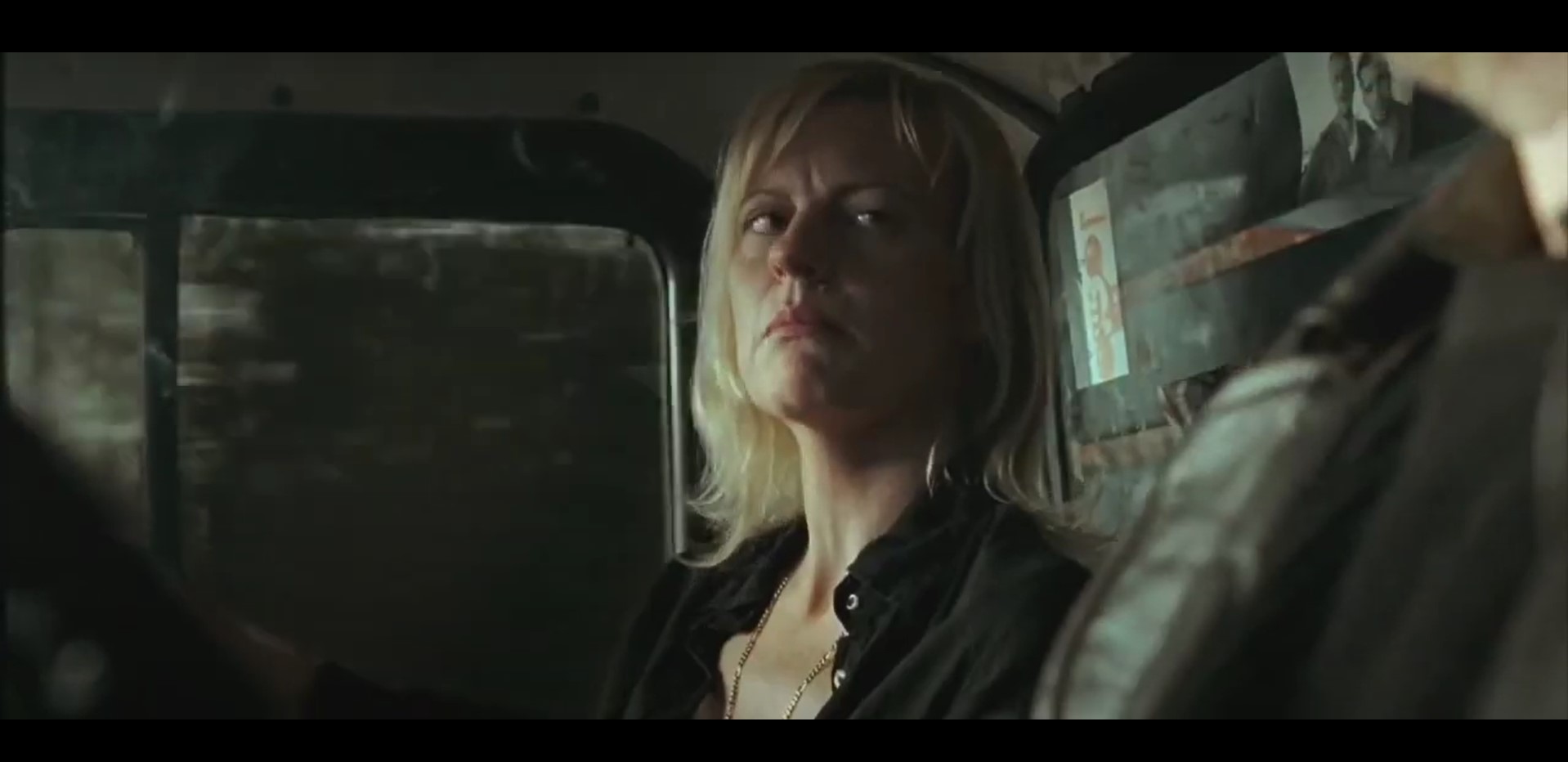
“The Abandoned’s” modest budget regulates casting to, at that time, relative unknowns for the U.S. market but certainly not an experienced lot between English actress Anastasia Hille (“Snow White and the Huntsman,” “Martyrs Lane”) and Karel Roden (“Orphan,” “Hellboy’) playing reunited brother and sister Marie and Nicolai who have not been together since infancy.  Separated at the demise of their mother, Marie and Nicolai have undoubted hesitation to their relation, especially both are met by grisly versions of themselves in the old family homestead.  The double versions of themselves represent a dual life, one connected to their current path, and one connected to their past, and Hille and Roden play into that theme with fortitude and fear in how the past haunts their characters connected to a shadow world in a very “Silent Hill” way.   Hille brings complexity to Marie’s own troubled relation with her daughter, a character we don’t necessarily see physically on screen, but we understand through phone conversations and brief interactions with Uncle Nicolai that the foundation the mother-daughter relationship stands on is shaky and that pushes Marie to pursue the truth about her own mother to avoid that disconnection with her daughter.  For Nicolai, Roden instills a more tragically inclined façade without overcompensating with tremendous evidence in the loss of a woman he loved, aside from their matching tattoos, and his melancholic state is staid by the newfound opportunity to discover his past until unless it also becomes his downfall.  Again, we’re back to the past should stay dead, or in the past.  Hille and Roden underpin “The Abandoned” and its ghostly enigma with brief interjections of supporting ancillaries in Valentin Ganev, Carlos Reig-Plaza, Paraskeva Djukelova, and Marta Yaneva. 

“The Abandoned” is one of those circular narrative stories working toward a revelational end, one that likely won’t be pleasant.  An endless loop of trying to leave Marie and Nicolai’s childhood home only for them to be brought right back into the same room from which they started lend into a couple of preconceived notions of their ringlet wretchedness, both in circumstance and in life, and that being either they’re already dead and in a purgatory or their grieved existence has warped them into a psychological break when returning to a decaying land left in the memories of the heinous death of their mother.  Both theories incorporate a supernatural element where time reverses and, coinciding with the twins’ upcoming birthday, a clock ticks down that will bring the family whole again, this time in the afterlife if the unnatural powers to be have anything to say about it.  That’s the definitive beauty of “The Abandoned’s” open air forbidding allegories with the more than one interpretational rivulets spreading in different directions, shaped idiosyncratically by Marie or Nicolai’s life.  What helps the impervious fate outcome of the principals is that “The Abandoned” also has strong, poignant visuals as a foothold into keeping audiences intrigued on what could be a slippery slope of symbolism.  A mix of practical and composite effects, done amazingly through the editing process, sell duality on every layer as if we’re experiencing two worlds during a collision and waiting with anticipation for one to engulf the other. 

Unearthed Films brings “The Abandoned” home on a limited-edition Blu-ray home video. The AVC encoded, 1080p high-definition, BD50 capacity houses plenty of breathing room for the claustrophobia details to writhe within. Middle-to-higher contrast levels that throw out good shadows without being extremely inky, there’s spectrum discoloration from blotchy-banding, suggesting a good encoded transfer that deciphers more details rather than squeezing everything in under a lossy codec. Range of the darker graded feature does favor a generous bluish green for the interiors while natural light swarms and illuminates into the exteriors, brighten up Anatasia Hille’s already blonde enough hair to almost pure yellow. Fine details pervade over much of the duration, only relinquishing details for dark, cavernous moments to scare up apprehension levels. The English DTS-HD 5.1 and the PCM 2.0 give viewers lossless fidelity and flexibility with audio setups. I preferred the stereo with robust dual channel dialogue; however, the 5.1 showed signs of directional awareness – rustling of leaves, ghostly voices, etc. – through the back and side channels. Dialogue is prominent and clear on both audio options and free of intrusion and interference. English and Spanish subtitles are optionally available. Special features include an abundant of new material exclusively produced by and curated from Unearthed Films, including new, individual interviews with director Nacho Cerdá, screenwriter Karim Hussain, and screenwriter Richard Stanley; there are also new furnished for this release alternate endings that more so involve Marie’s daughter, deleted and extended scenes cut for timing and flow, and outtakes. Archived bonus content has a Making of featurette, location vision in “The Abandoned’s” den, a featurette of Nacho Cerdá: The Trail of Death that looks at the director’s earlier horror inspirations of his trilogy of death shorts, The Little Secrets of Nacho Cerdá goes further into the director’s insights for his varied take on “The Abandoned” story, Nacho Cerdá has a conversational horror discussion with friend Douglas Buck, director of 2006’s “Sisters,” promotional and storyboards gallery, trailers, and a BD-ROM storyboard collection. The limited-edition release has a lissome cardboard slipcover with original poster art of the blood-crying doll from “The Abandoned” on the front. Inside, a standard Blu-ray Amary case has the same cover art image that’s also pressed on the disc. There are no inserts included. The rated-R release has region A playback only and a runtime of 99 minutes.

Last Rites: A step back from the gore and revulsion, Nacho Cerdá is able to scare stiff with “The Abandoned,” a dead and buried family abstrusity squaring the score for lost time by reversing time to welcome back those left living, and Unearthed Films’ limited-edition release is the best version to date that deserves a warm homecoming for its icy, taciturn atmosphere.

Don’t Be Left Behind. Get Your LE Blu-ray Copy of “The Abandoned” from Unearthed Films

EVIL in the Family Tree Makes for a Terrifying “Reunion” reviewed! (101 Films / Digital Screener)

Recently separated from her philandering fiancé, a pregnant Ellie moves in with her estranged mother, Ivy, whose staying at Ellie’s recently-deceased grandparents family home and packing up home furnishings to put the house on the market.  Strained with going through a pregnancy alone and tirelessly working on her theoretic book of modern medicine deriving from the roots of barbaric magic and medieval practices, Ivy pledges to take care of her while providing space to let Ellie continue research work, but the house lends to the painful memories long thought suppressed in Ellie’s mind, manifesting visions of her adopted sister, Cara, who died suddenly in house when they were children.  As the visions become more prominent, stronger, and real, Ellie questions her remorseful memories and her mother’s recollection of events that sheds light on her family’s horrendous secret of anatomical science.

From the start, the realization that Jake McHaffy’s “Reunion” isn’t going to be a happy one comes as soon as Ellie crosses the threshold into her late grandparents’ home and is immediately swathed with a blanket of unsettling ambiance.  The “Wellness” and “Free the Deed” McHaffy writes-and-directs his third film with a steadfast sense of dread in the New Zealand mystery-thriller that tackles human inbred themes of long suffering guilt, prenatal anxiety, and the role of an estranged family during a time of need.  McHaffy compounds layered fears by compositing them with the confines of an old dark and creaky house witness to all the past secrets.  “Reunion” is a production from a conglomerate of New Zealand and U.S. companies that embark on independent filmmaking endeavors by Greyshack Films, the strong female character supporting Miss Conception Films, Overactive Imagination, and Water’s End Films in association with New Zealand Film Commission, MPI Media Group, and Department of Post.

“Reunion” obviously isn’t going to be your typical relative gathering shindig with your bad joke-telling uncle wisecracking over his 10th Miller Lite or a nose picking brat of a cousin cheating at horseshoes near the pit; instead, “Reunion” a tightknit cast playing the roles of mother, father, daughter, and adopted daughter drawn together not by the sake of longing for bloodline companionship but by necessity and circumstance and imploding by the unfun games of revelations hidden inside the closest deepest and darkest of descendants. “Witches of East End” stars Julia Ormond in a nearly unrecognizable far cry of her more glamourous bewitching role in Joanna Beauchamp on the FOX produced Lifetime Television series. The English actress, who hails from Surrey, assumes the matriarchal presence of a helicopter mother overextending herself beyond the limits of her control in order to seize some kind of power she once had living in the archaic house. Ormond bounces off mother-daughter indignities with her sole child, Ellie, played by Emma Draper in her first feature lead performance. Thick tension between them causes reserved friction Ormond and Draper do well to nurture throughout while a stammering posture by “Lord of the Rings” actor John Bach as the wheelchair bound infirmed father adds a whole new layer of irregular rigidity to Ellie’s nerves and to Ivy’s patience. Aside from being blood related, father, mother, and daughter also have another thing in common – present in the moment of the death of Cara (Ava Keane). Peeling back each emotion output struggles, in a good way, to grasp the character mindset made murky by uncontrollable shaking and crying, sneaking and conniving, lies and deceits, and the disillusioned rambles that vortex around the house without pure clarity. “Reunion” rounds out the cast with Nancy Brunning, Cohen Holloway, and Gina Laverty as young Ellie.

Jake McHaffy’s “Reunion” has the hairs on the back of your neck standing from beginning to end with prolonged foreboding leading up to a shocking finale.  Between the manic and enigmatic performances from Julia Ormond and Emma Draper, a chance to rekindle the past feels like a distant thought and a lost cause being blockaded by the past’s poignant trauma they share.  McHaffy isn’t hesitant about revealing a stymieing history with flashes of image splices and flashbacks cut with an antiquated VHS-style playback producing a statically charged visual incumbrance.  The stress and strain burden’s Ellie’s pregnancy, dam breaking flood of memories, her research into the occult, and the surrounding chaotic state of the house contributes to teetering mental stability creating a visceral unintelligible and augmented reality that is too real for Ellie to keep an authentic perspective and the longer she stays and the more she’s immerse into Ivy’s poisonous maternal supremacy, only fabricating a new and scary world can Ellie dig herself out of her family’s troubling past.  There’s much going on in McHaffy’s story to be bog down fully understanding what you’re seeing and trying to piece together the puzzle is nearly impossible – I, frankly, still don’t understand much of it – but the beleaguered attention of beguiling imagery and that overwhelmingly wild ending entrusts “Reunion’s” place in psychological terror. 

Modern gothic has never looked this good as “Reunion” rises to be a stalwart of horror. 101 Films and MPI Media Group has released “Reunion” digitally this month of March, one year after the start of the pandemic that has kept families away from each other and when eases of restrictions set in that’ll shorten the gap between estranged loved ones that becomes a distressing reunion in itself. Quite a masterful brush stroke from director of photography Adam Luxton building the house into the frame and framework of the story, which goes hand-and-hand with a house that’s deemed a toxic surrounding symbolized by the black sludge that drips out of the sink and into Ellie, as well as crossing video outputs and weaving them in as well. Luxton’s imagery has formulation maturity that combines hard and soft lighting, blurring, a range of depth shots, delineated night scenes, and the capitalization of utilizing the clutter of boxes and knickknacks to tell an eclectic visual odyssey culminating toward an all-consuming finale. The 95 minute runtime film is presented in a widescreen 1.85:1 aspect ratio with no bonus scenes during or after the credits. “Reunion” creeps unsuspectingly into the skin, eyes, and soul as a metastasizing slow growth of appalling family drama.

It’s in Human Nature to be Evil. “It Comes At Night” review!


Set in an infectious diseased post-apocalypse world, Paul, his wife Sarah, and their son Travis have fortified themselves in a dense forested and isolated house to ride out the easily spreadable disease. Always prepared and ever suspicious, Paul expects everyone to follow a rigorous routine, following procedures in order to avoid becoming infected, but when a young family, seeking supplies and refuge, enters their lives and their home despite Paul’s hesitations. Paul’s family’s routine and order face disruption that opens themselves up to the ever present danger outside and inside their home.

“It Comes at Night” is an intense, heart-pounding mystery thriller set inside the close quartered confines of a desolate house where trust doesn’t come without auspicious interrogation and teeth clinching suspicion. Writer-director Trey Edward Shults’ sophomore feature has layers upon layers of underlying human nature undertones when people are put up against an unsurvivable situation inevitably with their backs against the wall, literally, when confronted to whether to implement the good will nature of their humanity or not, to take that risk to help others or to save their own skin, and to attempt to reconnect with other people or stay separate from the masses. Even the “it” in “It Comes at Night” isn’t as simple as one would first think. Most unfamiliar audiences would assume “it” is a snarling, brooding, oozing, and grotesque creature, or perhaps even a devilishly grinning clown, that comes around when the sun falls; instead, the “it” is an occurrence, an event sparking nightmares inside the human mind that formulates fear and a tall order of exemplary caution.

The Australian born Joel Edgerton (“The Thing” remake) stars as Paul, the father of the family he’s trying to protect at all costs. Edgerton perfectly pitches as a, supposed, American voice, since the story doesn’t exclaim a locality, but the assumption is the setting is nowhere, U.S.A, and plants a firm foot down as a rugged resident of wilderness survival accompanied by his wife Sarah played by Alien: Covenant’s Carmen Ejogo. Ejogo’s offering to her character gives Sarah a powerful will to do what’s necessary and to support Paul in his determination to protect their only son Travis (Kelvin Harrison Jr.). Edgerton, Ejogo, and Harrison opposite up well against the foreign element, another family with their performer genetic makeup of Christopher Abbott, Riley Keough, and Griffin Robert Faulkner as Will, Kim, and their just above toddling son, Andrew. Each actor embraces the role in their respective family and at first, the interactions are genuinely jovial, but then the uncomfortable thick tension evolves from the point of an extreme pivot into the folds of deception and fear.

Shults maintains an ominous atmosphere of overwhelming strain amongst the characters and “It Comes at Night” has a unique perspective set inside an already apocalyptic ravaged population despite the lack visual expositions. Yet, the finished project feels incomplete. Pacing is the biggest concern with the timing of events between the introduction of Will’s family and their destined downfall that results in a climax that’s so bellied-up in an sorely anti-climatic fashion that the notion of being cheated out of a more gut-punched ending pulls at the core of the cinematic soul. That’s not to say that the film has one, if not more, interpretations; in fact, Shults’ entire feature is or could be considered open for interpretation, with examples from the duly noted “red door” to the Travis’ child-like personality, and usually those types of heavily subtext films stick around more way after the credits roll, but also, in a slightly bittersweet cause and effect, leaves more of a foggy formulation of events during the unfolding of the story. Also, an aspect that didn’t help the cause was shying away from a powerful scenes that should have left an impact, but R-rated feature delivered no acute moments of remembrance and leaving much to the imagination with only the majority of the rating pie being flavored with tasteless language.

Lionsgate Entertainment presents the Animal Kingdom and A24 produced “It Comes at Night” on a 1080p resolution in an aspect ratio of 2.39:1. The imagery lavishes in a gritty, woodsy detail that organically defines the sea of trees and natural flesh tones, but as the title suggests, most scenes are shot at night that are moderately blanketed, yet ineffectively intrusive, in digital noise. The English DTS-HD Master Audio 5.1 mix definitely has more girth during the livid nightmares and vigorously tense scenes, but, surprisingly, the dialogue track lacks gusto in the wake of a more lively surround quality. During exchanges of hushed tones, dialogue is rendered nearly inaudible and the option English subtitles had to be deployed. Spanish subtitles are also available. Special features include an audio commentary by writer-director Trey Edward Shults and actor Kelvin Williams Jr and a cast and crew discourse in a segment entitled “Human Nature: Creating ‘It Comes at Night.'” Overall, the psychological and humanity breakdown of the characters of “It Comes at Night” is worth the price of admission along with the teachings that family is key and to never rely on the goodwill of strangers, but finishes with a weak sense of direction that ruptures an unsavory cyst that doesn’t conclude coherently.

Own It Comes at Night on Blu-ray!