All Hail the EVIL Slumbering One! “Sacrifice” reviewed! (101 Films / Digital Screener)

Years after being quickly whisked away to America as a small child from his remote Norwegian island birthplace, Isaac returns nearly 30-years later with his new, pregnant wife, Emma, after the death of his mother leaves the empty family home in his inheritance.  With their heart set on fixing up and selling the house before the birth of their child, Isaac and Emma learn that marketing the seaside and scenic estate comes with a tragic past when the local sheriff discloses the brutal murder of Isaac’s father inside the home.  The dreadful information and the bizarre locals with their customary traditions doesn’t alarm Isaac who, instead, feels a strong connection and is drawn to staying whereas Emma, plagued by terrifying nightmares ever since stepping onto the island, is eager to sell and return to American as soon as possible, fleeing a community that worships an aquatic deity beneath the water’s surface.   

Based off dark fantasy and science fiction writer Paul Kane’s short story, “Men of the Cloth,” found in the author’s “The Colour of Madness” collective works, “Sacrifice” is an alienating folklore horror bound by the influence of a Lovecraftian core under the direction of a filmmaking due in Andy Collier and Toor Mian.  As their sophomore film as collaborating directors, following their 2017 psychological cop horror “Charismata,” Collier and Mian tackle Kane’s short story head-on by changing only a few details, such as location, family structure, and the title from formally known as Kane’s “The Colour of Madness” to “Sacrifice”, but keep rooted the foremost principles of “Men of the Cloth’s” cultish discomfort that’s greatly inspired with the otherworldly sensation of an amiss atmosphere akin to Robin Hardy’s “The Wicker Man.”  Filmed around the idyllic and mountain enclosed shore town of Bjørk, Norway and in the town of Volda, Norway, the 2020 film seeks to plop strangers into a strange land as a production of the London-based companies, Loose Canon Films and Hydra Films RKM, in association with Dread.

Over two years ago was the last time we reviewed a Barbara Crampton movie with “Death House,” that included a plethoric cast of her all-star genre brethren with Kane Hodder, Bill Moseley, Dee Wallace, and others, and, now, Crampton makes her glorious return to the Lovecraftian turf that nostalgically brings most of us horror fans back to the New York-born actress’s “From Beyond” and “Re-Animator” days.  “Sacrifice’s” Cthulhu spirit finds Crampton playing a small town Norwegian sheriff, Renate Lygard, in which Crampton, under the training of a dialect coach, surprises us with a fair Norway accent as she provides a quasi-warm hospitality set of manners upon island outliers in Isaac (Ludovic Hughes) and Emma (Sophie Stevens) Pinkman. Hughes and Stevens nudge their way into a solid man-and-wife, but their dynamic density becomes crispy at times and pale from their initial arrival soon after rustling with the natives. The lack of vitality doesn’t stem from the wedge being driven between from the lure of Isaac being called by the natural phenomena of the Northern Lights, the drunken friendly benevolence of Gunnar (Lucas Loughran) and Ledvor (Jack Kristiansen), and the full frontal skinny dipping of Renate’s beautiful daughter, Astrid, an eye-opening film introduction from Johanna Adde Dahl; instead, the Pinkman’s bond held together about as tight as using kindergarten grade craft glue that bled into the performances as well that came off stiff and unnatural. Aside from Hughes and Stevens hailing from the United Kingdom and Crampton from the U.S., the remaining cast was curtailed to Norway nationals, as such with Loughran and Kristiansen, rounding out the cast with Erik Lundan, Dag Soerlie, and Ingeborg Mork Håskjold.

“Sacrifice’s” cult mania lays on a thick coating of grass roots that really set the tone for an foreboding outcome.  An idyllic Norway fishing village propped between the eclipsing mountain range and marine inlet intrinsically obscures an already unspoken secret that’s only been rendered on the faces and actions of the residents.  At the center of village’s idiosyncrasies are the two hapless protagonists venturing into unknown territory with only an inherited house in their back pocket and a vague sense of youthful recollection; this sets up for an obvious antagonism theme of locals with a sense of xenophobic nationalism, especially against two Americans.  The initial friction opens the flood gates for cultural customaries to be weaponized against Isaac, who wants to strongly embrace his heritage, and Emma, who can’t seem to grasp the village’s peculiar beliefs and even goes as far as being naïve of and mocking the village’s traditions and deity.  The tension is compounded by the ominous presence of the labeled slumbering one, sleeping beneath the glossy surface of the inlet waves, but conjuring up tangible and intense nightmares that plague the every island inhabitant, a mystery Emma can’t explain, won’t entertain, and ignores exploring that turns Emma floundering more into Isaac’s sudden disinterest in her albeit soon-to-be-parents.  “Sacrifice’s” climatic, tell all scene harbors more secrets regarding Isaac and Emma’s purpose on the island that are to be interpreted by the audience, but don’t connect back to any string along clues leading up to a poignant and sharply-shocking ending.  Instead, “Sacrifice” acutely wraps up not only the story but also the characters like a paper wrapped fish at the fish market ready for sale without any huff about where, why, and how that particular bug-eyed fish became the gutted victim of man’s delicacy.

“Sacrifice” shores folklore horror swelled with Lovecraftian roots and is docking digitally today, March 15th, in the UK courtesy of 101 Films. The film has a runtime of 87 minutes and is presented in a widescreen 2.35:1 aspect ratio, shot on a Sony CineAlta Venice camera. Co-director Andy Collier tackles his first credit director of photography gig with interesting shots looking up through all different angles and vessels that hold water. Whether boiling eggs, taking a bath, or in small cove, Collier, and Mian, put eyes on the bottom surface, promoting all varieties of water within it a lurking presence and the imagery is done extremely well with depth and space to pull off the illusion. A fair amount of soft lighting, moments of bright primary color glow, and the specs of well-placed lighting to barely illuminate a scene is broodingly worthwhile. Tom Linden’s original score is fiercely compliment as a folklore staple, harsh-chord intensity that lingers well after the boiling blood levels drop to a mere tentacle dwelling simmer. There were no extra features or bonus scenes included with the digital screener. While the build up didn’t pay off at the bloody end, the two-tone terror of “Sacrifice” wrecks the nerves and frays warm pleasantries with wicked wallowing, slumbering, nearby in the shallows.
The Dying Baltic Traditions Live in the Ashes of EVIL. “Cult Girls” (Umbrella Entertainment / DVD)

The pagan Cult, the Golden Path, remains nearly all that is left of the ancient practice as Lithuania becomes one of the last countries to be converted to Christianity in the late 14th century.  Led by an archaic, yet powerful, goddess named Ragana, the Golden Path promises to flourish once again with the power of death, reincarnation, and control through sordid misdeeds.  When Dalia and her two young sisters become prepped for a ritual of an important role in the cult, potentially leading them down the path of sex and sacrifice, a traitorous follower helps the sisters attempt to escape their emmeshing fate as the police raid the Golden Path compound ensuing a firefight that leads to the death Ragana and Dalia’s getaway, but her sisters are kidnapped and held captive by the remaining cult members.  Years later and riddled with guilt, Dalia must know what happened to her sisters and she tracks down a death metal cultist, Moloch, who seemingly has a connection to Golden Path, with the help of Samoth, a black metal fanatic, but Moloch forestry hermit lifestyle cuts off Dalia and Samoth from the rest of the world and the convicted arsonist against all things Christianity may have more up his sleeve than what meets the eye.

With a title that sounds like an all-girl goth band from the grunge era of the 1990’s, or maybe even more so from the “Scooby Doo” franchise (Hex Girls anyone?), “Cult Girls” summons the actuality of being an acute quasi-historical and dark fantasy thriller hailing from the Ozploitation capital of the world, Australia.  “Cult girls” is the second, non-documentary film from “The Matrix’ inspired “Narcosys” director, Mark Bakaitis, who directed, wrote, and edited his the multi-location sophomore film that has on location scenes from not only in Australia, but also in Lithuania, at the notable Hill of Crosses landmark, and in the indiscernible urban locations of Germany.  Bakaitis serves as producer alongside executive producer Douglas Kaplan of the diverse arts platform production company, All Edge Entertainment, based in Santa Monica, California. 

The Australian production casts an American to star as Ragana, the brood matriarch destined to rejuvenate Golden Path’s permanence, with “V’s” very own Jane Badler.  Badler brings an international presence to the feature and isn’t a stranger to films from the down under.  With the actress’s soul-seducing cutting eyes and demonic empress allure, the New York born Badler exacts Ragana’s clutching strength as an underground Pagan seeking unlimited decadent power.  However, Badler is overshadowed by the timorousness of Dalia whose polar opposite presence is granted a more favorable chunk of screen time.  Finnish born Saara Lamberg plays the humbled Dalia, living her life out of a covenant while searching out the cult that once almost stitched her into the sew of sleazy affairs to unearth the whereabouts of her younger sisters.  Dalia’s a bit of a dull principle with no substantiated efforts in finding her siblings and it isn’t until Samoth stalks her one night, recognizing the Golden Path’s symbol tattooed on her wrist and offering his manhunt services to find the expelled Moloch, an exaggerated black metal anti-Christianity anarchist in a saturating performance by Albert Goikhman.  In the middle, masked brutes, half naked women, and, fallen by the waist side, Dalia’s sisters in standalone plot point narratives that, as far as story structure goes, does nothing to motivate the narrative other than be an ostentatious aesthetic of locations and debauchery.  “Cult Girls” rounds out the cast with Tony Markulin (“MurderDrome”), Algias Karazija, Dean Kirkright, a handful of Bakaitis’s family, and Simay Argento, a distant relative to Dario Argeno playing a Cult Auntie in the film.

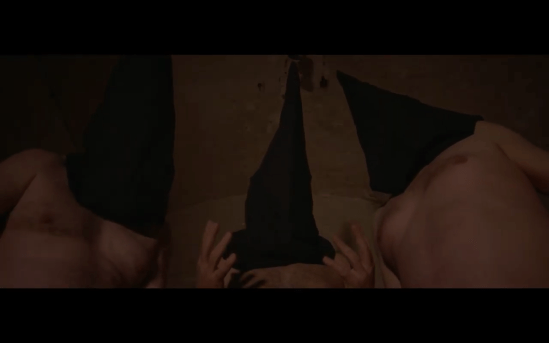
“Cult Girls” borders being avant-garde of an unfiltered auteur’s will in a mesh of artistic polishes and prose dialogue, but the film slides into being more of an 83 minute music video over staying it’s welcome and drudges through a repetitive stylistic cycle to an almost nearly unwatchable extent.  Yet, “Cult Girls” somehow manages to retain attention despite the chewy acting and it’s ambling story that hits a dam wall of uncertainly of where the script should head. Bakaitis shoulders the story for modern Gothicism tapped with half naked occultist, sometimes bathing in blood, and a plague of nightmare imagery that director of photography Trent Schneider tunes into well with noir vitality despite being the cinematographer’s debut feature film, but through the shiny exterior of a handful of solid mise-en-scene work, “Cult Girls” numbs the impact of the soul corrupting Pagan syndicate, that may or may not be shrouded with supernatural foundations, and the anti-Christian propaganda with half-baked violence from geriatric men, masked with Dia de los Muertos style masks, able to be kingpins of an untouchable prostitution ring façade for their occult sacrifices in broad public without a bat of an eyelash.  Granted, prostitution is likely legal in Germany and Lithuania so authorities might turn a blind eye, but brothels are a convenient opportunity for police investigations. “Cult Girls” treasures the fact of Lithuania’s languishing heritage without being overly filmic heresy by blending in shaded sleaze and death, but there lies no story in Dalia’s unenthusiastic search for her sisters in a much more preacherly themed death metal horror that confuses cult with religion.


Apocalyptic reincarnations and traditional folklores collide in Mark Bakaitis’s “Cult Girls” on DVD now from Umbrella Entertainment. The Australian release is a single layer DVD with region 4, PAL encoded format, presented in a widescreen 2.40:1 aspect ratio. Trent Schneider’s keen eye captures a grim fairytale surface of black magic masochism and, at the same time, breathtaking in the pure nature scenes, but the imagery is mostly in devoid of richer color that lingers around a bluish-gray monochrome tone and struggles with hazy details, especially around facial features, that smoothly fuzz over. The English, German, and Lithuanian Dolby Digital 5.1 surround sound mix battens down with shiplap genres of traditional Lithuania folk and modern metal from composing sound designer Erin McKimm, implementing the traditional songs of Lithuania sung by the Melbourne-Lithuania community singers, The Lost Clogs. Industrial action fills in every nook and cranny of the remaining score with decent range and depth of ambiance. While the dialogue is prominent and clear, there are spelling errors and tiny text issues with the English subtitles when the narrative lands in Germany and Lithuania. The DVD’s bonus features includes audio commentary, making of featurettes with cast and crew interviews, Bakaitis’s short film, “Mercy Kill” that serves one of the founding themes for “Cult Girls,” and music videos directed by Mark Bakaitis. For an Australian film, “Cult Girls” will feel more worldly, unlike anything else that comes out of Australia, and have partisan propaganda against Christianity, but in the end, the insidious Pagan evil, on the precipice of resurrecting, wearies on, like a tireless sermon of doom.

Slavic Folklore EVIL Goes Full Amber Alert in “Baba Yaga: Terror of the Dark Forest” reviewed! (Digital Screener / Shout! Studios)


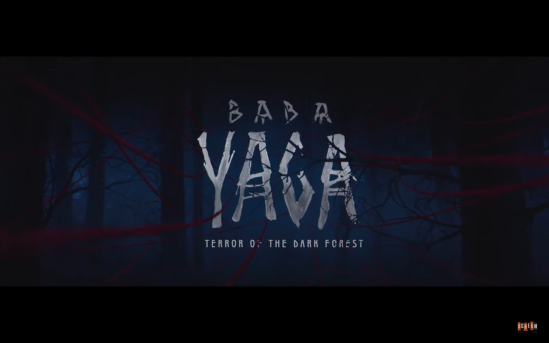
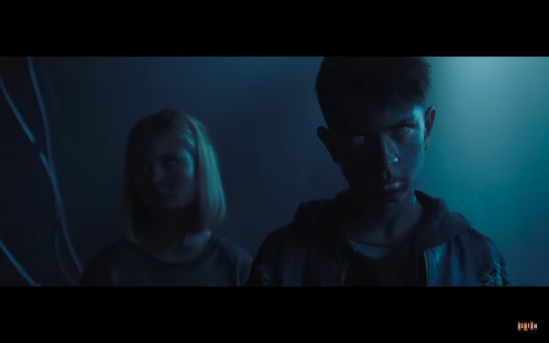
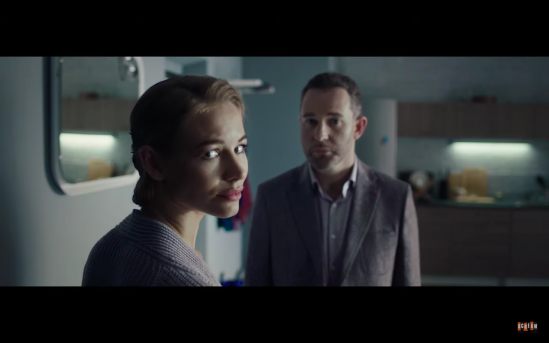
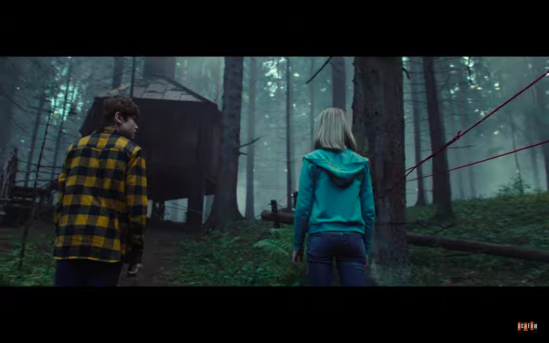
Still reeling over the loss of his mother, a disheartened Egor has moved to a new apartment on the forested outskirts of the city with his father, step mother, and infant half-sister. A nanny is hired for house upkeep and to look after him and his sister, but the nanny’s strange behavior borders hostility toward him while also bewitching his father with her beauty and charm. Since her hire, the nanny cameras alert Egor of movement in the nursey, projecting an unknown and disfigured woman in the room hovering over the baby. When his parents don’t believe him, there’s nothing more the older boy can do until his baby sister goes missing and his parents don’t remember her, as if she never existed. Egor, along with his friends, track down a man living in the woods who seems to have an inkling about the mysterious disappearances of children and why everyone forgets about them as he has experienced the loss of his daughter and can barely remember her. Based off the man’s ramblings, their search for Egor’s baby sister leads them to an old and abandoned power shack that serves as conduit to the world of Baba Yaga, a Slavic witch with the influencing ability in kidnapping and devouring children’s souls for power and Egor’s sister, along with the rest of the nearby children population, have been abducted to lure in the pivotal pure child to set her free into their world.

“Baba Yaga: Terror of the Dark Forest” is the second part of this unintentional two part Russian horror film appraisal following our extrospective look into Olga Gorodetskaya’s psyche serrating “Evil Boy” that just happens to have another protagonist by the name of Igor, but in this case, the spelling is Egor and, instead of a middle-aged doctor, Egor is a pre-teen boy with pre-teen issues – just to jazz it up a little. Also originally known as “Yaga. Koshmar tyomongo lesa,” the supernaturally Slavic folklore tale, directed by Snyatoslav Podgaevskiy (“Mermaid: The Lake of the Dead”), was released February in motherland Russia and is making a distributive second coming toward the States on September 1st courtesy of a collaboration between Shout! Studios and Leda Films. Penned by Podgaevskiey as well as Ivan Kapitonov and Natalya Dubovaya, the scribing trio pickup right where the wrote off form the gritty mysticism of fabled creatures beginning with “Mermaid: The Lake of the Dead” and into a classically frightening and morose villain salivating for juvenile souls spurred from one of the numerous variations of one of the more popular, if not grotesque, Russian mythological being. “Baba Yaga” is a production of the Cinema Foundation of Russia, Central Partnership Productions, Non-Stop Productions, and QS Films.

In much of the reverse from “Evil Boy,” Podgaevskiy’s “Baba Yaga” rocks the cradle in a “Goonies” approach with a condiment and courageous group of pre-teen, developmentally spongy, angsty, and hormonal driven children to solve the big bad witch mystery that not only afflicts the very lives of their brethren age group, but also the parental halfwits who have their minds erased like a chalkboard with nothing more than tiny dust particles to cling to to keep their missing children alive in their memories. From the visually powerful alien invasion thriller “The Blackout” (ItsBlogginEvil review here), Oleg Chugunov spearheads a trio of adolescents on the cusp of being witch-fodder. Chugunov plays Egor, a dispirited youth unhappy with his father’s remarriage to another woman and the target of bullies at his new school before becoming the chosen meal plan for Baba Yaga’s unholy escape for an ethereal world. Egor’s experience of an afterthought to a savior of child-kind isn’t represented well through Chugunov and how the character is written as Egor just falls into the “pure” child role without much explanation to why, staying flat on the personal growth scale for 113 minute runtime. Egor’s followed by a love interested in Dasha (Glafira Golubeva) and lead bully Anton (Artyom Zhigulin) who both have bouts with their parental caretakers; Dasha’s mother is a scorned beauty hellbent on controlling Dasha’s life form outside influences while Anton is a parentless brute with a guardian who is equally as callous as him, if not more. Svetlana Ustinova (“Hardcore Henry”) has two roles in this film and both are bad guys: Baba Yaga and Baba Yaga’s half-bird, half-human hench-thing. Ustinova shows immense range by fielding human to hybrid to full out witch qualities, inching the insidious intentions through the storyline that requires varying degrees of discourse with other characters along the way. The cast list rounds out with Aleksey Rozin (“Leviathan”), Maryana Spivak (“The Outbreak” TV series), Igor Khripunov (“The Bride”) and Marta Timofeeva (“Welcome to Mercy”).

Out of the two terror inducers from Russia, “Baba Yaga” inches out “Evil Boy” on the supernatural spectrum. Between Anton Zenkovich’s colorfully prismatic photography, Vlad Ogay’s sleek-straight and modernally tight architectural designs juxtaposed against a vastly rustic and chaotic woodland lore, and topped off with Podgaevskiy’s highly effective misdirection jump scares, “Baba Yaga” inveigles to a palatable lore horror invigorated by a two-timing enchantress with a sweet tooth for kid blood. Despite not being exact to the Baba Yaga’s tale, as the creature’s house is supposed to erected by actual chicken legs, Podgaesvkiy shoots a fear-laden heartstopper where anything can happen in any scene at any moment. Yet, something is indubitably missing from “Baba Yaga.” Perhaps, what’s missing is that meaningful message about rekindling that spark between parent and child, patching up the tears in the relationship that’s been strained by XYZ reason. Perhaps, what’s missing is the unsatisfactory ending of easily dethroning of a powerful and mighty mage. Perhaps, what’s missing is the explanation on why Egor is the key to Baba Yaga’s tyrannical freedom from cursed exile. I’d say all three contribute to the cause and not much, not even a wonderfully animated s storybook prologue depicting the phantasmal enterprise and downfall of Baba Yaga, could save the heartache in wanting more substance from the already loaded story but, then, we would be looking at another hour of runtime though its sorely warranted. In sum, “Baba Yaga: Terror of the Dark Forest” slips in a variant version dispersing a tingling tale of Russian folklore with stunning visuals and dutiful scares that ends deficiently and mediocrely.

Hide your children! “Baba Yaga: Terror of the Dark Forest” will be unleashed on VOD, digital, and on Blu-ray and DVD September 1st from Shout! Studios and Leda Films. You can look for it digitally or on-demand from the following providers: AppleTV, Amazon, VUDU, GooglePlay, PlayStation®, XBOX, hoopla, Fandango Now, DirecTV, Comcast Xfinity, Spectrum, Cox, Charter, and AT&T U-verse. Since the review is based off a digital screener, the A/V aspects will not be examined but the Scream Factory Blu-ray and DVD release will be region A/1, presented in a widescreen 2.35:1 aspect ratio, and will include a powerful Russian language Dolby Digital 5.1 audio mix with English subtitles and will also include a dubbed English Dolby Digital 5.1 mix. Unlucky for me, I had to screen the movie with the dubbed version. Lucky for you, I can confirm that though obvious, the dubbing isn’t horrendously overly-hyperbolized or too asynchronous. There were no bonus features or bonus scenes included nor none announced on the press release. Grab a bottle of Vodka, pop some Zefir candies, turn off the lights, and sink into an Eastern European mythos horror with Svyatoslav Podgaevskiy’s “Baba Yaga: Terror of the Dark Forest” that’ll scare the Ushanka right off your head.

Pre-order “Baba Yaga: Terror of the Dark Forest” on DVD or Blu-ray for Sept 1st release!

The EVILS of the Jersey Shore! “Exit 0” reviewed! (DVD / Breaking Glass Pictures)


A young New York City couple drive down the Jersey Turnpike down to the Jersey Shore for a quaint getaway in the comforts of Cape May’s Doctor’s Inn Bed and Breakfast. With the hopes of rekindling the spark between them, the omission of the fast churning city living will surely become dampened by the island’s off-season quiet that’s more in sync with focusing on each other. However, after a strange incident at a curbside rest stop, something hasn’t felt right. From the odd tenants to the inexplicable occurrences of the Doctor’s Inn, the strain between their recoupling becomes a daunting wedge and when a videotape is discovered in their room, a videotape that shows a grisly murder on the exact spot they sleep in their room, that wedge not only drives deeper between them but also begins to suspend reality and raise paranoia.

Set on location at the Doctor’s Inn Bed and Breakfast of Cape May, New Jersey is the jarringly fear-fostering “Exit 0” that delivers the grim goods on a dead end, spook story skippered by writer-director E.B. Hughes (“Turnabout”) from a story co-writer with Philadelphian native, Gregory Voigt. Being a local Philadelphian suburbanite myself and a patron visitor of Avalon, New Jersey, having “Exit 0” be a horror-thriller that showcases the tremendous historical and Victorian-laden edifices and tourist retreats like the lighthouse on Cape May point is really invigorating to know that any kind of story, whether horror or otherwise, can be tailored into the seams of just about anywhere on this designer planet. Cape May is charming, inviting, and bustling with touristy customers who’ve answered the call from the beach from up and down the East Coast and surrounding inland areas, but during the off-season, the Jersey Shore, as a whole, is a gloomy and desolate barren land that would emit the appearance of invoking an eerily haunting atmosphere. “Exit 0” is also a charming little independent picture, self-produced by Hughes under his production company EBFIlms.

The cast is comprised of mostly locals in the tristate New Jersey, New York, and Philly area, starting off with Gabe Fazio (“Trauma is a Time Machine”) anchoring down Billy in the lead role of the boyfriend reminiscing about when his parents took him to the Doctor’s Inn when very young and being the plagued victim of severe anxiety when things go strangely muddled during his stay. “The Badger Game’s” Augie Duke plays a constant in Billy’s quickly downgrading opaque craziness as the teetering love interest, Lisa, and though typically the foundering relationship could be the heart of the story, but in “Exit 0,” Lisa might be portion of the reason for Billy’s seemingly unhinged fear. Duke’s wonderfully seductive from a distance, blue balling Billy on his wishful romantic long weekend. Billy and Lisa’s chemistry is in a beaker of unknown substance as we’re not really sure where the stand with each other: Billy doesn’t know whether he loves Lisa or not and Lisa keeps Billy at arm’s length while at the same time attempts to engage in Billy’s sexual advances. Hughes highlights often usual and direct characters to round out Billy’s source of burdens, especially with The Writer played by “The Mask’s” Peter Greene. Greene’s method approach plays into his deep ominous eyes and contoured facial features as a mysterious fixture. Federico Castelluccio plays into the latter direct category as the island’s Detective Mueller. The “Midday Demons” actor perhaps provides a character who becomes the only source of sanity not influencing Billy’s instability and Castelluccio courses a hardnose investigator to reach the truth. “Exit 0” fills out with a couple of veterans in Kenneth McGregor (“Prom Night IV: Deliver Us From Evil”) and Daniel O’Shea (“The Rocketeer”).

“Exit 0” will unavoidably not be a hit with most audiences as a salt of the earth kind of psychological thriller bearing no teeth when considering general moviegoer baits, such as lots of gore, action, and skin, but despite the rudimentary building blocks, E.B. Hughes braises shuttering tension inside a compartmentalized configuration that includes a bit of found footage vehemence mixed with some spun Cape May folklore that’ll find regional nepotism amongst from friends and relatives of the cast and the crew and favoritism from the locals and enigma enthusiastic. Another disadvantage against “Exit 0” is more technical in regards to poor sound editing that picks up way to much noise, ambient and static alike, that’ll certainly dissuade some from enjoying the core plot involving triggering suppressed mental illness and eliciting out of the box interpretation of whether or not what Billy experiences are in fact real or just in his piecing imagination.

Embark on a minatory trip to Cape May with E.B. Hughes’ “Exit 0” on DVD Home Video distributed by Philadelphia company Breaking Glass Pictures. The region 1 DVD is presented in a widescreen, 1.78:1 aspect ratio, with a runtime of 95 minutes. “Exit 0” isn’t a popping color film that limits the ranges to being bleak shades of primary colors that opalescent from scene to scene until we meet The Writer whose basking in a harsh, almost heater like, fluorescent red. These scenes exhibit quite a bit of color banding, noticeably on the walls. Details are moderately soft on times, especially on faces, but there’s plenty of good contour lighting to equalize the effect. The English language dual channel stereo mix initially begins with a rough edit that can’t discern dialogue and backdrop noise audiophiles, making the car ride exchange dampened between Billy and Lisa who are nearly drowned out from the car’s whooshing ambience. Stereophonic sound system feels more mono that can’t grasp the voices and the anxiety riddle milieu that bombard Billy’s crumbling agitation. Dialogue tracks are, for the most part, prominent and can be discerned. Special features include a lengthy and in depth Q and A with director E.B. Hughes, Gabe Fazio, Peter Greene, and Federico Castelluccio, behind the scenes footage, outtakes, a bonus short film “Harsh Light” written and directed by E.B. Hughes about an aging boxer whose career has hit a dead end, and the theatrical trailer. “Exit 0” is abstruse conjecture that mental illness and chilling folklore can be one in the same, depending on one’s subjective perspective, and E.B. Hughes and his anchoring leads masterfully leave open the murky, rheumy wounds for personal contemplation in a hair-raising tale.

Available on DVD at Amazon.com

Evil Sows With Others’ Body Fluids! “DIS” review!


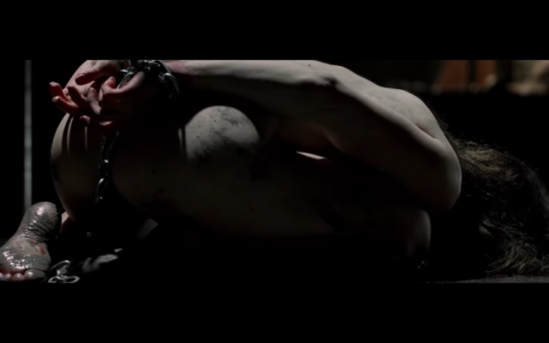
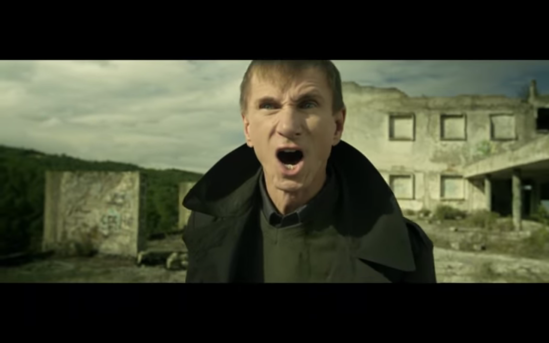
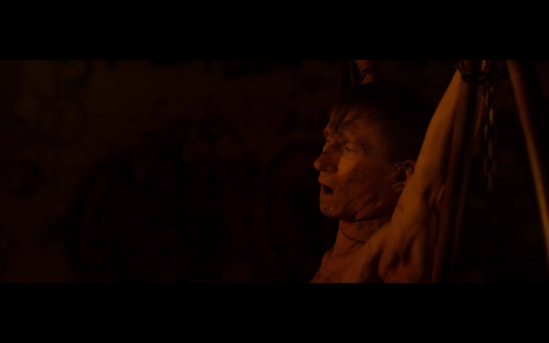
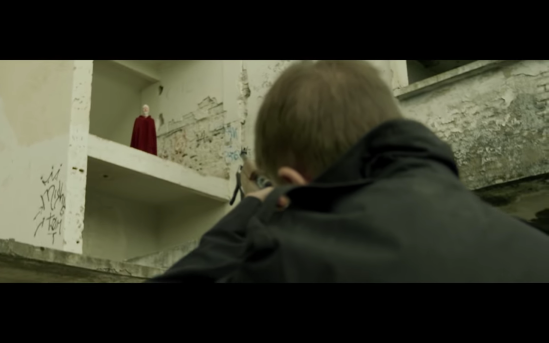
Ariel Konk, A former soldier fleeing from his regrettable past, seeks refuge in an isolate cabin located deep in the forest, adjacent to a lagoon. Struggling to live off the land and coping with loneliness, the soldier marches on, exploring his new, secluded surroundings. His loneliness comes to an end when investigating the ruins of a dilapidating building structure, spotting a masked half naked female and as he pursues her, Ariel witnesses her voluntarily jump from the highest level of the opened air building. Wrought with anguish, Ariel attempts suicide only to be knocked out before he could pull the trigger on his rifle. He wakes up being chained to the wall with a mute, mask figure drugging him and extracting his blood and semen fluids as necessary nutrients for a nearby Mandrake garden. A practice that has been executed many times before Ariel’s arrival.

“DIS” is a bordering arthouse horror film from writer-director Adrian Corona (“Nariz Ioca”). A blend from a horror influenced literary poem and a mythological folkore, Corona crafts a lurid, hyperbolic story that pulls, as Cornoa describes as a prefix of sorts, from Dante Alighieri’s epic journey through hell told in Dante’s Inferno, using the City of Dis that’s described as a lower hell for sinners who’ve committed violent and fraudulent transgressions, and interlocks that inspiration with the archaic lore surrounding the Mandrake plant that involves superstitiously condemning those to hell after reaping the intensely narcotic plant with the human shaped root and that would, also superstitiously, scream when pulled. “DIS” is full of interpretative terror through the 61 minute runtime that’s virtually expressive. Corona provides little dialogue to his script, keeping most of the dialect scribal incased within flashback confines, and let his actors’ raw emotions and visceral eloquence provide the tale that’s peppered with moments of visual shock and cathartic abhorrence.

I’ve said it once and I’ll say it again, Bill Oberst Jr. is one hell of an actor. The upcoming Rob Zombie “3 from Hell” actor has become a prominent staple professional in the indie horror film circuit, tackling the bizarre, the inexplicable, and the most difficult of roles with such vigor and passion that his motivation is seemingly inhuman. Right up there with “Deadly Revisions,” “DIS’ tops or equals being one of the best performances of his career, from the perspective of this reviewers’ cache of Bill Oberst Jr films. There’s quite a bit of difficulty catching up to the man who roughly does, whether as a lead or as support, 10 films a year! As Ariel Konk, Oberst captures the essence of pain and anger that saturates the character’s own personal delirium and hell with his past mistake catching up to his self-battered soul. The faceless figure who opposites Ariel feeds off the ex-soldiers repugnant and guilt-riddled past actions in a seemingly perverse mission that’s actually mandated by the suspected demon’s Mandrake lot. The plants are held in a nursery for engendering creatures, but what kind of creatures exactly? Other demons from the seed of murdered vehement people?
Remaining cast include Peter Gonzales Falcon, “Prison Heat’s” Lori Jo Hendrix, Manuel Dominguez, and Anne Voitsekhova.

The casual viewer will inherently disavow the hour spent watching “DIS” due to a number of reasons, whether it’s Ariel wandering the forest for more than half the film, or dialogue is fairly infrequent, or the chaptered sequence of events don’t perfectly describe just what the hell is going, or, just perhaps, the motif of genital masturbation and mutilation is just too much to stomach. Either way, “DIS’s” traction will slip and only a few are willing to get dirty and push the story forward with open mindedness and artistic appreciation. Speaking of artistic appreciation, Rocco Rodriguez’s cinematography is a character upon itself. The top of a Cofre de Perote volcano in Perote, Veracruz, Mexico during principal photography has breathtaking visuals that Rodriguez captures exquisitely and becomes a backdrop against the coarse material. Outside is vivid, bright, full of life, but when in the belly of the rundown structure, the manmade confines are claustrophobic and crummy, infernally ablaze for ritual, much to the akin of Dante’s Inferno. Rodriguez, again, depicts lustrous imagery that assists in telling Corona’s nightmarish story and that’s a skill all can recognize.

MVD Visual and Unearthed Films present Adrian Corona’s enigmatic and surreal “DIS” from 1922 Films onto high definition Blu-ray. The region A release is presented in a widescreen, 1.85:1 aspect ratio, and has the near epitome of perfect with, again, Rocco Rodriguez stunning photography. The lighting really comes to the fold that upheaves the brilliancy in the textures, such as in the building’s illustrious graffiti, and dares to switch to black and white when appropriate. Skin tones are fresh looking and natural in colored scenes. Only a minor aliasing issue around Obsert flared up momentarily, but ceased going forward. The Dolby Digital 5.1 surround sound has forefront dialogue, but not a bit soft, especially with Peter Gonzales, that made following difficult. There was not enough examples of range or depth to necessarily comment as Oberst was essentially alone for much of the film. Bonus features include an explanation introduction by writer-director Adrian Corona, a behind-the-scenes featurette that exhibits three takes of two scenes, a wonky static menu Q&A formatted interview with Bill Oberst Jr., a short film entitled “Portrait,” still gallery, and Unearthed Films trailers. Bill Oberst Jr. is, basically, a one man show knitted into an Adrian Corona allegory of unknown terror through conduits of literary works and medieval folklore, making “DIS” prime real estate for viewers seeking a film as an open book toward abstract gardening.

Like Indie Horror and Want to Support Bloggers! Please Consider Purchasing this title from Amazon by Clicking Here! Thank you!!