Become Lost with the EVIL in Your Head. “Faye” reviewed! (Reel 2 Reel Films / Digital Screener)


Author Faye L. Ryan has found success as a career writer penning personal growth and self-assurance books, but the renowned author has hit a mental wall in growing out of the process of mourning for her deceased husband, killed in a car accident in which Faye was at the wheel.  Scarred physically and mentally with painful reminders of that fateful night, Faye struggles to focus on her next new book, threatened to be dropped by her publisher if she doesn’t meet their deadline, and interacts with her husband as if he was still with her in person.  In a last ditch effort to get Faye back to writing before cutting her loose, the publisher offers up a lakeside vacation house to help focus on her work, but as Faye settles into her new, quiet writing space, she finds herself unable to escape a haunting presence tormenting her. 
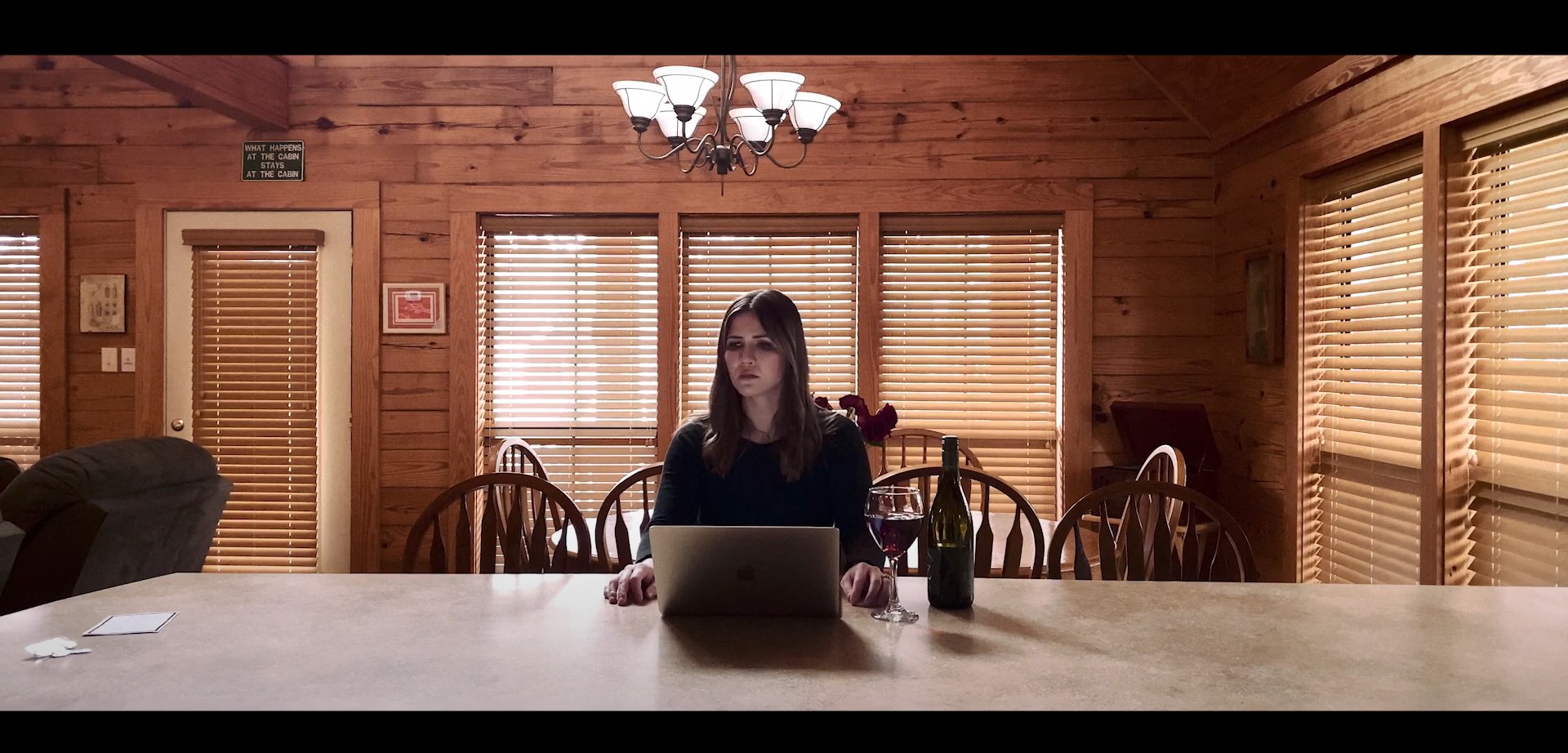
Working solo is tough.  Having no one to bounce off dialogue or react to their disposition can be daunting and unnatural for most actors and actresses.  Yet, the titular character in “Faye” must do very that to ensure Kd Amond’s 83-minute feature directorial about loss, grief, and the supernatural representation that braids into a broken reality will exist without suffering stagnation.  “Faye” is a 2021 female-driven horror-drama written by Amond and the film’s lone wolf star Sarah Zanotti as the two filmmakers reteam from the previous year’s dysfunctional family thriller, “Rattled.”  Shot between Nashville, Tennessee and the cabin resort of Lacombe, Louisiana, “Faye” is cut from an all-female producing team of by Amond, Zanotti, Sara DelHaya, and Nicole Marie Lim under Amond and Zanotti’s independent film production company AZ if Productions.
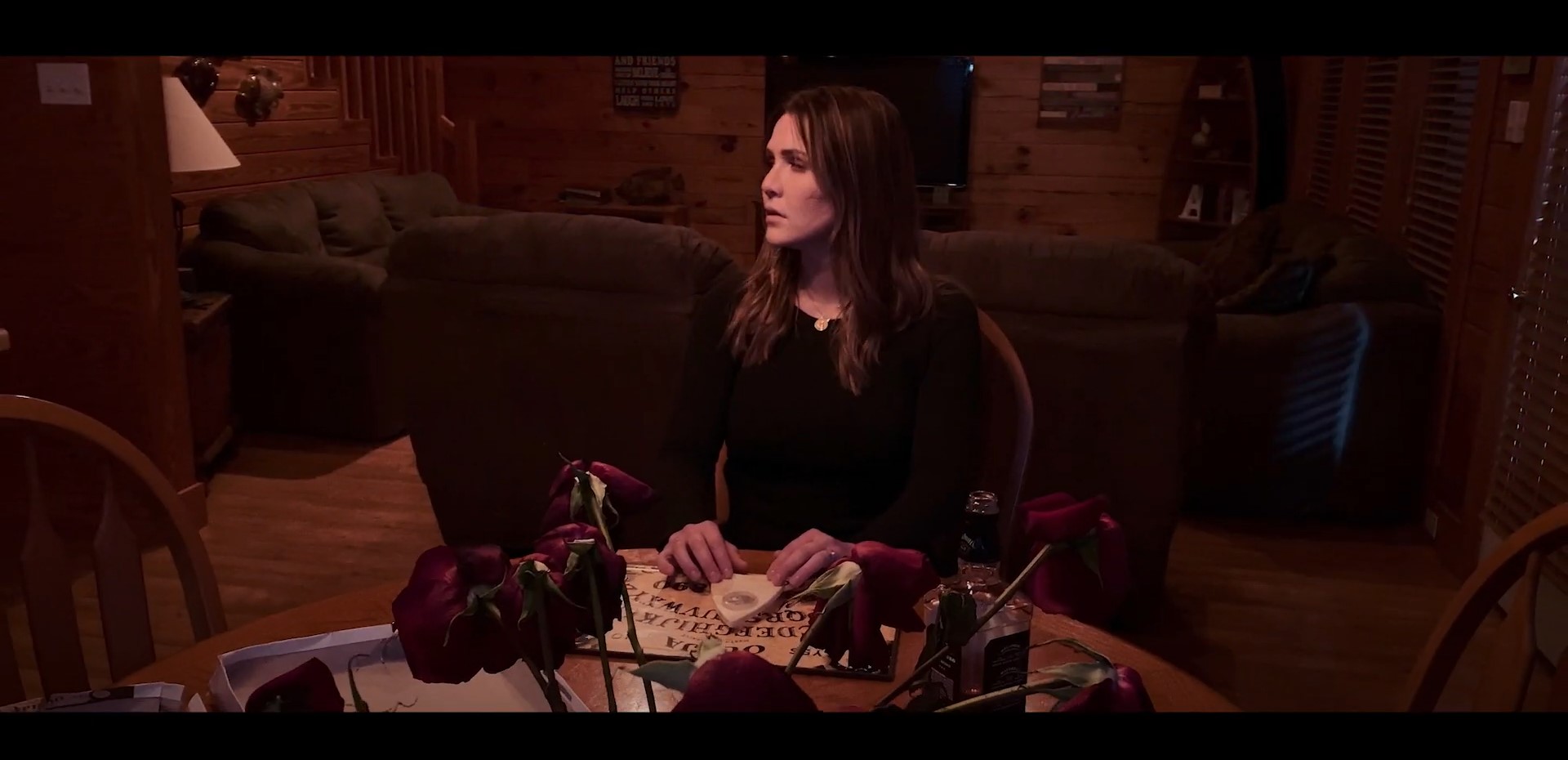
So, how did Sarah Zanotti perform going at the role alone with not another single body in sight?  Aside from the performance scale, initial first thoughts about an emotionally processing Faye rings clear that she is definitely alone with her thoughts without ever confronting her past head-on.  Faye, more or less, brushes the incident to the side, drowning herself in wine and loathing, until vague, intermittent memories pull her back down to reality every so often.  The role gratifies a sense of a struggling individual’s unintended and deeply personal isolation stemmed by unable to grasp with the hard to deal with issues to where’s she’s invented an imaginary friend in the form of her late husband in this pretend world of being normal, routine, and safe.  Looking from the outside in, Faye invokes pity on the saddest level as she converses with thin air as well as drinking large quantities of wine alone. There’s even the suggestion in either flashback scenes or maybe representational moments of despair that she, at one point in time, committed to, or thought of, suicide. As for the “Archaon: The Halloween Summoning” actress Zanotti? The actress, singer-songwriter, and proud cat mother (as stated on her personal website) breathlessly engrosses herself in Faye’s darkest moments with a ramble of insecurities that skate around the main issue until that issue manifests as a specter of duality, haunting “Faye” with her own scarred image that won’t allow her to leave until she combats the guilt eating her away. However, Zanotti’s a bit one tone through the entire storyline, never zig-zagging in a full range on emotive spectrum when face-to-face with the emulated specter. There are guest voices in the film whenever Faye takes or makes a phone call, including vocals from Corri English as Emory the publisher, Dean Shortland as Bobby, Brian Vance as Jacob, Kd Amond as Faye’s mom, and Zanotti as Elle.
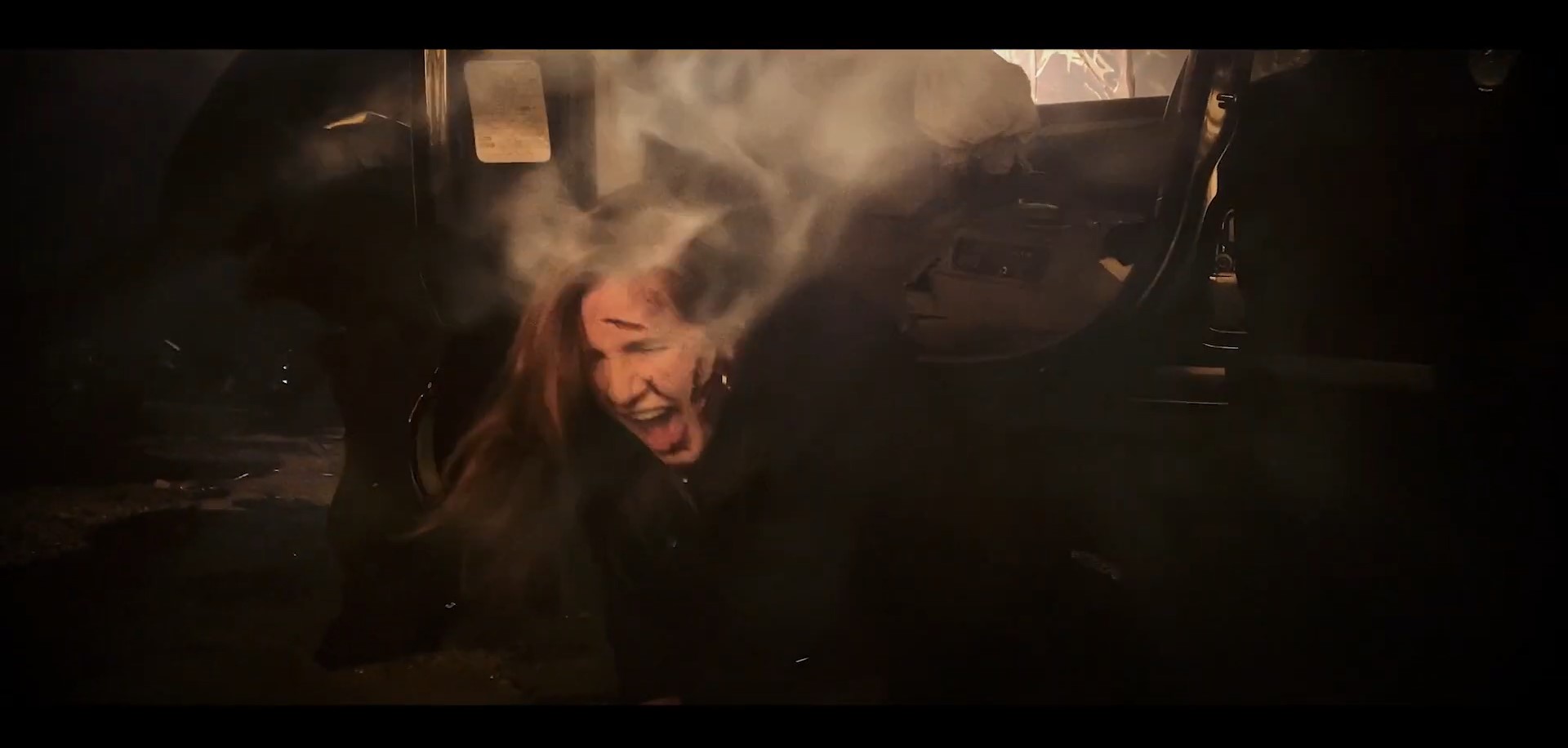
To carry an entire feature film on your shoulders is empathetically tough for the one and only principle lead Sarah Zanotti and also the director Kd Amond as well and I wouldn’t declare “Faye” to be an overstimulating visual film albeit snazzy editing and makeup effects when sucked into supernatural self-reproach and suffering. “Faye” leans heavy into self-centered conversation in an acerbic chaptered and non-linear context that can be difficult to follow it’s pathway structure at times when the titular character is not framed in the cabin but rather sitting, speaking on a well-lit platform that fits her personal growth expatiate, like a Tony Robbins-type, connecting back to Faye’s mindset or actions in the cabin. Though much of the conversion is directed toward herself or the mental image and two-way communication of dead husband, a good chunk of the dialogue is the unwavering tough love business-speak between agent and client. Faye publisher rakes in money based off book sales and if Faye isn’t writing up drafts than a publisher does not care about your personal tragedy. That dynamic during the calls feels utterly cold with no pity or sympathy for Faye in the voice of the agent who cares solely about client image for publicity and is determined to nag a draft out of a woman who has lost her best friend in life – grief and guilt be damned. As a spook show, “Faye” whips up a few moments of fearful highlights but does little to the film’s self-proclaimed horror label when more of the acidity of internalizing the death and destruction of her life becomes more manic without the monster that’s introduced too late or comes too little often to be integrated into the story properly and stands out as negative concentrated symbolism.
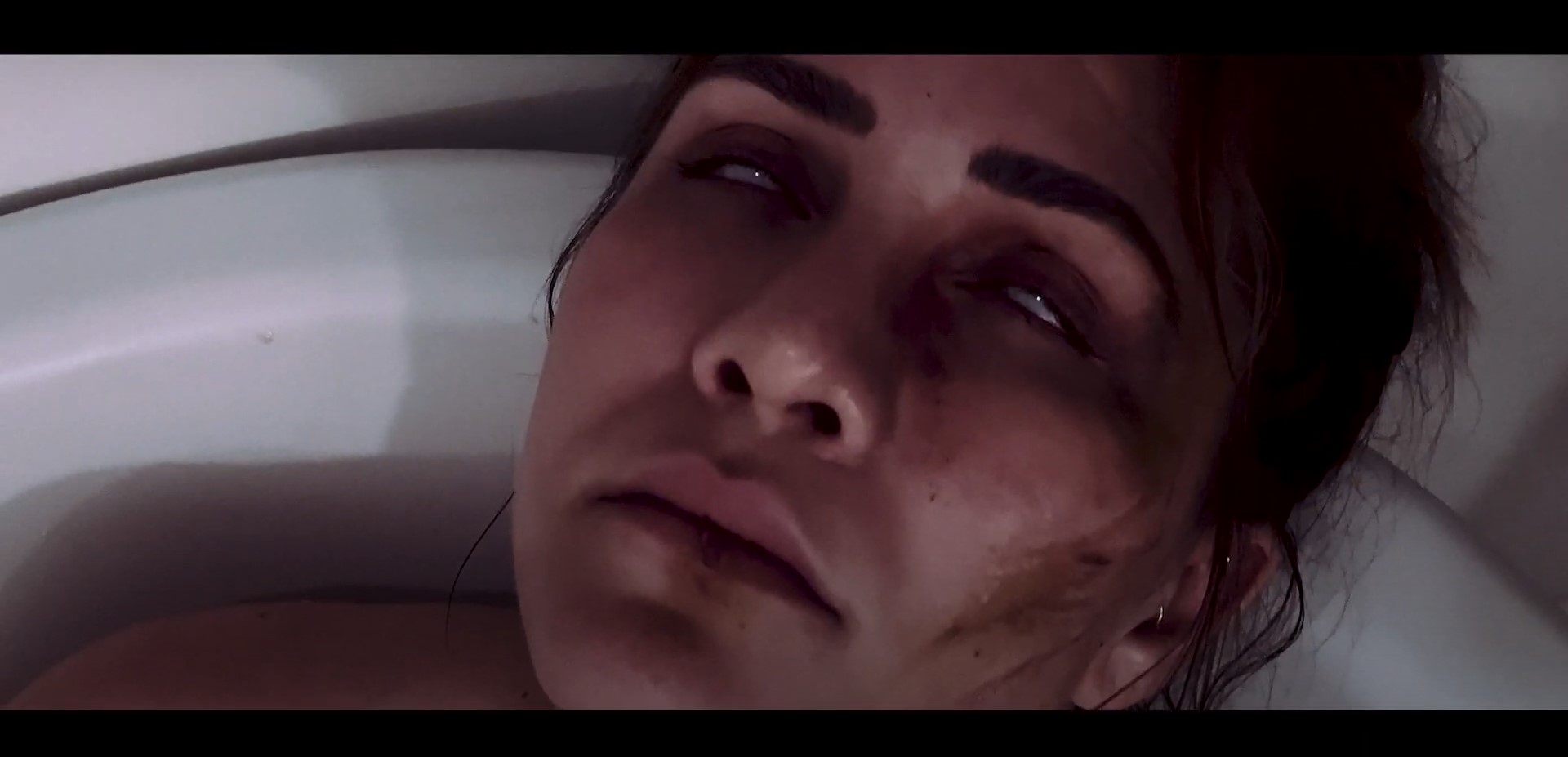
Oozing with heartbreak and melancholy, the fracturing viability in “Faye” calls forth the detrimental impact and for reinstation back in the society, one needs to fall before getting back up. Reel 2 Reel Films brings the American-made, woman-driven, atmospheric and apparitional “Faye” to the United Kingdom on digital home video come May 9th. Since a digital screener was previewed, there will be no critique of the audio or video qualities. Kd Amond was really a one woman show behind the camera by taking on not only the directing duties but also many others, including cinematography and visual/practical effects and for “Faye,” the film was mostly captured with natural lighting outside the cabin, practical lighting for cabin interiors, and key lighting of Faye on stage. There’s use of a filters during the more supernatural plights and to tell night scenes that don’t look natural, leaning toward a more style-choice purple. For any extras, there were no bonus scenes during or after the credits. “Faye” has strong bones for a good grief and guilt ghost film in the indie realm and while it doesn’t have the star-laden power of other similar themes of its kind in “The Babadook” or “Hereditary,” “Faye” still invokes the power of hurt and the summoning of self-condemnation.

A War Criminal’s Evil Influence. “Apt Pupil” review!


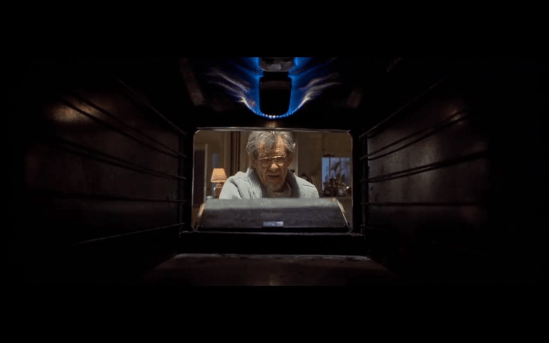
Next time you suspect your neighbor is a wanted criminal, they just might very well be as in the case of Todd Bowden, an excelling high student who discovers a WWII Nazi war criminal has been secretly living in his quaint hometown. Through his own investigation of photograph comparisons and retrieval of finger prints, Bowden confronts the old man, Kurt Dussander, about his notorious past. Living under a pseudonym and wanted by the Israeli government, Dussander attempts to dismiss the boy’s claims until his bluff to call the police is called, resulting in Bowden’s curiosity to become a blackmail gambit that puts Dussander under the student’s quizzical thumb. In return for not informing the authorities, Bowden requires Dussuander to reveal his story, the story of his stint at the extermination camps without sparing any details no matter how gruesome. Bowden even goes as far as purchasing a replica SS officer uniform that he forcibly commands Dussander to put on and march. Through his reminiscing of the past, an evil reawakens in Dussander and their banal friendship of psychological warfare goes into the dangerous trenches of survival and eradication that spreads like a cancer inside and outside their private lives.

Before the monumental eruption of continuous claims of sexual misconduct by various accusers, Bryan Singer furnished significant prominence as a director and overall filmmaker before he inadvertently kick started a very long, very successful, and very lucrative series of superhero films and their related and unrelated sequels and spinoffs, starting with Marvel’s “X-Men” in 2000…19 years ago, Holy sh*t! Well, in 1998, coming off his success of “The Usual Suspects” with fellow accused celebrity and now blacklisted actor Kevin Spacey and currently untarnished Irish actor Gabriel Byrne, Singer and Phoenix Pictures presented and released the suspense-thriller, “Apt Pupil,” a Bad Hat Harry production. Inspired by the Stephen King novella, “Apt Pupil” is the polarizing observation of two evil souls where one might be significantly eclipsing the other. Brandon Boyced (2005’s “Venom”) drafted a script based of King’s novella that was comprised of a different, and less pessimistic, ending to the novella while still uncompromising King’s baseline evil theme.

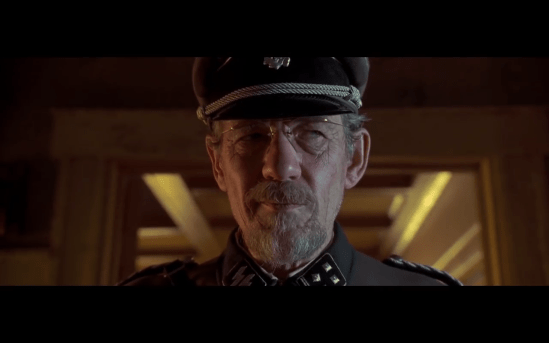
High school students, especially males, often have an aggressive temperament. Whether it’s sports, girls, or just trying to fit in, guys almost always take their tunneled focus to the extreme. For Todd Bowden, a brilliant young student, a fascination with the grim extermination of Jewish people and the Nazi culture tickled his fancy. Brad Renfro, only 14-years-old at the time of filming, stars as Bowden and really digs into the character’s adolescent psyche of relentless obsession, having his character converging all power from a big time war criminal and, even more simplistically, an older adult male, to himself, but when things go sour and Bowden starts to lose grip of his pawn, panic sets in and Kurt Dussander’s wicked and warped mind structures a counterattack that seemingly befriends the boy, but really demonizes Bowden’s already appalling obsession. Sir Ian McKellen, in a performance of pure brilliance, masterfully crafts a representative of evil in Kurt Dussander. The scene with McKellen stepping into a SS officer uniform and then marching with prerogative purpose that’s topped with a Nazi salute is perhaps one of the best chilling and unsettling performances of our lifetime. The dynamic in the scene between Renfro and McKellen, carefully shot and executed in direction by Singer, respects the bleak humanity enthralled by Stephen’s King body of literary work. There are some other amazing performances here by the supporting cast including David Schwimmer (“Friends”), Bruce Davison (“Willard”), Ann Dowd (“Hereditary”), Joshua Jackson (“Urban Legend”), Elias Koteas (“The Prophecy”), James Karen (“The Return of the Living Dead”) and Heather McComb (“Stay Tuned”).

As aforementioned, “Apt Pupil” has an evil duality narrative that contain descriptive horrors of the past, paints the means of callous obsession, and symbiotic necrosis of any good left in Todd Bowden or Kurt Dussander when together, but on the surface level, Kurt Dussander’s murderous duty to the cultural cleanse severely overshadows Bowden’s seemingly curious obsession, his blackmail of a notorious war criminal, his deception amongst those close to him, and, the inevitable, stony perception to murder. More than likely innocence could be blamed for the fact that Bowden is a child and Dussander’s a man living the last moments of his life, but Bowden becomes the catalyst for Dussander, reigniting the evil thoughts and actions of SS officer’s former life. Dussander attempts many degenerate actions from his past and never successfully succeeds in completing them whereas Todd ultimately finishes it either for Dussander, willing or not, or for his own self-preservation. By the end of “Apt Pupil,” the question you might ask yourself is how do you feel about either character? Despite the scale of their evils, which character ultimately, in the scope of Singer’s film from beginning to end, is the true representation of evil? To me, the finale feels like Dussander inadvertently passes the torch to Bowden and with his obsessive nature toward Nazism and extermination, the boy will grow up to continue being that representative of evil?

Umbrella Entertainment presents Bryan Singer’s adaptation of Stephen King’s novella, “Apt Pupil” onto Blu-ray home video. The region B, full HD, 1080p Blu-ray is presented in anamorphic widescreen, 2.35:1 aspect ratio, and the quality is crisp excellence with a sharp hi-def scan of textures and the details in Mckellen’s facial curvatures that just open up to expose the wily diabolical smirk from the vet actor. Coloring and skin tones are okay despite the release being slightly yellowish and inkier in comparison to other releases. The English 2.0 DTS-HD Master Audio does the job and is balanced all around with dialogue clear and present and the John Ottoman (“X-Men” franchise) is menacing without being overwhelming, but the ambience’s depth and range are stiffened from a lack of surround sound that could have been achieved with this release. The special effects are slim with a behind-the-scenes featurette that’s more surface level depth with cast brief cast and crew interviews and also includes theatrical trailer and TV spots. Viewers too caught up in the superhero hype might not recognize that Bryan Singer helmed “Apt Pupil” or might not even care in lieu of sexual accusations, but hardcore Stephen King fans and horror aficionados can certainly appreciate a blanket thriller with haunting performances that will be remembered more than the marring scandal behind-the-camera.

Might be a REGION 2 release, but still available on AMAZON.COM here in the states! Click the cover above to purchase 🙂