Wake Up and Get Lost in the EVIL Flowers. “Terror Firma” reviewed! (Dark Arts Entertainment / Blu-ray)

“Terror Firma.” The First Dark Arts Entertainment TItle Now Available!

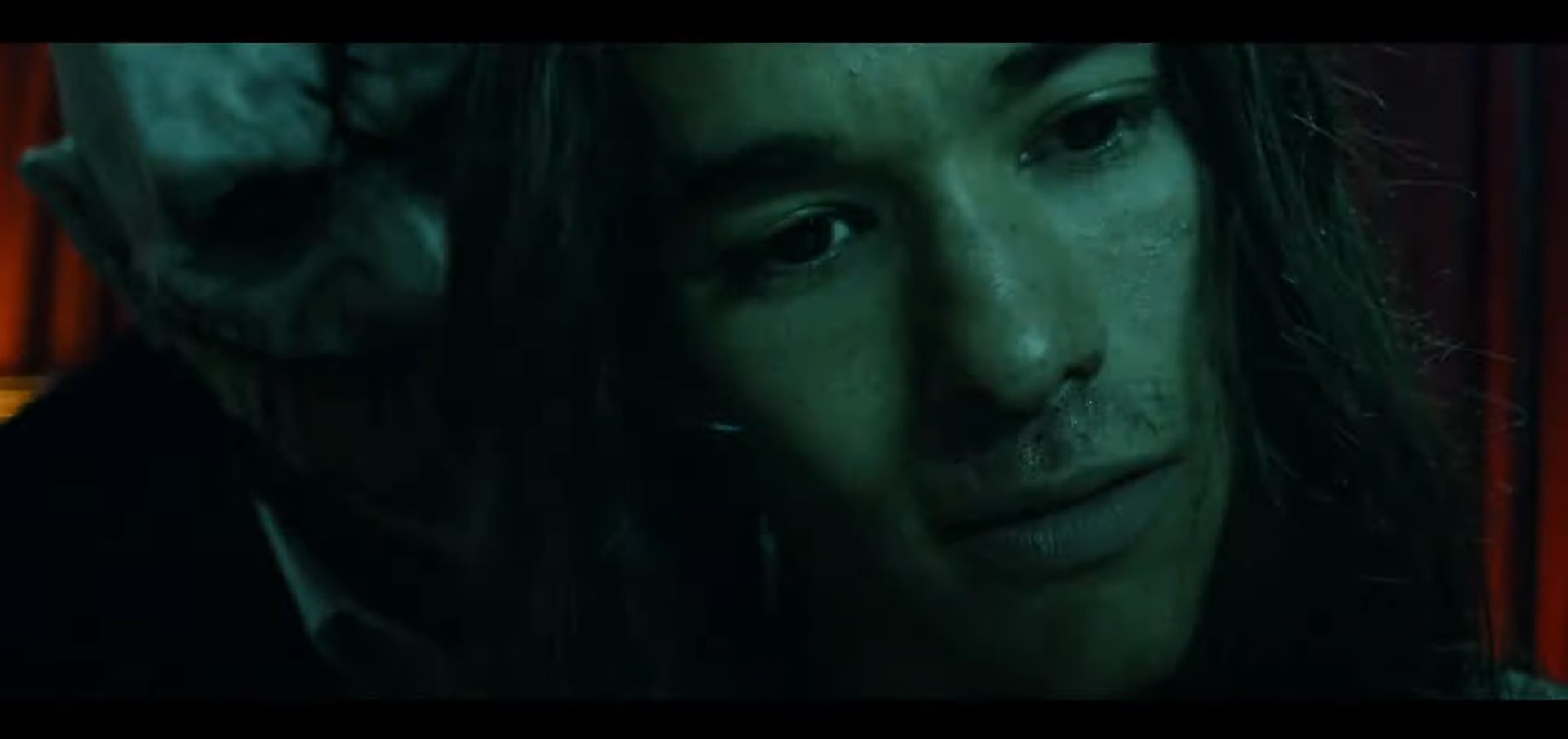
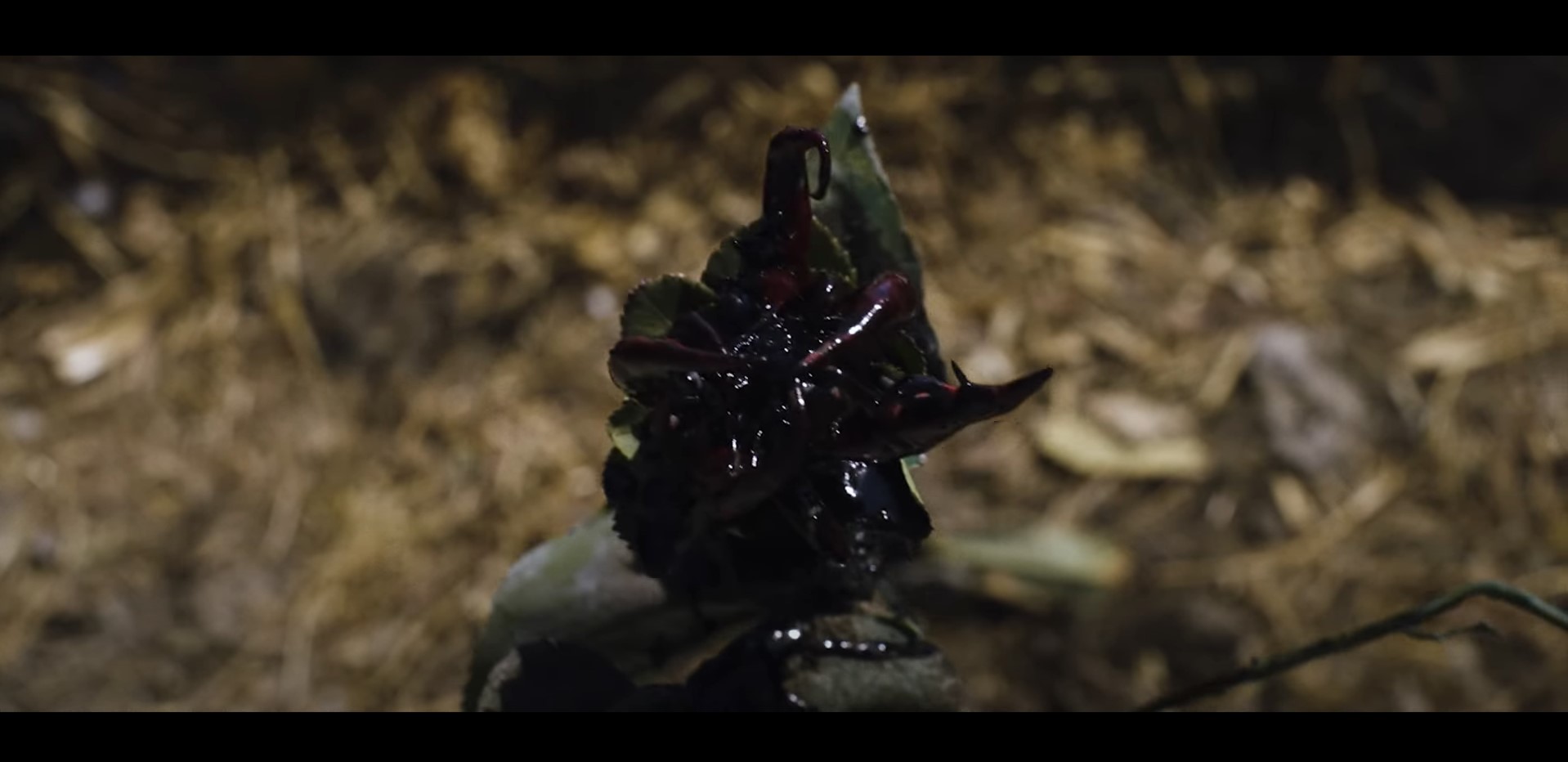
Having no place to go during the middle of an unexplained, national Marshall Law event where citizens must remain indoors or else face imprisonment, Lola bunks in with her fellow adopted brother Louis and his bizarre tenant Cage. Though Lola and Louis have not seen each other in years, they quickly bond to deflect Cage’s peculiar persona that has honed in on Lola. After receiving a government issued drop shipment of food, Lola discovers a seed packet wedged in between the boxes. Her curiosity sows a single seed that results a hole in the ground next day, a hole that produces a jelly that conforms to their individualized favorite flavors, and they become addicted to its intoxication, but when Louis disappears, seemingly trapped between dimensions and communicating underneath an alien flower where the hole use to be, Lola is stuck alone with Cage who’s more and more becoming twisted by the transcendental jelly.
A pun play on the idea of terra firma, defined as the Earth’s ground or surface, “Terror Firma” is a prismatic and cosmic hell hole of a psychological and interdimensional thriller from writer-director Jake Macpherson. Macpherson, a regular music video director of photography and a short film filmmaker, debuts his 2023 feature film with a broader, elephantine story under a bantam budget, reduced to a singular location, and uses the idea of terra firma as the basic premise for natural Earth horror blended with the pandemic confinement of COVID-19 in which the story was conceived and how that isolation acceptance, thralldom from authoritarian instruction, and broken family bridges originate the internal dysfunctions outward toward a destructive, maddening outcome. “Terror Firma” is a production of the Los Angeles based Capture Theory company with Macpherson, John Angeli, Forrest Clark, Theo Linder, Katie Mamie, and Bryan Wilson serving as mostly first-time producers.

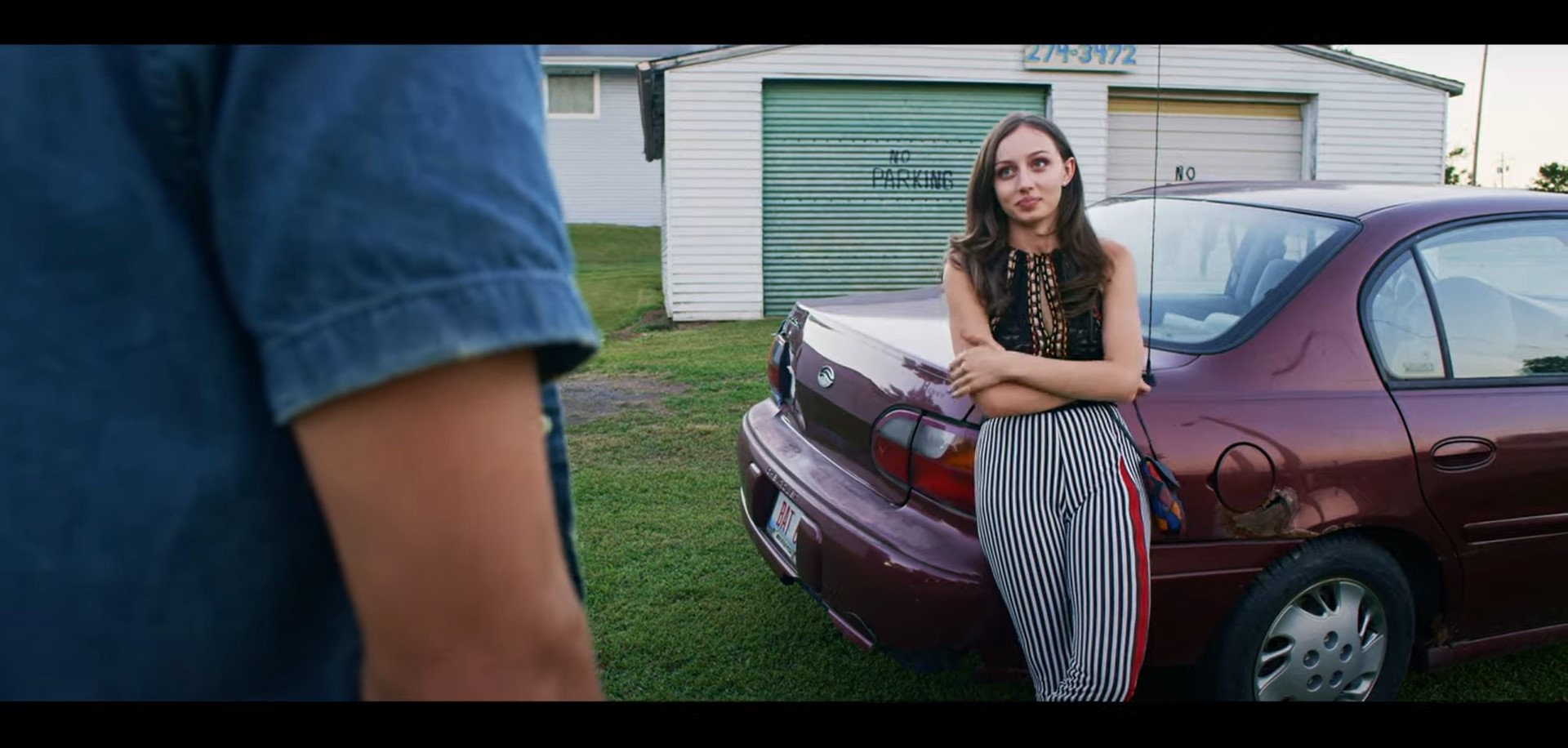
Keeping in line with a low-cost production, the story takes root at mostly one location, Lou’s rundown, multi-story house with creaky old floors and compact rooms, extending the location beyond the walls and into the house’s minute front yard where a pile of dirt with a strange jelly hole metamorphizing into an even stranger looking flower becomes the catalyst of weirdness.  Thai-American actress Faye Tamasa is Lola, the weary sister of Louis, played by Burt Thakur, who invites her to come stay with him during the beginning of a nationwide shutdown of unexplained purpose.  Lola and Louis, both once orphans and adopted by the same parents, haven’t seen each other in years and have rarely spoke.  Repeated motifs of isolation, such as the extension of their orphanage, and an awkward disconnect between them display their relationship instable without having an obvious clash to outright scream incompatibility between the two who don’t share bloodline but grew up together.  There’s still an affection quality between them but it is damaged.  And, then, in comes the third wheel that becomes the wedge between Lola and Louis’s relationship rekindling.  Cage, a dodgy spiritual pseud and played with monotonic sleaziness by Robert Brettenaugh (“Strange Blood”), interjects his numinous nonsense as a façade to impress Lola but as Lola sees right through him, Cage diverts his attention to the Jelly that drops the façade and unleashes his true spirit, a sociopath with an obsession.  The trio works to relay a significance in loneliness and isolating desperation in a sensationalized, supernatural way in finding a pathway through the lockdown blues.   Rounding out the cast with a small role that wouldn’t even be considered turning the trio into a quartet is Max Carpenter as a former love interest to Lola.

Not to be confused with or have any similarities to Lloyd Kaufman’s 1999 burlesque slasher titled “Terror Firmer,” Macpherson’s debut is born and bred out of the woes of a global pandemic by formulating a fantastical escape from the reality as we knew it before everything went into an abrupt lockdown.  The sudden stoppage of the world and social gatherings certainly began a snowball effect of emotional distress, some more external than internal that gradually drew to head an uneasy amount of stir crazy.  For the trio of roommates, and like most of us during the beginning of the lockdown, we’re excited and thrill for a break in the norm but as time marches on, those you’re stuck with without anywhere to go is an unusual alienating feeling.  “Terror Firma” expediates the sullied sensation to cosmic proportions with gateways to upside down worlds that mirror our own and develop cultish acolytes to the Jelly’s mystical powers.  Granted, no much of Jake Macpherson’s story makes a whole ton of sense and is very open to interpretation, but one possible avenue I’ve concluded is that the Jelly is a convenient, sweet-tasting poison that one can easily fall for its pseudo-tranquility and limitless euphoria to solve all our immediate problems as a quick fix but ultimately it’s our will and the power within ourselves to reconnect, re-establish, and revitalize what’s missing from ourselves.  Macpherson’s hallucinogenic rabbit hole of a thriller is an abstract course on preservation of relationship and connections while overwhelmed with obstacles.

Prominent genre filmmaker Brian Yuzna, well-known for his behind-the-camera roles on Stuart Gordon’s “Re-Animator” and “Dolls,” as well as his own directorial credits “Society” and “Beyond Re-Animator” to revolutionize the way we see horror in the 80s and 90s, teams up with John Penney, writer of staple cult classic “The Kindred” and “Return of the Living Dead III,” to form a new at-home physical media label known as Dark Arts Entertainment.  “Terror Firma” is the first title to be released by the joint partnership with MVD Visual for distribution.  The AVC encoded, 1080p high definition, BD50 houses the widescreen, 2.39:1, aspect ratio presented blossoming madness.  Picture image varies with the refracting coloring within the polychromatic lenses and in contrast to the post grading of a slightly coarse tone.   Yet, that isn’t to say quality is subpar and we’re treated to a fine digital image compressed without compromising the encoding on a double layered disc.  The English LPCM Stereo 2.0 offers a lossless reproduction of true audio fidelity and while not be a powerful mix course isolated layers through individualized channel outputs, “Terror Firma” isn’t necessarily powerful in range.  There’s only a handful of psychedelic moments of discord tunes and notes to emphasizes the crossing between dimensions and a few minor key moments to evoke fear out of Cage’s madness but other than that, “Terror Firma” specializes mostly in exposition and silently witnessed moments.  Dialogue is clean, clear, and prominently placed with depth dialed in where needed, especially when Lou begins to speak beyond the plane.  English subtitles are available for the feature only.  Inside the bonus material, a second version, an extended director’s cut, of the film is available and does not have the subtitle option.  Also included is Jake Macpherson’s commentary with main feature, a behind the scenes gallery, and the theatrical trailer.  The maiden Dark Arts release package is standard fare with a traditional Blu-ray casing containing no inserts or other tangible material ride alongs.  Release cover art leaves enough to the imagination to be lured in with Faye Tamasa crawling through a dirt hole and coming upon the alien flower.  The not rated feature has a runtime of 84 minutes and is encoded region free.

Last Rites:  “Terror Firma” is a bold first impression for not only writer-director Jake Macpherson as his debut full-length feature film but also for Brian Yuzna and John Penney inaugurating their distribution label with a film that might not strike a likeable chord with most but will certainly leave a relatable lasting impression on us all. 

“Terror Firma.” The First Dark Arts Entertainment TItle Now Available!

That Chill from Within is the EVIL that Plagues the Mind. “Bone Cold” reviewed! (Well Go USA Entertainment / Blu-ray)

“Bone Cold” is available on Blu-ray Home Video at Amazon.com!

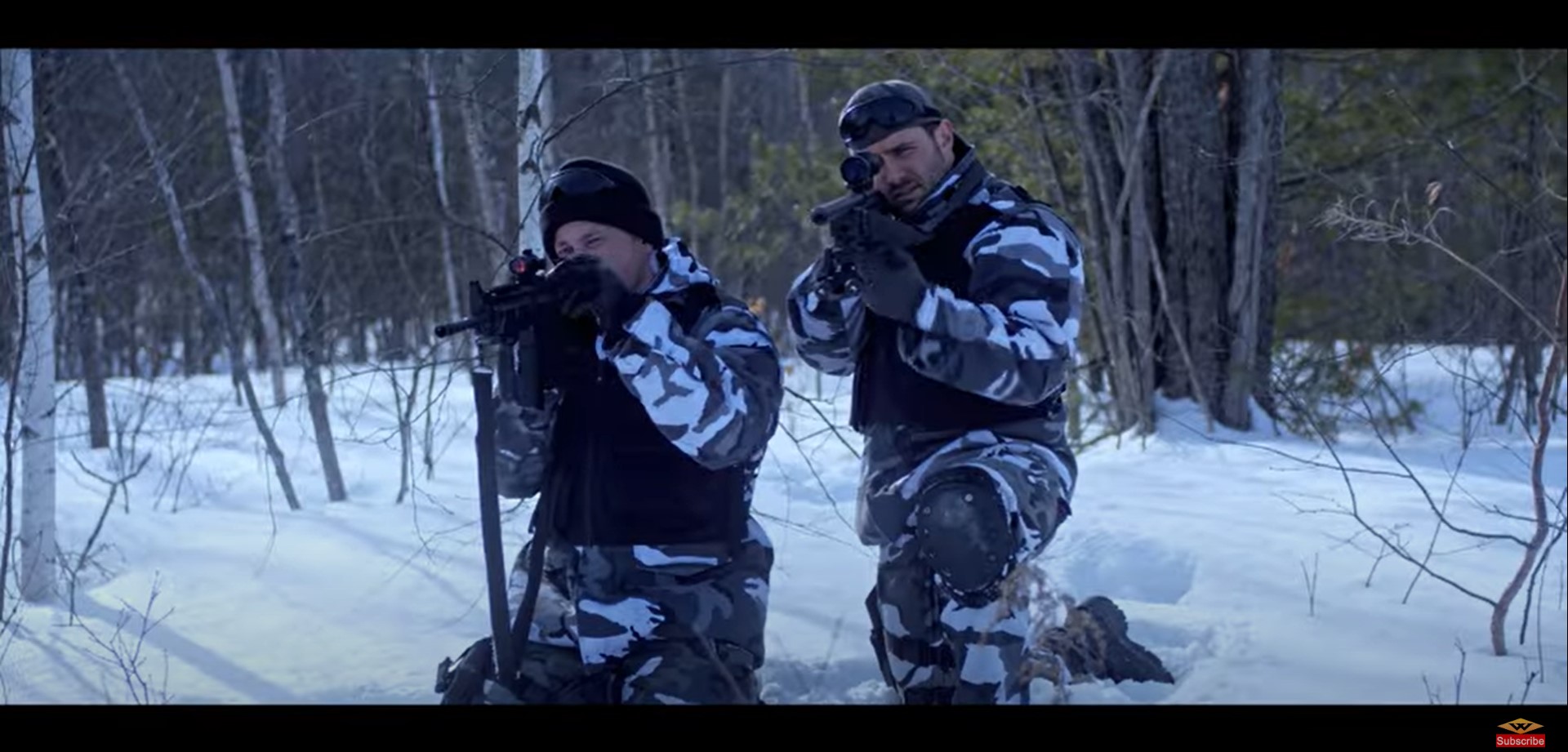
After a failed mission attempt by their counterparts, a pair of highly trained U.S. Black Op solders are called back from a leave, less than 24-hours on a previous mission, to drop into a snow-covered forest in Northern Ukraine.  The mission is to eliminate a Russian separatist amassing a paramilitary for insurgency strikes.  The skilled sniper and his longtime spotter assassinate the wrong target on bad intel and find themselves running for their lives when separatist soldiers begin tracking them.  Unable to evac until the mission is a success and they lose their hostile pursuers, the soldiers are hard-pressed by their handler to continue to locate and eliminate the intended target, but something else is following them.  A dark figure against the snowy white landscape hunts them.  With no other friendly assets in the area or air support, they must battle to survive the two-fronts alone, relying on their years of trust and training to get them through alive.

“Bone Cold” is the chilling 2022 psychological thriller from first time feature length film director Billy Hanson.  The Main-born, Florida State Film School alum also pens the story that tackles traumatic stress and delusions brought upon military war and operation fatigue mixed with suspenseful arms engagement, displaying phenomenal sniper back-and-forth volleys, and mixes in a sinister and ominous presence in tow.  Shot in the dual locations of Los Angeles, California, for the not-so-frigid-looking scenes, and in the director’s home state in Saco, Maine during the winter months where most of the action takes place, “Bone Cold” plays into that penetrating freeze that sends shivers down your spine as well as getting the blood pumping for the clashes of special and supernatural forces.  Hanson, along with Elise Green, Ness Wilson, Jonathan Stoddard, and music video maker Jaclyn Amor produced the film under Hanson’s own Dirigo Entertainment production company with Mind the Gap Productions and Well Go USA Entertainment handling distribution.

The story opens with a man using a metal detector on a semi-arid land until the strengthening beeps denote his bounty, a cache full of semi-automatic weapons.  Before he can enjoy the cold grip of a powerful rifle in his hand, his temple explodes with a quick blood splatter from the scoped rifle of United States Black Ops solder Jon Bryant at the confirmed behest of his spotter partner, Marco Miller.  The operatives are played by “Away the Dawn’s” Jonathan Stoddard and “Discarnate’s” Matt Munroe respectively who muster and mimic well the jarhead jargon and procedural positioning with their own brand of super soldier camaraderie, building a believable bond based on distinct posturing alone.  Narratively, we’re exclusively in synch with Jon Bryant, the expert sniper whose likely spent more hours killing marks than at home with wife Mel (Jennifer Khoe, “Fear Frequency”) and daughter Wendy (Trinity Jo-Li Bliss, “Avatar:  The Way of Water”) and slowly Jon’s reality begins to fissure under the pile of bodies that he’s claimed over his military career that translates right into the next mission before he can even decompress from the last assignment.  During their clandestine campaign, Jonathan Stoddard can sell stoic reactions with ease unlike the opposite side of the spectrum where crazy isn’t in the actor’s natural repertoire and while the unknown factor nudges a way in between the two soldiers, where their lives depend on the very stability and duty of the other, in what is a fervent wedging that puts them in a tough spot, Hanson throws in an unnecessary monkey wrench that departs from the obvious in a confounding way and trails Stoddard away from his character leading himself out of his own mental maze.  Hanson does attempt to re-ground the solders with combat and the negative affect that life-and-death struggle has on them in a hot zone and at home.  “Bone Cold” rounds out the cast with Elise Greene (“Incantation”), Jeremy Iversen (“Mantus’), and Danielle Poblarp.

Choice domestic locations give “Bone Cold” a broader, international feel, creating a bigger narrative than in actuality, and those illusionary elements provide invaluable production value on a smaller scale production.  Throw in a few Russian speakers and Billy Hanson has transported you into Eastern Europe without having to leave the filmmaker’s backyard.  A decent charge of combat and special forces verbiage tack on a competent conflict between Americans and Russians that’s kept intimate and selective to not overflow beyond the budget’s capacity to be deemed overreaching to a fault.  We’re also treated to a fair amount of fear that’s set isolated in the quiet, snowy woods where tricks played on the eyes are common and every sound resonates from every angle.  The dark figure stalking and glaring from a distance is ever menacingly taut with suspense, especially with the flawless first-time feature editing work by Hanson and co-editor Art O’Leary.  From the distance, the unknown black figure’s piercing eyes and a wide, sharp-toothed grin is undoubtedly creepy obscured behind trees, bushes, and shadows, but up close and well-lit, the creature characteristics are more a cartoon caricature in its rubbery posterior.  The connection between the paranormality of the creature and sanity-breaking guilt trauma is evidently clear as that ugliness and cold-bloodiness is from within clawing to break out, it becomes an object of neglect until it takes a ride home with you to destroy loved ones, physically and emotionally.  Ultimately, Hanson’s able to piece together an allegorical tale in a roundabout charter that encircles a moment of mass belief of what’s really out there stalking them and the unsuspected device feels like a speed bump being hit at 80 MPH so the story goes off the rails a bit to engage tactual fear with viewers that reminisces a “Predator”-esque faceoff that’s quite out of context and not as thrilling.

“Bone Cold” is a low-budget psychological thriller with a large snowbank production value brought to the Blu-ray retail shelves courtesy of Well Go USA Entertainment.  The AVC encoded BD25 is presented in 1080p, high-definition, with a 1.78:1 aspect ratio.  Since much of the duration has a bright, white snow backdrop, compressions issues are limited to only when the sun falls and night engulfs the solders, displaying some high compression low quality issues that blur the delineated trim which is fairly consistent over many Well Go USA releases as I believe their standard single layer format storage is too little for feature plus bonus material.  Shot on a Panasonic EVA 1, the picture is well balanced in contrast as we’re able to see and distinguish the background and foreground images with relative ease despite the blinding white and the lightly opaque blue lens tint provides an extra chill for the wintery setting.  An English DTS-HD 5.1 audio mix offers ample coverage across all tracks, providing an absolute dialogue package and a full-bodied milieu ambience that has capacious range and depth.  Available English subtitles are a menu option. Bonus features include a making of that’s a total package in running down cast and crew interviews discussing precisely and, in every detail, how “Bone Cold” came to fruition, a montage blooper reel, and the original trailer. Physical aspects of the release include a rigid cardboard o-slipcover with embossed title and back cover stills. Inside the slipcover is your traditional Blu-ray snapper case with latch opening with a cover art the same as the slipcover, that of the dark figure standing in silhouette in the background with a foreground, hunkered over, facing it with a rifle, soldier in the snow. Unimpressive is the disc art of a hazy snow covered Ukranian forest. “Bone Cold” has a 109-minute runtime, comes not rated, and is region A locked. “Bone Cold” has a few choice on ice moments that make the third act inconclusive as the story struggles to decide what it wants to be but Billy Hanson’s grasp on the psychological grip is crafted with an arresting visual paradigm on a paranormal level to convey the life-and-death struggles of combat fatigue and psychosomatics.

“Bone Cold” is available on Blu-ray Home Video at Amazon.com!

When EVIL Won’t Let Go to “Those Who Walk Away” reviewed! (VMI Releasing / DVD)

Never Abandon Your Problems.  Face Them!  “Those Who Walk Away” on DVD!

When Max could no longer stomach the sight of his mother falling deeper into severe sickness, he abandons his mother’s side after a year of care.  A year-long hiatus from dating has put a temporary halt on his love life, but as he rejoins the socializing game, he connects with Avery on an online dating app.  Avery appears to be the perfect girl:  smart, witty, and really into him.  The start of their first date is a match made in heaven until the girl too good to be true decides to drive him to a supposed haunted house for uninhibited fun when their original plans fall through.  Inside, a dilapidated abode comes with an appalling story, surrounding a malevolent urban legend spirit known as Rotcreep.  Swallowed by house’s notoriety, Max and Avery grapple with their own personal demons that have come back to haunt them and with no escape, facing the trauma is the only path toward survival.

A lot of films, past and present, are drenched dripping in the trauma theme that the subtopic has become waterlogged in the independent and mainstream scene, but has there ever been a trauma touted full length feature film that was done in one long single take?  That’s the novelty concept to proof of product feature from writer-director Robert Rippberger, a documentary filmmaker who has only recently dipped his toes into fictional storytelling.  After the 2019 unsung release of “Strive,” an urban drama of perseverance starring Danny Glover (“Predator 2”), Rippberger’s latest “Those Who Walk Away” sets two personal distresses into a prevailing evasion of death.   Rippberger’s script, cowritten with Spencer Moleda, materializes one’s own baggage being personified as waking nightmares or a manifestation of shackling malevolence, manacled by past mistakes and centrifugal hurt.  The Chillicothe, Illinois shot picture is a production of Ripberger’s own Los Angeles based SIE Films, Argentic Productions, and is in association with Slated Productions and Sandeep Sekhar Films with Rippberger, Sandeep Skehar, and Argentic’s KT Kent producing. 

At the center of the story are Max, played by “Twilight” franchise’s Booboo Stewart (no relationship to Kristen Stewart), and Avery, played by Scarlett Sperduto (“Float”), as individuals looking for love or connection having met on a dating app.  Necessary lengthy exposition provides the footing for “Those Who Walk Away’s” climatic third act, giving Max and Avery a chance to go to town on their historical credentials during the date as we learn about Max’s ill mother and his sudden departure from her around the clock care before the heartache becomes soul consuming and about Avery’s fight or flight childhood, anecdotal and accounts that are kept closer to her chest,  with her close and adored brother.  The chemistry is palpable between them with nervous conversational exchanges and teasing jocularity that makes their one long scene seem like an actual first date, completely selling the dynamics with the audience who are induced with anxious butterflies and an eagerness to connect, emotionally and sexually, on Max and Avery’s behalf.  The narrative, ultimately, has to change because “Those Who Walk Away” is not a romantic-comedy but rather a dramatic-horror.  Whereas everything seemed to go swimmingly with the two young love birds really getting into the moment, we’re suddenly engaged with a different, if not darker, tone that has come out of the swindling shadows and into the light of a dimly lit, ramshackle haunted house that is the premier first date destination experience, if you’re a sociopathic survivor that is.  “Those Who Walk Away” works with a tight, small cast that finishes off the list with Grant Morningstar, Devin Keaton, Bryson Whereas, Connor McKinley Griffin, and former professional wrestler, veteran stuntman, and veteran actor of such films as “The Mask,” “Barb Wire,” “Hot Wax Zombies on Wheels” with Nils Allen Stewart, aka The Stomper, as the Rotcreep – again, not related to Kristen Stewart, but is father of lead actor Booboo Stewart.

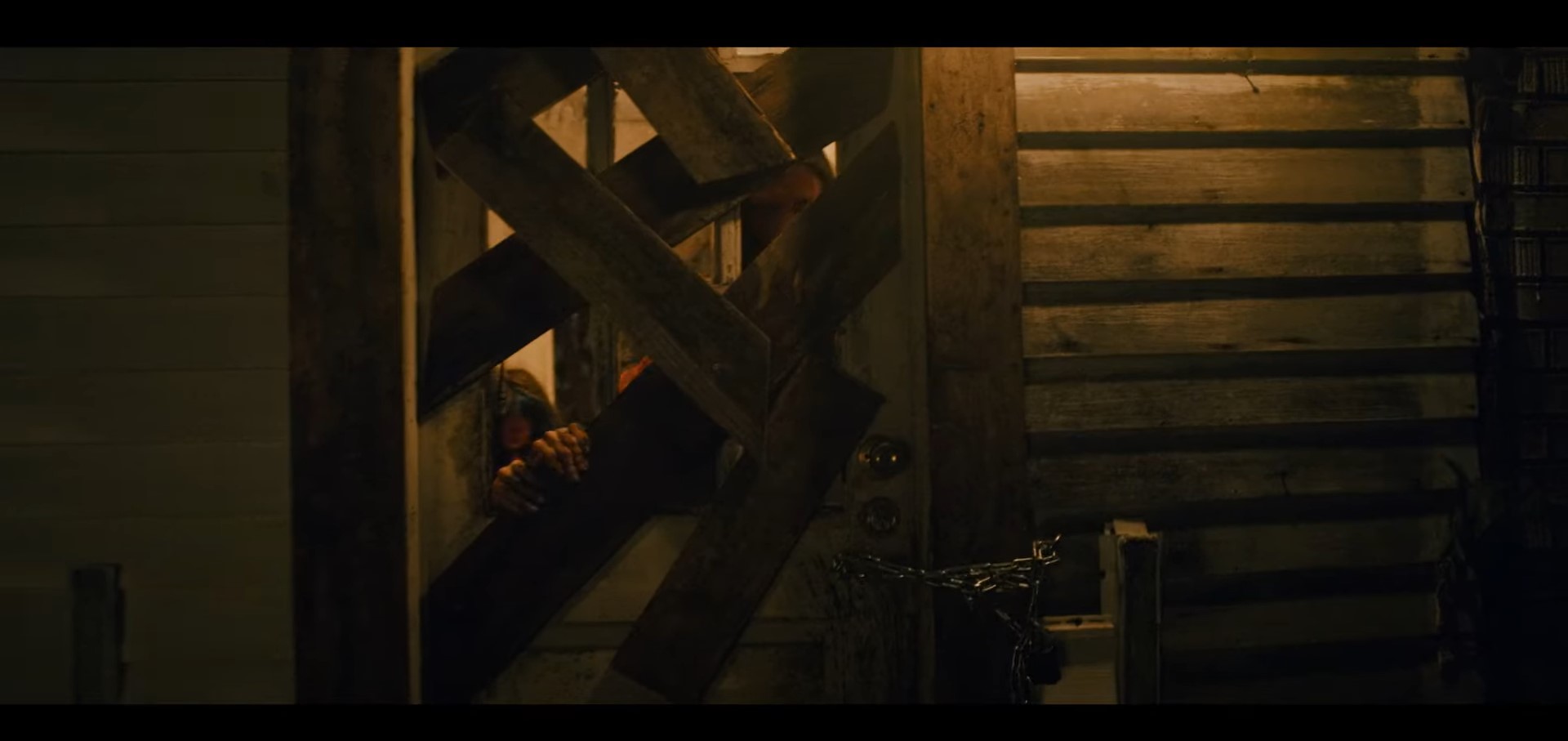
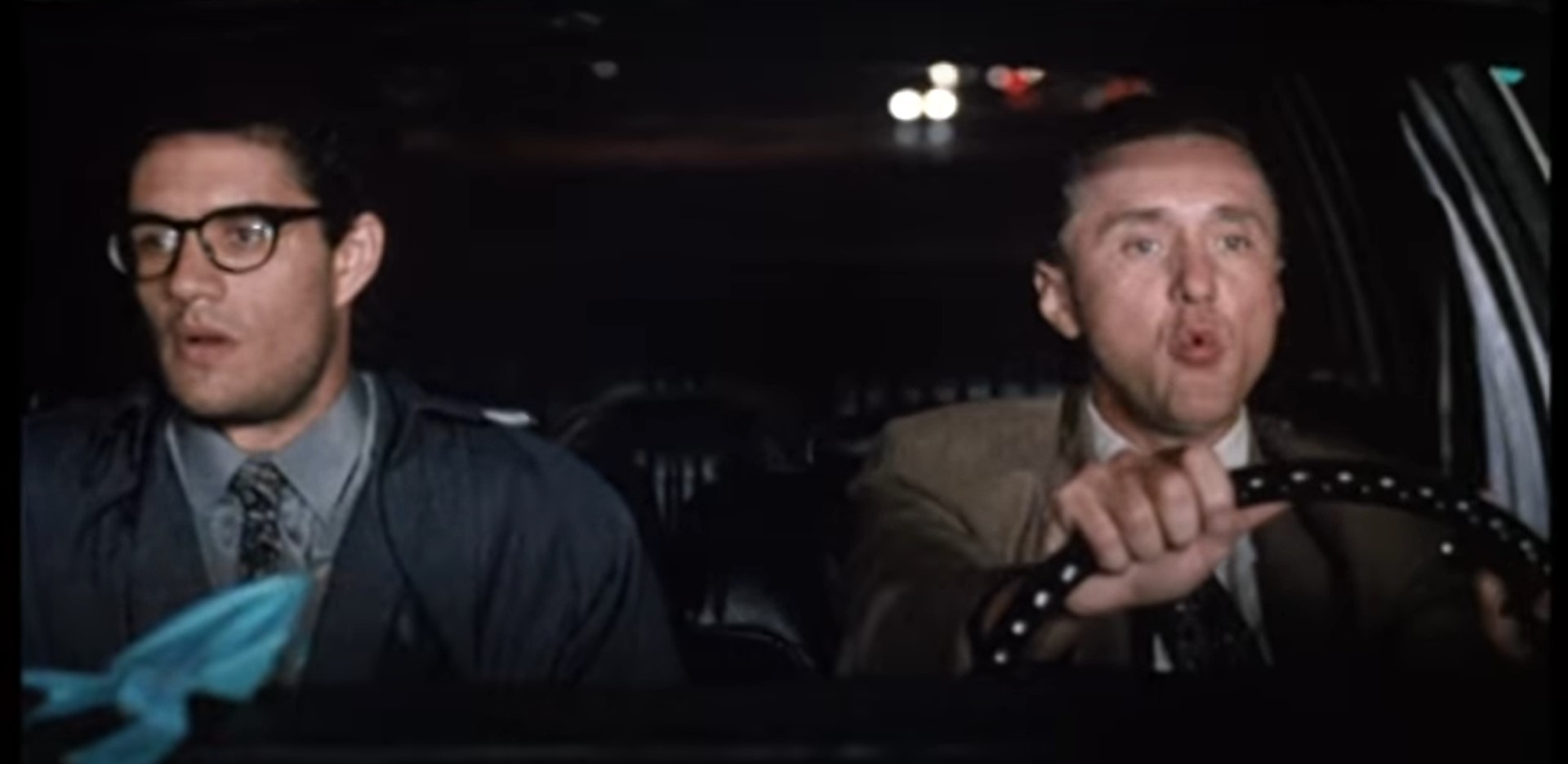
“Those Who Walk Away” has the concentrated acting chops to pull off the two-pronged plot and despite the obscure and incoherencies with the revelation climax, the turn of events still bids a gripping blank check on what to expect next.  Yet, the most interesting portions of the film are not those aspects that do have a degree of excellence for an indie project.  Instead, the single long take from opening-to-ending credits is a mind-blowing feat.  Unless there’s a seamless cut that I’m missing or blind to, “Those Who Walk Away” never edits or cuts away from the action that puts the actors in a position of having to perform to perfection.  Rippberger also doesn’t remain stationary to a single location for the first half of the film, coursing through the populated public park and bustling small town of Chillicothe during Max and Avery’s getting-to-know-you talk-and-walk, and as the story evolves toward more sinister circumstances in a one house setting, Rippberger can’t sit still and uses nearly every square inch of the creepy, boarded up house to his advantage, creating and changing up room interiors that fashion an illusionary creepy funhouse that Max scrambles from room-to-room avoiding Rotcreep and finding a way out of what could be perceived as Hell in a house, a metaphor for Max’s own mother-abandoning torment.  If that isn’t impressive enough, Diego Cordero’s camera handling to make the single take work isn’t bush league cinematography as having the frame trajectory move in tight, confined spaces without a bit of awkwardness, like moving from outside the car to inside the front of the cab then to the back between the driver and passenger seat while keeping characters in frame and keeping the characters acting is a tough, planned shot.  What’s also tough is achieving crisp dialogue in one take and that’s where the film falters a little with the pivotal exposition losing strength and clarity where it’s needed the most, essentially being muddled instead of meticulously articulate if actors are either not vigorously vocal enough, mic placement isn’t exact, or mic picks up other noises that scuttle overtop the dialogue.

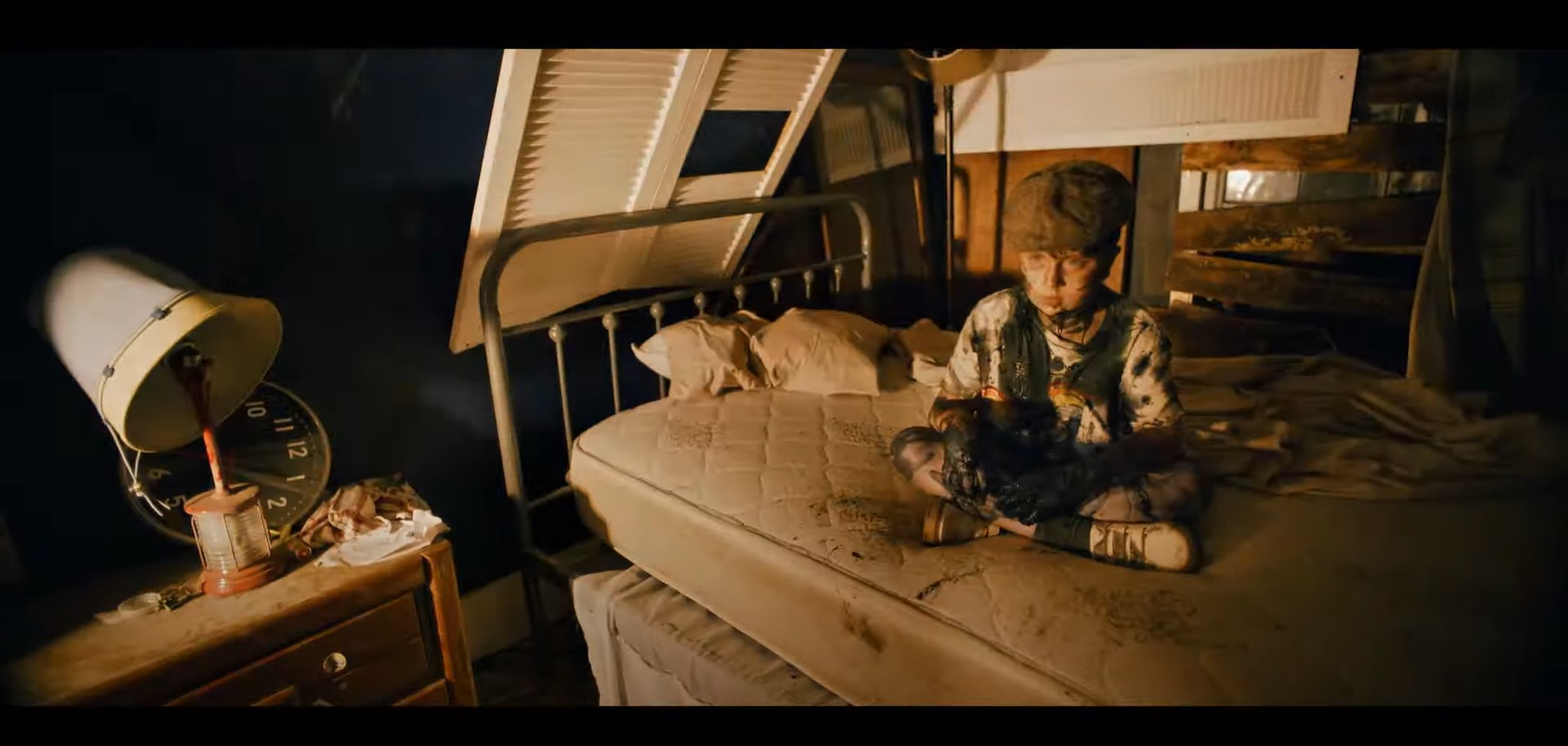
Courtesy of VMI Releasing and MVD Visual comes a chilling crucible in “Those Who Walk Away” on DVD.  Presented in 720p on a widescreen 1.78:1 aspect ratio, the film is distributed on a DVD5 with a reasonable compression rate to keep the image sharp without a lot of addition fluff to bog down the overall compacted digital transfer.  Instances of off and on lens focus works against the long take, much like the audio, where timely is key but as far as VMI Releasing’s handling of the storage, the resolution and image quality do the work to represent the best quality possible.  Although the DVD back cover states one audio option – an English Dolby Digital 5.1 – there is a second option with a English Dolby Digital 2.0 Stereo.  Unless you’re setup with a surround sound, the stereo option will have identical dialogue and ambience noise but there is an amplified finish on the soundtrack by video game composer Dmitrii Miachin with the drawn out violins and a brooding, sonorous pitch.  Dialogue is a minorly muddle as mentioned before with the tribulations on a feature length shot but mostly clean and clear to the point of satisfaction.  Aside from the static menu’s original trailer for the film, and the illustratively ghoulish opening sequence, the DVD comes with no other bonus material.  The DVD comes in a standard DVD tall case with a front cover of a bloodied Booboo Steward looking dazed walking through fire and the same image is used for the disc art.  Psychologically scything, “Those Who Walk Away’s” fillets guilt from the bone with scene shooting originality and a cast that nails every second lapse. 

Never Abandon Your Problems.  Face Them!  “Those Who Walk Away” on DVD!

EVIL Will Suck on Your Menstrual Soaked Tampon. “The Hood Has Eyez” reviewed! (SRS Cinema / DVD)

An Early 2000s Exploitation With Lots of Infamy!  “The Hood Has Eyez” on DVD!

Attending a school ditch party was the last thing the obedient Kimmy wanted to do but the peer pressure from her fellow Catholic schoolgirl friends convinced her to the other side of the tracks of town.  On the way, a half-naked woman runs out in front of their car and in attempt to flee the scene on foot, to protect their innocent repute status, they run into two gangsters holding them at gunpoint in an alley.  The now frightened teens are forced into an isolated park area, joined by the now fully-clothed and not injured woman they hit earlier in what has been revealed to be a ruse to rob them, but the gang leader, Psycho, has more distasteful and violent plans to squeeze more out of his prize than cash.  Psycho brutally rapes Kimmy and is left for dead by not only the gangsters but also the one other surviving girl she had considered to be her friend.  Battered and broken, Kimmy’s morality and reality snaps, sending her down an unmerciful vengeful path against those who condemned her to die.

If filmmaker Terrence Williams set out to make an exploitation film of genital mutilation, forced sodomy, and a man sucking on a bloody tampon, then mission accomplished!  The straight-to-video, SOV rape-and-revenger of monstrosities, “The Hood Has Eyez,” pulls no punches, knows no limits, and cares to give no concern for the atrocities it depicts.  A bastardized yet familiar rephrasing of an early Wes Craven classic, “The Hills Have Eyes,” Williams uses Craven’s basic setup plot to write-and-direct his own version of uncivilized lowlifes exploiting and murdering out-of-their-element travelers in the most graphic and appalling ways.  Williams takes the fear out of the hills and drops it into a remote park plopped in-between the suburbs and urban grounds, swapping out inbred hillbillies for Latino gangsters and a nuclear family for schoolgirls in short skirts and one unlucky white dude.  Collaborating producer and wife of Terrence Williams, Nicole Williams, has previously and subsequently worked together other films, such as “Curse of La Llorona” and “Horno,” under their now defunct joint company, Cinema Threat Productions in Los Angeles. 

The 2007 released “The Hood Has Eyez” reunites a good chunk of the cast from Williams’ “The River:  Legend of La Llorona,” “Revenge of La Llorona, “Llorona Gone Wild” and “Curse of La Llorona” films completed and released within a couple years previously which created a certain level of comfortability and trust amongst the cast as well as the cast and director.  With some of the intimately graphic content of “The Hood Has Eyez,” those warm and cozy congenialities play key to selling a broken bottle scene being rammed up a vaginal cavity or a nail hammered down into penis urethra.  Without that delicate easiness in the air, scenes like the aforementioned won’t work, resulting in the entire project collapsing upon itself even before wrapping up principal photography.  At the tip of the spear are Cyd Chulte and Antonia Royuela as the principled Kimmy and her antithesis, the deranged Psycho.   Chulte, who cut her teeth with roles in “Curse of La Llorona,” takes one-half the lead of a young woman broken by the barbarity and succumbs to justified vehemence for torture, dismemberment, coat hanger abortions, and eventual death but before being pushed to the edge of her life and into a state of insanity, Kimmy’s presence melds into the group of a lemming unit and takes a backseat to the other lead half behind Royuela’s unhinged ultra-violence of a gangster gone rouge from the plan.  Psycho’s posse – Joker (Carlos Javier Castillo, “Axeman”) and She Girl (Anne Stinnett, “Revenge of La Llorona”) – truly reflect their handles as Psycho’s devil and angel on his shoulder, trying to either egg him on or have him withdrawal while withdrawing is still in his favor but, of course, we wouldn’t have a debauchery and savage movie if the angel over the shoulder had prevailed and so Psycho has his perverse way with Kimmy and friends – Susan (Jesselynn Desmond, “Horno”), Rachel (Jamielyn Lippman, “The Absent”), and Jerry (Tom Curitore, “Llorona Gone Wild”). 

The way I see it, Terrence William’s trashy exploitation nod “The Hood Has Eyez” has three distinct parts, much like the three-act structure of any narrative archetype.  Terrence Williams defines these acts tremendously clear in an almost too simple of a way that it feels rudimentary, maybe even old fashioned.  The setup is simple:  overweening teens doing what they’re not supposed to be doing become caught up in an unfavorable part of town with a maladjusted gang.  The confrontation squares the two factions to a literal position of facing each other while the teens coward in fright and disadvantage as they forcibly bend to the will of the gun-toting gang calling all the shots.  The resolution pivots the story 180 degrees, like any good rape-revenge thriller should, after misdeeds thin out whose left for dead and who’s intractable impulses are fully left satisfied and goes right into execution mode without passing go, without collecting $200, and without pause of a trauma processing moment as Terrence Williams wastes no time digging deep into the sludge of psychiatric stability with a hasty move right to rectifying an eye-for-an-eye balance.  Up until a point, “The Hood Has Eyez” carries a lot of dire weight within the confrontational girth that can be hard to stomach.  There’s a few casually lighthearted and fun witty moments peppered beforehand, such as a jokes at the expense of airhead Susan and her player boyfriend, but then after the grave assault that leaves Kimmy left to suffer all the post-traumatic syndrome results, things really go dark, and I’m’ talking black comedy dark.  Kimmy goes into full Rocky Balboa training mode, doing pushups and enthusiastically practicing staff spinning in the light of the falling sun.  Terrence Williams actually gives Kimmy a rousing montage before ripping the dick off a two-bit thug.  Where am I getting to with all this?  Well, I’m not sure how Terrence Williams wanted audiences to digest his brutal film that goes through touchpoints of opposing genres.  Usually, if comedy and gore are present in one narrative, slapstick typically is the go-to conduit – think “Evil Dead II” or “Dead Alive.”  For “The Hood Has Eyez,” the gore effects are hearty, the characters are vicious and victimizable, and Williams maintains an intact beginning-to-end narrative, but confounds with a few choice character actions that sully the overall presentation.

The Cinema Threat Production has now been integrated into SRS Cinema’s Extreme and Unrated Label – Nightmare Fuel – and unquestionably is underground extreme horror at its foulest.  Released with a widescreen aspect ratio of 1.85:1 of the 420p standard definition, camcorder tape footage and in a new director’s alternative cut, “The Hood Has Eyez” has relatively decent image clarity with a very subdued amount of lossy compression results, especially for progressive scan 480 pixels.  Details are soft as expected with the commercial equipment and lower resolution but though a slightly faded color scale, the coloring range renders intense enough for higher marks and can play a trick on the eyes by falsely delineating the objects to create a space based off the hue edging alone.  The English Dolby Digital 2.0 track props up the quality even more with Terrence Williams using a boom mic attachment instead of the built-in mic to gather meticulously the intended dialogue and skirmish kerfuffle.  As a result, dialogue is really sharp here, especially during Psycho’s off-the-rail verbal abuse, rants, and one-liners.  The post-production Foley stands apart from the inhouse sound with prefabricated sound bytes but that’s the way of micro-independent filmmaking.  The alternate cut includes a newly shot opening scene that was originally intended for the original script that was added back in to actualize the Williams’ vision after a cast sudden dropout departure.  Bonus features include a commentary with Terrence and Nicole, a raw, secondary cam behind the scenes footage in making certain scenes, a blooper reel, image slide show, two original cut trailers, a new trailer, and a Women in Horror vignette featuring Nicole Williams discussing the importance of women in horror and her contribution to the genre.  The release is presented in a traditional DVD snapper with a beautifully illustrated cover art based off the shoddy composited “The Hood Has Eyez’s” one sheet.  In the past few years, SRS has upped their game with cover arts and continue to impress with their new branding campaign that makes these films feel no longer cheap at first glance.  Inside, the DVD press art is the same as the cover with much of the RGB removed to a single layer red. There is no insert inside the case.  Terrence Williams set out to capture the inelegant essences of nitty-gritty exploitation and hits the nail on the head, literally, with this passion project of perversity. 

An Early 2000s Exploitation With Lots of Infamy!  “The Hood Has Eyez” on DVD!

Sheen and Estevez Take Out the EVIL Trash! “Men at Work” reviewed! (MVD / Blu-ray)

“Men at Work” Now Available on a MVD Visual Blu-ray at Amazon.com

Garbagemen James and Carl are California dreamers, scoping out babes, riding the surf, and fantasizing about opening their own surf shop business one day.  Their day job goes against the grain of their live loose lifestyle, but when they discover a dead body in a trash can, the same dead body that was arguing with a beautiful woman in the building across the street and Carl shot in the butt with a pellet gun the night before, James and Carl no longer have the luxury of fun and games.  Their probational, ride along observer, a crazed combat veteran named Louis, doesn’t add to trash-slinging surfers’ comfort other than noting the strangulation marks around the neck, proving their innocence of a pellet gun murder.  The three men go into investigation mode and Carl infiltrates into the woman’s apartment for clues on what really happened but what they get themselves mixed into is manufacturer corruption on the highest level and now they’re in the crossfire and crosshairs of an off-shore, toxic waste dumping crime boss.

Seeing siblings on screen together has always been of great interest to myself because for an actor to grow up with another actor from adolescence, there’s some level of comfortability, trust, and likeminded, on the same wavelength, aptitude in the performance dynamic.  Brothers Charlie Sheen and Emilio Estévez certainly have a cozy dynamic as two laid-back garbagemen in the dark yet zany comedy, “Men at Work,” despite not sharing their Estévez surname.  Of course, this is a 1990 released film and things have changed between them and personally with themselves over the span of 30+ years, but the Emilio Estévez written-and-directed comedy is a snapshot of a relationship pairing that we didn’t see too often.  Sure, we received their performances in other genres, such as head-butting cowboys in the western-action “Young Guns” and as two sleazy pornographic film filmmakers divided by their own greed in the Jim and Artie Mitchell biographical picture, “Rated-X,” but we never again get a quirky, smorgasbord comedy that exhibits their distinct dry humor in one package.  Set on the beautiful shores of California, include Los Angeles, “Men at Work,” is a studio production from the Trans World Entertainment subsidiary label, Epic Productions, under Moshe Diamant (“Commando Squad,” “Ski Patrol”) and is produced by Cassian Elwes (“Mom and Dad,” “Knock Knock”) and Barbara Stordahl.

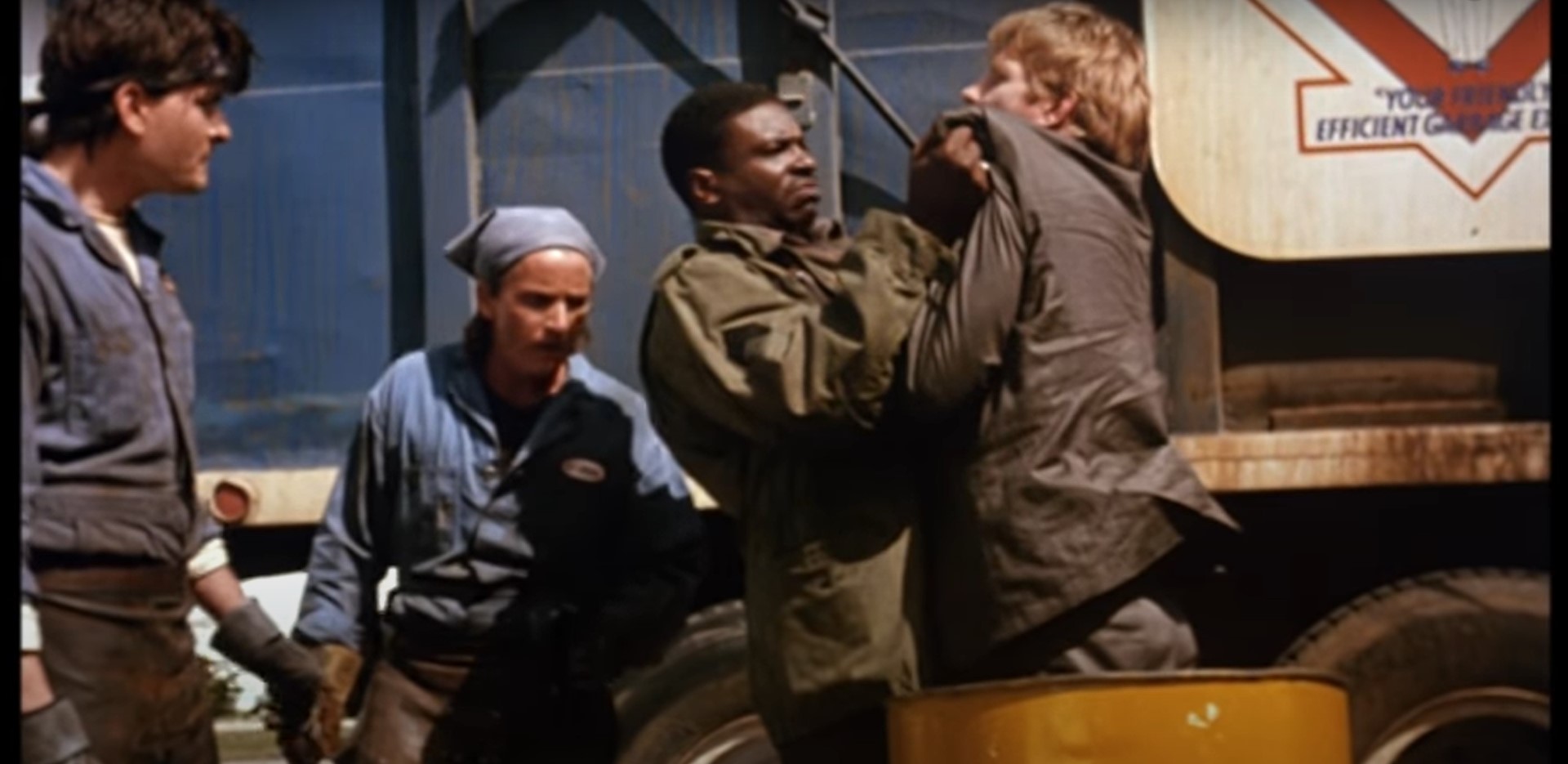
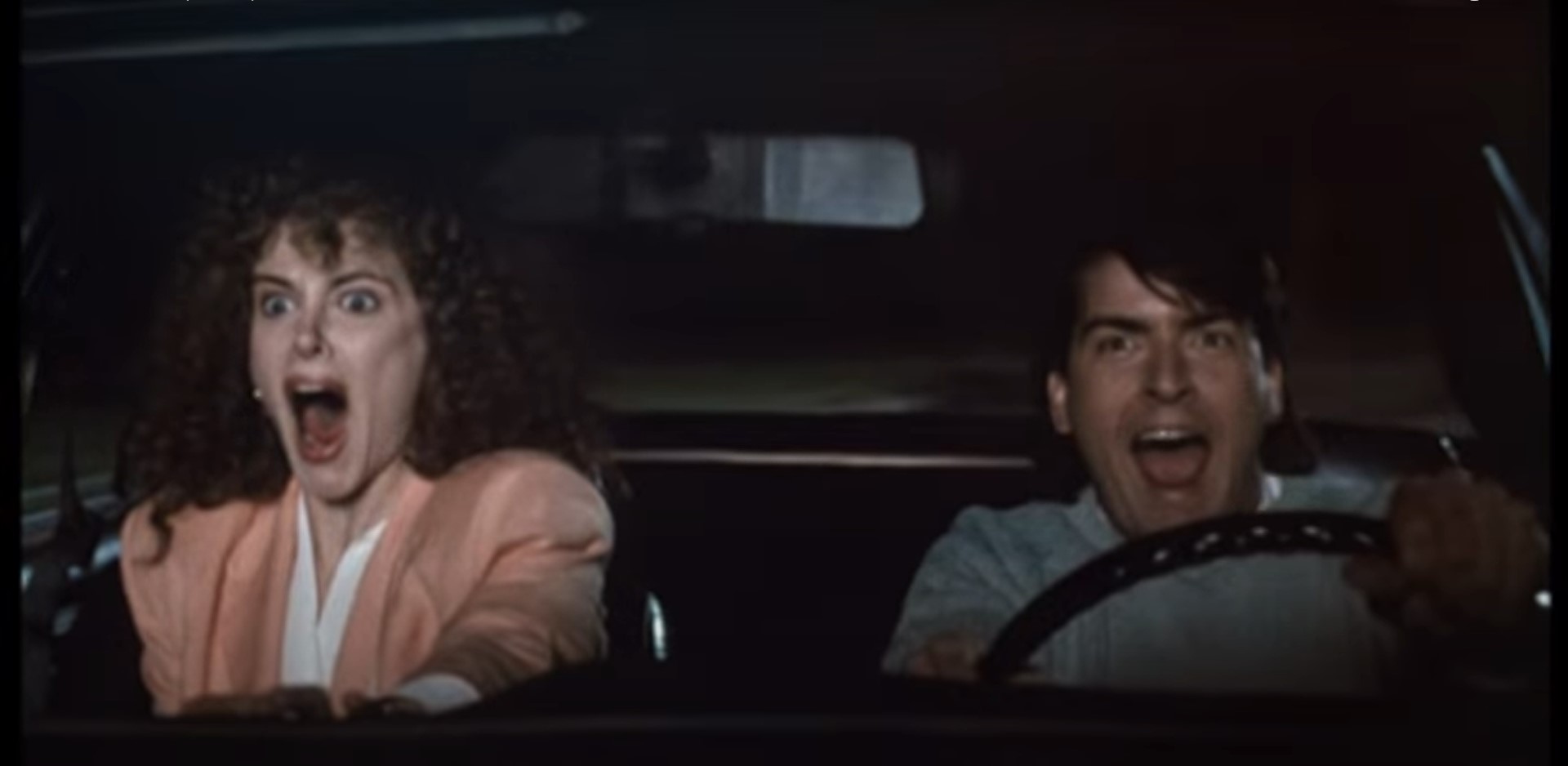
Safe to say that most audiences are familiar with the likes of Charlie Sheen and Emilo Estévez between their catalogue of rite of passage movies while growing up in the 1980s through the 1990s.  From “Major League” and “Maximum Overdrive” to “Hot Shots” and “Mighty Ducks,” the brothers captured comedy, action, horror, and feel-good films.  “Men at Work” is another one of those nostalgia recognized, yet slightly underrated, comedies that hasn’t necessarily aged well in regard to its comedy.  Sheen and Estévez are wonderfully poised with a pinch of mania performances surrounding a murder mystery, but the comedy has faded like washed out jeans as we’re numb to these types of comedic devices that have used and overused the last three decades.  Keith David, on the other hand, remains just as funny as the day of release as the Vietnam combat-shocked veteran, Louis, who has become James and Karl’s overseer after public complaints.  The “They Live” and “The Thing” actor costars alongside Charlie Sheen four years later after the release of Oliver Stone’s “Platoon,” which begs the question whether Estévez and Sheen are meddling with the cinematic universes just a tad, and David brings the intensity, high-energy, and overwhelming brutishness to “Men at Work’s” rather subdued, off-the-cuff antics of investigation work done by a pair of surfer dudes who have not witnessed the horrors of war.  The disturbing coolness of stride David’s character takes suits him as an angry vet with a penchant to go against authority.  The love interest in this narrative is played by the actress-turned-director Leslie Hope (“Doppelganger,” “Bruiser”) as a dead guy’s political campaign manager who just happened to be at the wrong place, wrong time accidently swapping the incriminating tape with her boss.  Did I mention the dead guy is a politician in bed with crime?  The “Weekend at Bernie’s” performance by Darrell Larson (“Android”) is one for the ages with Larson providing the slacked jaw, rigor mortis poses, and an overall deadpan dead guy.  “The Fly’s” John Getz is a suitable villain Maxwell Potterdam III, as if plucked straight from a comic book, to the quirky comedy despite being a bit hammy at times.  Potterdam’s bicker henchmen Mario (John Lavachielli) and Biff (Rufus funk musician Hawk Wolinski) are better suited to entertainment with distinct personalities that made their interactions dry and spot on funny. The cast fills out with Sy Richardson (“Repo Man”), Troy Evans (“Halloween 5: The Revenge of Michael Myers”), Geoffry Blake (“The Last Starfighter”), Cameron Dye (“Out of the Dark”), Dean Cameron (“Summer School”), and John Putch (“Jaws 3-D”) and Tommy Hinkley (“Silent Night, Deadly Night 4: Initiation”) as bike cops in a very compromising position.

“Men at Work” is one of those memorable films that teeters between the 80s and the 90s.  Mullets, denim-on-denim, large three-piece suits, and the breeziness of politically incorrect humor genetically makeup “Men at Work’s” guilty-pleasurable and amusing plot anticipatedly driven well by the two principal leads, Sheen and Estevez, who are thrusted into the wrong place at the wrong time scenario as unlikely, joshing heroes, but the stars’ arm-candied, supporting cast of character actors shape and hold together a better lasting picture as with Keith David’s unphased Vietnam veteran, bored with life as it seems during his contentious first impressions with James and Carl, to nudge the garbage-toting friends into action as if he’s spearheading a campaign back in the bush fighting the Vietcong or with the two bickering hit-men who do more damage than damage control with their opposing opinions and tough guy prides.  Estevez’s farce is directed modestly well without the visual cues or styles to assist but rather works in alignment with how Estevez shoots most of his directing gigs with perfectly framed scenes and precision panning that join the foreground, background, and characters together all in one harrowing moment, such as with the pallet gun prank that ends in the murder of the politician, and those kinds of scenes speak for themselves without having to be edited down.  The by-the-numbers pacing builds the story up until a culminating head from the two simple sanitation workers living out their mundane lives with mundane problems to the classic showdown of being outnumbered with Potterdam and his toxic waste dumping henchmen in hazard gear, and though by-the-numbers, the pacing is fairly comfortable and routine, practically natural, without ever feeling forced with the exception of Leslie Hope’s character uncharacteristically, or maybe we’re just not privy of her personal background, lends to her spur of the moment coquettish behavior with Charlie Sheen’s play-dumb, act-dumb surreptitious act in her apartment alone and then out for a late night drive to a beach with him, again alone.  Stranger danger doesn’t apply here in this moment when inviting an unknown into the personal space without the accompany of others to be a safety net and this interaction has a fabricated-feel in moving the story along.

MVD Visual releases “Men at Work” onto Blu-ray in accordance with the distributor’s retro-repository label, the Rewind Collection.  Coming in at 46 on the spine, “Men at Work” transfer is pulled straight from the MGM vault and presented with an AVC encoded, high definition, 1080p resolution in a widescreen 1.85:1 aspect ratio. The MGM transfer transposition into an hi-def BD format doesn’t reflect the full effect of a bigger, better resolution. Image details remains quite soft but the end image quality is definitely still a palatable experience with natural, stable color grading and a suitable sheen (not Charlie Sheen) of the California sun and the night lighting that is often snuffed out by stylistic grading or alternative lighting and tint sources for creative measures. The transfer master remains clear and free of damage and withering wear. The English language LPCM 2.0 stereo projects just that, a two-channel output with a lower bit, and while perhaps not a science-fiction blaster-thon picture, there’s plenty of range opportunity to warrant a hearty audio mix, but the, like the picture quality, the result is negligibly free from imperfections. Dialogue contains no hissing and is clean, clear, and free from any other issues. Optional English, French, and Spanish subtitles are available. Special features has only the theatrical trailer going for it while the physical release bears the bonus material with a reversible, illustrated cover art, a mini poster of the original poster art, and the clear Blu-ray snapper is sheathed in an O-card slipcase doctored up to be retro-stickered with video rental trappings. The PG-13 film has a runtime of 98 minutes and the release is region A locked. One of the first buddy comedies to come out of the early 90s, “Men at Work” has an audience relatable rapport with the film’s stars absorbed into struggling, yet free-spirited blue-collar roles that are unwittingly forced to take on the big, bad evil industry and though the film may have lost its comedy edge, “Men at Work” still manages to be a repeatable watched classic.

“Men at Work” Now Available on a MVD Visual Blu-ray at Amazon.com