The Holidays Are Over, but the EVIL Remains With Us in this Cookie-Cutter Classic “The Gingerdead Man” reviewed! (Full Moon Features / Blu-ray)

Get Ready to Chomp on this Cookie! “The Gingerdead Man” Blu-ray Available Here!

Cold-hearted, mama’s boy killer, Millard Findlemeyer, brutally gun downs Sarah Leigh’s father and brother before wounding during a diner robbery.  Two years later, Findlemeyer is executed with the help of Sarah’s damning testimony and the traumatized survivor attempts to pick up the pieces of her life by keeping her crumbling family bakery business afloat.  With her mother a raging alcoholic and a competing business threatening to shut the business down, Sarah doesn’t realize the gingerbread seasoning dropped off at her doorstep is actually the ashes of the evil Findlemeyer.  Thrown in a gingerbread mix and baked to live again, Findlemeyer returns to continue his carnage but as a delectably devilish cookie sporting candied buttons and wielding a knife.  Trapped inside the bakery, a handful of survivors are being more-than-gingerly picked off one-by-one by Findlemeyer’s possession of a pint-sized cookie and Sarah must face again the evil that destroyed her family.  

“The Gingerdead Man” is one of Full Moon’s more contemporary repeat villains this side of the century.  Christmas may be over, but the holiday cookie carnage doesn’t just pack on the pounds, it also can shred and cut the waist, literally, with guts spilling out everywhere.  The Charles Brand directed, 2005 film that kicked off the icing for not one, not two, but three sequels and a timeline intertwinement with Full Moon’s “Evil Bong” series.  Pot and cookies, a perfect combination when blazed.  The script was penned by Full Moon regular and “Night of the Living Dead” remake actor William Butler, under the pseudonym of Silvia St. Croix, and fellow Full Moon regular Dominic Muir (“Critters,” “Doll Graveyard”), under the pseudonym of August White.  Filmed in Los Angeles, the indie horror-comedy is a Shoot Productions and Full Moon coproduction venture with Band producing and Dana Harrloe serving as executive producer. 

Adding to “The Gingerdead Man’s already zany resurrecting the evil dead into a baked good concept (there’s nothing good about this cookie monster), the untamed energy and distinguished voiceover from Gary Busey is better than self-rising flour for this doughy production.  The “Predator 2” and “Lethal Weapon” actor headlines as the despicable killer Millard Findelmeyer but only in the flesh for the opening diner sequence that establishes Findelmeyer as a coldblooded murderer.  The backstory of his apprehension, trial, and execution is whisked into a frothy afterthought after the title credits to establish more of Robin Sydney’s Sarah Leigh character of rebuilding her life.  Sydney, who would become Charles Band’s wife nearly two decades later after debuting in this role, reserves Sarah into a stasis of plugging along into a woe-as-me state as a setup for her to be heroine nemesis to Findlemeyer’s flaky, killer crust.  What’s neat about her character, along with a handful of other principal characters, is they’re subtly and smartly named after notable cookie making companies.  Sarah Leigh is an obvious rework of the frozen desserts company Sara Lee, Ryan Locke, an unlikely Sarah Leigh love interest cladded and carried by all things from early 2000s, is Amos Cadbury, a mixed play on Famous Amos and Cadbury confectionary, and Jonathan Chase as commercial wrestling enthusiast Brick Fields lends to believe the character’s name pulls inspiration from Mrs. Fields soft baked cookies.  There’s also the corporate-commercial takeover statement with an adjacent restaurant that threatens to put Sarah’s bakery out of business and the owner’s name is Jimmy Dean, as in the sausage company, with Larry Cedar (“The Hidden,” “C.H.U.D. II”) in the role.  Alexia Aleman, Margaret Blye, Daniela Melgoza, and James Synder fill out the cast.

Kitschy personification horror is all the rage in the independent genre circle.  Murderous dolls at are dime a dozen, but a few outliers stray into something more risking and adventures, like an evil llama pinata in “Killer Pinata,” a wicked snowman in “Jack Frost,” or even a killer unicorn standing figure in “CarousHELL” that make the niche subgenre fascinatingly tacky for all the right reasons.  Charles Band and team tap into that peculiar ripe vein to extract their own usually joyous, kid-friendly object and transfigure its G-rated image to a hard R with death, sass, and a whole bunch of mischief and what better wholesome inanimate object to vilify than a scrumptious gingerbread man?  Voiced by Busey and animated by the always preferred practical means, “The Gingderdead Man” evokes promises of a so-bad-its-good composite, especially since the antagonist for this franchise starter fits right into the Full Moon small things come in killer packages niche, and while half of “The Gingerdead Man” delivers on a havoc-wreaking spiced cookie, the execution, as a whole, leaves much to be desired by whirling through a two year story gap of the capture and execution of Findlemeyer and how and why his malevolent essence is mixed into the batter for resurrection.  The slapdashedly before and after title credits causes a brief loss of thought as the brain frantically tries to catch up and fill in the gaps as much of the images and exposition haphazardly piece together.  The Gingerdead Man isn’t also quite as quippy as his human form counterpart, but a ton of appreciation goes into the multiple renditions of the distorted faced Gingerdead Man character from hand puppets, to animatronics, to full size human suit provides that breadth of range in angles, perspectives, and appearances that shape a personality package to where dialogue can nearly be neutralized altogether.  “The Gingerbread Man” lives and breathes as its marketed image, a mediocre kill possession-slasher with a bunch of characters scratching their heads instead of building upon who they are and what hurdles, figuratively and literally, to jump, the latter mostly falls into the hands of Sarah Leigh and her depression-induced fear, an aspect she has to face when being revisited by the man who killed her father and brother. 

An all-new transfer and remastered from the original 35mm elements, Full Moon Features re-bakes “The Gingerdead Man” onto a new physical media cookie sheet.  The AVC encoded, 1080p resolution, BD25, presented in a widescreen 1.78:1 aspect ratio, had elevated some lower resolution complications with better definition appeal but the overall package isn’t an epitome showcase of the format possibilities with softer contrasts that leaves voids and shadows milkier, textures fluctuate during decode that sways in a range between 15 to 25 Mbps, and minor damaged portions, such as light scratches and speckling, are not touched up in the restoration.  Skin tones and other colorist applications appear organic and, when reaching peak performance, displays a nicely diffused sweat sheen in the lighting.  Two English, lossy audio options are available, a Dolby Digital 5.1 and a Stereo 2.0.  A clean and clear presentation on all layers with an amalgamated cast that just as good as any other solid sound design with powerful forefront and intelligible dialogue, an above par ambient dispersal that has suitable depth and range, and a Roger Ballenger carnivalesque score that isn’t from Richard Band but is a great mimic.  English subtitles are available.  Extras include an archival behind-the-scenes featurette with interviews with cast, crew, and Charles Band with some BTS-footage in creating the cookie monster, a blooper reel, the original trailer, and trailers for other Full Moon features.  Front cover on the Amaray Blu-ray is an illustrated composition of characters that clue in a sense of what to expect but other than that, this standard re-release has physical bare bones.  The region free release has a runtime of 71 minute and is not rated.

Last Rites: Though doesn’t reinvent the recipe nor does it not make this naughty killer cookie stale, “The Gingerdead Man” has come a long way with a new, revitalizing release onto a high-definition format pulled from the extensive and vast Full Moon catalogue that’s slowly but surely updating the filmic cache. This schlocky bad baked good should surely be in everyone’s holiday horror collection.

Get Ready to Chomp on this Cookie! “The Gingerdead Man” Blu-ray Available Here!

All You Need to Protect You From Everything is a Pile of EVIL Socks! “Crust” reviewed! (Anchor Bay / Blu-ray)

Sean Whalen’s Debut “Crust” Now on Blu-ray!

Vegas Winters is a famous washed-up child actor now working at a laundry mat. Depressed from having been exploited during his career years, Vegas’s problems continue as an unkempt, middle-aged man still enamored with an ex-girlfriend who can’t stand the sight of his growth impotency and the news of his show’s revival that stirs up the past’s unwelcomed hubbub. Day-in and day-out, Vegas does the laundry mat rounds, collecting lost socks for his own personal use, whether be for blowing his nose, cleaning a blood lip, or masturbating into for his daydreaming fantasies, until one day the poor schlub is beyond humiliated and sheds a tear into his pile of used and unwanted collection of socks that turns the heap into his own personal protector he calls Crust. Murdering all who emotionally hurt or threaten Vegas, Crust becomes his best pal who has to vie with Vegas’s drunkard business partner and friend as well as his newfound girlfriend who’s infatuated with him.

Sean Whalen is one of the more underappreciated side characters in the last 30 years.  You know the face, but you may not know his extensive filmography.  Most of us horror fanatics adore Whalen in what was likely one of East coast born actor’s most notable roles from early in his career as the wall-crawling, good-hearted, inbred child named Roach from Wes Craven’s “The People Under the Stairs.”  From that film in 1991 to today, Whalen has run the genre gamut as a supporting actor in “Tammy and the T-Rex,” “Waterworld,” Rob Zombie’s “Halloween II,” as well as Zombie’s “3 From Hell” and a slew of other films, made-for-TV movies, and popping up in television series, including the U.S. version of CBS’s Ghosts pilot which I’m still sorely peeved he no longer continued the basement-dwelling, leprosy ghost role.  Now, we’re seeing a whole new side to our favorite side actor who steps into the lead principal role and, also, writes-and-directs his first feature length film with the 2024 comedy-horror “Crust.”  The indie film is cowritten with Jim Wald and is a production between Mezek Films, Moonless Media & Entertainment, Wicked Monkey Pictures, Stag Mountain Films, and the LLC, Crustsock Productions, supported by a crowdfunding campaign that generated nearly 100K dollars from over 600 backers.

A personal project for Whalen, “Crust” came to fruition as an allegorical metaphor for his own depression after a divorce and he plays Vegas Winters, a former child actor who left the industry after the success of his show due to those around him mistreating him or forgetting about him once the show success wore off.  Gloomy-faced, disheveled, and suppressively lethargic and explosively frantic when called for, Vegas is the epitome of depression while co-running a bland laundry with an alcoholic Russ, played by another horror-friendly, long-time supporting actor in Daniel Roebuck (“Final Destination,” “Terrifier 3”).  Audiences will feel for Vegas and his ultimate wish to be left alone as he sends his blood, sweat, tears, and amongst other bodily fluids, into the leftover socks of strangers, but audiences will also be delighted in his return to fervor materialized by a spur-of-the-moment, quirky laundry mat dance routine with his newfound cute-and-cuddly, stiff-sock creature, Crust. Like Daniel, Nila is too entangled in Vegas’s sticky-sock situation as his from-afar admirer turned quickly cemented girlfriend, played by Rebekah Kennedy (“Two Witches,” “Traumatika”), and there ensues the conflict when friend and girlfriend don’t know where they place or stand alongside a sock-monster. Roebuck and Kennedy manage to fiddle the strings of being the irresolute and concerned while not being a total antagonist to Vegas, who himself might not be 100% the hero of the story. “Crust” rounds the big hitting cast with “Sleepaway Camp’s” Felissa Rose and “Ferris Bueller’s Day Off’s” Alan Ruck along with William Gabriel Grier, Charles Chudabala, Ricky Dean Logan, Shawntay Dalon, and Zoe Unkovich.

Divided into laundry themed chapters, “Crust” is all about the depression and the stagnation that it entails. The creature Crust is that imaginary hope or need fabricated to pull one out of its depths and talons as a protector and a friendly companion to retreat into when the world around is threatening with a difficulty level of hard. Vegas is bombarded with down-in-the-dumps missiles being reminded of an unpleasant past, an ex that continues to belittle him, and an escape from reality that soon becomes an invasion of privacy. Whalen’s decision to shoot in black and white is a conscious one that eliminates colorful distractions to keep story focus around the characters, driving down the narrative nail into Vegas’s episodic progress that deepens to deprecating d, depths, and to keep blemishes with Crust’s marionette-ways to a bare minimum. That’s not to express that Crust is a mealy patchwork of loose socks and back felt for eyes. Crust construction might be simple in design but effective in applied personification with emotional swings, eyebrow moods, and hand gestures despite the obvious movement limitations that require multiple shots and cuts at different angles to sell its tearful autonomy and aggressive nature to protect. Remember, “Crust” is a comedy-horror with emphasis on comedy and while Whalen’s directorial debut comedy is fettered by a lighter shade of black, there’s a waving playfulness about it, such as Whalen and Crust’s spontaneous choreography, that provides a wake from the satirical black humor and completely submerge the story in surrealism with laughs and heart-wrenching moments.

One of the first, and hopefully many to come, titles a part of the initial Anchor Bay Entertainment revival by Umbrelic Entertainment cofounders Thomas Zambeck and Brian Katz, “Crust” hits the Blu-ray market with distribution assistance from MVD Visual.  The AVC encoded, 1080p high-definition, BD25 has the work cut out for it with the black-and-white presentation that allows for a better decoding bitrate, hovering around easily a high-20 Mbps.  Monochromic anamorphic widescreen 1.78:1 aspect ratio exhibits cleanly, clearly, and classically in a consistent contrast that balances situational light and shadow where appropriately.  Textures are dullened without color but the picture is crisp without showing fuzziness or compressed without blocky or bandy issue.  Not listed on the back cover, my player detects an English Dolby Digital Stereo 2.0 track.  More talkative than taking action, “Crust” delivers a fine digitally recorded dialogue track through a lossy Dolby compression that while isn’t as an exact replica, it is clear. Yet, dialogue’s separated from the pack, isolated from the caricature ambience of a laundry mat that has settles on a single wash or dryer sound, the exaggerated sounds of exterior paparazzi, and minor action sounds reach the upper audio layer hemisphere, diffusing into virtually the same foreground plane as dialogue rather medium-to-near range background in what is more of a production stemmed, Foley incorporated audio design.  Blu-ray’s bonus features include a Sean Whalen feature length audio commentary track, a Los Angeles premiere Q&A with Sean Whalen, Rebekah Kennedy, Daniel Roebuck, Felissa Rose, and William Gabriel Grier along with Crust puppeteer, Lisa Hinds, and two short comedies about Dorothy post-Wizard of Oz by many, many tragic years of alcoholism, sex, and delusional state of poor Dorothy, written and played by Whalen in “Dorothy:  50 Years Later” and “Dorothy 2:  The Bump and Run.”  Anchor Bay’s releases standard fair within a traditional Amaray case with the image of Whalen, or rather Vegas, the sock-monster Crust, and a trail of speckled blood in a back-and-white laundry mat with no tangible inserts and the same image pressed on the disc but digitally rearranged.  The region free release has a runtime of 102 minutes and is not rated.

Last Rites: Depression sucks, but “Crust” doesn’t in its sticky sardonic theme told simply in genericisms and broad grayscale strokes. Whelan’s first feature is first rate farce with fantastic puppet work and a Whelan, himself, best at self-deprecating his image for what’s good of the story, which is a morsel of his own.

Sean Whalen’s Debut “Crust” Now on Blu-ray!

Screenland’s Bright Lights Can Turn One Lonely Man EVIL! “Hollywood 90028” reviewed! (Grindhouse Releasing / 3-Disc Blu-ray and CD)

“Hollywood 90028” 3-Disc Collector’s Edition Can Be Preordered Here!

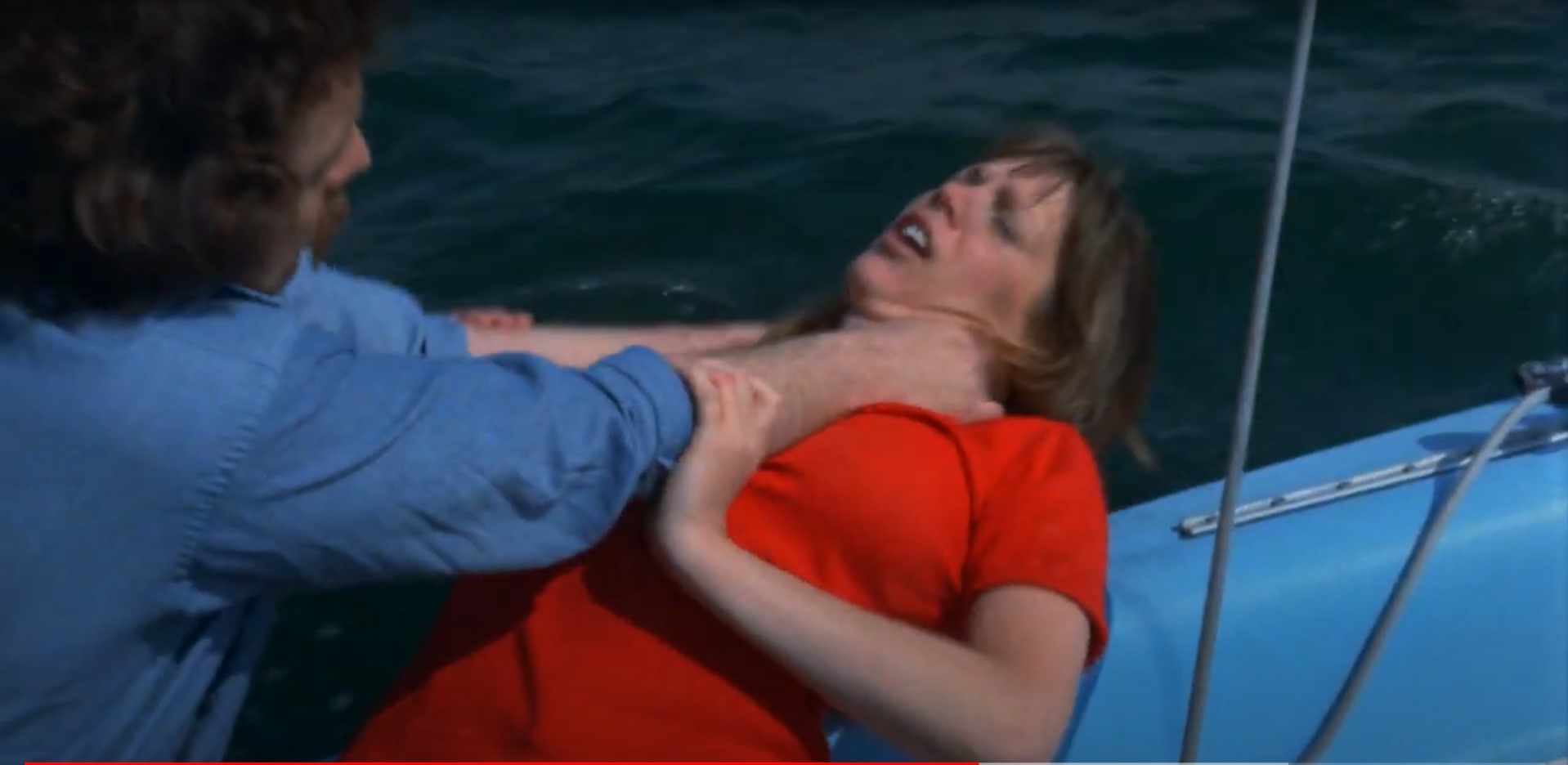
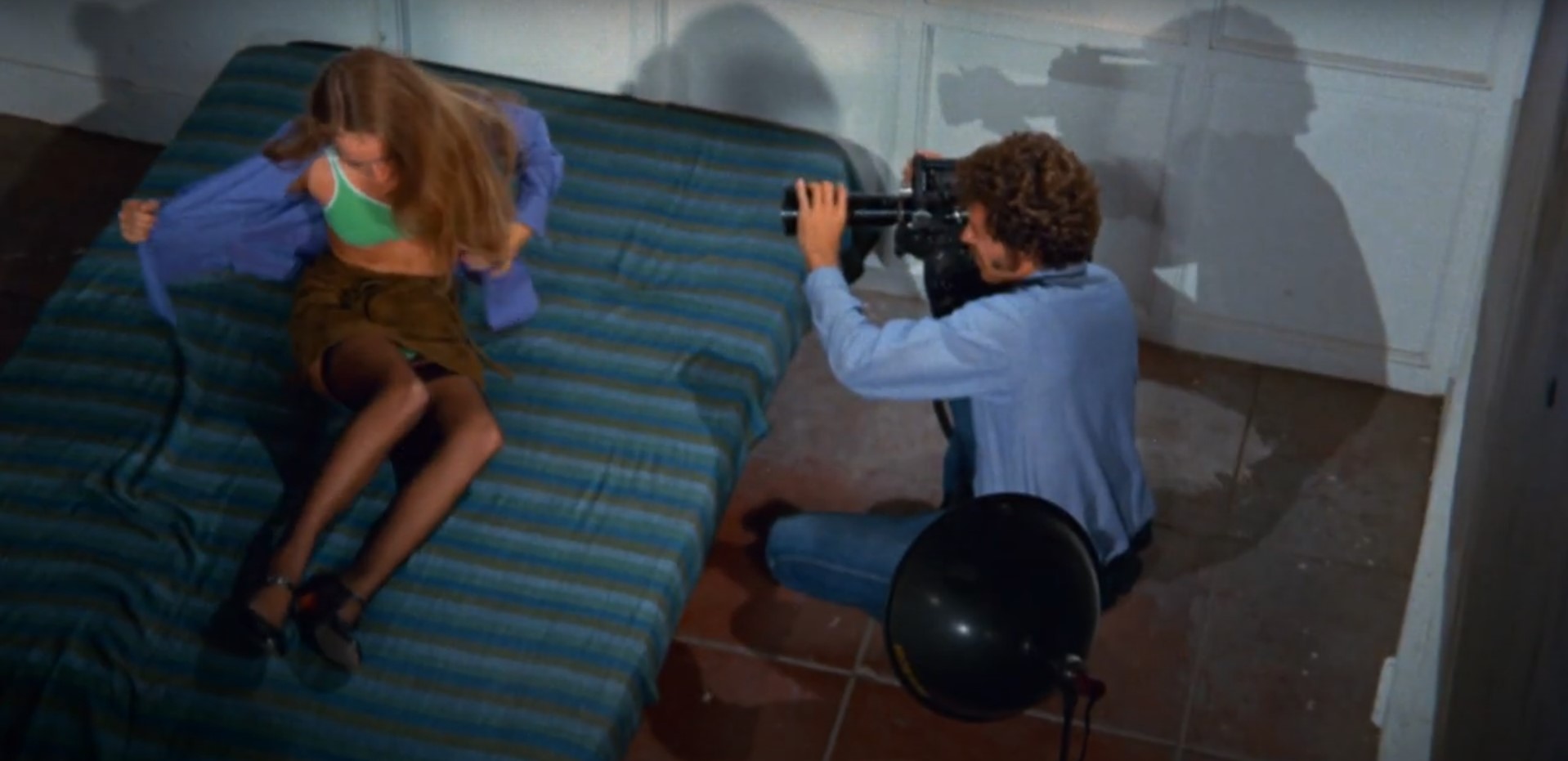
Having moved West from a small Ohio town a few years back, photographer and video cameraman Mark found himself stuck shooting nudie reels for a low-budget porn producer.   A solitary life lends Mark more freedom then most to wonder about and driver around on the streets of Hollywood with ambitions for a legit job of shooting regular material that doesn’t humiliate him.  Troubled about his childhood past involving the death of a younger brother and with his frustrations within his video film capturing vocation, Mark finds himself in the company of young, attractive women who find him easy to talk to and attractive as well, but when Mark reaches a limit, aberrant thoughts take over and he strangles them to death.  When he meets starlet Michele on one of his shoots, Mark believes he’s found the woman for him, one that can relieve the pressures of life and work with nothing more than her beauty.  For Mark’s abnormal mind, love at first sight might not be that easy.

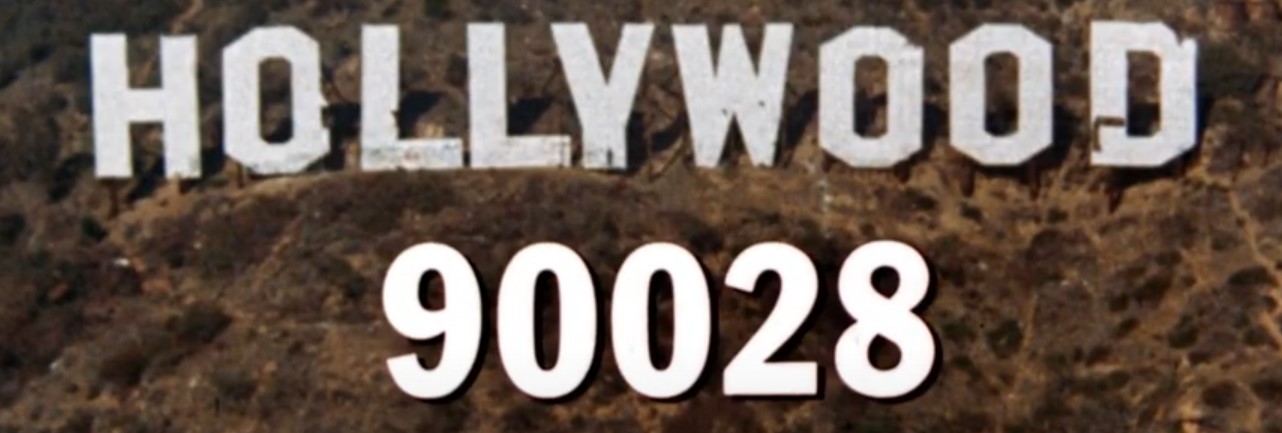
Writer-director Christina Hornisher tackles trauma induced behavior and the Hollywood pull of small-town aspirations chasing dreams in the drama-suspenser character piece of “Hollywood 90028.”  Hornisher’s debut feature film released in 1973 also became her only feature credit as a director who supplied arthouse substance but also embodied a different kind of substance, the grueling confiscation of hope for work, stardom, and love, perhaps even sliding into a bit of escapism, as the bright lights of Hollywood draw the flies to the flame.  Shot on location in and around the Hollywood, Los Angeles area that also had scenes fillmed directly at and underneath of the self-referential hillside Hollywood sign landmark before the iconic, globally recognized attraction had been fenced-off with visitation restrictions post-film in the 1980s and further protected with security systems in the mid-1990s.  Hornisher also self-produced the film which was also known under alternate titles as “The Hollywood Hillside Strangler,” “Twisted Throats,” and “Insanity.” 

Christopher Augustine, who would also have a part in “The Doll Squad” of the same year, played Mark the calm and restrained pornography cinematographer and editor.  Not as sleazy as his title, Mark’s reserved nature doesn’t stop him from photographing and working diligently on splicing film without completely cutting off from the world but does make him quiet, observant, and intriguing, or so does Michelle thought.  Michelle’s a smalltown girl who moved West to work in the fame industry who soon finds herself being financially forced out of legit paying gigs for more sordid, sleazy work.  Played by Jeannette Dilger, who would actually have a role in the adult film “Young, Hot ‘n Nasty Teenage Cruisers” a few years later, she would spark chemistry with the mustached Augustine that allows their Mark and Michelle to fall in love that isn’t amorously glamorous but has innocent notes of flirtation and a lot of walk-and-talk realism onscreen relationships tend to omit.  Hornisher determines Mark to be the centerpiece of her character study.  Every scene caters to Mark’s interactions with Michelle, his professionalism with sleaze producer Jabol (Dick Glass), and the two other women he meets and eventually strangles.  Where Hornisher isn’t her best is in the building up of Mark’s suppressed sociopathic behavior, stemmed from a brief opening montage of a preteen Mark and his large family that implies his involvement in the accidental death of a younger brother, with ever delicate triggering that doesn’t solidify calling back to his aggressive-resulting trauma.  “Hollywood 90028” cast rounds out with Dianna Huntress, Beverly Walker, Kia Cameron, Ralph Campbell, Melonie Haller and Gayle Davis.

Though her first feature credit, Hornisher had the makings of a competent, auteur filmmaker.  “Hollywood 90028” evaded the conventional narrative structure and one-trick pony photography with more arthouse ambition that saw not only panning and tracking in her cinematic cache, but a stunning and incredibly quick finale zoom out from the Hollywood sign of smooth drone quality but completed in 1973 with a helicopter soaring over the Hollywood district.  Use of spliced-in cells of modeled sex representation as well as sign denotations of the character’s dialogue and thoughts, a kaleidoscope lens utilized during an intimate love scene, and the greater use of off-screen dialogue over on-screen conversating creates a thin layer of psychological realism in contrast to the actual realism between Mark and the rest of the characters.  Mark’s sullen display of emotions throughout the story culminates with his unconscious destructive demise after finally expressing a sliver of elation with Michelle but that’s also when he realizes that his tragic past and present psychosis will never let him go and will destroy anything that tries to replace it.  In one theory, Hornisher might have kept Mark in the same clothes throughout most of the picture to depict a deranged mental image; his constant choice of clothes is a hangup that can’t be let go for sharp-eyed viewers who wish he’d change out of his denim, long-sleeved shirt and denim jeans.  Unlike Mark’s unchanging denim statement, Hollywood in Hornisher’s film is a city captured in time; much like the Hollywood sign had gone from an area of loitering to now protected from the public, the fornicated fleapits and the colorful and character-building structures of Hollywood have long since been razed and rebuilt into the more glamourous, if not still snakebitten, Hollywood you see today. 

Grindhouse Releasing has gone the extra mile in not releasing a standard version of “Hollywood 90028” with standard fare and a rink-a-dink, barely passing muster transfer, but releasing a definitive chef-d’oeuvre of this lost Christina Hornisher film.  The new 4K restoration created from the original 35mm negative makes a statement that they underrated, underappreciated and the underbelly of indie cinema will not be ignored and, instead, be celebrated in retrospect, recoloring, and painstaking supervision in the efforts of all areas of rejuvenation.  The 3-disc, Blu-ray and CD set has an AVC encoded, 1080p high-defintion, 50 gigabyte capacity on the feature disc.  Presented in anamorphic widescreen 1.85:1, the Grindhouse Releasing restoration gives “Hollywood 90028” a fresh coat of paint on a precise saturation spectrum and illuminates details from the limitations of untouched, processed 35mm triacetate.  The original negative appears to have survived the test of time with barely perceptible, thin vertical scratches that were more sporadically sparse than a nagging nuisance.  Grain’s healthy and natural looking in the overlap and the contrasts levels clarify stark delineation and depth, attributing to finer details on textures and skin tones when mostly interior scenes.  Exteriors lose some definition because of the natural lighting and contrast levels typically lower to more create deeper shadows and amalgamation between object and background.  Video bitrate decodes a nice low 30s Mbps. The back cover does not provide explicit specs for the audio but my setup picks up the English language mix as a DTS-HD master audio stereo (the menu setup states mono) is the adequate acquaintance to the visual elements with an ADR dialogue recording, that to note has nothing to do with the release’s presentation, does feel detached in some regard to the visual character temperament despite its well-preserved clarity and projection, but the real star of the audio makeup is the Basil Poledouris (“RoboCop”, “Starship Troopers”), remastered by Jussi Tegelman soundtrack that is a delicate and absorbing mix of piano, wind-instrument, and percussive that reflects Mark’s wondering loneliness and reserved longing as well as introducing jazzier sax and guitar tracks for livelier montage moments.  Suddenly, we’re thrust into string-laden, semi-dark and low-tones for Mark’s buried spiraling. English subtitles are available.  Grindhouse Releasing had some so bonus content they added a second disc with the first containing audio commentaries with film enthusiast Marc E. Heuck, the film’s editor Leon Ortiz-Gil, and cult and porn director Tom DeSimone who attended UCLA with Hornisher, the original, unrestored, X-rated alternate scenes, Christina Hornisher’s experimental 16mm short films, cameraman outtakes, still galleries, radio spots and trailers under the “Hollywood Hillside Stranger,” the “Hollywood 90028” trailer, and the Grindhouse Releasing coming attractions.  The second disc contains retrospective interviews with stars Christopher Augustine, Jeannette Dilger, Gayle Davis, and editor Leon Ortiz-Gil in a near feature length making-of, a theater presentation discussion with Christopher Augustine, and a Tom DeSimone retrospect on Christina “Tina” Hornisher.  The third disc, a soundtrack CD of Basil Poledouris eclectic composition, is 17-tracks deep and comes in a customer sleeve inside the beautifully illustrated and tactile slipbox.  Instead, a slightly larger than normal Blu-ray Amaray case without the Blu-ray logo with the original poster art as primary cover with the new slipbox art on the reverse side.  The Blu-rays set on top of each other, staggered, on the right side while the left houses a 24-page booklet filled with color pictures, poster art, and historical, anecdotal, and analytic context essays from Marc E. Heuck, David Szulkin, Richard Kraft, and Jim VanBebber.  Grindhouse Releasing’s region free “Hollywood 20008” hits retail and online stores November 26th and has an 87-minute runtime under it’s not rated package

Last Rites: Grimy Tinsel Town sets the backdrop and insidiously swirls inside the mind of the forefront encased and bejeweled inside a Grindhouse Releasing special that’ll never have you look at Hollywood the same again.

“Hollywood 90028” 3-Disc Collector’s Edition Can Be Preordered Here!

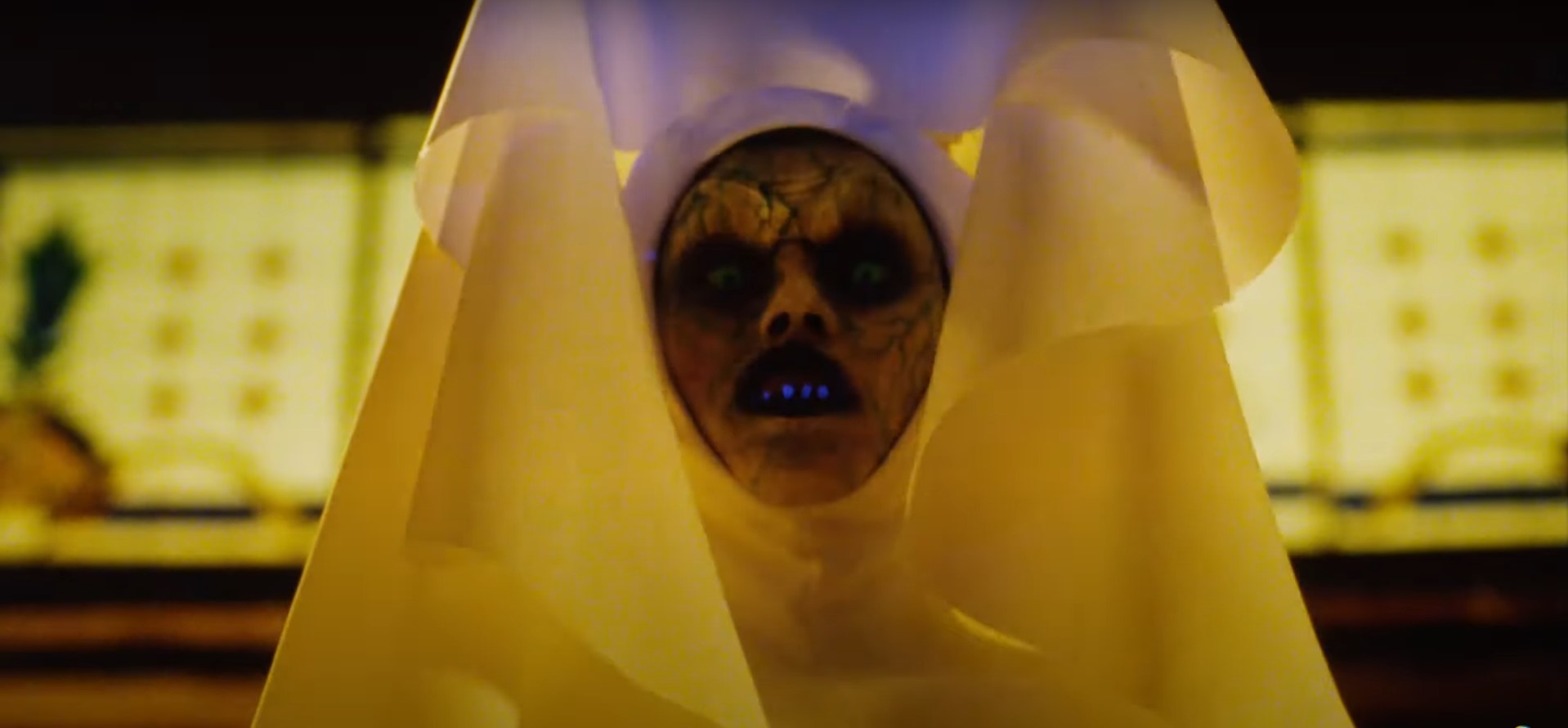
Demonic Nuns Want Virgins to Resurrect EVIL! “The Convent” reviewed! (Synapse Films / 4K UHD and Standard Blu-ray)

4K and Blu-ray “The Convent” Demonically Entering Your Soul! Buy It Here!

A woman strides into a convent carrier a can of gasoline and a shotgun during the sacrament of Eucharist between priest and nuns.  After setting the humble nave ablaze, she unloads shotgun shells into all the screaming bodies.  40 years later, a group of Greek life college students look to make their Greek letter mark on the same derelict convent now swarming with urban legends and ghost stories.  When a virginal student is kidnapped by wannabe Satan worshippers, they accidentally open the gate for dormant demons to arise through the corporeal vessels of the dead.  The possessed dead slaughter all in their way to seek another virgin, one that will embody their unholy master until this plane of existence.  The only chance for survival is to track that now woman from four decades ago to finish what she started after 30 years in an insane asylum, to blow away the demonic beasts of Hell!

At the turn of the century in the year of Lord of 2000, a year some Christians believed marked the 2,000th anniversary of the incarnation of Jesus Christ, saw another reincarnation of Hell passing through Catholic sacred ground from the creative culinary of profanity director Mike Mendez.  The one of a handful of creative talents behind the “Satanic Hispanics” anthology film and the native Los Angeleno helmed “The Convent,” his third directorial in horror behind breakout pyscho-hit “Killers” and the male-chauvinist be damned horror-comedy “Bimbo Movie Bash,” from the Chaton Anderson’s debut script full of sacrilegious imagery, glow-in-the-dark veined demons, and the dark comedic charm of early 2000s.  Shot entirely in Los Angeles, the demon-comedy is produced by Anderson and Jed Nolan (“Jurassic Women”) on a microbudget from executive producers Ryan and Roland Carroll of Alpine Pictures (“Dark Honeymoon”), Elliot Metz, and Rene Torres, who served as associate producer on the cult favorite, “Night of the Demons.” 

The collegiate characters are not only surrounded by twitching, carnage-dishing demons under the nuns’ habits but they’re also surrounded by headlining genre greats Adrienne Barbeau (“The Fog,” “Swamp Thing”) and, briefly, Bill Moseley (“The Devil’s Rejects,” “Texas Chainsaw Massacre II”) and gangster rapper, the late Coolio.  Barbeau doesn’t lose a step being the beautiful badass we all know and love from her reign as an 80s-90s scream queen, shotgun barreling down demons left and right as her character’s 40-years-senior self from the Nun-torching and blasting opener, the accused certifiable crazy lady called to action in Christine.  She’s called to once again stop a demonic Catholic kerfuffle she immobilized from spreading four decades back by a new set of naïve, older teenagers looking to get high, get lucky, and get the kicks.  Joanna Canton, who had three seasons in her on “That 70’s Show,” battles back-to-back with Adrienne Barbeau as Clorissa, the lead principal of the trespassing teens.  Canton is joined by story boyfriend Chad (Dax Miller, “Blood Surf”), story friends Biff (Jim Golden), Kaitlin (Renée Graham, “Shriek If You Know What I Did Last Friday the Thirteenth”) and Frijole (Richard Trapp, “Re-Cut”), story little brother and abuse-taking pledger Brant (Liam Kyle Sullivan, “Rideshare”), and story gothic bestie of another life time in Mo (Megahn Perry, “The Perfect Host”) whose been ostracized by mostly Clorissa’s friends and even a little by Clorissa trying to escape a gothic lifestyle for more fit in “normal.”  A dark and spooky night in a rundown convent transforms into a night of terror when Satan Worshippers Sapphira (writer Chaton Anderson, “Wither”), Davina (Allison Dunbar, “Browse”), and Dickie-Boy (“Kelly Mantle, “The Evil Within”) are led by so-called Satanist expert and a poorly 17th century speech replicator Saul (David Gunn, “Killers”).  “The Convent” does have dynamic trope characters, ranging from jock, to druggie, to cheerleader, to goth, and to the nerd, following formulaic footsteps to face forces of ferocious, fanged demons and doing it oh not so well and oh so gloriously bloody.  Casting rounds out with Oakley Stevenson, Larrs Jackson, and Elle Alexander.

Mendez’s “The Convent” has a real identity crisis issue walking in the familiar territory that closely resembles Kevin Tenney’s “Night of the Demons.”  Hell, I would go as far as stating Mendez’s Y2K-personified horror is a near step-by-step remake of Tenney’s 1988 demon possession carnage in an abandoned structure film.  However, minutia differences, a fall of Catholicism theme, and the addition of a motorcycling, demon-destroying Adriene Barbeau keep similarity nuances at bay and the acquainted plot lively and entertaining with a glow-party, nightclub maquillage on the demons to give them a fascia of techno-effervescence veins.  Mendez also adjusts the demons’ movements to a rapid twitch with increased frames per second and having the actors jerk their movements in a wild array.  Seems a little bizarre at first but the effect grows on you, and you can’t imagine “The Convent” demon without the spasmatic shots, as their glowing eyes set on seek-and-destroy roam from dilapidated hallway to dilapidated hallway, succumbing to the evil spirit’s will after the life force leaves the body.  Themes of an evil Catholic perspective will challenge those with a Christian value upbringing, especially with nuns and priests being gunned down and torched, and more character specific concepts of personal growth in deciding what’s right versus what’s popular run a paced course of dispersed too late to fix what’s already broken. 

As part of the Mike Mendez 4K UHD double bill release from Synapse that includes his individual inaugural film “Killers,” which we will review soon too, “The Convent” comes in a 2-disc, dual format set, making it’s uncensored, U.S. debut remastered in Dolby Vision 4K from the original 35mm internegative elements.  HEVC encoded, 2160p ultra-high definition, BD66 and the AVC encoded, 1080p, BD50 rockets the previously out of print film right past a standard Blu-ray release and into the land of 4K with 2k hitching a ride.  Both formats presented in a widescreen 1.78:1 aspect ratio, the definition and color saturation advancement are a huge leap from previous DVD releases with more delineate means inside a broadly shadowed interior.  Light and shadow have now divided fully and agreeably to shapes are now more obscured or in illumination.  With that being said, details are not knocked out of this part and that’s especially surprising since director Mike Mendez supervised the 4K remastering.  Facial features do appear smoothed out, more so on the standard Blu-ray release.  UHD has a slightly better rooting out skin details and customer texturing which Adrienne Barbeau leather jacket and tight denim jeans, with all the folds, zippers, buckles, and such, seeing the most promise.  The superimposed glow f/x has rich lamination with the emanating pulses creating reflection being done well on character faces and throughout an enclosed room.  The UHD and standard Blu-ray come with an English DTS-HD master audio 5.1 surround sound from the original 16-track master audio.  Uncompressed fidelity is a complete win here for “The Convent” that seizes side and back channels with monstrous grunts and growls, and not to forget to mention the often-neglected spooky house ambience of creaks, cracks, and killer hits to the body.  A broad range helps diffuse distinct layers to the individual channels.  Dialogue renders clean and clear with no pitchiness of hissing or crackling to note.  English subtitles are available on both formats. While the UHD only has eyes for the feature, the Blu-ray has the movie plus Hell-Raising bonus content, including two audio commentaries with a cast and crew commentary with director Mike Mendez, Megahn Perry, and Liam Kyle Sullivan and a Lords of Hell commentary featuring David Gunn and Kelly Mantle in full character of Saul and Dickie-Boy, a behind-the-scenes featurette, a location featurette, a single deleted scene, gore/kill scene outtakes, the original EPK (Electronic Press Kit), a pair of promotional trailers, and a still gallery. The new primary cover art and the reverse cover art inside the black Amaray case is illustrated by Ralf Krause and Samhain1992. A 6-page essay from Corey Danna has cropped color pictures along with release acknowledgements on the backside. The not rated film has a 80-minute runtime and is region free.

Last Rites: Never intended to take itself seriously, “The Convent” has wicked style, makeup, and effects under an early 2000’s feng shui and is balls-to-the-wall nonstop with demonically dark humor laughs and the barbaric blasphemy of a savagely railed faith!

4K and Blu-ray “The Convent” Demonically Entering Your Soul! Buy It Here!

Sleep Studies Tap into an EVIL Dimension! “Shadowzone” reviewed! (Full Moon Features / Remastered Blu-ray)

“Shadowzone” Available Now on Blu-ray!

The accidental death of a test subject during a highly immersive REM sleep project deep underground of abandoned nuclear fallout shelter resulted in the dispatch of a NASA investigator, Capt. Hickcock, to determine if the accident was a fluke or project negligence by the scientist staff.  The skeleton crew are eager to assist Capt. Hickcock with whatever he needs to wrap up his investigation and get back to the extreme deep sleep research aimed for NASA deep space pilots, but Hickcock is not so easily persuaded the research adds up, questioning the data that possibly lead to a volunteer’s brain to fatally hemorrhage.  A male and female volunteers rest in deep stasis sleep and while testing the lengths of the project’s capacity on the male subject, to sate Hickcock’s review, they inadvertently open a door to a parallel dimension through the unconscious mind and something has come through.  The facilities radioactive sensory system locks down the entire complex, trapping the captain, scientists, and staff with an unknown, and deadly, creature that will stop at nothing to return home. 

One of the few Full Moon productions to go outside their bread and butter of runt creatures and murderers, “Shadowzone” branches out with parallel dimensions and antagonistic alien creatures with molecular modifying capabilities in one hell of a star-studded, claustrophobic creature feature from the turn of the decade in 1990.  J.S. Cardone (“The Forsaken,” “8MM 2”) writes-and-directs cloistered camp of unseen terror that uses scientific research on REM, rapid eye movement, sleep research as the foundational base for breaking through the barrier of our existent and tap into another’s without cause or concern, until whatever comes out bites them.  Shot in and around the Griffith Park of Los Angeles, “Shadowzone” is produced by the master of dolls and everything small, Charles Band, as well as longtime collaborating producer Debra Dion and Cardone’s wife, Carol Kottenbrook, under the Full Moon Entertainment production company.

For a Full Moon production in the 90’s, “Shadowzone” had some unexpected star power between James Hong, the prolific Hong Kong-American actor who was a household name in the cult realm having been villainous black magician Lo Pan in John Carpenter’s “Big Trouble in Little China” as well as having roles in “Blade Runner,” “Revenge of the Nerds II,” and “Tango & Cash,” and Louise Fletcher, an equally prolific actress and a best actress Academy Award winner for her detestable Nurse Ratchet role in “One Flew Over the Cuckoo’s Nest, a wicked performance that suited Fletcher very well in her career with natural way to express a sarcastic tone.  Hong and Fletcher are not necessarily portraying bad guys in “Shadowzone” but they’re no heroes either as scientists eager to explore the unknown by ripping a hole in the plane of existence and both veterans of the trade give their best in this low run but highly thrilling Full Moon creature feature.  Hong and Fletcher are joined by an eclectically charged cast that while don’t have the recognizable charisma of established names, they each contribute a valued service in the parts portrayed, especially with David Beecroft (“Creepshow 2”) in the protagonist lead of the outsider Captain Hickock, investigating in toward the unknown.  Beecroft plays a suitable military-esque high ranking officer with a semi-relaxed demeanor that goes against the grain of the stereotypical stern and regimented leader you usually see in low-budget horror and sci-fi.  “Shadowzone” fills out the cast with bodies for the interdimensional meatgrinder with performances from Shawn Weatherly (“Amityville 1992:  It’s About Time”), Lu Leonard (“Circuitry Man”), Frederick Flynn (“The Forsaken”), Robbie Rives, Maureen Flaherty (“Bikini Traffic School”) and the always underscored, underrated, and understated horror supporting actor, Miguel A. Núñez Jr. (“Friday the 13th Part V,” “Return of the Living Dead”).

Where does “Shadowzone” fit into the grand Full Moon scheme?  Before the company solidified itself in the mid-1990s with miniature maniacs invading the majority of projects and their respective fast-tracked sequels, Charles Band took chances on other tales of titillating terror from all sides of the complex cinematic prism.  Sci-fi oddities, like “Trancers” and “Robot Jox,” of the legacy company Empire, took footing on beyond dystopian while more classical horror centric productions, like “The Pit and the Pendulum” and “Re-Animator,” provided a wider berth of subgenres under the phantasmagoria.  “Shadowzone” takes a little bit from both the horror and the science fiction tropes, coupling the scientific research of new age technology that rips a hole in the fabric of space and time to introduce an unimaginable, supernatural creature that virtually goes unseen as it morphs into the subconscious fears of the people it hunts down one-by-one.  What audiences will enjoy is the medley of figures this particularly nasty being can warp into when going for the kill.  What audiences will not enjoy is the sorely underutilized creature potential that’s left more to the imagination than to screentime.  All but one kill is off camera and in two of those instances, the creature isn’t even in frame as a burst of blood splatter becomes the demising indicator.  This shortchanging affects “Shadowzone’s” longevity for repeat viewings with no outstanding or satisfying purge of fated characters in an otherwise underground and dark corridor deathtrap of otherworldly proportions.

Full Moon Features continues to toot their own catalogue with remastered, high-definition releases of their older features with “Shadowzone” being one of the latest and greatest to be remastered onto a new Blu-ray.  The AVC encoded, 1080p, single-layer BD25 offers a soft, metallic palette to a harsh subterranean laboratory where shadows run thick, and lighting is keyed on exact spaces and people for effect. I quite enjoy the softness of stark industrial that does not even relieve primary color as this remastered version sees no color correction, but rather color reduction retainment of a sunless, cavernous crypt.  Healthy grain against the details brings more attention to the textures, especially when we do get the see the true form of the being in a bone-chilling scene of its final war cry moment, a scene that will often haunt me because solely of its A/V compositional construction.  The matted visual effects don’t hold true to original first look during its brilliancy dissimilarity when compared to the rest of the film’s cold tone.  The English language LPCM 5.1 and 2.0 disperses through the multiple channels to convey echo location of the front and back while the 2.0 does the job to channel audio layers through with a balance for differential treatment, especially separating Richard Band’s less than jaunty score that’s replaced with more common composition of intensifier notes.  Nothing overtakes the dialogue layer that runs clear and prominent without any hissing or crackling.  English subtitles are optional available.  Other than the original theatrical trailer, the only other special feature is Full Moon feature trailers.  If it’s not a Jess Franco sexploitation special, these remastered releases of originally Full Moon produced titles receive a touched-up version of the VHS cover art and, fortunately, “Shadowzone” already had an eye-catching art, gorgeously illustrated to the point of what to expect.  Like usual, there are no inserts or other tangible bonus materials included.  The disc is pressed with almost a lenticular look of the toothy creature in a scientist coat.  The 63rd title to be released from Empire has a new Blu-ray that comes rated R, has region free playback, and a runtime of 88 minutes.

Last Rites: “Shadowzone” definitely has the feeling of a little film that could, and for a better part it it did with fantastic casting, an isolating atmospheric tomb, and a transmogrifying creature of our personal stress inducers. The Remastered Blu-ray caps off the success with high definition not from this world.

“Shadowzone” Blu-ray is Here to Stay and Is Coming For You!