Crawling Through the Bavarian Forest is an Eight-Legged, Seething EVIL Spider. “Venom” reviewed! (Twilight Time / Blu-ray)

Own the Limited Edition of “Venom” aka “The Legend of Spider Forest” on Blu-ray!

On holiday in a small sawmill town located in Bavarian countryside, artist and photographer Paul Greville seeks to capture the serenity of nature’s bountiful beauty. When he comes across a strange, wild woman with a spider scar on her shoulder, known as the “Spider Goddess” to the townsfolk as a curse individual, his curiosity sends him poking around the quaint, sleepy village that leads him into discovering also a rare and priceless painting thought lost after World War II. The deeper Greville digs into the mysteriously beautiful, unfettered girl and the valuable lost artifact, the more the town begins to resent his nosiness into their hidden agenda of a former Nazi scientist extracting deadly venom from the lethal forest spiders for noxious nerve gas weaponization.
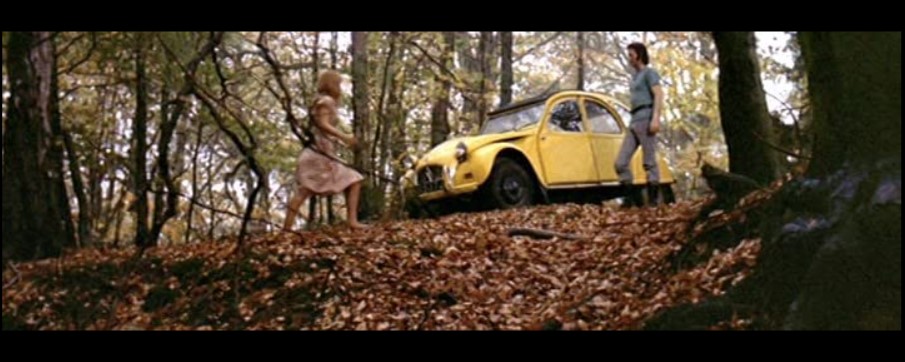
Screenshot from IMDB.com

Better known as “The Legend of Spider Forest,” or “The Spider’s Venom” in the States, director Peter Sykes pulls from the madcap story cache a sticky, wacky web of lies and deceits with the unwinding-arachnid thriller “Venom” that involved mad scientists, creepy-crawly spiders, a half-naked wildling girl, and a plot planned from a World War sore loser shot in the United Kingdom as the backdrop for a Bavarian woodland. Five years before directing Christopher Lee and Denholm Elliott in “To the Devil….a Daughter,” the Australian-born Sykes was outfitting his sophomore UK feature with real, untrained, bird-eating tarantulas to be the basis of his visual terror in a mind baffling labyrinthine screenplay from the filmic exploitation brothers Derek and Donald Ford who, when not selling sex with their erotica celluloid (“Suburban Wives,” “The Swappers”), they were dappling in low-rung independent horror as such with the psychotronic “Venom” which is a co-business affair between Cupid Productions and Action Plus Productions with Michael Pearsons and Kenneth Rowles producing.
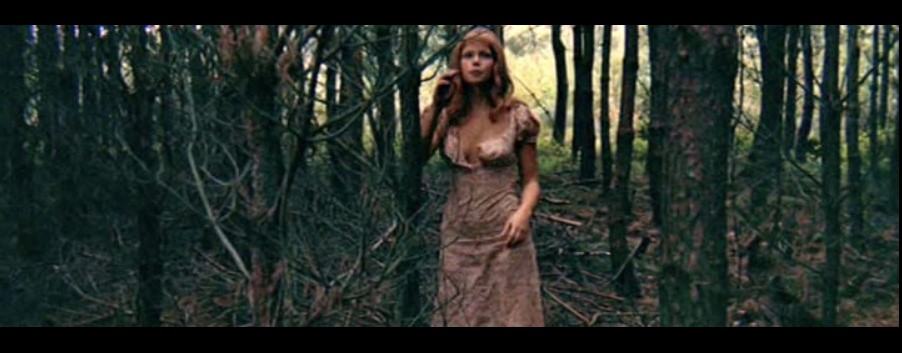
Screenshot from IMDB.com

The unlucky sap caught in the village scheming drama is liberal arts enthusiast Paul Greville understood in his thirst for solving the case of the missing medieval art by English actor Simon Brent. The “Love is a Splendid Illusion” Brent, who left acting a few years after “Venom,” finally lands a significant lead man role albeit in a rather stretch of post-war German antics horror that has more twists in the narrative than there are actual spiders. Brent exudes an uncomfortable amount of a curious confidence as he charges through the forest to track down, or rather just happen to run into by chance within the vast area of a mountainous forest, “Erotomania’s” Neda Arneric, a Serbian rugged beauty playing wildling Anna with red-hot hair atop her short frame. We are first introduced to pixie cut Anna during a flashback of a full-frontal skinning dipping frolic in the river with a young, also naked, man and while the unknown man and Anna gaze with an effervescent stars of love in their eyes, the chemistry between Brent and Arneric is about as sparkless as a dud sparkler in a warehouse full of dud fireworks as their characters are too far apart and unalluring to fall for each other at first sight; instead, Brent casts such a demanding go-getter presence with his amateur investigation into the village’s little secret, his murky intentions toward the locally feared Spider Goddess is nothing more than nearly a figment of formulaic structure. We, as the audience, literally attempt to use our own mental will power against them in order to fall in line, or in love. More infatuation buzz surrounds the sawmill boss’s cloak-and-dagger daughter Ellen with “Children of the Damned’s” Sheila Allen as a willing and brazen femme fatale that seduces the hapless artist more than once, especially during one intimate session that restores him back to full health. Although an English production shot in an English forest despite being backdropped in Germany, there is one German actor that gave “Venom” that je ne sais quo toward locale authenticity, beginning with the sawmill boss and self-proclaimed first village resident Huber, played by Gerard Heinz (“Devils in Darkness”) in his last feature length film before his death one year later in 1972. The rest of the cast predominately is English with Derek Newark (“Fragment of Fear”), Terence Soall (“Theatre of Death”), Bette Vivian and one sole Czech actor Gertain Klauber (“Octopussy) giving it all with his very convincing German accent as the village Alps only pub and inn owner Kurt.

Screenshot from IMDB.com

The sting of “Venom’s” unavailing characters is dangerously potent to a near effect of paralyzing the narrative. From Huber’s ireful small talk foreman with his own entourage of blue collar lackies to the mad scientist who doesn’t actually arrive onto the screen until the very last 10 minutes of story, in who is also perhaps the most interesting character garnering deadly spider venom and doing a little crossdressing on the side, “Venom” bears the brunt of unnecessary and disproportionate figures to be an implemented stopgap in managing Simon Brent’s screentime. Sykes teeters away from the majority of Greville’s point of view with little windows outside his perception that drop more diversional obscurity in who Huber and his operatives think Greville really is, why Greville is really there, and how can they handle Greville once he’s become too close to Huber and company’s operations. “Venom” slips unintentionally into the being a low-rent, haphazard Bond film or, better yet, a Scooby-Doo mystery without the Scooby Snacks, but there is ascot fashion. The story implies some exploitation of the mentally instable, using the “Spider Goddess'” strange behavior and her ominous ill-repute to be a warning to outsiders but Sykes conveys the latter allegorically with the destruction of pure, free love by an oppressive governing head, spreading lies about being cursed and deadly, only to find it again in a similar person, a person like Graville seeking to subvert the old wives’ tales and explore his unwaning curiosity no matter the consequences of bodily harm. I just like that Paul Greville drives off-road with a conspicuous bright yellow fiat through the forest shrubby and muck without getting stuck and without blending in.
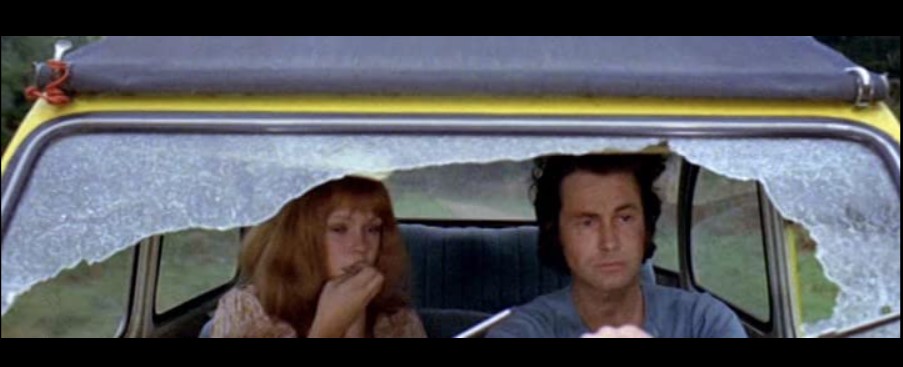
Screenshot from IMDB.com

The skirmishing climatic finale quickly wraps up loose ends and, at the same time, is an intoxicating delirium of madness and suspense. Twilight Time delivers another Screen restored eldritch mystery onto Blu-ray home video as part of the limited-edition series licensed for a U.S. release from the UK’s Screenbound Pictures and distributed by MVD Visual. Presented in a 1080p, high-definition widescreen 2.35:1 aspect ratio, this is a good-looking transfer with soft, dream-like overtones stemming from a well-preserve original negative with the only drawback being the edge of the 35mm stock occasionally being visible in perhaps a mishandling or misaligning of the film reel that may have also been exposed to light slightly. Other than that, only a few hardly noticeable blemishes are on the image. The English language 2.0 LPCM Dual Mono that separates the dialogue and the ambient/score tracks. You’ll find a robust vocal channel, discerning very nicely from the action, but there’s still quite a bit of hissing and popping on the tail end that denotes more attention needed for better clarity. The film is rated PG but that doesn’t mean much of anything in early 1970’s with Anne Arneric going full-frontal, along with young beau Ray Barron, in emerald green tint as well as other brief flesh scenes from Arneric, arthropod terror, some blood, and the quickest flash edit I’ve ever seen of the lower half of a post-sawed torso. Much like the “Seven Deaths in the Cat’s Eye” release, “Venom” also has zero special features and, as a more tangible replacement, is a 11-page booklet with color and black-and-white stills, various poster art, and an essay by author Mike Finnegan. The Blu-ray cover art is also reversible with a color still on the backside. Don’t expect to contract arachnophobia after watching “Venom” in this high concept, poor execution of cheap boscage thrills.


Own the Limited Edition of “Venom” aka “The Legend of Spider Forest” on Blu-ray!

Kissing Cousins and a Foreboding EVIL Feline in “Seven Deaths in the Cats Eye” reviewed! (Twilight Time / Blu-ray)


“Seven Deaths in the Cat’s Eye” now available on Limited Edition Blu-ra from Twilight TIme!

Set in the 1970s, the aristocratic McGrieff is on the verge of collapse with financial ruin that’ll cost the once respectable family their castle set in a small Scottish village.  Full of intrigue and ominous mystique, foreboding supernatural superstitions surrounding the McGrieff name, but that doesn’t frighten the young London residing Corringa from visiting her aunt Lady Mary’s castle.  Not before too long, Corringa’s mother, Lady Mary’s sister, mysterious dies in her bed and in the wake of her death more bodies are found with their cut throats all in the presence of the Castle’s roaming domestic feline.  Suspects range from Lady Mary herself in desperation for her sister’s sudden fortune to her unstable, gorilla-saving son James to also her in-house doctor lover who’s also sleeping with a live-in promiscuous woman intended for the young James.   Melodrama runs rampant and so does a killer who cuts down McGrieff Castle residents one-by-one in the dark corridors and gothic-laden rooms.

The Gothic-“Clue” of the 1970’s, “Seven Deaths in the Cat’s Eye” is the wildly entertaining Italian-produced giallo horror from the “Castle of Blood” and “The Long Hair of Death” director Antonio Margheriti credited under his more English-sounding pseudonym of Anthony Dawson.  Otherwise known with more animal ferocity as “Cat’s Murdering Eye,” as well as simply “Corringa, or in the native tongue as “La morte negli occhi del gatto, this mad family murder-mystery thriller is speculatively based off a novel by Peter Bryan, an extremely English sounding author whose original novel has yet to be revealed as the adapted base for Margheriti’s film or if a book even ever actually existed on what is more than likely, in my opinion, based off an obscure Italian author’s oral narrative or short story since the country at that time had laxed or nonexistent copyright laws – a method that produced a mass amount of unauthorized piggyback sequels for quick cash in on the popularity.  Either way, “Seven Deaths in the Cat’s Eye” is a thrilling, uncontained, and verbose black letter giallo co-written by Margheriti and Giovanni Simonelli (The Crimes of the Black Cat), produced by Luigi Nannerini (“A Cat in the Brain”), and is filmed in Italy under Capitole Films who appealed to westernized audiences with low-budget popular genre films at their peaks. 

At the heart of the story is Corringa, a progressive and modern Londoner travelling to join her mother and aunt at Castle McGrieff a few days earlier than expected after being kicked out for sneaking out on late nights from her all-girl Catholic boarding school and consorting with boys.  The “Dark Places’” English actress Jane Birkin embodies Corringa’s free-loving and innocent spirit becoming the white sheep amongst the Castle’s broody and plotting inhabitants.  Corringa is thrusted into the happenstance heroine of unravelling a mystery that causes her to freak out upon every discovery whether be the gruesome and distressing visual she walks into to the mere mention of someone’s throat being sliced open that sends her running and screaming into the arms of her cousin James, played confidently cool with a hint of madness in a red herring role by American actor, Hiram Keller.  The “Smile Before Death” actor had a small stint working in the Golden Age of Italian cinema with “Seven Death’s in the Cat’s Eye” being one of those projects, but his role of James is an interesting one as the Lord of the Castle who is considered mad, uninterested in either women or continuing the family lineage, and keeps a former circus gorilla caged up in his room.  One other at a loss and gross side of James, and also of Corringa, is their incestuous affair.  Yes, that’s right, the first cousins get it on like Donkey Kong as they share the bedsheets whilst embroidered in another arcana that’s more in the life and death taboo category.  Yet, all the characters are essentially in some wanton fashioned relationship with each other.  While cozying up to the Lady of the Castle, French actress Françoise Christophe (“Fantômas”) in order to gain favor within lordliness, physician Dr. Franz (Anton Diffring, “The Man Who Could Cheat Death”) also porks the “French Tutor” Suzanne on the downlow for some lust and relaxation.  German actress Doris Kuntsmann plays nomadically alluring to the dark-haired red herring outlier who is hired off the streets from her solicitating sex position by Lady Mary and Dr. Franz to be James’ break from his internal shell, bedfellow companion.  Meanwhile, the promiscuous Suzanna tries to sack up with Corringa in this full house of varied sexual appetites.  The ensemble cast continues with Dana Ghia (“My Dear Killer”), Serge Gainsbourg, Luciano Pigozzi, Venantino Venantini, Konrad Georg, and Bianca Doria. 

With an international cast, “Seven Deaths in the Cat’s Eye” enlists heterogeneous talent to continuously keep one on their toes surrounding every dead body that winds up throat mangled or moved from the original death stroke spot and Margheriti certainly has a firm grip on our attention between the polyamorous and dissolute sexual anarchy and the tension toned suspiciousness that ceaselessly keeps not only the characters on edge of each other but also rattles audiences anxiously squeezing their pressurized minds wrapped tightly around a castle-sized amount of distrust and suspects. “Seven Deaths of the Cat’s Eye” evokes the mad family subgenre with Margheriti’s family contending to be one of the most psychosexually and depraved group of backbiters and backstabbers of its time. Margheriti and Simonelli’s story is sensationally complex without being terribly complicated by beginning with the death of an unknown man where rats gnaw and eat away his decaying flesh. From then on, the narrative works ever so hard to purposefully not touch upon or identifying the mystery man’s demise until the bitter encounter end with a revealing finale exposure of a shocking killer that speaks volumes on the filmmakers’ intrinsic misdirection, a machination that keeps characters endlessly on the fence with their motives, and a conversation that is indecorous in a gothic setting.

If you’re looking for a different kind of giallo, “Seven Deaths in the Cat’s Eye” is that atypical wild card and now the Antonio Margheriti 1973 film has been released onto a limited-edition Blu-ray from Twilight Time and distributed by MVD Visual. The unrated, region A Blu-ray runs 95 minutes long in a 1080p high-definition resolution, presented in a widescreen 2.35:1 aspect ratio. I wouldn’t say the image is a complete polished look, but the transfer restoration from Rewind Film and the Screen Archives Entertainment has excellent detail surrounding the textural complications of the cast, interiors, and exterior settings, especially the graveyard. There are minor instances of banding around the skin in low lighting and the illuminating contrasts is rather low, leaving quite a few frames in the dark so to say. Although an Italian production, English is the language spoken and amongst an international cast, dubbing over certain performances was more than likely done, but the overall dialogue track didn’t match precisely the image in about a quarter of a second delay on the English LPCM 2.0 stereo track which also very muffled like being underwater. However, the “Cannibal Holocaust” composer Riz Ortolani has a score of majestically inspirational proportions as far as horror soundtracks go with a tingling guitar riff that sits heavy in the pit of your stomach as the master of orchestration compositions brings this feature to ahead with this arrangement. The Italian LPCM 2.0 is a more obvious lips out of synch dub but offers an equally robust Ortolani soundtrack. While there are no bonus features on the release, the Blu-ray package itself comes with a 11-page color booklet with images and an essay by author Mike Finnegan along with a reversible Blu-ray cover art containing images from the film and a snazzy disc cover art designed by Twilight Time. Much deserved and sorely underrated, “Seven Deaths in the Cat’s Eye” is back on the prowl with a new limited-edition release to sink your teeth into.

“Seven Deaths in the Cat’s Eye” now available on Limited Edition Blu-ra from Twilight TIme!