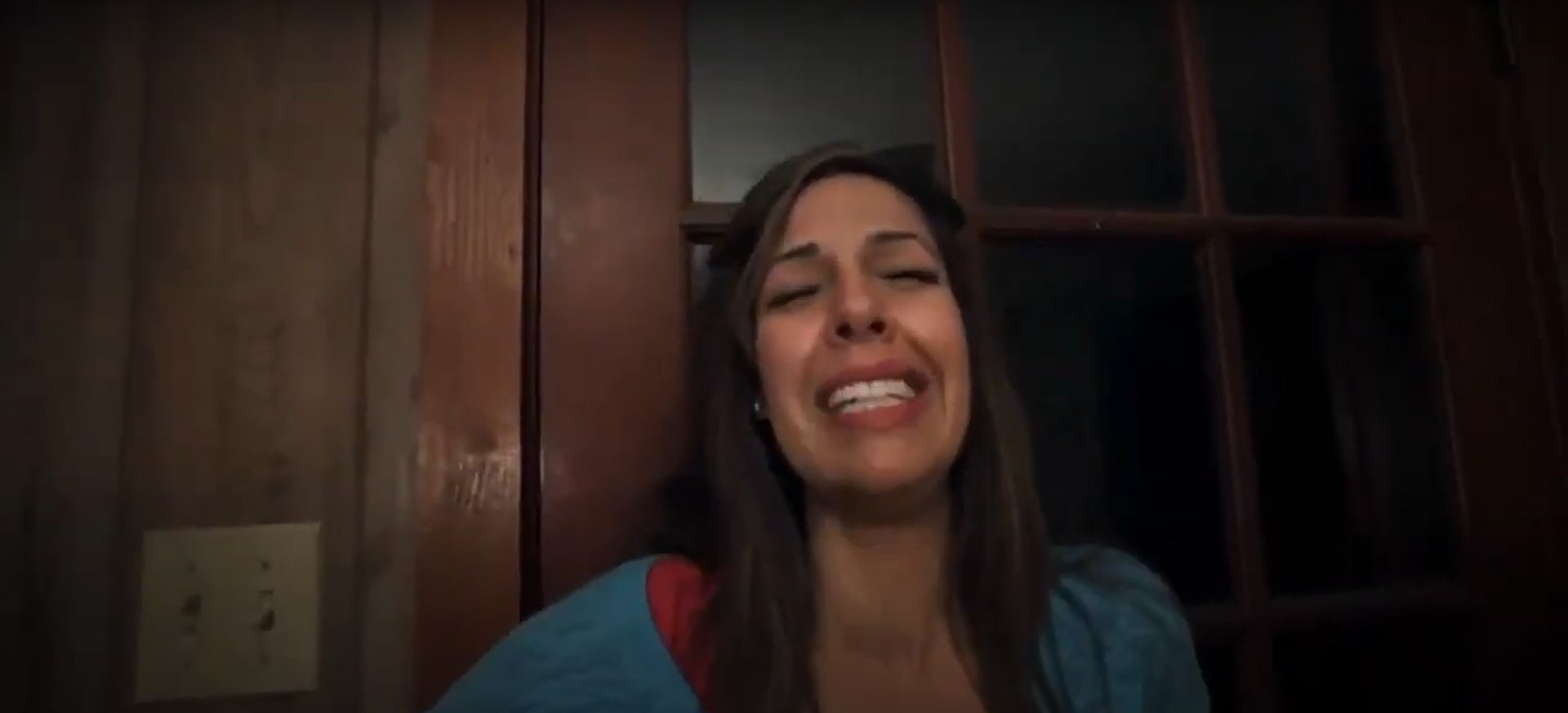
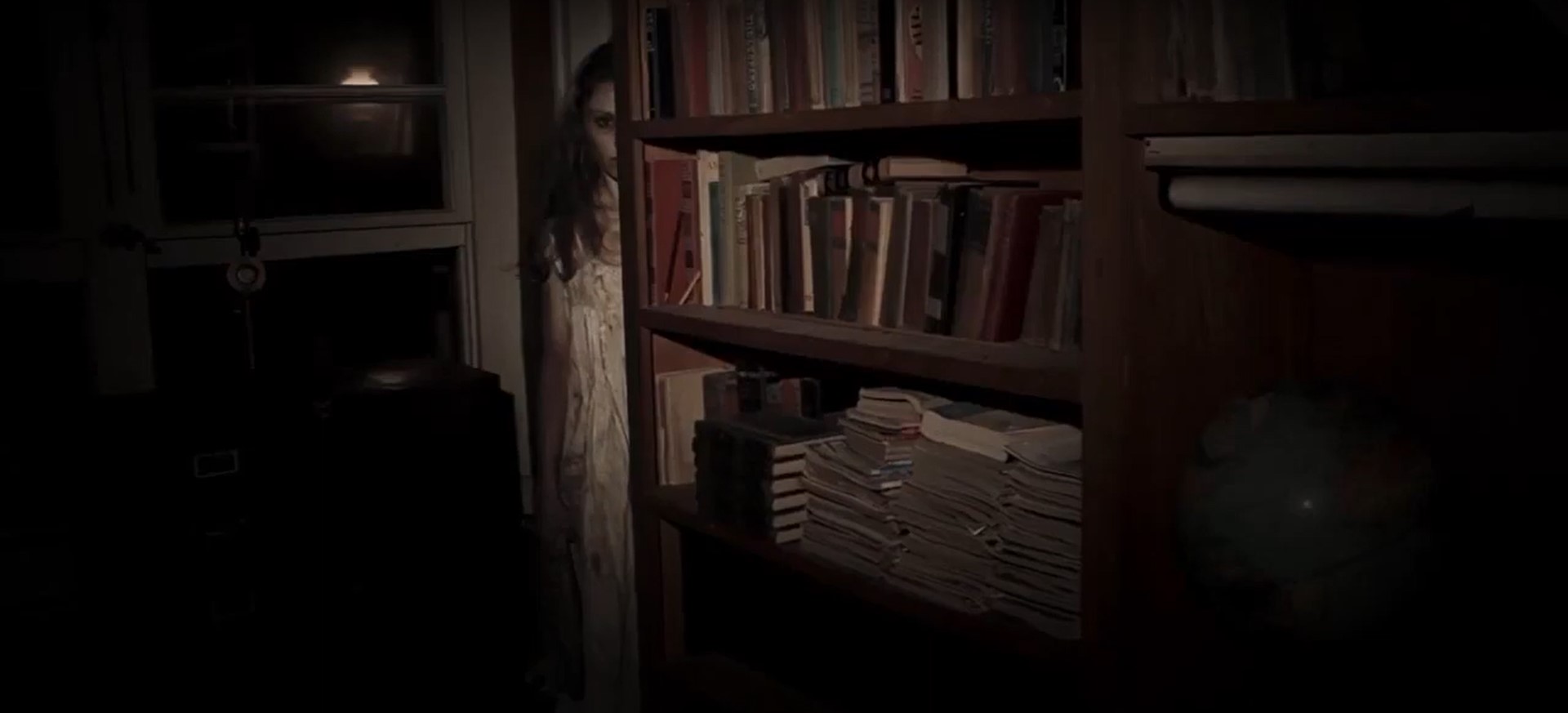
Channeling the EVIL from the EVIL DEAD! “Slaughter Day” reviewed! (Visual Vengeance / Blu-ray)

SOV “Slaughter Day” on Bluray for the First Time Ever!

A pair of friends who run a small construction company drive up to an isolated cabin project in the outskirt nooks of Hawaii.  When they arrived, they encounter disgruntled employee John Jones who dabbles in the dark occult.  Having murdered already one of their construction crew members, Jones invokes the evil from the book of the dead, the Necronomicon, to bestow upon himself unnatural powers to seek revenge for years of abuse on the job.  Enslaving two other members of the construction Crew, Jones relentless goes after his former employers who must fight tooth and nail for every minute of their lives.  The fight stretches across the island and spills into the streets, abandoned factories, tropical brush, and even on the side of a mountain. 

“The Evil Dead” meets “Double Dragon!”  A fierce bareknuckle fight against a malevolently possessed construction crew is the not-stop action and gore premise of the Brent Cousins’ “Slaughter Day.”  The heavily influenced Sam Rain and “The Evil Dead” 1991 shot-on-video occult survival horror is co-written by Brent’s twin brother, Blake Cousins.  The twins’ filmic debut concept where a maniacal occult enthusiast goes on the offensive with his vindictive side by conducting dark, Necronomicon evil against the two construction supervisors is pieced together, scene-by-scene, from the various shorts created when they were adolescents.  The four short films from their inspired youth were revisited and remade into a full length feature film financed by a nearly a next-to-nothing zilch budget, but with more than a little can-do attitude, a group of close friends and family, and a willingness to drench the cast in splatter bags fill of fake blood, Brent and Blake’s balls-to-the-wall, commercial grade equipment schlocker never lets up and pays endearment to the legendary video nasties that have stimulated their need for tangible blood-shedding effects.  “Slaughter Day” is a self-funded labor of love under the Cousins Brothers Productions and is made in one of the more tropical places on Earth, the Big Island of Hawai’i, with a few scenes shot in the town of Honokaa.
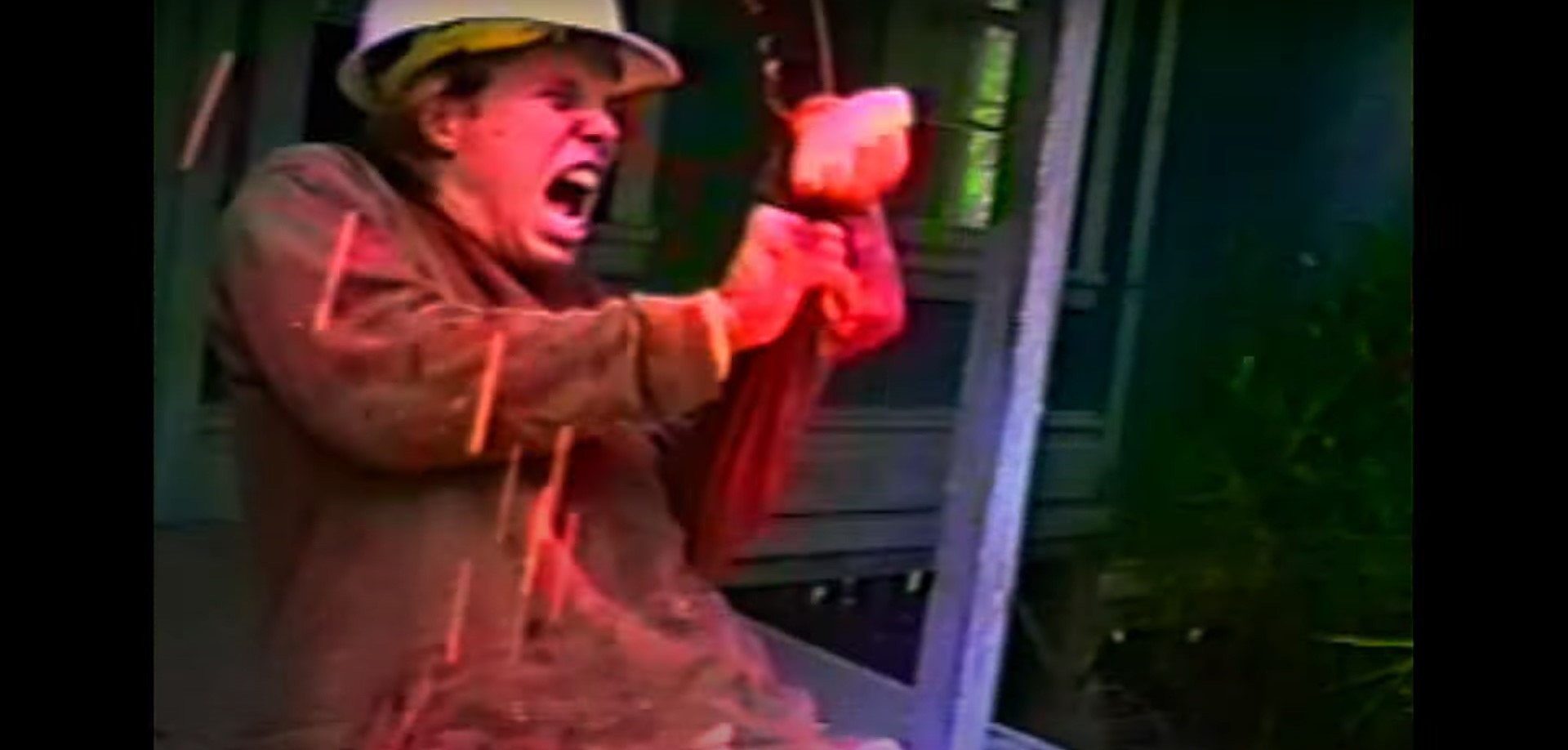
Aside from being one of the two writers, Blake Cousins jumps in the front seat to become one of the hapless heroes in the suddenly twisted, Hellish ride of that classic story of good versus evil. Blake embodies one of the few aspects that makes the viewing of “Slaughter Day” so infectiously exciting with a high intensity level somewhere around near redline critical. The intensity spreads to each and every actor in front of the camera and with Blake’s breakneck pacing as the film’s post-production editor, there’s a side-scrolling, beat’em-up video game quality about the whole run through. The acting isn’t terribly good with haywire yelling and screaming from start-to finish with a lack of professional training that gives way to under developing a story, but story be damned, the brother Cousins ambitiously puts caution to the wind by balancing out the acidic acting with exceptional camera work that occasionally would involve hazardous to their own health amateur stunt work. The unharnessed and unpadded fight sequence in the back of the pickup truck gets mad props in succeeding instead of squashing someone’s head under the tire. If everyone lives and you get the shot, it’s a win, right? The fight sequences themselves are extensive, as I aforesaid, the breadth of the short feature is like experience a live action “Streets of Rage 2,” and they have the smack of decent choreography with near miss blows and head whips. Some of the bigger fake hits lack sterling results but are nonetheless entertaining and expected. “Slaughter Day’s” cast is made up of essentially a closeknit group of friends with performances from Sam Bluestone, Dave Anderson, John Lambert, Kulaka Branco, Jeremy Couchiardi, Joe Ross, and Lincoln Ross who all have never again seen the gaffer lights of another film production.
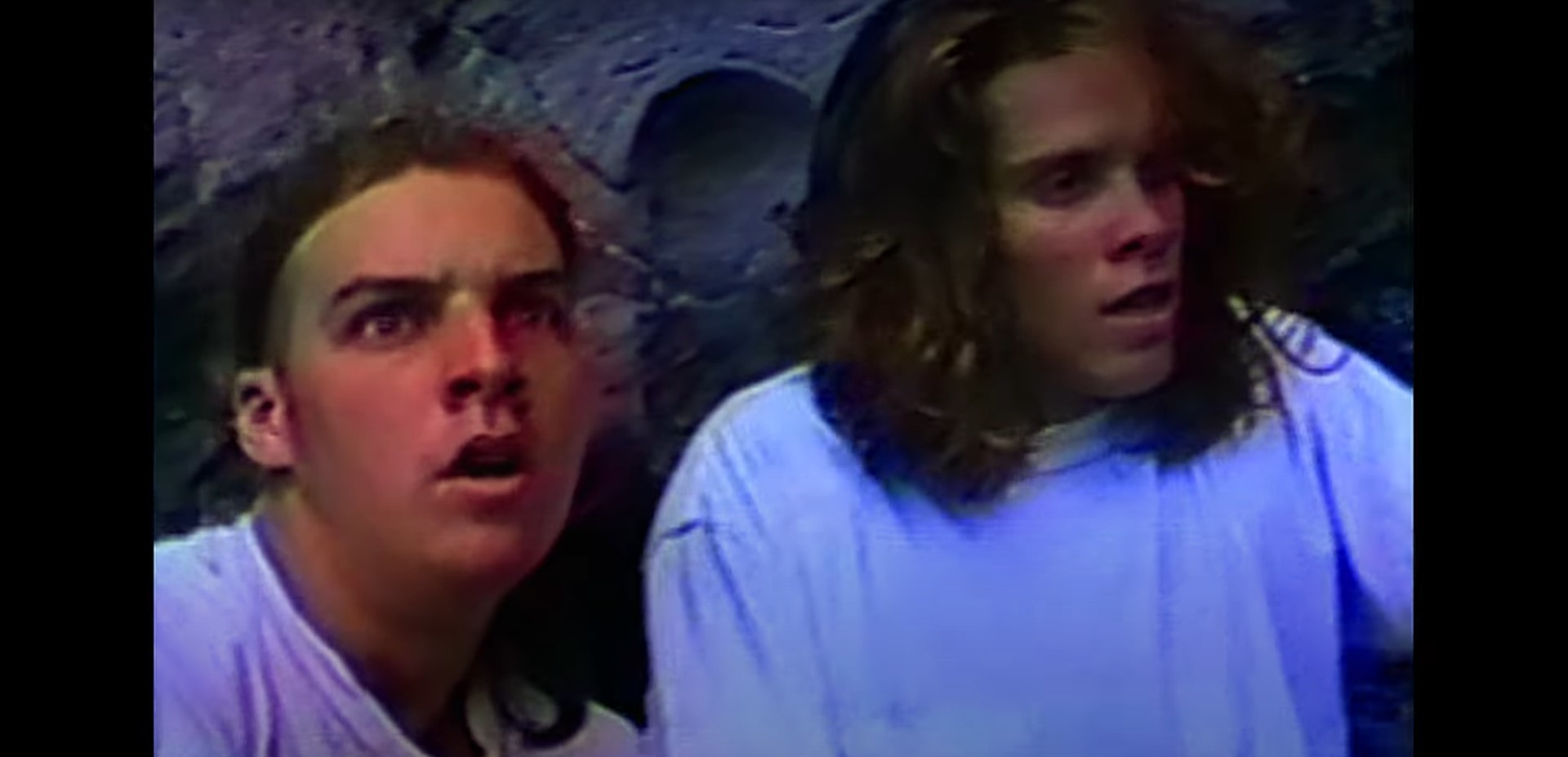
“Slaughter Day” has many flaws: bad acting, continuity mistakes, not much of a plot, etc. While honest attempst were made to rectify a handful of those sore points, those very same imperfections are what make “Slaughter Day” ironically perfect in the SOV canon. Some of the gags land relatively smooth, such as being John Jones being bent backwards in half and sucked into a copy of the pop media cultural influencing H.R. Giger’s Necronomicon book, and others kind of flounder in the lukewarm stew of unskilled technical know-hows. Yet, I do firmly believe the brothers achieved a memorable salute to Sam Raimi’s breakthrough 1981 video nasty, “The Evil Dead” in pulling more so the macabre-isms then comedic slapstick elements of the “3 Stooges.” Brent and Blake obviously understood what they wanted to see and how much familiar content they wanted to rework to open the recesses of our memory banks to access and recall “The Evil Dead” playbook, but then the flyby the seat of their pants filmmakers take their committed vision farther by adding certifiably crazy stunts and be big and bloody as all bloody hell! Severed limbs, decapitations, exploding shotgun bursts, and impalings are difficult for even the most seasoned effects artist, taking sometimes years to master a simple effect to perfection. With “Slaughter Day,” the brothers are unafraid to take risks, something the filmmakers proved with audacious stunts, by rendering a practical effect inclined storyboard or script thought to the screen tactic and owned it with a pinch of panache pizzazz!
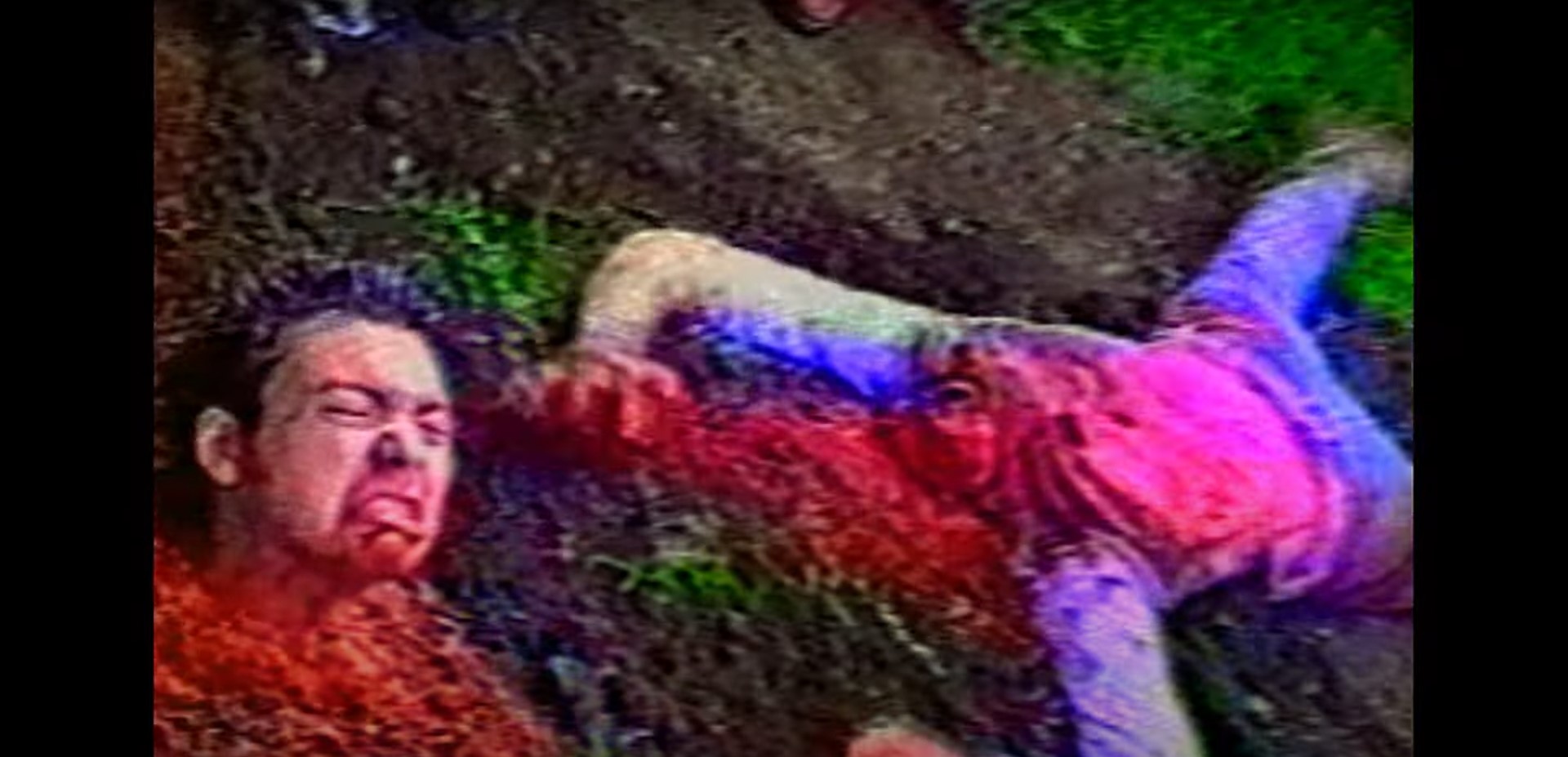
“Slaughter Day” might be release number five for Visual Vengeance but is clearly the Wild Eye Releasing cult-horror SOV sublabel’s second adulation of “The Evil Dead,” following “Bloody Muscle Body Builder in Hell.” The rough-and-ready S-VHS quality, presented in a full screen 1.33:1 from the original standard definition master tapes, can take on a grueling affect with a below par outcome. Tape lacks the proper color resolutions and that displays here immensely with full of deep and warm purples, reds, and yellows that you’d think the brothers were using gels to tint the picture. Tape wears, static interference, tracking lines… you name it, ‘Slaughter Day” visually had it. Delineation and details are deduced to a softer, overlapping ghost image that barely yokes together resolution pertinent pixels. Like always, Visual Vengeance’s disclaimer warns of the consumer grade equipment issues. These issues extend also into the English Stereo audio mix with a consciously underlay of static shushing, lo-fi dialogue recording, and zero depth and range to add more fuel to the “Slaughter Day’s” chaotic fire. Perhaps that’s why the dialogue is terribly rampant with the hope to invigorate and illicit engrossing captivation. The video game punch throw sound bites are a good touch and a innovative way to keep with the fighting game motif. The special features include a new audio commentary by directors Brent and Blake Cousins, a new audio commentary with Visual Vengeance’s own Matt Desiderio and Rob Hauschild, a quickly paced new interview with the Cousins Brothers regarding the genesis of “Slaughter Day” and they’re excitement about the new Blu-ray release, all four original “Slaughter Day” shorts, an earlier short entitled “Full Metal Platoon,” the “Slaughter Day” theme song, trailers from other Cousins films, such as “Rising Dead,” and the original trailer cut. Physical release features include a mini poster of the Visual Vengeance cover artwork, a three-page colorful essay from long time cinema contributing writer Tony Strauss, retro Visual Vengeance stickers that has graced all the company’s releases so far, a reversible cover art with new artwork as well as the original VHS art, and a cardboard slipcover with a heavily demonic and menacing Thomas “The Dude” Hodge design. The film comes unrated and has a runtime just shy of an hour at 58 minutes. I always get the warm and fuzzies when obscure works of art receive the red-carpet release treatment and “Slaughter Day” is an exemplar of SOV at its best while being innately its technically worst. Lots of ambition, lots of derived creativity, and lots of guts behind and in front of the camera to make a life-long dream of filmmaking come true.

SOV “Slaughter Day” on Bluray for the First Time Ever!

Biding Time Can Be Dystopianlly EVIL and Claustrophobic. “Tin Can” reviewed! (Dread / Blu-ray)

“Tin Can” on Sale Now at Amazon.com!

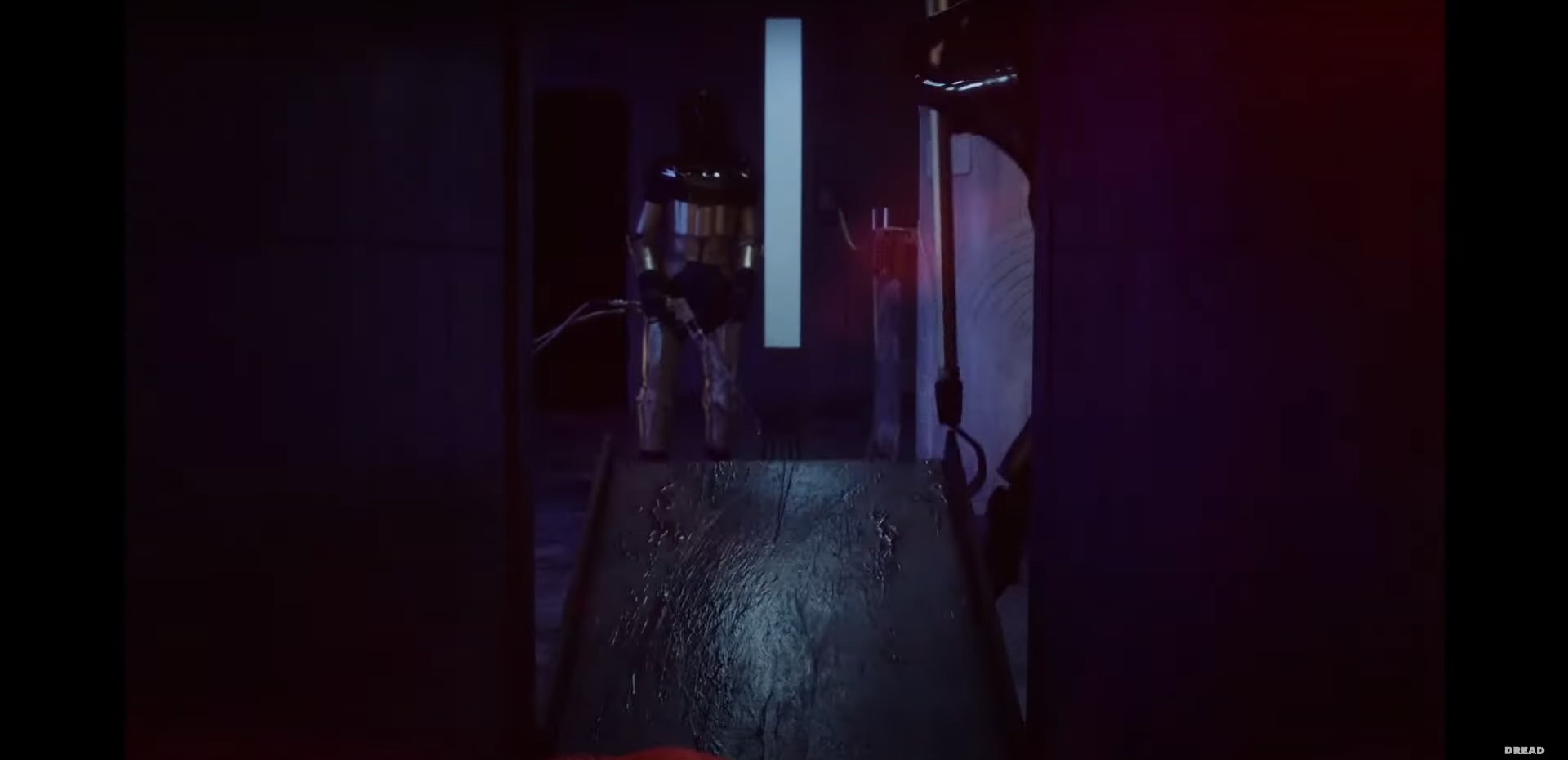
A viral fungus pandemic has plagued the world.  Fret, a parasitologist, has worked toward a cure to stop the spread of a virus that grows Clavaria-like basidiocarps from inside out the body that’ll eventually enclose the victim to death in an organic cocoon.  Before Fret can develop and distribute the recently discovered global cure for the virus, she awakes in a confined metal container constructed to suspend life duration for those who contracted the illness.  Confused and disoriented, Fret learns she’s not alone as others awake around her and able to talk with through the containers, including your infected husband John.  Unaffected by the virus and believed to be encapsulated in error, Fret works desperately on an escape from her well-intended prison in order to save humanity before it’s too late.   

By now, most of us can relate to a pandemic-driven storyline because, well, you know, COVID.  The 2020 sci-fi body horror “Tin Can” is no exception despite having been filmed prior to all the pandemic induced deaths and lockdowns.  Perhaps premise creator and director Seth A. Smith had a little foresight into coming events that inspired the Canadian project co-written with Darcy Spidle.  “Tin Can” is the fourth pen-to-paper collaboration between Smith and Spidle who previously completed two feature films (“Lowlife,” 2010 / “The Crescent,” 2017) and one short (“The Brym,” 2016) along with “The Willows,” the duo’s fourth feature film and revolving once again around preternatural events, that is currently in pre-production. For “Tin Can,” Smith and Spidle entangle a science fictional, dystopian, Hell in a handbasket world with selfish motives that outweigh saving the world. Seth A. Smith’s Nova Scotia based production company, Cut/Off/Tail Pictures, develops the story produced by company producer Nancy Ulrich and financially backed by the executive producing team of Michael Baker, Marc Savoie, Tim Lidster, and Rob Cotterill (“Possessor”).

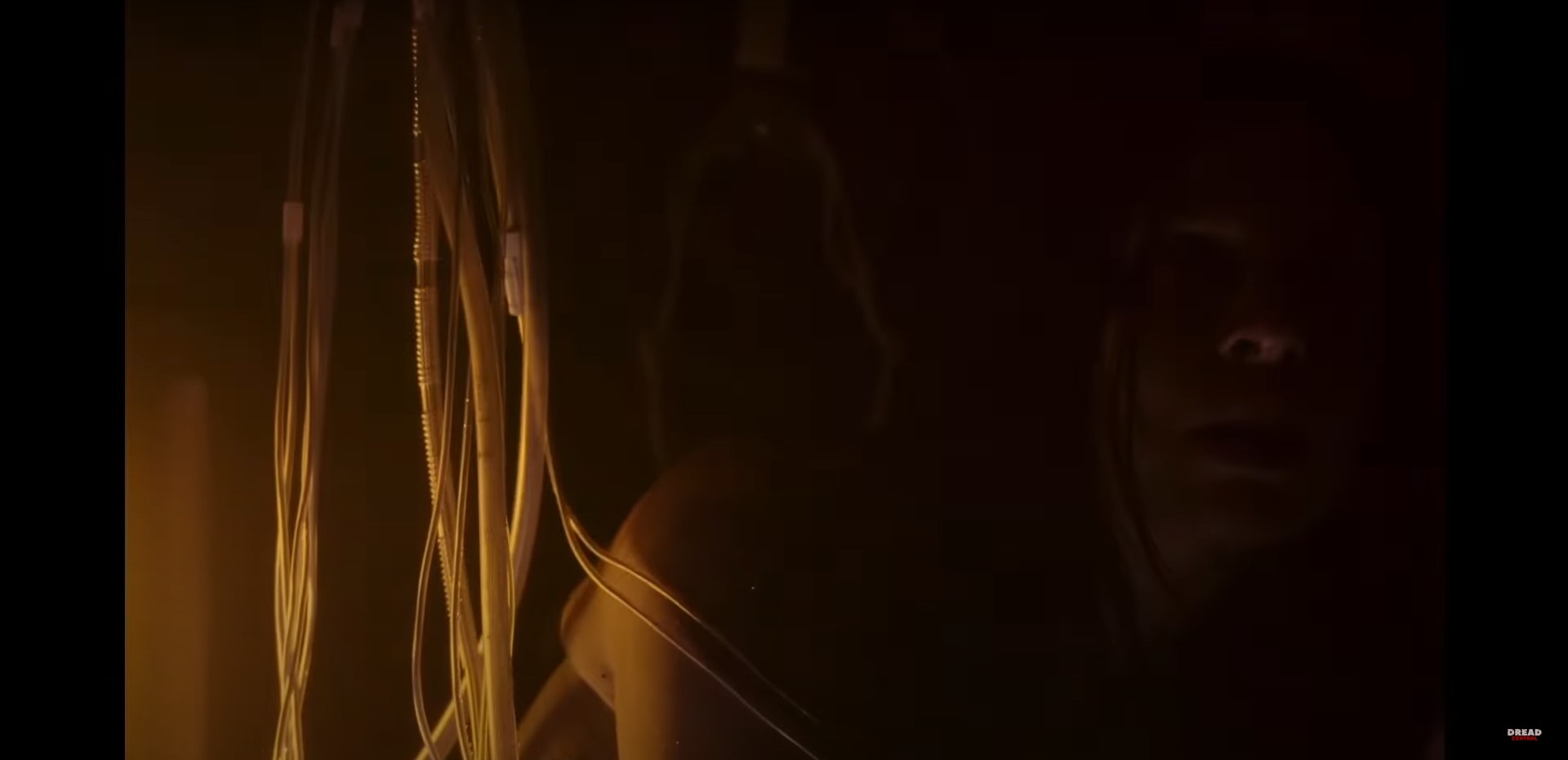
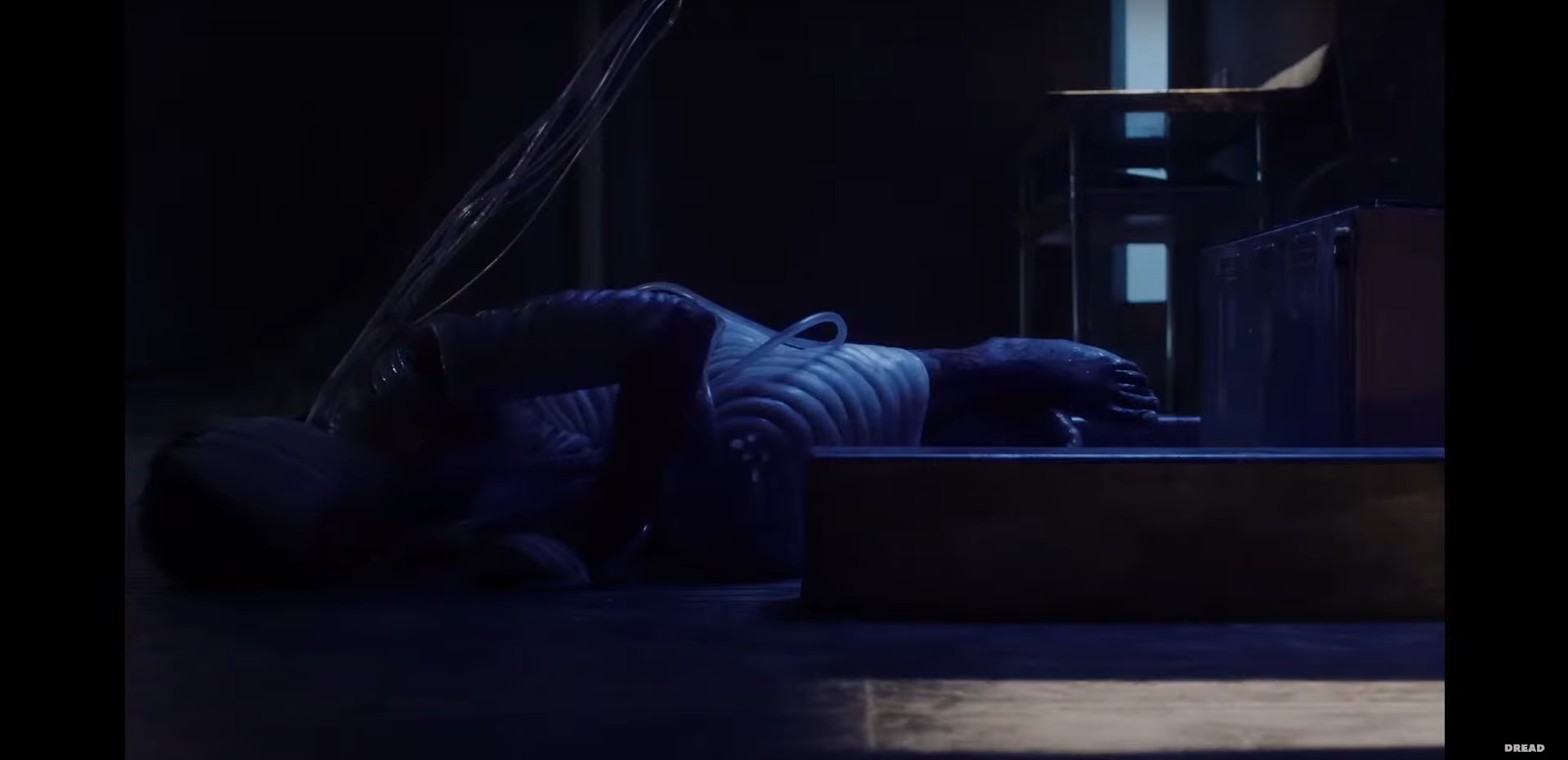
“Tin Can” might evoke a sense that one main character will be the focus point for the entire storyline, such as with “Buried” that stays put on the singular person trapped in this very tight, very claustrophobic-inducing soda can. Yet, that is not such the case with “Tin Can” that does circle around a centerpiece character in Fret (Anna Hopkins, “V/H/S/94”) but the cure-all scientist waking up in a life-extending canister while on the edge of saving mankind isn’t alone. Surrounding Fret are strangers, colleagues, and even her husband, some of whom, such as her husband, are suffering the protruding fungal fairy fingers of the virus. Anna Hopkins fields a hefty, difficult role after an initially a humble beginning as a scientist that more so-or-less feels the pangs of a low rent indie, but as Hopkins’ Fret transcends time by waking up weeks (or maybe months…years?) later, her environment becomes frantically imprisoning. The tight confines of the titular object with medical tubes dangling from the ceiling, a Tracheostomy tube down the throat, a malfunction video screen, and mysterious bars that light up one-by-one set a stronger stage for the actress to be put up against and Hopkins nails the mindset of a woman vehement and determined with escape to not only save her own life but the life of billions across the planet. In the cans beside Fret, providing Hopkins with more serve-and-volley fuel, is her husband John (Simon Mutabazi) inflicted by disease but becomes more than just a victim, Wayne (Michael Ironside, “Starship Troopers”) who I couldn’t really grasp as a component in the story as he’s like a project financier in the tin can project to save his own skin from being reskinned by fungus, Darcy (Amy Trefry) as a colleague-friend of John and Fret, Whistler (Tim Dunn, “The ABCs of Death”) who is the most interesting and weird doomsayer of the bunch, and a fist banging mute (Sara Campbell) also inflicted. For much the back-and-forth in the cannister talk, the dynamic is more of a talking head roundtable of initial discussions of popping open a small air vent so they sce outside their enclosed cell and eventually lead to more depth and deception that narrows the story with the what, when, why, and how.

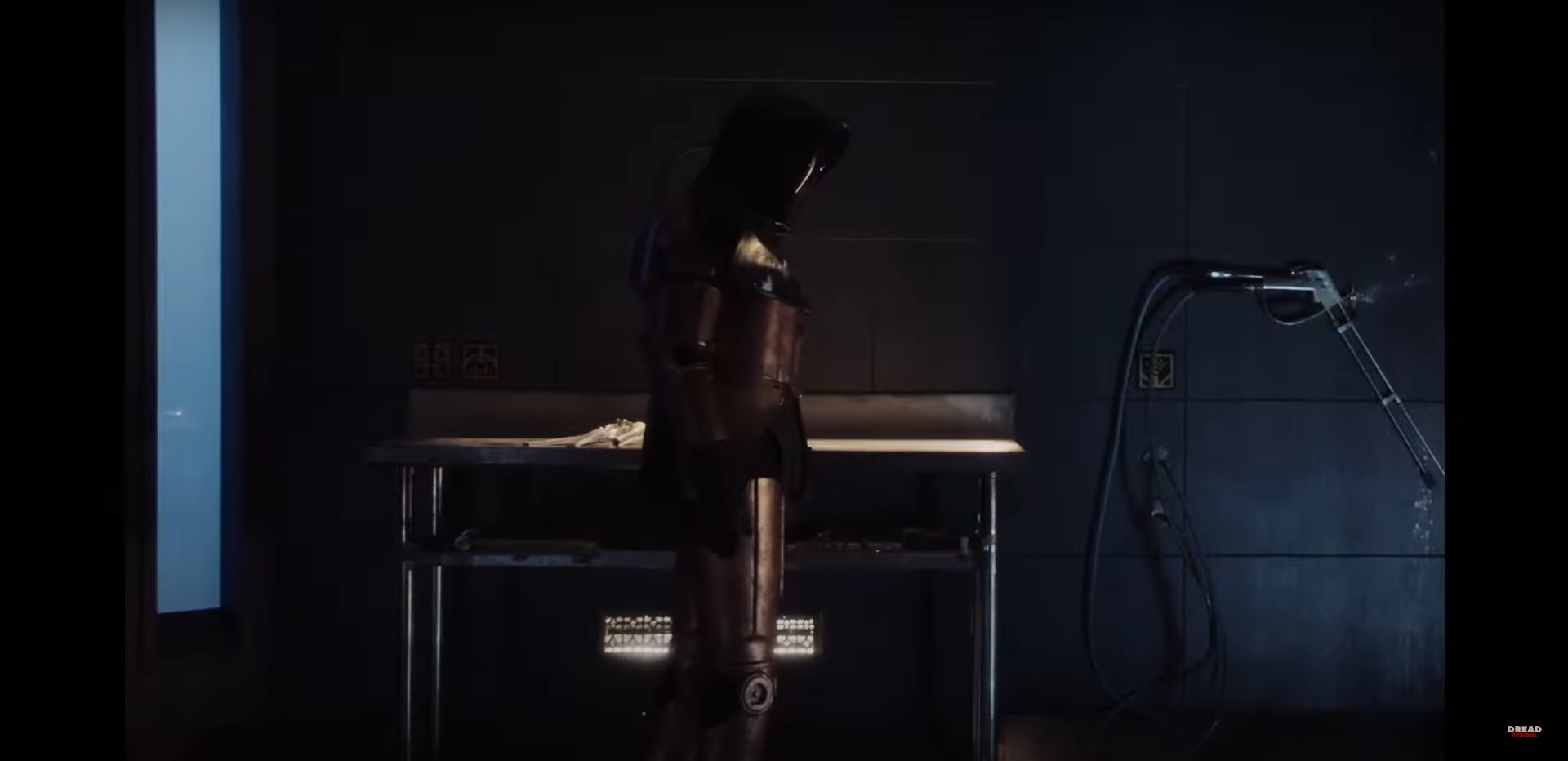
“Tin Can” aspires to be a chaptered three-act conundrum. I don’t mean that in a negative perspective. What Smith brings into existence is a polished independent film of Cronenberg-esque and has ensuing weirdness act-after-act only paralleled by the double-crossing exoneration or a retaliating impugn of keeping one alive after being severely scorned. The first act plays out like the world of today, a devastating pandemic that has ravaged the human population. The second act unsheathes the mystery of waking up inside the tin can device with people she knows and is eager to discharge herself from a capsule that’s supposed to sustain her life. Then, the third act rolls in, the third and final chapter, and time has officially been corrupted as we know it with a futuristic beings suited in various colored alloys. Alloys are definitely a theme beginning with title “Tin Can.” Fret discovers a cure for the diseases by commingling it with an alloy and each containment artificer is suited in a different metal and are credited as Copper, Gold, Silver, etc. What Smith could be suggesting is the element that could cure us could also incapacitate or, even worse, transfigure our existence with a lifesaving, yet life altering, solution to the extreme. Cinematographer Kevin Fraser industrializes the look of “Tin Can’s” existential view and is a glorious rusty bucket of a cheerless life. If Smith wanted to convey a life of nihility and automaton, Fraser nailed down the oxidation state. “Tin Can’s” a cold hard look at the cost of saving the world that, in the end, might not be worth saving.

A part of the Dread Central at home release line, “Tin Can” arrives onto a high-definition Blu-ray distributed by Epic Pictures and MVD Visual. The region free Blu-ray is presented in a throwback 3:2 with letterboxing and has a color reduction implemented to give it that demoded depiction. Image looks amazing without an inkling of any kind of compression issues especially with many of the scenes shot in darker and bleaker circumstances. Fraser delivers some awe-inspiring, creative angles that produce a how-did-they-do-that response to get a 360-degree single take of Anna Hopkins in the cannister or the rotation of a limp body on a large wheel door. The Dolby Digital 5.1 English audio mix has solid sound design as more than half of the picture is off the principals talking through their metallic cylinder containers that created a muffled depth and low range flickering in the backorder, the mechanized hum mixed with scraping metal, does wonders to sell the dystopian effect that borders steampunk. No inherent or noticeable flaws in the final product. English subtitles are available. Special features include a commentary with Seith A. Smith, The Last Bell Doe Toll – the making of “Tin Can'” exhibits the construction and creation of the displaced subsequent future, how to achieve a few of those crazy Kevin Fraser shots, and provide cast and crew interview insights, and the bonus content rounds out with two music videos – The Last Bell Does Toll and ZAUM – The Enlightenment (Part I). “Tin Can” runs at 104 minutes and is not rated. “Tin Can” is ingenious on a level many will not fully understand and, frankly, I barely can tether my impression and have it make sense, but there’s a unique ore core to this science fictional, ill-fated fantasy that can be so odd at times you can’t help but not look away.

“Tin Can” on Sale Now at Amazon.com!

Become Wrapped Up in EVIL with “The Shroud” reviewed! (SRS Cinema / DVD)

“The Shroud” now available on DVD from SRS Cinema!

Centuries before, an evil witch is brutally tortured and killed while covered in a white shroud. In present day, a nun, part of a special sect vowed to never let the unholiness of the shroud deviltries be unearthed from the forgotten rubble of a divine stupa, is raped by two men wearing masks. With the help of a hired obtainer, the nun will stop at nothing to get her hands on, even at the defiance of her brother’s advice, but the shroud’s a bewitching mistress and its power are intoxicating. Breaking her piety pact with God and her sworn duty to protect man from wickedness, the nun succumbs to the sin that drips from the shroud’s blood-soaked fabric and exploits its personification powers of evil doings by not only exacting revenge on her attackers, sending the shroud to assassinate her attackers without an ounce of mercy, but also converting her devout habit to a shameless, promiscuous one of immorality.

A made-in-Italia possession film about a killer burial garment and a nun with big guns giving out the last rites. What could go wrong? The immediate impression arises a lot of interest in this 2022 released inanimate killer object flick from writer-director Fabrizio Spurio. As Spurio’s third feature in the horror genre, “The Shroud” envelopes the 50-year-old, Rome-born director’s first ambitious single story length venture behind the more episodic anthology, “Innesti,” and the more obscure “Vanity,” that taps into the willingness participation to do anything for stardom. “The Shroud” embarks into a more religious and supernatural discourse that clashes the sin and the sinner with a blurry line of empowerment. Made with pennies, or rather made on the Italian centismos on the Euro, “The Shroud,” or “Sindome,” is a production of the Dario Argento and Lucio Fulci inspired Goreproduction company, cofounded by Spurio with Francesco Lagonigro tacked on as a fulltime collaborator in shooting low-budget, independent, free-thinking cinema of underground horror.

The last time I saw the sultry lead Italian actress and extreme indie horror luminary, Chiara Pavoni, was in the avant garde “Xpiation” helmed by one of, if not the dominant, underground horror filmmaker, Domiziano Cristopharo.  In her motherly-voyeuristic role, Pavoni radiated with dark, sphinxlike desire in her well-dressed, pin-up sex-symbol performance of longing and control.  Pavoni doesn’t stray far from that archetype with her latest role in Spurio’s “The Shroud” as she plays a woman of virtue, a nun to be more exact, who has quickly turned lubricious and vindictive after her being raped.  Pavoni is certainly bodacious on screen as she adorns tight-fitting outfits that barely contain her snugly-packed large chest, exposing a Mariana Trench deep cleavage in a Spirit Halloween sexy nun getup for much of her role’s sordid side.  As a thespian performer, Pavoni has the subtle moves of a temptress who knows what she wants but dialogue deliveries are something left to be desired as the “Demonium” actress goes through the motions of plain speak as does much of the other cast, including the Goreproduction producer costar Francesco Lagonigro. Lagonigro plays her object obtainer who, by the seducing forces of the shroud, turns into her sex-slave or gothic lackey as visions of death please feed him the sensation of guilty pleasures. Lagonigro’s version of a factotum is about as cheesy as they come with a glaring lowered brow and white and black face paint to embellish something that looks nowhere near sinisterism. If we’re supposed to take Lagonigro’s maniacal manservant role seriously than Spurio, and Lagonigro for that matter, misses the mark badly in a poorly sized up rendition of a Renfield like stooge. “The Shroud” rounds out the cast with many miniscule, nearly nonspeaking roles with Paolo Di Gialluca (“7 Sins”), Andrea Pucci, Allesandro Massari, Giuseppe Andreozzi, Sara Lagonigro, Monica Rondino, and Andrea Pacilli and Samuele Lagonigro who composed the score for the film under the moniker, Sam and Andy.

As you can see, “The Shroud” is a family production for the Lagonigros who won’t hesitate to pitch in to make Francesco’s lewd and crude extreme horror on a bar tab’s worth. Conceptually, “The Shroud’s” an appealing idea of religious hypocrisy and the natural human desire to be immoral. Rules are meant to be broken as Spurio seizes control the very one thing a woman should have control over – her body. By introducing rape by two masked men, Spurio rips away that control and for a nun who whole schtick is to abide by God by maintaining purity in keeping her holy temple intact, she must seethe with humiliation in front of her Lord and inevitable turn away from him because there is nothing left unadulterated to give. She has sinned, whether intentional or not, and so the tainted nun must keep on sinning in various ways: lust, revenge, and murder. Despite being on a budget, Spurio’s ability to liven up a plain white tablecloth is what making movies is all about as the shroud lives and breathes on screen, moving in an agile manner, and becomes a physical presence that can gore a man through. Sleight of hand scene reversals bestows the shroud with a life of its own, creating a slithering dolman of death that looks great in the humble presentation. That kind of DIY special effects translates the same across the slender 76-minute with practical gore gags that rest above mediocracy, and I can say that with a straight face. “The Shroud” will have very few claims to cult fame with a slew of sloppiness that takes the zero-dollar expenditure and makes it appear even cheaper than pocket change. There’s even a scene where the director is clearly reflected into the frame, not even an attempt to hide or review for need to reshoot.

“The Shroud” is warm and cozy when it’s not trying to kill you! SRS Cinema, a leading purveying of underground cinema, releases Fabrizio Spurio’s “The Shroud” on DVD as part of the company’s extreme and unrated nightmare fuel label. Distributed through MVD Visual, the region free DVD5 is presented in an unmatted widescreen 1.85:1 aspect ratio with a commercial grade quality of a standard definition camcorder that maxes out on the higher side of output of a 720p resolution and so the final result looks fairly okay for DVD. For much of the natural lighting, the high contrast works extremely well, creating deep shadows that make the film feel richer than its actual value, but the details and textures are often soft and bleary, washing out any kind of tactile material. Luminescence of green and blue gels as well as double overlays are used to symbolize nightmares and shroud vision are more headache inducing than a stylish solution when mingled with an industrial engine rumble or high-pitched and stretched vocal score with some piano keys tossed in to mix it up. The Italian language dual-channel stereo is a lossy, unbridled catchall. As much as the audio is purely soundtrack, there is still an insurmountable of sounds being captured by the camcorder mic that softens the desired prominent audiles, such as dialogue which becomes trapped in a cavernous state of echos and various levels of pitch inconsistences. The subtitles on the SRS DVD appear to be translated by a person with English as not their primary language as a tone of grammatical errors, punctuation mistakes, and absolutely zero capitalization tarnish an already low-rent feature. If you can work your way through the strangely designed menu options to the bonus features, you’ll find included raw take bloopers, photo gallery, music videos starring Chiara Povani and Francesco Lagonigro, and SRS trailers. The physical package is perhaps the best part of “The Shroud” with a true-to-form beautifully dark illustration of the most memorable character faces to exhibit in the film, crafted and designed by Avery Guerro. “The Shroud” is an estimable underground piece of the extreme horror art pie but slacks in unnecessary places and becomes an exemplar of a shoddy and careless production that ultimately hurts the overall value of its genus.

“The Shroud” now available on DVD from SRS Cinema!

Everything is EVILLER in Texas. “The Hoot Owl” reviewed! (Brink Vision / Blu-ray)

“The Hoot Owl” on Blu-ray is Slasher-iffic! Available at Amazon.com!

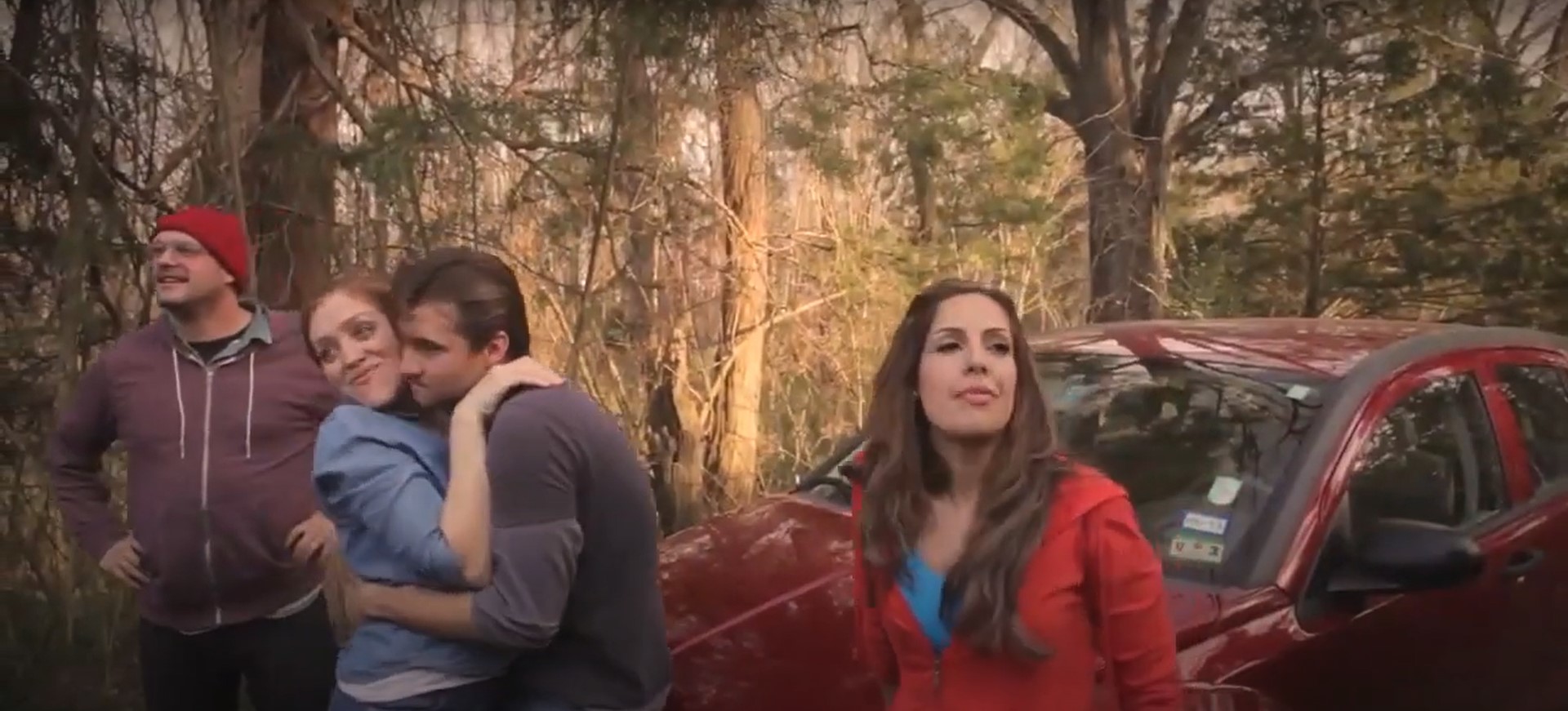
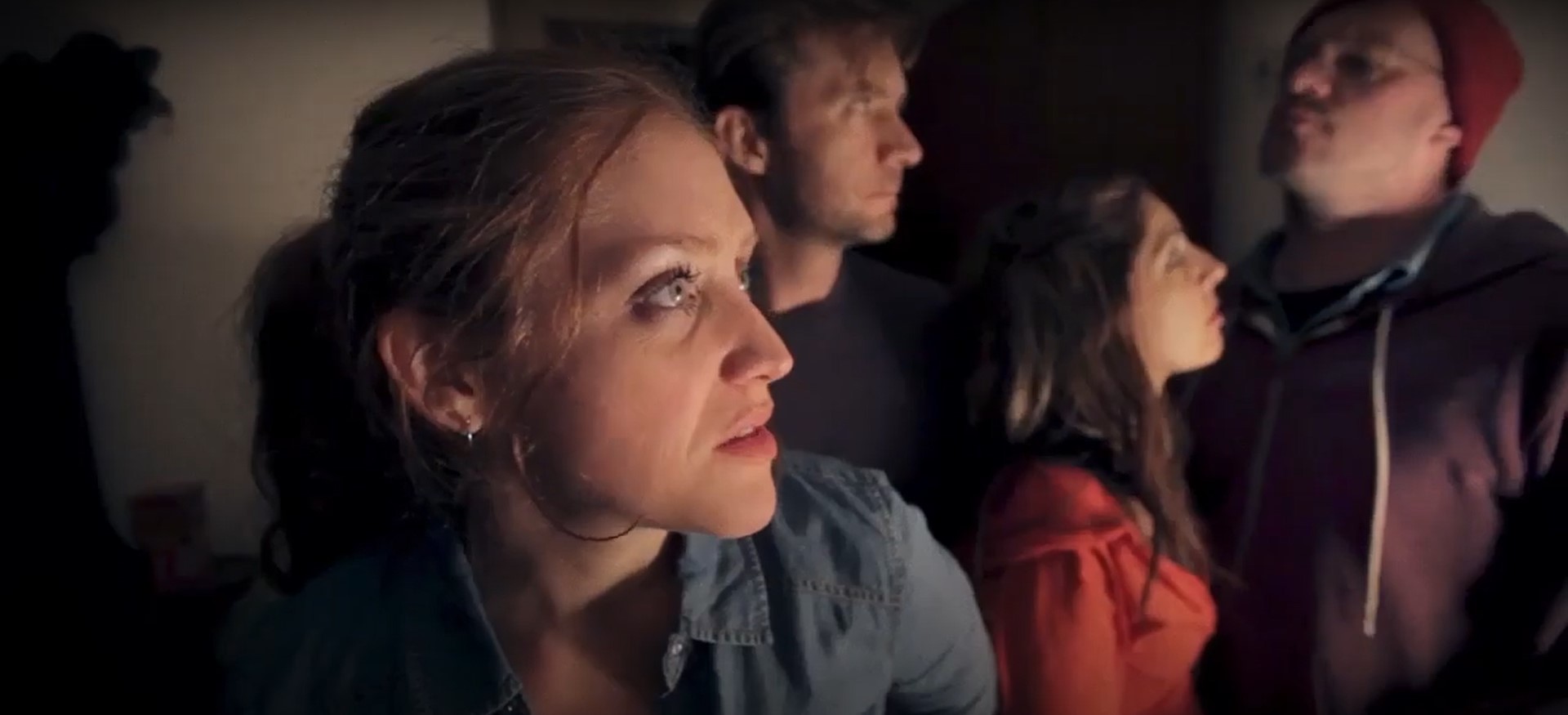
Blind buying a house is never good idea.  Blind buying a murder house in the middle of nowhere should be on the list of if you bought it, you deserve what’s coming to you.  Scott and April do just that as the recently troubled couple start afresh with a purchase of a fixer upper after suffering a late term miscarriage.  Deciding to not have Chip and Joanna Gains to rehab the dilapidated new residence set deep in the woods, the couple invite a small group of friends and family to assist in the much-needed repair and cleanup.  Interrupting their pass-the-doobie high and their positive high spirits while renewing an old house into a home, death and destruction erupts as a pair of demented squatters don’t take too kindly to the new homeowners. 

As far as debut feature films go, “The Hoot Owl” is a gory practical effect driven, true-to-form independent slasher film born and bred out of the great state of Texas.  The co-directing, co-writing Jasons, Jason Rader and Jason Von Godi, are the masterminds behind the cow head-boned masked killer and the very pregnant and very inbred wild woman lying in wait for the naive trespassers to drop their guard and thin out before the slaughter.  Having worked together for years making short films together, the 2022 released slasher was setup by Rader and Godi as a crowdfunding campaign on Indiegogo, but out of the filmmakers’ flexible 20K goal, “The Howl Owl” concept received a measly $275 from four backers.  That roadblock was only temporary and didn’t stop the aspiring retro-slasher artists to complete their foot-in to the passion project that took over 9 years to complete from pre-production-to-post-production under their co-created company banner, Vanishing Twin Productions, in association with Rise Above Productions and producer Raymond Carter Cantrell.

If you’re going all out to make a slasher film, then you’re going to need victims to slash! Most indie slashers nowadays have a synopsis that begins something like this, “a group of teens go into the woods…,” and just by those few key introductory words, we know perfectly well what to expect as the drinking, smoking, and sex-crazed youth meet the homicidal maniac with a bloody machete in one hand and a decapitated head in the other. There’s a rhythmic comfort in that classic symbiosis. The downside to the structure always boils down to the shot in the dark cast and cast of characters that can make or break a slasher film’s success. Scott (Jason Skeen, “By the Devil’s Hands”) and wife April (Augustine Frizzell) bring along Scott’s longtime good friend Drew (J.D. Brown, “Cross Bearer”) and April’s estranged sister Suzy (Katharine Franco, “The Inflicted”) offer a little bit of everything in a hodgepodge of backstories that don’t quite become reinforced in the end with the exception of April whose miscarriage and loss transcends into twisted maternal madness. Frizzell’s glow for the first two acts doesn’t really yell grief but when the ardency takes over, stemmed by her vivid gruesome dreams of her miscarriage, the Texas-born actress steps up to the plate of a psychotic break. Suzy’s also interesting enough character to spark curiosity with the enigmatic contentiousness in a heartfelt scene of two sisters rekindling their bond while actually actioning those same emotions on screen; instead, Franco enjoys the blithe nature of Suzy’s indecisiveness about school and about her family but discovers a quick and sudden fascination with Drew, the least interesting principal that hires two colorful buddies: Hank (Carl Bailey, “A Ship of Human Skin”), a father of two who a penchant for sexual harassment, and an obvious long hair wig-wearing oddball Bugs (Roger Schwermer Jr.). Bailey resembles pure Texan posture but is stiff as a board in his sleazy contractor role. “The Hoot Owl” rounds out the cast with Joshua Ian Steinburg playing the boned-face killer and Johnny Wright reaching inside to extract his inner Neanderthal-like wild woman ready to emulate a putridly picturesque birth.

“The Hoot Owl” is a by-the-numbers man-in-a-mask slasher riddled with familiar tropes and conventional clichés.  Baseline fact is that the film is not breaking any molds here and won’t be a contender for horror picture of the year.  With that said, and as harsh as that may sound, what “The Hoot Owl” represents is pure spirit and appreciation for what the film ultimately represents – a love for the heyday horror. Rader and Godi firmly believe in their film with a sincere attempt at a feature and pulling all the material together during a near decade-long process to get the film released out into the world. Far from perfect, “The Hoot Owl” relies heavily on the gruesome practical effects and there are some good gory terminations with a piledriving beartrap, a split-head decapitation with a large chain, and a long, rusty drill bit through the eye socket that ends in a spurting splatter of blood. The expo is an impressive effort from Allan David Caroll in his first go-round with the effects trade that could rival the early works of Tom Savini or Greg Nicotero. What breaks up the story most of all are the secondary shoots used to swell and cut into the first-round material shots to beef up a feature production. For instance, the opening credit chase sequence of a maniac cop (at least I think it was a cop) hunting down a man and his pregnant wife is a moment that is never clearly referred backed to, but the assumption is that the pregnant woman is the encountered savage later on in the unveiling climatic and the bone-head killer is her child from the rundown who then impregnates his own heathenized mother…? Connectively, it’s all unclear in unfused ends, causing a break in the signal from the lead-in to the trunk of the story, and that underdevelopment pursues throughout with loops never coming to a close.

In my first brush with Brink Vision since reviewing their DVD release of the 2008 alien transmitted dead-resurrecting bacteria film, “Evilution,” a tinge of satisfaction embraces my little heart to see Brink Vision come back across with a Blu-ray release of their latest “The Hoot Owl,” distributed by MVD Visual. The quick-paced 72-minute film is presented in a widescreen 1.78:1 aspect ratio, is not rated and is region free. Video quality doesn’t represent the best-of-the-best of the 1080p high-def resolution with a commercial standard definition equipment and know this mainly because compression that doesn’t display a myriad of issues. Details are not as sharp and there is banding more obvious in one scene of negative space, but the picture is otherwise free of artefacts and other data loss issues. The English Language 5.1 surround mix fairs much of the same albeit the electrostatic noise. While not overwhelming the dialogue to a point of murkiness, the steady shushing combined with the poor audio recordings can vary the quality and depth with a blunt flatness. Bonus features includes a commentary with directors Jason Rader and Jason Von Godi, a second commentary with Creepy Peepy Podcast, a featurette of Rader and Godi looking back at their 9-year pilgrimage to completion, Godi’s short film ‘The Voyeur,” trailer and still gallery. The physical release has beautiful artwork of the Hoot Owl killer in a throwback, almost Scream Factory-esque, illustration. The back cover is a little wonky with a composite that’s hard to read with deep purple lettering on the credits and bonus material listing almost invisible amongst the black background. “The Hoot Owl” endears the slasher fandom with a callback to the brute strength of a wanton villain and if only the script was smoothed over, this little indie film from Texas could have better laid a stronger foundation.

“The Hoot Owl” on Blu-ray is Slasher-iffic! Available at Amazon.com!

Hypothermia is EVIL’s Coldest Best Friend. “Frost” reviewed! (Cleopatra Entertainment and MVD Visual / Blu-ray)

Get the Bluray and Soundtrack for “Frost!”

Seeking to reconnect with her estranged father, Grant, after five years, pregnant Abby drives up the mountainous rural cabin.    Though not the warmest welcome she was expecting with the sudden pregnancy announcement dropped into her father’s lap, the two manage to find common ground and connect again while reliving memories of Abby’s mother.  Their threadbare bond sparks an impromptu finishing trip to the local creek and as the begin to open up a little more with each other, their car accidently runs off the road and declines down a gradual mountain decline before becoming wedged in a thicket of tree branches.   Abby, stuck in the passenger seat facing a steep cliffside dropoff, is trapped and injured.  As Grant goes for help up the mountain, a severe storm rolls in bringing harsh weather and freezing temperatures down upon Abby who desperately tries to keep warm and prays to not go into early labor before emergency rescue can come to her aid. 

Snowy winter thrillers can be harrowingly exciting as much of the plot is fused with the icy and treacherous environment that make lives at stake higher. The snow and the ice become threatening characters and when combined with, at times, a more conventional and concentrated story antagonists, foreseeing path for survival can often feel frigidly impossible. There’s little room for error, there’s little room for warmth, but there’s always an unpredictable heap of bone-chilling snow as far as the eye can see and the elements are only but nature’s natural attributes man has yet to confidently conquer. “Frost” plays into mother nature’s strength when squalling down below freezing wind and snow upon a woman trapped in her own car. The 2022 released, Brandon Slagle (“Attack of the Unknown”) directed “Frost” goes for the jugular in a woman versus nature survival suspenser penned by frequent Slagle aide-de-camp Robert Thompson. The “Aftermath” and “Crossbreed” screenwriter adapts “Frost” from a story by “From Jennifer” writer-director James Cullen Bressack. Shot during the winter in the San Bernardino mountains, “Frost” is produced by the film’s star Devanny Pinn and Cleopatra Music’s Vice President Tim Tasui under the bankroll and production support of Bressack’s JCB Pictures, Inc., Snow Leopard Entertainment, Sandaled Kid Productions, Multiverse Cinema, and Cleopatra Entertainment founders Brian and Yvonne Perera along with Pinn’s co-star Vernon Wells and The Asylum’s Jarrett Furst serving as associate producers.

“Frost” fits into the solo survivalist subgenre category and only characterizes with three actors and a trained wolf. At the tip of the cast spear is independent film producer and broad-brush horror actress and filmmaker Devanny Pinn (“Nude Nuns with Big Guns,” “The Dawn”) in the principal role of Abby, a woman seeking to rekindle her relationship with her reclusive father living in the mountains because of her pregnancy. Genre legend actor Vernon Wells (“Innerspace, “Commando”) opposites Pinn as Abby’s estranged father who’s happy to see his daughter but feels initially threatened by the pregnancy announcement. Understanding the dynamic between Abby and her father was easy as we’ve seen this type of teetering relationship before from a slightly rebellious, new age child returning home to find familiarity with a widowed and waning parent. Pinn and Wells pull off the several stages of reconnecting from the heated exchanges to the sappy moments of loss to the unexpected joy the two characters can bring out of each other, but what’s more difficult to comprehend is the source material. What causes the father and daughter to divide in the first place and how does that division’s role play out in the perilous predicament of an isolating car crash during a severe winter storm? For the sake of critique, one could say that their dissolving disputable divisiveness ends in irony as if the cosmos ultimately pulls them a part in a fitful storm of rage. Wells does what he can to make the initial crash scene comforting while exuding a positive outcome, but the veteran actor appears blank to severity, especially as a woodsman father soon to be a grandfather. Much of “Frost’s” edge of your seat trepidation is shouldered upon Devanny Pinn to take reins of providing the emotional embattlement against the unforgiving weather elements and animal food chain. Armed with nothing more than the dwindling car’s battery to provide heat and a charged lighter as well as whatever lures and first aid accompaniments in her father’s tacklebox, a rather lightly dressed, nearly to term pregnant Abby is pinned to her seat, backed to the edge of a cliff, and must face the cold and wolves until her father retrieves a rescue party. Pinn does what she can to fill in a quivering battle between life and death with a story that’s heavily reliant on a cigarette outlet to ward off a snarling wolf and can burn through seat belts in a single charge. That’s independent move magic for you, folks!

Any kind of solo act surrounding a single location, remote at that, with no other actor or other mobile organic object to feed off and bounce off its energy is a difficult task to undertake, especially on a hyper cost-efficient production.  Slagle’s “Frost” is certainly not immune to the difficulties and the filmmakers, and his crew and cast are well aware of the challenges to make the survival thriller engaging despite fluffing and padding the story with filler clichés and needless setup.  The production and location value are comparatively impressive against the limitations of the budget with a practical and computer-generated encroaching tundra of snow, ice, and wind that can insidiously invade a cold snap into the viewers bones, creating that intended atmospheric of a hell freezing over complete with the teeth of a hungry wolf, a biting rime, and deadly falling icicles.  More obvious than what perhaps Slagle and creative team realize is that “Frost” relies terribly on the shocking climatic scene, a scene so unimaginable and so appalling that it hits all the right gut-checking spots, but the setup to the scene and all the trials and trepidation Abby has to endure doesn’t quite mesh with a well-rounded plight that usually cradles an emotional pull string for the viewer to continuously root for and support those in the thick of the predicament.   Honestly, that heaviness for empathy never provides the emotional weight toward the character and never sparks that flame of hope to keep us warm and fuzzy on the inside to then quickly be extinguished by merciless mother nature. There’s also the plausibility of survival and the way that survival instinct is applied that makes “Frost” too far-fetched to be a strong contender in the subgenre. At near subzero temps, Hypothermia can set in in under an hour. In “Frost,” three days of severe snowstorm pummeling has past, segued by scene time stamps, before Abby becomes a popsicle and is delusional. I’m pretty sure with almost nothing to eat and very little warmth, Abby would have expired in under 48 hours. Yet, the 72-hour mark becomes the most chilling, literally and figuratively, in “Frost’s” invigorating third act snack that’s more abominable than it is nutritional!

Cleopatra Entertainment, the cinematic subsidiary of Cleopatra Records delivers a 2-disc Blu-ray set for Brandon Slagle’s icy thriller “Frost.” Presented in a widescreen 2.35:1 aspect ratio, the 91-minute film has a crisp, lively picture compressed without much to complain about. Banding issues are held to barely any and the details don’t whiteout during the wintery whiteout, leaving key delineations to be present in bold contrasts, especially during the severe snowstorm scenes. Foliage looks thick and green before for the storm with a lot of good textural details on the impaling branches that perforate the car and Abby. The English language 5.1 surround mix conveys the problematic sound design issues that have been consistently found in many of Cleopatra’s releases. Mostly in regard to the dialogue tracks, the dialogue tracks pick up static and other minute ambient noise during microtonal intervals, creating an unwelcoming and stark contrast with a dialogue mix that cuts obviously cuts in and out between character speak and isn’t simultaneous with the score. However, much like with other Cleopatra releases, the score is production and distributor company’s best trademark with a full album including music from various artists, such as L. Shankar, Big Electric Cat, Terry Reid, Rick Wakeman, and amongst others. The 2nd disc, an audio CD, contains the 15-song soundtrack. Other physical noteworthy aspects of the release include the double-sided cover art – one filmic and the other CD listing with both include different variations of the front cover as well as a translucent Blu-ray snapper cast that adds to the snowy theme. Software bonus features include only the theatrical trailer and a still gallery slideshow. Exposure to “Frost” is deep freezing frills for most of the picture but if able to withstand the coldshoulder of cliches, the mare peaks with a blood-filled and tasty horrific morsel that makes the frippery first half worth the wait.

Get the Bluray and Soundtrack for “Frost!”