The Dying Baltic Traditions Live in the Ashes of EVIL. “Cult Girls” (Umbrella Entertainment / DVD)

The pagan Cult, the Golden Path, remains nearly all that is left of the ancient practice as Lithuania becomes one of the last countries to be converted to Christianity in the late 14th century.  Led by an archaic, yet powerful, goddess named Ragana, the Golden Path promises to flourish once again with the power of death, reincarnation, and control through sordid misdeeds.  When Dalia and her two young sisters become prepped for a ritual of an important role in the cult, potentially leading them down the path of sex and sacrifice, a traitorous follower helps the sisters attempt to escape their emmeshing fate as the police raid the Golden Path compound ensuing a firefight that leads to the death Ragana and Dalia’s getaway, but her sisters are kidnapped and held captive by the remaining cult members.  Years later and riddled with guilt, Dalia must know what happened to her sisters and she tracks down a death metal cultist, Moloch, who seemingly has a connection to Golden Path, with the help of Samoth, a black metal fanatic, but Moloch forestry hermit lifestyle cuts off Dalia and Samoth from the rest of the world and the convicted arsonist against all things Christianity may have more up his sleeve than what meets the eye.

With a title that sounds like an all-girl goth band from the grunge era of the 1990’s, or maybe even more so from the “Scooby Doo” franchise (Hex Girls anyone?), “Cult Girls” summons the actuality of being an acute quasi-historical and dark fantasy thriller hailing from the Ozploitation capital of the world, Australia.  “Cult girls” is the second, non-documentary film from “The Matrix’ inspired “Narcosys” director, Mark Bakaitis, who directed, wrote, and edited his the multi-location sophomore film that has on location scenes from not only in Australia, but also in Lithuania, at the notable Hill of Crosses landmark, and in the indiscernible urban locations of Germany.  Bakaitis serves as producer alongside executive producer Douglas Kaplan of the diverse arts platform production company, All Edge Entertainment, based in Santa Monica, California. 

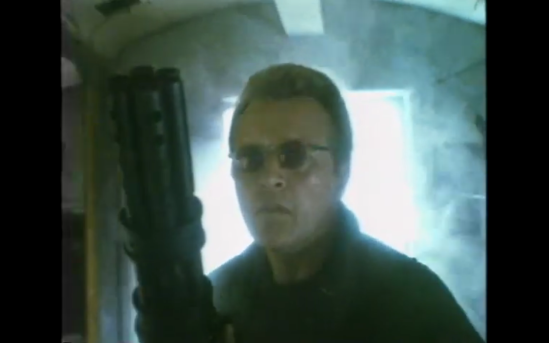
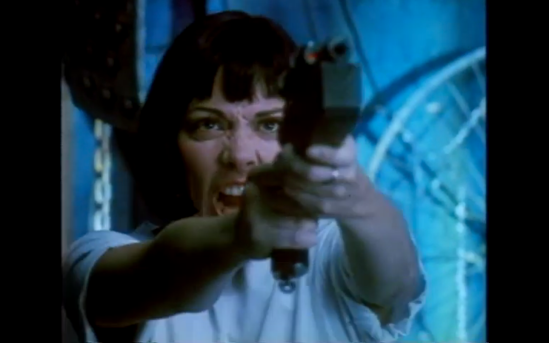
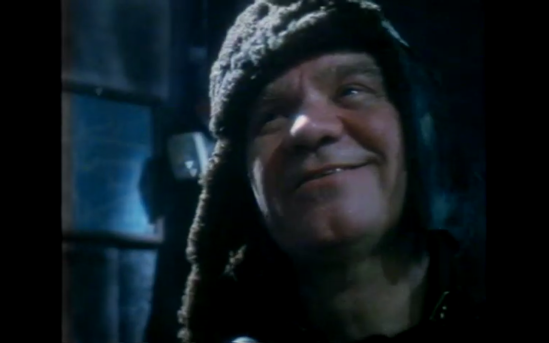
The Australian production casts an American to star as Ragana, the brood matriarch destined to rejuvenate Golden Path’s permanence, with “V’s” very own Jane Badler.  Badler brings an international presence to the feature and isn’t a stranger to films from the down under.  With the actress’s soul-seducing cutting eyes and demonic empress allure, the New York born Badler exacts Ragana’s clutching strength as an underground Pagan seeking unlimited decadent power.  However, Badler is overshadowed by the timorousness of Dalia whose polar opposite presence is granted a more favorable chunk of screen time.  Finnish born Saara Lamberg plays the humbled Dalia, living her life out of a covenant while searching out the cult that once almost stitched her into the sew of sleazy affairs to unearth the whereabouts of her younger sisters.  Dalia’s a bit of a dull principle with no substantiated efforts in finding her siblings and it isn’t until Samoth stalks her one night, recognizing the Golden Path’s symbol tattooed on her wrist and offering his manhunt services to find the expelled Moloch, an exaggerated black metal anti-Christianity anarchist in a saturating performance by Albert Goikhman.  In the middle, masked brutes, half naked women, and, fallen by the waist side, Dalia’s sisters in standalone plot point narratives that, as far as story structure goes, does nothing to motivate the narrative other than be an ostentatious aesthetic of locations and debauchery.  “Cult Girls” rounds out the cast with Tony Markulin (“MurderDrome”), Algias Karazija, Dean Kirkright, a handful of Bakaitis’s family, and Simay Argento, a distant relative to Dario Argeno playing a Cult Auntie in the film.

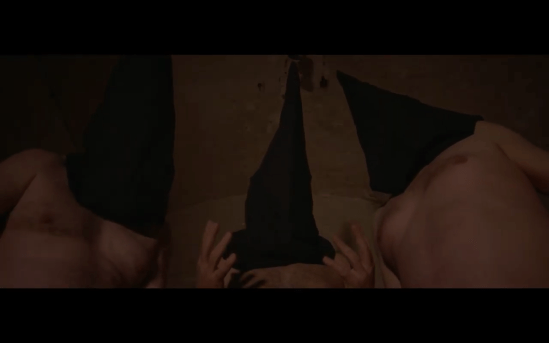
“Cult Girls” borders being avant-garde of an unfiltered auteur’s will in a mesh of artistic polishes and prose dialogue, but the film slides into being more of an 83 minute music video over staying it’s welcome and drudges through a repetitive stylistic cycle to an almost nearly unwatchable extent.  Yet, “Cult Girls” somehow manages to retain attention despite the chewy acting and it’s ambling story that hits a dam wall of uncertainly of where the script should head. Bakaitis shoulders the story for modern Gothicism tapped with half naked occultist, sometimes bathing in blood, and a plague of nightmare imagery that director of photography Trent Schneider tunes into well with noir vitality despite being the cinematographer’s debut feature film, but through the shiny exterior of a handful of solid mise-en-scene work, “Cult Girls” numbs the impact of the soul corrupting Pagan syndicate, that may or may not be shrouded with supernatural foundations, and the anti-Christian propaganda with half-baked violence from geriatric men, masked with Dia de los Muertos style masks, able to be kingpins of an untouchable prostitution ring façade for their occult sacrifices in broad public without a bat of an eyelash.  Granted, prostitution is likely legal in Germany and Lithuania so authorities might turn a blind eye, but brothels are a convenient opportunity for police investigations. “Cult Girls” treasures the fact of Lithuania’s languishing heritage without being overly filmic heresy by blending in shaded sleaze and death, but there lies no story in Dalia’s unenthusiastic search for her sisters in a much more preacherly themed death metal horror that confuses cult with religion.


Apocalyptic reincarnations and traditional folklores collide in Mark Bakaitis’s “Cult Girls” on DVD now from Umbrella Entertainment. The Australian release is a single layer DVD with region 4, PAL encoded format, presented in a widescreen 2.40:1 aspect ratio. Trent Schneider’s keen eye captures a grim fairytale surface of black magic masochism and, at the same time, breathtaking in the pure nature scenes, but the imagery is mostly in devoid of richer color that lingers around a bluish-gray monochrome tone and struggles with hazy details, especially around facial features, that smoothly fuzz over. The English, German, and Lithuanian Dolby Digital 5.1 surround sound mix battens down with shiplap genres of traditional Lithuania folk and modern metal from composing sound designer Erin McKimm, implementing the traditional songs of Lithuania sung by the Melbourne-Lithuania community singers, The Lost Clogs. Industrial action fills in every nook and cranny of the remaining score with decent range and depth of ambiance. While the dialogue is prominent and clear, there are spelling errors and tiny text issues with the English subtitles when the narrative lands in Germany and Lithuania. The DVD’s bonus features includes audio commentary, making of featurettes with cast and crew interviews, Bakaitis’s short film, “Mercy Kill” that serves one of the founding themes for “Cult Girls,” and music videos directed by Mark Bakaitis. For an Australian film, “Cult Girls” will feel more worldly, unlike anything else that comes out of Australia, and have partisan propaganda against Christianity, but in the end, the insidious Pagan evil, on the precipice of resurrecting, wearies on, like a tireless sermon of doom.

Let’s Ride the Ol’EVIL Succubus to Chastity High School in “Sadistic Eroticism” reviewed! “Wild Eye Releasing / DVD)


At California’s Chastity High School, a strict and sadistic far-right facility body abuse and favor a select assembly of pupils, isolating the semi resembling studious teenagers, who wear black trench coats, innocently worship indie horror flicks, and the idea of women, to the whims to not only a rapist principal and a Nazi fascist assistant principal, but also suffer prolonged torment from the school’s popular kids. When one of the regular teachers slips, falls, and dies on a pool of ejaculate, a voluptuous and alluring substitute teacher, Ms. Lizz, fills in, hoping to become a permeant teacher at Chastity High, but Ms. Lizz has a three hundred year old secret being a vampiric succubus who lures in and possesses the popular, sex-crazed, hormone driven high school jocks who will do her bidding in abducting the beautiful high school sluts and for Ms. Lizz to drink their blood to retain immaculate beauty. Its up to three Troma loving and heroine doping geeks and an odd janitor to stop Ms. Lizz before she laps up slut blood and moves on to the next school.

Like a barrel full of doured high school rape jokes bubbling in a stasis of formaldehyde, the farcical cringe-worthy comedy-horror, “Sadistic Eroticism,” is the brain damaged brainchild from writer-director, Alex Powers, as his debut feature film shot entirely on VHS cassette that pays homage to the SOV horror of the early 1980’s, such as “Boarding House” or “Sledgehammer.” Powers, who went on to helm “GrossHouse” and its sequel, congeals on a slapstick of analogue digressions to introduce himself as an auteur filmmaker who, unrestrained, can exceed beyond the distinct hardline of political suitably that’s not only a testament toward the very title of the film, but also, perhaps, securing Powers on a number of studio blacklists unwilling to touch him with a single junk-destined email originating from the other ends of the Earth. Starchild Video serves as production company, which if entering “Starchild” and “Sadistic Eroticism” in the same search engine field, you’ll get a nice little stern warning about your search results involving child sex abuse and any images depicting such should be notified. Yikes.

More promising than the infamous history of the Hungarian noble woman, Elizbeth Bathory, to which “Sadistic Eroticism” properly appropriates it’s title and abstract character from, is the colorful, if not disdainfully charged, personalities teeming with a variety of depraved intentions and the entire cast embraces the full blown degenerate toxicity. More than likely, most of the cast list is made up of not household names like JD Fairman, James Coker, Nicholas Adam Clark and T.J. Akins as a black Nazi fascist hard up on Christian values and stern punishment. On the flipside of that coin, genre fans can root through the blurry, sometimes overexposed, tape recordings and find familiar faces of the then scruffy looking filmmaker James Cullen Bressack, writer-director of the popular indie found footage thriller “To Jennifer” and producer to the subsequent franchise films, “2 Jennifer,” “From Jennifer,” and “For Jennifer,” suited up in a shirt-sized Confederate flag as one of four high school bullies to fall under Ms. Lizz’s spell. The prolifically half-naked all the time indie actor, Michael Q. Schmidt (“The Pricks from Pluto Vs. The Vaginas from Venus”), straps on BDSM gear for a little sodomy counseling as Principal Buggary, “2001 Maniacs” Field of Screams” Miles Dougal slaps on a wife beater for some sleazy slumber party slime ball in a high school girl’s father role, and, of course, the lovely pornographic actress who branch out and take a break from oral sex, group sex, three-way kissing, and – oh wait – they do and simulate that in this Powers’ as well. Tori Avano, Imani Rose, and Jayden Starr are the three high school sluts who shameless flaunt their assets for Sophie Dee to snatch up and soul suck her way for anomalous aesthetics as a satanic form of cosmetic surgery. The latter actress, Sophie Dee, is endowed, more ways than one, with the role of the vampire-succubus Bathory, keeping well….well abreast her monotonic acting talents with her adult industry persona. All four ladies show an abundance of above waist skin and engage in some solo girl, boy-girl, boy-boy-girl, girl-girl-girl, boy-boy-boy-girl… and now I must sit down a rest my brain. Dou Waugh, Sto Strouss, Paymon Seyedi, Candis Higgins, Mel Martinez, Aaron Granillo, Matt Johnson, Ian Fisher, Jody Barton, and Yajaira Bardales round out the cast.

Jokes and slapstick humor disassociated, “Sadistic Eroticism” still relates to the Elizabeth Bathory backstory told on VHS through a tube television presentation of Ms. Lizz’s abnormal history subjects. The succubus creature is nothing less than a buxom beaut that undresses with her feminine wiles zombifying men to do her bidding without her lifting a finger to break a nail against the hypersexualized school girls; yet, to show this century’s old cacodemon as provocatively dressed and to skim around bellying up the tension isn’t quite enough to sell the dominance an ancient evil should be wielding like she owns the whole damn school. There’s more of visceral presence of evil between Principal Buggary and Assistant Principal Defur and though they’re also vaguely under the influence of the succubus, their combined power is the epitome of “Sadistic Eroticism.” The script, characters, and subject material are indicative of Alex Powers attempting to reel in Lloyd Kaufman and his Troma slum-empire to purchase and distribute the filmmaker’s squawking lechery of a film and yet, perhaps, the Troma acquisition team also saw too much of a yawn-fest to bare the Troma brand as the nearly two hour runtime sluggishly relies too hard on being incoherently schlocky to be coalescing competent to make sense. “Sadistic Eroticism” is more masochistic in it’s ostentatiousness to desensitize power and rape and call it comedy, but rocks a mean cast of players from all walks of life to be a mean-spirited take of The Blood Countess.

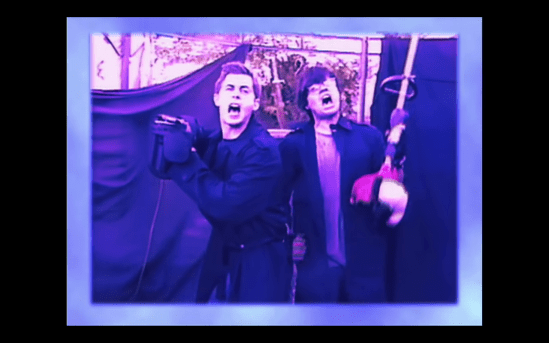
Open your lesson books and get ready to be schooled by the twisted and obscene in Wild Eye Releasing’s re-release of “Sadistic Eroticism” on the label’s Raw and Extreme banner, distributed by MVDVisual. The region free, unrated release is presented in a SOV full frame of 4:3 aspect ratio. Tracking is the least of the problems with this uncouth image presentation rendered from pillar to post quality of warm tinges, severe color corrections required, and gauche details emblematic of cassettes, but all that was Alex Powers intended design to relive in the era of SOV. However, there are some less than stellar, even for SOV, that negate the effort, such as high contrast and poor lighting nearly blanking out darker scenes and the entire climatic end has a neon purple border and the scenes are also recorded in an awful tint of purple, making the entire finale be seen through Grimace vision. To top it off, the jagged opening titles, credits, and crooked visual composites are nearly discernible. The English language mono track is touch and go, mostly go as dialogue wanders into a deaden muffle and is also drowned out by a stock score tracks. There’s not much range or depth as much of the audio is picked up by the poor quality of the VHS handheld mics as exhibited on the special features, which include a director’s commentary and a behind the scenes hosted by that James Coker, who does a pretty good engaging the actors for the in-the-face interviews to explain their characters, scenes, and just overall thoughts with porn starlets and actors milling about or in takes. Sophie Dee’s bosomy eye-catchers, Tori Avano’s star-shaped nipples, Imani Rose’s vivacious sexual appetite and a stockpile of lewd, crude, and nude wets the very foundational whistle of “Sadistic Eroticism” bungled in a sloppy heap of first time filmmaking.

Order “Sadistic Eroticism” on DVD at Amazon!

Sit Back and Enjoy EVIL’s Ride on the “American Rickshaw” reviewed! (Cauldron Films / Blu-ray Screener)


Scott Edwards, a struggling college student, works as a rickshaw runner on the vivacious streets of Miami. When a beautiful woman offers more than just the rickshaw fare for his service, Scott reluctantly accompanies her on a private boat secured at the local harbor for a night of sensual loving, but Scott finds himself in the middle of a voyeuristic scheme by being videotaped behind a two-way mirror and before fully copulating, Scott roughs up the secret cinematographer and the woman escapes. After realizing he forgot the tape, Scott returns to the boat to discover the man dead and all the evidence points to him, framing him for the murder. On the run and being hunted down by Miami PD and the actual killer, Scott embarks on a mission to clear his name, with the help from the woman on the boat, a stripper named Victoria, and a Chinese witch named Madame Luna, during a pivotal time of Chinese mythology that pits good versus evil entrenched sordidly around a renowned televangelist.

Perhaps one of the most offbeat action-fantasy-horror movies to come out of the U.S. in the late 1980’s, the “American Rickshaw” cinematic experience can be a mesmerizing 97 minutes of claptrap theology and clandestine villainy bedim by a witch’s obscured telepathy powers of fire, snakes, and unveiling evil with a human to pig physical transformation. Also known as “American Tiger” in the States and “American riscio” in Italy, the film has the sensation of a blend of various filmmaking abstracts and for very good reason, it is. Notable Italian filmmaker, Sergio Martino (“Torso” and “Slave of the Cannibal God”), helms the cultivation of a big-ticket American production with the ethereal supernatural essence invoked by the Europeans that results into being one of complex whirlwind of a story from a script penned by Martino, Roberto Leoni (“Sex Diary”), Maria Perrone Capano (Beyond Kilimanjaro, Across the River of Blood”), and Sauro Scavolini (Your Vice is a Locked Room and Only I Have the Key”). Dania Film, Medusa Distribuzione, and National Cinematografica serve as the Italian production companies responsible for the “Rickshaw’s” wild ride through Miami heat.

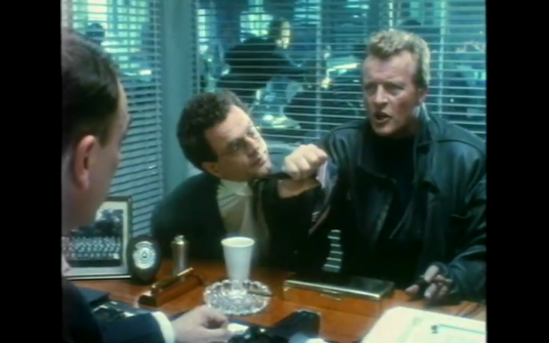
With a premise already on a high bonkers plane, “American Rickshaw’s” curiosity extends to the casting of an American Olympic gold medalist in gymnastics, the perfect 10 recording Mitch Gaylord, is cast as the male lead, Scott Edwards. The physically fit Olympic hero with little-to-no experience or exposure in acting to his name became the story’s prime suspect on the run from not only the law, but a merciless goon embodied by “Elvira: Mistress of the Dark’s” Daniel Greene. Greene already had an established relationship with Sergio Martino, having worked previously with the director on “Hands of Steel” and “The Opponent,” marking “American Rickshaw” as his first collaborated effort in being the story’s villain, Francis, who is seemingly more of the antagonist foe for Scott Edwards than his sect master, Reverend Mortom, a masquerading televangelist seeking to exploit an ancient Chinese relic for nefarious purposes and it’s “Halloween’s” Donald Pleasance to be the face of what would be established as quintessential evil. Pleasance seemingly goes along with the story even when has to snort like a pig during the character’s climatic ending, but is enveloped in a rather mundane, behind-the-scenes puppet master preaching a good biblical hellfire and brimstone game only to be castrated as a backseat bad guy with little to no vice exploration other than swindling the Chinese witch while dolled up in a kimono. The cast rounds out with Victoria Prouty, Darin De Paul, Roger Pretto and Regina Rodriguez and Michi Kobi as the young and old Madam Luna.

I’m one who never likes to research movies before watching them; I believe knowing the film in and out before viewing will more than likely become ruinous toward the quality of perception and cement a foundation of fixed judgement before the opening title credits roll. I don’t even like reading the film’s synopsis for the fear of spoiling too much on too little so I sat down with “American Rickshaw” knowing virtually nothing about the Marino anomaly and coming out relatively pleased, strangely piqued, and from start-to-finished bewildered. Off the bat, “American Rickshaw” could be grossly compared to be the East Coast variation of or, perhaps, the Italian answer to “Big Trouble in Little China” that channels less Chinese mysticism for more mysterious thriller. There are some noticeable similarities between the two films, such as for the obvious uncanny powers of Madam Luna, and then the not so obvious, but maybe more of a referential nod to John Carpenter’s film with the main character sporting a graphic tank top of a tiger that’s familiar with Jack Burton’s graphic yin-yang tank top, the young and old versions of Madam Luna resemble the young and old versions of Lo-Pan, and the scene where a prominent character gets runover by a big, red semi-truck. You know, the kind of rig Jack Burton mows down Lo-Pan with? “American Rickshaw” pales in comparison or, perhaps, shouldn’t be compared at all as Martino’s spellbinds his work by riddling it with cross cuts that attempts to discern solely by optics that swiss cheeses your mind as it tries to fill in the gaps of where the hell did that snake come from? Why did the key burn through his hand? Why is the stripper key to Scott’s Journey? What’s the reason behind Scott’s year of the tiger birth date significance toward his impelled Chinese zodiac destiny? There lies so many questions, but very few are answered; Yet, “American Rickshaw” is the wonderland tour Martino fabricates as some dysfunctional vision quest mapped with spontaneous witchery, horoscope horrors, and a devil pig in human clothing.

As the second half of the inaugural releases of Cauldron Films, “American Rickshaw” receives a limited edition Blu-ray release with a 2k restoration scan from the original camera negative. Since the review is based off a Blu-ray screener and not a physical copy, only 1500 copies being release, the A/V aspects of the package will not be critiqued, but this unrated 80’s hybrid action-fantasy-horror will receive the works, including a limited edition high quality slipcase with new artwork by Mattias Frisk, a reverse covering featuring the Italian artwork, and a booklet inside with writings by grindhouse comics writer and Tough to Kill co-author, David Zuzelo. The picture will be presented in a widescreen, 1.66:1 aspect ratio, with an English language LPCM dual channel audio track with optional English SDH subtitles. Bonus material aplenty with an one-on-one interviews with director Sergio Martino and production designer Massimo Antonello lamenting about the film while as providing a stark difference between Italian and American filmmaking in the late 1980s, a then and now look at filming locations, The Production Booth Podcast, including commentary from Samm Deighan and Kat Ellinger discussing the zaniness of “American Rickshaw,” and an image gallery. Distinct beyond anything else you’ll ever see and indelible with solid practical effects, “American Rickshaw” deserves the upgraded, horror-marketed update set apart from the poorly sultry, softcore porn “American Tiger” U.S. release that stiffens the story’s true self on retail shelves.

Nothing Will Stop EVIL From Being EVIL! “Chaos” reviewed! (Dark Force Entertainment & Code Red / Blu-ray)


Visiting home on break from UCLA, Angelica visits her close friend, Emily, at her parents’ secluded country home. With nothing else better to do in the small rural town just outside Los Angeles, the two teenage girls set off early to attend a local rave deep within the woods at the reluctance of Emily’s overprotective parents and to kickstart what could be a drink and dance fueled night, they aim to push the limits and find a drug pusher to score ecstasy as the first priority to make a dull party fun. They run into Swan who promises the best ecstasy as he leads them to his cabin away from the rave. What Angelica and Emily find is themselves caught in the middle of a ploy by a sadistic gang lead by the ruthless Chaos, whose wanted in 4 states for his barbaric and merciless methods and looking for something fun to play with and torture. The cat-and-mouse game with the girls makes an interesting turn when the gang arrives at Emily’s parents’ house when their van breaks down and the parents suspect them in Emily’s sudden disappearance, veering the night into unreserved chaos.

“Chaos” is the intended true love song remake to Wes Craven’s 1972 sadistically vile “The Last House on the Left” that’s co-produced by Marc Sheffler, who play Junior Stillo in Craven’s film, and, at one time, Krug himself, David Hess, was attached to the project. “Chaos’s” conception is the brain child of Steven Jay Bernheim and David DeFalco, with the DeFalco wielding the hammer of writer and director, and the pair have collaborated a few years earlier on another DeFalco directorial, a comedy horror entitled “The Backlot Murders.” In the eyes of the filmmakers, the amply charged exploitative “Chaos” shares more in common with the original “The Last House on the Left,” despite having no official connection other than the ties with Marc Sheffler, and that the more commercialized remake of the same original title, released four years after “Chaos” in 2009 by Universal Pictures Home Entertainment (UPHE), lost that raw camerawork and visceral storytelling that depicted the abhorrent human malevolency that’s capable from within us all. “Chaos” is essentially a self-funded project from Steven Jay Bernheim’s Bernheim Productions.

Though Sage Stallone, the late son of the iconic action movie star, Sylvester Stallone, receives front cover bill due to, in perhaps, his name alone, but the film is called “Chaos” which centers the story around the “Heat” and “Laid to Rest” actor, Kevin Gage. In some kind of cosmic circumstances in regards to recent events, before the Kelly Preston settled into married life with John Travolta, she was once wedded to Gage, marking “Chaos” as a timely film from 2005 and a just so happened upon my lap occurrence for this review. Yet, Gage, a seemingly giant of a man with a resemblance build toward WWE/WWF’s legendary Bill Goldberg, utilizes his intimidation appearance, transferring all the good and gentleness that’s described of him from fellow costars into a pure embodiment of evil whose misogynistic, bigoted, a killer, and just a downright bad guy giving way a testament to the character’s adverse moniker. Gage brings to the table a formidable tone, viperous wit, and a clean cut brutality in the most sordid and unforgettable ways that makes him stick out as portraying one of the most inhumane villains in the last 15 years of the cinematic universe. Chaos’s infamy is by ingenious design from the Marc Sheffler and David DeFalco collaborations who, along with the actors’ faux backstories, meticulously craft each of the gang’s personalities. Sage Stallone’s Swan seems like a similar parallel version of Sage in reality as a chain-smoking, reserved individual sans the perverse context. “The Love Witch’s” Stephen Wozniak is a complimenting character that offerings a different personality with Frankie and Frankie’s feels like a two-bit slime ball with long, greasy hair, an unkempt beard, and a scrawny figure but can produced an evil that’s step or two back from Chaos; Frankie is a character you’ll love and you’ll love to hate, making Wozniak’s performance singular and one of the best in the film. Then, there’s Daisy, the only female of the group though more butch than delicate, and Kelly K.C. Quann (“Baberellas”) adds a dose of Southern inhospitality to Daisy’s brutish beauty. “Chaos” rounds out with a bunch of victims; hell, everyone’s a victim, but the cast includes Deborah Lacey, Scott Richards, Maya Barovich, Chantal Degroat, Ken Medlock, and Jeb Barrows.

“Chaos” absolutely equates toward the unflinching callous themes from “The Last House on the Left” of violence amongst various degrees of people, youthful ingenuousness, and systematic racism with the latter being extremely relevant and on point, years earlier, of the current social climate in America. Yet, with any remake, “Chaos” yearns to stand on its own by instituting an unmeasurable sense of graphic violence that will churn stomachs, advert eyes, and belly-up the throes of disgust. For a good portion of “Chaos,” the exploitation narrative is fairly run-of-the-mill, damn near walks the same line as Craven’s story, with a sadistic gang kidnapping two young women for their own amusement only to then wander unknowingly into the arms of retributive parents, but two scenes sticky out and go beyond the course of customary exploitation fodder and into necrophilia, mutilation of body parts, and a perverse way to kill another human being with such tactless intentions that the act makes the other gang members splay questions, doubt, and fear amongst their faces. The film opens up with a written warning, not so much on the intense scenes themselves, but resembling more of a public service announcement for parents that what you’re about to see does and will happen to the youth of land, but these shocking scenes are just that, for shock value, and that a small percentage of people partake in such grisly matters. “Chaos” is violence upon violence, leaving no room for conscious absolving resolutions in the unofficial capacity of a remake that pungently separates itself with extreme violence and that’s saying something considering Craven’s visceral first course.

As the bestow flagship release of Dark Force Entertainment, “Chaos” arrives onto a deluxe special edition Blu-ray in association with Code Red and distributed by MVDVisual. Transferred through to a 1080p, high definition scan, from the original 35mm negative, complete with extensive color correction, and presented in a widescreen, 1.78:1 aspect ratio. “Chaos” doesn’t look very chaotic anymore in regards to the image quality; instead, the before stardom cinematography by Brandon Trost (“Lords of Salem” and “Halloween” remake) creates the voyeuristic position of the audience is now visually distinct with stable color markers that are more in tune with the premise’s raw approach. The English language dual channel stereo mix renders softer than desired, especially in the first act as Angelica and Emily converse through the woods. The teenagers dialogue are nearly mumbling on their rave trek with depth issues perplexing their relation to camera. Range seems to be well faceted: rustling leaves through the woods, the clank-clunks of a rustic van, the ground skirmishes. All seem to exude exact decimals of their intended value. Even the firing of firearms has a pleasantry about it. The special features include brand new interviews with co-producer Marc Sheffler, who goes in-depth pre-production and production while also touching upon his other interests before concluding with director David DeFalco and a man in a banana suit making an appearance and offering up dick jokes, and actor Stephen Wozniak with a fountain of information about his time on production, his fellow cast, and about the filmmakers as he is being interviewed in front of a locomotive museum. I love the absurd, obscurity of it all. The bonus material rounds out with commentary from the director and producer as well as the original theatrical trailer. The lewd and radical “Chaos” has engrossing roots of violence that burgeon into realm of rarity or, if not, into sadomishsim extended by the filmmaker’s deepest darkest desire, but what’s transpires on screen is difficult to look away from which begs the question, is it morbid curiosity or is there something far more sinister within us all?

Own “Chaos” on on the new “Blu-ray” release!

EVIL’s Greatest Trick Was Convincing The World Giallo Was Dead. “Abrakadabra” reviewed! (Cauldron Films / Blu-ray Screener)


In Milan 1951, a prestigious magician, Dante the Great, is tragically killed when a deadly trick goes wrong. Fast forward 30 years later, the magician’s son, Lorenzo Manzini, has trouble finding his own success following his father’s footsteps as a struggling magician. The night before his grand debut, a woman has been gruesomely murdered on the very stage his father had died. As a compulsive gambler and an excessive drinker in over his head in debt, Manzini goes on with the show, but the events following his performance inspire a grisly, sadistic murderer to uses magic tricks to kill and point all evidence toward him. Hounded by a mysterious, chain-smoking detective, a frantic Manzini must split his efforts toward his own investigation into the murders, but as the bodies start to pile up and the evidence grows even more against him, there may not be anything left in Manzini’s bag of tricks to prove his innocence.

In the old traditions of an Italian murder-mystery, “Abrakadabra” is the 2018 released giallo inspired film from the Argentinian filmmaking brothers, Luciano and Nicolas Onetti, along with Carlos Goitia serving as the third wheel scriber on the script. The trio have worked previously on one other project from 2017, another horror of course, with the haunted ruins premised, “What the Waters Left Behind.” With the Onetti’s being brothers, their collaboration runs deeper, sharing an affinity for the genre that has inspired the duo to collaborate on another giallo thriller, “Francesca” in 2015 and “Deep Sleep,” where Nicolas served as producer to Luciano’s writing and directing duties. “Abrakadabra,” as well as “Francesca,” are not only far cries from the haunting and terrifying reminiscence of the ruins in “What the Waters Left Behind,” but also varies in direction, cinematography, and production design that more in lines with giallo hallmarks, such as extreme closeups, awkward camera angles, and posh interiors. “Abrakadabra” is a production of the Nicholas Onetti and Michael Kraetzer New Zealand founded company, Black Mandala, and another Nicholas production company on a more localized level with Guante Negro (Black Glove) Films co-founded with brother, Luciano.

Despite being dubbed in a fine-tuned homage of an Italian overlay track, the actors involved are hail from South America, as where the film is shot. The story centers around Lorenzo Manzini, played by German Baudino (“2/11: Day of the Dead”), and Baudino shepherds Manzini toward the brink of desperation, spinning out of control from the malevolent forces that seem to be binding his hands to gruesome murders. Baudino captures the marks of the giallo fervor in his animated performance, especially when running through a memorial park with arms flailing and a streak of fear across his face, but since it’s a murder mystery swarming around Manzini, the magician’s encounters with other rich characters comes key to unravelling Manzini’s dubious circumstances. His lovely assistant Antonella (Eugenia Rigon), the lurking chain-smoking detective (Gustavo Dalessanro), and a hospice-housed convicted murderer (Abel Giannoni) become cryptic pawns that turns “Abrakadabra’s” into a deadly game of chess soused deep into the thralls of a calculated whodunit. The remaining cast, including Clara Kovacic (“Jazmin”), Ivi Brickell, Raul Gederlini (“Francesca”), Pablo Vilela, Alejandro Troman, and Luz Champane, are perhaps the weakest link in the chain to hold “Abrakadabra” back from being a well-rounded giallo. There presence seemingly come into the fold without much creditability to their substance toward the story are, some of them, are easily dispatched with the same loosy-goosiness that firmly dilute their characters.

You have to give the Onetti brothers tremendous credit. Their attention to detail techniques, production design, and overall wardrobe schemes accomplished a toppling feat in taking the natural aesthetics, textures, and sounds of an Argentinian setting shot film and transformed all the blatant aspects to resemble an Italian giallo filmed in Italy from the 70’s or 80’s. Yet, does the veneer alone make “Abrakadabra” a good giallo film or just an immaculate carbon copy? The Onetti’s certainly know enough to exact a perfect replica as seen in “Francesca,” which was my first experience with the Onetti brothers, but “Abrakadabra” is a step backwards form “Francesca” from a story standpoint with some mishmash editing and character underdevelopment around the midsection of the second act that immobilizes the story from going forward properly, leaving the lead character Manzini in a circular rut rather than a tailspin to the climax. The prologue of Dante the Great’s accident and the twist ending that harks back to a opening Harry Houdini quote, “What the eyes see and the ears here…the mind believes,” solidifies as the best riveting acts of the Onettis’ film that becomes equalized negatively by a drab dynamic interior. In any case and though an Argentinian production “Abrakadabra” is an invigorating slice of Italian cinema with razor-sharp characteristics and a well shrouded and gloved killer.

Open sesame on the inaugural, limited edition Blu-ray, release of “Abrakadabra” from the new genre distributor on the block, Cauldron Films, who plans to release a full slate of cult films from 70s and 80s in the coming months. Limited to only 1000 copies, the Blu-ray release will include inserts of promotional artwork, a limited edition high quality slipcase with original poster art, and a CD soundtrack with music by Luciano Onetti. However, I won’t be able to review in full the finished package or the audio and video qualities as this review is based off a disc screener, but I can tell you reaffirm that DP Carlos Goitia’s scenes are amazing well established, lit, and a glimpse into the past. The Luciano Onetti score can be invasive at times, but a pure product of the electro-synth rock that goes hand-in-hand with the giallo cinematography. Audio options include an Italian 5.1 surround sound, and an Italian and English 2.0 stereo that come with optional English and Spanish subtitles. Accompanying the unrated 70 minute film is the theatrical trailer and raw behind-the-scenes footage without subtitles. As Cauldron Film’s maiden release, “Abrakadabra” is anything but hocus-pocus with a bloody homage to Italian giallo films complete with a vital synthesizing soundtrack and a shocking twist finale.

“Abrakadabra” Available on Prime Video!