Staying in the Closet Can Lead to an EVIL Series of Events! “The Latent Image” reviewed! (Cinephobia Releasing / DVD)

Out today on DVD “The Latent Image” from Cinesphobia Releasing!

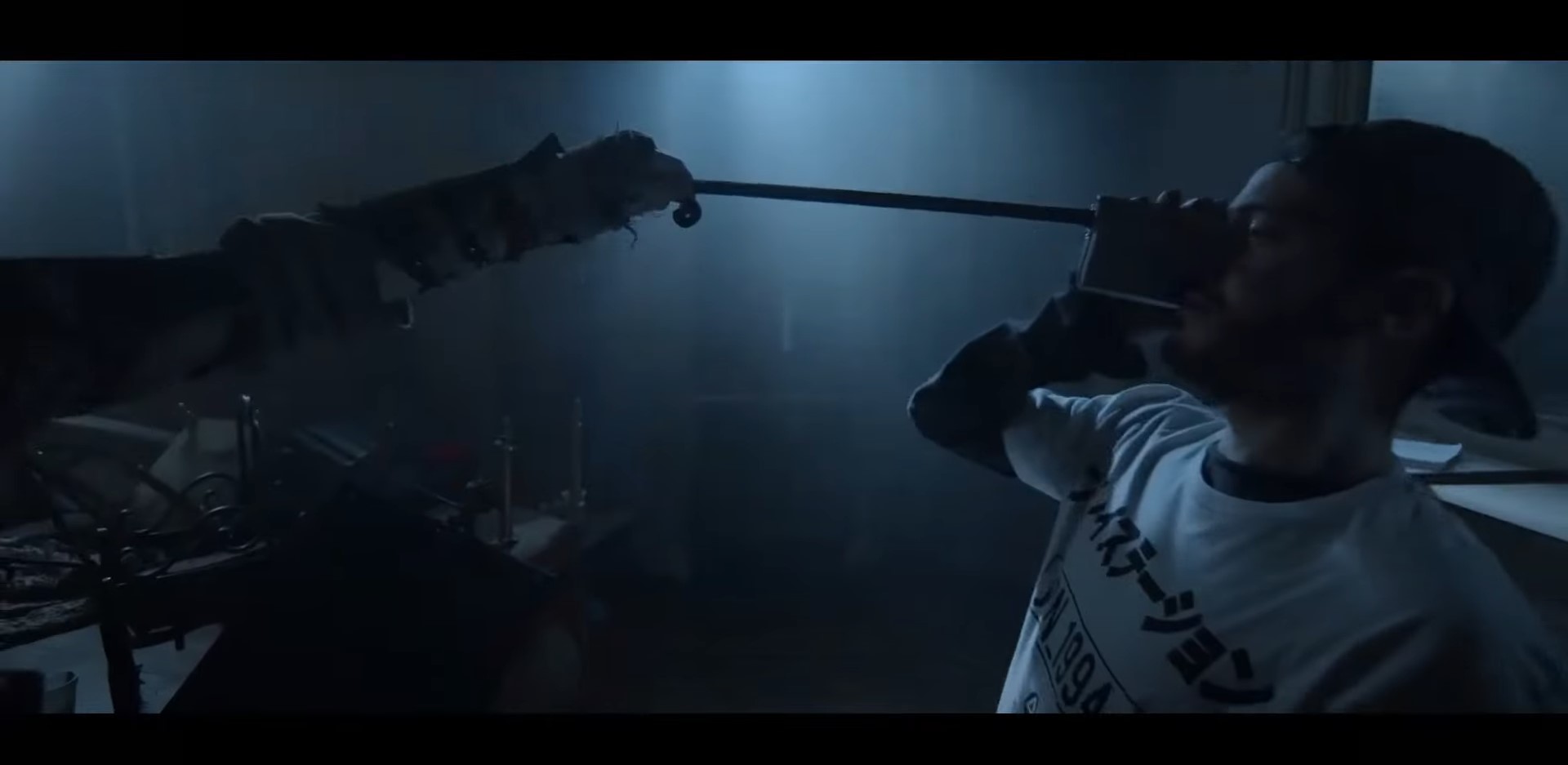
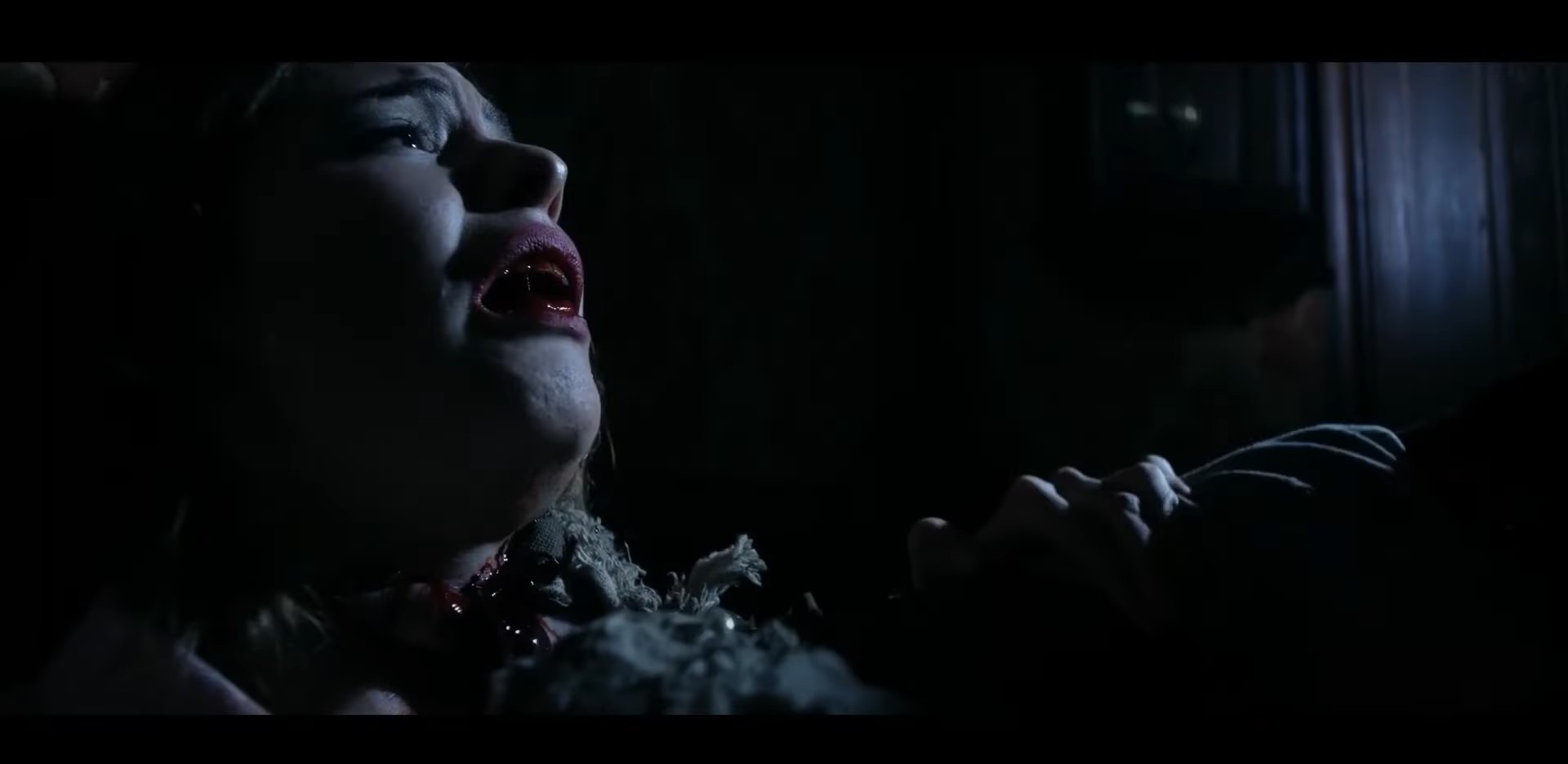
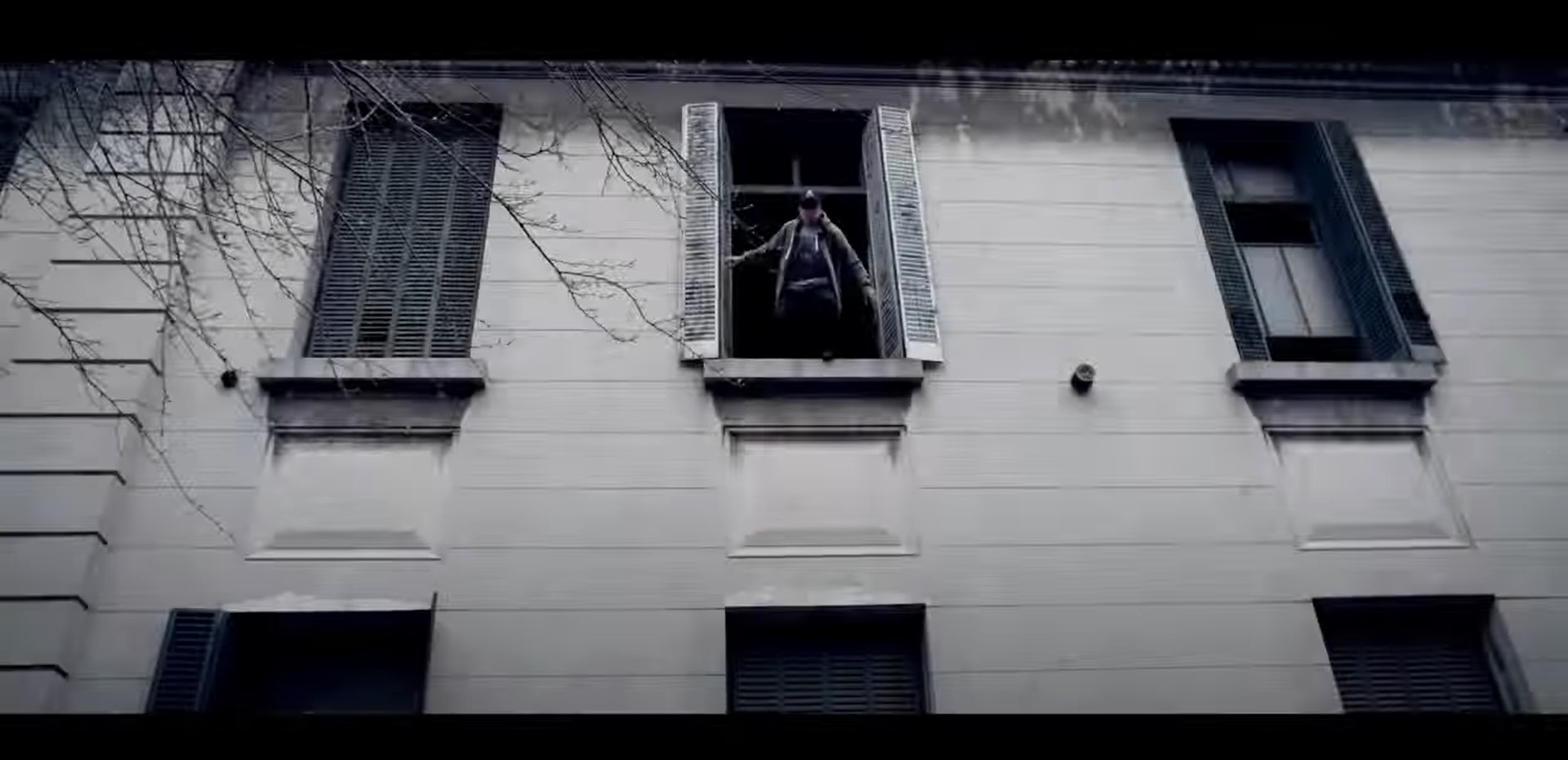
An aspiring novelist isolates himself in a secluded cabin to write his work-on-progress thriller without distractions, especially avoiding he contentious ones with his longtime boyfriend. Working through the night hours on the precipice of a storm, a mystery man drifts into the cabin, injured and claiming car trouble. After letting him stay the night on the couch and knowing he should ask the drifter to leave, the man’s rough allure instills deep desiring dark fantasies to bubble up to the surface that result in keeping his lingering presence around while also the experience doubles as subject inspiration for his novel. Yet, there’s something off about his unexpected and unusual visitor that lends to curiosity into what’s being hidden or being unsaid. The drifter’s trunk becomes an object of obsession that turns into wild speculation. Fear and fantasy collide into an explosive and destructive cat-and-mouse game of downlow and deadly secrets.
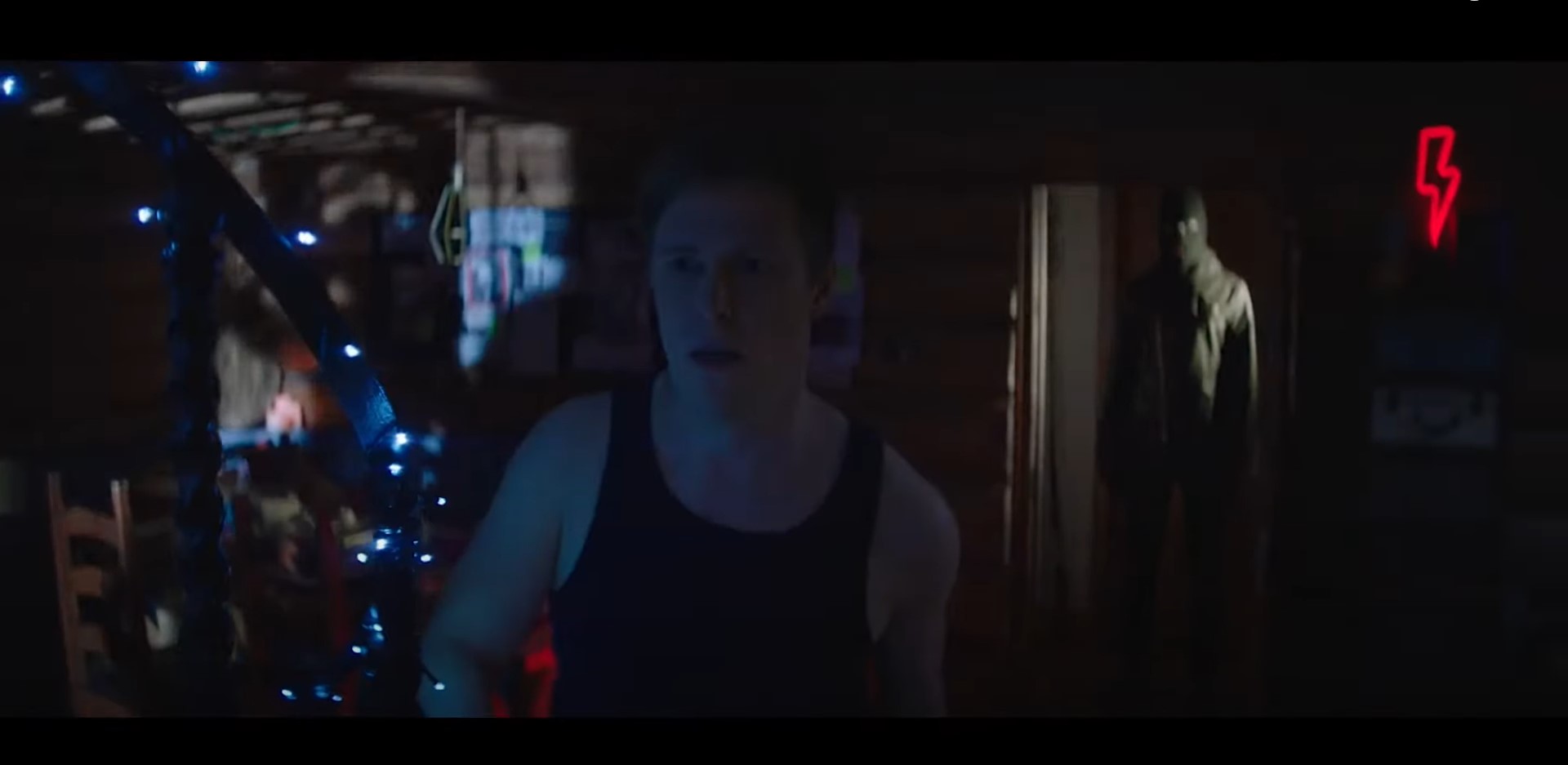
Based on the 2019 short film of the same title, writer-director Alexander McGregor Birrell (“Braincell,” “Sleepaway Slasher”), alongside co-writer and star Joshua Tonks, return to “The Latent Image” for a 2022 full script treatment to flesh out a fleshy grass isn’t always greener on the other side homoerotic thriller.  “The Latent Image” is Birrell’s third feature length film of essentially is Joshua Tonks inaugural writing and producing credit into the United Kingdom production that clashes tantalizing and dangerous one-time temptations with the safety and security of routine and longevity woven out of being inside a complicated gay relationship that stings with old systematic-induced worries and consequences.  Latent Image defines as an exposed picture or film not yet developed and Birrell and Tonks use that to purposely shield viewers from the utmost truth until the petrifying picture is clear.  Latent Image LLC in association with the queer community storytelling serving June Gloom Productions are the picture’s production handlers with the latter company’s Brandon Kirby and Michael Varrati as executive producers and Tonks and Birrell co-producing their debut feature collaboration.
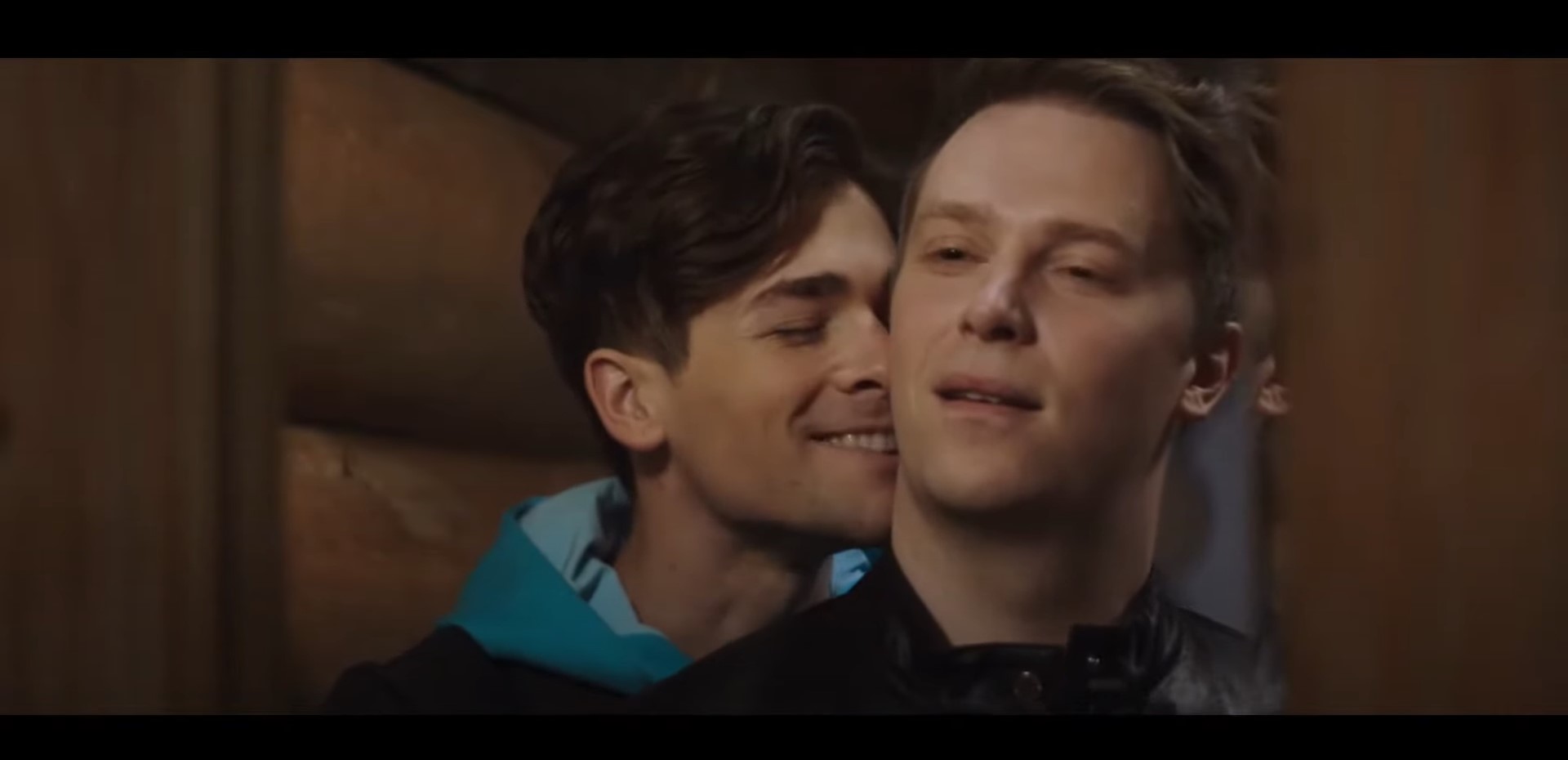
Being Joshua Tonks’s grandstand into his first feature production and as the lead character, the British-born, Vancouver film school-trained actor reprises his short film part with only two significant differences:  one being a principal name change from Robert to Ben and the other in providing Ben with more substantial backstory in the form of reveries or creative abstractions of a linear trickster narrative.  Ben’s old school, a reflection seen through his love for old photography without a display screen, his typewriting of the novel, and filming on celluloid film stock with a Super 8 camera.  This affinity for the antiquated matches his sexual stigmas, a flaw that shepherds in more harm than good.  Tonks readily handles Ben’s technological quirks as well as deepen his character’s philandering fantasy life with sexual daydream and night terror trances of being pursued, abused, and enjoying it.  Tonks works off the more indelicate stranger-danger of fellow Vancouver film school graduate Jay Clift.  Long hair, leather jacket, rugged approach, Clift in the role simply known as The Man portrays patience as weapon to wield to win over the quasi confidence and trust of the lonely and relationship confused novelist with an active imagination, a deadly combination to be caught with your pants down.  Clift becomes the character interloper in Ben’s life in more ways than one, some more subtle than others, and equivocally provides baited lure to either seduce the novelists or setup him for a fate far worse.  To complicate matters, Ben’s boyfriend, who he has a current agitated relationship with and viewers will initially think is safe and cozy back at their abode, will eventually enter the picture with newcomer William Tippery in the role to complete the all-male, three-man cast.
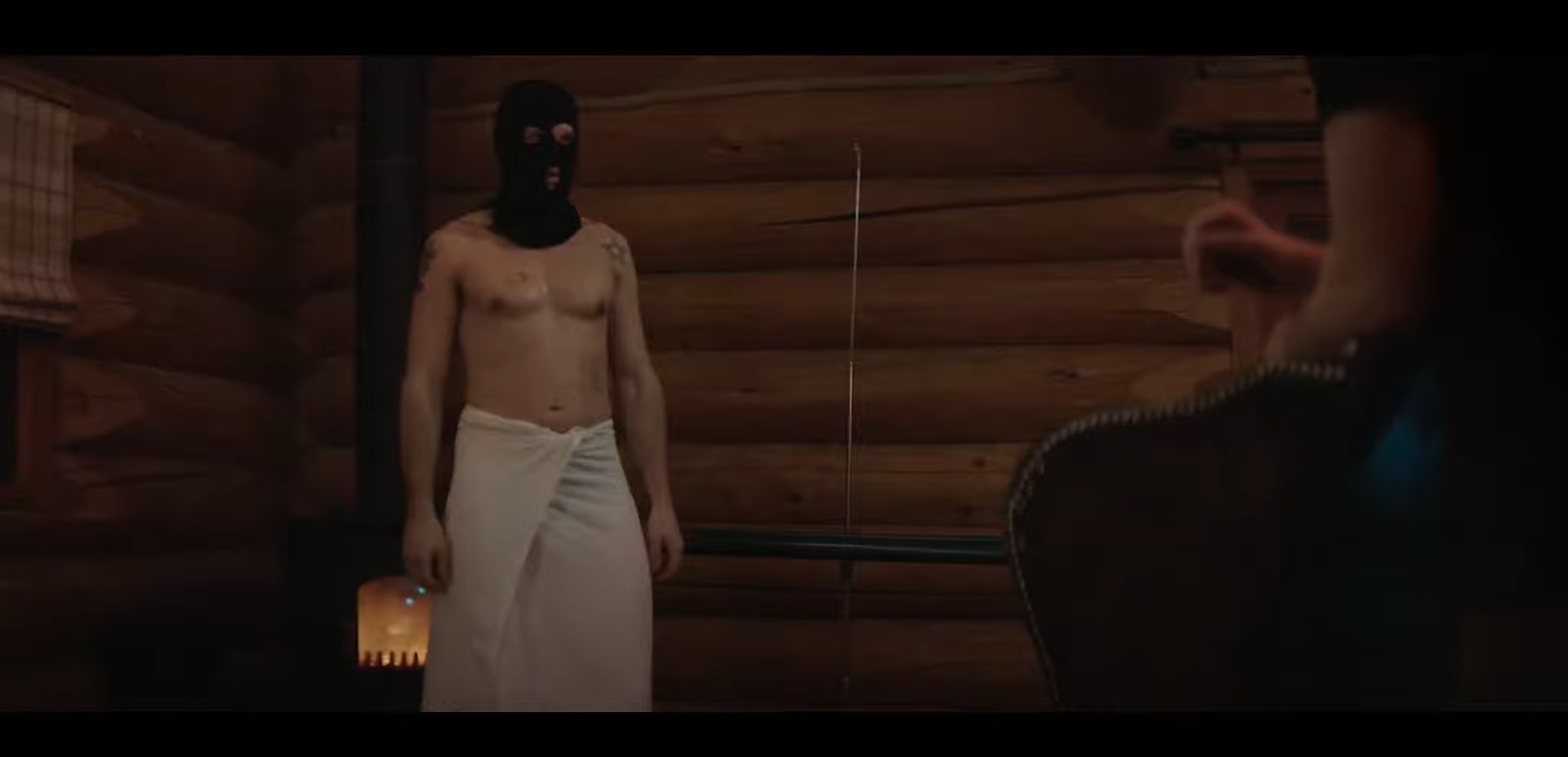
“The Latent Image” plotline doesn’t justify Birrell’s picture as anything else but another stranger showing up at cabin in the woods thriller.  However, beyond the shallows of the film’s surface level tension are deeper waters surrounding Ben’s parting of pathways.  The novelist not only struggles to conjure up a decent spinetingling narrative, but he also struggles personally with an uncertainty of where he fits into his relationship with at-home boyfriend Jamie and with this new, dark fella wandering into the cabin in rake portance.  From the beginning, Birrell and Tonks often visits Ben’s unconscious chimera but also often feels very real in its merge of reality and fantasy of what Ben’s sometimes wishes would happen, but don’t expect this thriller to be a based in psychosis.  “The Latent Image” is not a mental health movie of one man’s isolation snaps his baseline reality.  That would have overdone, overcooked, and overserved with stale bread and flat soda.  What “The Latent Image” taps into is not the age-old tale of a drifter’s in doubt motivations but rather a fear of being found out or fear of oneself when they themselves are unsure of who they are as a person and that can be a scary thought to let the imagination run wild. 
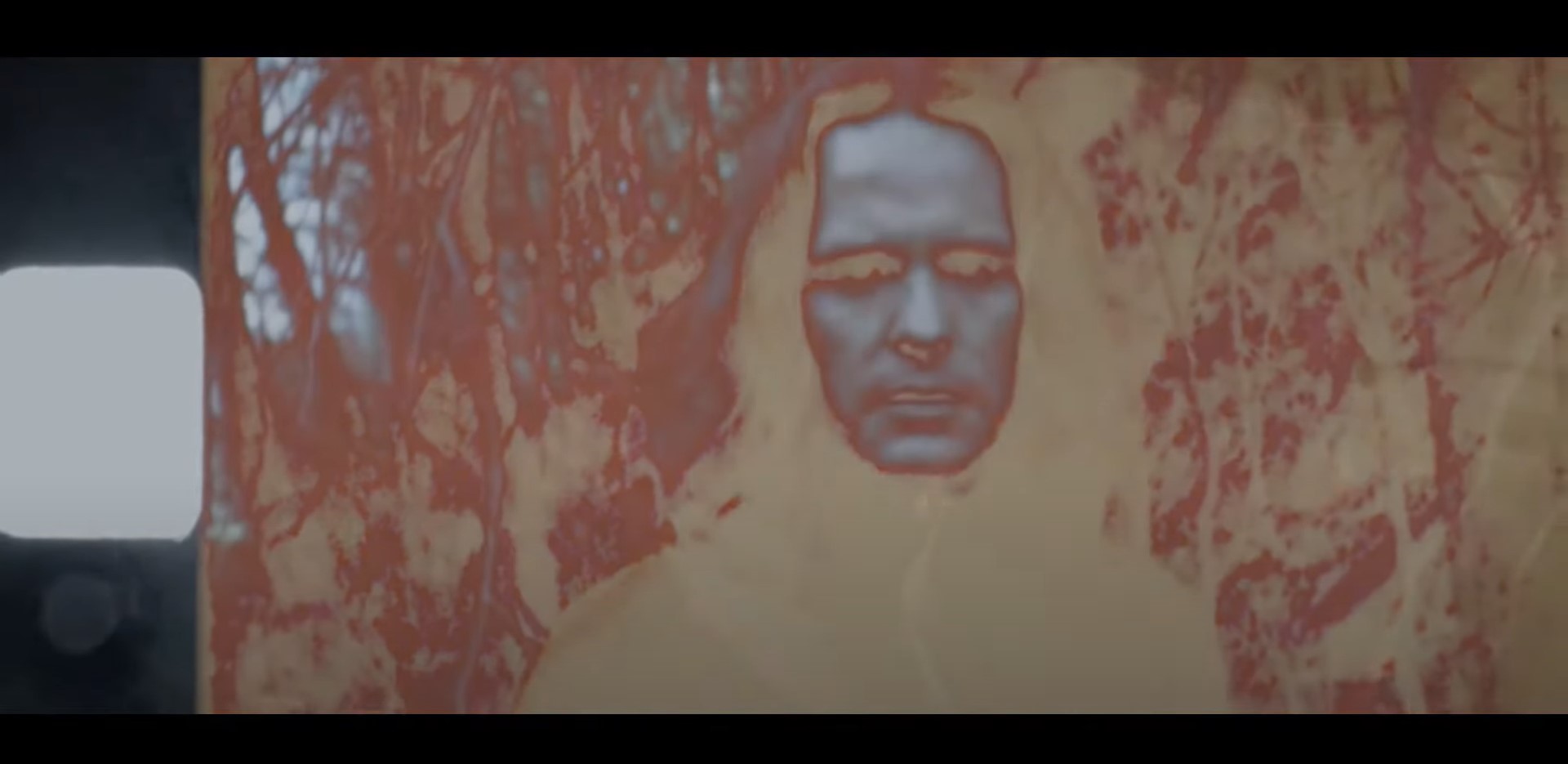
“The Latent Image” lands a debut distribution deal with the Philadelphia based Cinephobia Releasing.  The single layer DVD, arriving on retail shelves September 12th, is a compressed MPEG presented in anamorphic widescreen 2.39:1 aspect ratio.  Between the use of anamorphic lens, split lens, Super 8 reverse stock, and a ton of mood lighting, “The Latent Image” really pops cinematically with a variety of visuals and looks that can induce a breadth of emotions.  For a DVD presentation in an age where Hi-Def continues to the upward climb, the Cinephobia Releasing has tremendous sharpness and detail inside and out of the fuzzy warmth and often the vividly brilliant, focused lighting that induce back and front shadowing, decoding at average of 8 to 9 Mbps that eliminates any prospect of compression complications.  The English audio options include a Dolby Digital 5.1 surround sound and a Dolby Digital 2.0.  The 5.1 trumps the 2.0 In offering much environmental elements of rustled foliage and depth of character actions.  Dialogue conveys strongly, securing its spot Infront of the other tracks where depth allows.  English optional closed caption subtitles are available in the setup menu.  Special features include an audio commentary with director Alexander McGregor Birrell and stars Joshua Tonks and William Tippery going over their mindset of the characters, background, and visual and stylistic choices in an enlightening discourse, the 2019 short film “The Latent Image,” the audio commentary for the short featuring just Birrell, and other Cinephobia Releasing trailers.  The 83-minute film is released not rated and has region 1 layback, untested for other regions.  Well executed indie suspenser with a subtext clout to one’s essential nature and a smartly planned story has exposed “The Latent Image” as impressively top-notch and worth seeing. 

Out today on DVD “The Latent Image” from Cinesphobia Releasing!

We Are All Just Playing Characters in an EVIL Movie! “Virtual Reality” reviewed! (Artsploitation Films – Kino Lorber / Blu-ray)

Believe Everything You See.  “Virtual Reality” on Blu-ray at Amazon.com

A horror movie about a supernatural Celtic killer has just wrapped production and goes into post.  The cast and crew what to succeed at all costs, not only in the movie but also in their stagnant careers.  However, the director, Matias, craves fame and legacy to the point of committing his soul to whatever it takes to cement his film in acclaimed success.  Matias and the arcane producer form a pact with a diabolical computer program and artificial intelligence that’ll bind their movie to esteemed infamy as well as bind their cast and crew to their characters.  When Matias invites select cast and crew to a private screening at his home, they realize the movie has scenes of their characters that weren’t shot during principal photography and that whatever happens to their characters in the movie, being chased by the Celtic killer, will happen to them in real life.  The only way to survive the movie is to last the full 90-minute runtime.

Hailing from Argentina, the South American country that brought us “Terrified” and the “Plaga Zombie” films, comes another tale of terror with the metaverse horror “Realidad Virtual,” aka “Virtual Reality.”  The 2006 “Director’s Cut” and 2009 “Breaking Nikki” shot caller Findling continues his traipse through psychotronic land with a story that couldn’t be more relevant today than if artificial intelligence synthesized the narrative itself out of binary ones and zeros.  The script comes from Findling and cowriter Lourdes Prado Méndez, an Argentinian romance novelist.  Having virtually no romance in “Virtual Reality” whatsoever, the 2021 film stretches Méndez’s range into crafting characters with a foot in two planes of existence while under immense fear and pressure to survive a supernatural slashening.  “Virtual Reality” is produced by Gabriel Lahaye under Lahaye Media, who has supported and collaborated on a number of Findling’s previous films, such as “Breaking Nikki” and “Impossible Crimes,” and is also a production of Wit Producciones, Cine Argentino, APIMA, FilmSharks, and INCAA of Argentina.

The story circles around a selectively small and independent film cast and crew finishing up a concluding scene of another to-be-forgotten horror movie by director, Matias (Guillermo Berthold), who has had multiple failed films before now.  Yet, the production team remains positive, hopefully the film with jumpstart careers as desperately expressed through the first act, especially with the film’s final girl star Guadalupe (Vanesa González, “Hypersomnia”), or Guad as she’s called by her friends, and her director’s assistant brother Pablo (Santiago Magariños).  Berthold plays the sneaky-sadistic director about as a well as most with a fervent penchant to do anything for his creative filmic art even if that means colluding with a shady, mysterious producer in César Bordón (“She Wolf”) whose performance’s obscured or lack of purpose is due in part to the character’s flimsy connection to the diabolical computer program.  Bordón can’t help but just be an inhuman human, violent by necessity instead of being violent with a purpose.  The producer seeks success for every single one of his films with a subsequent plotted course for the next idea – whether be a sequel or a brand new story – yet his connection to the network of evil of unexplained runes, sporadic pixilation, and artificial intelligent adaptations that can re-edit recordings into a new and inexplicable account of the story has been sorely severed in regard to understanding his background and his motivation of mortal sacrifice for movie fame.  Other connects that were left on the cutting room for, so to say, were between the siblings Guada and Pablo and their dying mother in what I suspect was an attempt to shove the sister and brother some sympathy, clearing the way for the two to be the unambiguously heroic duo, but the scene with their mother on her deathbed offered little-to-no compassion, producing a gelatinous lasting effect in what was a more visual one-off of two children spending the time they have left with their mother versus an incentive or arc scene that would hopefully rally up character expectations to look after each other.  “Virtual Reality” rounds out the cast with Frederico Bal (“Impossible Crimes”), Francisco González Gil (“El último zombi”), Sofia Del Tuffo (“Luciferina”), and Christian Sancho in a Johnny Depp inspired dressed part of a self-centered actor with a suspected pill addiction. 

As far as plot designs go, “Virtual Reality” has an interesting concept that involves filming two different harrowing situations and joining them into one parallel plight with the actors reacting more to the events happening on the television screen, which in itself becomes living, breathing character of sinisterism, rather than what’s happening outside the box in the present.  Both realities are virtually live and in play for their very being and whatever happens in one, affects the other.  “Virtual Reality’s” state of duality, not only in character, but also in linear lines of an alternate universe with lifeline connections, is smart, fresh, and terrorizing to know that your life depends on an A.I. created character coursing through a maze for their very lives.  This mirror-meta-effect continues to evolve as the story plays out that leave survivors questioning reality and questioning their individuality of some higher force that has used them like some free-thinking avatar for filmdom fame.  This is where “Virtual Reality” starts to become complicatedly crisscrossing as instances of a distorted reality spiral down a rabbit hole of what we thought was true.  Findling is nonapologetic for his layered universes that spins and wraps a narrative around another in what is a show of forced fantasy subsisting in that gray area of reality.  The Celtic slasher storyline is just a sublevel to the story’s higher level view that defines greed and worth amongst people longings for more and also models itself to reflect that thin line some people cross between reality and fantasy, as foreshadowed early on into the film during the shooting of the final girl scene when method actor Julian gets into the headspace of his Celtic killer character and really starts to strangle Guada in a climactic moment.  By the finale, you’re comprehensible pencil might have wandered off the connective dot trail in trying to see the bigger picture of Hindley’s meta-movie but “Virtual Reality” is innovative tech horror that just requires a smidgen of tweaking to be impeccable.

2020.  That was the last time I reviewed an Artsploitation Films title.  The long 3-year hiatus was due in part of King Lorber purchasing the boutique Philadelphia label that specialized in bringing independent global horror to the U.S.  Artsploitation Films and Kino Lorber continue that pursuit with Hernán Findling’s “Virtual Reality” from Argentinian now on a Stateside Blu-ray disc courtesy of the joint label.  The AVC encoded, 1080p High-Definition, BD25 is presented in a widescreen 1.85:1 aspect ratio.  Cinematically, the format storage is able to capture the true quality of the image with hardly any compression artefacts.  There’s not a ton of visual augmenting but what’s presented is a draining of color to a near black-and-white image with pigmented primary color lighting to give the scenes a dash of color that’s in contrast to the moderate-to-heavy in-movie, trope-heavy lack of lighting to create deeper shadows for that gloomy horror movie effect of interior trapped victims running for their lives in the dark.  Two Spanish language audio options are available on the release, a DTS-HD 5.1 Master Audio surround sound and a DTS-HD Master Audio 2.0. The 5.1 track has good balance between the ambient, soundtrack, and dialogue tracks albeit a little heavy on the score to clutter, at times, a clear exchange, especially when everyone’s yelling at the television set.  Other than that, no technical issues throughout the multi-channel output. English subtitles run at startup but can be turned off.  The unrated, region A encoded release has a runtime of 84 minutes but doesn’t come with a menu for special features; however, there is the film’s trailer and, if you stay tuned after the credits, there’s a bonus scene where you, the viewer, becomes the star of your own movie.  Artsploitation Films is back, baby!  Courtesy of Kino Lorber, “Virtual Reality” is barely tapped meta-horror, that has become all the craze nowadays, and Hernán Findling unboxes that fine line between real and unreal to only merge them together to be one and the same in a twisted interpretation of when art imitates life. 

Believe Everything You See.  “Virtual Reality” on Blu-ray at Amazon.com

Open Up Your Mind to EVIL! “Conjuring the Beyond” reviewed! (DVD / Breaking Glass Pictures)

“Conjuring the Beyond” on DVD at Amazon.com!

Divorced and left to wallow in her own self-pity, Wanda Fulcia moves into her brother and wife’s house but her inability to secure a job and act responsible has proved difficult with her hosts as she continues to ask for favors, such as borrowing her brother’s car to drive to a paid sleep study in the middle of a nearly deserted small town.  Dr. Pretorious, the head clinician of the study, seeks to hypnotize his four, sleep paralysis unaffected, participants to open their portion of the brain to produce night terrors and sleepwalking in order to treat the condition.  What the participants are really opened to is a nightmare state of being paralyzed while aware of an old, animalistic hag surveying them as they lie powerless to move.  At dawn, they all convey recalling the same dream and realize one of them is missing.  The recorded video shows the missing participant sleepwalking from his room without a trace of where they’ve gone.  The next night, the ordeal repeats itself and another member of their party goes missing.  Wanda and those left must uncover the mystery behind their night terrors before they back to sleep again. 

Borrowing from the tall story superstitions that sleep paralysis was the work of demons while also plucking ideas from Stuart Gordon’s perceptually other-dimensional horror film, “From Beyond” and James Wan’s spirit-investigating “The Conjuring,” Calvin Morie McCarthy writes and directs his own unofficial, unauthorized, and unsanctioned sublevel spinoff with “Conjuring the Beyond.” The Vancouver, Washington born 30-year-old filmmaker has been through his fair share of direct-to-video horror refuse, even etching himself into the running joke of “Amityville” titled cheapies with his entry “The Amityville Poltergeist” that has garnered a general public rating of 2.2 on IMDB.com. That low score doesn’t tarnish our objective goal to look at “Conjuring the Beyond” impartially without the blatant cash-in title affecting our sound judgement because, trust me, we’ve seen our lion’s share of reused, reworked, and rehashed titles. The film marks the first 2022 release for McCarthy and is produced by Chad Buffet of the Renton, Washington based special effects and props company, Raptor FX Studio, along with Joe Dietrich’s co-created company 7th Street Productions with McCarthy and Richard Wolff of Breaking Glass Pictures who distributes the film with an at-home release.

At the heart of the story is Wanda Fulcia played by Victoria Grace Borrello in her feature film debut. The Loyola University graduate of the arts, Borrello offers a new face and a serious craft performance toward a recently divorced person who has become lost in themselves. Wanda’s written to be entrenched into any kind situation that befalls her whether be with her own troubles of self-discovery or the beleaguering troubles of a cerebral doorway opened to let a malevolent entity into her subconscious. Who opened that mental gateway is the potentially guileful psyche-physician, Dr. Richard Pretorious. Pretorious, as all horror fans know, is a homage to “From Beyond’s” Dr. Edward Pretorious, the main antagonist who used a machine called The Resonator to expand a person’s mind into other dimensions. “Mutant Vampire from the Planet Neptune’s” Steve Larkin certainly does not portray the diabolism in her version of a Pretorious Doctor but there is this underlining itch that can’t exactly be scratched regarding the character’s true intentions. This unfinished business happens between both Wanda Fulcia and Dr. Richard Pretorious and that takes away from completing well-rounded characters who never see themselves cross that arc finish line. Essentially, both are stuck in a disappointing stasis of unfulfillment, and their morals and their emotional baggage are carelessly left to the wind. I found the secondary principals more impressive and a little more understandable with tidbits of themselves being dropped like breadcrumbs through the variable time on screen. Cocky boxer Porter (Jon Meggison, “The Haunting of Ravenwood”), a tarot card floozie Margo (Jax Kellington, “Cross Hollow”), and midwestern drunkard Theo (Tim Coyle, “I Need You Dead!”) are the other three participants of the sleep study and each provide a unique image that continues to keep us interested and where they possible might end up retired on the runtime scale. Neil Green, Erik Skybak, and Chynna Rae Shurts as the skulking Sleep Demon.

With an amusing banter of well-written dialogue, a passable night terror demoness, and a nodding homage or two to a couple of horror powerhouse films, “Conjuring the Beyond” has scrappy potential to be something a touch more than just a capitalizer of better and already completed novel ideas. “Conjuring the Beyond” ends like an unfinished thought that asks more questions than provides answers in its thematic night terror framework. Shurts’ Sleep Demon is sorely underused and mostly not present to be invoking scares from the feature. Shurts is cladded on a budget but well adequate to eerie up the antagonist enough with fake long nails, fake gnarly teeth, and a dark shawl or robe attire that slinks and creeps in-and-out of alert sleep paralysis patients. McCarthy also dives into another theme of shared experiences or mutual dreams that then send a shiver of petrifying terror zipping through a collective’s inner being. More precisely in that theme is one’s person’s affliction affects or infects the surrounding others; we also see this at the beginning with a Wanda’s brother Nick and his wife negatively feeling Wanda’s ability to rebound from an ugly divorce. However, not all scenes make complete sense. The prologue of a man trembling in his bed and watching the Sleep Demon slither into his room before snatching him from his bed is detached from the trunk of the story much like a dead branch lying next to not it’s tree provenance. Yes, the branch part of a tree, just not this tree. Other aspects of the film also don’t make much sense or lack explanation is the participants who disappear reappear as sleep walking zombies under the control, possession, or will of the Sleep Demon and to what purpose is far from being seen.

“Conjuring the Beyond” evokes images of demons and terror onto a DVD home video from the Philadelphia based, provocative independent film distributor Breaking Glass Pictures.  The MPEG-4 encoded DVD5 is a NTSC, region 1, unrated U.S. release presented in a CinemaScope widescreen 2.35:1 aspect ratio.  The lossy codec compression appears to sustain a relatively good picture throughout the 90-minute runtime with little-to-no banding or issues and toned-down artifacts concentrated more so around darker scenes around the delineation of objects in the background. Noticeable post-production issues don’t go unnoticed when the visual effect of compositing CCTV footage on a computer screen was left undone and so there is a scene where the sleep study participants and Dr. Pretorious are huddled around a laptop staring at a blank, black screen while providing commentary on the disappearance of a fellow member of their group. The lossy English dual-channel stereo mix offers a mediocre, yet still strongly inclusive, audio output that has slight issues maintaining consistent decibel levels at times. Dialogue can sound muted at times or distant and then suddenly be more robust in the same breath. English subtitles are available if opted. Depth and range work well with the fear atmospherics and environments. The release is feature only with only a static menu on the DVD that’s encased in a normal black snapper case with egregiously deceptive artwork of a woman floating above her bed; no floating happens in the film. Perhaps less misrepresentative if titled something more original, “Conjuring the Beyond” holds tightly to the coattails of other iconic horror films but tweaks the story just enough to tease a fresh take toward the unharnessed and terrifying dimensions stemmed by the power of the mind.

“Conjuring the Beyond” on DVD at Amazon.com!

The EVILS of the Jersey Shore! “Exit 0” reviewed! (DVD / Breaking Glass Pictures)


A young New York City couple drive down the Jersey Turnpike down to the Jersey Shore for a quaint getaway in the comforts of Cape May’s Doctor’s Inn Bed and Breakfast. With the hopes of rekindling the spark between them, the omission of the fast churning city living will surely become dampened by the island’s off-season quiet that’s more in sync with focusing on each other. However, after a strange incident at a curbside rest stop, something hasn’t felt right. From the odd tenants to the inexplicable occurrences of the Doctor’s Inn, the strain between their recoupling becomes a daunting wedge and when a videotape is discovered in their room, a videotape that shows a grisly murder on the exact spot they sleep in their room, that wedge not only drives deeper between them but also begins to suspend reality and raise paranoia.

Set on location at the Doctor’s Inn Bed and Breakfast of Cape May, New Jersey is the jarringly fear-fostering “Exit 0” that delivers the grim goods on a dead end, spook story skippered by writer-director E.B. Hughes (“Turnabout”) from a story co-writer with Philadelphian native, Gregory Voigt. Being a local Philadelphian suburbanite myself and a patron visitor of Avalon, New Jersey, having “Exit 0” be a horror-thriller that showcases the tremendous historical and Victorian-laden edifices and tourist retreats like the lighthouse on Cape May point is really invigorating to know that any kind of story, whether horror or otherwise, can be tailored into the seams of just about anywhere on this designer planet. Cape May is charming, inviting, and bustling with touristy customers who’ve answered the call from the beach from up and down the East Coast and surrounding inland areas, but during the off-season, the Jersey Shore, as a whole, is a gloomy and desolate barren land that would emit the appearance of invoking an eerily haunting atmosphere. “Exit 0” is also a charming little independent picture, self-produced by Hughes under his production company EBFIlms.

The cast is comprised of mostly locals in the tristate New Jersey, New York, and Philly area, starting off with Gabe Fazio (“Trauma is a Time Machine”) anchoring down Billy in the lead role of the boyfriend reminiscing about when his parents took him to the Doctor’s Inn when very young and being the plagued victim of severe anxiety when things go strangely muddled during his stay. “The Badger Game’s” Augie Duke plays a constant in Billy’s quickly downgrading opaque craziness as the teetering love interest, Lisa, and though typically the foundering relationship could be the heart of the story, but in “Exit 0,” Lisa might be portion of the reason for Billy’s seemingly unhinged fear. Duke’s wonderfully seductive from a distance, blue balling Billy on his wishful romantic long weekend. Billy and Lisa’s chemistry is in a beaker of unknown substance as we’re not really sure where the stand with each other: Billy doesn’t know whether he loves Lisa or not and Lisa keeps Billy at arm’s length while at the same time attempts to engage in Billy’s sexual advances. Hughes highlights often usual and direct characters to round out Billy’s source of burdens, especially with The Writer played by “The Mask’s” Peter Greene. Greene’s method approach plays into his deep ominous eyes and contoured facial features as a mysterious fixture. Federico Castelluccio plays into the latter direct category as the island’s Detective Mueller. The “Midday Demons” actor perhaps provides a character who becomes the only source of sanity not influencing Billy’s instability and Castelluccio courses a hardnose investigator to reach the truth. “Exit 0” fills out with a couple of veterans in Kenneth McGregor (“Prom Night IV: Deliver Us From Evil”) and Daniel O’Shea (“The Rocketeer”).

“Exit 0” will unavoidably not be a hit with most audiences as a salt of the earth kind of psychological thriller bearing no teeth when considering general moviegoer baits, such as lots of gore, action, and skin, but despite the rudimentary building blocks, E.B. Hughes braises shuttering tension inside a compartmentalized configuration that includes a bit of found footage vehemence mixed with some spun Cape May folklore that’ll find regional nepotism amongst from friends and relatives of the cast and the crew and favoritism from the locals and enigma enthusiastic. Another disadvantage against “Exit 0” is more technical in regards to poor sound editing that picks up way to much noise, ambient and static alike, that’ll certainly dissuade some from enjoying the core plot involving triggering suppressed mental illness and eliciting out of the box interpretation of whether or not what Billy experiences are in fact real or just in his piecing imagination.

Embark on a minatory trip to Cape May with E.B. Hughes’ “Exit 0” on DVD Home Video distributed by Philadelphia company Breaking Glass Pictures. The region 1 DVD is presented in a widescreen, 1.78:1 aspect ratio, with a runtime of 95 minutes. “Exit 0” isn’t a popping color film that limits the ranges to being bleak shades of primary colors that opalescent from scene to scene until we meet The Writer whose basking in a harsh, almost heater like, fluorescent red. These scenes exhibit quite a bit of color banding, noticeably on the walls. Details are moderately soft on times, especially on faces, but there’s plenty of good contour lighting to equalize the effect. The English language dual channel stereo mix initially begins with a rough edit that can’t discern dialogue and backdrop noise audiophiles, making the car ride exchange dampened between Billy and Lisa who are nearly drowned out from the car’s whooshing ambience. Stereophonic sound system feels more mono that can’t grasp the voices and the anxiety riddle milieu that bombard Billy’s crumbling agitation. Dialogue tracks are, for the most part, prominent and can be discerned. Special features include a lengthy and in depth Q and A with director E.B. Hughes, Gabe Fazio, Peter Greene, and Federico Castelluccio, behind the scenes footage, outtakes, a bonus short film “Harsh Light” written and directed by E.B. Hughes about an aging boxer whose career has hit a dead end, and the theatrical trailer. “Exit 0” is abstruse conjecture that mental illness and chilling folklore can be one in the same, depending on one’s subjective perspective, and E.B. Hughes and his anchoring leads masterfully leave open the murky, rheumy wounds for personal contemplation in a hair-raising tale.

Available on DVD at Amazon.com

It’s EVIL That Can Truly Bring Love Back Together. “By Day’s End” reviewed! (Breaking Glass Pictures/DVD)


Down in the relationship dumps, Carly and Rina struggle with sustaining the love between them. Carly recently dropped out of medical school to pursue a videography career, Rina, whose a battling bulimic, can’t secure a job, and, together, the financial strain and their respective personal issues is pushing them apart as they indolently work toward a seemingly futile plan for the future in a rundown motel recently purchased by a college friend named Wyatt. As if things can’t get any worse, an infectious pandemic turns the diseased into flesh hungry zombies and has quickly engulfed their area shortly after devouring Europe before anyone knew what hit them. With all communications down and surrounded by the infected, Carly and Rina rely on each other for survival, armed with only a couple of handheld cameras and a knife, but one Rina becomes sick, how far will Carly go to save the love of her life.

Love and zombies. Never has there been a more catalytic experience when the fate of an undead ravaged Earth becomes the tinder box for rekindling affection of a broken relationship. That’s the surmised premise of Michael Souder’s director debut, a found footage horror entitled “By Day’s End,” released onto DVD by the Philadelphian home video distributor, Breaking Glass Pictures. The LGBTQ aware zombie horror is based on Souder’s short marketing preview entitled “Hunger” that involved a man and woman couple rather than two women and was set at a motel site with Souder acting as narrator in explaining his vision. While “Hunger’s” financials didn’t gain footing through crowdfunding, Sounder was able rework his vision that incorporates a different breed of zombie that can learn at a rapid pace, shot his film in 2015, and finally hitting the retail markets in 2020. Sci-Fi-fantasy writer, Justin Calen-Chenn, co-writes the script with Sounder and serves as co-producer with the director along with another co-producer, Alicia Marie Agramonte, in her first feature produced production. Joe Wasem serves as executive producer for this complicated love story in the midst of a zombie Armageddon.

The rocky romance between Carly and Rina land praise for Lyndsey Lantz (“Lore”) and Andrea Nelson (“I Spit On Your Grave: Déjà vu”) in being a convincing complex couple with tons of baggage including relationship singeing secrets from one another and an underlying passion that has grown a little stale from a future strained of financial collapse. The chemistry between the blonde haired Carly and the dark browned Rina sizzles with tension that steams like when hot water hits a freezing cold surface. Lantz provides Carly’s bubbly optimism of a woman in love that finds climbing Rina’s colossally icy barrier a frustrating feat despite an immense amount of devout love and loyalism for her partner. The one character that isn’t very convincing is the former military turned motel host Wyatt Fremont played by Joshua Keller Katz. Katz’s rigid performance falls into the stereotype category of a bad script read, overplaying Wyatt’s previous life with a smug thinning effect on the whole zombie chaos and Wyatt sticking out of place like a giant sore thumb. Rounding out the cast is Diana Castrillion (“Godforsake”), Umberto Celisano (“First House on the Hill”), Devlin Wilder (“Grizzled”) and die-hard horror fixtures Maria Olsen (“Starry Eyes”) and Bill Oberst Jr. (“3 From Hell”) with the latter providing his voice only.

Rina’s unceasing eating disorder has staked a claim as one of the spurs affecting Carly and Rina’s declining relationship and, yet, when another eating disorder where mankind craves the taste of each other, the once quarreling lovers reignite the warmth that was once their bond in an amusing parallel of events. Character analogies are not the only nice touches provided by Souder who tweaks the zombie, extending upon George Romero’s evolutionary concept of a learning and pliant zombie while also creating a big world apocalyptic problem with small world capabilities, with the undead playing possum – how very “Resident Evil.” The 74 minute runtime offers ideal pace to not linger in exposition, which some horror love stories tend to do, balancing the backstory and the instantaneous chaos into a smooth transition of events. The camera POV style renders the same objective with also a bit of tranquility that’s like a calm before the storm rather, as some ambience is muted by security cameras. The effect results a frightening, breath holding silence which is a nice, eerie touch of cinematography and uncluttered audio.

“By Day’s End” is the motel mayhem zombie movie you’ve been hungry for and comes to you on a DVD home video being released March 17 courteously from Breaking Glass Pictures. The DVD9, region 1 release is presented in a widescreen, 1.78:1 aspect ratio, that splices together handheld camera and security cam footage. The image quality respectively shares the diverse filming tactics used to interlace a story. Handheld footage features a bright, natural appeal whereas the security footage purposefully instills as ashen approach and softer, fuzzier details with the horizontal lines created by direct light The English language 2.0 stereo mix has clean and forefront dialogue; the creature gutturals cast a more over-the-top and tawdry vocal disappointment that wasn’t fear invoking. Ambient depth and range are sizable and balanced. Special features include a behind-the-scenes, a quaint blooper reel, and Souder’s short film “Hunger.” “By Day’s End” marks the first indie horror success story of a 2020 release with a delicately modeled blend of romance and horror and a surge of lasting captivation on both of those fronts.