EVIL’s on the Shallow End of “Deep Space” reviewed! (Scorpion Releasing / Blu-ray)

“Deep Space” Invades Blu-ray on Amazon.com!

A government funded space craft containing a monstrous biological weapon crashes to Earth.  The organic creature is genetically coded to be a killing machine with a craving for eating it’s enemy and, now, it’s loose in the city and not responding to the scientists’ command self-destruct codes.  Tough and obstinate cop Ian McLemore and his partner, Jerry Merris, are ordered ot investigate the crash site before government agents take control of the case, even removing a pair of strange organic pods with them for further examination.  When a couple of close colleagues are shred to pieces at the hands of the creature, McLemore will stop at nothing to figure out what’s wreaking havoc in his city and blow it away.  
1988 – a weird, yet greatly satisfying transitional period of fading 80’s horror into nipping at the insanity of 90’s brazen prosthetic creature effects right before the turn of the computer generated decade.  Granted, Fred Olen Ray’s Sci-Fi horror “Deep Space,” which is ironically set on Earth, is very much an enamored 1980’s horror, but the Olen Ray film is where you can kind of see the turning of change on the horizon when the story’s ideas become too grandiose for tangibility alone, no matter how much us fans love to see practical effects over CGI.  The script, cowritten between Olen Ray and T.L. Lankford (“Hollywood Chainsaw Hookers,” “Fatal Passion”), is massive more expensive than anything the filmmaker’s had previously done and with a $2 million budget, “Deep Space” gets a giant explosion, high speed car scenes and wreckage, the iconic face and voice of Charles Napier, a Xenomorph-like creature, and a ultra-bloody chainsaw scene that could give “Evil Dead’s” Ash Williams a run for his money.  “Deep Space” is a production of Trans World Entertainment (no, not the same monikered company that sunk money into the bleeding financially physical media brick and mortar outlets like FYE, Camelot Music, or Suncoast) and shot in Los Angeles under producers Olen Ray, Alan Amiel (“Inner Sanctum”), and Herb Linsey (“Neon Maniacs”) with Yoram Pelman (“Commando Squad”) as executive producer.

At the center of the chaos is Ian McLemore, a hardnose and stubborn, harmlessly sarcastic detective who goes against the authoritative grain and cuts through bureaucratic tape to get the job done.  Playing McLemore is the unmistakable Charles Napier.  The “Rambo:  First Blood Part II” and “The Silence of the Lambs” actor, who is about as legendary as they come in supporting roles, lands his own lead man role with his own buxom beauty romantic leading lady in Ann Turkel {“Humanoids from the Deep”), as a new, but experienced, cop, Carla Sandbourn, on the L.A. force.  Experiencing Napier as an attractive male lead was a little more off-putting that initially thought.  The veteran actor, who began a career in the movie picture industry in his early 30s which was later than most of his counterparts, is hovering around early 50s in this role, middle of the ground with his physical appearance, and has a masculine square chin akin to Ron Pearlman with matching hair color to the “Hellboy” actor.  At an age gap of approx. 10 years between them at the time of filming, Napier and Turkel make their courtship appear easy; in fact, almost too easy as Turkel’s drops her shirt at the mere sight of McLemore dressed as a Scotsman blowing away at bagpipes for a gag effect in sleeping with him.  Both Napier and Sandbourn are charming enough to pull off a love affair without causing too much of a they’re so old stir.  “Serenity’s” Ron Glass plays the casual with the flow Partner Jerry Merris, “The Inglorious Bastards’” Bo Svenson is full of patience as the McLemore insubordination absorbing Captain Robertson, and the original Catwoman herself, from the Adam West “Batman” television series, Julie Newmar as a psychic who can clairvoyantly see the creature’s murderous mayhem.
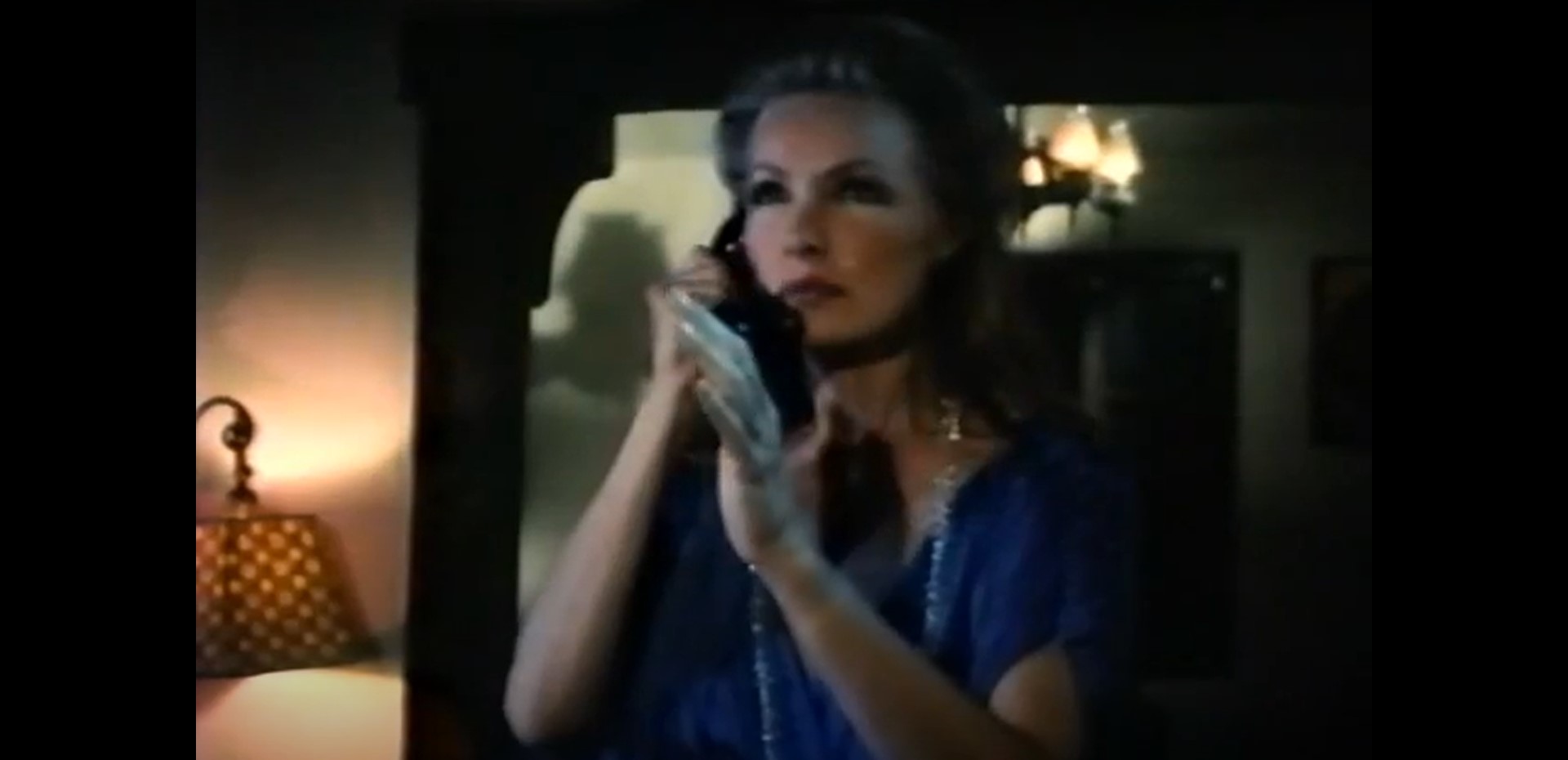
The fact that “Deep Space” doesn’t take place at all in space is innately tongue in cheek to begin with, but that brand of flippancy courses through the film’s veins despite the blood splattering and semi-serious veneer, weaving between an action-horror and a horror-comedy during the entire 90-minutes.  Some of the comedy is intention, such as McLemore’s husky wit and sarcasm, but there’s also the extremely foggy campy side to this gem.  Some of these elements include the creature being hinted as a genetically mutated cockroach or the left field use of Julie Newmar’s psychic abilities that are randomly injected the storyline for the sole purpose of forewarning McLemore over the telephone rather being an intrinsic piece to stopping the creature.  The creature carnage would undoubtedly be investigated and exterminated without the psychic’s help, making her character farcical in futility.  “Deep Space” also pulls a little inspiration from “Alien,” maybe even the sequel, “Aliens,” with a toothy, long-headed, and eyeless black organism that resembles much like a Xenomorph or the Xenomorph queen and there’s also a near shot-for-shot sequence of a security guard whistling to and trying to persuade a cat to come to him while the monster rises from behind and strikes a fatal blow.  The scene is very reminiscent of Harry Dean Stanton’s death in “Alien.”  Being campy has it’s highlights but never can fully overshadow scenes that erect suspense or are saturated with gore which “Deep Space” has both with a combination of editing and piercingly sharp sound design and a rip-roaring, blood-splattering chainsaw kill that’s leaves that good metallic taste in your mouth.

There’s no escaping the blood-hungry tentacles of the “Deep Space” monster coming at you in a brand new 2018 high-definition master Blu-ray from Scorpion Releasing, leased from MGM, and distributed by Ronin Flix and MVD Visual. The hard-locked region A Blu-ray is presented in an anamorphic widescreen 1.85:1 aspect ratio and is rated R. Fred Olen Ray knew how to develop an eerie, twirling fog and wind atmosphere and this master crisps up that iconic trope image. Textural details and natural-appearing skin colors are delineated nicely throughout as you can make out every little blemish and hair on a shirtless Charles Napier as well as really getting into the slimy orifices of the creature and having a sense of its viscosity with a decisive sheen. Black areas are inky and dense with the right amount of grain in the overall picture and no obvious signs of image posterization, retaining the natural shadowing, along with no cropping or border enhancements. The English language DTS-HD master audio stereo finds common quality ground with a tidy dialogue track that does Napier’s resonating and recognizable jest justice. However, there is some hissing early on into the film, especially in the lab scenes in the contentious dialogue between the military general and the lead scientist. Omar Tal’s sound design proves vital to the story that relies on the screeching, the scuttling, the whooshing of tentacles, and the booming roars of the creatures, coinciding appropriately with Alan Oldfield and Robert O. Ragland’s rather run of the mill serrated and discordant electronic score. What “Deep Space” Blu-ray lacks is robust extras with only an audio commentary with director Fred Olen Ray and a scene selection index. “Deep Space” ages about as well as you expect over the last 35 years, but this Fred Olen Ray creature feature relic becomes rightfully preserved for being quintessential B-movie verve that no longer seems to exist in today’s age and also the fact that Charles Napier wears a kilt.

***Stills do not represent or were captured from the Blu-ray release

“Deep Space” Invades Blu-ray on Amazon.com!

Meir Zarchi Returns With Another Round of EVIL Exploitation! “I Spit On Your Grave Deja Vu” reviewed! (Ronin Flix / Blu-ray)

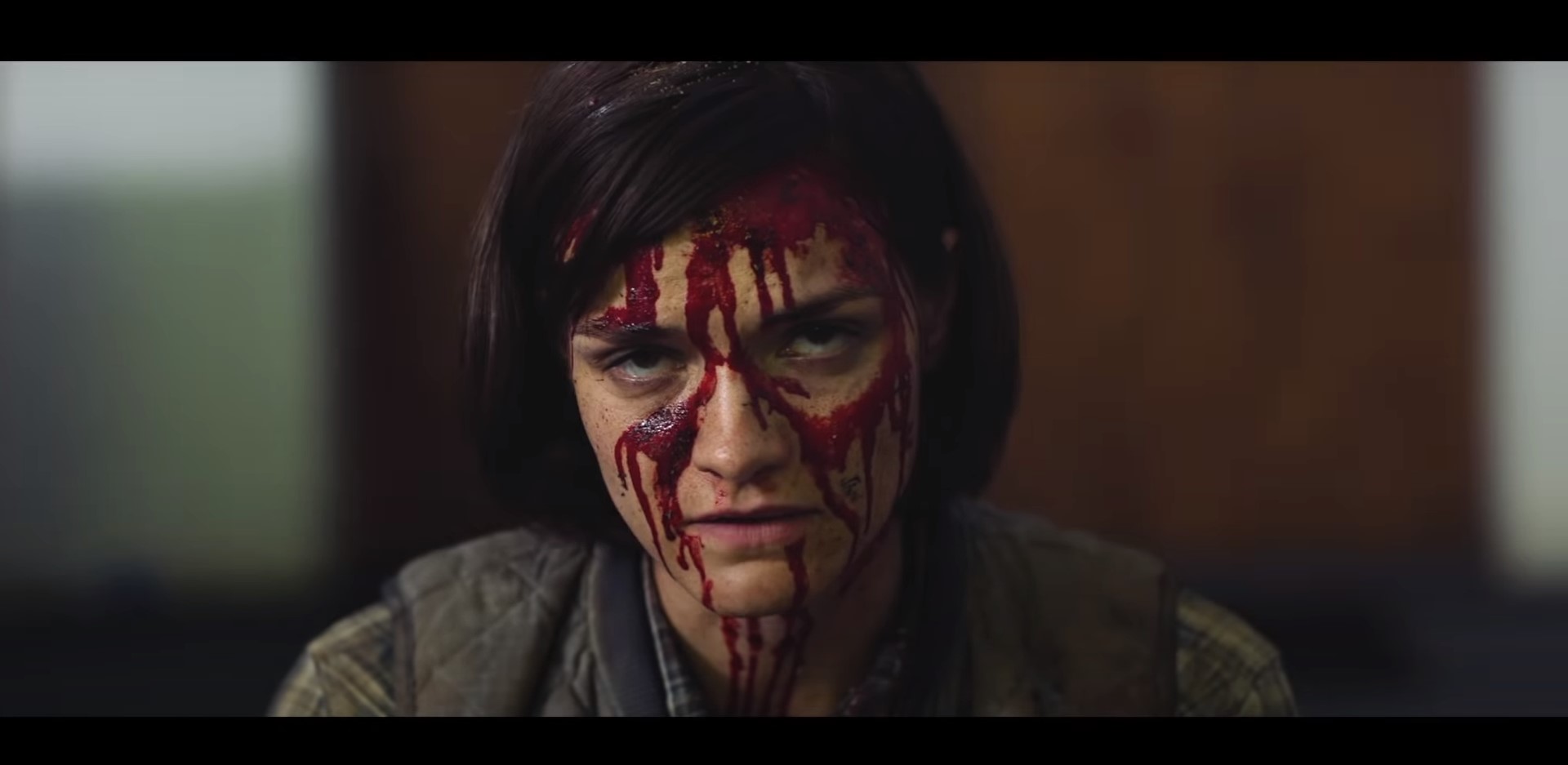
Forty long years have passed since the sexual assaulting atrocities of Johnny Stillman and his gang were committed on the young and beautiful Jennifer Hills.  Empowered by her horrific tale of survival with the release of a new tell all book of how she outwitted and took homicidal revenge on her rapists by luring them in with her sexual persuasions, Hills finds herself back in familiar terrorizing territory being kidnapped by Johnny’s devoutly vindictive widow and three living relatives of the gang that once ganged raped and brutally beat her, but she’s not alone.  Captive with her as collateral damage is her famous supermodel daughter, Christy.  Both are caught up in an eye-for-an-eye revenge plot where being lethal is the only means of survival and with a long history of resentment, rooted deep inside Johnny’s kin, fighting back will take every ounce of resilience and strength against a community of hellbent sociopaths. 

Circa 2005-2006 is around the time I first bared witness to Meir Zarchi’s 1978 controversial exploitation shocker, “I Spit on Your Grave.”  Popping in the DVD popped open my eyes to the world of graphic vengeance and the submission to primal, carnal whims inside the human-on-human violence context.  Before Zarchi’s film, which is also known as “Day of the Woman,” and even Wes Craven’s “The Last House on the Left,” this neophyte’s description and knowledge of horror was limited to the stymies of broadcast television that only aired edited and censored slashers like the “Friday the 13th” and “Halloween” series or supernatural presences of “A Nightmare on Elm Street” and “Poltergeist.”  Never has the likes of “I Spit on Your Grave” been a red pill option into the vast horror matrix for this then college kid who glazed over with the façade of sleeping through studies and worrying over trivial matters involving the opposite sex.  In a way, Zarchi was a kind of Morpheus to me when I started purchasing physical media that opened my eyes and my mind to the rape and revenge facet in horror hidden behind the commercial veil.  In 2010, a Zarchi produced reboot saw more light in the commerciality and spawned two sequels in its wake, but not until 2019 did Zarchi get back to writing and sit back in his director’s chair to helm an official, yet less commercial, sequel entitled “I Spit On Your Grave Déjà Vu” or “Day of the Woman Déjà vu” that was produced by his limited company banner, Déjà Vu LLC with son Terry Zarchi and Jan O’Connell producing.

The long-awaited sequel reteamed Zarchi with original lead actress, and also ex-wife, Camille Keaton, distant relative of the famed comedy and stunt actor, Buster Keaton.  Camille Keaton, who looks phenomenal in her 70s during production, steps back into the infamous Jennifer Mills role that made her a household name amongst grindhouse-horror community.  Though completely nude for most of the 1978 film, that part of her performance takes a step back for a new actress to pave a new path in the saga.  Obscure indie scream queen Jamie Bernadette (“Axeman,” “The Bunnyman Massacre”) is ceremoniously passed the torched as the new riches to ragdoll as the Jennifer Mill’s unhappy supermodel daughter, Christy, who becomes haplessly snagged into her mother’s unforgotten past.  Bernadette offers a variable beauty and a diverse poise that doesn’t make Christy a carbon copy of Jennifer Hills, but the actresses deliver the same apathetic venom of a woman scorn.  More of a carbon copy is the four backwoods bumpkins fuming over Jennifer Mills’ vindictive dissecting of their dead relatives.  The gang is spearheaded by Beck, played by Maria Olsen who, like Bernadette, has made a name for herself in low-budget horror having roles in films such as “To Jennifer,” “Starry Eyes,” and “Gore Orphanage.”  Olsen projects Becky as the gas station attendant from Hell, someone you don’t want to interact too long with as you’re pumping gas in the middle of nowhere, but Becky is not a woman of a few words who constantly has to remind us, to the blistering point of annoying, that she must avenge her late husband’s sinful murderess.  The rest of the gang didn’t impress much after that.  Jonathan Peacy has a chance to shine from out of the extra and bit part shadows as the crazed and hyperactive Kevin, brother of Stanley from the original film, and while Peacy channels his best Al Leong look, Kevin is ultimate a big detrimental goof with small dog syndrome than actual menace.    The last two aren’t any better with a lackluster act by Jeremy Ferdman as Andy’s cousin and “Tales of Frankenstein’s” Jim Tavaré’s rather befuddling downplay of Matthew’s mentally disordered father, Herman, who teeters back and forth between morals with a jumbled underlay of piety.  There are not many sane performances in a rather loose and unbridled Zarchi follow up with a cast that rounds out with Alexandra Kenworthy, Roy Allen III, and Holgie Forrester.

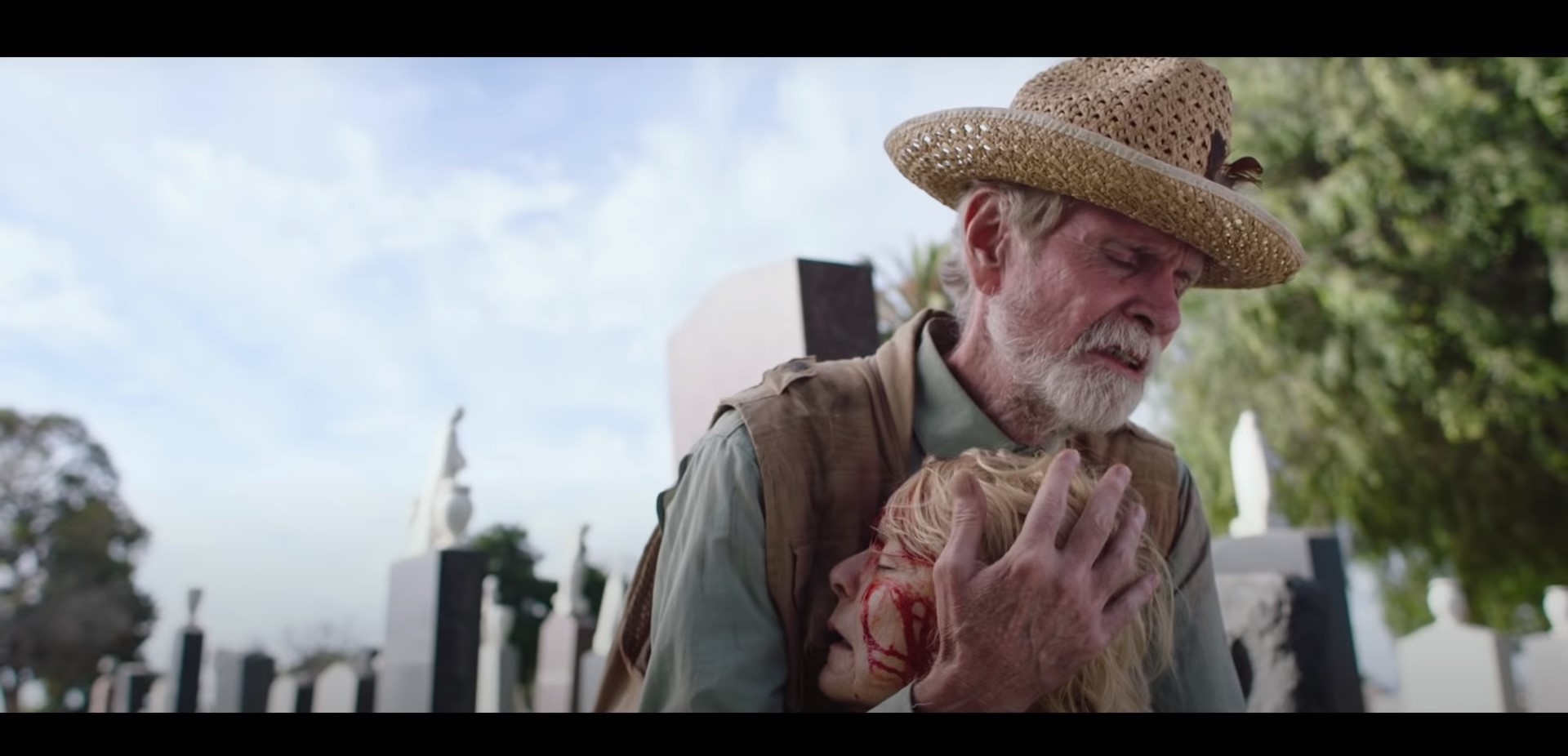
Performances aside, “I Spit on Your Grave Déjà vu” is also a cacophony of yelling as the script, from paper to pronunciation, reaches top of the lung levels with every bit of dialogue from every player in this tussle of who’s right and who’s wrong when it comes down to justifications of killing.  Zarchi’s sequel lacks the tact his first film achieves so delicately with Mills post-assault softer approach to lay waste her assailants.  “Déjà vu” satisfies its own revenge kicks with little subtly in trying to be outrageous, outlandish, and off its rocker as the confrontation between Christy and the gang becomes a rancorous grudge match.  What concerns me most about “Déjà vu” is the year in which this sequel takes place.  Between the 1978 original and the 2019 follow up, 40 years have passed, but the characters don’t fit any of Father Time’s natural aging characteristics on the surface.  Becky looks okay as an early to mid-60s woman despite Maria Olsen’s actual age being early 50s at the time of filming and release.  Herman is another one that sneaks into fathomable constructs as a character living a farmer’s life in the latter half of middle age, but I question whether Kevin and Scotty were even born yet.  The two youngsters barely seem to be out of their 30s and the same can be said for Christy where much more of her life is revealed as the story progresses.   If following the script logic, I would assume the story takes place in the 90s, but certain technologic advances, like modern day touchscreen phones, suggests no earlier than late 2000s.  As a whole, time and space don’t appear to exist on any reasonable plane for the film with characters able to bump into each at random intervals despite being a densely wooded and rural location and, for all you cinematographers out there, if your location is supposed to be rural, don’t shoot in at a cemetery with a massive grave footprint with a stream of cars speeding down a busy suburban street.  You instantly lose the illusion.  Zarchi’s intentions were clear to only echo the original while allowing for individuality with a brasher onslaught of right versus wrong, eye for an eye, and misguided righteousness for injustice, but the execution crumbles with excruciating results, never reaching the same poetic justice the first film accomplishes so graphically grafted. 

As far as rape and revenge exploitation is considered, “I Spit on Your Grave Déjà vu” gets about as down and dirty and ugly as they come.  Cult movie curator, Ronin Flix, delivers the Meir Zarchi sequel onto Blu-ray home video, presented in 1080p, full high definition, with a widescreen 2.39:1 aspect ratio.  A+ for natural lighting, skin tones, and overall appeal, Pedja Radenkovic’s cinematography is about as uninspiring as they come artistically, but, as a personal preference, the shots are more organic, raw, and less distracting from the content that’s much more abrasive and interesting.  A more natural framework also more time for Russell FX’s practical effects to be showcased without enhanced imagery.  As long as the details are there (they are), no damage is concerning (there wasn’t), and the framing made sense (for the most part), “Déjà vu” can be considered a win for Radenkovic.  The English language DTS-HD 5.1 Master Audio soundtrack for “Déjà vu” is a blessing and a curse.  Dialogue clarity is excellent and there’s a wide range to exploit, forgive the punned term, each channel with great balance, but remember what I said about all the character yelling?  Also, with the higher bitrate DTS, the quality is too good for some of the applied ambient effects like the exhaust sputtering of an old Ford pickup that sounds way too fake and way too close despite its positioning in the scene. The region A, not rated Blu-ray is stored on a BD50 due in part to the film’s massive 148 runtime and the inclusion of special features that include a new audio commentary with film critic and “The Last Drive-In” host Joe Bob Briggs, select cast interviews, the making of the film, behind the scenes footage from producer Terry Zarchi, and the theatrical trailer. Is “I Spit on Your Grave Deja Vu” the long-awaited sequel to Meir Zarchi’s first film? I’d say they’re two totally different exploitation entities cut from the same cloth with ties only in names and some flashbacks alone, but both films would make for a great double bill that starts with a harrowing, nothing-to-lose, woebegone toned, revenge thriller complimented with a lukewarm and unfocused follow up to help come down off the original’s gripping ultra-violence high.

Ronin Flix’s “I Spit on Your Grave Deja Vu” Blu-ray available at Amazon.com!