

A father mysteriously goes missing when visiting aliens violently abduct him from his serene cottage home. Thought to be a deadbeat husband and father for abandoning his family, the man returns three years later at the doorstep of his wife’s London flat. A bewildered and conflicted wife struggles with his return while the live-in boyfriend makes it clear that he wants the man out, shelling out a vicious cold shoulder whenever in the same room, but the returned father seeks to resume his patriarchal position amongst his family; however, he’s not exactly the same person he used to be as he garnishes an exterior shell of a human and the interior of a hostile extraterrestrial with ulterior motives. His return has nightmarish affects on his traumatized son whose becoming a device of deviancy at the hand of his father’s otherworldly influence, issuing carnivelesque ill will toward other flat tenants. By the time the boyfriend suspects something, the not-so-friendly alien might have already established the intended invasion into a family so eager and willing to accept their sorely absent loved one.

Perhaps one of the most out of this world science fiction horror films ever made that’s set on Earth, “Xtro” is the Don Coscarelli-like bizarre horror film from British filmmaker Harry Bromley Davenport. Co-written the story with Michael Parry (“The Uncanny”), Davenport’s blended American and British financed 1982 unsettling venture was penned by Iain Cassie (assistant director on “Schizo”) and Robert Smith. Honestly, no other film comes within a comparison zone of “Xtro’s” sheer creativity that doesn’t just redesign the genre or it’s tropes, but, rather, embraces a new kind of fragmented oddity by telling an uncomfortable story consisting with the graphic birth of a full grown adult, the flesh crawling sensation of an adult man bending down to child level to drink from the bare skin of a child’s shoulder, and the exhibition of the dark pageantry of humor underlined death. Over an umbrella of horror shades metaphorically a fairly common family crisis baseline premise of an inattentive father’s return home to try to reinstate himself with conflicted wife and eager son only to, once again and concretely, destroy them internally.

Philip Sayer sets foot into the duplicitous titular space invader. The trained veteran actor had experience from the stage that translated to what could be considered performance art in “Xtro” to embodied a creature on the inside to his humanity on the out. Sayer costars alongside an unseasoned child actor, Simon Nash, as the young Tony and the pair make a inharmonious father and son with cankerous performances by Nash who doesn’t exactly fit, when considering accent and even appearances, his portrayed parents. Bernice Stegers is the other half of Tony’s folks and the “Macabre” star does a phenomenal job as the stiffly conflicted mother and wife Rachel Phillips, straining toward more what’s best for her love life rather than to the care of her son. The live-in boyfriend Joe, portrayed by Danny Brainin, limps by as a fairly useless character who doesn’t contribute either way to a conclusion. Other than providing a minor tether to Rachel Phillips life to normalcy, Joe can’t swallow his emotions and the best the character can offer is to abandoned his girl and son, another frail male in their life. Brainin’s performance is good for the character’s weak minded attitude. The cast rounds out with Maryam d’Abo (who goes onto to be a bond girl in “The Living Daylights”), Peter Mandell, and Anna Wing.
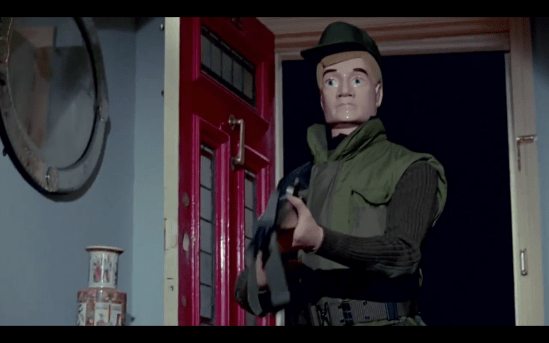
Though thought provoking and wildly entertaining through soul rattling imagery, “Xtro” is by far from a perfect film. Sure, the Tom Harris special effects pull at innard chords you may never knew you garnished and certain scenes would be the subject of mysterious gif images in the dark corners the internet that proclaimed creatures do live unknown amongst us, but the British science fiction horror film, a video nasty of the time, just might have been too absurd in the nonconformist form that struck unpopular opinions with audiences and critics because the villain wasn’t necessarily tangible and wielded a blood stained machete and more so involved obscure telepathic references that were non-explicit. There’s literally no connective tissue which makes this film so beyond the mind’s grasp. “Xtro’s” niche saw non-homaging aspects, but had familiar flavors such as a bit of Peter Jackson humor, a dry slapstick that’s hard to enjoy, but fascinating to take in at the same time. That’s the whole idea behind “Xtro” was to create an off-structured horror film that pushed the limits while not just replicating other great horror movies.
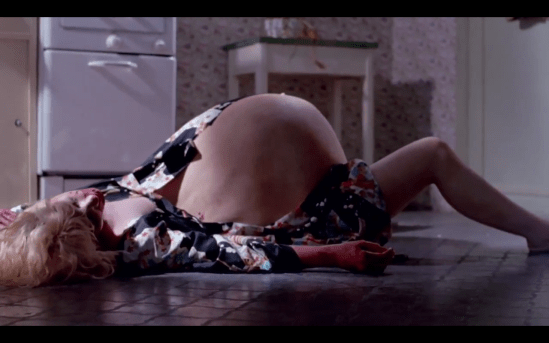
New Line Cinema’s “Xtro” is coming to a limited edition Blu-ray set from UK distributor Second Sight. The newly restored extended presentation of the transfer will also have option alternate ending plus will also be accompanied with the original video version. Unfortunately, a screener disc was provided for this particular review and comments about the image and audio presentations will not be commented on. The disc did include extras such as a brand spanking new 57-minute documentary that included new interviews with Harry Bromley-Davenport, Mark Forstater (producer), Bernice Stegers, Susie Silvey, Tim Dry (Tik), Sean Crawford (Tok), Robert Pereno, Alan Jones and Craig Lapper. Also included is a new featurette with Dennis Atherton, Harry Bromley-Davenport and Mark Forstater, ‘Beyond Xtro’ – a new featurette with Harry Bromley-Davenport and Mark Forstater looking ahead to new reboot, ‘Xtro – The Big One’, including exclusive test footage, ‘Loving The Alien: A Tribute to Philip Sayer’ featuring exclusive Brian May music tribute, and ‘Xtro Xposed’ archive interview with Harry Bromley-Davenport. A venturous Robert Shaye at New Line Cinema wanted to match wits with his own one-two punch version of a video nasty. The result was an out of body experience alien feature with unapologetic tastes and unafraid wills to push the shock market limits. “Xtro” might be one of the billions of stars in the film archive, but at least it’s one of a kind.
Tag Archives: sci-fi horror
Evil Attracts With the Fluorescent! “Feed the Light” review!

Sara, a desperate young mother, infiltrates a secret facility workplace under the false pretentions of becoming an employee of the critical janitorial department. After losing custody of her adolescent daughter Jenny in court, the child becomes misplaced when her custody awarded father, an employee, loses Jenny in the facility that’s conducting unusual activity involving the building’s light energy source. With everyone on constant edge and under the powerful and dangerous influence of the light, including her very organized and unstable employer, Sara is able to find a sympathizer in the head janitor and by exploiting his mental map and valuable knowledge of the building, Sara goes deeper into the structural bones of a nightmarish reality where evil lurks in the shadows and not everything is what it seems.

“Feed the Light” is a H.P. Lovecraft inspired sci-fi horror directed and co-written by indie filmmaker Henrik Möller with Martin Jirhamn sharing the co-write. The gothic tale stems from the Lovecraft short story “The Colour Out of Space” that tells the tale of a meteor crash landing in the hills near Arkham, Massachusetts, poisoning and deforming all the living creatures nearby that creates chaos amongst the locals. The light, that never dulls, becomes the driving force of everything malevolent and that carries over into Möller’s film, but isolates the setting to a dilapidated building instead of a natural landscape and focusing more on the people inside rather than vegetation or livestock as the Lovecraft short story builds upon. Originally shot in color, Möller thought best to suck the color out from the reel and produce a mostly black and white film, sprinkled with color at strategic moments, that would convey the importance of the ever-present light and interpret a far more dramatic effect to play out; a decision I whole-heartedly agree because if laced with color, much of the abandoned warehouse setting would be a monotonous eye-sore. Instead, black and white enhances the light’s presence, makes it almost seem to stand out amongst the greyscale, and give way to more inspirationally vibrant hues when they are revealed.

For Henrik Möller, this is the director’s first dive into feature films and for the filmmaker whose better known for his shocking shorts, “Feed the Light” doesn’t water down the deranged, creative machine that just steam-plows through a 75-minute runtime and still managing to be mechanically sound to comprehend the Lovecraftian tone. Lina Sundén fills the lead shoes as Sara and Sundén embodies complete innocence and bewilderment when her characters goes forth into this strange facility, but doesn’t show much fear as if a mother’s determination is her driving force to go beyond being what frightens her. Alongside Sundén is Martin Jirhamn, who you might remember me saying he co-wrote the script, as the sympathizing janitor. Jirhamn has collaborated on many of Möller’s shorts, feeling comfortable taking on the challenge of a full length feature by taking on more of a scripted role that has a face with two sides. Rounding out the cast of memorizing characters are “Not Like Others'” Jenny Lampa as an authoritarian boss of the facility who tries to keep Sara from going on Indian Jones and the Raiders of the Lost Ark in the basement and Patrik Karlson otherwise known as the VHS-Man and Jenny’s father in the film.

“Feed the Light” has undertones beyond that of Lovecraft. The story feels nearly anti-establishment, a surreal and extreme look at how doing the same job, in the same office, staring at the same fluorescent lights can make one loose one’s humanity. The boss is a strict enforcer of the rules and doesn’t shrug at the thought of one of her employee’s burning out as long as the job gets done, but it’s not burning out that’s the problem. The light symbolizes obedience and control, turning those with a soul into mindless workers. There’s an unseen power embodying them such as with the dog man, played by Morgan Schagerberg, who, literally, sounds and acts like a canine that just happens to have glittery dust goo ooze out of it’s anus. Yup, weird. “Feed the Light” is jarringly weird, but also laminates into the prospect of hidden doom that’s very similar to the truth is out there concept reveled in the “X-Files.”

The Severin sub-label, Intervision Picture Corp., usually subjects us to older projects, but embraces newer indie films such as Henrik Möller’s “Feed the Light” and with the help of CAV Distributing, Möller and “Feed the Light” can be exposed to every house hold on Earth as a region free Blu-ray in 1080p full Hi-Def. The full frame is a staple of Intervision and doesn’t necessary cause any distress over cropped images. There is a fair amount of interference, but again, only enhances the indie labels reputation. Other than that, the image is fine laid under a Swedish language dual channel audio track that’s well balanced with a brooding industrial soundtrack by Testbild, a Möller familiarity. There are two extras accompanying the feature: one is a making of featurette and the other is an interview with the director, Henrik Möller. “Feed the Light” is a science fiction oddity chocked full with surreal depictions and nightmare creatures with a Lovecraft base and a passionate director’s otherworldly view of how light and color powerfully dictate our everyday lives.

“FEED THE LIGHT” is available on Blu-ray at Amazon!

Evil Can’t Be Contained. “Captive” review!
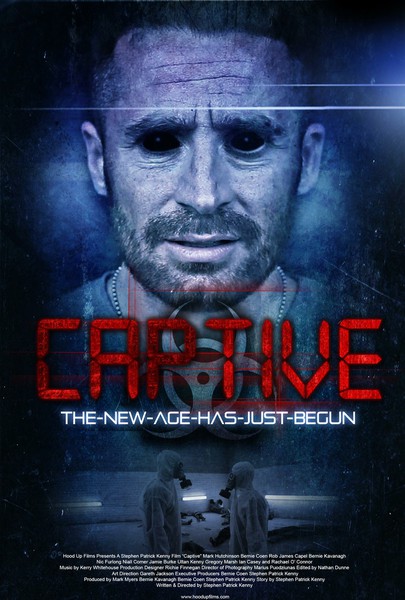
Twelve strangers awake confused and scared in a desolated and impenetrable shed. Suspicion surrounds their bafflement as they attempt to determine the reason for their captivity and who is behind it. Suddenly, a phone rings and the testing begins. The voice on the other end of the line wants something and if the twelve captives don’t comply or fail to deliver, the secretly injected virus previously pumped into them during their unconscious state will transform them into blood thirsty, demon-like creatures and fatally strike them down within 24 hours. If they attempt to escape, they will be shot down. In addition to the already extreme situation, relentless ambient gunfire and explosions rock the world outside the shed walls. The only way out, to survive the whole ideal, is to abide by their captors rules and be the last one left alive.

The notion of the inability to escape is an anxiety-filled fear all can relate toward; in fact, many may have had the suffocating buried 6-feet under in a pine wooden box nightmare that induces shortness of breath and sweat on the brow – I know I have. Writer-director Stephen Patrick Kenny’s film “Captive” attempts to relay that fear on a grander scale with the twelve strangers trapped inside a shed at an unknown location – the equivalent to that “pine wooden box.” The scenario puts the audience in the shoes of the characters, who are also asking themselves numerous questions that race through their minds. Why am I here? Who did this to me? What’s going on? With each turn of a minute, the questions are slowly answered, whether the characters would favor the answer or not. However, the audience is acute to a little bit more information then the twelve unlucky souls. Information, such as the two men in hazard suits placing their limp bodies into the shed and from the black title cards used to formally announce the death of each character, that a type of brutish test is being conducted and that takes the audience out from the unknown and into a solely voyeuristic perspective.

Being voyeuristic should entitle all to witness the end result of the twelve players involved, but, unfortunately, we become just as clueless and lost toward the characters’ fate and the situation around them. This hybrid role of the audience, whether we’re a part of the situation or an outside party, aches and pains the logical and rational portions of the mind. In Kenny’s sophomore film, characters come and go, Houdini-like, in and out of the story without much explanation and the same can be said about their deaths. In a tail end scene, a character is alive and in the next scene, the character’s sprawled out on the floor…dead. The kill shot, the smoking gun, are omitted. A limited budget, poor editing techniques, and use of stock sound effects result in this crude determination of characters’ final destination and leave gaping holes that sour the story’s appeal.
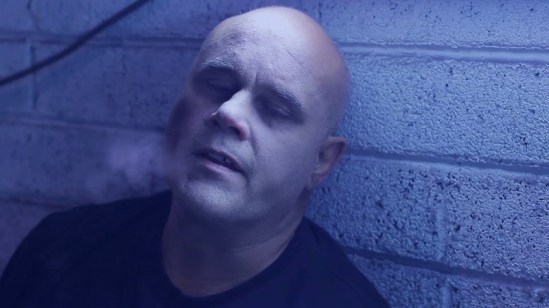
The director’s style is visually comparable to the outer stories of a modern day video game plot without the enjoyable interactive game play. Stocked with a heavily hazy blue tint that sears into your vision, paper mache like special effects and graphics, and black title cards that act as chapters to each character’s demise path, “Captive” is more similar to a video game than a film. What’s also concerning is the lack of character development of any kind note worthy of virtue or quality. The Kenny script focuses more on the title cards rather than structuring a coherent story on the basis of solid characters and, sadly, each character is hindered from any sympathy or concern.; in fact, numerous characters quickly become dispatched within a smidgen of their awakening and if you blink, you’ll even miss their scenes. The actors, majority a cast that has had a working relationship with Kenny, don’t quite sell film as the performances are rigid and forced upon deliveries and reactions toward their hand dealt goes unnaturally and uncouth.

Even though many flaws plague Kenny’s film, I’m glad to see horror out of Ireland has not completely been forgotten. However, I’m just not seeing much heart or creativity behind “Captive” and the hopes were high going into the film after watching a vigorous trailer that displayed promising non-stop “demon” horror, suspense, and ultra-violence. None of those attributes made the final cut, I suppose, marking Stephen Patrick Kenny’s and Hoodup Film’s Sci-Fi horror-thriller “Captive” not superbly captivating.
In-And-Out Evil! “The Diabolical” review!

Single mother Madison lives with her two small children in their presence-plagued home. When money becomes severely tight and her son’s violent behavior erupts once again, the family of three are hesitant to leave their home, but once one of the apparitions transmit something to the children that won’t allow them to leave the house without becoming severely ill, the family is forced to remain stuck in their abode cell. Madison’s scientific boyfriend Nikolai looks to help the weary family fight this evil that won’t let them leave, but when Madison digs further into the apparitions, she discovers that their is more to their sudden and random appearances and that the once trusted Nikolai might somehow be maliciously involved.
“The Diabolical” is an interesting horror film from first time feature film writer-director Alistair Legrand. Legrand, whose credits mainly include music videos, opens the story up to a withering family on the verge of destruction with the father-husband having already left due to a lingering love-hate relationship between him and Madison and they’re well aware of the presences, some more grotesque than others, that come and go with a sudden spark of electricity. No set up laid out to introduce the initial contact between apparition and family; instead, the characters, though still unsettled by each frightful visit, continue to live life amongst the paranormal. Not even paranormal scientists have the fortitude to challenge the eidolons, which pokes fun at films like “The Conjuring.”

I say that “The Diabolical” is an interesting film because the apparitions have complexities that are not made clear until near the end, but hints are strewn through to give that something isn’t exactly clear sensation. However, Legrand doesn’t quite piece together the story to deliver a packed full package to feel the full effect. The story feels undercooked and when the finale is revealed, many of the previous events in the film don’t quite add up to conclude nicely the twist ending. The apparitions have qualities that are never explained and don’t contribute to their reason for being. Another frustrating underdevelopment is with Madison, the family, and their relationship with Nikolai. Were not quite sure if Madison’s husband left because of Madison, a little exposition states that’s the case, or if their son Jacob did something to harm him fatally. The father just doesn’t exist and his presence felt neglected, ignored, and forgotten to the point where there was really no need to have the off-screen existence. Nikolai fills in that father shoe, but his relationship with Madison seems very casual as if Madison didn’t just come off a serious relationship and was dating for the first time.

Madison is not the kind of typical role for lead actress Ali Larter. The Resident Evil and Final Destination star has been an archetype of strong female characters in most of horror movie credits and while Madison is a strong female lead, envisioning Larter as a mother of two children sits unimaginably. Besides, Legrand doesn’t make the beautiful and unflinching Larter seem like a worn and torn down person whose husband has is gone, bills are piling up to the ceiling, and harmful apparitions are popping up all over the house. Legrand also doesn’t necessarily pit the evil apparitions against Madison until near the tail end, painting the apparitions almost as if their part of the family’s imagination in the beginning. The sense that the family is completely cool with these ghost-like-gruesome and terrifying presences does nothing to motivate the family, especially Madison, to move out form the house.

The special effects department delivers top notch phantasms even if some of the apparitions move around the house like Bill Cosby in “Ghost Dad” or look like creatures from the “Silent Hill” films. Nothing from the practical or the computer generated effects appeared shoddy. I’m pleasantly appeased by the work special effects artist Jason Collins and his colleagues have conjured up. However, the story doesn’t reflect the effects as the story loses steam abruptly for a knockout ending; the ending felt, as it looked, rushed. Tying up the mystery of the apparitions into a brief, underdeveloped scene. Then to top off the ending, leave an open ending scene that doesn’t quite work to solidify an understanding.

“The Diabolical” is truly diabolical as Alistair Legrand’s horror film with a Sci-Fi flair teases a good and fascinating story, yet only manages to founder with an over saturated underdevelopment. I really wanted to like this movie, especially since I’m fond of Ali Larter and her work, but trying see past the Alistair Legrand’s flaws is like throwing a no hitter and still walking half the batters that come to the plate – its not a perfect game. In any case, I would still recommend “The Diabolical” from the UK distributor High Flier Films for a unique story, eye glazing CGI, and, of course, the gorgeous Ali Larter!
Evil Times Out. “Reminiscence: The Beginning” review!

What if there were multiple universes and only one time line? Then, what if time breaks down? Being aware of, in theory, the coming lapse of time, Miska uses her talents in physics to calculate the days of when exactly the rare event will occur; she brings along her boyfriend Akçay and together they experience, not an immaculate and breathtaking event, but a horrifying phenomena that intertwines parallel universes and opens the door to our world to mind manipulative beings known as The Others or Shadows. When Miska misjudges the occurrence date, the lovers find themselves trapped in a vicious loop, unable to tell the difference between what’s reality and what’s a realistically terrifying nightmare.
“Reminiscence: The Beginning” is the screenplay written by musical artist and Blue Arc Studios founder Akçay Karaazmak, who also directs film and stars as, you guessed it, the male lead named Akçay. The concept of time breaking down and releasing horrifying entities is intriguing to captivate audiences, like a moth to a bright night light, toward noticing the estimated $500,000 budgeted independent feature that has an exotic filming location on the crystal clear water beaches of Çeşme, Turkey. Alternate realities have an unique appeal since the lot of such films haven’t been saturated by previously exploration and their ventures, unlike the recycled storyline of the zombie genre, can always be varied because time is tangible; we see the parallel time lines within the established stories of popular sci-fi franchises such as “Star Trek” and “Terminator”. Karaazmak’s film, his first ever venture into the movie biz, has similarities to other works such as Stephen King’s film adapted novel “The Mist” or in “Silent Hill,” the video game adapted into film where two universes collide and ferocious monsters seep into the human world, blending time and worlds into one existence. Can we expect the same type of viscera innards from Karaazmak that resulted very favorably for the other recent genre-related films?
The answer to this time bending film is: don’t waste your time. Here’s why…

On a pitch black night, with no street lights, Akçay and Miska barrel down an isolated road; their seemingly anxious and intense conversation annoyingly underwhelms, nearly beneath the wave lengths of the human ear. Miska, in the passenger seat, examines through numerous pages of physic notes and while Akçay drives erratically fast through the thickness of night, she’s communicating something to him but the dialogue track is, frankly, inaudible. The fault lies at the feet of a couple of major issues: shoddy post-production audio work as the soundtrack severely steps up to become an unintentional focus point above the dialogue tracks and actors Akçay Karaazmak and Michaela Rexova mumbling horribly through the bland dialogue due to their heavily broken English and immature acting status. Our ears inevitably have a chance to relax once the two finally reach the Çeşme beach after a near accident.

The beach scenes turn out to have just as much post-productions issues as the superficial opening. The editing work will require an heavy dosage of Dramamine pills to suspend any nauseating effects from the tirelessly and pointlessly shot and edited scenes. Karaazmak’s film feels unsure on how to convey each scene appropriately, cutting and splicing two and three second scenes together. Karaazmak’s editing process resembles something close to tossing contents of a mixed bag of options and seeing what sticks to sort of fit. Also, If I’m going camping in the natural elements of a beach, dressing the occasion might heighten Akçay’s and Miska’s characters’ authenticity; instead, the lovers, cladded in dance club clothing, doesn’t speak highly of our hero and heroine as black hole researchers seriously. Michaela Rexova, starring in her only credited film according to IMDB.com, has the beauty, but her dull persona and monotonous speech makes her instantly unlikeable to which her beauty can’t rekindle and if I would have heard the word “baby” one more time between them under that low breath of either one of them, my brain would have created it’s own timeless black hole and void itself into non-existence as if some kind of mindless suicide.

However, there are moments, brief moments, during the film’s latter that peak through the unwatchable, indigestible blitzkrieg that is “Reminiscence: The Beginning.” Surprisingly, the scenes I’m referencing satisfy some kind sexual aesthetic while managing to remain a lasting and haunting impression. In one of Akçay’s nightmarish visions, a blonde lays facedown and prone across the hall of a vacant and dark structure. She suddenly awakes, stands with only one ripped above knee stocking on, and backs against the wall, sensually moving up and down, caressing her thigh and a knife with her bloody hands, and dripping blood on the ground from the only piece of clothing covering her chest – a male’s white button down shirt stained at the abdomen. With the knife she holds in her hand, she suddenly thrusts it into her crotch and begins to masturbate. Karaazmak manages to create a visually interesting scene in a creepily sexy or psychosexual fashion and there are other just above mediocre short scenes that glimmer, but these scenes would value more as short films rather than as a whole.

Once again, Karaazmak, has his hands in another department and this time it’s with the waffling special effects. You have to give the musician credit for multi-tasking, but when one person helms many departments, the tasks become overbearing, causing multiple areas foundering as if cables from a suspension bridge are snapping one by one to the point that the bridge begins to wobble. That’s how I feel the effects played out by wobbling, but the effects are par for the limited-budgetary course as being not terribly horrific on a modest budget, but nothing stellar beyond fantastic that would be worth bragging about to promote enthusiastic interest in the film. Karaazmak majorly implements CGI to spookily distort the faces of the other-dimensional shadow people, especially when the leads meet their dopplegangers; a comparison draws from when Ash meets Evil Ash in the 1992 horror-comedy “Army of Darkness” after having buckshot spread blasted point blank into Evil Ash’s face. “I’m bad Akcay and you’re good Akcay,” if only.

Blue Arc Studios and SGL Entertainment, a well-established cult and horror distribution company, along with MVD distribution release “Reminiscence: The Beginning” on a region 1 DVD, presented in a widescreen format. Be prepared for 107 minutes of one of the few sci-fi, alternate reality, horror concoction genre film projects to come out of Turkey, but also be warned of director Karaazmak’s migraine inducing editing technique and a dialogue drowning soundtrack that might condemn the viewing ability. Will Karaazmak take “The Beginning” to the sequel level? Time is, hopefully, on our side.
 It's Bloggin Evil!