EVIL Trifles With a Vindictive Obsessed Cop in “Split Second” reviewed! (MVDVisual / Blu-ray)

Global warming has taken a toll on the Earth’s polar ice caps in 2008 with cascading amounts of water flooding around the world bringing knee high waters to coastal cities.  London is hit hard with drenching sewer overflows and coastal run overs that result in an over infestation of rats to storm the streets, back alleys, and even resident homes, carrying a harmful disease in their occupation.  However, something else compounds the rat plague that slashes at random victims, tearing their hearts out violently from their chests without ever leaving a witness except for one, a rogue and paranoid detective Harley Stone whose partner was slain in one of the deadly attacks and himself marred by the killer. Partnered with a new hot shot know-it-all detective following the murders, an obsessed Stone confronts his haunting traumas as he continues to pursue the inhuman perpetrator who has a psychic connection to Stone, personally toying with the on-edge officer, and has kidnapped his girlfriend as bait.
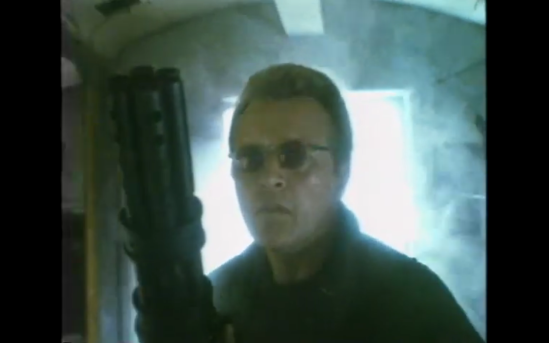
Even though 2008 has come and gone now almost 12 years ago, Tony Maylam’s 1992 actionized-creature feature “Split Second” still holds water just like the rising tide pools on the streets of London.  “The Burning” director, Maylam, helms, with the finishing touches of the final sequences directed by Ian Sharp after Maylam’s sudden departure, a fast paced and snarky script penned by Gary Scott Thompson as one of the writer’s very first big budget outputs from nearly 30 years ago that was followed up with major studio films, including a little project you may or may not have heard of, “The Fast and The Furious” mega franchise.  Before nitrous suped-up cars hot-rodding on asphalt, jumping high speed trains, and flying off cliffs in a lap strap of criminal activity luxury, Thompson created a formidable, heart-devouring beast that became the trap-setting, trophy-hunting predator and the teeth-snapping, chest-bursting xenomorph all in one package to symbolize the irreversible and ignored effects of an overpopulated, warming planet.  “Split Second” is a production of Challenge Film Corporation and produced by Muse Productions with Chris Hanley, Laura Gregory, and Keith Cavele serving in a producer role.
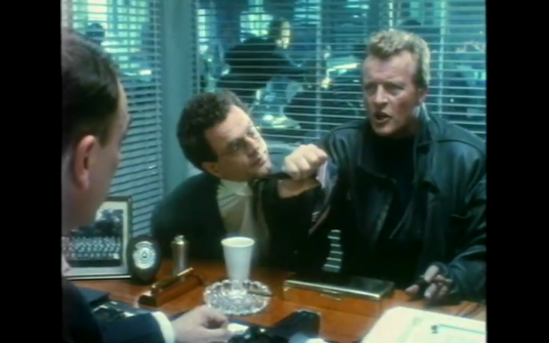
The Netherlands’ very own Rutger Hauer sheds his nice guy exterior for Harley Stone’s shell-shocked, rough and tough outer shell.  The late “Blade Runner” and “The Hitcher” actor brings a certain cinematic coolant to “Split Second’s” overheating fringe of disproportionate action and science fiction horror, a lop-sidedness typical of a Rutger Hauer production, by being larger than life in the little aspects that add to the dimensions of the scene, making every moment famished for Stone’s next eccentric and animated move.  Stone is partnered with an equally vigorous Detective Dick Durkin who starts out as a cultured drip of criminal activity and an astronomical proficient before quickly blooming into the same gritty mirror image of Stone.  Credited as Neil Duncan, the current vocational voice actor Alastair Duncan has a natural dynamic with Hauer despite their asymmetrical careers and endures an incredible character arc successfully turning Durkins’ relatively square image – though debatable with smart, good looking, and gets sex every day swagger – into a Stone acolyte after witnessing the human threatening existence of an unnatural ferocious monster.  The female love interest didn’t seem to fit the “Split Second’s” gentle steampunk lace and zany character scheme with Kim Cattrall as Stone’s estranged girlfriend, Michelle McLaine.  As much as love the “Big Trouble in Little China” actress’s late 80’s to early 90’s career, the girlfriend role feels sorely plopped into the film for the sake of having a love interest as much of the character is illuminated through exposition with McLaine being the wife of Stone’s former partner stemmed from her and Stone’s affair and then lingers her subsequent alienation from the rogue cop despite an inextinguishable flame between them. As Cattrall provides the sexiness in the city of London, McLanie iss aesthetically airy without tangible substance other than kick in the pants motivation for saving. “Split Second” rounds out with the late Pete Postlethwaite (“The Lost World: Jurassic Park”), Alun Armstrong (“Van Helsing”), Stewart Harvey-Wilson and “Scoorged’s” Michael J. Pollard as London’s the rat catcher.
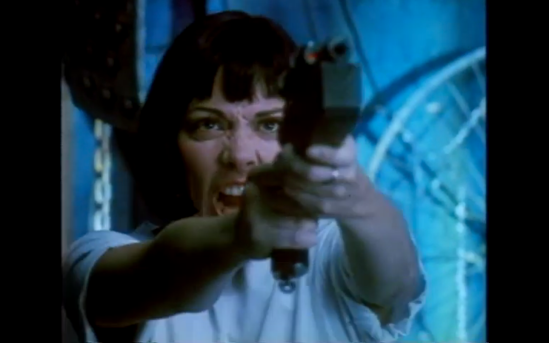
“Split Second” is an early nineties junket spiraling with flashy facets of easily digestible, entertaining chewables that continuously hits all the right flavor sensations in terms of acting, dialogue, production design, creature design, and cinematography. The bonkers script and equally as bonkers visual concept inserts an extremely likable brazen world of the future in the form of a dank, or danker, London under one or two feet of water; in every moment Stone or Durkin hit the streets, they’re essentially swimming in brown street liquid and the overall effect places a blanket of filth glazing over my eyes and secreting out of my captivated body is a cold spine-shivering chill that’s immersive to Stone and Durkin’s slushing around. Stephen Norrington, who went on to direct “Death Machine” and “Blade,” slapped together a fairly effective creature design despite the creature rarely being in full exhibition and for very good reason. A brief flash of razor sharp fingers, a quick dash of unearthly skin, and the gruesome aftermath in it’s wake evolved a better rendition of the creature in our minds than perhaps the actual resulting appearance with result that tacked on one big mysterious allure that doubled down coinciding with the principle characters who also has never seen the killer before. “Split Second” is constantly suspended in action with little down time to reflect on the theme of global warming and it’s life-changing choking effects that not only rushes thousands of gallons of water onto the streets and increase the survivalist rat population up to nearly impossible control levels, but also tampers with the balance of astrometric forces, bringing evil to the world in the form of a heart-eating devil to the surface when astrology deemed the moon in position for such an event and that’s also perhaps the downside to Tony Maylam’s film. The monster bares little backstory to sink one’s teeth into and raises an immeasurable amount of unanswered questions relating to the fate that intertwined Stone into the creature’s inner sphere of extrasensory perception, the origins of the creature and it’s genetic makeup, and the relationship between it and the cult correlations.
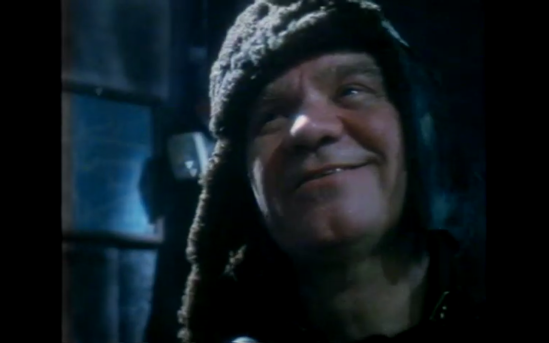
A melting pot of feculent and bloodshed pother, “Split Second” arrives onto a high definition Blu-ray courtesy of 101 Films and on MVDVisual’s MVD Rewind Collection banner. The region free, R-rated feature is presented in 1080p with a widescreen, 1.85:1 aspect ratio with a newly 4K scan complete with restoration and coloring grading from the original 35mm negative. The inviting image, with adequate grain and a cigarette burn here and there, basks mainly in a steely blue among other primary colors rearing up while thick with a brightly contrasted neo-noir shadow wrung through. Skin textures are consistently and continuously glistening with sweat setting on top of the natural coloring and the facial follicules present a rather sharp image, making this release the best looking transfer to date. The English language 2.0 LPCM stereo mix doesn’t let up with a robust mix of forefront dialogue, a balance of range and depth, and a pulsating cheesy-action soundtrack Stephen Parsons and Francis Haines. English subtitles are optionally included. The heft bonus features package includes exclusive content such as an audio commentary by action film history Mike Leeder and filmmaker Arne Venerma, a new conversation entitled “Great Big Bloody Guns!” between actor Alastair Duncan and producer Laura Gregory, a “Call Me Mr. Snips!” interview with composer Stephen Parsons, a “Stay in Line!” interview with line producer Laura Borg, a “More Blood!” interview with creature effects designer Cliff Wallace, and a “Shoot Everything!” interview with cinematographer Clive Tickner. But, wait, there’s more! Also included is the original making of feature with stars Rutger Hauer, Kim Cattrall, Alastair Duncan, Michael J. Pollard, writer Gary Scott Thompson, original behind the scenes feature with effects creator Stephen Norrington and other cast and crew, the “Second Split” Japanese cut includes the deleted scenes and built in Japanese subtitles, 7 promotional TV clips, U.S. VHS home video promo, theatrical trailer, and a MVD exclusive reversible sleeve with artwork from The Dude Designs, cardboard slipcover, and mini-poster insert. The difficult decision to determine Rutger Hauer’s best work can be daunting as the man is King Midas with every project he touches, but “Split Second” reveals now more than just being pure gold with this MVD Rewind Collection Blu-ray release that’s a must own, must have, must see, and a must collect physical release of the rundown of a monster-run amok, neo-noir, steampunk, action-comedy-horror….in a nutshell.

Own this Rutger Hauer classic “Split Second” on Blu-ray!

Evil Asks, Why Haven’t You Checked the Children? “When A Stranger Calls” and “When A Stranger Calls Back” review!


High schooler Jill takes a babysitting job, overseeing two sleeping children while the parents have date night. The phone rings and an assumed prankster tries to scare Jill, either asking why she hasn’t checked the children or doesn’t say a word, but as Jill fields calls throughout the night with the same terrorizing voice, the terrified sitter phones the police whom trace the call from inside the house. Jill barely escapes the deadly encounter that left two children victims to a psychopath; yet the now happily married, mother of two small children is faced with the same killer seven years later after he escapes from a mental institution. Hot on his trail is detective turned private eye John Clifford who will stop at nothing from stopping a maniac who will kill again. Years later, Jill and Clifford team up once more to investigate a similar case of a co-ed being specifically terrorized by an obsessive stalker through the span of five years to the point where his next move could be her last.

Perhaps one of the best, if not the best, openings to a horror movie ever, Fred Walton’s “When A Stranger Calls” puts a freeze on the heart, forces to choke down the breath, and tightens the already painfully clenched fists with sheer, thick tension bred from an urban legend of the babysitter and the man upstairs. Walton, and co-writer Steve Feke (“Mac and Me”), develop two successful thriller from script to screen, spanning over the course of 14-years. Walton’s uncanny ability to invoke fear through a conduit of simple objects, such as a telephone ring or in the thicket of dead silence, and leading a direction of motivational hesitation or slowness to the story and through it’s characters is dread absolute. There’s similarities between Fred Walton and “The Driller Killer” director Abel Ferrara with a scent of realism and grittiest blanketed with a knack for the abstract in certain facets. Though slightly fluffier to Ferrara’s shock value, Walton builds anticipation in not just his hit first film in 1979, but also in his made for TV movie in 1993.

Starring as the lead in both films is Carol Kane. The “Scrooged” actress shells out a white knuckling performance in Jill, the terrorized babysitter phoned inside the house by man upstairs. The harrowing night that will scar for Jill for life will continue through into the sequel, “When A stranger Calls Back.” As Jill grows through both films, so does Kane who builds the character a tougher exterior to match wits with second psychopath stalking a hapless co-ed. She’s teamed with legendary actor Charles Durning. Essentially in Walton’s “When A Stranger Calls,” Kane and Durning never have any scenes together, performing in almost two separate stories until the climatic that intertwined that collaboration. During’s a fine actor and can be the bull of any detective and/or private dick lead, but, to be honest, Durning always carried a hefty, front-heavy load that didn’t quite fit his character, John Clifford, chasing on foot a much leaner foe. “When A Stranger Calls” cast also includes Ron O’Neal (“The Final Countdown”), Tony Beckley (“In the Devil’s Garden”), and Colleen Dewhurst (“The Dead Zone”) while “When A Stranger Calls Back” also includes Jill Schoelen (“The Stepfather”) and Gene Lythgow.

A fleeting glimpse of brilliancy can go relatively unnoticed in Fred Walton’s “When A Stranger Calls.” Much of what makes the film so effective is essentially obsolete; for example, rotary phones are dinosaurs or even landlines for that matter. Also, the way Walton breaks up the film into a definitive three separate acts perfectly stretches the urban legend much more than warranted and the director also completes the story and character arcs. Dana Kaproff’s sophomore score can be characterized as menacing, suspenseful, and aesthetically unfit to the point of inspiring dreadful sensations that heighten the story’s already engrossing nature. In “When A Stranger Calls Back,” the opening is basically a mirror image of the original film with a slight (of hand) change and the narrative itself is captivating enough to get engrossed with, but there’s something about the made for TV movie that doesn’t quite sit right. Perhaps, the killer’s underdeveloped motives doesn’t make things crystal clear or just maybe the killer’s use of a ventriloquist and body art into his perverted and obsessive arsenal is too zany. Despite being a made for television movie, Walton’s followup film was premiere on Showtime back in 1993, giving the movie a not-so-diluted and PG-13 appeal; instead, bits of grittiness and some strip club nudity rivals the tone of it’s predecessor.

Second Sight presents “When A Stranger Calls” and “When A Stranger Calls Back” double feature on Blu-ray home video in the United Kingdom. Despite the upgrade, a DVD-R was provided for the review so technical aspects will not be reviewed. The disc did include bonus features such as Fred Walton’s inspirational short film “The Sitter” and interviews with director Fred Walton, Rutanya Alda, and Dana Kaproff, and Carol Kane. Carol Kane has more recently been the quirky and city-salty landlady that’s quick to whip sarcasms and clobber any hipster with a gentrifying agenda with a baseball bat in “The Unbreakable Kimmy Schmidt,” but Fred Walton saw Kane for how the actress could truly perform under a realistically terrifying moment, a moment that savors being on tenterhooks and frozen in time for almost the last 40 years as a classic and iconic scene in horror movie history. “When A Stranger Calls” and “When A Stranger Calls Back” is simple, yet deploys effective thrills with pure impending loom and dread in massive, lucrative quantities that may have been antiquated by time, but is epitomized as vintage and elegantly construed horror.

Evil That Shall Not Be Named! “The Unnamable” review!


Miskatonic University students Howard Damon and Randolph Carter investigate the disappearance of a missing friend last seen making good a dare to stay the night in a century-old, dilapidated house, right in the middle of a cemetery and with the caveat of a ghastly, creature legend. In the same instance, two colligate hunks try to fraternize with two freshman women within the dark and gloomy walls that seem to reposition themselves into an unescapable maze. Lurking through the inky corridors, an ancient and horrifying beast, thirsty for blood and hungry for flesh, continues to roam freely in the house, unleashed from it’s confined room a century ago, and hunting the students down one-by-one. Their only hope to get out alive is Howard’s haphazard bravery and Carter’s unrivaled intelligence that aim to rescue survivors and decipher the house’s resident Necronomicon to defeat an evil monster’s night of carnage.

Campy, brazen, and inspired, Jean-Paul Ouellette’s 1988 “The Unnamable” is every bit of an 80’s teen comedy rolled up into a bona fide ball of barbed madness shrouded with heaps of highly anticipated mystery. Unravels like a truly classic H.P Lovecraft story, Ouellette, who also penned the script, shows great patient to give the monster a grand finale revealing that leaves the characters left standing face-to-face with the fear that’s been stalking them. While “The Unnamable” strays away from more of Lovecraft’s prolific Cthulhu literary works, the story is drive by the theme of the unknown that partially, if not all, gives Ouellette motivation to not put the monster on full display. The fact that “The Unnamable” is also gory retells the tales of how horror used to be pure gold back in the Golden Age of the genre despite budget restraints and executive naivety in the audience ratings game.

“The Unnamable” finds their unlikely star for the unassertive character in Howard Damon. Soulcalibur series voice actor, Charles Klausmeyer, lands the role as his sophomore film about 8 years after Vanna White’s “Gypsy Angels.” Klausmeyer’s surefooted unsureness and comical desperation of Howard Damon makes him a likable character, likable enough to be opposite whatever has been locked away from over a century. Damn finds an arrogant cohort in Randolph Carter, a conceited fellow freshman whose a bit of a know-it-all, well versed by Mark Kinsey Stephenson. Stephenson, or rather his character, reminds me of a babyface John Glover (“Gremlins 2” and “Scrooged”). A pair of love switcheroo love interests in Alexandra Durrell, in her sole credited performance, and Laura Albert, who went from nude supporting roles to being one of the top stunt women in Hollywood, fair well as the standoffish and damsel-in-distress opposite the vibrant and lively Damon and Carter. Rounding out the remainder of the cast is Blane Wheatley, Eben Ham, Colin Cox, and Katrin Alexandre who did an impeccable gesticulation performance of the creature.

Ouellette story isn’t all that complex; a group of young students are trapped inside the black heart of a folklore notorious cemetery house. However, the breakneck narrative certainly needed something more extensive to the creature’s confinement and unholy backdrop, warranted to fulfill just what the hell these kids were getting into. The house has been doused with shielding dark magic, a fact barely mentioned until the final moments of the monster’s exposition, unveiled through the pages of the Necronomicon which becomes weaponized by quick study Carter. Spells and passages envelope the monster within the house’s old bones, like a prison cell constructed of two-by-fours, wood panelling, and asphalt shingles. While the story could have opened up more in that regard, the lack of dark mysticism doesn’t uproot an entertaining creature feature strongly braced with gory, character demising allegories, and peppered with misogynistic innuendos and campy skirmishes with the damned.

Unearthed Films and MVDVisual proudly present “The Unnamed” as part of their sub-label entitled Unearthed Classics and lands onto 1080p Blu-ray home video. Horror fans will thoroughly enjoy the newly restored 4k transfer presented in widescreen, 1.85:1 aspect ratio and the image quality is remarkably detailed with absent compression artifacts and edging enhancements. Skin tones look natural during outside shots while a blue tint, overlaying a dark backdrop, inside the rickety house isn’t overexposed and makes for quite the grim atmosphere. The English 5.1 Surround Sound DTS-HD, 2.0 PCM, audio track was resonating with a range of ambient sounds; however, an unfortunate mishap of ambient duplication followings about half a second from the initial sound. The dialogue track and soundtrack are no affected by this issue and the dialogue is clear in the forefront, not terrible interfered by the technical boo-boo. The extras are packed with audio commentary with Charles Klausmeyer, Mark Stephenson, Laura Albert, Eben Ham, Camille Calvet, and R. Christopher Biggs. There’s also a video interviews with actors Charles Klausmeyer, Mark Stephenson, Laura Albert, Mark Parra, R. Christopher Biggs, Camille Calvet, and Eben Ham, a vintage audio track, photo gallery, and trailers. The Blu-ray comes in a limited edition slip cover with the beautifully illustrated gothic-esque poster from Tongdee Panumas courtesy of the M. Wright Collection. “The Unnamable” was endangered; a potentially lost classic that quickly went to being out of print as soon as it was released onto DVD in Europe and never actually saw the digital upgrade light of day Stateside from it’s VHS predecessor. Luckily for us fans, Unearthed Films, living up to label moniker, unearths “The Unnamable” from the depths of obsolete format hell, revamping for a new generation of horror fans and re-transfixing fans who once thought Jean-Paul Ouellette’s film would never, ever see a glorious rebirth.