Making a Horror Movie can be EVIL on the Health! “Stoker Hills” reviewed! (101 Films / Digital Screener)

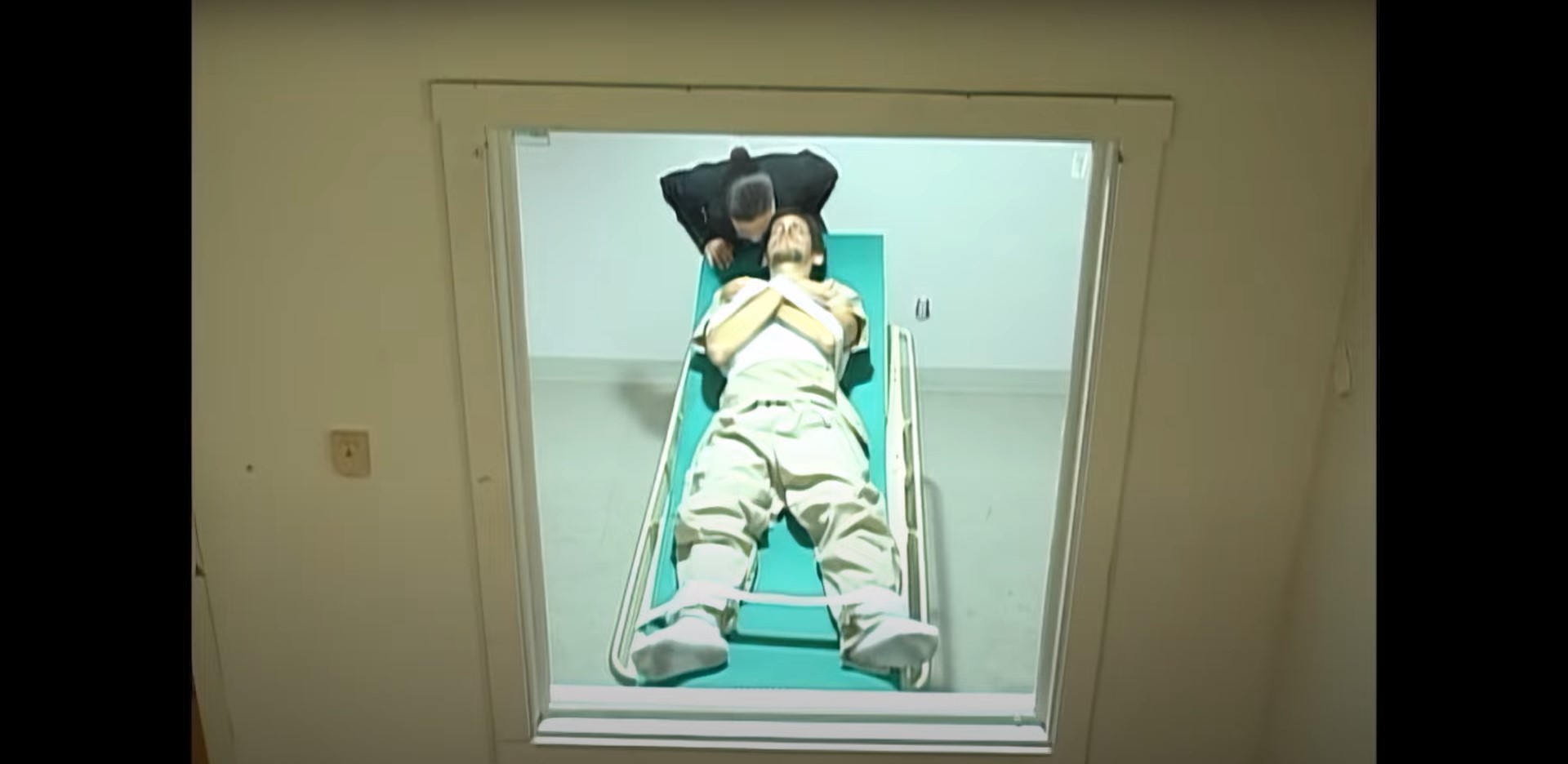
Three film studies college students are eager to win their class’s short film contest with story idea Street Walkers, a genre blending horror movie that crosses “Pretty Woman” with “The Walking Dead.” On their first night of shooting, isolated on the empty streets of Stoker Hills, their actress and friend is suddenly abducted right before their camera lens and instantly give chase without a second to call the authorities, falling right into the maniac’s nightmarish world. Left behind for two detectives is the students’ tell-all camera, leaving behind the recording as the only clue into tracking down their undisclosed whereabouts and stopping the kidnapping-killer. As the detectives home in on the killer’s lair, only hours are left before a determined and desperate madman drains every single drop of their youthful blood for a deadly selfish cause.

Director Benjamin Louis and “Stoker Hills” want you to believe in their compelling and bloody slasher narrative of periled college students fighting for their lives against a formidable, resilient killer while two resolute detectives sniff out the mystery of their disappearance before it’s too late. However, in “Stoker Hills,” nothing is as it appears to be. As the first feature script penned and produced by Jonah Kuehner, the “State’s Evidence” director, Benjamin Louis, coproduces the sheeny cinematic slasher that hits upon almost every known trope in the book by incorporating a backwoods nook, a torturous rec room, and foggy night underneath a vividly complete full moon into a story that’s one part found footage and one part cop thriller. Benjamin and cinematographer John Orphan (“The Black String”) do a phenomenal job crafting away from a Los Angeles look and into an unrecognizable, any-town-America by shooting at the dead of night in L.A.’s low-lit surrounding areas of Griffith Park and the Angeles National Forrest without focusing in on or revealing well-known landmarks. “Wildling’s” Rab Butler and Timothy Christian coproduces the 2020 teen-mystery slasher.

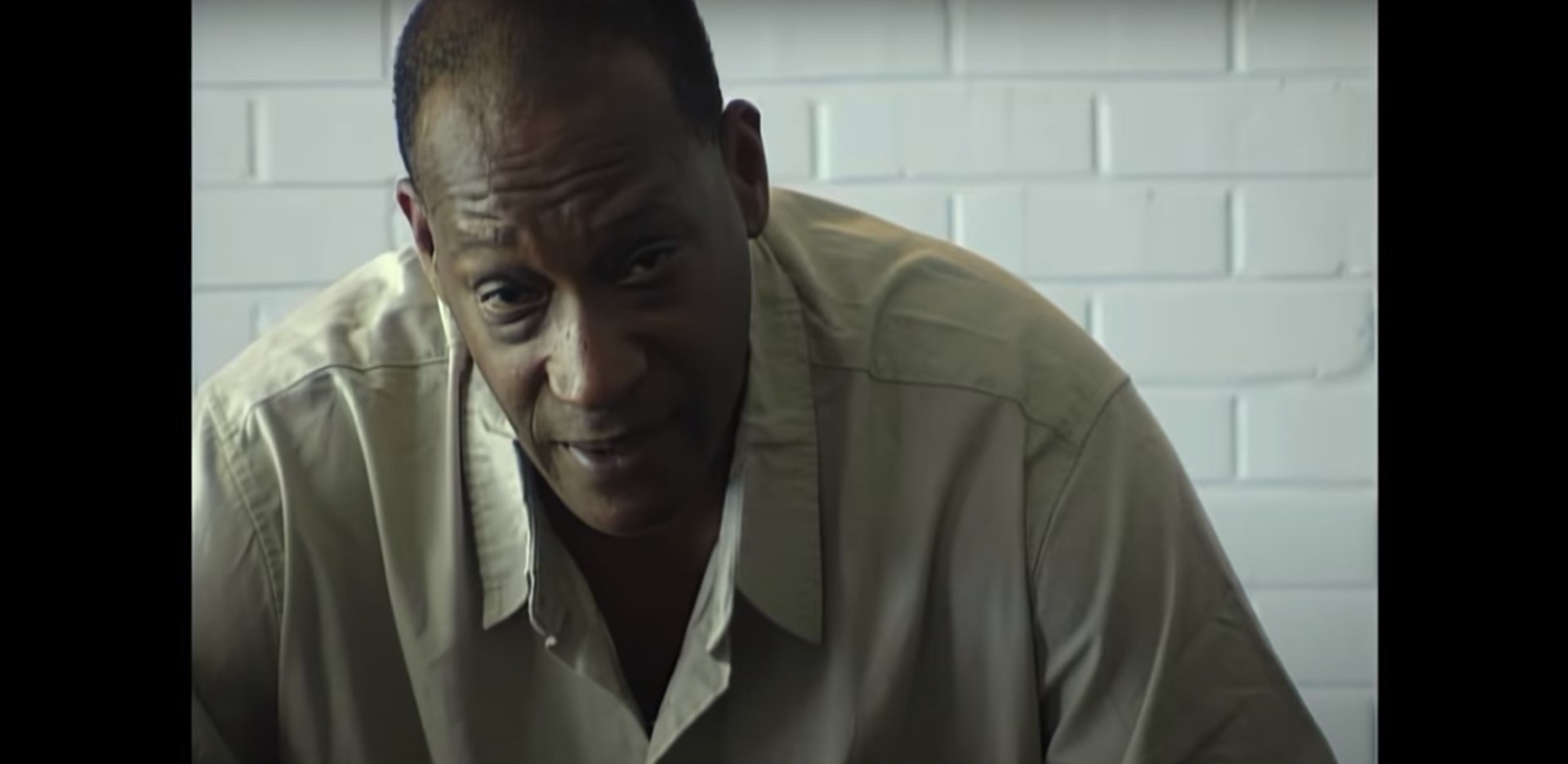
“Stoker Hills” begins very much in the same way as my last review of Seth Landau’s “Bryan Loves You” with a deep-in-character production by the great Tony Todd (“Candyman”) as a film studies professor. Instead of warning audiences to look away if frightened or to be ushered out of the theater when shocked beyond just stomaching the content, Todd’s professor of cinema is passionate and enthusiastic about what great filmmaking and the auteurs who wield their work upon the world. However, much like “Bryan Loves You,” Tony Todd only dabbles into the narrative with a superficial house role that opens the doors for Ryan (David Gridley, “The Unhealer”), Jake (Vince Hill-Bedford, “Sorority Slaughterhouse”), and Erica (Steffani Brass, “Ted Bundy”), three slackjaw, maybe even indolent, students eager to take “The Walking Dead” and turn it into a “Pretty Woman” romance comedy known as “Street Walkers.” The concept is no Guillermo del Toro or Martin Scorsese, but nonetheless barely sates the professor’s threadbare faith in the three’s semester-ending grade. Along the way, we’re introduced laterally to character who will eventually be integrated into the story later and at a state of prominence to the mystery, such as with fellow star student Dani Brooks (television actress Tyler Clark) and her university benefacting donor Dr. Jonathan Brooks (John Beasley, “The Purge: Anarchy”). “Stoker Hills” also isn’t entirely linear as the footage soon appears to be corrupted only to be on pause by two officers investigating the case and analyzing the video. William Lee Scott (“Identity”) and Eric Etebari (“Scream at the Devil”) play the high-blood pressure, blue collar, family-man Detective Bill Stafford and a sophisticated bachelor and quasi-Rain man Detective Adams respectively. The Scott and Etebari cop drama show entertains as less CSI and more NYPD Blue or Law & Order with a conspicuous partner correlation only to be separated by adding snippets of out of context humanity, such as why Adam’s is a loner and Stafford hates changing baby diapers. Powerful stuff. Each character is connected to “Stoker Hills'” antagonist, Charles Muyer (Jason Sweat), who’s been abducting young, healthy people off the streets and into his vacant buildings of intravenous drips of blood into a milk crate-based cylinder beaker tube. Thomas R. Martin, Joy McElveen, Maya Nucci, Michael Faulkner, and “Eraser’s” Danny Nucci round out the cast.

Director Benjamin Louis cherry picks the best traits from a triad of genres to smush together into one trope-tastic “Stoker Hills”  A lumbering mute killer bred to annihilate in his nihilism from the slasher genre, two dedicated detectives determined to catch a killer and able to snoop out clues out of nothing that’s familiar toward the cop drama genre, and a pair of brosefs, who dude each other in every other line of dialogue no matter if it’s joshing in film studies class or being chased harrowingly through the woods and having their foot snagged in the teeth of a beartrap, pulling from the pot-smoking and arrogant hijinks of two immature college aged guys usually hovering around the teen comedy category.  All the actors really get into their parts to the point of a fault in creating a bogus, simulated environment as if a knockoff matrix, coded by naive aliens who know nothing of the human race other than watching “American Pie,” “Law & Order,” and every Renaissance era slasher film, is being pulled over the eyes. The whole ordeal that has a context surrounding Charles Muyer’s bad pig heart is also grossly under kneaded and bordering nonsensical until the ending. That game changing ending spooled by meta wiring puts in perspective every last minute of the well-paced 91-minute film, and when the narrative quickly closes upon itself and fades to black into the credits, every scene previously pondered and examined, crisscrossed into a mental algorithm that breaks down character arcs and progression devices, and spits out answers like an Amazon Alexa has suddenly last all its calculated determination in a snap of a flash. Kudos to “Stoker Hills'” screenwriter Jonah Kuehner for conceiving an overtreated trope decoy story and kudos to director Benjamin Louis in pulling the wool over our eyes without flinching or showing his cards too early.

Everybody run for “Stoker Hills” and become caught up in a diabolical twist that’ll deflate the suspense out of you but also leave you pleasantly surprised. 101 Films released this film last month, March 28th, on digital platforms. Since “Stoker Hills” is solely a digital release from UK distributor, there are no audio or video specs to note or review. Aforementioned, John Orphan helms the “Stoker Hills” noir and no-nonsense veneer which is and also the minor league Jigsaw traps are very “Saw”-like, even down to peppering certain scenes with over illuminating primary color gels if by spotlight. Roc Chen, a profound composer for China over the last decade, notes a less than impactful score in what could be considered more run of the mill material, but that also could play into the whole narrative twist. There were no bonus features available with the film nor were there any bonus scenes during or after the credits. At first glance, “Stoker Hills” treads over the same worn trodden path of slasher predecessors, but then the finale hits like a five-finger slap in the face from Will Smith and, suddenly, everybody could be, should be, and will be talking about “Stoker Hills'” gripping gambit.
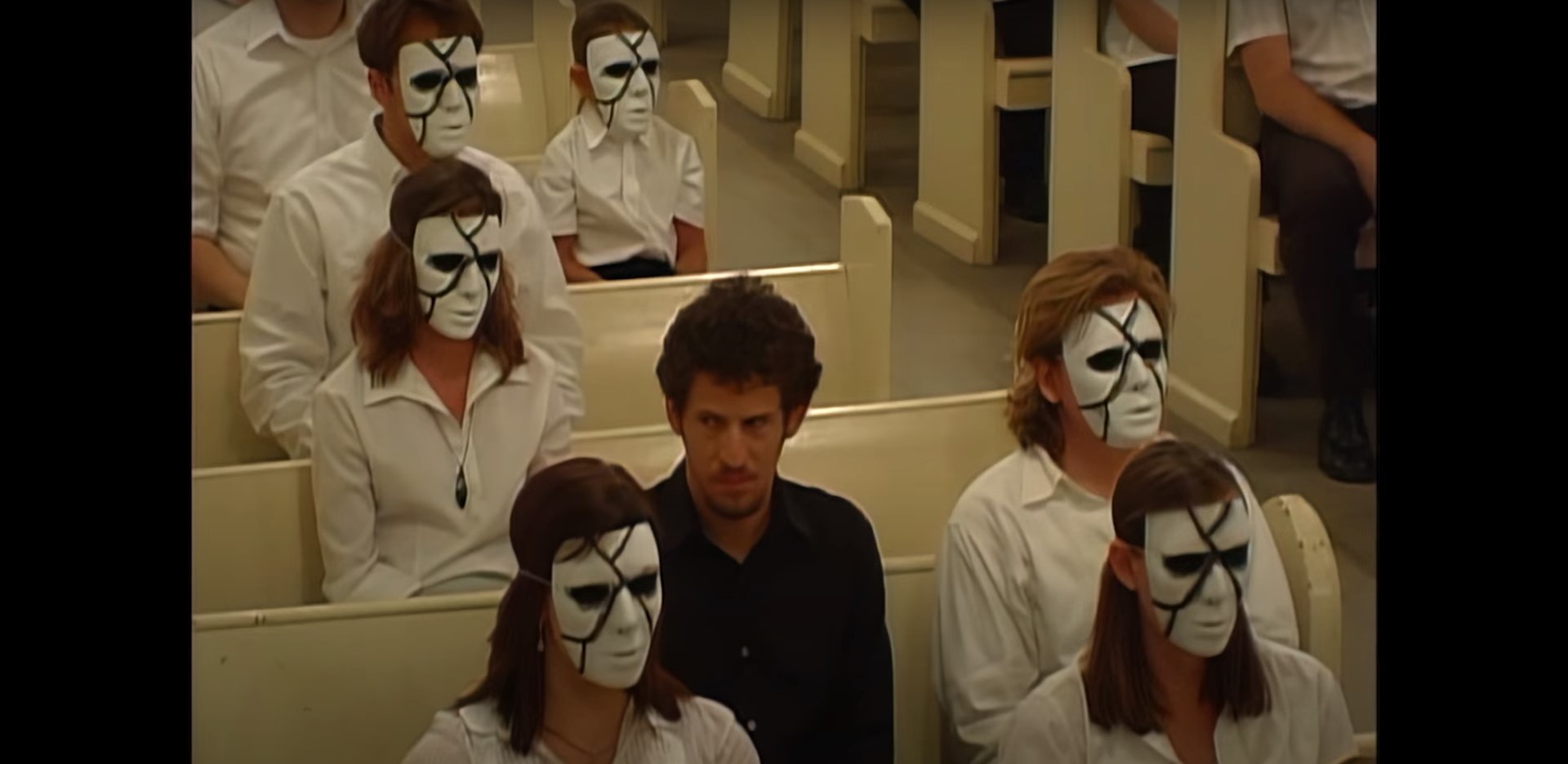
EVIL Masked as a Religion. “Bryan Loves You” reviewed! (MVD / Blu-ray)

All New Blu-ray release of “Bryan Loves You” on Amazon.com

Something weird is spreading across a small Arizona town.  A chapter of a new religion has influenced most of the community into believing in Bryan, a pure and pious young boy from long ago who was brutally slain by the devil.  Jonathan, a local psychotherapist receives a camera from his uncle, also a health professional, with a self-recording that warns Jonathan that Bryan zealots are a dangerous, violent cult.  Deciding to document the situation himself, Jonathan repurposes the camera to clandestinely record the widespread Bryan gatherings and even infiltrate their church where they speak in tongues and wear the scarred mask of Bryan.  As Jonathan goes deeper into the uncomfortable insanities of Bryan’s world, the more Bryan followers takes an interest in reconditioning Jonathan. 

“Bryan Loves You’s” grainy SOV pseudo-documentary lacquer not only captures the icy blank stares, the unabating drone chanting, and the brainwashed coup of an insidious cult assimilating small town America, but the Seth Landau written and directed film also homogenously captures, all too presently well, that sense of ambivalent and conspiracy dread that knots apprehension uncomfortably in the pit of the stomach.  The 2008 released “Bryan Loves You” has the story set in 1993 Arizona made out to be a historical home video and CCTV recorded account of the analyzed and dissected suppressed footage coming to light for the first time incomplete with censored last nights and specific addresses to make the pseudo-doc appear more genuine and shocking.  Filmed in and around the suburbs of Scottsdale and Phoenix, Arizona, “Bryan Loves You” is a found footage subgenre production self-produced by Mike Mahoney and Seth Landau, under the filmmaker’s Landau Motion Pictures, and marks the debut feature film of Landau’s humble career that started roughly around 2003 as a production assistant on “Arrested Development.”

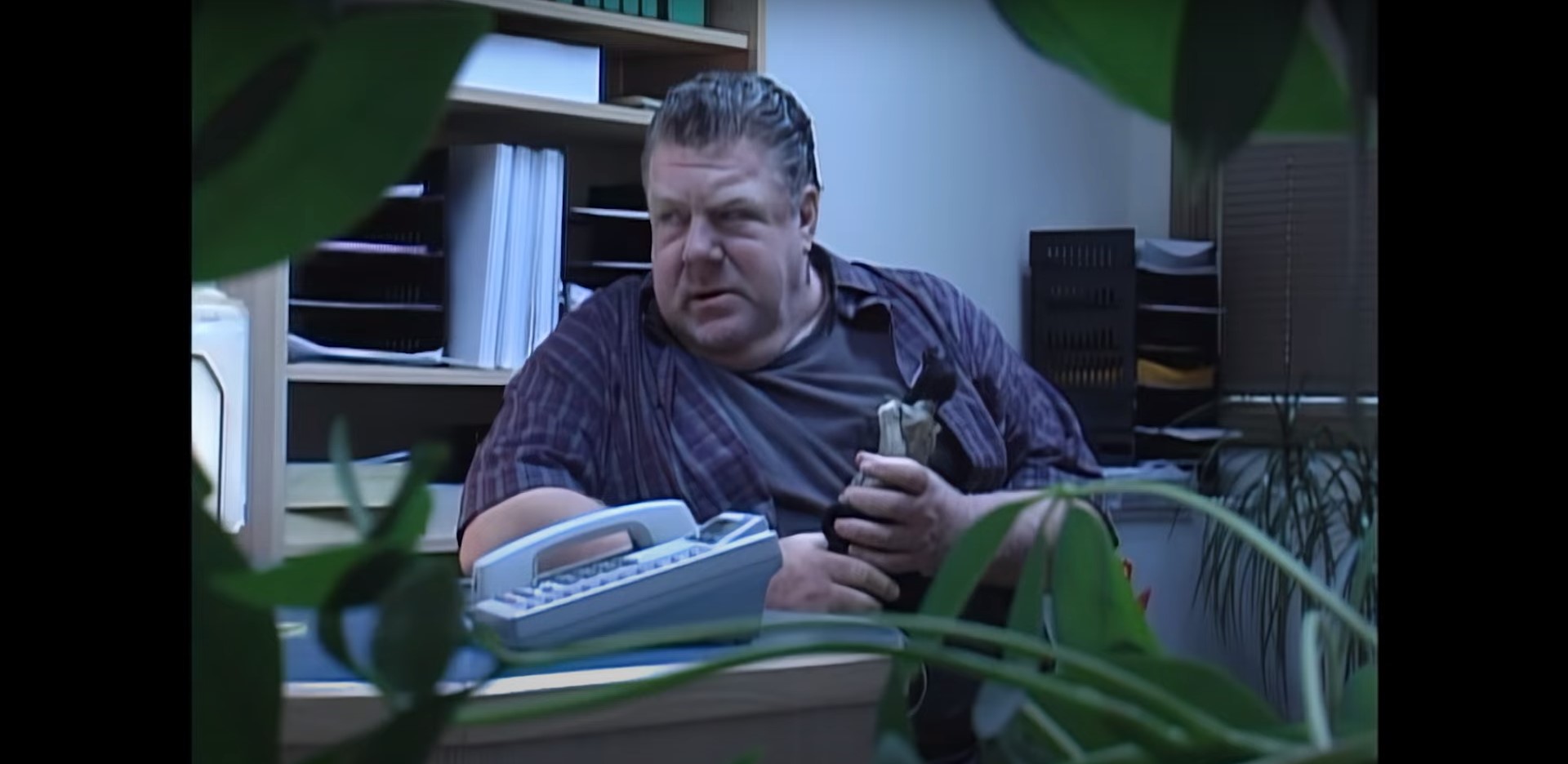
For the average popcorn movie goer, “Bryan Loves You” is about obscure as they come with a no-name director and a cast with relatively no-name actors with the exception of one that might have a chance of recognition by the common Joe Schmo.  Old heads may recognize George Wendt, one of the barflies from the sitcom “Cheers” and the Saturday Night Live sketch of Super Fans, in his brief and strange scene as a patient holding a doll that speaks to him about people who talk about him.  For chin-deep genre fans, Wendt is about the biggest A-lister you can have in an indie film and what’s unusual about “Bryan Loves You” is the stacked list of iconic made-by-horror names that make up the cast list.  It’s impressive.  Landau’s connection to the late great master of horror Stuart Gordon (“Re-Animator”) opened the door to George Wendt, who starred in Gordon’s “King of the Ants,” and, likely, led to the onboarding fan favorites such as Brinke Stevens (“The Slumber Party Massacre”), Tiffany Shepis (“Tromeo and Juliet”), Lloyd Kaufmann (“The Toxic Avenger”), Daniel Roebuck (“The Devil’s Rejects”), Chuck Williams (“Demon Wind”), and Tony Todd (“Candyman”).  Now, with these many names, none of them have starring roles and few have reoccurring scenes, but they are headlined to draw attraction for “Bryan Loves You.”  Honestly, the performances are hardly worth nothing.  Steves and Kaufmann have little dialogue and are shot at weird angles that makes them hardly recognizable.  Best scenes go to Tony Todd as a hesitantly disturbed and full of fear narrator standing in an empty board room and talking directly into the camera about what we, the audience, are about to witness, even directing viewers to turn away or to be ushered out of the theater (did this get a theatrical release?) if the content becomes too shocking to behold.  Seth Landau stars as the principal lead Jonathan who can’t be taken seriously as a psychoanalyst as there is no depth to the character in those regards.  Plus, as someone who’s supposed to uphold ethical standards, Jonathan breaks quite a few HIPPA regulations and breaks into houses with a camera, filming Bryan acolytes without their consent.  “Bryan Loves You” rounds out the cast with Tori King, Candy Stanton (“Exit to Hell”), Shane Stevens (“The Graves”), Jilon VanOver (“Bad Blood”), Tom Noga (“Anonymous Killers”), Jesse Ramiawi, Jacqui Allen (“Blue Lake Butcher”) and Daniel Schweiger (“Die-ner”)

Seth Landau’s found footage cult film is a rough cut of rudimentary psychological suspense restrained by its limiting low-ceiling budget.  The acutely hard cut editing and wonky framing is enormously puzzling within the narrative’s supposed single camera source documentary structure that suddenly diffuses into being a splice between Jonathan’s camera, which he loses halfway through the story, and a bunch of randomly placed CCTV footage across all of Arizona, in which some scenes are randomly placed in the desert where no structures are seemingly present to house a camera.  Who gathered and edited all this multi-video footage together?  Or does that play into the mystery, no matter how illogical, of adding to “Bryan Loves You’” unsettling allure?  What Landau does accomplish compares closely to what directors Eduardo Sánchez and Daniel Myrick were able to profoundly achieve with their unexpected breakout found footage blockbuster, “The Blair Witch Project.”  Now, I’m not saying “Bryan Loves You” had the audience gasping power as the “The Blair Witch Project” but the air in the story still feels very uncomfortably still, like in holding your breath, because something sinister is closing in and that type of disturbing presence, coupled with the erratic demonic behavior boiled to the surface if love for the almighty Bryan is absent, is all too relatable in today’s political climate.

Though “Bryan Loves You,” MVD Visual really loves Bryan right back with a high-definition Blu-ray release, remastered and upscaled from the original master source, a digital recorded standard definition, with an approved up-conversion of 172,800 pixels to over 2 million pixels per frame to achieve full HD.  For SOV, the handheld cam footage turns out more detailed than expected with suitable tinctures that are often less vivid in the found footage genre; however, there are still varying levels of quality from lower quality posterization to better than mid-grade delineation.  Though stated as presented in a widescreen 1:78:1 aspect ratio on the MVD Marquee Collection back cover, the actual ratio is a pillarbox 1:33:1 without straying from that display. The English language dual channel stereo track also has varying fidelity levels using the inconsistency of a built-in handheld mic but the good bones behind the range and depth retain the natural auditory proportionate. A few augmented audio tracks are snuck in for effect, such as the preacher’s demon-speak and the school PA system. English subtitles are optional. With a new Blu-ray release comes all new special features with a few short film-length interviews between filmmaker Seth Landau and George Wendt (44:50 minutes), Tiffany Shepis (50:49 minutes), Daniel Roebuck (59:35 minutes), and Brinke Stevens (31:46 minutes) touching upon more than just “Bryan Loves You” but also various career moments and other media cultural topics. Also featured are two commentaries: a 2008 commentary with Landau, select cast and crew, and JoBlo critic James Oster and a new 2022 commentary with only Landau. Plus, a brand new 2022 theatrical trailer. “Bryan Loves You” draws parallels to the 1993 Waco, Texas cult led by David Koresh of the Davidian sect preaching fire and brimstone, but writer-director-product Seth Landau adds his own supernatural concoction in a trade-in of doom and gloom for mindless devotion and diabolism that turns folks into followers and flesh-hungry fiends at times. Maybe not the prime cut of the cult genre but does stand out even if you don’t really love “Bryan.”

All New Blu-ray release of “Bryan Loves You” on Amazon.com