Recalled to Nam is a Return Tour of EVIL! “Kill Zone” reviewed! (MVDVisual / Blu-ray)

Enter the “Kill Zone” on a New Blu-ray Home Video!

Combat POWs are captured by enemy forces, imprisoned in an outdoor internment camp.  Tortured for information, the prisoners are held without water in the scorching heat, strung up for hours on posts, beaten to a pulp, and stowed away in a hotbox if they do not cooperate with interrogators.  When Lt. Jason McKenna snaps and loses grip on reality, he breaks free from his confinement and kills four guards during the process when the soldier believes he’s back in Vietnam.  The only problem for McKenna is that the enemy imprisonment was a his own military’s roleplay training exercise for POW-survivalist.  The commanding officer, Colonel Crawford, had pushed McKenna too hard, making the exercise realistic as possible despite the warnings of fellow trainee and McKenna’s friend, Mitchell.  Now, the incensed Colonel is out for blood, covering his tracks with military leadership as he and the gung-ho soldiers seek to put an end to McKenna and it’s up to Mitchell to find his troubled friend first. 

The high-body count film that became the launching point for what would form Action International Pictures, 1985’s “Kill Zone,” an American-made, military actioner written and directed by the late David A. Prior (“Sledgehammer,” “Killer Workout”), opened the production door for a string of both action and horror ventures that spawned cult followings over the decades to come, especially when obscure titles such as “Kill Zone” never made it passed the release of its VHS format – until now.  John Saxon’s “Death House,” “Teenage Exorcist” with scream queen Brinke Stevens, and even the pint-sized creature feature “Elves” are just a few titles that owe “Kill Zone” some ounce of ground working thanks.  Prior cowrote the script with Jack Marino, who also produced the film under the limited formation of Spartan Films, and was shot in and around what is now Prado Regional Park in Chino, California.

Trekking from internment camp to civilization, aka the kill zone, and fighting and fleeing for their very lives from their own crooked military unit are McKenna and Mitchell, played correspondingly by “Killer Workout’s” Fritz Matthews and Ted Prior, younger brother of director David Prior.  Though Matthews has the emotional range of a tree stump, the leading man more or less fits the bill as a tall and stocky soldier protagonist while Mitchell does all the emotive heavy lifting of the pair, reflected in his large and muscular Stallone-sized biceps.  The comrades’ necks fall under the boot of Colonel Crawford from an aging David Campbell (“Scarecrows”) whose ridicule onslaught is dousing and his ruthlessness remains constant but can’t top the baseline he cemented early on into the story, diluting his villainy with not much formidableness, and becomes a feeble opposition.  Colonel Crawford is backed by his equally inadaqute military unit, former fellow trainees that divide themselves into a clique against the diverging outliers McKenna and Mitchell who separate themselves from the apathetic herd thinking either by post-traumatic mental illness or for concrete concern for a life-saving friend.  Either way, the rest of the unit bully their way into Crawford’s good graces albeit the Colonel’s lack of interest in the lives or death of his men in a nationally organized armed force that breathes the creed to keep the peace, but the Colonel’s men are just as complicit to their commanding officer’s callousness when they begin to rough up and snuff civilians in what is the most cold-blooded aspect of “Kill Zone’s” torrent.  Dennis Phun (“Surf Nazis Must Die”), Rick Massery, Richard Brailford, William Zipp (“Mankillers”), Richard Bravo (“Killer Workout”), and Larry Udy fill out the Colonel’s men while Ron Pace, Tom Baldwin, Jack Marino, and Sharon Young round out the civilian contingent.

On the surface, “Kill Zone” has the presentation of a direct-to-video, low-budget rip of “First Blood” but like the Sylvester Stallone John Rambo thriller, commentary undertones rise to the top with an additional few bobbing and freestanding from 1982 film.  Producer Jack Marino admits watching “First Blood” prior to writing the script that obviously become appropriated from the Ted Kotcheff picture in what is an underlining post-traumatic syndrome plagued individual in a dormant stage of the affliction then becomes pried open by aggressive, misapprehending authority with no time for a condition they’re ignorant too.  What follows is a deadly resistance against a barbaric enemy and the starkly different situations both characters John Rambo and Jason McKenna find themselves caught up in parallel their hellacious Nam tour in many synapse-snapping and physically scarring aspects to a point where the line blurs between being back in that Hell in reality and being back in that Hell in the mind.  What “Kill Zone” adds to its own version of the tale is no pedestrian anti-war pushback like we see with Brian Dennehy’s Podunk sheriff and his deputies but rather a shift in commentary toward the military’s once push harder and neglectful treatment on PTSD in what becomes an anti-military production to the extreme.  John Rambo had military sympathizers in Richard Crenna’s Colonel Trautmann but Jason McKenna’s Colonel spat flak with nothing but contempt for what he considers a weak soldier.  While military criticism is large and in charge, what negatively impacts “Kill Zone” is the no flare for technical military behavior or jargon.  The opening combat scene exemplifies the inexactitudes with Mitchell and his team storming through brush and across a river toward an unseen enemy’s stronghold guns blazing like little boys with popguns and mouthy explosions sounds of amateurism splayed all over as he and his team run wildly, hop like a bunny into fire stances, and point rifles with no line of sight.  Prior is able to achieve some nice shots of ammunition exchange with slow profile pans and aerial assaults filmed up from the ground, but there’s too much downplay to take this low-rung action film seriously and to really get a viewer the headspace of “Kill Zone’s” deathtrap montage that warrants more respect than what the rest of the presentation layout provides.

Missing in action from contemporary formats for over three decades, “Kill Zone” finally becomes rescued from inferior definition captivity and arrives onto DVD and Blu-ray (reviewed) courtesy of MVDVisual’s Rewind Collection series.  The Blu-ray is an AVC encoded, 1080p high-definition transfer scanned and restored in 4K from the 35mm interpositive print.  Presented in a widescreen 1.78:1 aspect ratio, the new transfer breathes new life into the lost but not forgotten feature with an enriched color grading and a sharpening of details, especially textures of the foliage and rocky terrains and assorted skin features.  Not entirely impeccable, contrast often teeters in the same frame and there’s an abundance of saturating grain, like large raindrop grain, in nighttime image that wash out details to great extent, but we’re always reeled back in with warm and pleasant color palette that flushes the previous VHS release quality down the core memory exiting drainpipe.  There’s one or two moments of vertical scratches, indelicately faint, and rough editing patches that distort to a blip that may be more problematic and age-related from the interpositive print than the dynamic restoration that was done.  The English language LPCM 2.0 mono track suffers from the low-quality sound recording equipment or placement that renders dialogue soft and nearly unintelligible as volume levels severely spike depending on how much the actors are projecting their voices.  There is some minor, unobtrusive popping throughout the fidelity faithful ambient and dialogue track, the latter, though softly wavering at times, does ultimately prevail to the forefront.  Optional subtitles are available.  Special features include a new audio (and optional video) commentary with producer Jack Marino, moderated by Cereal at Midnight host Heath Holland, a new Making-Of Kill Zone” featurette with clips interview with Jack Marino moderated by “Kill Zone” restoration project producer Steve Latshaw, the Vestron Video VHS version of the feature in standard definition, a photo gallery, and the original theatrical trailer redone with restoration elements.  The action-packed original poster art obtains a renewed look for the Blu-ray’s retro cardboard O-slip that resembles a torn, scuffed, and stickered VHS box art. Underneath the slipcover, the same poster art is on the front of the clear Blu-ray snapper case with latch and on the reverse side a back-the-scenes still images of Ted Prior and costars in character form.  The insert holds a folded mini-poster of the original poster art and the disc is pressed with the ridged gridlines of a VHS shell cassette with insert this side directions at the top.  Pretty neat design that further leans into “Kill Zone” VHS cult following purgatory.  MVD’s 50th release of the Rewind Collection is rated R feature has a runtime of 91 minutes and the Blu-ray is region unlocked for everyone’s viewing pleasure.  No longer destined to live out its shelf life on VHS, the wonderful contributors to obscure movie restoration brings “Kill Zone” back into action with a rejuvenated hi-def release that’ll blow you away. 

Enter the “Kill Zone” on a New Blu-ray Home Video!

You Can’t Run From the EVIL That Seeks Out the Competition. “Homewrecker” reviewed! (101 Films / Digital Screener)


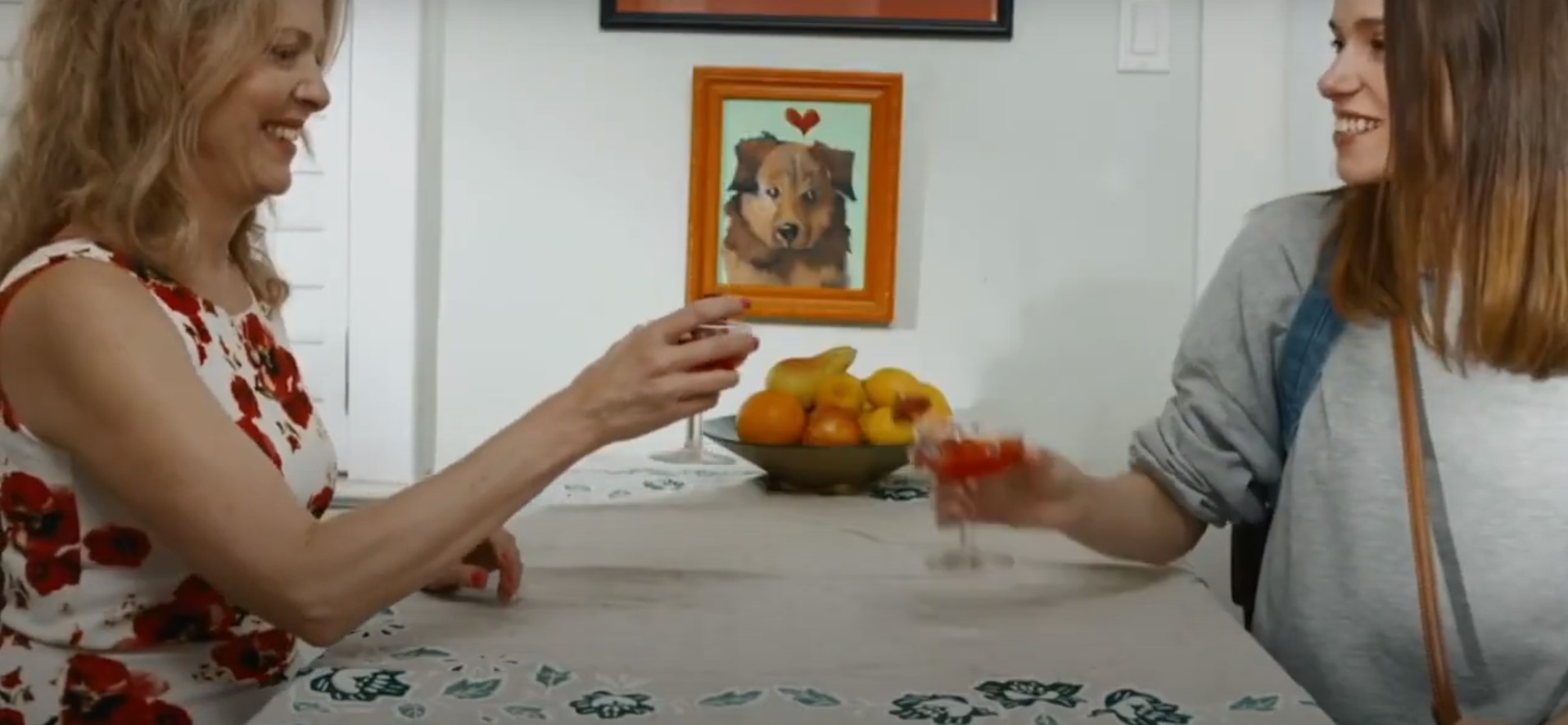
Michelle is at the point in her life, struggling as a 30-something year old interior designer, where the urge to have children is strong.  When trying to conceive with her husband seems to be going downhill, she is befriended by an overly obsessive stranger, Linda, who has took an uncomfortably intense interest in her personal life.  An innocent enough invitation back to Linda’s house proves costly with Linda’s flickering infatuation for Michelle’s private business that turns quickly sour in a cat and mouse game of survival.  Trapped, Michelle must understand Linda’s madness in order to stay alive.

Ca-ra-zyyy!  That’s one of many ways to label Zach Gayne’s woman-on-woman scuffle in the comedy-horror “Homewrecker” that will surely turn many feminist heads at breakneck and contentious speeds with the better woman standing scenario.  Gayne’s freshman film tests the wills of two very different women and their counter mindsets while excavating a common core connection rooted subconsciously deep within them both.  A distinction that gives the 2020 riotous feature an edge is the two sole actresses, Alex Esso (“Starry Eyes,” “Doctor Sleep”) and Precious Chong (“Luba”), daughter of famed stoner comedian Tommy Chong, portraying Michelle and Linda are also “Homewreckers” cowriters alongside Gayne, equipping their characters with an authentic image by filling the roles themselves and getting out of the project exactly what’s desired.  The trio also produce the film in a coproduction with fellow producer Josh Mandel of Industry Standard Films and under the financials of Precious’s mother Shelby Chong, Chris Morsby, and Delaney Siren as executive producers.

Precious Chong, hands down, steals all the glory in “Homewrecker” with her wide-eyed, mentally unstable, zany, and stuck in the 80’s single white female that makes Glenn Close performance seem diminutive and more like an innocent and shy little crush in “Fatal Attraction.”  Linda epitomizes the very definition of crazy as a person unable to progress from an era of her peak youth being the most popular girl in school, judging by the VHS tapes, 80’s soundtrack, and outdated board games, I’d say Linda’s popular party girl inner nature hasn’t disembarked from the late 80’s to early 90’s train, and Chong delivers a singularity tweak of neurosis and delusion that frighteningly teeters from over exaggeration to real representation.  Unfortunately, Chong’s invasive, off-the-rocker performance overshadows Alex Esso’s more level-headed, amiable, and fight or flight Michelle and her unconventional responses and reactions to Linda’s incessant behavior in, perhaps, a more poorly written character.  Michelle is the too nice to the point where opportunities arise for escape or attack and she chooses the total opposite in trying to reason with an unreasonable person.  The motivation behind Michelle for even going to Linda’s house is rather slim so either something deep in her subconscious wills her to go (maybe Linda’s eagerness to lend an ear on a torrent of personal unloading) or she’s a just gullible to a fault.  Rounding out the cast is the man in the middle, Robert, played by Kris Siddiqi and the friendly neighbor Wilson, played by Tony Matthews (“The Craft: Legacy”), in a bit part that’s a clever homage to the Wilson character in Tim Allen sitcom, “Home Improvement,” as he peeps just over the fence to say hello as well as an contradictory play on the “Homewrecker” title.

Aforementioned, there is gray area in the character actions and rationales that thins much of the story’s harrowing affect and even seeps slightly into the more dark comedic moments.  Yelling (in my head) at the screen for Michelle to jump out the window (after lingering half out for clearly a minute) or taking advantage to overpower Linda (during a moment of long poignant embrace) was just a waste of my mental breath as the Michelle is frustratingly too timid, too nice, too afraid to cut the unseen bounds that holds her back from reinstalling balance in her upheaved life held in Linda’s unstable hands.  The pacing a bit of a drag as well by holding onto scenes, with various cuts, longer than necessary.  For a film slightly over an hour long, the conversing segments between the principle characters, Linda and Michelle, could last up to 20 minutes with more than most of the chat awry by Linda’s idiosyncrasies.   What works for “Homewrecker” is single day story set inside Linda’s home that really hones in and develops the snowballing turmoiled relationship between the two women. Being the film’s strong suit in unveiling the crux of the problem that’s not surface level crazy person versus sane person, the plot point revelation truly did blindside me and I was like, whoa.  Everything made sense without having to dig deeper into exposition to understand the minor details of what was happening exactly.  “Homewrecker” also has great brief climatic gore involving an emblematic sledgehammer and a pair of sharp scissors that, again, comes unexpectedly from a cat and mouse game that has been rather tame for most of the film.  Zach Gayne’s film pleasantly puts a blood red cherry on top of a deranged ice scream sundae dripping with fanaticism fudge in a scrumptious little fatal attraction.

Efficiently compact but just as aggressive as an overly jealous and overactive girlfriend plagued by psychosis, “Homewrecker” premiered it’s way digitally into UK homes by 101 Films back on May 24th.  The Toronto, Canada production is presented in a widescreen 2.39:1 aspect ratio with a lean runtime of 76 minutes.  Co-producer Delaney Siren serves as the cinematographer for “Homewrecker’s” regular split screen and multiple angle shots denoting a clear sense of where each character location is without the film feeling like a typical slasher while maintaining the focus on telling both women’s side.  “Homewrecker” marks Siren’s first feature film as a cinematography, but has multiple credits in the genre for macabre inspired music videos under the Toronto based music recording and film production company, “Reel Wolf Productions.”  For a film that has completely and satisfactory bookends, there are no bonus scenes during or after the credits.  Quirky and dark, “Homewrecker” is a read between the lines comedy-thriller about abduction, devotion questioning , delusional obsession, and honesty.

Let’s Ride the Ol’EVIL Succubus to Chastity High School in “Sadistic Eroticism” reviewed! “Wild Eye Releasing / DVD)


At California’s Chastity High School, a strict and sadistic far-right facility body abuse and favor a select assembly of pupils, isolating the semi resembling studious teenagers, who wear black trench coats, innocently worship indie horror flicks, and the idea of women, to the whims to not only a rapist principal and a Nazi fascist assistant principal, but also suffer prolonged torment from the school’s popular kids. When one of the regular teachers slips, falls, and dies on a pool of ejaculate, a voluptuous and alluring substitute teacher, Ms. Lizz, fills in, hoping to become a permeant teacher at Chastity High, but Ms. Lizz has a three hundred year old secret being a vampiric succubus who lures in and possesses the popular, sex-crazed, hormone driven high school jocks who will do her bidding in abducting the beautiful high school sluts and for Ms. Lizz to drink their blood to retain immaculate beauty. Its up to three Troma loving and heroine doping geeks and an odd janitor to stop Ms. Lizz before she laps up slut blood and moves on to the next school.

Like a barrel full of doured high school rape jokes bubbling in a stasis of formaldehyde, the farcical cringe-worthy comedy-horror, “Sadistic Eroticism,” is the brain damaged brainchild from writer-director, Alex Powers, as his debut feature film shot entirely on VHS cassette that pays homage to the SOV horror of the early 1980’s, such as “Boarding House” or “Sledgehammer.” Powers, who went on to helm “GrossHouse” and its sequel, congeals on a slapstick of analogue digressions to introduce himself as an auteur filmmaker who, unrestrained, can exceed beyond the distinct hardline of political suitably that’s not only a testament toward the very title of the film, but also, perhaps, securing Powers on a number of studio blacklists unwilling to touch him with a single junk-destined email originating from the other ends of the Earth. Starchild Video serves as production company, which if entering “Starchild” and “Sadistic Eroticism” in the same search engine field, you’ll get a nice little stern warning about your search results involving child sex abuse and any images depicting such should be notified. Yikes.

More promising than the infamous history of the Hungarian noble woman, Elizbeth Bathory, to which “Sadistic Eroticism” properly appropriates it’s title and abstract character from, is the colorful, if not disdainfully charged, personalities teeming with a variety of depraved intentions and the entire cast embraces the full blown degenerate toxicity. More than likely, most of the cast list is made up of not household names like JD Fairman, James Coker, Nicholas Adam Clark and T.J. Akins as a black Nazi fascist hard up on Christian values and stern punishment. On the flipside of that coin, genre fans can root through the blurry, sometimes overexposed, tape recordings and find familiar faces of the then scruffy looking filmmaker James Cullen Bressack, writer-director of the popular indie found footage thriller “To Jennifer” and producer to the subsequent franchise films, “2 Jennifer,” “From Jennifer,” and “For Jennifer,” suited up in a shirt-sized Confederate flag as one of four high school bullies to fall under Ms. Lizz’s spell. The prolifically half-naked all the time indie actor, Michael Q. Schmidt (“The Pricks from Pluto Vs. The Vaginas from Venus”), straps on BDSM gear for a little sodomy counseling as Principal Buggary, “2001 Maniacs” Field of Screams” Miles Dougal slaps on a wife beater for some sleazy slumber party slime ball in a high school girl’s father role, and, of course, the lovely pornographic actress who branch out and take a break from oral sex, group sex, three-way kissing, and – oh wait – they do and simulate that in this Powers’ as well. Tori Avano, Imani Rose, and Jayden Starr are the three high school sluts who shameless flaunt their assets for Sophie Dee to snatch up and soul suck her way for anomalous aesthetics as a satanic form of cosmetic surgery. The latter actress, Sophie Dee, is endowed, more ways than one, with the role of the vampire-succubus Bathory, keeping well….well abreast her monotonic acting talents with her adult industry persona. All four ladies show an abundance of above waist skin and engage in some solo girl, boy-girl, boy-boy-girl, girl-girl-girl, boy-boy-boy-girl… and now I must sit down a rest my brain. Dou Waugh, Sto Strouss, Paymon Seyedi, Candis Higgins, Mel Martinez, Aaron Granillo, Matt Johnson, Ian Fisher, Jody Barton, and Yajaira Bardales round out the cast.

Jokes and slapstick humor disassociated, “Sadistic Eroticism” still relates to the Elizabeth Bathory backstory told on VHS through a tube television presentation of Ms. Lizz’s abnormal history subjects. The succubus creature is nothing less than a buxom beaut that undresses with her feminine wiles zombifying men to do her bidding without her lifting a finger to break a nail against the hypersexualized school girls; yet, to show this century’s old cacodemon as provocatively dressed and to skim around bellying up the tension isn’t quite enough to sell the dominance an ancient evil should be wielding like she owns the whole damn school. There’s more of visceral presence of evil between Principal Buggary and Assistant Principal Defur and though they’re also vaguely under the influence of the succubus, their combined power is the epitome of “Sadistic Eroticism.” The script, characters, and subject material are indicative of Alex Powers attempting to reel in Lloyd Kaufman and his Troma slum-empire to purchase and distribute the filmmaker’s squawking lechery of a film and yet, perhaps, the Troma acquisition team also saw too much of a yawn-fest to bare the Troma brand as the nearly two hour runtime sluggishly relies too hard on being incoherently schlocky to be coalescing competent to make sense. “Sadistic Eroticism” is more masochistic in it’s ostentatiousness to desensitize power and rape and call it comedy, but rocks a mean cast of players from all walks of life to be a mean-spirited take of The Blood Countess.

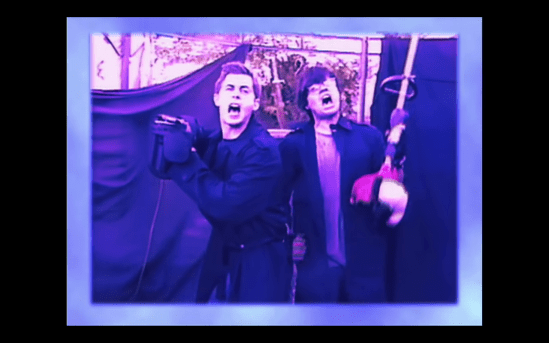
Open your lesson books and get ready to be schooled by the twisted and obscene in Wild Eye Releasing’s re-release of “Sadistic Eroticism” on the label’s Raw and Extreme banner, distributed by MVDVisual. The region free, unrated release is presented in a SOV full frame of 4:3 aspect ratio. Tracking is the least of the problems with this uncouth image presentation rendered from pillar to post quality of warm tinges, severe color corrections required, and gauche details emblematic of cassettes, but all that was Alex Powers intended design to relive in the era of SOV. However, there are some less than stellar, even for SOV, that negate the effort, such as high contrast and poor lighting nearly blanking out darker scenes and the entire climatic end has a neon purple border and the scenes are also recorded in an awful tint of purple, making the entire finale be seen through Grimace vision. To top it off, the jagged opening titles, credits, and crooked visual composites are nearly discernible. The English language mono track is touch and go, mostly go as dialogue wanders into a deaden muffle and is also drowned out by a stock score tracks. There’s not much range or depth as much of the audio is picked up by the poor quality of the VHS handheld mics as exhibited on the special features, which include a director’s commentary and a behind the scenes hosted by that James Coker, who does a pretty good engaging the actors for the in-the-face interviews to explain their characters, scenes, and just overall thoughts with porn starlets and actors milling about or in takes. Sophie Dee’s bosomy eye-catchers, Tori Avano’s star-shaped nipples, Imani Rose’s vivacious sexual appetite and a stockpile of lewd, crude, and nude wets the very foundational whistle of “Sadistic Eroticism” bungled in a sloppy heap of first time filmmaking.

Order “Sadistic Eroticism” on DVD at Amazon!