Limited Edition EVIL to the Extreme! “August Underground” reviewed! (Unearthed Films / DVD/Blu-ray Combo)

Limited Edition “August Underground” Ready to be Received! 

A young farm owner invites his quirky, video-taping friend into the soiled and confined basement of his home where he keeps a nude, young woman gagged and rope bound to a chair, previously been tortured, and covered in her own blood and filth.  Both feeling giddy with excitement over their new plaything, the two sociopaths revel inflicting more torment and pain on the woman while her boyfriend’s mutilated and dead corpse is being dismembered in the next room.  When their basement plaything expires after days of neglect, the two joy killers hit the New Jersey and Pennsylvania turnpikes and backroads to continue a merciless killing spree of whomever stands in their path.  Convenient store clerks, hitchhikers, prostitutes, even their tattoo artist and his twin comic book enthusiastic brother are not safe from their chockful of callous carnage and every moment is recorded via videotape for reliving the moment in posterity. 

As far as underground horror goes, Fred Vogel’s “August Underground” is about as extreme and underground as they come and still be recognizable amongst the most casual of horror fandom.  Vogel’s inaugural written-and-directed, pitilessly violent, exploitation begins a direct-to-video trilogy of torture-on-tape with SOV quality, imparting grisly shudders to the unfathomable amount of blank-labeled VHS cassettes through man’s stowage, collecting dust bunnies and remaining unseen over the years to the horrors the magnetic tape just might behold.  What “August Underground” essentially boils down to is a raw day-to-day look of two maniacal serial killers on a free-for-all of a butcher’s market, the shooting locations stretch from the recesses of Vogel’s hometown of Warren, New Jersey and all the way to the surrounding back roads and isolated areas of Pittsburgh, Pennsylvania.  Self-produced by Fred Vogel and co-producer John A. Wisniewski, “August Underground” set inaugural voyage on the blood red sea for Vogel’s Toe Tag Productions in 2001.

There is a severe lack of story for Vogel’s debut and that’s no oversight or a sign of omission of a subconscious creativity.  Most normal, everyday people video-record with the intent on not making a feature-length film but rather to capture memories and store them away for another day.  Vogel strives for that realism here where a plot is, for lack of a better word, pointless for the depicted atrocities where the sole purposes is to exhibit dementedness and insanity.  The same can be said about the cast of nameless characters.  The freeform recording does not spout off introductions or make references to monikers to, again, portray as much as organic conversation or realism as possible to further skewer an already gore and violence skewed imagination into thinking what we’re seeing is authentic and inconclusive of its entertainment purpose.  Fred Vogel, under his so-called porno stage name of Peter Mountain, plays the main principal dressed in arrogance and apathy as he’s recorded in a thumbed selection of runtime filmed by an equally bad-natured, sociopathic friend behind the camera, played by a post-release distancing actor under the pseudonym of Allen Peters.  The two complement each other in a Beavis and Butthead friendship kind of way with Vogel in synch with his character’s bloodlust as well as the burly bulk while camera buddy perversely watches, giggling to his friends’ blood shedding exploits.  Their relationship feels like a lonesome outlet to do harm and senseless killing makes the connection firmer, more enjoyable, in the easiest opportunities of a rural area where bored people do evil just to pass the time.  Vogel sets up a series of scenarios rather than plotting acts of a linear story in what becomes an anthology of anarchy that has us climbing down the manhole of maniacal mischief.  Mania is soaked into every inch of “August Underground” and that fits snug and makes warm the scattered story into a much more coagulated coherency.  “August Underground” rounds out the victims, I mean cast, with AnnMarie Reveruzzi, Erika Risovich, Randi Stubbs, Aaron LaBonte, Ben LaBtone, Victoria Jones, Alexis Iris, Stephen Vogel, Dan Friedman, Casey Eganey, Kyle Dealman, and Andy Lauer.

“August Underground” is ugly, nasty, grimy, sordid, perverse, tasteless, callous, and not shot with technical or detailed perfection.  “August Underground” is also unique, bold, unafraid, successful, gory, realistic, practical, and not shot with technical or detailed perfection that’s actually, in its own way, gorgeous.  “August Underground” is all those things and more with its rough-and-ready, extreme exploitation that will be polarizing amongst horror fans and not be a film for everyone’s taste or collection.  Frankly, there are worse underground and extreme horror films out there in the world, but “August Underground,” through the disgusting trices of dismemberment, force feeding of feces, and vomit inducing snuff, has somehow ,at least in this reviewer’s humble opinion, who like in a Dr. Seuss line, has been here, there, and everywhere within the horror spectrum, slipped through the veil of obscurity, having a foot well positioned in the land of the universal acknowledgement where many genre fans putter around with the same old formulas.  The depth of this story is so shallow that digging any deeper into the themes and the possibilities isn’t necessary with its home-made movie facade of people joyfully torturing and killing people being already horrific enough. 
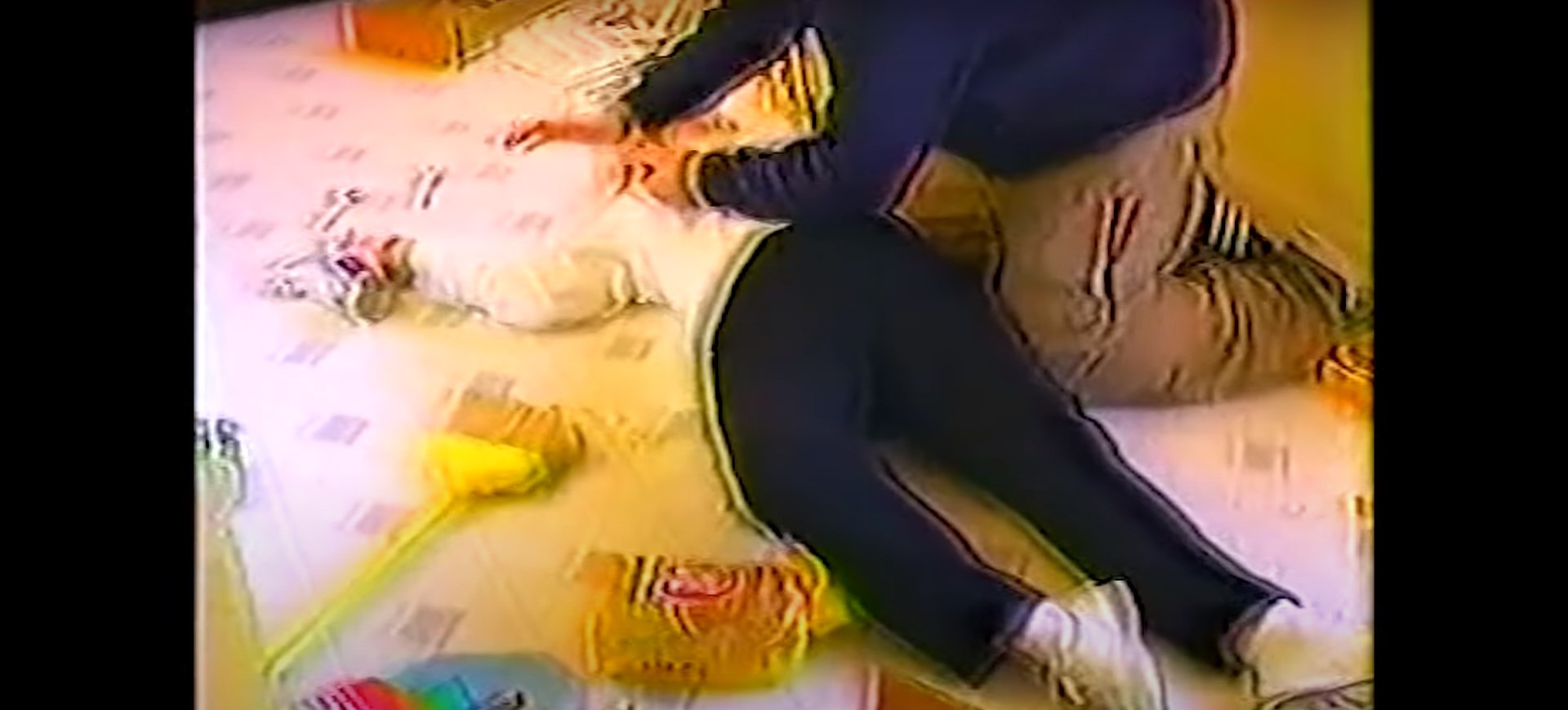
For certain to go out of stock and out of print into physical release obscurity once again, Unearthed Films’ limited-edition collector’s edition of “August Underground” is the 2-disc DVD/Blu-ray combo set to act on right now. The AVC encoded, high definition 1080p, BD50 comes from a MiniDV print, often considered the transitional format from analog and to digital in a tape format with lossy compression. Presented in the original aspect ratio of 1.33:1 aspect ratio, don’t expect image quality to be pristinely detailed and sharp as the MiniDV maxes out at 720p resulting in both, standard and Hi-Def formats, having indistinguishable presentations. Resembling the amateur, at-home movie, scaled down tape quality renders ghosting which shapes and details are bleary and the coloring resembles ember or incandescent with a warm, red-and-yellow layer. What we don’t see much of is a ton of tracking, static, or a ton of noticeable interlace but blacks can be prominently spotty with the horizontal bars. The lossless on-board MiniDV English audio is a PCM 2.0 that doesn’t extend beyond the limits of the camera’s microphone, but the clarity fairs well with clean and commanding dialogue with a natural range between the proximitous cameraman and his killing machine star of a friend in front of the camera. Also, equally interchangeable between the physical formats with what’s made to be a rough recording, discernible differences are minute at best. The Blu-ray and DVD have many of the same special features with the Blu-ray containing a few more frills over its format counterpart with a new Dave Parker interviewing Fred Vogel as well as a separate interview with Vogel and Mike Watt of Rue Morgue Magazine, another new interview with Fred Vogel from Severed Cinema Revisiting Infamy. The formats shared bonus content includes never before seen and new material, such as the original screener version of the film that comes with watermark and a slightly different color grading, a new audio commentary by Fred Vogel and Ultra Violent Magazine’s creator Art Ettinger, a new 10 questions with Fred Vogel answering some of the longstanding queries surrounding the film’s realism achievements and behind-the-scenes permissions and achievements, and a new Toe Tag Masterclass that compares storyboards with the screen version. Archived bonus content include audio commentary with Vogel and actors-producers-brothers Aaron and Ben LaBonte, another commentary track with Fred Vogel alone, an audio commentary by the witty, giggly “Killer,” Hammer to the Head closer look at “August Underground,” on location behind-the scenes, a behind-the-brutality of the film, outsiders’ perspective take in a Too Real for Comfort discussion, an introduction by director Fred Vogel, photo gallery, and trailers. The limited-edition collector’s set comes with a cardboard slipcover with a blurry, interlaced still of Vogel’s character wrapping a forearm around a gagged-girl’s throat while peering into the camera, but it’s the clear snapper case’s front cover that’s more developed with a graphic pencil-graphite illustration of the same slipcover image with more visible mutilated skin and visual weapon of human body destruction. Front cover is also reversible with an interlacing black-and-white image of the main killer. Both discs also sport two different art presses with the Blu-ray mirroring the slipcover image while the DVD has nearly the identical position of killer and victim but with a whole new victim. The region A locked edition has a digestible 70-minute runtime and is, of course, not rated. I would never say Unearthed Films has been diluting their pool of extreme underground gore and guts horror, but their “August Underground” release puts the brazen company back on the mondo-macabre map with definitely a too real for comfort twisted depravity and an au naturel sense of debauchery.

Limited Edition “August Underground” Ready to be Received! 

Never Tour Mistakenly into an EVIL Murder Bar! “La Petite Mort” reviewed! (Unearthed Films / Blu-ray)

“La Petite Mort” is Orgasmically Gory and on Blu-ray!

Vacationing to Mallorca should have been a relaxing getaway for Simon, his blind girlfriend Nina, and their longtime friend, Dodo, but their flight layover in Frankfurt leaves down idle town to explore the city that’s only a mere two hours from home. Tension between them begin to bubble to the surface when uncertain emotional steps to take relationships to the next level arise and they become inadvertently scammed by a local grifter. Exhaustion sets in and forces them to take refuge in a local dive bar with a specialty for S&M play. The bar is actually a front for the Maison de la Petite Mort, an underground snuff house owned a sadistic woman named Maman who livestreams kink-murders and sells hapless victims to wealthy businessmen with whimsical and perverse deviancies. The flight to Mallorca will be indefinitely delayed as the three friends are now a part of the bloody basement decor awaiting the horrors before them.

“La Petite Mort,” translated from French as literally the little death, is also known as the post-orgasmic sensation, such as a weakness or loss of conscious, that serves as an analogy to death. The phrase is also the title of the 2009 torture-gore film written-and-directed by the German-born Marcel Walz more than a decade before the formation of his now Neon Noir production company. Walz, who later in his career went on to remake the Herschel Gordon Lewis 1963 film, “Blood Feast,” blossoms as a torture porn filmmaker as Walz’s directorial catalogue contains more blood than a blood bank and often stretches the subgenre range of plot machinations from cannibals to dark web to snuff. Made on a few thousand-dollar budget and shot in a real sex club in Mannheim, Germany, “La Petite Mort” touches upon all three plot devices to create a dungeon of splatter and sadism using elements of an unsolved true crime case of a couple gruesomely murdered in an underground murder house as the narrative base. Before Neon Noir, Walz and filmmaker Michael Effenberger, director of “Tortua,” formed Matador Films that became the company behind “La Petite Mort” with Thomas Buresch (“Unrated: The Movie”) and feature actor and director of photography, Andreas Pape (“Toxic Lullaby”) producing.

Films like “La Petite Mort” is a special breed not because of the torture and gore-porn element, which can be an acquired taste for consumers with dark thoughts, fantasies, and morbid curiosities (I fall into the latter category if you’re wondering), but rather the story caters to no singular principal lead nor does is the focus on an ensemble cast.  “La Petite Mort” transitions from one group, the naïve backpacking travelers, to the S&M snuff-makers in a flip-flop of point of view and storytelling.  All the relationship complexities between the out of concern love from Simon (Andreas Pape) to his even keeled blind girlfriend, Nina (Inés Zahmoul, “La Isla”) as well as the insignificant tiffs and spats between Simon and friend Dodo (Anna Habeck, “Popular”) to see who is in Nina’s favor are quickly swept aside when the trio is trapped and tethered to the S&M spider web of Maman’s Maison de la Petite Mort.  While the three travelers produce a mild interest spun out of frivolous dramatics to the like of the normal human population and very much up played by Walz for that very purpose to produce stark contrast against what’s normal for sadomastic pleasure-seekers, Maman, the orchestrator of pain and profit, is the most earnest of principals with a crone-like presence, played inexorably and ruthless by French punk-goth singer Manoush.  The certified gypsy and former bodybuilder has made a name for herself in a plethora of extreme, Germanic horror pictures over the last decade, but “La Petite Mort” came early in Manoush’s career and is exhibits why she’s so good at horror, especially at the sadism brand.  Maman’s schadenfreude business employs two lesbian dominatrixes, Dominique and Angélique, with strong-stomachs and a healthy bloodthirst.  The beautiful femme fatales serve Maman’s unquestionably, almost mindlessly, that only glimpses into possibilities of how the two women became betrothed to do Maman’s bidding.  Annika Strauss, who’s been in the screen queen business about as long as and has starred alongside with Manoush on a number of films, is also a Marcel Walz regular casted actress who fits and transforms into just about every character under the black sun of ghoulish and macabre material thrown her way.  As Dominique, Strauss is provided more depth to why and how the brunette basket case has come under Maman’s greedy and depraved thumb as the actress shows some slither of concern for the captives while explaining she had no choice just they like them and exhibiting more reserve than her blonde counterpart Angélique (Magdalèna Kalley, “Violent Shit 4”) when the cameras are rolling.  Conversations rooted into provocative thought, sympathy, or reason are often few and far in between the constant pleas for help and the screaming matches of pelting threats.  “La Petite Mort” finalizes the cast with Martin Hentschel (“Zombie Reanimation”), Tanja Karius (“Necronos”), and Thomas Kercmar (“Space Wolf”) as Klaus der Kobold, a Napoleon-sized elitist wealthy enough to buy people’s lives and enjoy seeing them horrifically mutilated.

One scene overwhelms the diagnostic side of my brain and that is why Maman is torturing Dodo with needles as Manoush delivers a surprising genuine villainous monologue about sadomasochists being judged by normal people and how her character has a liberated, uninhibited sexuality in a moment that is a powerful argument in favor for sadomasochism to exist without shame.  Thinking about this, I’m not aware of any publicized S&M clubs, especially those that aren’t criticized for being deviant, perverse, and secular.  After that one moment of vulnerability, “La Petite Mort” turns into a choke-down bloodbath with some great and some not-so-great special effects by one of Germany’s gore film greats, Olaf Ittenbach, director and F/X artist of “Premutos:  The Fallen Angel” and “Legion of the Dead.”  Ittenbach brings me to another overwhelming scene, one that churns the contents of your stomach, involving a meat grinder, a hand, and a chalice.   “La Petite Mort” has other notable grisly moments of scalping, castrating, eye-plucking, and disemboweling, all of which are in great gooey-gory detail.  What takes away from the gore scenes is Walz fluttering effect or grindhouse-esque edited framed overlay that, in my wildest guess, is supposed to enhance the extreme acts of violence, torture, and death in conjunction with composer Michael Donner’s industrial rumble and pulsing synth score. Instead, the effect becomes nothing more than a cinematic nuisance, an eyesore that dilutes Ittenbach’s best handywork because that scalping scene is the chef’s kiss of tactual realism. Based on a true story that I can’t seem to find any record of, “La Petite Mort,” for a brief few minutes, becomes a promulgating champion for alternate sexualities and is also a showcase for Olaf Ittenbach to shock and disgust but for what the feature is worth, “La Petite Mort” offers only emptiness in both character conviction and story narrative.

A fitting entry into the shockingly weird and grotesque “Unearthed Films'” independent film catalogue, “La Petite Mort” arrives onto a high definition, 1080p Blu-ray home video. Presented in a 2.35:1 widescreen aspect ratio, Walz bookends his callous-cladded cult film with a yellowish-tan tint while the girth of the story is laced with more gel coloring under no hinderance of tint. Low lighting with low contrast markers, mixed with tropical-warm gel coloring and strobe flashing fabricates the sunless and dank murder basement but any exterior shots, even the bookend act one and act three are rendered with poor resolution for digital recording. Only a single audio track is available with a German LPCM 2.0 with burned-in English subtitles and what’s rendered is likely the best quality to get from the masters from the lossy format. Dialogue is often unrefined, and the levels vary, but for the most part clean and free from obstruction. The track has limited ambience and harps heavily on the gory moments while Michael Donner’s dark industrial score takes the brunt of the overall soundtrack. Subtitle synchronization varies as well with millisecond flashes of translations that are impossible to read or even pause perfectly on, but the translations appear flawless and consolidated from the dialect for easy reading. The Unearthed Films’ bonus content is aplenty with a new commentary and interview with director Marcel Walz. Also included is a feature-length making of “La Petite Mort” with raw handheld camcorder footage, shot by The Bad Boy character in the film, behind-the-scenes footage, and even some 16mm footage that go reel deep into the effects and life of independent filmmakers. An archived interview with special effects artist Olaf Ittenbach, deleted scenes, photo gallery, teaser trailer, official trailer, “La Petite Mort 2” trailer, and the VHS intro that’s essentially a Marcel Walz introduction of the VHS home video release round out the bonus content. The physical attributes are a clear, Blu-ray snapper case with reversible cover art with the inside sleeve containing a more graphic torture not suited for retail shelves. The region A encoded, 77-minute feature is not rated. If invested for the kills, “La Petite Mort” pleases to overindulge the desire and is a solid first torture-porn effort from a then young Marcel Walz who continues to rise in the niche market.

“La Petite Mort” is Orgasmically Gory and on Blu-ray!

Fixing the Tracking on Those EVIL VHS Cassettes! “Snuff Tapes” reviewed! (MVDVisual / DVD)

Ready to be Recorded?  “Snuff Tapes” now available at Amazon.com!

Marcela Arkaino investigates a Talca, Chile rapist and murder who has been drugging and abducting women for years to record aberrant tapes of his cruel exploits.  Marcela takes a special eager interest in this particular assignment as she was one of those unfortunate women.  As a silver lining out of an extremely bad situation, she is one of three women left alive by her brutal sex-sadist aggressor.  As the reporter in her garners the difficult stories from the other two survivors, Cataline and Jesus, abused by the same masked man, she inches closer to his whereabouts by triangulating attacks and connecting similarities but her scouring of roadside market, unlabeled VHS tapes became the smoking gun needle in a haystack that produces not just any depraved tape of his victims but of her own ordeal, turning now an inch into a mile in finding him.  Bring the other two women into the fold, Marcela devises a plan of revenge to direct a snuff film of her own, starring their rapist and torturer.  

Hailing from Talca, Chile, the same location where the story is set, comes the shock-slamming, VHS-inspired thriller “Snuff Tapes,” aka “Cintas Tapes,” from the Chilean born independent filmmaker, Vito Garcia Viedma.  The writer-director’s prior two zombie-influenced short films, the 2012 “Bajo el sonido del tren” and the 2017 “Escape from Zombie City,” along with the criminal underbelly 2017 feature, Los culpables,” displays a course change deviation that wouldn’t prepare the average Viedma film fan for his 2020 venture into the dark underworld exploitation of indie snuff.  While the title highlights the concept around videotaping the misuse of a person’s trust and vulnerability for one’s own disturbing profit, in this case to get one’s jolly’s off, much of Viedma’s story skirts around the edge with just mentioning the nixing of captured and consumed of vivacity women, saving the story’s climax for more detailed death dealing in a vengeful perspective rather than a videotaped one. “Snuff Tapes” is created under Viedma’s ZineFilms production company in association with Cabro Chico and Trippas Productions.

“Snuff Tapes” is no “8MM” with a mega-Hollywood budget and Nic Cage doing Nic Cage antics. “Snuff Tapes” is no “Effects” with cult icons Joseph Pilato and Tom Savini helming sordid scenes from fantasy to non-fiction. “Snuff Tapes” isn’t even on the same level as “A Serbian Film” and, to be honest, I don’t think any film anytime soon will ever be on the same level as that twisted picture. What all three of those successful and notorious films have in common and what Viedma lacks in separating itself from the rest are in two very important details: a budget and an array of talent. Viedma’s film humbles in comparison with not only a microbudget but also in a cast makeup of essentially five actors with withering substance. Valentina Soto Albornoz stars as the retribution-reporter, Cataline Ibarra, who for the last decade has been piecing together clues of her kidnapper’s whereabouts by purchasing random video cassettes tapes from Talca street vendors and when Ibarra strikes gold unearthing her own ugly tape, she understandably feels overwhelmed reliving visually the nightmare and subsequently gravitates toward being hellbent for revenge. Ibarra recruits her survivor carbon copies in the tattooed Jesus Mayano (Camila Medina) and aspiring photography model Marcela Arkaino (Camila Carreno Arancibia) for a little payback, but Ibarra, aside from her good friend Esteban (Hugo Villar) providing her a PAL encoded VHS player and rewatching her tape to catch clues missed, she virtually does all the legwork in pinpointing the one responsible, drugging him, abducting him, and committing herself to the nitty-gritty, fantasy plan for whenever she got her hands on him. I’m not sure what roles or business Arkaino or Mayano actually had to just stand there moping other than maybe bear witness to the end of their lifelong torment, to see the boogeyman parish once and for all? Reinaldo Aravena plays the man behind the mask who initially puts up a strong showing as the camera operator and stud of his homemade videos but then quickly fizzles disappointingly on the opposite side of the camera due to a lack of scaled down combating in what becomes just a one-woman show without much to show for it.

Viedma paves an interesting structural path for his film, taking the audience an extended 36-minute introduction of voiced over VHS recordings of survivor stories before entering opening credits to what then becomes a dichotomy narrative between backstory and present day. This also speaks to the visual cinematography as well that jumps back and forth between being shot on the VHS’s boxed-in format (found footage) to a wider lens of the digital world, capturing past and present in two distinct formats as well as capturing the past that isn’t glossy, pretty, and is an inescapable prison where the walls, the horizontal pillars, are closing in on the world.  Appearances, no matter how apt to the subject, do not give the movie soul and “Snuff Tapes” misses that poignant shock value target with poorly written characters and a misaligned connect-the-dots investigation that doesn’t make much sense.  Ibarra examination of the evidence, or really lack thereof, points to one man, but like a cheating slacker in high school, she does not show her work to come up with that result.  Instead, she repeats, at least in a couple of instances, her gut knows she has the right man.  In Viedma’s world, a gut feeling is factual evidence for stringing someone up to face judgement.  In reality, that’s a severe boo-boo case of miscalculation that would get you jail time.  Circumstantial street justice on little-to-no proof separates the empathy from what an audience is supposed feel fired up against an unspoken truth and gives them satisfaction in a just cause to see the obliteration of scum from the face of the Earth. In the first half, “Snuff Tapes” is undeniably graphic and cuts deep with a veridical, degenerate villain, but falters with a lazy second half approach and gratuitous revenge.

MVD Visual in association with Danse Macabre and Jinga Films release “Snuff Tapes” on a North American DVD release. The region free DVD is presented in a VHS format of 1.33:1 when looking cassette camera lens with the rest of the film in a widescreen 1.85:1 aspect ratio. As expected, the VHS quality has semblance of overuse and age with a fuzzy display and muted, boxy sound. Outside of that, the picture quality is not much better in reconstituting a playback on lower end of the DVD spectrum – approx. 3-5 Mbps. Compression artefacts are heavily present with poor clarity around the edging and blacks shimmer and appear blotchy. The lossy Spanish language Dolby Digtial 5.1 Surround Sound loses some of it’s fidelity in the compression but is the overall highlight amongst the DVD’s A/V scorecard; however, the subtitle transcription is the worst I’ve seen in quite some time with duplicated segments, spelling errors, and a timing that equates to a microsecond blip of dialogue on some occasions. The release comes with another version of the film as the sole bonus feature with an entire VHS 1.33:1 (4:3) VHS Cut for an immersive effect. As always, snuff features can be difficult to digest but they are becoming more and more prevalent and popular in a highly accessible home video market and director, Vito Garcia Viedma, tries his creative hand at creating disturbing content only to defile the genre with a subpar entry sullied by deficient storytelling.

Ready to be Recorded?  “Snuff Tapes” now available at Amazon.com!

A Career Boost Too EVIL to Ride. “Star Vehicle” reviewed! (Unearthed Films / Digital Screener)

For super movie aficionado and independent film production driver Donald Cardini, film crew after film crew treat him with very little worth.  Full of creatively complimenting movie ideas and brandishing a go-getter attitude, nothing will stop the driver’s own creative outlet.  When his favorite scream queen, Reversa Red, is involved in his next gig, Cardini’s creative juices bubble to the surface as he personally drives her to and from the set, sparking a connection with the actress who values his input, but the threat of a Reversa Red stalker places Cardini on edge and the rest of the film crew continues to ceaseless disparage him.  Pushed over the edge into madness, the violence prone driver hijacks those belittling him, along with Reverse Red, to an isolated location where he can shoot his own snuff movie, a one of a kind production starring his favorite actress.

You might have read on how much I’ve given my two cents praise toward the late Ryan Nicholson in previous reviews of “Hanger,” “Live Feed,” and “Gutterballs.”  Those trio of pictures are stuffed with gratuitous violence and nudity, wealthy in rich, colorful characters, and are just the epitome of gonzo-grindhouse cinema from the multi-talented filmmaker from our Canadian neighbor.  “Star Vehicle” rides that same bonkers high-speed train full of Nicholson-ism and topics too crass for comfort, but even with all the similar vulgarity and depravity that makes Nicholson so ghastly loveable and even with a few of the same actors from previous works, “Star Vehicle” regresses technically into a lesser shell when compared to the aforementioned films above.  The 2010 exploitation-slasher, alternatively known as “Bleeding Lady,” is executive produced by former model Charie Van Dyke under her New Image Entertainment production banner and Nicholson’s company, Plotdigger Films.

At the tip of the spear is the non-titular “Hanger” front man Dan Ellis in the role of the abrasive Donald Cardini.  Instead of wearing face-altering prosthetics and aviator shades that made his The John character in “Hanger” an antiheroic and perverse veteran of the armed services unforgettable, Ellis steps down into a leaner version of psychotic foreplay by providing his “Star Vehicle” appearance with an all-natural tough guy stern and smirk look under a permed beard and atop hair while seamlessly plotting the same amoral atrocities.  Crazy suits the actor with wild eyes complimenting his grave unsympathetic hand, an act of situational severity that comes more naturally to Ellis when interacting with other castmates as urges begin to take over and all hell breaks loose, leaving not a single other to rival his Donald Cardini wanton killer.  Unlike Ellis, the other characters are not as colorfully mad or interesting and that’s terribly atypical of a Nicholson film who had the ability to craft diabolically perverted and warped behaviors.  I was expecting a punchier leading lady opposite of Ellis with Sindy Faraguna.  Playing a genre scream queen doted on by Cardini with every film she touches, Faraguna inevitably descends into the final girl trope without deserving one ounce of landing in such a fortunate position for the simple fact that her captor really doesn’t wish to hurt her; instead, Cardini exploits her to convince others of his movie-making-macabre magic while Faraguna just screams Reversa Red’s head off for the plot-digging finale that’s more cacophonously raspy in determination than a bloodcurdling cry of terror.  Tangled up in a mix is plot twist and subplot involving a Reversa Red stalker who, as we know how these dropped tidbits of information circle back around eventually, should have determined the fate of our leads but this, too, lands wobbly at best, crusted over by an energetic-drained letdown of corrosion-covered aggressive conduct.  “Star Vehicle” rounds out the cast with Nathan Durec (“Famine”), Nick Windebank, Mike Le, Paiage Farbacher, Erindera Farga, Matthew Janega, Kris Michalesk, and Gary Starkell who also seems to windup playing some version of a homeless man – see “Collar” and “Bad Building.”

“Star Vehicle,” an industry term, defines as a film or television show specifically written and/or created to showcase the talents of a specific entertainer to increase their fame and recognition.  Nicholson sardonically uses that concept as Cardini kills his way to make it happen for his primo starlet Reversa Red, but also Nicholson literally, in a subtle Nicholson-ludicrous manner, has Cardini driving Reversa Red to and from filming sets in his beat up 2000’s Ford Windstar mini-van.   The latter, along with the entire essence of “Star Vehicle,” is essentially a jab to the guerilla style nature of indie movie filmmaking.  A few characters note how producers skimp with the budget, Cardini snarks about his cracked windshield production won’t pay for, and the caliber of the cast comes under indirect fire when one of starlets mechanically delivers her lines like a stiff automaton are just a handful of instances Nicholson mocks in his knock against indie production idiosyncrasies. Where “Star Vehicles” becomes a lemon is with the slapdash editing and the clunky story that tiptoes onto non-linear ground, bashfully uncertain going back into previous events for exposition sake was actually necessary. What’s brought to light with Reversa Red’s stalker and their involvement treads flimsily to an ultimate twist gum up by “Star Vehicle’s” curbed devices. By adding the break down by throwing a monkey wrench in the already galumphing development, the main antagonist, Cardini, can never regain that vice gripping potency touted earlier. Gory as it may be like any Nicholson splatterfest, “Star Vehicle” loses drive to make the finish line but still purrs like a bloodhungry beast.

This October, Unearthed Films releases Ryan Nicholson’s “Star Vehicle” onto Blu-ray and DVD. Unrated and stuff with extras, the sixth Nicholson film to be resurrected for Unearthed Films’ catalogue is presented a widescreen 1.78:1 aspect ratio BD50 and DVD9 with a runtime of 76 minutes on both formats while the Blu-ray is encoded with region A and the DVD with region 1. Extras include a whopping amount with a little more bonus material on the Blu-ray. Blu-ray includes commentary with director Ryan Nicholson and lead Dan Ellis, Left Coast TV present “On the Set with Star Vehicle,” Behind the Wheel of Bleeding Lady, Making “Star Vehicle,” Makeup Students and Acting Students, deleted scenes, alternating opening, Splatterfest! at the Plaza, Nicholson’s 2013 feature “Dead Nude Girls,” photo gallery and trailer while the DVD sports the same content minus the second feature, “Dead Nude Girls.” I can’t relay my thoughts on either the A/V nor the special features since only a digital screener of the film was provided. Don’t be afraid of the clunker comments and opinions, hop in and take a ride with Ryan Nicholson’s “Star Vehicle,” a gory dauntless joyride sped to lampoon it’s own indie outlet with a meta-plot and a tank full of carnage fuel.

“Star Vehicle” available on Blu-ray and DVD.  Click to Purchase at Amazon.com

No Sam Raimi. No Bruce Campbell. Just the EVIL! “Evil Dead Trap” reviewed (Unearthed Films / Blu-ray)


Nami, a Japanese late night show host, is seeing her ratings dipping.  Though not in danger of losing her all-female produced show, Nami decides take her team on an investigation of a mysterious snuff tape that was mailed to her specifically.  Left for her is a bread crumb trail of directions to an abandoned military base, Nami and her crew explore the campus’s rundown structure, searching for evidence, a body, a story that they can televise.  Ignoring the dangerous presence around them, they dig deeper into the dilapidating labyrinth where they horrifying discover something waiting for them laid out in a cruel plan of deadly traps with a maniac pulling at all the strings. 

Bred out of a pedigree of pinkusploitations and a nation’s crisis of identity after the Second Great War, “Evil Dead Trap” is a greatly symbolized Japanese machination tale helmed by pink film director Toshiharu Ikeda (“Sex Hunter,” “Angel Guts:  Red Porno”) and penned by an equally historical pink film screenwriter and “Angel Guts” manga series creator Takashi Ishii (“Girl and the Wooden Horse Torture,” “Angel Guts” series).  Also known under its original Japanese title, “Shiryô no wana,” as well as, and my personal favorite, “Tokyo Snuff,” in Spain, “Evil Dead Trap’s” smorgasbord of rape, torture, and gory death naturally shocked viewers upon release and continues to do so as one of J-Horror’s branched out films that segued out from the brutal and depraved pink film inspired context into the new longstanding ghost genre we’ve seen over the last few decades with “Ringu” (“The Ring”) or “Ju-on” (“The Grudge”).  The production company Joy Pack Films, behind the 1980’s obscure Japan films, such as Genji Nakamura’s “Go For Broke” and Banmel Takahashi’s “Wolf,” houses the “Evil Dead Trap” from executive producer Tadao Masumizu.

If you recognize a couple cast members, or maybe just their naked bodies, then there’s something depraved about you!  With all kidding aside, but no seriously, if Rei (Hitomi Kobayashi) or Kondo (Masahiko Abe) look familiar, then you my friend are pink film aficionados as Kobayashi has starred in “Hard Petting” and “Young Girl Story” and Abe was in these pink film hits the “Pink Curtain” trilogy and “Female College Dorm Vs Nursing School Dormitory.”  If these faces didn’t touch you in any kind of sensual way, no worries, leading lady Miyuki Ono brings the star power.  The “Black Rain’s” Ono plays Nami, a go-getter television host/personality with her sights set on ramping up her late night show’s ratings, but also sucked into the posted snuff film’s darkest allure that’s personally calling her into to a precarious story lead.   Nami could also be a homage to one of screenwriter Takashi Ishii’s manga-inspired pink films entitled “Angel Guts: Nami” and the title might not be the only aspect paid honor to with that particular Nami written with a journalistic vocation drawn into and obsessed with a serial rapist’s attacks, making a striking parallel between the two stories that are nearly a decade apart. Eriko Nakagawa and Aya Katsurgagi fill out Nami’s investigating team as Rei and Mako. As a whole, the characters lack personality; Rei and Kondo tickle with relationship woes that are snuffed out before fruition, Rie’s timid innocence barely peaks through, and Nami and Mako’s thicker bond compared to the rest of the team is squashed to smithereens way before being suckled into note worthy tragedy. This late night show team has been reduced to slasher fodder and, honestly, I’m okay with that as we’re only here for the deadly traps. Noboru Mitani, Shinsuke Shimada, and Yûji Honma, as the mystery man looking for his brother, complete “Evil Dead Traps” casting.

“Evil Dead Trap” boasts a melting pot of inspirations, a mishmash of genres, and spins a nation’s split identity variation crowned in aberration. Diversely colorful neon-hazy lighting complimented by a Goblin-esque synth-rock soundtrack from Tomohiko Kira (“Shadow of the Wraith”), Toshiharu Ikeda shadows early Dario Argento inside and outside the popularity of the Italian giallo genre as the “Evil Dead Trap” murder-mystery horrors resemble more of a westernized slasher with a killer concealed behind a mask stalking a fringed, neglected compound in a conspicuous outfit. While the killer dons no hockey mask or snug in a mechanic’s jumpsuit, an equally domicile, yet more calculated, antagonist taunts more brains than brawns, especially with the severity of traps that seemingly float from out of nowhere. The fun is chiefly in the imagination of how the trap designs operate in the void of physics of a slasher fodder film so wipe clean the Jigsaw and the “Saw” films from your mind completely and relax to enjoy the outlandish kill scenes. Some of the kills are imperialistically inspired by Imperial Japan, that is, to blend the wartime nation’s atrocities with how the proud country wants to distance itself from that old-fashion, war-criminal, stoically perverse superstratum layer, but that’s were “Evil Dead Trap” pulls for most of the juicy parts as well as supplementing with Argento lighting, some, believe it or not, “Evil Dead” elements of that menacing presence bulldozing through the spiritual world, and an divergent climatic finale stuck to the narrative body that’s akin to pulling off the head of a doll and replacing it with T-Rex head’s. The uniformity quells under the pressure of how to end Nami’s and her attacker’s coda with pageantry weirdness that’s typical status quo Japanese cinema. Lots of symbolism, little modest explanation.

Get caught in “Evil Dead Trap” now back in print and on Blu-ray courtesy of Unearthed Films, distributed by MVD Visual, as part of the extreme label’s Unearthed Classics spine #5. The Blu-ray is presented in a matted 1.66:1 aspect ratio, a format rarely used in the States but widely used in other countries. Reverting to the 1.66:1 from Synapse’s 1.85:1 crop, Unearthed Films showcases more of the European feel, heightening that colorful vibrancy of the Argento-like schemes. Image quality has peaked on this transfer with natural grain with the 35mm stock, but details are not granularly sharp in an innate flaw of the time’s equipment and lighting. Shinichi Wakasa’s unobscured practical effects heed to the details and don’t necessary suffer the wrath of miniscule soft picture qualities when you’re impaling someone or birthing a slimy evil twin…you’ll see. Add in Ikeda’s wide range of shooting techniques, you’d think you’re watching Hitchcock or Raimi and the focus really lands there with the differently camera movements and techniques. The Japanese language single channel PCM audio fastens against that robust, vigorous quality to make “Evil Dead Trap’s” diverse range and depth that much more audibly striking, but there’s a good amount of silver lining in there being no damage albeit discernable, but not intrusive static to the audio files, dialogue is unobstructed and prominent, and the stellar synth-rock soundtrack nostalgically takes you back to when you first watched “Suspiria” or “Dawn of the Dead.” English subtitles are available but display with a few second delay which can be cumbersome if trying to keep up. Special features includes three commentaries that include director Toshiharu Ikeda and special effects supervisor Shinichi Wakasa, filmmaker Kurando Mitsutake (“Gun Woman”), and James Mudge of easternKicks. Plus, a Trappings of the Dead: Reflecting on the Japanese Cult Classic retrospect analysis from a Japanese film expert, Storyboards, Behind the scenes stills, promotional artwork, trailers, and a cardboard slipcover with phenomenal artwork. Highly recommend this atypical Japanese slasher, “Evil Dead Trap,” now on Blu-ray home video!

Own “Evil Dead Trap” on Blu-ray!