A Stop-Motion EVILscape of Totalitarian Hell! “Mad God” reviewed! (Acorn Media International / Blu-ray)

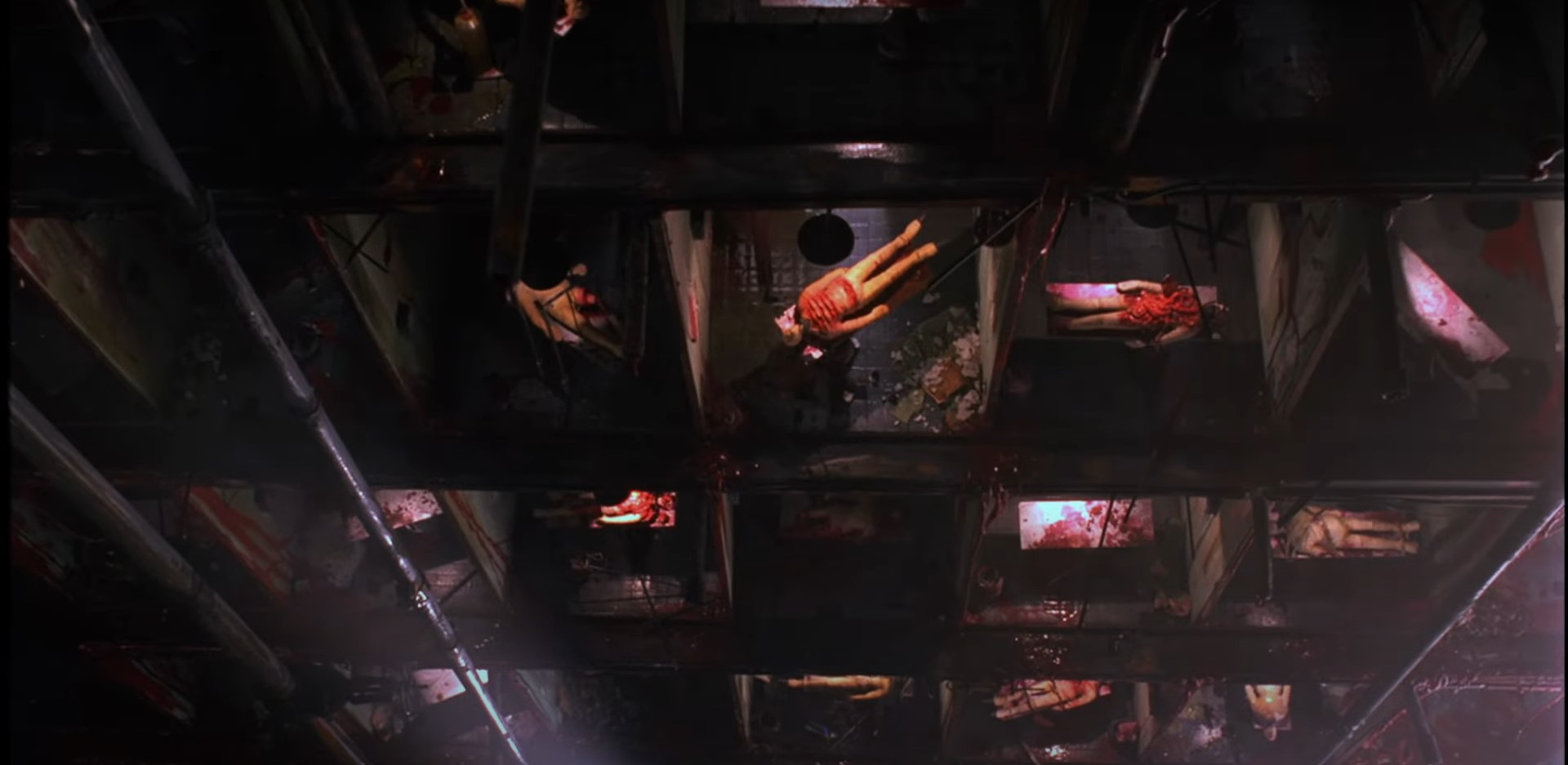
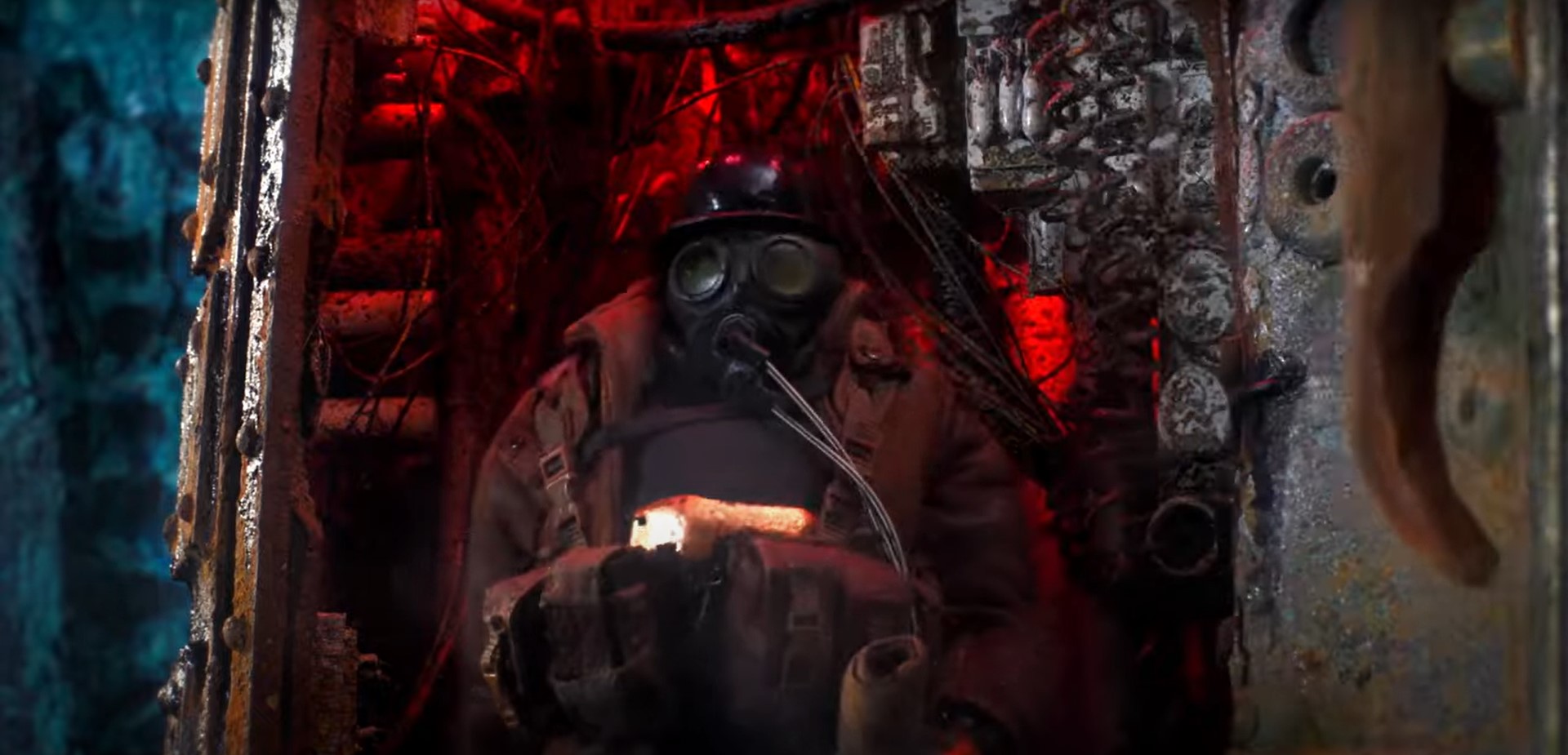
Descending from above into the depths of grotesque terror and suffering, The Assassin steps out of the drop pod with a gas mask, industrial armor, a suitcase, and a crumbling map.  Bearing witness to the surrounding horrors – cruel experimentations, enslaved beasts, tortured manufactured slave laborers, dog-eat-dog atrocities – The Assassin sallies forth, descending deeper into the primordial pit.  The missioned at hand is to set an explosive charge that will eradicate out the ruinous, oppressive filth that aims to corrupt the everything, but there the darkness won’t be so easily wiped away and The Assassin must stay in the shadows and out of sight or else become a tortured fixture in the fray. 
“Mad God?”  More like mad genius!  Phil Tippett’s 34-year, stop-motion, pet-project “Mad God” is the purest Hell I’ve ever seen.  Tippet, famed stop-motion and puppeteer effects artist responsible for the iconic visual effects and stop motion work in fan films such as the original “Star Wars” saga and the “Robocop” franchise as well as cult favorites “Howard the Duck,” “Piranha” and “House II:  The Second Story,” started “Mad God” in 1987 that become more of an ambitious project than originally thought and once the 1993 saw a computer generated effects revolution with a little prehistoric dino-disaster film called “Jurassic Park”, a film Tippett also did work on as dinosaur movement consulting supervisor because of his expertise on the short “Prehistoric Beasts,” the gifted animator had shelved “Mad God” for about 20 years with the though a newer, shiner, computer-driven animation would be the next best thing studios would ardently desire. This two-decade span gave Tippett time to outline objectives and really expand upon ideas of how “Mad God” should look and feel when conveyed. Tippett co-produces the film with Jack Morrissey under Tippett Studios and presented by IFC Midnight and AMC’s Shudder.
Just because “Mad God” is dialogue-less doesn’t make the “Mad God” voiceless. All around, in every scene, is a disturbing commentary or an unhinged metaphor bred mostly out of the animatable inanimate, but there are some live action performances weaved into the mad tapestry of monstrous titans and despot of cruelty. The most clearly discernible face of the lot comes from a director, “Repo Man” and “Sid and Nancy” director Alex Cox to be more exact. Cox plays the long nailed and regime-driven “Last Man,” representing divine leadership of a modest, dieselpunk heaven above a more organic and grotesque hell-type world. Only on screen for perhaps a total of 5-to-10 minutes, Cox grunts and gestures with precision articulation to give off a fair and just ruler impression. Niketa Roman plays the next real person to have some substantial screen time. Less of an actress and more of an animator by trade, with credits including “Blade II,” “Jurassic World,” and “Star Wars: Episode IX – The Rise of Skywalker,” Roman finds an expressive talent in her striking, heavily made-up eyes overtop a surgical mask and gown when whisking away one of the Assassin’s souls to be studied and experimented on by a broodingly ethereal entity. Other micro-performances include minor roles of tortured monkeys, various iron-cladded Assassins, witches, and gnomes from Satish Ratakonda, Harper Gibbons, Arnie Hain, David Laur, Chris Morley, Anthony Ruivivar, Tucker Gibbons, Tom Gibbons, Hans Brekke, and Jake Freytag.
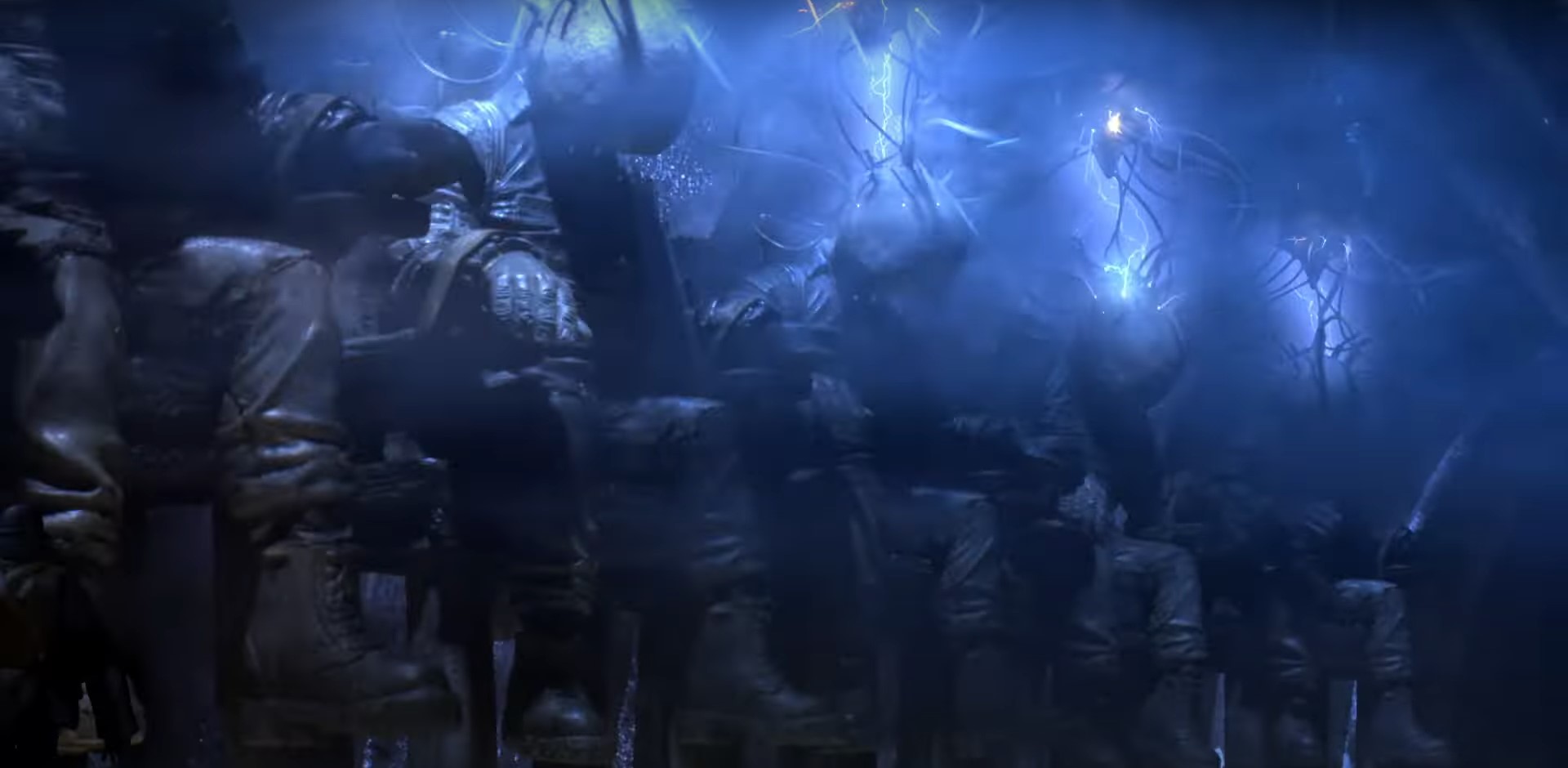
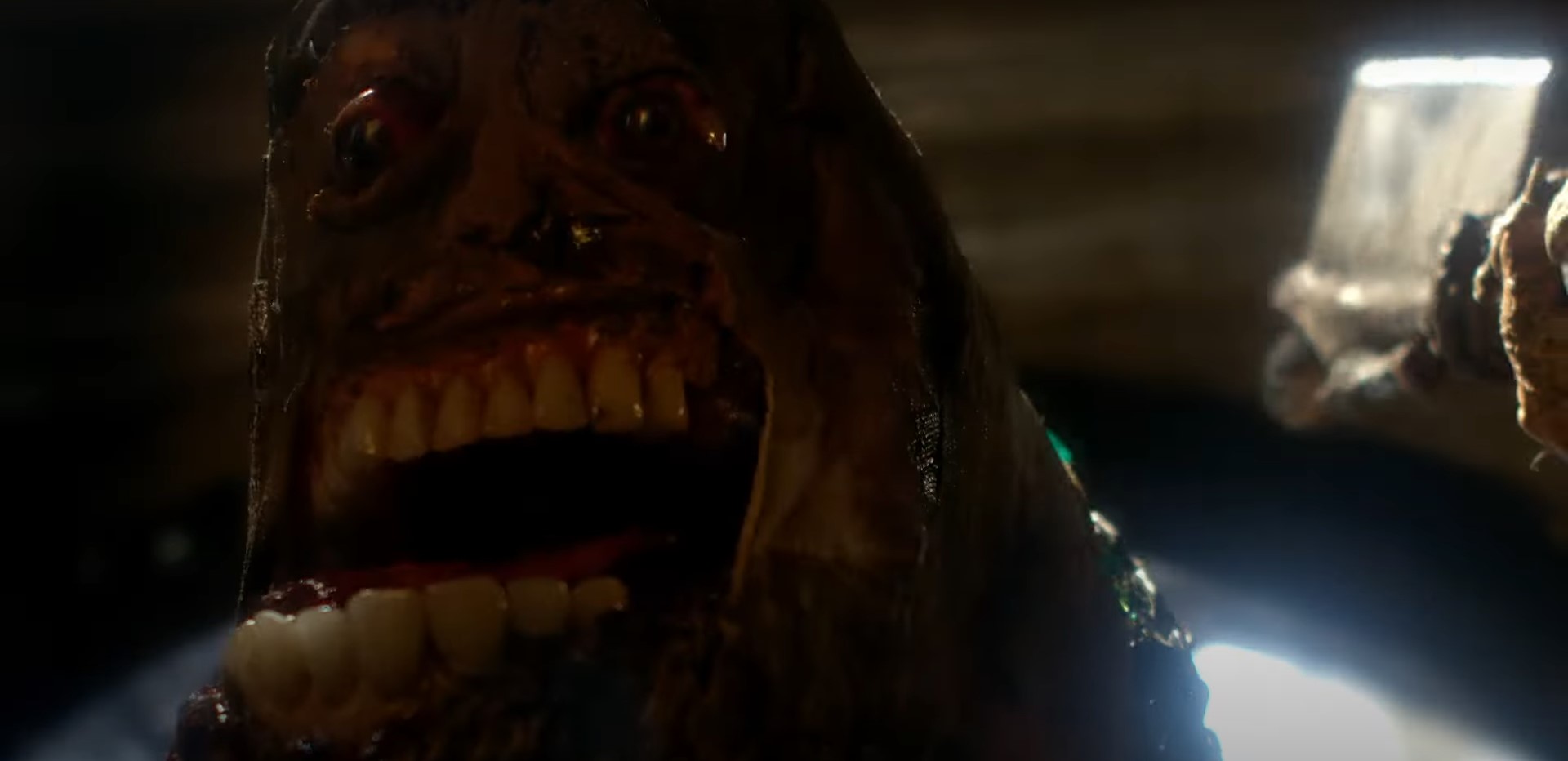
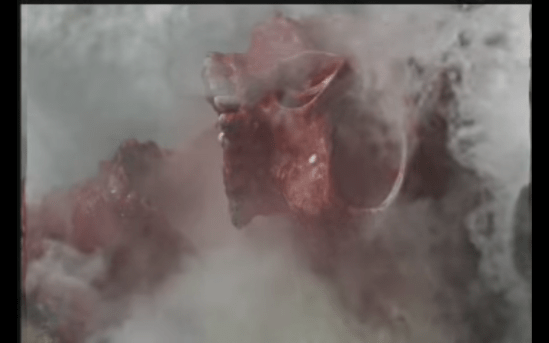
“Mad God’s” possibilities and interpretations are endless. Phil Tippett pulls from a motley of inspiration that includes, but is not limited to the fantastical, sometimes hellish, paintings of Hieronymus Bosch, the wacky, often gonzo animation of Tex Avery, the stop-motion titans of Nathan Juran’s “The 7 Voyages of Sinbad, and Dante’s Inferno. The mind is a deranged and wonderful creator of the macabre and of the aberrant and as a receiving device, the mind can also, if opened up enough, accept such visceral visuals of bowel fluids being jettisoned out by electric shock and into the mouth of an organic machine that manufactures fibrous, lumbering humanoids for slave labor. Like lemmings in a way, these exploited shadows of human beings will succumb under their own demise or at the gnarled and unforgiving hands of their master’s gargoyleish work-whippers. “Mad God’s” eye for detail is greatly disturbing to see cities in monolithic cities and cultures in ruins, the composite depth between foreground and background action in one scene reminds me a lot of older works like “The Neverending Story” or “Clash of the Titans” that create a vast scale with smaller objects, and the playful irony of a nightmare netherworld being commanded over by a baby’s babble doesn’t nearly seem to a stretch from the truth. As the multiple Assassins trek through the chaos and the insanity, an overwhelming sense of life is meaningless scores the landscape as there isn’t an ounce of compassion or empathy to be had or displayed for any of the malformed creatures and wretched humans. A laborer is crushed by a stone – no biggie. A cute and cuddle animal is attacked and whisked away for food storage – all in the day of cruelty. A man is stripped of his armored gear, injected with a mysterious substance, and prepped for exploratory surgery – all for show in front of a live clapping and cheering audience. The only compassion I can make sense is the Assassin’s mission to blow up this God-forsaken world of eternal suffering to restart the heart. Madness grinds bones, fillets spirits, and crushes souls in Phil Tippet’s Godless underworld and can haunt you even while you’re awake.
A surreal stop-motion wonder and excruciation, “Mad God” brings all the horrors of the subconscious mind to the surface with a high-definition, 1080p Blu-ray. The region 2, PAL encoded release from UK distributor Acorn Media International presents Tippet’s tour de force in a widescreen 1.78:1 aspect ratio and the image is purposefully varied to exhibit different strokes of craft as students would assist Tippet with contrastive topographies to carve out an apocalypse-riddled world that’s in a state of a violet retrogression. Tippet and Tippet Studio visual effects artist, Chris Morley, pivot to “Mad God’s” cinematography appearance with brooding, darker tones that illuminate and are erratically sparked with warm neon glows or brilliant voltage streaming through highly conductive bodies. Some earlier scenes from the late 80’s have natural grain from the 35mm stock and then later, more recent scenes have a cleaner, sleeker look with the digital recording. The Dolby Digital 5.1 surround sound mix has an all-embracing range, mostly with sudden and alarming blazons of guttural roars, unnerving baby babble, elongated zaps and shocks, and the indistinct yips and yaps of a mad world, that sustains on a line of being lesser than crisp, which might be contributed to the inexact capture of depth as sometimes all sounds casts like from inside the reverberations of a fishbowl. Descriptive SDH subtitles are available. Bonus features include audio commentary with Phil Tippett and “Pan’s Labyrinth’s” Guillermo del Toro, cast & crew commentary, an interview with Phil Tippett, “Mad God’s” various painter, cartoonist, animator, and psychology inspirations, the making-of “Mad God,” Maya Tippett’s Worse than the Demon – Phil Tippet’s daughter’s 12-minute thesis documentary of her father’s 34-year passion project journey, Academy of Art & “Mad God,” a behind-the-scenes montage, and a behind-the-scenes photo gallery. “Mad God” has a runtime of 84 minutes and is UK certified 18 for strong violence and gore. A motion picture diorama of Phil Tippett’s neoteric psyche, “Mad God” is wrath wrapped in heart and soul, two descriptors not topmost on the surface but are meticulously integrated into every frame of pain, suffering, and despair.
There’s Not a Big Enough Pipe Cleaner to Exorcise this EVIL! “Drainiac” reviewed!


Julie, troubled by her mother’s suicide one year ago, is forced by her deadbeat dad to accompanying him in cleaning up an old house he purchased for renovation and resale. As he takes off to attend to “important business” at the local watering hole, Julie is stuck alone with the mop and bucket inside a mysterious, rundown house she’s suspicious of being haunted after strange occurrences and horrifying visions transpire during her isolation. Lurking beneath the house and seeping through inside the rusted pipes, a figureless water demon’s presence persists with malicious intentions and things become worse when Julie’s friends check in on her. Drowning in the supernatural seepage amplified by Julie’s trauma, they become trapped on the property that won’t allow them to escape, draining them of hope against a bodiless, hell-bent entity until a certifiable exorcist shows up at the door arrogantly confident of ridding the flood of evil from this house for good.

Back in the year 2000, Brett Piper’s written and directed volatile ghost house feature, “Drainiac,” saw the light of day for the first time on DVD home video. Unfortunately, through the dismal proceedings of post-production funding and a less than enthusiastic distribution company, that version of the film is undercooked and unfinished in the artistic eyes of Piper who worked with a slim budget of $10,000, making every detail crucial and required to flavor the dull taste of anemic financial support. Luckily for the “Queen Crab” director, his collaborations with Shock-O-Rama Cinema, a sublabel to the indie film doting POPCinema, gave the 20+ year indie filmmaker access to digitally remaster to ultimately finish “Drainiac,” leaving the issues with the previous version water under the bridge, water related pun intended. “Drainiac,” believe it or not, has extraordinary relate-ability to today Americans who are frightened from the mistrust of confidence in their local water treatment systems and drainage pipes for the fear of lead poison and other harmful contaminants, which, in these affected citizen’s circumstances, is a “Drainiac” monster of sorts, hidden from sight with an uncertainty of product quality that drips from their faucets and into the bathtubs their kids play in and into their water drinking glasses.

Another amazing aspect of “Drainiac” is the fresh-face, young cast in their humble beginnings that flourished into solid careers and feels absolutely energetic and stimulating to know their roots reach far back to a cellular grindhouse organism becoming their vocation life. Georgia Hatzis debuts as the beleaguered Julie, a resilient survivor of her mother’s suicide with an oil and water dynamic with her estranged live-in father. Maintaining Julie’s sanity while still fronting a stable façade couldn’t be easy, but Hatzis builds upon Julie’s strength and owning the character’s self-doubt. Hatzi extended her career into television, but Julie is her most memorably performance, especially braving bathing full front to be attacked by a drain’s quasi tentacle erotica sequence. Perhaps the most recognizable face in the film co-starring in the film in her mid-teens, Alexandra Boylan is conscripted to be Julie’s best friend, Lisa. Boylan, who went on to have roles in “The Hitchhiker” remake and the invasive thriller “Home Sweet Home” as well as branching out into life behind the camera as a producer and writer, plays consistently a rationally steady bestie that grounds Julie when needed and is the firm leader of their group of friends that also includes a shaky and nearly spineless Jake (Ethan Krasnoo) and a shallow beauty Tayna (Samara Doucette). As the black sheep in the group, perhaps not even a friend at all, was Wade, a hog riding, wisecracking jerk who didn’t have sense of personal space, especially when the rapey urge washes over him. Wade is an abhorrent human being that came to life due in part of Robert Gorden’s performance. Soon to be seen in the television comedy entitled “My Wife Divorced Me Because I’m a Zombie” that is taglined “The Walking Dead Meets Modern Family,” Gorden will make you hate his guts and despise his obnoxious 90’s haircut and wardrobe and the overall package is enjoyably cathartic to have him pitted against a conventional set of friends. Other colorful talent includes roles by Philip Barbour as an exorcist who reassembles the fisherman Gordon from the frozen fish stick packaging, Steven Bornstein as the despicable dad of the year, Todd Poudrier as a melting derelict, “Sgt. Kabukiman N.Y.P.D.’s” Andrew Osbourne as the melting derelict’s friend, and Elizabeth Hurley! No, not the Austin Powers’ Elizabeth Hurley, but an Elizabeth Hurley nonetheless!

“Drainiac” is Brett Piper’s finest work. Copiously laced with assorted practical effects now completed with a coloring touch up and enhancement by Penn State grad colorist Dave Northrop, “Drainiac” is now has a definitive package that includes Piper hyper-psychedelic matte effects, creepily good stop motion clay creatures, and an abundance of well-crafted gag effects to give the drain presence a slimy drain-protuberance without exposing a tangible thing in the pipes. “Drainiac,” in every category, has a vibrant late 80’s, early 90’s epoch authority even though clearly set and stated at the turn of the century and this is partially because of how the film was shot in 16mm, giving the feature a grindhouse texture. Along with the turn of the century, CGI becomes a huge factor no matter the budget of the film as long as portioned appropriately, but Piper sticks with a practical craft which, in a sense, is a large piece of his filmmaking passion and so “Drainiac’s” is the essence of Brett Piper.

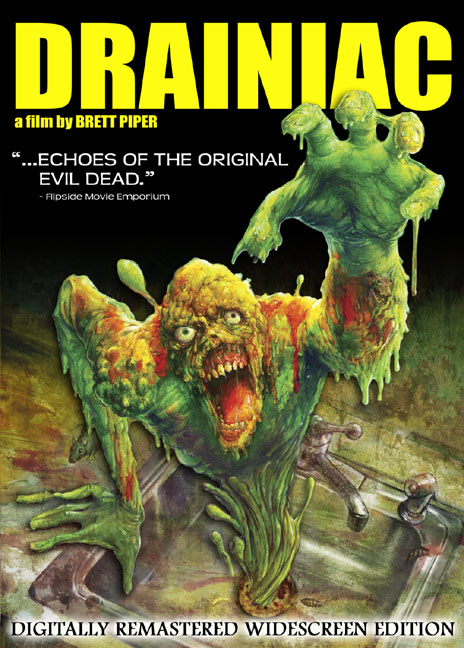
Courtesy of POPCinema’s Shock-O-Rama Cinema horror banner comes Brett Piper’s “Drainiac” onto a special edition with a 24 progressive segmented frame, high definition DVD from the original camera negative and presented in a widescreen, 1.78:1 aspect ratio. Having never experienced the original, unfinished cut of the previous release, watching this present cut will forever be seared into my soul as the best possible rendition in the past, present, and future. The 16mm film stock quality has a lot of natural grain upon a semi-washed look over a gradient-lenient color range sanctioned around the natural lighting that then explodes into a varying vividness of hues when the FX-enhanced scenes spark an immense saturation of color schemes…in a good way. No sign of damage to the original print nor any other signs regarding frame or edge enhancing and cropping. The English language 2.o stereo track, with a re-edited mix as part of the remastered package, is free of distortions, prominent dialogue, and a classic chilling piano soundtrack that pays homage to notable horror films before it’s time. The only issue to mention is some synchronization with the dialogue track and the picture seem to be off early on in the presentation where actors move their mouths to vocalize the lines, but nothing comes out. Special features are a little anemic considering the painstaking involvement and time gap in remastering “Drainiac,” but they include an audio commentary by writer-director Brett Piper and a read worthy tidbit of an inner-lining booklet written by commentary moderator, Greg Conley. THe DVD cover art is very snazzy (or snotty-like) similar to of another POPCinema release, Greg Lamberson’s “Slime City.” Reminiscent of “Evil Dead” or even some inklings of early Peter Jackson, Brett Piper has a knack for proving low-budget horror’s misconceptions are nothing more than that, misconceptions, by keenly tinkering to perfection a story that’s made is seemingly funded from a pot of unlimited gold from nifty, traditional effects and a narrative that works wonders on the imagination, keeping you glued to guessing from start to finish.

Special Edition “Drainiac” available on DVD! Click the DVD cover!