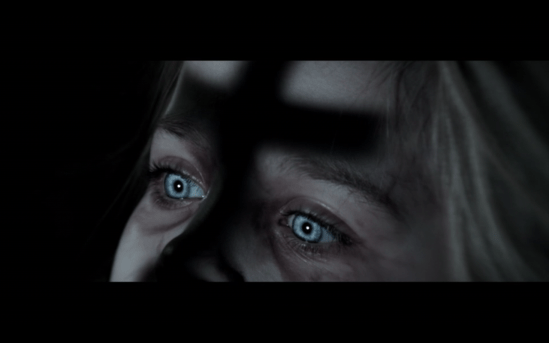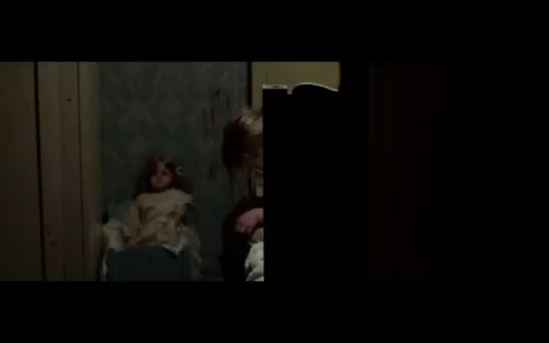
When Your Shame and Guilt Turn EVIL! “Prey for the Devil” reviewed! (Lionsgate / Blu-ray)

“Prey for the Devil” on Blu-ray home video.  Purchase a Copy Today!

The rite of exorcism has been strictly performed only by Catholic priest; a decree enforced by the Church for more than a century.  At the Saint Michael the Archangel School of Exorcism in Boston, Massachusetts, Ann, a young nurse caring for suspected possessed individuals, finds herself bound personally to a demon from her childhood.  An opened-minded Father invites her to study exorcism as an observer only, but when Ann is able to connect to beyond the demon of a terminally possessed little girl, her theory on exorcisms goes against Church doctrine.  Unable to officially help the little girl without agitating trouble, Ann performs back-alley exorcisms to prove her theories correct, bring her findings to the Church, prepare herself against a demon hungry for her soul, and save the life of a girl bound for transport to the Vatican where she will surely expire.  Ann’s past and present collide in a battle between light and dark with a young girl’s life hanging in the balance.
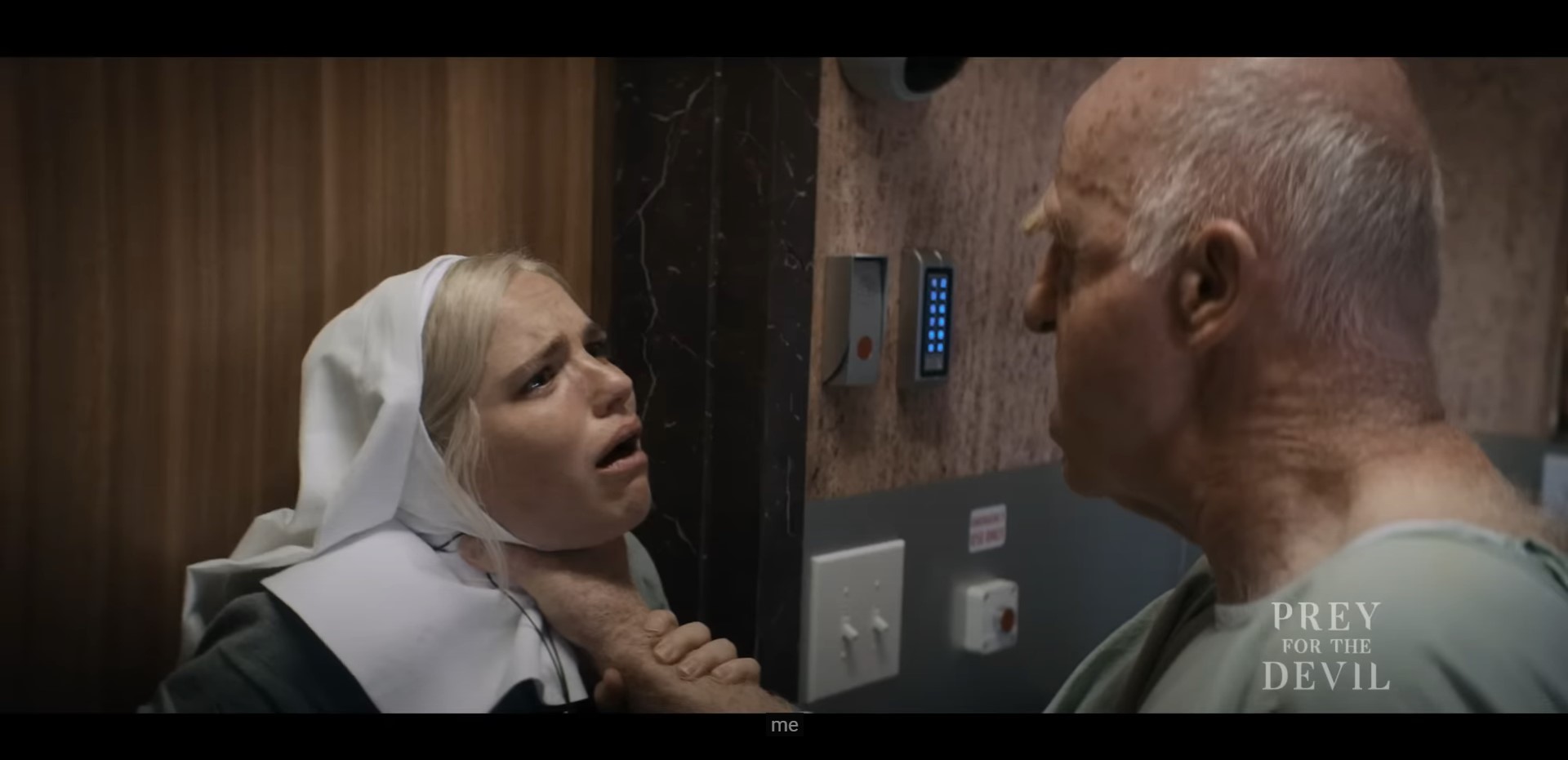
Possession and exorcism movies have become rather formulaic in the last two decades with more than most being derivative as surpassing the bar on William Friedkin’s “The Exorcist” has been an uphill battle, but, in my opinion, director Daniel Stamm has figured out a path to make the wavering subgenre emerge from the depths of the Netherworld and take possession with a different angle. “Prey for the Devil” is a terrifying tale by screenwriting partners and brothers Earl Richey Jones and Todd R. Jones, the first horror work from the “Rio” and “Johnson Family Vacation” writers, and the script, under the original working title of “The Devil’s Light, is designed by “Halloween H20” co-writer, Frank Zappia.  The Hamburg, Germany-born Stamm returns to the demonically charged, demon possession genre having found moderate success with fans in his 2010 pseudo-doc/found footage film “The Last Exorcism.”  More than a decade later, Stamm is still sending young girls up climbing up the corner of walls in his latest exorcism themed entry produced by the Jones brothers, Jeff Levine, Jessica Malanphy, and Paul Brooks under production companies Gold Circle Films (“Slither,” “Blood Creek”) and Lionsgate (“Saw” franchise).   
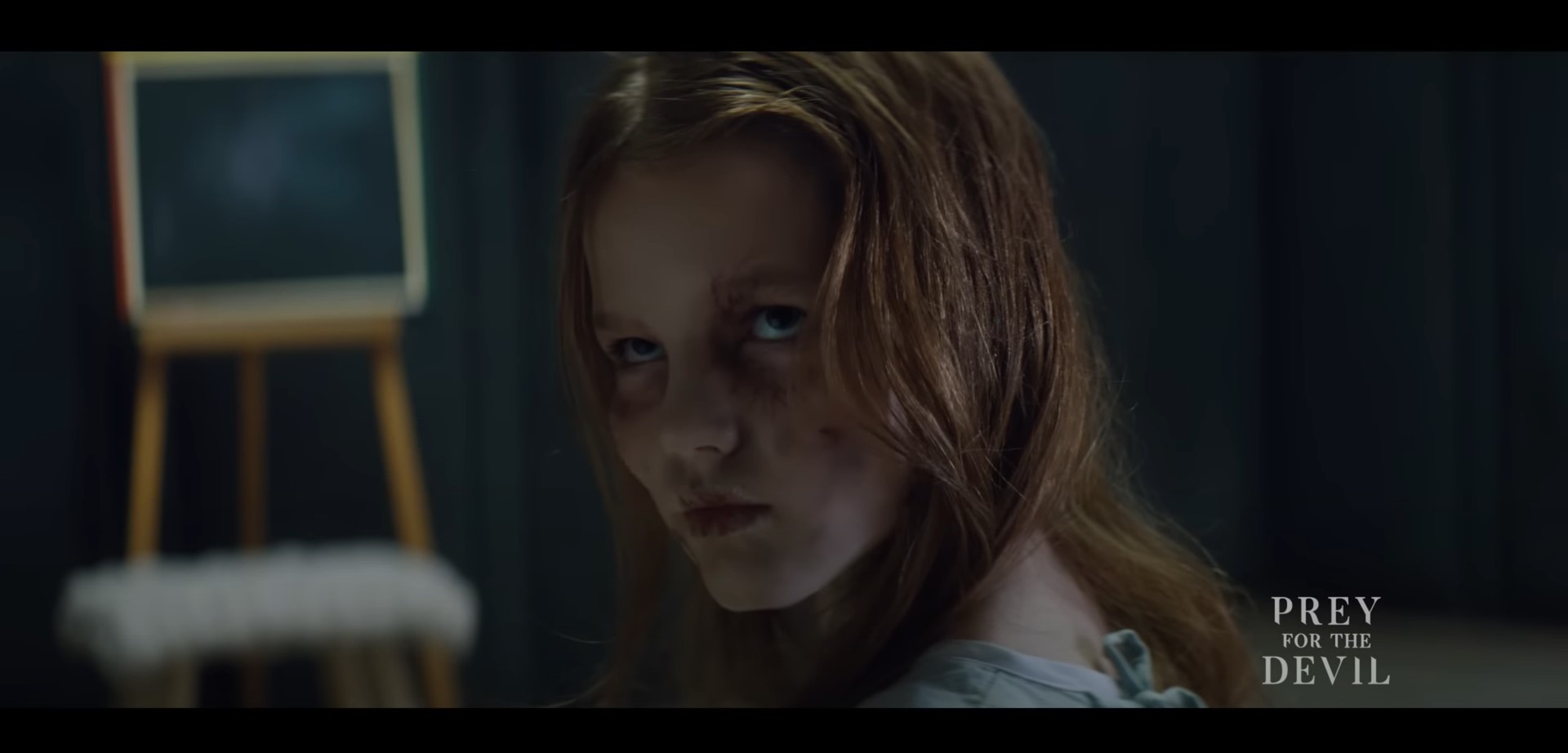
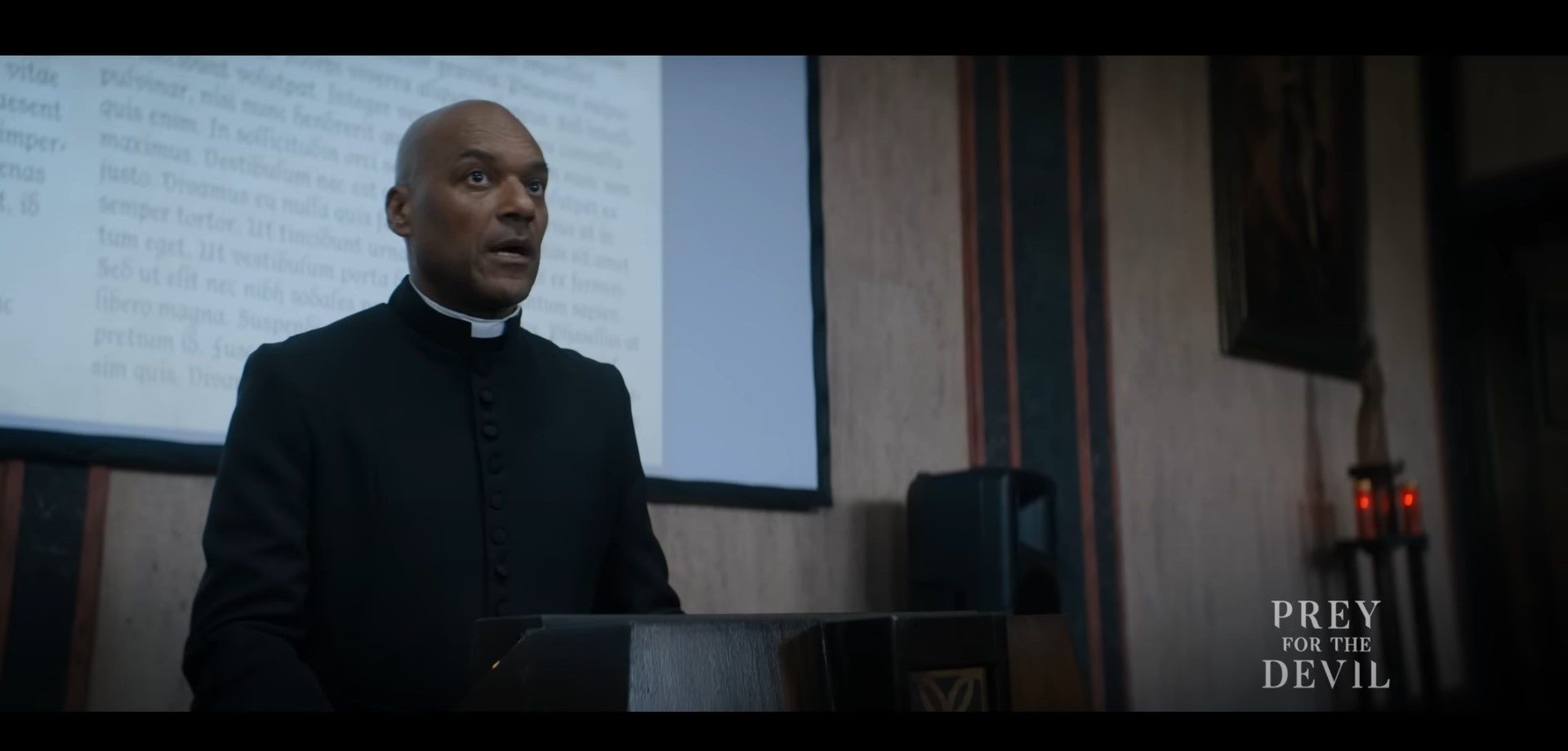
“Prey for the Devil” has an embattled protagonist facing two opposing fronts – one fowl demon hellbent on devouring the Godsent Ann from the inside out and one the Church solely for being a woman wanting to practice what’s been appointed as a man’s vocation. Jacqueline Byers has been penned to play the curious and targeted nun and the “Bad Samaritan” actress doesn’t disappoint being the center of attention without overstepping conceitedly into Ann’s habit. The story never feels like it’s Ann, paralleling similar to the overall theme of looking past the surface level demon and understanding the person’s state of consciousness that might have invited the demon inside. Byers evokes more curiosity of a woman drawn to exorcism because of her own past involving an abusive mother (Koyna Ruseva) who, when listening to the voice inside her head, would hurt child Ann with a tough tugging, decorative comb. In Ann’s way is the Church represented by Sister Euphemia (Lisa Palfrey, “The Feast”), Father Quinn (Colin Salmon, “Resident Evil”), and Cardinal Matthews, played by the late Ben Cross (“Exorcist: The Beginning”) who would succumb to cancer after the completion of his role. With a trifecta of solid performances, the Church opposition lacks fortitude in coming down hard on Ann for not only taking a shining toward a priest’s appointed aptitude, but also for performing an unauthorized exorcism on a desperate priest’s sister. Her desperate priest friend, Father Dante (Christian Navarro, “13 Reasons Why“), is a sympathetic friend without much skin in the game of sticking his white collared neck out for Ann. “Prey for the Devil” introduces the teenage actress Posy Taylor with a chillingly consumed Natalie who has a strong semblance to Regan when demonized to the fullest and in a while gown. The film rounds out the cast with Nicholas Ralph, Keith Bartlett, and “Candyman’s” Virginia Madsen as the psychiatrist using science to disprove possession.
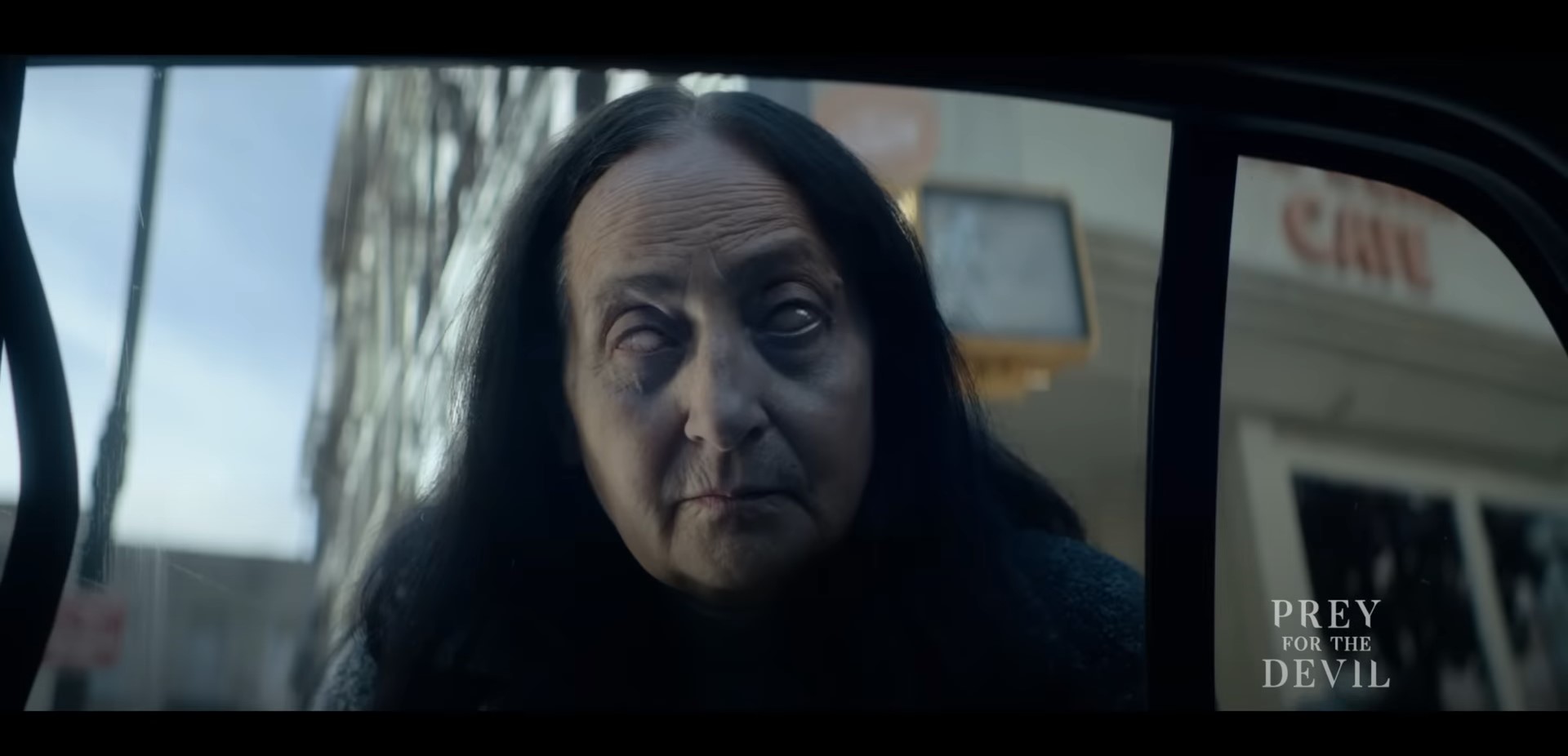
“Prety for the Devil” sets the stage strong by defining from the very opening credits that women were forbidden to perform the rite of exorcism. There’s even back support from Sister Euphemia giving her glares of disapproval and a library that limits the access to priest approved restricted texts, but Ann slides into the realm of exorcisms when little push back that begs the question why no other nun ever attempted to enroll in the demon extraction rituals course? Perhaps being set in the permissive Boston and not the draconian Vatican might have something to do with it, but the theme of inequality is ultimately suppressed and dispelled from the story, leaving Sister Ann to face a one-front battle against the unholy creatures of the underworld inhabiting those closest to her. For supernatural special effects, the computer visual imagery renders a meticulously blended and seamless compositional execution from a team under VF/X supervisor Laurent Spillemaecker (“Overlord,” “Martyrs’). The mesh of reality and virtual reality becomes indistinguishable to the point where good scares scenes come about as a result. There are plenty physical effects that are joint into a pivot from the visuals and the motions don’t have an ounce of clunkiness to them. While we touched upon the theme of inequality of women in the Church, “Prey for the Devil’s” other theme revolves around a fairly common one in films today – guilt or shame. The new angle the story provides ceases to look at possession not from a demon focused level but to reach in and try to convince the person within that they’re at fault for whatever it is they grieve in shame for and to tell them whatever the case may be, no fault is put on them. Novel enough to be interesting, guilt and shame will forever be vilified and demonized, literally, in most horror. For “Prey for the Devil,” the element of anguish proves to be more powerful than most who utilize it, capitalizing in on the power of being overcome by it, and turning it into a nasty, soul-swallowing distemper one may not come back from. This is why Virginia Madsen’s psychiatrist character exists, to provide that presence of psychosis and other mental disabilities that sometimes appear to be demonic in nature to the naked, untrained eye. The story does well to create an alternate universe around this idea by having the Church admit patients with undiagnosed disorders as they could be more than what meets the eye.
Not quite the nunsploitation one might be hoping for, but “Prey for the Devil” envisages self-conscious emotions as a wide-open door for pain, suffering, and unmitigated self-punishment. Lionsgate Home Entertainment presents “Prety for the Devil” on a high definition, 1080p, AVC encoded Blu-ray, DVD, and digital code release with a widescreen 2.39:1 aspect ratio. With tight quarters of Saint Michaels, a fictional location setup from Sofia University in Palo Alto, California, the anamorphic lens compacts hallways and auditoriums cylindrically, offering more space than actuality, but the format doesn’t necessarily fit this type of a film that offers no vast landscape or much depth or long shots. Not much else to say negatively about the digital image that offers a darker, low contrasted tone. The audio track has three audio options: an English Dolby Atmos, a Spanish 5.1 Dolby Audio, and a French 5.1 Dolby Audio. For the English Atmos, the format fully immerses the viewer into a complete surround sound experience with each crescendo jump scares as well as in the middle of a good versus evil quarrel. Crisp and spatial, Atmos on the release takes advantage of the infrasound to build tension where it might be lost in other audio formats and also italicizes the ambient composition into the Nathan Barr’s (“From Dusk till Dawn 3: The Hangman’s Daughter”) classical and haunting lullaby scores. The special features include an audio commentary with director Daniel Stamm and principal lead actress Jacqueline Byers, a 41-minute featurette with in-depth and retrospective interviews with cast and crew Possessed: Creating Prey for the Devil, Nathan Barr’s discussion on creating the score for the film A Lullaby of Terror, exposing the film’s visuals effects The Devil’s Tricks, a feature-length, nearly 2-hour roundtable read of the original first screenplay draft from the cast, and an Exorcist and Psychologist discussion about the possession with screenwriter Robert Zappia mediating (or maybe even moderating) the comments. The physical release comes in a traditional Blu-ray snapper case with artwork cover pictured with one of film’s rememberable scenes. Inside is the digital code slip and outside the snapper is sheathed in a cardboard slipcover with the identical cover art. Possession-exorcism films are just as tired as the zombie subgenre, but “Prey for the Devil” possesses symbolic and doleful undertones inside a superbly acted and an intriguing alternate universe story that’s not too far from the truth in one of the Church’s more confrontational, as well as controversial, methods to battle evil.

“Prey for the Devil” on Blu-ray home video.  Purchase a Copy Today!

Continue reading →

Problems Arise When Your Brother is an EVIL Mutant Octopus! “The Kindred” reviewed! (Synapse Films / Blu-ray)

“The Kindred” on Blu-ray at Amazon.com!

Before the passing of his brilliant molecular scientist mother, scientist John Hollins fulfills his mother’s adamant dying wish to destroy her life’s long work at their old seashore home. She also spills out that he must put a stop to his unbeknownst to him brother named Anthony. John, who followed his mother’s footsteps by becoming a lead geneticist, devotes the efforts of his team to assist in the removal and destruction of the data but the extent of her work was severely underestimated. Digging through journals upon journals and computer data to find any mention of a long-lost brother, John delays the rescinding proceeding. That is until a member of his team is attacked by an unknown creature and that his brother might not be actually human. On top of it all, John’s lab supervisor, Dr. Phillip Lloyd, is hellbent on obtaining his mother’s covert creation and embeds a spy on John’s team to locate it by whatever means necessary. The simple deathbed request has become a monstrously frightening ordeal that will pit brother versus brother and place everyone’s lives in mortal danger with a tentacled creature set loose.

As Vin Diesel once said in 9 “Fast and the Furious” movies, family is everything. “The Kindred,” however, is not a Vin Diesel movie, does not have supercharged, illegal street race cars or even any high-octane action, and definitely pinpoints family to be more of a burden-riddled, hazard to your health kind of deal when the little brother you never knew existed turns out to be a hybrid surf-and-turf creature with a thirst for blood. That’s the barebone synopsis of “The Kindred”, a U.S. bred sci-fiction-horror from the directors of “The Dorm That Dripped Blood” and “The Power” Stephen Carpenter and Jeffrey Obrow. The 1987 creature feature is penned by the two filmmakers alongside John Penney (“Return of the Living Dead III”), Earl Ghaffari, and “The Exorcist” screenwriter, Joseph Stefano to give the script a little extra supernaturally special to make it stand out. The indie film is a production under the limited partnership of producers Jeffrey Obrow, Stacey Giachino, and executive producer Joel Freeman (“Love at First Bite”) and was theatrically distributed by the now defunct F/M Entertainment.

As a geneticist, “Manhunter’s” David Allen Brooks gives a fairly convincing performance as a strong jawed, blonde haired, and tall statured scientist wearing the now hackneyed glasses to make him appear nerdy and scientific. Honestly, the L.A.- born actor could have gone without the glasses and would have made no difference in the geneticist maven that is John Hollins but on screen, it’s a good look for the part. Yet, all the scientific studies in the world couldn’t prepare what’s to come for the level-headed researcher: a long weekend at the seashore house with direct report whizz-kids and a British acolyte of his mother’s with the blatant hots for him despite his longtime girlfriend (Talia Balsam, “Crawlspace”) tagging along to help with the cleanout. Romantic tensions flare, jealousy ensues, and personalities clash as a house full of emotional cannonballs are being launched in every direction, blinding them to the real threat at hand – a genetically spliced mistake roaming the grounds and full of bloodlust. In its rampaging path are a varied of vaguely hormonal and youthful scientist and administrative blend with a hilarious Peter Frechette (“The Unholy”), the nice guy in Timothy Gibbs (“Witchboard 2”), the Betty Childs from “Revenge of the Nerds'” with Julia Montgomery in a stepdown supporting role, Bunky Jones (“Hide and Go Shriek”), and the dubious dame of Amanda Pays (“Leviathan”) in her best Kelly LeBrock impression. The cast rounds out with a couple of veterans in Kim Hunter (“Dark August”) as mother Hollins and in an almost unrecognizable in appearance but unmistakable in performance from Rod Steiger (“Modern Vampires”) with hair (likely a wig).

“The Kindred’s” promising 80’s creature feature showstopper is marvelously slimy, grotesquely anthropomorphic, and stunningly conceived and manipulated creature effects by a team under Michael John McCracken’s supervision. The palpable, practical special effects works for “The Kindred’s” era that offers technology limited f/x options, but for this type of subgenre to be constructed in the late 80s, “The Kindred” takes advantage of the wide birth of possibilities from makeup to creature mechanics to pyrotechnics, and to be made would have less memorable as just been another bargain-basement botch job of trying to skirt around the cost at the monster’s expense. Plenty of love is poured into showcasing the monster movie madness that includes a watermelon sinking its barbarous tentacles under human skin and an open floorboard cavity into the creature’s watery pit where the hybrid emerges and slinks back into the abyss. While the practical effects menagerie is a gawker’s paradise, I find the story is only a firecracker’s worth of entertainment in comparison to the Yonshakudama-sized starburst that is McCracken’s Kraken-like monster. Rod Steiger plays the obvious mad scientist, experimenting on the recently traumatized who’ve suffered head wounds, with the nefarious creation of mindless, mutants who are held in the basement of his lab because, well, to be a reminder of his failures? How a dying molecular scientist’s genetic splicing-gone-wrong and Rod Steiger’s version of playing God with the “People Under the Stairs” intertwines is either above my intelligence or doesn’t have one ligament of connective tissue to bind them together. Dr. Lloyd often feels like a very separate story, not dovetailed to the slippery and octopus-shaped antagonist John Hollins and his team face. The only smidgen of connection between the two conflicting plot titans is Melissa Leftridge who’s blackmailed by Dr. Lloyd to retrieve a specimen or die from the same exposure that’s mutated the creature under the seashore house. What befalls Leftridge, in itself, is another substory left shamefully abridged given the spectacle transformation of human-to-fish that randomly flares into the fold.

With an all new 4K high-definition remaster of the unrated print, Synapse Films doesn’t hold back their Blu-ray release of “The Kindred” that’s presented in 1080p, open matte 1.78:1 widescreen aspect ratio.  The AVC encoded picture quality caters to the upscale class from a nearly mint transfer print.  The color is vivid, and details come through nicely with every bit of goo and glop spewed from the creature.  Any kind of issues with compression are either minor or non-existent in the 93-minute runtime and this is typical high-level execution as on many of Synapse’s upgraded and first-time ever on HD released products.  The English language DTS-HD 5.1 master audio surround sound cuts a vigorous soundtrack with ample range.  Depth is not really tested since most of the action is in the foreground but never does the action top the dialogue that remains free from obstruction and imperfections.  Optionally, the release offers the original theatrical 2.0 mono soundtrack as well as English SDH subtitles.  Ample bonus features on the unrated release include a commentary with directors Jeffrey Obrow and Stephen Carpenter that’s moderated by horror journalist Steve Barton, a near full length making-of featurette with directors and writers John Penney and Early Ghaffair in Inhuman Experiments that digs into genesis and principal photography, never-before-seen on-set compilation footage of Michael McCraken’s creature effects, a still gallery and storyboard concepts, TV and promotional spots/trailers, and the original theatrical trailer.  The physical release comes with a blackout Blu-ray snap case with a Synapse catalogue insert.   For a middle of the road creature feature, Synapse knocks the release out of the park, elevating by particularizing the details with care that makes the pint-sized “The Kindred” feel monolithically 100 feet tall.

“The Kindred” on Blu-ray at Amazon.com!

Don’t Mind the Glowing, Ominous Hole in the Wall. That’s Just a Gateway to Evil. “Beyond Darkness” reviewed! (Severin / Blu-ray)

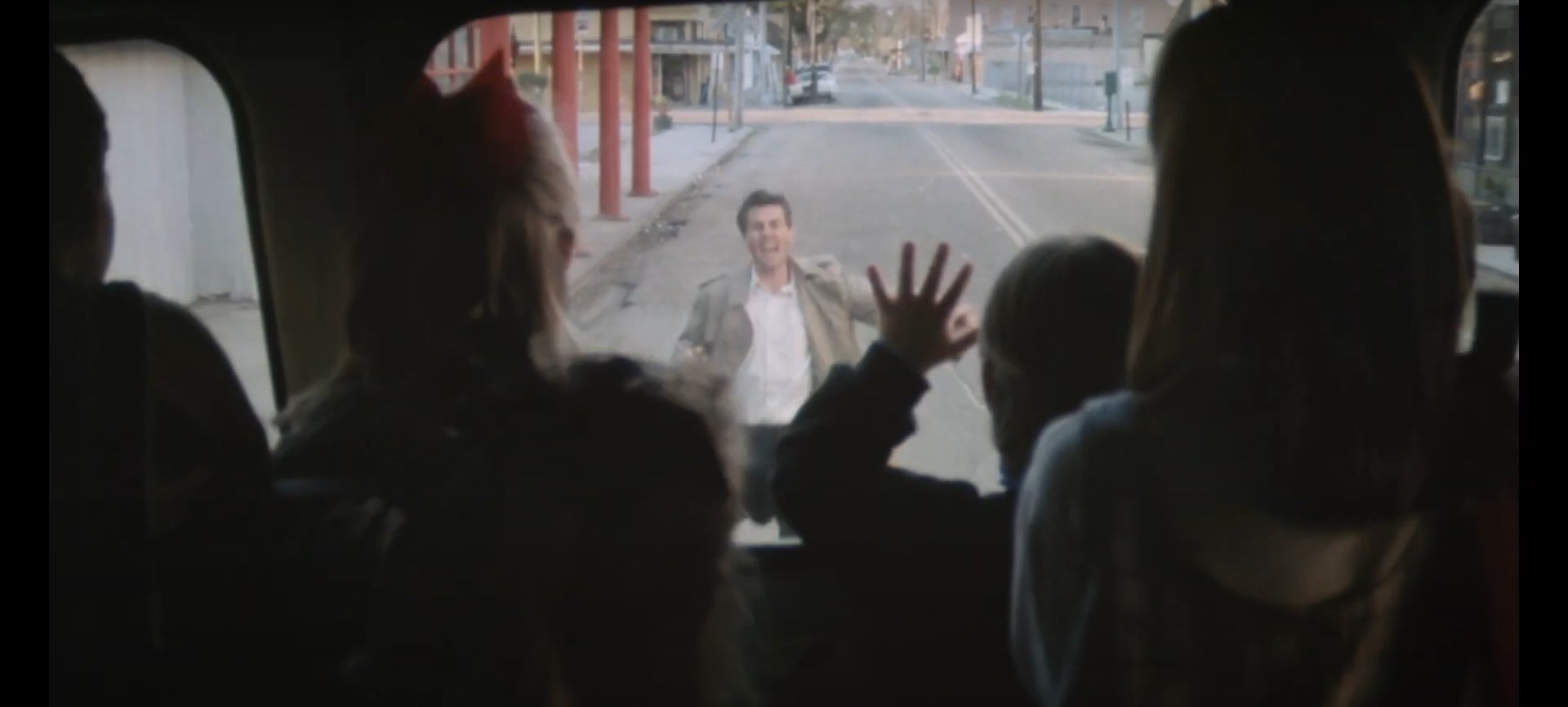
A witch acolyte of Ameth, an underworld demon, is executed on multiple counts of child murder.  The priest who oversaw the witch’s last rites came in with a doubtful heart and upon researching Ameth through an unholy book, disavowed his own religion only to fall into a near drunken stupor of atheism.  Months later, a new priest and his family move into a home arranged by the archdiocese, but soon after settling into the old house, a series of disturbances point to a closed in wall behind a door that’s uncovered to be a gateway to another plane of existence; an existence where the child killing witch is granted access to seek the souls of the priest’s young children.  Fighting with his own struggles of faith, the ex-Jesuit assists the priest and his family in an attempt to cast out evil once and for all. 

Perhaps common knowledge amongst diehard horror fans, but not so much among the casual curiosities of an oblique coursed moviegoer is the fact that “Beyond Darkness” and Sam Raimi’s “The Evil Dead” share a cinematic series connection.  Well, not one in any official capacity one at least.  Drained from the same bloody vain that unofficially corrals Lucio Fulci’s “Zombi 2” as a sequel to George Romero’s “Day of the Dead,” retitled in Italy as “Zombi,” the American-made, Italian-orchestrated “Beyond Darkness” too fell upon the slew of Italian title changes sword with a rechristening into the “La Casa” series.  With the success of “The Evil Dead” in the U.S., Raimi’s video nasty was renamed to “La Case” and “Beyond Darkness” became the fifth “sequel” in the series as “La Casa 5.”  Since Italy has no copywrite laws, a light breeze can easily change any filmic title.  Even the director, Clyde Anderson, dons a false pretense as the Americanized alter ego of Italian director Claudio Fragasso.  The “Scalps” and “Troll 2” Fragasso pens “Beyond Darkness” with longtime script confederate Rossella Drudi, under the Sarah Asproon pseudonym.  “Beyond Darkness” is shot in the deep American South of Louisiana under the Joe D’Amato (aka Aristide Massaccesi) founded Filmirage (“Anthropophagus: The Grim Reaper,” “Deep Blood”), produced by D’Amato, as the Filmirage Production Group.

While behind the camera is mostly an Italian production team, in front of the camera is a cast of American and English actors with an opening Louisiana penitentiary pre-execution theology debate between Bette the witch, played by Mary Coulson, and Father George, a priest having a crisis of faith, played by one of D’Amato’s regulars in English actor David Brandon (“StageFright,” “The Emperor Caligula:  The Untold Story”).  Coulson’s role may be punitively small as the “Beyond Darkness’” lead witch and predominant face of the core evil, but the actress puts all into the Bette character comprised of a maniacal laugh and a lots of very European skin-tag makeup effects whereas the classically trained David Brandon has an array of lively emotions and facial expressions sized to fit Father George’s clerical shirt and white tab collar when he’s not sloshed with doubt.  Both characters interweave into the life of a new-to-the-area priest, his wife, and two kids who move into an old house, built on unholy ground, to start his new chapter in priesthood.  Days later, as the kids become instantly okay with a giant black swam rocking horse in the middle of their bedroom, the family is terrorized by flying kitchenware, flooded with a bayou mist, and frightened by figures in black, tattered shrouds seeking to steal their children’s souls.  Christopher Reeve’s lookalike Gene LeBrock (“Night of the Beast”) fails at double father duty in his poorly lit excuse of a worried father with his children being lured to the realm of the spirit side and as a grounded in faith Father combating the forces of evil without a solid sense of what to do.  Both parents are equally written off as incompetents who continue to stay in the house despite on the continuous threat of Baba Yaga wannabes knocking at every door in the house.  As the mother, Barbara Bingham felt as if she had a little more skin the game.  Perhaps having just come off the legacy success of a “Friday the 13th” sequel (“Jason Takes Manhatten”) she felt the responsibility of maintaining a more diligent approach toward being a mother coursing through occult’s dire straits.   Michael Paul Stephenson (“Trolls 2) and Theresa Walker excel much better in their roles as the two kids, Martin and Carole, who’ve become the centerpiece of Bette’s maliceful desires. 

“Beyond Darkness” will come across as very familiar amongst both horror fans and fans of movies in general with a story pulling inspiration from films like William Friedkin’s “The Exorcist” and Tobe Hooper’s “Poltergeist.”  Fragasso picks and chooses a blanket of trope elements to rework with great malleably in order to not be a total copy.  However, for those who know anything about low-budget Italian horror, Fragasso’s rousing similarities to major and independent hits should come as no surprise.  Notoriously renowned schlock horror directors Joe D’Amato and Bruno Mattei, amongst a sea of others, use to fabricate out of fame at every opportunity by gobbling up successful films, chewing them up, and spitting out their Italian produced counterparts without a second thought just to cash in on just a fraction of the original narrative’s success.  The way I see it, the method was (and still is) an honorable form of flattery. Yet, flattery doesn’t cure sloppiness and “Beyond Darkness” is about as sloppy as sloppy joes. Plot hole after plot hole stack up on Fragasso’s inability to amalgamate elements in an entirely coherent way. There are underwhelming revelations to anticipating character build ups that fizzle; such as a thick-tension mystery behind the local archdiocese and their involvement to place a good Christian family in a house built on evil land or what precisely convinced Father George of Ameth’s power to sink him into an alcoholic pit of despair? I already mentioned Martin and Carole’s inept parents on not fleeing the house at first sign of poltergeist activity or any activity since then so don’t get me started. The story needs some fine tuning but not after is amiss. The acting is not entirely a humdrum of monotony, Carlo M. Cordio’s eclectic synthesizer riff and haunting keynotes score is on another level akin to a composition pulled right out of a survival horror video game, and Larry J. Fraser, another one of Joe D’Amato’s pseudonyms, has an honesty about his scenes unlike we’ve ever seen before in a D’Amato production as the cinematographer captures the fog luminously and effervescently surrounding and chasing the family from out to in.

“Beyond Darkness” is no “The Evil Dead” but is a solid demon and ghost dog and pony show from 1990. Now, the Claudio Fragasso (or is it, Clyde Anderson?) classic is heading straight to your level room television set with a new 2-disc Blu-ray. The hardcoded Region A is presented in widescreen 1.66:1 aspect ratio in a full high definition and 1080p resolution. With only a possible color touch up here or there, I would venture to say the transfer used is the most pristine copy with hardly any damage or any age deterioration. The grain looks amply checked and no cropping or edge enhancing at work in an attempt to correct any issues, if any ever existed. Severin offers two audio options: an English language DTS-HD master audio 2.0 and an Italian dub of the same spec. With dual channels, there retains an always room for growth inkling and with the film’s broad range in sounds, a difficult to swallow lossy audio pill plays the aftertaste tune of, man, this could have been way better. Yet, the track is solid enough, if not more so, with virtually zilch damage. Dialogue comes across clean and clear, but there tails some minor hissing. Like with many Severin releases, new interviews are the star of the special feature show with one-side, talking head interviews with writer-director Claudio Fragrasso Beyond Possession, co-writer Rossella Drudi The Devil in Mrs. Drudi, and actor David Brandon Sign of the Cross. Though the theatrical trailer rounds out the first disc special features, Severin also includes Carlo M. Cordio’s superb soundtrack as disc number two along with a two-page booklet with an introduction to the ingredients of a horror score and to Cordio himself as well as a listing of all 17 tracks. “Beyond Darkness” is Claudio Fragrasso’s unbridled mutt, a motley of motion picture royalties rolled up into an adulating and piggybacking horror beyond comparison.

“Beyond Darkness” 2-disc Special Edition Blu-ray Available on Amazon

EVIL is Only in Your Nightmares. Or is it? “Retribution” reviewed! (Severin / Blu-ray)

Severely depressed artist George Miller attempts suicide by jumping off from his apartment building.  During the exact same time, a low-end gangster is brutally killed by cruel loan sharks.  Being both born on Aril 1st and dying at the same time, the tortured spirit of the gangster possesses the meek artist’s body right before being resuscitated by EMTs.  After a long recovery filled with horrific nightmares, the affable artist returns to his apartment building where he’s welcomed by fellow tenants and an overly warm landlord.  Still plagued by nightmares that have seeped into his awake conscious state, George medicates himself to sleep but the nightmares continue as he sees himself using psychokinetic powers to kill random individuals with extreme malice.  The nightmares are so real he wakes up in a sweaty panic to find out that that exact person was killed the night before the very way it played in his dreams.  When George realizes the gangster has inhabited his body for revenge, he and his friends take measures to put an end to the vindictive carnage. 

Santa Maria.  Mother of God.  Help me!!!  That phrase, attached to the very last seconds before a gruesome death and announced blankly from fiery, dagger eyes, has forever been seared into the recessed corners of my eardrums as the death cry that echoes throughout Guy Magar’s 1987 gory and visceral possession identity crisis, “Retribution.”  Magar’s ultra-violent and super-chromatic film is the filmmaker’s grand inaugural entrance as a full-length director following up behind a string of director chaired television episodes, including episodes from “The A-Team,” “Blue Thunder,” and “The Powers of Matthew Star” that regularly contained quickly charged, action packed sequences.  The Egyptian-born director translates those intense moments of frenzied disturbance into his mean-spirited and unforgiving vindicator of a script cowritten with then first time screenwriter, Lee Wasserman.  Shot in Los Angeles, “Retribution” is a virtual tour of the city, using the streets of L.A. and real locations, such as the Don Hotel for George’s residence and the nearby House of Neon Art, as a lively, eclectic, and wallet-saving convenient giftwrap for the film’s Dr. Jekyll and Mr. Hyde complexion that feels totally normal compared to L.A.’s divergent glamour.  Magar and Wasserman produce the film with Renegade and Unicorn Motion Pictures serving as the production companies and presented by Taurus Entertainment, formerly connected with United Artists. 

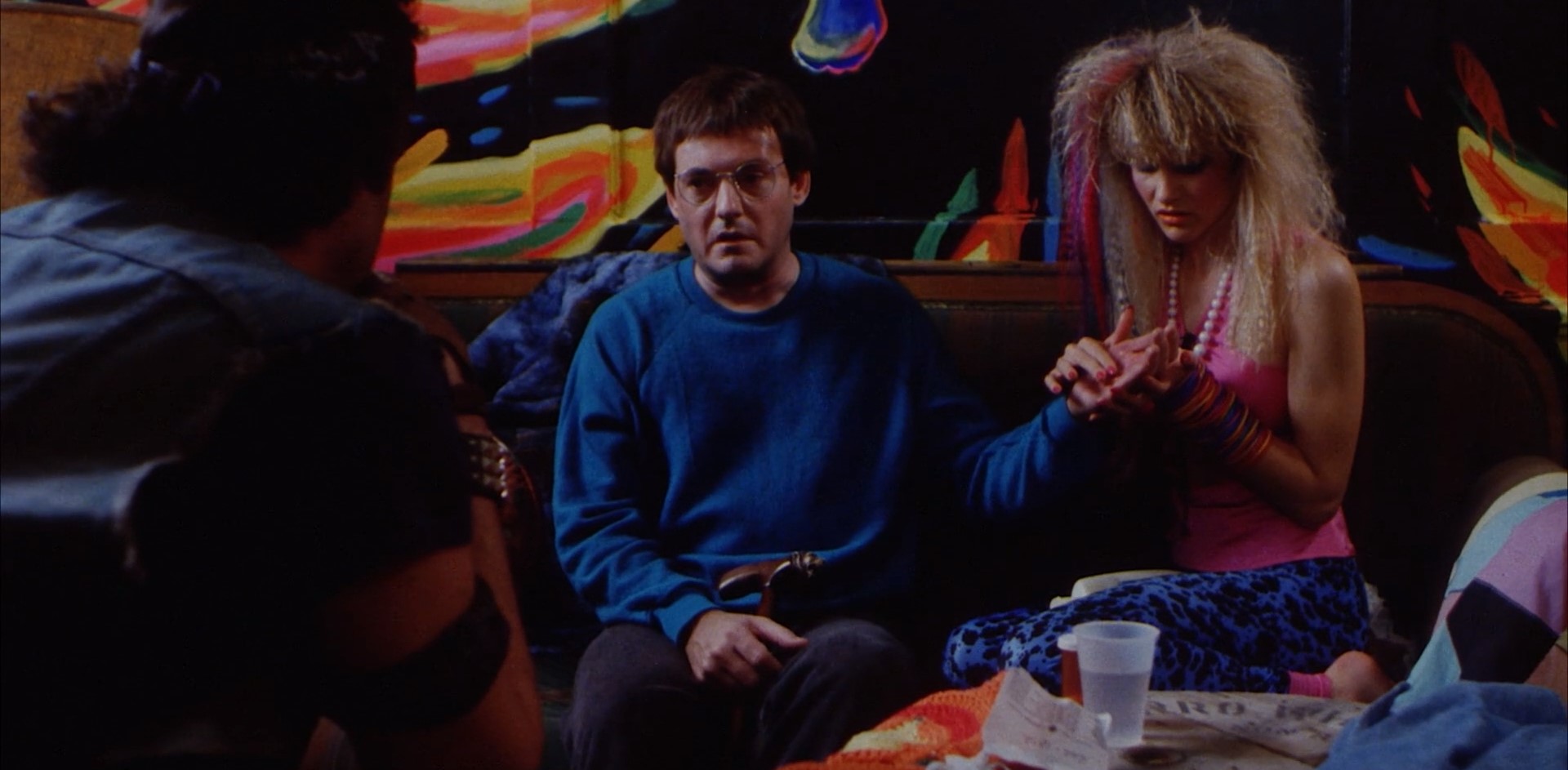
There are probably many actors that could been imagined for the role of George Miller, the suicidal artist plagued with visions of him committing murder, but it’s hard to imagine that venomous stare of complete satisfaction in madness spread across the face of anyone else other than Dennis Lipscomb.  No disrespect to the “Eyes of Fire” and “Wargames” actor but Lipscomb isn’t a chiseled-jawed and muscular leading man; in fact, Lipscomb is quite the opposite, but his range into mild-manner, all around nice guy George Miller into the lust for hatred and murderous revenge George Miller hangs on with complete chasmic permanence.  However, George’s love interest with the street working prostitute and fellow Don Hotel resident, Angel (Suzanne Snyder, “Return of the Living Dead II,” “Killer Klowns from Outer Space”), hardly ever seems natural in not only in the characters’ surreal age-yawning dalliance but also the chemistry looks and feels flat between Lipscomb and Snyder.  Magar and Wesserman neglect diving more into that bond between them but their enamored gleamy eyes for one another is apparent and strong without the context to back it up.  “The Dungeonmaster’s” Leslie Wing also is placed as a George Miller sympathetic advocate in her role as hospital psychologist Dr. Jennifer Curtis, but Dr. Curtis has more background to contend with in comparison to the suddenly conjured fondness from Angel as Curtis is a mental health professional caring for a suicidal patient from at his rock bottom worst to a complete positive turnaround in his mental transformation.  Curtis has more skin in the game with George’s supposed delusions of actually killing people in his nightmares as she defends not only George’s unique supernatural circumstances, but, in a way, herself as a licensed medical profession following HIPAA laws.  “Retribution” holds many dear and unforgettable characters that essentially captures the entire 1980’s spectrum of personalities and, even for a brief scene, the cast gives each role their all, including performances from Susan Peretz (“Dog Day Afternoon”), Clare Peck (“Teen Wolf”), Chris Caputo (“Ghost Warrior”), Danny Daniels (“Voodoo Blood Bath”), Ralph Manza (“Godzilla”), George Murdock (“The Sword and the Sorcerer”), Mike Muscat (“Hunter’s Blood”), and Hoyt Axton who doesn’t stray too far from his good intentions, but naïve, father role in “Gremlins” to being a detective tracking down suspect George Miller. 

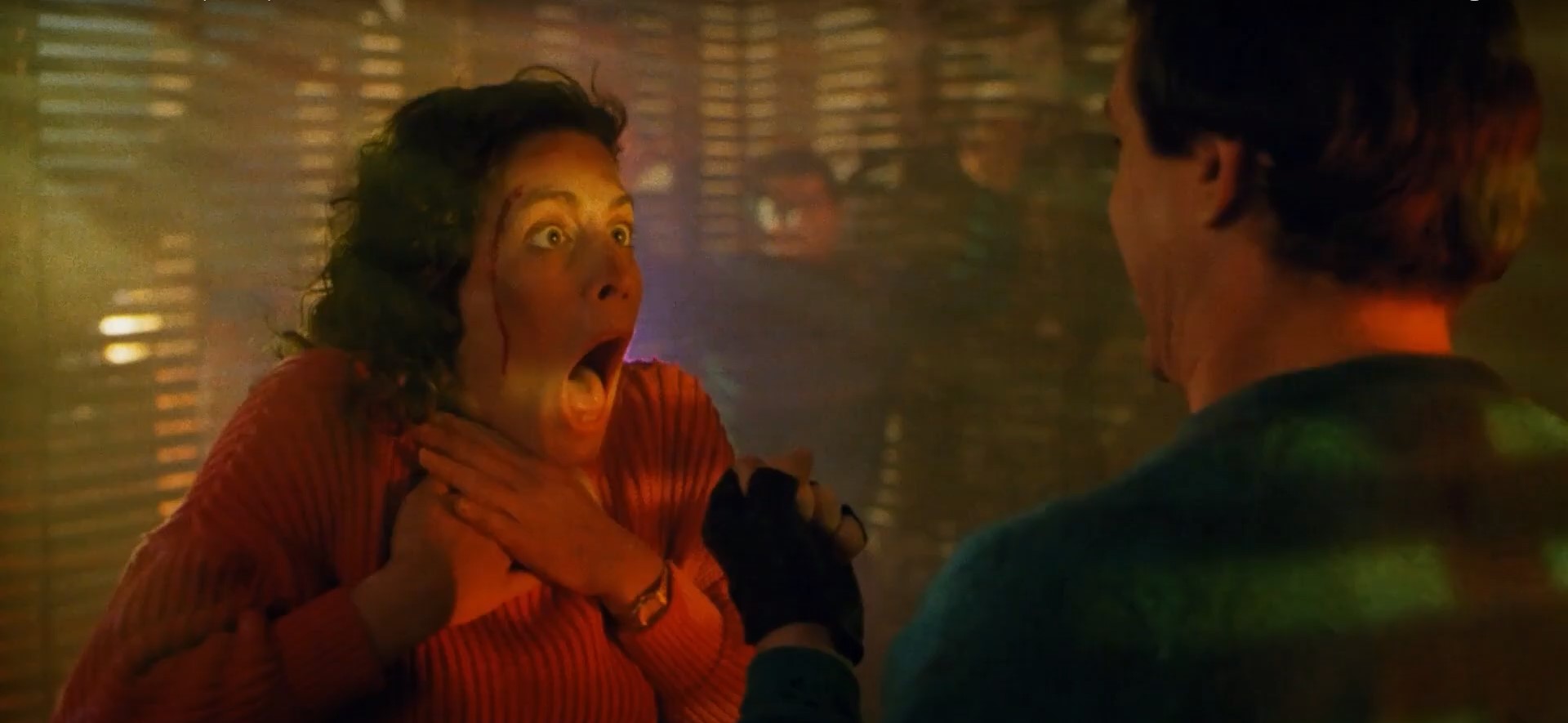
I’m in total awe of Guy Magar’s “Retribution.” That opening scene of the suicide attempt with Alan Howarth’s building tension score drops not a single piece of dialogue yet opens with a gripping life and death situation, musically synced to progress toward a harrowing climax, and every frame is dripping with vintage 80’s appeal. Magar definitely knew what strings to pull to get the blood pumping, to get you excited, and to drop an excellent mystery right in the lap, or the middle of the street in this case with George Miller’s body after it flops off the car it just smashed onto. From that point on, “Retribution” peddles forward following the recovery, recouping, and ruination of George Miller’s life at the unseen hands of an exploiting, malevolent spirit that seeks to track down the top-tiered gangsters that shot and burned him alive and exact his own brand of harsh psychokinetic justice. Does it matter how George and this gangster, both born on the same day and both nearly died at the same time, came to fuse transcendently together? Don’t worry. Magar didn’t think it was important either and he’s right! “Retribution” snags all the attention for the sole purpose of the ride and that ride being a beautiful, color-coded daymare. The one aspect that ultimately retracts the buzzing high, stemmed from most 80’s films, is the sluggish love interest subplot between George and Angel stutter stepping into an awkward phase of interactions that hard stops much of core plot and though the plot is neurotically nonsensical to begin with, George and Angel’s desires for each other are about as cringeworthy as they come. Stick with the gore by honing in on Miller’s subconscious alter ego of a gangster serving his killers their just desserts via Kevin Yagher (“Nightmare on Elm Street 2: Freddy’s Revenge”) and his highly effective special effects on a low end budget that, along with a brilliant showing of cinematography by Gary Thieltges, tips into the categorical likes of “The Evil Dead” or “The Exorcist.”

“Retribution” delivers a fervency unlike ever seen in one of the utmost, must-see, shamefully overlooked horrors films of the 80’s.  Now, with a deserved boost and in style, “Retribution” gets the royal restoration treatment with a jammed-packed and sleek 3-disc Blu-ray set from Severin Films and distributed by MVD Visual.  Disc one’s theatrical cut, clocking in at 107 minutes, comes from the recently discovered 35mm pre-print elements, shot on an Arriflex 35 BL3 per IMDB, and has been digitally scanned in 2K, presenting the region free film in 1080p Full High Definition inside the original widescreen 1:85:1 aspect ratio.  “Retribution’s” image pleasingly pops with fine delineating attention to the details that reach out to the point where they’re nearly tactile textures.  Every single setup of Robb Wilson King’s production designs are rich to begin with but are even figuratively injected with a smoother compression growth enhancing hormone, adding more layers of surface level details that personify and personalize the space.  Magar’s chromatically fluorescent vision is a literal tilt-a-whirl palette blast of phantasmagoria.  Disc tow is the extended Dutch video version that adds back in the extended seconds on the longer, gorier kill scenes.  The English language DTS-HD Master Audio 2.0 is the sole mix on the release and, honestly, sates the need with the dual channels.  You obviously don’t get the surround sound, which considering this release would have been ideal, but the stereo mix, as well as the dialogue track, is still full-bodied, identifiable, and spotless of blemishes.  John Carpenter understudy Alan Howarth scores his solo synth-laden story on tenterhooks with a tinge of a Miami Vice theme as well as setting tonal moods that add depth to character layers.  If you want the entire OST, you’re in luck!  The third disc is a compact disc of the entire soundtrack.  Special features includes over two hours of content with Severin exclusive looking back at the experiences with the late director Guy Magar and the ins-and-outs of making “Retribution” interviews with co-writer Les Wasserman Writing Wrongs, actress Leslie Wing Shock Therapy, actress Suzanne Snyder Angel’s Heart, actor Mike Muscat Santa Maria, Mother of God, Help Me!, soundtrack composer Alan Howarth Settling the Score, special effects artist John Eggett Visions of Vengeance, artist Barry Fahr The Art of Getting Even, production designer Robb Wilson King Living in Oblivion.  Other special features include Guy Magar’s student film “Bingo,” stills and poster galley, and the theatrical trailer all packaged under a cardboard slipcover and a reversible snap case cover. Severin Film’s “Retribution” release is a triumph, a proper regenerarcy of revenge cinema, with all the gory details being the star of the show.

Own this Amazing 3-Disc set of “Retribution” from Severin Films!

Being a Gracious Host Goes Well with an Accompaniment of Corkscrew Evil! “The House” review!


Set inside the conflict of World War II, a strayed former SS lieutenant and a German paratrooper must band together and escort a Norwegian captive through the snow covered forest of the frigid Norwegian mountains. Venturing through the cold and soulless landscape, the lieutenant is baffled by his bearings as his map doesn’t correlate with his surroundings, the sun is positioned at the opposite direction, and their compass points in the wrong direction. Faced with the possibility of gangrene and hypothermia, the lost combatants are forced to take up camp in a seemingly abandoned house that fly’s a hoisted Norwegian flag and has a pot of stew left simmering on a stove burner. Their already puzzling arrival into the residence is also met with unexplainable occurrences that place the extremely cold and weary soldiers even more so on an overwrought edge as they continuously search the house of presence telling life signs. Shadows and sounds trick their senses, soon realizing that the cozy confines are an inhospitable prison and with the deadly cold nipping at the doorstep, the soldiers are left with no choice but to face a sinister absence of time inside a hostile house that toys with their psyche and questions their own mortal existence.

Quickly becoming Norway’s prominent horror filmmaker, Reinert Kiil found success with his controversial and provocative “Whore” films and had a well-received review at Its Bloggin’ Evil for his cheerfully grisly, holiday slasher classic, “Christmas Blood.” Artsploitation Films continues to wholeheartedly support the Norway born director with his next venture, the supernaturally-charged possession of a home-sweet-home feature entitled simply “The House’ or “Huset” as titled in the original tongue. Kiil typically trends with shock horror, but with “The House,” there is an expansion upon his range as a filmmaker while remaining in a field he’s finds most endearing, pulling inspiration from his childhood memory vault of B-movie horror schlock and nostalgia grandeur, and dapples with replacing his guts and gory showmanship with slowly developing and instilling fear, especially with fear of the unknown and fear of change. Audiences are going to be attached to the hip and entrenched with the German soldiers, clueless to their predicament and anxious for them with the house’s uncanny and perplexing animosity, and Kiil doesn’t show much right away, slowly simmering the taut chills lined meticulously in the story.

Paratrooper Andres Fleiss is introduced in the preface attempting to save his mortally wounded friend and brother in arms, Max. Fleiss’s passion greatly motivates him as he jump out of a plane first rather than assess whether he has a parachute on first, willing to assign blame and kill Rune, Norwegian captive, right away without any provocation as instant relief and gratification. You see, Rune didn’t kill Max and, in fact, no exposition is provided about how the three men arrived at preface’s point in time, standing on a snowy side of a mountain just on the outskirts of a forest edge. Frederik von Luttichau (“A Room to Die For”) incites the paratrooper’s sense of duty and sense of irrationality. Luttichau’s able to quickly switch gears from confident combatant to a frightened bumbling idiot whose trapped inside a complete mind scramble of a situation. Fleiss is juxtaposed against the cooler head of a commissioned officer, Lieutenant Jurgen Kreiner. The former architect from Munich uses his SS training to tranquil the anxiety; so much so that Kreiner has a strange habit of protecting Rune from expiring much to the displeasure of Fleiss. Mats Reinhardt, in his sophomore film, is a juggernaut of emotional suppression. The rigid actor perfectly suits Kreiner’s stoic rationality toward not only the malevolent shelter, but also to Fleiss’s thin patience. Both characters’ melancholy is confounding as you start to feel for these Nazi soldiers stuck in a state of limbo and Kiil writes their roles down a personal level that expresses guilt, sadness, and shame that lets you know that they’re human too, humans who have done terrible things that have become their undoing. The Norway solider, Rune, is an important piece to the puzzlement. With his background unexplained and role in the house’s occurrences, Rune becomes an integrated symbol of subtle vengeance; even Rune, in the origin sense of the word, is defined as a secret mystery. Rune, or Runes, can also imply a set of symbols in archaic German languages much like the ones used on the closet door in the house or at the title screen. The mysterious Norwegian is subjected to being always hurt, whether a bout with gangrene or being shot, Rune ceases to cease. “Christman Blood’s” Sondre Krogtoft Larsen perforates the two opposes forces as a well-executed deceitful key to the mystery and though Rune doesn’t fully explain the entirety of the house’s backstory, Larsen simply quantifies the a potential reason with his the character’s simplicity role in it all. Other character flow in and out of the story as either a flashback or a vision and they include performances from Evy Kasseth Rosten (“Dead Snow”), Sigmund Saeverud (“Christmas Blood”), Ingvild Flikkerud, and Espen Edvartsen (“Dead Snow 2”).

There are other “House” reviews that compare Kiil’s film to the likes of “The Exorcist” or an exorcist type film and while the German soldier’s narrative is spliced with a flashback sub-story of a priest performance the rites of exorcism on a young girl inside the “House,” labeling the film as such warrants a rebranding. These flashback scenes, that are not consecutive, sluggishly rolls out a bit piece in the house’s backstory that almost predates the 20th century (the trailer suggests 1901), but doesn’t, in my opinion, obviously explain all that’s happening to the soldiers forty years later. Fleiss said it best during a frantic moment when the paratrooper comes to a full realization that the reason their stuck in an unescapable phenomena is because he and Lt. Kreiner are dead. Sometimes the more blatant reason is perhaps the more conclusive as Kiil offers a breadcrumb trail to point out these two Nazi soldiers are in oblivion of atonement. From the very beginning, the three men couldn’t explain how they came together, every facet of direction is obscured, time ceases to exist, their most inner desires and offenses bubble to the surface, and even Fleiss mentions the soup, the one simmer on the burner upon their arrive, is bland to the taste for the dead have no need for senses. In short, the momentary exorcist scenes are fathomable, perhaps in-depth more with the dated slideshow series of events in the Scandes, but, in context, cheapens the film slightly and could go easily as “The House” is inherently soul crushing and effectively atmospheric.

Artsploitation Films and Reel Suspects presents Rinert Kiil’s “House,” a product of Sanctum Films, onto DVD home video. The release is presented in an anamorphic widescreen, 2.35:1 aspect ratio, shot digitally that idyllically compositions Norway’s Norefjell snowy mountain range of the Scandes. The opening title sequence has some image instability with faint pixel fluttery in the compression, but doesn’t seem to go beyond the barely visible stage. “House” isn’t a flashy conceived concept that renders a lot of texture or detail warranted scenes, but darker scenes are overly rich with black that interpreting the visuals more difficult and as a note on one of Kiil’s visional techniques on being outside in or at night, like when Fleiss is hoisting the Nazi flag, the obvious tinted lens isn’t a reasonable substitute for dusk, dawn, and night. Skin tones are a pleasantly raw in appearance and, hey, the lighting in the snow is great for obvious reasons. The Dolby Digital 5.1 surround sound is hands down the past technical feature with an engrossing atmosphere track that has depth and range to send the audible senses hiding in fear underneath the comfy blanket. The intertwining German, Norwegian, and English language tracks holds strong and upfront with clear and precise synchronization of paralleling subtitles, offered solely in English, and Kim Berg and and Levi Gawrock Troite’s powerful score portrays a film bigger than it’s budget. Bonus features include a behind-the-scenes segment, an interview with Reinert Kiil who discusses his trek through Norway film and delves a little in each of his projects, a commentary track with Kiil, a short film by the director entitled “The Voice of One’s Conscience” (aka “Samvittighetens Rost”), and Artsploitation trailers. Reinert Kiil’s “The House” is non-exuberant horror diverging toward exploring the filmmaker’s unlimited possibilities and with “The House’s” diabolical descent into invigorating terror, Norway cinema has an abundance of sheer promise for the future of horror.