
EVIL Pays High Dollar to Hunt, Kill, and Play With their Prey! “Game in the Woods” reviewed! (Jinga Films – Danse Macabre / DVD)

Survive the “Game in the Woods!” Buy the DVD!

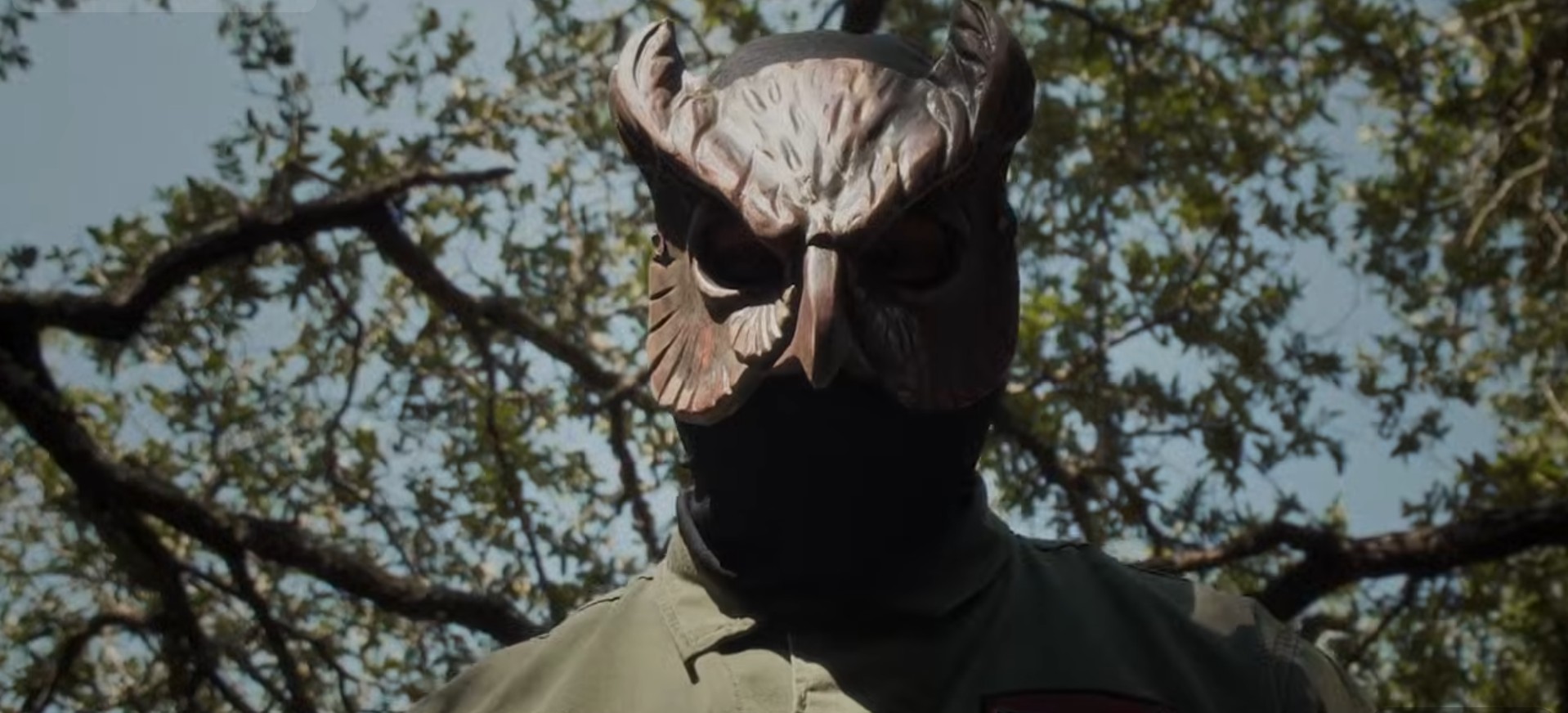
After her grandfather’s death, Ash travels through Texas with her brother Ted and girlfriend Sam to his isolated ranch cabin to be the first to claim his most valuable possessions before their Ash’s cousin, Bobbie Jo.  They arrive to find the cabin unlocked but about the same as it always been and go into woods for a little rest and relaxation, enjoying nature with a little alcoholic to supplement the relief of tension between the turbulent odds of Ash’s fast-and-loose ways and Sam’s more strict conservatism in regard to their relationship.  When they found a spray painted, screaming woman with a metal collar around her neck and a bear trap lodged into her ankle, they found themselves in the middle of a hunting party of masked men with melee weapons.  Ran by The Game Warden, Ash’s grandfather leased the land for a deadly game of sadistic clients hunting down non-English speaking immigrants for sport and depravity with their bodies no matter if they were alive or deceased. 
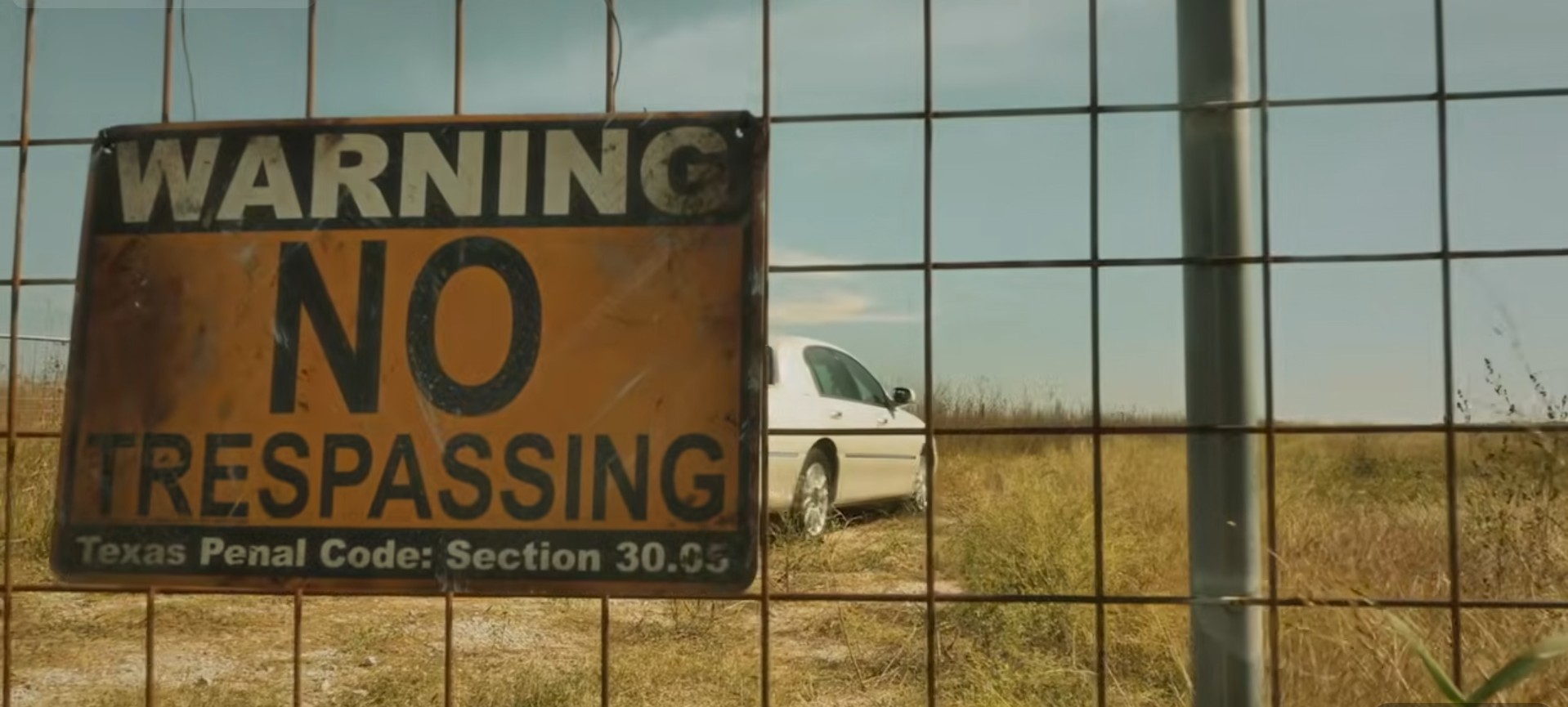
A surely bastardized version of “The Most Dangerous Game,” a novel that’s been re-imagined many times over about one man’s obsessive hunting for man, director Mike McCutchen follows up his debut violent chase thriller film “The Next Kill” with “A Game in the Woods” as his sophomore feature that eases him into the horror and exploitation subgenre.  McCutchen cowrites the script with Drew Thomas, the first feature film writing credit for the “Sex Terrorists on Wheels” cinematographer, and is based off a story by the collaboration between McCutchen and Drew Guajardo set in the boondocks of nowhere, Texas where land is aplenty and help is scarce if cried for.  The 2024 produced picture is a product of McCutchen’s Austin, TX based Fault Pictures and is produced by J.J. Weber (“The Next Kill”) with Andrew Bragdon and Kyle Seipp serving associate producers with Lonnie Seipp in the executive producer role. 
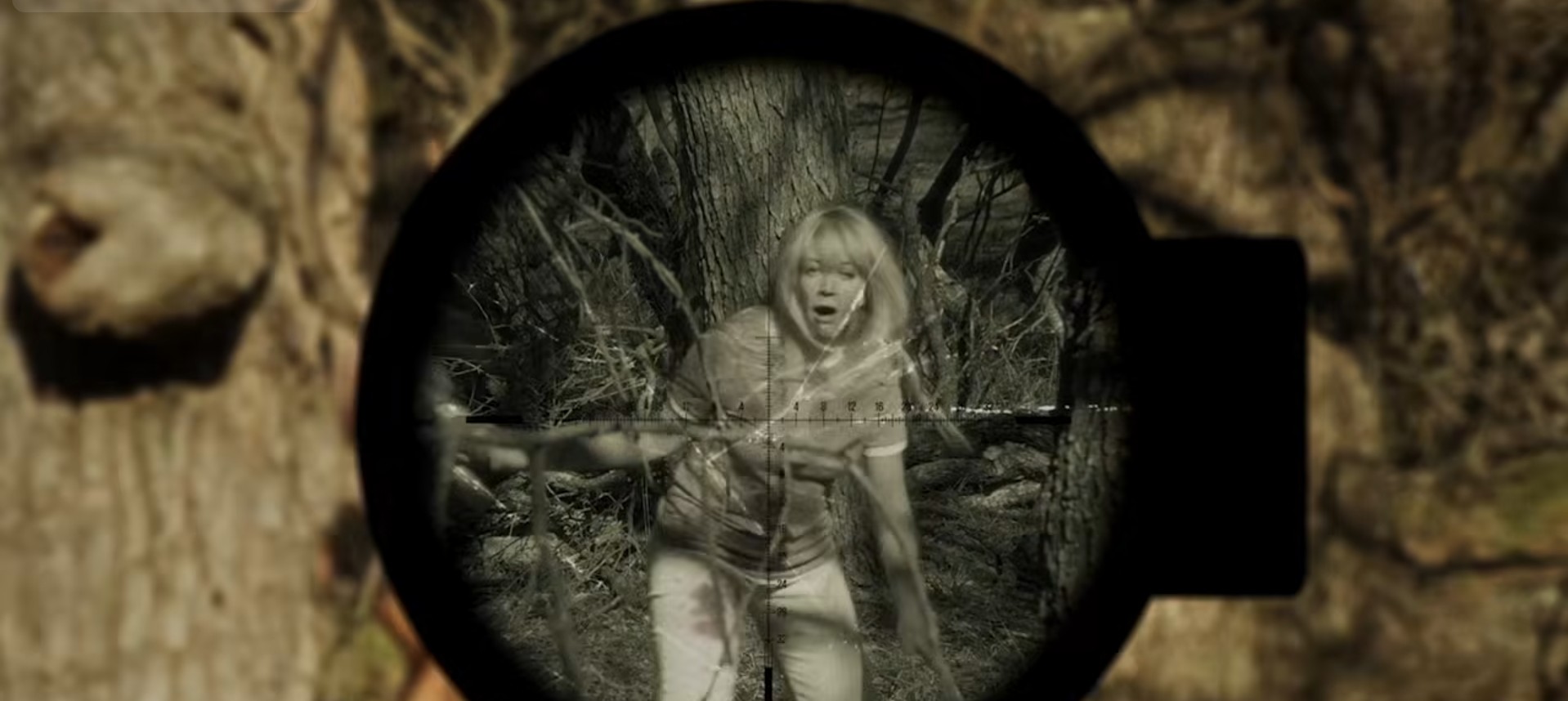
Eleanor Newman and Emily Skeen play the lesbian couple Ash and Sam and I make it a point to call out their characters’ sexuality because it feels inherently important to the story.  Newman comes to light in the sophomore Mike McCutchen feature that takes her from out of a minor role to a key lead, if not near final girl protagonist, in the unconventional fearful female but rather head-on heroine in “A Game in the Woods.”  Skeen’s more sensible Sam becomes a quasi-damsel in distress without the distressing part but tries to formulate plans on the fly to escape her demented captors.  Ash and Sam have a palpable troubled relationship like oil and water but find themselves commingling when the right sadistic additives are involved, spearheaded by the apathetic Game Warden from John P. Crowley who also finds himself in a more visible and prominent principal role.  Crowley’s Game Warden harnesses a Bill Moseley energy and sarcastic tone but not in a carbon copy way that adjusts just enough to make confident and cocky Game Warden is own.  The lesbian portion of Ash and Sam does feel engrained into the narrative, especially with two women with shortened names for Ashley and Samantha but it also implies a male identity, as if equal sex.  All the women in the story have a common them about them too, they all have tenacity and a fighting spirit from Ash and Sam’s battling Crowley and the masked hunters to the captured women who fight and kill, to even Ash’s cousin, Bobbie Jo (Grace Robbins), who joins in on the offensive fight for survival.  There are zero helpless women, which is an amazing elemental theme and characterization.  As mentioned, all the male hunters wear masks, hiding themselves behind theiran masks, and the hunted men are tied to an object, make poor decisions, and just have no fight in them.  Even Ash’s brother Ted (Jamison Pitts) doesn’t put up resistance when confront and is more of the farting, comic relief.  Aside from the Game Warden, the male presence is weak charactered by far.  The hunters and the hunted fill out with Gary Kent, Steve Wilson, Kevin Corn, Caroline Schmitt, Doug Field, Scott Kimbrough, J.J. Weber, Ray L. Perez, Kyle Seipp, Yane Carvalho, Lonnie Seipp, Morgan Faber, and Michelle Mendiola with Lloyd Kaufman (“The Toxic Avenger”) making a cameo appearance. 
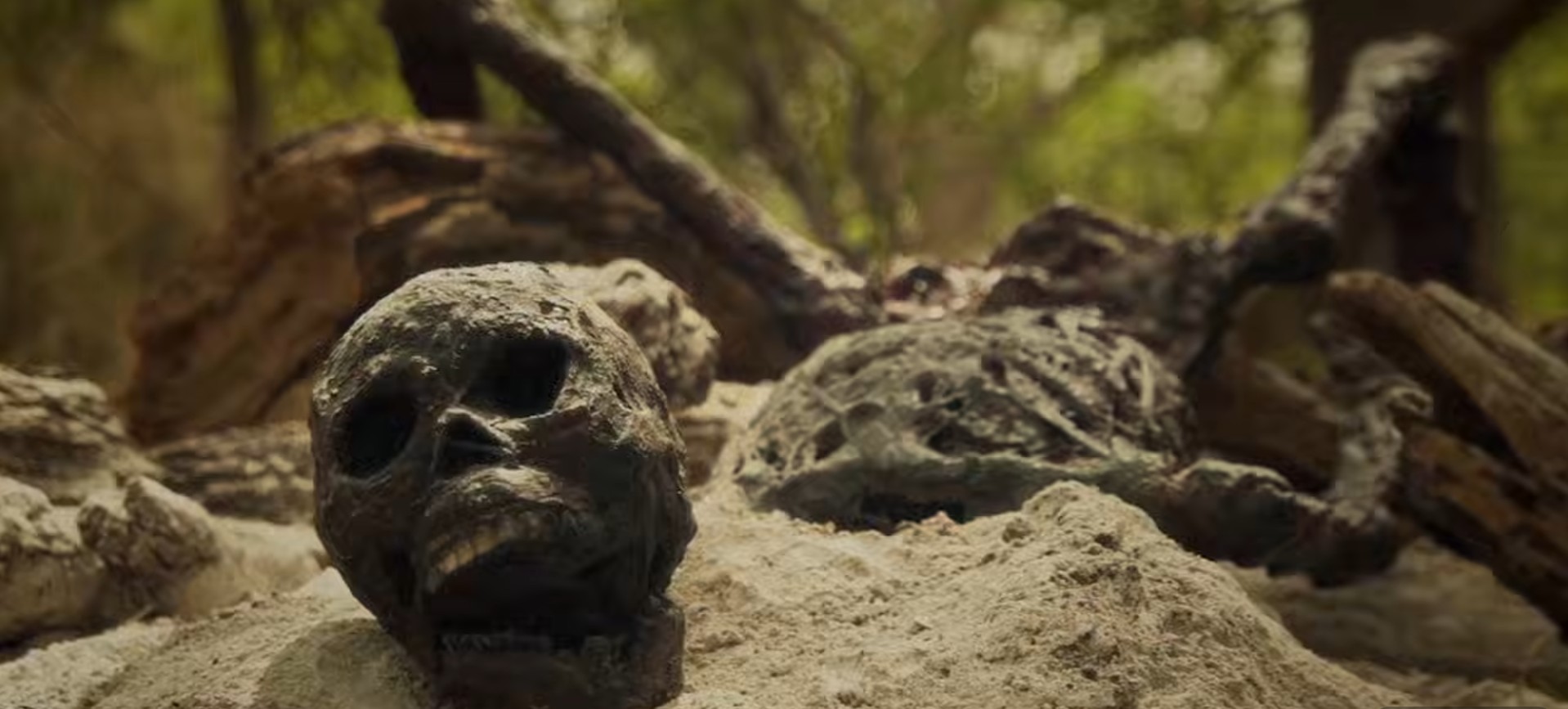
Working on one’s relationship with their partner usually takes a time, some self- reflection, or maybe even a little therapy.  For Ash and Sam, they come together be means of violence, tossed into the throes of their grandfather’s ghastly involvement in man’s flawed thirst for the cruel and unusual sadism, and though there’s never a come to Jesus epiphanic moment that they can overcome anything, the blood-soaked trial by fire is proof enough.  McCutchen immerses the women, and explosive collar device and spray-painted prey, into a whole new world of hurt in Earth’s backyard.  The clandestine organization the Game Warden works for laces are slightly untied and unkempt with the full scope of their national, maybe even international, chapters of a snuff wonderland where murder is king and nearly anything goes from chopping up bodies to molesting corpses.  McCutchen brings enough gore to the table without it being over gratuitous and overkill, literally.  Exploding heads, a chainsaw eviscerated torso, body parts strewn here, there, everywhere are what to mostly expect as the game devolves with the hunters becoming the hunted as the emotional depth is quickly pushed aside for the conflict ensued rising action, leaving no time for Ash and Sam to master their relationship troubles as the spider never contemplates life when winged food is snared in it’s web. 
From Danse Macabre and Jinga Films LTD comes “A Game in the Woods” on region free, R-rated DVD.  Encoded with MPEG-2 compression onto a single layer DVD5, the film is presented in with an upscale 720p resolution and a widescreen 1.78:1 aspect ratio.  Basking in the warmth of a dessert brown and tan, Cinematographer Zedrick Hamblin DiMenno opts for a natural approach aesthetic that focuses heavily on the medium-close to extreme closeup shots of gory bits and pieces of tear away flesh.  There’s nothing too terribly stylistic to note with only a hint of television glow and a momentarily use of key lighting with interior scenes.  Compression encoding goes without a hitch that captures image reproduction just find for viewing pleasures, losing only some minor background details of blended foliage and objects viewed from afar.  The English audio formats include a PCM stereo 2.0 and a 5.1 Surround.  The surround sound mix will be the preferred option dependent on your audio setup as the environment layers diffuse evenly through the back and side channels, leaving dialogue and proximity action, such as the kill scenes, to translate with full-bodied effect to squeeze out every squish and squirt from the practical effects carcass.  There are ideal pitch, tone, and range with the clear and prominent dialogue without any underlining interference or hissing effect through the clear, digital recording.  English subtitles are available for selection.  Aside from the feature trailer on the main static menu, there is no other encoded bonus content.  Though the movie is engaging enough through evisceration through torture and there’s a a glimmering theme of women empowerment, if I saw this DVD on the store shelf, the cover art isn’t attractive enough to pickup with its dark imagery of a shadowy hunter drawing his bow toward something off scene.  The façade doesn’t offer a flutter of fancy and there’s no other physical features to warrant a second glance if physical media shopping.  However, give this region free film a once over and there’s a solid film underneath’s it’s dull shell. 

Last Rites: Despite the run-of-the-mill, uninspired DVD cover, check out this sadistic Jinga Films and Danse Macabre “Game in the Woods” where the hunt is solely for the thrill to kill.

Survive the “Game in the Woods!” Buy the DVD!

A Major Book Deal Isn’t Worth This EVIL. “Writer’s Block” reviewed! (Gravitas Ventures / Digital Screener)

Skip Larson has become a one hit wonder in the literary field.  The aftermath of his initial work, a best seller success, has never again been duplicated as Larson’s wretched and dispassionate heart and mind hit an unscalable writer’s block that can’t afford to pay the ever mounting bills.  When a stranger approaches him at one of his dismal book signings, an opportunity presents itself to meet serial best-selling novelist, Chester Everett McGraw, at his private ranch where Larson has to decide whether to sign McGraw’s rigorously partisan and severe contract for wealth, prestige, and a chance to co-author McGraw’s next big novel after being cut off from the outside world for six months or walk away from everything without penalty and return to his mundane life struggle.  Larson agrees to McGraw’s extreme terms and begins working chapter after chapter on McGraw’s next literary masterpiece, but as the days turn to weeks and each draft is ridiculed and critically trashed, an irritated Larson itches to leave but the snake-tongued McGraw, his brutish bodyguard, and even the beautiful maid, who has suddenly taken a liken to him, keep tortuously motivating him back to novel drawing board whether he likes it or not. 

Putting pen to paperwork with a looming deadline on the horizon is already stressfully hair pulling, but when the cold steel of a gun muzzle is pressed against your sweaty temple, the pressure grows tenfold to get the creative juices flowing before the contract is up in Jeff Kerr and Ray Spivey’s co-written and directed 2019 exploitation thriller, “Writer’s Block.”  The independent feature is the second collaborated project between Kerr and Spivey following their 2016 documentary, “The Last of the Moonlight Towers,” about the obsolete street illumination system, the last of its kind, of electric light towers in Austin, Texas.  Continuing the trend of holding their filmmaking shop in their home state but not exploring non-fictional antiquated monolithic engineering marvels, the directing duo concentrate their Texas-based shot film toward being a cinematic turn-pager saturated with perfidious suspicion and crackpot characters that keep the road toward a clandestine endgame alluring and mysterious, unfolding in a similar regard to that of its general context of an exceedingly multifarious murder mystery novel.  Kerr and Spivey’s Sharp Town Productions serve as the attached production company.

Kerr and Spivey shop locally when choosing their downtrodden literary hero, Skip Larson, plagued with a wretched past and the desirable callings of the bottle.  The filmmakers settle on “Fear the Walking Dead’s” Craig Nigh who can sell smartass with the best of them and be as tough as nails when push comes to shove.  On paper, Larson’s a forlorn gambler risking his chance at life by accepting a seemingly glamorous, one-in-a-life, game-changing deal by a fellow writer he admires, but with a number of fishy, tall-tail signs of deception and corruption by McGraw and his goon, Digger, Larson can come off naïve, especially when he sticks around still after his free will fractures under physical violence and threatened to be shot.  The oppressive McGraw obviously has an ace up his sleeve in his proposed partnership with Larson and, never once, feels sincere in building Larson’s library with his dreams.  I found Mike Gassaway’s performance as McGraw to be one-note.  “The Next Kill” Gassaway tussles with sly intentions of a manipulative best-seller author, devolving into an unintentional weaker ranch obstacle that dwindles down McGraw to be more of a façade behind the true game being played against an unwary Larson.  Though McGraw as the brains, the cowboy hat wearing former oil rig worker, Digger, provided much of the muscle whose anxious temperament kept him from seeing the final stages of McGraw’s malevolent game.  Chris Warner finally lands a principle role that isn’t a short lived bit part that’s labeled Flatbed Driver or Prison Guard.  Instead, Digger Haskell seems like a teddy bear good old boy that Warner can inherently step into without having to get lost in a new persona and Warner fleshes out Digger’s hasty disdain in how the slow progression keeps him for enjoying what he loves to do best – being a hired goon – but the character rarely established a definitive connection of servitude toward McGraw other than the notable writer taking the oil rig injured man under his wing, causing some unresolved character development.  Cataline is perhaps the most underwhelming character as the immigrant house cleaner who falls in love with Skip Larson.  Played by Jeannie Carter-Cruz (“Sasquatch!  Curse of the Tree Guardian”), Catalina bashfully wills herself around the house, not really cleaning much in the audiences scope of her profession, and becomes discreetly entangled with the struggle writer for unknown reasons she herself couldn’t explain, leaving her, and Carter-Cruz, exposed in an under-seasoned character course. Katusha Robert, Avery Lewis, and Natasha Buffington rounds out of the cast.

“Writer’s Block” shoves an easily relatable theme of success never comes easy right into audiences’ laps as Skip Larson’s humiliation exhibits as much through literary famed Chester McGraw’s browbeating tactics ranging from verbal assaults to unwanted sexual persuasions. Not by McGraw. That would be gross. Yet, in essence, the actual frustration condition of writer’s block for an author in any facet is akin to the sensation of conquering in what seems the impossible. Once Skip Larson tips the odds into his favor, the woebegone writer’s line graph to success skyrockets off the chart after a bit of tough love motivation stemmed by McGraw and his boot camp, side-hustling ranch. However, “Writer’s Block” suffers from the titular misgiving in the form of pacing irregularities, a loitering third act, and a paper thin Skip Larson backstory that only dabbles into his post-family tragedy alcoholic stupors and his peradventure subversive dealings with his gangster cousin. The gangster cousin tangent is by far the most offshoot subplot underlined only in flashbacks and at the finale that introduces a character that has seemingly never been a functional part of the story but is pivotal in Skip Larson’s corner. The crux of the story’s issues is that it tries to incorporate too much whereas the basic building blocks, the pure premise, would have sufficed and have been modestly more successful if stuck to instead of throwing a curve ball of horror into the macabre construction of McGraw’s collective work of best sellers as trophies that becomes synonymous with his obsession for hunting, if not more so conquering, the wild game he annihilates.

When a wordsmith’s mental typewriter stalls and the hands hang still with fingers dangling above the alphanumeric keys, waiting for inspiration to flow through the very fingertips that provide financial stability and creative vigor, use the Gravitas Ventures released “Writer’s Block” as a tool to unstick the tacky words, pry open the oppressive blockade of the expression dam, and let the flood of literature be unbridled. Released earlier this month on November 3rd, “Writer’s Block” is now available on VOD and streaming platforms, such as Amazon Prime Video, Apple TV, Fandango Now, and Google Play as well as all major cable and satellite platforms. The 98 minute film is shot in the capable hands of Alex Walker who stays put mostly in natural lighting, swerving almost unnoticeably at times into various colored lighting (mostly blue or purple) and utilizes the story’s drone to capture effective aerial shots. There were no bonus features included with the screener nor were any bonus scenes during or after the credits. “Writer’s Block” is a tousle survival-thriller careening toward a grisly surprise that requires a little more spick and span shaping for a grittier exploitation.

Own “Writer’s Block” on Prime Video!