The Stillness, the Quiet, and the Darkness evokes EVIL to Home In. “Skinamarink” reviewed! (Acorn Media International / Blu-ray)

The Kids Aren’t All Right in “Skinamarink” on Blu-ray!

A night of silence is disturbed when a young boy, Kevin, falls down the stairs of his two story home.  Rushed to the hospital to return to the same silence-soaked house, the restless boy and his sister Kaylee search for their dad who has suddenly vanished from his bedroom.  Doors, windows, and even the bathroom toilet has strangely disappeared right from sight.  Feeling scarred under the cover of isolated darkness, the siblings head downstairs to sleep on the couch softly lit b0 the fluorescent glow of the television set.  As they watch old cartoons, crayon, and build with large Legos, while catching a few ZZZs in between, strange noises resonate through the home, floor based objects are found stuck onto the walls and ceilings, and a twisted, omnipresent voice slips the siblings commands that exposes them the darkness from within the house.
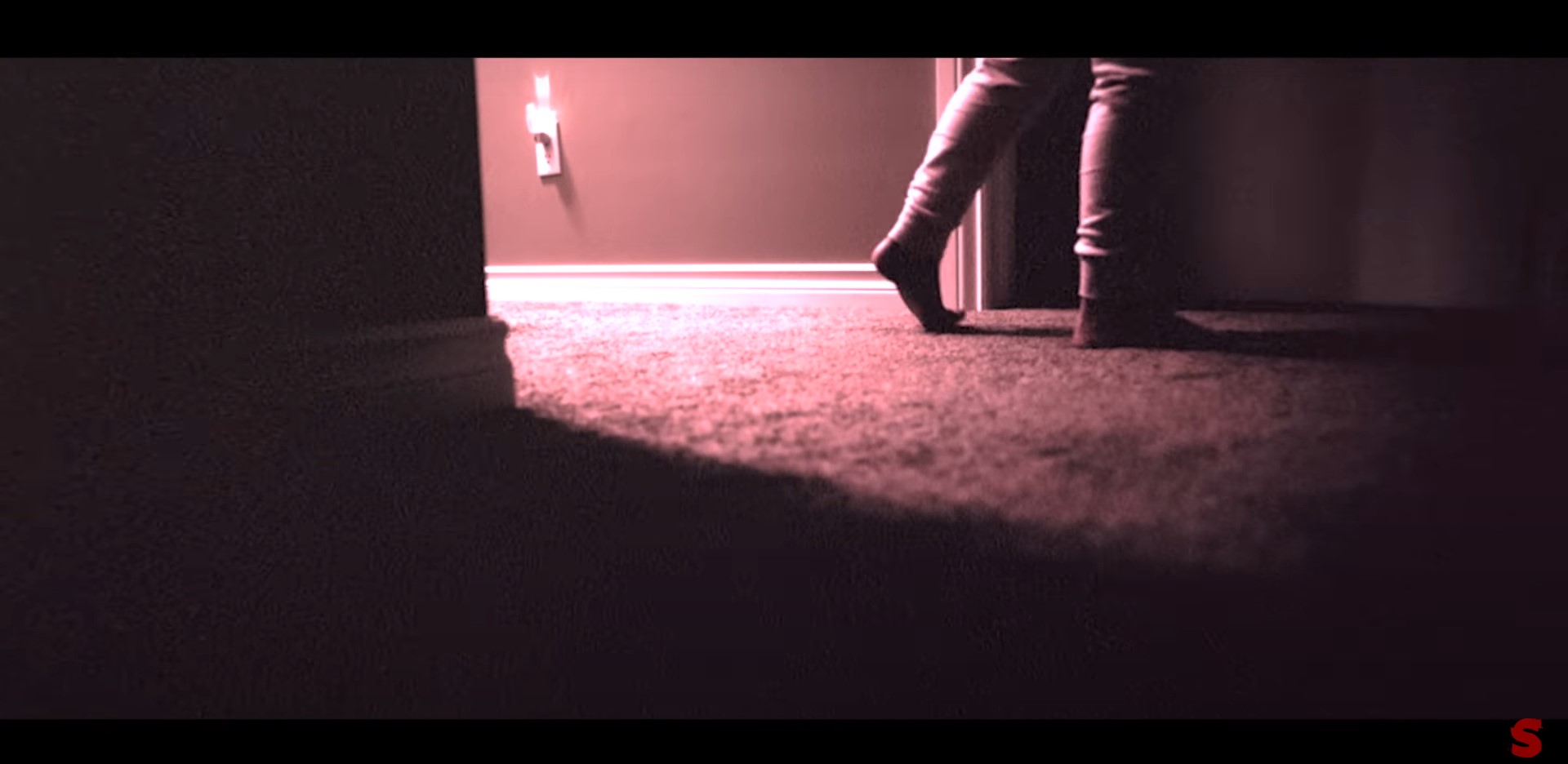
Schismatically different from any other spine-taut chills ever experienced before, Kyle Edward Ball’s written-and-directed 2022 Shudder exclusive “Skinamarink” is no joyful and innocent children’s song in the filmmaker’s debut feature film.  Based and expanded upon Ball’s 2020 short film entitled “Heck,” viewers will be enveloped and swallowed by the very core of childhood fears that plays like a fever dream, or a distant nightmare, where faces are a blur, spatial direction is nothing more than theoretical concept, and the voices around us are distorted, muffled, and cold.  “Skinamarink” offers little warmth under constant blanket of darkness and leaves no room for hope when parents are removed from the picture.  What’s Ball leaves behind is primordial and innate terror that rarely can be seen straightforward and lucid.  The Canadian picture, which was filmed in Ball’s childhood home in Alberta, is a micro-budget production of ERO Picture Company, distributed by Bayview Entertainment, Shudder, and IFC Midnight, crowdfunded by Seed & Spark contributors and produced by “Texas Road” producer, Dylan Pearce.
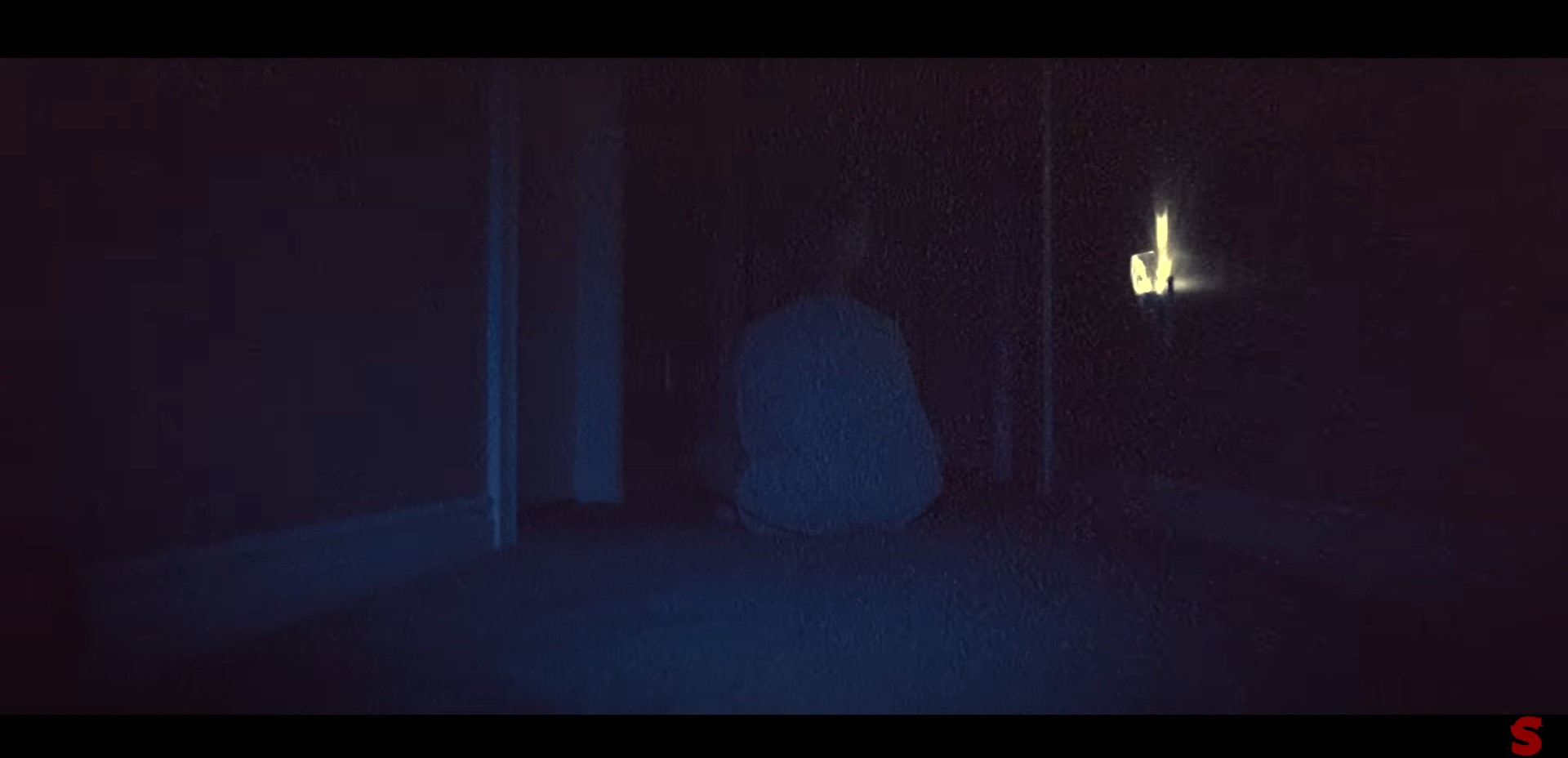
Shot over the course of a week’s time, “Skinamarink” works more like CCTV footage recording the static surroundings within the scope of the lens.  The cast is small, rarely visible, and when visible, they are often obscured or never directly focused upon to mint atmospheric dread.  Two parents.  Two children.  A nuclear family becomes the objective of an omnipresent, ominous presence, but there are concerning questions about the integrity of the family that Ball incites with clues of broken household.  Father and mother briefly make an appearance, or with one of them just their voice, throughout the course of the night, restricted their attendance exclusively around the children’s perspective that makes viewers shrink and become engulfed in childish fears – sometimes they are adult fears as well – of the dark and of being separated from parents.  Lucas Paul and Dali Rose Tetreault as kids Kevin and Kaylee kill their seldomly seen performances with the patter of little feet running through the house and up-and-down stairs, their soft, angelic voices whispering to each other and calling out for their father, and when briefly in frame, or at least the back of their heads, they manage to complete the succinct shot just in the way Ball intends to secrete fear from our every pore amongst the quiet and stillness.  “Skinamarink” is not a character-driven film in the least as Ball cherishes a chilling atmospheric horror so father (Ross Paul, Lucas’s real life dad) and mother (Jamie Hill, “Grotesque”) receive what essentially is cameo roles to establish a feeling of lost when they’re gone and are perhaps the easiest roles the two actors have ever taken and turn out to be the most eerily effective on screen and over the audio track.
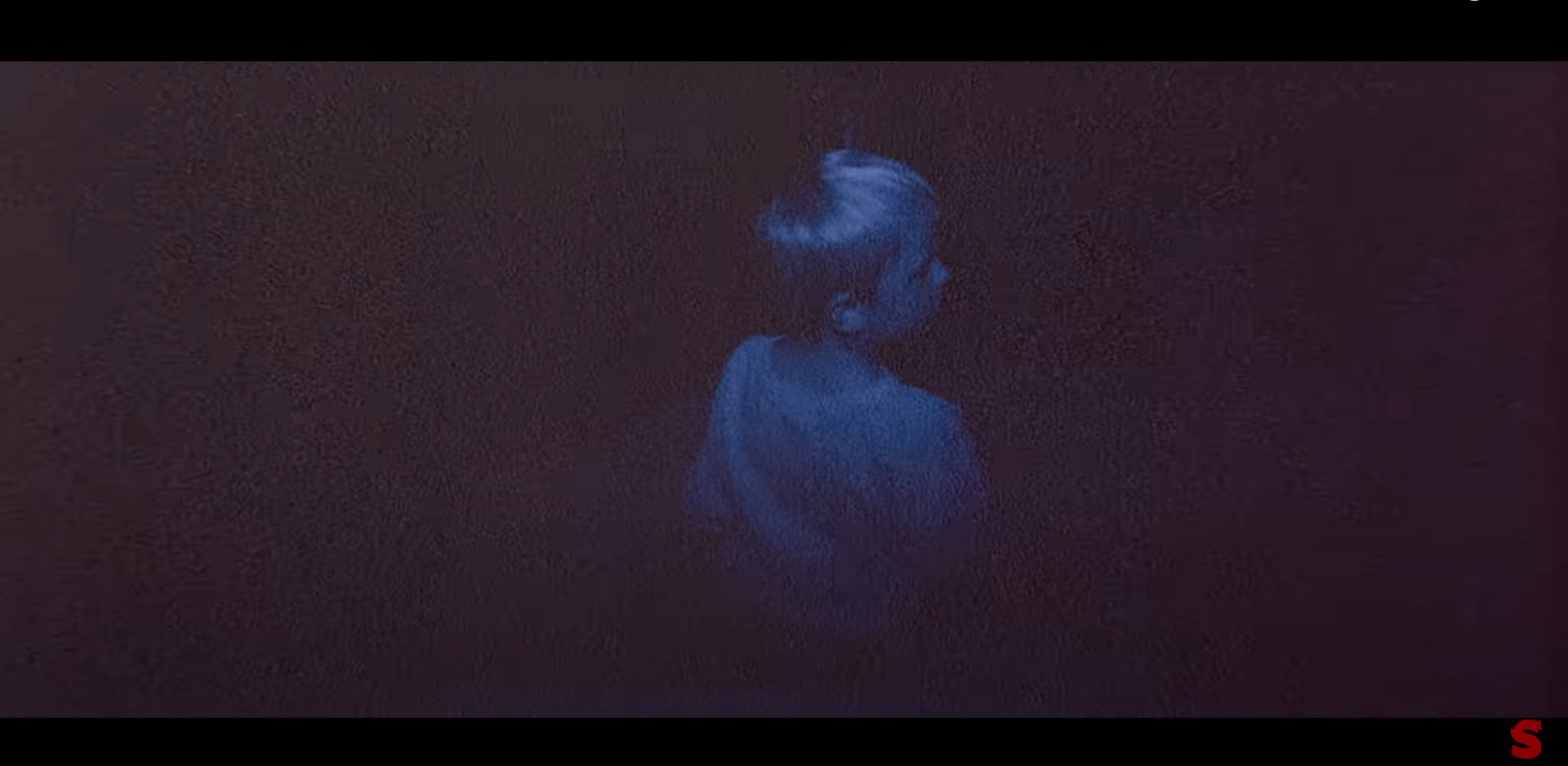
“Skinamarink” experiments more with surroundings, audio and visual senses, and common inborn anxieties rather than progressed by traditional methods of character dynamics and that is where the film will be conflict-ridden and divisive amongst the niche group of diehard horror fans.  General audiences will find “Skinamarink” to be a bore without much popcorn pageantry to keep short-attention spans entertained and a disembodied villain.  Slow burn horror usually has an elevated element to it and Kyle Edward Ball certainly incorporates an open for interpretation access door for the deep-dive genre conspiratorialists to work overtime on reasoning and explaining “Skinamarink” to the masses still trying to process what they just experienced themselves after watching the film.  Theories will run amok with the most prominent being Kevin’s fall that reduced him to a coma state and what we experience is all in Kevin’s conscious-cracked cerebrum trying attempting interpret, at best guess, the dissolution of mom and dad’s relationship.  Again, this is just a theory as Ball aims for ambiguity to fester fathomable, one-solution explanations.   Perhaps in a type of narrative the world is not ready for, but in my opinion, “Skinamarink” fills in what is void from modern day horror, a uniquely fresh and chance-taking pervasive eidolon scare package to revitalize genre numbness with slow burn phobias.
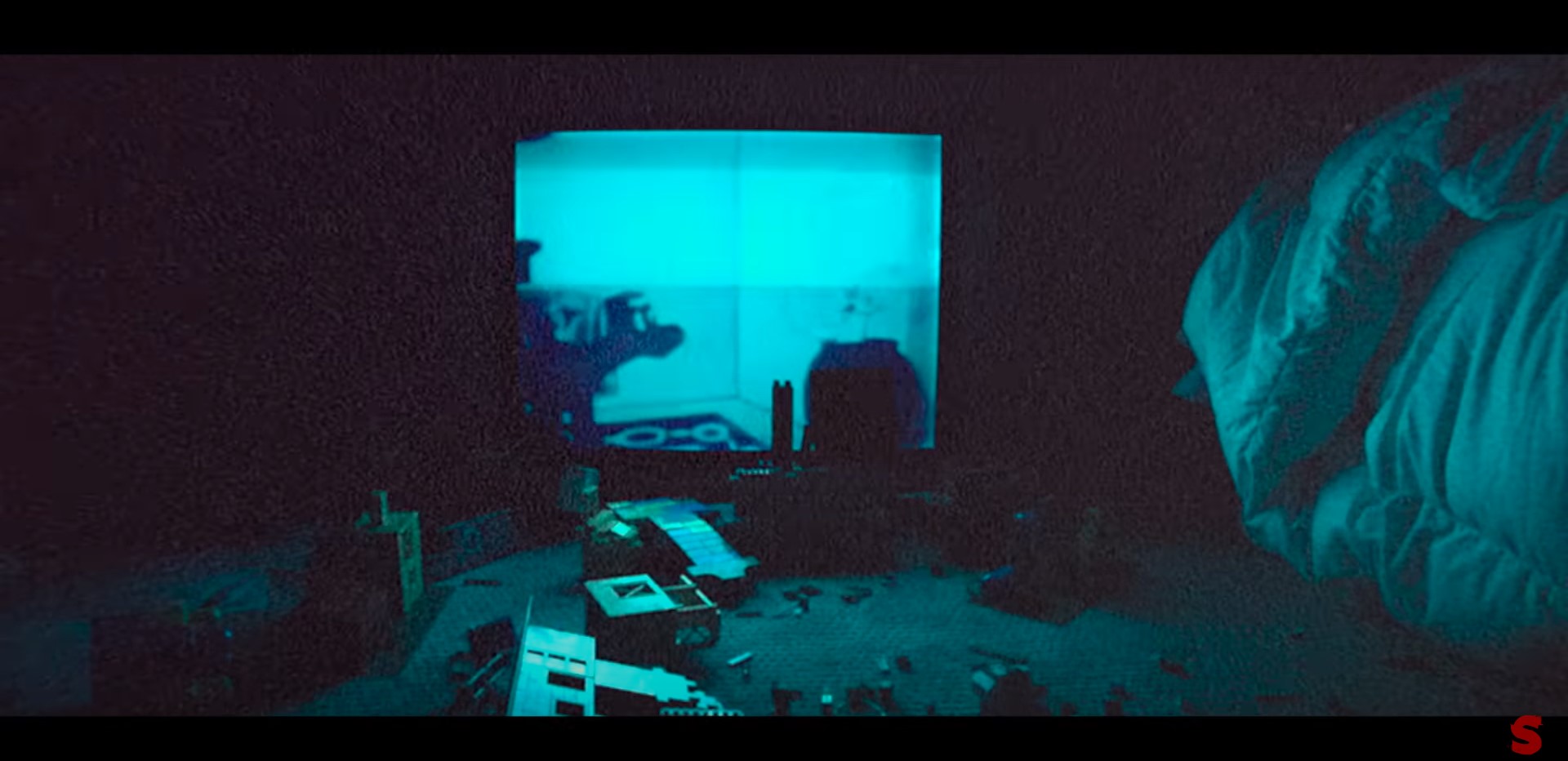
An original parapsychological paralyzer, “Skinamarink” arrives on a Blu-ray home video courtesy of Acorn Media International, the acquired UK distribution company of RLJ Entertainment.  Presented in a widescreen aspect ratio of 2.39:1, the AVC encoded BD25 sustains a purposefully intended lo-fi A/V feature, set to the date tune of 1995, much like when SOV quality films were abundantly popular because of their cost value and accessibility.  If you’re expecting depth of detail, you won’t get it from “Skinamarink’s” dense static approach that all but eliminates object definition.  Delineation is scarce to an effective scare tactic to which Ball tones the film; yet, the static is not, for lack of a better word, static as the current changes within the blips, increasing and decreasing visibility for desired poltergeist potency, if poltergeist is what we want to call it.  Set entirely in nighttime, sleepy home, the basking glow of tube television is the only semblance of color that emits a faint blue luminous while antiquated cartoons provide flat caricature coloring.  Certain scenes are shot in obvious night vision with the spherical focus that becomes unnatural in the frame, but there’s really nothing natural about Ball’s auteur style.  The lo-fi style choice continues into the English DTS-HD 5.1 surround mix that doesn’t exercise every channel.  Instead, we’re back to canned content with intentional hissing, popping, and distorted tracks.  Aside from a couple of innate audio recordings of a squeaking closet door, all the other ambient audio and dialogue is done after the fact in post-production to be rendered appropriately misshaped and muddled.  There’s also no score, retaining realism of a hushed house sound design to pay heed to soft footsteps and other delicate and mortifying milieu noises.  Depending on your audio setup, subtitles may be your friend here as the whispers are so low, they’re nearly inaudible.  There are a handful of scenes that have burned in English subtitles for that very reason, but full menu English captioning is available too for the minute amount of dialogue.  Special features only include an audio commentary track with the director and director of photography Jamie McRae.  Acorn Media’s release mirrors the U.S.’s RLJ Entertainment’s Blu-ray with the exception of a slightly thicker Blu-ray snapper. The front cover denotes essentially what to expect in the future, a low-resolution and a blue-toned, dark, inverted screenshot image of the young boy; this scene also translates to the disc art.  Encoded with a region B playback, “Skinamarink” comes UK certified 15 for strong horror and sustained threat in its 100-minute runtime.  Take my advice:  there’s nothing quite like “Skinamarink” outside the experimental gallimaufry but it’s sleepy time nature should not be viewed at the late-night weary hours or else it’ll lull you into a nightmare of your own.

The Kids Aren’t All Right in “Skinamarink” on Blu-ray!

When Men Want More, They Receive More… EVIL! “Red Sun” reviewed! (Radiance Films / Blu-ray)

“Red Sun” on Limited Edition Blu-ray from Radiance Films!

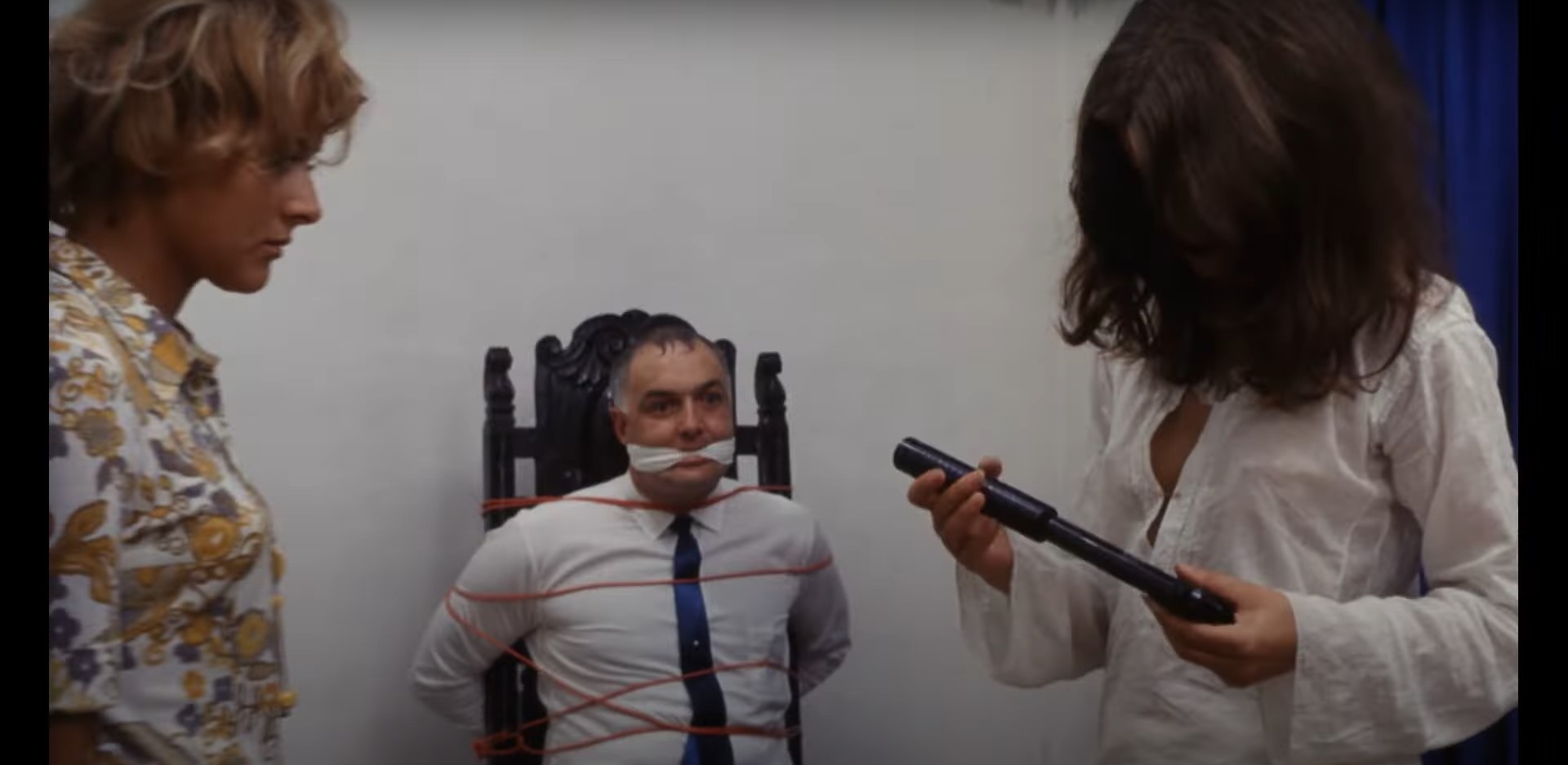
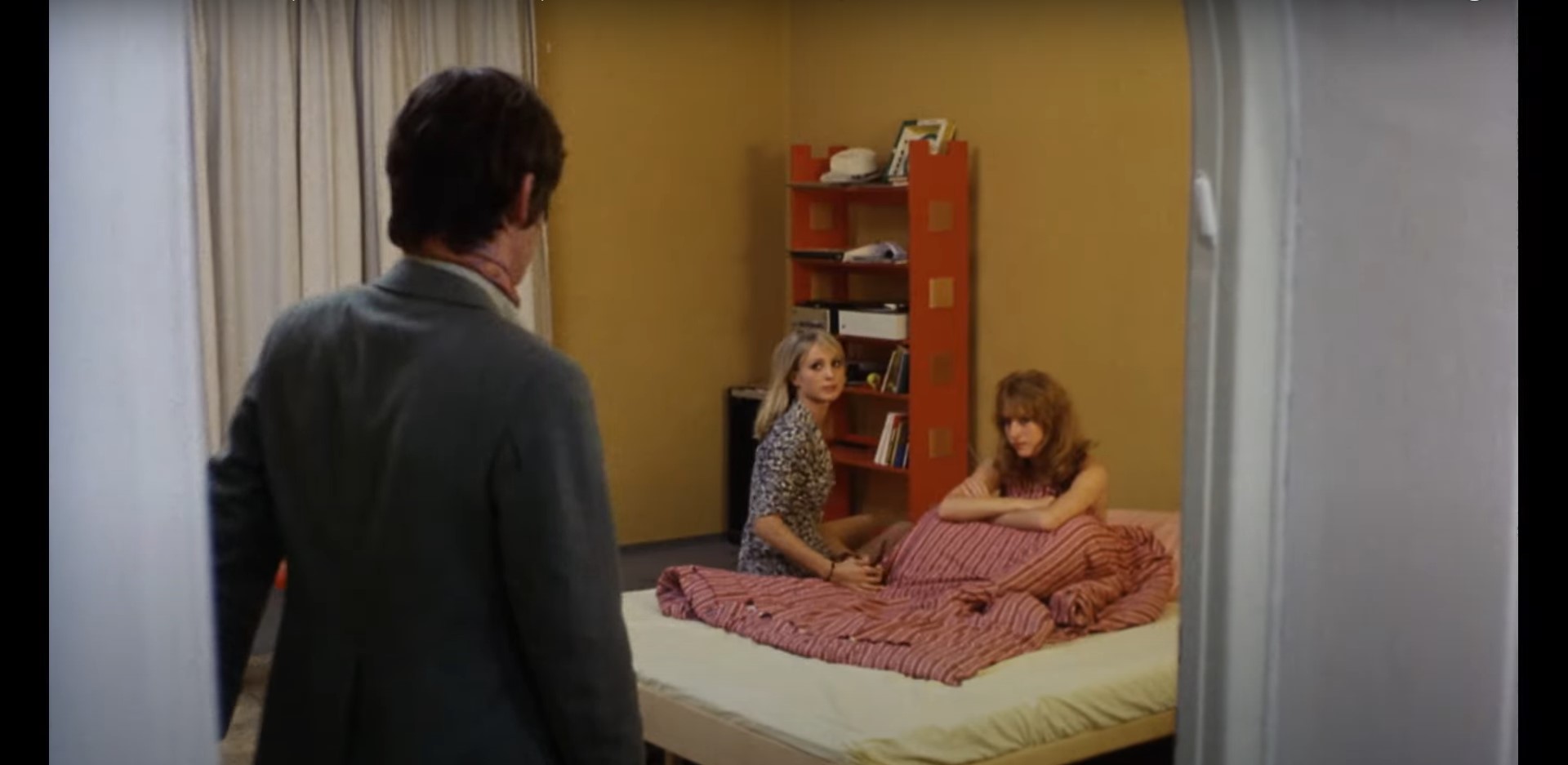
Peggy, Sylvie, Christine, and Isolde have made a mortiferous pact to lure wanton men into their spider’s web before snuffing them out. Armed with guns and homemade explosives, the four women find themselves strapped for cash but managing to get by with their all-in scheme to take out as many licentious men as possible. When the nomadic loafer Thomas re-enters Peggy’s life, she initially sees him as just another mark to relieve from the mortal coil, but Thomas’ uninterest in sexual desires appeal to Peggy’s compassion and care for the man she once loved who just happened to show up in her life one night. As the two become closer, Peggy’s accomplices continue their deadly ideology, working their individual johns, but Christine and Sylvie find Peggy slipping under Thomas’ beguiling draw, an affect she can’t seem to comprehend, and pressures Peggy to be thorough with Thomas to the bitter end.

“Rote Sonne,” or “Red Sun” translated into English, is the 1970 feministic crime drama from German filmmaker Rudolf Thome and penned by the late Switzerland born screenwriter, Max Zihlmann.  Thought-provoking as it is enticingly cold, “Red Sun” tears open a void between lust and violence that separates the sexes of scorned scars.   The pre-European Union film looks at feminism during a highly patriarchal Germany time, West Germany to be specific, when women rights were essentially molded and determined by men.  Wives relied heavily on their husbands to make decisions for them on a permissible granted condition and even some marriage-related abuse crimes we’re not punishable under German law.  Thome helmed a politically anti-conservative and socially anti-inequality picture during the second wave of German feminism of the 1960s with ironfisted and revenge-seeking protagonists as an active cell blending into cultural norm.  “Red Sun” is produced by the director as well as Heinz Angermeyer of Independent Film productions and is part one of our double bill look at radical feminism with Marleen Gorris’ “A Question of Silence” to follow.

At the tip of the cast spear is a Rudolf Thome regular, Marquard Bohm, having had roles in another of Thome’s empowering women feature “Supergirl – The Girl from the Stars” as well as the skin-laden “Detektive,” and the narrative’s focal character stirs confounding interest in that it revolves around a male principal of a women liberation-by-force feature.  As Thomas, Bohm is not a traditionally depicted German man but has all the some of the minuscular familiar qualities of masculine behavior.  Thomas loafs into to life of Peggy, played by fellow “Detektive” star Uschi Obermaier, and her cohort of conniving men eaters – Christine (Diana Körner, “Barry Lyndon”), Sylviie (Sylvia Kekulé) and Isolde (Gaby Go) – simply by being at the right place at the right time or visa-versa, depending on how you look at it.  For Thomas, his nonchalant leeching onto Peggy morphs into something more than just freeloading off of already strapped for cash Peggy and friends, becoming a distraction and an attraction from his previously failed relationship in Munich.  The role is in a mirror reversal of the then current German society with Thomas being a stay-at-home man, running errands at the behest of the woman Peggy as she goes to work and earns to keep their clandestine killing chugging along, but Thomas does what he wants, whether be spending Peggy’s extra cash on cigars or eating all the food in ladies’ fridge.  Opportunistically asserting his needs onto their, often inimical, hospitality, Thomas is the Peggy beloved free-range chicken strutting his stuff around other hungry, more axe-wielding, farmers that put the pressure on Peggy to nix him before he insidiously collapses their pact.  Under the “Red Sun,” the cast fills out with Don Wahl, Peter Moland, and Henry von Lyck.

Unfortunately, Thomas has inadvertently sowed the seeds of destruction within the four women, dividing the group’s cause and on what to do with Thomas.  The women are arranged in a spectrum range of how to handle their contested guest; Thomas has caught the eye of Peggy and Isolde, though active in certain measures of man-slaughter, refuses to partake in the act of killing altogether where Sylvie pushes back against her indifference amiability for Thomas to continue the good fight and Christine just flat out owns her oppositional stance to eliminate the man many would find lackadaisical and nocuous to their friendship and plans, like an usurping boyfriend coming in between two best friends.  What Thomas represents is the potential squash, or delay of, the feminist movement against an arrogant and authoritatively unfair patriarchal society and each woman is a different perspective and reaction to the measures of feministic movement.  “Red Sun” is also a tragic love story that pits rightful duty against the heart’s urges and Thome is able to fashion a path through the commentary to depict both views in a sad, yet heartful conclusion.  What Thome doesn’t do well is the appropriate stitching of time passed.  Perhaps through editing or the within the confined text of the script, what feels like weeks passed is actually only a handful of days, but Thomas’s comfort level is so ingrained, coupled with the brief mentioning of how long he’s been around, the comings-and-goings of time blend into one jerky story that can’t properly materialize a granular tone and “Red Sun” becomes a bit sun blind at times when trying to keep with the characters’ narrative.

“Red Sun” blazes onto a world debut, limited edition Blu-ray release from independent cult film distributor, Radiance Films. The AVC encoded, high-definition release has been scanned in 2K from the original 35mm camera negatives, supervised by director Rulfe Thome, at the Cinegreti Postfactory in Berlin as well as additional touchup restoration work to spruce up the dust, dirt, and scratches. Radiance Films’ presentation features a brilliant quality that has restored to void out any celluloid cankers. Grading appears natural and vivid under the breadth of the welcomed 35mm grain. Aside from a handful of faint vertical scratches here and there, this Blu-ray has none the worse for wear with compression issues as the transfer is stored on an ample BD50 to reduce any compression artefact effects. The original German language LPCM 2.0 mono track vivaciously keeps up with a clean, clear, and robust post-production dialogue recording. No major issues with hissing or popping though minor specimens rear their ugly audibles sporadically to a negligible outcome. Since ADR is used, depth is lost amongst the dialogue track, but the environmental ambience nicely courses through the output with a small explosion and episodic skirmishes to keep the range from being too concentrated. English subtitles are available and are well-synced, well-paced, and are grammatically sound from start to finish. Bonus features include an audio commentary track with director Rudolf Thome and Rainer Langhans and also two visual essays with film academics Johannes von Moltke, in German with English subtitles, on the subject of cultural and social influences on “Red Sun” titled Rote Sonne: Between Pop Sensibility and Social Critique, and Margaret Deriaz exploring the developments on the New German cinema, titled From Oberhausen to the Fall of the Wall. The physical attributes are just as enticing with non-traditional and clear Blu-ray snapper case with a thicket, 51-page color booklet insert featuring the 2022 Guerrilla girls: Radical Politics in Rudolf Thome’s “Red Sun” essay by Samm Deighan, an interview with the director, Letters to the German Film Evaluation Office by Wim Wenders and Enno Patalas from 1969, film review extracts between 1970 and 1991, and transfer notes and full package release credits. Sheathed inside the case is a reversible cover art with a Bond-esque prime cover of Uschi Obermaier in a white, short-skirted outfit holding a revolver in front of a shoreline red sun. Alternate, inside cover notes the original German language title “Rote Sonne” with the 3 of the 4 femme fatales posed around Peggy’s VW bug. The disc press art is perhaps the less exciting aspect with just a plain, off-white disc with red letter of the title. Radiance Films’ release comes region free, has a runtime of 87 minutes, and is not rated. Limited to 1500 copies should not stop a film aficionado from looking directly into the “Red Sun,” a highly provocative and pulpy thriller full of contempt and full of ambivalence curated to pack a punch on a new Radiance Films Blu-ray.

“Red Sun” on Limited Edition Blu-ray from Radiance Films!

Breathtaking, Private, and Full of Blood-Hungry, EVIL Amphibians! “The Tank” reviewed! (Well Go USA Entertainment / Blu-ray)

“The Tank” on Blu-ray from Well Go USA Entertainment!

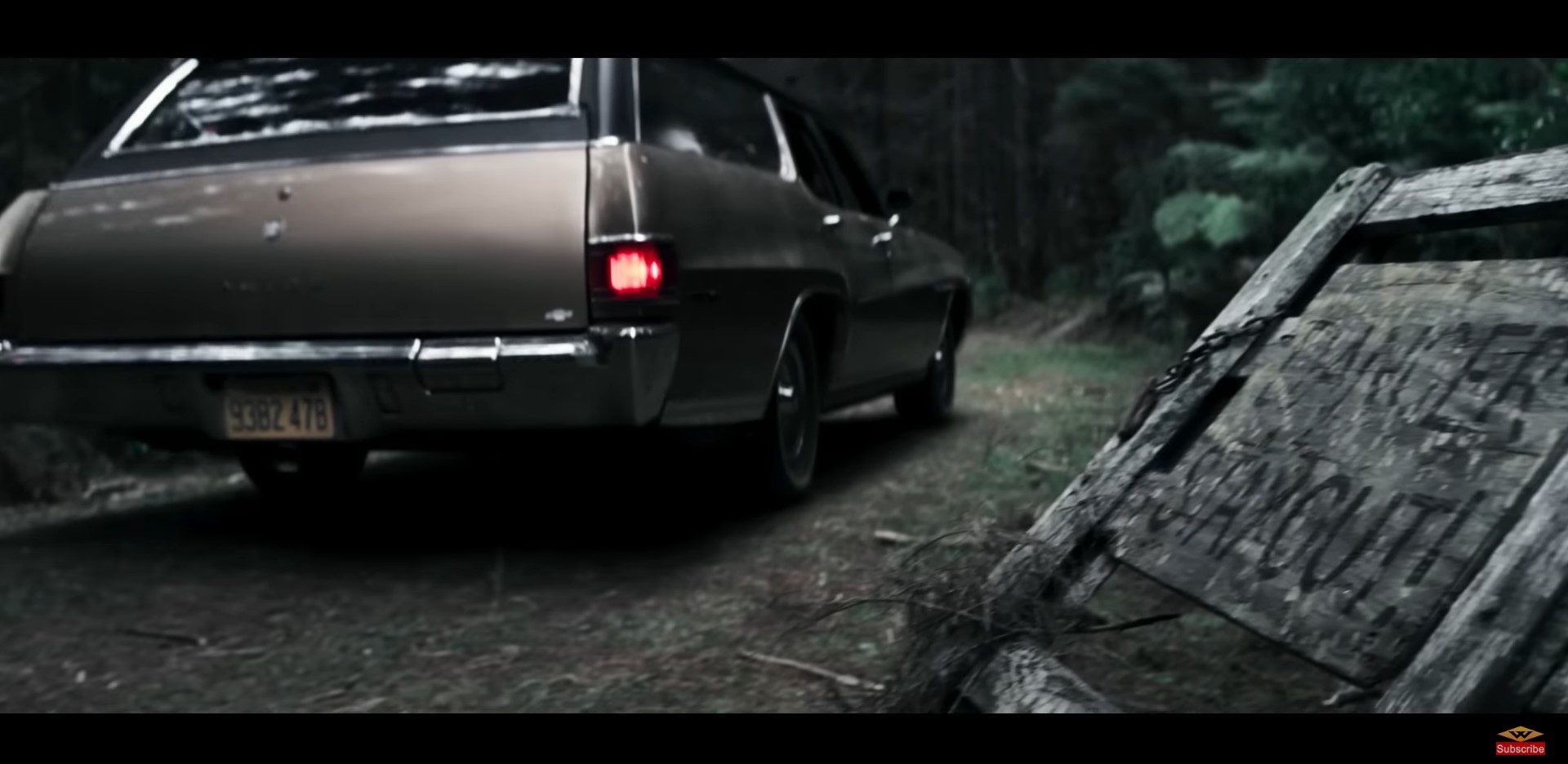
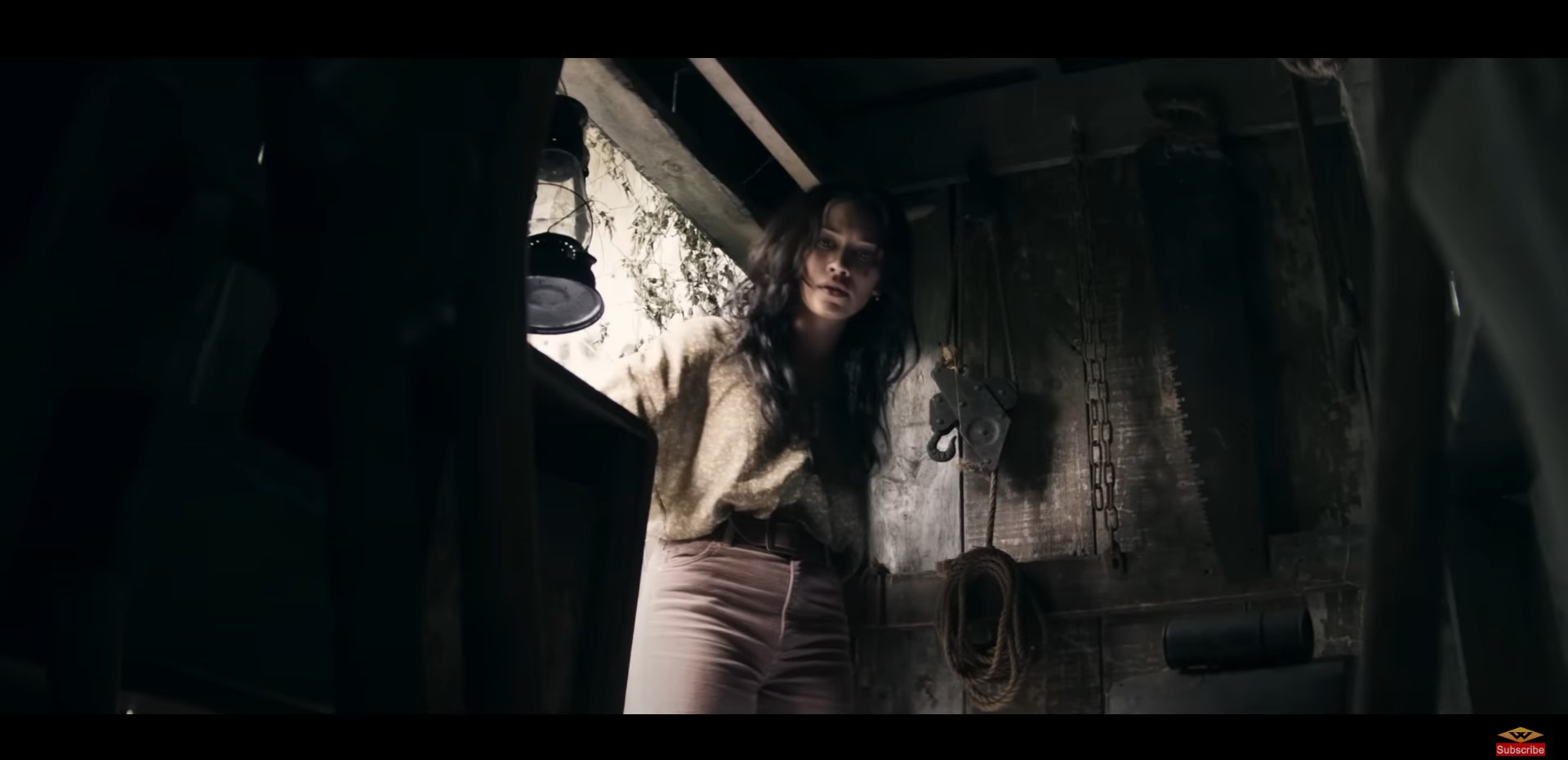
A financially struggling San Franscisco family of three learn their recently deceased grandmother had a large, secluded property on the oceanic foothills of Oregan. The coastal property was kept a secret for 30 years from the mentally unstable woman’s youngest child, the father, for reasons unknown. Rundown and off the beaten path, the vast acreage promises lucrative income from interested land developers at a time when the family needs the money the most. Included with the home is a water tank system built into the cliffside that can house thousands of gallons of fresh water underground from a nearby spring. Activating the system awakens a sinister breed of anophthalmia creatures, revealed to have plagued the family for generations and answers a number of troublesome family secrets that now terrorize the current inhabitants.

Initially beginning the backstory of a vital family turning point stemmed in the 1940s, “The Tank” succeeds 30 years later in the 1970’s with an execrable house understanding with a loving but desperately coursed family walks into its deadly den and sharp-teethed, subterranean dwelling. The creature feature thriller is the sophomore feature written-and-directed by New Zealand filmmaker Scott Walker, ten years after the director’s debut full-length biographical drama “The Frozen Ground,” starring John Cusack and Nicholas Cage. “The Tank’s theme toils with the troubling idiom, if something looks too good to be true, it probably is, as opportunity turns oppressive when ignoring red flag secrets and throwing caution to the wind when taking chances for the love of your family to relieve financial troubles. The looming debt and inevitable curiosity, who we all know killed the cat, sends a family into the fire, produced by Walker, wife Minna, and Lesley Hansen and is a coproduction from Ajax Pictures, General Film Corporation, and Happy Dog Entertainment with Ingenious Media presenting.

“The Tank” contains a slim six characters: three principals and a handful of support. However, another can be added to the list but in a non-speaking role, unless you consider Regina Hegemann and her contortionist craft as an articulate performance with her hands, feet, arms, legs, and, well, her entire body. In fact, I do consider those crooked twists and bends of a slender anatomy to be able to speak louder than words sometimes – think the archetypical Doug Jones. Hegemann’s debut film role builds a gap in between the contortionist’s regular vocational circus acts and instructions of physical sinuous spiraling of the human body to bring practical effects to slithering, vicious life in “The Tank’s” underground dwelling monsters – yes, she plays more than just one creature. Hegemann’s innumerable creatures are pitted up against a nuclear family made up of a strictly New Zealand cast beginning with Matt Whelan as Ben, the father and inheritor of the secluded cliffside cabin whose drowning in family closet skeletons and ambiguity, Luciane Buchanan as Ben’s wife Jules who drowns in a different way with debt as she tries to earn her degree in zoology while raising a family and running a pet shop, and Zara Nausbaum as daughter Reia caught in the middle of her parent’s woes and in the clutches of the undiscovered and eyeless salamander never imagined to be extant. With a secret home laid out in Ben’s mother’s postmortem belongings, an opportunity to dig themselves out of debt seems now feasible for a family treading profusely to keep their head above water, but the script only nibbles at what the family is doing at the cottage. Sure, a real estate agent comes a-knocking to offer them an interested buyer’s more than generous offer to build upon the land, but that doesn’t keep the family from loafing about the property, reissuing a there’s always tomorrow stance even when all their current problems can be obliterated with a firm yes. Instead, thinking about the supposedly large offer doesn’t quite kickstart negotiates but rather belays the inevitable, a family’s forgotten dark and dastardly secret is now gnawing on them – literally. Ascia Maybury, Graham Vincent, Mark Mitchinson, Holly Shervie, and Jack Barry fill “The Tank’s” cast list up.

Following up on “The Tank’s” main theme of some family secrets should never be explored, investigated, dug up, analyzed, or even the slightest looked for its potential value because the secret is secret for a reason. Usually, those grounds are odiously detrimental and, in this case, the grounds have hidden a longstanding life form unbeknownst to man. “The Tank” has a hard time selling the message with the one most affected by the family’s history, with a father and sister having perished under mysterious circumstances and a mother committed to a mental institute, having little interest in unravelling the truth. Instead, the reverse happens when Jules immerses herself into Ben’s past, unable to shake the freaky feeling of the cabin’s ominous atmosphere and checkered past around the land that had claimed the lives of her husband’s father and sister. Jules continues to surpass her husband’s faults and failings with a reminiscent climatic “Aliens” strap up for battle when her child is snatched by the insidious creatures, with attributes and coloring very similar to the xenomorph but on a smaller scale and telluric, and to their water-filled, underground tank-habitat. Using an aerosol flamethrower, we again get that Ellen Ripley vibe as she uses her motherly strength to go toe-to-toe with a terrestrial creature who took down a well-built cop with a gun. All the while Jules wades through multiple encounters with the slippery salamander with razor sharp teeth, her husband Ben, who had previously failed in collapsing the cavern with explosives, becomes invalid with injury and so she stands alone up into the final act of one-lining a car creeping-in creature with, “Get out of my car!,” before shooting it’s head off with the dead cop’s sidearm. Comparably not as influential or heavy-duty with force and violence as “Aliens,” “The Tank” still manages to hold water with a strong, female heroine willing to jump into the jaws of death to fight for her child without backup.

“The Tank” doesn’t run empty with a solid Blu-ray release from Well Go USA Entertainment. The AVC encoded BD50 is presented in 1080p, high-definition, in a widescreen 2.39:1 aspect ratio. Faced with a lot of low-lighting scenes, the digitally captured picture offers up good detail levels with spotty compression banding when introducing light into darker scenes. The larger format storage leans to non-compromised video quality that provides enough storage to maintain consistent grading stability and pixel sharpness all along the way. The English language DTS-HD 5.1 surround sound mix provides a wide-berth of sound elements that hit in the right audio channels. I found dialogue to be quite soft, especially against the prehistoric boom-roar of the creature resonating across the channel board, but the overall dialogue track is clean and clear despite its lack of boost. “The Tank” features fair range elements involving the slinking creatures, cabin creakiness, and outdoor ambience; this also includes a well-rounded depth to create space albeit the creature’s ferocious roar that doesn’t have any directional positioning and swallows output space. Bonus features include A Look into the Tank – a compositional cut of cast and director interviews regarding their experiences in the making of the film, Making the Creature is a full-blown look from spark idea to complete realization of the creature-look and design to fit the outward and physical capabilities of Regina Hegemann’s contortionist craft, and the original Well Go USA trailer to bring up the rear. The Blu-ray comes in traditional casing with latch with an advert insert on the inside for three other Well Go USA Entertainment titles. Though not as sexy as some other covers, the still highly effective front cover embodies the mysterious circumstance of looking into the belly of a dark-laden tank. The region A encoded Blu is rated R and has a runtime of approx. 100 minutes. A salamandroid reservoir that supplies a deluge dose of devilish, aquatic quadrupeds, “The Tank” is yet another title of alternative, out-of-the-box horror courtesy of Well Go USA Entertainment!

“The Tank” on Blu-ray from Well Go USA Entertainment!

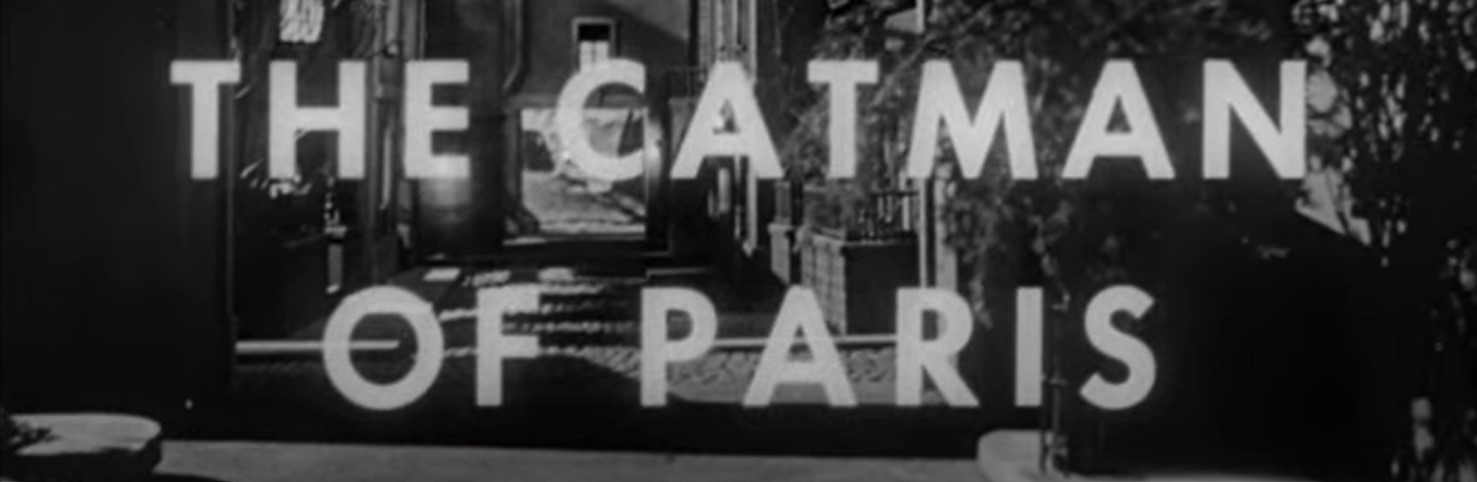
Who Let EVIL Out of the Bag? “The Catman of Paris” reviewed! (Imprint / Blu-ray)

Meow!!  “The Catman of Paris” is on the Prowl on Imprint Blu-ray!

From rags to riches, writer Charles Regnier pens one of the most popular and polarizing books of France.  Titled Fraudulent Justice, the subject matter coincidently contains secret court case information in it’s text.  Regnier stands firm his book is creative fiction while the French government think otherwise.  When a government agent of the Ministry of Archives, carrying the detail accounts of the case to be reviewed, is found slashed to death and the case file missing, the police naturally suspect Charles Regnier while also another, eccentric police theory circulates of a monstrous cat person.  Regnier, who suffers from headaches and blackouts from a tropical fever he contracted during his two year travels away from Paris, begins to suspect himself as the deranged killer on the loose, attacking and killing those around him.  Without a solid alibi and the unknown from his blackout memories, Regnier evades the police by hiding with his darling lady friend, Marie Audet, but when the headaches begin and Regnier conscious slips into a strange darkness, will he let the cat out of the bag to strike again?

Let’s travel back in time to 1946, just after the Great Second War, when the movie industry rolled film once again and take a pawing look at Lesley Selander’s shapeshifting film noir “The Catman in Paris.”  Though story set in Paris, the black and white horror film helmed by “The Vampire’s Ghost” director is a United States product shot on location at the Republic Productions studios in Los Angeles, reusing and transforming many of the company’s stout storage of Western set pieces into Parisian milieus.  From the spittoon saloons to high end restaurants and from dusty stagecoaches to redesigned aristocrat carriages, Republic Pictures aimed to take transformative risks in order to hop on the Val Lewton and his 1942 “The Cat People” success train while making statements of his own from a Sherman L. Lowe (“Valley of the Zombies”) script.  “The Catman of Paris” is produced by Belarus expat Marek Libkow who fled Europe because of World War II but the feature would be his last producing feature.

In the ambiguous role that puts into question his sanity and his humanity is the Austrian actor of “Slave Girl,” Carl Esmond.  Esmond plays the rift creating writer adored by the public and despised by the government, driving him back into a corner of continuous defense of his work that has been argued to be plagiarized form secret documents and unlawful for the access of aforesaid secret documents regarding a controversial court case decades prior. On his tail is a paranormal receptive prefect of police (Fritz Feld, “Phantom of the Opera” ’43) and a more pragmatic inspector named Severen (Gerald Mohr, “The Monster and the Girl”) who, based on little-to-no evidence, immediately suspect the writer by affiliation to the court case he could in no way possible have known. This dichotomy of theory doesn’t affect the prime suspect, doesn’t seep into a larger suspect pool, and keeps the investigation status quo up until the revealing finale, but the police state characters have subjectively targeted Regnier with all but a harassment mentality, adding to Regnier’s conflicted dismay about the association between the killings and his disassociation with consciousness – which is visualized by a series of random, inverted images of a gusty barren tundra, a buoy gushing ocean water, a dark and cloudy moon, and a black cat’s eyes at the center. Regnier finds comfort in the bosom of Marie Audet (Lenore Aubert, “Abbett and Costello Meet Frankenstein”) over his finance (Adele Mara, “Curse of the Faceless Man”) and in his promised fickleness, broke her heart before falling victim to the cat’s claw in a metaphoric gesture of aggressive sexual assault. The whole love triangle is loosely adhesive to “The Catman of Paris’s” integral entanglement of un-kittenish affairs. In fact, Regnier is very kittenish with Marie to the point that his engagement appears to be frivolously made and has locked him into an inescapable promise because of emasculating masculine posture. Instead, the writer could care less about his word, or rather conveniently forgets, as he plays footsy with the girl of his dreams. “The Catman of Paris” rounds out the cast with Douglas Dumbrille, Francis Pierlot, and Georges Renavent.

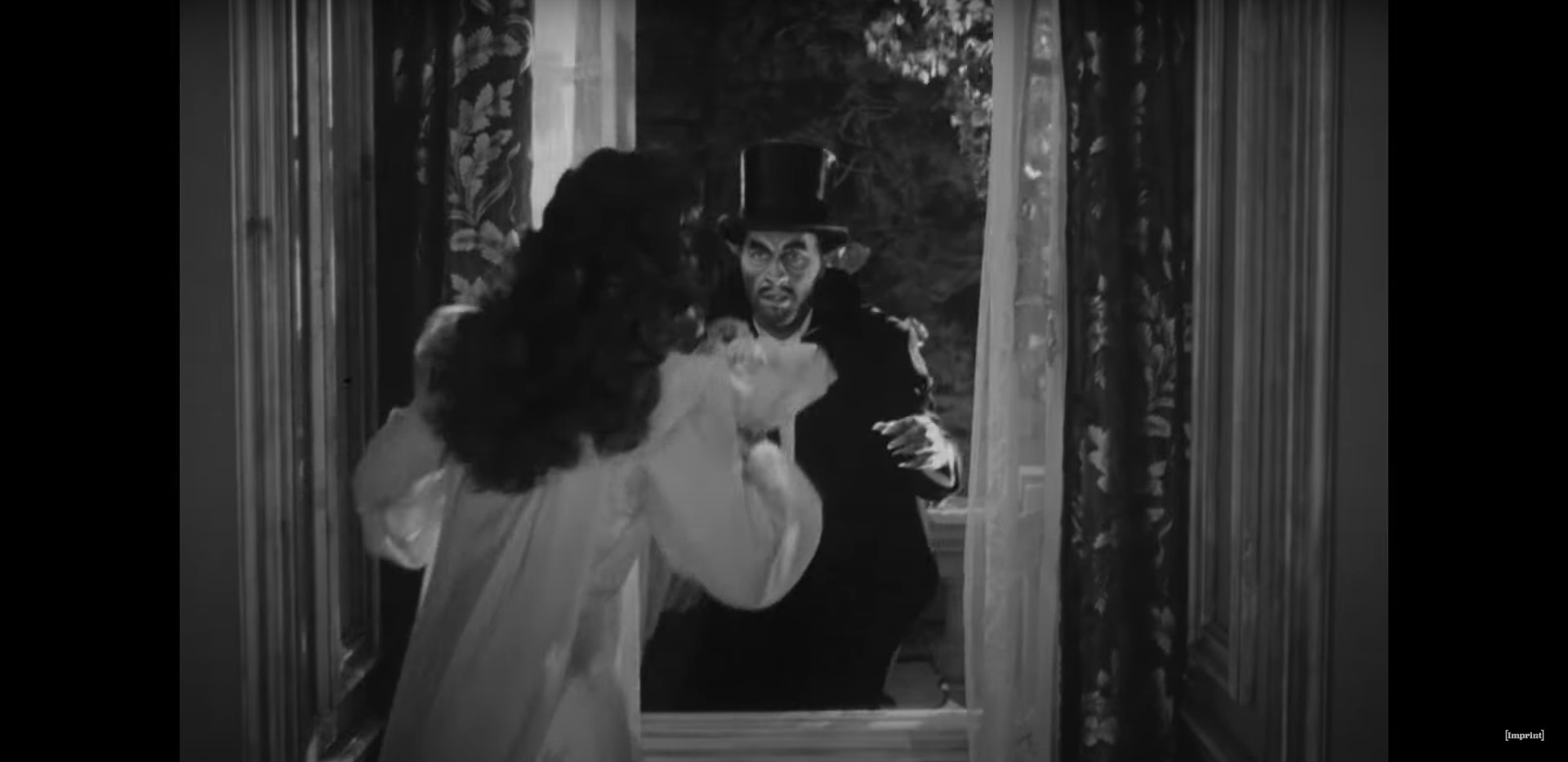
Long thought derivative of Val Lewton’s “The Cat People’s” success, Republic Pictures challenges the perspective with a cattier fracture of manhood, putting the main protagonist of their own cat person horror, “The Catman of Paris,” through the whiskery wringer of test and tribulations of harboring suspicions about oneself. Charles Regnier has seen the other side of the tracks. For all intents and purposes, Regnier was a nobody who suddenly rose to respect and wealth in the eyes of the general public with the stroke of a pen for creative thought to formulate an enthralling story, out of the fabric of his own mind he assumed he wrote. Yet, his work of fiction has also become a sign of guilt, suspicion, and unlawfulness in the eyes of the authorities. If the weight of the government isn’t burdensome enough, Regnier is also divided with personal doubt when a killer’s bodies pile during his time spent in a stint of amnesia and all of evidential signs point in his clueless direction. The more dire latter echos his former self in a subconscious belief that he isn’t his true self, such as with imposter syndrome in which he questions his current, more affluent status and fame with being contributed by a darker, murderous side, perhaps a sign of his impecunious past. The story has Regnier averting decisions to marry into opulence when he really just wants to continue his fervent pursuit of his publisher’s daughter, a sign that now he’s worth a pretty penny, he can muster enough confidence to chase after the woman of his dreams and still feel grounded to the common people despite is sudden wealth. At one point in time, “The Catman of Paris” was a harrowing horror tale with fantastic prosthetic cat features, a decent carriage chase and crash sequence, and a whodunit mystery quencher for the masses, but, for today, the 1946 is about as antiquated as they come like most of “The Golden Age of Film” features with a one-note suspense narrative and a monotone melodrama that’s imposing and frank without a lot of flair. I will say one thing about “The Catman of Paris'” twist ending is it’s not easily reckoned as Selandar has beguiling direction to pile on guilt to the point that audiences will have to submit to the director’s feline frisky hokum.

A part of the Imprint Collection, coming in at #219 on the spine, is “The Catman of Paris” on an Australian Blu-ray release. The limited edition high-definition release is AVC encoded on a single layer, BD25. The 1080p Blu-ray presentation comes from a 2017 4K scan of the original negative and is presented in the Academy ratio of 1.37:1. The original print material has sustained a few visible marks of infrequent vertical scratch damage, minor dust and dirt, total loss single frames, noticeable cigarette burns, and wavering levels in grayscale and contrast stability during edit transitions. Yet, there’s still a richness of the black and white image for the majority that refuses to fold outside the competent restoration attempt that gives dimension to a nearly 80-year-old film. The overall picture is a solid pass above par as it’s likely the best we’ll ever see in our time. The English language LPCM 2.0 mono track crescendos with a run of the mill brass band score overtop a quite clean dialogue track. Sure, the unmitigated track is slightly sullied by a consistent yet unimposing shushing with sporadic, stifled popping; however, there are no major issues with the mix and the dialogue through the dual channel is clean and distinguishable. Optional English subtitles are available. Special features include a new audio commentary track feature film historians Kim Newman and Stephen Jones, an oldfangled feature length documentary running through the cinematic history of stills and video clips from Republic Pictures The Republic Pictures Story, and a film historian Kat Ellinger video essay entitled Mark of the Beast: Myth Making and Masculinity in The Catman of Paris. Imprint’s tangible package is eye catching with color-washed front cover image on a thick cardboard side-slipcase; the illustration is pulled from one of the feature’s various marquee posters. Inside the slipcase, a character composition mockup includes the menacing Catman at the forefront with Regnier and female principals frozen in fear. The Imprint release runs at a slim 64 minutes, is unrated, and has a region free playback. “The Catman of Paris” is in servility of early Cat People productions but stands on its own two, or rather four, feet with an entrenching murder mystery that can keep you anthropomorphically guessing.

Meow!!  “The Catman of Paris” is on the Prowl on Imprint Blu-ray!

The Slammer is Full of Correctional Officer EVIL in “Lust for Freedom” reviewed!

The Jailed Chicks “Lust for Freedom” on Blu-ray!

Broken by the violent death of her partner, who she was also engaged to marry, after a drug bust goes south, undercover officer Gillian Kaites abandons law enforcement and drives across country in an internal turmoiled mess.  She’s pulled over by a Georgia County cop after she aids a frantic woman fleeing to escape two men in a black van.  Framed for narcotics possession by the corrupt officer, Gillian is drugged and locked away in the County’s women’s penitentiary overseen a strong-handed matron and an unscrupulous warden who dabbles in prostitution trafficking, drug smuggling, and even the occasional snuff filmmaking.  Back into a cellblock corner, Gillian must defend herself against the warden’s goons, protect other girls also falsely incarcerated, and lean into the sympathetic ear of the same corrupt cop that framed her after voicing his years of disgust with the warden’s malfeasance.

Part II of our bamboozled behind bars and following the 1986 examination of Eric Karson’s military simulation turned enslavement “Opposing Force,” is our next feature helmed by another director named Eric, notably Eric Louzil, with “Lust for Freedom.”  The debut film of Louzil, who went on to helm “Class of Nuke ‘Em High Part II and Part II” for Lloyd Kauman and Michael Herz of Troma Entertainment as well as slaving over standalone horror and sleazy schlockers in “Bikini Beach Race” and “Night of the Beast,” was also the first feature penned by the American-born, UCLA grad with a penchant for low-budget lewidies, cowritten alongside the “Shadows Run Black” writing duo, Craig Kusaba and Duke Howard.  With the working title of “Georgia County Lockup,” which in actuality the film was shot in various California and Nevada locations, such as Ely, Nevada, “Lust for Freedom” is an 8 x 8 cell of nudity, violence, and corruption under the co-production companies of Mesa Films and Troma Entertainment, with the latter reediting the original script and adding ADR adlibs to apply a sexed up and Troma-fied integration of product into their independent collection.  Louzil and Laurel A. Koernig produce the film with Troma bigwigs Lloyd Kaufman and Michael Herz as executive producers.

“Lust for Freedom” has many eccentric characters with many assorted plotlines in what is essentially an all women battle royal brawl in the cat-scratchin calaboose.  Stirring up trouble like a piece of scrap metal lodged in the gears of a well-oiled machine is tall and beautiful former cop, Gillian Kaites.  Played by Melanie Coll in her only known role, Kaites is only the bear in the bees’ nest, forced into confinement under false pretenses and to be subjugated by the likes of a wayward officialdom with lust in their eyes, greed in their pockets, and a disdain for disobedience.  Coll’s a bit flat footed with her performance and her Karate Kokutsu Dachi stance could use some improvement, but the tall, muscular, curly haired and light blonde actress can wield a multi-round popping automatic rifle with authority.  Stark against her Amazonian physique, not in a hard pressed and sexualized way, is main antagonist is the unbecoming Southern gentleman Warden Maxwell under the balding and overweight guise Howard Knight, but Kaites is more in tune against the procrustean penitentiary matron Ms. Pusker and Judi Trevor gives a Hell in a cell pastiche of early fascist women of Roger Corman produced WIP films, enforcing her will with prison muscle in the miscreant tough Vicky (Elizabeth Carlisle, “Evil Acts”) and the oversized guerilla (professional wrestler Dee “Matilda the Hun” Booher, “Spaceballs,” “DeathStalker II”).  Ultimately, Kaites sees her only path to escape through the very same person that wrongly confines her in the first place.  William J. Kulzer (“Class of Nuke ‘Em High Part II:  Subhumanoid Meltdown”) doesn’t quite fit the corrupted bill of Sheriff Coale, a mild manner and seemingly reasonable officer who goes with the despicable flow of sex trafficking amongst other indelicacies.  Yet, maybe that’s the purpose in Kulzer’s character, to be conflicted by the choices he and his callous cohort has made that made him stick out as the least repulsive individual behind the concreate and metal barred big house.  “Lust for Freedom” rounds out the cast with Donna Lederer, John Tallman, George Engelson, Rob Rosen, Shea Porter, Rich Crews, Raymond Oceans, Elizabeth Carroll, Lor Stickel, and Joan Tixei.

Gratuitous, full-frontal lesbian sex.  Yes, “Lust for Freedom” appeals to the very definition of its own title, like many other WIP productions and though a core element to the integrity of the subgenre, the creamy smoothness of two curvaceous, naked bodies getting it on shouldn’t always be the main selling point.  Luckily, Louzil ponies up more salacious material for his pinks in the clink caper.  An elaborate spiderweb of activity balloons and pulsates outward from the moment Kaites crosses path with an evening-dressed escapee being chased by a scary looking Native American and his sociopathic hooligan partner in a black van.  “Lust for Freedom” may be hammy and cheesy but what it’s definitely not is dull in its multifaceted approach to expose character layers.  Some characters grade more toward deviancy, such as Warden Maxwell and Ms. Pusker, while others are lifted toward a more redemptive means, such as with Sheriff Coale; that shepherd “Lust for Freedom” into a culminating jailbreak.  The narrative doesn’t necessarily focus around Kaites but she’s on a redemption arc to dig her out of a despair pit and into a fight worth fighting for purpose after the death of her finance, set up in the opening act.  As she evades the Vickey’s directed infringement to rough up the new girl, Kaites takes under her wing a fright clink chick named, another wrongly accused prisoner after being taken wandering the road, a theme that is a reoccurring motif from Kaites to Donna in thinking the young women can manage the world and their problems on their own accord but at a cost. However, whatever semblance is left of Louzil’s original script has likely been lost once Troma revamped it into the finished product you see today. Riddled with choppy cuts and incoherent segues, we have to wonder about Kaites’ role that may have been transmuted into a lesser core commodity in the final product.

Troma Entertainment releases a high-def, Blu-ray release of “Lust for Freedom.” The AVC encoded, 1080p resolution, widescreen release, in a 1.78:1 aspect ratio, compressed from its original aspect ratio of 1.85:1. Lloyd Kaufman mentions Louzil had shot the film on 16 mm and Troma subsequently blew up the negative to a 35 mm print that reframes the transfer for projection. Image-wise, the picture appears relatively clean albeit a plush grain and a few visible 16 mm cigarette burns with little-to-no age wear or exposure issue and the BD25 storage format has capacity aplenty to render an adequately compressed image with hardly any loss to the quality. Since the quality is heavily granulated, definitely no DNR implemented, the compression doesn’t suffer from a lack of a sharper, restored image. The audio is an English language Dolby Digital 2.0 Stereo can be echoey at times, as if the boom is catching warehouse reflection, but dialogue does topple in an appropriately laid out track mix that’s intertwined with hair metal band Grim Reaper’s titular “Lust for Freedom” single. We don’t get a ton of depth in the close quarters of the prison set but neither do we receive any depth in the exteriors either, sustaining most of the volume in a forefront stasis. Troma adds spotty ADR to kitschy up to Troma’s ludicrous level and its quite evident like a sore thumb that doesn’t quite match the ingrained audio mix. There are no subtitles available. Extras include the original DVD intro by Lloyd Kaufman, which also plays automatically at the startup of the feature, a directory’s commentary by Eric Louzil that is asynchronous with the feature in what is an approx. one-minute delay behind the Louzil’s retrospect, the original theatrical trailer, an interview with Lloyd Kaufman, a brief, brief clip of Eli Roth’s encouragement to just go and do a movie to the best of your ability, a Troma-themed showcase of one of their more modern Tromettes – Mercedes the Muse, the Radiation March, Gizzard Face 2: The Return of Gizzard Face, which has been on a slew of Troma’s releases over the past year, and coming attractions from the independent company. The Blu-ray comes in a tradition snapper with a guard tower, barbed wired, and Gillian Kaites with a semi-auto in her grip and barely cladded and torn clothes. No insert inside the case and the disc pressed art is the same as the cover illustration. This Troma release comes unrated, is region free, and has a runtime of 94 minutes. Plenty of desire for “Lust for Freedom,” busty babes behind bars barely bores and this vintage Troma keeps the WIP lacquer wet with self-satisfactory sadism and sexual spiciness.

The Jailed Chicks “Lust for Freedom” on Blu-ray!